
A historical journey through the Inca Empire
The Inca Empire is the name of a great military culture in South America from the 15th and 16th centuries. It was the most extensive civilization of pre-Columbian America, with its capital in Cusco, Peru. It transformed the Andes with astonishing engineering that extended across several countries. It disappeared five centuries ago. Would you like to learn more about this great culture? Then join me and find out everything.
The Truth About the Inca Empire: Were They Really the Most Advanced Engineers of Antiquity?
Have you ever wondered how the Inca Empire managed to dominate such challenging terrain with a level of technical precision that still puzzles modern experts? This warrior culture not only built earthquake-resistant structures, but also united diverse peoples under a highly efficient administration. Therefore, I invite you to delve into the heart of this history to understand the wisdom of its ancient builders.
Where was the Inca Empire located?
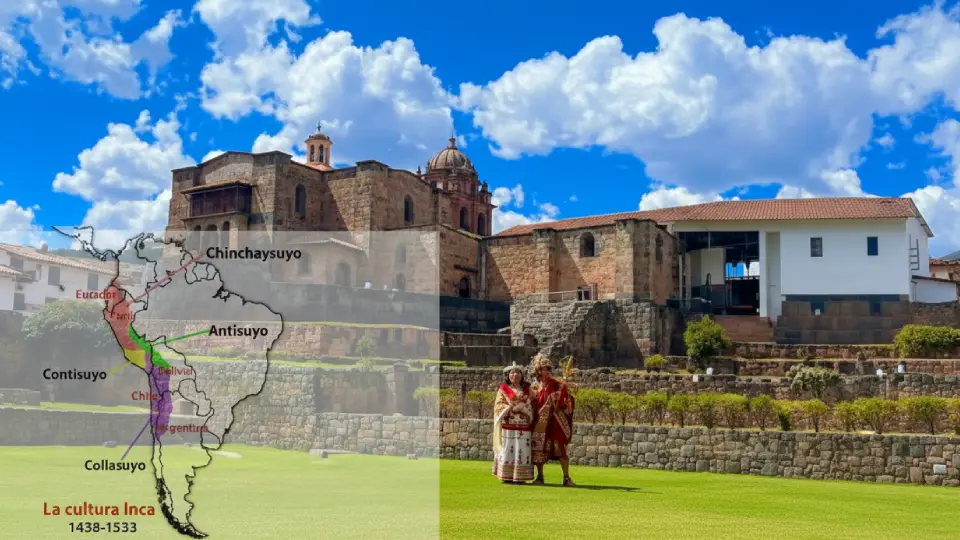
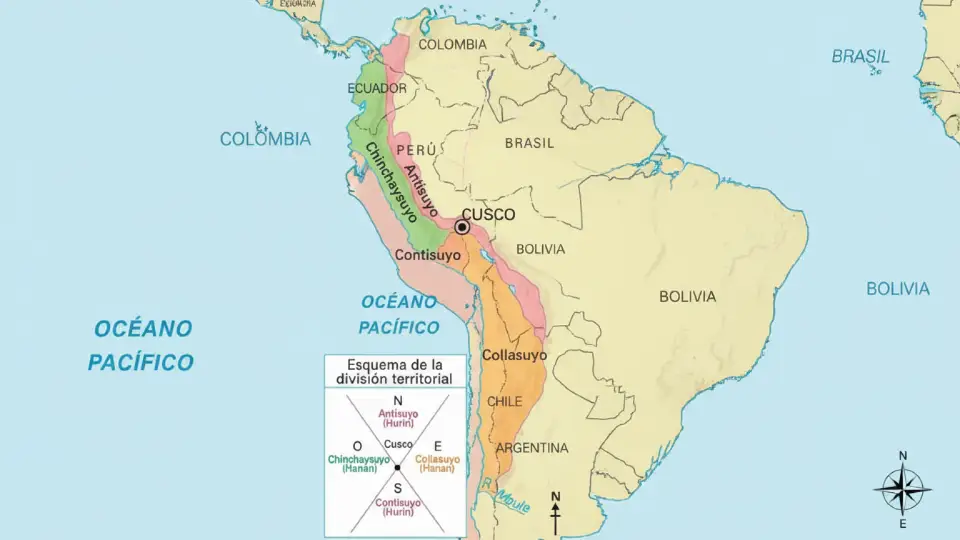
The Inca Empire occupied the western region of South America. At its height, the Tahuantinsuyo covered nearly 2 million square kilometers. As a result, its territory included what we now know as Peru, Ecuador, Bolivia, Chile, Argentina, and part of Colombia.
What was the main center of the Inca Empire?
The city of Cusco served as the main center of the entire empire, as it was recognized as the “navel of the world.”
What does “Tahuantinsuyo” mean?
The term “Tahuantinsuyo” comes from the Quechua language and means “The Four Regions of the Sun.” Under this system, the leaders divided the territory into four regions: Chinchaysuyo, Collasuyo, Antisuyo, and Contisuyo.
Origin and History of the Inca Empire
The Cusco Valley Before the Inca Empire
Around 1100 AD, the Cusco Valley was home to scattered and autonomous settlements such as the Acamama, Sahuasiras, Antasayas, and Guallas. These groups coexisted with ethnic groups like the Alcavizas, Copalimayta, and Culunchimas, later integrating into pre-Inca cultures such as Marcavalle, Chanapata, Qotacalli, Wari, Killke, and Lucre. Finally, the arrival of Manco Cápac marked the beginning of a radical transformation.
Key fact…
Manco Cápac and Mama Ocllo chose Huanacaure Hill as their starting point, where they drove a golden rod into the ground to mark the site for the construction of the city of Qosqo, now known as Cusco.
Inca Period and Lineage
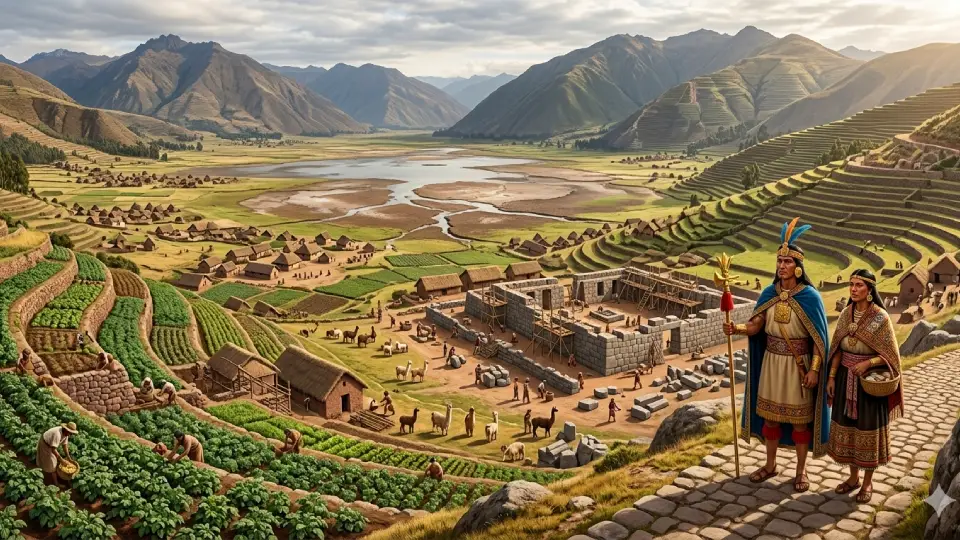
After founding Cusco in the Acamama Valley, Manco Cápac organized the ayllus and promoted agriculture, as well as establishing the worship of the god Inti (Wiracocha), creator of the sun, the stars, and the earth. The monarch established his residence and main temple at the Qoricancha. Later, rulers maintained power through a closed lineage; heirs married their own sisters to preserve their status as direct children of the Sun.
Historical Expansion of the Tahuantinsuyo
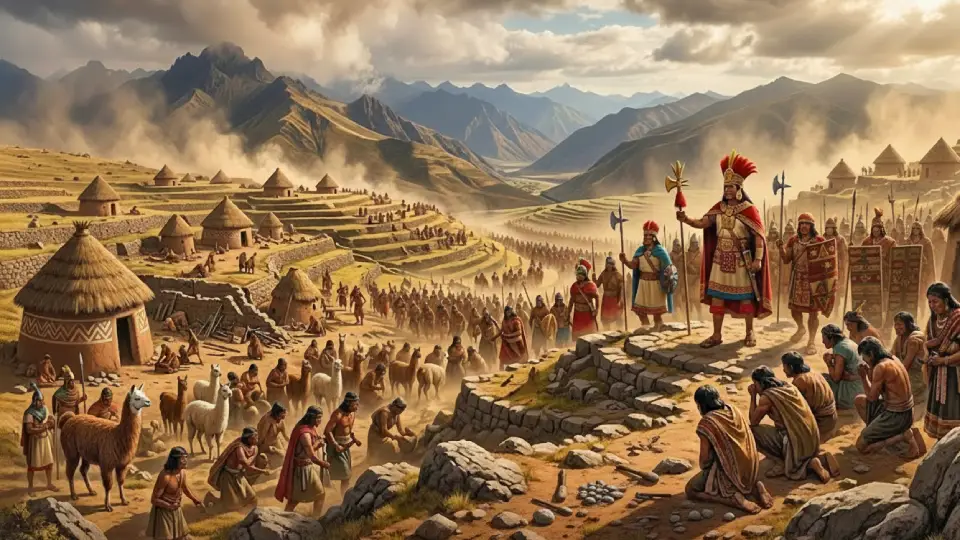
The empire began its territorial expansion firmly during the 15th century, after troops led by Pachacútec defeated the Chancas. As a result, the state grew rapidly through military and administrative strategies, consolidating the Tahuantinsuyo.
Important fact…
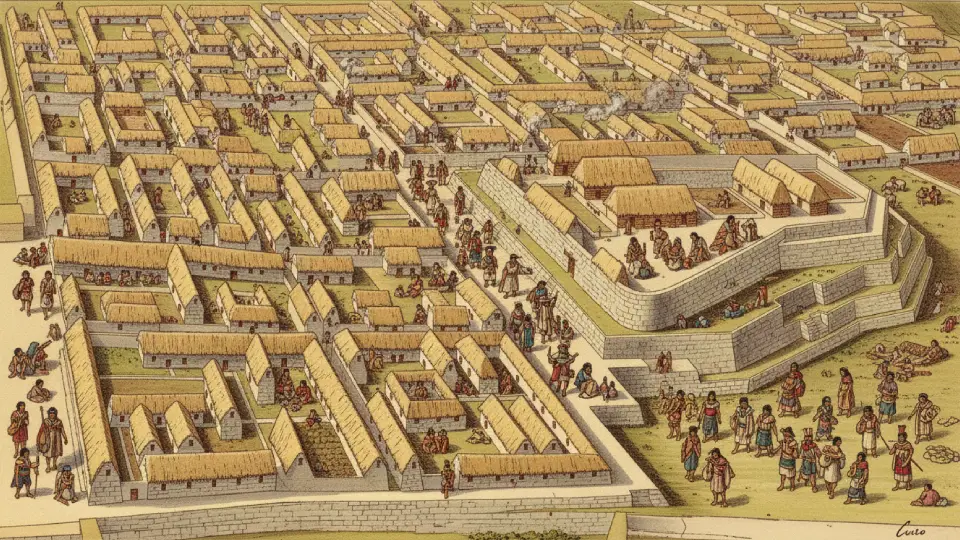
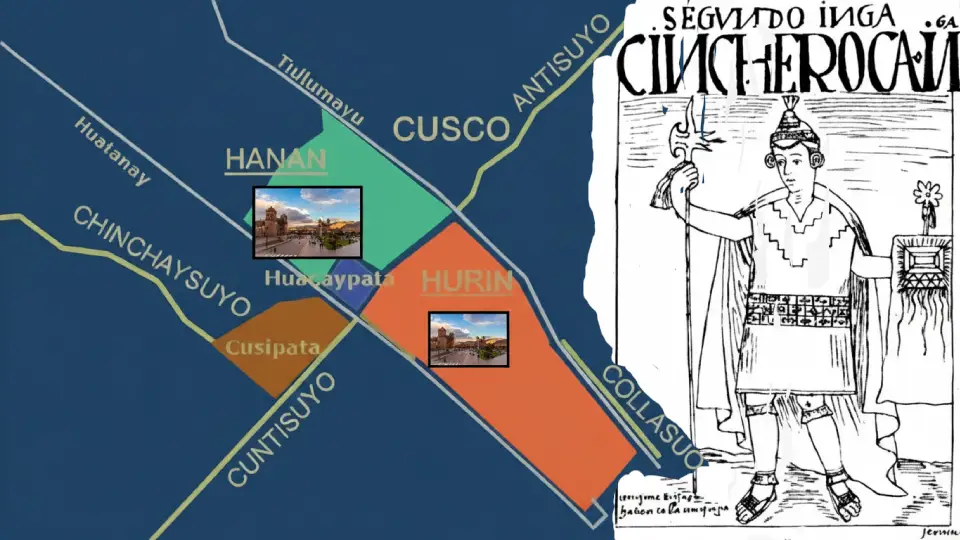
Under Pachacútec’s rule, Cusco had around 300,000 inhabitants, divided by the Watanai River into Hanan Cusco, where the nobility lived, and Urin Cusco, inhabited by commoners and outsiders.
Foundational Legends of the Inca Empire
Legend of Manco Cápac and Mama Ocllo
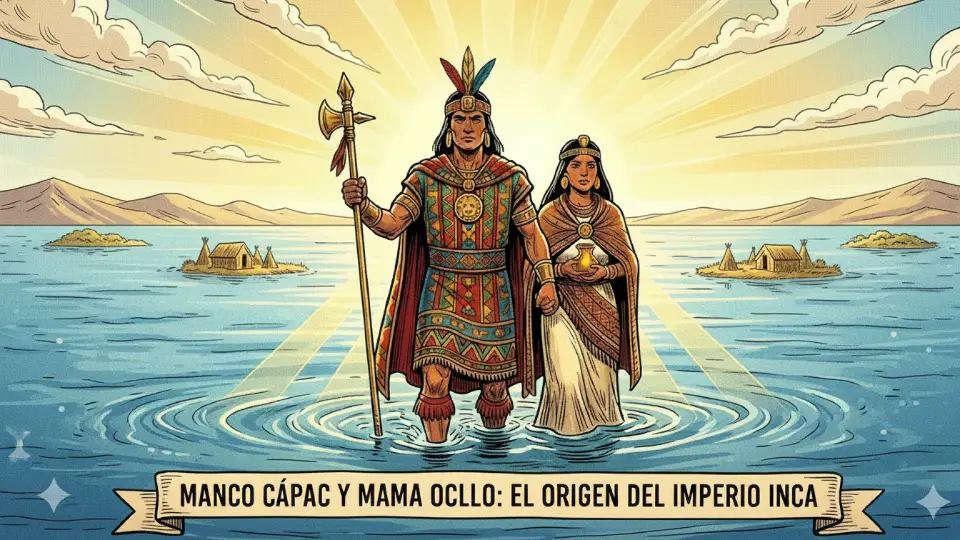
The legend of Manco Cápac and Mama Ocllo states that the god Wiracocha, after observing the desolation in which humans lived, decided to send his two children, Manco Cápac and Mama Ocllo, to civilize the Andean tribes. According to the story, both emerged from the deep waters of Lake Titicaca, carrying a golden staff given to them by the Sun with a precise command: wherever the rod sank easily, they were to establish the capital of a new Inca kingdom.
Legend of the Ayar Brothers.
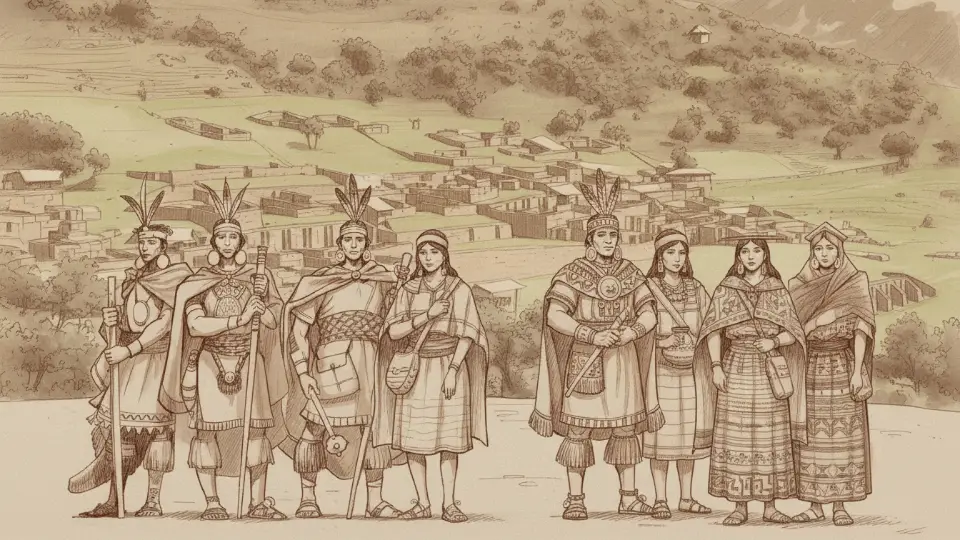
The god Wiracocha sent eight of his children into the world. The four men Ayar Manco, Ayar Cachi, Ayar Uchu, and Ayar Auca, accompanied by their respective wives Mama Ocllo, Mama Huaco, Mama Cora, and Mama Raua, emerged dressed in fine wool garments and ornaments through an opening in the hill Tampu-Tocco. This place, now known as the archaeological site of Maucallacta in Paruro, is said to be the origin of ten Inca ayllus.
Important fact…
The appearance of the Ayar brothers symbolizes the migration of groups conquered by the Huayllas, who settled in the Cusco valleys seeking a better quality of life. Ayar Manco represented the Mascas, Ayar Auca the Chillques, Ayar Uchu the Tambus, and Ayar Cachi the Maras.
The 13 Incas and Their Qollas of the Tahuantinsuyo
- Manco Cápac: First Inca, married Mama Ocllo.
- Sinchi Roca: died in 1136, married Mama Cora.
- Lloque Yupanqui: died in 1171, married Mama Caua.
- Mayta Cápac: died in 1211, married Mama Tacucaray.
- Cápac Yupanqui: died in 1252, married Mama Curillpay.
- Inca Roca: died in 1303, married Mama Micay.
- Yahuar Huácac: died in 1323, married Mama Chiquia.
- Viracocha: died in 1373, married Mama Runtu.
- Pachacútec: died in 1471, married Mama Anahuarque.
- Túpac Yupanqui: died in 1493, married Mama Ocllo Coya.
- Huayna Cápac: died in 1527, married Mama Cusirimay.
- Huáscar: died in 1533, married Chuqui Huipa.
- Atahualpa: executed in 1533, married Coya Asarpay.
Sinchi Roca, First of the Inca Lineage
Sinchi Roca managed to stabilize his people’s control over the Cusco Valley, dominating neighboring tribes such as the Sausarays, Antasayas, and Alcahuizas. He then began organizing the city of Qosqo and carried out the first population census of Cusco, dividing it into two sectors: Hanan Cusco and Hurin Cusco.
First Inca Expansion with Lloque Yupanqui, “the Left-Handed”
This ruler conquered peoples such as the Canas, Hillaui, Chulli, Pumata, and Cipita, later confronting the Ayauiri and Pucará peoples, who waged a deadly war against the Incas in which most perished. He ultimately conquered the distant Urus people near Lake Titicaca.
Mayta Cápac and the Organization of the First Inca Army
Mayta Cápac organized the first professional army to move troops from Cusco to the southern coasts, using military force for conquest. He built the first suspension bridges and rafts to facilitate troop transport. He also subdued the Alcahuizas and conquered the province of Hatunpacasa, the town of Cacyauiri, and the Collas of the highlands after intense battles.
Growth of the Inca Empire under Cápac Yupanqui
He continued Inca expansion, conquering the Yucay Valley, Cuyumarca, Ancasmarca, the province of Yanahuara, and Mucansa. He also conquered the Ayamarcas and spared their local leaders, then subdued the Quechuas, who surrendered easily to the magnificence of the “children of the Sun.”
Inca Roca and the Conquest of the Chancas
He is credited with creating the “panaca”, responsible for preserving the mummies of ancestors. The panaca would “care for,” dress, and honor them with ceremonies and maintain the royal household. Meanwhile, his forces conquered nations such as Tacmara, Quinicalla, and Cochacasa, and subdued Curampa, defeating the Chancas.
Important fact…
- Inca Roca also conquered Urumarca, Hancohuallu, Uillca, Sullca, and Utunsulla, and subdued the cities of Muyna and Pinahua.
- He was the first monarch to build schools in Cusco (Yachayhuasi), where amautas taught sciences to Inca princes and nobles.
Titu Cusi Huallpa or Yahuar Huácac
The Inca was kidnapped by the Ayamarcas at age eight and remained captive until twelve; it is said he cried “tears of blood” when unable to defend himself. When the Chancas arrived in Cusco, Yahuar Huácac fled, leaving the sacred city defenseless before the invaders led by Anco Huallo.
Interesting fact…
When the Chancas reached the gates of the royal city, they encountered an army hastily organized by Prince Hatum Túpac (Pachacútec), who was determined to defend and save the empire’s foundation.
Clash Between the Inca Army and the Chancas
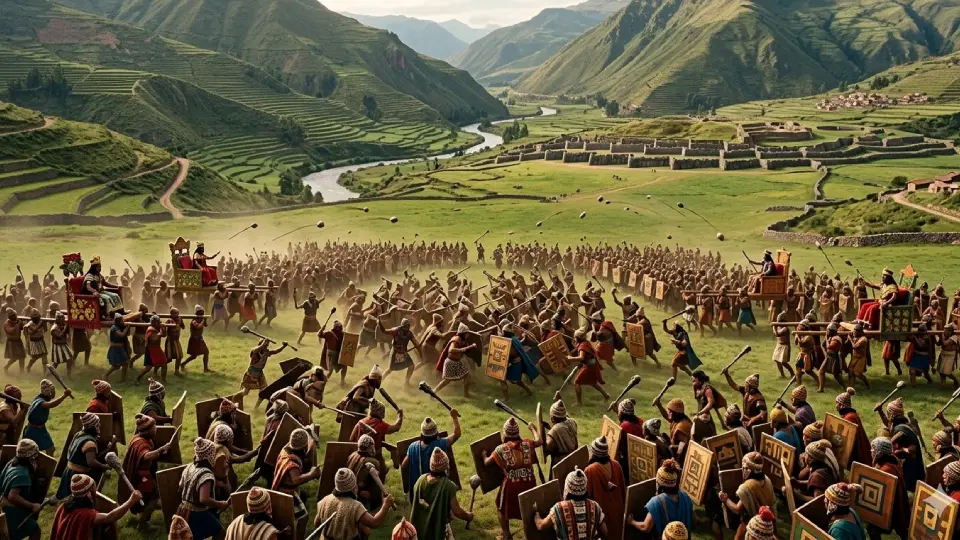
The battle between the Chancas and the Incas lasted several days, ending in Inca victory after reinforcements from Quechua soldiers and alliances with Canas and Cusco groups. Due to the extreme violence, the battlefield was covered in blood, leading locals to name it Yahuar Pampa, meaning “Plain of Blood.”
Consolidation of Cusco by Pachacútec
After defeating the Chancas, Pachacútec conquered Calca and Muyna and incorporated major groups such as the Chavín, Chancas, and Canas. Through a military alliance with Cari, leader of the Lupacas, he reached Aymara territory. At the same time, he carried out continuous reforms and major military achievements, earning recognition as the “Reformer” of the Inca world.
Did you know…
He was the first Inca monarch to reach the ocean, and he built numerous structures dedicated to the Sun, including houses for chosen women, lodgings, and schools for both soldiers and nobles.
Túpac Yupanqui and His Voyage to Polynesia
Túpac Yupanqui conquered the Cañari territories and the city of Quito. With the help of the Chimú, he built light wooden rafts that enabled the conquest of Puná Island in Guayaquil (Ecuador). This expedition also led him to discover the islands of Hahuachumbi and Nina Chumbi, where he reportedly encountered people with dark skin. He conquered Paraguay, the Charcas region, and reached lands as distant as Polynesia. The people of Tucumán submitted, extending the empire to the borders of Argentina.
Huayna Cápac and His Encounter with the Spanish
During his reign, Huayna Cápac established his residence in Quito, making it the empire’s second capital. He also conquered the valleys of Pacasmayu, Túmpiz, Collque, Cintu, Tucmi, Sayanca, Mutupi, Puchiu, Sullana, and Guayaquil.
Relevant fact…
During campaigns in Chachapoyas, his troops returned with reports of “white, bearded men.”
The Rivalry Between Huáscar and Atahualpa
Five years after Huayna Cápac’s death, Huáscar ascended the throne in Cusco; however, his brother Atahualpa rejected his authority. Atahualpa had strong support from experienced generals such as Calcuchímac, Rumiñahui, Sotauno, and Quizquiz. The brothers began a civil war for control of the Tahuantinsuyo.
End of the Inca Empire
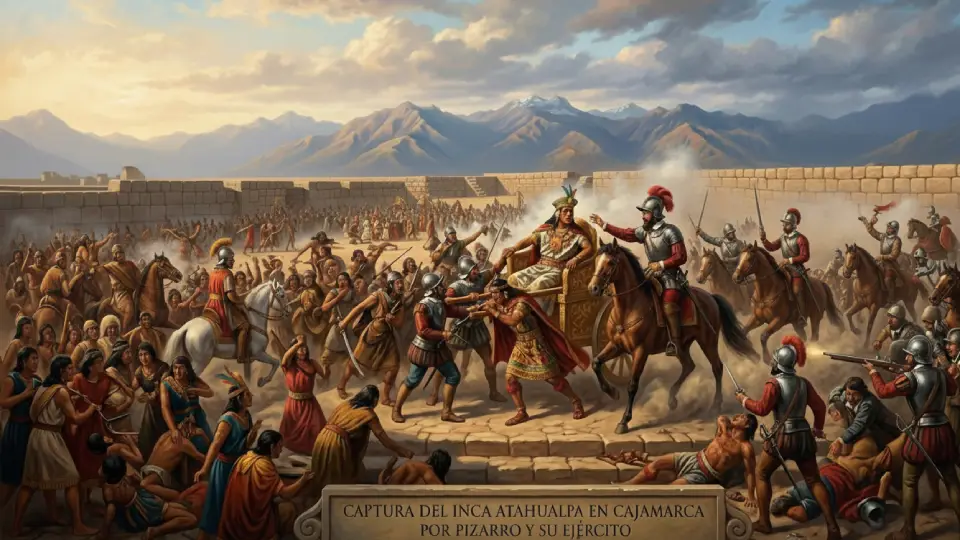
Following the arrival of the Spanish in November 1532, Atahualpa was captured in Cajamarca on November 16, 1532, by Francisco Pizarro. Imprisoned, Atahualpa ordered the execution of his brother Huáscar. Meanwhile, the Spanish planned his ransom and ultimately executed him on August 29, 1533.
Political and Social Organization of the Inca Empire
The Sacred Hierarchy in Inca Society
| Royalty | Sapa Inca, Coya, and Auki. | Supreme Ruler – Children of the Sun. |
| Nobility | By Blood | Royal Families. |
| Nobility | By Privilege | Royal panacas and conquered ayllus. |
| Common People | Made up of ordinary men who lived in the ayllu, a community or extended family. | Curaca, Hatun Runa, Mitimaes, and Yanaconas. |
Titles in Inca Society
- Title of the ruling Inca: was Sapa Inca, meaning great Inca, emperor, or Intip Churin, that is, “son of the Sun.”
- Title of Auki: given to unmarried nobles and equivalent to prince
- Ñusta: noble woman or princess
- Apu: lord, placed before the names of nobles.
Language of the Incas
The official language of the Incas used by royalty and the imperial court was Aymara. However, during the expansion under the Inca Pachacútec, Quechua, or runa simi, was established as the official language throughout the Tahuantinsuyo Empire, used by the general population to unify administration and communication across conquered peoples.
What Was Inca Society Based On?
The foundation of Inca society was the ayllu, essentially a group of families working together under the leadership of a sinchi or curaca. First of all, it is important to understand that each ayllu had its own lands for farming, herding, and forest management. They then distributed everything they produced fairly into three parts:
- For the Sun: These lands supported the priests and funded ceremonies.
- For the Inca: This portion financed the entire state budget.
- For the ayllu: Each family received what it needed based on necessity.
Inca Clothing and the Elite
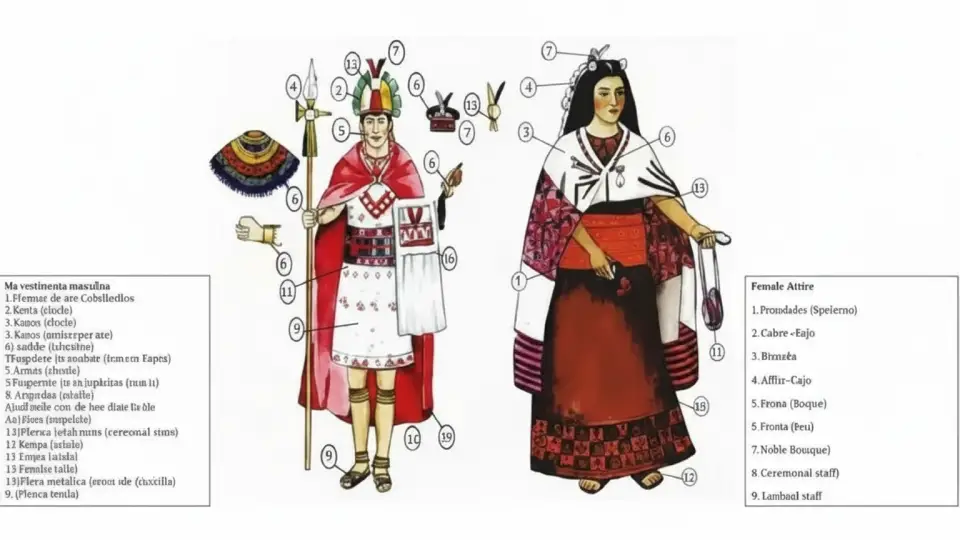
The ruler wore exquisite garments made from vicuña wool, cotton, feathers, and threads of gold and silver. He wore the uncu, a sleeveless tunic decorated with geometric patterns, and distinguished his rank with the red Mascapaicha on his head. Likewise, the Auqui (heir) and the Uillac-Umo (High Priest) wore the yellow Mascapaicha.
Who Made the Inca’s Clothing?
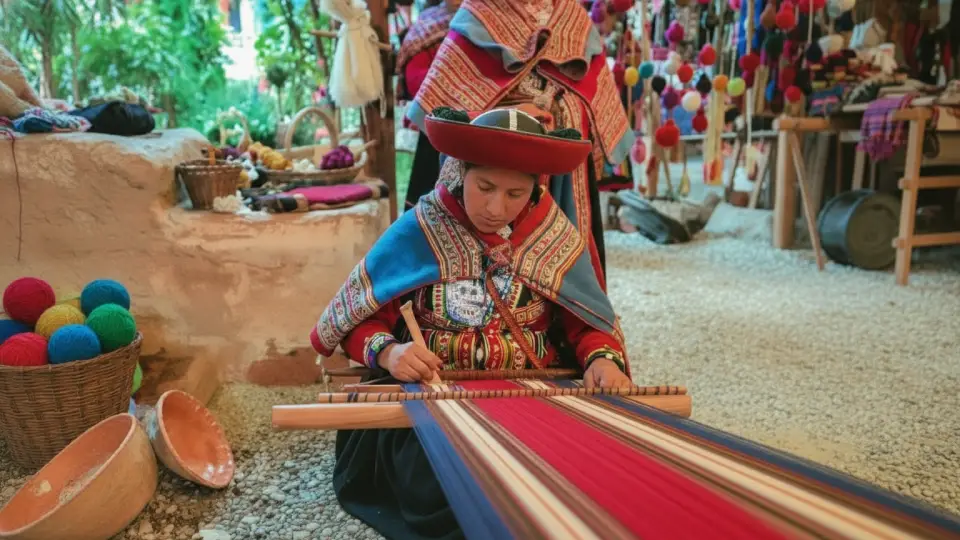
The Acllas were responsible for weaving garments for the nobility. They produced cumbi, an extremely fine double-sided textile that the Inca used as diplomatic gifts or sacred offerings.
Clothing of the Common People in the Inca Empire
In contrast, families among the common people wove their own clothing using llama or alpaca wool in the highlands and cotton along the coast. Men wore a simple uncu in natural colors, a cloak called yacolla, and a loincloth or huara. Women wore a long tunic called anacu, fastened at the waist with a belt or chumpi, and covered their shoulders with a mantle (lliclla) secured by a metal pin known as tupu.
Clothing of Conquered Ayllus in the Inca Empire
Although the empire integrated many peoples, conquered or annexed ayllus proudly preserved their distinct identity through their clothing.
Clothing as Regional Distinction
It is worth noting that each of the four suyos had distinctive colors in their textiles. Thanks to this, the Inca could identify a person’s regional origin at a glance.
Education in the Inca Empire
Education in the Tahuantinsuyo functioned in a very particular way, as learning depended entirely on social status and gender.
Training for the Common People
First, parents taught their children through daily practice. They learned farming techniques, military tactics, and above all, the three fundamental moral values for community life: Ama Sua (do not steal), Ama Llulla (do not lie), and Ama Quella (do not be lazy).
The Yachaywasi (House of Knowledge for Boys)
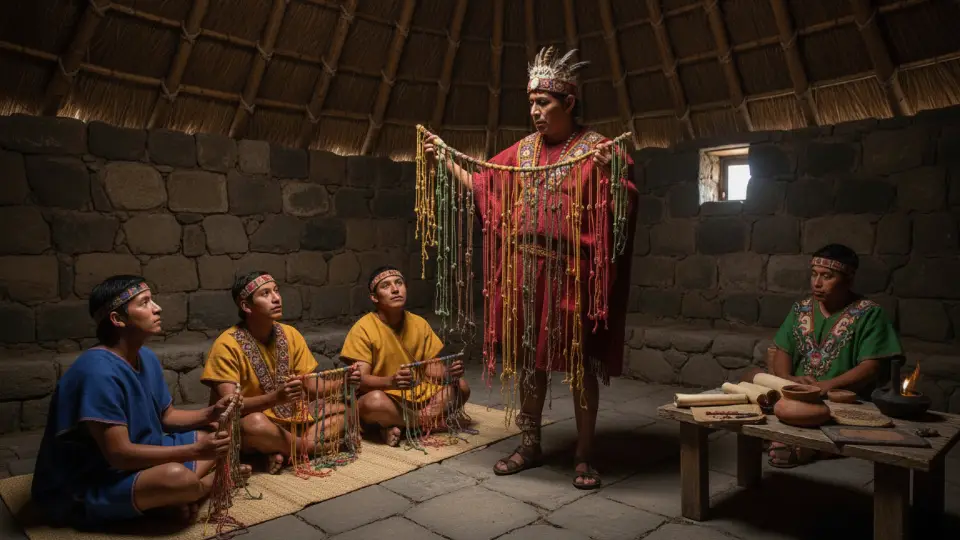
On the other hand, the elite sent their sons to the Yachaywasi. There, the Amautas—the wise men of the empire—educated future leaders over four years. They taught religion, the use of quipus, ancestral history, and the art of war. Afterward, the young men completed their training with the Huarachico, a ceremony in which they demonstrated maturity and physical skill.
The Acllahuasi (House of the Chosen Women)
Likewise, there was the Acllahuasi, a space dedicated exclusively to selected women chosen for their skills and abilities. Under the guidance of the Mamaconas, they learned specialized tasks:
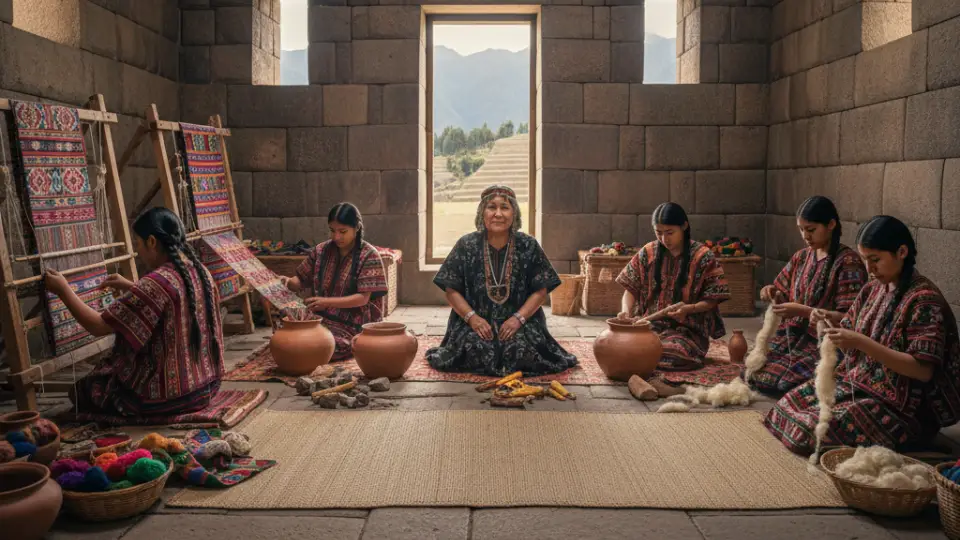
They produced fine cumbi textiles and prepared ceremonial chicha.
At the end of their training, some served as “Virgins of the Sun” in temples, others assisted in sacred rituals, and some became wives of the nobility.
Important fact…
While the common people focused on survival and moral values, the nobility received rigorous technical and political training to maintain the order of the state.
Administration During the Inca Empire
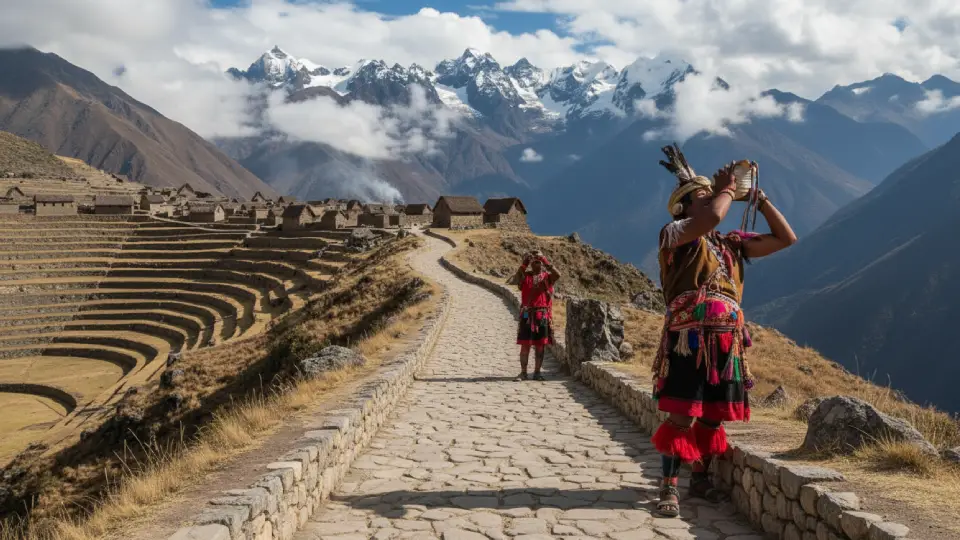
The Inca Empire managed its entire territory through a precise administrative system supported by two key tools: quipus and chasquis. Thanks to these, the Inca received constant and reliable information about every important event in the empire.
The Quipus
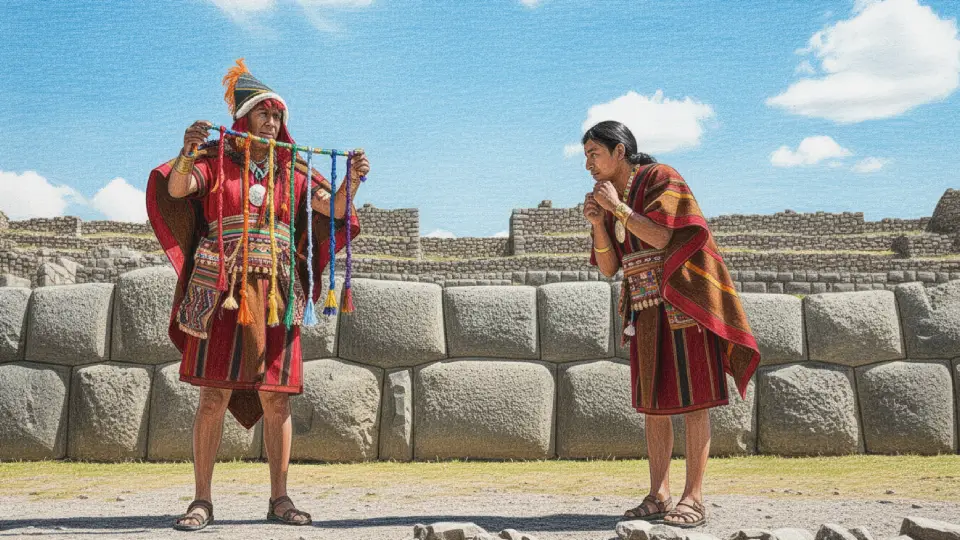
This accounting system of the Inca period served as the official record of the empire, and the Quipucamayocs were responsible for reading or interpreting them. They used colored cotton or wool cords. Through different types of knots and their positions on the strings, they recorded precise data, such as crop yields or population counts in each region.
The Chasquis
The empire relied on chasquis. These young athletes ran long distances at high speed along the Inca roads. Meanwhile, they carried messages encoded in quipus to the center of power. Upon arrival, specialists read the knots to report to the ruler.
The Economy of the Inca Empire
The Economy of the Inca Empire
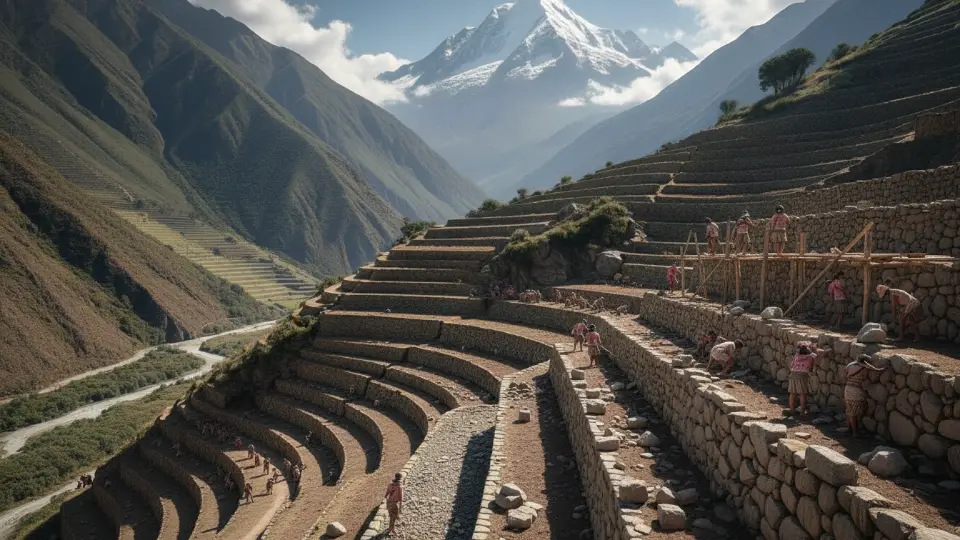
The Inca economy was based on agriculture, camelid herding, and, above all, a community labor system where money did not exist. To achieve this, they organized work through three forms of cooperation:
Labor Systems in the Inca Empire
- Ayni (reciprocity): Each family exchanged help under the principle of “<strong{today for you, tomorrow for me}”. The beneficiary returned the support with their own physical effort instead of paying with goods.
- Minka: The community joined forces to carry out projects that benefited the entire population. All able members of the ayllu were required to participate in these tasks.
- Mita: The imperial administration organized work shifts for large-scale state projects, such as building temples, bridges, and roads.
Important Fact…
Inca society protected those who could not work, such as the elderly, the sick, widows, and orphans. Therefore, the llacta camayoc (local official) supervised that the community cultivated lands assigned to these people to ensure their sustenance.
Advanced Agriculture
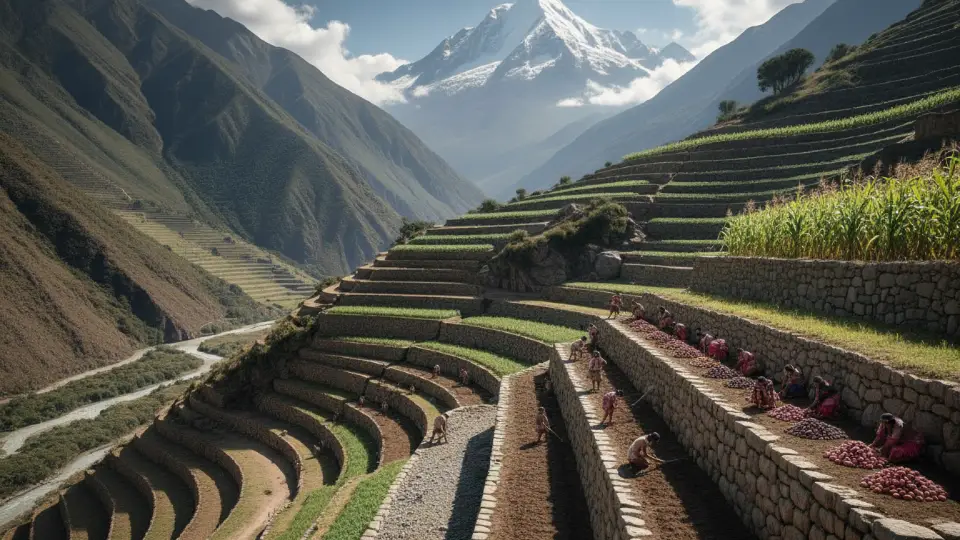
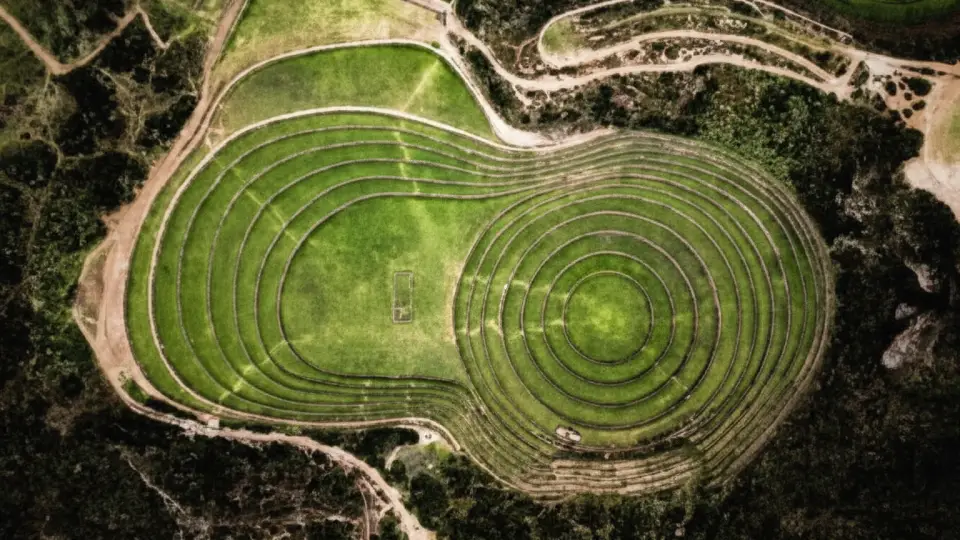
The Incas mastered their challenging geography through the construction of terraces, embankments, and retaining walls. Through these structures, they created various ecological levels to adapt different crops to different altitudes. Today, incredible examples of this engineering can be visited in Moray and Tipón.
Key Crops of the Inca Empire
- Coca Leaf: There were two distinct varieties of coca leaf, one cultivated in the Andes and another from the Amazon.
- Potatoes: They cultivated over 3,000 varieties and developed chuño (dehydrated potatoes), allowing them to store food for years.
- Corn: The most widely consumed grain. They adapted many varieties, such as the giant white corn from Cusco and purple corn (Culli), essential for making ceremonial chicha.
- Quinoa: Known as the “golden grain,” warriors ate it for its high nutritional and energy value and also used it in sacred rituals.
Inca Pottery
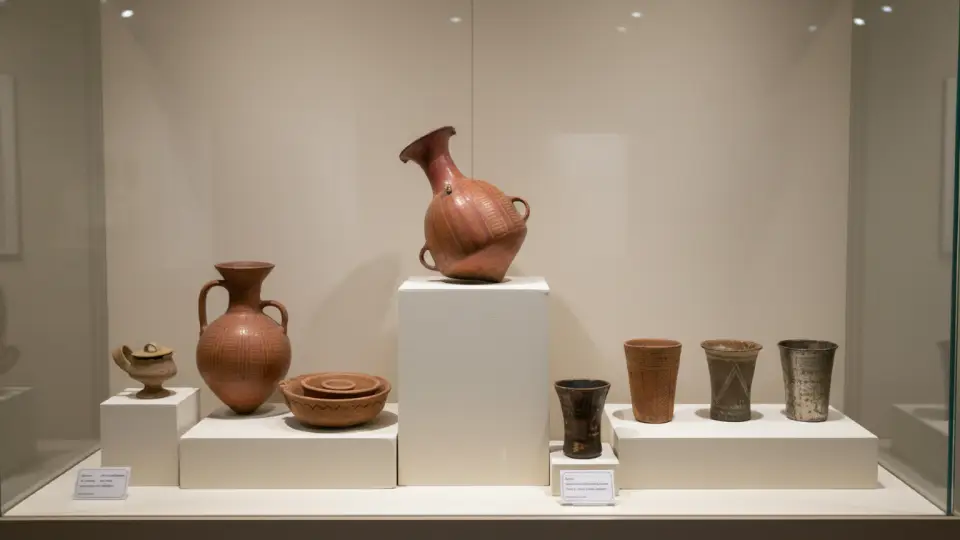
Inca pottery served primarily for daily and ceremonial use and featured colors like red, black, white, orange, and brown. Among their most typical creations is the aríbalo or urpu, a large jar with a conical base. They also made keros, which were cups made of wood, clay, silver, or gold, used in festivals and sacred rituals.
Metallurgy in the Inca Empire
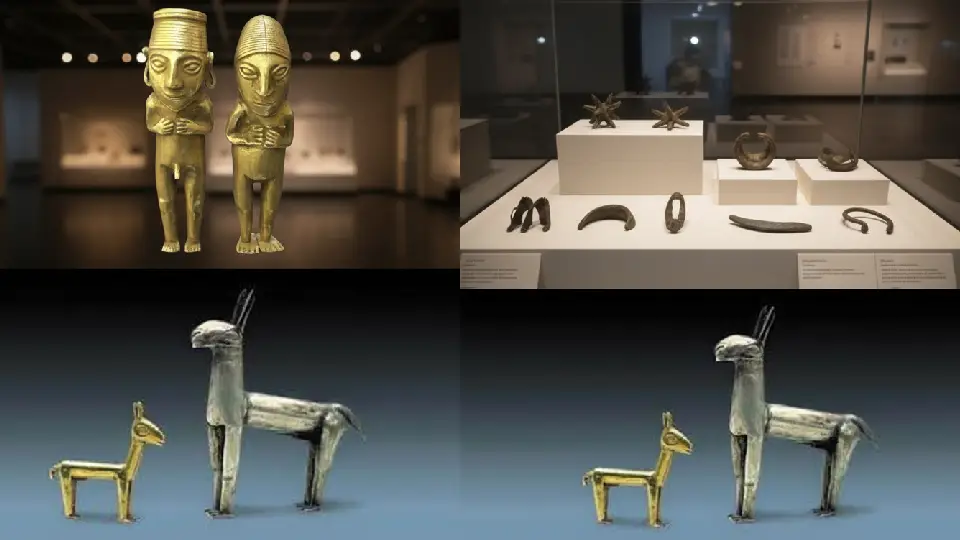
The Inca culture learned advanced techniques from cultures like the Chimú, Sicán, and Mochica. They even invited the best master goldsmiths to teach their artisans. As a result, Inca artists mastered processes such as casting and hammering, transforming gold and silver into objects of great significance.
Did you know…
By using portable furnaces called huayras, they achieved precise alloys like arsenical bronze, a crucial material for crafting highly durable agricultural tools and weapons.
Architecture and Engineering of the Inca Empire
Construction Techniques of the Inca Empire
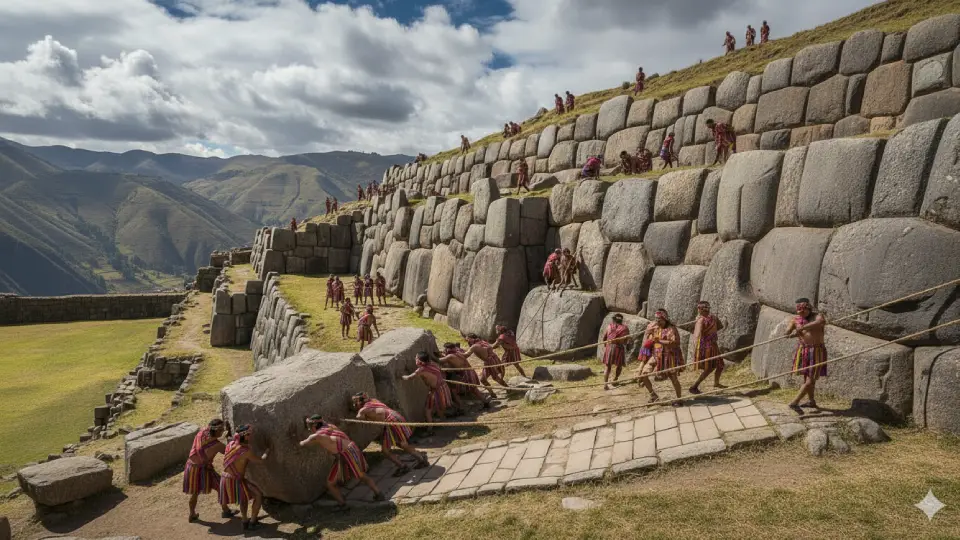
The Incas’ construction techniques varied depending on location and available materials. For example, they used stone, adobe, or wattle-and-daub on the coast, while in the highlands they preferred working with stone. Moreover, Inca architecture stands out for its simplicity, symmetry, and remarkable durability. In fact, builders planned each project using scale models before starting construction. Many of their structures showcase polygonal, cellular, rustic, weathered, sedimentary, and cyclopean masonry techniques.
Cusco
The city of Cusco was known by the Incas as the “Navel of the World.” It served as the political, religious, and economic center of the Tahuantinsuyo. From there, the Inca ruled alongside his elite, managing roads and organizing military campaigns as well as large public festivals.
Machu Picchu
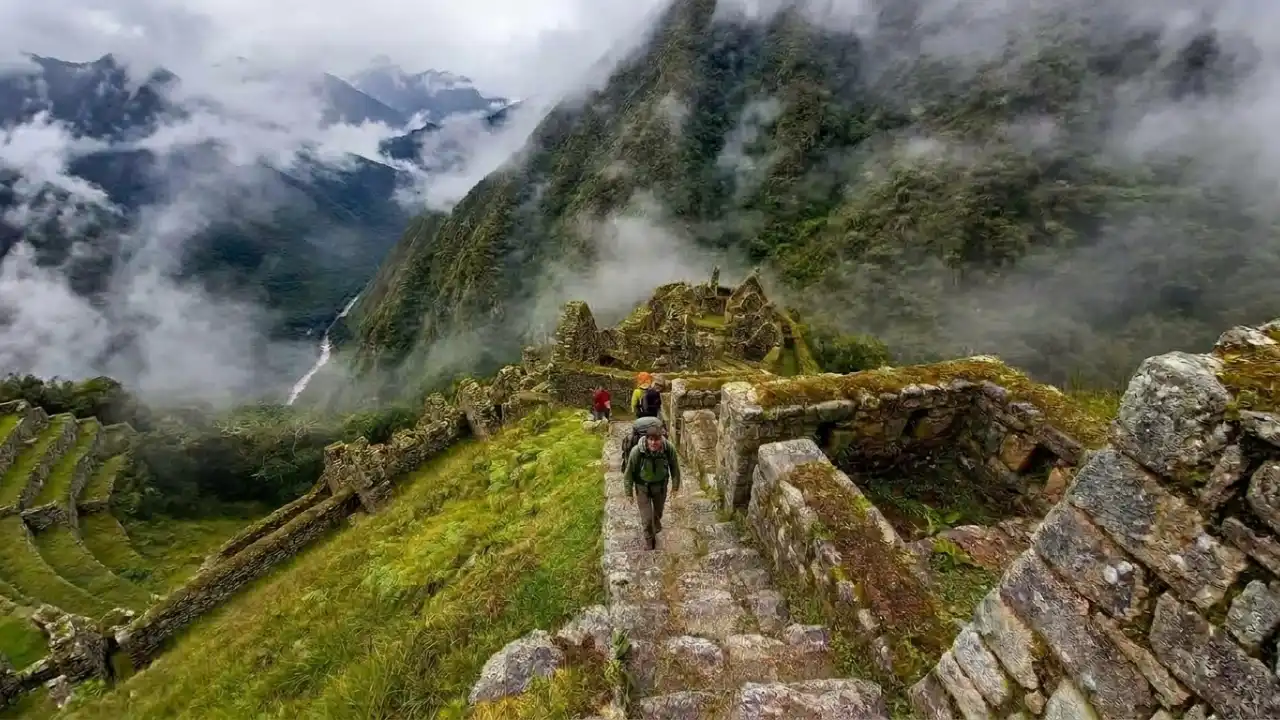
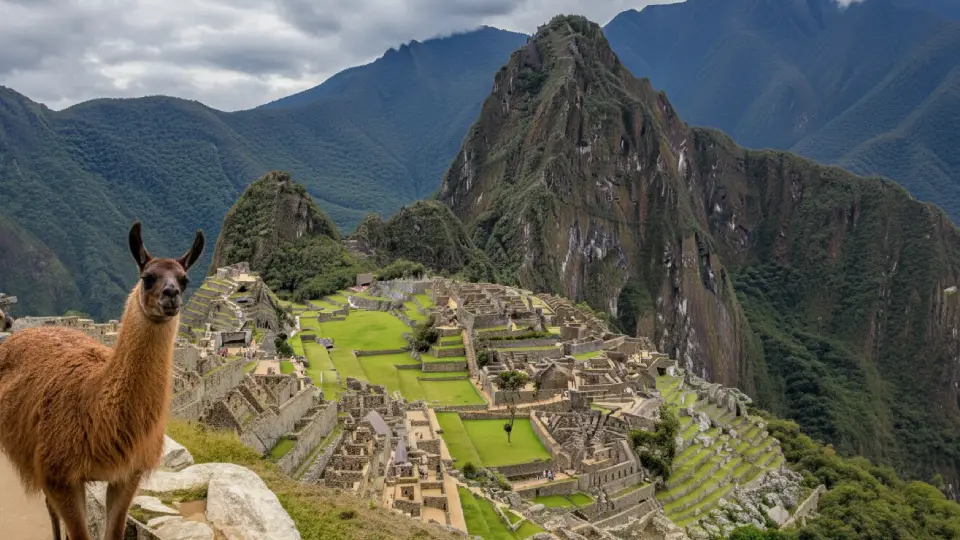
Inca Pachacútec ordered the construction of Machu Picchu in 1420. This site exhibits various imperial-period styles, highlighting its fine masonry, temples, residential areas, water fountains, and expansive agricultural terraces.
Sacsayhuamán
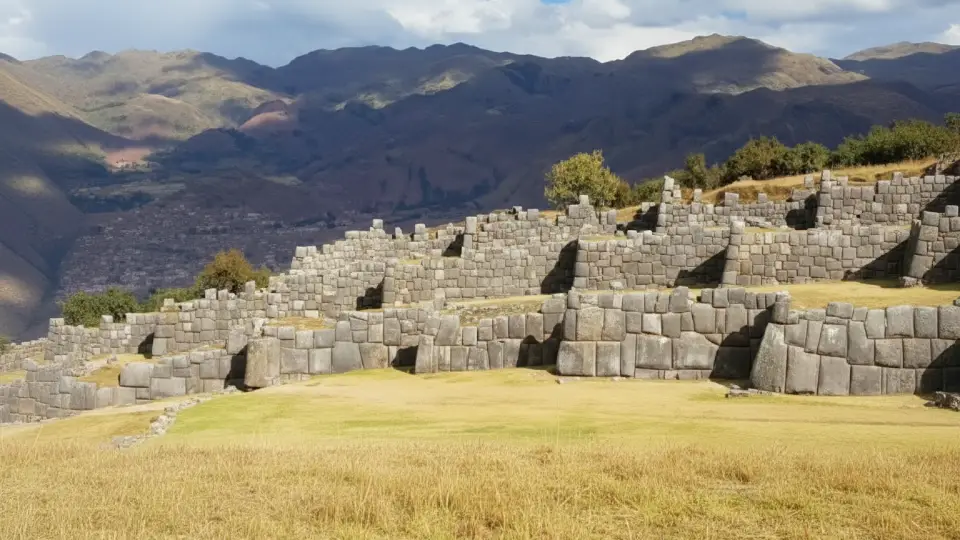
The ceremonial center of Sacsayhuamán was built by Pachacútec using huge stone blocks arranged in a zigzag pattern. This Temple of the Sun also features unique elements such as massive walls, stone rollers, and underground passages (chincanas).
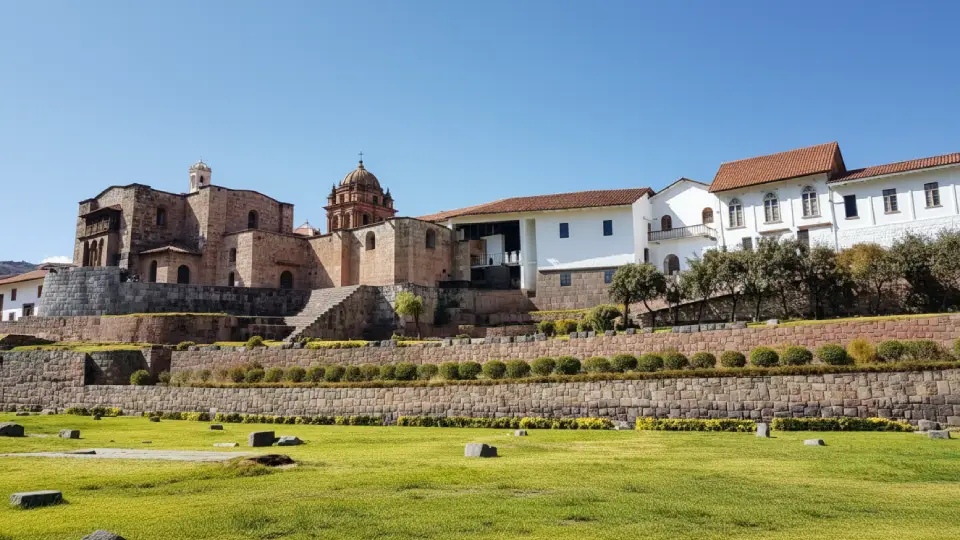
Qorikancha
The Inca temple of Qorikancha was initiated by Manco Cápac, but Pachacútec later covered it with gold sheets. The temple is notable for its precise ashlar masonry technique.
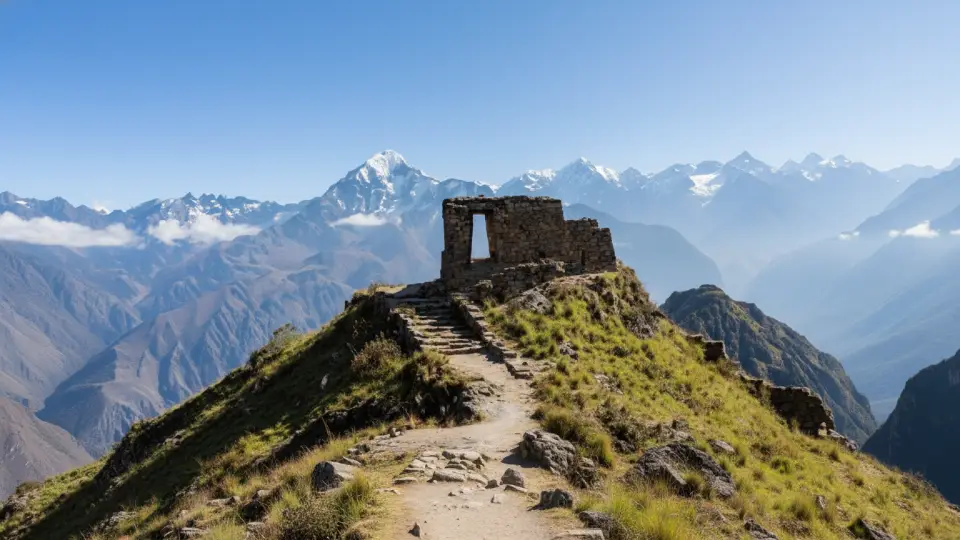
The Qhapaq Ñan
This network of roads spanned over 30,000 kilometers of territory. The chasquis used these paved routes to connect temples, tambos, and important centers, reaching from Cusco to distant sites such as the temple of Pachacámac on the coastal shore.
Important Fact…
Inca walls functioned as earthquake-resistant structures. Thanks to precise stone fitting and interlocking techniques, buildings shifted in blocks during earthquakes, which compacted the structure instead of collapsing it. In some cases, clay was used as an adhesive or copper clamps were applied to secure the stones.
Religion and Worldview of the Inca Empire
Main Gods of the Inca Empire
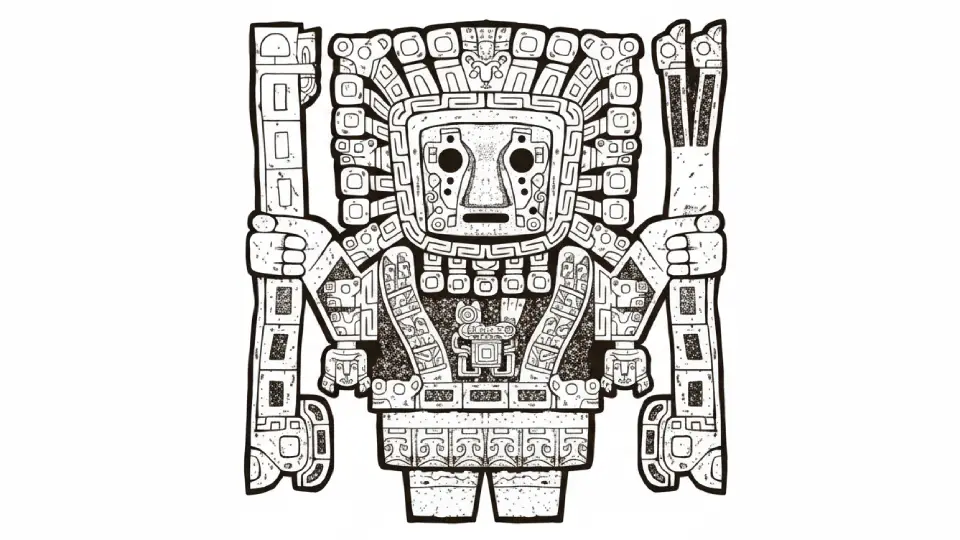
The Incas lived in complete harmony with the earth, seeing it as part of their own family. For this reason, they worshiped deities such as Wiracocha (the great creator), Inti (the sun), Quilla (the moon), Pachamama (Mother Earth), and the Apus (protective mountains).
Andean Trilogies in the Inca Empire
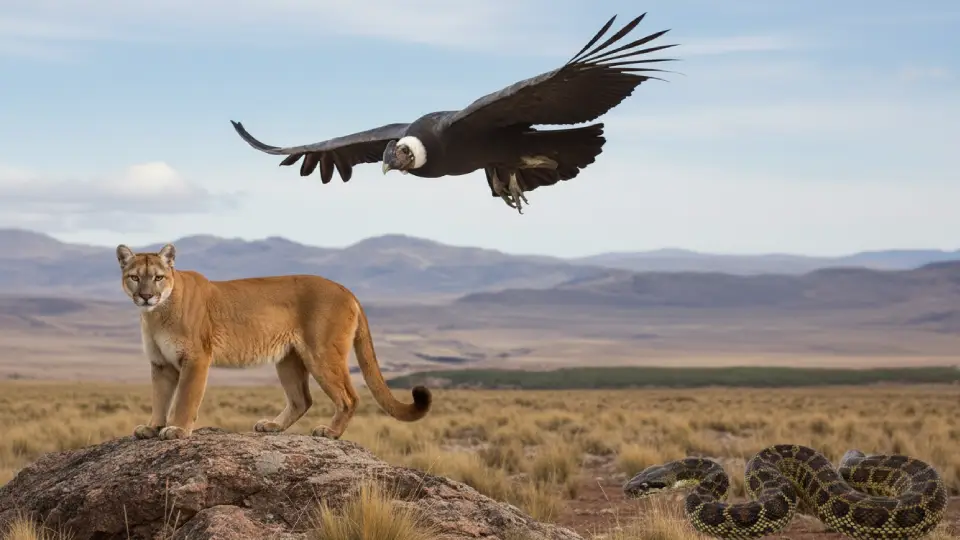
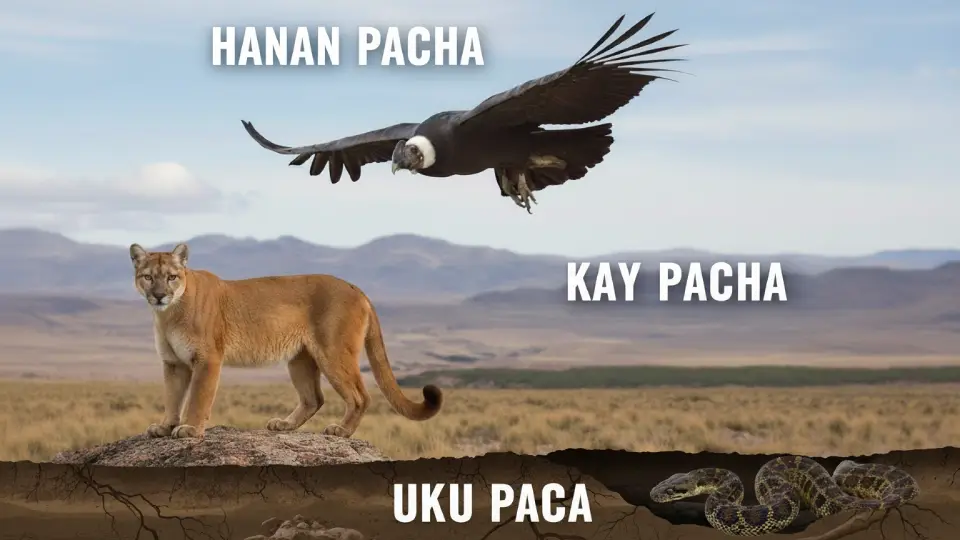
The sacred animals of the Incas, considered direct messengers between humans and the gods, were the condor, puma, and serpent.
Main Inca Oracles
Oracles were ritual sanctuaries where people from different ethnic groups and community leaders came on pilgrimages. In these places, the oracle’s word carried more authority than even the Inca himself. The main Inca oracles were Pachacámac, Titicaca on the Island of the Sun, Catequil in Huamachuco, Huarivilca in the Rímac (Lima), and Huanacaure in Cusco.
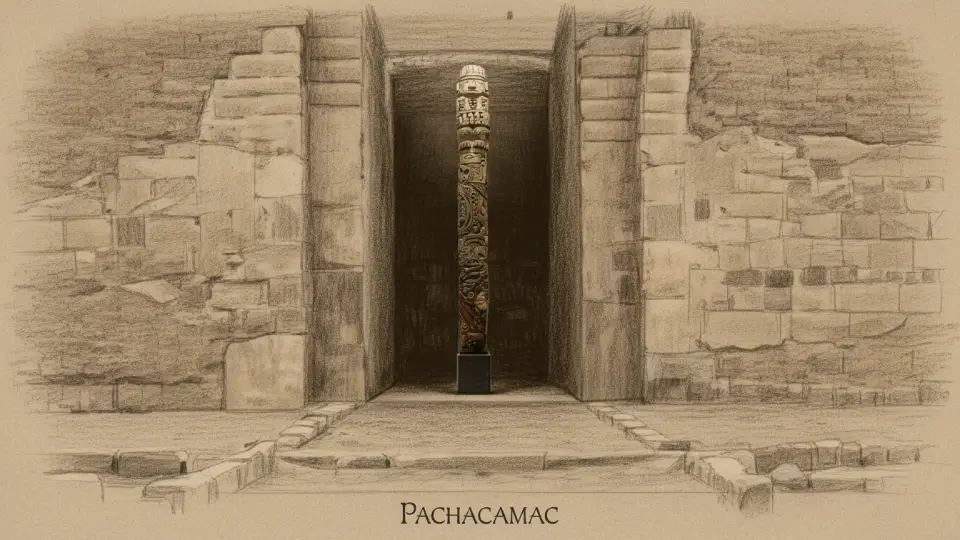
Pachacámac
Considered the “Sovereign of the World” on the central coast, Pachacámac had the power to predict the future and control earthquakes. Today, he is known as the Lord of the Tremors.
Huanacaure
Huanacaure was an oracle and huaca from the founding period of Cusco. It represents Ayar Uchu, who turned into stone. This site was frequently visited by his brothers to consult on matters of war. It is especially important as the place where the golden rod sank and where the Inti Raymi and Huarachicuy ceremonies began.
Duality and the Three Worlds in the Inca Empire
Duality in Inca times (or yanantin) was a fundamental Andean principle that conceived the world in complementary and opposing pairs, often reflected in funerary contexts.
- Sun – Moon
- Day – Night
- Man – Woman
- Hana – Hurin
- Gold – Silver
Concept of Space in the Inca Empire
Understanding Inca spirituality requires knowing their concept of space, as the gods constantly interacted on different planes.
- Hanan Pacha: Symbolizes the upper world, inhabited by the gods (where Inti and the stars reside). On earth, it was represented by the Condor.
- Kay Pacha: Represents the present world, the land where humans live. Represented by the Puma.
- Uku Pacha: Symbolizes the underworld, where the dead reside (inside the earth). Represented on earth by the Serpent or Amaru.
Astronomy in the Inca Empire
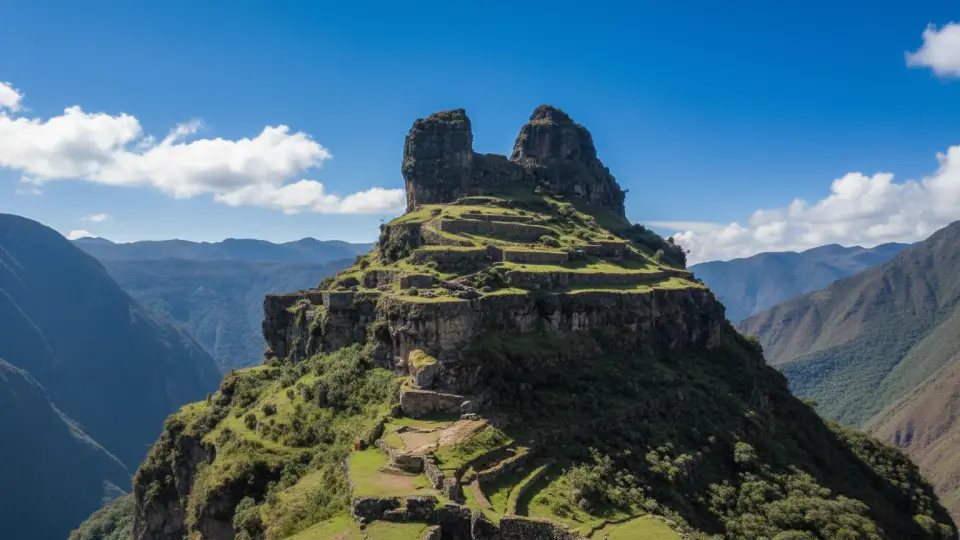
Inca astronomy functioned as an advanced science focused on studying constellations and solar movements. This knowledge allowed the empire to maintain a precise agricultural calendar. They also determined solstices and equinoxes at key sites like Waqrapukara, Qoricancha, the Intihuatana of Machu Picchu and Pisac, Vilcashuamán temple, and the towers of Chankillo in Casma.
Important Note…
It is important to highlight that astronomer-priests, known as Willak Umu (high priests) and Tarpuntaes (assistants), led these observations. They studied the sky to interpret the Milky Way and the shadows cast by the Intihuatana or the Cusco Pillars. Through careful observation of sunrise and sunset, they determined the precise timing for planting and harvesting crops.
Main Festivals of the Inca Empire
The empire organized constant celebrations throughout the year to mark the start of each activity. Among the most important festivals were:
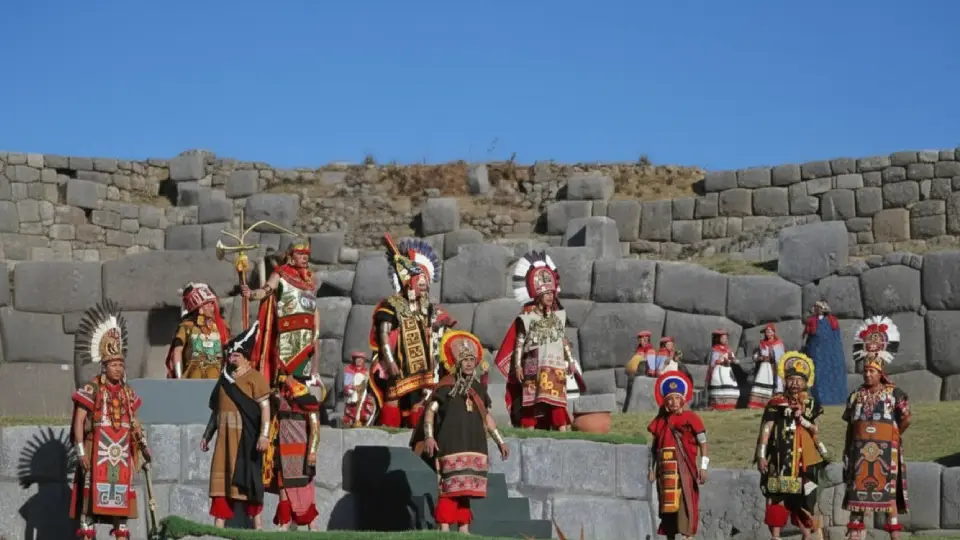
- Inti Raymi (June 24): Celebrated during the winter solstice to honor the sun god Inti. Inti Raymi.
- Cápac Raymi (December 21): Held during the summer solstice, known as the “Great Feast of the Sun.”
- Coya Raymi (September): Festival dedicated to the Moon and spiritual purification.
- Cápac Situa and Aymuray (May): Celebrations for the maize harvest.
Fall and Resistance of the Inca Empire
Civil War in the Inca Empire
The empire suffered a severe weakening due to the civil war between the brothers Huáscar and Atahualpa. Both fought for the leadership of the Tahuantinsuyo, leaving the state exhausted and socially fragmented. As a result, this conflict paved the way for Francisco Pizarro.
Did you know…
Several local ethnic groups, tired of Inca domination, saw the arrival of the Spaniards as an opportunity to regain autonomy and decided to ally with them.
The Spanish Encounter with the Incas
Key Events Leading to the Fall of the Inca Empire
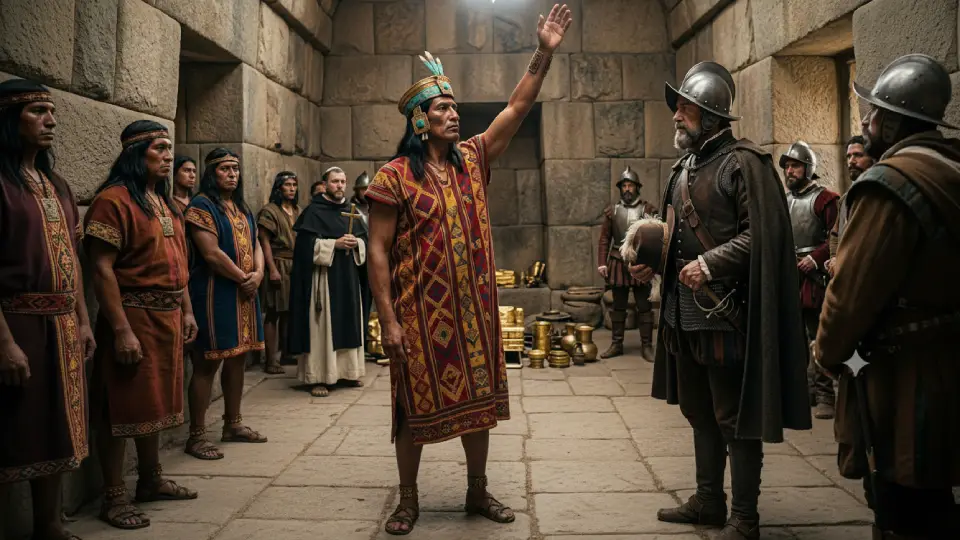
On November 16, 1532, a decisive event occurred in Cajamarca. Pizarro faced thousands of Inca warriors with only 168 soldiers, supported by horses, iron armor, and firearms.
- The Capture of Atahualpa: The Inca arrived at the plaza with a ceremonial escort, confident and unprepared for battle. Pizarro took advantage of the situation, launched a surprise attack, and captured him with the help of ethnic allies such as the Cañaris, Chachapoyas, and Huancas.
- The Ransom: Atahualpa offered to fill a room with gold and two rooms with silver in exchange for his freedom. Despite fulfilling this ransom, the Spaniards executed him in 1533 after a summary trial.
The Resistance of Vilcabamba
After the fall of Cusco, the last Inca leaders organized a resistance in Vilcabamba. Historians like Garcilaso de la Vega later documented this history in his work “Comentarios Reales de los Incas.”
- Manco Inca: After briefly allying with the Spaniards, he rebelled in 1536 and besieged Cusco. When he failed, he retreated to the jungle and died in 1544 at the hands of Diego de Almagro’s supporters.
- The Incas of Vilcabamba: For almost 40 years, leaders like Sayri Túpac, Titu Cusi Yupanqui, and Túpac Amaru I kept the struggle alive. Finally, in 1572, Viceroy Francisco de Toledo captured and executed Túpac Amaru I, marking the definitive end of the imperial structure.
Current Legacy of the Inca Empire
Today, the Inca legacy lives on through various elements: the architecture that defies time, the continued use of Quechua, traditional textiles, the celebration of Inti Raymi, and respect for Pachamama, expressed through offerings to the earth each August 1st.
Tours to Explore the Inca Empire
To explore the grandeur of the Inca Empire, there are various tours that cater to different levels of time and adventure, such as:
Cusco City Tour
- Cusco City Tours – ideal for your first day of acclimatization.
- Includes sites such as: The Qoricancha Temple (Temple of the Sun) and nearby archaeological complexes of Sacsayhuamán, Qenqo, Puca Pucara, and Tambomachay.
Sacred Valley of the Incas Tour (Full Day)
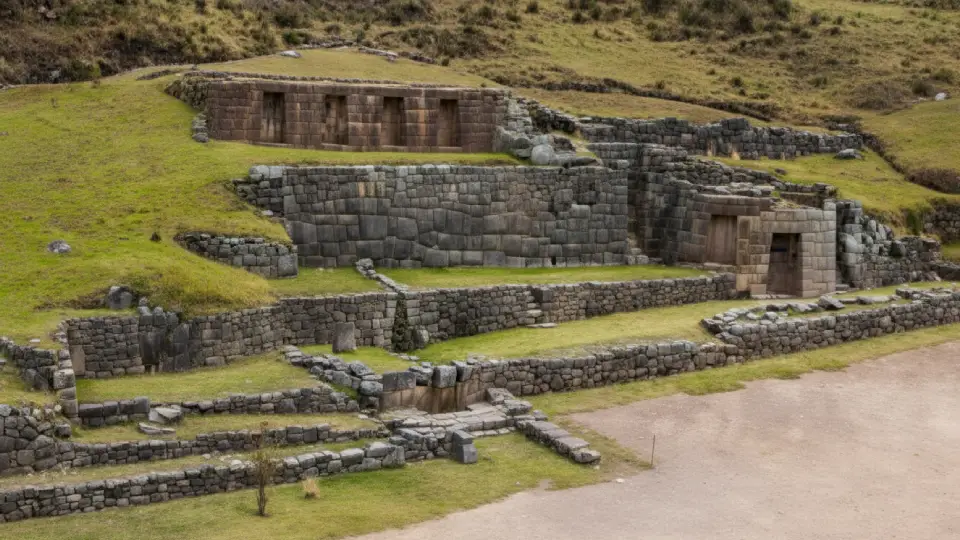
- This Sacred Valley of the Incas Tour travels through the Vilcanota River valley, home to the empire’s most fertile agricultural lands.
- Stops include: Pisac (terraces and cemeteries), Ollantaytambo (fortress and living town), Chinchero (textile center and Túpac Yupanqui’s palace), the circular terraces of Moray (agricultural laboratory), and the salt mines of Maras.
Machu Picchu
There are three main ways to experience this tour:
- Full-day by train: Full-day by train, direct travel from Cusco or Ollantaytambo to Aguas Calientes for a guided tour of the citadel.
- Inca Trail (2 days): Inca Trail, 2 days the classic hiking route following the original Qhapaq Ñan trails. Reservations must be made 6 months in advance.
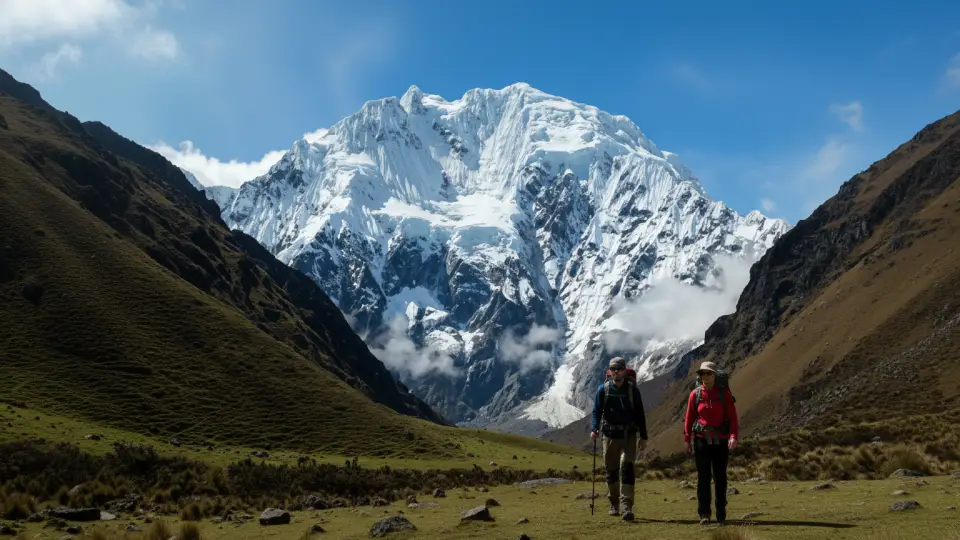
- Salkantay Trek (4 days): Salkantay Trek -4 days, an alternative trekking route crossing high mountain and jungle landscapes before reaching the stunning Inca city.
Southern Valley: The Water and History Route
- A less crowded route that allows observation of cultural transitions.
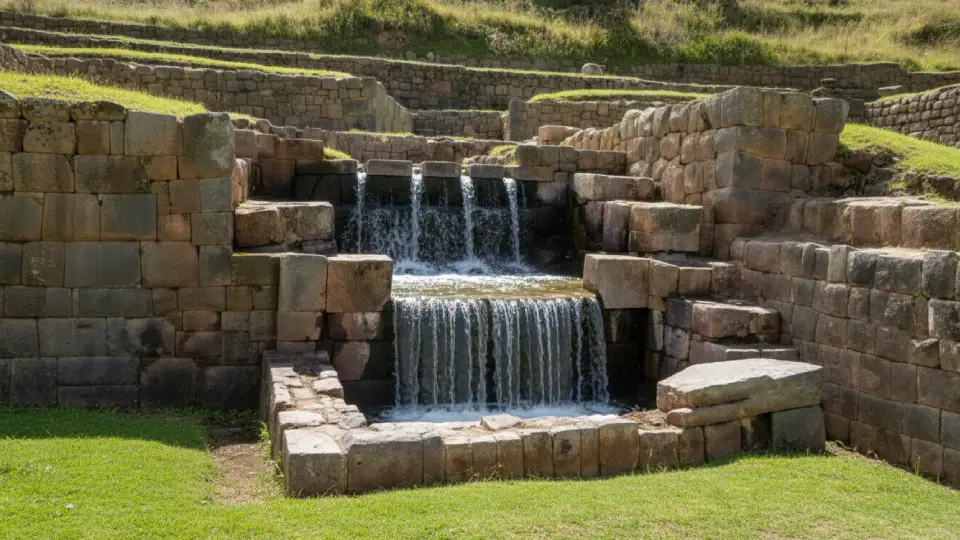
- Included sites: Tipón (the pinnacle of Inca hydraulic engineering), Pikillacta (administrative center of the Wari culture, which influenced the Incas), and Raqchi (Temple of the god Wiracocha).
Other continuous stops along the route include Kanamarka, Maucallacta in Espinar, Maria Fortress or Taqrachullo, and the three canyons in Suykutambo.
Choquequirao Tour (4+ days)
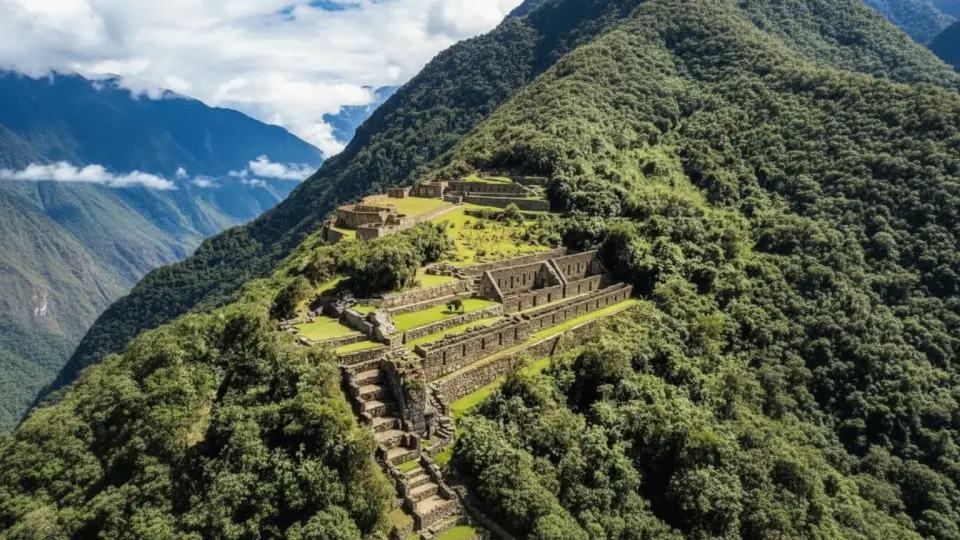
- Choquequirao Tour 4+ days, for travelers seeking a different experience, this is a challenging high-difficulty trek to a less-visited archaeological site in the Apurímac canyon.
- Other recommended sites: Baños del Inca in Cajamarca, Puerto Inca, Lake Titicaca, Vilcabamba, Vilcashuaman, among others.
Safety Recommendations
- Purchase your Machu Picchu tickets only through the official government website tuboleto.cultura.pe or authorized agencies.
- Use GPS tracking apps or request that your accommodation arranges a trusted vehicle.
- Hire guides with a valid official ID issued by the Ministry of Tourism (DIRCETUR).
- Avoid climbing, sitting, or leaning on Inca walls. Penalties for damaging heritage are severe and may include legal detention.
Frequently asked questions about A historical journey through the Inca Empire
Many people believe that the Inca Trail is the only way to reach Machu Picchu, but it can also be accessed by train or alternative routes, such as the Hydroelectric route.
The empire reached its peak in just 100 years (from 1438 to 1532).
- The Strategy: It wasn’t all about war. The Incas first used diplomacy, offering gifts and alliances to local curacas. If they refused, the army would intervene.
- The Key: The Mitimae system (relocation of populations) allowed them to pacify rebellious regions and quickly spread Quechua culture and language.
- Chasquis: Elite runners stationed at the tambos (waystations) along the Qhapaq Ñan.
- Speed: Using a relay system, a message could travel from the coast to Cusco in less than 24 hours, covering hundreds of kilometers.
Practically no. Thanks to the system of state granaries (collcas), the government provided food for those who couldn’t work.