
Inti Raymi 2026 Festival of the Sun in Cusco
One of the most important cultural events in the world, Inti Raymi takes place every June 24 in Cusco, when the city becomes a living stage for the reenactment of the sacred ceremony of the Inca Empire. More than 100,000 spectators gather to witness the event, which features around 700 actors dressed in traditional costumes representing Inca nobles, warriors, and priests.
If you have ever wondered what is Inti Raymi or why is Inti Raymi celebrated, this guide will help answer the most common questions about the festival. Here you will learn how is Inti Raymi celebrated, where is Inti Raymi celebrated, how to buy Inti Raymi tickets, and other key details about one of the most iconic cultural celebrations in the Andes.
What Is Inti Raymi? The Festival of the Sun Explained
The name Inti Raymi literally means Festival of the Sun when translated from the Quechua language. In Spanish it carries the same meaning. It is the most important traditional celebration of Andean culture and is held every year on June 24 in Cusco, Peru, in honor of Inti, the Sun God of the Inca Empire and the mythological ancestor of the Inca royal lineage. Beyond its literal translation, the festival reflects an Andean worldview that connects people, the sun, the earth, and the cycle of life.
Today Inti Raymi is celebrated during the winter solstice in the Southern Hemisphere, the time of year when nights are longest and the sun appears lowest in the sky with its weakest rays. This is why Inti Raymi is celebrated on June 24th, the moment when the solstice occurs. In Inca belief, this was the time when the sun seemed to withdraw from the earth, so ceremonies were performed to call it back and strengthen its energy for the next agricultural season.
The modern festival also explains why Inti Raymi is celebrated at all today. It represents the resilience of Andean civilization and the survival of its traditions after centuries of colonial rule. Today the celebration attracts massive crowds and is considered the second largest cultural event in South America after the carnival in Rio de Janeiro.
The reenactment unfolds across three historic locations in Cusco, showing where Inti Raymi takes place during a single day. The ceremony begins at Coricancha, the ancient Temple of the Sun, continues through the historic center to Plaza de Armas, and culminates with the main ceremony at Sacsayhuamán, the monumental Inca fortress overlooking the city.
Parts of the celebration are accessible to everyone. The ceremonies at Coricancha and Plaza de Armas are open to the public, and there is also a large hillside viewing area at Sacsayhuamán, which means Inti Raymi is celebrated for free in several stages of the event, while tribune seating for the final ceremony requires tickets.
| Detail | Information |
|---|---|
| Date | June 24, 2026 Inti Raymi date june 24 Peru |
| Location | Cusco, Peru three ceremonial stages |
| Duration | Full day, approximately 6 to 8 hours of ceremony |
| Annual Attendance | Over 100,000 local and international visitors |
| Performers | Approximately 700 actors, dancers, and musicians |
| Ceremony Language | Quechua, with Spanish narration for the public |
| Altitude of Main Venue | Sacsayhuamán at 3,701 meters above sea level |
| Free Access | Coricancha, Plaza de Armas, free hillside at Sacsayhuamán |
| Ticketed Access | Tribune A, B, and C seating at Sacsayhuamán |
| UNESCO Status | Intangible Cultural Heritage of Humanity |
| 2026 Edition | 82nd year since the modern revival began in 1944 |
History of Inti Raymi from the Inca Empire to the Present Day
The story of Inti Raymi is closely tied to the survival of Andean culture. The history of the festival stretches from the height of the Inca Empire, through centuries of colonial rule, and into the twentieth-century cultural revival that brought the celebration back to life in the modern era. The roots of Inti Raymi go back to the very foundations of the Inca state, when the rulers of the empire established ceremonial traditions to honor the Sun God and maintain harmony between nature and society.
Origins in the Inca Empire
During the time of the Incas, the celebration was one of the four most sacred annual ceremonies held in Cusco, the capital of the empire known as Tawantinsuyu, or the “Land of the Four Quarters.” This period marks when Inti Raymi started as an official state ceremony linked to the winter solstice, a moment when the sun was believed to be at its weakest and required ritual renewal.
The ceremony had both religious and agricultural importance. It honored Inti, asked for the return of the sun’s strength, and sought blessings for the people and the crops of the empire. At its height, the celebration lasted nine days and included feasting, dances, processions, and the ritual sacrifice of llamas. Offerings were presented at Coricancha, the great Temple of the Sun, whose walls were once covered with golden panels that reflected the sunlight.
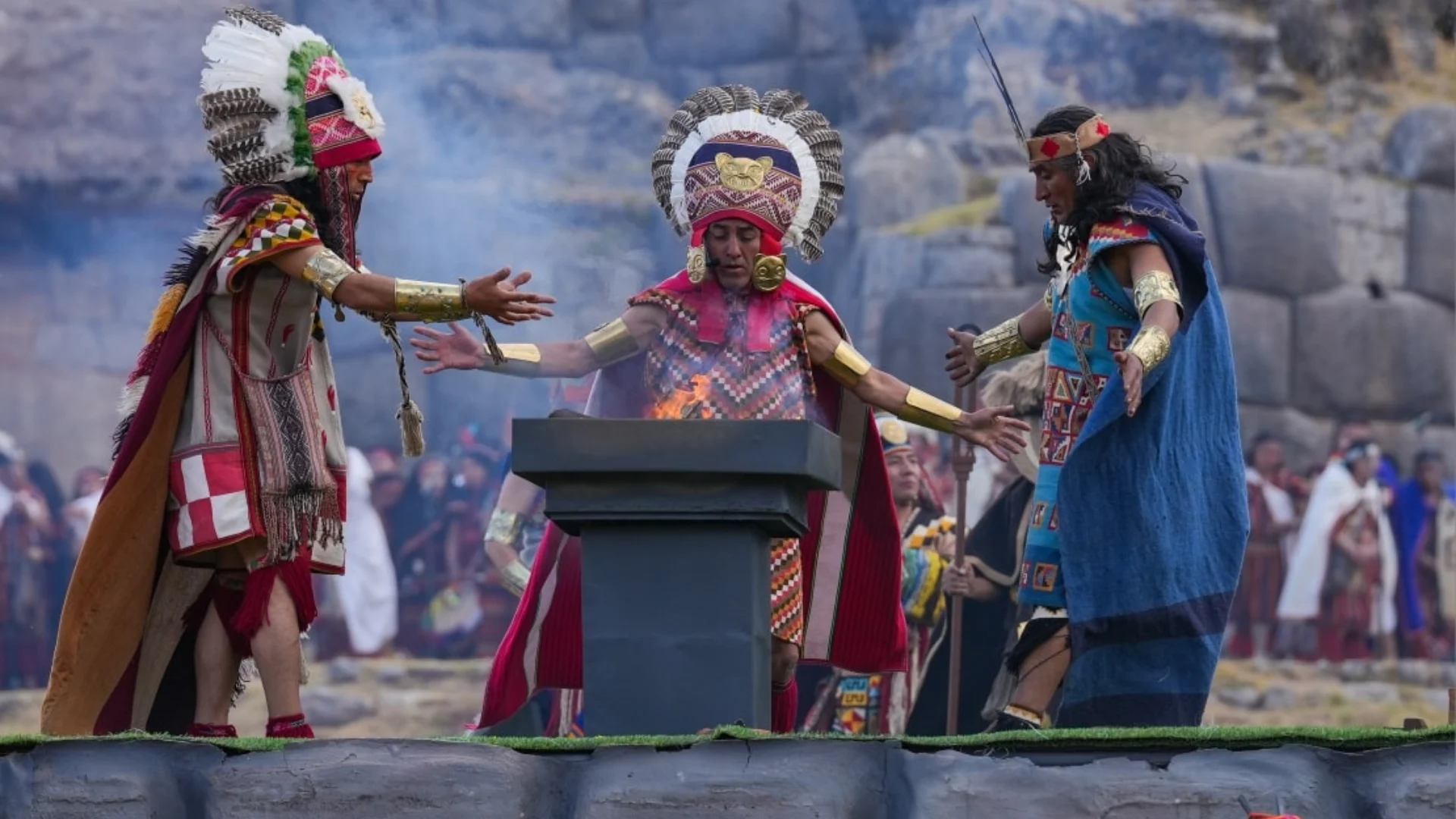
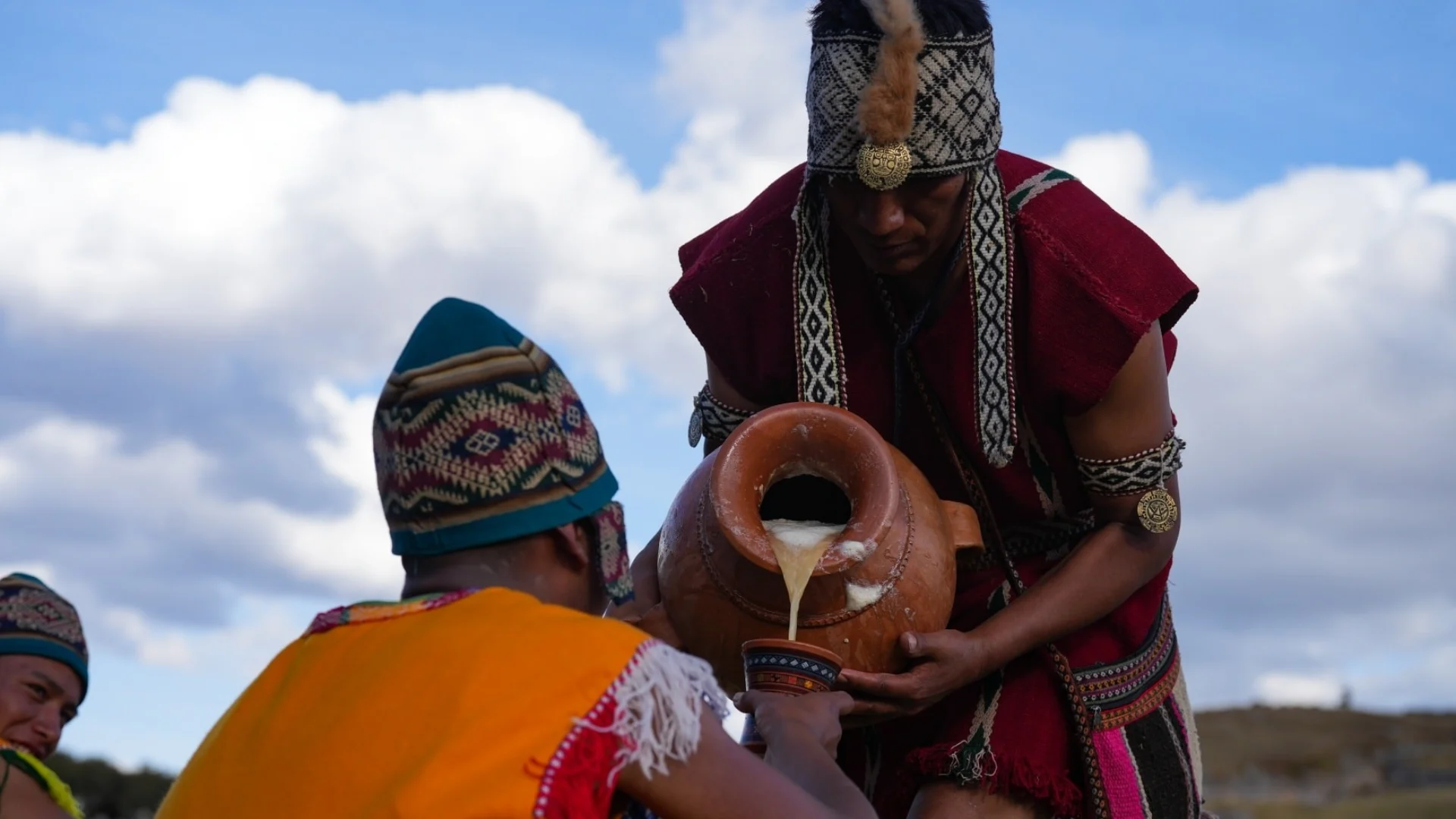
The ceremony was led by the Sapa Inca, the emperor who was believed to be a direct descendant of the sun. One of the most symbolic moments occurred when he raised a golden cup of chicha, a traditional corn drink, as an offering to the sun in an act of communion and gratitude. This gesture remains an important symbolic element in the modern reenactment of Inti Raymi today.
Colonial Suppression 1572 to 1944
After the Spanish conquest, colonial authorities dismantled much of the Indigenous religious system of the Andes. In 1572, Francisco de Toledo, the Spanish viceroy of Peru, officially banned Inti Raymi, declaring the ceremony incompatible with the Catholic faith imposed on Indigenous populations. The sacred temple of Coricancha was taken over, and the Dominican convent of Convent of Santo Domingo was constructed directly on top of its original Inca stone foundations, where it still stands today.
Although the public ceremony disappeared from Cusco for nearly four centuries, elements of the tradition survived in remote Andean communities and in adapted cultural practices. Today, the country where Inti Raymi is celebrated most prominently is Peru, where the festival was revived and is now performed annually in Cusco. However, during the centuries when the ceremony was suppressed, Andean communities in places such as Ecuador and Bolivia preserved related sun celebrations, helping keep the spirit of the tradition alive across the Andes.
The 1944 Revival and the Modern Festival
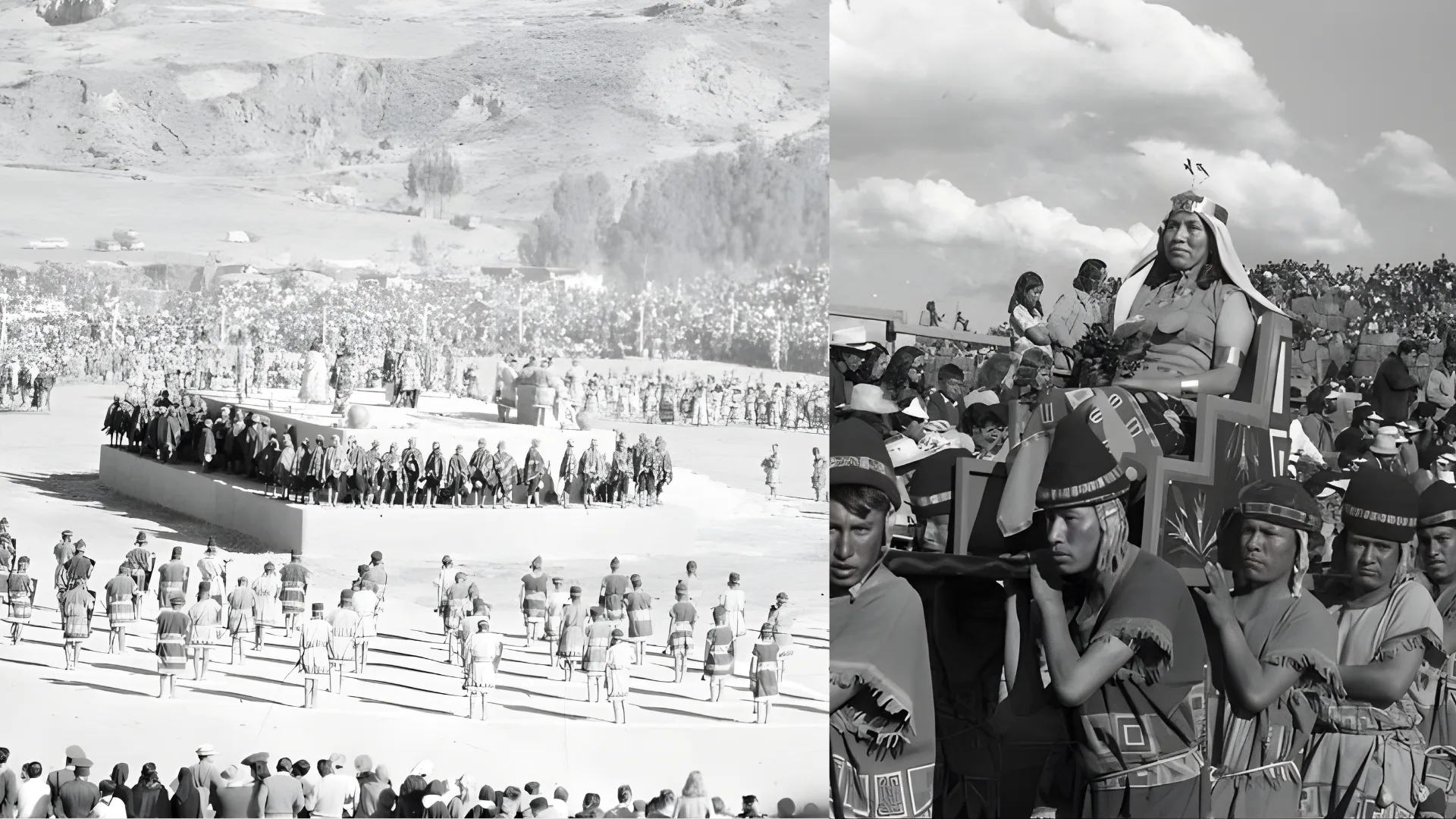
When was Inti Raymi first celebrated in its modern form? Inti Raymi was revived in 1944 by playwright and researcher Faustino Espinoza Navarro with information gathered from chronicles written by Inca Garcilaso de Vega in the colonial era. The first modern Inti Raymi Peru was held on June 24, 1944, at Sacsayhuamán in Quechua language only by the native inhabitants of Cusco. The effect was instantaneous and tremendous. The ritual was officially recognized and gradually expanded over time to become what it is today. The 2026 edition marks 82 years since the modern revival began. Is Inti Raymi still celebrated? Absolutely and more vibrantly than ever, with over 100,000 people attending annually.
The Original Ceremony vs. the Modern 2026 Festival
The modern Inti Raymi festival is a theatrical performance organized by the Municipality of Cusco, rather than a religious ceremony in the strict sense. It is a directed, community-based casting call, and a public cultural event. How is Inti Raymi celebrated today in comparison to how it was celebrated in the past? The table below identifies the main differences between the original ceremony and the 2026 Inti Raymi
| Aspect | Original Inca Ceremony (Before 1572) | Modern Festival 2026 |
|---|---|---|
| Duration | Nine full days of continuous ceremony | One main day, with a surrounding week of cultural events |
| Sacrifices | Real animals offered to Inti | Entirely symbolic and theatrical representation |
| Language | Quechua exclusively | Quechua with Spanish narration for audiences |
| Audience | Inca nobles, priests, and subjects of the empire | Over 100,000 local and international visitors |
| Presiding Figure | The actual Sapa Inca, considered divine | A community actor selected annually through audition |
| Main Location | Coricancha and royal ceremonial plazas | Three stages across Cusco ending at Sacsayhuamán |
| Costumes | Authentic gold, royal feathers, imperial textiles | Historically researched reproductions by Cusco artisans |
| Nature of Event | State religious ceremony with real sacred functions | UNESCO-recognized theatrical performance |
| Organization | The Inca state and priestly hierarchy | Municipality of Cusco through EMUFEC |
The Three Ceremonial Stages
The ceremony unfolds across the city in a processional sequence that reflects the sacred geography of the ancient Inca capital. Today, Inti Raymi takes place in three historic locations in Cusco, and each stage represents a different moment of the ceremonial story.
The celebration begins at Coricancha (the ancient Temple of the Sun), continues to the Plaza de Armas in the historic center, and concludes with the main ceremony at Sacsayhuamán, the monumental Inca fortress overlooking the city.
Throughout the day, thousands of spectators gather across these locations. Each site offers a different perspective of the festival, allowing visitors and locals to experience the ceremony as it moves through the historic landscape of Cusco.
Stage 1: Coricancha, Temple of the Sun (Morning)
The day begins at the Coricancha on Plaza Santo Domingo in the heart of Cusco’s historic center. Today, its original stone foundations survive beneath the Santo Domingo Convent. The opening scene establishes the narrative: the Sapa Inca makes his first public appearance in full regalia and performs prayers facing east toward the rising sun. This stage runs from approximately 9:00 to 10:00 AM and is completely free. Arrive no later than 7:30 AM to secure a good position.
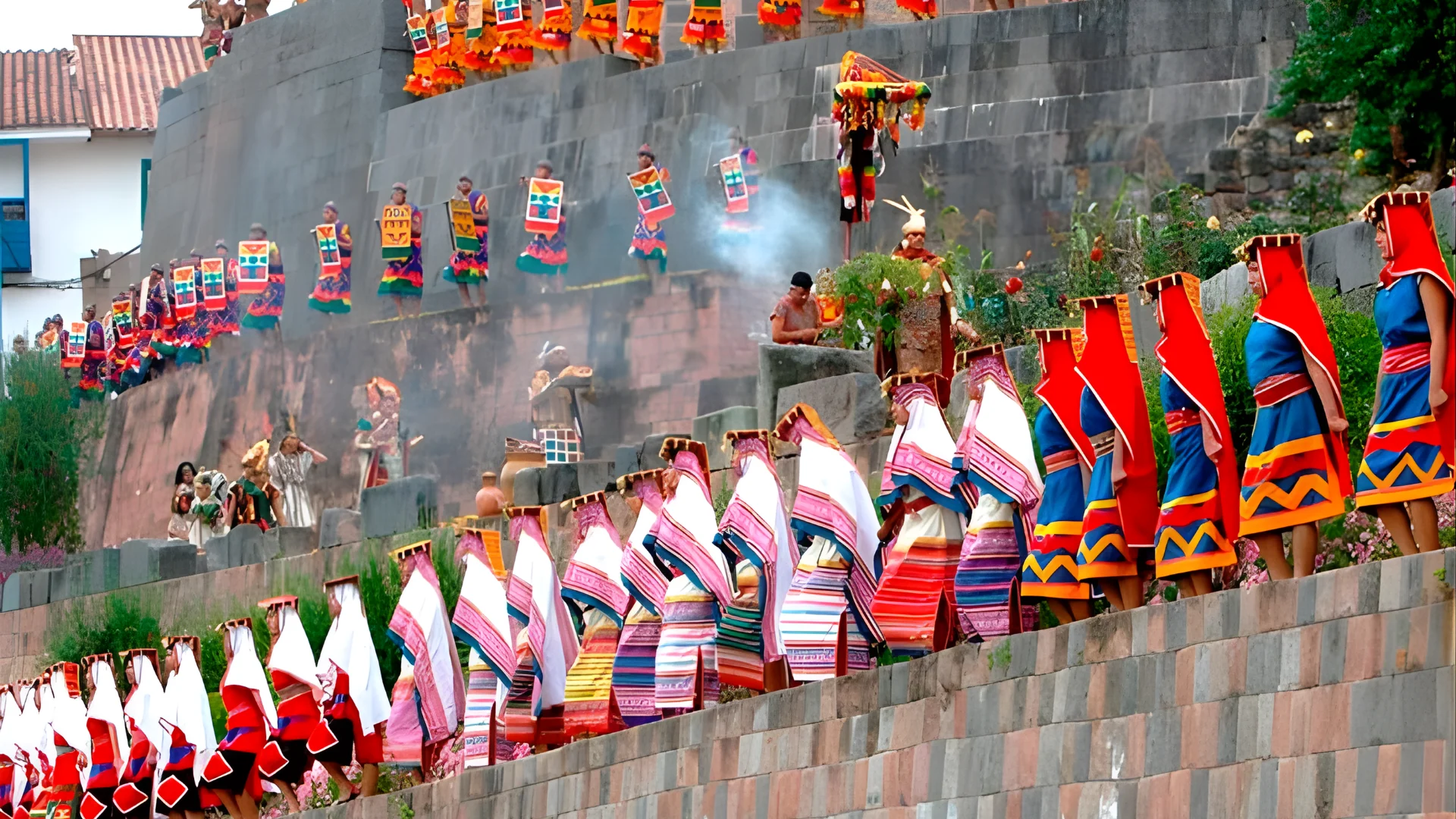
Stage 2: Plaza de Armas (Late Morning)
Following the scene at Coricancha, the entire imperial procession moves along the cobblestone streets toward the Plaza de Armas. The procession along Avenida El Sol is one of the best free moments of the day, as hundreds of performers dressed in traditional Inti Raymi clothing pass at street level.
The music played during Inti Raymi is based on traditional Andean instruments: pututos (conch shell horns), quenas (bamboo flutes), antaras (pan pipes), and large ceremonial drums. When the procession reaches the main square, the Sapa Inca appears on a golden palanquin to address the crowd. This segment takes place approximately from 11:00 AM to 12:30 PM.
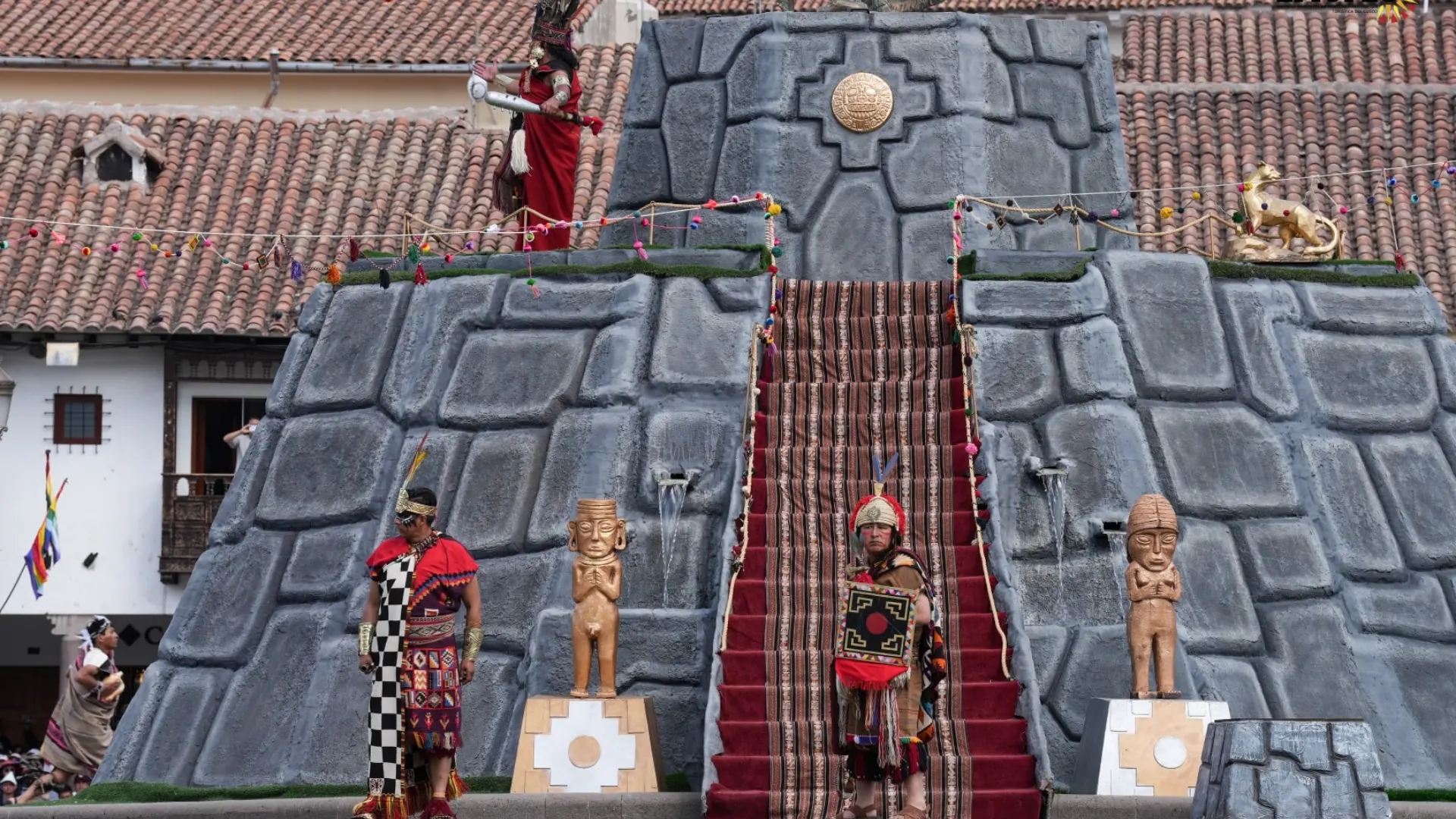
Stage 3: Sacsayhuamán, The Grand Finale (Afternoon)
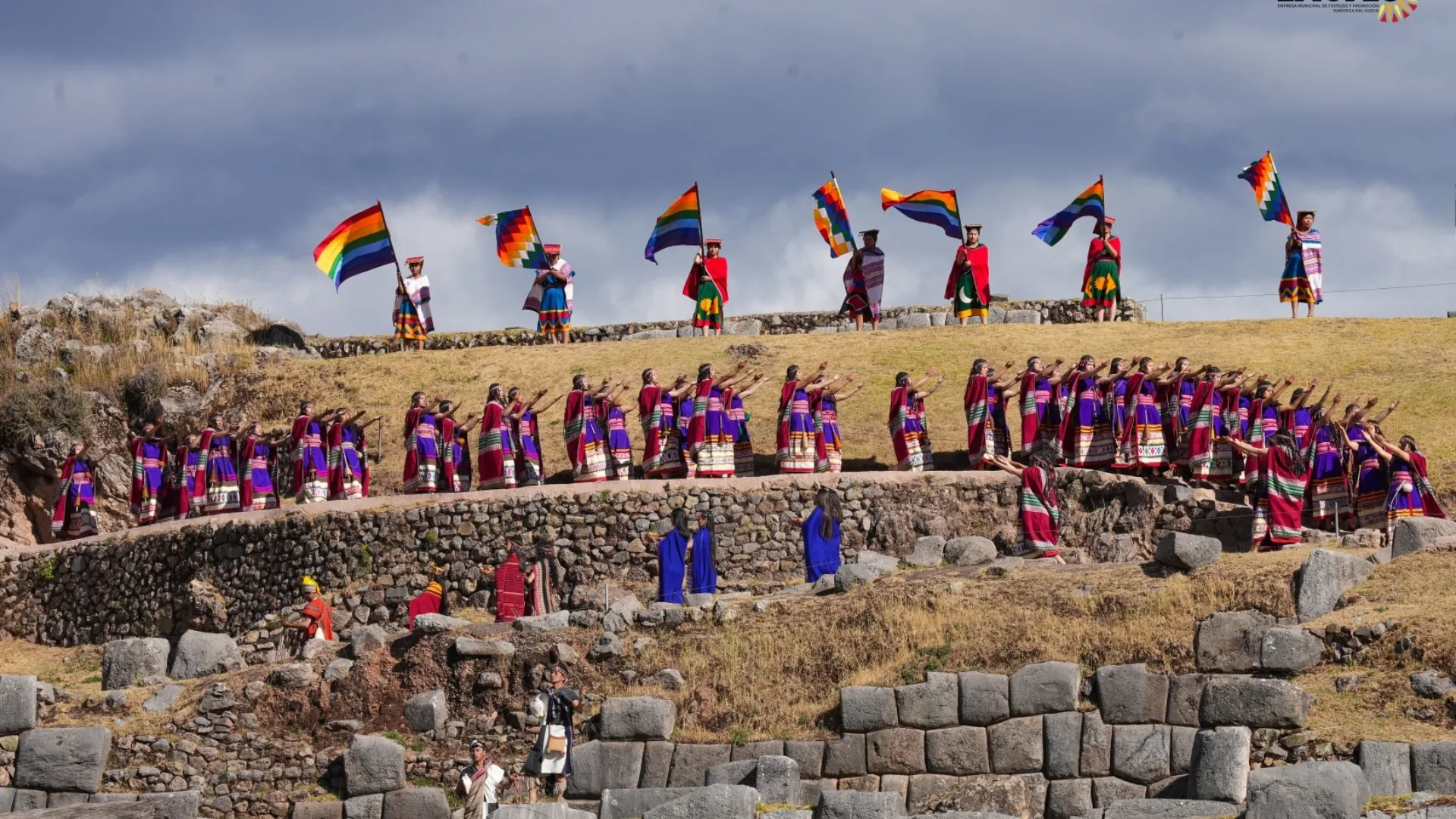
Sacsayhuamán is the climax of Inti Raymi. This impressive Inca fortress is located about 2 km north of the historic center at an altitude of approximately 3,701 meters. The main ceremony takes place here between 1:00 PM and 5:00 PM.
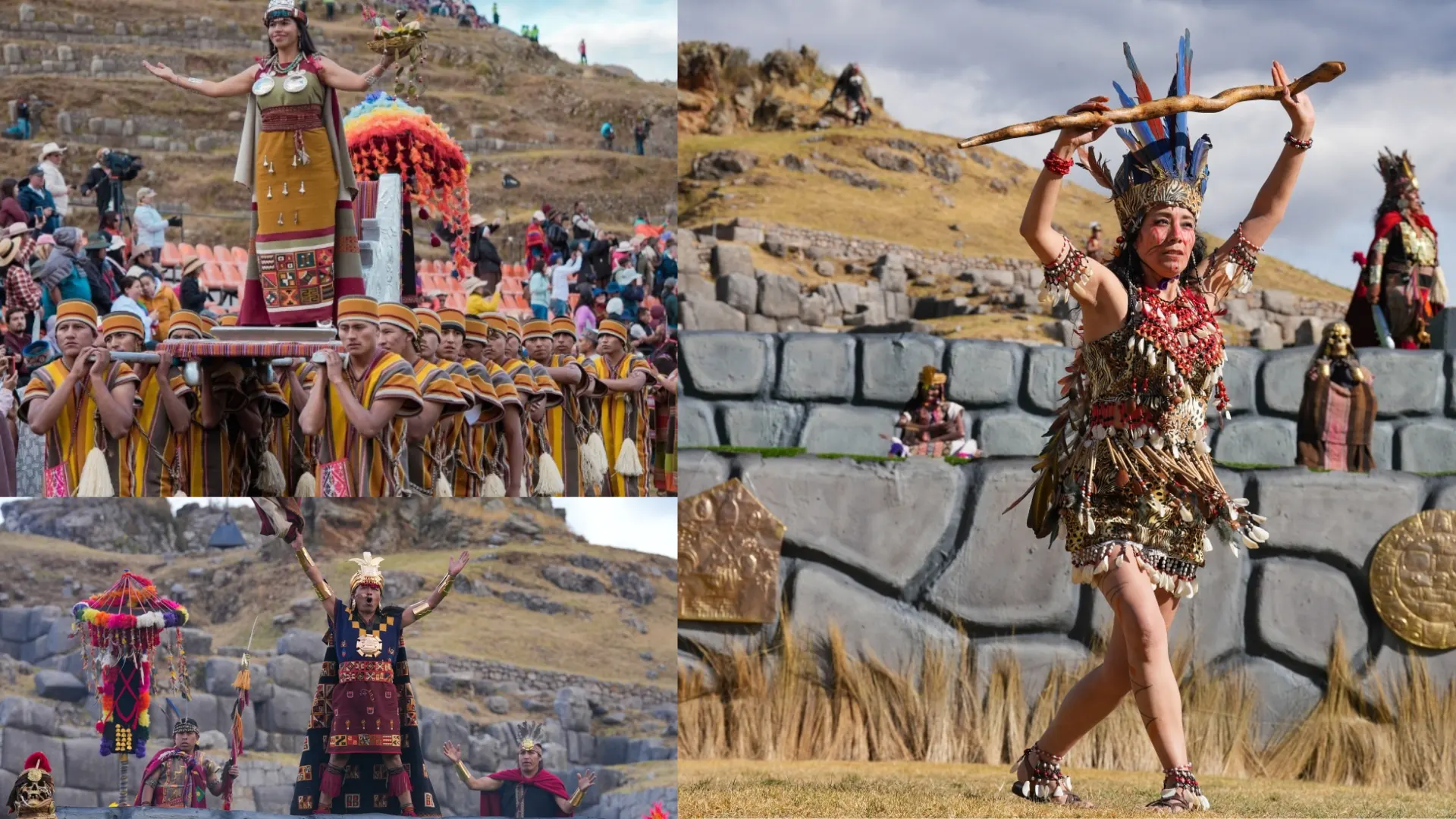
The ritual includes a symbolic sacrifice, the reading of omens by the high priest, the ceremonial gold cup offering, and large choreographed performances representing the four regions (Suyos) of the Inca Empire. Hundreds of performers participate in this powerful reconstruction of the ancient ceremony.
How to Get to Sacsayhuamán on June 24
The Municipality of Cusco closes access roads to private vehicles and regular taxis. The only motorized option is the colectivo (shared minibus) service running to Cristo Blanco. From there, it is a 10 to 15-minute walk to the entrance. Alternatively, the uphill walk from the center takes about 30 to 40 minutes at a steady pace.
On June 24, do not count on arriving by taxi directly to Sacsayhuamán. Take a colectivo to Cristo Blanco before 11:00 AM if you hold a tribune ticket, as you need to be seated by 12:30 PM.
Travel Tip: Positioning yourself along Avenida El Sol by 9:30 AM gives you a close-range view of the performers that no tribune seat can replicate.
| Stage | Location | Time | Access | Arrive By |
|---|---|---|---|---|
| Coricancha | Plaza Santo Domingo | 9:00 – 10:00 AM | Free | 7:30 AM |
| Plaza de Armas | Main Square | 11:00 AM – 12:30 PM | Free | 9:30 AM |
| Sacsayhuamán | Inca Fortress | 1:00 – 5:00 PM | Ticket / Free Hillside | 12:30 PM (Ticket) |
Full Festival Schedule Inti Raymi 2026
Inti Raymi is celebrated every year on June 24 in Cusco, but the festivities extend beyond just one day. Throughout the entire month, the city celebrates the Mes del Cusco (Month of Cusco), with parades, traditional dances, and cultural events leading up to the main ceremony.
The Inti Raymi ceremony itself lasts about six to eight hours across three historic locations: Qorikancha, the Plaza de Armas, and Sacsayhuamán. This makes June one of the most vibrant times to visit the Andean capital.
June 1 to 15: Mes del Cusco
The broader celebration begins on June 1. During this time, many visitors wonder what food is eaten during the festival of Inti Raymi. Typical Andean dishes such as roasted cuy (guinea pig), chicha morada, tamales, and hearty stews made with native ingredients like quinoa and diverse potatoes are enjoyed throughout the city.
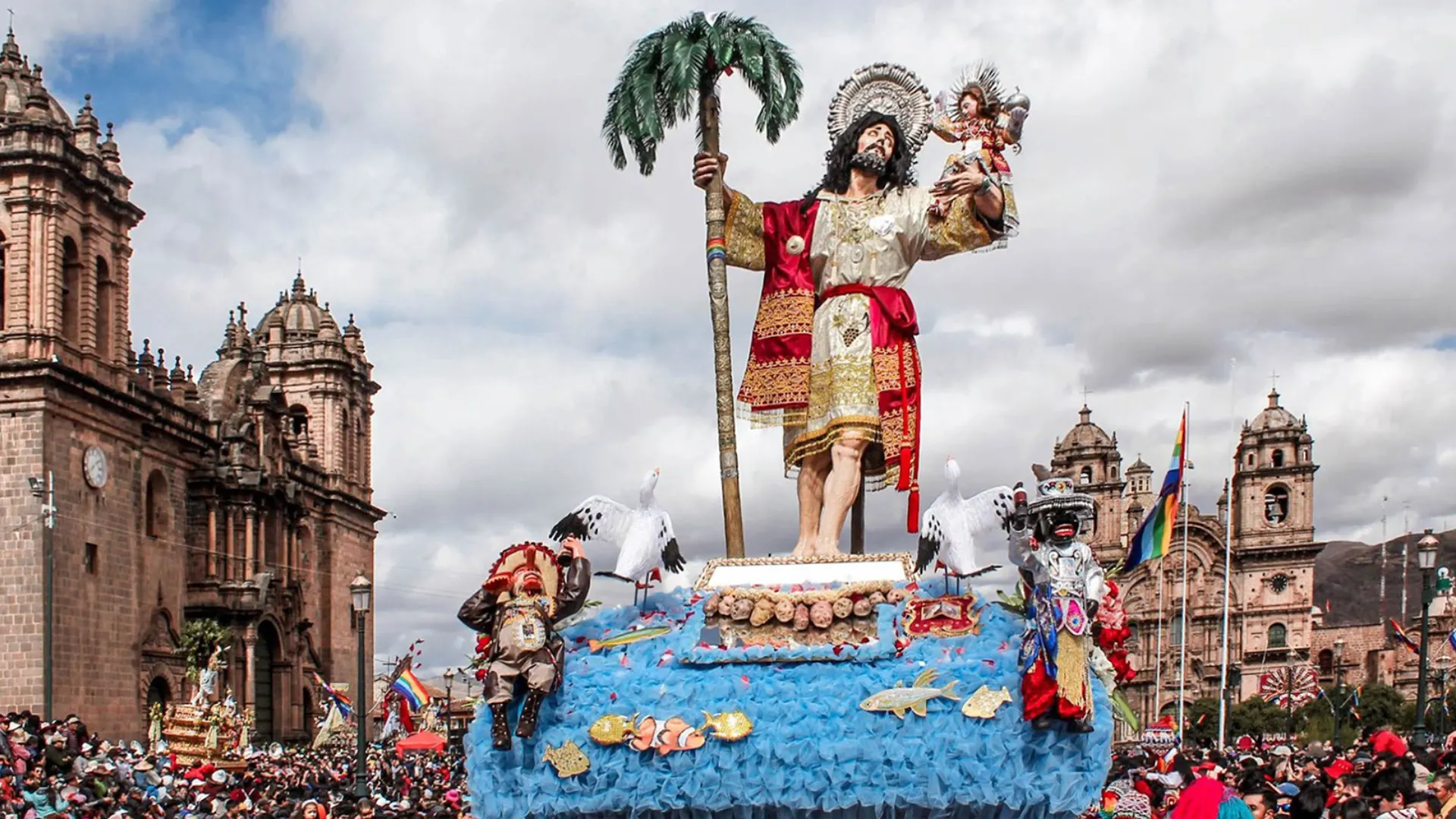
June 7: Corpus Christi
Fifteen statues of Catholic saints are carried in an elaborate procession through the Plaza de Armas. This event blends Spanish colonial traditions with indigenous Andean cosmology, providing essential context for understanding the spiritual depth of Cusco’s history.
June 23: The Vigilia
The night before the main festival, indigenous communities gather at Sacsayhuamán for bonfires, traditional music, and spiritual preparation. This vigil is a time of strong cultural connection for the Andean people. Attendance is free, and respectful visitors are welcome to observe.
June 24: The Main Festival Day Hour by Hour
On the main day, the opening ritual starts at approximately 8:30 AM at Coricancha. Around 10:00 AM, the grand procession moves along Avenida El Sol, leading participants toward the Plaza de Armas.
The final and largest ceremony takes place at the Sacsayhuamán fortress, starting at about 1:00 PM and continuing until 5:00 PM. In total, the full Inti Raymi experience lasts between six and eight hours across the three main stages.
| Date | Event | Location | Access |
|---|---|---|---|
| June 1 to 15 | Mes del Cusco: art, music, markets | Throughout Cusco | Free / Low cost |
| June 7 | Corpus Christi Festival | Plaza de Armas | Free |
| June 20 – 22 | Ceremonies at sacred sites | Qenqo, Tambomachay | Free |
| June 23 (night) | Vigilia: bonfires and music | Sacsayhuamán | Free |
| June 24, 8:30 AM | Coricancha opening ceremony | Plaza Santo Domingo | Free |
| June 24, 10:00 AM | Grand procession | Avenida El Sol | Free |
| June 24, 11:30 AM | Plaza de Armas ceremony | Plaza de Armas | Free |
| June 24, 1:00 – 5:00 PM | Main ceremony at Sacsayhuamán | Sacsayhuamán fortress | Ticket / Hillside |
| June 24, 5:00 PM | Street celebrations | Historic Center | Free |
| June 25 to 30 | Post-festival cultural week | Throughout Cusco | Free / Varied |
How to Get Inti Raymi 2026 Tickets
Inti Raymi tickets are only required for the tribune seating at Sacsayhuamán. The ceremonies at Coricancha and Plaza de Armas, as well as the public hillside area at Sacsayhuamán, can be accessed free of charge.
For many visitors, Inti Raymi is worth it, especially for those who plan ahead and secure good seats. The event is widely considered one of the most extraordinary cultural experiences in South America.
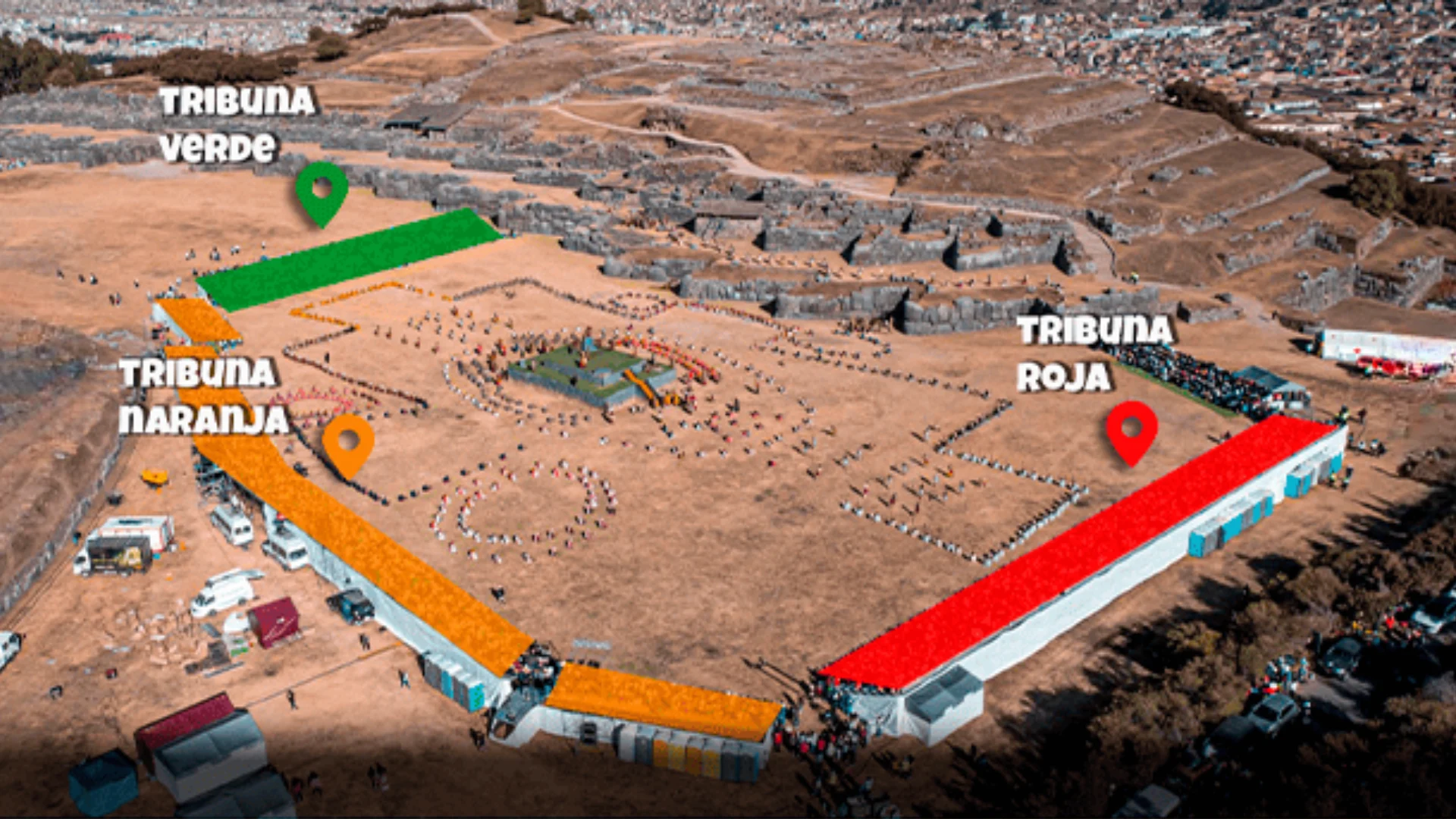
Tribuna Naranja — Central, Most Preferred
The Tribuna Naranja (Orange Tribune) is the central viewing position and the most preferred. It offers a direct, frontal view of the main performance area, ensuring the Sapa Inca’s rituals and the mass choreography are visible in their full perspective. This is the most in-demand option and has very limited availability. Prices range from $120 to $205 USD, and it is recommended to purchase at least 2 months in advance.
Tribuna Verde and Tribuna Roja — Lateral Sections
The Tribuna Verde (Green Tribune) offers a lateral view from a privileged position with a strong sightline. The Tribuna Roja (Red Tribune) also provides a lateral view, allowing visitors to enjoy the show up close; it typically has the widest availability. Both cost approximately $140 to $195 USD and are recommended for those seeking a balance between price and experience.
VIP and Premium Tour Packages
VIP packages are sold exclusively through licensed tour operators. They cost approximately $230 to $320 USD and typically include front-row seating, guided English-language interpretation, round-trip transport to Sacsayhuamán, and often food and beverages. These packages should be booked four to six months in advance through accredited operators.
| Ticket Type | Price (USD) | View Quality | Availability | Where to Buy |
|---|---|---|---|---|
| Free Access (all stages) | Free | Variable | Unlimited | No purchase required |
| Tribuna Roja / Verde (Lateral) | $140 – $195 | Very good | Moderate | Teleticket |
| Tribuna Naranja (Central) | $120 – $205 | Excellent | Very limited | Teleticket (opens March/April) |
| VIP Package | $280 – $320 | Excellent plus extras | Limited | Licensed operators only |
Where to Buy Official Tickets
The sole official ticket seller for Inti Raymi is Teleticket, the authorized distributor designated by the Municipality of Cusco and EMUFEC. Teleticket handles all tribune sales both online and at physical points of sale throughout Peru. No other website or vendor is authorized to issue official tickets.
Online sales typically open between March and April 2026. Tribuna Naranja tickets sell out the fastest often within hours so it is essential to have your account set up and payment method ready before the sale goes live.
Important Warning: Teleticket is the only authorized seller. Any tickets purchased from street vendors or third-party websites are not official and may be counterfeit. Counterfeit tickets are a recurring problem, and buyers with fake tickets are turned away with no refund.
Best Viewing Locations at Inti Raymi 2026
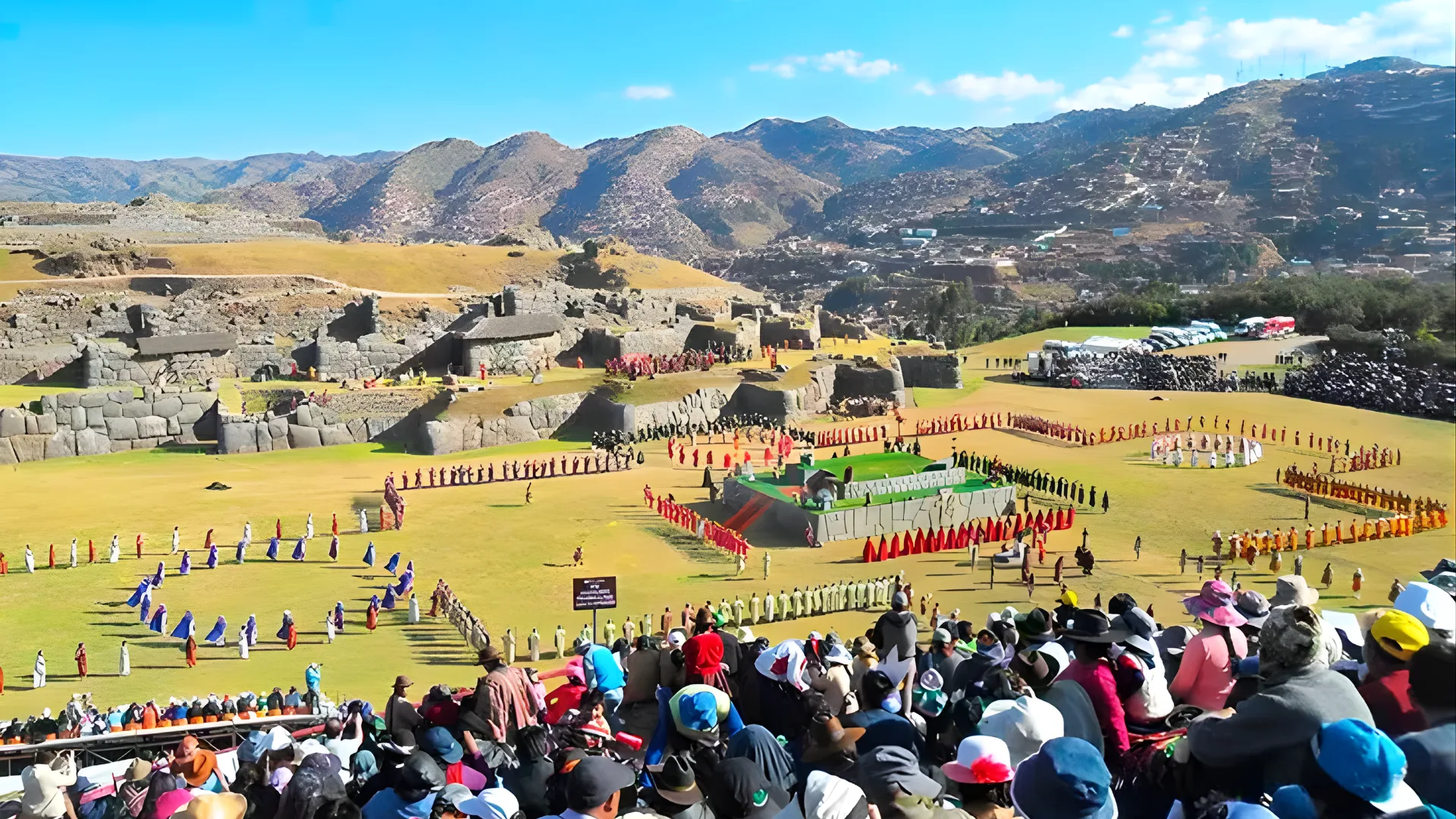
How to see Inti Raymi at its best? Each viewing area at Sacsayhuamán offers a different perspective of the ceremony. Tribune Naranja is centrally positioned and elevated, providing a clear and direct view of the main performance area, allowing visitors to easily follow each scene of the reenactment.
The free hillside area allows you to appreciate the full scale of the event, with the massive fortress walls, hundreds of performers, and the surrounding Andes visible at once. If you choose this spot, binoculars are very helpful, and it’s best to arrive around 9:00 AM to secure a good view.
How to photograph the Inti Raymi festival? The hillside is ideal for wide panoramic shots that capture the entire setting, while Tribune Naranja is perfect for closer photos of the performers, especially during the warm afternoon light.
| Zone | Position | View | Binoculars | Ticket | Capacity |
|---|---|---|---|---|---|
| Tribuna Naranja | Central, elevated, facing stage | Excellent | Not required | Yes, premium | ~2,000 |
| Tribuna Verde | Left lateral, slightly angled | Very good | Helpful | Yes, standard | ~3,500 |
| Tribuna Roja | Right lateral, slightly angled | Very good | Helpful | Yes, standard | ~3,500 |
| Free Hillside | Natural slopes above fortress | Good, panoramic | Essential | No, free | Unlimited |
Travel Tip: All tickets for the three tribune types are sold exclusively through Teleticket. If the Tribuna Naranja is sold out, go for the Tribuna Verde; it still offers a very strong view. For the Coricancha stage, arrive at Plaza Santo Domingo by 7:30 AM. For Plaza de Armas, the stone steps near the Cathedral offer better sightlines aim to be there by 9:30 AM.
What Makes 2026 Different
Inti Raymi follows the same ceremonial structure each year, but every edition has its own character. A new Sapa Inca is selected through community auditions, bringing a unique interpretation to the role. At the same time, ceremonial clothing continues to evolve as local artisans refine costumes using new archaeological insights.
Each year, more than 100,000 spectators gather in Cusco to witness the celebration. A large portion of these attendees are international visitors from across the Americas, Europe, and Asia, making it one of the most important cultural festivals in the Andes.
For 2026, delegations representing all four suyus of the Tawantinsuyu will perform simultaneously from the four corners of the Sacsayhuamán esplanade a significant choreographic expansion. Additionally, Cusco’s master artisans have completed a five-year project producing 47 new sets of historically researched regalia.
How has technology affected the Inti Raymi festival? In 2026, enhanced audio systems ensure Quechua narration is clearly audible from all tribune zones. Furthermore, a dedicated live-stream feed makes the ceremony accessible to a global audience for the first time.
| Element | How It Varies |
|---|---|
| Sapa Inca actor | New performer selected annually; changes the ceremony’s emotional tone and presence. |
| Costume design | Artisan workshops refine regalia; archaeological findings occasionally alter historical details. |
| Choreography | Theatrical directors update formations and pacing according to their specific vision. |
| Community participants | Indigenous groups from Cusco’s provinces rotate each year, bringing regional styles. |
| Music arrangements | Traditional instruments remain constant, but arrangements are updated periodically. |
| 2026 Special Additions | Four-suyu simultaneous opening, 47 new costume sets, and multilingual audio system. |
What to Bring
This is a full-day outdoor event at high altitude. What clothes to wear for Inti Raymi? Cold mornings and intense afternoon sun at 3,700 meters are not the same conditions, and arriving prepared for both is the difference between a comfortable day and a genuinely difficult one.
- Clothing
- Sunscreen of SPF 50
- Warm hat and wide-brimmed sun hat
- UV-rated sunglasses
- Water bottle, 1.5 liters minimum
- Altitude medication if needed
- Binoculars
- Camera with spare battery
- Cash in Peruvian soles
- Packed snacks and light meal
- Small, security-compliant daypack
Practical Items for the Day
What do they eat at Inti Raymi? Food stalls around the festival serve traditional Andean dishes, but lines on June 24 are extremely long pack your own snacks and a light meal to avoid waiting.
What food do they eat on Inti Raymi? Chicha, roasted meats, and festive stews made from Andean grains and root vegetables are the traditional fare. Keep your daypack small and security-compliant. Large bags, glass containers, and alcohol are not permitted inside the tribune gates.
How to Plan Your Trip to Inti Raymi 2026
Inti Raymi Peru takes place during one of the busiest travel weeks in South America. Hotels often sell out six to twelve months in advance, and transportation in Cusco reaches full capacity as visitors arrive for the celebration.
When to Arrive in Cusco
The ideal arrival window is June 17 to 20, giving you four to seven days before the festival for altitude acclimatization, visiting Machu Picchu and the Sacred Valley. It is highly recommended to spend your first one or two days in the Sacred Valley (approximately 2,800 meters) before ascending to Cusco to minimize altitude sickness.
Accommodation
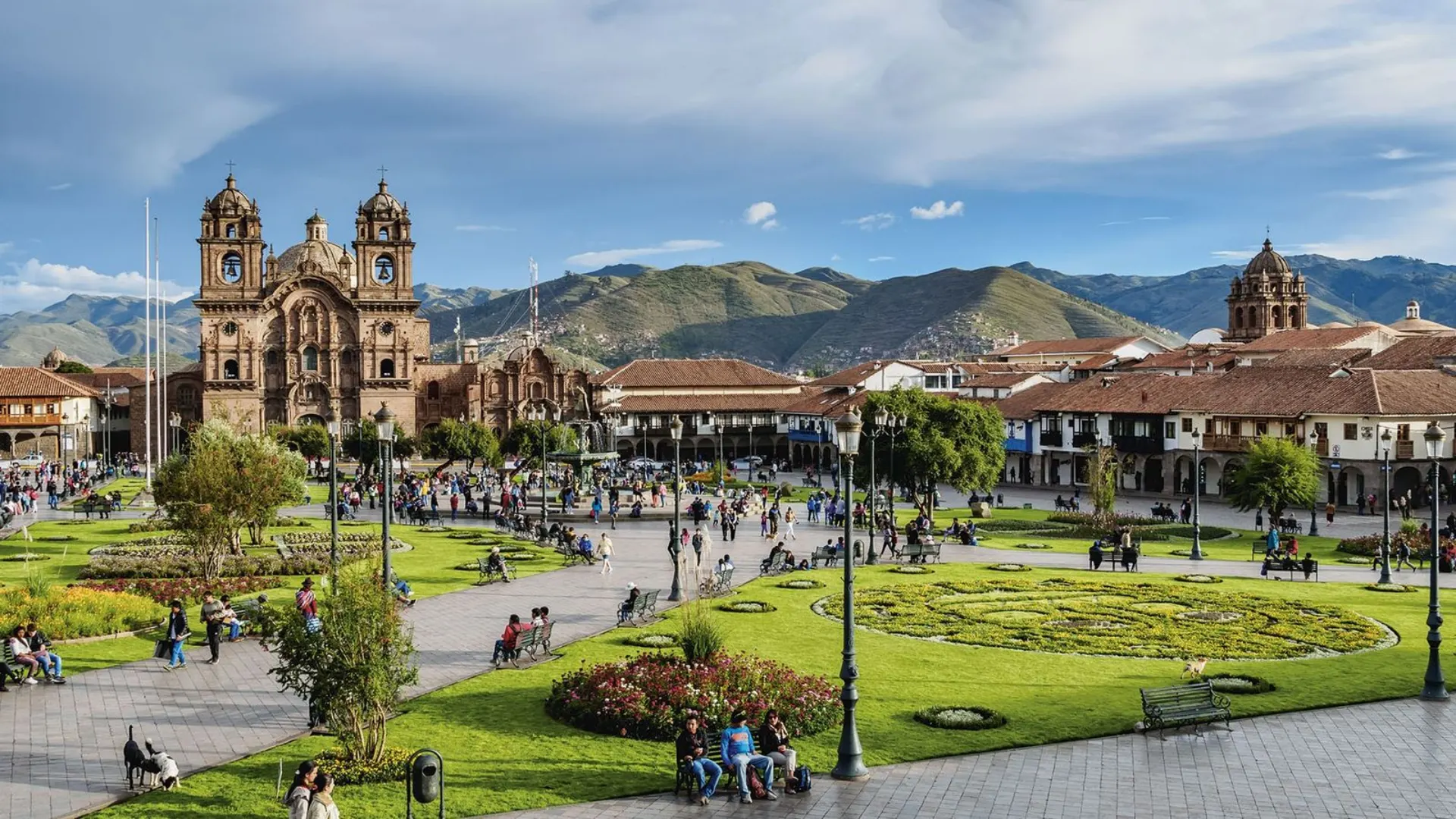
Hotels in Cusco’s historic center fill up rapidly. The practical deadline for securing good accommodation is October or November 2025. The neighborhoods of San Blas, Hatunrumiyoc, and the immediate surroundings of the Plaza de Armas are the most convenient for walking to the festival’s first two stages.
Getting to Cusco
The entry point for most international visitors is Alejandro Velasco Astete International Airport (CUZ), with domestic connections from Lima. For Machu Picchu, ensure you purchase entry tickets and train passes through official channels three to six months in advance.
| Planning Item | Recommended Action | When to Act |
|---|---|---|
| VIP tour package | Book through accredited operator | Oct – Dec 2025 |
| Accommodation | Book early for June 20-27 window | Oct – Nov 2025 |
| Flights to Cusco | Arrive between June 17 and 20 | Oct – Nov 2025 |
| Machu Picchu & Trains | Book via official portals | Nov 2025 – Jan 2026 |
| Tribuna Naranja | Buy immediately on Teleticket | March – April 2026 |
| Tribuna Verde & Roja | Buy immediately on Teleticket | April – May 2026 |
| Altitude medication | Consult your doctor before departing | Before departure |
| Cash (Soles) | Withdraw from local ATMs | Upon arrival |
Travel Tip: Cusco sits at 3,400 meters and Sacsayhuamán at 3,701 meters. Most visitors from sea level will experience altitude effects. Rest on arrival, drink water consistently, eat light meals, and avoid alcohol for the first 48 hours.
The Cultural and Historical Importance of Inti Raymi
Many travelers ask What is Inti Raymi in Peru beyond a tourist event. For many Andean communities, the festival is a celebration of cultural identity and a reminder that their traditions and civilization continue to live on today.
Several countries celebrate Inti Raymi, although the most famous and largest celebration takes place in Cusco, Peru. Similar sun festivals are also held in Ecuador, Bolivia, Argentina, and Chile, where Andean communities maintain related traditions connected to the winter solstice.
One of the most recognizable elements of the celebration is the Inti Raymi symbol, the golden sun disk that represents Inti, the Sun God. During the ceremony, the Sapa Inca raises this symbol as part of the ritual honoring the sun.
Historically, Inti Raymi religion was part of the Inca spiritual system, centered on the worship of the Sun God and respect for Pachamama (Mother Earth). Today, the festival continues to hold cultural and spiritual significance for many participants.
Frequently asked questions about Inti Raymi 2026 Festival of the Sun in Cusco
The ceremony is conducted in Quechua, the language of the Inca, with Spanish narration provided for public audiences.
The Ecuadorian celebration, known locally as Inti Raymi Ecuador, takes place across indigenous communities in the Sierra region, particularly in Otavalo and Cotacachi, and includes ritual bathing, communal dancing, and offerings to Pachamama.
Inti Raymi primarily honors Inti, the powerful Inca Sun God, as the central deity, celebrating the winter solstice (Inca New Year) and asking for his return and prosperity, though it also involves reverence for Pachamama (Mother Earth) and other nature spirits like the Apus (mountain spirits) through offerings and rituals.
During Inti Raymi, performers wear elaborate, colorful costumes mimicking Inca royalty and commoners, featuring rich textiles, feathered headdresses, gold/silver adornments, and bright patterns, while spectators dress in layers of warm clothing like alpaca wool for Cusco’s variable high-altitude weather, including hats, hoodies, and comfortable pants, plus sun protection.
Inti Raymi is a Quechua phrase that translates to the “Festival of the Sun,” where Inti means “Sun” and Raymi means “festival” or “celebration,” honoring the Inca sun god. It was the most important annual ceremony for the Incas, marking the winter solstice and the start of the new Inca year, celebrating the sun as the source of life and renewal.
More than 100,000 people attend annually, which means the city’s entire tourism infrastructure operates at its maximum during the festival week.