The Legend of Manco Cápac and Mama Ocllo
Before the arrival of the Spanish conquistadors in the Andes, the Peruvians had already received from their ancestors a sacred story of how their civilization came into being a myth rich in symbolism, gods, and deep cultural affinity with nature.
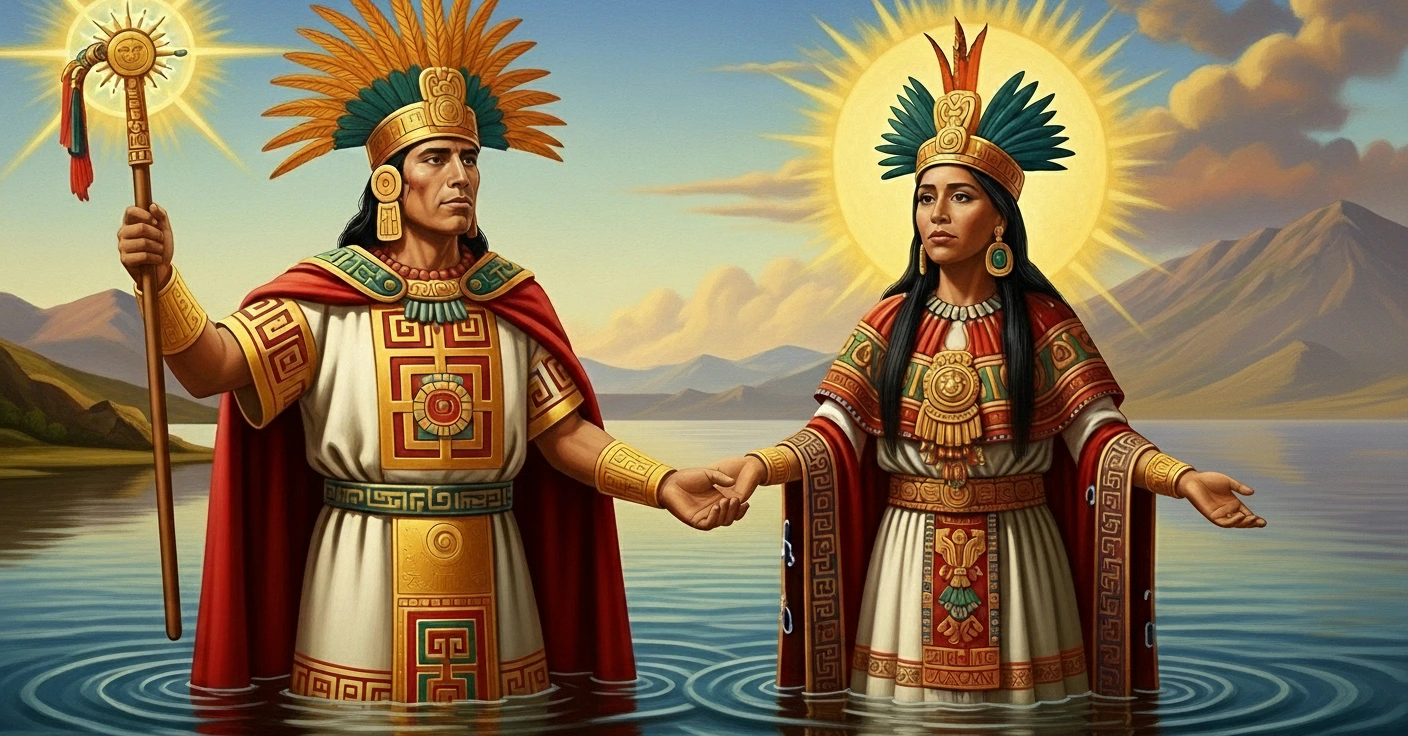
The Sun God, Inti, looked down on a world where people walked without wisdom, law, or peace. He was sorry for them and decided to guide humankind to light and order. He sent his two sons, Manco Cápac and Mama Ocllo, from his heavenly kingdom to bring wisdom, farming, and the moral teachings that would be the foundations of the Inca civilization.
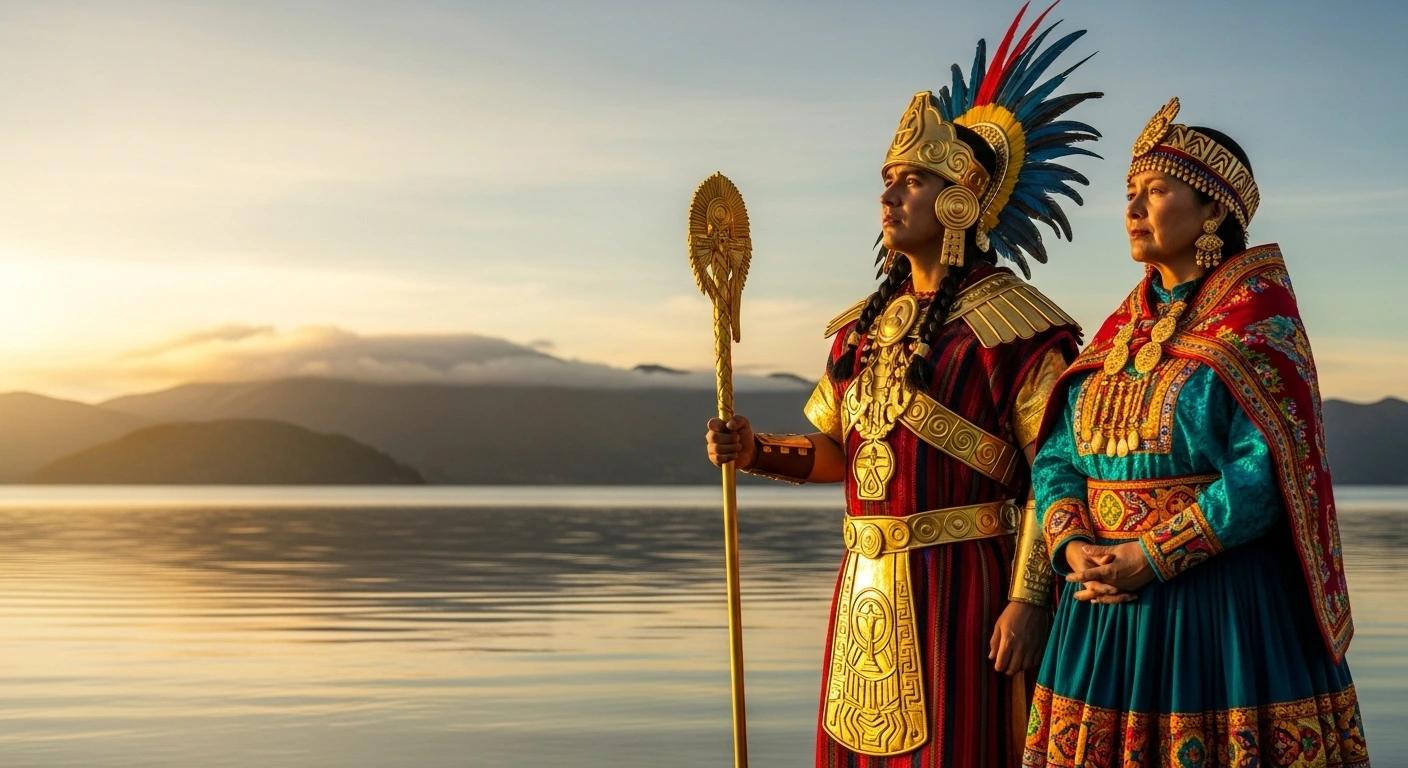
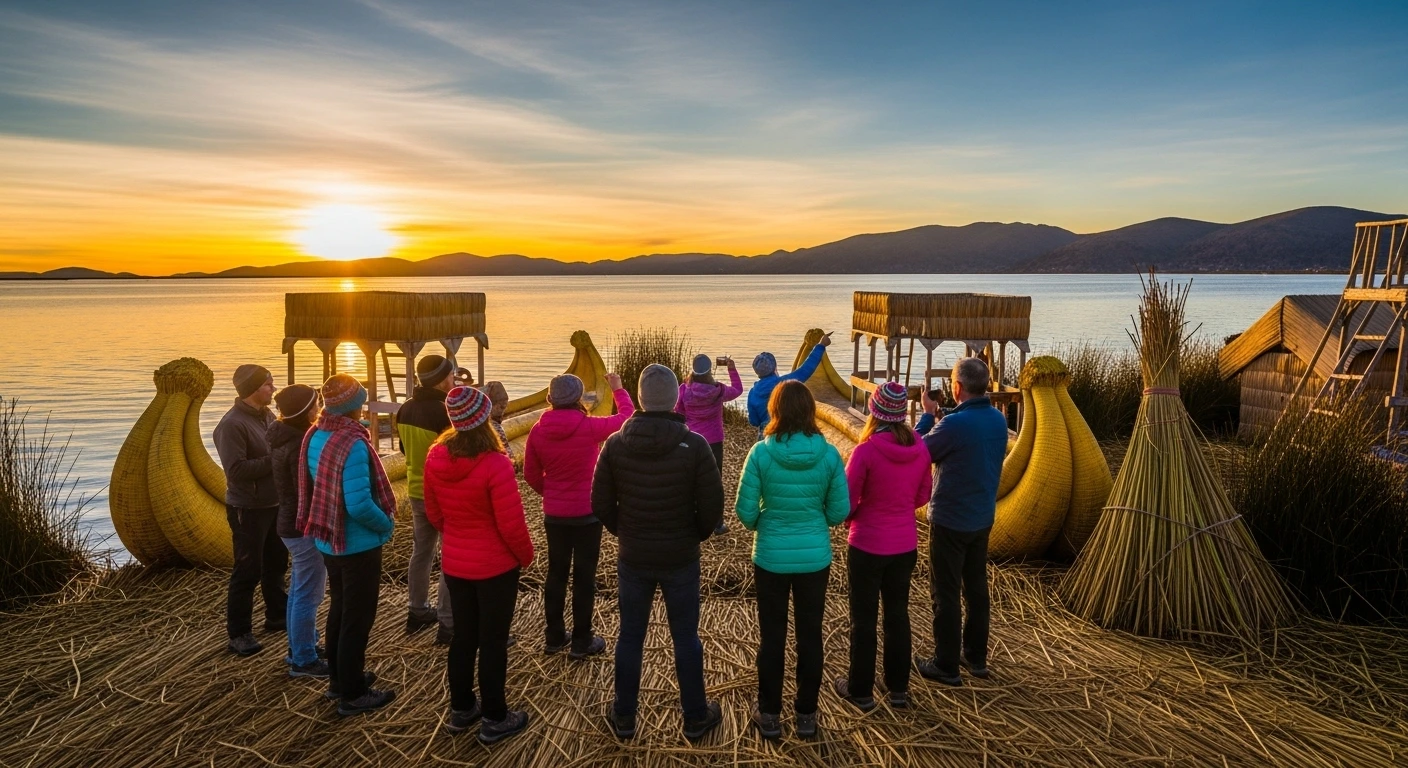
Emerging from the shimmering waters of Lake Titicaca, they carried a golden staff, a holy instrument that would lead them to discover the land sanctified by Inti himself. The holy instrument symbolized spiritual authority, fertility, and the Sun’s connection with Earth.
Their journey would not only establish Cusco, the Inca capital city, but also establish the precepts of equilibrium, society, and nature reverence that defined Andean civilization.
The Mythical Origin Story
Descent from the Sun Divine Mission
Inti, according to legend, commanded his children to travel the Earth and teach knowledge to human beings. He instructed them to teach people to live in harmony to respect the earth, the waters, and the heavens above.
They came forth from Lake Titicaca, a place which has been considered the spiritual cradle of Andean society, symbolizing birth, purity, and rebirth. Their passage through the mountains was not only a bodily journey, but the carrying on of sacred knowledge a pilgrimage of civilization itself.
At every step they took, Manco Cápac and Mama Ocllo carried the light of their father, which brought them to where human life and divine order would meet.
The Golden Staff and the Quest for the Promised Land
Manco Cápac carried the golden staff known as the Tapac-yauri given to him by Inti himself. The staff was not only any tool; it symbolized spiritual power and connection to the fertile Earth, Pachamama.
Wherever they went, Manco Cápac would drive the staff into the ground. It would find its place only in the soil that was fertile enough to support a magnificent civilization. On their journey, they taught every tribe they met how to plant maize, organize families, and worship the gods through sacrifice and rites.
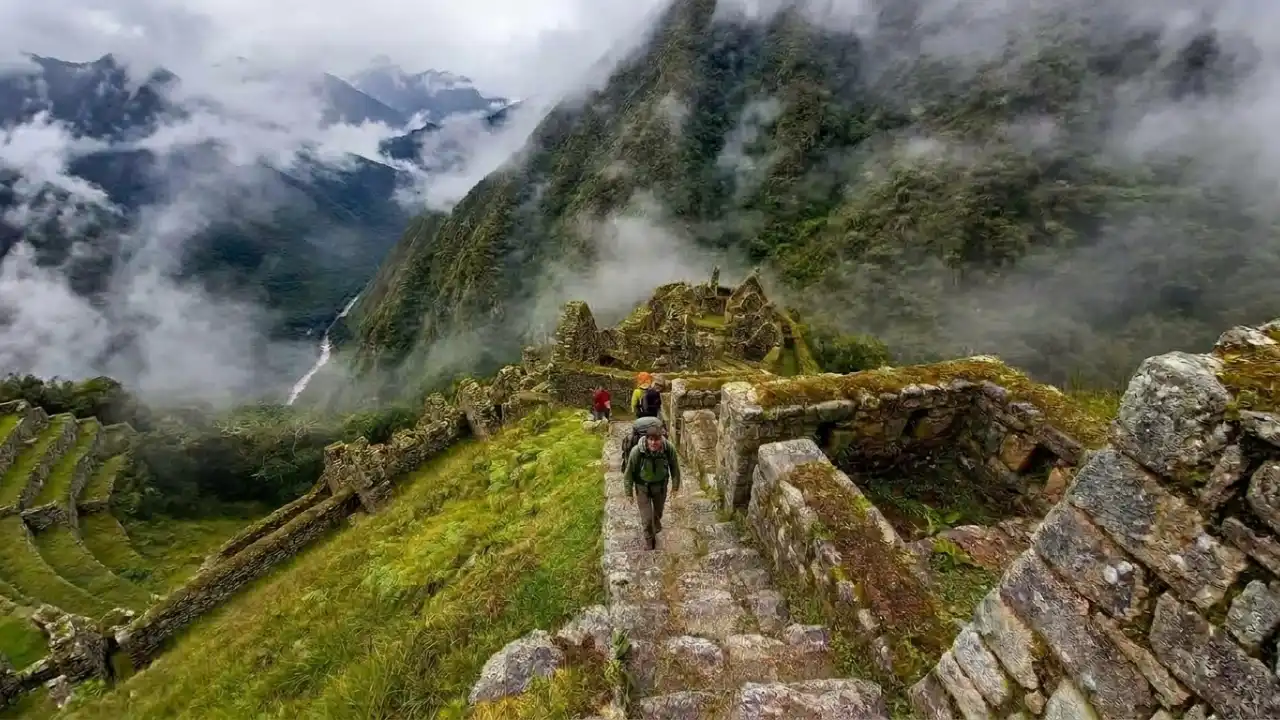
After so long a journey along the rugged back of the Andes wading through streams, climbing precipitous passes, and teaching scattered tribes they at last arrived at the Huatanay Valley. There the staffs set themselves so effortlessly into the earth. It was a divine omen: the Sun had chosen this land as the navel of a new world.
The Foundation of Cusco
At that holy instant, Manco Cápac spoke to Mama Ocllo and said: “Here the Sun favors us. Here we will construct our people’s house.” And there they founded Cusco, also known in Quechua as Qosqo, “the navel of the world.”
The city was made over into something greater than a political center it was the religious center of the Inca Empire, where heaven and earth were believed to cross. Out of Cusco, the Incas built one of the most refined civilizations of the ancient world, building on their knowledge, architecture, and farming across the Andes, guided by the moral and cosmic philosophy left behind by their divine ancestors.
Roles, Teachings, and Cultural Symbolism
The Legend of Manco Cápac
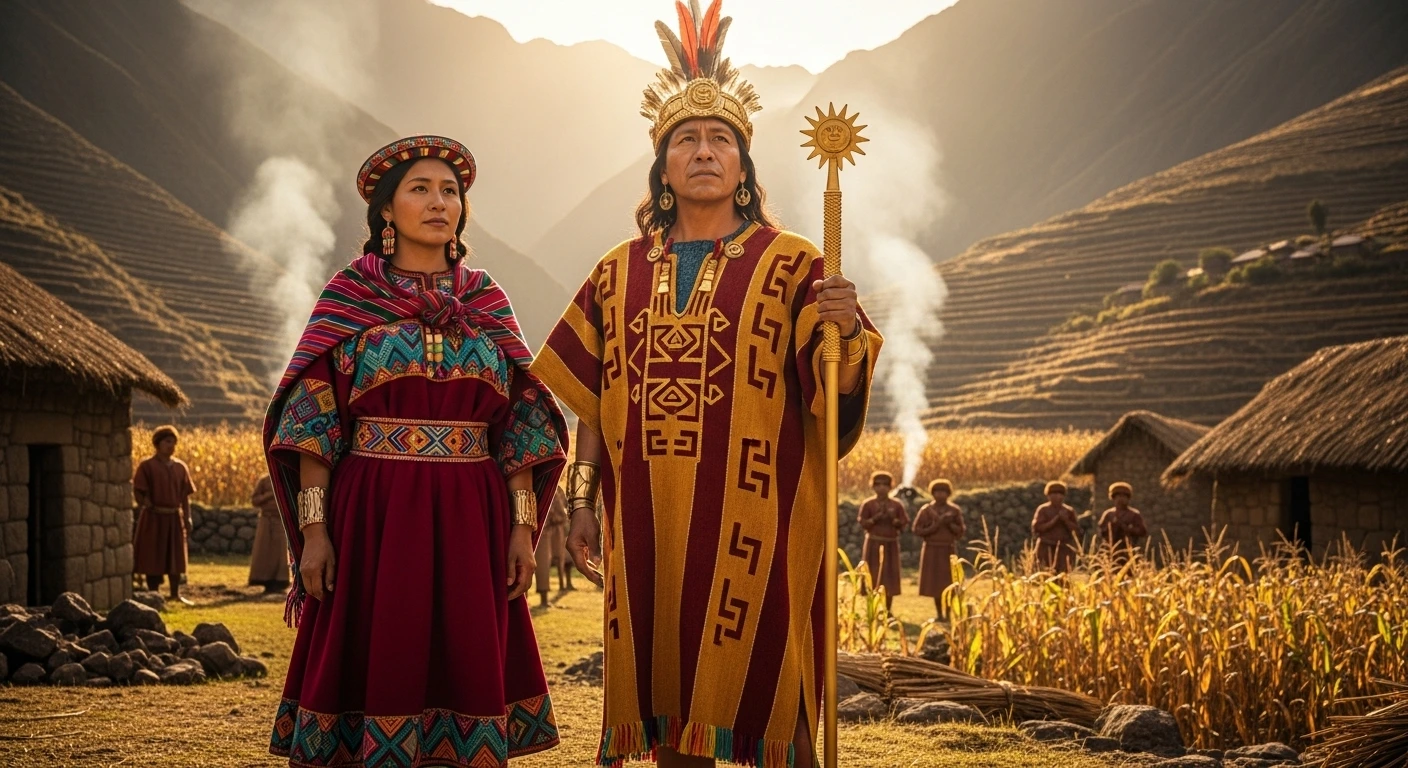
As the first Sapa Inca (leader), Manco Cápac was the best example of discipline, order, and rule from God. He taught men how to till the fields, build houses, irrigate crops, and establish systems of religion and justice.
He also founded the Temple of the Sun, which became Cusco’s most sacred site a physical representation of Inti’s presence on Earth. His leadership combined spiritual wisdom and practical governance, ensuring that every action served both the people and the gods.
Historically, Manco Cápac is the period during which the people of the Andean nation transitioned from scattered tribes to an organized society, united under religion, law, and a common vision of harmony.
Mama Ocllo, The Mother of Knowledge
Manco Cápac’s wife, Mama Ocllo, was deified as the mother of ethics and civilization. She taught women to weave fine fabrics from alpaca and cotton, how to love and discipline children, and how to ensure the spiritual and bodily harmony of the home.
She embodies fertility, kindness, and creation and reminds Inca people of how indispensable women’s wisdom was to the health of family and empire.
Through her teachings, the Inca Empire created a social life out of mutual respect and cooperation, where women also had an active role in community, religion, and transmitting culture.
Yanantin in the Andean world
Of all the core beliefs of Andean philosophy, yanantin is most important the belief that the cosmos functions by opposites in harmony. Everything exists in pairs: night and day, male and female, mountain and valley, life and death.
Manco Cápac and Mama Ocllo reflect this cosmic duality, demonstrating that civilization only came about when there was balance between opposites.
Their encounter learned that strength without wisdom or leadership without compassion brings imbalance a message that kept being echoed in modern-day Andean spirituality.
Legacy in Culture, Tourism, and Modern Identity
Festivals and Cultural Reenactments
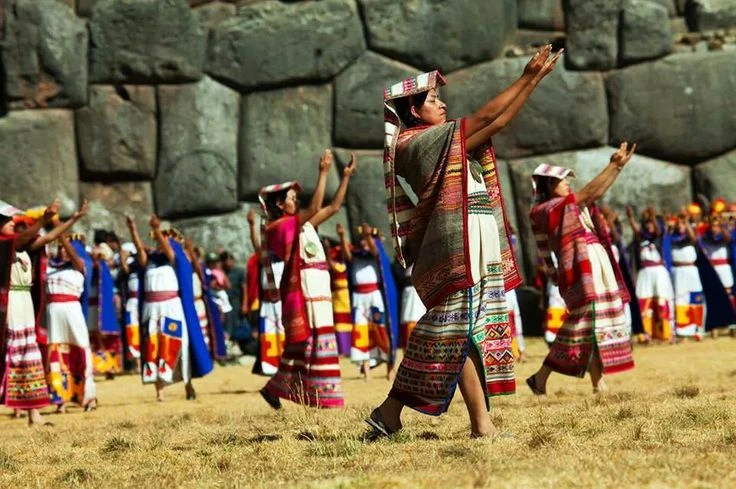
Every June 24, Cusco explodes with color for the Inti Raymi, or Festival of the Sun one of South America’s most breathtaking celebrations.
Hundreds of local residents and visitors throng Sacsayhuamán, where actors in the disguise of Manco Cápac and Mama Ocllo recreate the establishment of the empire in front of the golden Sun altar.
It reminds one of a lost Inca tradition, with music, dance, and sacrifices that honor Inti and Pachamama. It is not merely a tourist destination but a symbol of cultural identity and continuity, connecting modern-day Peruvians to their indigenous roots.
Lake Titicaca and Cusco
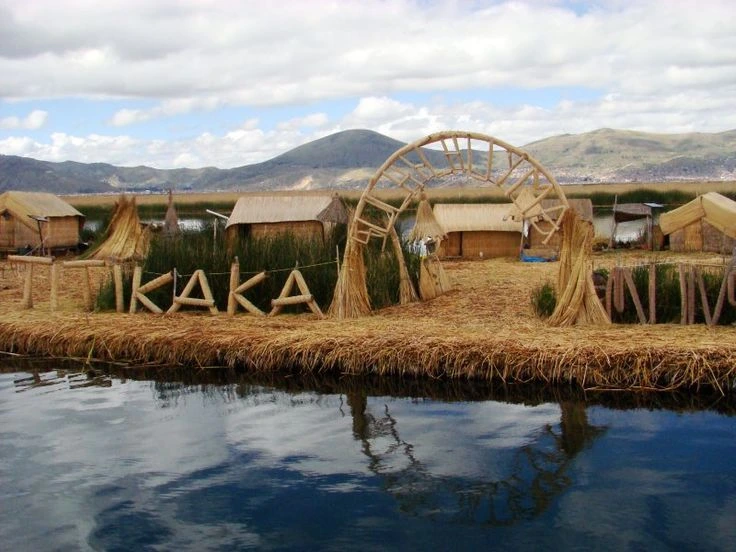
Both Cusco and Lake Titicaca are destinations for travelers that wish to absorb Peru’s spiritual heritage.
Lake Titicaca, at 12,500 ft (3,810 m) above sea level, is the world’s highest navigable lake and is believed to be the birthplace of the Sun and the Incas.
Cusco, however, remains a living museum of Inca society with temples like Qorikancha, colonial buildings superimposed upon pre-existing foundations, and festivals that share the same cosmic respect for harmony and light.
Travellers along this myth can observe how the Manco Cápac and Mama Ocllo legend continues to shape the Andean world’s landscapes, traditions, and spiritualities.
Cultural Continuity and Indigenous Revival
In this day and age, Manco Cápac and Mama Ocllo’s myth remains deeply ingrained in Quechua culture and Andean thought.
Their principles ayni (reciprocity), sumaq kawsay (good living), and respect for nature shape modern Indigenous movements that desire to protect ancestral lands and tradition.
Children are still taught these values in Peruvian and Bolivian peasant societies by the elderly through narrative, ritual, and festival. The myth endures not as a distant legend but as a living code of behaviour that spans the past and the present.
Frequently asked questions about The Legend of Manco Cápac and Mama Ocllo
They were the legendary offspring of the Sun God, Inti, who came down out of Lake Titicaca to share knowledge, agriculture, and civil harmony with humanity. They are the holy founders of the Inca civilization.
The golden staff represents divine authority and fertility. Where it sank easily into the ground, it revealed the chosen land blessed by the Sun Cusco.
While no physical evidence proves their existence, many historians believe the legend may reflect a real process of cultural unification in the Andes led by early tribal chiefs.
It represents balance, education, and divine order the moment when humankind learned to live in harmony with nature and one another. Manco Cápac and Mama Ocllo symbolize duality and cooperation, key elements of Andean philosophy.
Travelers can explore Lake Titicaca, considered their birthplace, and Cusco, the city they founded. Both remain spiritual and cultural centers of Peru.