


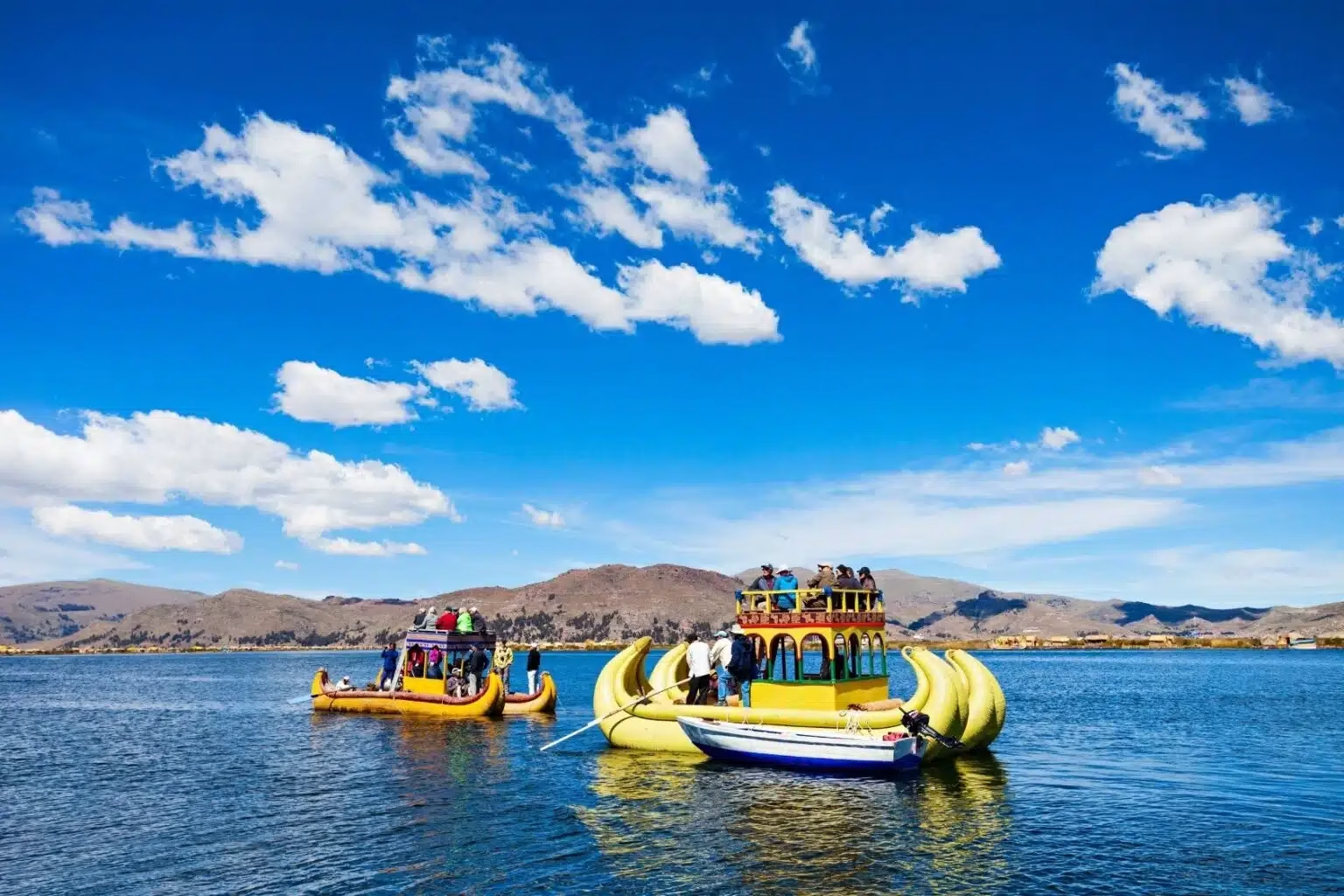
Titicaca Lake: Natural Heritage of Peru
Lake Titicaca is located high in the Peruvian Andes and is undoubtedly among the most remarkable natural attractions found in South America, not only because of its breathtaking scenery but also because it is a sacred place that is intimately linked to Peru’s historic and cultural identity. Its tranquil blue waters have provided life, art, and mythology for countless generations of the Andean peoples.
Though it sits at an altitude of 3,812 meters (12,507 feet) above sea level, Lake Titicaca is regarded as the highest navigable lake in the world. It spans part of the border between Peru and Bolivia and covers 8,300 square kilometers. This massive body of water is framed by terraced hillside, traditional villages, and snowcapped peaks, making it one of the most mesmerizing sites that one can encounter in the Andes.
Lake Titicaca Facts: Elevation, Depth & Location
To truly understand what is special about Lake Titicaca, you must look at the numbers that make it a geographical wonder of the Andes.
- Where is Lake Titicaca located in Peru? It is situated on the high Andes plateau, straddling the border between Peru and Bolivia. The Peruvian side belongs to the Puno region.
- Lake Titicaca Elevation: It sits at exactly 3,812 meters (12,507 feet) above sea level.
- Record Holder: Yes, Lake Titicaca is the world’s highest navigable body of water used by commercial vessels.
- Depth: The lake reaches a maximum depth of 281 meters (922 feet) near Isla Soto.
- Surface Area: It covers approximately 8,372 square kilometers (3,232 sq mi), making it the largest lake in Peru.
History of Lake Titicaca: From Geology to the Incas
The history of Lake Titicaca spans millions of years. While famous for the Incas, its story begins with geology.
How was Lake Titicaca formed?
Geologically, the lake is ancient (about 60 million years old). It was formed when massive tectonic forces lifted the Andes mountains. Initially, it was a massive saltwater lagoon trapped at high altitude. Over millions of years, snowmelt from the Andes Lake Titicaca glaciers diluted the salt, creating the freshwater wonder we see today.
The Lake Titicaca Meaning and Mythology
Why is Lake Titicaca famous in mythology? The name likely comes from the Aymara words “Titi” (Puma) and “Khar’ka” (Rock). The Lake Titicaca meaning translates to “Rock of the Puma,” referencing the shape of the lake when viewed from above (or from a map). For the Lago Titicaca Incas, this was the birthplace of their civilization, where the god Viracocha created the sun and the first Inca king, Manco Cápac.
Location, Altitude, and Geography
Lake Titicaca is situated in the Puno region of southeastern Peru. It has an elevation of 3,812 meters above sea level and a maximum depth of about 281 meters, thereby becoming one of the highest and most elevated deep lakes on Earth.
Because of the altitude, the weather is indeed distinct. Daytime is bright and sunny, but the temperature can plummet once the sun goes down. The difference in temperature and the clarity of the mountain air cause the lake to be an intense blue reflecting both the sky and the surrounding peaks.
The area surrounding the lake is culturally and agriculturally abundant. Farmers grow potatoes, quinoa, and barley on terraced fields, just as their forebears have done for centuries. Along the lake’s shores, llamas and alpacas graze beneath the Andean sun, adding to the sense of timelessness.
Puno: The Gateway to the Lake
While the lake is the main attraction, the city of Puno, Peru serves as the essential harbor and logistical hub for all expeditions. Located on the western shore, Puno is often the first stop for travelers arriving from Cusco or Arequipa.
Puno Altitude vs. Lake Titicaca Altitude
One of the most common questions travelers ask is about the elevation. It is important to note that the city sits slightly higher than the water level.
- Lake Titicaca Altitude: 3,812 meters (12,507 feet) above sea level.
- Puno Elevation Meters: Approximately 3,827 meters (12,556 feet) above sea level.
Because the Puno altitude meters are significant, travelers often experience mild altitude sickness (soroche). We recommend spending your first day in Puno Lake Titicaca acclimatizing, drinking coca tea, and eating light meals before embarking on boat tours to the islands.
Connectivity and Transport
Puno is well connected to the rest of Peru. You can arrive via the Juliaca airport (an hour away), by the scenic Andean Explorer train from Cusco, or by bus. This accessibility makes Puno Peru Lake Titicaca the most popular entry point for exploring the Altiplano.
Where to Stay in Lake Titicaca: City vs. Islands
Choosing where to sleep dramatically changes your experience. Do you prefer the comfort of a modern hotel or the magic of sleeping on the water? Here is a breakdown of the best areas to stay.
Option A: Puno City (Comfort & Convenience)
Staying in the city center is ideal if you want flexibility. Puno offers hotels ranging from budget hostels to 4-star properties like the GHL or Casa Andina.
- Pros: constant electricity, strong Wi-Fi, hot showers, and access to restaurants on Lima Street.
- Cons: It is a busy commercial city, so it lacks the tranquility of the lake itself.
Option B: Uros Floating Islands (Unique “Glamping”)
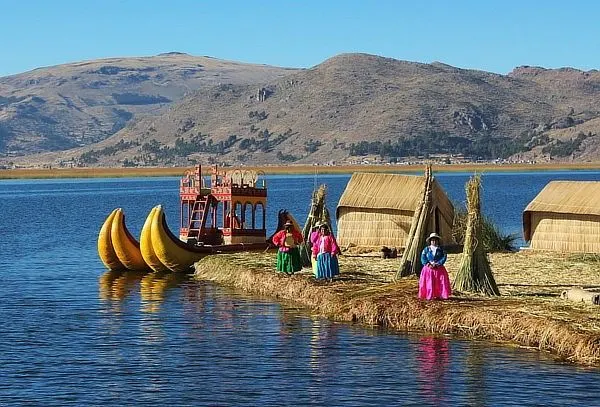
For a once-in-a-lifetime experience, book a night at a Uros floating lodge. These accommodations are built entirely of totora reeds on top of the floating islands.
- The Experience: You sleep literally on the water. The silence at night is profound, and the stargazing is incredible.
- Amenities: Most lodges are eco-friendly with solar power and dry toilets. It is rustic but incredibly charming.
Option C: Amantaní Island (Cultural Immersion)
If you book a 2-day tour, you will likely stay here. There are no hotels on Amantaní; instead, the community organizes homestays.
- The Experience: You live with a local Quechua family, share their meals (usually quinoa soup, potatoes, and cheese), and sleep in their guest rooms. It is the most authentic way to connect with the Andean culture.
- Note: Electricity is limited, and nights are cold, so bring warm layers!
Option D: Suasi Island (Private Luxury)
For those seeking exclusivity, Suasi is a private island located in the northern part of the lake. It is home to the Casa Andina Premium lodge, offering a complete disconnect from the world with kayaking, sauna, and private vicuña reserves.
Flora and Fauna: A Unique High-Altitude Ecosystem
What is special about Lake Titicaca beyond its size? It is a designated Ramsar Site, meaning it is a wetland of international importance. The lake creates a microclimate that supports life that would otherwise freeze at this altitude.
The Totora Reed
The giant bulrush, or “Totora,” is the lung of the lake. It provides nesting for birds, food for cattle, and most famously the building material for the floating islands of the Uros people. Without this plant, the human history of Lake Titicaca would have been completely different.
The Titicaca Grebe
Birdwatchers flock to Peru Lake Titicaca to spot the “Zambullidor del Titicaca” (Titicaca Grebe), a flightless bird endemic to the lake. Sadly endangered, it is a symbol of the fragile beauty of this ecosystem.
How to Get to Lake Titicaca (Puno): The Complete Travel Guide
Reaching Lake Titicaca requires a bit of planning as it is located in the remote Andean Altiplano. The city of Puno serves as the main hub for all lake excursions. Depending on your itinerary, here are the three most common ways to arrive.
1. From Lima to Puno (By Plane)
This is the fastest option. However, there is no airport in Puno city itself. You must fly into Inca Manco Cápac International Airport (JUL) located in the nearby city of Juliaca.
- Flight Duration: Approximately 1 hour and 30 minutes from Lima (LIM).
- Airlines: LATAM and Sky Airline offer daily frequencies.
- The Transfer: From Juliaca airport to Puno, it is a 45 minute to 1 hour drive by private transfer or shuttle. Tip: Book a window seat to see the stunning transition from coast to Andes.
2. From Cusco to Puno (The “Route of the Sun”)
Connecting Machu Picchu with Lake Titicaca is a popular choice. You have two excellent options:
- Touristic Bus (The Sun Route): This is not just a transfer; it’s a full-day tour. The journey takes about 10 hours but includes stops at the Andahuaylillas “Sistine Chapel”, the Raqchi Inca Temple, and the La Raya Pass (4,335m / 14,222ft). It includes a buffet lunch and is the best value for money.
- PeruRail Titicaca Train: For luxury travelers, this 10.5-hour train ride is unforgettable. It features an open air observation car, gourmet dining, and live music as you traverse the high Andean plains. It usually runs on select days of the week (Mon, Wed, Fri).
3. From Arequipa to Puno
If you are visiting the Colca Canyon, continuing to Puno is the logical next step. The bus ride takes approximately 6 hours. The route is scenic, passing through the Salinas and Aguada Blanca National Reserve, where you can often spot wild vicuñas grazing near the volcanoes.
Islands and Local Communities
While best known for its spectacular scenery, Lake Titicaca is also renowned for the people who inhabit its islands. Every community maintains unique rituals and customs that symbolize the human nature connection.
The Uros Floating Islands
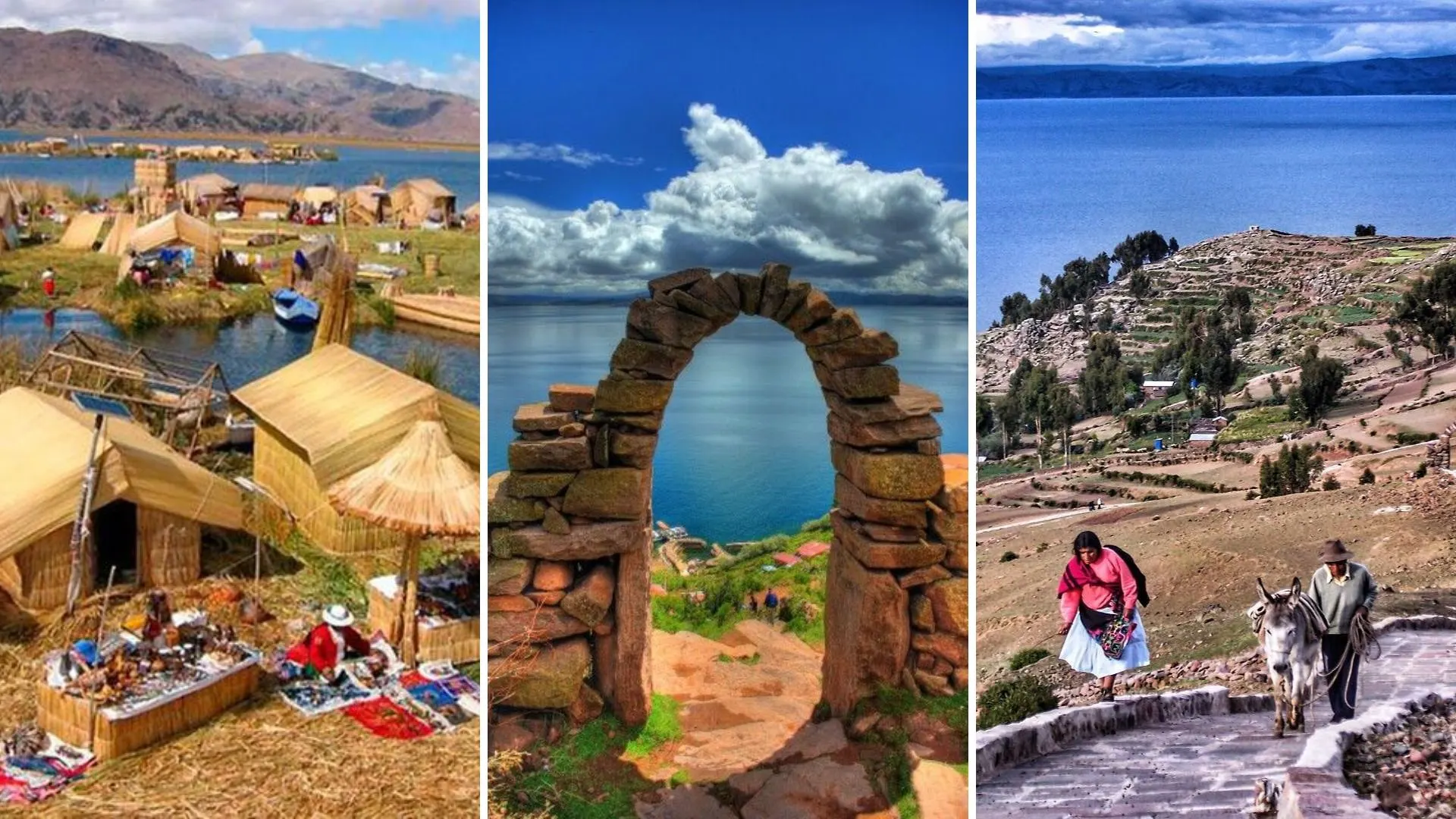
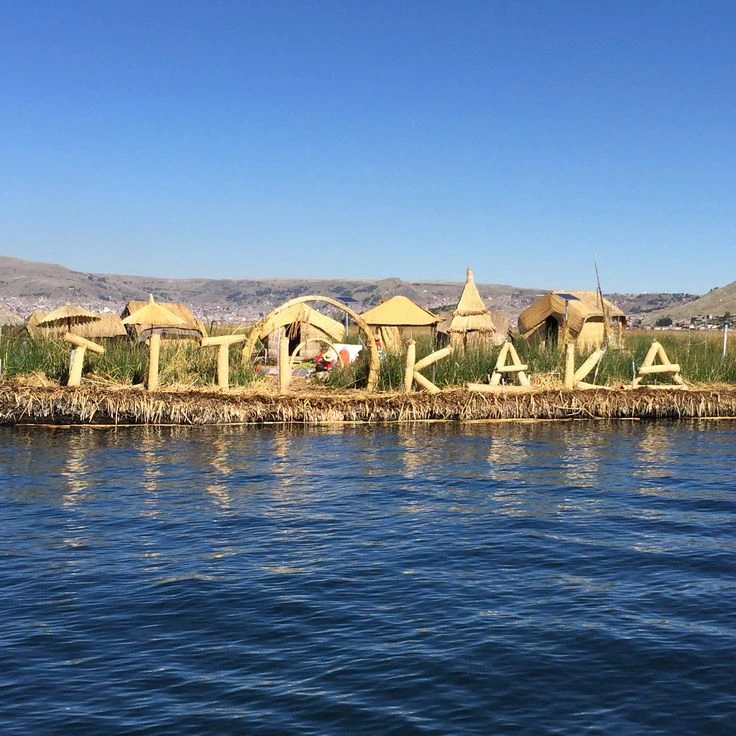
The Uros are one of Lake Titicaca’s most interesting residents, residing on floating islands made of totora reeds, which flourish in the shallower portions of the lake. The Uros use the reeds for constructing their homes, boats, and even schools.
The Uros people have lived this way for generations, living simply and directly related to the water. Visitors can experience rode boat rides, visit families in the community, and see the craftsmanship that enables these islands to float and support life throughout the year.
Taquile Island
About 40 kilometers from Puno, Taquile Island lies with its firm sense of community and rich textile tradition. The islanders’ men are weavers, and their colorful designs explain their culture, beliefs, and position in society. These textiles have been recognized by UNESCO as part of the Intangible Cultural Heritage of Humanity.
The pace of life on Taquile is easy and serene. Visitors who climb 560 steps up the island are treated to beautiful views of the lake, with snow-capped mountains in the distance.
Amantaní Island
Next to Taquile is Amantaní Island, another gem of Lake Titicaca. The island has terraced hills, Quechua speaking families, and temples for Pachamama (Mother Earth) and Pachatata (Father Earth).
A lot of guests stay overnight with host families who prepare authentic meals crafted from locally produced ingredients. One of the most memorable experiences in southern Peru is to watch the sunset from the top of the island with the golden light reflecting on the water.
Lake Titicaca
Visiting Lake Titicaca
The principal entry point to Lake Titicaca is the city of Puno, Peru’s Folklore Capital because of its high-energy music and festival atmosphere. Visitors can fly directly into Juliaca Airport in Puno, which has a daily flight from Lima and Cusco, or take the scenic bus and train through the Andes.
Once arriving in Puno, there are boat tours that operate daily and take visitors to the Uros, Taquile, and Amantaní Islands. Most of the tours include the use of local guides, food, and cultural activities that demonstrate the traditions of the area.
The ideal time to visit is from May to October, which is the dry season. During this time, the weather is nice, the skies are clear, and the colors of the lake are more vibrant than ever. Even during the wet season from November to March, the lake has a tranquil atmosphere, and the reflections in the water are stunning.
Why Lake Titicaca Matters
Lake Titicaca represents an experience rather than just a destination; a living emblem of Andean heritage and ecological equilibrium. The water nourishes the surrounding agriculture, while the islands act as a living testament to traditions, unchanged for centuries.
To local people, the lake is life. It brings food, water, and a sense of cultural identity. Festivities such as the Feast of the Virgin of Candelaria in Puno contain music, dance, and faith in a celebration both for the lake and for the people.
From an environmental perspective, Lake Titicaca serves a vital function, influencing the climate of the Andean plateau and providing habitat for a number of land and migratory birds and native fish.
Visiting Lake Titicaca means witnessing a rare balance between humans and nature. The lake is alive with ancient stories, a time-warped oasis, and the way the sky is reflected on the water reminds every traveler of the beauty and spirituality of Peru’s heart.
Frequently asked questions about Titicaca Lake: Natural Heritage of Peru
Where is Lake Titicaca located in Peru? It sits in the southeastern Andes, in the Puno region. Geographically, the Titicaca lake situated between Peru and Bolivia acts as a natural border, with approximately 60% of its surface belonging to Peru and 40% to Bolivia.
The Lake Titicaca elevation meters is precisely 3,812 meters (12,507 feet) above sea level. This immense height makes it the highest navigable lake in the world used by large vessels.
The Lake Titicaca meaning originates from the Aymara language. “Titi” translates to Puma, and “Kakka” (or Khar’ka) translates to Rock. Legend says the shape of the lake resembles a puma hunting a rabbit. It is also deeply connected to the Lake Titicaca Inca mythology as the birthplace of the sun.
The lake is famous for its floating Uros Islands, handwoven textiles from Taquile, and sacred legends that describe it as the birthplace of the Inca civilization. It’s a true world heritage site in Peru.
Travelers can explore the Uros, Taquile, and Amantaní Islands, sail on reed boats, stay with local families, and experience authentic Andean culture surrounded by the stunning scenery of Peru Lake Titicaca.
Why is Lake Titicaca famous? It is renowned for the Uros people who live on floating reed islands. Furthermore, why is Lake Titicaca important? It is crucial for the microclimate of the Andes, allowing agriculture (potatoes and quinoa) to thrive at heights where it would normally be impossible.


