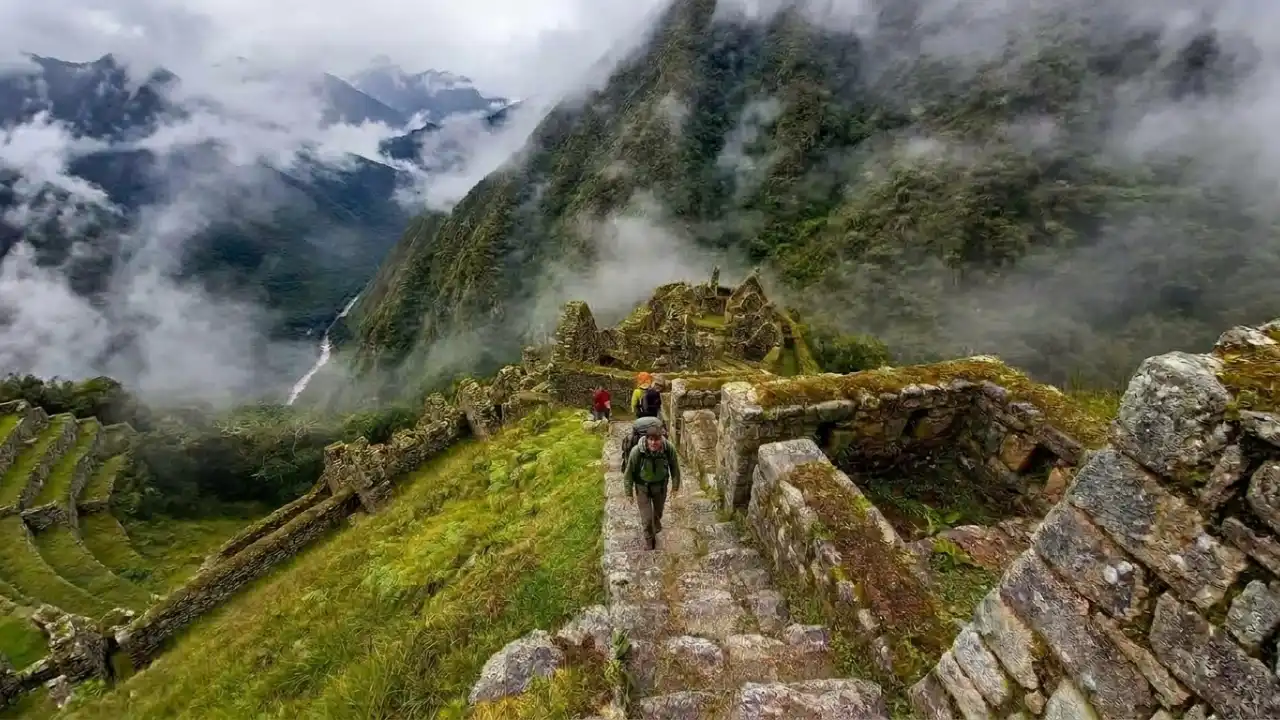

The Sacred Coca Leaf of the Incas and Its Role in Peruvian Culture
The coca leaf is one of the most misunderstood and culturally significant plants in the world. For thousands of years, coca leaf has been at the center of the spiritual, medicinal, and everyday life of Andean civilizations, particularly the Inca Empire. Known as the divine plant of the Incas, the coca leaf (coca inca) is far more than just a botanical curiosity, it is a living symbol of Peruvian identity, indigenous resilience, and ancestral wisdom. The history of coca Peru is an integral part of the cultural legacy of South American civilization, and to understand coca leaf properly, one needs to break free from misconceptions and approach the subject with cultural and scientific sensitivity.
Today, millions of tourists visiting Peru discover coca leaves for the first time and are surprised to know that coca leaf plays an important part in the everyday life of Andean people. This comprehensive guide will take you through everything you need to know about coca leaf, from its ancient history and sacred role in Inca culture to its modern uses, benefits, legality, and surprising connection to global beverage giants.
What Is the Coca Leaf and Why It Is Called the Divine Plant
The coca leaf is defined as the foliage of the coca plant, native to the Andean highlands and the upper Amazonian jungle. Botanically, it is a small green leaf rich in alkaloids, vitamins, and minerals. Culturally, it is revered as a sacred gift from the earth a divine plant of the Incas with profound spiritual and medicinal significance.
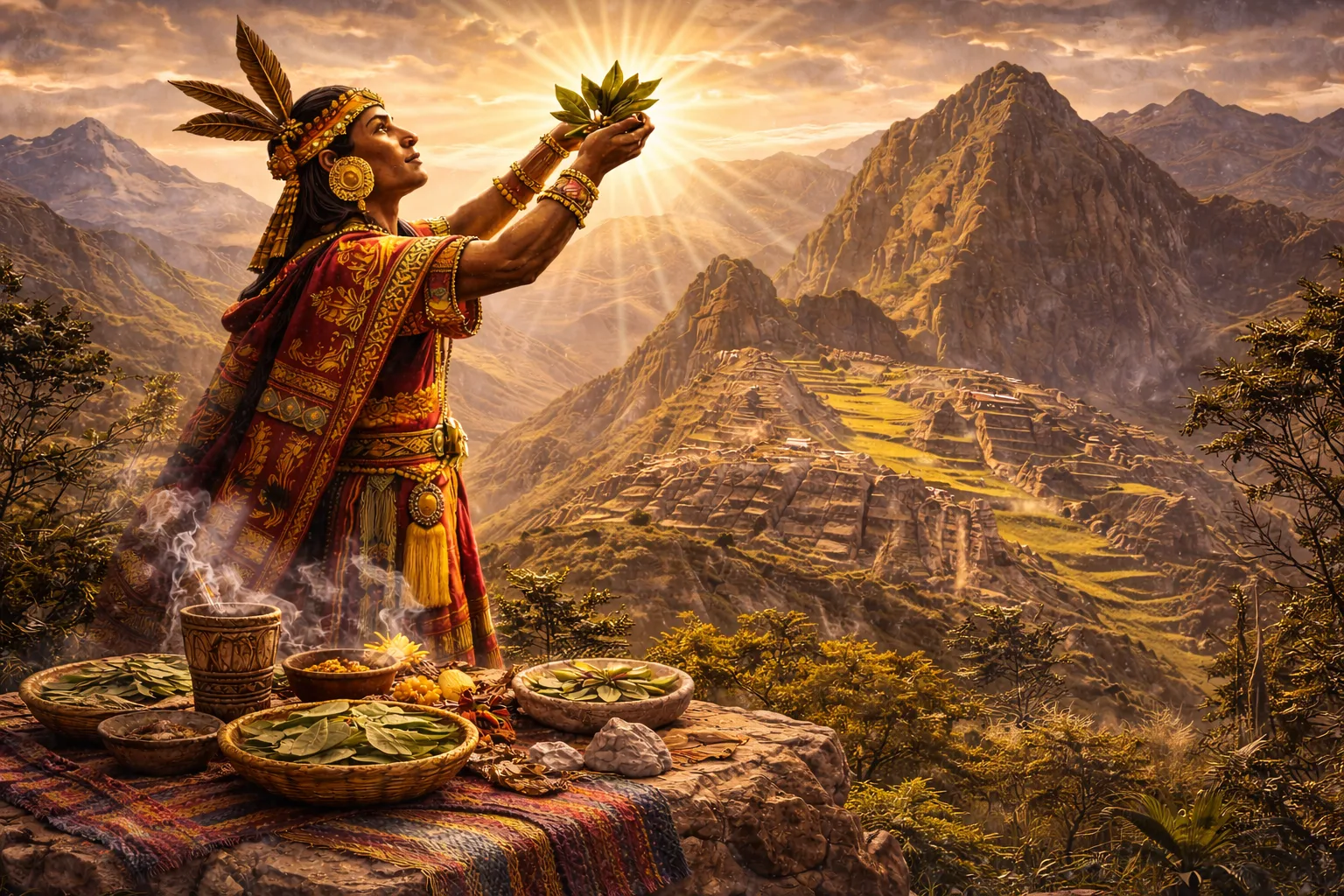
In the Inca worldview, coca is a physical embodiment of divine energy. It was used by priests, shamans, and kings in sacred ceremonies, from divination to making offerings (pagos) to mountains (Apus) and rivers. The plant served as a medium through which the human world communicated with the divine.
Evidence of coca cultivation in the Andes dates back at least 8,000 years, making it one of the oldest cultivated crops in the Western world. Long before the Inca Empire, cultures such as Tiwanaku and Wari had already integrated coca into their religious and social fabric.
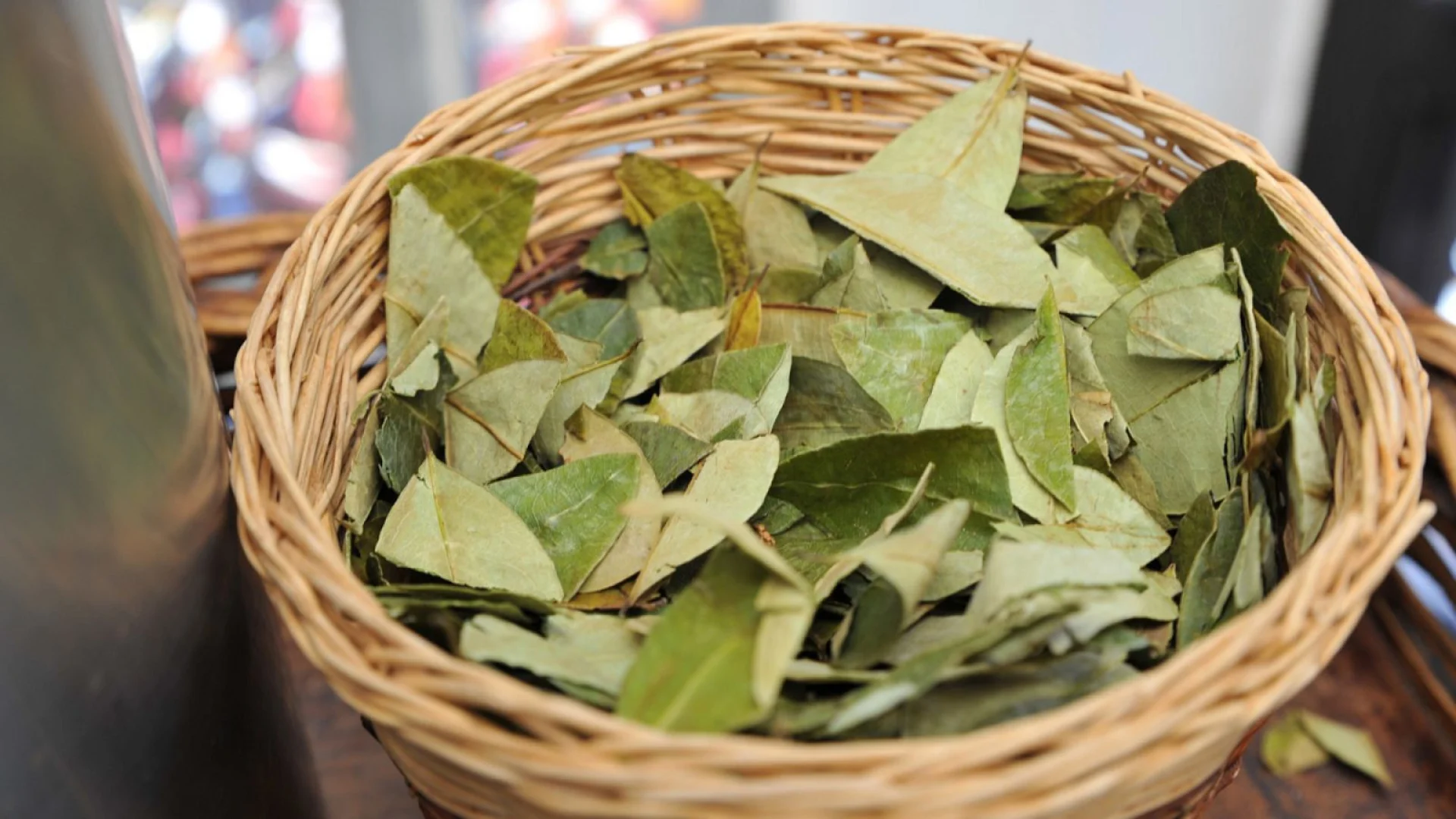
Biological Profile of the Erythroxylum Coca Plant
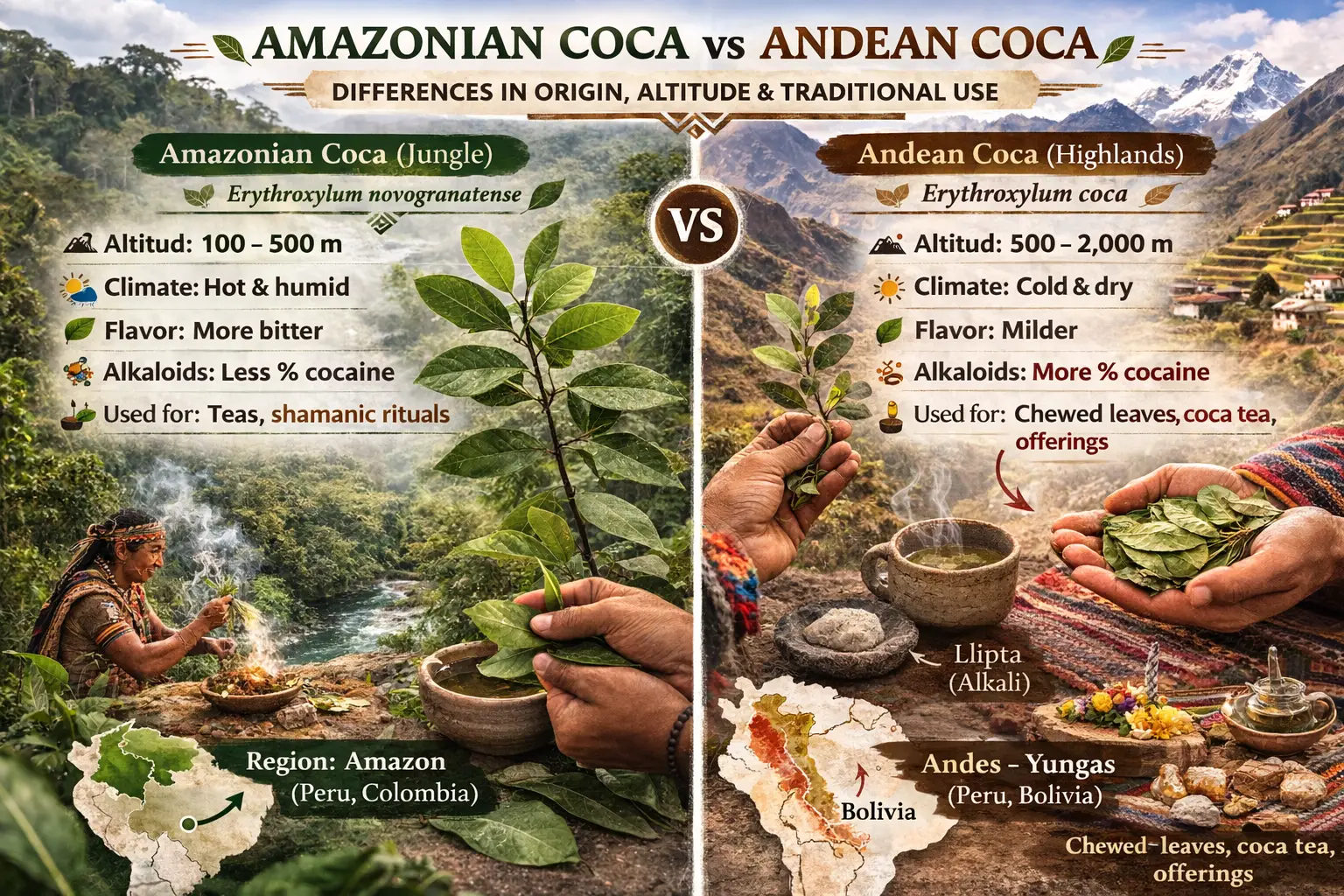
The coca plant belongs to the genus Erythroxylum, which includes over 200 species. The most prominent is Erythroxylum coca, primarily grown in the Andes of Peru and Bolivia. A related species, Erythroxylum novogranatense, is cultivated mainly in Colombia and features slightly different chemical characteristics.
The coca plant is a woody shrub that typically grows between 1 and 3 meters high. The leaves are oval-shaped, smooth, and dark green. A distinctive botanical feature is the presence of two parallel lines running alongside the midrib, formed by the curvature of the lamina. These lines are used by botanists and traditional traders to identify genuine leaves.
The leaves contain various bioactive compounds, most notably the cocaine alkaloid (in concentrations of 0.5% to 1.0%), alongside ecgonine and tropacocaine. Beyond alkaloids, the leaf is a nutritional powerhouse, rich in vitamins B1, B2, C, and E, and essential minerals.
| Nutrient / Compound | Amount per 100g | Health Relevance |
|---|---|---|
| Calcium | 597 mg | Bone health |
| Iron | 4.5 mg | Blood oxygen transport |
| Vitamin B1 (Thiamine) | 0.49 mg | Energy metabolism |
| Vitamin C | 1.4 mg | Immune support |
| Protein | 19.9 g | Muscle repair |
| Phosphorus | 240 mg | Cell function |
| Cocaine alkaloid | 0.5–1.0% | Local anesthetic effect |
Differences Between Amazonian and Andean Coca Varieties
Not all coca plants are identical. Andean coca thrives at altitudes between 500 and 2,000 meters above sea level, specifically in the Yungas regions of Peru and Bolivia. The cool temperatures and high humidity of these cloud forests provide the ideal environment for the plant to develop its specific alkaloid profile.
The Amazonian variety, known as coca de la selva, is utilized by indigenous peoples like the Shipibo-Conibo and Ashaninka. Their traditions often involve complex healing rituals overseen by shamans (curanderos), which differ from the more common Andean practice of chewing the leaf or drinking it as tea (mate de coca).
The Inca Empire managed coca as a strategic state resource. They established large plantations called cocales in the Yungas and strictly controlled the harvest. Coca was distributed to warriors for endurance, to laborers for building temples and roads, and to spiritual leaders for ceremonial use, making it a cornerstone of imperial social integration.
History of Coca Use in the Inca Empire and Ancient Rituals
The incas and coca had a relationship that permeated every aspect of imperial society. The history of coca the divine plant of the incas is a history of power, control, agricultural expertise, and religious fervor. Though the use of coca was widespread in Andean culture, it held a very special place in the hearts of the Inca aristocracy and priestly class, who employed it in highly elaborate ceremonies to maintain equilibrium in the universe and attract divine blessings for all their undertakings.
Inca artifacts depicting coca use provide direct archaeological evidence for the plant’s central role in ancient Peruvian society. Archaeological artifacts, including ceramic artifacts, textiles, and figures, found in prominent archaeological sites such as Machu Picchu, Chan Chan, and Pachacamac, often feature human figures with bulging cheeks, a clear indication of the use of coca leaves. Perhaps the most impressive examples of coca use can be found in the artifacts of the Moche civilization, a culture predating the Inca Empire, thus indicating the sacred nature of coca far beyond the scope of a single culture.
The Sapa Inca, the emperor of the empire, was closely associated with the use of coca. The mummified remains of the previous rulers of the empire, who continued to rule even in death, were accompanied by offerings of the leaves. The mummies of the rulers of the empire were taken out during the festivals and given the leaves. This shows the close association of the coca leaf with the Andean culture.
The Legend of Mama Coca and Inca Fertility Goddess Myths
Central to understanding coca’s sacred status is the mythological figure of Mama Coca (also called Coco Mama Inca in some traditions), the inca fertility goddess coca. According to Andean myths, Mama Coca was a beautiful woman who was revered by the ancient Andean people because of her kind heart and spiritual qualities. After her death, she was transformed into the coca leaf so that her qualities of energy, healing, and spiritual qualities would always be available for the use of the people.
The Inca goddess coca myths are recorded in early colonial documents written by Spanish priests and officials who tried to grasp and finally eradicate the religious customs of the native population. Even though these records are biased from a European perspective, they carry significant information regarding the goddess coca and her place within the Andean pantheon. Mama Coca was not just associated with fertility within the earth but also with fertility within the human body, and coca leaves were used to honor her power during births, weddings, and other important transitions within an individual’s life.
The inca fertility goddess coca mythology is connected to other Andean beliefs regarding the female fertility goddess Pachamama (Mother Earth) and the masculine mountain spirits Apus. In this context of Andean mythology, coca was a bridge between humans and the various gods of nature. The fertility of coca was extended to agricultural activities as well, as Andean farmers made offerings of coca prior to planting crops as well as harvesting them. It is interesting to note that some colonial records contain disturbing accounts of ritual practices associated with coca worship; however, it is necessary to take these records with a grain of salt as Spanish colonizers were known to fabricate information regarding indigenous religions as a way of justifying their oppression.
How the Incas Chewed Coca Leaves for Endurance on the Inca Trail
One of the most well-documented uses of coca within the Inca Empire was the ability of coca to provide physical endurance for workers, soldiers, and messengers. The incas chewed coca leaves to prevent fatigue, hunger, and thirst while increasing energy while performing physically exhausting activities. Perhaps one of the most practical uses of coca by the Incas was within this capacity. The inca use of coca in this context was highly practical a small amount of leaves, chewed slowly over several hours, could significantly extend a person’s physical and cognitive performance without the need for food or rest.
The famous Inca runners, who were known as the chasquis, and who ran messages and goods across the Inca Empire with incredible speed, are perhaps one of the most famous uses of coca by the Incas. These runners, who were positioned across the royal roads of the Empire, would utilize coca leaves inca trail to perform the superhuman feats of endurance that would enable them to run across the highlands for hours on end. The Inca trail would stretch over 40,000 kilometers across some of the most hostile terrain on the face of the earth.
The incas chewed coca leaves for the dual purpose of alleviating the effects of altitude sickness, known as Soroche in Peru, and for the purpose of increasing physical energy. At altitudes above 3,500 meters, which much of the Inca homeland occupies, even the indigenous people of the Andes can experience the debilitating effects of altitude, despite having adapted over the millennia. The alkaloids in the leaves actually increase the dilation of the blood vessels and the efficiency with which oxygen is absorbed at the cellular level.
The Role of Coca in Offerings to the Pachamama and Mountain Spirits
The practice of offering coca leaves, referred to as pagos or despachos, is arguably the most pervasive and longest-lasting tradition in Andean spirituality. The inca trail coca leaves available in the current market stalls and hotel lounges are a direct continuation of a tradition of ceremonial offering of coca leaves that has been in practice for thousands of years without a break. Making an offering of coca to Mother Earth, or Pachamama, before undertaking a journey, starting a building project, or any other undertaking of importance is a standard practice in Peru and Bolivia.
The coca inca maiden in ceremonial practices was of particular importance in times of transition and sacrifice. Archaeological excavations in the high-altitude Inca sites have revealed evidence of capacocha ceremonies, or sacred ceremonies involving the offering of young people to the mountain deities in times of imperial crisis or in relation to significant events in the royal family. These ceremonies involved a range of preparations, including the offering of coca to the participants, a sacred substance to prepare them spiritually for their divine role.
Inca artifacts depicting coca use in ritual settings include keros, which are ceremonial drinking cups, intricately woven textiles, and stone carvings discovered at large ceremonial sites. The Inca artifacts show not only the use of coca leaves in Inca culture but also the sophisticated tradition of iconography that had evolved around the use of coca leaves. Coca is found on Inca artifacts along with images of Inti (the sun god), Illapa (the thunder god), and other principal gods of the Inca pantheon, thus reiterating the fact that coca was a sacred plant associated with the highest form of divine power.
The Scientific Difference Between Natural Coca Leaf and Cocaine
Perhaps the biggest misconception surrounding coca is the belief that the natural form equates with the refined drug form. Understanding coca leaf alkaloids requires a basic knowledge of organic chemistry and the process by which the refined drug is extracted from its raw form. The raw leaf is a complex organic compound containing dozens of unique substances, none of which exist in a high enough concentration to produce the dramatic effects of the refined drug.
The process by which the leaf is refined requires a multi-step chemical process using organic solvents and acids—technology that was completely beyond the Incas and remains entirely outside the traditional use of the plant.
Understanding the Alkaloid Content and Chemical Extraction Process
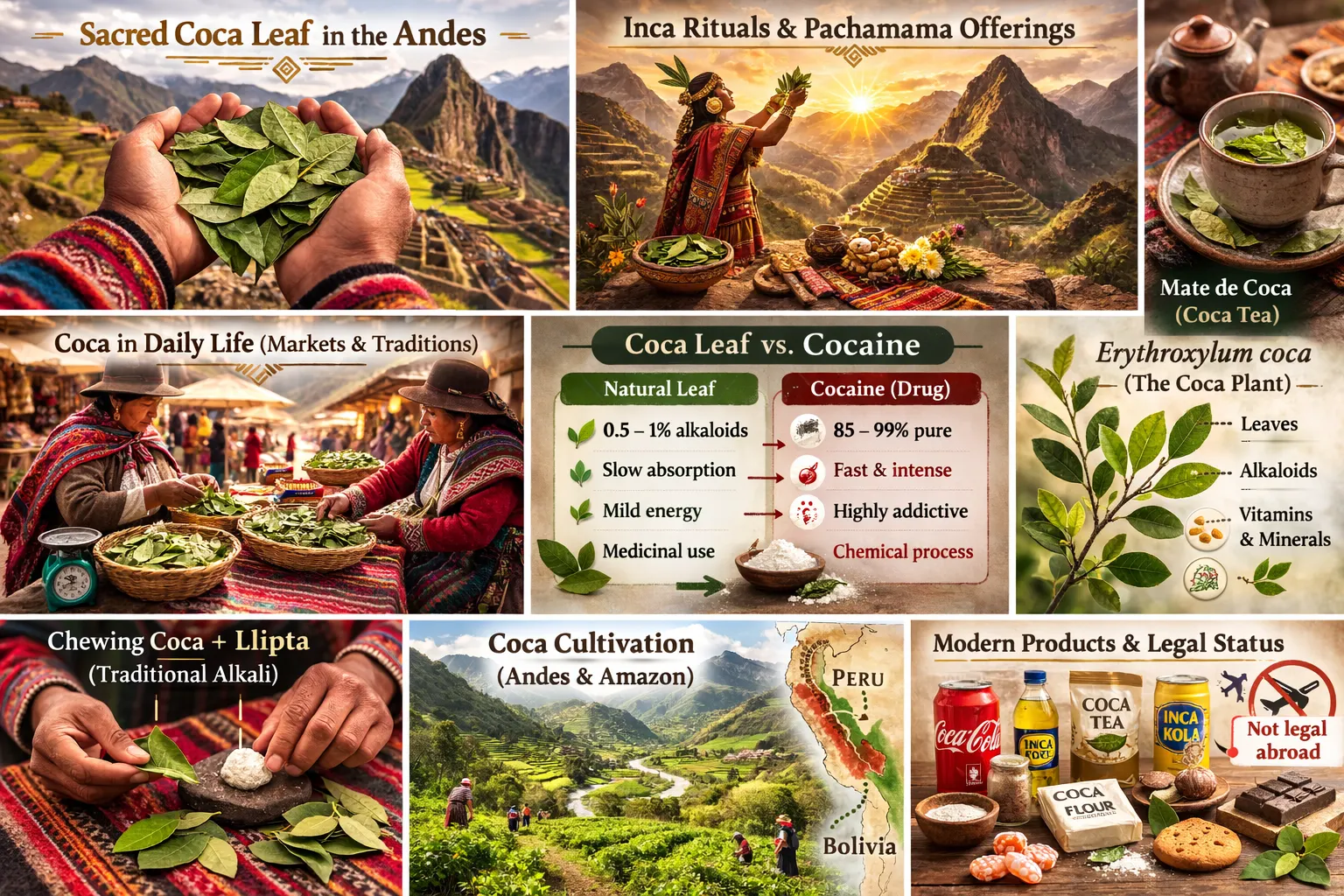
Coca leaf alkaloids are the biochemically active substances responsible for both the medicinal benefits of the leaf and the effects of cocaine. While the cocaine alkaloid occurs in the leaf at a concentration of 0.5% to 1.0%, the final refined product is nearly 100% cocaine hydrochloride.
The extraction of cocaine involves soaking leaves in kerosene, adding dilute sulfuric acid to precipitate a “cocaine paste,” and further processing it into powder. This industrial process involves toxic by-products and massive quantities of chemicals that have no connection to the traditional Andean culture.
Interestingly, decocainized coca leaf extract demonstrates the technical feasibility of removing the alkaloid while retaining the plant’s flavor and nutritional compounds. This proves that the leaf and the drug are chemically separable entities.
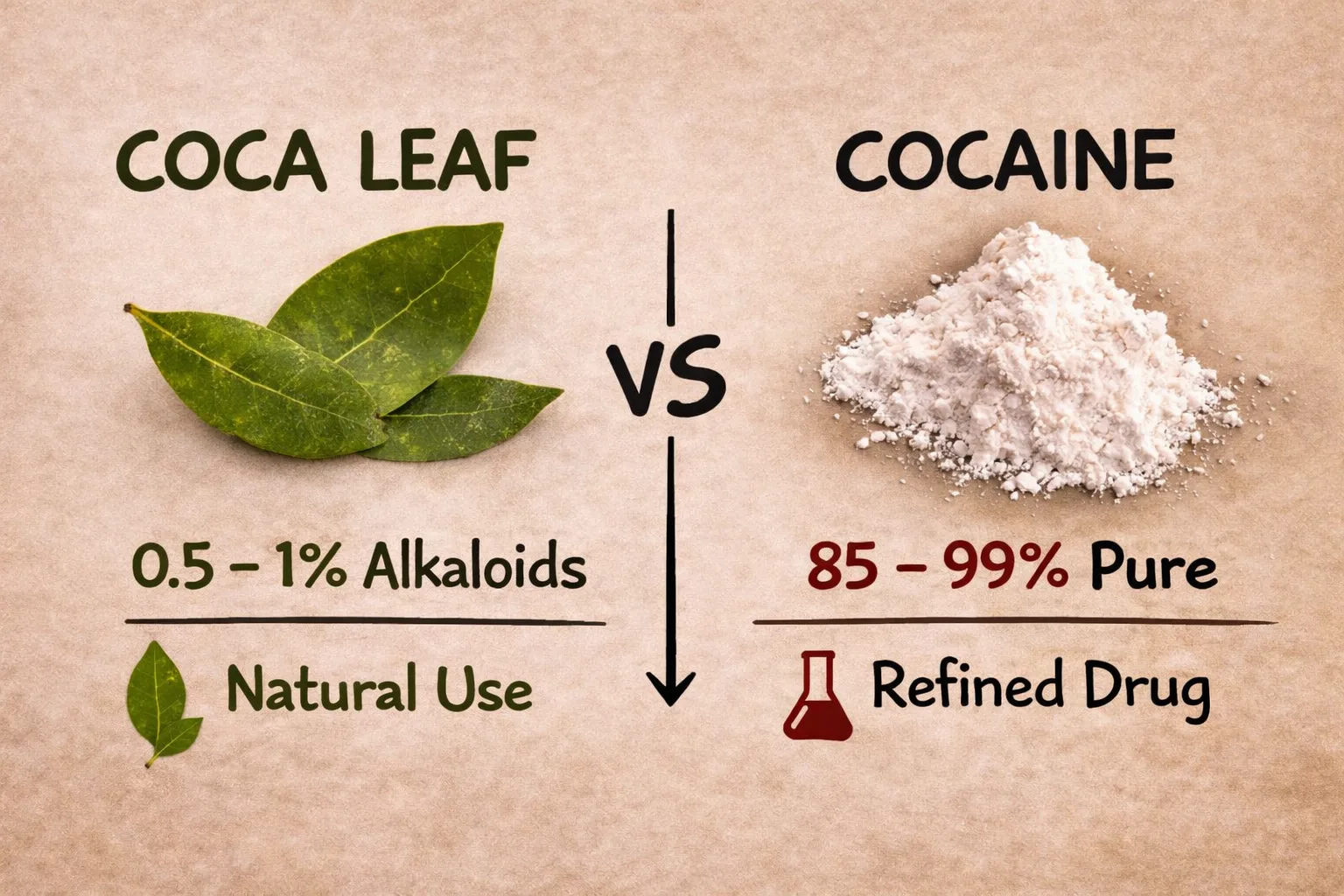
Why the Coca Leaf Is Not a Drug in Its Natural Form
The 1961 UN Single Convention on Narcotic Drugs placed the coca leaf in Schedule I, criminalizing a plant that had been a cornerstone of Andean culture for millennia. This decision was largely political, made with minimal scientific input regarding the leaf’s traditional consumption.
When consumed traditionally chewed with an alkaline activator or brewed into tea, the body absorbs alkaloids slowly. The benefits include increased energy, reduction of altitude sickness, and appetite suppression. These effects are mild and functional, comparable to coffee or green tea, and bear no resemblance to the intense, rapid effects of the refined drug.
| Characteristic | Coca Leaf (Traditional) | Cocaine (Refined Drug) |
|---|---|---|
| Alkaloid concentration | 0.5–1.0% | 85–99% |
| Speed of absorption | Slow (20–40 min) | Very fast (seconds–minutes) |
| Intensity of effect | Mild, functional | Intense, euphoric |
| Duration | 1–3 hours | 15–45 minutes |
| Addictive potential | Minimal | High |
| Traditional use | Yes, thousands of years | No (Synthesized 1850s) |
Traditional Ways to Consume Coca in Peru and Modern Products
For those visiting Peru as a tourist, encountering coca is almost unavoidable. Whether staying at a hotel at a high altitude where coca tea is included as a matter of course or visiting a traditional market where bundles of fresh coca leaves are sold by the kilogram, coca Peru is everywhere. Buy coca leaf products in markets throughout Cusco, Lima, and other tourist areas of Peru, a sophisticated range of coca leaf products is now being created to introduce this plant to the visiting tourist.
The modern-day Peruvian entrepreneur has developed a variety of coca leaf products that combine traditional ancestral heritage with modern packaging and marketing techniques. While the traditional uses of coca leaves include chewing and brewing tea, there are now coca flour used for artisanal bread making, coca chocolate drinks, coca hard candies, and even coca cosmetics. This is an exciting opportunity for coca growers to attach economic value to their agricultural production while within the legal parameters of Peru’s domestic laws regarding coca leaf production, sale, and consumption for traditional and cultural uses.
The Art of Chewing Coca Leaves with the Llipta Activator
The traditional coca leaf chewing has two parts, the coca leaves and the alkaline substance, which is known as llipta in Quechua or llucta in some local dialects. To get the best out of coca leaf chewing, it is essential that you know how to chew coca leaves correctly is important for getting the full benefit of the practice. The llipta is typically made from the ash of quinoa stalks, other plant materials, or sometimes from calcium carbonate (chalk), which is processed into small cakes or balls. The Bolivian coca leaf chewing has a compound known as lejía, which acts as a coca leaf activator.
The coca leaf activator has a critical chemical role that it plays when it is ingested with coca leaves. The coca leaf activator is an alkaline substance that increases the pH levels in the mouth, which enables the coca alkaloids to be absorbed through the mucus membranes in the mouth, unlike when they would be ingested without being absorbed, significantly reducing the chewing coca leaf effects.
The technique of chewing coca leaves involves placing a small amount of leaves typically 5 to 10 leaves into one cheek and chewing them gently until they form a soft ball called a bolo or acullico. A small amount of llipta is then added to the bolo, and the leaves are kept in the cheek rather than being fully chewed and swallowed. This bolo is maintained for 20 to 40 minutes, during which the alkaloids are slowly extracted and absorbed. The effects come on gradually and last 1 to 3 hours a very different experience from any form of drug use.
Drinking Mate de Coca and How to Brew Coca Tea Correctly
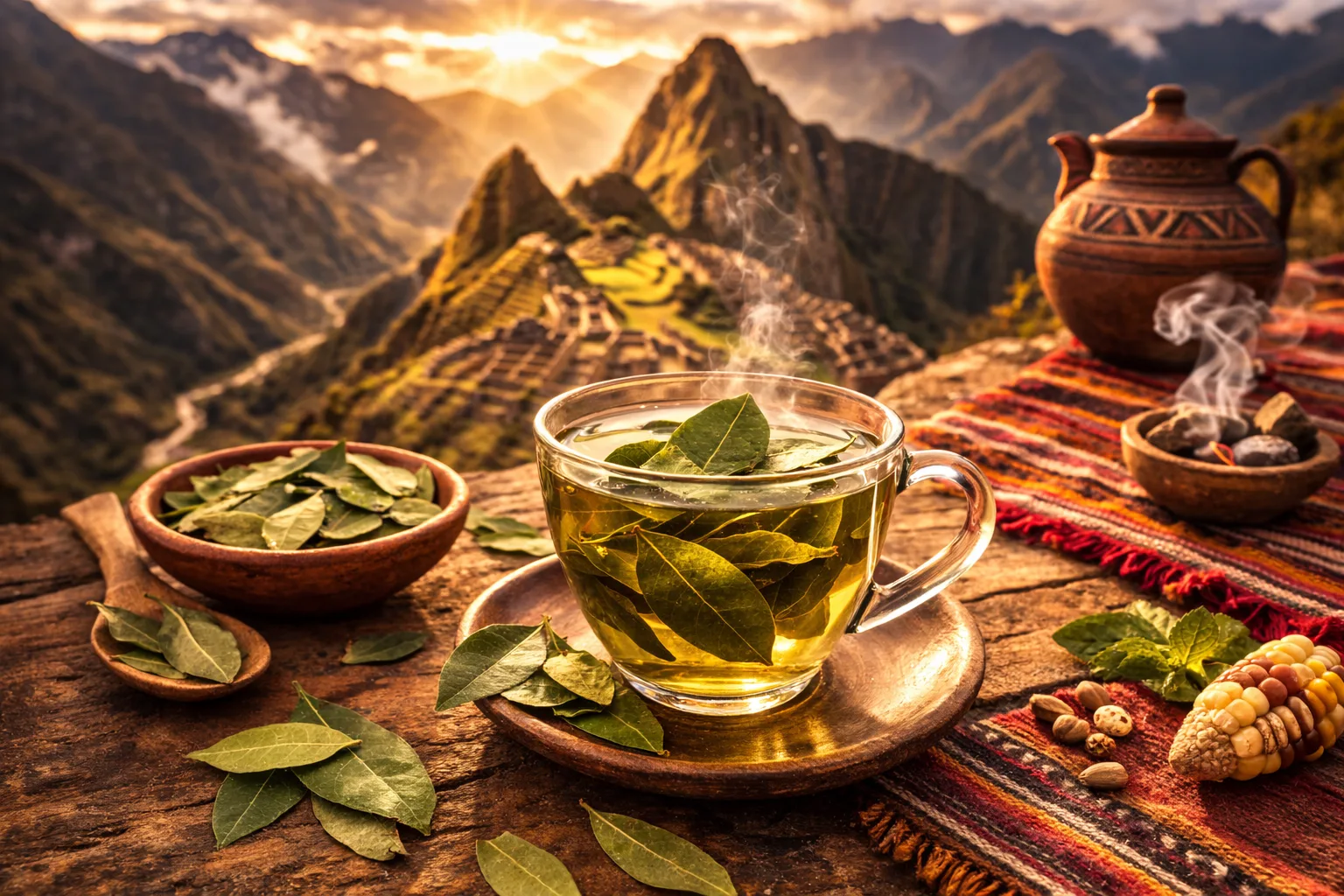
Mate de coca, or coca leaf tea, could be the best entry point for travelers who want to try coca for the first time. In the city of Cusco, as well as other high-altitude destinations in Peru and Bolivia, coca leaf tea is as ubiquitous as coffee or herbal tea and is always served to new arrivals as a cure for altitude sickness. The inca tea coca tradition of herbal teas with coca, has been around for many centuries and could be the most benign form for travelers who want to try the effects of the plant.
How to brew coca tea correctly: Start with whole, dried coca leaves or coca leaf tea bags available throughout Peru. Bring the water to just before the boiling point, which is around 85-90 degrees centigrade. Five to 10 leaves, or one tea bag, can be used for brewing one cup. Steep the leaves for 5-10 minutes, depending on the desired flavor. The tea has a greenish color and tastes mild, with a slightly grassy flavor and sweetness.
The inca coca tea tradition holds that the preparation and consumption of coca tea is itself a form of ritual acknowledgment a small daily act of connection with Pachamama and the ancestral wisdom of the Andes every day. Many Andean people start their day with a cup of coca tea in much the same way that members of other spiritual traditions start their day with prayer or meditation. For the traveler, drinking a cup of mate de coca is a way to connect with a culture that has thrived on this drink for generations.
Coca Candy and Cookies as a Mild Way to Try the Flavor
For travelers interested in coca but unsure about its effects when consumed as a chew or tea, the increasing availability of coca-infused food items provides a way for them to experience coca in a more gentle form. Coca candies Peru inca food items are readily available in markets and stores around the country. These candies, which include coca leaf candies, coca leaf toffees, coca leaf chocolates, and coca leaf biscuits, have a mild coca leaf effect and a nice taste.
Coca leaf cookies inca and other baked goods made by the inca have become popular items for those who wish to take home some of the taste of Peru. The inca coca toffee flavor has proven popular, even for those who are not familiar with the taste of the coca plant. The caramel or butterscotch flavor of the product has proven popular. Coca leaf candy can range from very mild, with the leaf being present in trace amounts, to those who are more experienced with the product.
It is worth noting that the aforementioned food products are also restricted by law in many countries. It is, for example, technically illegal to bring coca candy, cookies, and tea bags back to the United States, regardless of how harmless the products are. It is therefore recommended that one checks the customs laws of the home country before purchasing the products as souvenirs.
The Truth About Coca Cola and Inca Kola Ingredients
Perhaps few topics inspire as much interest and ambiguity as the relationship between coca cola vs inca kola, two popular beverages with very different histories and a commercial relationship that is inextricably linked. Both have played a major role in Peruvian popular culture for decades, and both have a complex history that includes coca leaves, corporate competition, and national identity. The key to understanding the truth about these popular beverages is to sort fact from fiction and pay close attention to the facts.
The competition between inca kola vs coca cola finally ended with acquisition, and it provides a fascinating case study into how multinational corporations operate in a market that has a powerful local brand and a powerful sense of cultural identity, which acts as a major barrier to entry. Peru is one of a few places around the world that has a local brand of soda that outsells Coca-Cola in its home market, and that is a powerful statement about cultural identity.
Does Coca Cola Still Use the Coca Leaf in Its Secret Formula
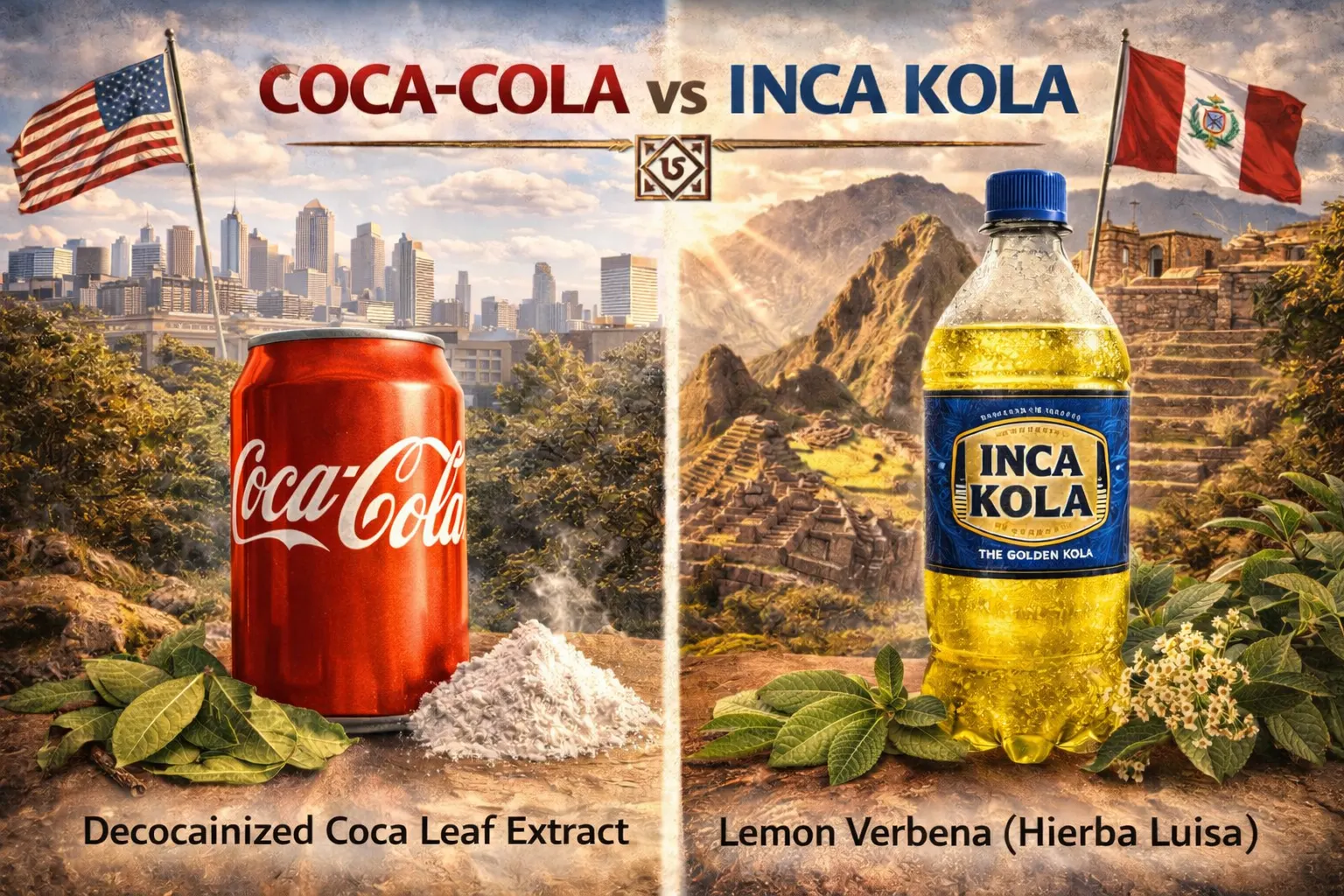
Does coca cola still use coca leaf? The answer to this is a definitive “yes,” but there is a caveat to this response. Coca-Cola’s formula includes a coca leaf extract in their formula, although this particular extract, known commercially as known commercially as decocainized coca leaf extract has been treated to remove cocaine alkaloids. This treatment is carried out by a single licensed company in the US, the Stepan Company in New Jersey, the only DEA license holder in the US to import and process coca leaves.
The coca cola coca leaf extract connection Coca-Cola has a history of using coca leaf extract in their formula since the 1880s, when pharmacist John Pemberton first formulated the original version of the drink in Atlanta, Georgia. The original version of the drink contained measurable levels of cocaine, and the beverage was marketed as a tonic with medicinal benefits. However, as public opinion about cocaine changed in the early 20th century, Coca-Cola began to use a “decocainized” version of the extract, a practice that has continued to the present day. The coca cola ingredients coca leaf component of the drink contains flavors that are part of the drink’s unique taste profile.
The History of Inca Kola and If It Contains Real Coca
Does inca cola have coca in it? Despite the name and the cultural associations with Inca Cola, traditional Inca Kola does not actually contain any coca leaf extract. Inca Kola coca leaves are not part of the traditional recipe. Inca Kola was invented in 1935 by Joseph Lindley, a British immigrant to Peru who wanted to develop a national drink for the 400th anniversary of the founding of Lima. The bright yellow color and sweet, fruity flavor come from the use of lemon verbena, known locally as “Hierba Luisa,” as the main flavoring, not coca.
Inca Kola vs. Coca Cola comparisons between Inca kola peru and coca cola are inevitable, both because of the cultural heritage that the brands invoke and because of the commercial rivalry that has existed between the brands. In the case of Inca Kola, the brand’s success was based on a marketing strategy that worked by emphasizing that Inca Kola was the flavor of Peru, the quintessential national drink that tapped into the national pride of the people, and this worked incredibly well, making Inca Kola the leading cola brand in Peru for much of the 20th century.
Did the Coca Cola Company Buy Inca Kola to Stop Competition
Coca cola bought inca kola in 1999, acquiring a 50% stake in the Inca Kola brand and its Peruvian production operations. Is inca kola owned by coca cola? Yes and no, the coca cola company compra inca kola deal was a partnership and not a buyout, whereby the lindley family remained in charge of the operations of the plants, and inca kola was allowed to maintain its identity in peru, a fact that can be attributed to the fact that Inca Kola’s value was deeply embedded in peru.
The strategic reasoning behind this acquisition was quite simple rather than continuing to lose market share to a competitor who had significant cultural advantages built into their business model, Coca-Cola saw an opportunity to reap the rewards of Inca Kola’s popularity while simultaneously bringing its global distribution and marketing prowess to bear on the brand. The end result has been a resounding success Inca Kola continues to be a beloved national drink within Peru, while Coca-Cola has been able to utilize the prestige of this brand to further improve its overall position within the market there. It is a textbook example of how global brands must adjust their strategies in the face of exceptional local competition based on cultural identity.
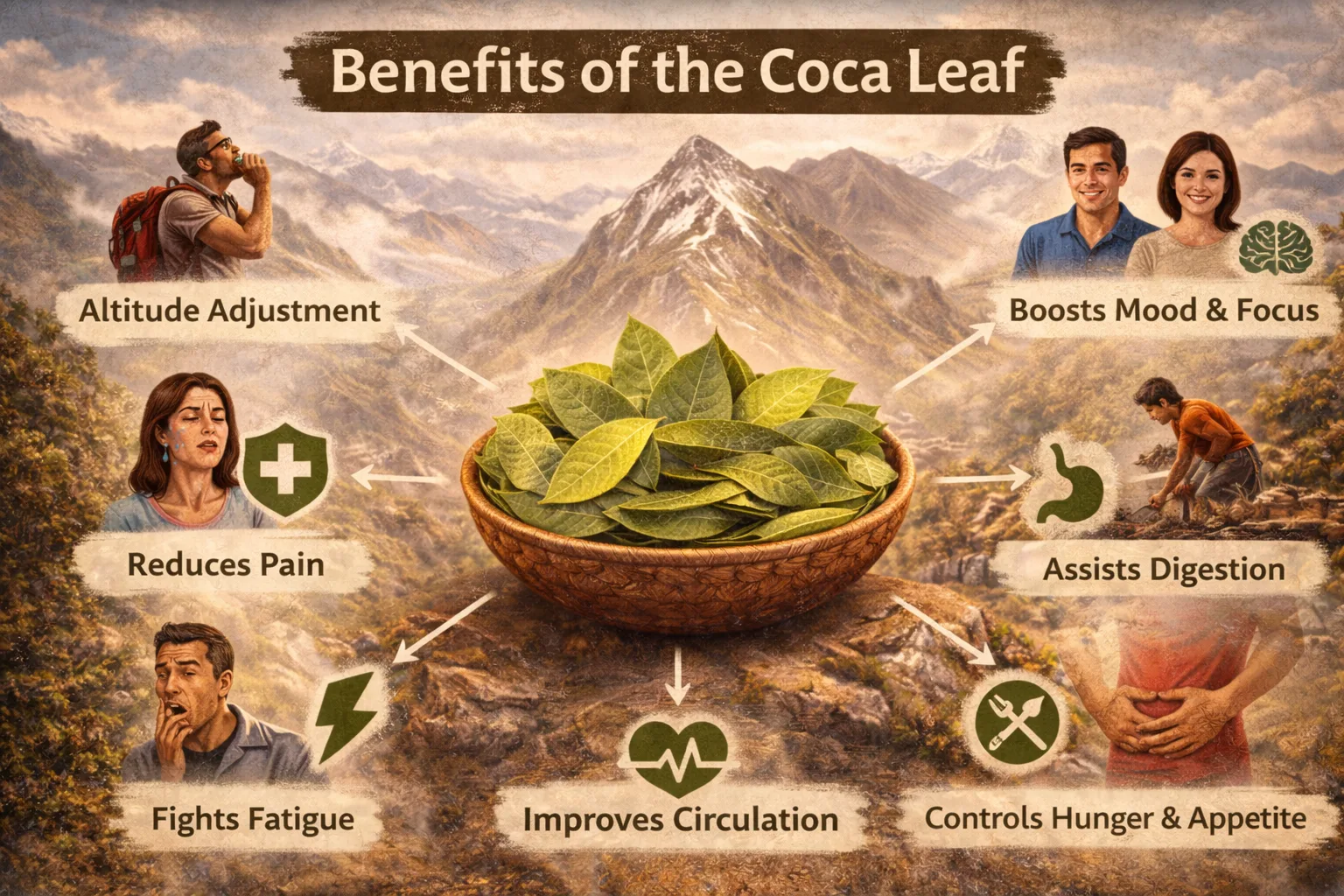
Comprehensive Health Benefits of the Coca Leaf for Travelers
For travelers visiting Peru and other high-altitude destinations in the Andes, coca leaf benefits extend well beyond the realm of mere cultural interest. The pharmacological properties of the leaf have been extensively documented, confirming much of what indigenous Andean communities have known empirically for thousands of years.
The holistic health benefits, including its alkaloid, vitamin, and mineral content, make the coca leaf a uniquely effective remedy for high-altitude challenges. Unlike synthetic medications that often operate through a single mechanism, the coca leaf works through multiple pathways simultaneously to support the body’s adaptation to low oxygen levels.
How Coca Leaf Alkaloids Combat Soroche and Altitude Sickness
Altitude sickness, known locally as soroche, is a primary concern in cities like Cusco (3,400m), Puno (3,827m), and La Paz (3,625m). Symptoms can range from mild headaches to serious respiratory issues. The way coca alkaloids achieve their effect is now reasonably well understood by science.
Benefits of chewing coca leaf for altitude sickness work through several pathways:
- Bronchodilation: It assists in opening the airways to improve breathing efficiency.
- Oxygen Transport: It stimulates the production of red blood cells and improves oxygen transport at a cellular level.
- Symptom Management: It decreases fatigue and suppresses the perception of symptoms without masking the underlying condition.
Scientific studies, such as those published in the Journal of Ethnopharmacology, indicate that traditional consumption significantly reduces acute mountain sickness symptoms. Coca tea (mate de coca) appears particularly effective as the hot water helps extract a broader range of bioactive compounds.
| Altitude Sickness Symptom | Coca Leaf Benefit | Mechanism |
|---|---|---|
| Headache | Pain relief | Mild analgesic alkaloids |
| Fatigue | Increased energy | Adenosine receptor modulation |
| Shortness of breath | Improved breathing | Bronchodilation |
| Nausea | Stomach relief | Digestive alkaloids |
| Reduced oxygen uptake | Better oxygenation | Vasodilation |
Natural Energy Boost and Nutritional Value of Coca Flour
Beyond altitude management, coca provides a moderate and prolonged energy boost. This is not a “buzz” in the sense of synthetic stimulants, but rather a heightened state of alertness and a reduction of physical fatigue. Coca flour (dried and ground leaves) is an impressive nutritional resource, containing 19 grams of protein per 100 grams—more than many traditional protein sources.
It is also rich in calcium, iron, and B vitamins. Today, this “superfood” is used in energy bars, bread, and pasta. Coca leaf capsules are a modern way to consume these nutrients and mild stimulants conveniently, acting as natural preventatives for travelers.
Digestive Properties and Stomach Pain Relief
In Andean medicine, one of the most common uses for coca is treating gastrointestinal complaints. The alkaloids have antispasmodic effects that calm stomach cramps and provide analgesic relief for nausea and diarrhea.
For digestive issues, coca tea is often combined with other local herbs like muña (Andean mint) or anise to increase its potency. Research has found that compounds like ecgonine have anesthetic properties in the digestive tract, while other secondary metabolites provide anti-inflammatory benefits that help address the underlying causes of stomach distress.
Legal Status and Customs Regulations for Travelers
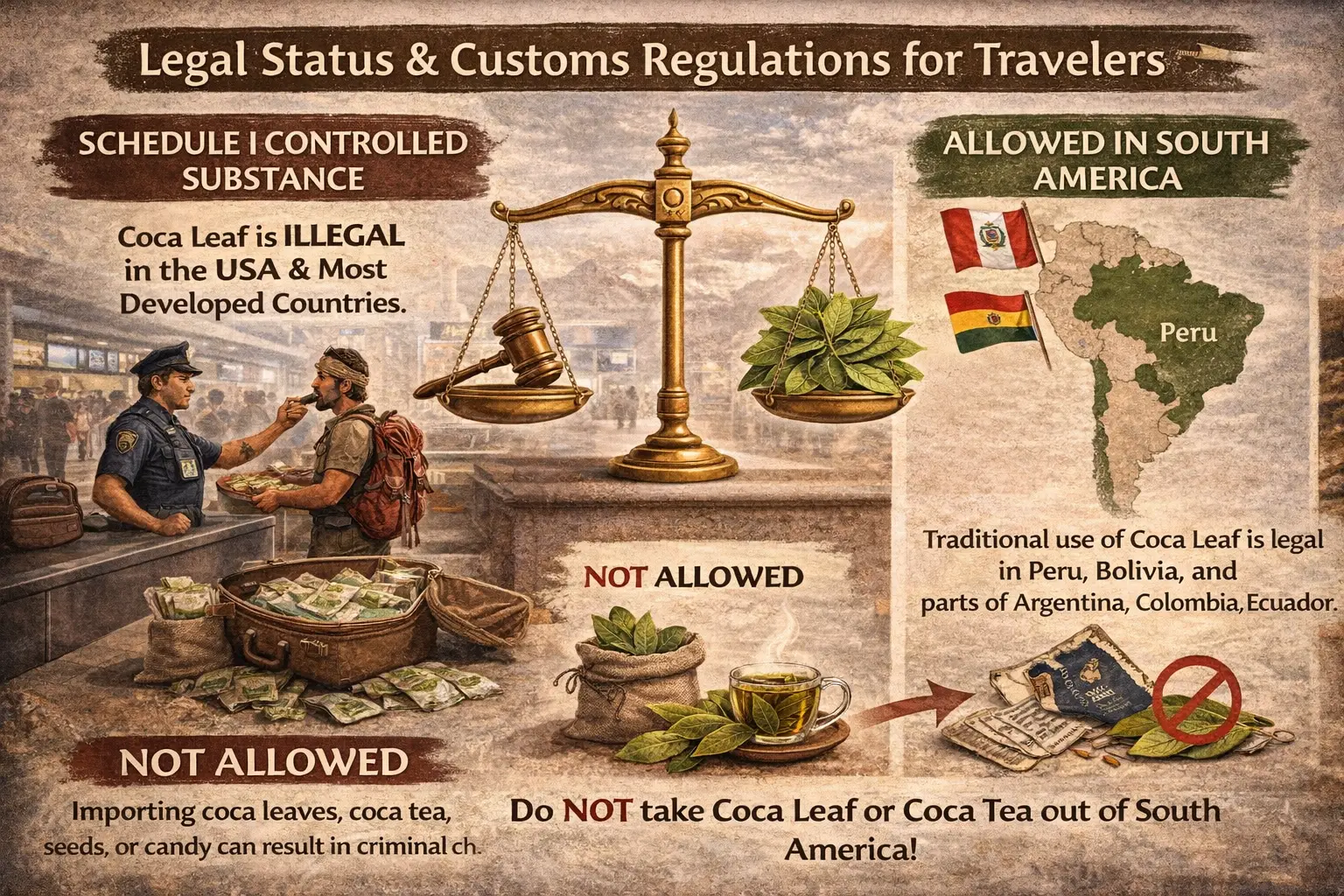
Is coca leaf legal in the us? Well, the quick answer is that it is not. In the United States, the Controlled Substances Act has classified the consumption of the coca leaves as a Schedule I controlled substance, which puts it on the same level as heroin and ecstasy. Is coca leaf illegal everywhere? Well, for the majority of the developed world, the answer is yes, it is. In the majority of the world, the consumption, importation, and distribution of the coca leaves are strictly forbidden under the drug control laws that were implemented based on the 1961 UN Convention and the amendments that followed. This, however, is something that needs to be understood by anyone who wants to partake in the consumption of the coca leaves while in Peru without facing any legal complications upon returning home.
The situation becomes more complex with regard to South America itself. In Peru and Bolivia, the cultivation and traditional consumption of coca are specifically protected as cultural rights. In Bolivia, the constitution specifically includes the recognition of the right to the traditional use of coca, recognizing it as a sacred cultural heritage of the indigenous people. In Argentina, the possession of small quantities for personal consumption is allowed. In Colombia, Ecuador, and the other countries that produce coca, the laws are complex, allowing for some traditional use while prohibiting the commercial production of cocaine. When you buy coca leaf in Peru, you are participating in a completely legal act, but the moment you try to take it across an international border, the act becomes illegal.
Why You Cannot Bring Coca Tea Bags Back to the United States
Can you bring coca leaf tea into the US? No. Can you buy coca leaf tea for sale while you are traveling in Peru? Yes, absolutely. But as soon as you get on that plane headed home, those tea bags become a federal crime. The U.S. Customs and Border Patrol actively confiscates coca-containing items when you arrive at the border, including tea bags, candies, cookies, and leaves. People have been prosecuted for importing coca leaf tea, despite the fact that they have only a few items that they obviously intended for their own use.
The moral for the traveler is simple, enjoy your coca while you are in Peru, but do not bring coca leaf tea for sale back home with you, and do not buy coca leaf seeds for sale for the purpose of cultivating them. Coca leaf seeds for sale are readily available in Peru, but importing them into the US or most other developed countries is a violation of drug and agricultural import laws. Buy coca leaf tea bags, enjoy them while you are in Peru, and leave what is left over for sale or for planting as an offering to Pachamama before you go home.
Understanding Drug Tests and How Coca Tea Affects Results
One of the most practically important facts about coca leaf for travelers is the impact they have on drug testing. Coca leaf schedule 1 status means that the cocaine metabolites present in the system after consuming coca leaves are the same as the cocaine metabolites that drug tests detect. Therefore, if you drink coca tea or chew on coca leaves as a traveler in Peru, you will test positive for cocaine metabolites on a routine drug test.
This is not just theoretical, as there have been actual cases of travelers and athletes returning from South America who tested positive on drug tests after consuming coca leaf products. A study published in a journal of forensic toxicology found that the consumption of 2 to 3 cups of coca tea resulted in detectable cocaine metabolites in the urine 24 to 36 hours after consumption. The metabolites of cocaine present in the system after chewing on coca leaves can be more concentrated and may be detectable for longer periods of time.
The decocainized coca leaf extract found in Coca-Cola and other commercial products will not produce a positive drug screen, as the cocaine alkaloids have been removed. Tea bags, candies with leaf extract, and especially chewed leaves will, however, produce positive results. If you are subject to drug testing, either in your workplace, sports arena, or as part of some other drug screen, be aware that partaking of coca leaf products in Peru can have very real and very serious implications for you once you return to your homeland. The coca leaf tattoo trend in some Andean communities represents a cultural statement about pride in this heritage but the legal implications of the plant in the developed world is an important consideration for international travelers.
The entire story of the coca leaf, from its sacred origins in the Inca Empire to the present day struggles with the law, demonstrates a plant with a depth that belies its value. The difference between the reality of the coca leaf and the world that has been presented with it constitutes one of the greatest disconnects in the annals of international drug policy. Visiting Peru as a traveler and engaging with the culture of the coca leaf presents the visitor with the chance to be part of one of the most ancient and meaningful relationships with the natural world.
Frequently asked questions about The Sacred Coca Leaf of the Incas and Its Role in Peruvian Culture
No. The coca leaf contains less than 1% alkaloids and produces mild effects similar to coffee. Cocaine requires a complex industrial extraction process that has nothing to do with traditional use. The coca leaf benefits have been safely used in the Andes for thousands of years.
Yes, mate de coca is completely legal in Peru and is the best natural remedy for soroche (altitude sickness). It is served in hotels and restaurants throughout the Andes. Just remember that is coca leaf illegal to bring back to the United States or most other countries.
The llipta is an alkaline coca leaf activator made from plant ash or calcium carbonate. It raises the pH in the mouth so the coca leaf alkaloids can be properly absorbed. Without it, chewing coca leaf effects are significantly reduced.
Yes. Coca cola ingredients coca leaf is real, they use a decocainized coca leaf extract with the cocaine removed.
Yes, it can. Even two cups of coca leaf tea can produce a positive result for 24 to 36 hours. Avoid all whole-leaf coca leaf products before any drug screening.