Pachamama in Peru: Meaning of the Word and Three Worlds
Día de la Pachamama is regarded as one of the most important days in the Peruvian Andes. Día de la Pachamama is commonly known as “Mother Earth Day,” but keep in mind that Día de la Pachamama is not a modern, trendy Mother Earth Day festival promoting traveling. Instead, Día de la Pachamama is a celebration of a relationship between people and the earth that feeds them, as well as the divine powers that give life.
If you’re researching this for a trip or for cultural context, you’ll quickly run into the same questions online: what is pachamama, who is pachamama, and what does pachamama mean and the answers are deeper than a simple “earth goddess” label.
The principal day is on August 1, but in some areas, the whole month of August is considered a Pachamama month.
What Does Pachamama Mean? Meaning of the Word
The word Pachamama has its origins in the word Quechua, which is defined accordingly:
- Pacha means world, earth, place, as well as time or cosmos
- Mama means mother, in the sense of a nurturing life giving force
So Pachamama is not just Mother Earth as soil. It is nearer in meaning to “Mother of the world and time,” or the ground of life, season, and place. This is why, if you ask what is the pachamama in Andean terms, the answer is not only “earth,” but a living system of place, time, and reciprocity.
It’s for this reason that many Andean inhabitants identify with Pachamama, the land that gives crops, the territory that supports a population, and the cycle of life that reappears with rain, sun, planting, and harvest.
What is Día de la Pachamama in Peru?
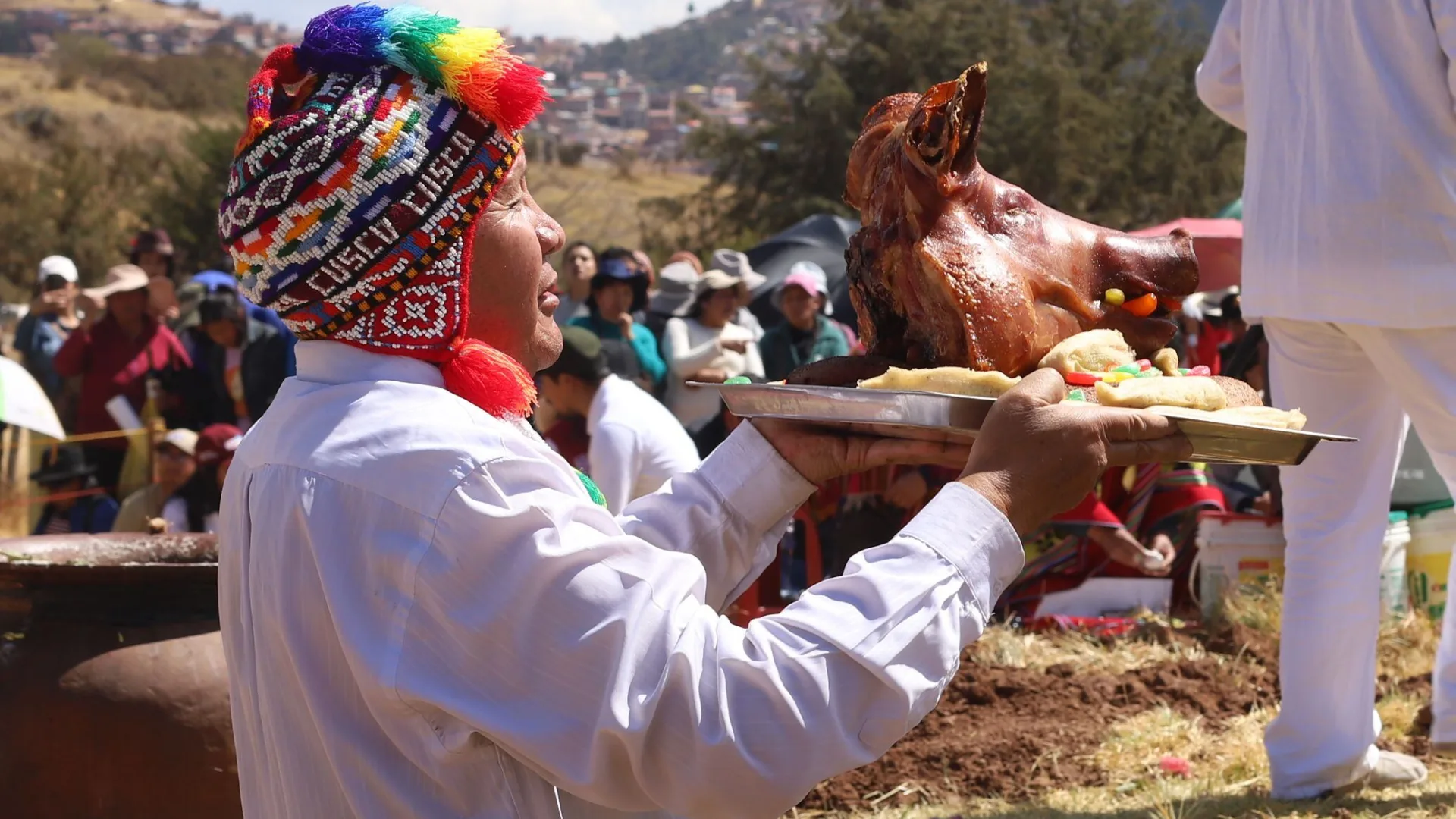
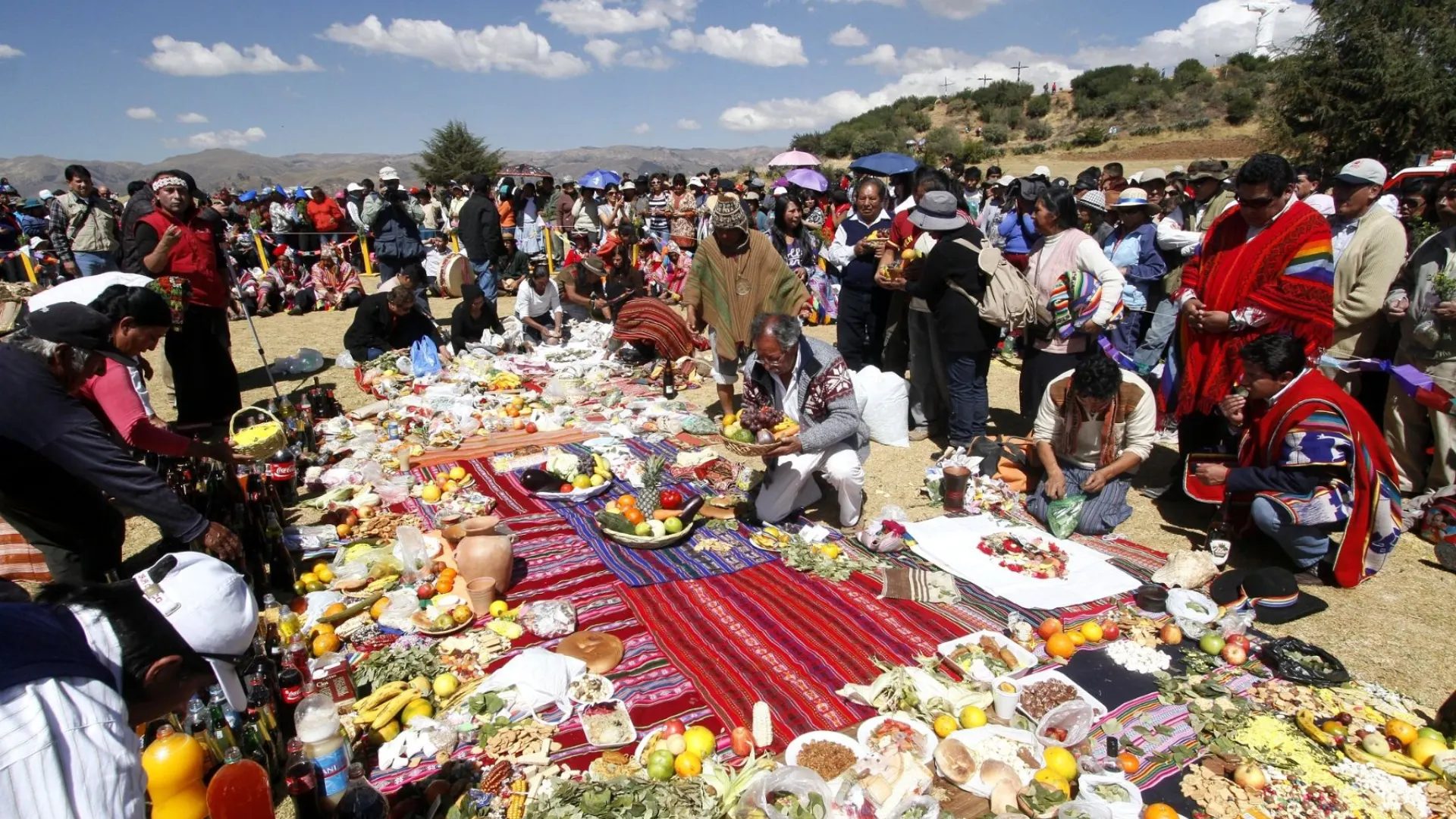
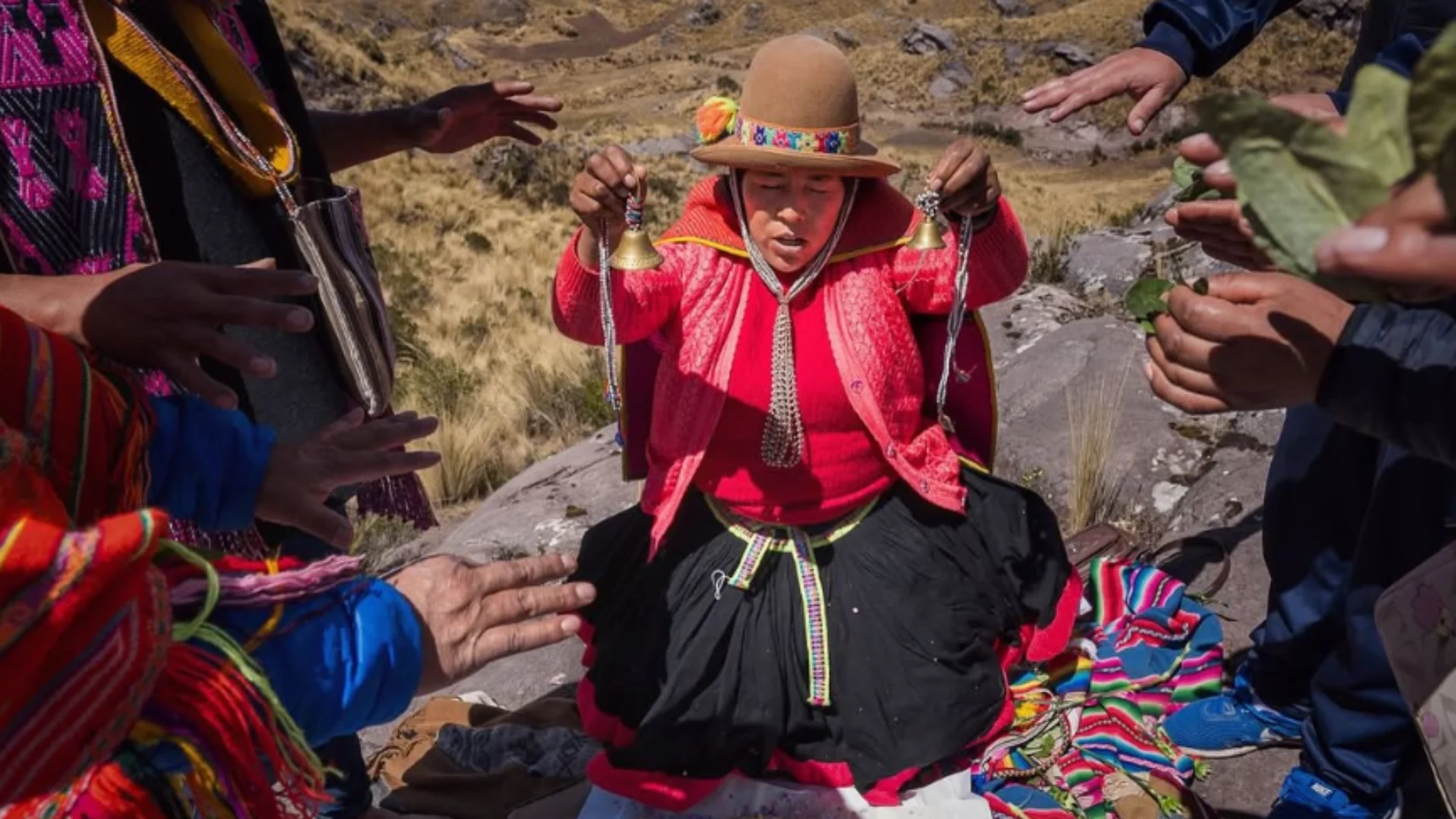
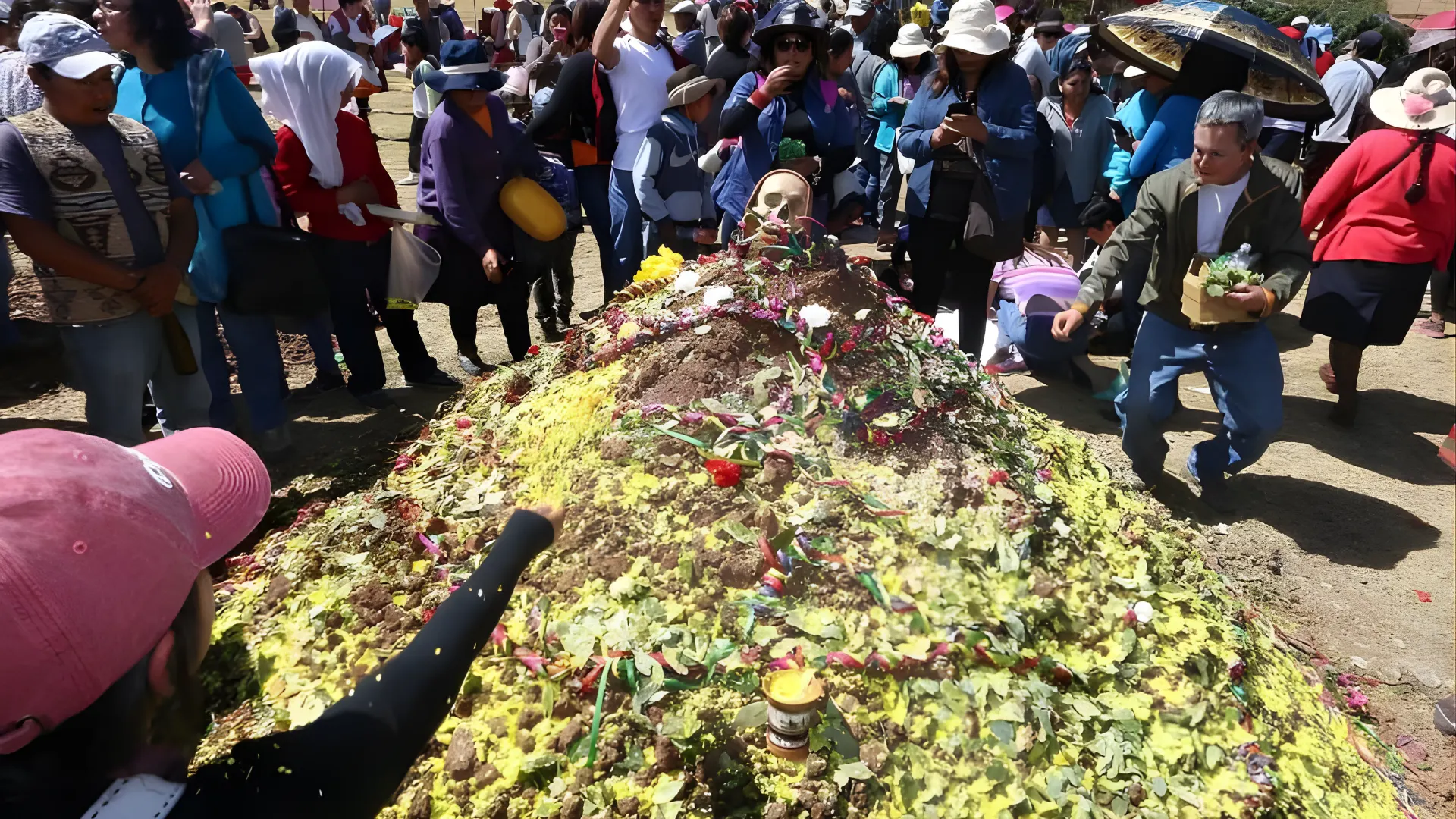
However, Día de la Pachamama represents an opportunity for Andean communities to pay homage and appreciation to Pachamama with acts of offering, praying, and selfless acts. The most common ceremony is the Pago a la Tierra ritual, which involves offering something back to the Earth with gratitude and requesting something in return.
For many families, however, it’s not about agriculture alone. They offer prayers for:
- Health and protection
- Work and business
- Safe travel
- Harmony at home
- Relief after a difficult year
It’s practical spirituality, the idea that life works better if the relationship with the land is kept in balance so a common, very direct question people ask locally is: qué se le pide a la pachamama. The answer depends on the family and the community, but it often centers on protection, health, stability, and a “good road ahead.”
When Is Pachamama Day in Peru?
The strongest symbolic date is August 1. In many Andean regions, rituals continue throughout August and sometimes beyond, depending on local tradition.
If you’re writing for travelers, keep it simple:
- Key date: August 1
- Season: the month of August (especially early August)
Why August Matters in the Andes
August is widely treated as a turning point in the Andean agricultural cycle. It’s a moment of preparation for what’s coming, including planting decisions, changing weather, and the opening of a new cycle.
This is why you’ll hear phrases like we have to feed the earth and we ask permission. The logic is reciprocity. You don’t treat the land as something you take from without consequence. You treat it as a living partner.
Inca Andean Cosmovision: The Three Planes
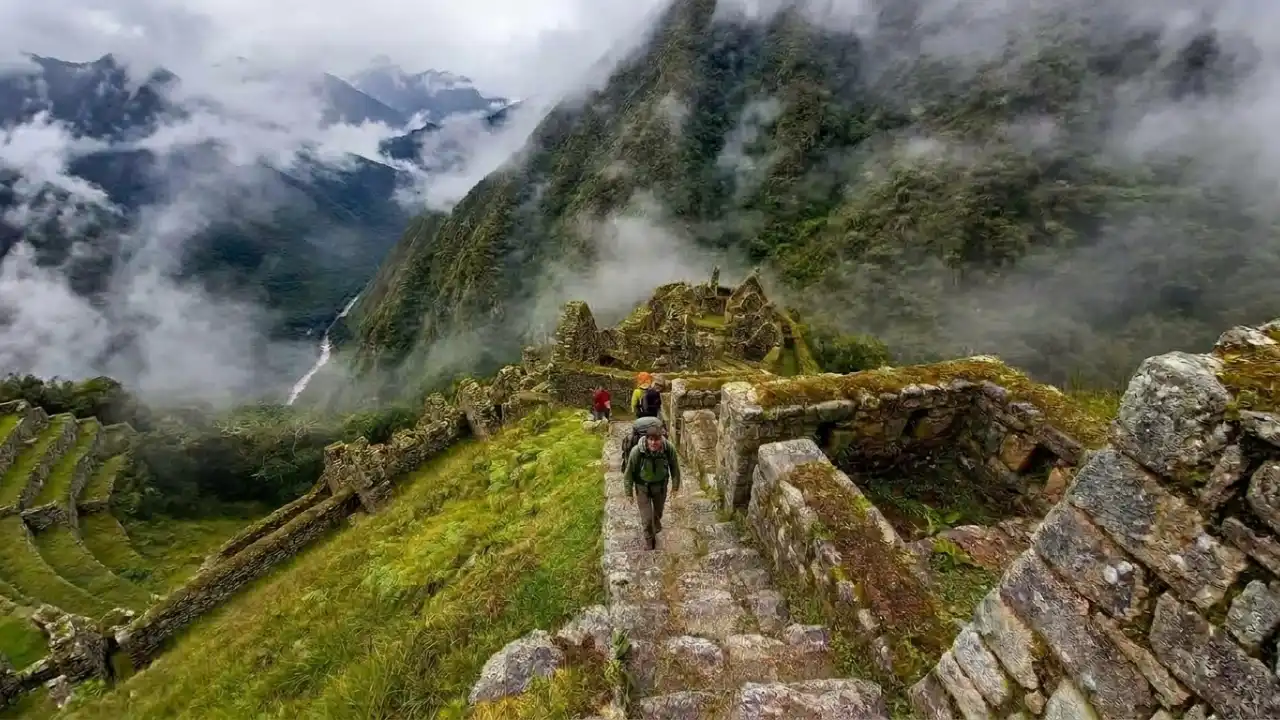
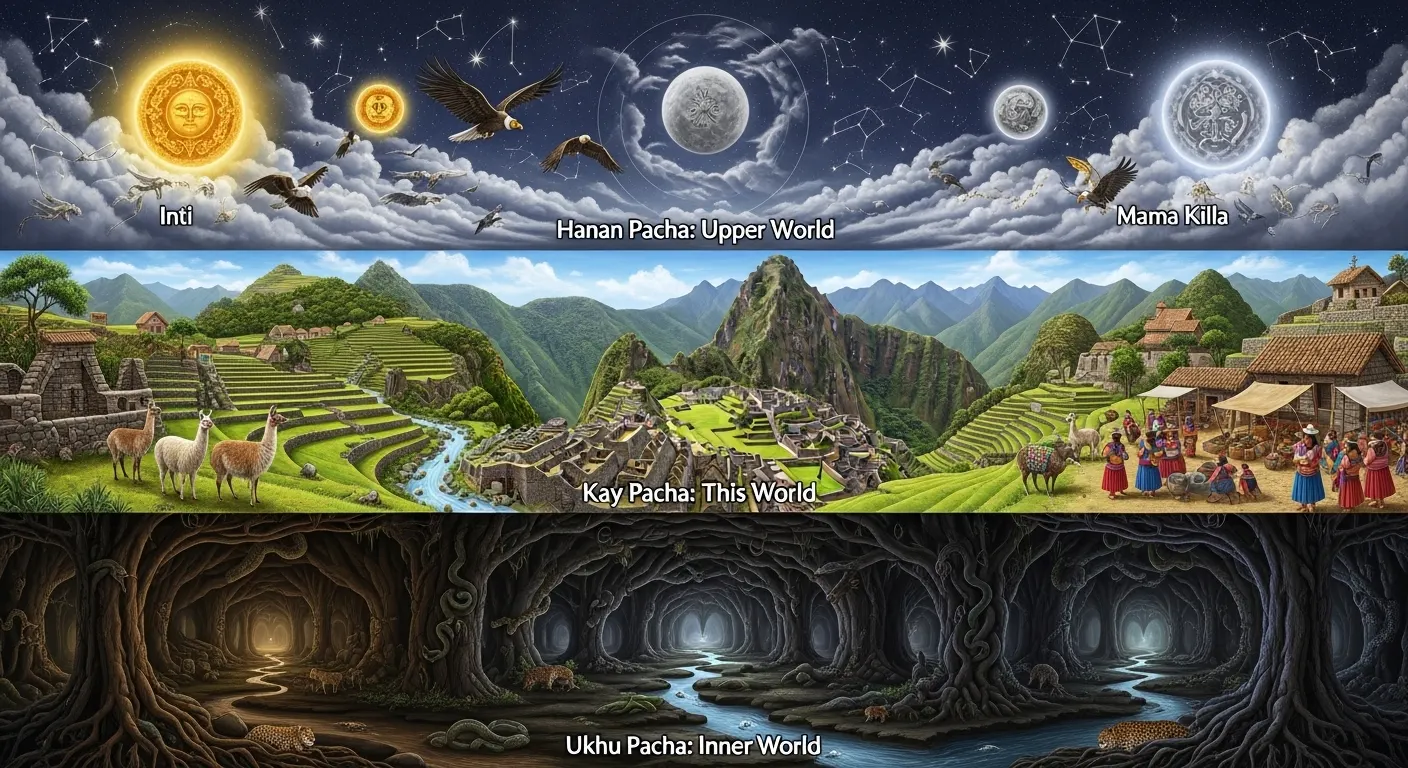
In the Andean worldview shaped strongly during the Inca period, reality is commonly understood in three interconnected planes. This helps explain why Pachamama ceremonies are not just earth honoring, but a full system of balance and why people asking what is a pachamama are often really asking about an entire worldview, not a single “thing.”
Hanan Pacha: Upper World
Hanan Pacha is the realm of the sky and higher forces, including the Sun, Moon, stars, and the seasonal patterns that govern life. It’s linked to timing, weather, and order.
How it connects to Pachamama: the land depends on what happens above, like sun, rain, frost, and seasonal change.
Kay Pacha: This World
Kay Pacha is the everyday world of people, animals, crops, work, family, and community. It’s where relationships are maintained through action.
How it connects to Pachamama: the offering happens here with real materials and real intention, because reciprocity is lived.
Ukhu Pacha: Inner World
Ukhu Pacha is the inner realm associated with the Earth’s interior, ancestors, fertility, and transformation. It is not hell. It is the place where life forms before it appears, like seeds becoming roots.
How it connects to Pachamama: many offerings are placed into the ground as a way of returning something to the Earth’s depths.
The Key Concept: Ayni
Ayni is reciprocity. The Earth sustains you, and you return gratitude and offerings. Community supports you, and you support the community. Balance is maintained through giving back.
What Is a Pago a la Tierra?
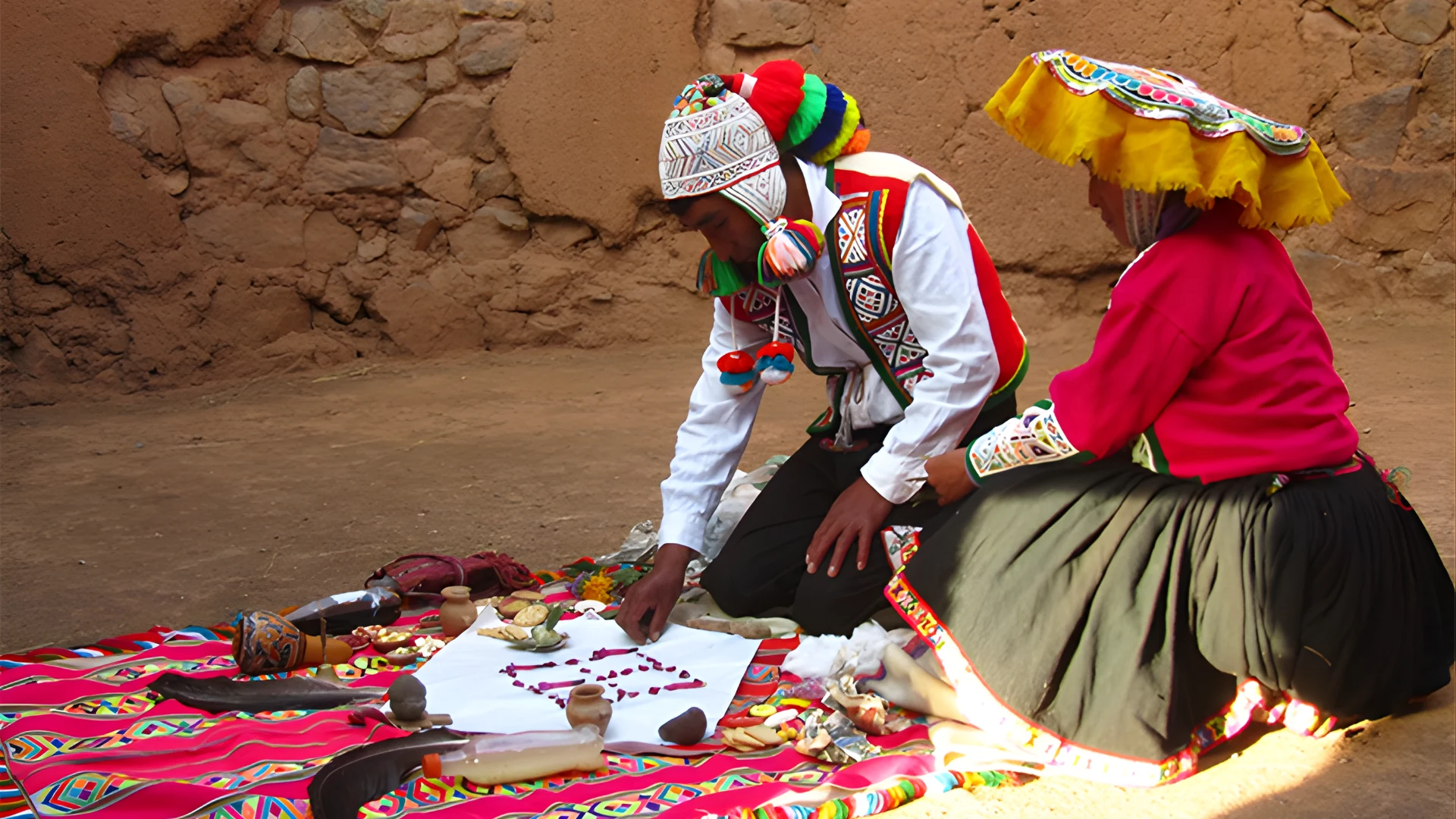
Pago a la Tierra or “the payment to earth” is the name used for offerings that are part of a ritual. The ceremony occurs on the 1st of the month in order to show appreciation for Pachamama (Mother Earth), and to ask that she protects and balances us in the upcoming month.
How the Pachamama Ceremony Works Step by Step
- Choosing the Place
It could be your own back yard, any type of field, a hillside, or in a Sacred Place.
- Setting the Intention
Offerings are prepared based on needs such as a healthy family, a safe journey, a good harvest, a stable year, and avoiding misfortune.
- Preparing the Offering
They are arranged in an ordered fashion, sometimes arranged in layers. And this is where symbolism plays an important role, for instance, in the use of sweet for harmony, grains for abundance, herbs for cleansing, and sacred leaves for intention.
- Prayer and Blessing
You can say a quiet prayer, utilize the Quechua or Spanish languages, and coca leaves to subsequently utilize for intention and blessing.
- Presenting the Offering
The culture to which you belong will determine whether to put the offering in the land or make a ritualistic gesture to commemorate the offering.
- Closing and Sharing
At times, sharing food and drinks happens afterwards. This ceremony is a community ceremony as much as a spiritual one.
Common Offerings and What They Symbolize
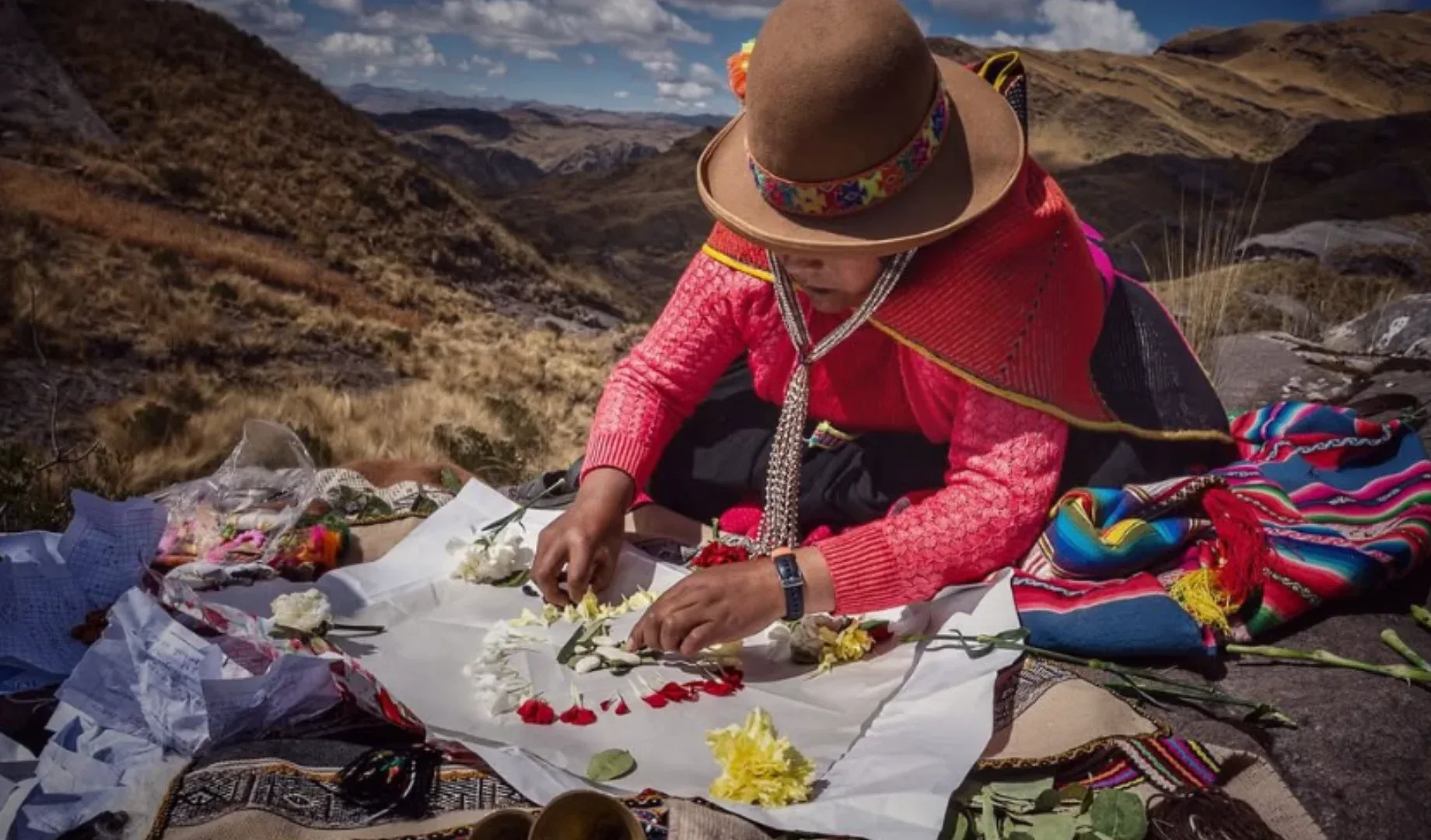
There are several offerings, yet some common items are coca leaves for intention, chicha or drink offerings for sharing with the Earth, grains and seeds for fertility, sweets for harmony, and flowers or herbs for cleansing and protection.
- Coca Leaves (K’intu)
Used in carrying intention with a blessing. Coca has a sacred value in the Andean culture, which is respected.
- Chicha (Corn Beer) or Drink Offerings
A small quantity of chicha is put into the ground before the beverage is consumed. This represents the act of sharing or giving back that comes from Pachamama (Mother Earth).
- Grains, Corn, Seeds
A direct link to fertility and future harvests life returning through the soil.
- Sweets and Sugar
Often used as a representation of harmony, good luck, and a sweet road ahead.
- Flowers and Aromatic Herbs
Can be used as a symbol for thanks, cleaning, and protection, depending on the tradition the person belongs to.
Can Travelers Participate? Respectful Etiquette
Permission is needed before visiting and before taking pictures and videos. Follow the example of local hosts. Dress simply and respectfully. Avoid handling ceremony implements unless you are invited to. Do not make it an entertainment event.
Do This
- Obtain permission to attend, photograph, or video-graph
- Follow the lead of local hosts
- Dress simply and respectfully
- Be quiet during prayer moments
- If offered the opportunity, add something humbly
Don’t Do This
- Don’t treat it as entertainment
- Don’t interrupt or step into ritual space for photos
- Don’t touch ceremonial items unless you’re clearly invited
- Don’t label everything as “shamanism” as a shortcut term
What to Expect vs Tourist Ceremonies
Some tourist ceremonies are respectful and community led. Others are staged. A good sign of respectful ceremony is that it is focused on permission, context, and community and not on selling some dramatic experience.
A brief reality filter:
- Real ceremonies are more about the offering and the community, not the visitor.
- Tourist versions may emphasize performance, pictures, and sales.
A respectful guide or community-based tourism project will:
- Provide you with context that is honest
- Request you follow the rules set forth by the community
- Concentrate on permission and privacy
Photo and Video Rules
Always ask. If the answer is no, stop. Avoid filming prayer moments. Do not geotag sensitive locations. Keep captions respectful and grounded.
- Always ask first, and every time.
- If the answer is no, accept it immediately.
- Avoid filming prayer moments unless permission is explicit.
- Don’t geotag sensitive community locations.
- Keep captions grounded: gratitude, culture, respect no stereotypes.
Frequently asked questions about Pachamama in Peru: Meaning of the Word and Three Worlds
Not usually as a nationwide paid holiday, but it is widely observed culturally in Andean regions.
Pachamama Day is the date and season of honoring the Earth. Pago a la Tierra is the offering ceremony commonly performed during that time.
It’s easy to turn it into something superficial. It’s better to learn and participate only when invited in a proper context.
It predates the Inca Empire and continues today through living Andean traditions.