Capital of Bolivia Sucre or La Paz and Why It Has Two Official Cities
Many travelers and students are often surprised to find that the answer to what is the capital of Bolivia is actually shared between two distinct cities instead of just one. While Sucre stands as the official constitutional and judicial capital of the nation, La Paz serves as the administrative hub where the executive and legislative branches of government reside.
This rare setup is the foundation of the modern Bolivia capital system and reflects a deep rooted historical compromise that balances the country’s heritage with its political reality. If you are looking for a single and definitive bolivia capital city name to settle the debate, the official honor belongs strictly to Sucre.
Although La Paz holds a massive amount of political power, Sucre is the only city recognized by the national constitution as the true and constitutional capital of the republic. This historic “White City” remains the symbolic heart of the land and the seat of the judicial branch, which goes a long way in explaining why Bolivia has two capitals instead of one today. Choosing Sucre as the primary answer allows the nation to protect its colonial heritage while the practical business of the state continues to thrive in the high Altiplano.
What is the capital of Bolivia?
Sucre Bolivia stands as the definitive and only constitutional capital of bolivia as mandated by the supreme law of the land. While the world often looks toward the Altiplano for political news, the legal and symbolic heart of the republic still resides in the colonial plazas of the south. This historic city serves as the judicial anchor for the entire bolivia capital system and remains the permanent seat of the Supreme Court of Justice.
By strictly identifying Sucre as the official center, the nation preserves its prestigious heritage as the birthplace of independence while maintaining a clear legal distinction from the city where the government actually works. La Paz serves as the functional administrative capital of bolivia and is the city that most people encounter when solving an administrative capital of bolivia crossword clue or an admin capital of bolivia crossword clue.
This high altitude powerhouse operates as the active bolivia capital city because it houses the Presidential Palace and the National Congress where the nation’s laws are debated and signed into effect. Because La Paz manages the vast majority of international relations and economic activity, it is widely cited as the administrative capital of bolivia crossword solution even though Sucre holds the legal constitutional title. The Federal War of 1899 is the landmark historical event that explains why does bolivia have two capitals rather than a single centralized seat of power.
This civil conflict between the rising liberal forces in the north and the traditional conservative elite in the south ended with a unique compromise that redefined the capital bolivia for more than a century. This fascinating political arrangement is exactly what triggers so much debate whenever travelers ask what is the capital of bolivia while exploring South America. By splitting the branches of government, the country successfully balanced regional interests and created a structure where both historical tradition and modern political energy could coexist.
Where Is the Capital of Bolivia Located on the Map of South America
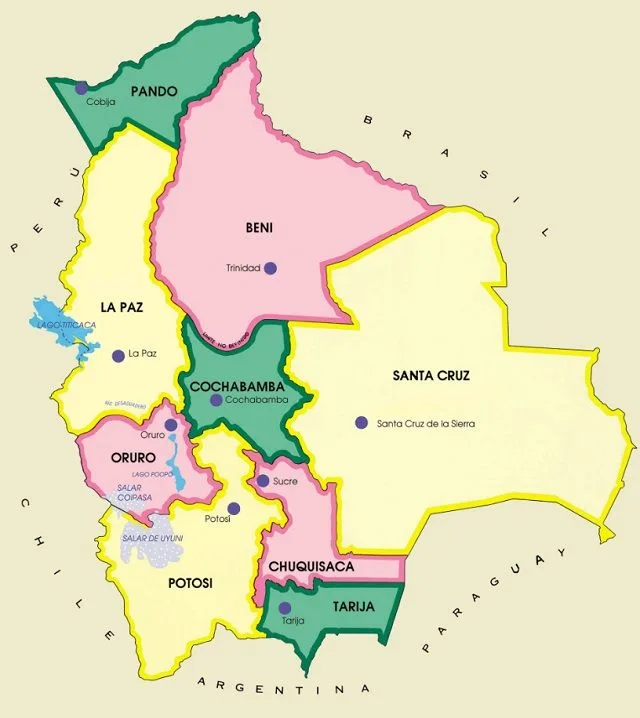
Viewing of the capital of Bolivia map would be the easiest means of realizing how a country would end up with two capitals within the same bolivia capital framework. If a map of Bolivia with capitals were to be analyzed, it becomes obvious that Sucre and La Paz stand out in a completely different manner. While Sucre would be located in the southern part of central Bolivia, La Paz would be situated in the far north, near the Andes.
To comprehend where is the capital of Bolivia, it is necessary to examine the distinct geography of Bolivia and how geography shaped why Bolivia has two capitals. Bolivia covers a vast range of lands from rainforest in the eastern lowlands to highlands with numerous peaks above 5,900 meters. Such geography naturally gave rise to regional administratively political and economic centers. Sucre Bolivia, being in a fertile valley enabled it to grow into the country’s center of intellect and law of independent Bolivia. La Paz, in a mountainous environment, was linked with mining resources, which in turn brought trade routes, and eventually it grew into a political engine within Bolivia’s capital structure.
Since it is a landlocked country, it shares boundaries with Peru, Brazil, Paraguay, Argentina, and Chile. This has partly shaped how it integrated with the colonial trade routes, how it experienced the revolution, and how it established its present-day political structure. Geography is a fundamental aspect in the dual-capital city of Bolivia.
How Geography Influenced Bolivia’s Two Capital System
Bolivia’s extreme geographic diversity played a decisive role in shaping its political structure and why Bolivia has two capitals. Fertile valleys favored long-term institutional stability, while mountainous regions rich in minerals encouraged trade, migration, and economic concentration. Rather than concentrating authority in a single bolivia capital city name, Bolivia evolved with multiple centers that reflected its varied landscapes and regional identities.
Geographic Location of Sucre in the Chuquisaca Department
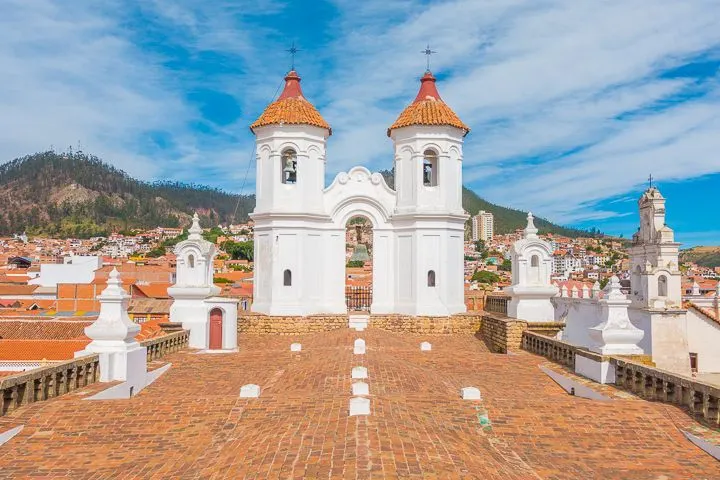
Persons searching for where Sucre is located or sucre bolivia are also interested in knowing why this particular city became the initial capital of Bolivia. Sucre has an altitude of approximately 2800 meters, a valley with a moderate climate, and easy terrain. The location of this city has been flanked by hills and fertile lands that, in history, are attributed as a site that served as a comfortable haven for settlers. Sucre, capital of Bolivia, started as a hub for elite education and early administration.
In colonial times and in early republic records written in the capital of Bolivia in Spanish, Sucre was known as Charcas or La Plata. As documented in early bolivia capital records, it was home to key institutions even before the country gained its independence, including the Royal Court of Charcas and the University of San Francisco Xavier, founded in 1621. These institutions positioned Sucre Bolivia at the core of Bolivia’s capital identity.
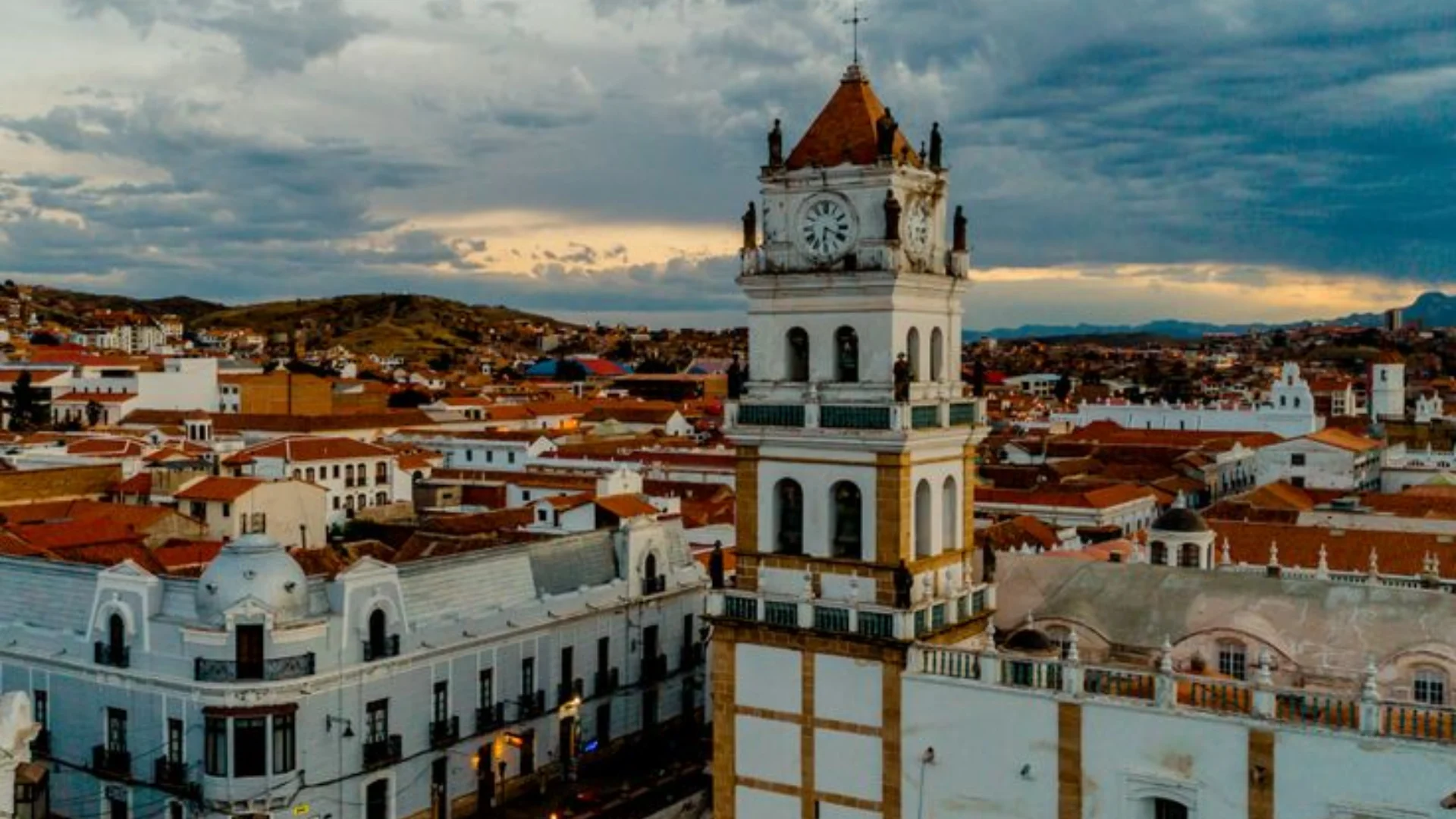
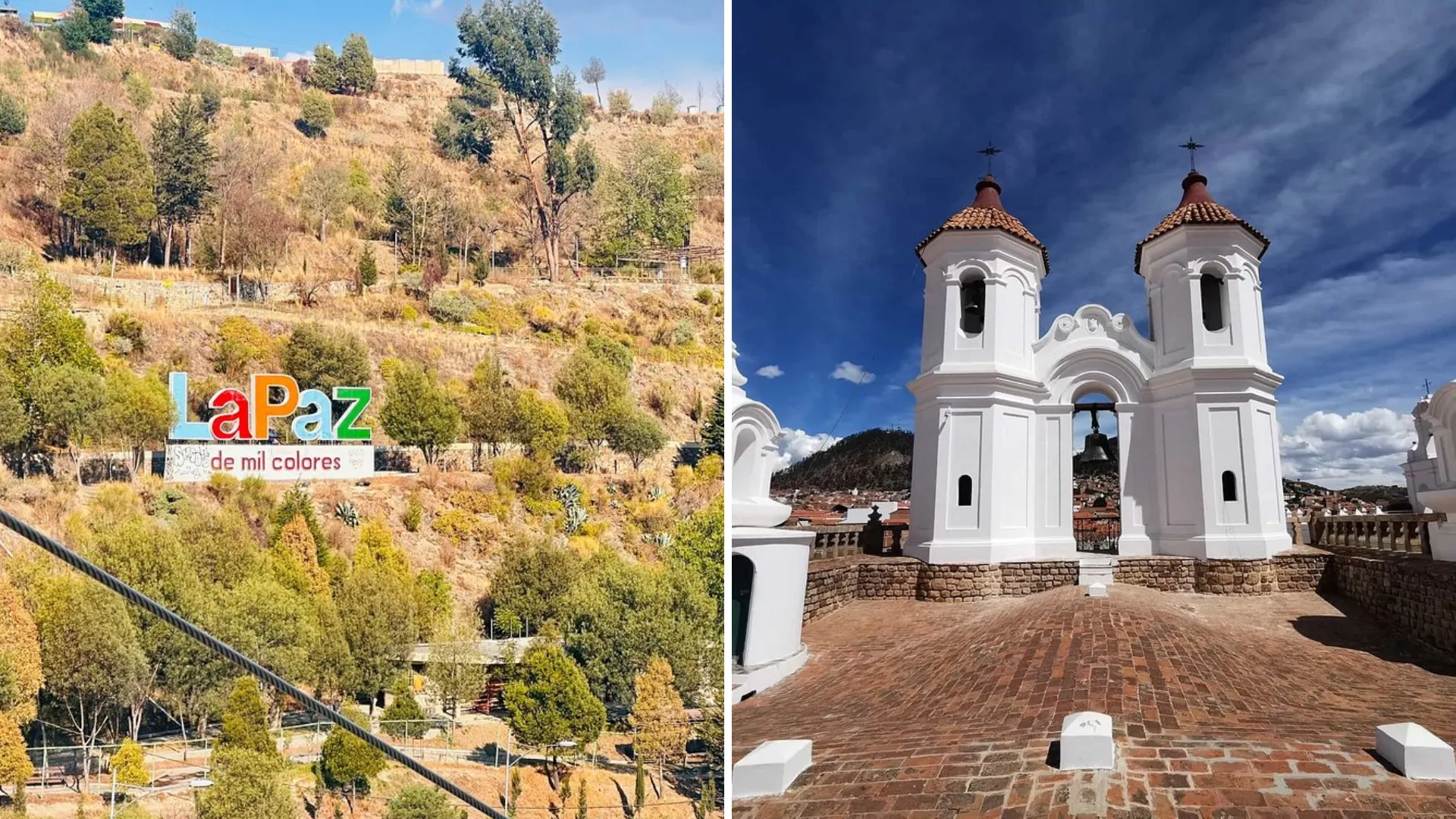
Sucre’s location in a valley also influenced its architecture. The vibrant white buildings, terra cotta roofs, and well-maintained colonial streets of Sucre are testaments to their rich history. Sucre is presently recognized as being among the most beautiful cities in South America, offering a stark contrast to the busy metropolis of La Paz within Bolivia’s capital framework.
Geographic Location of La Paz in the Andes Mountains
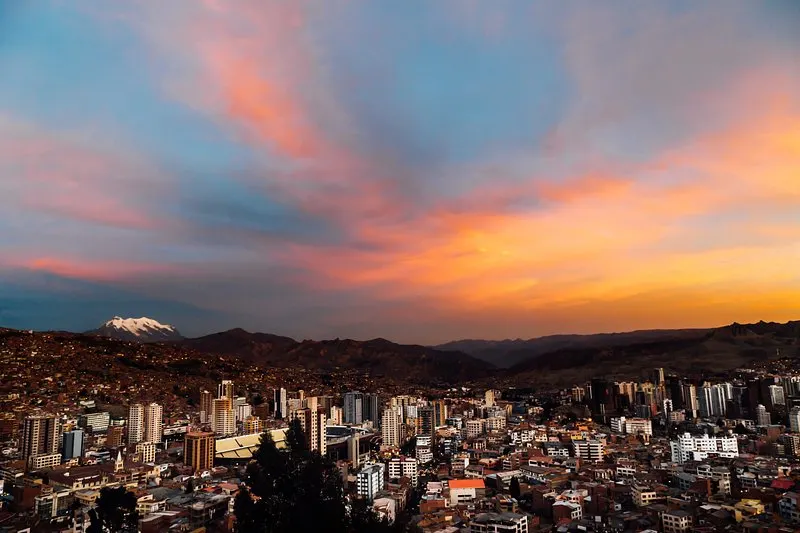
When people search for the capital of Bolivia La Paz, la paz capital city of bolivia, or simply capital bolivia, they find a city unlike any other in the world. La Paz was built inside a gigantic canyon of the Andes Mountains, flanked by steep cliffs and dominated by the majestic Illimani peak. To anyone searching what is the capital city of Bolivia, La Paz usually comes up as the first answer because it houses all government administrative offices.
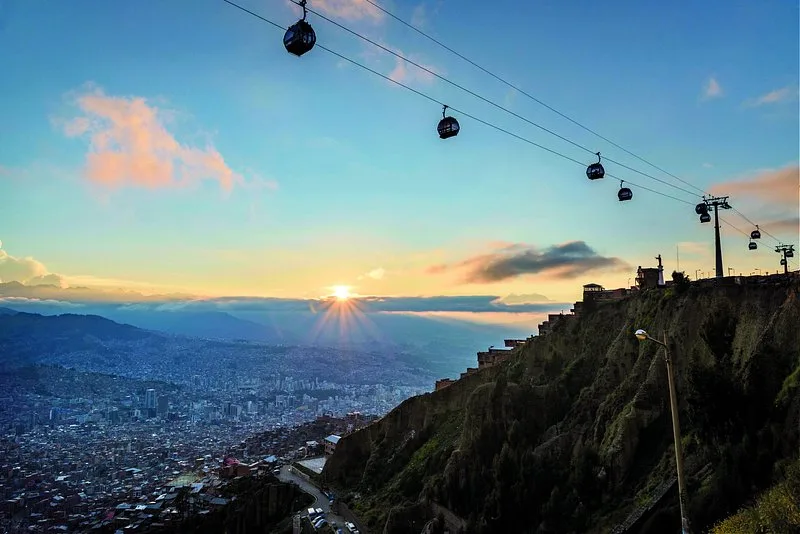
La Paz has a seat at almost 3650 meters above sea level, thus making it the highest administrative capital in the world. This dramatic geography really influences everything from how transportation is laid out to the way neighborhoods are laid out. Higher districts are colder and usually wealthier areas sit at lower elevations with more oxygen. The city’s cable car system, Mi Teleférico, can help connect various neighborhoods across mountainous terrain and offers incredible views-a very vital public transportation network.
La Paz’s mountainous location was historically essential to trade and mining. It lies close to routes linking the silver mines of Potosí, gold regions of the Yungas, and commercial corridors with Peru and Chile. The strategic placing enabled La Paz to become a large economic center and finally a site of governmental power.
Sucre as the Constitutional Capital of Bolivia and Judicial Seat
Those searching for sucre capital of bolivia are interested in verifying that Sucre is still acknowledged as the official capital of Bolivia in the Constitution. In constitutional terms, this is true. Sucre Bolivia is recognized as the constitutional and legal bolivia capital, as the judicial system has never been moved.
Sucre’s status as the constitutional capital has been linked to its significance as a founding moment. This occurred when Bolivian independence was declared in 1825. Though Sucre does not currently house either the executive branch of government or the legislative branch, it remains central to it.
Sucre now houses important cultural institutions, archives, universities, and national landmarks. This area symbolizes historical roots as well as remains important in shaping a sense of national identity.
Why Sucre Is Recognized as the Official Capital in the Constitution
Individuals inquiring about the official capital of Bolivia, as well as those inquiring about what is the constitutional capital of Bolivia, are naturally curious about how Sucre has been able to maintain this status. Sucre was home to the early governments from the very beginning of their independence. This, of course, answers all inquiries about what is the official capital of Bolivia.
This constitutional recognition of Sucre has not been coincidental. The Act of Independence and other early constitutions were written in Sucre. Thus, Sucre has historically played an important role. Although political power has since been focused on a different location, a result of the Federal War of 1899, it has never been moved from Sucre to La Paz in the Constitution. Sucre remains as the official capital in recognition of its role as the birthplace of the republic.
This also ensures regional balance. To maintain Sucre as the country’s capital, it honors the south and ensures that political power is not situated only in the highlands of the west.
The Role of the Supreme Court Operating from Sucre
Sucre is known as the judicial capital of Bolivia due to the presence of the Supreme Court of this country. So, when puzzle lovers come across judicial capital of Bolivia, their immediate puzzle solution would be Sucre. This further adds to Sucre’s significance as a constitutional center.
Although the capital of Bolivia country operates administratively from La Paz, Sucre retains the judicial branch, which has a significant historical tie with Sucre itself. This balance reflects how a country like Bolivia seeks to maintain a balance between various regions while respecting where their freedom as a nation started.
In fact, Sucre even now casts a shadow in the country’s judicial system with courts, universities, law academies, and judicial training centers.
La Paz as the Administrative Capital of Bolivia and Seat of Government
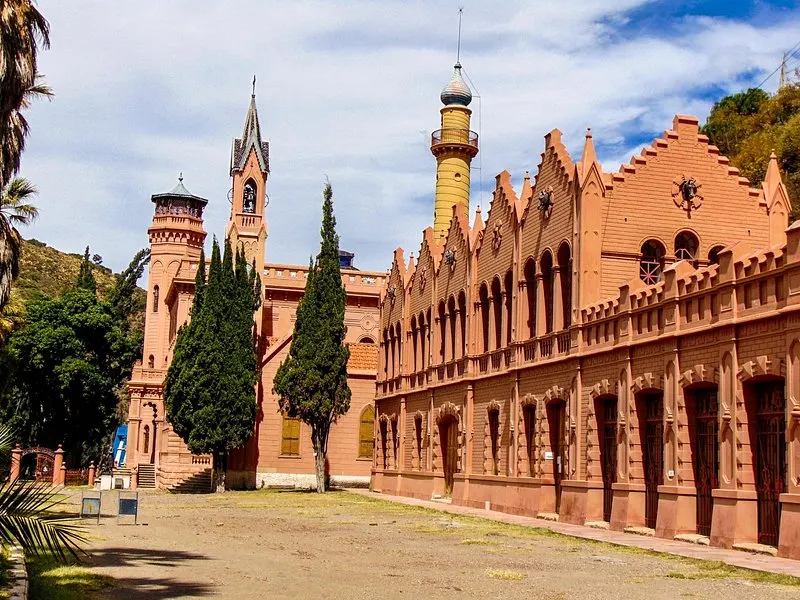
Persons looking for la paz capital of bolivia may also be curious about la paz being a country’s center of administration. Being the administrative capital of a country like Bolivia, La Paz contains the presidential palace, Congress, ministries, and representation offices. This has left most tourists believing it to be the major capital, hence the question is la paz the capital of bolivia.
The administrative primacy of La Paz became a reality as a result of the economic, connectivity, and political advantages that it offered. La Paz remains the meeting point of all transport, diplomatic, banking, energy, and legislative activities of the Bolivian government. All matters of the country are either debated in La Paz or policies are implemented.
With its height, population density, and cultural vibrancy, it’s a completely different experience in La Paz from what you would find in Sucre.
Why Travelers Often Think La Paz Is the Only Capital
Most international flights, embassies, government services, and political events are based in La Paz. As a result, visitors naturally associate La Paz with being the capital, even though Bolivia’s Constitution officially recognizes Sucre. This practical reality reinforces the perception of La Paz as the country’s main capital in everyday life.
Why the President and Congress Reside in La Paz Instead of Sucre
People attempting to solve an administrative capital of Bolivia crossword clue or reading history books will realize that the conflict gave birth to a dual capital for Bolivia. The Federal War of 1899 brought a transformation in matters of governance from Sucre to La Paz. This became a milestone in the development of a Bolivian capital.
When people ask why does Bolivia have two capitals, the explanation comes down to regional power. Since the mining area of altitude with growing trade in La Paz, it enabled it to leverage economic power to become a center of government. Consequently, since there were institutions in La Paz, infrastructure, population, and finance, it all developed around these, making it a center of government.
La Paz as the Economic Center and De Facto Capital
Persons searching for what is the capital of Bolivia, South America or investigating the GDP per capita of Bolivia can quickly realize that it is a fact that the economic powerhouse of this country is La Paz. Highland economy, including mining, farming, manufacturing, and trade, passes through both La Paz and El Alto.
La Paz regularly appears in the administrative capital of Bolivia crossword as it plays a prominent role in running the country. This is because major companies, air carriers, ports, as well as other various international bodies, are situated in this city. Although Sucre has a constitutional capital, in reality, it is administered from La Paz.
Its markets, finance hubs, diplomatic hubs, and government institutions make it evident that it is this city that keeps Bolivia running.
Sucre and La Paz Offer Very Different Travel Experiences
Sucre offers calm, history, and colonial elegance, while La Paz delivers intensity, altitude, political life, and urban energy. Visiting both cities provides a complete picture of Bolivia’s past and present.
| Aspect | Sucre | La Paz |
|---|---|---|
| Official status | Constitutional and legal capital | Administrative and political capital |
| Role in government | Seat of the judiciary | Seat of executive and legislative branches |
| Historical significance | Birthplace of Bolivian independence (1825) | Center of modern political power |
| Altitude | About 2,800 meters | About 3,650 meters |
| Urban atmosphere | Calm, historic, academic | Dynamic, dense, fast-paced |
| Architecture | Colonial, white façades, UNESCO heritage | Modern mixed with traditional Andean |
| Main institutions | Supreme Court, universities, archives | Presidential palace, Congress, ministries |
| Travel experience | Relaxed, cultural, historical | Energetic, political, urban |
| Symbolic meaning | National identity and legal foundation | Daily governance and economic activity |
Common Questions and Crossword Clues About the Capital of Bolivia
Bolivia’s unique sharing of a dual capital status makes it a favorite among trivia, quiz, and puzzle enthusiasts. A number of individuals are searching for capital of Bolivia crossword clue or capital of Bolivia nyt crossword. This comes due to the uniqueness that, in Bolivia, there are two appropriate answers. These are Sucre and La Paz, which are present in capital of Bolivia crossword.
This dual nature brings a complexity that adds interest to geography related questions, making it different from other nations in South America.
Did You Know? Bolivia Is Not the Only Country with More Than One Capital
Countries such as South Africa and the Netherlands also separate constitutional and administrative capitals. Bolivia’s case is unique in South America, making it especially popular in educational and trivia contexts.
Determining Which Is the Real Capital of Bolivia for Travelers
Visitors often ask what is the real capital of Bolivia or try to determine which is the capital of Bolivia when planning travel itineraries. This is due to the country having a dual capital city. Thus, both Sucre and La Paz are appropriate depending on the circumstances. In answering questions on whether La Paz or Sucre is the capital of Bolivia, it becomes rather obvious that
Sucre has all the constitutional, symbolic, and judicial powers.
La Paz has all the governance, political, and economic powers.
Knowing this distinction can help tourists in understanding government offices, historical and cultural areas.
Correct Pronunciation of Sucre and La Paz in English
Travelers frequently look up capital of Bolivia pronunciation or search for the names of the capitals capital of Bolivia in English to ensure they use correct pronunciation. Learning what is the capital of Bolivia called in Spanish is also helpful when speaking with locals.
There is no difficulty in pronunciation.
- Sucre is pronounced SOO-cray.
- La Paz is pronounced lah PAHZ.
Both names are retained in Spanish, but with a slightly softer accent, which facilitates communication for English speaking tourists.
Frequently asked questions about Capital of Bolivia Sucre or La Paz and Why It Has Two Official Cities
Bolivia has two capitals due to historical, political, and regional factors. Sucre remains the constitutional capital because it was the birthplace of the republic and the site of the declaration of independence, while La Paz became the administrative capital after the Federal War of 1899 thanks to its economic and political influence.
Both are correct depending on the context. Sucre is the official constitutional and judicial capital. La Paz is the administrative, political, and governmental capital where the president, Congress, and national ministries operate.
Sucre is located in the south-central region of Bolivia, sitting in a valley at about 2,800 meters with mild weather. La Paz is in the northwest, built inside a deep canyon of the Andes Mountains at around 3,650 meters above sea level.
La Paz became the center of government after 1899 because it controlled mining wealth, trade routes, and economic growth. Its regional power allowed it to take over administrative functions while Sucre retained its constitutional title.
Sucre remains the constitutional capital and is home to the Supreme Court, making it the judicial center of the country. It also preserves Bolivia’s historical identity through its universities, archives, and colonial architecture.