
Who Built Machu Picchu? The Full Story of Peru’s Inca Citadel
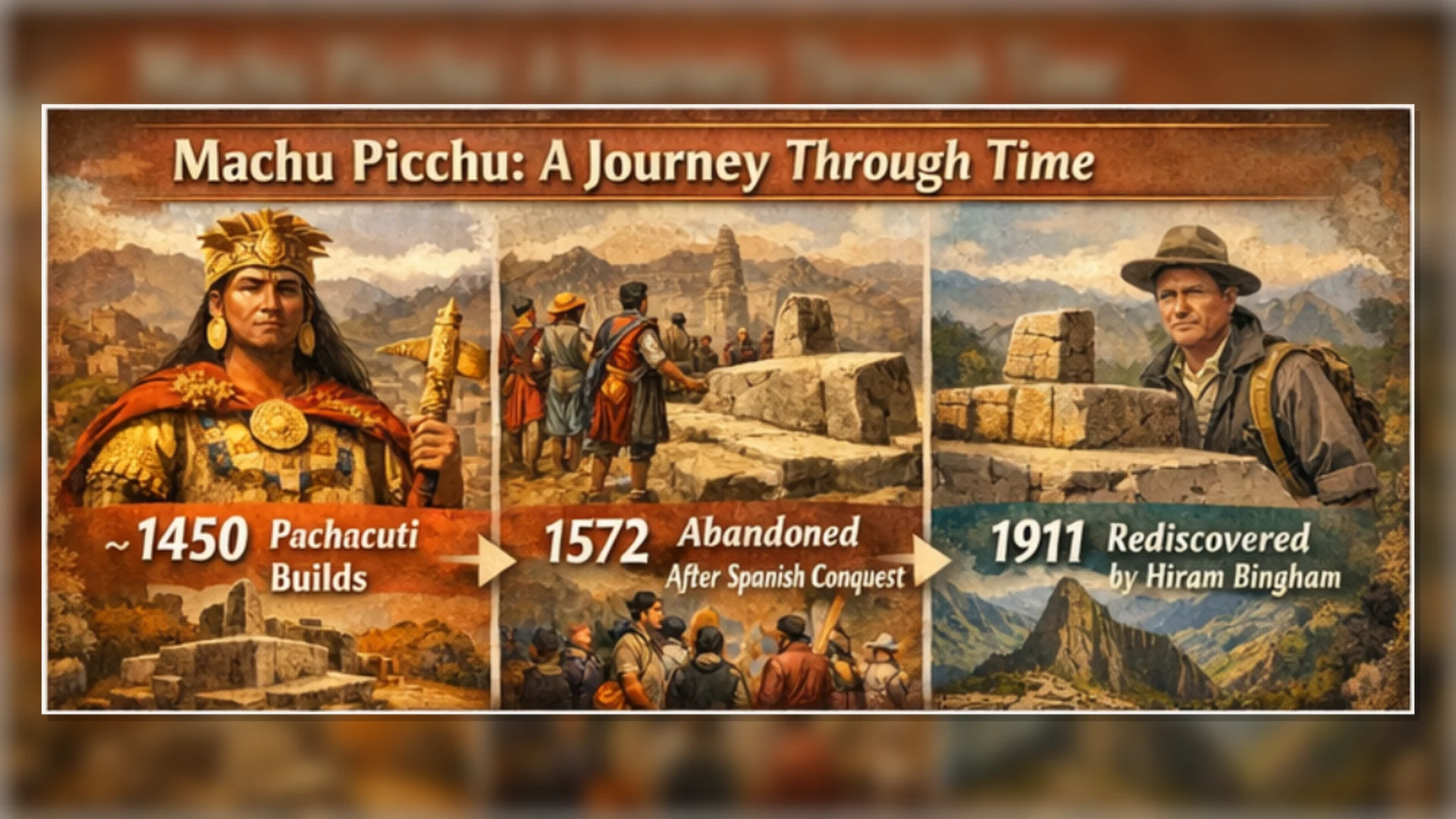
Machu Picchu was built by the Inca civilization, most likely under Emperor Pachacuti around 1450 CE. Far from being a mysterious lost city built by unknown hands, it was a carefully planned royal estate and ceremonial center raised stone by stone by skilled laborers working through the Inca mit’a system.
Machu Picchu sits at roughly 7,970 feet above sea level in the Peruvian Andes, perched on a narrow ridge between two mountain peaks, surrounded on three sides by sheer cliffs that drop thousands of feet into the Urubamba River valley below. It is one of the most photographed sites on Earth, one of the Seven Wonders of the Modern World, and one of the most searched topics in archaeology.
Who Built Machu Picchu and When
The Inca civilization, most likely commissioned by the Sapa Inca (supreme emperor) Pachacuti Inca Yupanqui beginning around 1450 CE. The ruins of Machu Picchu that visitors see today in Peru are what remains of a royal estate and ceremonial center that stood at the height of Inca power. Construction was carried out through a labor system called mit’a, which required communities throughout the Inca Empire to contribute organized work as a form of tribute to the state. The people who built Machu Picchu were not slaves. They were skilled laborers, craftspeople, and specialists fulfilling a civic obligation to the most powerful government in the ancient Americas.
The ancient city of Machu Picchu in Peru was occupied for roughly 80 to 100 years before being gradually abandoned following the Spanish conquest of the Inca Empire in the 1530s. It was then largely unknown to the outside world for nearly four centuries until American historian Hiram Bingham III was led there in 1911. If you have ever wondered who really built Machu Picchu or whether the common answer tells the whole story, the sections below go much deeper.
| Key Fact | Value | Description |
|---|---|---|
| Construction began | ~1450 CE | Approximate year construction began under Emperor Pachacuti. |
| Structures completed | 200+ | Individual structures completed, including temples, palaces, and residences. |
| Elevation | 7,970 ft | Above sea level, making it one of the highest major archaeological sites in the world. |
| Total site area | ~172 acres | Includes agricultural terraces and urban sectors. |
Key Facts at a Glance
Machu Picchu was built by the Inca civilization under Emperor Pachacuti Inca Yupanqui. Construction likely began around 1450 CE and continued until roughly 1550 CE. The site was built primarily as a royal estate for Pachacuti and his royal descent group, using mit’a laborers from across the empire together with permanent yanacona specialists. It was eventually abandoned around 1572 CE, following the collapse of Inca rule. Machu Picchu is located in Urubamba Province, Cusco Region, southern Peru. It has been a UNESCO World Heritage Site since 1983 and was named one of the New Seven Wonders of the World in 2007.
Understanding the Inca Empire First
Tawantinsuyu (meaning “the four regions together”), was the largest empire in pre-Columbian America and, at its peak in the early 16th century, one of the largest empires in the world. It stretched roughly 4,000 miles along the western coast of South America, from what is now southern Colombia through Ecuador, Peru, Bolivia, northwestern Argentina, and into Chile.
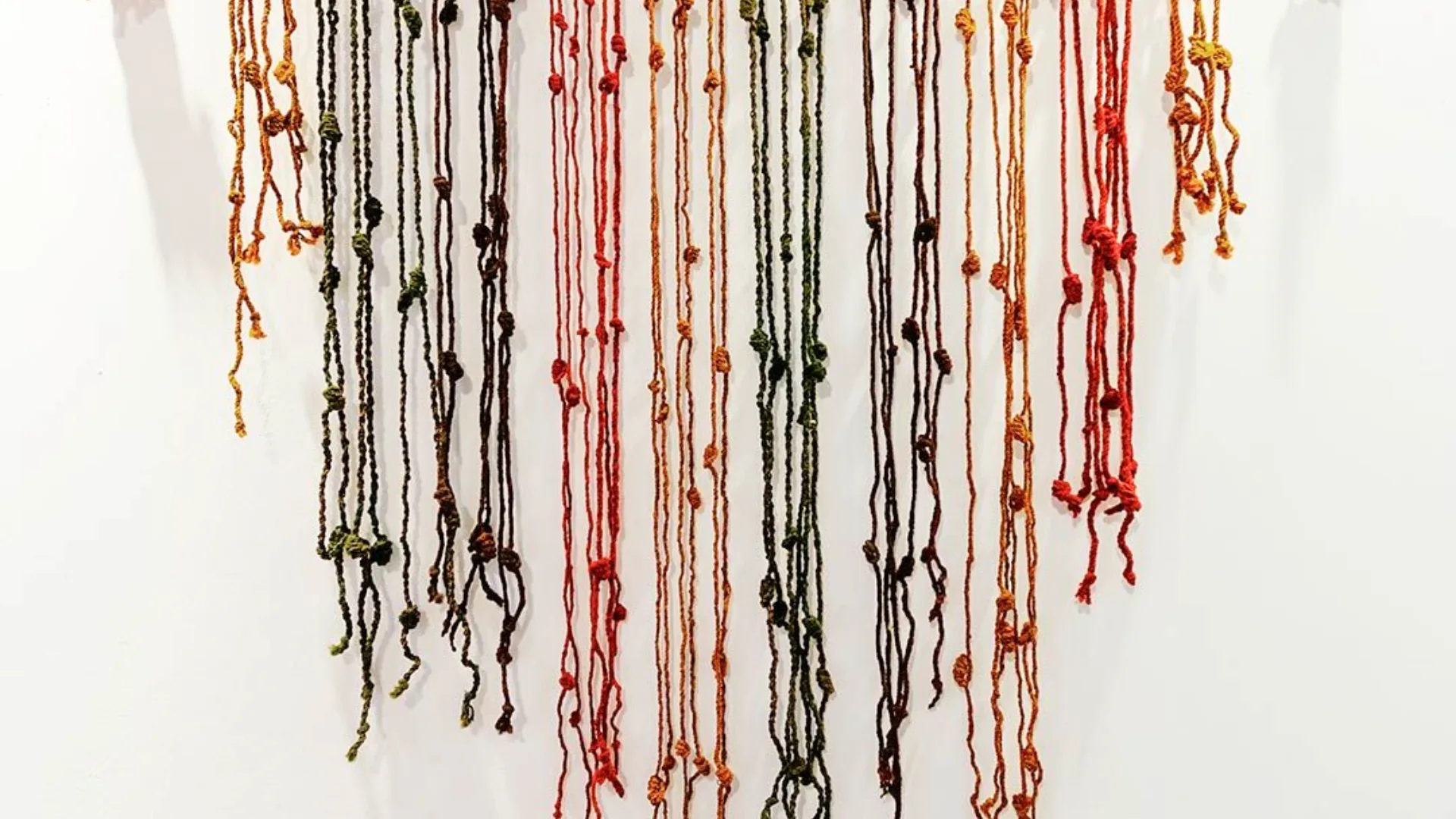
Quipu, a series of knotted strings that could encode census data, tribute records, and possibly even narrative information. They practiced advanced surgery, including brain operations. They managed agriculture at altitudes that still challenge modern farmers.
And they did all of this without a written language, without the wheel for transport, and without iron tools. The Inca were a Bronze Age civilization, and yet the infrastructure they left behind in places like Machu Picchu rivals anything produced by their contemporaries in Europe or Asia. Understanding that context is essential for understanding who really built Machu Picchu and how.
Key Facts
The Inca did not call themselves “Inca.” That word originally referred only to the ruling class and the royal family. The broader population belonged to dozens of different ethnic groups absorbed into the empire over time. The official language of administration was Quechua, which is still spoken by roughly 8 to 10 million people across South America today, including many descendants of the people who built Machu Picchu in Peru.
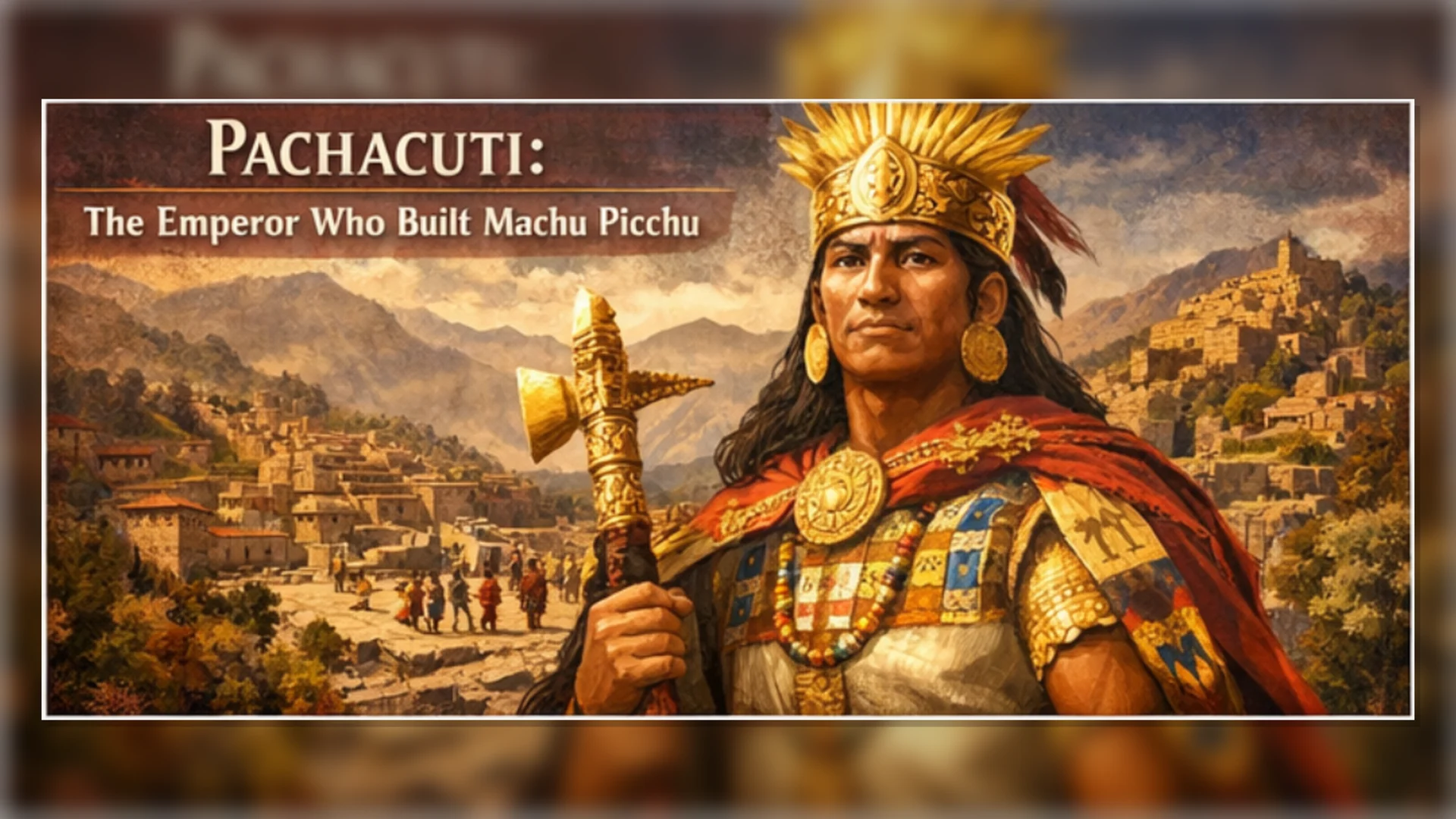
Pachacuti, the Inca Emperor Who Built Machu Picchu
Pachacuti Inca Yupanqui, whose name in Quechua translates roughly to “he who transforms the Earth” or “world-shaker.” He was the ninth Sapa Inca and is widely considered the greatest ruler in Inca history. If you want a single answer to the question of which Inca emperor built Machu Picchu, Pachacuti is it. He was the figure who transformed a modest regional kingdom in the Cusco valley into the continent-spanning empire that the Spanish would eventually encounter.
Pachacuti came to power around 1438 CE under dramatic circumstances. A rival confederation known as the Chanka people launched a major assault on Cusco, and by some accounts Pachacuti’s father, the reigning emperor Viracocha, fled the city. Pachacuti stayed, organized the defense, and drove the Chanka back in a victory that became the founding myth of imperial expansion. He spent the following decades launching military campaigns in every direction, folding neighboring peoples into the Tawantinsuyu through a combination of conquest, diplomacy, and strategic marriage alliances.
But Pachacuti was not simply a military leader. He was one of the ancient world’s great builders. Under his reign, the Inca completely redesigned and rebuilt the city of Cusco, laying out its streets in the shape of a puma and constructing the Coricancha, the great Temple of the Sun reportedly covered in gold sheet on its interior walls. He also initiated a massive program of terrace agriculture, road construction, and administrative consolidation across the empire. Machu Picchu in Peru was, by most scholarly accounts, the crown jewel of that building program.
Pachacuti did not just conquer a continent. He built the physical, administrative, and spiritual infrastructure of a civilization that had no equivalent in the Western Hemisphere.
Was Machu Picchu Built for Pachacuti Personally?
Most likely, yes. Many scholars believe Machu Picchu was built as a royal estate for Emperor Pachacuti. In the Inca world, a ruler’s death did not mean the end of his political or ceremonial presence. According to the panaca system, once an emperor died, his body was mummified and his estate did not pass to his successor. Instead, it remained in the hands of his royal descent group, which used the land’s resources to support ceremonies and maintain the ruler’s legacy. Because of this system, each new Sapa Inca needed to establish his own estate, helping explain why the Inca were able to produce so many monumental projects in such a relatively short span of time.
What Happened After Pachacuti Died?
After Pachacuti’s death, Machu Picchu likely remained under the control of his panaka, the royal lineage responsible for preserving his memory and sustaining the ceremonial obligations tied to his estate. The site continued to be used and maintained by his descendants, and later emperors may have visited it and even contributed additions or modifications to the complex. Even so, Pachacuti is still regarded as the central figure behind the site’s original vision and construction. What we now know as Machu Picchu was, above all, a product of his ambition, authority, and imperial building program.
The Laborers Who Built Machu Picchu
There is no single architect credited with Machu Picchu. The Inca had no written language, so no building plans, worker rosters, or construction records survive. What we know about the people who built Machu Picchu comes from a combination of careful archaeological analysis, Spanish colonial accounts of Inca labor practices written in the decades after the conquest, and comparison with other well-documented Inca construction projects throughout the Andes.
The Mit’a System: Labor as Taxation
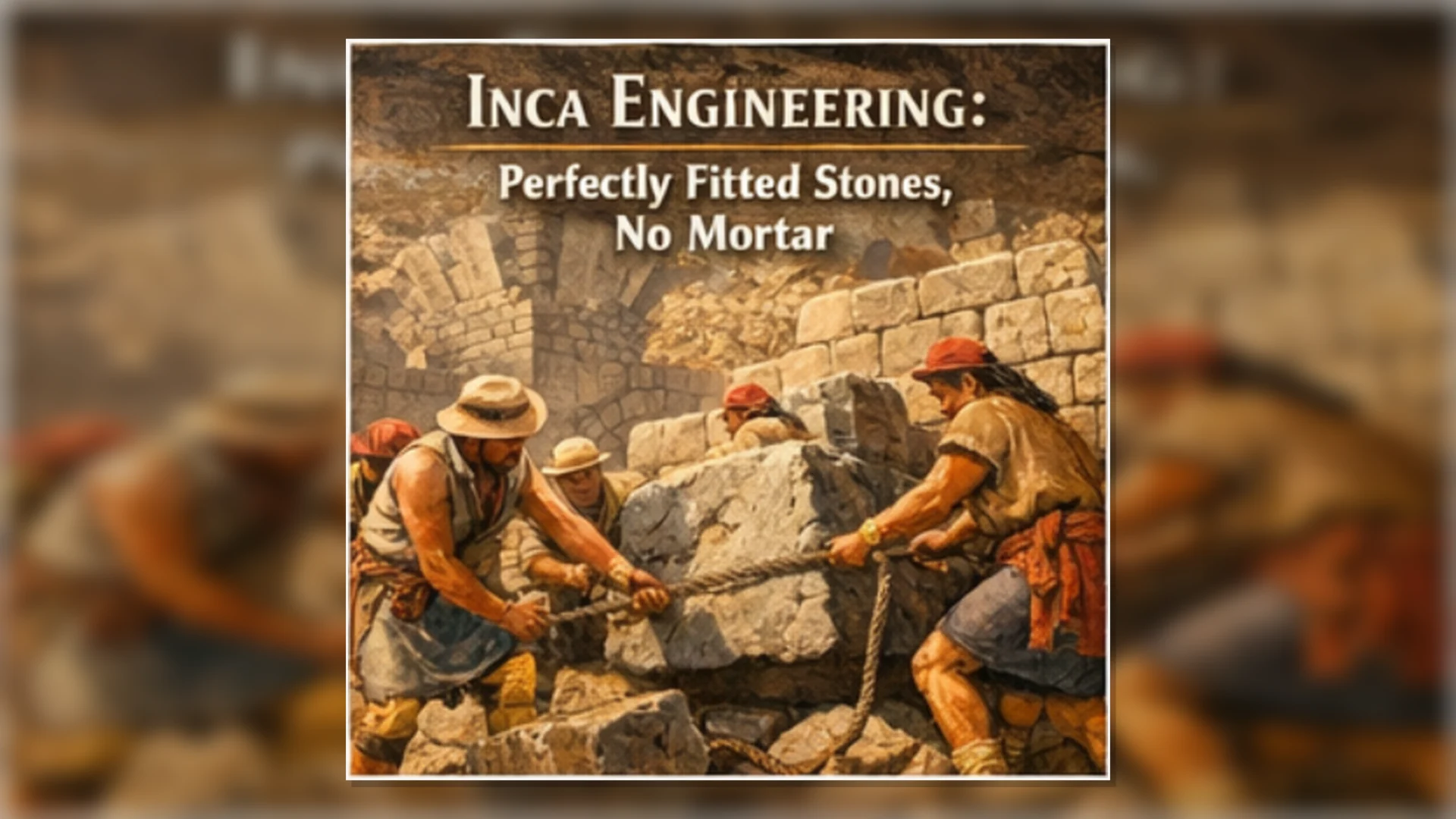
Mit’a was the system of rotational labor tribute that every community in the Inca Empire owed to the state. Instead of paying taxes in money or commodities (the Inca had no currency), households were expected to contribute a portion of their able-bodied adults to state projects for a set period each year. In return, the state provided everything those workers needed during their service: food, clothing, tools, housing, and chicha, the fermented maize beer that was a central feature of Inca communal labor and ceremony.
The mit’a was not slavery, but it was not entirely voluntary either. It was a civic obligation backed by the authority of the state. Within those constraints, however, the system functioned more like a public works program than forced labor. The laborers who built Machu Picchu retained their social status, returned home after their service, and were contributing to projects that were understood to benefit the entire community through the favor of the emperor and the gods.
Archaeologist Gary Urton and others have estimated that a project the scale of Machu Picchu would have required somewhere between 20,000 and 30,000 person-years of labor over the course of its construction, drawing workers from communities across a wide swath of the Inca Empire in Peru and beyond.
Yanacona: The Permanent Specialists
Alongside mit’a laborers, Machu Picchu also employed a class of permanent state servants called yanacona. These were individuals removed from their home communities to serve the emperor and the state on a full-time basis, often for life. At Machu Picchu, yanacona would have included the master stonemasons responsible for the finest ashlar work, agricultural specialists managing the terraces, religious attendants maintaining the temples, and a class of women known as aqllakuna (“chosen women”) who wove fine textiles, brewed chicha, and performed ceremonial functions.
Analysis of the skeletal remains found at Machu Picchu by bioarchaeologist Bethany Turner and her colleagues revealed something remarkable: the permanent population of the ruins of Machu Picchu was extraordinarily diverse in origin, drawing individuals from the coast, the highlands, and the jungle lowlands of the Inca Empire. This was not a local community. It was a hand-picked workforce assembled from across an entire continent to serve whoever Machu Picchu was built for.
Key Facts
Isotope analysis of teeth from skeletal remains at Machu Picchu has shown that a significant portion of the laborers and permanent residents were not born anywhere near the Cusco region. Some came from the Pacific coast, over 300 miles away. Others came from the eastern lowlands. The Inca assembled specialists from across the empire to staff their most important sites, which is one reason the people who built Machu Picchu are so difficult to trace to a single origin.
Timeline of Construction and History
- 1400 BCE to 1400 CE Indigenous peoples, including the Killke culture, inhabit the Cusco region. Terracing and stone construction are already established traditions in the Andes long before the Inca rise to dominance.
- 1438 CE Pachacuti defeats the Chanka confederation and transforms the Inca state into a continental empire. He initiates the complete rebuilding of Cusco and launches major construction across the highlands.
- 1450 CE Construction of Machu Picchu in Peru is believed to begin. Mit’a laborers and yanacona specialists are brought in from across the empire. Quarrying begins on the granite ridge itself.
- 1460 to 1470 CE The main ceremonial and residential sectors take shape. The Temple of the Sun, the Intihuatana stone, and the Royal Palace are completed during this intensive phase.
- 1471 CE Pachacuti, the Inca emperor who built Machu Picchu, dies. His panaka inherits the estate. Later emperors Tupac Inca Yupanqui and Huayna Capac visit and may have made additions.
- 1527 CE Emperor Huayna Capac dies, possibly of smallpox introduced via early Spanish contact. A succession crisis follows, weakening the empire critically.
- 1532 CE Francisco Pizarro captures Atahualpa at Cajamarca. The Inca state begins to collapse. The population of Machu Picchu starts drifting away as the royal support system disintegrates.
- 1572 CE The last Inca holdout at Vilcabamba falls. Machu Picchu is fully abandoned. The jungle reclaims the site. Spanish colonizers never mention it in any document.
- July 24, 1911 CE Hiram Bingham III is led to the ruins of Machu Picchu by local farmer Melchor Arteaga and an 11-year-old boy named Pablito Richarte. Bingham introduces the ancient city of Machu Picchu to the outside world.
How Was It Built? The Engineering Explained
This is the question that stops people when they visit. Looking at those massive stone walls fitted together with sub-millimeter precision, on the edge of a cliff at nearly 8,000 feet, it genuinely does not compute at first glance. Here is how archaeologists and engineers believe the laborers who built Machu Picchu actually did it.
Ashlar Masonry: Stones Cut to Lock Together
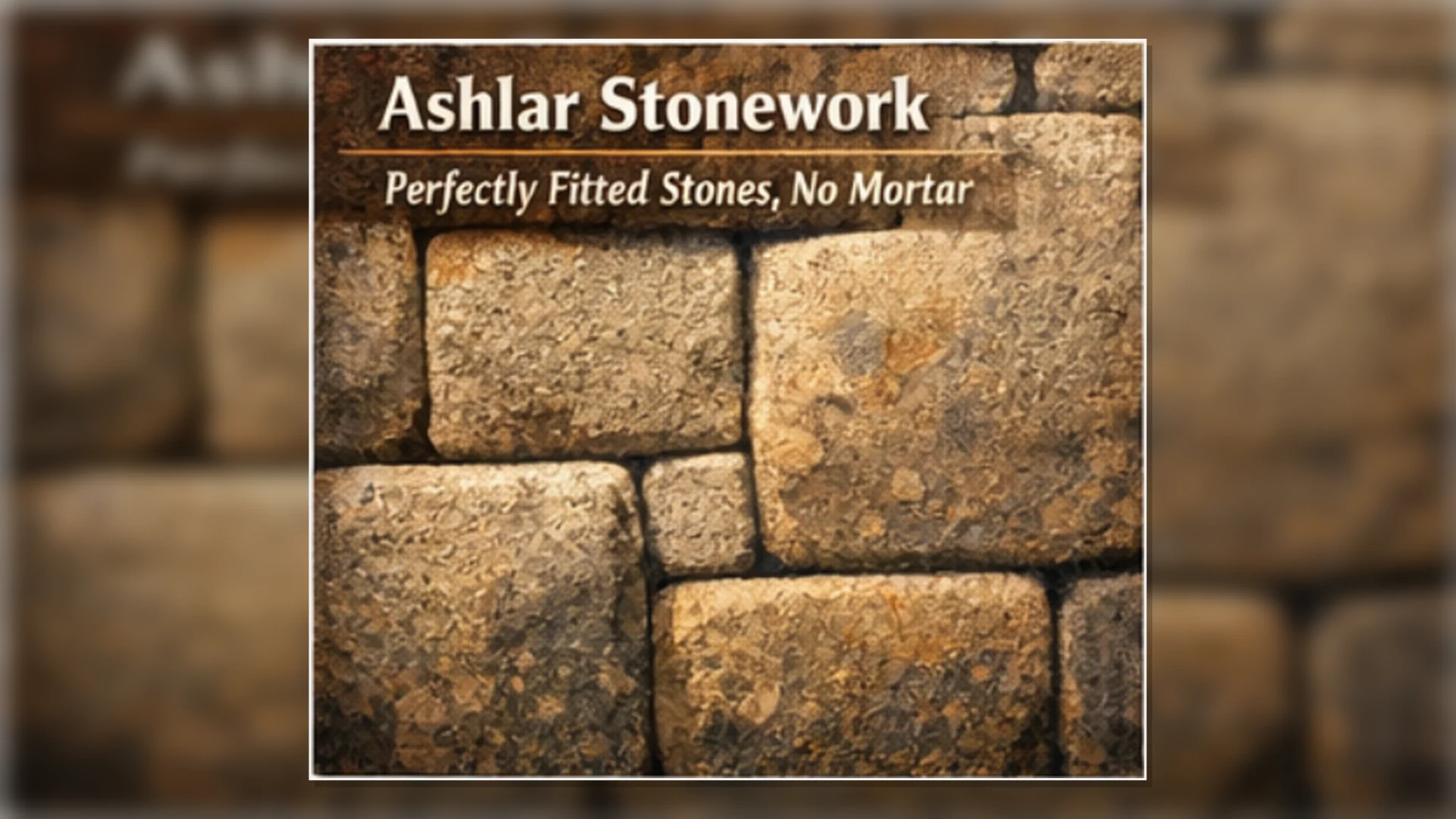
The defining technique of Inca construction is called ashlar masonry: cutting stones so precisely that they interlock without mortar. In the finest structures at the site, the stones fit together so tightly that a standard knife blade cannot pass between them. Some joints have less than half a millimeter of clearance. This was not done with metal tools. The Inca were a Bronze Age culture whose bronze alloys were not hard enough to shape granite efficiently. Instead, masons used hammerstones made from even denser rock to shape blocks through repetitive striking and grinding.
The final fitting of large blocks involved a technique archaeologists call “rocking”: the stone would be set in place, rocked back and forth slightly, and the high points of contact would show as scuff marks. Those high points were then ground down and the process repeated until the fit was essentially perfect. For large blocks, this could take days or even weeks per stone.
Why No Mortar Was Needed (and Why That Was the Point)
The Inca’s avoidance of mortar was a deliberate engineering choice that made their structures more durable in the seismically active Andes. Mortar-bonded walls are rigid: when the ground shakes, they crack at the bond lines and collapse. Dry-fitted masonry can flex. During an earthquake, the interlocking stones shift slightly and then settle back into their original positions, effectively making the walls self-healing. Researchers have documented that Inca walls at Machu Picchu survived at least two significant earthquakes in the 20th century that damaged modern construction in the region.
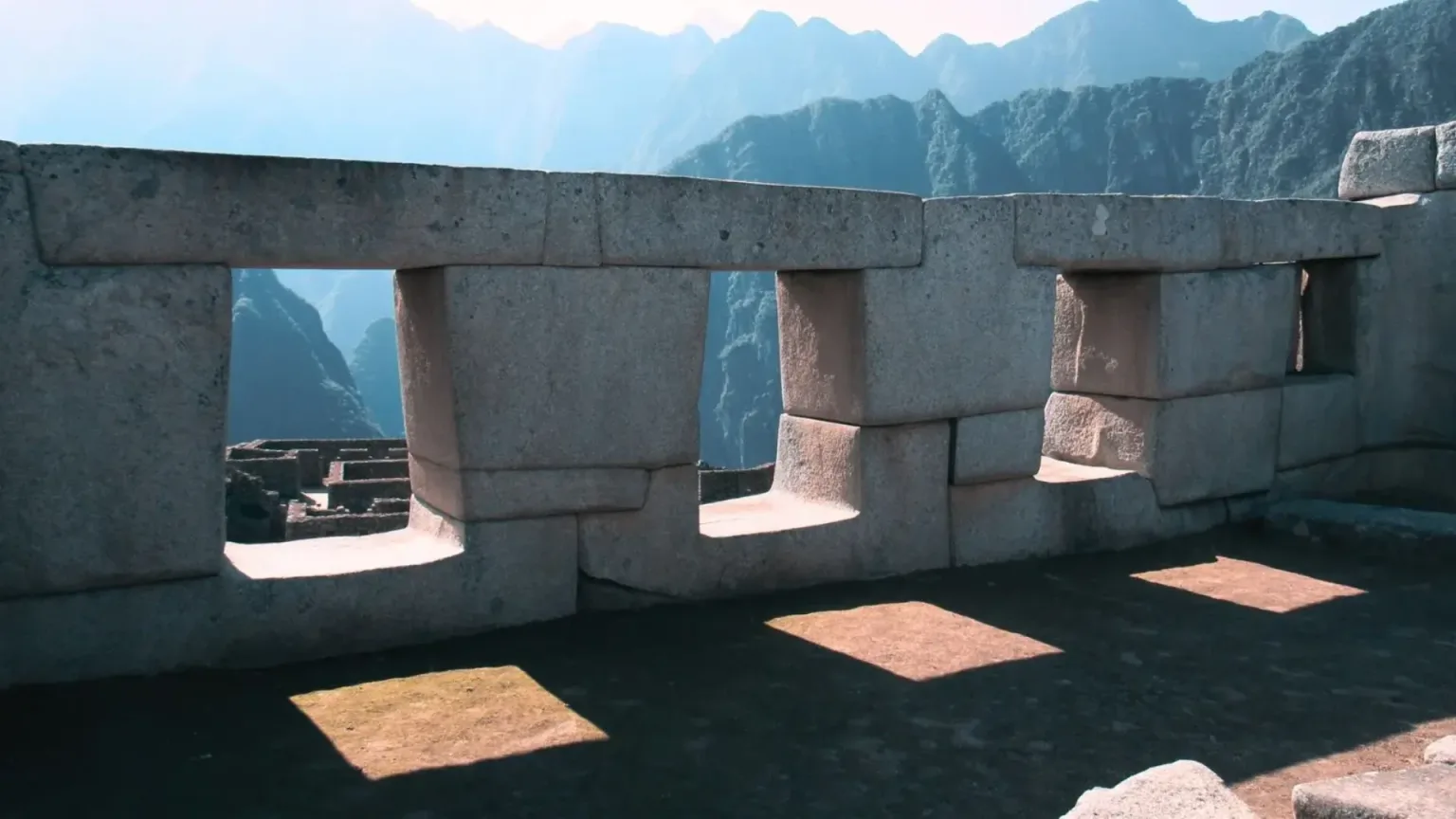
The walls also feature additional seismic-resistance design elements: a slight inward lean called “batter” that lowers the center of gravity, trapezoidal window and door openings that are wider at the base, and slightly convex outer faces on the stone blocks that prevent flat-plane shear forces from building up along the joints.
Quarrying and Moving the Stones
One major advantage the laborers who built Machu Picchu in Peru had is that much of the building material was already there. The site sits on a granite ridge, and many of the stones used in construction were quarried directly from the bedrock of the mountain. You can still see the quarry sites at Machu Picchu today, including partially cut stones apparently abandoned mid-work.
For the largest stones, quarrying involved cutting channels around the perimeter of the desired block using chisels and hammerstones, then inserting wooden wedges soaked with water. The expanding wedges split the rock along natural fracture lines. Blocks were then moved using a combination of earthen ramps, wooden sledges, rope systems made from plant fiber, and enormous organized teams. Spanish colonial accounts describe hundreds of laborers moving single large stones, chanting in rhythm to coordinate their pulls.
The Foundation Work Nobody Sees
Civil engineer Ken Wright and his colleagues studied the site’s subsurface infrastructure in the 1990s and early 2000s and reached a striking conclusion: approximately 60 percent of the total construction effort at Machu Picchu went into underground work rather than the visible buildings above ground.
Beneath the terraces, plazas, and buildings lies an elaborate system of drainage channels, retaining walls, and crushed stone fill designed to manage the site’s aggressive rainfall (an average of 77 inches per year), prevent soil liquefaction during earthquakes, and keep the mountain stable. Each terrace contains a layered drainage system of large rocks at the bottom, topped with progressively finer gravel, then soil, designed to move water rapidly out of the site without eroding the foundations. Without this hidden infrastructure, built by the same laborers who raised the visible walls above it, the entire complex would almost certainly have slid down the mountain centuries ago.
Key Facts
The Inca engineered a freshwater spring system that channeled clean water from a source higher on the mountain through a series of 16 fountains arranged in a precise cascade down the hillside. The fountains were functional and ceremonial simultaneously. The water entered from the top fountain, flowed through each subsequent one in turn, and could supply the entire population of the city of Machu Picchu with fresh water even during dry season. This fountain system still functions today.
The Agricultural Terraces
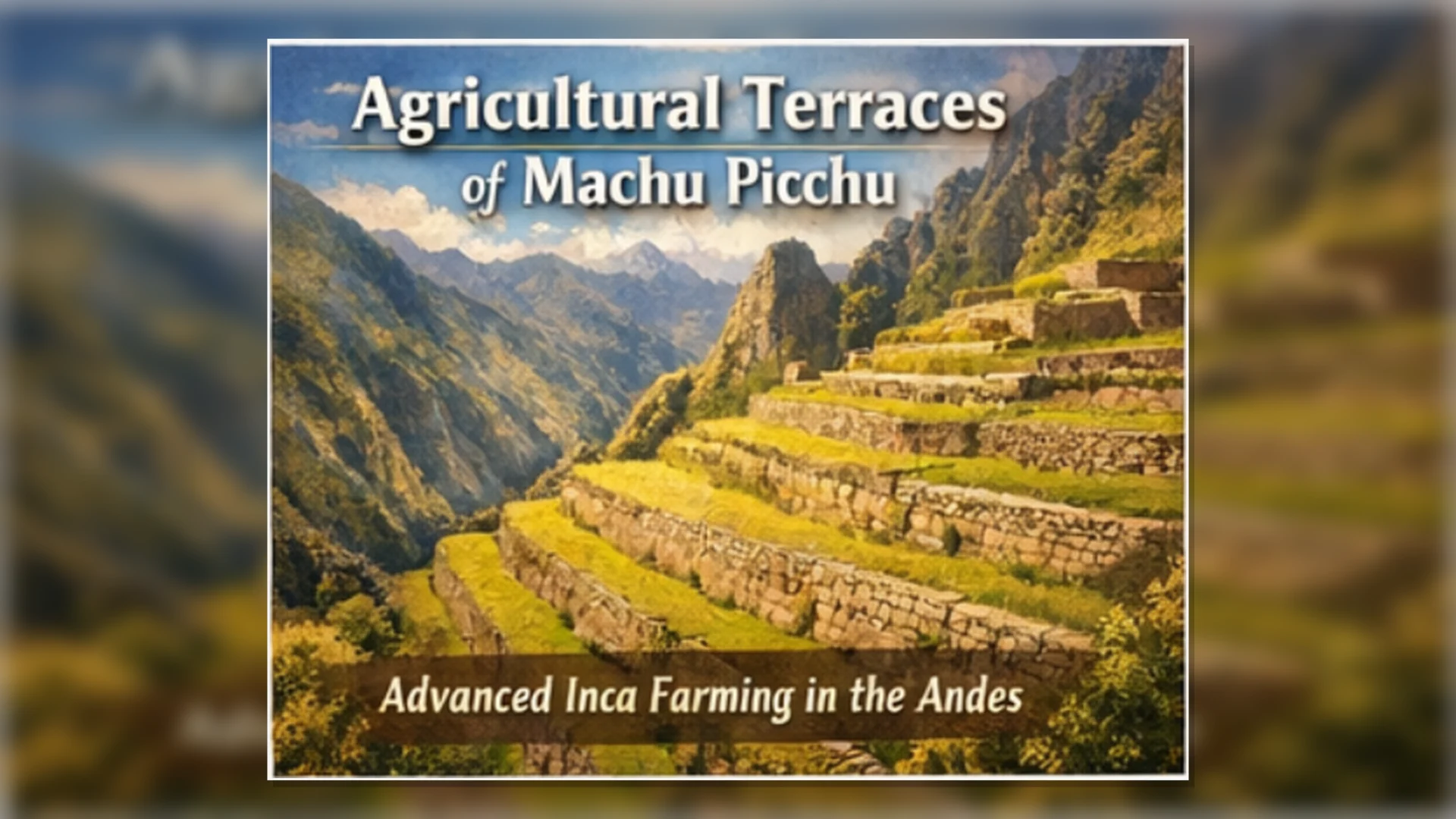
Andenes, that descend the mountainside in dramatic steps cover roughly 4.9 acres and include over 700 individual platforms. Each terrace was an engineered microclimate, oriented to maximize sun exposure, protected from frost by the thermal mass of stone retaining walls, and supplied with managed irrigation. Agricultural researchers have found evidence that dozens of different crop varieties were grown at the ruins of Machu Picchu, including multiple types of potato, maize, quinoa, and medicinal plants, spread across terraces at different altitudes to take advantage of the site’s unusual variety of micro-environments.
What the Ancient City of Machu Picchu Looked Like
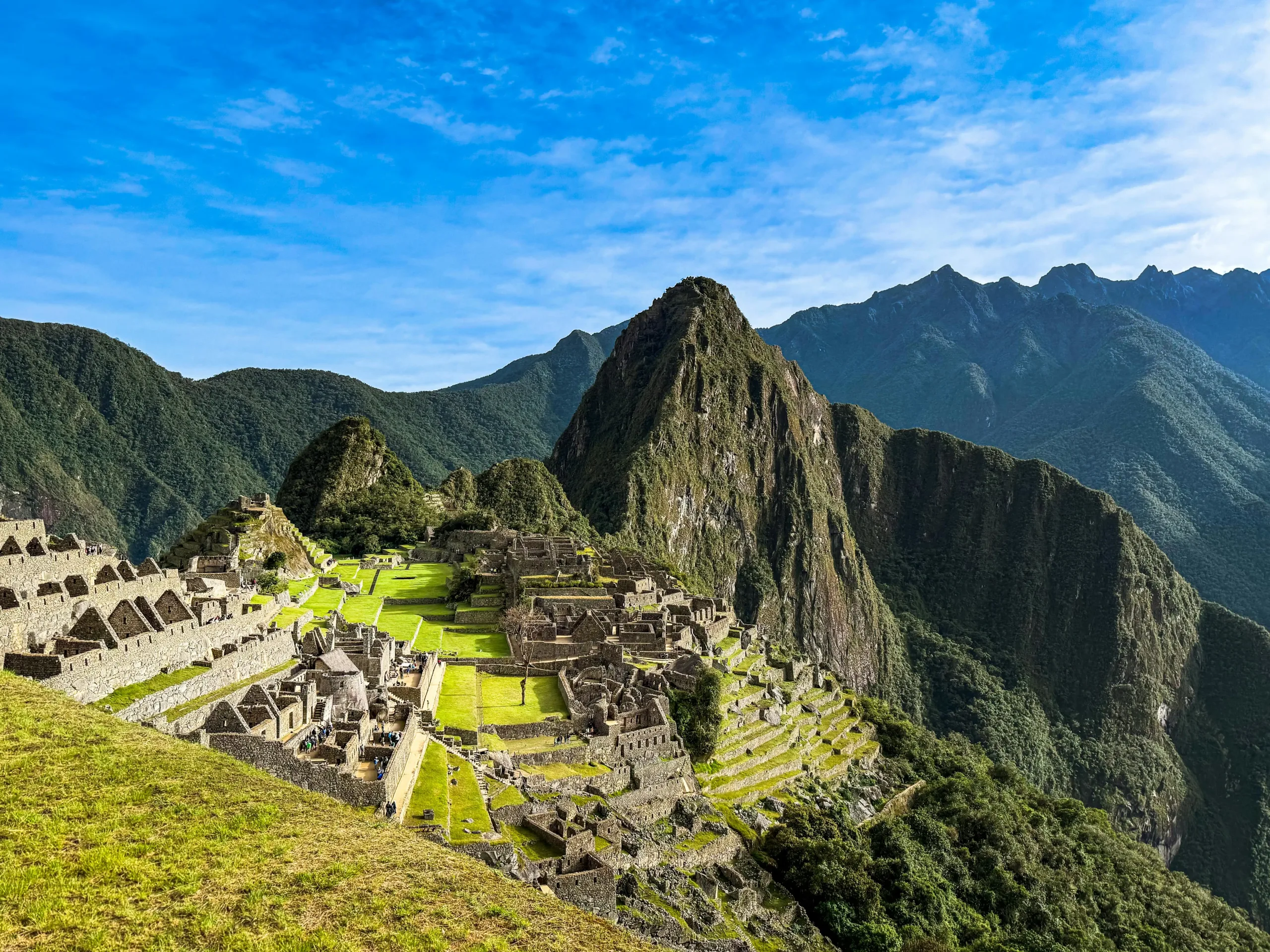
When people ask where Machu Picchu is and who built it, they often imagine a single dramatic structure. In reality, the ancient city of Machu Picchu in Peru is an entire complex divided into two broad zones by a large central plaza: the urban sector to the west, and the agricultural sector to the east. Within the urban sector, archaeologists have identified a religious/ceremonial zone, a royal residential area, a zone for housing priests and specialists, and a working-class residential area. The people who built Machu Picchu also lived there while they served the site, and the physical layout reflects that layered social structure.
The Temple of the Sun
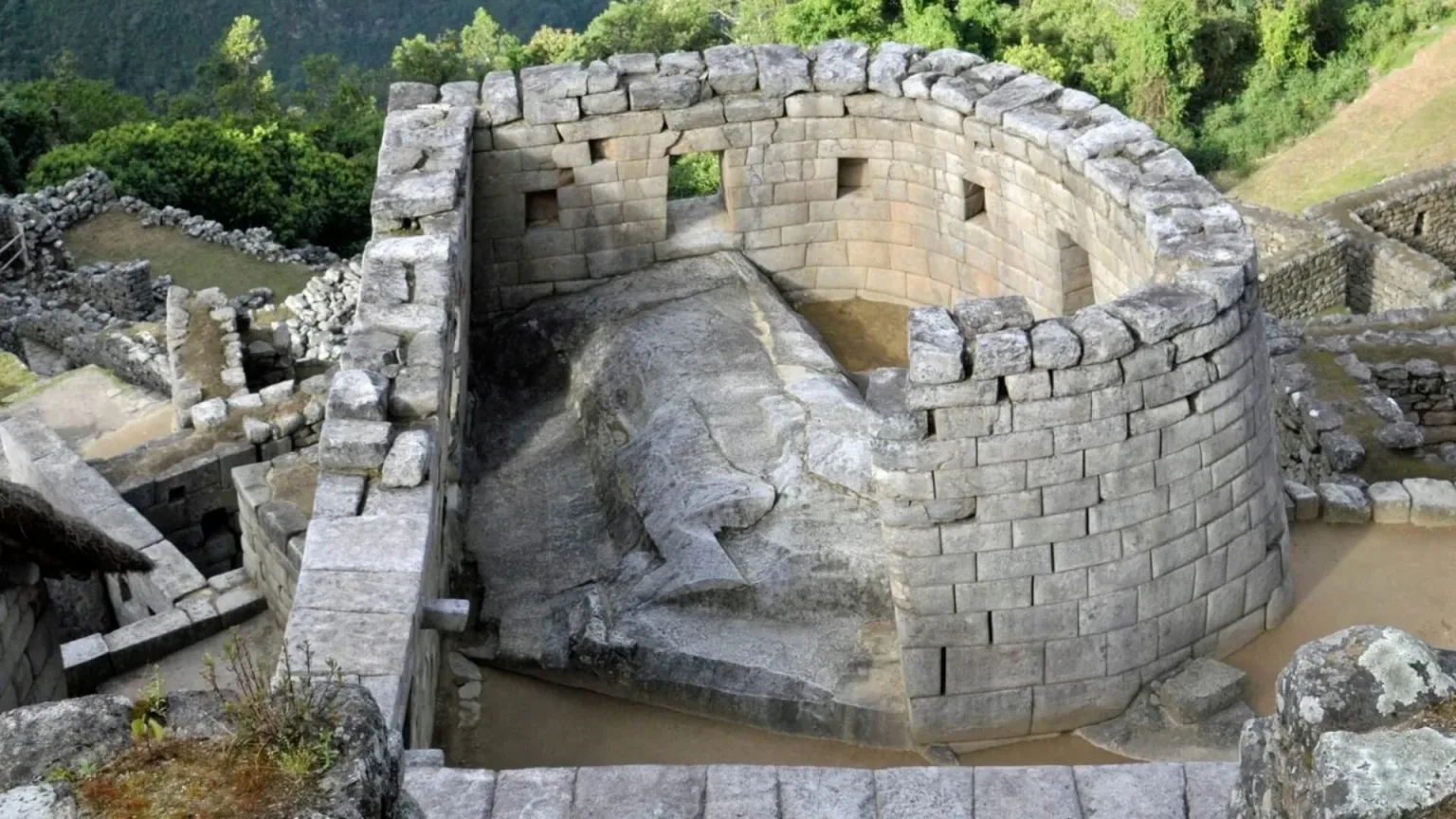
The most technically sophisticated building at Machu Picchu, the Temple of the Sun is a curved tower built directly over a natural granite outcrop. A trapezoidal window on the east face of the tower is aligned so that at sunrise on the winter solstice (June 21 in the Southern Hemisphere), light enters the window and falls directly onto a stone altar in the center of the room. This level of astronomical precision required careful survey work and planning before the laborers who built Machu Picchu laid a single stone.
The Intihuatana Stone
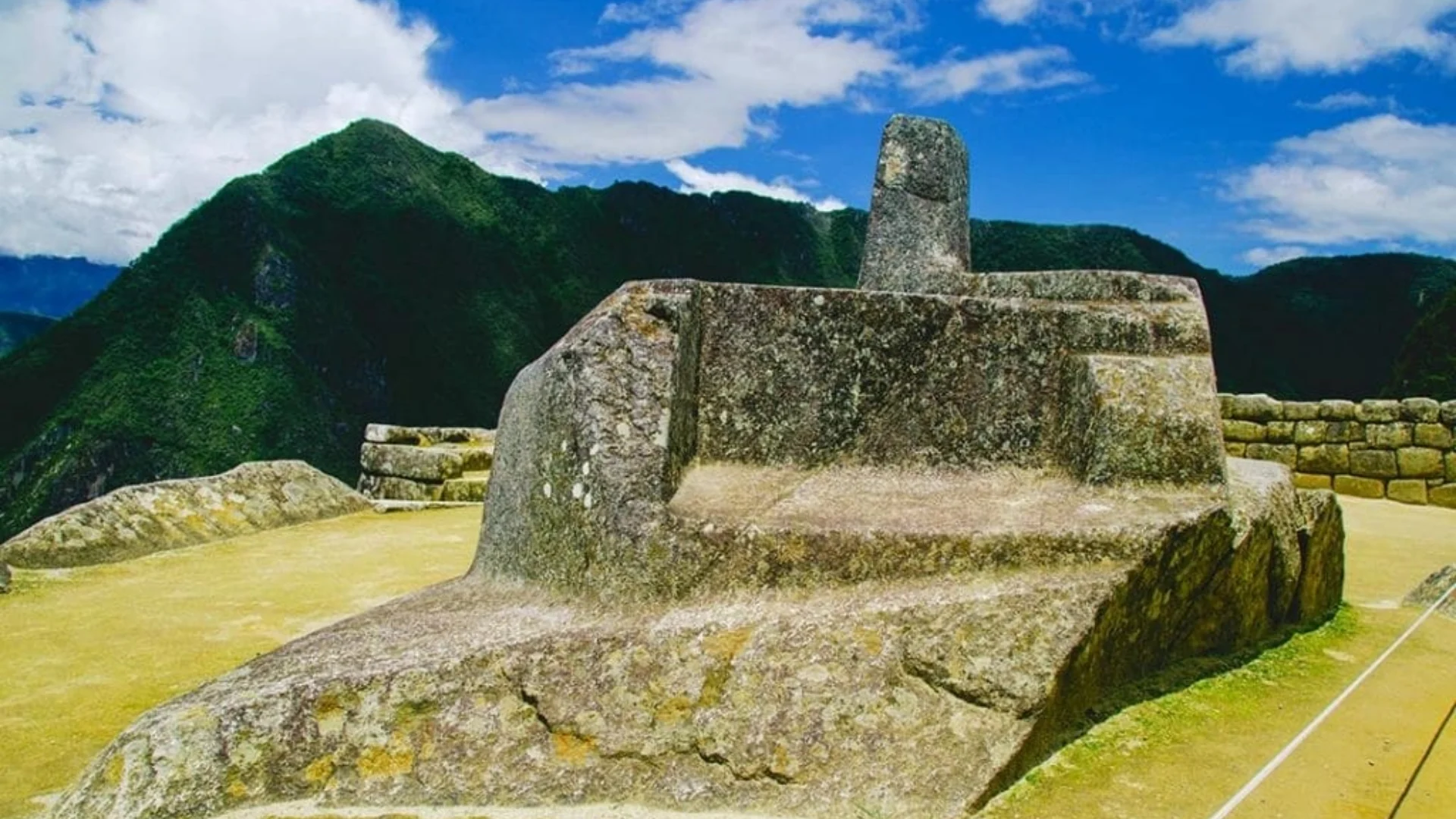
The Intihuatana (“hitching post of the sun”) is a sculpted granite pillar at the highest point of the ceremonial sector. Its four corners are precisely aligned to the four cardinal directions, and Inca priests reportedly used it to “tie” the sun at the solstices. The Spanish systematically destroyed Intihuatana stones at other Inca sites as part of their campaign against indigenous religion. Machu Picchu’s stone survived intact because the Spanish never found the ruins of Machu Picchu.
The Royal Palace
A complex of rooms near the Temple of the Sun has been identified as the probable residence of the Sapa Inca when he visited the site. The rooms feature the finest stonework in the residential sector, multiple trapezoidal niches used for storing sacred objects, and a private courtyard. Given that Machu Picchu was built for Pachacuti personally, this area would have been the emperor’s own quarters whenever he made the journey from Cusco.
The three windows temple and the principal temple
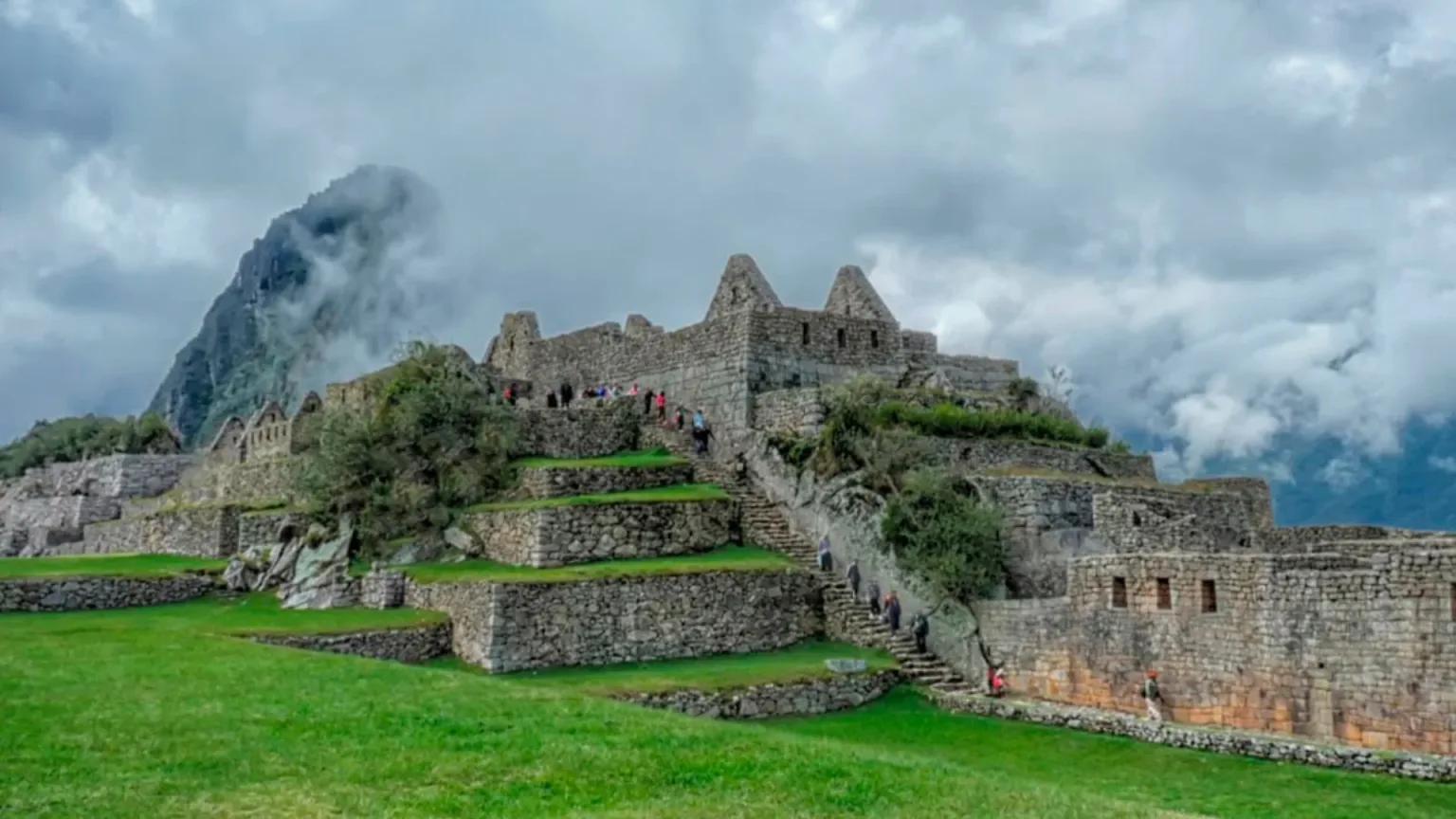
These two large ceremonial structures face a sacred plaza at the center of the religious sector. The Temple of the Three Windows features three enormous trapezoidal windows looking east toward the mountains, through which the rising sun would illuminate the interior during ceremonies. Hiram Bingham initially believed this was the mythological “place of origin” of the Inca people described in their oral traditions, an identification later scholarship has not supported.
Who Was Machu Picchu Built For, and Why
People who ask who built Machu Picchu and why often expect one clean answer. The truth is that Machu Picchu was built for Pachacuti and his royal lineage, but it served multiple overlapping purposes at the same time. It was built because Pachacuti had the power, the resources, and the ambition to build it, and what he built served his political, religious, and practical needs simultaneously.
A royal retrear and ceremonial center
Huacas, sacred places inhabited by spiritual forces. Machu Picchu’s location between the mountains Huayna Picchu and Machu Picchu proper, at the bend of the Urubamba River, surrounded by views of sacred peaks, made it an exceptionally charged spiritual location. The site was not chosen despite its difficulty. It was chosen because of it.
Agricultural research and production
The terraces at Machu Picchu are more than decoration. Agricultural archaeologist Clark Erickson and others have argued that the diversity of crops found at the ruins of Machu Picchu, combined with its unusual range of altitude-dependent microclimates, suggests it also functioned as an important site for developing and testing agricultural varieties that could then be applied across the empire.
Control of the Antisuyu fronter
Machu Picchu in Peru sits at the boundary between the high Andes and the upper Amazon basin, a political frontier the Inca were actively trying to manage during Pachacuti’s reign. A royal estate at this frontier would have served as an administrative center, a base for diplomatic and military operations into the lowlands, and a statement of Inca power at the edge of their territory. The people who wanted Machu Picchu built, starting with Pachacuti himself, had both religious and strategic motivations for placing it exactly where it stands.
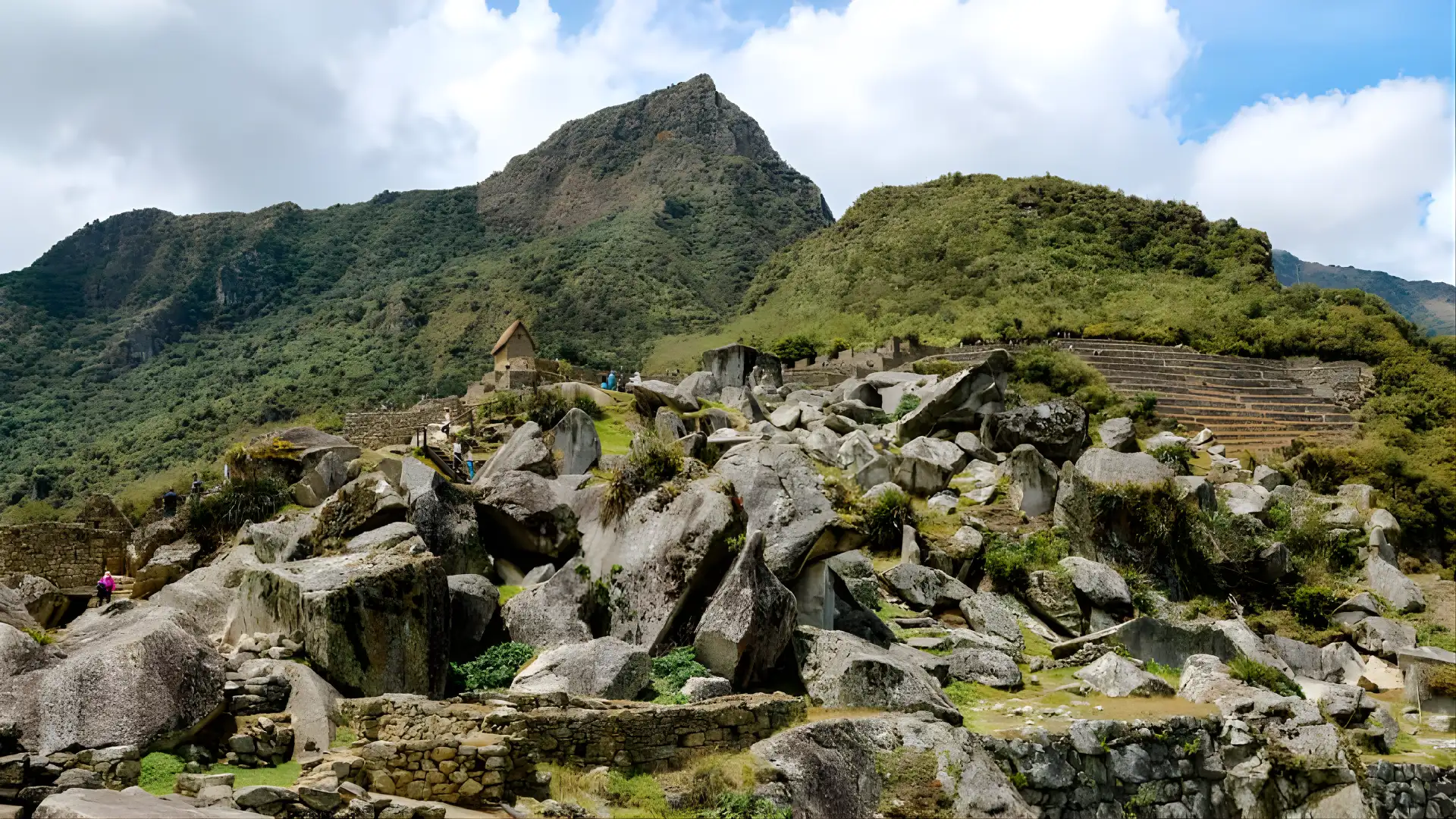
The Inca did not build Machu Picchu in spite of its location on a remote mountain ridge. The mountain itself was the point. Sacred geography was not a metaphor for them. It was the operating system of their world.
What Life Was Like Inside the Ruins of Machu Picchu
For most of its occupied history, Machu Picchu was not a bustling city. When the emperor was not in residence, the permanent population was relatively small, perhaps 300 to 750 people, largely made up of yanacona specialists whose job was to maintain the site, tend the terraces, conduct ongoing religious ceremonies, and prepare for the emperor’s visits.
When the Sapa Inca arrived with his retinue, the population of the city of Machu Picchu swelled dramatically. Spanish accounts of similar royal estates describe enormous ceremonial gatherings with music, feasting, coca-leaf offerings, and the spectacular display of royal authority that was central to Inca political culture. The emperor’s visits were not vacations. They were major political and religious events that required months of preparation and generated ripple effects throughout the regional economy.
The site had a clear social hierarchy built into its physical layout. The finest stonework and the most spacious rooms were in the ceremonial sector and the royal residential area. The working-class residential sector housed the permanent servants and agricultural workers in more modest conditions. But even those conditions included access to clean running water, adequate food stores, and the material support of the most powerful state in the Americas.
qollqas, stone storehouses built on the hillsides where altitude and prevailing winds created natural refrigeration. Freeze-dried potatoes (called chuno), dried llama meat (charqui, the origin of the English word “jerky”), and dried maize could be stored for years in these conditions, providing a buffer against crop failures and supporting both the resident population and the laborers who built Machu Picchu during the decades of active construction.
Why Was Machu Picchu Abandoned?
Machu Picchu was not conquered, burned, or destroyed. It was quietly left behind as the civilization that built it fell apart around it.
The process began before the Spanish even arrived in force. In the late 1520s, a devastating epidemic, almost certainly smallpox or another European disease traveling ahead of direct contact, swept through South America and killed the reigning emperor Huayna Capac along with his designated heir. The resulting succession dispute between two of his sons, Atahualpa and Huascar, tore the empire apart in a civil war that was still ongoing when Francisco Pizarro arrived with 168 soldiers in 1532. Pizarro captured Atahualpa at Cajamarca, executed him after collecting an enormous ransom in gold and silver, and within a decade had reduced the Inca to a rump state at Vilcabamba.
As the Inca state collapsed, the institutions that sustained the ancient city of Machu Picchu in Peru collapsed with it. The mit’a labor system stopped functioning. Supply chains were cut. Pachacuti’s panaka was stripped of power and resources. The yanacona workers had no one left to serve. They drifted away, and within a generation or two the site was empty.
One crucial detail: the Spanish almost certainly never found Machu Picchu. In the century and a half following the conquest, Spanish colonial officials produced extraordinarily detailed administrative records of every significant site in their territory. The ruins of Machu Picchu appear in none of them. This is the reason the Intihuatana stone survived intact when its equivalents at other Inca sites were systematically destroyed.
The 1911 “Rediscovery” and Why That Word Is Complicated
On July 24, 1911, Hiram Bingham III, a 35-year-old Yale historian, was exploring the Urubamba Valley searching for Vilcabamba. He was led to the ruins by a local farmer named Melchor Arteaga, who knew the site well because he lived near it. An 11-year-old boy named Pablito Richarte, whose family was farming on the terraces at the time, guided Bingham through the undergrowth to the buildings.
Bingham’s own account makes clear that he was not discovering something unknown to local people. He was being shown something locals knew perfectly well. What Bingham did was recognize the site’s archaeological significance, document it systematically, and publish the photographs and descriptions that introduced Machu Picchu in Peru to a global audience. Where Machu Picchu is and who built it were questions local Andean communities could already answer.
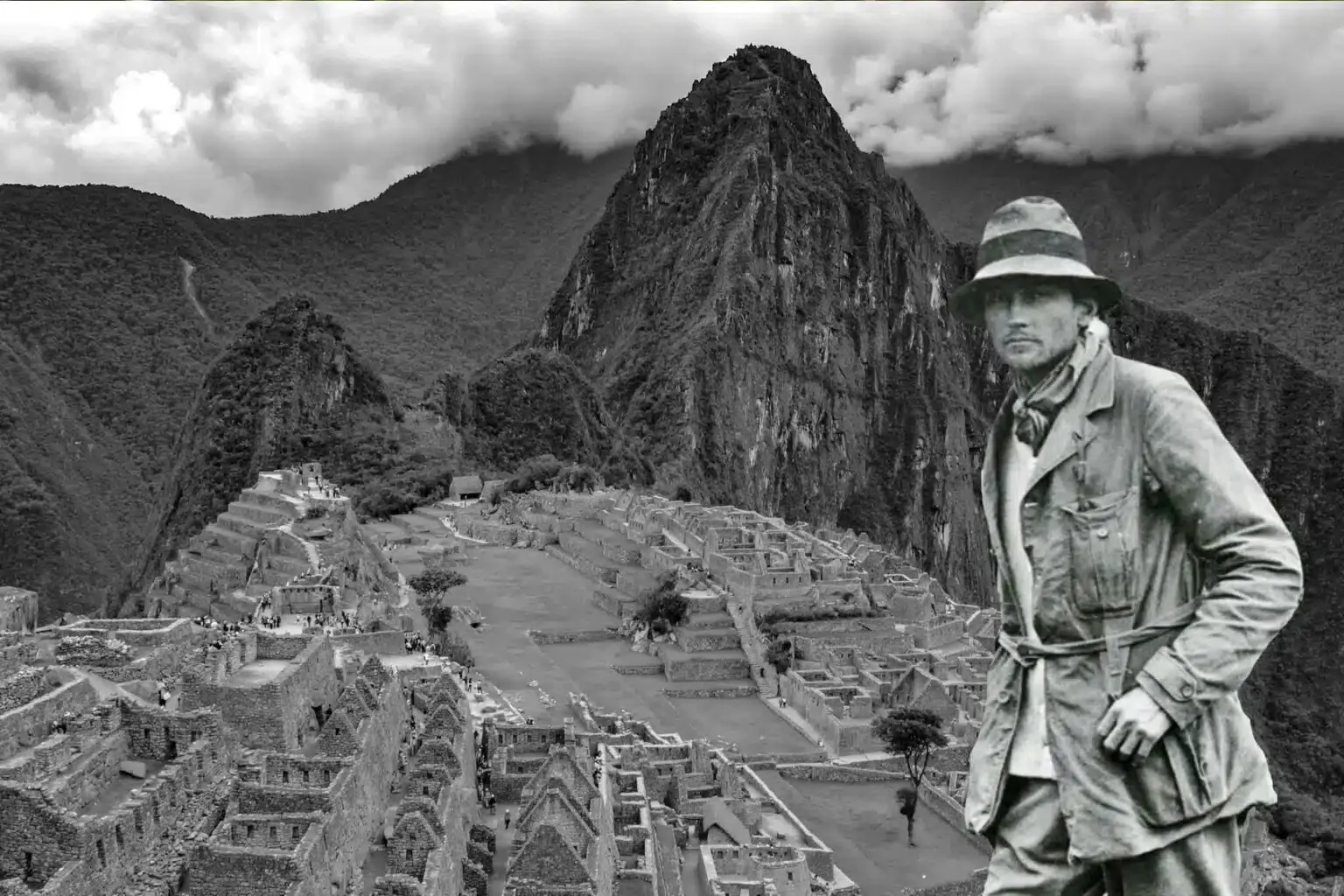
Machu Picchu was unknown to academic and Western audiences, but it was not lost. A German engineer named Augusto Berns had reportedly visited and written about the site as early as 1867. A Peruvian landowner named Agustin Lizarraga had scratched his name on one of the walls in 1902, nine years before Bingham arrived.
Bingham removed approximately 46,000 artifacts from the site over several expeditions, transporting them to Yale University. After years of negotiations, Yale and the Peruvian government reached an agreement beginning in 2010, and the majority of the artifacts were returned to Peru and are now housed at the Casa Concha Museum in Cusco.
Frequently asked questions about Who Built Machu Picchu? The Full Story of Peru’s Inca Citadel
The Inca civilization built it under Emperor Pachacuti around 1450 CE, using thousands of organized laborers called mit’a workers and permanent specialists known as yanacona drawn from across the empire.
In 1983, Machu Picchu was designated a UNESCO World Heritage Site, recognizing its outstanding universal value and accelerating international conservation efforts and global tourism.
The Inca, under Emperor Pachacuti, using thousands of workers through the mit’a labor system. The alien theory has no credible archaeological support.
The mit’a laborers returned to their home communities after their service. Their descendants are today’s Quechua-speaking populations, roughly 8 to 10 million people across South America.
Located in the Cusco Region of Peru at 7,970 feet elevation. Most visitors take a train to Aguas Calientes and then a bus or a 90-minute hike to the entrance. Tickets are limited and must be booked in advance, especially between June and August.