
Sacred Valley of the Incas: Complete Guide 2026 (Routes, Prices and Secrets).
The Sacred Valley of the Incas is not just a stopover on the way to Machu Picchu; it’s the heart of the Inca Empire. If you think this valley is merely a place to pass through, you’re missing out on a truly remarkable journey. This is where Pachacuti revolutionized engineering, where master stonemasons defied gravity, and where the FAO now recognizes an agricultural system that refuses to die. Ready to embark on a journey like a true explorer?
Trekking and adrenaline: The best adventure routes in the Sacred Valley.
Welcome to the Sacred Valley for its ruins but you’ll stay for the adrenaline and the silence of its mountains. In this blog, we’ll break away from the traditional itinerary to show you hidden gems and dreamlike waterfalls. Here, you’ll discover epic trekking routes, unique flavors, and world-class spas. Join us on this adventure and discover why the real journey begins here!

What is the Sacred Valley of the Incas and why visit it?
This region was the most important agricultural production center of the empire. Thanks to its fertile lands, the ancient Peruvians built their most advanced administrative and religious centers here. Today, visiting it allows you to connect with rural life coexisting alongside ancient stone walls, offering an authentic Andean perspective without the rush of other destinations.
Have you ever wondered why it was called “sacred”?
The Incas observed that the Milky Way was reflected in the Urubamba River, which was originally called Wilcamayu. As a result, they considered this place sacred, viewing it as the mirror of the cosmos on Earth.
Location and altitude of the Sacred Valley of the Incas
The valley is located 30 km northeast of Cusco, running parallel to the Vilcanota River and stretching between the towns of Pisac and Ollantaytambo. One of its greatest strategic advantages is its altitude; most of its towns sit between 2,000 and 2,800 meters (6,560–9,186 ft) above sea level.
What is the climate like in the Sacred Valley of the Incas?
The Sacred Valley has the best climate in the region, enjoying a mild and fertile microclimate. Daytime temperatures range from 22°C to 25°C (72°F–77°F), while nighttime temperatures drop to 8°C to 10°C (46°F–50°F). This thermal stability has, since ancient times, supported the cultivation of unique products such as the famous giant white-kernel corn, quinoa, olluco, potatoes, coca, and beans, among many others.
How to get to the Sacred Valley of the Incas from Cusco?
Getting to this paradise is very easy. The main route crosses highland landscapes before descending into the valley through spectacular viewpoints. Below are the best options for your trip:
Optional routes to the Sacred Valley
| Travel Option | Benefits | Approx. Cost | Approx. Travel Time | Best for… |
Travel Agencies
|
Includes hotel pickup, expert guide, transportation, and buffet lunch. | $50 – $70 USD | Classic tour (from 7:00 am) Full route (from 6:30 am) Full day |
Travelers seeking total comfort and zero logistical stress. |
| Public Transportation | The cheapest option; frequent departures from Pavitos Street or Av. Grau. | 5 – 8 soles per person | 50 minutes | Backpackers and budget travelers who don’t need scenic viewpoint stops. |
| Private Taxi / Rental | Full schedule flexibility and access to less-visited sites. | $25 USD (per person) | Full day | Groups, couples, or families who want a personalized itinerary at their own pace. |
| Train (Ollantaytambo) | Direct connection to Machu Picchu with the best river views. | Varies by operator | 1 hour 45 minutes | Those looking to save time and money by departing from the heart of the valley. |
The history of the Sacred Valley
To begin, we need to understand that this valley has always been the most prized treasure of the Andes. Thanks to its geographic features and ideal climate, it became the main production center for Peru’s finest corn. However, its history began long before we might imagine.
Chronological overview of the Sacred Valley of the Incas
| Period | Main Groups | Key Details |
| Early Settlers | Ayarmacas, Quechuas, and Tampus | Groups from the Altiplano who settled near Ollantaytambo due to its fertile lands. They shared cultural traits with the Incas but maintained initial autonomy. |
| Inca Period | Inca expansion under Pachacútec (1438–1471) | After defeating the Ayarmacas, the valley was incorporated into the Tahuantinsuyo, becoming the main center for agricultural production and experimentation of the Inca Empire. |
|
The Mayu River (Urubamba) | The Urubamba River was considered the earthly reflection of the Milky Way. For this reason, the valley was seen as a portal connecting the earthly and celestial worlds. |
|
Architecture and engineering | Pisac, Ollantaytambo, and the agricultural terraces of Moray were built. Master stonemasons from Lake Titicaca even traveled to work on the valley’s temples. |
| Colonial Period | Inca resistance led by Manco Inca (1536) | Site of a historic victory against Spanish cavalry in Ollantaytambo. However, the Incas later retreated to Vilcabamba, continuing their resistance until 1572. |
| Present Day | Living agricultural system | Today, it is home to more than 350 archaeological sites. In fact, it remains a living productive system and the beating heart of the Andes. |
Important current recognitions of the Sacred Valley
- On June 22, 2006, the Peruvian government officially declared it a National Cultural Heritage site. This distinction protects it under the category of an Archaeological and Historical Cultural Landscape.
- In 2011, the FAO awarded the Vilcanota River basin the designation of a Globally Important Agricultural Heritage System (GIAHS).
What to see in the Sacred Valley
Every town in the Sacred Valley has its own character, a unique history, and an archaeological site that sets it apart. For this reason, we designed this guide by following the classic route from Cusco to Ollantaytambo, making your planning easier and helping you make the most of every mile.
Archaeological sites and Andean towns
Out of the 350 archaeological sites recorded in the Sacred Valley, we are going to explore places with easy, direct access and nearby towns that you can reach on short walks with friends or while traveling with family.
Chinchero: The town of the weavers
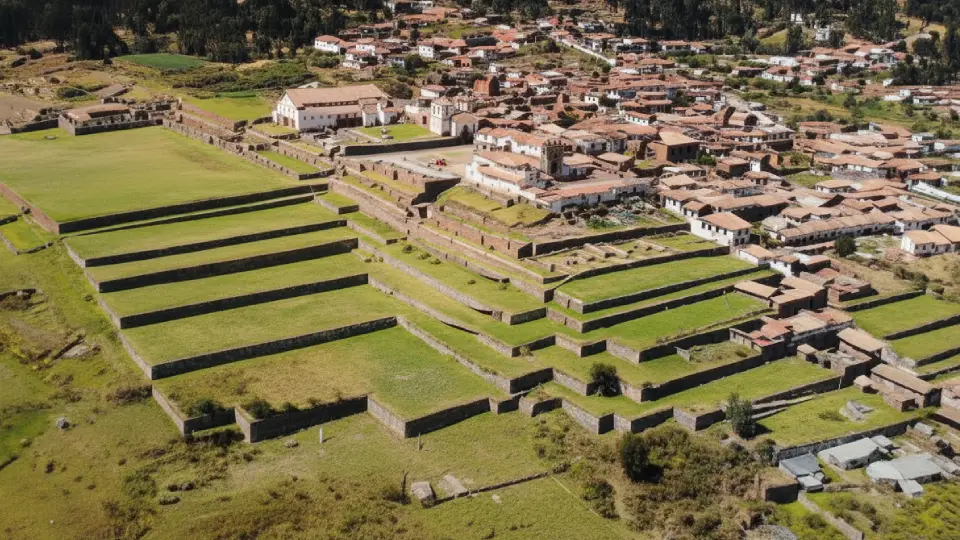
When you arrive in Chinchero, the air feels cleaner and time seems to stand still as you watch the weavers turn wool into living works of art right before your eyes. Chinchero sits at 3,762 meters above sea level. The archaeological site preserves the remains of the Palace of Inca Túpac Yupanqui, on top of which the Spanish conquerors built the Church of Our Lady of the Nativity in the 17th century.
- Admission with the Tourist Ticket
Moray: The Inca agricultural laboratory..
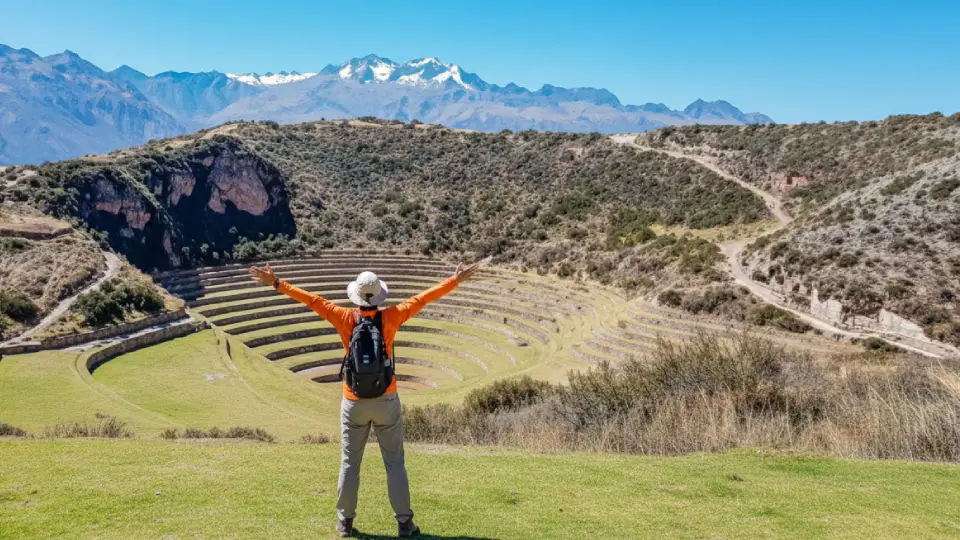
To start, Moray will amaze you with its impressive circular terraces that function as a natural agricultural laboratory. In fact, each level of these sinkholes creates a different microclimate, allowing the Incas to grow plants from different altitudes in a single place. To fully appreciate its scale, I recommend walking up to the upper viewpoints, where you will get the perfect photo.
Did you know…
Experts believe that the warm floor 140 meters deep protected coca crops, the middle levels were used for corn, and the upper levels for potatoes. As a result, you will discover how the Incas managed to grow food from different elevations all in one place.
- Admission with the Tourist Ticket
Maras Salt Mines: A landscape of three thousand pools
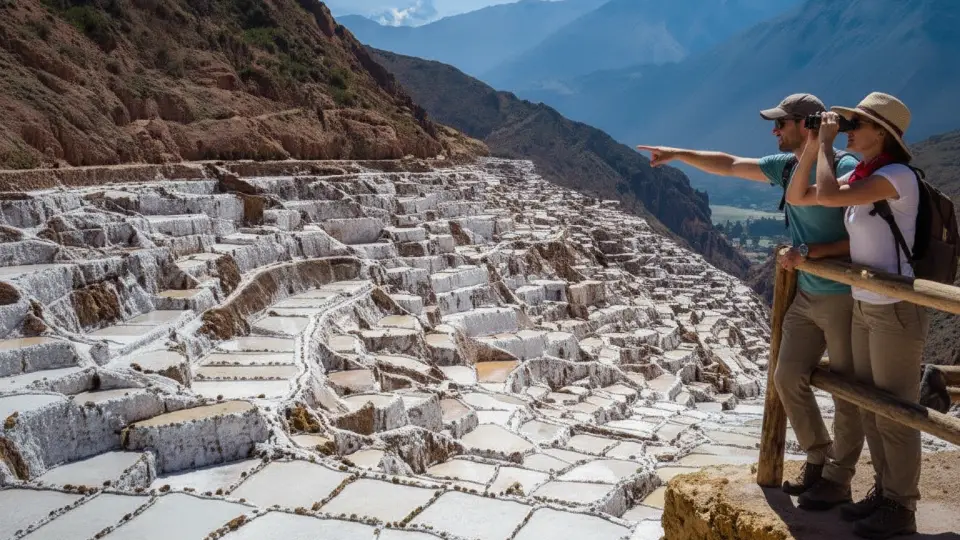
You cannot leave without visiting the Maras salt mines, a stunning visual spectacle that has been operating since before the Inca era. You will also see how an underground spring channels saltwater through canals into more than 3,000 white salt pools embedded in the mountainside. What makes it even more special is that local families still inherit and work these pools by hand.
Important note…
The colors of the pools shift between pure white, pink, and cream depending on the mineral concentration and the season. Maras salt also contains unique minerals, making it a gourmet product exported around the world. I recommend taking some home with you.
- Admission: S/ 20.00 for foreign visitors and S/ 15.00 for Peruvian visitors, per person
Urubamba: The heart of the valley
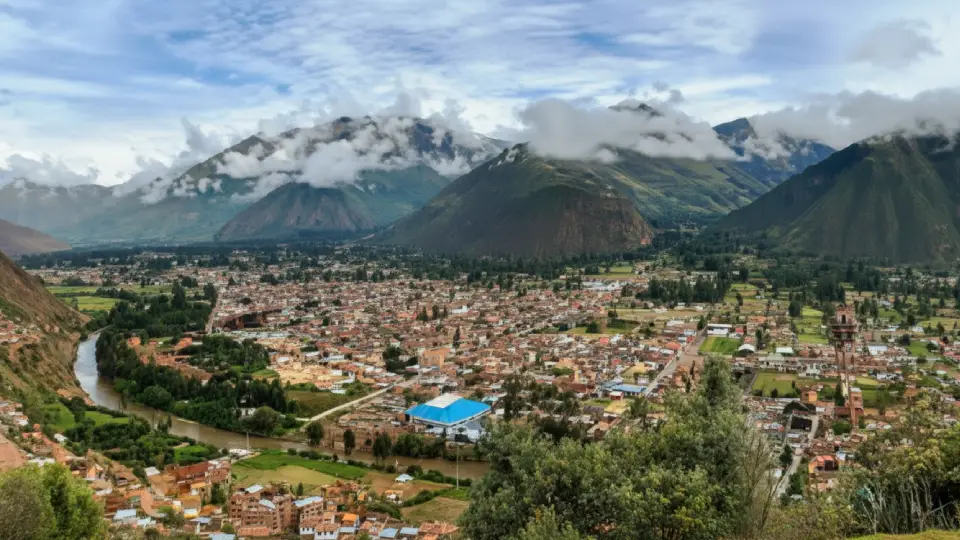
When you arrive in Urubamba, you will find yourself in the largest and most cosmopolitan town in the entire region. Thanks to its elevation of 2,870 meters, you will enjoy the warmest and most pleasant climate along the whole route, perfect for relaxing. Since Inca times, this place has been famous for its giant-kernel cornfields, a product with such a distinctive flavor that the world’s best chefs consider it an unmatched delicacy.
Important note…
Today, Urubamba is the service hub of the valley, which is why it is home to the best Andean cuisine restaurants and international luxury hotels, such as Belmond Hotel Río Sagrado.
Palace of Wayna Capac (Quispiguanca)
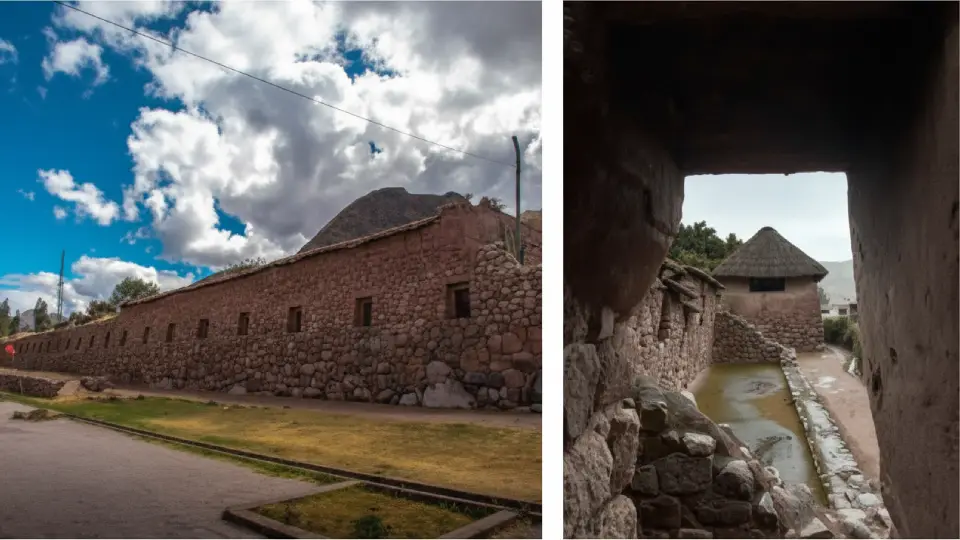
In the town of Urubamba itself, you will find the remains of Quispiguanca, a palace built as a country retreat for the Inca Huayna Cápac. As a result, the finest corn in the empire was grown here, reserved only for the nobility and sacred ceremonies. Most interesting of all, this palace is now the cemetery of Urubamba.
- Free admission
The living Inca town of Ollantaytambo
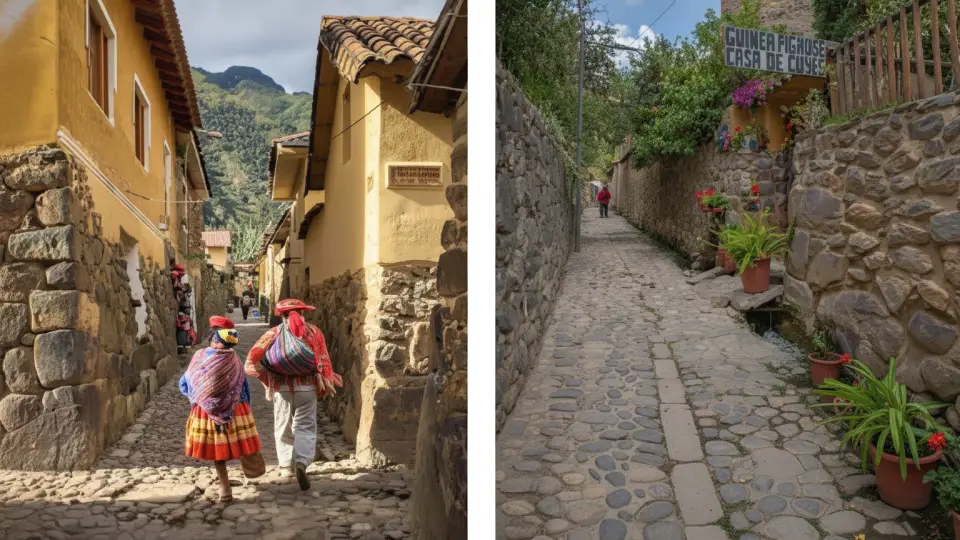
Imagine walking through an authentic Inca neighborhood, where the “canchas” and adobe houses are still inhabited by local families just as they were five centuries ago. As you stroll through its streets, you will notice that the irrigation channels laid out by Pachacútec still carry fresh water, keeping the engineering of the past alive. For this reason, Ollantaytambo is a time capsule that connects you directly to Inca history.
The fortress of Ollantaytambo
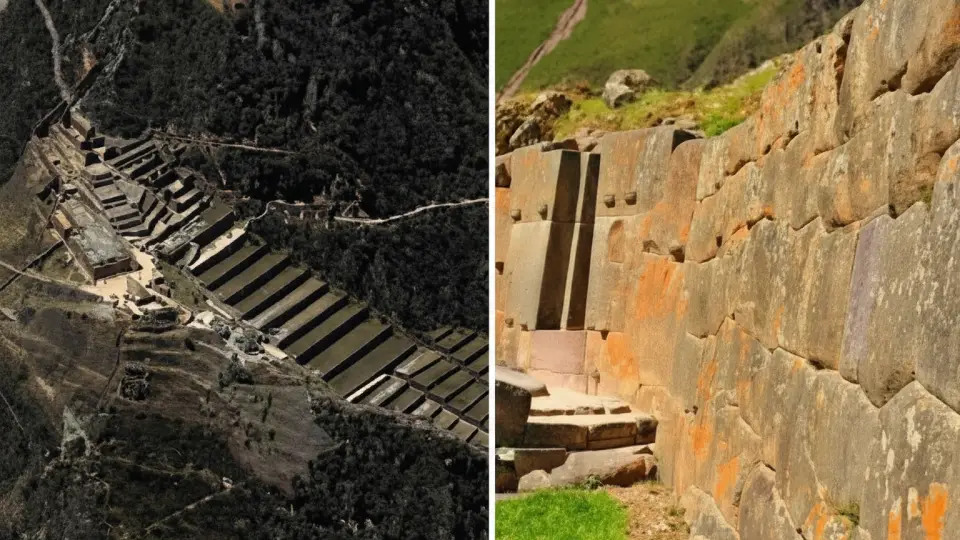
As you climb its towering terraces, you will come face-to-face with a monumental stone structure. The most incredible part is that to build the Temple of the Sun, the Incas hauled massive multi-ton blocks from the Cachiqata quarry, across the river. If you look closely, you will see projections called “orejones” that helped fit these stones together with astonishing precision.
Important note…
Ollantaytambo is also the train station from which PeruRail and Inca Rail services depart for Aguas Calientes and, from there, to Machu Picchu.
- Admission with the Tourist Ticket
Qolcas of Pinkuylluna
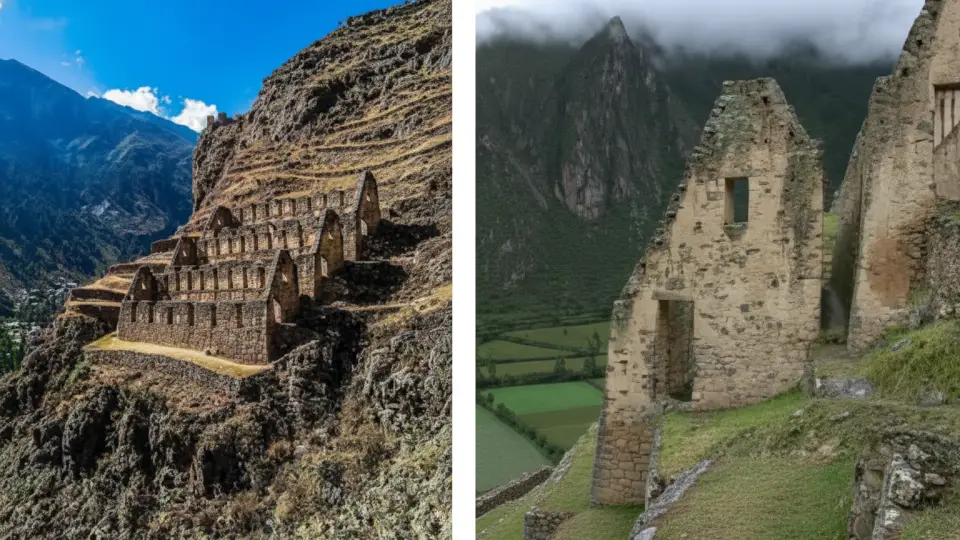
If you look toward the mountain directly across from the fortress of Ollantaytambo, you will spot the impressive Qolcas of Pinkuylluna, ancient agricultural storehouses used to preserve food. Thanks to the cool air currents on the mountainside, these storage buildings worked like natural refrigerators. By seeing them, you will understand why the Incas were masters of the landscape.
- Free admission
Intipunku of Ollantaytambo
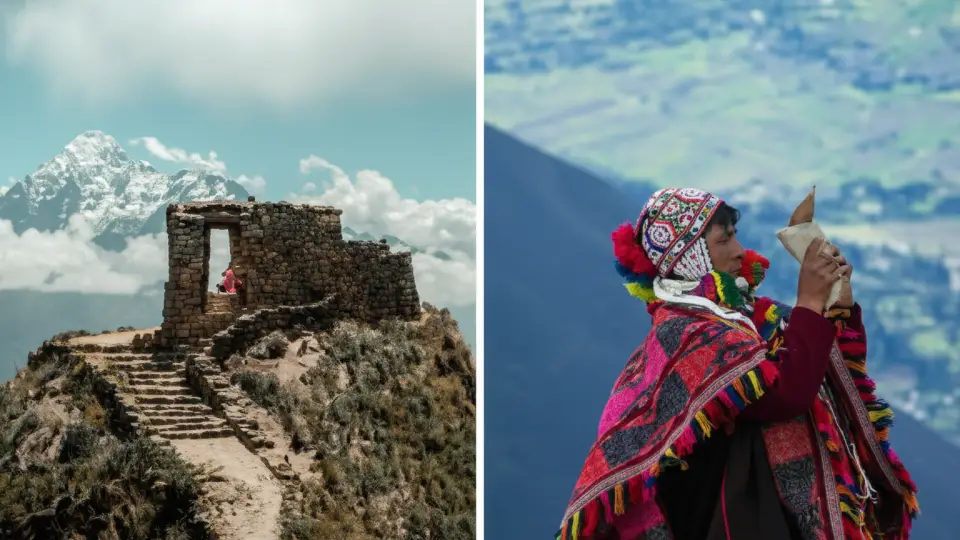
Intipunku is an architectural masterpiece located on the summit of Cachiccata mountain. It served as an Inca astronomical observatory and control point, with views of Mount Veronica (Wakaywillka). For the Incas, this gateway was not only a physical boundary, but also a portal connecting the world of humans with the mountain deities, or Apus.
- Free admission
Machu Picchu
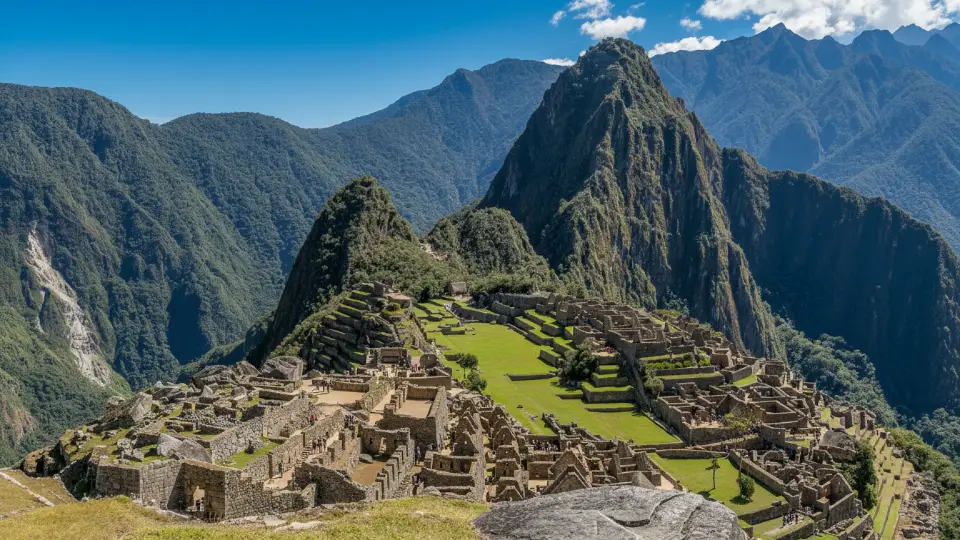
This is, without a doubt, the moment every traveler waits for: arriving at Machu Picchu, the wonder of the world. The moment you enter, you will be amazed by the perfection of its temples, the unique harmony of its structures, and the surrounding mountains. In addition, if you choose to hike Huayna Picchu or Machu Picchu Mountain, you will get a full view of the site. No matter how many photos you have seen, nothing prepares you for the energy you will feel when you are actually there.
- Admission with the Tourist Ticket
Pisac: The observatory
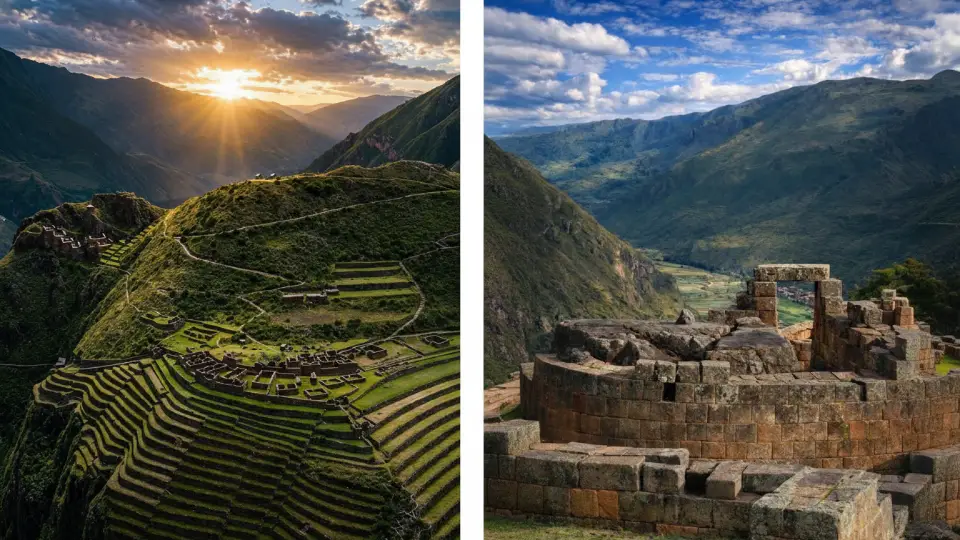
On your way back, you can choose to visit the colonial town of Pisac, watched over by an archaeological site high above, where its massive terraces seem to climb the mountain up to 3,300 meters high. As you walk there, you will discover ancient temples and water fountains that, remarkably, still function perfectly after so many centuries.
Important note…
The most striking moment will come when you look up at the peaks and discover the largest cemetery in South America.
- Admission with the Tourist Ticket
Chahuaytire Rock Paintings: A record of the first herders
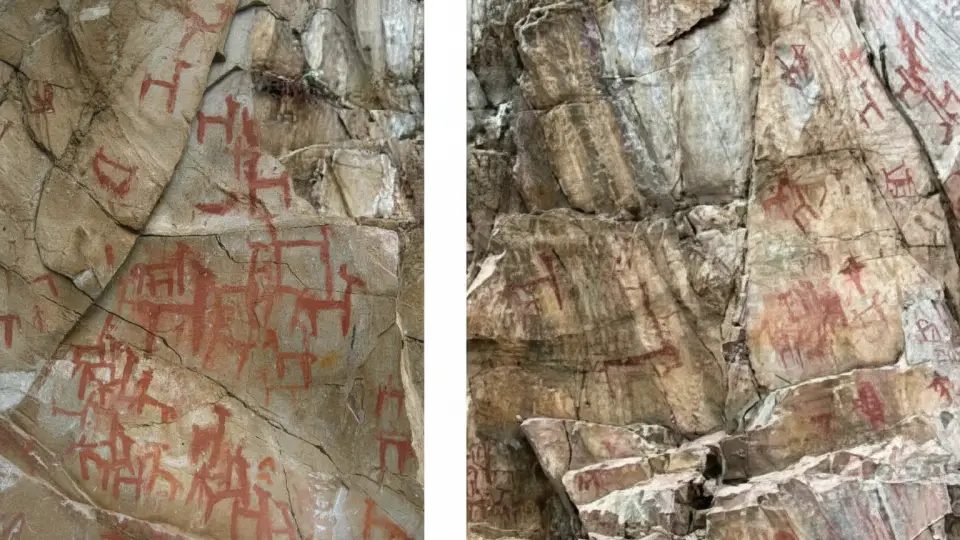
If you have a free day, I recommend exploring the community of Chahuaytire in the highlands above Pisac. There, you will discover impressive rock paintings in rocky shelters that reveal the lives of the first people who inhabited the valley. Most astonishing of all, these figures, painted in shades of red, ochre, and black, have retained their intensity thanks to a mixture of mineral pigments and animal fats.
- Free admission
Other sites worth including on your route
If you are looking to get away from the traditional routes, the Sacred Valley hides less crowded places that reward those who choose to explore them.
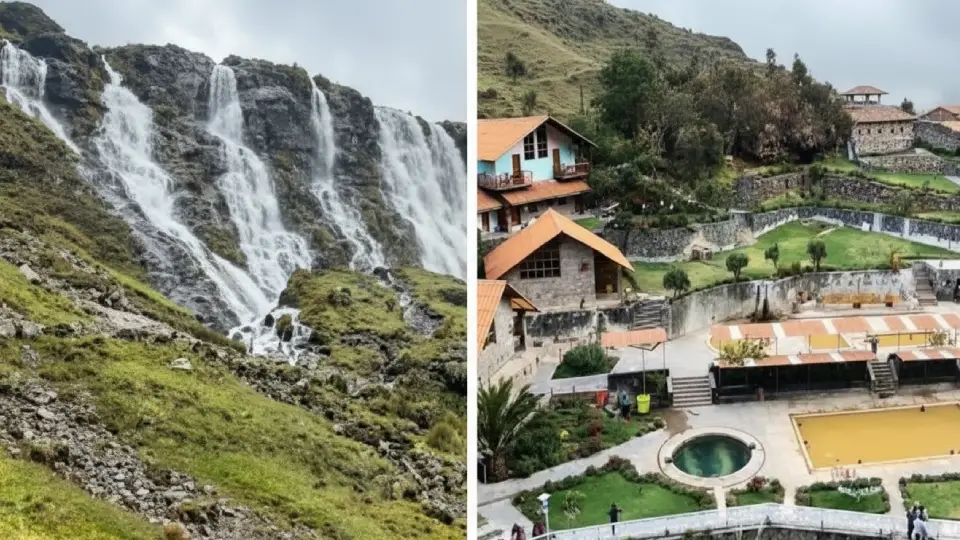
- To begin with, you can visit Calca, a super peaceful town halfway between Pisac and Urubamba, where you can relax in its famous Machacancha hot springs.
- Then continue on to the Lares hot springs, 1 hour and 30 minutes from Calca.
Traveler tips…
If you have limited time, prioritize the places that showcase the engineering and artistry of ancient Peruvians. That way, a well-organized itinerary will allow you to see the evolution of their construction techniques in a single day.
Activities and experiences in the Sacred Valley of the Incas
The Sacred Valley lets you jump from archaeological history straight into the adrenaline of adventure sports. What makes it even better is that, after exploring the temples, you can head down the Urubamba River by kayak, soar over the fields in a paraglider, or ride the trails on a mountain bike.
Visit the salt mines by ATV or quad bike
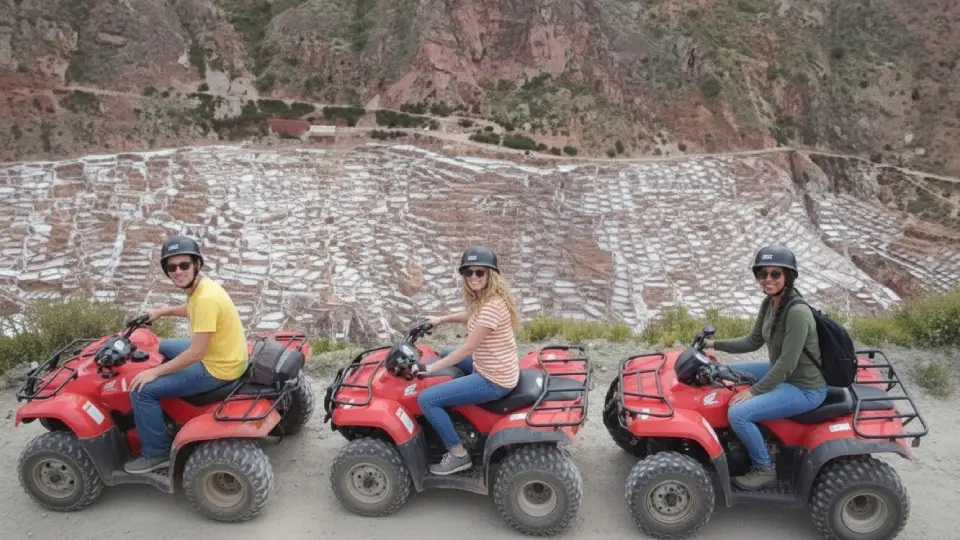
For those looking to combine adventure and scenery, another increasingly popular option is the ATV ride from the town of Maras to the salt mines and, from there, to the Moray complex. The route follows dirt roads with valley views, and the cost is around $65 per person, including the vehicle rental and a local guide.
Rafting and kayaking
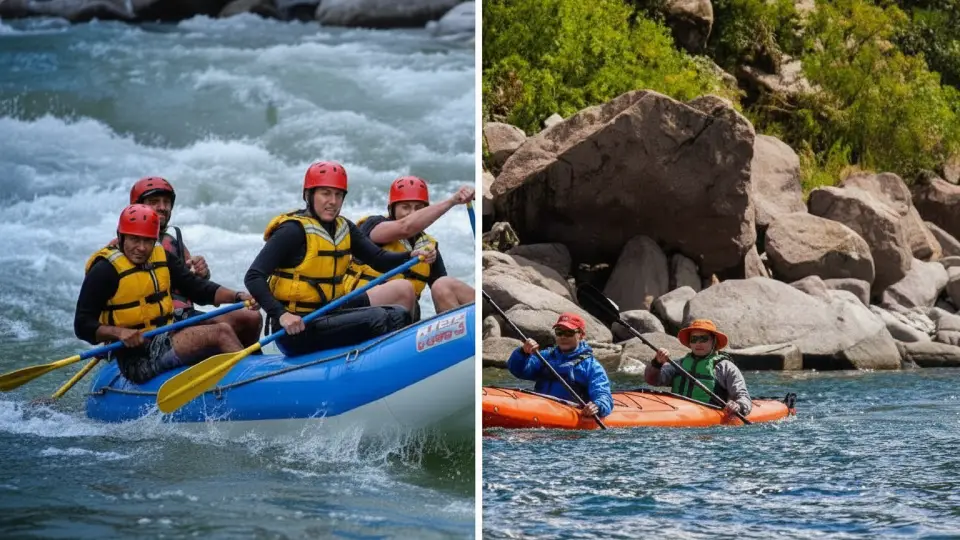
This sport is the perfect way to cool off your adventure and add an extra dose of adrenaline to your trip. Since the Urubamba River runs through the valley, you can enjoy Class II and III rafting and kayaking between Pisac and Ollantaytambo. This experience also lets you enjoy a one-of-a-kind adventure in the natural surroundings while having fun navigating its exciting currents.
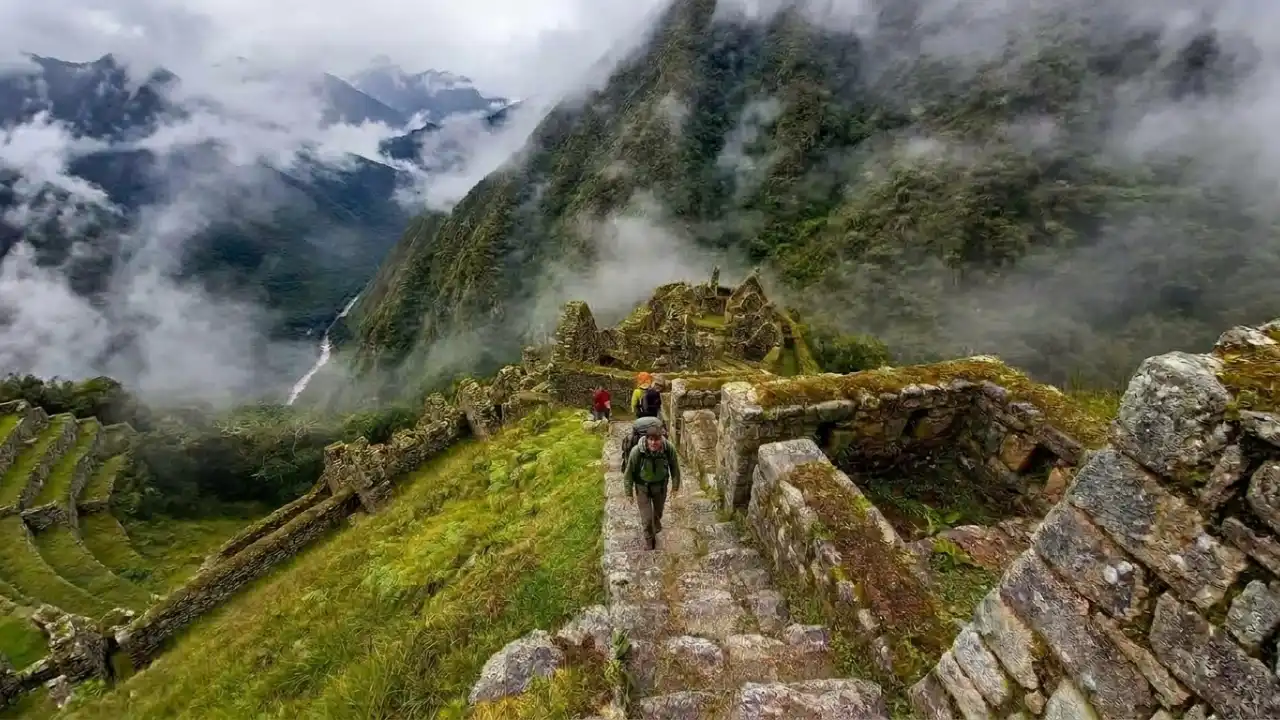
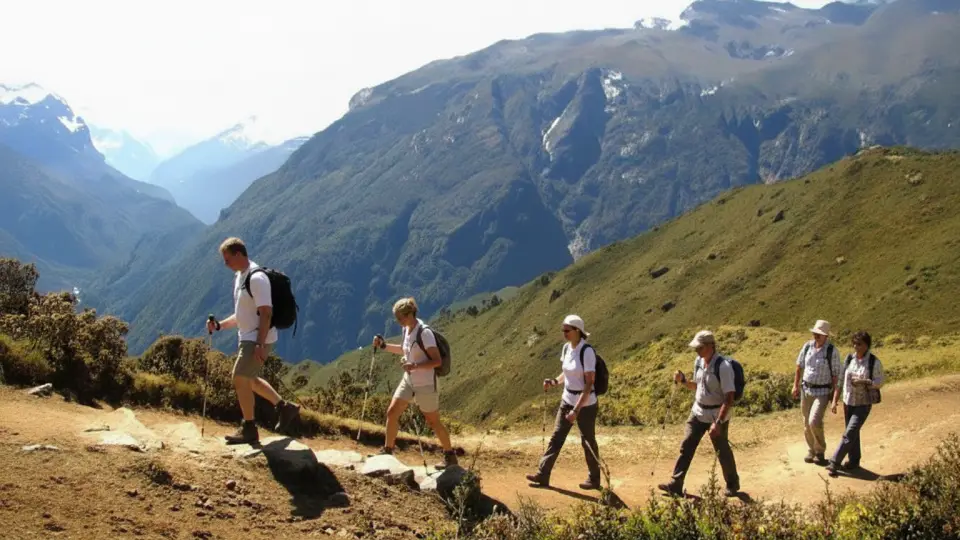
Trekking in the Sacred Valley of the Incas
If you love hiking, this trek is a great place to start and works as the ideal warm up before taking on the great Choquequirao trek. Because of its demanding trails, you will strengthen your legs and help your lungs acclimate while enjoying incredible valley scenery.
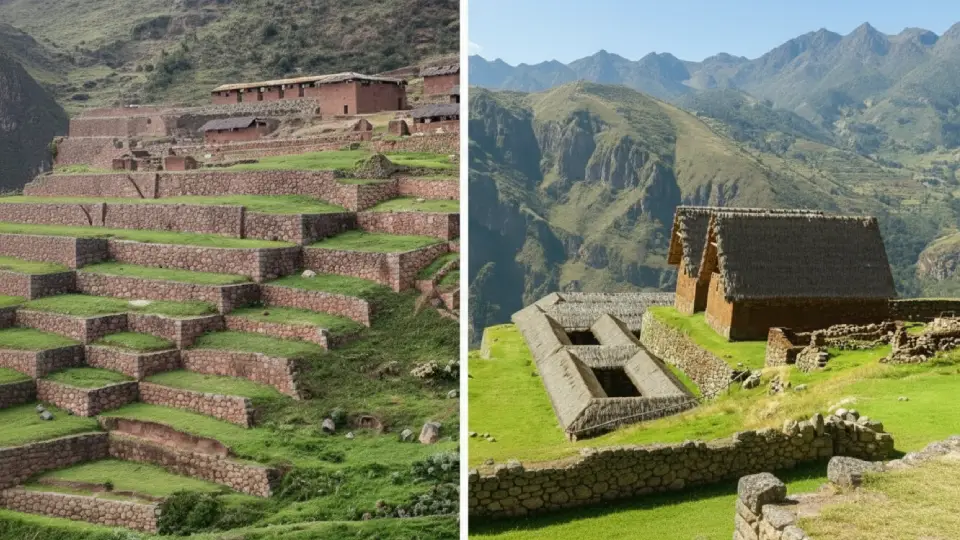
Huchuy Qosqo ruins
From the town of Chinchero, you can reach Huchuy Qosqo in about four hours of trekking. Even though it is a little-visited Inca citadel, it offers extraordinary views and a sense of peace that few places still preserve. You will feel like a true explorer there.
- Free admission
Poc Poc Waterfall
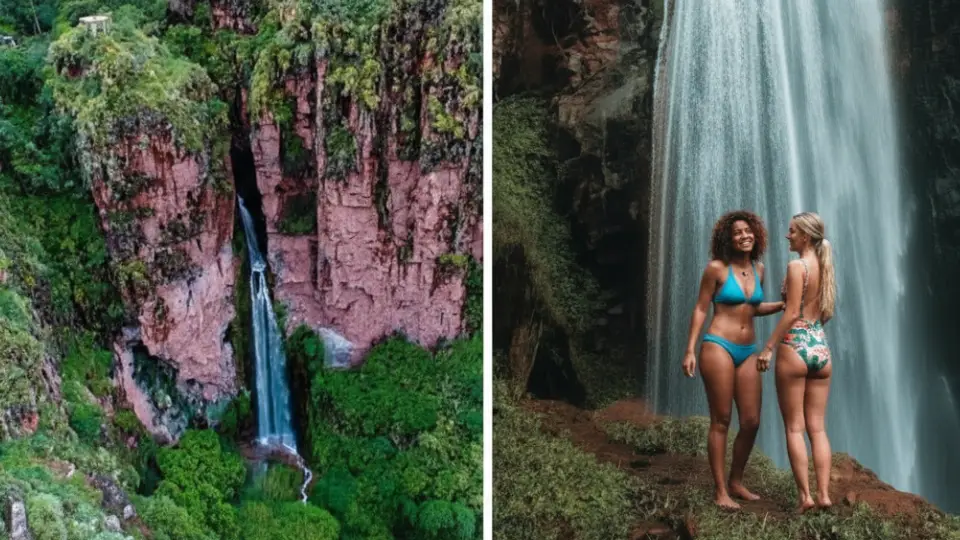
In addition to its historical richness, Chinchero offers you a unique connection with nature through Poc Poc Waterfall. To begin this adventure, you must descend along a section of the Qhapaq Ñan (Inca Trail), surrounded by farmland and native vegetation. After about an hour of hiking, you will reach this impressive 30-meter waterfall, the perfect place to connect with the peace of the valley.
- Admission: S/ 2.00 Peruvian soles per person
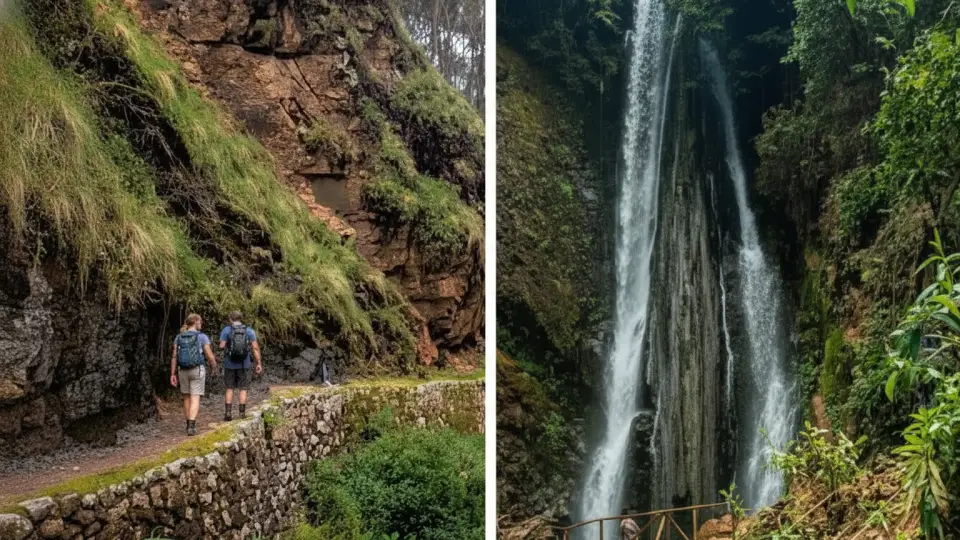
Perolniyoc Waterfall
After leaving Chinchero, the route continues to the town of Socma, where we begin a two-hour hike to Perolniyoc Waterfall. Once you arrive, you will be amazed by a 100-meter cascade where you can cool off and recharge your energy. What makes it even more fascinating is that, unlike other waterfalls, this one has an archaeological site right at the top.
- Admission: S/ 2.00 to S/ 5.00 Peruvian soles per person
Raqaypata archaeological site
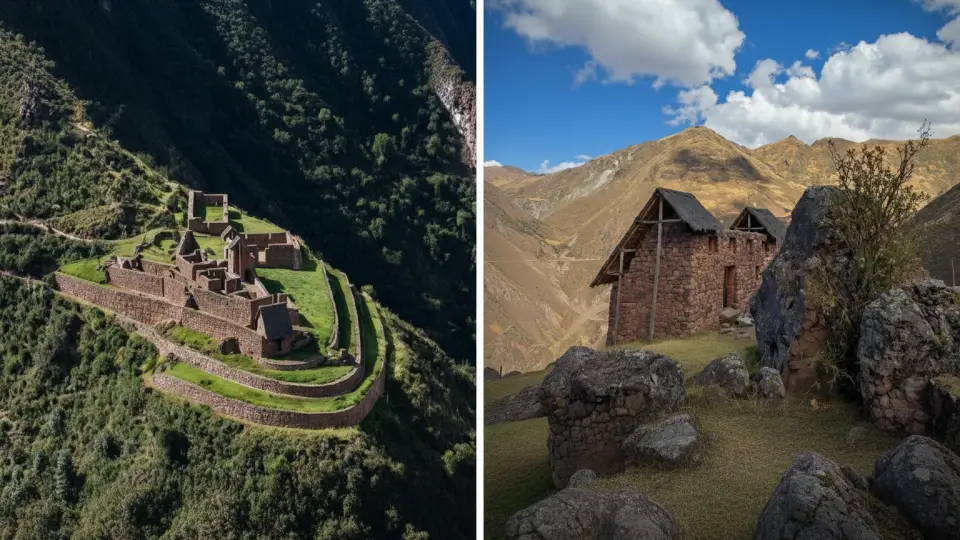
Just a short walk above Perolniyoc Waterfall, you will discover Raqaypata, an ancient Inca administrative center built in stone that seems to defy the passage of time. Although the climb requires extra effort, the summit rewards you with a spectacular panoramic view of the mountain range and the fields of Ollantaytambo. Exploring these ruins is essential to understanding the Incas’ strategic surveillance and daily life.
- Free admission
Inca shrine of Ñaupa Iglesia
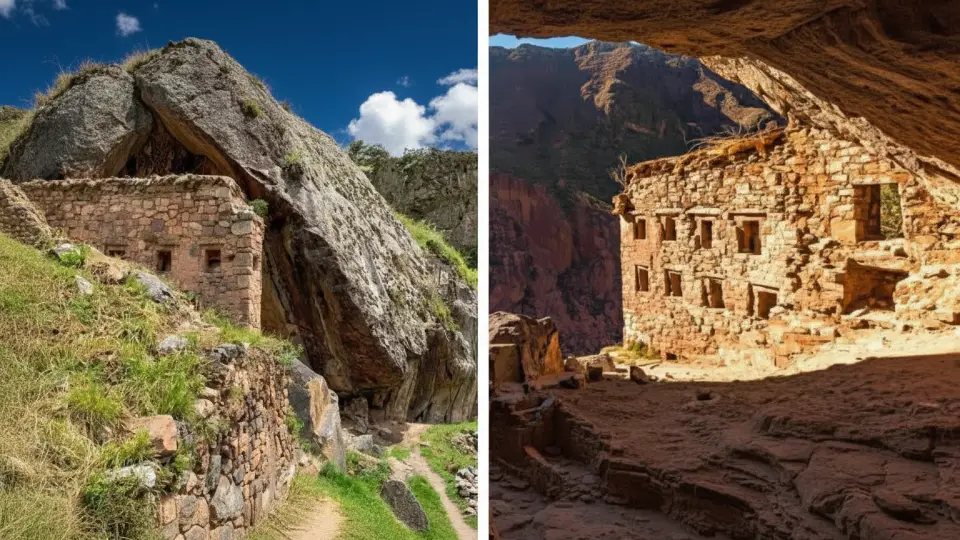
Along the same Sacred Valley route, very close to Pachar, Ñaupa Iglesia awaits you, a sacred Huaca carved directly into the rock. There, you can observe a perfectly carved altar and admire its mystical “doorway,” which, according to the Andean worldview, connected the earthly world with the spiritual one. Because of this, you will immediately notice that this is not just any site, but a sanctuary dedicated to the stars and the earth.
- Free admission
Mountain biking (MTB)
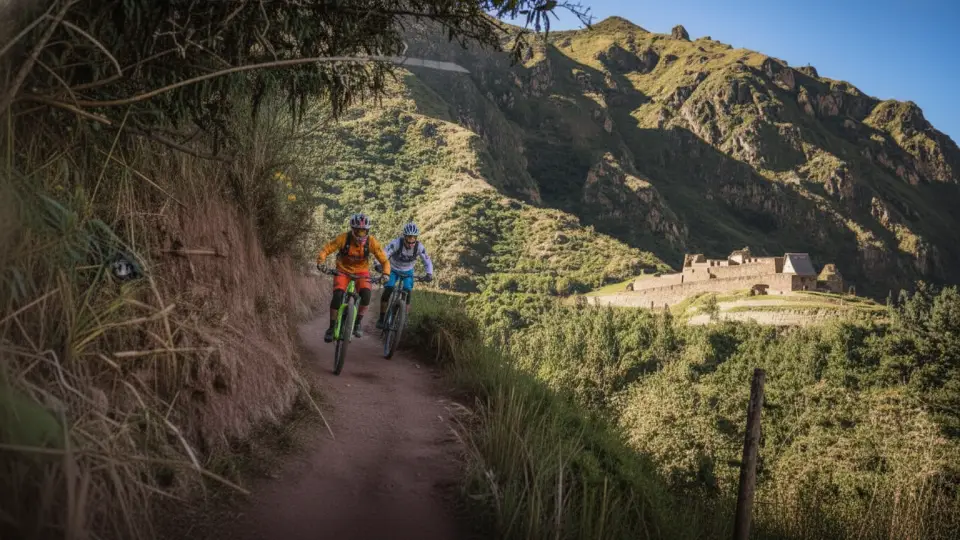
This sport is incredibly popular among travelers looking for adrenaline. Thanks to the geography of the Sacred Valley, you can enjoy mountain biking in styles such as:
- Downhill: The most common style in areas like Maras or Chinchero, where you race downhill on mountainsides and technical trails.
- Cross-country: Ideal if you prefer riding longer, flatter routes while enjoying the scenery at a steadier pace.
- Enduro: A mix of both, with demanding climbs and exciting descents over natural terrain.
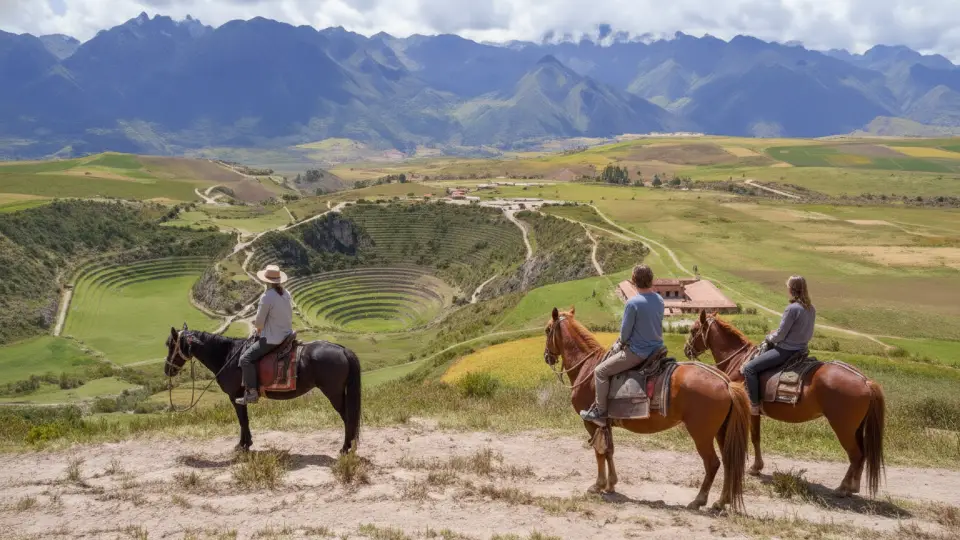
Horseback riding
In the Sacred Valley, most horseback rides depart from the rural areas of Urubamba and Yucay, where you will cross wide open plains with views of the snowcapped Chicón and Verónica peaks. Riding along these ancient trails lets you reach corners that cars cannot access, all while enjoying the absolute silence of the Andes.
Recommended places to begin your horseback ride:
- Yucay and Urubamba: Ideal for relaxed rides along the riverbank and through wooded areas.
- Maras and Moray: Perfect for seeing agricultural landscapes, salt pools, and circular terraces.
- Paucarbamba: A peaceful area near the Vilcanota River, excellent for experiencing authentic rural life.
Experiential tourism
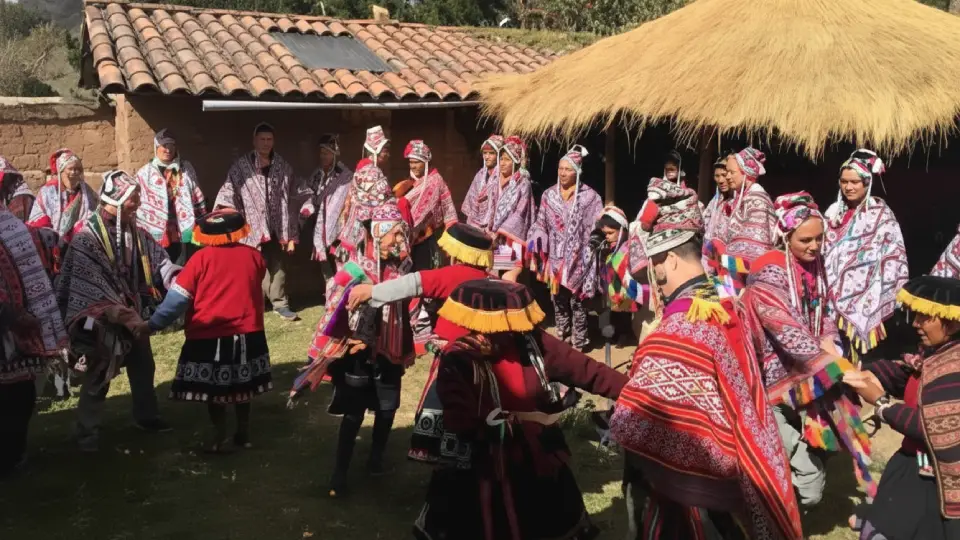
Can you imagine learning how to prepare a traditional pachamanca, working the land, or sharing lunch with local families? That is exactly what experiential tourism in the Sacred Valley offers. Here, ancestral customs are still alive in every part of daily life.
Andean towns of the Sacred Valley
- Chinchero (rainbow town): known for its handcrafted textiles and farming experiences alongside local families.
- Huilloc and Patacancha (living Inca town): famous for their vibrant red ponchos and expert weavers.
- Mullak’as Misminay: ideal for staying in local homes and stargazing the way the Incas once did.
- Amaru (Pisac): perfect if you love medicinal plants and want to learn about natural dyes.
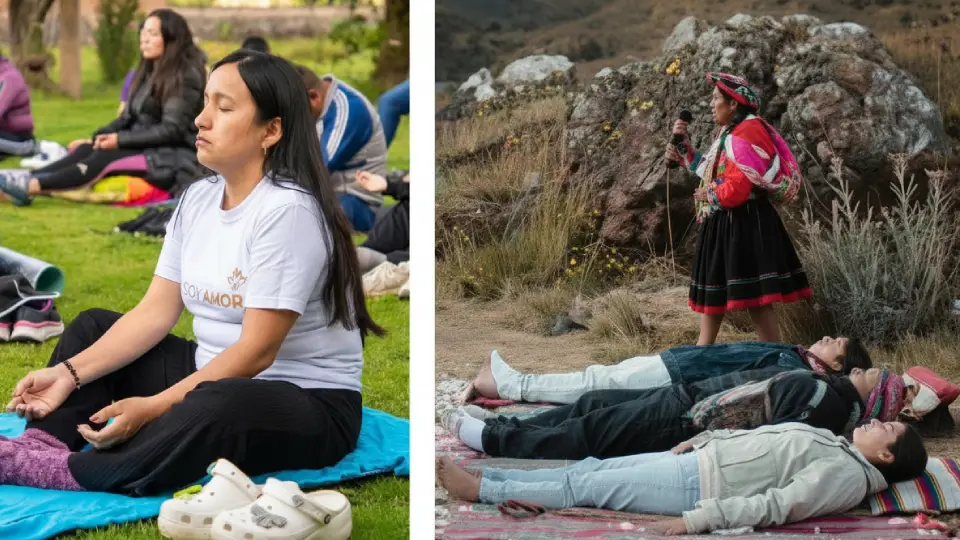
Wellness tourism
Some luxury hotels in the Sacred Valley offer spiritual retreats, yoga sessions, and flowering baths in privileged natural settings. In addition, the area’s spas incorporate ancestral botanical knowledge, clays, and hot stones to provide deep relaxation that balances body and mind. Here are the best places:
Pisac (retreat centers)
- Yoga and meditation: Spaces with incredible mountain views.
- Sound healing: Crystal bowl sessions and sacred ceremonies.
Urubamba: World-class spas
- Luxury spas: Hotels such as Tambo del Inka or Río Sagrado offer treatments using local ingredients like Maras salt, coca leaves, and hot river stones.
- Flowering baths: Energy-cleansing rituals performed by local shamans using flowers and Andean herbs.
Huayllabamba and Yucay: Silence and nature
- Meditative walks: Quiet trails surrounded by vegetation that make mindfulness easier to practice.
- Organic food: Farm-to-table restaurants serving Andean superfoods such as quinoa, kiwicha, and fresh vegetables.
Arin and its waterfall: near Huayllabamba.
- Connection with water: Arin Waterfall is considered a place of natural purification, ideal for sitting and meditating near the sound of the water.
Handicraft markets
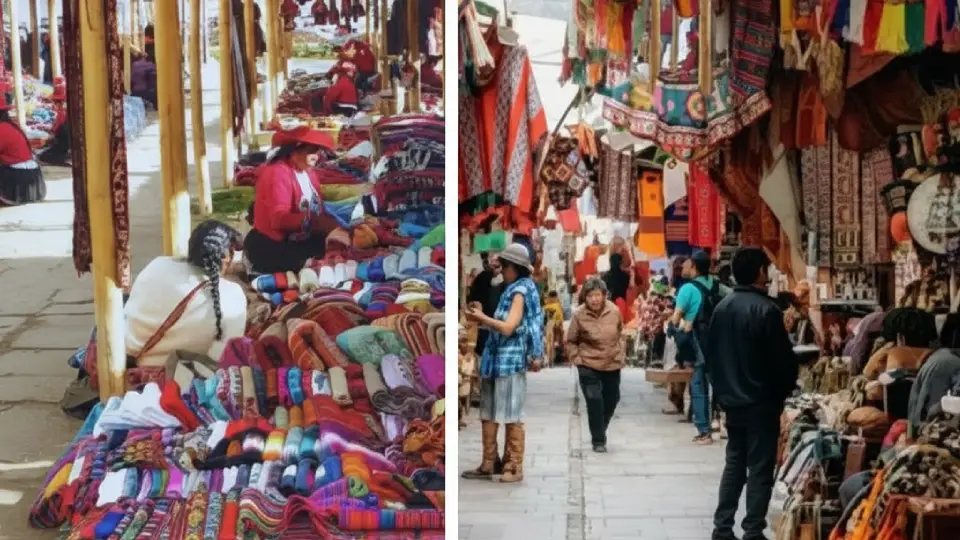
Did you know that the markets of the Sacred Valley still preserve their traditional essence? These spaces allow you to discover the local daily life of Andean towns. You can also walk through stalls full of colorful textiles and interact directly with local producers.
Chinchero Sunday market
Every Sunday, the Chinchero market brings back the ancient tradition of barter. You will see with your own eyes how the community exchanges products without using money. You will also love watching local women demonstrate the full textile-making process, from spinning with a drop spindle to weaving on backstrap looms using natural dyes (the Chinchero textiles).
Pisac food market
Because this market welcomes you with open doors every day, you will enjoy discovering organic produce and fine textiles that people from distant communities bring with great care. Walking among the colors and sounds of the plaza also transports you to a time when the Incas themselves practiced barter under this very same sky.
Gastronomy of the Sacred Valley
Let me tell you cuisine in the Sacred Valley makes use of exceptional ingredients such as river trout, more than two hundred varieties of native potatoes, guinea pig raised in local households, and quinoa still harvested on Andean slopes. Here, you’ll experience flavors that the country’s top chefs consider among the most authentic in Peru.
Recommended places to eat in the Sacred Valley
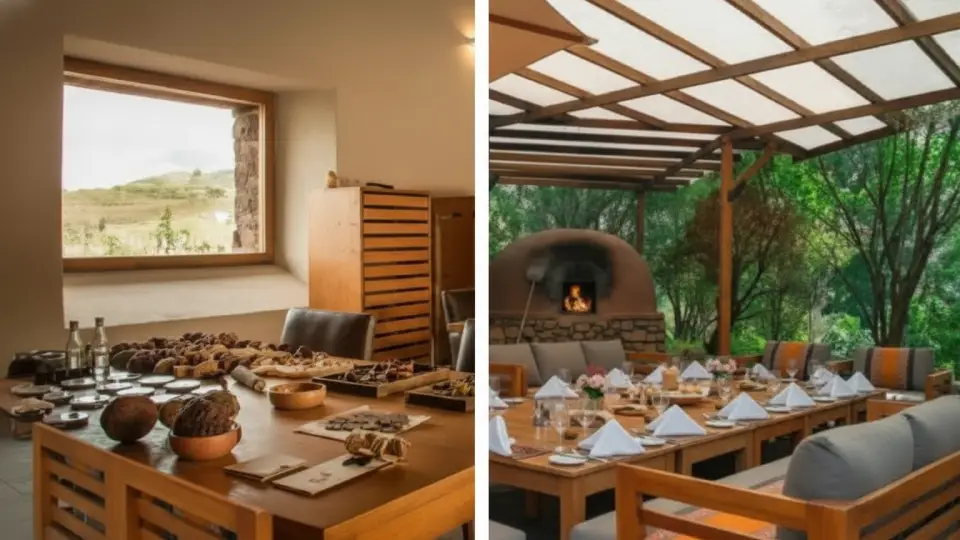
- Mil Centro (Moray, Urubamba): 50 km from Cusco. Led by chef Virgilio Martínez; be sure to reserve in advance to secure entry.
- El Huacatay (Urubamba): 53 km from Cusco. A cozy restaurant with a peaceful garden that blends Peruvian flavors with international techniques.
- Chuncho (Ollantaytambo): 61 km from Cusco. Focuses on traditional local cuisine using ingredients sourced from its own organic farm.
- Restaurant Hotel Tambo del Inka (Urubamba): 53 km from Cusco. Known for its elegant take on refined local dishes with direct views of the Vilcanota River.
- Hacienda Huayoccari (Huayoccari): 45 km from Cusco. Set in a historic estate, it offers traditional cuisine in a dining room surrounded by folk art and beautiful gardens.
- Paca Paca (Urubamba): 53 km from Cusco. A small, charming spot specializing in wood-fired pizzas and pasta dishes with Andean touches.
- Apu Pinkuylluna (Ollantaytambo): 61 km from Cusco. A relaxed spot facing the main square, ideal for enjoying local coffee and light meals.
Must-try traditional dishes
| Main dishes | Drinks & desserts |
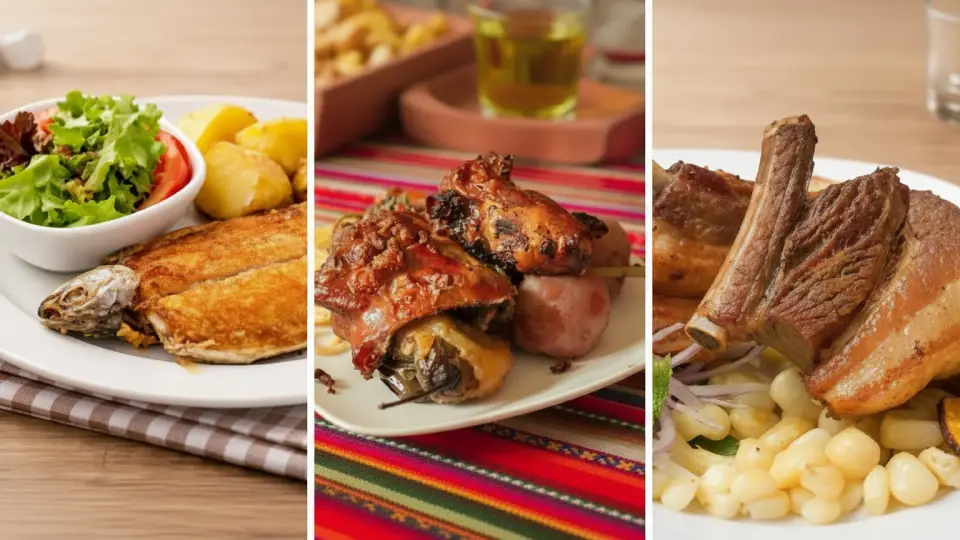
| Roasted guinea pig (cuy al horno): The iconic Andean dish, marinated with local herbs and cooked whole in a wood-fired oven. | Chicha de jora: A fermented corn drink with a slightly tangy flavor, enjoyed in the Andes for over 3,000 years. |
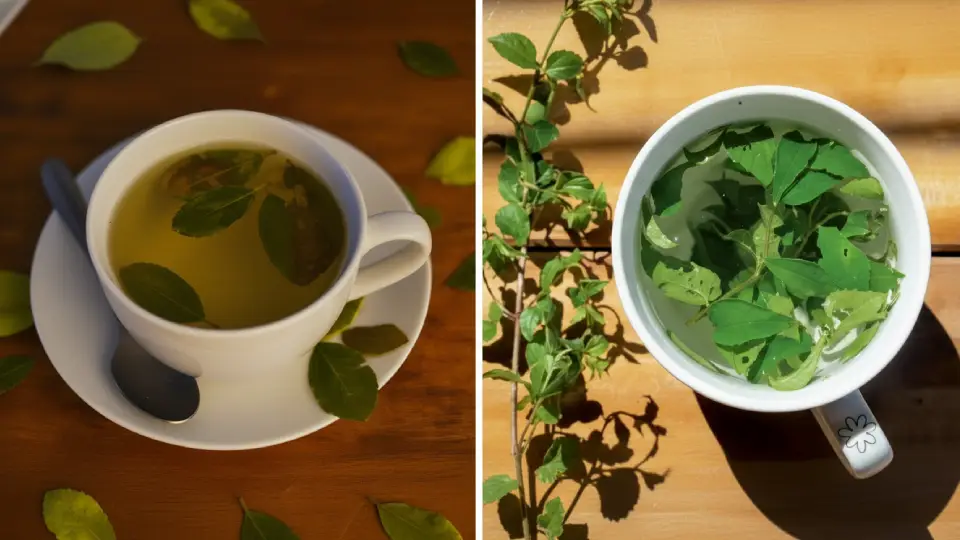
| Urubamba trout: Raised in the river’s cold waters, it’s served fried, grilled, or as ceviche with yellow chili. | Muña tea: An infusion made from the Andean muña plant, commonly used by locals to ease altitude sickness and digestive discomfort. |
| Corn with cheese (choclo con queso): The simplest yet most satisfying snack boiled white corn served with fresh Andean cheese. | Mazamorra morada: A purple corn dessert with fruit and cinnamon, served cold in local markets and restaurants. |
| Pork chicharrón: In the markets of Pisac and Urubamba, it’s prepared fresh in front of you and served with hominy and herb salad. | Pisco sour: Though it originates from the coast, it’s widely served throughout the valley and is especially delicious with added Andean herbs. |
Traveler tips…
If you arrive early at the Pisac market on a Sunday, you’ll find Andean breakfast stalls serving hot api, tamales, and freshly made humitas definitely worth trying.
How to master the Sacred Valley of the Incas like an expert
Personally, I recommend planning your visit carefully and paying attention to practical details to avoid any health or access issues that could interrupt your adventure. Preparing in advance also helps your body adjust to the altitude while ensuring you have your tickets ready for each destination. Here are some tips to help you make the most of your trip.
How to avoid altitude sickness
Did you know the secret to avoiding altitude sickness in Cusco is actually just 30 km away? I suggest spending your first nights here in the Sacred Valley (2,800 meters / 9,186 ft) instead of in Cusco city (3,400 meters / 11,155 ft). At the lower elevation, your body oxygenates more efficiently. Stay hydrated with coca leaf tea or muña tea, avoid heavy meals upon arrival, and take it easy while enjoying the scenery.
Best time to visit the Sacred Valley
The Sacred Valley can be visited year-round, though conditions vary significantly depending on the season. The best time to go depends on the activities you plan to do.
Dry season (April to October)
Days are sunny and clear, making hiking easier and ideal for photography.
- Clear skies and consistent sunshine during the day
- Snow-capped peaks are visible from the valley floor
- Higher number of tourists, especially in July and August
- Best time for trekking and outdoor activities
Rainy season (November to March)
The landscape turns intensely green. While rain is frequent, showers are usually brief, allowing activities for the rest of the day.
- The valley becomes lush and vibrant green
- Fewer tourists and lower accommodation prices
- Agricultural terraces and rivers are at their most impressive
How to visit the Sacred Valley: Tickets and entry passes
Most archaeological sites in the Sacred Valley require the Cusco Tourist Ticket, managed by COSITUC. I recommend purchasing it in Cusco before your trip, although it can also be bought at the start of your route.
The Cusco Tourist Ticket (BTC): Your access pass
| Ticket type | Price | Validity | Included sites |
| General Tourist Ticket (BTG) | Foreigners: S/.130 Peruvians: S/.70 |
10 days | All 16 circuits (Cusco city + valley) |
| Partial Ticket III (BTCPIII) | Foreigners: S/.70 Peruvians: S/.40 |
3 days | Sacred Valley only: Pisac, Ollantaytambo, Chinchero, Moray |
| Maras Salt Mines | Foreigners: S/.25 Peruvians: S/.15 |
Single entry | Not included in the BTC – paid separately |
Traveler tips…
Always check the validity before purchasing.
Practical travel tips
- Although many places accept cards, carry cash in Peruvian soles for small markets and local transportation.
- Ask permission before taking photos of local people, and remember that archaeological sites are sacred spaces for the community.
What to pack in your daypack
- Layered clothing
- High-SPF sunscreen for strong UV exposure
- Hat or cap and sunglasses
- Comfortable walking shoes
- Water bottle
- Snacks, nuts, and lemon candy or coca candy
- Cash on hand
- Camera and extra phone battery
How many days should you spend in the Sacred Valley?
- Sacred Valley of one full day is enough to cover the classic route (Chinchero, Moray, Maras Salt Mines, Ollantaytambo, and Pisac) with an organized tour, though the pace is fast and stops are brief.
- Sacred Valley for With two days, the pace becomes much more relaxed: day one for Chinchero, Moray, and Maras; day two for Ollantaytambo and Pisac, with time to explore markets at your leisure.
- With three days, you can add trekking, adventure activities, community visits, or explore Pisac early in the morning before tour groups arrive.
Staying in the Sacred Valley vs. Cusco
Many travelers wonder whether to stay in the valley or commute daily from Cusco. The answer depends on your budget and travel style.
| Cusco City | Sacred Valley | |
| Accommodation type | Urban hotels, hostels, boutique stays in colonial mansions | Lodges, eco-hotels, haciendas, nature-focused stays |
| Atmosphere | Urban, historic, and lively | Natural, peaceful, surrounded by mountains and rivers |
| Noise level | Medium to high (traffic, nightlife, tourism) | Low, ideal for rest |
| Access to services | Everything nearby: restaurants, banks, museums | More limited, mainly in towns like Urubamba and Ollantaytambo |
| Nightlife | Active (bars, live music venues, restaurants) | Very limited or nonexistent |
| Experience | Cultural, historical, urban | Natural, relaxing, scenic |
| Access to attractions | Starting point for the entire valley and Machu Picchu | Direct proximity to sites like Pisac, Maras, and Ollantaytambo |
| Average price | Wide range: budget to luxury | Tends toward mid to high prices in exclusive lodges |
| Best for | First days, culture, urban convenience | Rest, nature, and deeper connection with the surroundings |
Flora and fauna in the Sacred Valley
The Sacred Valley is home to remarkable biodiversity. Its fields combine queñua trees, yellow broom shrubs, minty-scented muña, and corn that has been central to Andean diets for centuries.
Some animals you may see in the Sacred Valley
- The Andean condor often glides above the peaks, especially around midday when warm air currents rise from the valley floor.
- The giant hummingbird the largest in the world visits flowers in gardens and fields.
- Vizcachas, Andean rodents with long ears, blend into rocky landscapes if you’re lucky enough to spot them.
- The Andean fox may appear along the slopes at sunset.
Visiting the Sacred Valley means understanding that Inca civilization was more than just impressive architecture. At Uros Expeditions, we design the ideal Sacred Valley experience, including hotel pickup, passionate guides, and an unforgettable buffet lunch. (click here https://www.urosexpeditions.com/es).
Frequently Asked Questions about the Sacred Valley
Yes. Since most archaeological sites are accessible by vehicle, you can plan a comfortable route that fits your family’s pace. While trekking may be tiring for children under six, traveling at your own rhythm allows for breaks so younger kids can enjoy the experience too.
Absolutely and it’s actually the most common approach. The most efficient route is to visit the Sacred Valley on the first day, finish in Ollantaytambo, and take the train from there to Aguas Calientes. You’ll spend the night in Aguas Calientes and head up early the next morning to Machu Picchu. It’s best to plan this in advance, especially train tickets and Machu Picchu entry, which require prior booking.
Markets, salt mine entrance fees, and tips are typically paid in cash. For a full-day tour, it’s advisable to carry around 100 to 150 soles per person, plus extra for shopping at artisan markets. Some restaurants and hotels in Urubamba and Ollantaytambo accept cards, but smaller vendors and secondary sites are cash-only.
Yes, the Sacred Valley is one of the safest tourist destinations in Peru. Roads are well marked, tour operators are officially licensed, and archaeological sites are staffed with park rangers. As with any destination, it’s wise to keep your documents and valuables secure especially in crowded markets.
Visiting this region gives you essential context to understand how Andean civilizations lived, ate, and thought. The Sacred Valley also helps your body gradually adjust to the altitude and allows you to appreciate the scale of the empire before seeing its most iconic site. Planning time here leads to a richer, more authentic travel experience.
It depends on what you’re looking for, but Ollantaytambo is often considered the most beautiful. It preserves its original Inca layout, with stone streets, flowing water channels, and an impressive archaeological complex making it both picturesque and deeply authentic.