
Machu Picchu Weather & Climate: When to Visit for the Best Experience
Machu Picchu sits at about 2,430 meters (7,970 feet) above sea level in Peru’s Sacred Valley, right where cold Andean air meets warm humidity rising from the Amazon basin. The result is a unique micro-climate that can shift dramatically within the same afternoon. Understanding the climate in Machu Picchu before you book is genuinely one of the most important parts of planning your trip and it is something that most travelers wish they had researched more thoroughly before they arrived.
The Machu Picchu climate does not behave the way most people from the United States expect it to. It is not about extreme heat or freezing cold. It is about rain and mist and altitude, and understanding how those three things interact is what separates a well-prepared traveler from a wet, surprised one standing in the middle of the ruins wondering why no one told them.
The Two Seasons That Define Everything
Unlike most of the United States, there are no four seasons here. There are two, and knowing which one you are stepping into changes your packing list, your daily schedule, and how crowded the site will be when you get there.
The climate of Machu Picchu runs on a two-season calendar: a dry season from roughly May through October, and a wet season from November through April. What surprises most travelers is how stable the temperatures are year-round. Daytime highs hover around 18 to 20 degrees Celsius (64 to 68°F) regardless of month. What swings dramatically is rainfall, not temperature. That distinction matters more than almost anything else when you are deciding when to go.
| ☀️ Dry Season | 🌧️ Wet Season | 🌥️ Shoulder Season |
|---|---|---|
| May – October | November – April | April and November |
| Clear skies, crisp mornings, and the best mountain views. Peak tourist season book months ahead for tickets and the Inca Trail. | Lush, green, dramatically misty. Daily afternoon rain nearly guaranteed. Fewer crowds and lower prices, but absolutely worth it if you come prepared. | The sweet spot. Decent weather, smaller crowds, better accommodation prices, and the landscape still beautifully alive. |
What the Wet Season Actually Looks Like Day to Day
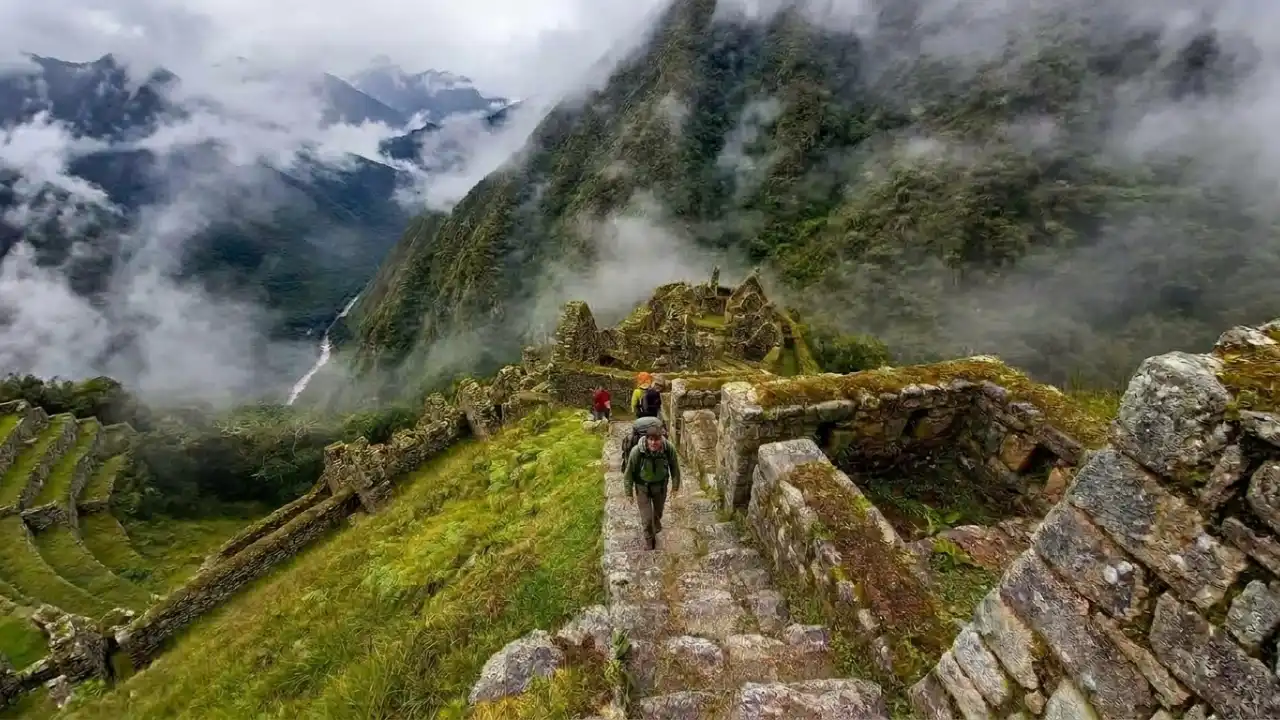
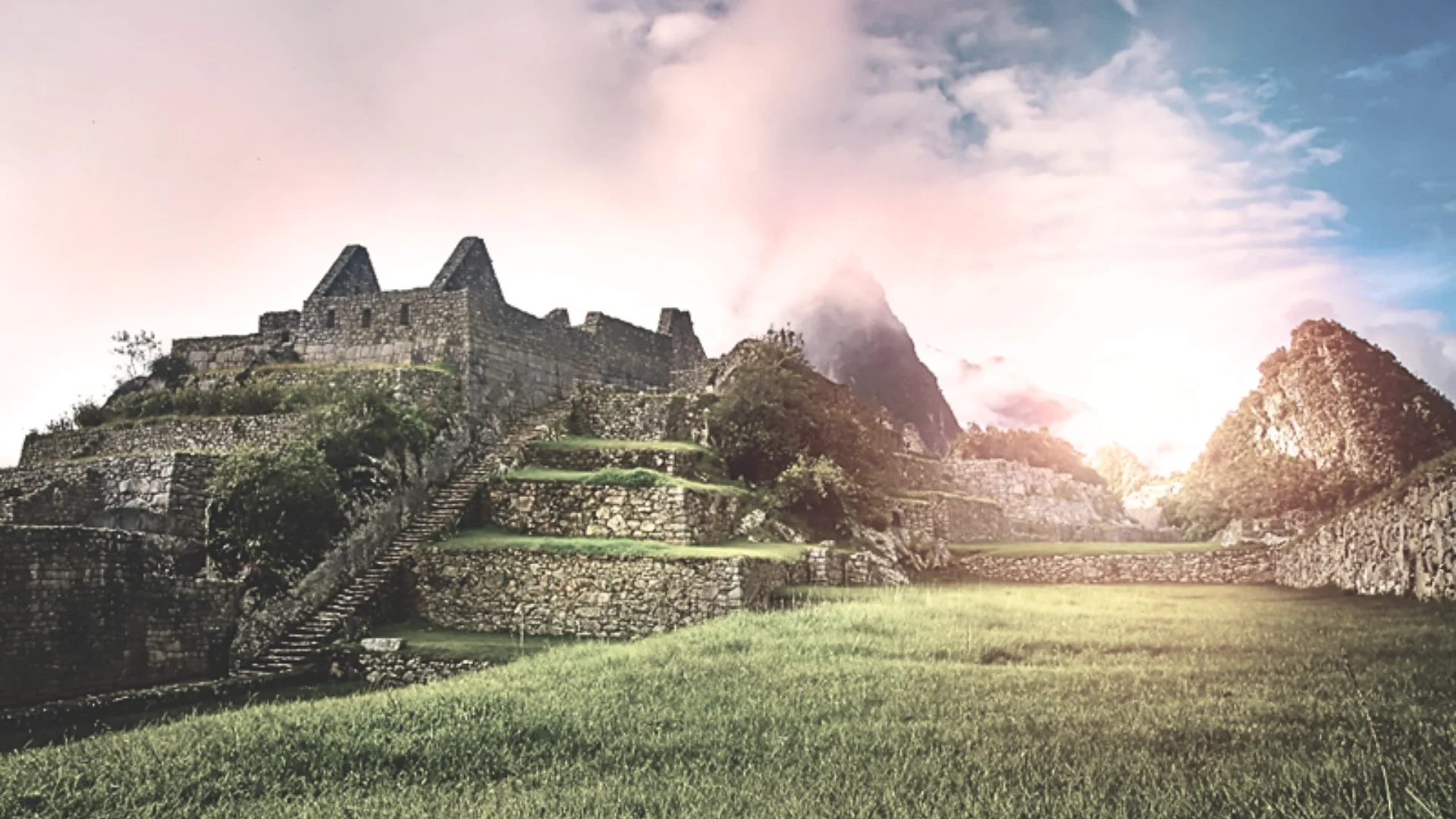
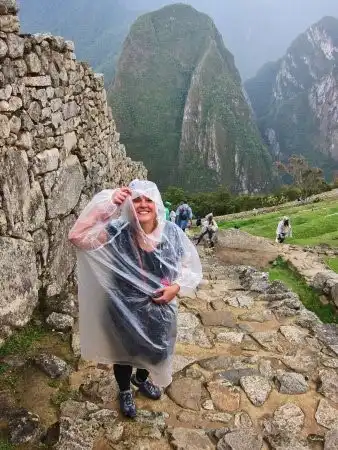
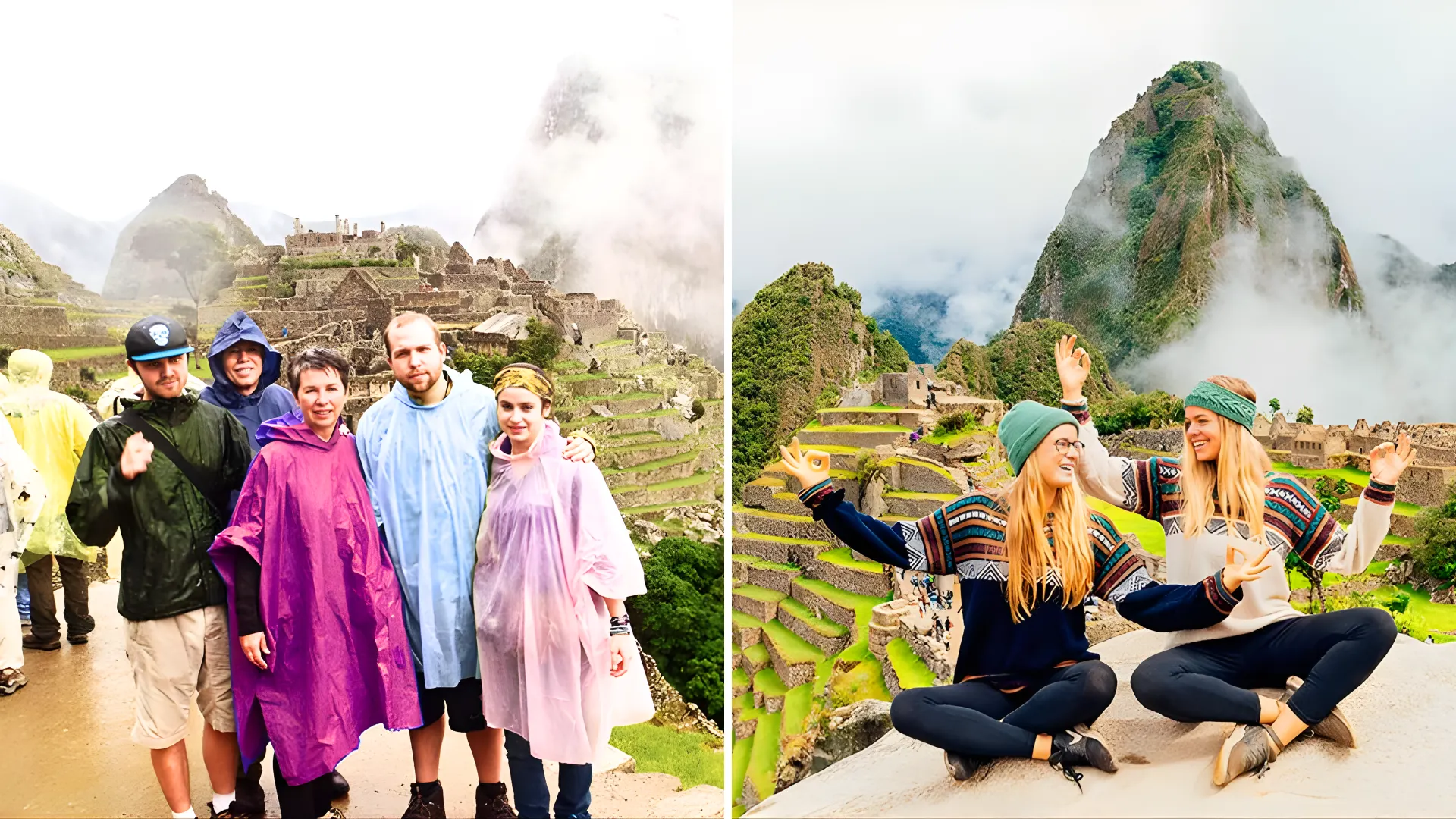
The weather in Machu Picchu during the wet season gets a bad reputation that it does not always deserve. Rain during these months does not fall all day long from dawn to dusk like a curtain that never lifts. Mornings are typically clear, sometimes brilliantly so, with soft light coming through the mist and the ruins practically glowing. Then by early to mid-afternoon, clouds start building and rain rolls in. It usually does not last into the evening.
Worth knowing: February is when the Inca Trail closes entirely for maintenance. It is also the month with the highest rainfall totals on record. If February is your only option, the Salkantay Trek and the Inca Jungle Trek stay open and are excellent alternatives that most travelers end up loving just as much.
Best Time to Visit Machu Picchu
When people ask about the best time to visit Machu Picchu weather-wise, the answer is almost always the same: between May and August. These months sit in the heart of the dry season. Morning temperatures can dip to 5 or 6 degrees Celsius (about 41 degrees Fahrenheit) at higher elevations, so you will want a warm layer, but afternoons are comfortable and rain is uncommon. The mountain views are at their clearest, the trails are at their driest, and the overall experience is about as close to ideal as this place gets from a weather standpoint.
The tradeoff is significant, though. From June through August, Machu Picchu runs at absolute peak capacity. Timed entry tickets sell out weeks or even months in advance. The Inca Trail waitlist can stretch to four to six months. If you are flexible, consider the shoulder months on either side.
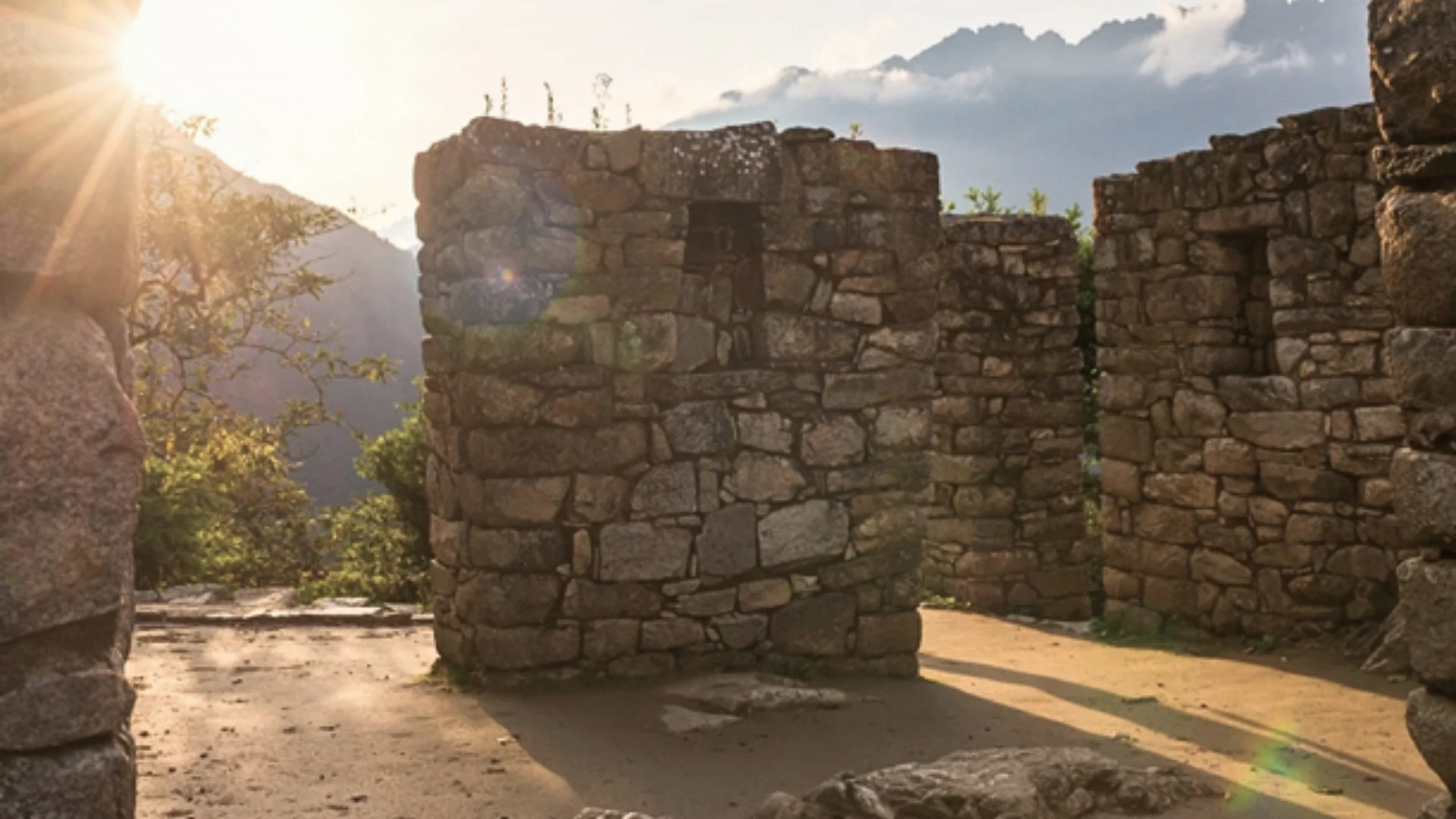
Pro tip: If you want the dry season experience without fighting for space, May and September are genuinely better choices for the best time to visit Machu Picchu climate-wise. The weather is still very good, the site is calmer, and you will find it easier to book everything on shorter notice.
The Case for Shoulder Season: April and October
Late April is one of the most overlooked windows on the entire Machu Picchu weather by month calendar. The rains are tapering off, but the landscape is still brilliantly green from months of moisture. The terraces look almost unnaturally lush. Crowds are lighter than summer, prices are lower, and rain events are shorter and less frequent. October works the same way at the other end of the dry season, with wildflowers starting to bloom across the hillsides and the light turning golden in the afternoons.
Going in the Wet Season on Purpose
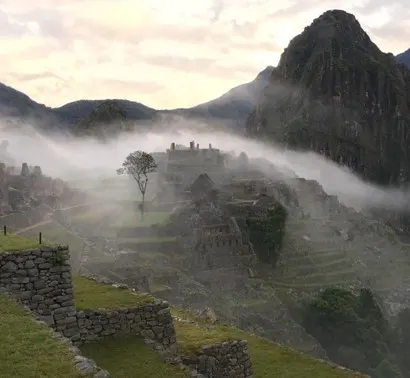
Some travelers who have visited Machu Picchu multiple times will tell you their wet season trip was actually their favorite. The mist that rolls through the ruins during Machu Picchu weather January, Machu Picchu weather February, or Machu Picchu weather March creates something no postcard can capture. Orchids bloom across the hillsides. The air smells alive. And because crowd levels are lower, there are moments where you can stand in front of the Temple of the Sun with almost no one else around.
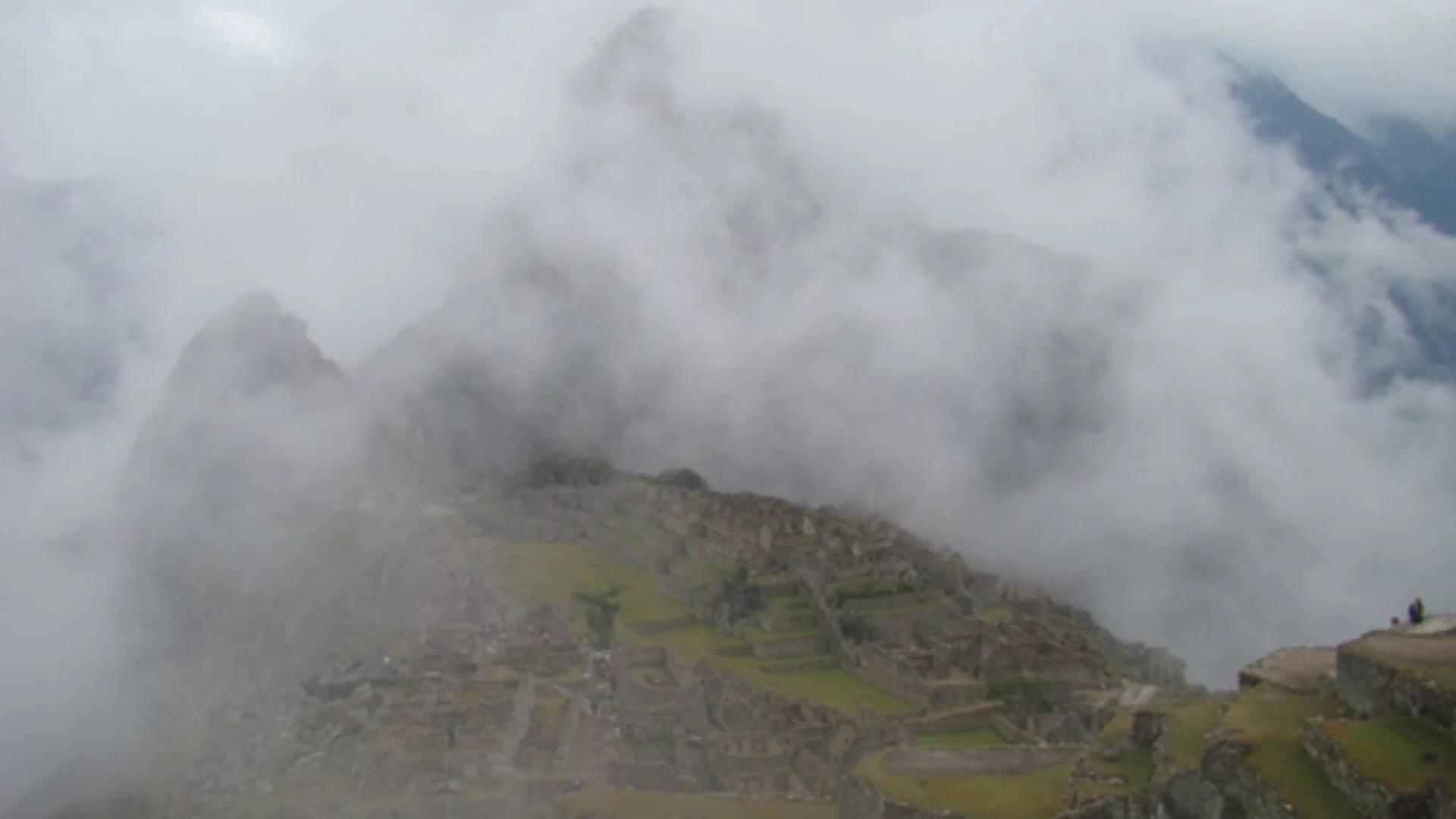
The early bird rule: During wet season months, booking the 11 a.m. entry slot is one of the single most impactful decisions you can make. Mornings are almost always clearer than afternoons. Travelers who stay the night in Aguas Calientes specifically to catch that first light consistently call it the highlight of their entire Peru trip.
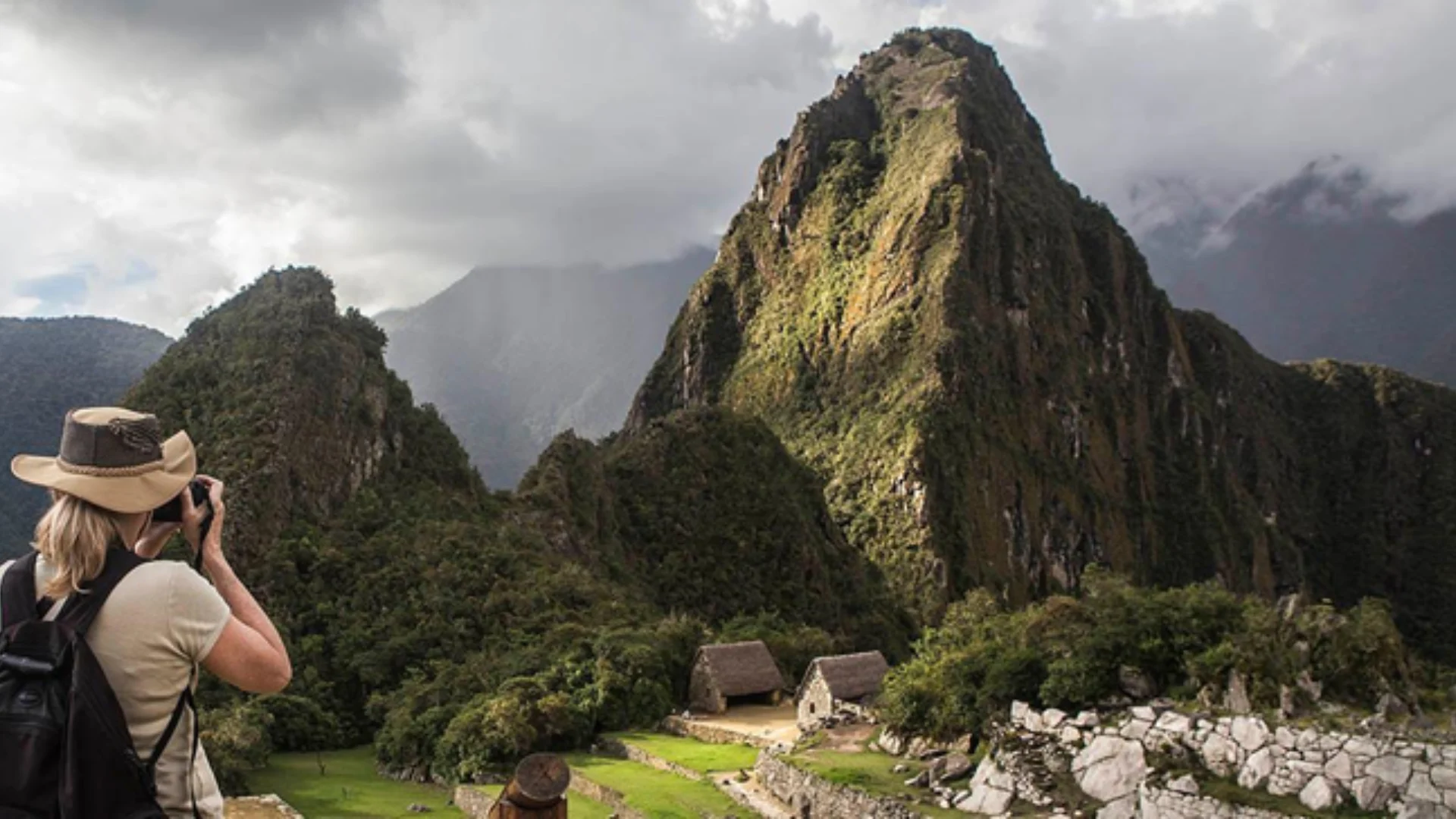
Machu Picchu Weather by Month
Here is a straightforward breakdown of what the weather in Machu Picchu Peru looks like through every month of the year. The temperatures stay fairly consistent no matter when you go, so pay particular attention to the rain and crowd notes as your main planning guides. These monthly details reflect average Machu Picchu Peru weather conditions based on historical climate data.
| Month | High | Low | What to Expect |
|---|---|---|---|
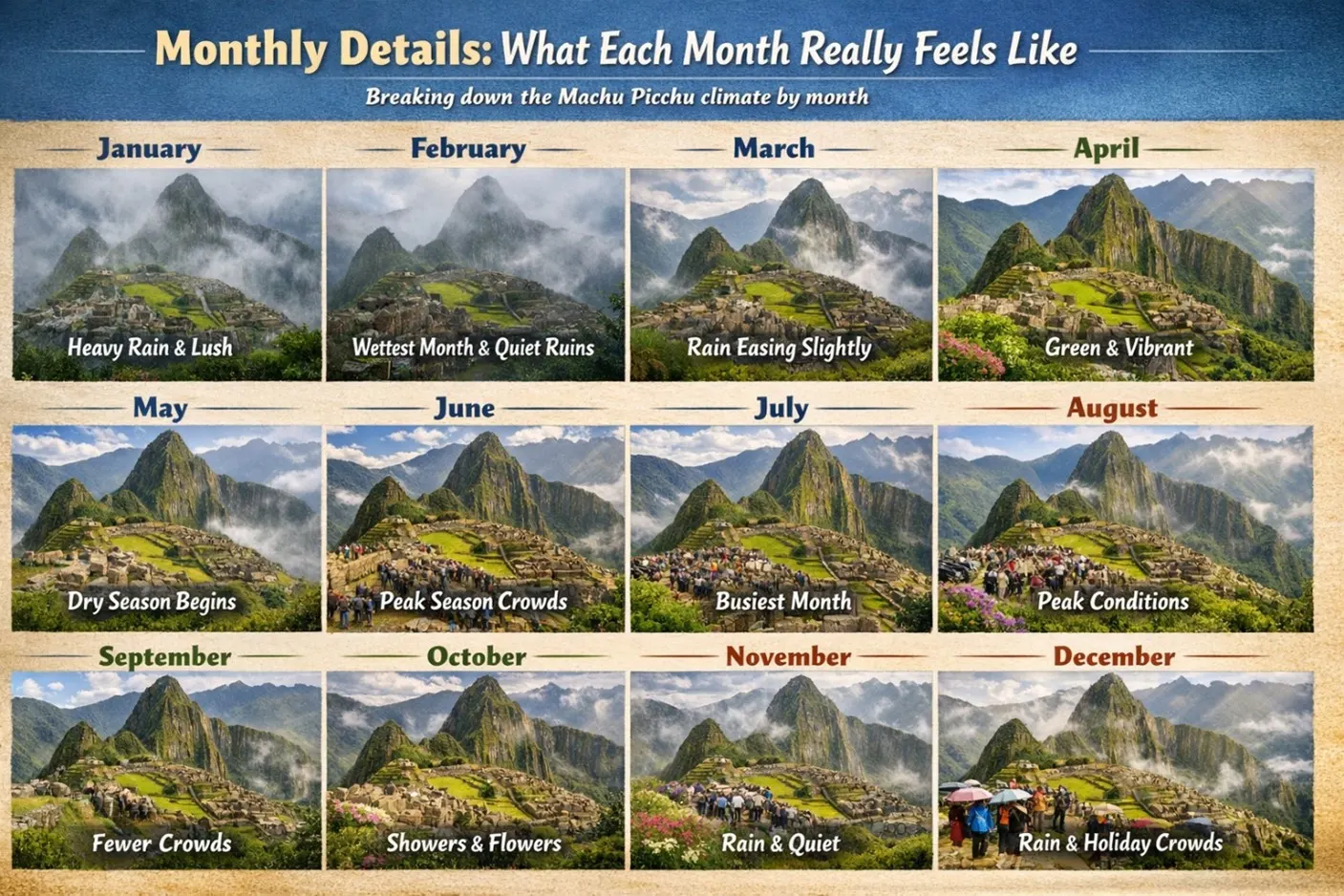
| January | 19°C / 66°F | 10°C / 50°F | Heavy rainfall and intensely lush vegetation. Mornings can be genuinely beautiful; expect wet afternoons. Fewer crowds, highly atmospheric. |
| February | 19°C / 66°F | 10°C / 50°F | The rainiest month of the year. Inca Trail closes for maintenance. Highest rainfall totals and fewest tourists on site. |
| March | 19°C / 66°F | 10°C / 50°F | Rain still frequent but the wet season peak is slowly easing. Early mornings are the most reliable window for clear conditions. |
| April | 20°C / 68°F | 10°C / 50°F | One of the most underrated months to visit. Rainfall dropping, landscape brilliantly green, crowds well below peak. Highly recommended. |
| May | 20°C / 68°F | 7°C / 45°F | Start of reliable dry conditions. Clear mornings are common. Excellent for hiking and mountain photography. Crowds starting to build. |
| June | 19°C / 66°F | 6°C / 43°F | Peak season begins. Clearest skies and driest conditions of the year. Entry tickets and the Inca Trail book out fast. |
| July | 19°C / 66°F | 5°C / 41°F | Most visited month. Lowest rainfall on record. Coldest nights of the year. Site runs at full capacity every single day. |
| August | 20°C / 68°F | 6°C / 43°F | Similar to July with slightly warmer afternoons. Still peak season and outstanding conditions for exploring the ruins. |
| September | 20°C / 68°F | 8°C / 46°F | Excellent and underrated. Dry season winding down, noticeably lighter crowds than peak summer months. Highly recommended. |
| October | 20°C / 68°F | 9°C / 48°F | Shoulder season. Afternoon showers gradually return but mornings stay mostly clear. Wildflowers begin appearing on the hillsides. |
| November | 20°C / 68°F | 10°C / 50°F | Wet season building again. Rain mostly confined to afternoons. Crowd levels among the lowest of the year. |
| December | 19°C / 66°F | 10°C / 50°F | Rainfall increasing through the holidays. Christmas week brings a tourist spike. Waterproof gear is absolutely essential. |
Monthly Details: What Each Month Really Feels Like
Breaking down the Machu Picchu climate by month gives you a clearer picture than just reading about seasons. Here is how each month plays out in practice, based on what travelers consistently experience on the ground.
Machu Picchu Weather January
Heavy rain is the norm, but do not let that scare you off entirely. Mornings tend to be clearer than afternoons, and the vegetation is as green and dramatic as it gets all year. If you are going in Machu Picchu weather January, plan to arrive at the site early and be flexible about your afternoon plans.
Machu Picchu Weather February
This is the wettest month on record, and the Inca Trail closes entirely for maintenance. The Machu Picchu weather February window is best suited to travelers who are comfortable with rain and want to see the ruins without crowds. The Salkantay and Inca Jungle treks remain open as alternatives.
Machu Picchu Weather March
The wet season is still in full swing, but Machu Picchu weather March starts to feel slightly more manageable than January and February. Rain is still frequent but the intensity begins to ease toward the end of the month. Early morning entry is your best friend here.
Machu Picchu Weather April
One of the most underrated months to visit. Machu Picchu weather April sits in shoulder season territory rainfall is dropping, the landscape is brilliantly alive, and crowds are well below peak levels. If you have flexibility, April deserves serious consideration.
Machu Picchu Weather May
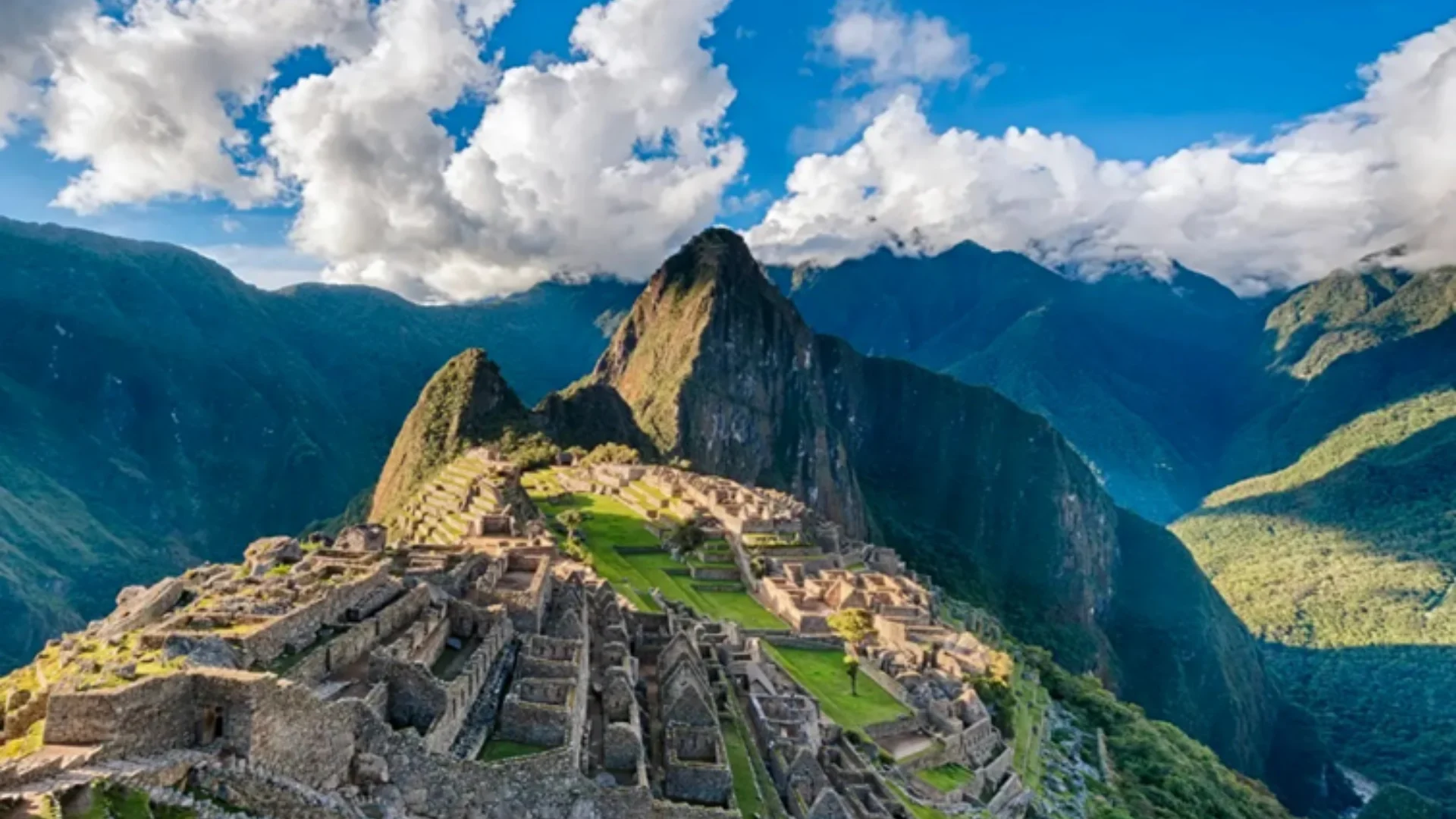
The dry season officially begins and Machu Picchu weather May is noticeably more reliable than anything from the previous four months. Clear mornings are common, the mountain views are sharp, and the site is busy but not yet overwhelmed. An excellent month all around.
Machu Picchu Weather June
Peak season kicks in. Machu Picchu weather June brings some of the clearest and driest conditions of the entire year. Entry tickets and Inca Trail permits sell out quickly, so book at least three to four months in advance if this is your target window.
Machu Picchu Weather July
The most visited month of the year. Machu Picchu weather July delivers the lowest rainfall totals on record alongside the coldest overnight temperatures mornings can drop to 5 degrees Celsius (41°F). The ruins are at full capacity every single day. Book everything as early as possible.
Machu Picchu Weather August
Very similar to July. Machu Picchu weather August remains in peak season territory with excellent conditions and heavy crowds. Afternoons are slightly warmer than in July, and the site is just as busy. If you have the choice between July and August, August tends to be marginally easier to book.
Machu Picchu Weather September
Genuinely excellent and consistently underrated. Machu Picchu weather September sits at the tail end of the dry season with noticeably lighter crowds than July and August. The weather is still very good, the skies are mostly clear, and the site feels calmer. One of the best months to visit for experienced travelers who have done their research.
Machu Picchu Weather October
Shoulder season returns. Machu Picchu weather October brings afternoon showers gradually creeping back, but mornings are still mostly clear and comfortable. Wildflowers start appearing across the hillsides, giving the ruins a different visual quality than the summer months.
Machu Picchu Weather November
The wet season is building again. Machu Picchu weather November sees rainfall mostly confined to afternoons, and crowd levels are among the lowest of the entire year. If you want the ruins relatively to yourself and do not mind a rain jacket, November is worth a second look.
Machu Picchu Weather December
Rainfall increases steadily through the month. Machu Picchu weather December also brings a tourist spike around the Christmas holiday week, which can feel surprising given that it falls in the wet season. Waterproof gear is absolutely essential, and waterproof bag covers for cameras and electronics are not optional.
Climate and Altitude: Why It Feels Different Than You Expect
One of the most consistent surprises travelers report is how different the weather at Machu Picchu feels compared to what the forecast numbers suggest. The altitude changes everything, and it is worth preparing for before you arrive rather than figuring it out when you are already standing on the terraces.
The Machu Picchu climate is classified as subtropical highland. At 2,430 meters, UV radiation is significantly stronger than at sea level, even on overcast or cloudy days. Sunscreen is not optional here it is just as important as your rain jacket, and forgetting it is a mistake that most first-time visitors make exactly once.
Temperature drops also feel sharper and more sudden than they do at lower elevations. When a cloud bank moves in, the temperature can feel like it drops 10 degrees in minutes. Travelers coming from flat states like Florida or Texas often find it genuinely disorienting at first. Layers are not just a packing suggestion they are a practical necessity at this altitude.
Acclimatization: Most of the discomfort people blame on weather at Machu Picchu is actually altitude sickness. Spending at least one full night in Cusco before heading to the ruins gives your body time to adjust. Cusco sits at around 3,400 meters, which is actually higher than Machu Picchu itself, so if you feel reasonably okay in Cusco, you will feel noticeably better once you get to the ruins.
What to Pack for Machu Picchu Weather
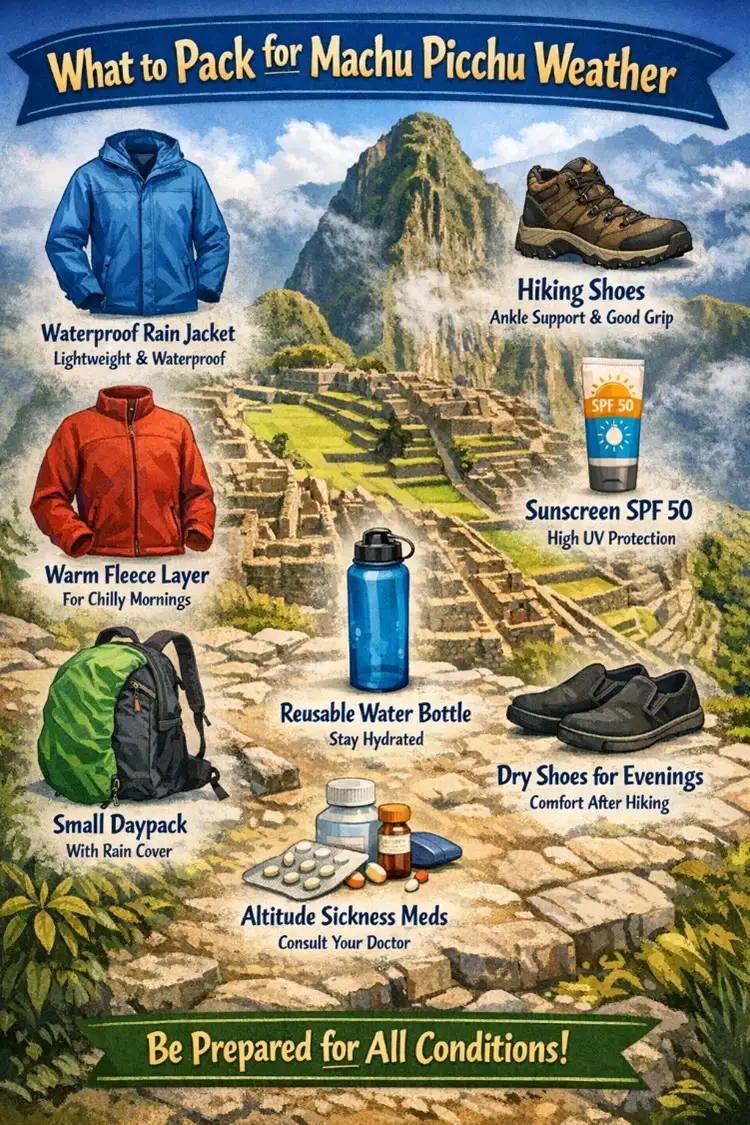
Packing for Machu Picchu Peru weather is one of those things where people either way overpack or dangerously underpack. The key is building around layers and waterproofing, not bulk. Your strategy should account for warm mid-morning temperatures, sudden rain, cool evenings, intense UV exposure, and uneven stone surfaces that are genuinely slippery when wet.
- Lightweight waterproof rain jacket: Non-negotiable in every season and every month.
- Hiking shoes with ankle support: Real grip on wet stone steps matters more than you think it does.
- Warm mid-layer fleece: For early mornings and higher trail sections where temperature drops quickly.
- SPF 50 sunscreen: UV exposure at altitude is dramatically stronger than at sea level.
- Small daypack with a rain cover: Protect your camera, snacks, and spare layer.
- Reusable water bottle: Staying hydrated at altitude is more important than most people realize.
- Dry shoes for evenings: For heading back into Aguas Calientes after a wet trail day.
- Altitude sickness medication: Talk to your doctor before you leave home.
Frequently asked questions about Machu Picchu Weather & Climate: When to Visit for the Best Experience
The typical weather in Machu Picchu during the dry season, which runs from May to October, is generally sunny with little rain, making it the best time to visit. During this season, the skies are usually clear, and the days can be warm, with temperatures ranging approximately from 15°C to 25°C (59°F to 77°F).
If you’re looking for the best chance of clear skies when visiting Machu Picchu, your ideal window is generally during the dry season, which runs from May to October .
The typical climate at Machu Picchu has a subtropical, humid climate with warm days) and cool nights, experiencing two main seasons. The dry season (May to October) features sunny days and cooler nights, while the rainy season (November to April) brings frequent showers and high humidity.
Aguas Calientes sits about 400 meters lower than the ruins. It is noticeably warmer and much more humid. The town is tucked into a narrow river canyon that traps moisture, so it can be raining heavily in town while the ruins above are completely clear. Do not let bad weather in Aguas Calientes convince you to skip the trip up to the site.
The Inca Trail passes through four distinct climate zones over its four-day route. You will walk through humid cloud forest, open highland pampa, and exposed mountain passes above 4,200 meters where temperatures can drop below freezing overnight even during the dry season. Rain at some point during the trek is almost guaranteed regardless of when you go.