
Machu Picchu Entry Rules & Regulations 2026: Complete Visitor Guide
Planning a trip to Machu Picchu used to feel relatively straightforward book a train from Cusco, grab a ticket, show up. That era is over. The 2026 regulations are the most comprehensive overhaul the site has seen in years, and travelers who arrive without understanding them are getting turned away at the gate. This guide covers every current rule so you don’t waste a once-in-a-lifetime trip on a technicality.
From the 10 color-coded visitor circuits and hard daily capacity caps, to the exact documents you need in your hands at the turnstile, everything you need is here including the 7 mistakes that keep tripping people up even after they’ve read the basics.
Why the Rules Changed in 2026
Machu Picchu has been under preservation pressure for decades. As visitor numbers climbed into the millions annually, archaeologists and Peruvian authorities grew increasingly concerned about structural degradation of the stone foundations, erosion of the terraces, and the creeping deterioration of the visitor experience itself. Nothing quite deflates the magic of an ancient wonder like shuffling through it shoulder-to-shoulder in a crowd.
The Ministry of Culture’s response has been a rolling series of reforms and 2026 brings the most structured version yet. Defined pathways, hard daily caps, timed entry windows, and real-time booking controls are now the standard. Peru is openly modeling this on global best practices in heritage tourism. Think of it less as bureaucracy and more as the infrastructure that keeps this Wonder of the World intact for the next five centuries.
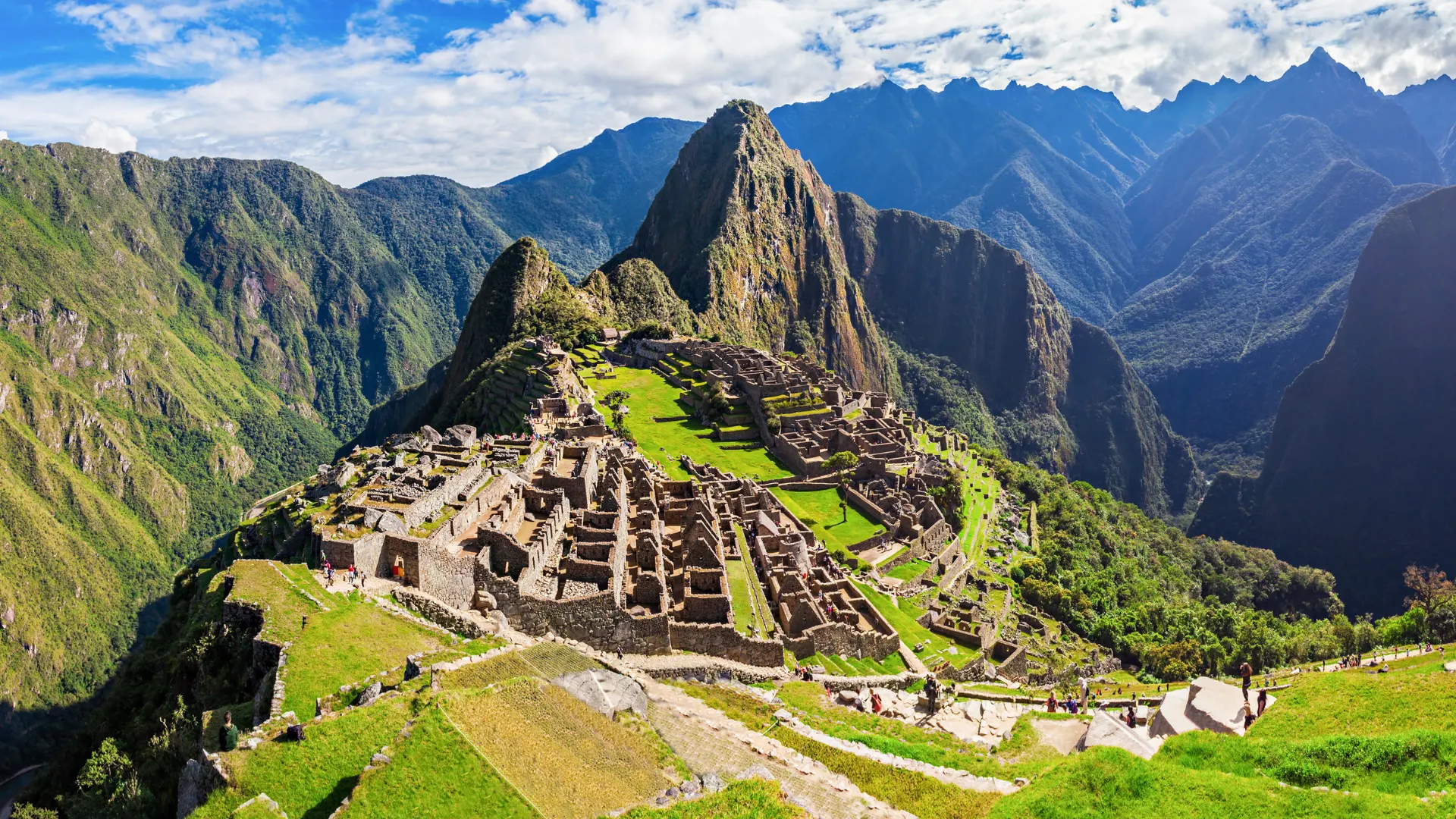
Important: These rules are enforced on-site by rangers operating under Ministerial Resolution No. 070-2017-MC and subsequent 2026 updates. Rangers carry radios and have full authority to remove any visitor immediately, with no ticket refund. Compliance is not optional.
Capacity Limits and Visitor Quotas 2026
The Ministry of Culture divides the year into two seasons, each with different daily capacity ceilings. Understanding these limits is critical because, unlike previous years where last-minute tickets were often available, the 2026 system is built on predictability and scarcity.
Peak Season: June 1 – October 15
During the dry high season, up to 5,600 tickets per day are available across all active circuits. Mountain hiking routes Machu Picchu Mountain and Huchuy Picchu are only accessible during this window. This is the busiest period, and dates sell out the fastest.
Low Season: October 16 – May 31
Capacity drops by roughly 20%, leaving approximately 4,500 tickets per day. Four circuits close entirely, so visitors during this window are limited to just three route options. The site is quieter and often more atmospheric morning mist over the ruins is more common but the reduced choices mean planning matters even more.
Book Early: Peak season dates especially June through August and December through January sell out 60 or more days in advance. Aim to book at least two to three months ahead. Waiting until the week before is a gamble that almost always ends in disappointment.
Machu Picchu Entrance Tickets
There is no on-site box office at the Machu Picchu gate. Every visitor must book in advance no exceptions. The days of showing up and buying a same-day ticket at the entrance are over.
Where to Buy
- Official Ministry of Culture website the safest and most direct option
- Authorized travel agents in Cusco the better choice when bundling with train, bus, or guided tour packages
- Do NOT buy from unofficial resellers counterfeit tickets will not be accepted at the turnstile and you will have no recourse
Pricing (2026)
Standard adult admission starts at approximately US$60, up from the previous US$50. Discounted rates apply for:
- Students valid university or college photo ID required at the turnstile alongside your ticket
- Peruvian nationals reduced domestic rate
- Children under 3 years old free entry
Mountain circuit add-ons (Machu Picchu Mountain, Huchuy Picchu) carry a premium above the base citadel rate. Prices also vary slightly by circuit selection and season.
Inca Trail Trekkers: The Critical 2026 Change
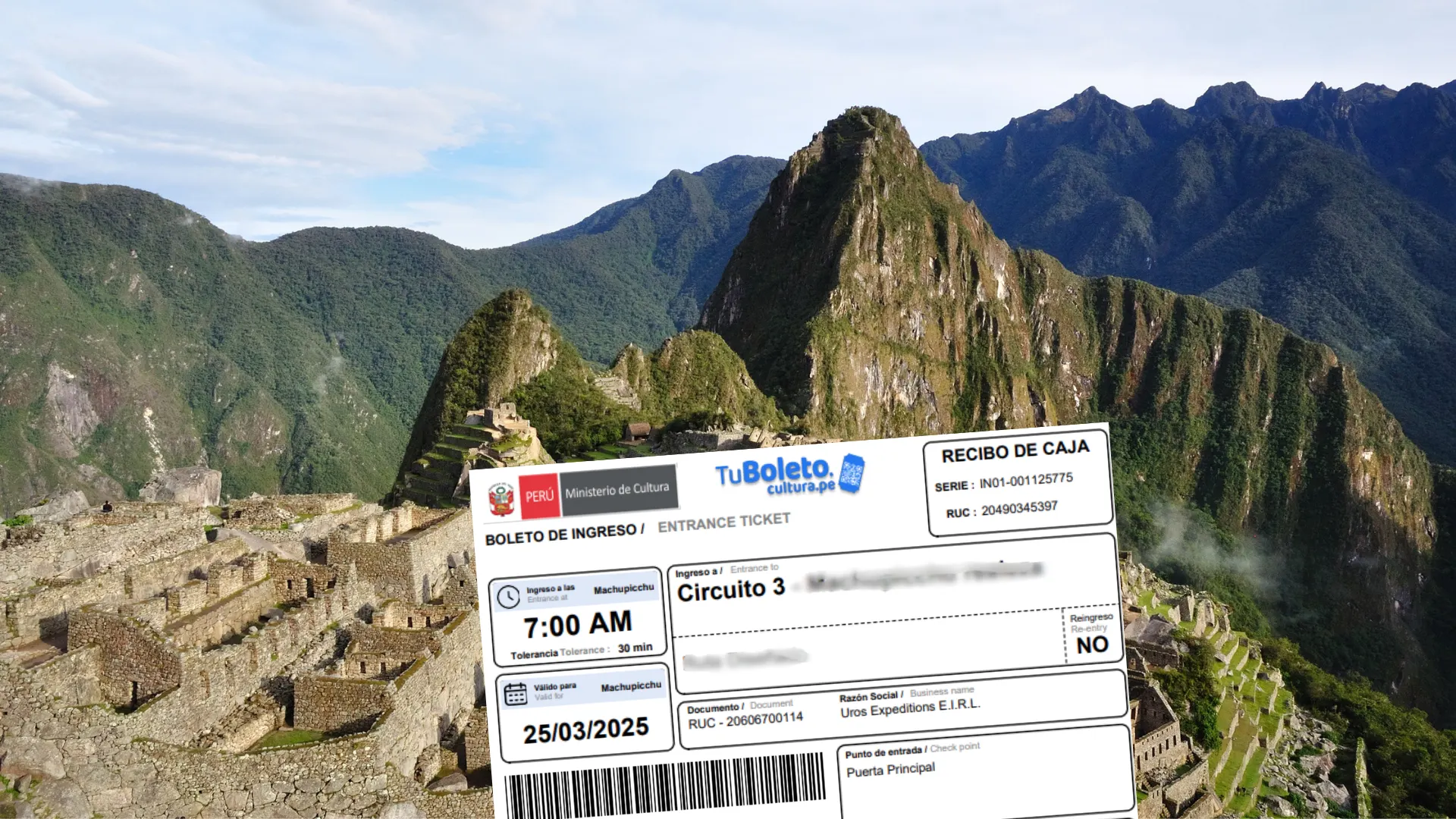
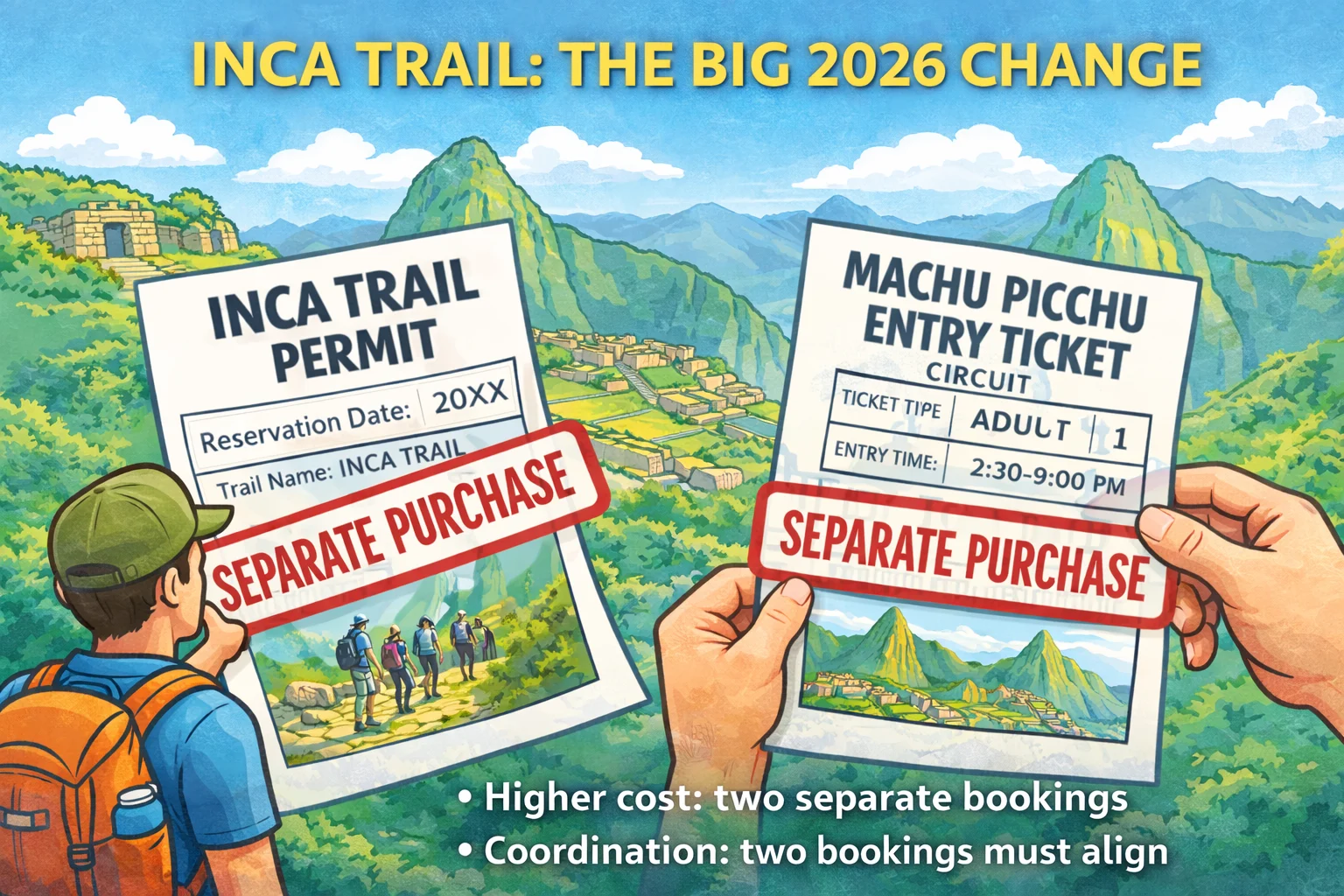
Starting January 1, 2026, the Inca Trail permit no longer includes Machu Picchu citadel entry. These are now two completely separate purchases. Trekkers must secure both an Inca Trail permit and a Machu Picchu ticket for the same date and both are capacity-controlled. Miss one and your multi-day trek ends at the Sun Gate without access to the ruins.
Trekkers must also align their Inca Trail permit arrival with a designated circuit and entry time slot at the citadel. Showing up at the gate after finishing the trail without a scheduled ticket is no longer possible.
Recommendation for Inca Trail Travelers:To avoid coordination issues, it is best to book through an authorized travel agency that can handle both the Inca Trail permit and your Machu Picchu entrance ticket for the same date and time slot. While it is possible to manage this on your own, the risk of missing availability is significantly higher, especially during peak season when permits sell out quickly. For this reason, we recommend Uros Expeditions, an authorized agency with the required permits to operate the Inca Trail and provide a reliable, fully coordinated booking experience.
The 10 Circuits: How Visitor Routes Work
Gone are the days of wandering freely through the citadel. As of 2026, Machu Picchu is divided into 10 color-coded sub-routes organized under three main circuits. When you book, you select a circuit and that assignment is binding for your entire visit. Rangers actively monitor route compliance throughout the day, and straying from your designated path is grounds for immediate removal.
The color-coding (Red, Blue, Yellow) is posted throughout the site via clearly marked signage. Every circuit, regardless of which you choose, passes through iconic landmarks including the Temple of the Sun, the Intihuatana Stone, and the terraced agricultural zones.
| Circuit | Color | Key Highlights | Duration | Season |
|---|---|---|---|---|
| Circuit 1 — Upper Terrace | 🔴 Red | Guardian House, panoramic views, iconic postcard angle | 2–3 hrs | Year-round |
| Circuit 1A — Upper Terrace + Machu Picchu Mountain | 🔴 Red | Lower & upper platform, full mountain summit trek | 4–6 hrs | Peak only |
| Circuit 1 — Sun Gate (Intipunko) | 🔴 Red | Inca Trail arrival viewpoint, forest trail | 3–4 hrs | Year-round |
| Circuit 1 — Inca Bridge | 🔴 Red | Cliff-edge Inca road, cliffside forest walk | 2–3 hrs | Year-round |
| Circuit 2 — Classic Citadel | 🔵 Blue | Main Plaza, Royal Quarters, Temple of the Sun, Intihuatana Stone | 3 hrs | Year-round |
| Circuit 3 + Huchuy Picchu | 🟡 Yellow | Urban sector, spiritual sites, Huchuy Picchu mountain | 4–5 hrs | Peak only |
Circuit 2 is the most popular choice for first-time visitors it covers the iconic ‘postcard’ panorama and the heart of the citadel, including the Main Plaza and Royal Quarters. Circuit 1 routes offer more panoramic viewpoints but skip some of the lower ceremonial zones. The mountain hike circuits (1A and Circuit 3) are for physically prepared visitors only and require a separate ticket add-on.
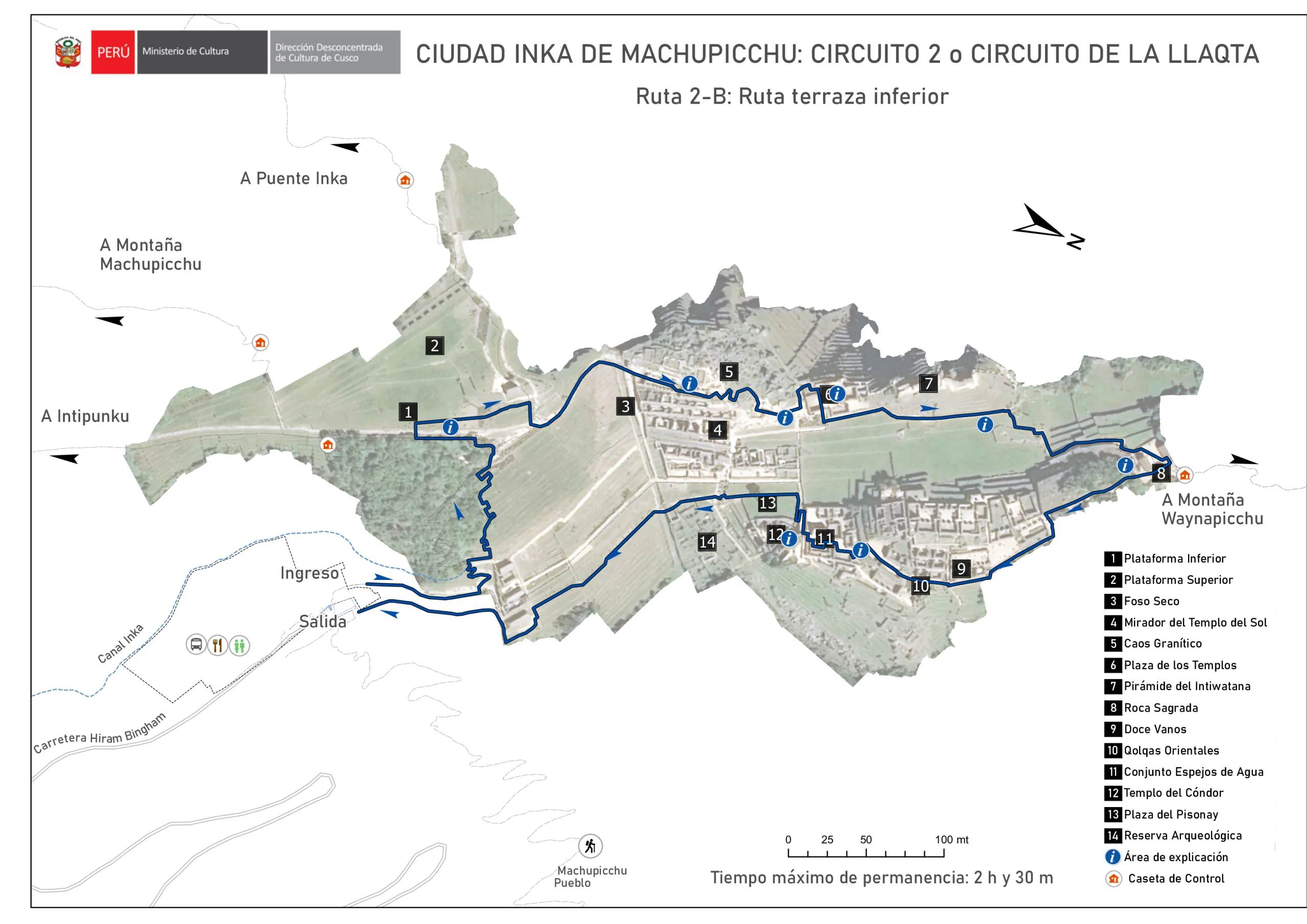
Pro Tip: If you have specific interests or mobility considerations, contact your travel agent at booking to request a preferred route. Once your ticket is issued, the circuit cannot be changed.
Admission Times & Tolerance Time Frame
This is the rule that catches the most visitors off guard: once you pass through the gates, a four-hour clock starts and when it ends, you exit. No extensions, no exceptions, no re-entry on the same ticket.
Daily Entry Shifts
The regulations organize each day into three main entry windows:
- Early morning: 6:00 AM – 9:00 AM
- Late morning: 9:00 AM – 12:00 PM
- Early afternoon: 12:00 PM – 3:00 PM
Within those windows, you select a specific entry hour at the time of ticket purchase. That exact hour is printed on your ticket and enforced at the gate.
How Strict Is the Time Tolerance?
Very strict. Visitors have been denied entry for arriving even 30 minutes past their designated window. The official guidance is to be at the entrance gate at least 15 minutes before your booked time. Factor in the bus ride from Aguas Calientes approximately 30 minutes plus queuing time for the bus itself. Arriving in Aguas Calientes at least one full hour before your entry window is the practical standard that most guides recommend.
No Re-Entry Policy: Once you exit Machu Picchu for any reason including to use the bathroom your visit is over. There are no toilets inside the ruins. The facilities are located at the entrance building, outside the gates. Use them before you enter. If you exit and want to return, you must purchase a new ticket for a completely different time slot.
What to Bring (and What to Leave Behind)
Bag checks happen at the entrance gate before you pass through the turnstile. Rangers remove prohibited items on the spot, and in some cases will deny entry entirely. Pack smart the night before leave anything on the restricted list at your hotel.
Documents You Must Have
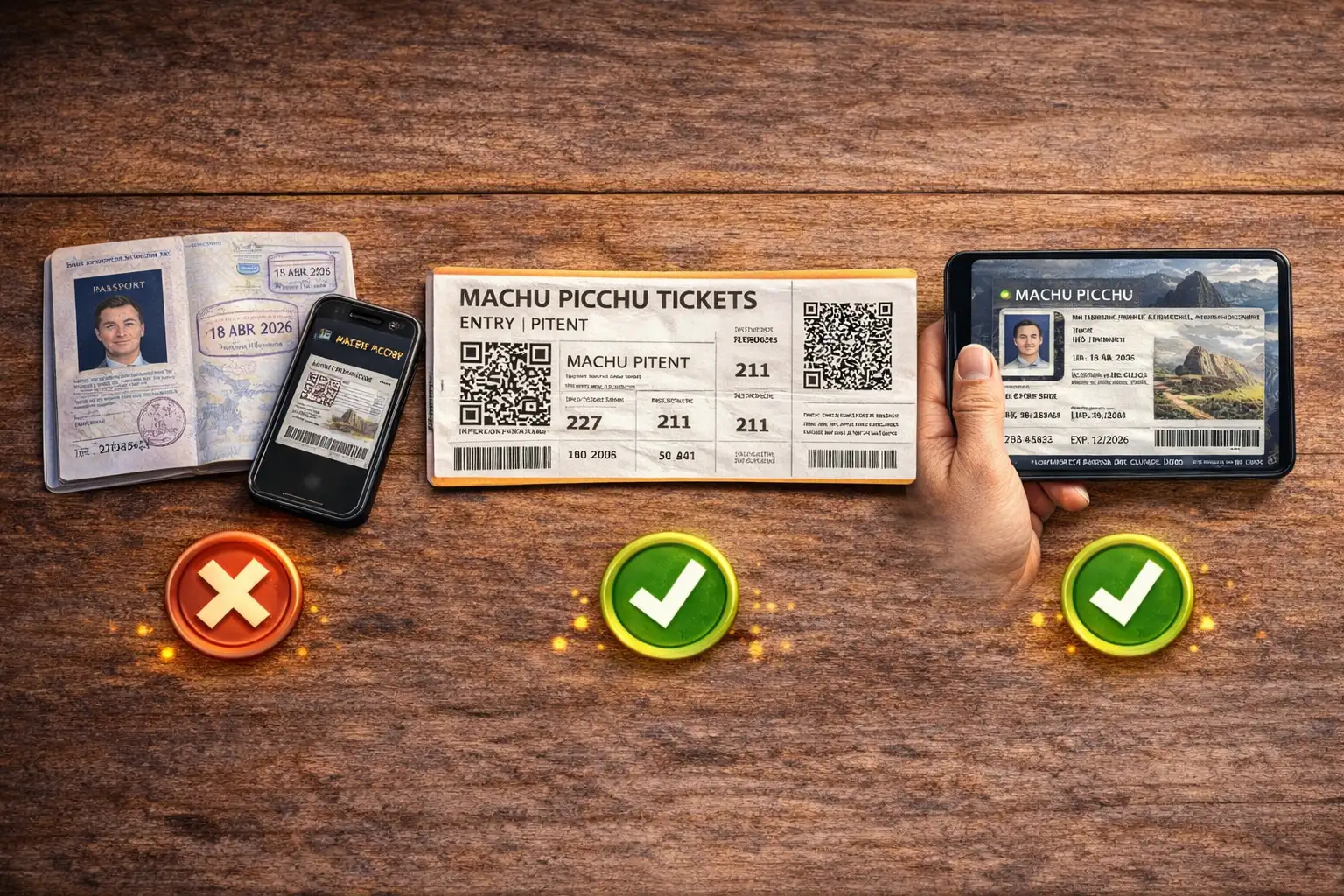
These are non-negotiable. Missing any one of them means no entry, regardless of having a valid ticket.
- Passport: the physical document. Your entry ticket is linked to your passport number and rangers verify it at the turnstile. A phone photo of your passport does not satisfy the requirement.
- Entry ticket: printed on paper or pulled up digitally on your phone. Both are accepted.
- Valid university: required only if you purchased the discounted student ticket. Your ticket alone is not sufficient; rangers verify enrollment.
Allowed Items
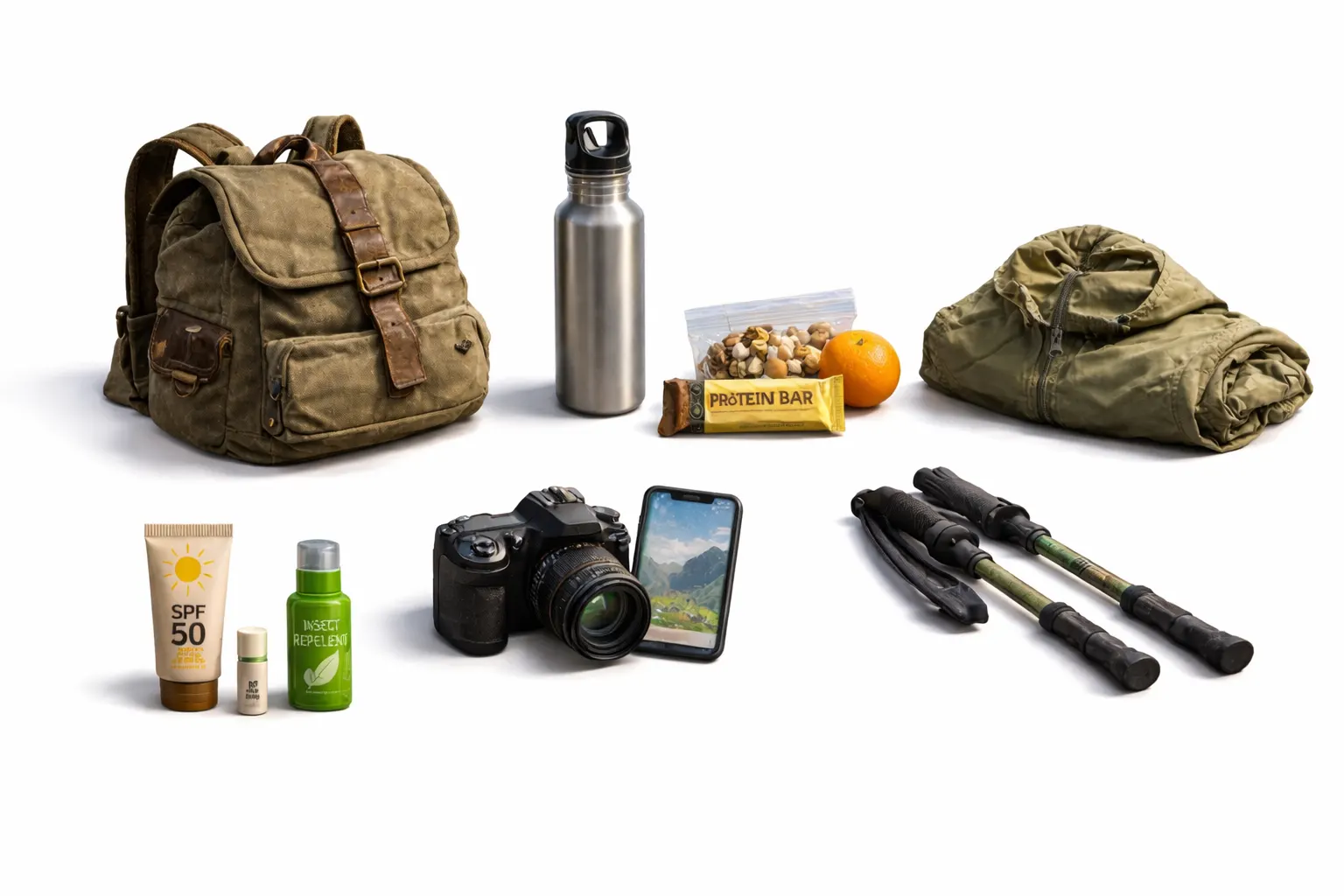
Keep it light. The terrain is uneven and you’ll be walking for up to four hours. Here’s what you can bring through the gate:
- Small daypack within 40 x 35 x 20 cm (15.7 x 13.7 x 7.9 inches)
- Water bottle: water is the exception to the no-drinks rule
- Light snacks in limited quantities, check current gate enforcement before arrival, as this can vary by season
- Camera, smartphone, or point-and-shoot device (handheld only, no tripod or stabilizer)
- Rain poncho or light jacket, not an umbrella
- Trekking poles with rubber tips only, metal tips must be swapped or left at luggage storage
- Basic personal items: sunscreen (lotion only, not spray), lip balm, insect repellent
Prohibited Items
The following items will be removed at the gate or will result in denied entry. Leave them at your hotel in Aguas Calientes.
| 🎒 Oversized bags
Backpacks/bags over 40×35×20 cm. Paid luggage storage at the entrance (~S/3 per day). |
🍱 Food & full meals
Rangers check bags at the gate and remove food. Eat in Aguas Calientes before boarding the bus. |
| 🍺 Alcohol
Explicitly prohibited under Article 19.4 of the Ministerial Resolution governing the site. |
☂️ Umbrellas & parasols
Bring a lightweight rain poncho weather is unpredictable year-round. |
| 📷 Tripods & selfie sticks
All camera stabilizers and extension poles are prohibited. Handheld photography is perfectly fine. |
🥾 Metal-tipped trekking poles
Rubber tips are allowed (including for elderly visitors or those with mobility needs). Metal tips are not. |
| 🚁 Drones & flying devices
Remote-controlled aerial devices of any kind are strictly prohibited throughout the sanctuary. |
🎨 Aerosols & spray paint
No aerosols of any kind. Use sunscreen in lotion form; spray sunscreen will be confiscated at the gate. |
Visitor Obligations at Machu Picchu
Every person who enters Machu Picchu carries specific legal obligations under Peruvian cultural heritage law. These are conditions of entry and violating them results in removal or denial of future access.
Route Compliance
- Follow your assigned circuit at all times without deviating to other paths or restricted zones
- Respect color-coded signage throughout the site
- Do not enter closed zones, construction areas, or any section not covered by your ticket type
Site Preservation
- Do not climb, sit on, lean against, or touch Inca walls, terraces, or structures
- Do not scratch, carve, mark, or otherwise damage stonework
- Do not remove plants, stones, animals, or any cultural element from the site
- Stay on marked trails at all times
- Do not feed domestic or wild animals
- Carry all trash out with you, no littering anywhere in the sanctuary
Behavior Rules Inside the Site
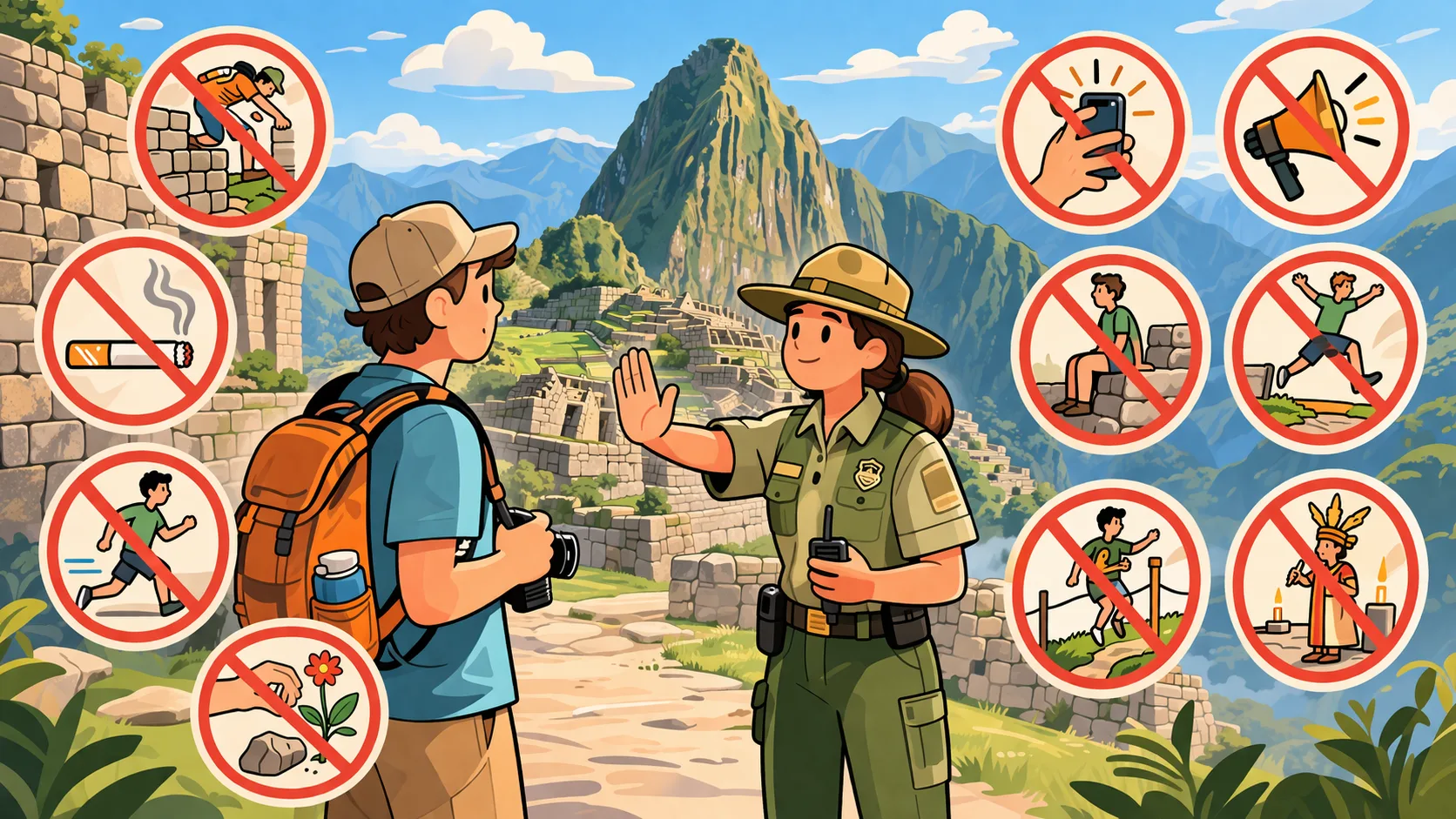
Beyond what you carry, the regulations are equally detailed about how you conduct yourself once inside the ruins. Rangers patrol all circuits with radios and have full authority to escort anyone out and removals happen regularly. The following behaviors are strictly prohibited:
- Climbing, sitting on, or leaning against Inca walls, terraces, or structures. This is the single most common ranger interaction the walls look solid but are ancient and fragile in ways not visible from the surface.
- Smoking, vaping, or lighting any kind of fire inside the sanctuary
- Shouting, clapping, whistling, or creating excessive noise that disturbs other visitors
- Running, jumping, hopping, or pushing in access areas or along the paths
- Undressing, wearing costumes, lying on the ground, or posing in ways deemed inappropriate by site rangers
- Removing plants, stones, animals, or any cultural element from the site
- Leaving marked trails or entering restricted areas not covered by your circuit
- Conducting ceremonies, rituals, events, or commercial photo sessions without prior written authorization from the Ministry of Culture
What is Permitted at Machu Picchu?
The restrictions exist to protect the site, not to make the visit joyless. Here’s what a well-planned visit actually looks like and it’s genuinely extraordinary.
Personal Photography
Handheld photography is fully permitted throughout your assigned circuit. Smartphones, point-and-shoot cameras, and DSLRs are all fine. The restriction is specifically on tripods, selfie sticks, and camera stabilizers not on photography itself. You can take as many photos as you like, as long as you’re not climbing walls or leaning on structures to get the shot.
Guided Exploration
Your licensed guide will take you through every point of interest on your assigned circuit. The guided format maximum 10 people per group creates a more focused, intimate experience than the old free-roaming model. Guides are deeply knowledgeable about Inca history, stone construction techniques, agricultural systems, and the astronomical alignments built into the site.
Mountain Hikes (Peak Season Only)
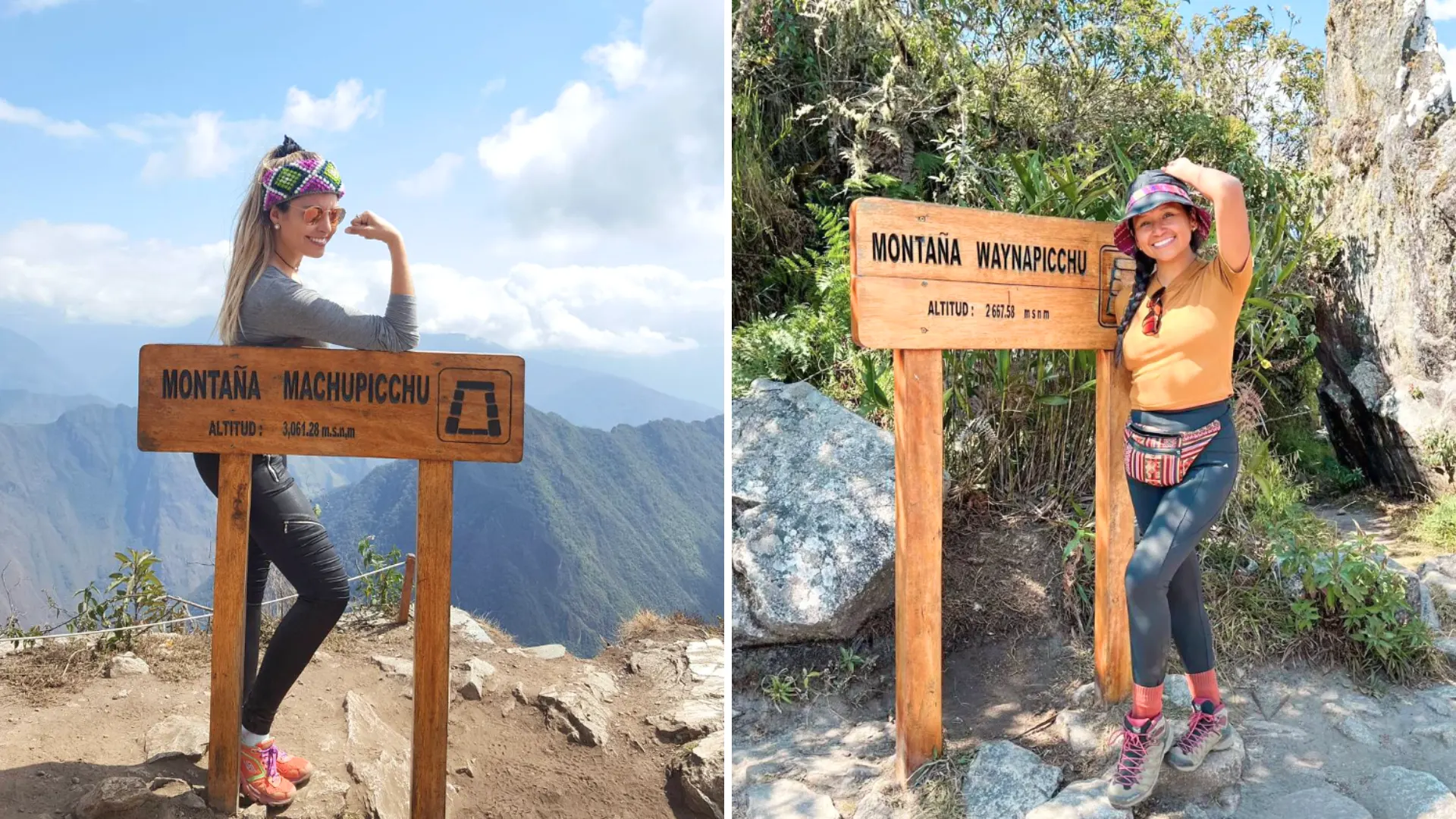
Visitors who book Circuit 1A or Circuit 3 routes during peak season can include a hike to Machu Picchu Mountain or Huchuy Picchu. These are separate ticket add-ons with their own time slots and visitor limits. The views from both summits are genuinely worth the additional effort Machu Picchu Mountain in particular offers a perspective of the entire citadel and the surrounding canyon that the standard circuits cannot replicate.
Authorized Ceremonies and Commercial Sessions
Spiritual ceremonies, rituals, and commercial photography or video productions are permitted, but only with prior written authorization from the Ministry of Culture. The authorization process requires advance planning and documentation. Attempting an unauthorized ceremony on-site results in immediate removal.
Penalties for Non-Compliance
The consequence framework at Machu Picchu is consistently applied. There is no on-site appeals process, and tour groups are held collectively responsible for the conduct of their participants. Here is what the regulations specify:
| Violation | Consequence |
|---|---|
| Climbing or leaning on Inca structures | Immediate removal: no refund |
| Straying from assigned circuit | Warning, then forced removal if ignored |
| Bringing prohibited items (alcohol, oversized bag) | Item confiscated or entry denied |
| Smoking or vaping inside the citadel | Immediate removal: no refund |
| Arriving outside your entry window | Entry denied, ticket forfeited |
| Conducting unauthorized ceremonies | Removal and potential legal proceedings |
| Ignoring ranger instructions | Escalating warnings, then escorted exit |
| Damaging stonework or removing cultural elements | Removal + legal action under heritage law |
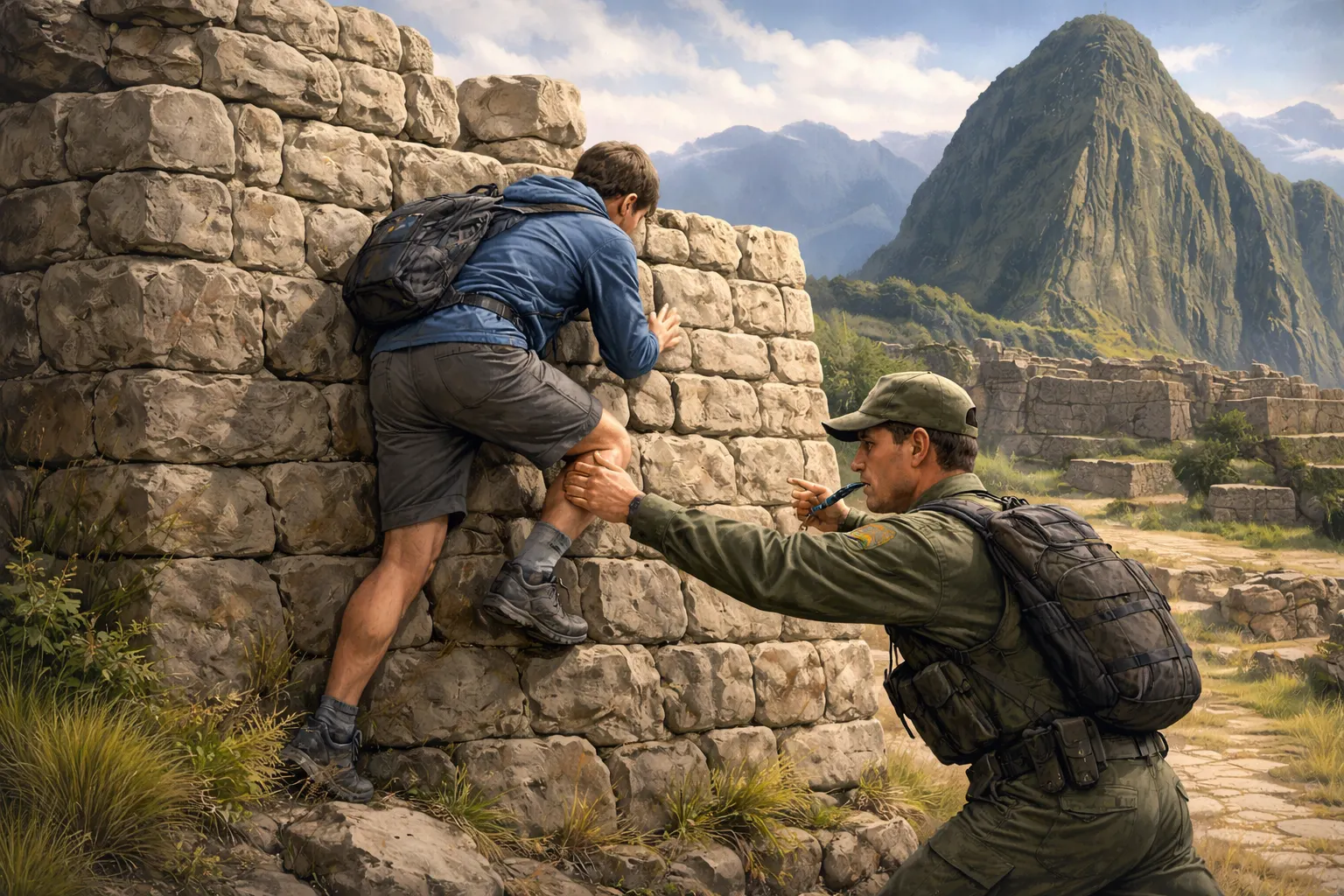
The bottom line: if you are removed from the site, your ticket is forfeited with no refund. Serious violations damaging structures, removing cultural artifacts, conducting unauthorized activities can result in legal action under Peruvian cultural heritage law, which carries penalties well beyond a lost entry fee.
The 7 Mistakes Visitors Actually Make
Based on ranger reports and visitor accounts from the 2025 and early 2026 seasons, these are the errors that keep derailing trips. Every single one of them is avoidable with about five minutes of preparation the night before.
| The Mistake | What Happens & How to Avoid It | |
|---|---|---|
| 1 | No physical passport | Your ticket is tied to your passport number. Rangers check the physical document at the turnstile a phone photo won’t cut it. No passport, no entry. |
| 2 | Packing a full lunch | Bag checks happen at the gate. Rangers remove sandwiches, crackers, and fruit bars. Eat a proper meal in Aguas Calientes before boarding the bus, and eat again after you return. |
| 3 | Leaning on walls for photos | The single most common ranger interaction. The walls look solid they are ancient and fragile in ways invisible from the outside. Continue after one warning and you will be escorted out. |
| 4 | Metal-tipped trekking poles | Inca Trail gear often has metal tips. Either buy rubber tip covers in Aguas Calientes outdoor shops or check poles in paid luggage storage at the entrance building. |
| 5 | Ignoring circuit assignment | Many visitors don’t realize their ticket specifies a particular route. Rangers verify it and will redirect or remove you if you are on the wrong path. |
| 6 | Leaving to use the bathroom | No toilets exist inside the ruins. Exiting to use the facilities at the entrance building ends your visit under the strict no re-entry rule. Use the bathroom before you enter. |
| 7 | Arriving late for the time slot | Entry windows are strictly enforced. Visitors have been denied entry for arriving even 30 minutes past their window. The bus from Aguas Calientes takes ~30 min plan accordingly. |
Inca Trail: The Big 2026 Change
For years, completing the Inca Trail meant you arrived at the Sun Gate and walked directly into Machu Picchu as part of your trek package. That changed on January 1, 2026. The Inca Trail permit and the Machu Picchu entrance ticket are now two completely separate purchases and both are capacity-controlled.
This creates two immediate complications for trekkers. First, the total cost of the experience increases because you are paying for two separate reservations. Second, the logistics become significantly more complex: you need to secure both a permit slot on the trail and a citadel entry ticket for the same arrival date, aligned to the same circuit and entry time window. If either sells out, your plans fall apart.
Critical Planning Note for Inca Trail Trekkers: Book through an authorized agency that will synchronize both permits. Do not attempt to manage this independently unless you are extremely comfortable with logistics, have booked at least three months in advance, and have a backup plan if your preferred date sells out on either end.
Frequently asked questions about Machu Picchu Entry Rules & Regulations 2026: Complete Visitor Guide
For 2026, Machu Picchu enforces strict entry rules requiring pre-booked tickets for specific times and one of three designated circuits (10 sub-routes). Key changes include mandatory identification (passport) matching tickets, a 30-minute grace period, a 40x35x20 cm backpack limit, and a potential separate entry fee for the sanctuary. Tickets are non-transferable and non-refundable.
If you’re looking to purchase authorized Machu Picchu tickets for next year, the primary official platform is the Peruvian State Platform for the Management of Visits to Cultural Centers, developed by the Ministry of Culture. You can find it at tuboleto.cultura.pe.
When planning your visit to Machu Picchu in 2026, the question of whether a certified guide is required can be a bit nuanced, as there’s some variation in how the official regulations are interpreted and enforced .
Yes, for visitors planning a trip to Machu Picchu in 2026, there are indeed different entry circuits and routes you’ll need to choose from! The system was updated in June 2024, leading to a new structure for 2026 .