Textiles from Chinchero: Threads that tell stories
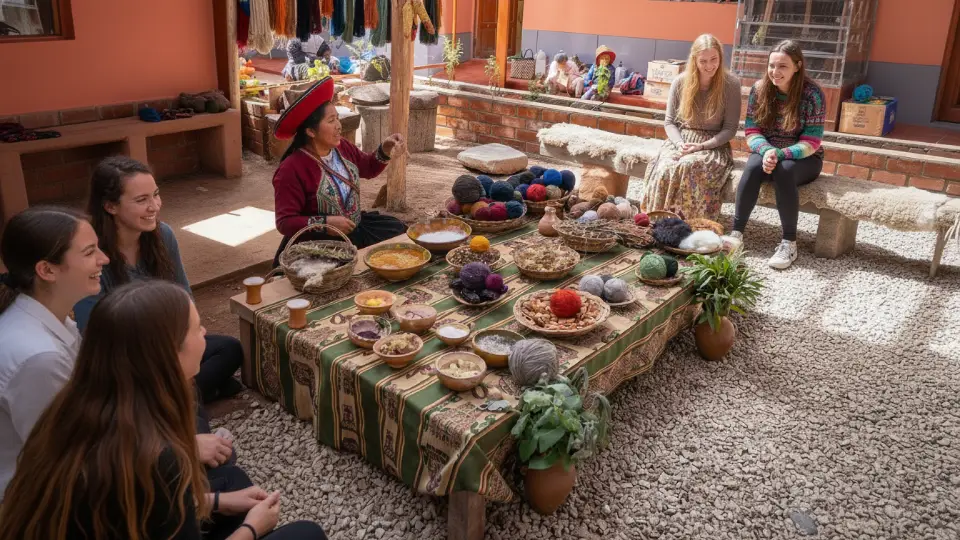
Chinchero textiles are a living art form that continues to flourish in the hands of young girls who learn with pride from their mothers. This ancestral knowledge has stood the test of time, spanning from the Inca era to the modern world. Imagine uncovering the secrets of natural dyeing while sharing laughs and stories with the locals. If you want to truly grasp the essence of Cusco, experiencing these creations will bring you face-to-face with the roots of a great empire.
Chinchero Textiles: Secret Techniques of the Master Craftswomen
The Chinchero textiles showcase handwoven threads that represent the tireless effort of many generations, where women transform raw wool into beautiful pieces full of meaning. Discover Andean art at its finest through this blog; learn about its Inca roots and explore the workshops where weavers keep their community’s traditions alive.
What do Chinchero textiles represent?
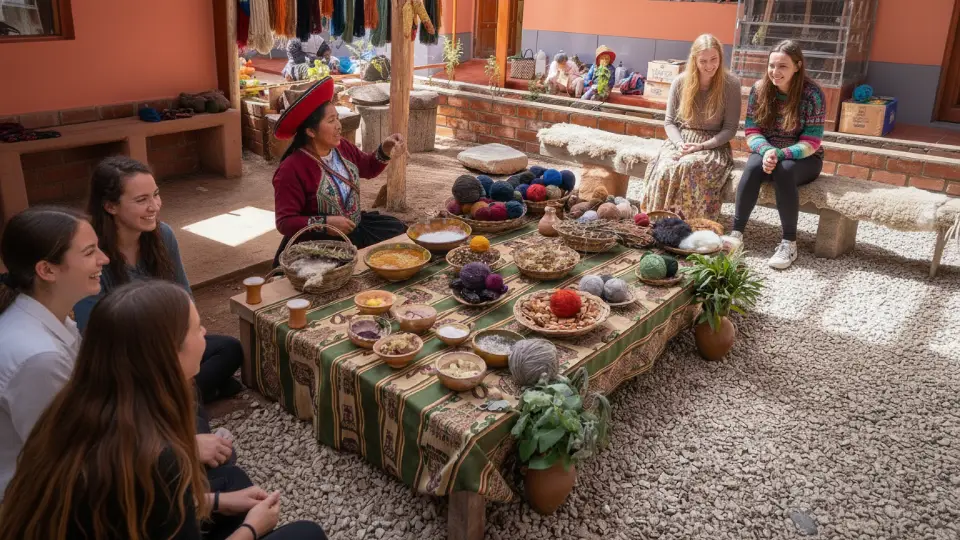
Chinchero weavings function as a library you can touch. Instead of using paper and pencil, the weavers use alpaca or sheep fibers to record their history. Every pattern and color you see in these textiles holds secrets about their families and the way they understand the world. That’s why, when you hold one of these pieces, you’re holding centuries of knowledge passed down from generation to generation through skilled hands.
Where is Chinchero located?
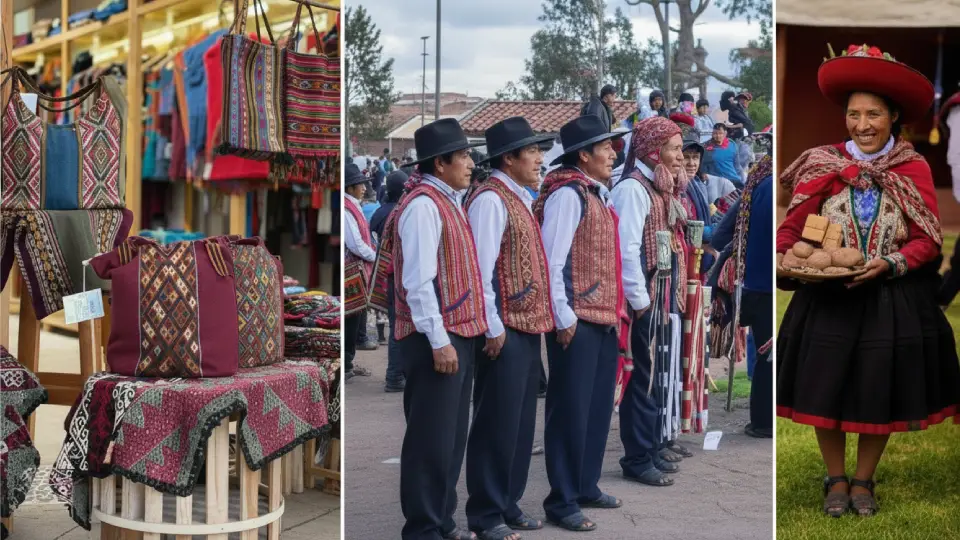
You reach Chinchero after traveling about 28 kilometers from the city of Cusco toward the Sacred Valley. The town sits at 3,762 meters above sea level and offers stunning views of the Salkantay and Verónica snow-capped peaks. In addition, the Huaypo and Piuray lagoons surround the landscape, giving it a peaceful and unique atmosphere. Many call it the “Rainbow City” because of the vibrant colors that often decorate its sky.
What characterizes Chinchero textiles?
This place stands out because its people have chosen to preserve their traditions over the years. As you walk along its cobblestone streets, you’ll notice families dedicating their time to spinning and dyeing wool using natural pigments. Thanks to this commitment, Chinchero has become a main gathering point for those seeking to understand the true origins of Andean garments.
Important fact…
Chinchero preserves weaving techniques that date back directly to the time of the Inca Empire. That’s more than 2,000 years of uninterrupted history.
How to get to the textile centers in Chinchero?
Getting to this town is very easy, as the roads are in good condition and safe. Here are the best options:
- From Cusco: The trip takes about 45 minutes. You can catch a minivan on Pavitos Street or look for buses departing from Grau Avenue. The fare usually costs less than 5 soles, and vehicles leave as soon as they are full.
- From Urubamba: If you’re already in the Sacred Valley, the uphill journey takes about 35 minutes by bus and costs around 3 soles per person.
- Full route: Most travelers visit Chinchero early in the morning and then continue on to Maras, Moray, Ollantaytambo, and Pisac.
History of Chinchero textiles: from the Tahuantinsuyo to the present day
Since the time of the Tahuantinsuyo, the inhabitants of this region mastered the art of interweaving threads. This knowledge was passed from mothers to daughters through daily practice and direct observation at home. Despite the changes of the modern world, the community chose to firmly protect its ancestral methods.
Pre-Hispanic origins of Chinchero textiles
To understand Chinchero textiles, we need to look back many centuries. Textile art in the Andes has roots that go back more than two thousand years. Cultures such as the Paracas and the Wari had already mastered spinning long before the Incas. However, it was the Inca Empire that brought this art to its highest level of refinement.
The Incas and Chinchero textiles
During the imperial era, clothing was not just an everyday item. Textiles were as valuable as gold or corn because they showed who you were and your place in society. There were specialized groups such as the chosen women (Acllas), who devoted their lives to creating exceptionally fine fabrics for the nobility and sacred ceremonies. At that time, gifting a woven garment was the highest way to show respect and seal alliances.
Chinchero and its place in the empire
Chinchero was a resting place for the Inca Túpac Yupanqui, which gave it a privileged position. Its inhabitants perfected remarkable techniques such as double sided weaving. This method allows for the creation of a textile that looks identical on both sides, with patterns that appear mirrored. It is one of the most difficult skills to learn, and it is still practiced by families in the town today.
The arrival of new materials in Chinchero
With the arrival of the Spanish in the 16th century, Andean textiles underwent a profound transformation but never disappeared. The conquistadors introduced vertical European looms and new materials such as sheep wool, which was quickly integrated into the fibers used by local weavers. The “obrajes” also emerged textile workshops that operated under extremely harsh conditions to supply the colonial market.
The revival of Chinchero’s textile tradition
In the mid-20th century, the arrival of industrial fabrics and chemical dyes put this knowledge at risk. Many families began to abandon the backstrap loom due to the speed of machines. Fortunately, the communities organized to reclaim their roots.

Origin of the textile centers in Chinchero
As traditional weaving techniques faced the risk of disappearing, modern textile centers were created. In these spaces, weavers come together to teach younger generations and demonstrate their natural processes to travelers visiting the Sacred Valley.
Extra fact…
For the Incas, weaving was a bridge of communication. It was used to give thanks to the gods and to maintain balance between the ruler and the people. Today, you can feel that same connection when you see how raw wool is transformed into a work of art.

Ancient techniques and secrets of dyeing textiles in Chinchero
Seeing how a textile is created in Chinchero is something that changes your perspective. It’s not a quick demonstration for tourists, but a real process that takes weeks or even months of effort. Here’s a step by step look at how it’s done:
The process of making Chinchero textiles
Shearing and fiber selection
Everything begins with the shearing of llamas, alpacas, and sheep during shearing season. The fibers are carefully selected based on quality, thickness, and softness. Alpaca—especially the Suri type is the most prized fiber for its sheen and fineness.
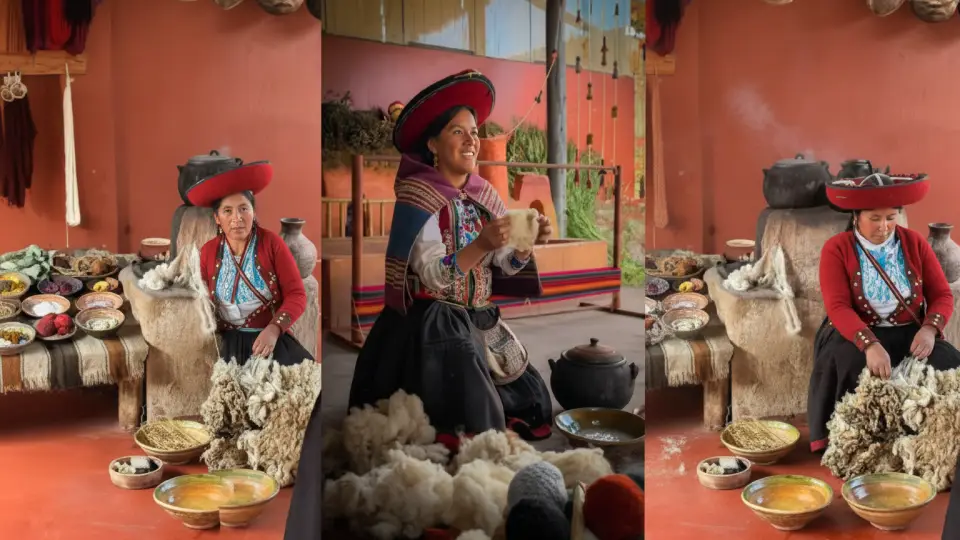
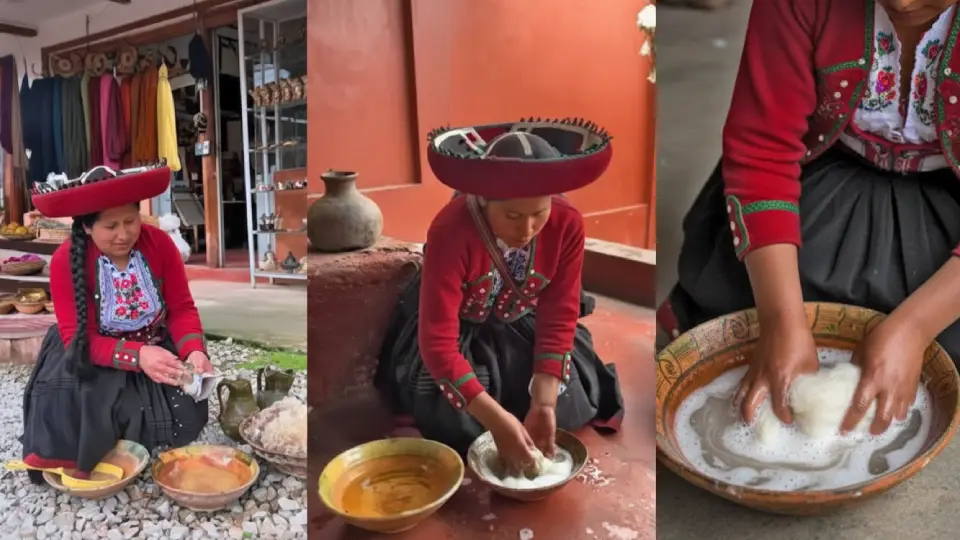
Traditional washing with Saqta
Once the material is ready, the first step is cleaning it. What’s remarkable is that they don’t use store-bought soap, but a root called Saqta. It’s grated into warm water until it produces a rich foam that leaves the wool clean, white, and incredibly soft. It’s an amazing natural detergent you have to see for yourself.
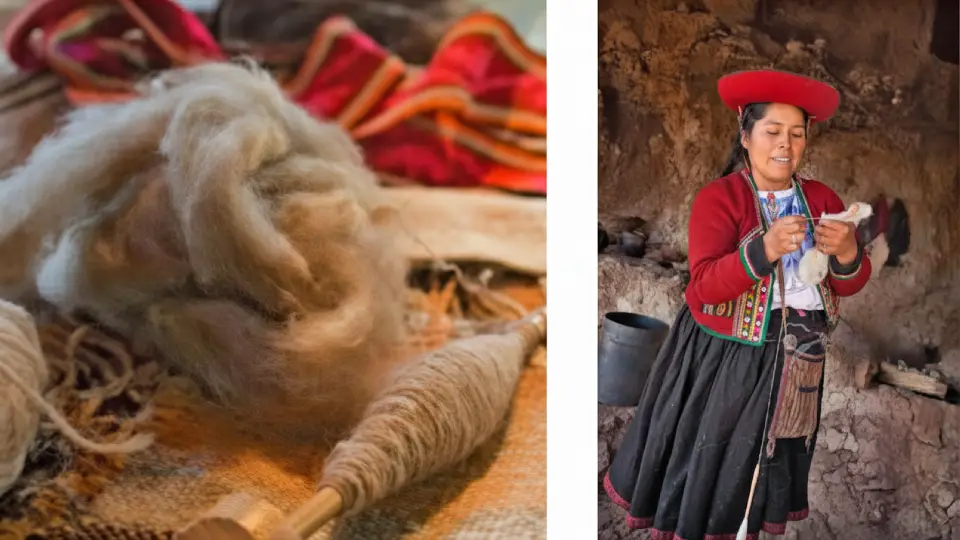
Drying and hand-spinning with a pushka
After the wool is clean and dry, it’s time for the pushka. This small wooden tool is skillfully spun by women as they walk or chat. Using their fingers, they control the thickness of the thread to make it just right. It’s a manual technique that no machine has been able to surpass.
Dyeing with natural dyes
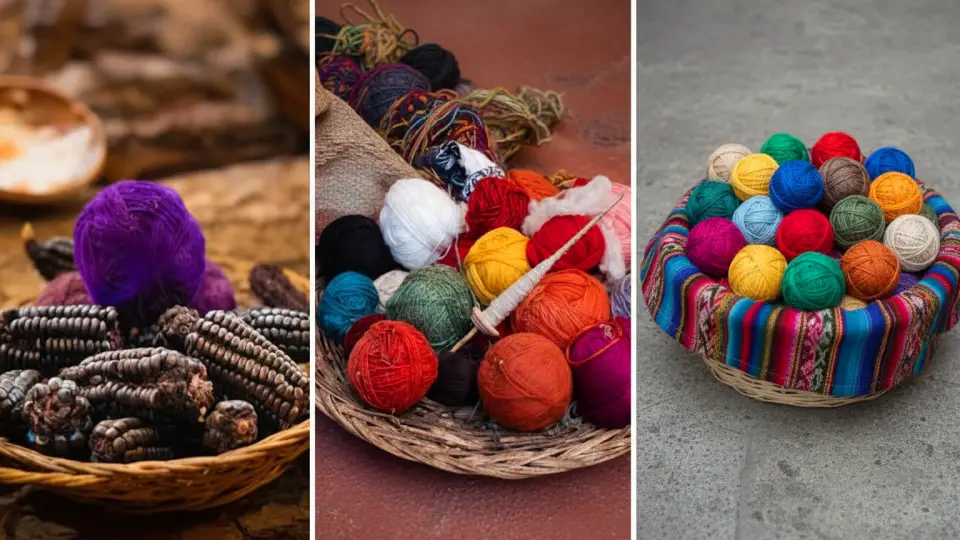
This is often the most fascinating part. To color the threads, they use plants, minerals, and even small insects like cochineal. Everything is boiled in clay pots, and special minerals are added to help the dye bind permanently. That’s why the colors in Chinchero textiles are so rich, natural, and long-lasting without fading.
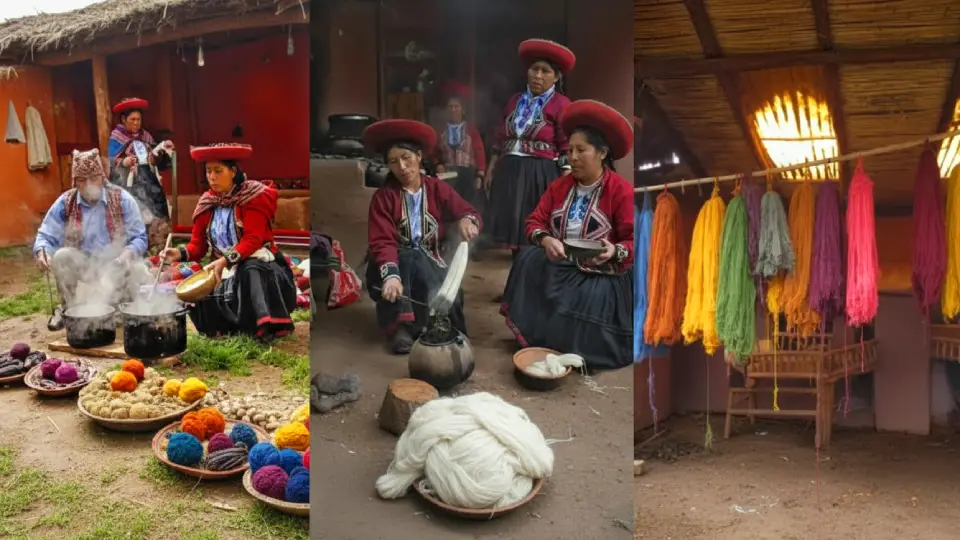
Twisting and forming yarn balls
The dyed threads are twisted to increase their strength and then wound into balls of different colors, forming the weaver’s palette. Sometimes, threads are combined in multiple layers to achieve more complex color effects.
The art of weaving with the body
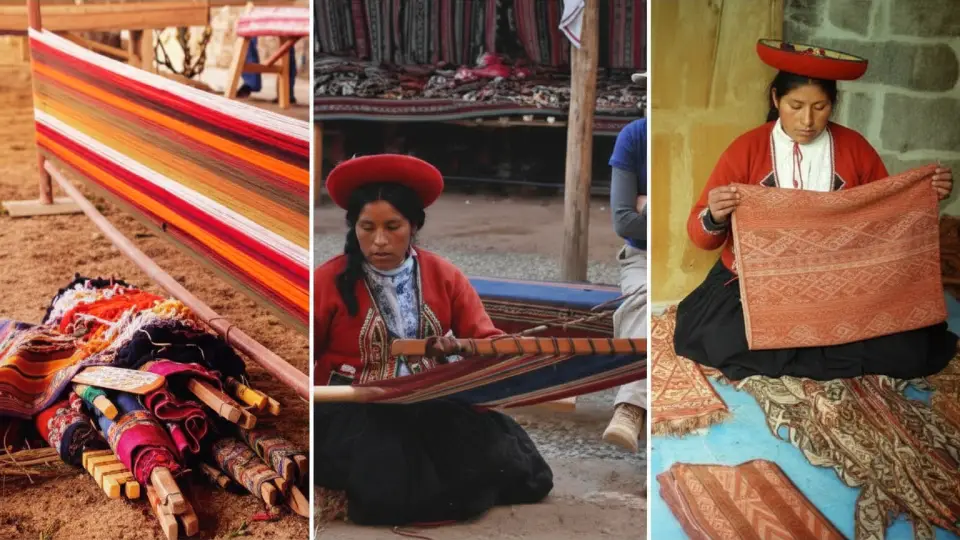
After preparing the colored yarn, the women set up the backstrap loom (awana). One end is tied to a post and the other around their waist. They use their own body weight to keep the threads taut while sitting on the ground. It’s work that requires strength and intense concentration to ensure the patterns come out perfectly.
Creating the designs (pallay)
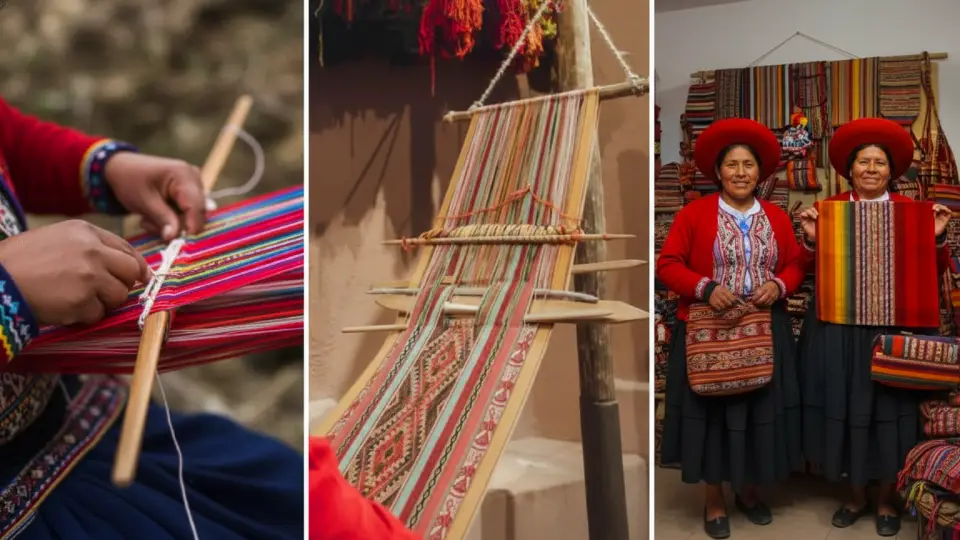
Little by little, the threads are interwoven to form figures representing flowers, animals, or stars. These designs tell stories about the community and their families. A single textile can take weeks of daily work, progressing centimeter by centimeter with remarkable patience.
What are “pallay” and what do they tell us?
Pallay are the patterns you see in the textiles. They’re not there by chance they function like a code or a language without words. Each figure reveals who the weaver is, which family she belongs to, and how her community lives. For them, a textile is like an open book that preserves stories of the mountains and the countryside.
Main designs in Chinchero textiles
These patterns are like a personal signature. Even if you see similar symbols in other towns, each family gives them its own unique style.
| Symbol | Local name | Meaning |
| Flower | T’ika | Celebrates life and the fertility of the Andean fields when everything blooms. |
| River | Mayo Q’enqo | Zigzag lines that represent water flowing powerfully down the mountains. |
| Medicinal plants | Chilli Chili | Pays tribute to the healing plants that care for families in the community. |
| Andean cross | Chakana | The main symbol that connects the sky, the earth, and the spiritual world. |
How to read a Chinchero textile
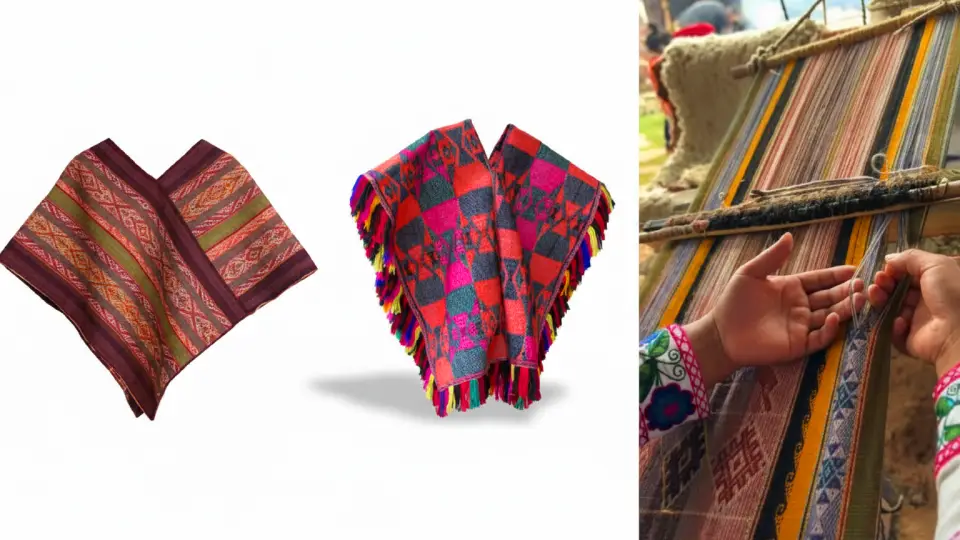
For the artisans, these textiles say far more than meets the eye. By looking closely at the threads, you can tell whether someone is single, which community they come from, or what animals live near their home, such as the condor or the puma. By wearing these garments, they carry their identity and their connection to nature.
Did you know…
Don’t just stand back and watch. When you visit the workshops, take part! The weavers will invite you to touch the wool or even sit at the loom for a moment. It’s the best way to understand why these pieces are so special and valuable.
Chinchero textiles and the secrets of color
Chinchero is one of the few places in the world where artisans can achieve almost every color imaginable using only natural elements. We’re talking about rich, vibrant tones that last for years without fading. To create this magic, weavers gather plants, insects, and minerals from the surrounding hills.
Where do the main colors come from?
Cochineal (Red)
This is the most famous technique. They use a small insect that lives on prickly pear cacti. When crushed, it produces an intense red that represents life. What’s incredible is that this single insect can yield up to twenty different shades, including pinks and purples.
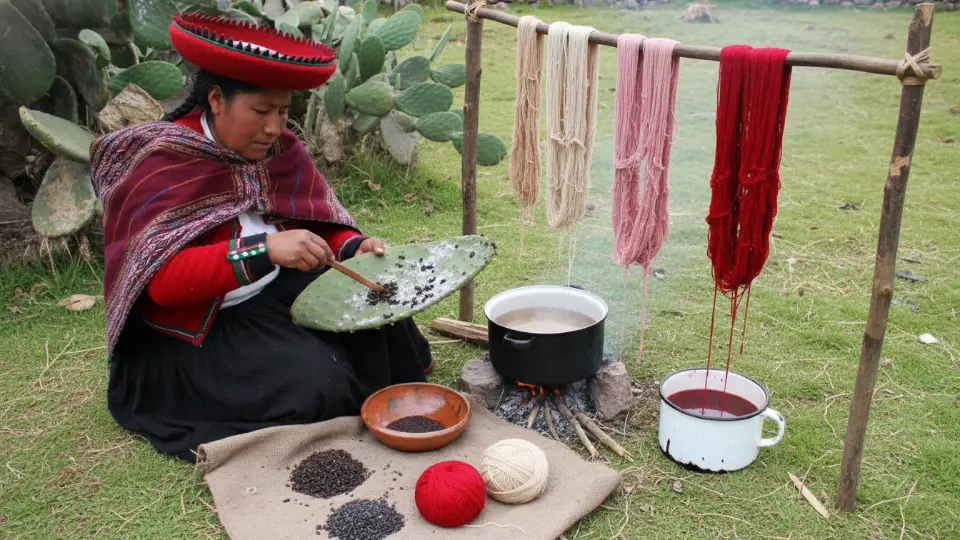
Kimsak’uchu (Blue)
Deep blue is one of the hardest colors to achieve. Weavers use plants like Kimsak’uchu to capture the color of the Andean sky in their textiles. This deep blue nearly disappeared in the 20th century, but today families are proudly bringing it back.
Retama (Yellow)
For this color, they use the retama flower or Qolle. Depending on the preparation, it can produce anything from a soft yellow to a golden ochre that symbolizes sunlight.
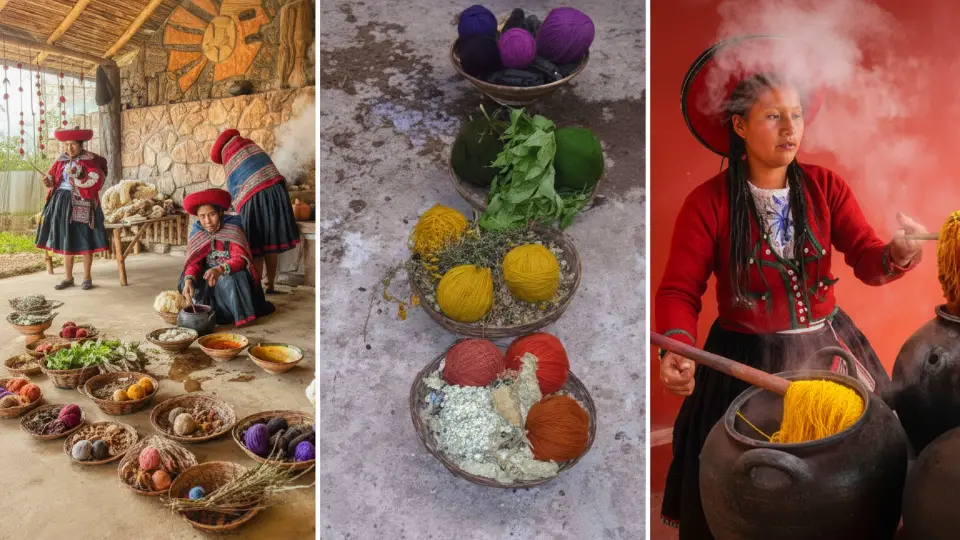
Molle (Purple/Violet)
The molle tree and purple corn are used to dye shades ranging from purple to earthy tones. In the past, these darker colors were used to distinguish Inca nobility.
Kinsa kucho (Green)
Green represents the surrounding nature. It’s extracted from native plants, or sometimes created by mixing blue and yellow to achieve the exact shade of the fields.
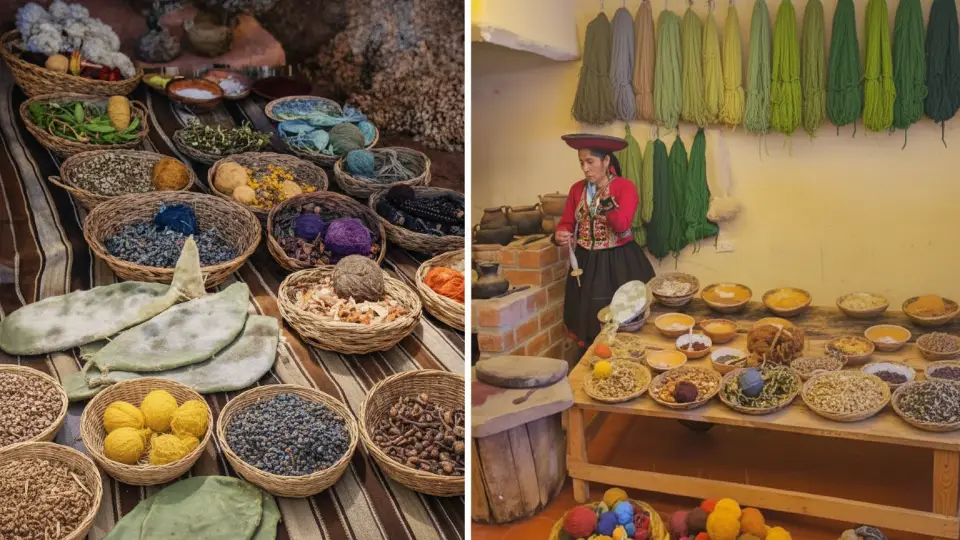
Chillca (Brown/Earth tones)
Ch’illca or chilca (baccharis scandens) is an Andean shrub that produces ochre, earthy, and warm brown tones very characteristic of traditional textiles in the region.
Tara (junglas neotropica)
This shrub, commonly found in valley regions, is used to produce gray tones.
Important facts…
With just cochineal, adding a few drops of lemon can transform a deep crimson red into bright vermilion. With alum stone, the color becomes lighter and more stable. One insect dozens of shades.
The final trick: natural fixatives
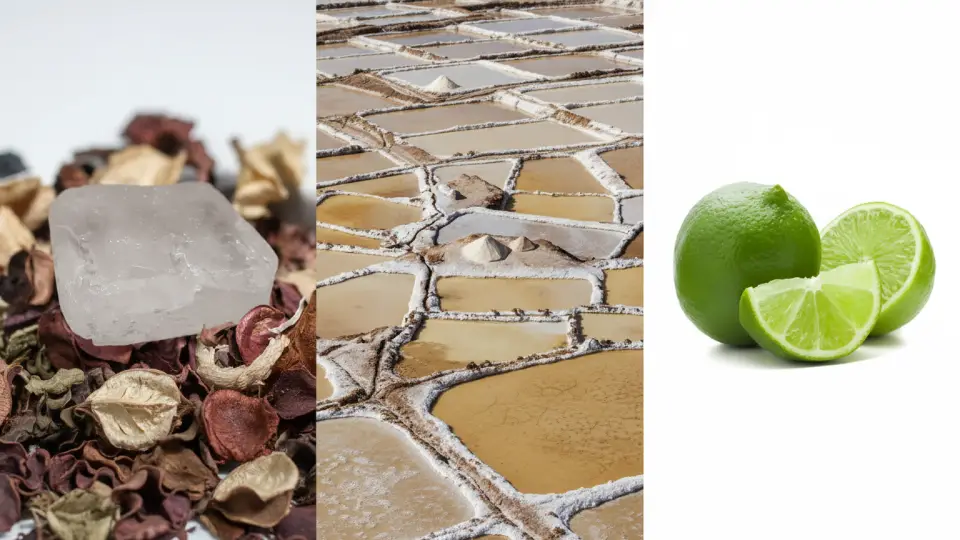
You might wonder how the color stays in the fabric even after washing. The secret lies in “mordants,” which act like a natural adhesive for the dye.
- Alum stone (to fix and lighten tones).
- Copper sulfate (shifts dyes toward blue).
- Iron sulfate (darkens tones toward green and black).
- Yellow ccollpa.
- Green ccollpa.
- Maras salt (white crystals).
- Fermented urine (historically used).
- Lemon juice.
- Salt (Maras, Moray).
Fun fact…
If you take a dark red dyed thread and add a few drops of lemon, you’ll see it instantly turn into a bright orange right before your eyes. It’s like pure chemistry done entirely with elements from the earth.
How to choose an authentic fabric in Chinchero
Buying a handwoven piece requires paying close attention to the details. Today’s markets are full of machine made products, so it’s important to learn how to recognize an authentic piece.
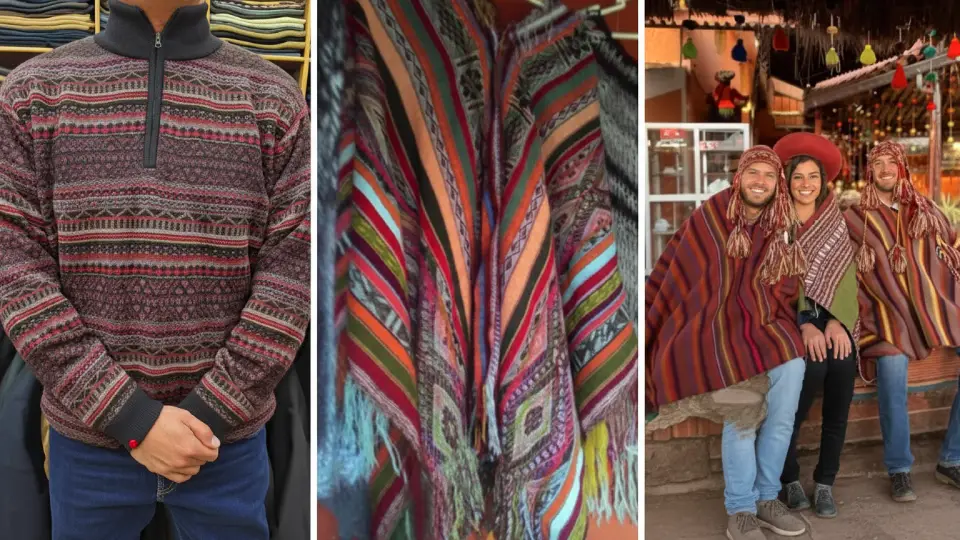
Signs to recognize handmade textiles
- Look for small imperfections: A handmade textile is never perfectly uniform like a factory-made one. If you notice slight variations in thread thickness or pattern tension, you’re on the right track. That’s the artisan’s personal signature.
- Take your time observing the colors: Natural dyes have a depth that synthetic ones can’t replicate. The red from cochineal or the blue from plants shows vibrant nuances that shift with the light. Synthetic colors often look overly bright and flat.
- Check the back side: Authentic pieces look almost the same on both sides. If you turn the fabric over and see loose threads, messy knots, or faded colors, it’s likely machine-made.
- Feel the weight and warmth: Alpaca or sheep wool feels heavier and warms up quickly when you touch it. Acrylic imitations are very light and feel cold against the skin.
- Talk to the seller: A true weaver knows the name of every pattern and exactly which plants were used for the dyes. If the person can’t explain the story behind the piece, they likely didn’t make it.
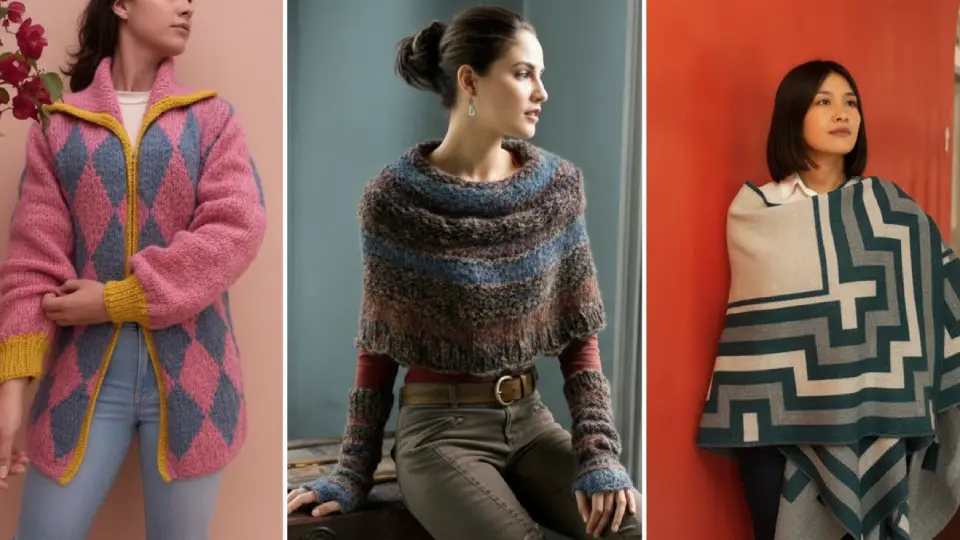
Which material should you choose?
Before making a decision, take a close look at the options available at the stalls:
- Sheep wool: Thick and very durable. Ideal for heavy blankets or rugs that can withstand daily use.
- Alpaca: Softer and lighter than sheep wool. It also retains heat better and is less likely to cause itching.
- Baby alpaca: This fiber comes from the first shearing of a young animal. It’s the finest and softest of all, typically used for delicate scarves.
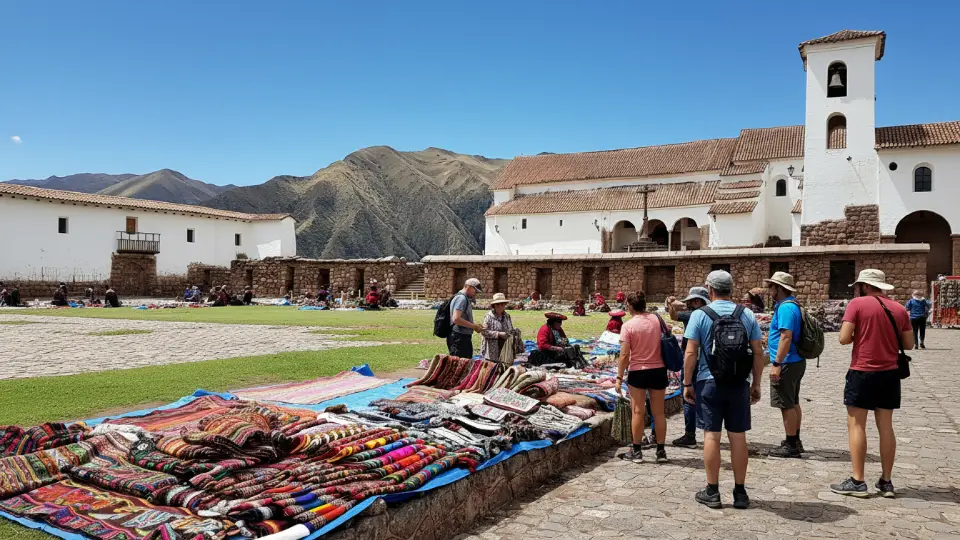
Where to buy safely
To make sure you’re getting something authentic, visit:
- Chinchero textile centers.
- The Sunday market in Chinchero.
- The San Blas neighborhood in Cusco.
Important notes…
An authentic blanket can cost between 150 and 500 soles depending on its size. Keep in mind that each piece takes weeks of consistent manual work. Paying a fair price helps ensure that families can continue preserving this ancient tradition.
Traveler tips for learning more about textiles from Chinchero
In the town of Chinchero
Visiting the town of Chinchero means exploring its textile centers, getting to know its plazas, connecting with its people, and of course, discovering its archaeological sites. To complement all this information, here are some must-visit places to help you fully enjoy your experience.
Experience textile traditions at the Awana Wasis
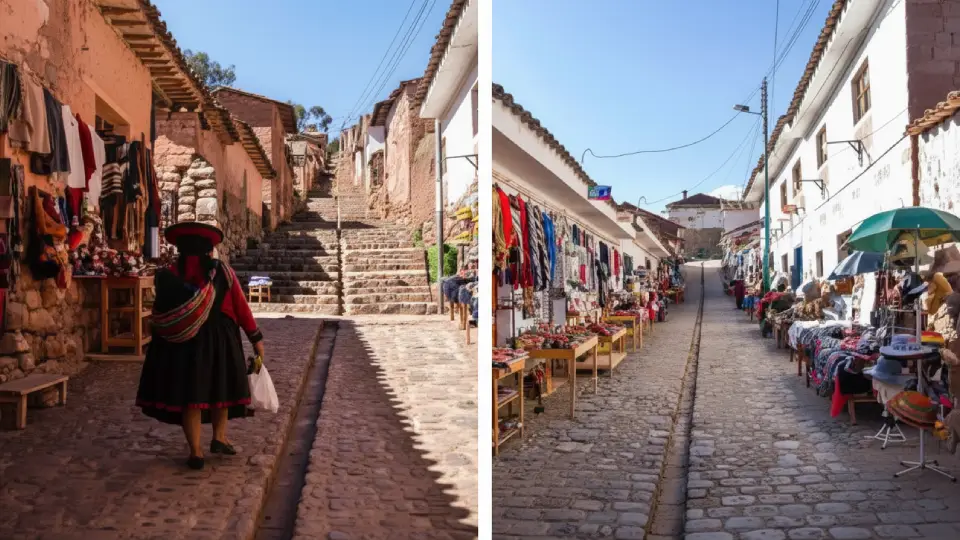
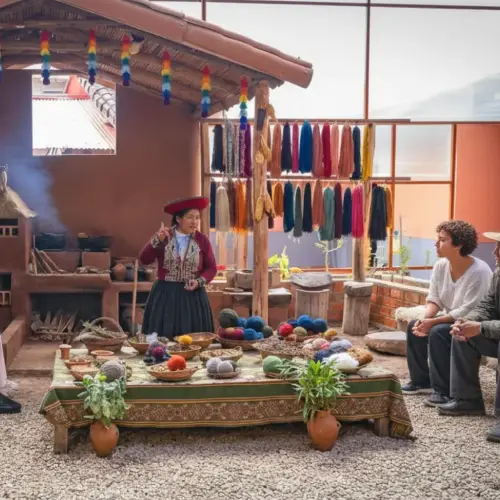
Chinchero has 26 artisan centers that function as open-air schools. When you enter, families welcome you with a warm herbal tea and share their knowledge—from how they wash wool with natural roots to how they achieve vibrant colors using plants and insects. It’s a hands-on learning experience from master weavers who keep Inca traditions alive.
Explore the Sunday market
On Sundays, the town transforms completely. It’s the best time to visit, as weavers from different communities arrive to sell their work directly—without middlemen or industrial imitations.
- The famous “barter system”: If you look closely, you’ll see locals still exchanging goods (like potatoes for wool), an ancient tradition that has nearly disappeared elsewhere.
Important tip…
Try to arrive before 11:00 a.m. This way, you’ll enjoy the festive atmosphere and find the best variety of textiles before the sun gets too strong.
Explore the Chinchero Archaeological Site
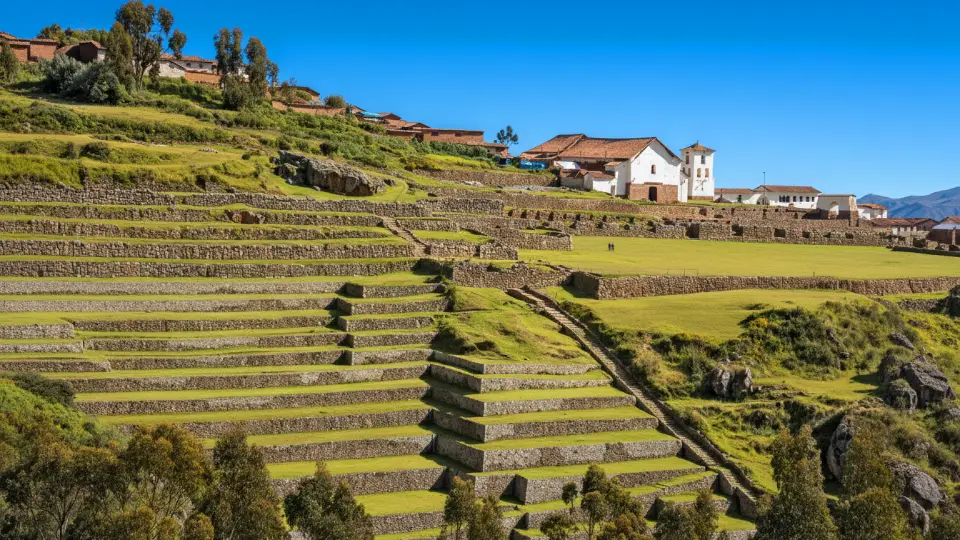
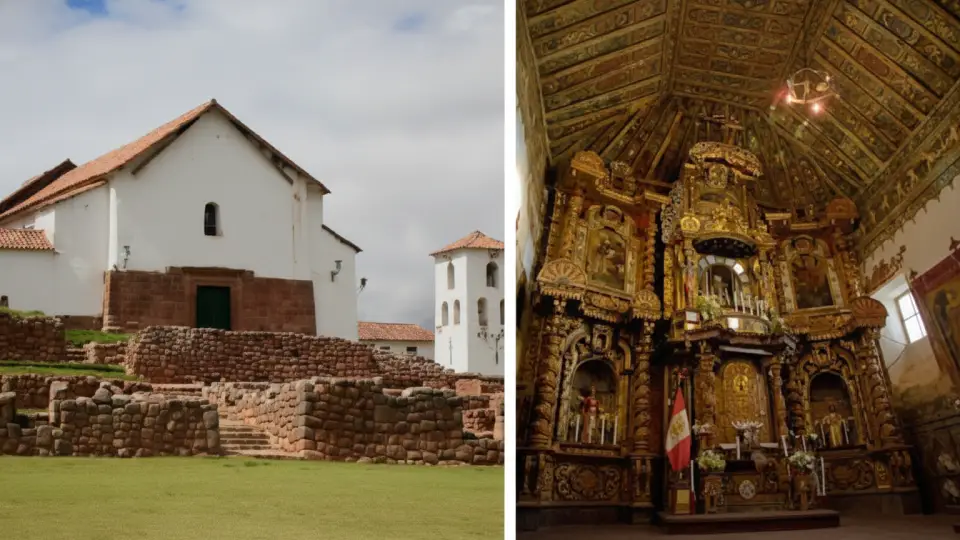
Walk through what was once the palace of Inca Túpac Yupanqui. Its stone walls and agricultural terraces are remarkably well preserved, allowing you to feel the powerful history of the empire.
Discover the Church of Our Lady of Nativity
Don’t be misled by its simple adobe exterior. Once inside, you’ll find ceilings decorated with flowers and angels dating back to the 17th century. This temple is an exceptional example of the fusion between Inca and Spanish cultures.
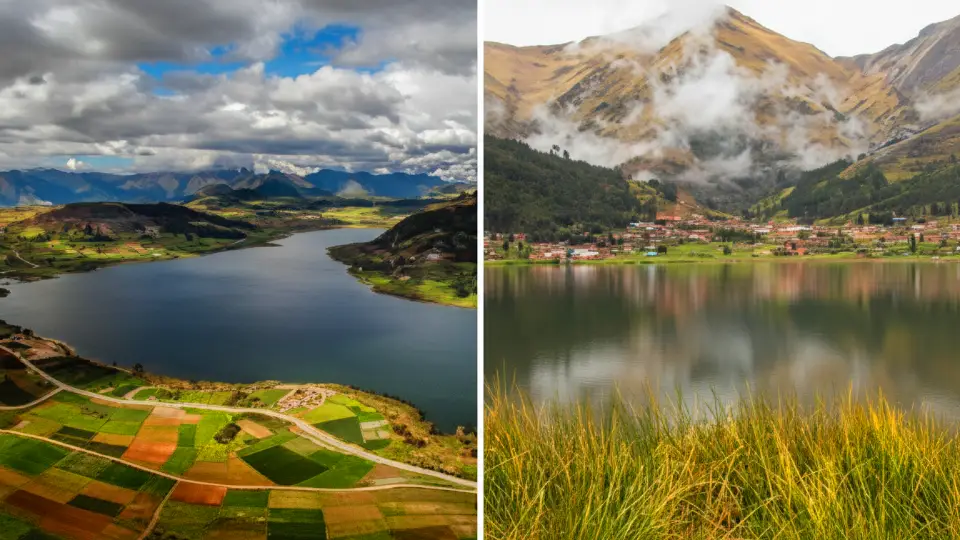
Piuray and Huaypo Lagoons
If you prefer being in contact with nature, these lagoons are located nearby. At Piuray, you can enjoy activities like kayaking or paddleboarding, while at Huaypo you can capture incredible photos with the reflection of snow-capped mountains on the water. It’s the perfect spot for a picnic!
Other communities with weaving traditions
Although Chinchero is the main reference point, there are other nearby towns that preserve remarkable techniques:
- Chahuaytire: A high-altitude village known for its highly detailed weaving techniques.
- Pitumarca: Famous for its colorful ponchos and belts.
- Saclla: Experts in creating reversible textiles that look perfect on both sides.
- Patabamba: Located near Pisac, this village stands out for its vividly colored blankets.
- Acopia: Specialists in dyeing wool using plants that grow only in high-altitude areas.
Important notes…
Keep in mind that Chinchero sits at a higher altitude than the city of Cusco or Machu Picchu. For this reason, it’s best to walk slowly upon arrival, take deep breaths, and drink plenty of water to prevent altitude sickness.
Chinchero textiles offer unique treasures you won’t find anywhere else in the world. I recommend buying baby alpaca scarves for their unmatched softness, ponchos with traditional designs, and warm gloves to protect you from the Andean cold. By choosing these pieces, you’re taking home a piece of living history while directly supporting local families. It’s the perfect opportunity to find a meaningful gift with soul and story!
Frequently asked questions about Textiles from Chinchero: Threads that tell stories
Plan for about 40 minutes to an hour to watch how the wool is processed. If you’re curious, ask lots of questions, or try the loom yourself, you could easily spend a couple of hours. If you also want to visit the Inca ruins and the church, set aside the whole morning.
Yes! The weavers are incredibly patient and love teaching visitors. You can try using the backstrap loom or help prepare natural dyes from plants. No prior experience is needed just be ready to get your hands a little messy with natural colors.
Entry to the workshops is usually free. The artisans earn their living from what they sell at the end of the demonstration. However, there is a fee to enter the archaeological site, as you’ll need the Cusco Tourist Ticket.
If you want flexibility, go on your own by taking the buses that leave from Pavitos Street in Cusco. It’s inexpensive, and you can stay as long as you like. Tours tend to move quickly since they visit several towns in one day. If you truly appreciate craftsmanship, going independently lets you take your time and have meaningful conversations.
Each town has its own style. Chinchero is known for textiles that look nearly identical on both sides and for using natural, earth-derived colors. In other places—like Lake Titicaca, for example men often knit traditional hats. In Chinchero, this art is primarily in the hands of women.
There are challenges, such as the rise of factory-made clothing, but interest from visitors like you makes a big difference. When you buy an authentic piece directly from an artisan, you give her a reason to continue teaching this craft to her daughters helping ensure that this cultural tradition stays alive for many years to come