
Huayna Picchu Mountain Tickets 2026: Prices, Entry Times, Hike & Tips
Planning to hike Huayna Picchu Mountain? This guide covers everything you need to know about Huayna Picchu mountain tickets, entry times, trail difficulty, safety, and what to expect from one of the most iconic climbs at Machu Picchu. Whether you are comparing Huayna Picchu vs Machu Picchu Mountain or deciding if Huayna Picchu Mountain is worth it, this article will help you plan the hike with confidence.
What Is Huayna Picchu?
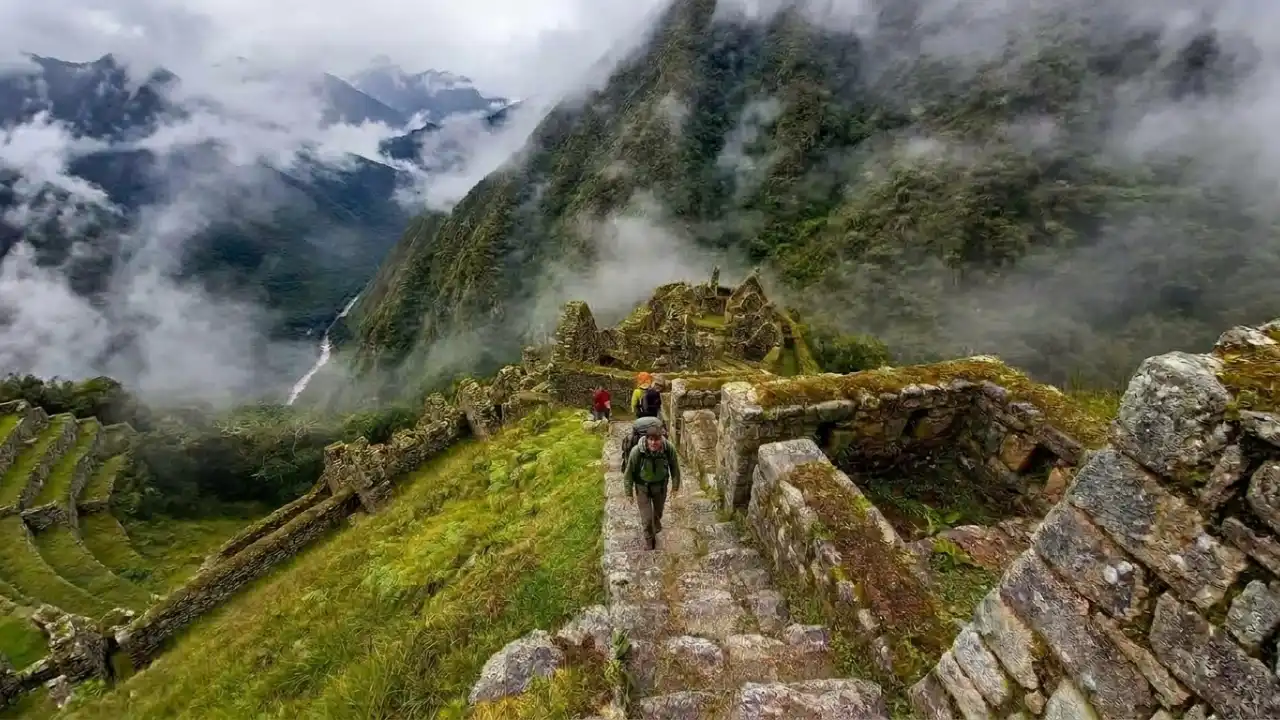
If you’ve ever seen a photograph of Machu Picchu and honestly, you’ve already seen Huayna Picchu. It’s that dramatic, almost impossibly steep peak rising behind the ruins, cloaked in mist more often than not. In Quechua, the language of the Incas still spoken throughout the Andean highlands today, Huayna Picchu means “Young Mountain.” Its older neighbor, Machu Picchu, translates to “Old Mountain.”
What makes this peak so special isn’t just the view from the top, though that’s genuinely breathtaking. It’s the history embedded in the stone beneath your feet. The trails you’ll hike were carved by the Incas nearly 600 years ago, cut directly into cliffsides above sheer drops of hundreds of meters. The mountain was considered sacred the Incas believed their mountains, called apus, were living spirits that governed human fate. Getting to the summit of Huayna Picchu means walking in their footsteps, literally.
On the slopes of the mountain, hidden inside a natural cave, you’ll also find the Temple of the Moon (also called the Great Cavern) one of the most atmospheric and least-visited Inca structures in the entire complex, precisely because reaching it requires an extra level of commitment most tourists simply don’t have.
Good to know
Today, it’s widely regarded as one of the finest short hikes anywhere in South America. Many travelers searching whether Huayna picchu mountain worth it is more than hype come away saying yes without hesitation. The catch? You need a specific ticket, issued in very limited numbers, and they tend to vanish months before your intended visit date.
Huayna Picchu Entry Ticket: Circuit 3 & Entry Times
If your goal is to climb Huayna Picchu, the ticket you need is tied to Circuit 3. More specifically, visitors must choose the route that includes access to the mountain, which is commonly listed as Machu Picchu + Huayna Picchu Mountain (Route 3A). This matters because not every Machu Picchu ticket lets you walk onto the Huayna Picchu trail. A standard citadel ticket will not be enough.
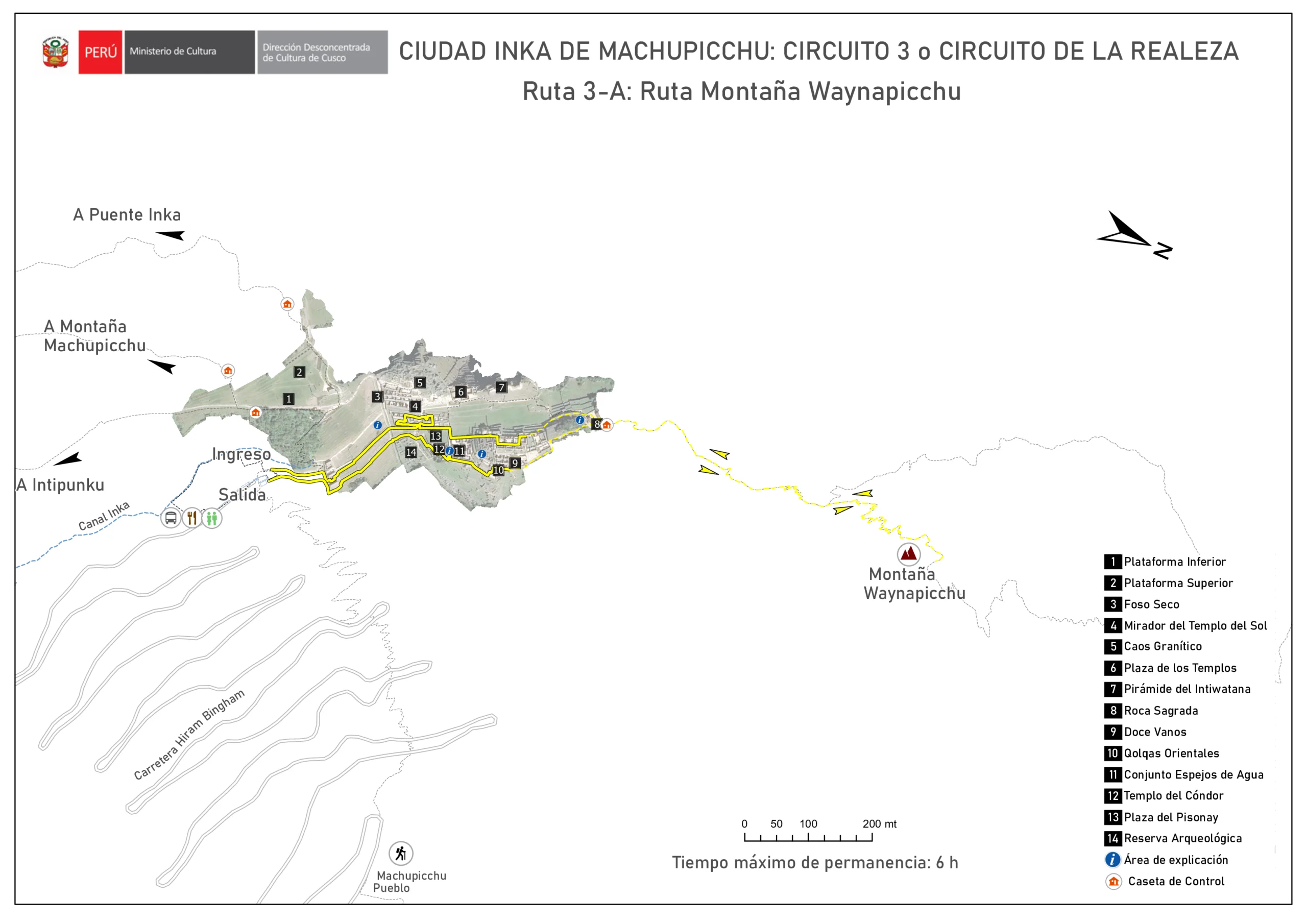
Circuit 3 focuses on the lower section of Machu Picchu and then connects to the control point for the Huayna Picchu ascent. It is a very good route in its own right, because you still see key areas such as the agricultural terraces, the Sacred Rock zone, the Temple of the Condor, and several lower ceremonial sectors before starting the climb.
Circuit note: Huayna Picchu access is linked to a specific mountain route and scheduled time slot. You cannot freely swap to another circuit once you arrive, so pick your entry time carefully when booking.
In practice, most travelers choose between two main Huayna Picchu time windows. The earlier group is ideal for those sleeping in Aguas Calientes the night before, while the later group is more convenient for visitors arriving the same morning. Both options are limited, and both can sell out well in advance, so checking Huayna picchu mountain availability early is essential.
| Huayna Picchu Group | Citadel Entry Time | Mountain Access Window | Who It Suits Best |
|---|---|---|---|
| Group 1 | 7:00 AM | 8:00 AM – 9:00 AM | Travelers staying overnight in Aguas Calientes and wanting a quieter climb |
| Group 2 | 10:00 AM | 11:00 AM – 12:00 PM | Visitors coming from Cusco the same day or preferring a later start |
Tickets: Price, Availability & Entry Times
What ticket do you actually need?
As of 2024–2026, Machu Picchu operates under a circuit system. To hike Huayna Picchu, you need the Machu Picchu + Huayna Picchu Mountain (Route 3A) ticket. This is the only ticket that grants access to the peak. It’s part of Circuit 3, which takes you through the lower section of the Inca citadel covering the Temple of the Sun, the Inca House, the Sacred Rock, the Temple of the Condor, and the agricultural terraces before you begin your mountain ascent.
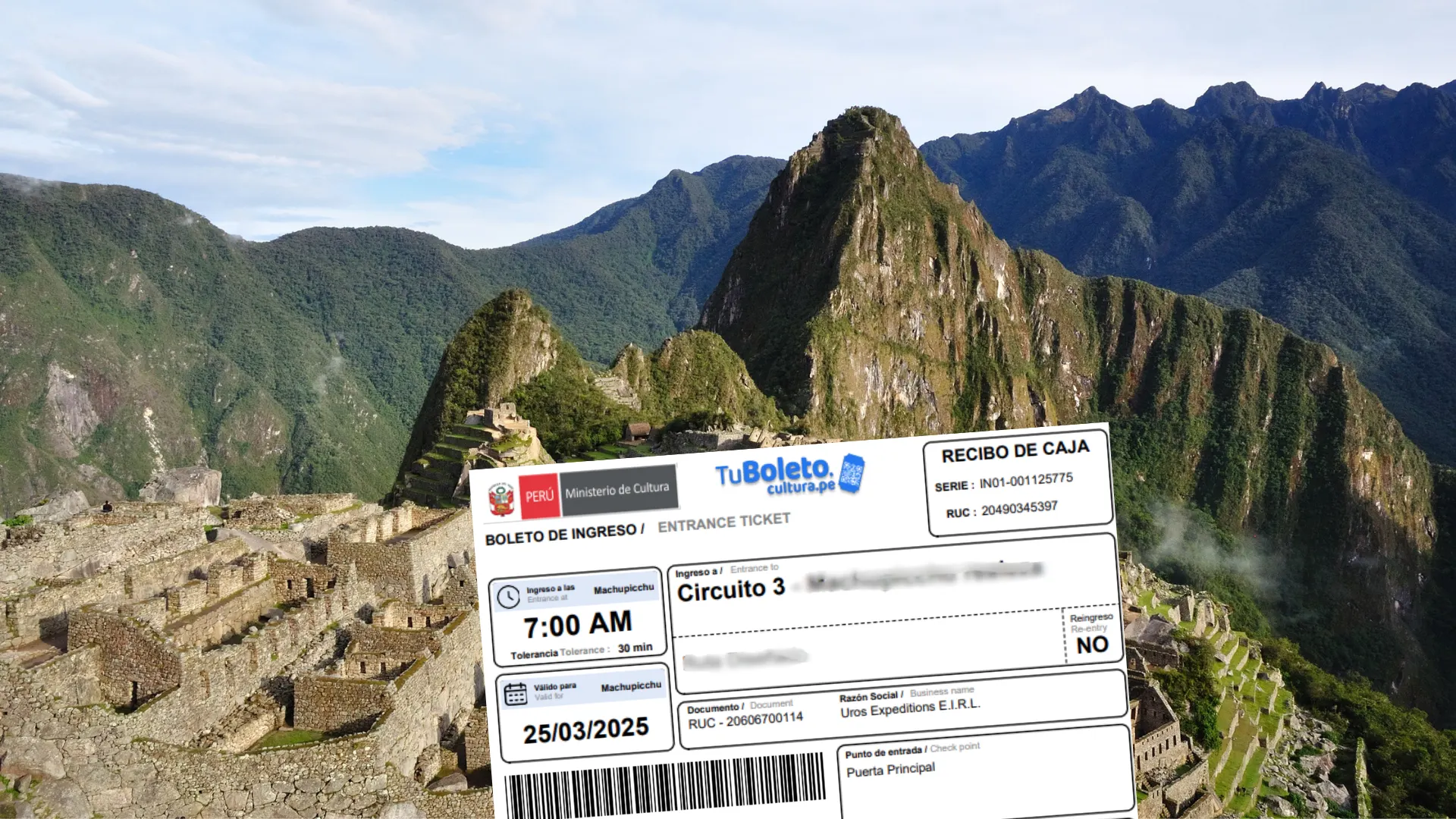
Important Note: The Route 3A ticket does not include access to the full upper ruins of Machu Picchu. If you want a complete tour of the citadel plus the mountain hike, you’ll need to purchase a second ticket for a different circuit and time slot.
How much does it cost?
| Visitor Category | Price (approx. USD) | Price (Soles) | Notes |
|---|---|---|---|
| Foreign Adults | $60 USD | 200 soles | Standard rate |
| Foreign Students (18–24) | $57 USD | 190 soles | University ID required (physical, laminated) |
| Andean Community | $35 USD | 120 soles | Peru, Colombia, Ecuador, Bolivia |
| Peruvian Adults | $33 USD | 112 soles | Lowest rate |
Prices are set by Peru’s Ministry of Culture and can change annually. Always verify against the official ticket portal before booking. Third-party resellers often add service fees on top. When people look for Huayna picchu mountain tickets or a Huayna picchu mountain permit, they are usually referring to this same limited-entry booking.
Entry times and daily limits
Access to Huayna Picchu is capped at 350 people per day, split evenly across two time windows:
| Group | Machu Picchu Entry | Huayna Picchu Window | Best For |
|---|---|---|---|
| Group 1 Recommended | From 7:00 AM | 8:00 – 9:00 AM | Staying in Aguas Calientes overnight; fewer people on trail |
| Group 2 | From 10:00 AM | 11:00 AM – 12:00 PM | Day-trippers from Cusco; better citadel visibility; sells out fastest |
Group 1 gives you the early mountain experience you may find yourself above the clouds at the summit, which is a genuinely magical thing. Group 2 tends to offer clearer skies and better visibility as you hike up, but the clouds that roll in by midday can still obscure views at the top. Either way, both groups have their appeal.
How to Buy Your Huayna Picchu Ticket (Step by Step)
This is where people get caught. The demand for these tickets is intense, and only 350 are issued daily. Of those, roughly 300 are sold online in advance, and the remaining 50 can be purchased in person at ticket offices in Aguas Calientes or Cusco. During peak season (May through September), those 50 in-person spots often sell out the evening before.
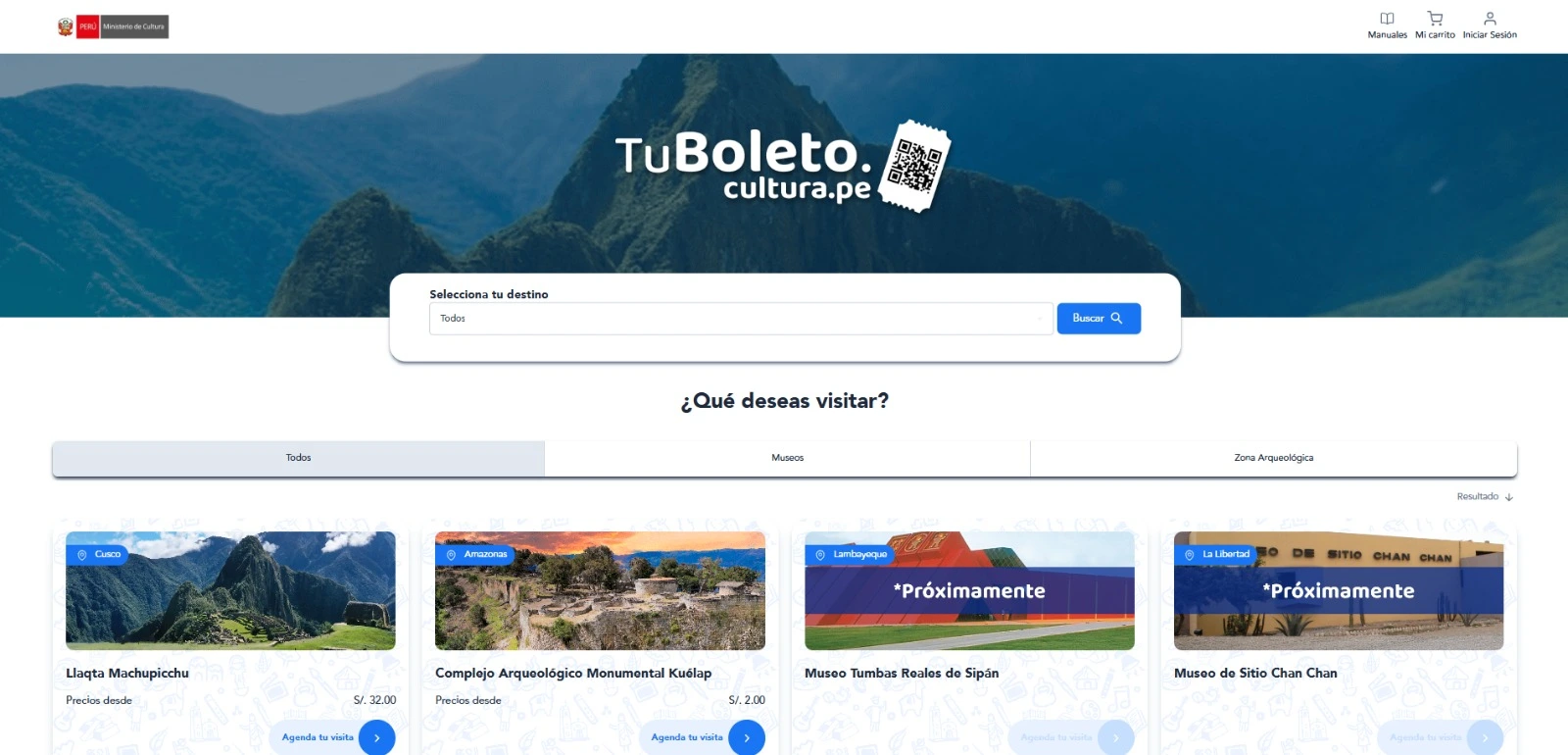
Booking Window: During high season (April, May, June, July, August), you should purchase your ticket at least 3 months in advance. For the rest of the year, one month ahead is usually sufficient but earlier is always better.
The official way to book
- Go to the official Ministry of Culture portal: Visit the official Machu Picchu ticket site (ticket.machupicchu.gob.pe). This is the only place to book directly from the government. Third-party resellers are legitimate but charge service fees.
- Select “Machu Picchu + Huayna Picchu Mountain (Route 3A)”: Choose your visitor category (adult, student, Andean Community citizen) and your preferred time group. Availability shows as a number “0” means sold out.
- Enter personal information for every traveler: Your name on the ticket must match your passport exactly. This is non-negotiable. Tickets are non-transferable and you’ll be checked at entry.
- Complete payment: You have approximately 3 hours to complete the payment after starting your reservation. Keep your confirmation email, you’ll need to print or download your ticket.
- Bring your ticket and original ID on the day: You’ll need to show both your ticket and a valid photo ID (passport for international visitors) to enter the citadel and again at the start of the Huayna Picchu trail.
Pro Tip: If you’re a university student and want to claim the discounted rate, scan your university ID before booking and make sure it’s legible. It must show the university logo, your full name, and a valid date within one year of your visit. Without it, you won’t receive the discount on arrival.
In-person ticket options also exist at two Ministry of Culture offices in Cusco (on Calle Garcilaso and Calle Maruri, both near the main plaza) and at the ticket office in Aguas Calientes. However, relying on these for Huayna Picchu is risky you may arrive to find zero availability.
Best Time to Hike Huayna Picchu Mountain
The best time to hike Huayna Picchu depends on what matters most to you: clearer skies, greener scenery, or smaller crowds. In broad terms, the dry season from roughly May to September is the most popular period because trails are usually less slippery and visibility is often better. The trade-off is that tickets disappear faster and the site feels busier overall. It is also the season when the View from huayna picchu mountain is most likely to be clear for photos.
The shoulder months especially April and October are often the sweet spot. You still have a good chance of decent weather, but the mountain tends to be less chaotic than in the height of the dry season. The scenery can also look especially lush after the rainy months.
From November to March, the wet season brings more frequent rain, mist, and slick stone steps. That does not automatically make the hike a bad idea. In fact, some travelers love the dramatic clouds and quieter atmosphere. But you do need to be realistic: views can close in fast, the trail is more slippery, and you should go expecting changing conditions rather than postcard-perfect sunshine.
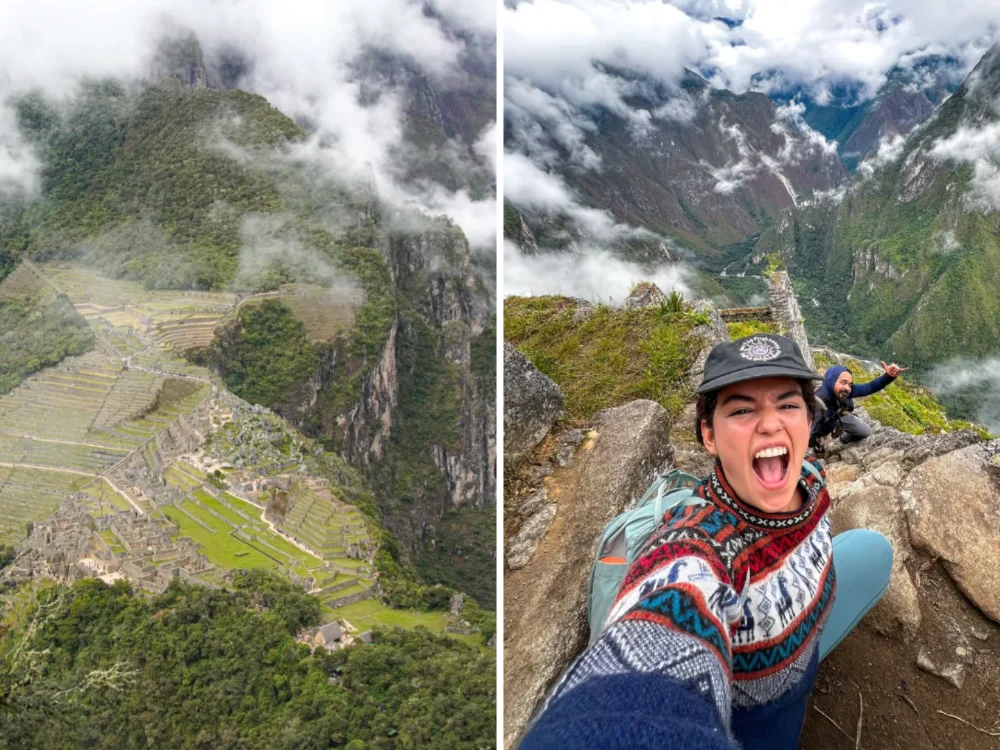
Best overall balance: April, May, September, and October are often the strongest months for combining decent weather, greener landscapes, and a better shot at tickets than peak mid-season dates.
The Trail: What to Expect Up There
Alright, let’s talk about the hike itself because this is not a leisurely stroll.
Trail overview and difficulty
The Route 3A hike covers approximately 2 kilometers round trip along narrow stone paths, steep stone staircases, and sections where you genuinely need both hands and feet to scramble up. The ascent takes roughly 1 to 1.5 hours depending on your fitness level and the crowds, and the descent takes about an hour. Factor in time at the summit and you’re looking at 3 to 4 hours total for the mountain portion alone.
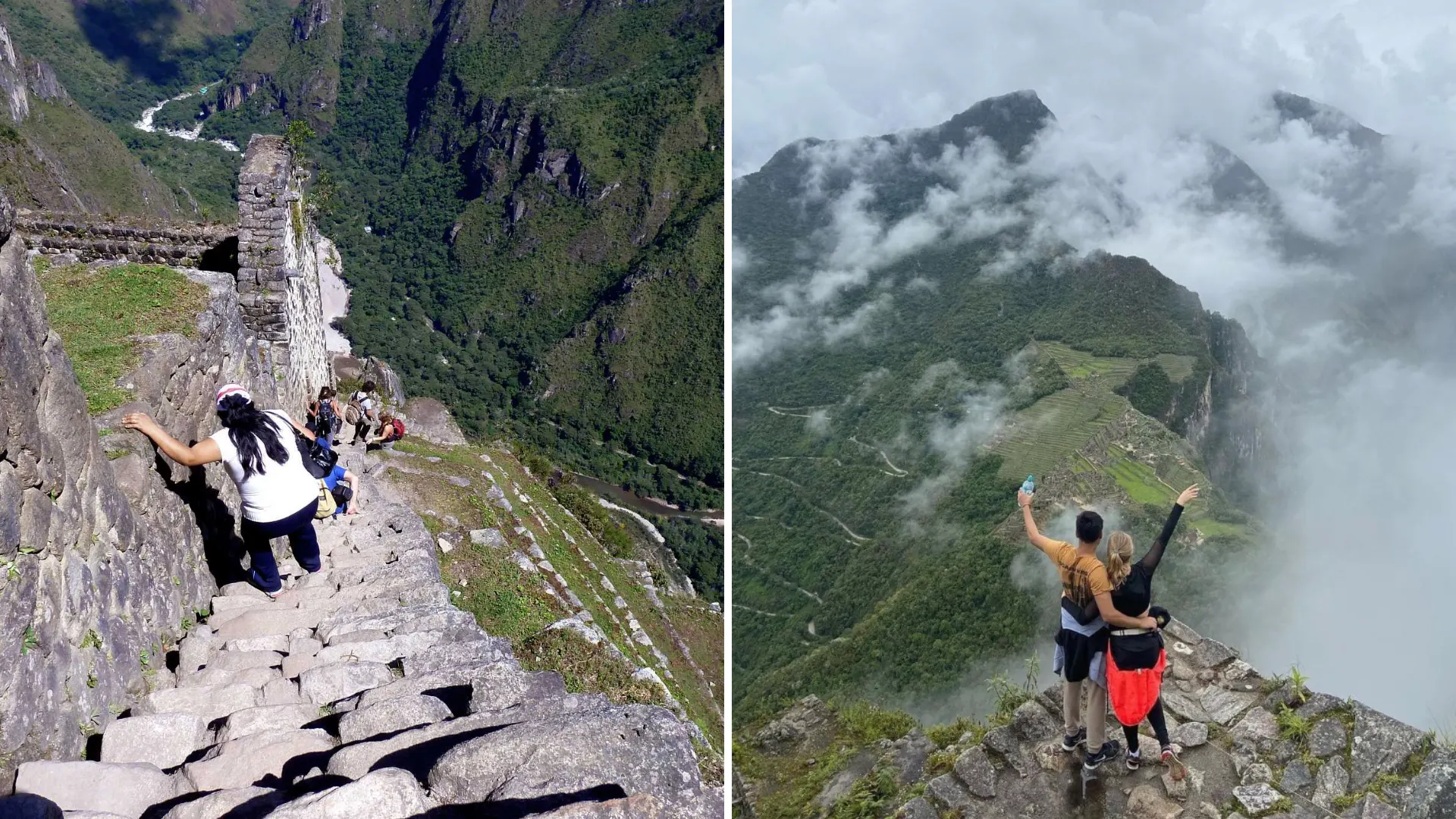
The trail is rated moderate to difficult. Anyone researching Huayna picchu mountain hike difficulty should expect a steep, exposed route that is accessible to most healthy adults who are reasonably fit, but not suitable for people with a strong fear of heights, knee problems, or limited mobility. At certain points, the trail narrows to a ledge above a drop of several hundred meters. Fixed cables help with balance in the steepest sections, but this isn’t a guardrail-on-both-sides kind of experience.
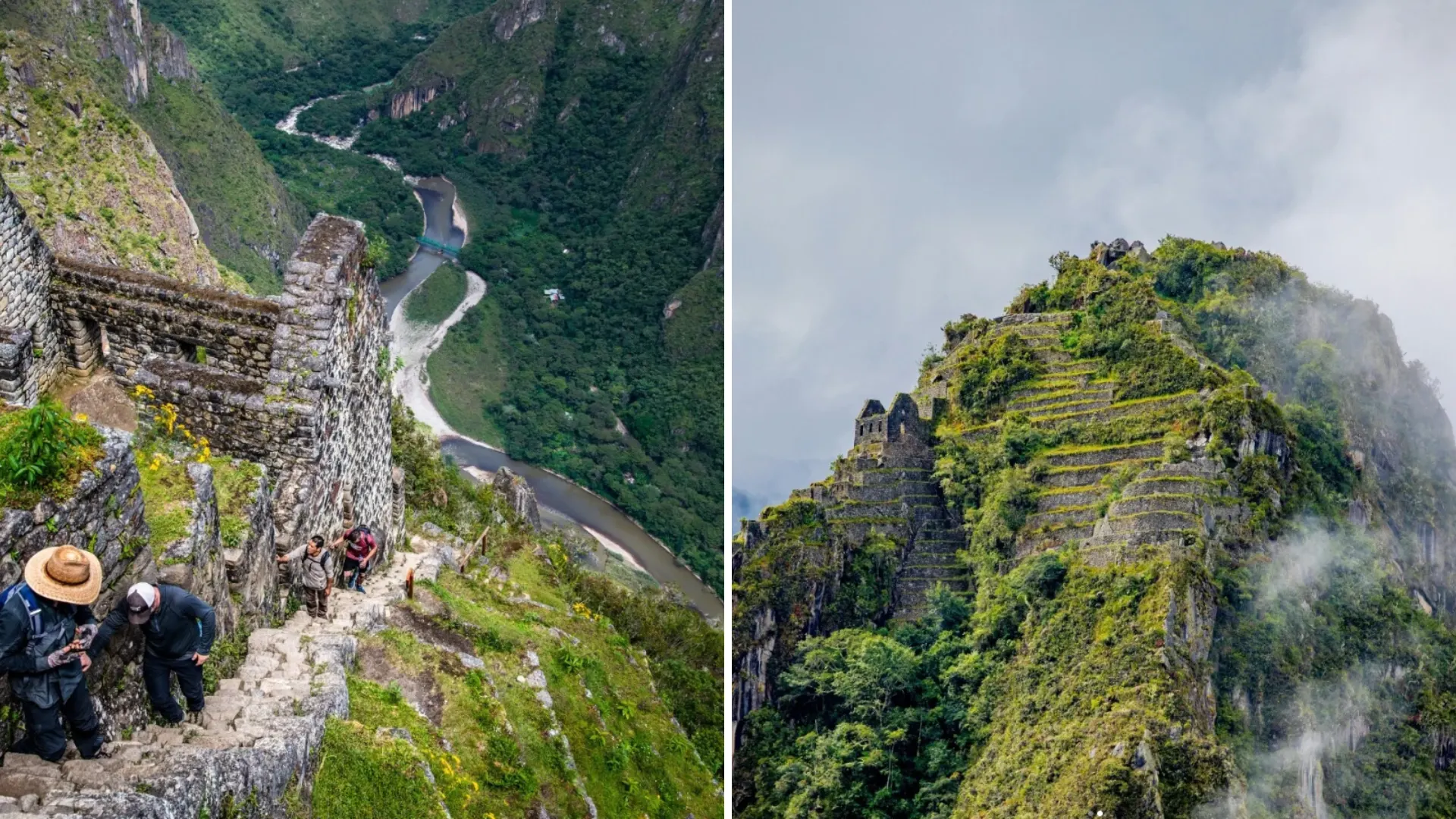
“Near the top, there’s a section locals call the ‘Stairs of death huayna picchu mountain.’ The name sounds alarming, but the danger is mostly the burn in your legs the steps are just relentlessly steep.”
What Circuit 3 includes at Machu Picchu
Before you even reach the mountain trailhead, your Route 3A ticket takes you through the lower section of the Inca citadel. You’ll walk through the agricultural terraces (where the famous postcard photo of the ruins is taken), pass the Temple of the Sun, the Sacred Rock, the House of the Inca, the Temple of the Condor, and the Sacred Springs. It’s a legitimately excellent section of Machu Picchu and less crowded than the upper zones most tour groups stick to.
Huayna Picchu vs. Machu Picchu Mountain: Which Should You Choose?
A lot of people don’t realize there are actually two separate mountains you can hike at Machu Picchu. This is the core of Huayna picchu vs machu picchu mountain, and also the main Difference between huayna picchu and machu picchu mountain that travelers need to understand before booking. Here’s an honest breakdown:
| Feature | Huayna Picchu | Machu Picchu Mtn. |
|---|---|---|
| Elevation | 2,693 m | 3,082 m |
| Daily limit | 350 people | 800 people |
| Hike time | 3–4 hrs round trip | 3–4 hrs round trip |
| Difficulty | Moderate–Hard | Moderate |
| Min. age | 12 years | 12 years |
| Views | Citadel from above | Wider panorama |
| Best for | Adventure seekers | Easier to book |
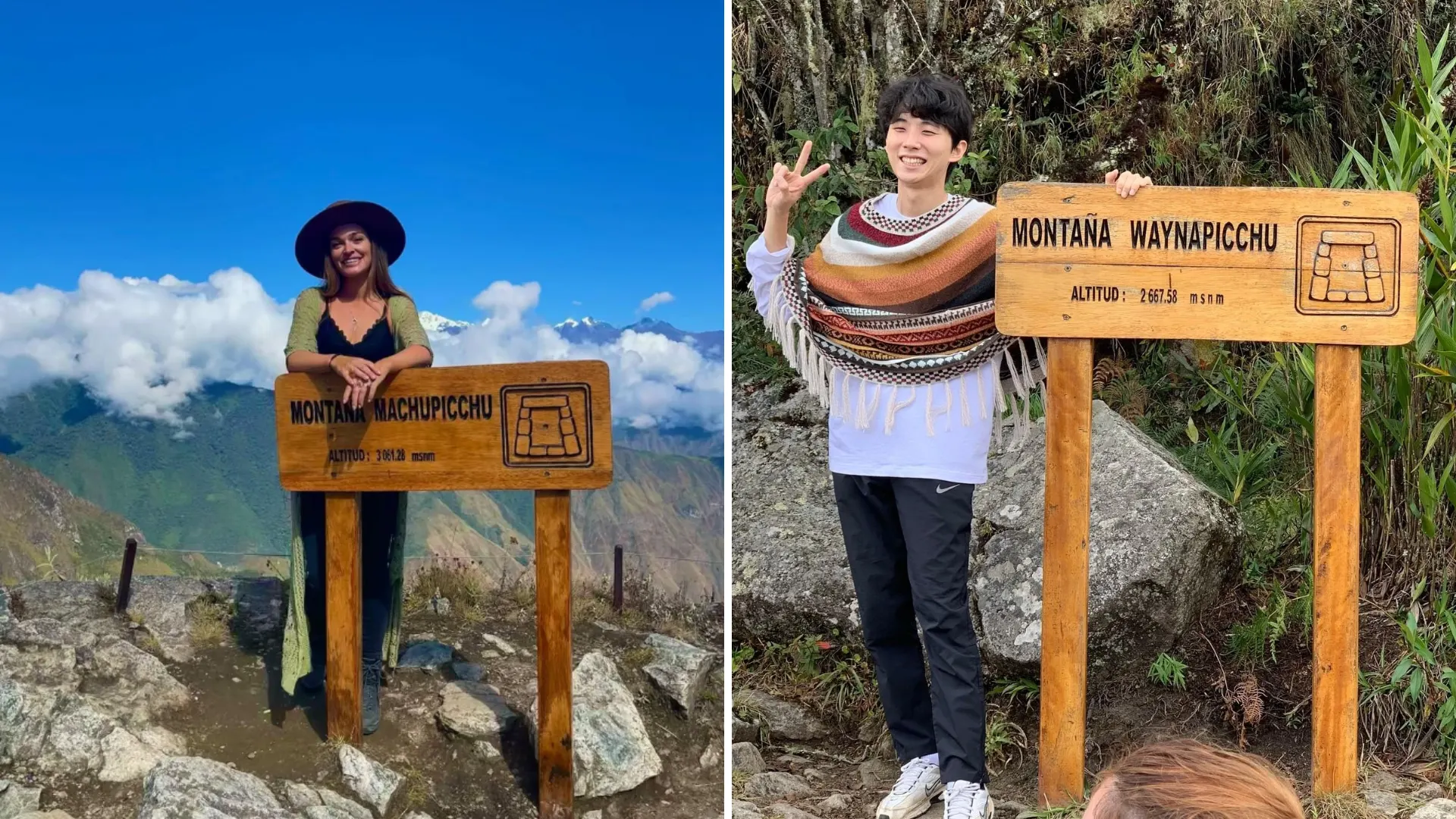
The honest answer: Huayna Picchu gives you the more dramatic and iconic experience, with the ruins below you and that sense of standing at the heart of something ancient and improbable. Machu Picchu Mountain offers a wider panoramic view and is considerably easier to get tickets for, with 800 daily slots versus Huayna Picchu’s 350. For anyone asking Which mountain is taller huayna picchu or machu picchu, the answer is Machu Picchu Mountain. For those asking Which hike is harder machu picchu mountain or huayna picchu, Huayna Picchu is usually the steeper and more technical option. If Huayna Picchu tickets are sold out for your dates, Machu Picchu Mountain is an excellent alternative rather than a consolation prize.
Insider Tips for Your Visit
Book Group 1 if you can
The 7–9 AM entry window for Huayna Picchu is quieter on the trail and the early cloud cover can create genuinely otherworldly summit conditions. If you’re staying in Aguas Calientes the night before (which you absolutely should), Group 1 is the move. The only reason to choose Group 2 is if you’re doing a same-day trip from Cusco.
Don’t rush the Circuit 3 portion
Many people blow through the Machu Picchu citadel section to get to the mountain trailhead quickly. Resist that impulse. Circuit 3’s lower temples especially the Temple of the Sun and the Sacred Rock area are genuinely worth slowing down for. You’ll have about 90 minutes to explore before needing to reach the mountain entrance.
Take altitude seriously
Even though Huayna Picchu’s summit is relatively modest in elevation compared to other hikes in the Cusco region, arriving at Machu Picchu from sea level or having just flown into Cusco can hit you harder than expected. Spend at least two days in Cusco before attempting the hike, drink plenty of water, and listen to your body on the trail.
What to Bring to Huayna Picchu
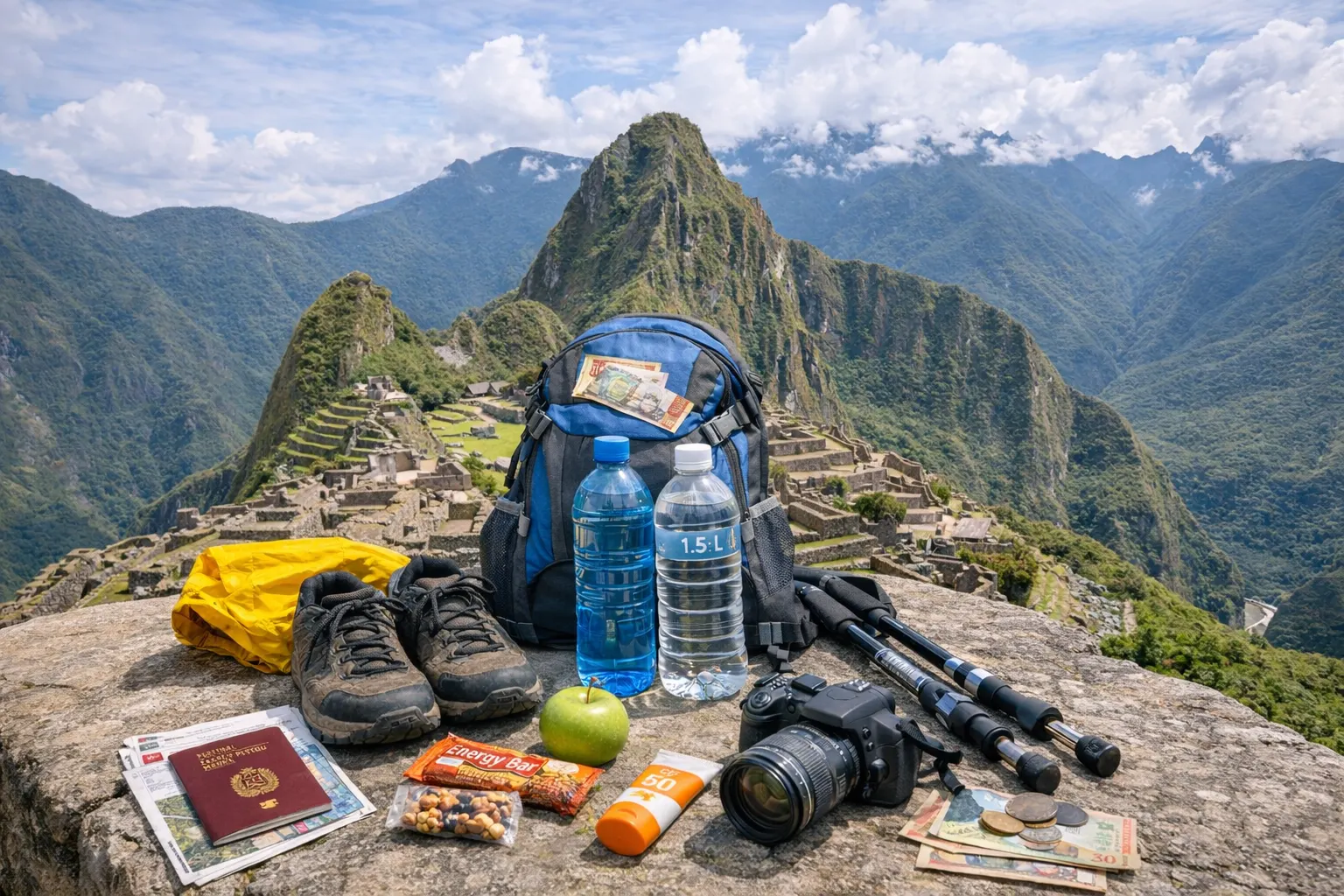
- Printed or downloaded ticket + original passport (required for entry)
- Hiking shoes with non-slip soles, no sandals, no flip-flops
- At least 1.5 liters of water (no refill points on the mountain)
- Light snacks, energy bars, nuts, fruit work well
- Rain jacket or light poncho (weather shifts fast)
- Sunscreen and sunglasses (UV is intense at altitude)
- Trekking poles if you have knee issues (especially helpful on descent)
- Small daypack, large bags are not practical on the narrow trail
- Cash in soles for any purchases in Aguas Calientes
- Camera fully charged, you’ll want every shot at the summit
What Is Not Included in the Ticket?
A Huayna Picchu ticket covers your scheduled entrance to Machu Picchu under the corresponding route and your access to the Huayna Picchu hiking area. Beyond that, many important travel costs are not included.
| Not Included | Why It Matters |
|---|---|
| Train tickets | You still need separate transportation between Cusco/Ollantaytambo and Aguas Calientes. |
| Bus to Machu Picchu | The shuttle bus from Aguas Calientes to the site entrance is paid separately unless bundled by an agency. |
| Tour guide services | A guide can be hired separately, but the mountain ticket itself does not include one. |
| Food and drinks | Meals, snacks, and beverages are your own responsibility. |
| Hotel accommodation | Staying in Cusco or Aguas Calientes is arranged separately. |
| Travel insurance | Coverage for delays, illness, injury, or cancellations is not part of the ticket. |
| Additional Machu Picchu circuits | If you want access to a different route or a broader citadel visit, you may need another ticket. |
This is where many visitors get caught: they assume the mountain ticket covers the whole Machu Picchu day from start to finish. It does not. You still need to coordinate transportation, timing, food, and possibly a second circuit depending on the kind of visit you want.
What the Huayna Picchu Experience Is Really Like
Huayna Picchu feels bigger than its numbers on paper. The hike is short compared with full-day Andean treks, but it is intense, exposed, and memorable almost from the first steep steps. One moment you are walking inside one of the world’s most famous archaeological sites, and the next you are climbing narrow Inca stone paths with the entire citadel dropping away below you. That dramatic contrast explains why so many people describe it as Huayna picchu hiking the mountain of death, even though the phrase is more sensational than literal.
The experience is a mix of excitement, effort, and focus. The trail demands attention because the stairs are uneven and some sections are narrow. There are stretches where you naturally slow down, grab the rock or hand cable for balance, and breathe a little harder than expected. That is exactly what makes the summit feel earned.
“Huayna Picchu is not the longest hike in Peru, but it is one of the most intense and photogenic hours-for-effort experiences you can have anywhere near Machu Picchu.”
Most people come down tired, a little shaky in the legs, and completely convinced it was worth it. That is the real pattern: the climb feels demanding while you are doing it, and unforgettable once you finish. Anyone still wondering Huayna picchu mountain worth it usually gets their answer on the descent.
Frequently asked questions about Huayna Picchu Mountain Tickets 2026: Prices, Entry Times, Hike & Tips
The Huayna Picchu hike is considered moderate to challenging, taking about 1.5 to 2 hours round trip. It is a short but steep, high-intensity climb featuring narrow,, uneven Inca stone steps (including the notorious “stairs of death”) and significant, unprotected drops. While physically demanding, it is manageable for those with a decent fitness level.
No. The main Route 3A trail to the summit does not require a guide. The path is well-marked and rangers are stationed along the way. However, if you plan to do the longer circuit that includes the Temple of the Moon (which requires a separate Route 3C ticket), some visitors find a guide adds significant context to the experience.
Children 12 and older are permitted, provided they’re accompanied by an adult. Given the exposed sections and steep stairs, honestly evaluate your child’s comfort with heights and physical stamina before booking. For younger children or those less confident on steep terrain, Huchuy Picchu (a smaller, gentler mountain) is a great family-friendly alternative available in high season.
Huayna Picchu stays open in light rain, but the stone steps become significantly more slippery when wet. Your rain jacket and rubber-soled shoes earn their keep here. In cases of severe weather or lightning risk, rangers will stop entry or ask people to descend. This is rare but possible in the wet season (November through March).