
The Inca Empire and Machu Picchu: The Lost City That Changed History
The Inca Empire was the largest civilization in pre-Columbian America, centered in Cusco and stretching across much of western South America. Machu Picchu was one of its most extraordinary creations, built in the 15th century as a royal and sacred mountain citadel. Together, they reflect the Incas’ mastery of engineering, religion, and governance. Today, both remain powerful symbols of Andean history, culture, and architectural genius.
What Was the Inca Empire?
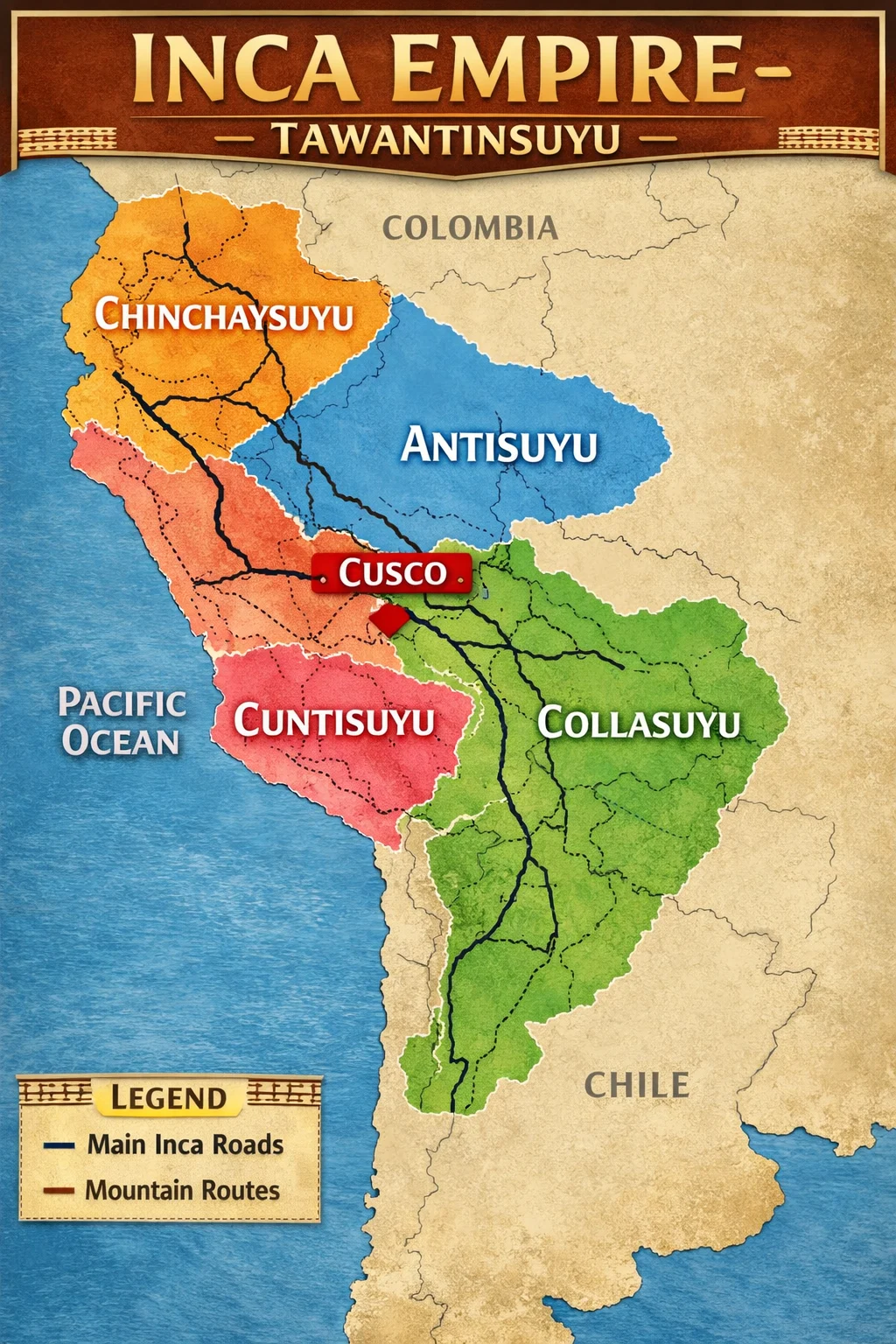
The Inca Empire, known in Quechua as Tawantinsuyu or “The Four Regions,” was the largest empire in pre-Columbian America. At its peak in the early 16th century, the Inca Empire stretched over 4,000 miles along the western coast of South America, reaching from modern-day Colombia in the north all the way to central Chile in the south. Understanding where the Inca Empire was located helps explain how a single civilization could govern such an extraordinary diversity of landscapes, peoples, and climates.
What makes the ancient Inca civilization so fascinating is how much it achieved without the use of the wheel, iron tools, or a written language. The Incas built roads, bridges, temples, and cities entirely through human ingenuity, community labor through a system they called mit’a, and an extraordinary understanding of their natural environment.
The Rise of the Inca Civilization
The Inca civilization traces its roots to the Cusco Valley around 1200 AD. According to their origin myths, Manco Capac, the first Sapa Inca (emperor), emerged from the waters of Lake Titicaca, sent by the sun god Inti to found a great civilization. Whether legend or history, the city of Cusco, Peru became the beating heart of an empire that would dominate South America for over 300 years.
By the reign of Pachacuti Inca Yupanqui (1438 to 1471), the empire entered its golden age. Pachacuti is widely credited as the ruler who transformed a regional kingdom into a continental empire, and who is believed to have commissioned the construction of Machu Picchu as a royal estate and religious sanctuary.
QUICK FACTS OF THE INCA EMPIRE
| Aspect | Fact |
|---|---|
| Capital of the Inca Empire | Cusco, Peru, known as “the navel of the world” |
| Peak territory | Approximately 2 million sq. km, with 10 to 12 million subjects |
| Official language | Quechua, still spoken by millions today |
| Dominant religion | Sun worship centered on the god Inti |
| Road network | Over 40,000 km of roads built across the Andes |
| Fall of the empire | Spanish conquest led by Francisco Pizarro, from 1532 to 1572 |
Where Was the Inca Empire Located?
One of the most common questions people ask when they first learn about this civilization is: where was the Inca Empire located? The Inca Empire was located along the entire western spine of South America, anchored by the Andes mountain range, and stretching across what are today the countries of Peru, Ecuador, Bolivia, Colombia, Chile, and Argentina.At its maximum extent, the Inca Empire covered approximately 2 million square kilometers, making it the largest empire in the pre-Columbian Americas and one of the largest in the entire world at that time. The empire was organized around its capital city of Cusco, Peru, from which four great roads radiated outward to the four corners of the realm. These roads connected coastal deserts, high-altitude plateaus, tropical rainforests, and frigid Andean peaks into a single, functioning state.
Cusco, The Capital of the Inca Empire
The capital of the Inca Empire was Cusco, a city in the southern highlands of present-day Peru, sitting at an altitude of approximately 11,150 feet (3,400 meters) above sea level. In the Quechua language, Cusco means “navel of the world,” and that name was not an exaggeration. Every major road, every administrative message, and every religious decree of the Inca Empire radiated outward from Cusco like spokes from a wheel.
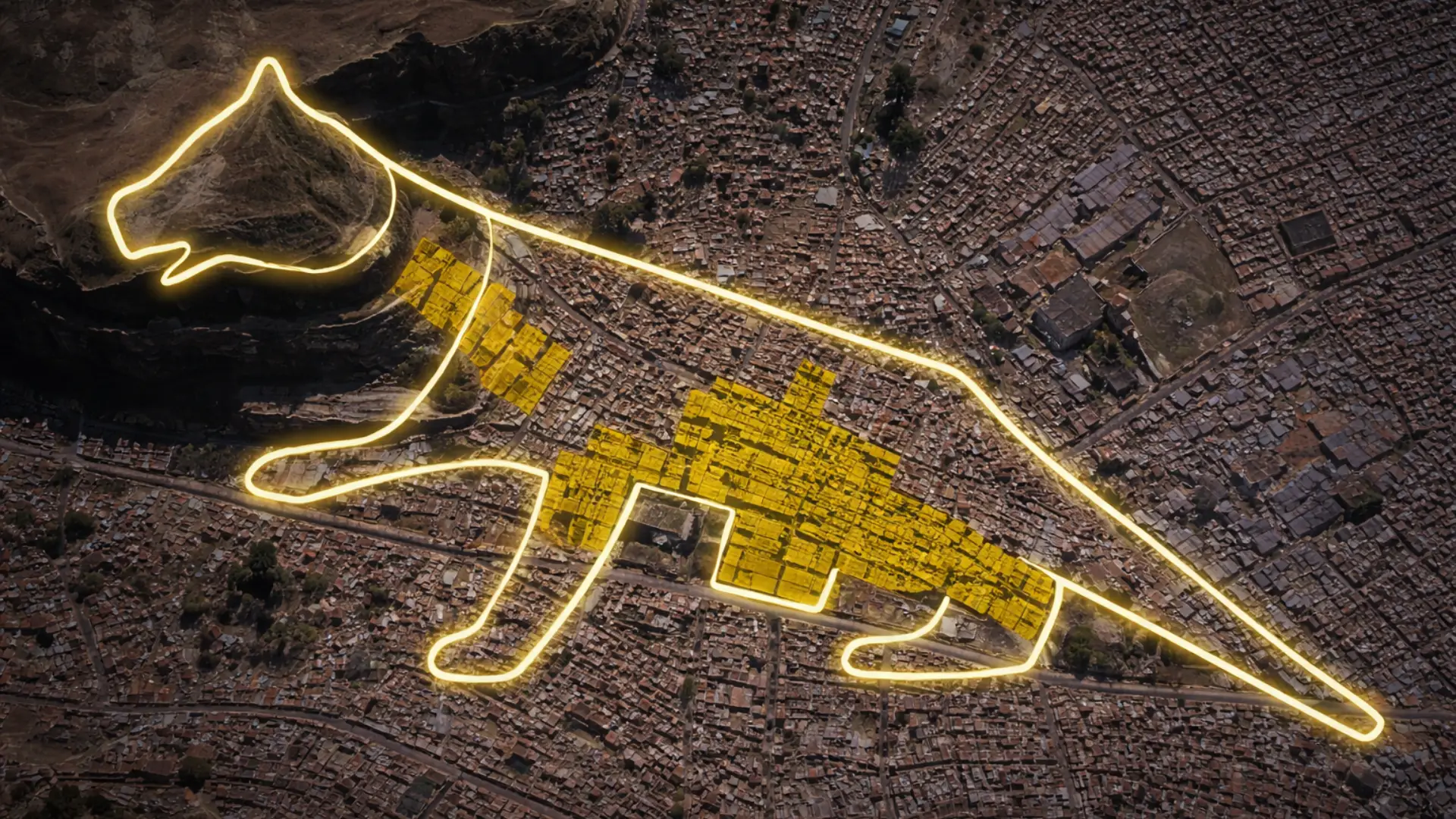
The capital of the Inca Empire was laid out in the shape of a puma, a sacred animal in Andean culture. Its most important structures included the Coricancha, or Temple of the Sun, which was sheathed in gold and housed the most sacred objects of the Inca religion. When the Spanish arrived, they dismantled much of the Coricancha to build a Dominican convent on top of its foundations. Yet even today, the original Inca stonework survives beneath and around the colonial structure, a testament to the durability of Inca architecture. Cusco remains the oldest continuously inhabited city in the Americas, and it is still the gateway through which most travelers pass on their way to Machu Picchu.
The Inca Empire Geographic Overview
| Aspect | Fact |
|---|---|
| North-to-south extent | Over 4,000 miles (6,400 km) along the Andes |
| Modern countries covered | Peru, Ecuador, Bolivia, Colombia, Chile, and Argentina |
| Capital of the Inca Empire | Cusco, Peru, at 11,150 ft above sea level |
| Four regions (suyus) | Chinchaysuyu (north), Antisuyu (east), Collasuyu (south), Cuntisuyu (west) |
| Road network | Over 40,000 km of roads connecting the entire empire |
| Highest point of territory | Areas above 20,000 ft in the Andes mountains |
Inca Empire Religion: Faith, Sun, and Sacred Mountains
To truly understand the Inca Empire, you must understand Inca Empire religion. For the Incas, religion was not a separate sphere of life. It was the foundation upon which everything else, government, agriculture, architecture, warfare, and art, was built. Every aspect of daily life in the Inca Empire was saturated with spiritual meaning, and the state itself functioned as a religious institution as much as a political one.
Inti and the Cult of the Sun
The central figure of Inca Empire religion was Inti, the sun god. Inti was not merely worshipped by the Inca people. He was believed to be the divine ancestor of the royal family itself. The Sapa Inca, or emperor, was considered the Son of the Sun, a living deity walking among men. This belief gave the emperor an unassailable authority that extended far beyond ordinary kingship.
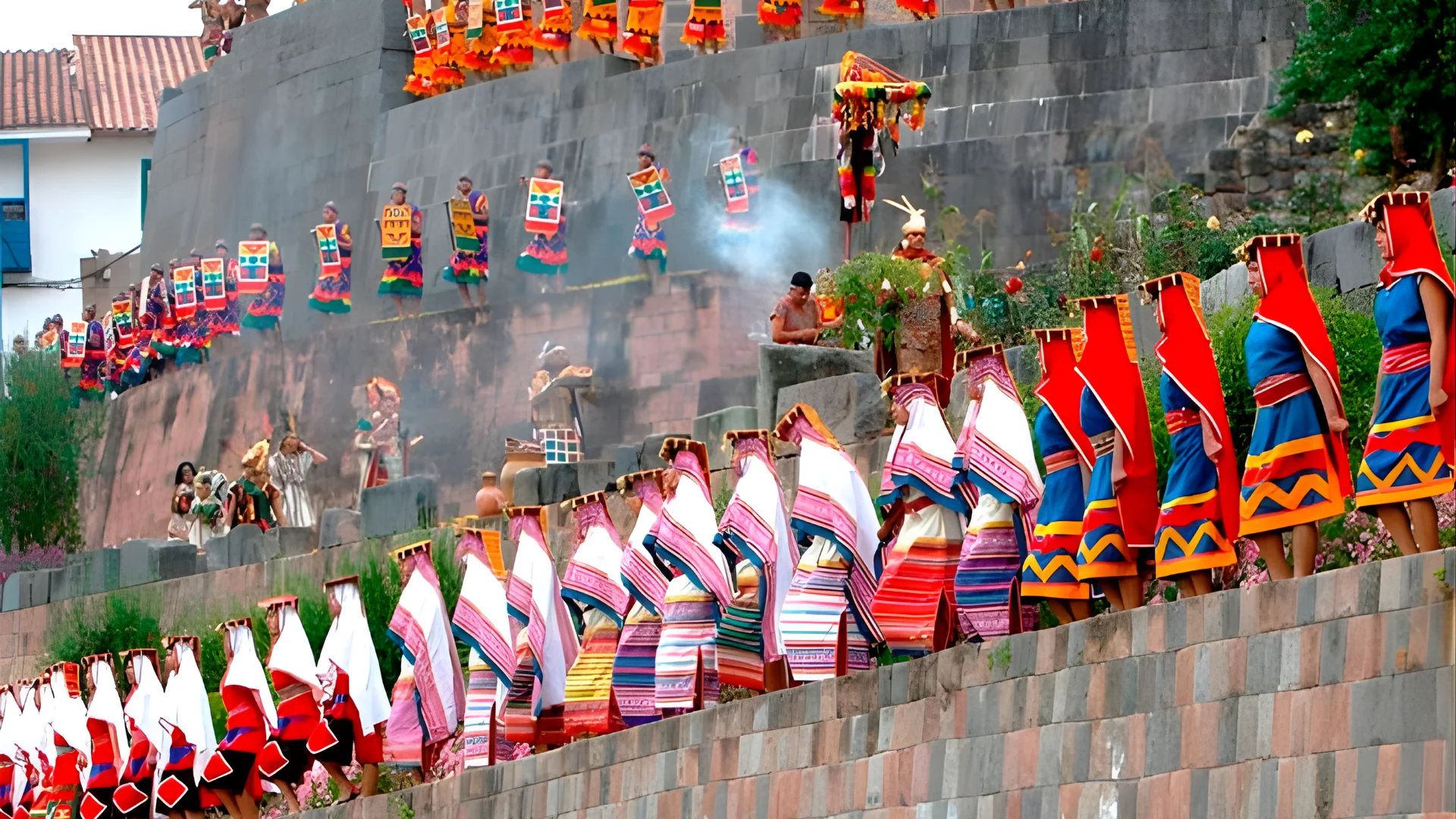
The worship of Inti permeated every aspect of Inca Empire civilization. The great temple of Coricancha in Cusco, the capital of the Inca Empire, was dedicated entirely to Inti and sheathed in sheets of gold to represent the sun’s radiance. The Inca calendar was organized around solar events, and the most important festivals of the year, including Inti Raymi (Festival of the Sun), celebrated the solstices with elaborate ceremonies, music, and offerings.
The Pantheon: Beyond the Sun God
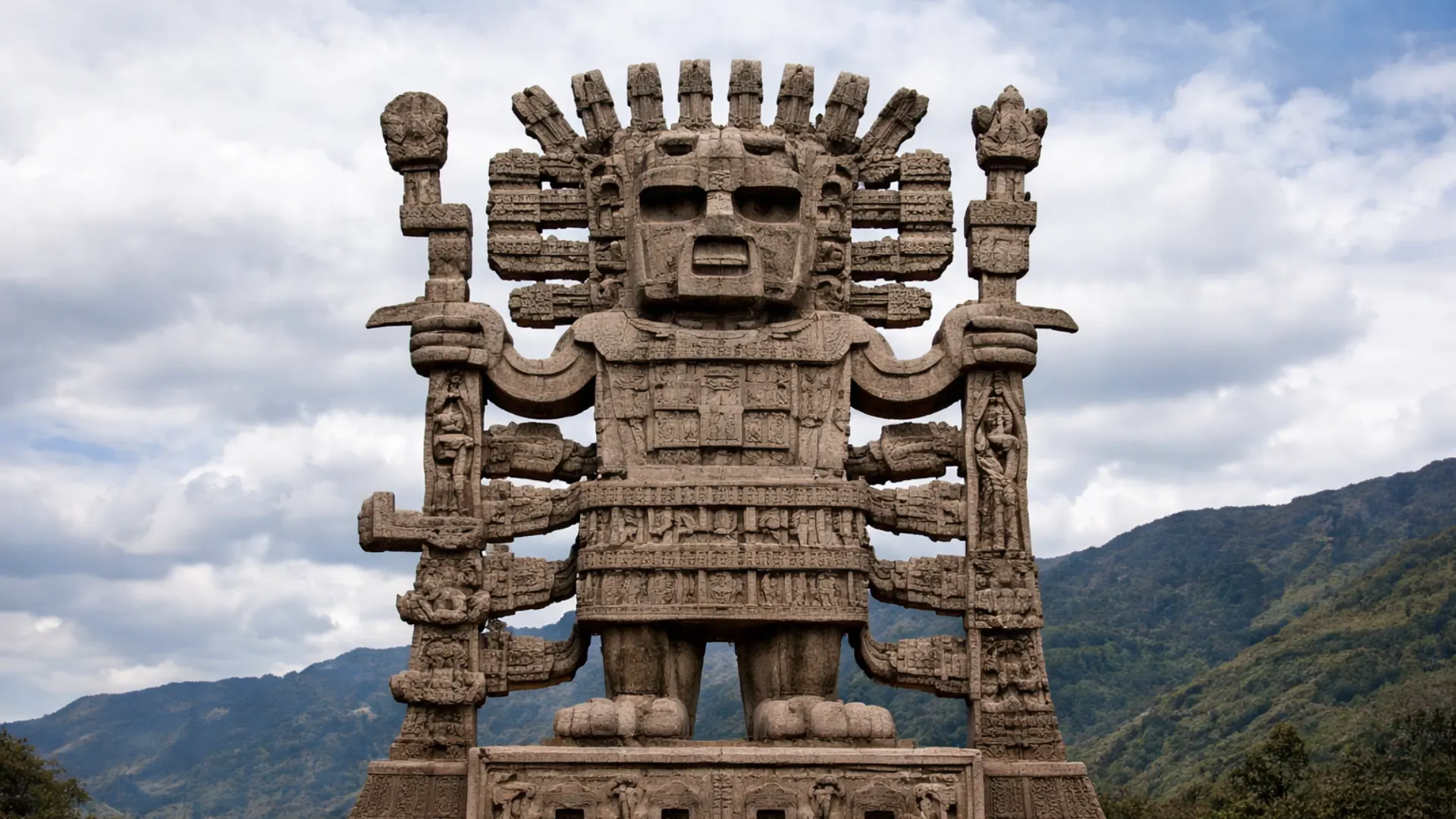
While Inti occupied the top of the Inca religious hierarchy, Inca Empire religion encompassed a rich and complex pantheon of deities. Viracocha was the creator god, believed to have fashioned the world and humanity itself before Inti took his place at the center of state worship. Pachamama, Mother Earth, was venerated for her role in agricultural fertility and was offered regular libations of chicha and food. Mama Quilla, the moon goddess and wife of Inti, governed the lunar calendar and was especially important in ceremonies related to women and planting cycles.
Mountains, called Apus, were also central to Inca Empire religion. Each major peak was considered a living deity with its own personality and power. Communities throughout the empire made regular offerings to their local Apus, and the positioning of sacred sites like Machu Picchu was deliberately chosen to align with the most powerful mountain gods in the region.
Sacred Practices and the Oracle Network
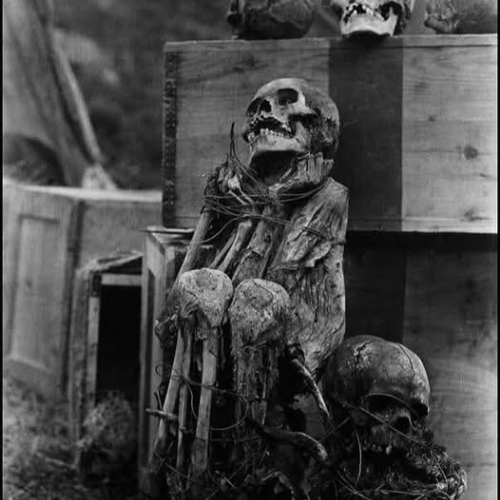
Inca Empire religion was not practiced only in temples. It was woven into the landscape through a network of sacred sites called huacas, which included springs, caves, unusual rock formations, and the mummies of deceased Inca emperors, who were treated as living presences long after their physical death. The mummies were brought out for festivals, consulted as oracles, and fed offerings as though they still required sustenance.
Perhaps the most dramatic practice of Inca Empire religion was capacocha, a rare but documented ritual in which young children were selected from across the empire, brought to Cusco for ceremonies, and then carried to remote mountain summits as offerings to the Apus. Several of these individuals have been discovered at high-altitude archaeological sites in remarkably preserved condition, giving modern researchers an extraordinary window into the spiritual world of the Inca Empire civilization.
Inca Empire Civilization: Society, Government, and Daily Life
When people search for information about Inca Empire civilization, they are often surprised to discover just how sophisticated and organized it was. The Inca Empire civilization was not a loose confederation of tribes or a simple chiefdom. It was a highly centralized, bureaucratically complex state that managed the lives of 10 to 12 million people across an enormous range of environments without a written language, a monetary currency, or iron tools.
How the Inca Empire Civilization Was Governed
The Inca Empire civilization was governed through a rigidly hierarchical system with the Sapa Inca at the absolute top. Below the emperor sat the Auquis (royal princes), the Apu Cuna (governors of the four regions), and a layered bureaucracy that extended all the way down to local community leaders called curacas. The capital of the Inca Empire, Cusco, served as the administrative and spiritual nerve center from which all decisions flowed outward.
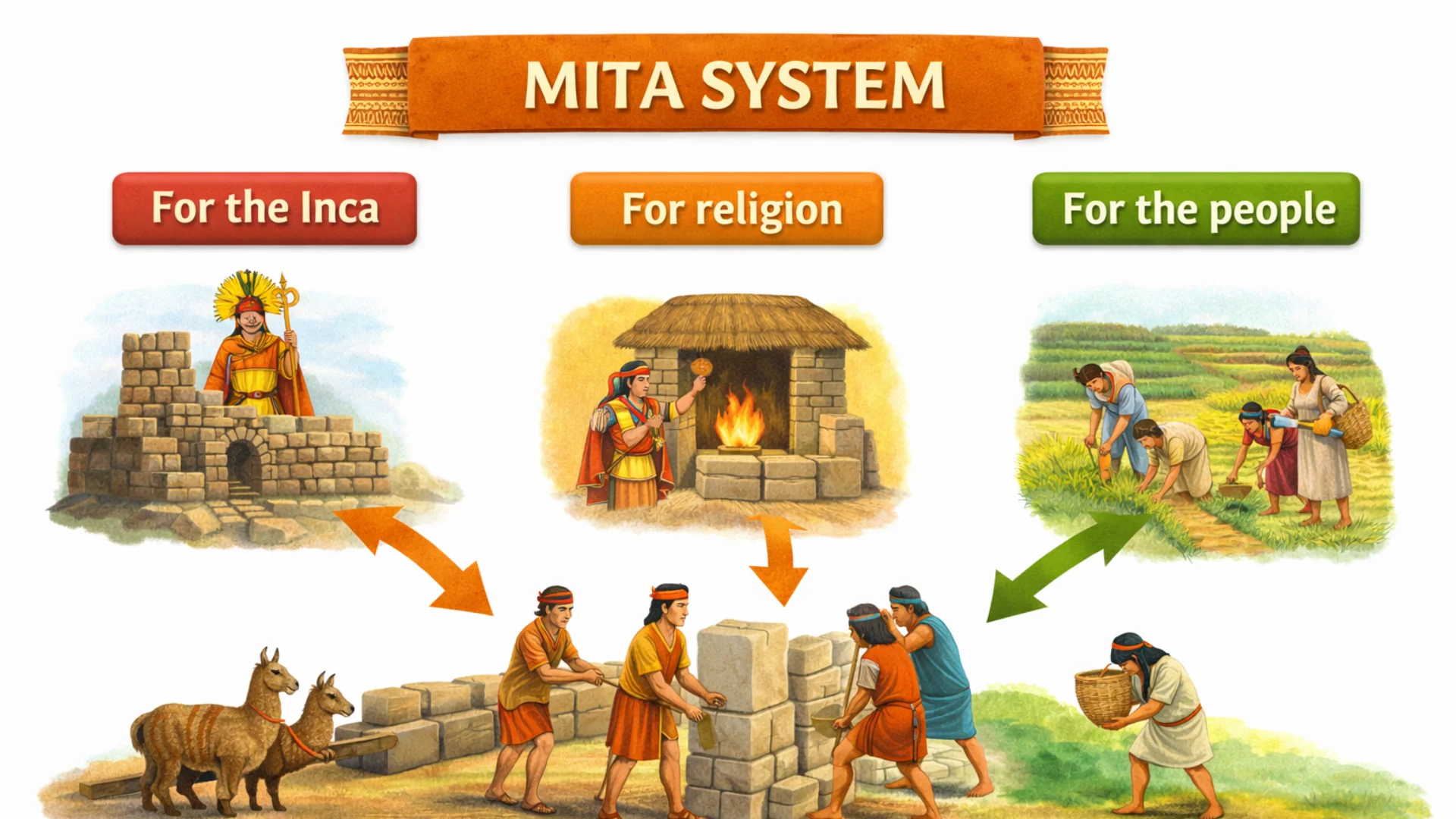
One of the most remarkable features of Inca Empire civilization was the mit’a system, a labor tax that required every household in the empire to contribute a portion of their working time to state projects. Through mit’a, the Inca Empire civilization built its roads, constructed Machu Picchu and hundreds of other architectural masterpieces, cultivated state agricultural terraces, and maintained its army, all without paying wages in any conventional sense. In return, the state provided workers with food, clothing, tools, and chicha during their service.
The Quipu: Record-Keeping Without Writing
One of the most distinctive features of Inca Empire civilization was the quipu (also spelled khipu), a record-keeping device made of knotted strings. Where other ancient civilizations developed written scripts, Inca Empire civilization encoded information through the color, texture, position, and type of knots tied into hanging cords. Quipus were used to record census data, tribute obligations, astronomical observations, and possibly even narrative history. Specialized officials called quipucamayocs were trained from birth to read and create these records.
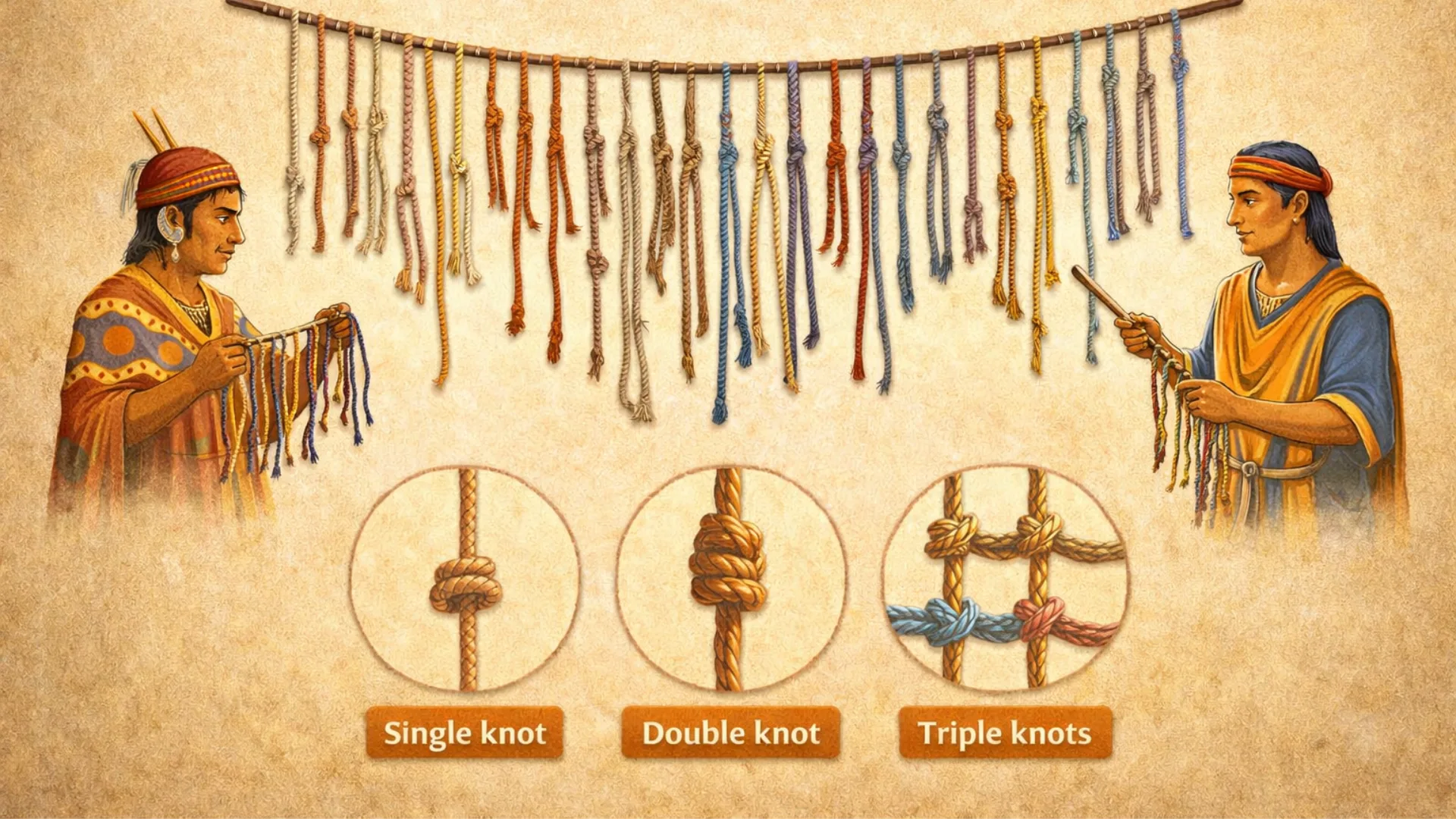
The quipu remains one of the great unsolved mysteries of Inca Empire civilization. Scholars have decoded the numerical functions of many quipus, but whether they also contained a form of phonetic or narrative writing is still debated. Hundreds of quipus survive in museum collections around the world, and modern researchers are applying machine learning and computational analysis in the hope of finally cracking their code.
History of the Inca Civilization: From Origins to Empire
Long before the first stone was laid at Machu Picchu, the story of the Inca civilization was already centuries in the making. Understanding that full arc, from a small tribal group in the Cusco Valley to the rulers of the largest empire in the Western Hemisphere, is essential context for appreciating what the Incas ultimately built.
The Early Inca Period (1200 to 1438 AD)
The earliest Inca leaders, beginning with the legendary Manco Capac, were local chieftains ruling a relatively modest territory around Cusco, Peru. For nearly two centuries, the Incas were one of many competing ethnic groups in the Andes. What set them apart was their ability to absorb conquered peoples into a coherent administrative and cultural system.
The ancient Inca civilization developed a system of governance unlike anything else in the pre-Columbian Americas. The empire was divided into four regions called suyus, radiating outward from Cusco, Peru. A vast bureaucracy kept records through a sophisticated system of knotted cords called quipus, which encoded numerical and possibly narrative information.
The Imperial Expansion (1438 to 1527 AD)
The true explosion of the Inca Empire began with Pachacuti, who seized power around 1438 after defending Cusco from a rival confederation. Within a generation, the Incas had conquered territories stretching from Ecuador to Argentina, absorbing over 100 distinct ethnic groups, each with its own language, religion, and customs. Rather than eradicate these cultures, the Incas practiced a form of imperial multiculturalism: local leaders were kept in place, local gods were brought to Cusco for co-worship, and Quechua was promoted as a shared language without banning local tongues.
It was during this imperial golden age that Machu Picchu was constructed, a physical expression of Inca ambition, spirituality, and architectural mastery at its very peak.
The Fall: Spanish Conquest and the End of an Era
The Inca civilization was already under internal strain when Francisco Pizarro arrived in 1532. A devastating civil war between rival princes Huascar and Atahualpa had fractured the empire. Pizarro captured and later executed Atahualpa, and within decades the vast administrative and spiritual apparatus of the Inca Empire had been dismantled. The last Inca resistance, centered at the neo-Inca state of Vilcabamba, was crushed in 1572.
Yet the Inca civilization did not simply disappear. Its people survived, adapted, and in many cases preserved their language, traditions, and memory. The Andean culture that thrives today in Peru, Bolivia, and Ecuador is living proof that an empire can be conquered but a civilization cannot be erased.
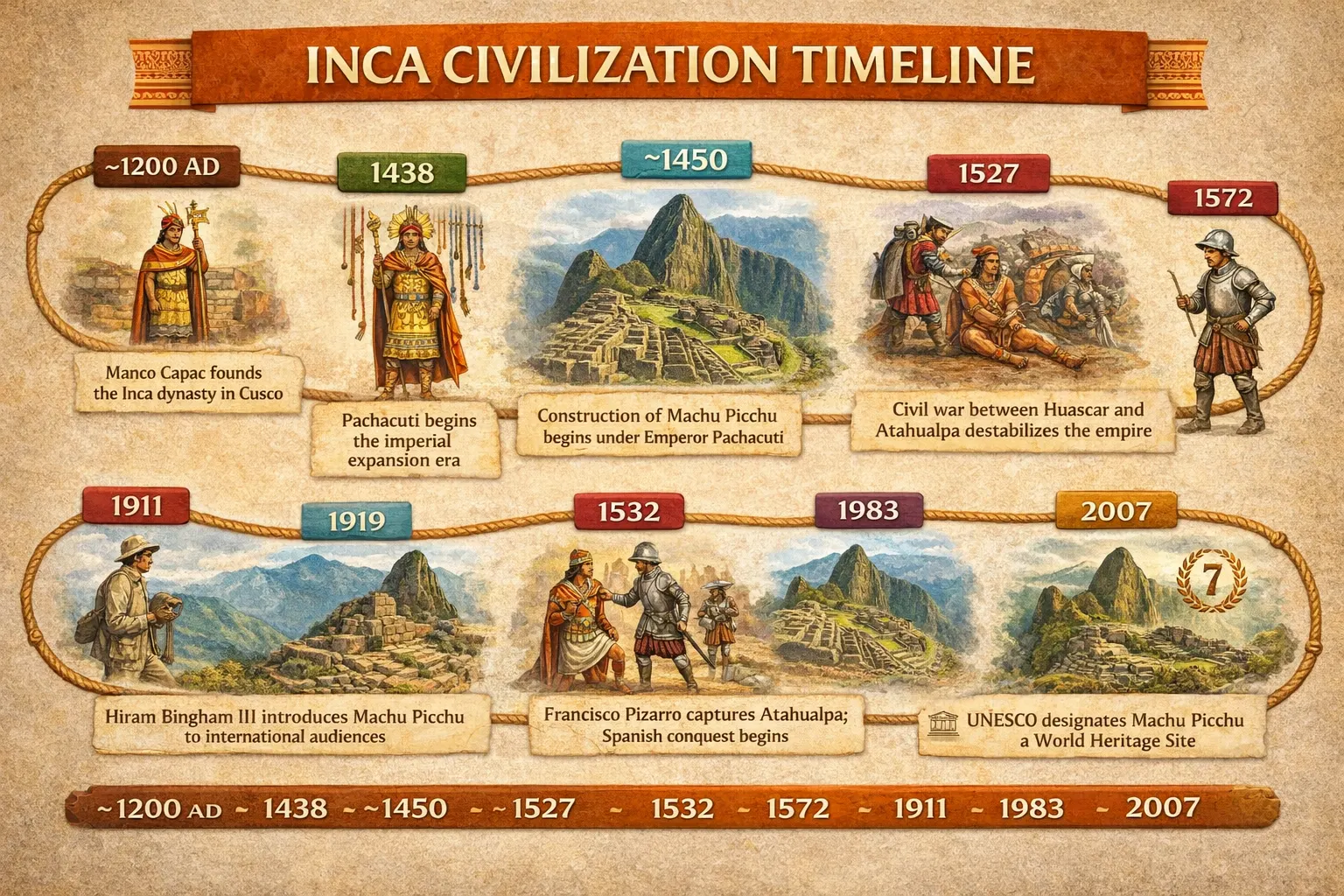
KEY DATES: INCA CIVILIZATION TIMELINE
| Date | Event |
|---|---|
| ~1200 AD | Manco Capac founds the Inca dynasty in Cusco |
| 1438 | Pachacuti begins the imperial expansion era |
| ~1450 | Construction of Machu Picchu begins under Emperor Pachacuti |
| 1527 | Civil war between Huascar and Atahualpa destabilizes the empire |
| 1532 | Francisco Pizarro captures Atahualpa; Spanish conquest begins |
| 1572 | Fall of Vilcabamba; formal end of the Inca state |
| 1911 | Hiram Bingham III introduces Machu Picchu to international audiences |
| 1983 | UNESCO designates Machu Picchu a World Heritage Site |
| 2007 | Machu Picchu named one of the New Seven Wonders of the World |
Machu Picchu: The Lost City of the Incas
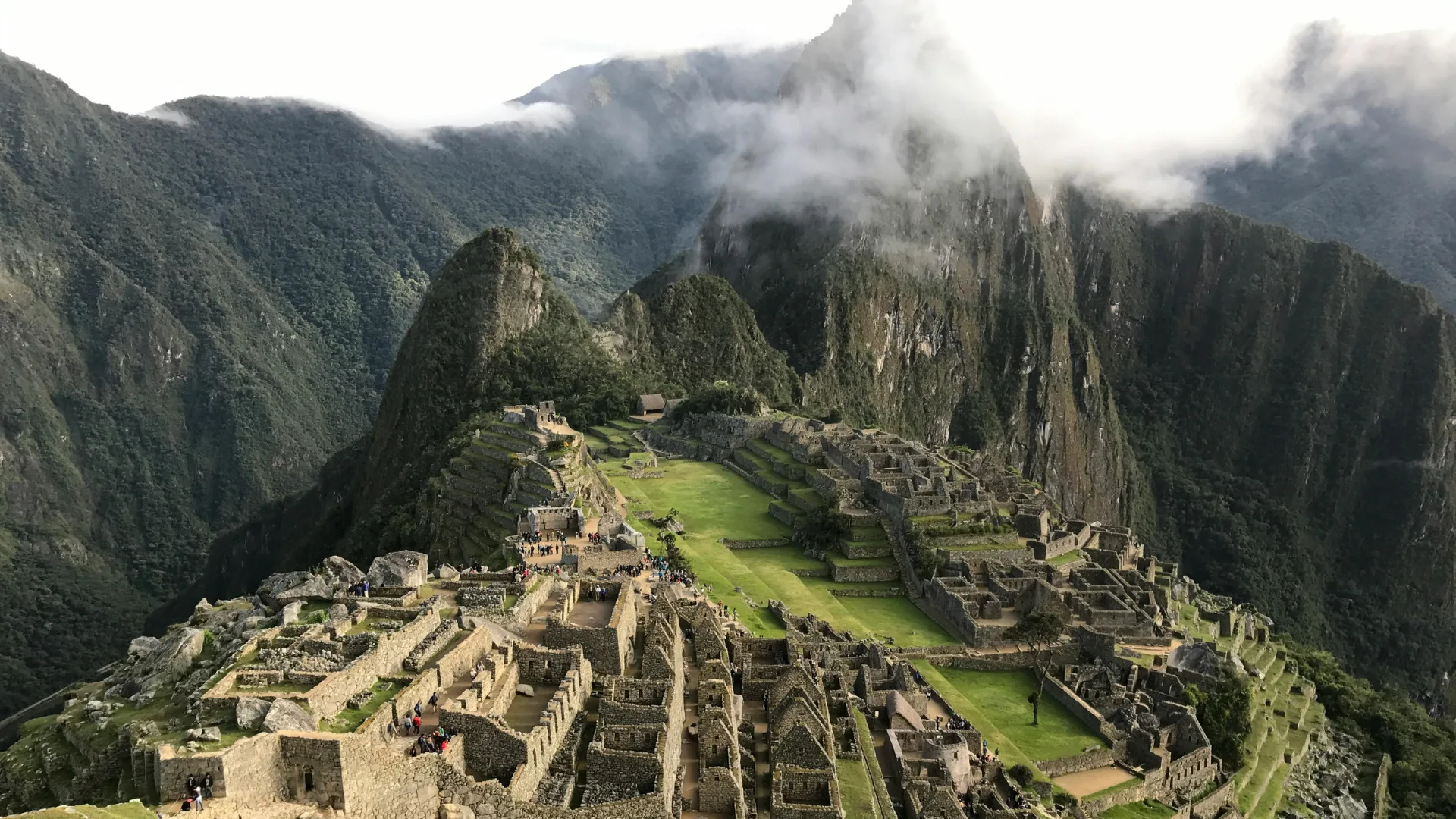
Perched at 7,972 feet (2,430 meters) above sea level on a ridge between two mountains, Machu Picchu (Old Peak) and Huayna Picchu (Young Peak), this is arguably the most iconic archaeological site in the Western Hemisphere. For centuries after the Spanish conquest, it remained hidden from the outside world, cloaked by jungle and cloud forest, known only to local Quechua-speaking farmers.
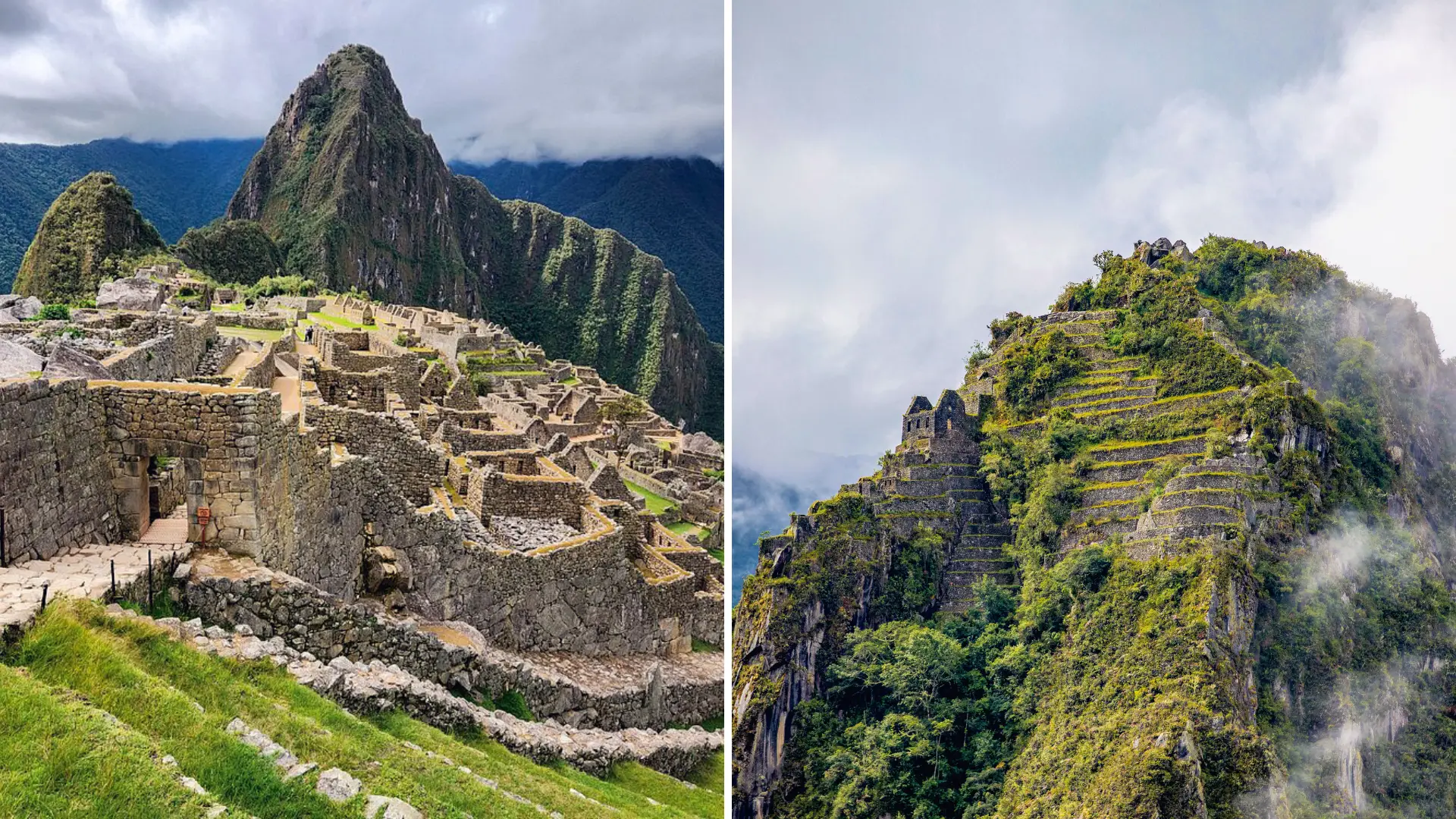
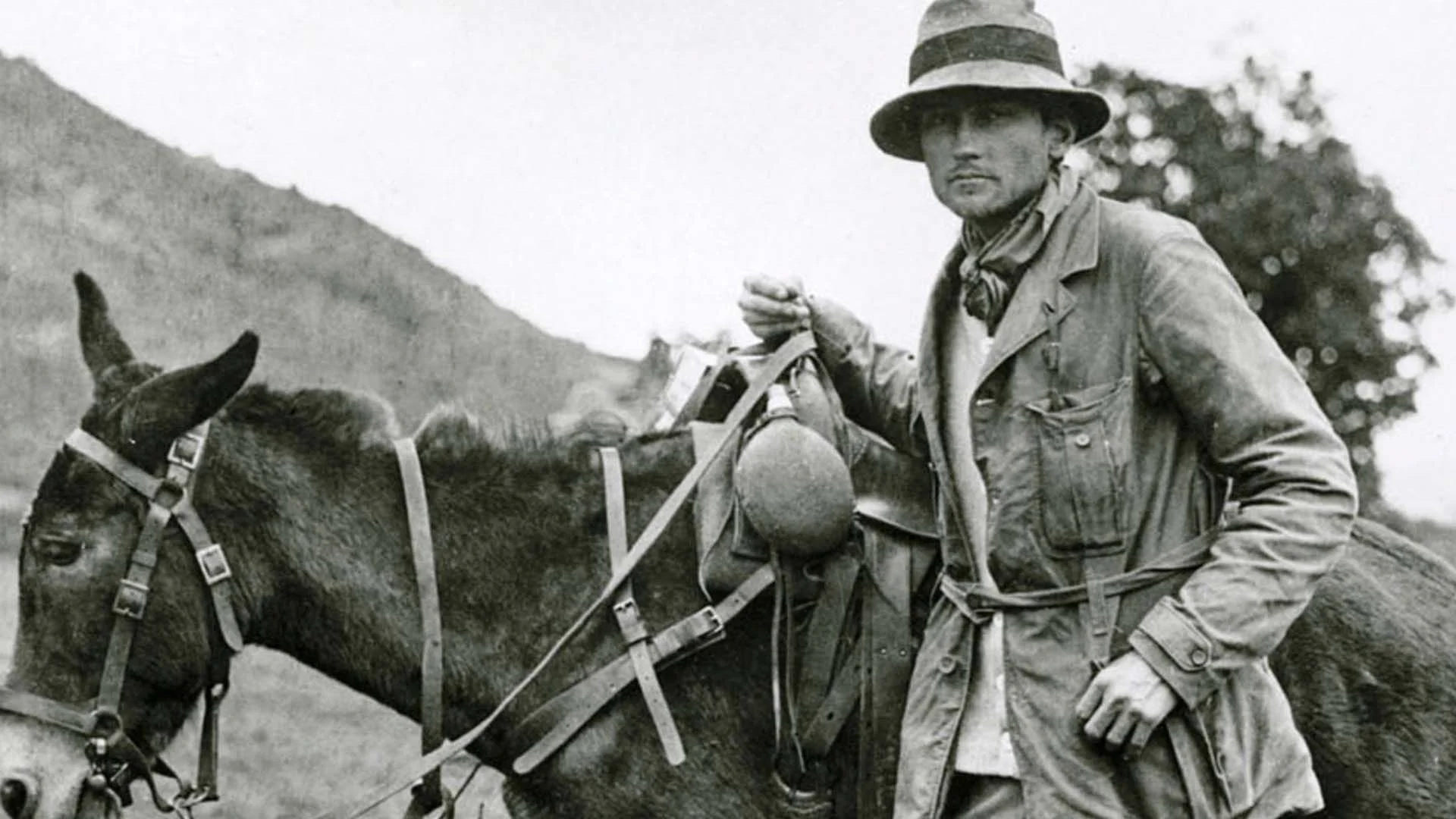
“It seemed like an incredible dream. What could this place be? Why had no one given us any idea of it?” — Hiram Bingham III, 1911
Who Built Machu Picchu and Why?
Most historians today believe Machu Picchu was built around 1450 AD under the orders of the Sapa Inca Pachacuti. It served multiple purposes: a royal retreat for the emperor, a religious center for ceremonies honoring the sun god Inti, and possibly an astronomical observatory. The site covers roughly 80,000 acres, though the urban area occupies about 5 square miles.
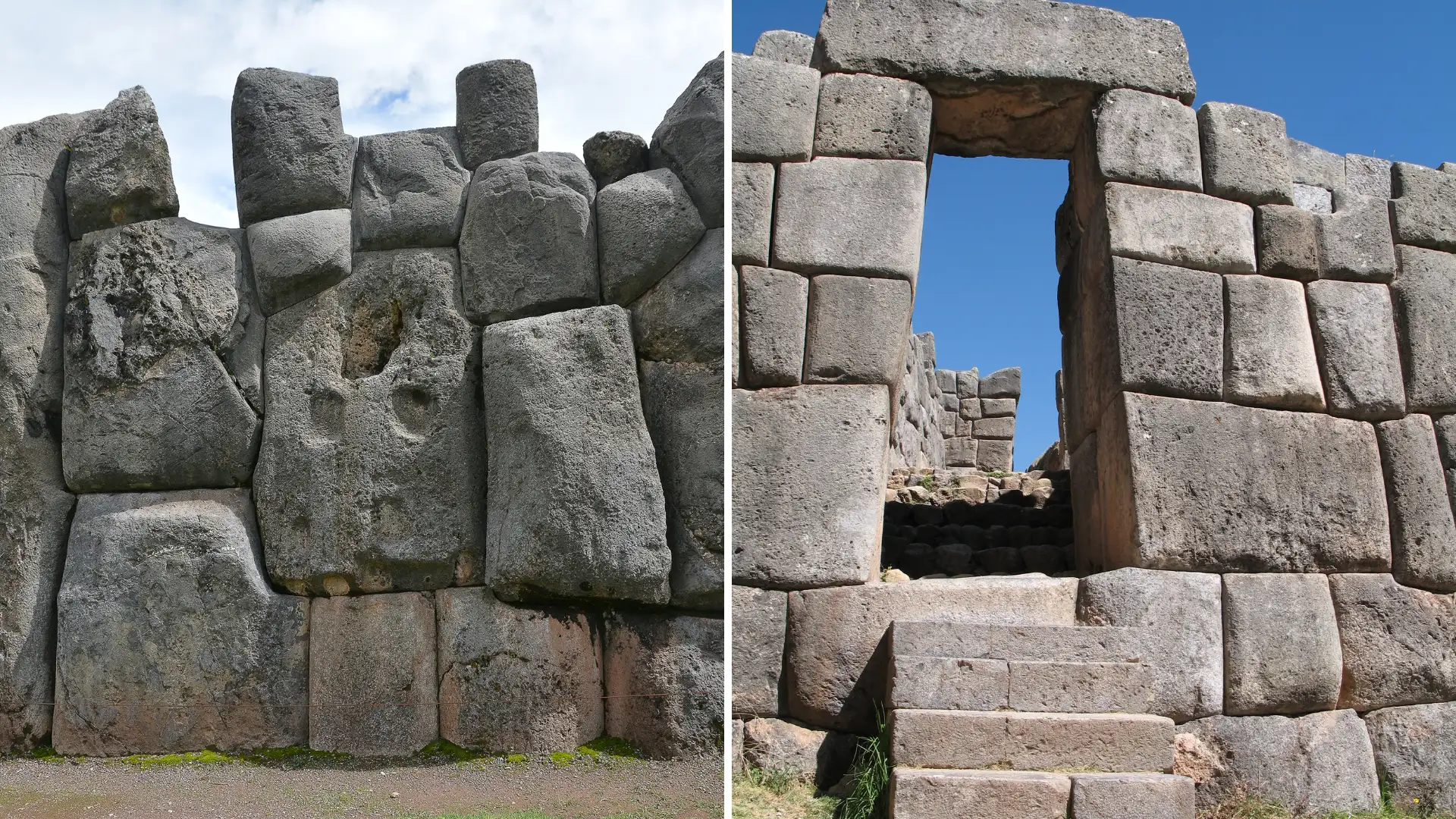
The Inca architecture at Machu Picchu is remarkable for its precision. Without mortar or modern tools, Inca stonemasons used a technique known as ashlar masonry, carving and fitting stones so tightly that a knife blade cannot be inserted between them. This method made the structures earthquake-resistant, explaining why so many walls still stand perfectly today.
Key Facts About Machu Picchu
| Aspect | Fact |
|---|---|
| Elevation | 7,972 ft (2,430 m) above sea level |
| Built | Approximately 1450 AD under Emperor Pachacuti |
| Area | Roughly 5 sq miles of urban construction |
| Annual visitors | Approximately 1.5 million (daily entry now capped) |
| UNESCO status | World Heritage Site since 1983 |
| Global recognition | New Seven Wonders of the World (2007) |
Purpose of Machu Picchu: Royal Estate or Sacred Site?
This is arguably the most debated question in all of Machu Picchu history: what was the site actually built for? Early theories ranged widely, from a military fortress to a sanctuary for the Chosen Women. Modern archaeology has narrowed the answer considerably, but the truth turns out to be richer and more layered than any single explanation.
The Royal Estate Theory
The most widely accepted interpretation today holds that Machu Picchu was a royal estate called llacta, built by and for Emperor Pachacuti. Researchers point to several lines of evidence: the high quality of construction, the presence of elite residential quarters, agricultural terraces capable of producing far more food than the year-round population needed, and the absence of evidence for large-scale permanent civilian occupation.
Under this model, the emperor and his royal court, along with priests, servants, and specialists, would retreat to Machu Picchu seasonally, likely during important agricultural and religious festivals. The site’s remote location was not a drawback. It was the point. Distance from Cusco, Peru meant exclusivity, spiritual elevation, and a direct connection to the mountain gods called Apus that surrounded the citadel.
The Sacred Sanctuary Theory
The royal estate interpretation does not rule out the sacred dimension. In fact, the two were inseparable in Inca thought. For the Incas, a ruler’s estate was inherently sacred, and Machu Picchu’s positioning was almost certainly chosen as much for spiritual as for practical reasons.
The site sits at the confluence of two rivers, the Urubamba and the Aobamba, a location the Incas considered especially powerful in Andean culture. Surrounding mountain peaks, including Salkantay, Veronica, and Huayna Picchu, were all considered major Apus or mountain deities in Inca religion. The entire layout of Machu Picchu, from its plazas to its sun temples, appears oriented to align with these sacred peaks and with key astronomical events.
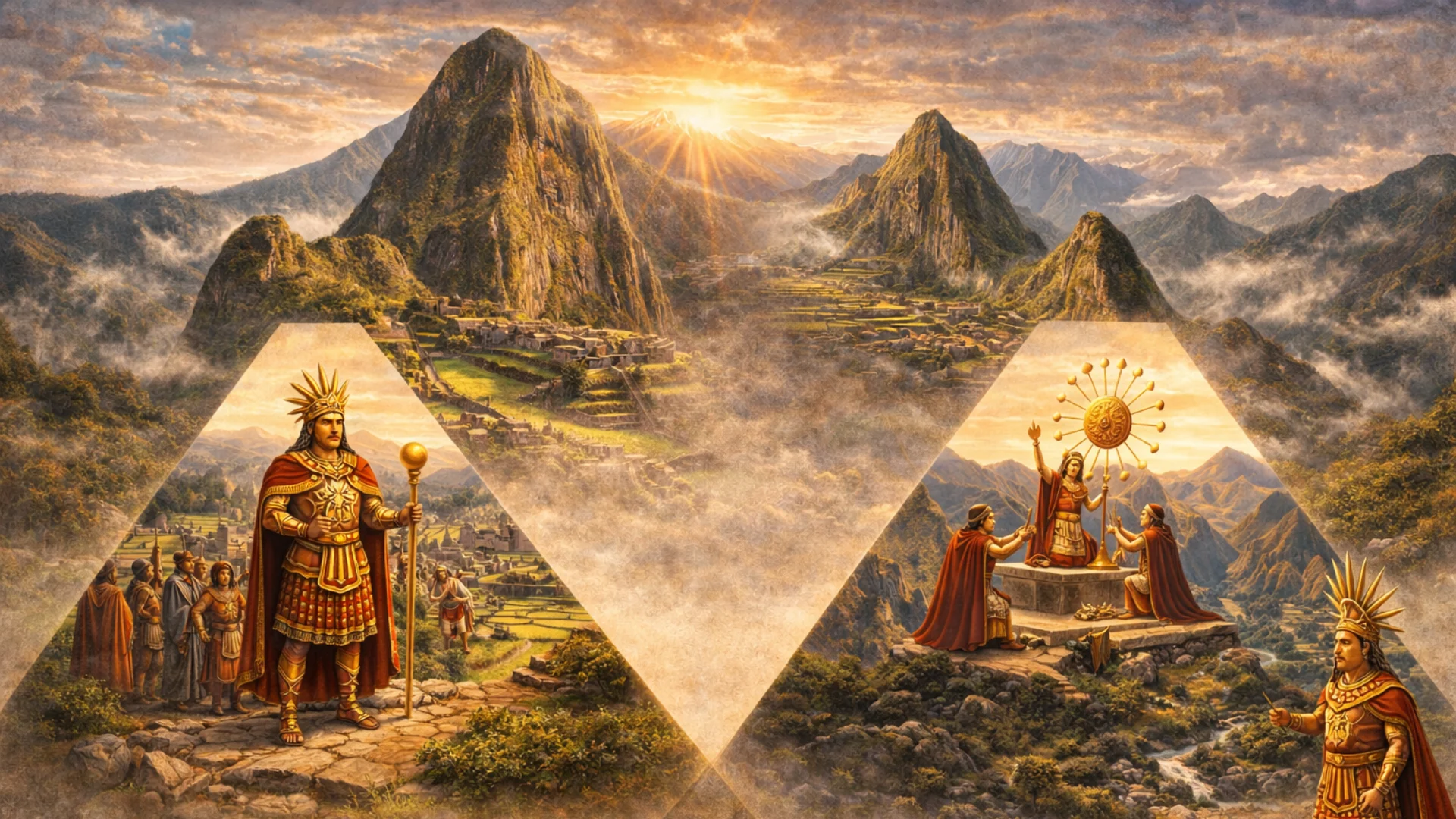
So was it a royal retreat or a sacred sanctuary? The most honest answer is both, simultaneously, as only the Inca civilization could conceive it.
The Strategic Location of Machu Picchu: A Natural Fortress and Administrative Hub
One look at a topographic map of Machu Picchu reveals something immediately obvious: this place was not chosen at random. Tucked between two peaks, surrounded on three sides by steep cliffs that drop hundreds of feet to the Urubamba River gorge below, the site forms a natural fortress of extraordinary defensive value, even before a single wall was built.
Why This Location Was Chosen
The Incas were master readers of landscape. They selected the location of Machu Picchu with the precision of engineers and the sensitivity of priests. The narrow mountain saddle on which the citadel sits is accessible from only a handful of approaches, all of which could be monitored or blocked with relative ease.
But defense was only part of the equation. The site also sat at a critical juncture between the highland empire centered at Cusco, Peru and the lowland Amazon basin to the east, an area the Incas were actively trying to control and exploit for tropical resources like coca, exotic feathers, and hardwoods. Machu Picchu functioned as a gateway and administrative checkpoint between these two very different worlds.
Water Engineering: The Hidden Infrastructure
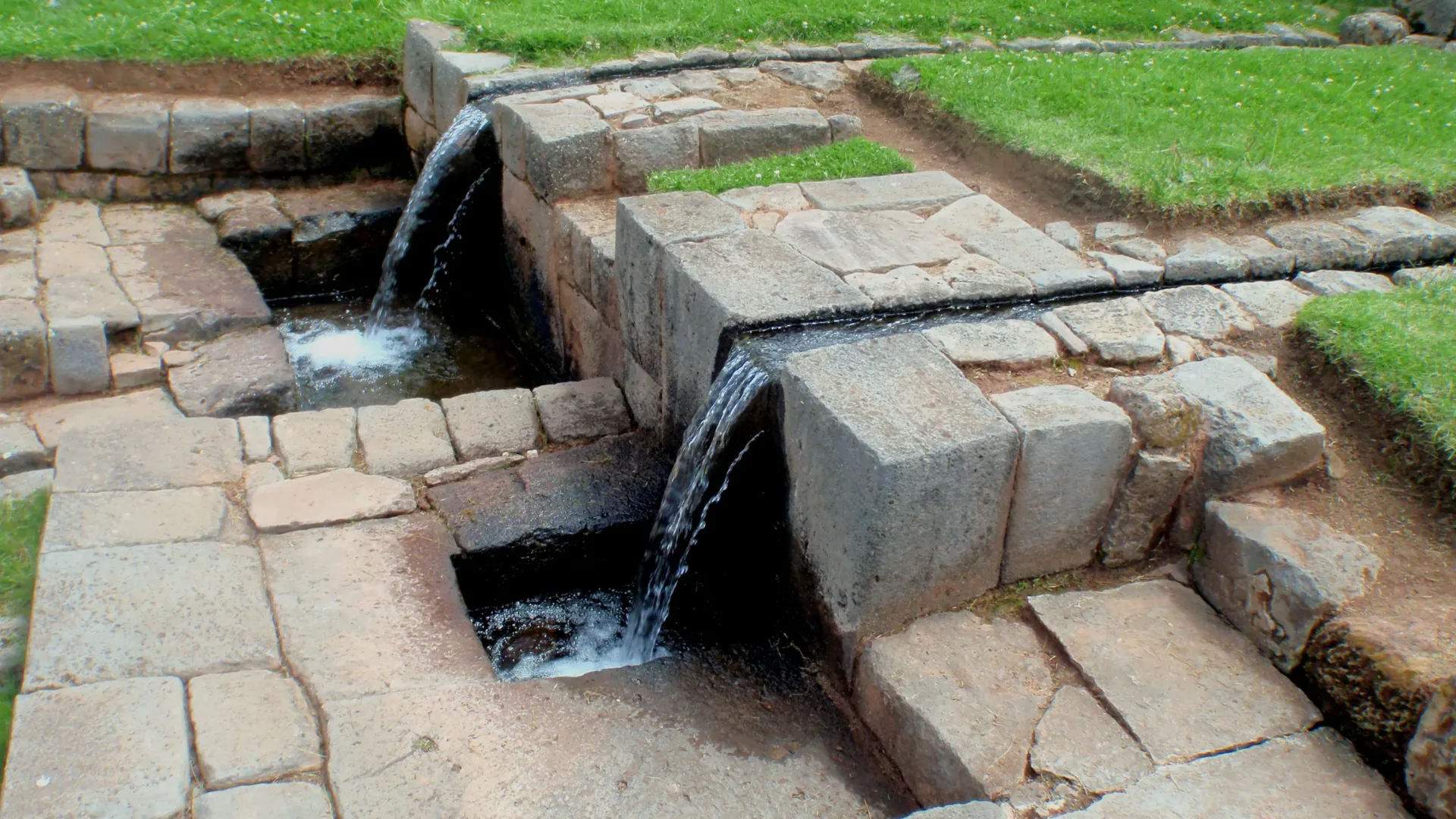
Perhaps the most underappreciated aspect of Machu Picchu’s strategic genius is its water system. The Incas built a sophisticated network of canals, fountains, and drainage channels that captured spring water from above the site and distributed it through a series of 16 fountains in descending order, from the most sacred near the temples to the most utilitarian near the agricultural zones.
This hydraulic engineering ensured that the site was entirely self-sufficient in water, critical for a mountain location that could be cut off from supply lines during conflict or bad weather. The same Inca architecture principles applied here: no mortar, no metal fittings, just perfectly carved stone channels that still flow with water today, five and a half centuries later.
Spiritual and Religious Significance: Machu Picchu as a Sacred Sanctuary
To understand Machu Picchu as the Incas understood it, you have to let go of the separation between the sacred and the secular. Inca Empire religion recognized no such division. The mountains were gods. The rivers were living entities. The sun was the supreme deity and the divine ancestor of the Sapa Inca himself. Every act of construction, agriculture, and governance was a religious act, and nowhere was this truer than at Machu Picchu.
Inti: The Sun God at the Center of Everything
The entire cosmology of the Inca civilization revolved around Inti, the sun god. The Sapa Inca was believed to be Inti’s direct son on Earth, which made the emperor not just a political ruler but a living deity. Machu Picchu’s positioning, in a place where the sun rises and sets in alignment with key peaks and where solstice and equinox sunrises could be precisely tracked, made it an ideal location for solar worship.
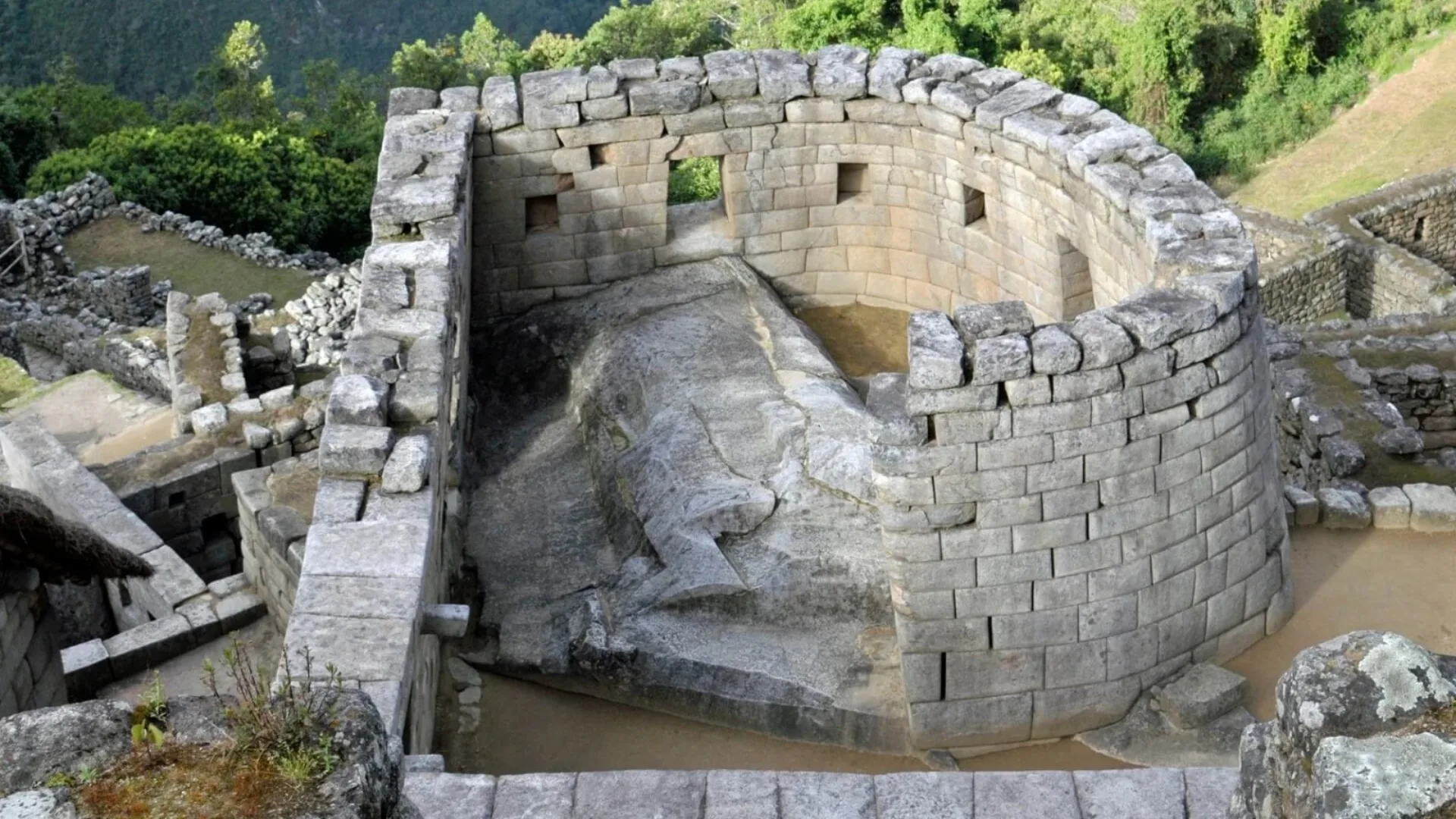
The Temple of the Sun at Machu Picchu is the finest example of this solar devotion. Its curved wall, rare in Inca architecture, wraps around a sacred rock, and its windows frame the precise point of sunrise during the June solstice. On that morning, a beam of light falls exactly through the window and illuminates a specific spot on the rock below, an effect achievable only through years of careful observation and deliberate construction.
The Apus: Mountain Deities and Sacred Geography
Beyond solar worship, Machu Picchu was embedded in a web of sacred geography central to Andean culture. The Incas believed that mountains, called Apus, were living beings with power over rainfall, harvests, and human fate. The peaks visible from Machu Picchu, particularly Huayna Picchu, which looms directly over the site, were among the most revered Apus in the entire Inca Empire.
Sacred lines called ceques radiated from Cusco across the landscape, connecting shrines, water sources, and mountain peaks in an invisible grid of spiritual power. Researchers believe Machu Picchu sat at the intersection of several of these ceque lines, making its location as cosmologically significant as it was geographically dramatic.
Ritual Life at the Citadel
The skeletal remains found at Machu Picchu include a disproportionate number of women, which early researchers interpreted as evidence of nustas or Chosen Women dedicated to religious service. More recent analysis suggests the population was more mixed, but ritual life clearly dominated the site’s calendar. Llama sacrifices, chicha (corn beer) offerings, and solar ceremonies at the Intihuatana stone would have punctuated the year in a rhythm of devotion that blurred the line between daily life and worship.
This is the deepest layer of Machu Picchu history, not dates and emperors, but a living spiritual practice that treated the entire Andean landscape as a cathedral. Even today, visitors to the site often report a feeling that is hard to name, something between awe and unease, as if the place still carries the weight of everything once asked of it.
The Inca Trail: Walking in Ancient Footsteps
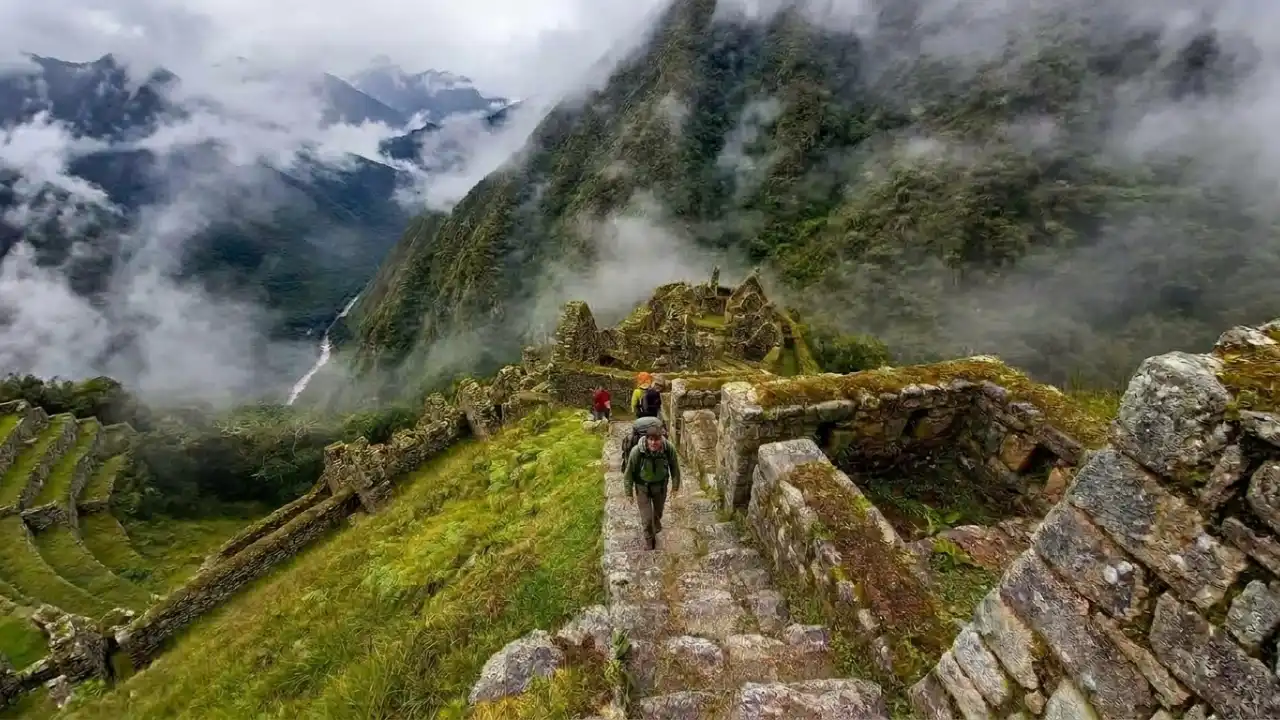
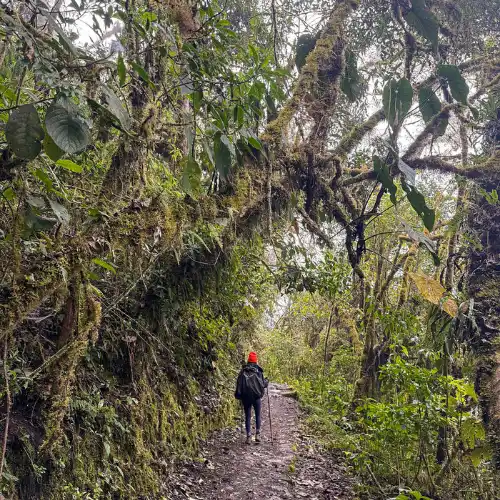
If Machu Picchu is the destination, the Inca Trail is the journey. This ancient footpath stretches approximately 26 miles (42 km) through the Sacred Valley, alpine tundra, and cloud forest, passing dozens of Inca ruins before arriving at the Sun Gate, known as Inti Punku, with Machu Picchu spread out below in the morning mist.
The Inca Trail was once part of the vast road network called Qhapaq Nan that connected the Inca Empire across the Andes. Specially trained runners called chasquis used these roads to relay messages at speeds that modern estimates suggest could cover 240 miles per day through relay stations.
Hiking the Inca Trail Today
Today, the classic Inca Trail to Machu Picchu is one of the world’s most celebrated multi-day hikes. The Peruvian government limits it to 500 permits per day including guides and porters, so booking months in advance is essential, especially for the dry season months of May through September.
The trail passes through three distinct altitude zones and climbs as high as 13,779 feet (4,200 m) at Dead Woman’s Pass, one of the most challenging and rewarding ascents in all of trekking. For those who want to reach Machu Picchu without the multi-day hike, the train from Cusco, Peru to Aguas Calientes (the gateway town) is a spectacular alternative.
Inca Ruins Beyond Machu Picchu
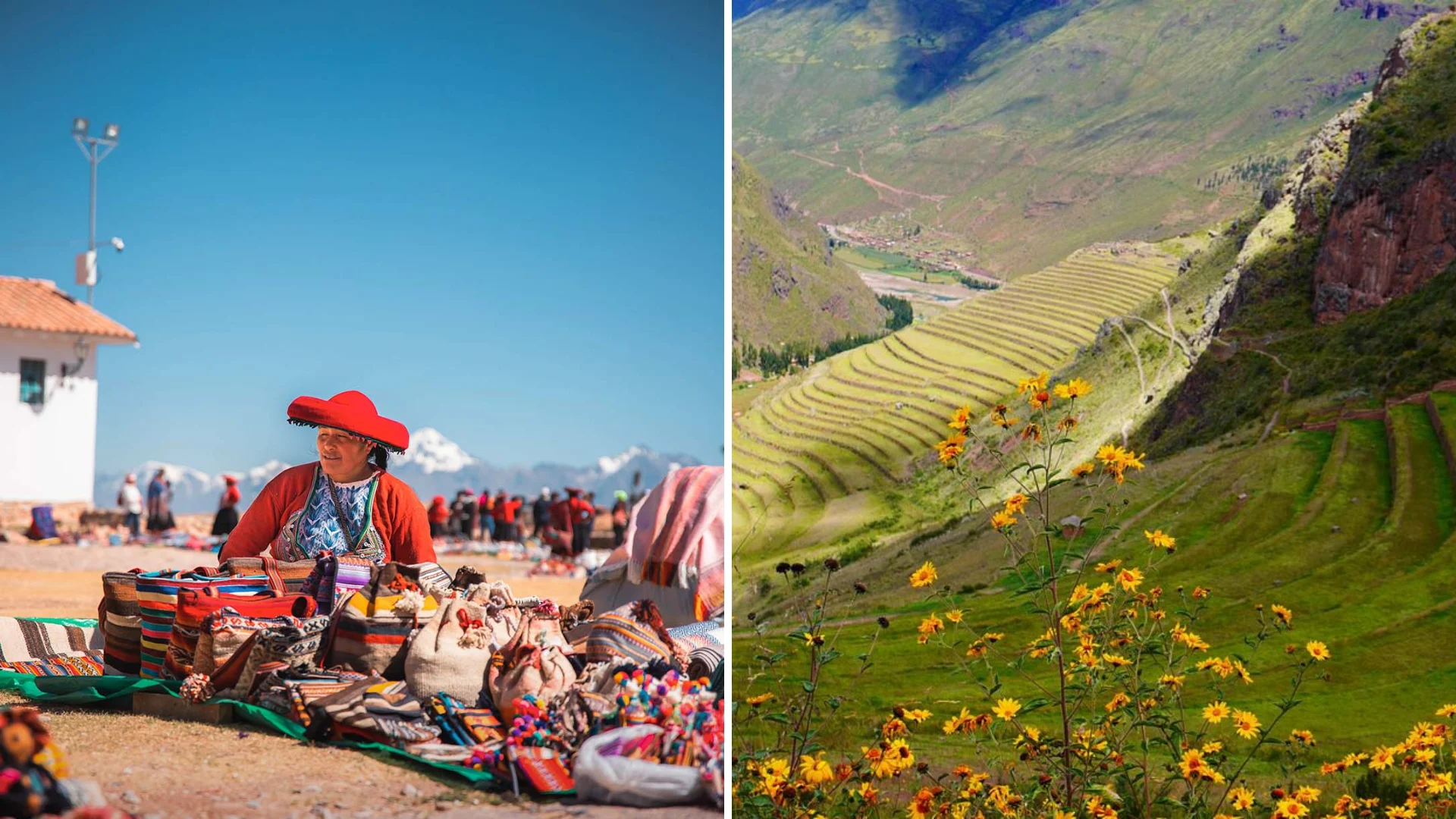
Machu Picchu gets most of the attention, but the Inca ruins scattered across Cusco, Peru and the Sacred Valley are equally impressive and far less crowded. Ollantaytambo, Pisac, Moray, and the salt terraces of Maras are all essential stops for anyone seriously interested in the ancient Inca civilization.
Machu Picchu History: From Rediscovery to World Heritage
The most pivotal moment in Machu Picchu history for the Western world came on July 24, 1911, when American historian and explorer Hiram Bingham III, guided by local farmers, climbed to the site and introduced it to international audiences. Bingham’s National Geographic expeditions brought global attention to the ruins, though it must be noted that local Peruvians had never truly “lost” knowledge of the site.
Excavations revealed that Machu Picchu had been inhabited from roughly 1450 to 1572 AD, when it was apparently abandoned, likely due to the Spanish conquest’s disruption of the Inca Empire, smallpox epidemics, and political collapse. Because the Spanish never found it, Machu Picchu was never looted or demolished, which is why it remains so extraordinarily intact.
In 1983, UNESCO designated Machu Picchu a World Heritage Site. In 2007, it was voted one of the New Seven Wonders of the World, a recognition that felt long overdue to anyone who has stood in its presence.
Inca Architecture: Engineering Genius in Stone
It is impossible to explore either the Inca Empire or Machu Picchu without marveling at Inca construction. Across the empire, from Cusco’s Coricancha temple to the fortress of Sacsayhuaman, the same design principles hold: massive and precisely fitted stones, trapezoidal doorways and niches, and structures built to work with the mountain landscape rather than against it.
Inca architecture relied heavily on polygonal masonry, where irregularly shaped stones were cut to interlock perfectly with their neighbors. The stones at Sacsayhuaman, near Cusco, Peru, weigh up to 100 tons and were transported from quarries miles away without wheeled vehicles or iron tools. To this day, engineers debate exactly how the Incas moved and positioned them.
Why Inca Buildings Survived the Centuries
The genius of Inca architecture lies partly in its earthquake resistance. Because stones were fitted tightly without mortar, they could shift slightly during tremors and then settle back into place, a technique now studied by modern seismic engineers. It is one reason why many original Inca walls in Cusco, Peru survived the Spanish conquest, colonial expansion, and centuries of earthquakes.
Andean Culture: The Living Legacy of the Incas
The Inca Empire may have fallen, but Andean culture never did. Today, millions of Quechua-speaking indigenous people across Peru, Bolivia, Ecuador, and Colombia carry forward traditions, crafts, languages, and worldviews that trace directly to Inca roots. The concept of Pachamama (Mother Earth), the use of the kero ceremonial cup, textile weaving patterns, and agricultural terracing are all living inheritances of the ancient Inca civilization.
In Cusco, Peru, still recognized as one of the most beautifully preserved colonial cities in the Americas, you can walk streets lined with original Inca stonework foundations topped by Spanish colonial buildings. The city is a literal layering of civilizations, and one of the most compelling places on Earth to understand the depth of Andean culture.
Visiting Machu Picchu: A Practical Travel Guide
Planning a visit to the Inca ruins of Machu Picchu takes some preparation, but the experience is life-changing. Here is what you need to know before you go.
| Topic | Information |
|---|---|
| Tickets and Permits | Buy official Machu Picchu tickets in advance at tuboleto.cultura.pe Daily entry is capped. The Inca Trail requires separate permits booked months ahead. |
| Getting There | Fly to Cusco, then take Peru Rail or Inca Rail to Aguas Calientes. From there, buses run up the mountain to the ruins every 30 minutes. |
| Best Time to Visit | Dry season (May to October) offers clear skies and ideal trekking. Sunrise visits give you the iconic mist-covered citadel before the crowds arrive. |
| Altitude Tips | Cusco sits at 11,000 ft. Spend 2 to 3 days acclimatizing. Drink mate de coca (coca leaf tea). It genuinely helps with altitude sickness. |
Frequently asked questions about The Inca Empire and Machu Picchu: The Lost City That Changed History
The Inca Empire was the largest civilization in pre-Columbian America, known as Tawantinsuyu, which means The Four Regions. It stretched across the Andes and unified diverse cultures under a centralized system.
Machu Picchu was built around 1450 AD under Emperor Pachacuti, one of the most important rulers of the Inca Empire.
Most historians believe it served as both a royal estate and a sacred religious site, combining political, spiritual, and astronomical functions.
It represents the peak of Inca engineering, architecture, and spirituality, and remains one of the most iconic archaeological sites in the world.
It extended along the western coast of South America, covering modern-day Peru, Ecuador, Bolivia, Colombia, Chile, and Argentina, with Cusco as its capital.