


Researchers Probe Whether Huayna Picchu’s Temple of the Moon Was an Inca Burial Site
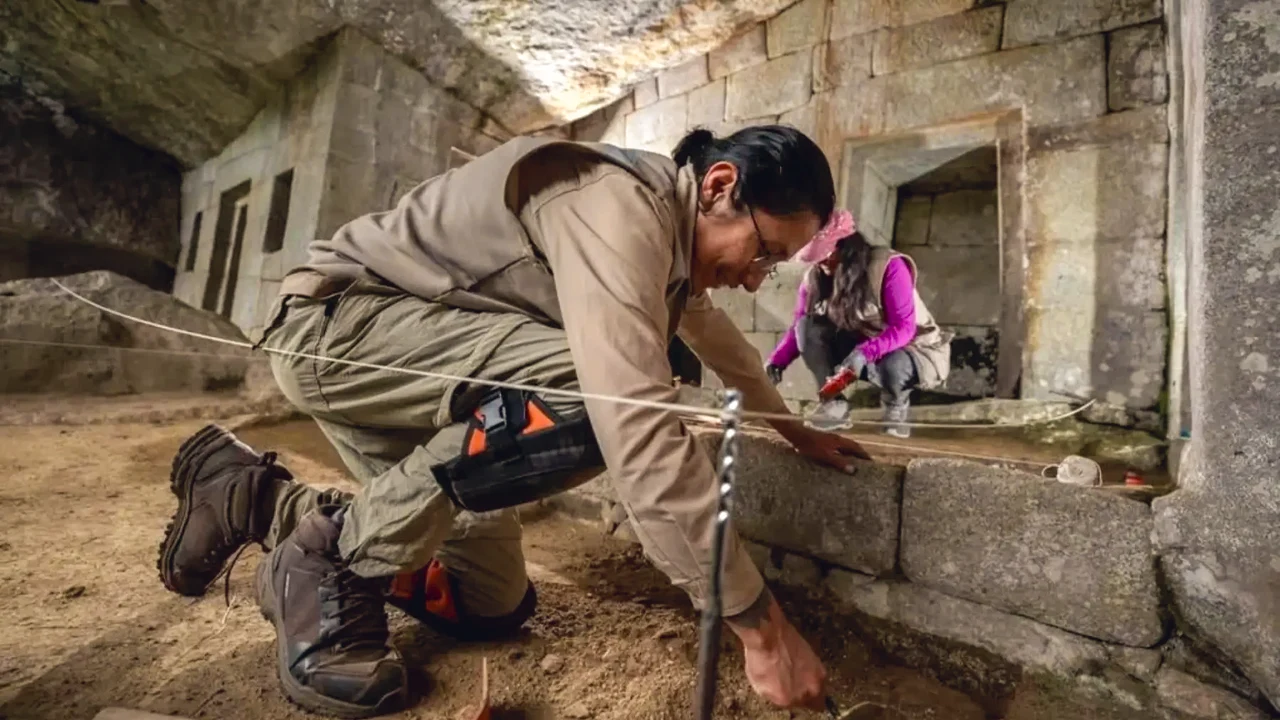

Peruvian archaeologists Pizarro and Ortiz are searching for evidence of funerary uses in the Temple of the Moon.
What if the “Temple of the Moon” wasn’t a temple?
A group of archaeologists from Cusco, led by Rolando Pizarro Silva and Jackeline Ortiz, is conducting research. Their goal is clear. They want to confirm that the Great Cave, known as the Temple of the Moon on Huayna Picchu Mountain, was a special cemetery for the Inca elite. They also want to back up this idea with real evidence.
The name sounds magical, but… where did it come from?
The project is called “Endoscopic Prospecting in the Temple of the Moon.” To begin with, the team uses modern technology. In this way, they seek to unravel the mystery behind the name. In fact, foreign explorers gave it this name without any scientific basis. That is why they are now trying to reveal its true function. In other words, they believe it was a mausoleum for high-ranking individuals.
Three steps, one mission: discover without destroying
The research is divided into three strategic phases to protect Machu Picchu. First, the team observes carefully. Then, it intervenes with great control. Finally, it looks inside hidden spaces without breaking anything.
- Surface prospecting: the first glance that changes everything, First, they survey the site. They also review the area and nearby structures. This gives them a better understanding of what is there and how everything is connected.
- Controlled excavation: only 75 centimeters, but with big clues, Next, they excavate only 75 centimeters. Thanks to this, they found ancient foundations. They also found parts of the original floor. Therefore, they can see how the space was built and used.
- Archaeological endoscopy: a small camera for a huge secret, Finally, they use very small cameras. With them, they explore cavities within the fine architecture. The important thing is that they do not damage the walls. This method has been used before in the pyramids of Egypt. However, final authorization from the Archaeological Park is still pending. When it is approved, they will be able to enter very small spaces and check what is hidden there.
Evidence of an elite mausoleum
The niches that could tell a silent story
The initial findings support the idea of a funerary and ritual site. The main structure has trapezoidal niches. According to the team, these niches were made to store mallquis, which were mummies. In addition, the panacas treated the mallquis as if they were still alive even after death.
It doesn’t look like just any tomb… and that’s what’s so disturbing.
According to experts, the quality of the stones and internal walls is very high. That’s why they believe it wasn’t a common tomb. Rather, it would have been a dynastic mausoleum. In other words, a place for important families. They also believe that the bodies were left in open entrances. This allowed them to clean them and change the offerings. In this way, they maintained a link between the world of people and the sacred world, and that connection was renewed again and again with rituals and constant care.
A clue from the past that comes back with force
This study also revisits older work. For example, it revisits what George Eaton did in the early 20th century. At that time, he had already found many caves with bone remains in the area. Now, with the support of the Ministry of Culture and in collaboration with National Geographic, the team will continue its research. Finally, they will publish a book. With this book, they seek to change the way Huayna Picchu is understood. Specifically, they want to show it as a great necropolis of the empire’s nobility.
You could also visit: