
Cusco Semana Santa 2026 Travel Guide Traditions and Processions
Holy Week in Cusco is far more than a religious event. For one week each year, the entire city is immersed in a powerful atmosphere of faith, tradition, and community. Streets, plazas, and churches fill with solemn processions, centuries-old rituals, and traditional foods that bring together families, locals, and visitors alike.
Set high in the Andes at 3,400 meters above sea level, Cusco provides a remarkable setting for these celebrations. The city’s historic center known for its Inca stone walls, narrow cobblestone streets, and colonial churches reflects the unique blending of ancient Andean beliefs with more than five centuries of Catholic tradition, giving Holy Week in Cusco a character found nowhere else in Latin America.
Palm Sunday Feels Like in Cusco
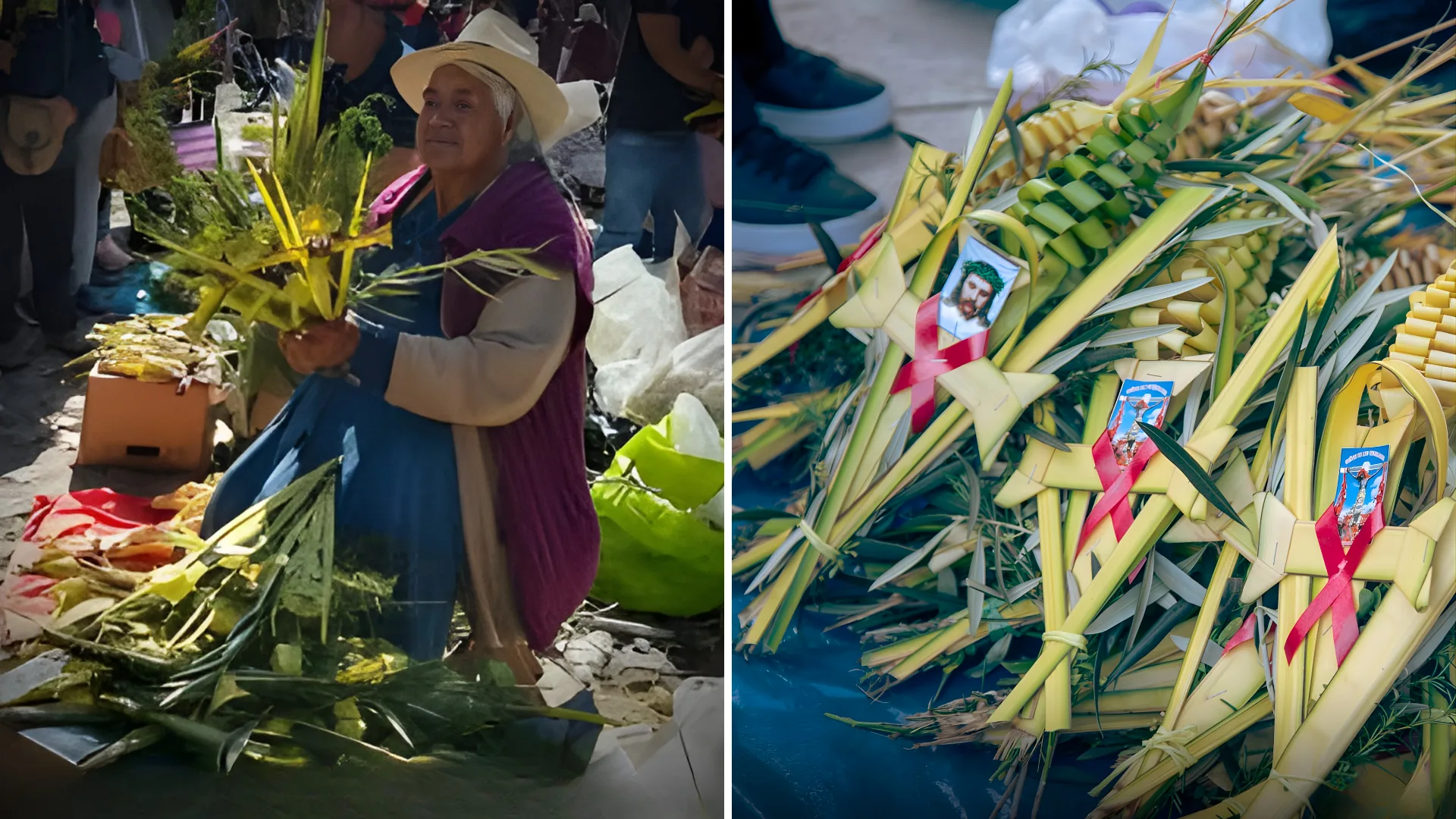
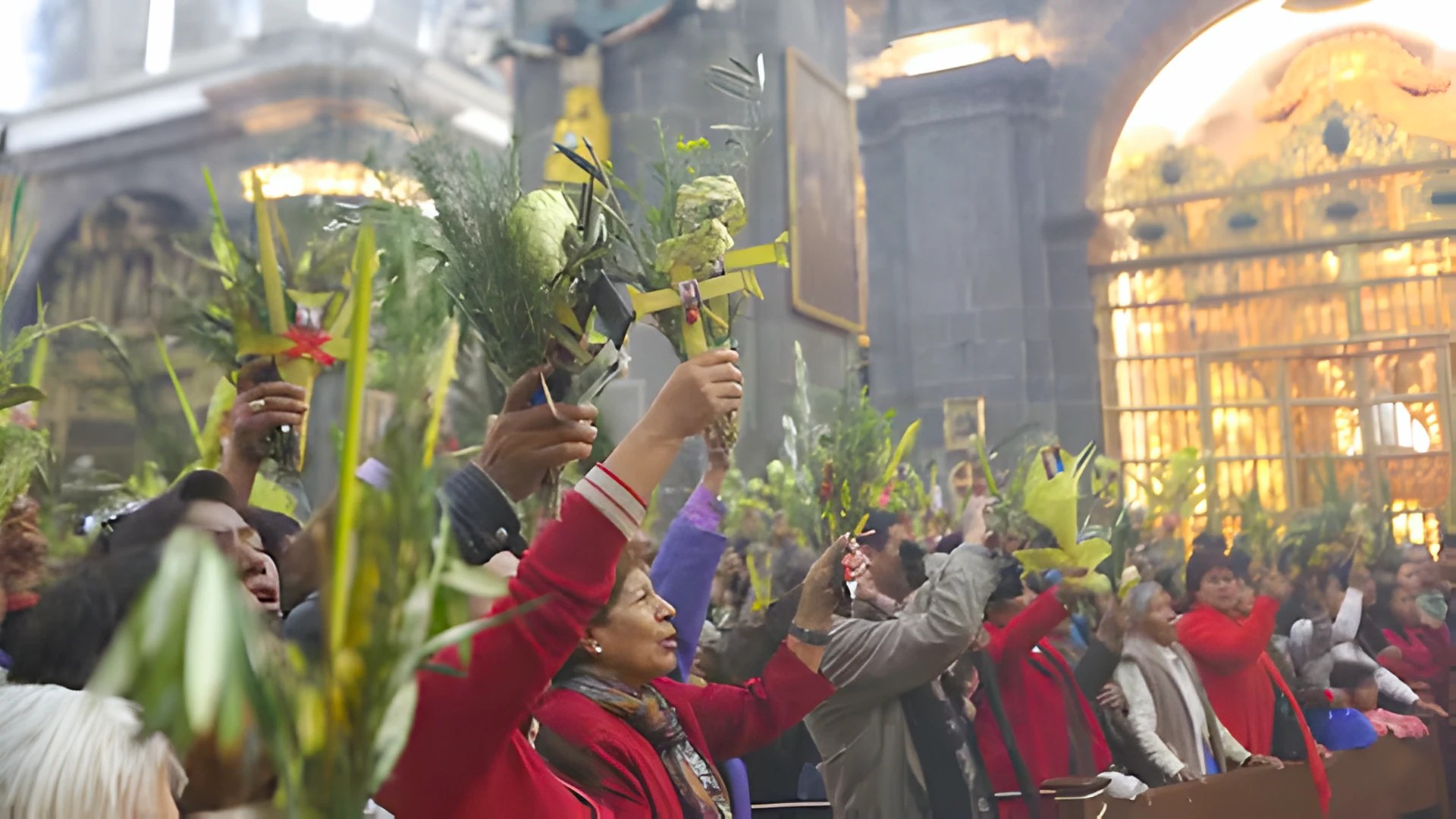
Palm Sunday in Cusco arrives with an unmistakable energy a mixture of market frenzy, religious anticipation, and the particular joy of a city that knows the week ahead will be unlike any other. By 6:00 AM, the streets around the Mercado San Pedro are already alive. Vendors arrive with enormous bundles of fresh palm fronds and intricately braided ceremonial palms from the Sacred Valley and beyond.
| Time | Event |
|---|---|
| 5:00 AM | Markets Open – Vendors Arrive
The streets around Mercado San Pedro fill with vendors from the Sacred Valley arriving with palm fronds and woven crosses. This is the best moment to see the market before the crowds appear. |
| 7:00 AM | Palm Sunday Mass – Cathedral of Cusco
The Bishop of Cusco presides over the first important Mass of Holy Week. The blessing of palms is performed, and the congregation exits waving their fronds in a river of green that flows into the plaza. |
| 9:00 AM | Procession of Palms – Plaza de Armas
A ceremonial procession of clergy and parishioners circles the Plaza de Armas. Children in white tunics lead the way while the Hosanna chant, sung in Quechua and Latin, rises above the square. |
| 11:00 AM | Family Visits and Neighbourhood Masses
Each of the historic center’s eight parish churches holds its own Mass. Neighbourhoods like San Blas offer an intimate atmosphere, while San Cristóbal provides panoramic views of the city. |
The City at Prayer and Preparation
In the afternoons, a quieter domestic rhythm takes over.
| Time | Event |
|---|---|
| 3:00 PM | Afternoon Procession – Barrio de San Blas
San Blas hosts a charming procession where a statue of Christ entering Jerusalem on a donkey is carried through narrow alleys decorated with flowers and palm fronds. |
| 5:00 PM | Evening Mass – Church of La Compañía
The Jesuit church on the Plaza de Armas celebrates a solemn Mass. Afterward, blessed palms are placed in the windows of homes throughout the city, where they remain for the entire week. |
Evening: The First Candles of the Week
As darkness settles, the first altares callejeros (street altars) are assembled by neighbourhood associations. These temporary altars are draped in purple and gold cloth and decorated with mirrors and candles. In the churches, the religious brotherhoods gather to organize the cargadores who will carry the massive floats in the days ahead.
- Where to Be on Palm Sunday:
Start at Mercado San Pedro at 7:00 AM for the palm market. Attend the 9:00 AM procession in the Plaza de Armas. In the afternoon, explore San Blas for a more intimate community procession. After nightfall, return to the Plaza de Armas to see the Cathedral illuminated and the first street altars glowing in the dark.
Holy Monday El Señor de los Temblores Cusco Tradition
If Holy Week in Cusco is unlike any other in the world, then Holy Monday stands as its emotional and spiritual peak. The procession of El Señor de los Temblores (the Lord of the Earthquakes) is the single most important religious event in the city’s annual calendar. Tens of thousands of people gather in and around the Plaza de Armas for an event that is at once a Mass, a collective act of mourning.
The Story of El Señor de los Temblores
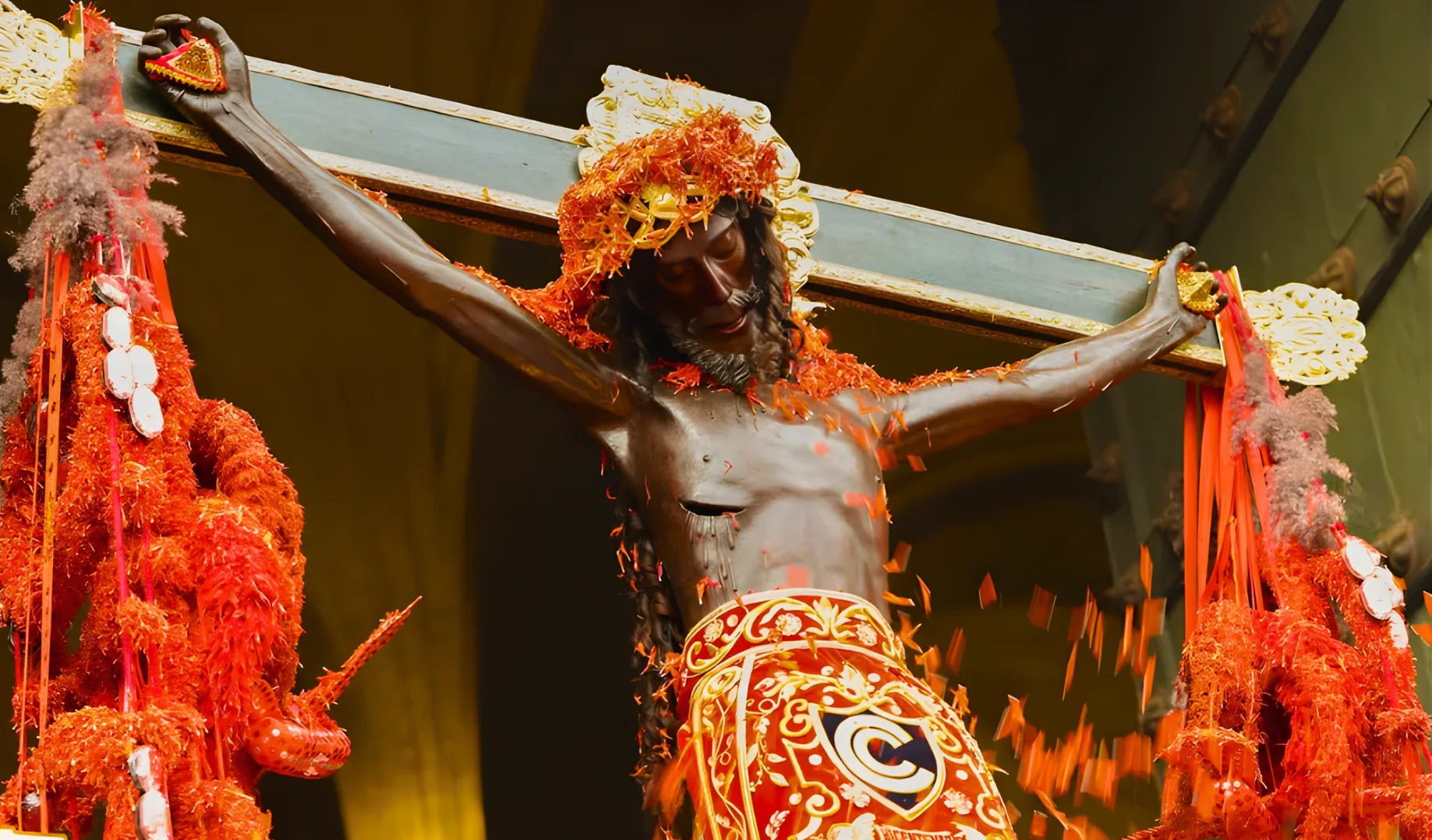
The origins of this procession date back to 1650, when a devastating earthquake struck Cusco. During the crisis, the Bishop ordered that a dark-skinned crucified Christ kept in a side chapel of the Cathedral be carried through the streets. According to historical accounts, the earthquake stopped the moment the image appeared in the Plaza de Armas. From that day forward, the people of Cusco declared this Christ their patron and protector, naming him El Señor de los Temblores or Taytacha de los Temblores.
The figure itself is remarkable, portraying Christ with a dark skin tone that many Cusqueños see as reflecting their own Andean identity. This connection is so strong that the procession is not felt as a symbolic reenactment but as a yearly encounter with a living protector who emerges from the Cathedral to walk among his people.
The Ñucchu Flowers: A Sacred Obligation
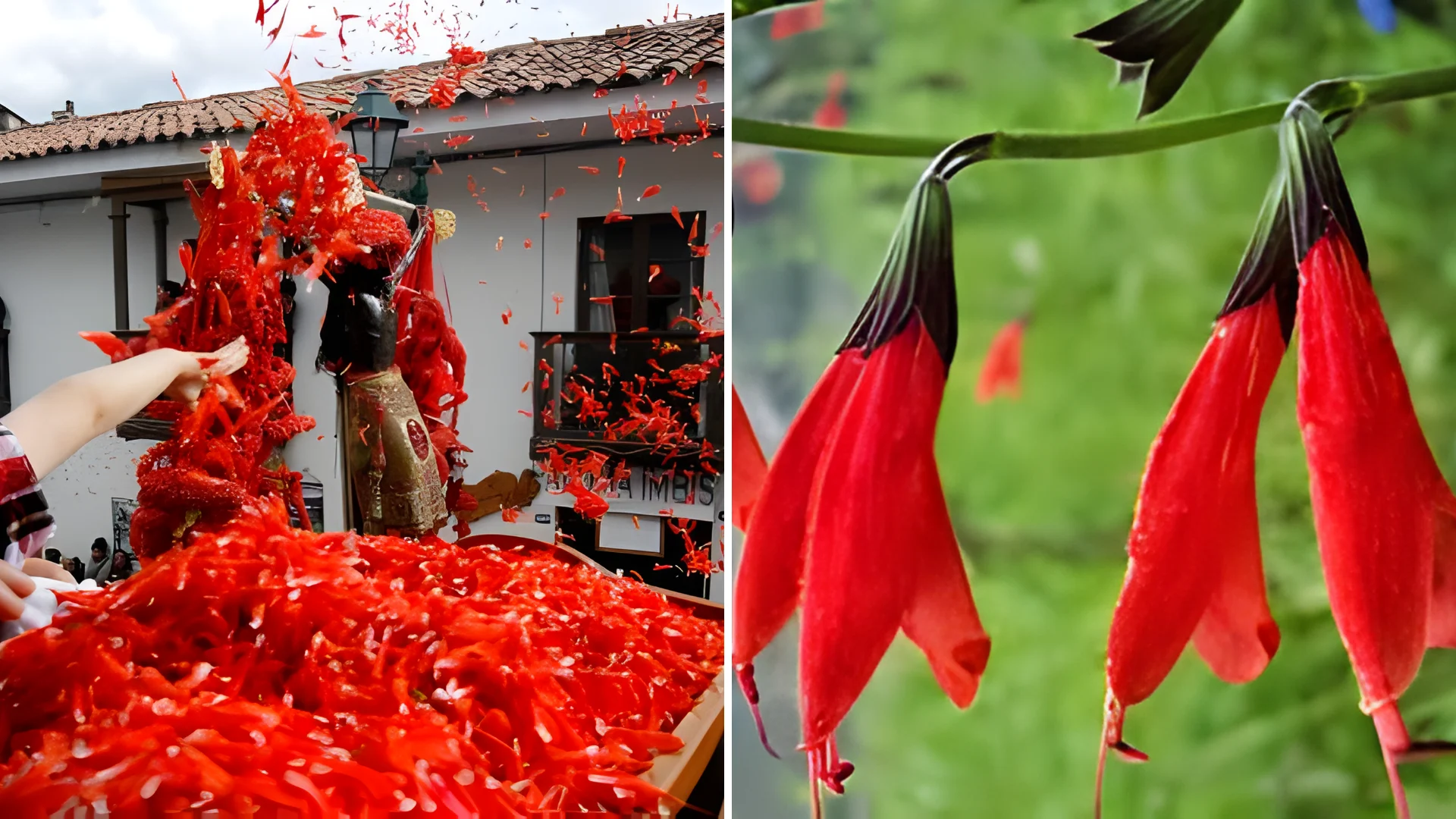
The float that carries the Lord of the Earthquakes is covered each year with thousands of ñucchu flowers, a deep crimson Andean bloom whose color is associated with the blood of Christ. Preparing this floral canopy is a devotional act carried out by families who have inherited the responsibility for generations. By dawn on Holy Monday, the anda (float) is transformed into a dense and fragrant mountain of red blossoms.
| Time | Event |
|---|---|
| 6:00 AM | Final Preparations at the Cathedral
The cargadores (bearers) gather for a private Mass. There are between 80 and 120 men wearing purple tunics, many of whom have carried the float for decades as part of a sacred vow. Outside, the final arrangement of the ñucchu flowers is completed. |
| 10:00 AM | Solemn Mass in the Cathedral
The Bishop presides over a Mass attended by civil and military authorities. The liturgy is often chanted in both Latin and Quechua, reflecting the city’s dual heritage. |
| 4:00 PM | The Procession Begins
The great doors of the Cathedral open and the float appears. The cargadores move with a distinctive “shuffling step,” creating a characteristic swaying motion. As the image appears, a powerful sound rises from the crowd—part gasp, part prayer. |
| 4:00–8:00 PM | The Route Through the City
The procession follows a centuries-old route through the historic center. Red ñucchu flowers are thrown from balconies as the image passes. Worshippers line the streets five people deep, holding candles in the gathering twilight. |
| 8:00–9:00 PM | Return to the Cathedral
The return is marked by fireworks from the Cathedral roof and the ringing of every church bell in the city. The sound echoes across the Andean valley as the Lord of the Earthquakes returns to his sanctuary. |
Practical Note for Holy Monday
Arrive at the Plaza de Armas by 2:00 PM to secure a position. The best viewing spots are on the northern steps of the Cathedral and along Calle Mantas. Bring warm layers, as the temperature drops significantly after sunset. Please dress modestly and remain respectful, as this is a deeply sacred event for the local population.
Holy Tuesday The Heart of Cusco’s Neighbourhood Traditions
After the overwhelming scale of Holy Monday, Holy Tuesday in Cusco shifts register completely. The great civic procession is over and the city turns inward toward its neighbourhoods, its families, and its kitchens. This is the day when the intimate fabric of Cusco’s Holy Week becomes most visible, not on the main stage of the Plaza de Armas but in the narrow callejones, the alleyways of San Blas, in the steep cobbled streets of San Cristóbal, and in the courtyards of the city’s old colonial houses where enormous clay pots are already smoking on open fires.
Morning — Kitchen Fires & Market Preparations
By 7am on Holy Tuesday, the smell of cooking has already begun to settle over the historic centre. In neighbourhoods far from the main plaza, such as Santa Ana to the west, Belén below the market, and Santiago on the road to the airport, families begin the serious work of Holy Week cooking. Preparing the twelve dishes for Good Friday requires several days of work. The chuño must soak overnight, the dried shrimp for chupe de camarones must be rehydrated, the purple corn for mazamorra morada must be boiled and strained, and the ají pastes are freshly ground by hand on the batán, the traditional grinding stone found in every Cusqueño kitchen.
| Time | Event |
|---|---|
| 7:00 AM | Mercado San Pedro – Ingredient Shopping
Tuesday is the main shopping day for the preparation of Good Friday’s twelve dishes. Families usually send their most experienced members to Mercado San Pedro with detailed lists. The shrimp stalls, the fresh cheese vendors, and the potato section with dozens of varieties of papa nativa are especially busy. |
| 9:00 AM | Mass at the Church of La Almudena
The church of La Almudena, built in the seventeenth century, celebrates one of the most historically meaningful Masses of Holy Tuesday. Historically, the church served as the funerary chapel for the indigenous nobility of Cusco. |
| 3:00 PM | Street Altar Visits – Barrio de San Blas
By Tuesday afternoon, the street altars of the San Blas neighbourhood are fully installed and decorated. These temporary devotional altars feature intricate arrangements of fresh flowers, mirrors reflecting candlelight, and traditional Andean textiles. |
| 7:00 PM | Evening Velada – Neighbourhood Gatherings
As night falls, community vigils known as veladas begin throughout the barrios. Neighbours gather in courtyards and around street altars sharing hot ponche, a warm drink made with fruit, cinnamon, and sugar. |
The Architecture of Holy Tuesday: A Walking Tour
Holy Tuesday is the ideal day to explore Cusco’s historic center on foot. The following route takes about three hours at a relaxed pace and passes through some of the most important sacred spaces connected with Holy Week.
Begin at the Plaza de Armas and enter the Cathedral through the Chapel of the Triumph (El Triunfo). Inside the Cathedral, look for the famous Last Supper painting created in 1753 by Marcos Zapata. In this painting, the central dish on the table is roasted cuy (guinea pig), illustrating the cultural fusion of Cusco School art.
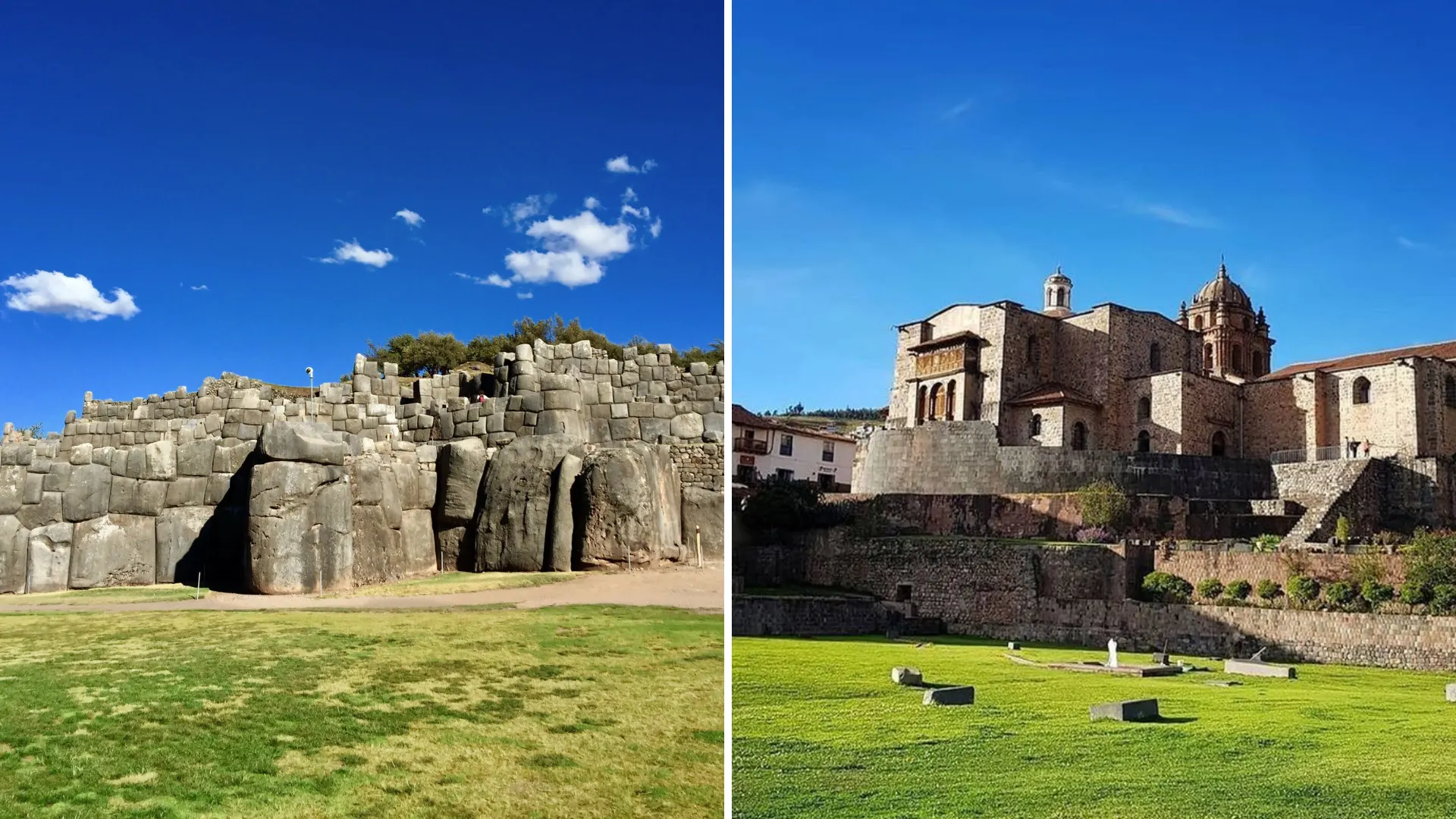
From the Cathedral, walk east along Calle Loreto to see the original exterior wall of the Acllahuasi (Inca House of the Chosen Women). The joints are so precise that not even a sheet of paper can be inserted between the stones. During Holy Week, this wall is often decorated with flowers placed in small crevices.
Continue toward San Blas, the historic artisan district. The church of San Blas contains a baroque pulpit carved from a single cedar trunk, considered a masterpiece of colonial art.
- Holy Tuesday Walking Route:
Plaza de Armas to the Cathedral to see the Last Supper painting, then along Calle Loreto to the Inca wall. Walk to Qorikancha and the Santo Domingo convent, continue along Calle Ahuacpinta, and reach Calle Hatunrumiyoc to see the famous twelve-sided stone. The route passes the Palacio del Almirante before climbing toward the church of San Blas. Finish at Plazoleta San Blas for a view over the city.
During Holy Week, many visitors also combine this walking route with some of Cusco’s most popular cultural excursions. A traditional Cusco City Tour allows travelers to explore important archaeological and historical sites around the city, including Sacsayhuamán, Qenqo, Puca Pucara, and Tambomachay, offering a deeper understanding of the Inca capital and its sacred landscape.
For those with more time, another excellent option during Holy Week is visiting the Sacred Valley of the Incas in one day. This excursion takes travelers through the fertile valley of the Urubamba River to remarkable sites such as Pisac and Ollantaytambo, where impressive Inca terraces, temples, and living Andean traditions reveal the agricultural and spiritual heart of the ancient empire.
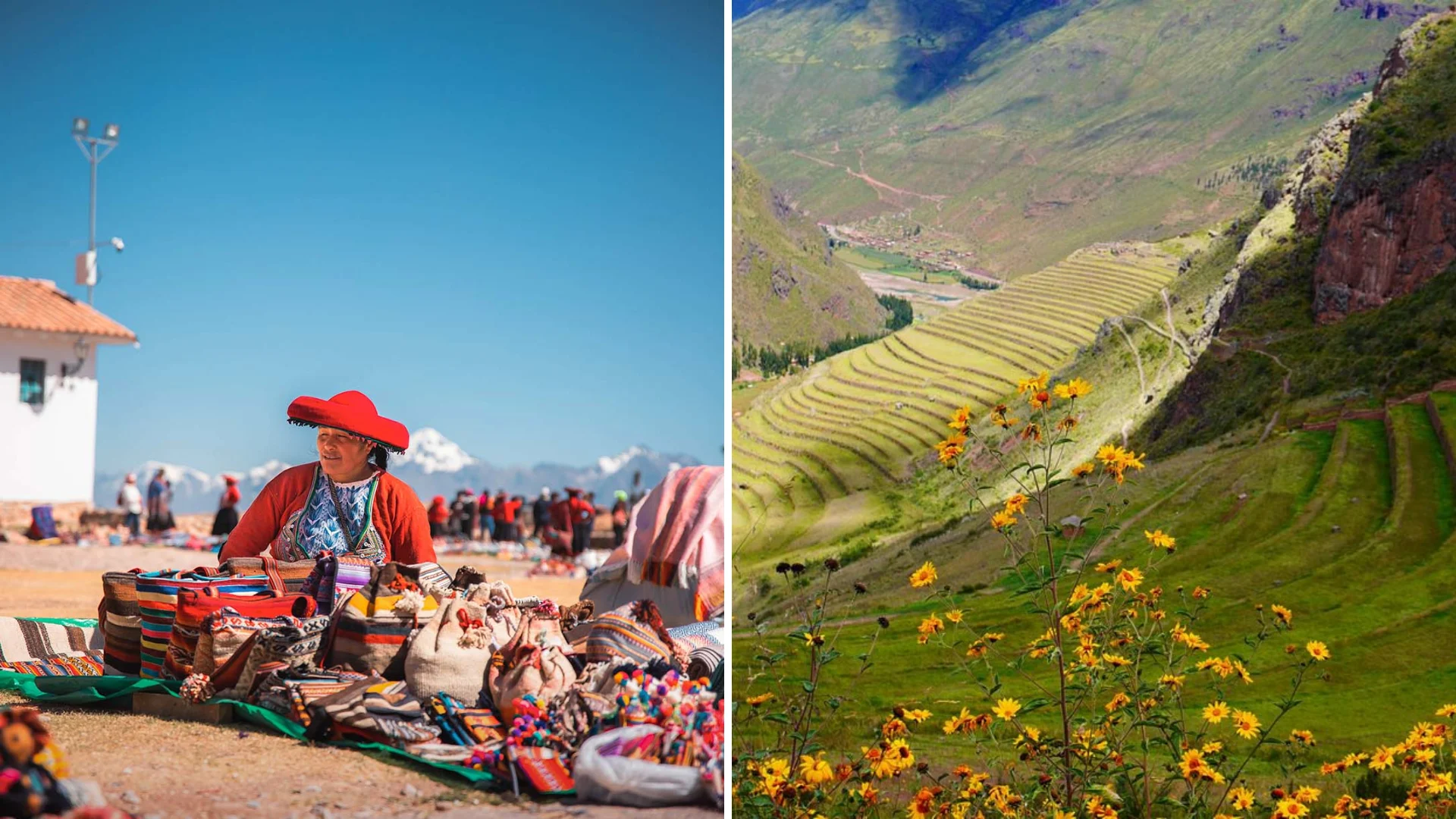
Together, these experiences complement the religious atmosphere of Holy Week in Cusco, allowing visitors to understand not only the city’s Catholic traditions but also the deeper Andean heritage that continues to shape its identity.
Holy Wednesday Darkness Falls The Tinieblas Ceremony
By the time Holy Wednesday arrives in Cusco, the atmosphere of the city changes noticeably. The anticipation and movement of the first days of Holy Week gradually give way to a quieter and more reflective tone. Markets remain active and kitchens continue preparing the traditional dishes for Good Friday, but the rhythm of daily life slows. Conversations often turn to memories of past celebrations, family traditions, and the stories of grandparents who once prepared the sacred foods of the season.
In Cusco, Holy Wednesday marks a spiritual transition. The day commemorates the betrayal of Christ by Judas Iscariot, an event that precedes the Passion. For the people of Cusco, however, the meaning of the day is expressed not only through liturgy but also through processions and devotional ceremonies that take place in the historic center.
The Procession of Señor Jesús Nazareno and the Virgen Dolorosa
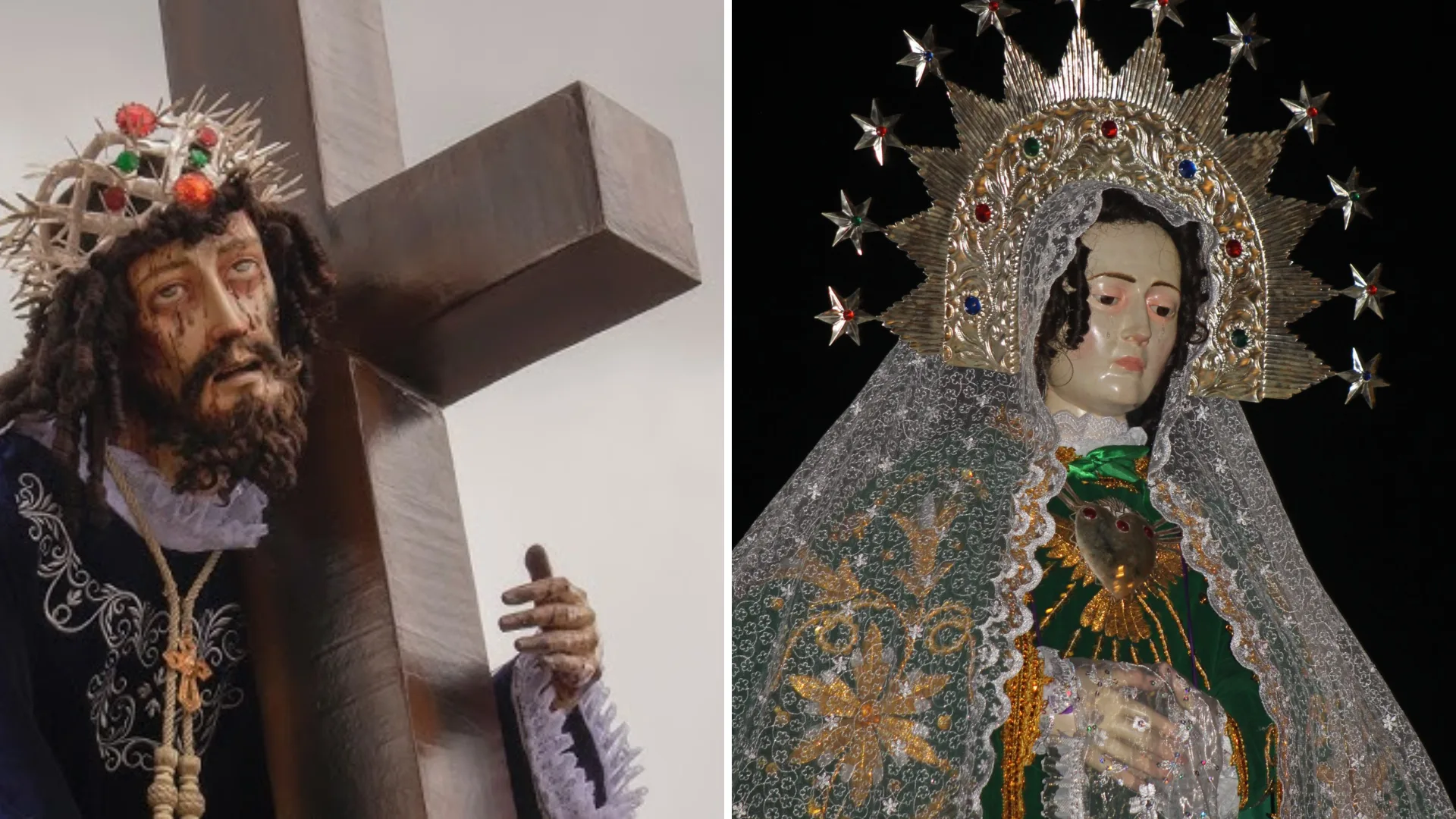
One of the most important religious events of Holy Wednesday in Cusco is the solemn procession of Señor Jesús Nazareno and the Virgen del Rosario de los Dolores.
This procession traditionally departs from the Church of Santo Domingo, built upon the foundations of the ancient Inca temple of Qorikancha, one of the most sacred sites of the Inca Empire. From there, the images are carried through the narrow streets of the historic center toward the Plaza de Armas, accompanied by candles, prayers, and devotional chants.
The image of Jesús Nazareno, representing Christ carrying the cross on the road to Calvary, moves slowly through the streets followed by the Virgen Dolorosa, symbolizing the sorrow of Mary witnessing the suffering of her son. Together they recreate one of the most emotional scenes of the Passion narrative.
Members of religious brotherhoods, known locally as cofradías, accompany the images dressed in traditional garments, while families and worshippers walk alongside them holding candles. Compared with the massive civic procession of El Señor de los Temblores on Holy Monday, this procession has a more intimate and contemplative character.
For many Cusqueño families, attending this procession is a tradition passed down through generations.
Holy Thursday Visiting the Seven Churches in Cusco
Holy Thursday in Cusco is organized around one of the most beautiful and unusual devotional practices of the entire Holy Week calendar: the Visita de las 7 Iglesias, the Visit of the Seven Churches. This ancient Catholic tradition dates back to 16th century Rome and was brought to the Americas by the Jesuits and Dominicans. It prescribes that on the night of Holy Thursday, after the Mass of the Last Supper, the faithful visit seven churches in prayer in imitation of the pilgrimage stations of early Christian Rome.
In Cusco, this practice takes on a particularly extraordinary character because of the city’s extraordinary density of historic churches and because the pilgrimage takes place on foot through the stone streets of one of the most architecturally beautiful cities in the Americas, at altitude, in the cold Andean night, by candlelight and torchlight, in the company of thousands of other pilgrims. The Seven Churches pilgrimage of Holy Thursday in Cusco is one of the most immersive and moving religious experiences available anywhere in the world.
“In Cusco on Holy Thursday night, the entire city is a river of candles flowing from church to church through the cold Andean darkness.”
The Seven Churches of Cusco — A Complete Guide
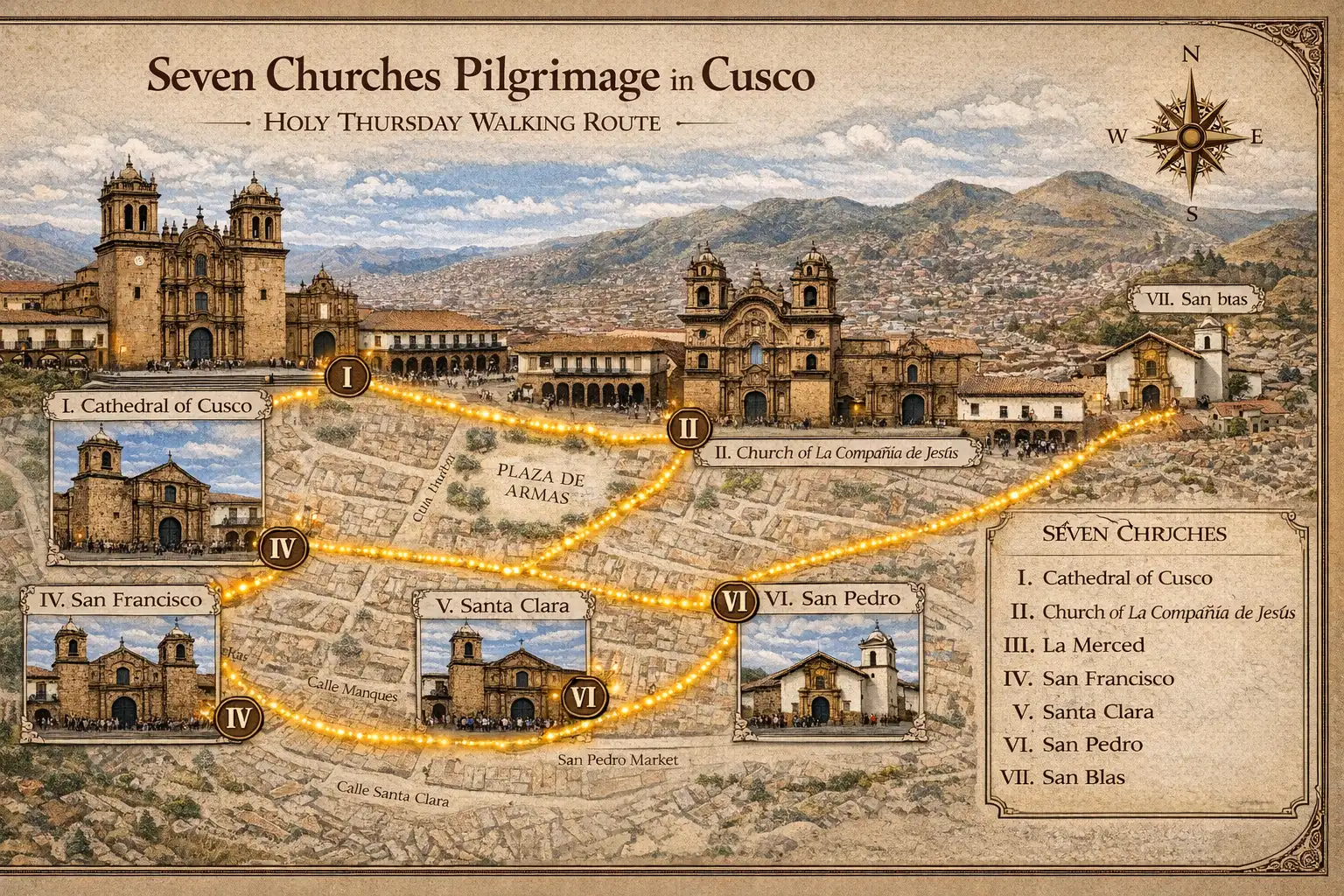
The traditional route of the Seven Churches in Cusco covers the major churches of the historic center in a circuit of approximately 3 to 4 kilometres. The route takes between two and four hours depending on how long you spend in prayer at each church. Every church along the route maintains a Mausoleum Altar, known as the Altar del Monumento, a special temporary altar constructed for Holy Thursday where the Blessed Sacrament is reserved in a tabernacle and surrounded by flowers, candles, and precious objects borrowed from the church’s treasury.
| Church | Description |
|---|---|
| I. Cathedral of Cusco (Catedral)-Plaza de Armas | The starting point of the pilgrimage and the most magnificent church in the Americas. Construction of the Cathedral began in 1560 and was completed in 1654 on the site of the palace of the Inca Viracocha. Its three naves, ten chapels, and enormous silver altarpieces represent the height of Andean baroque. On Holy Thursday, the Cathedral’s Mausoleum Altar is built in the Chapel of the Immaculate Conception and is considered the most elaborate in the city, a mountain of flowers, silver, and candles that requires three days of preparation. The famous silver retablo of the main altar, made with Potosí silver, glows in the candlelight with an almost supernatural intensity. |
| II. Church of La Compañía de Jesús-Plaza de Armas (east side) | Located directly across the plaza from the Cathedral, La Compañía de Jesús is considered one of the finest examples of baroque architecture in the Americas. It was built by the Jesuits between 1651 and 1668 on the site of the palace of the Inca Huayna Cápac. Its façade is an extraordinary composition of carved stone where nearly every surface is decorated. Inside, gilded altars, Cusco School paintings, and a richly painted wooden ceiling fill the space. On Holy Thursday, its Mausoleum Altar fills the apse with yellow flowers, the preferred Jesuit color, while the scent of roses and incense fills the church. |
| III. Church of La Merced – Calle Mantas, two blocks from Plaza de Armas | The church of La Merced, belonging to the Mercedarian Order, was first built in 1536 and later rebuilt after the earthquake of 1650. Its Renaissance cloister with two levels of carved stone arcades surrounding a garden is considered one of the most beautiful in Peru. The sacristy houses the famous Custodia de La Merced, a monstrance regarded as one of the most valuable religious objects in the Americas. It is decorated with 1,518 diamonds, 600 rubies, a 50 carat pearl, and a large emerald. On Holy Thursday the monstrance is displayed as part of the Mausoleum Altar surrounded by white lilies and precious metal. |
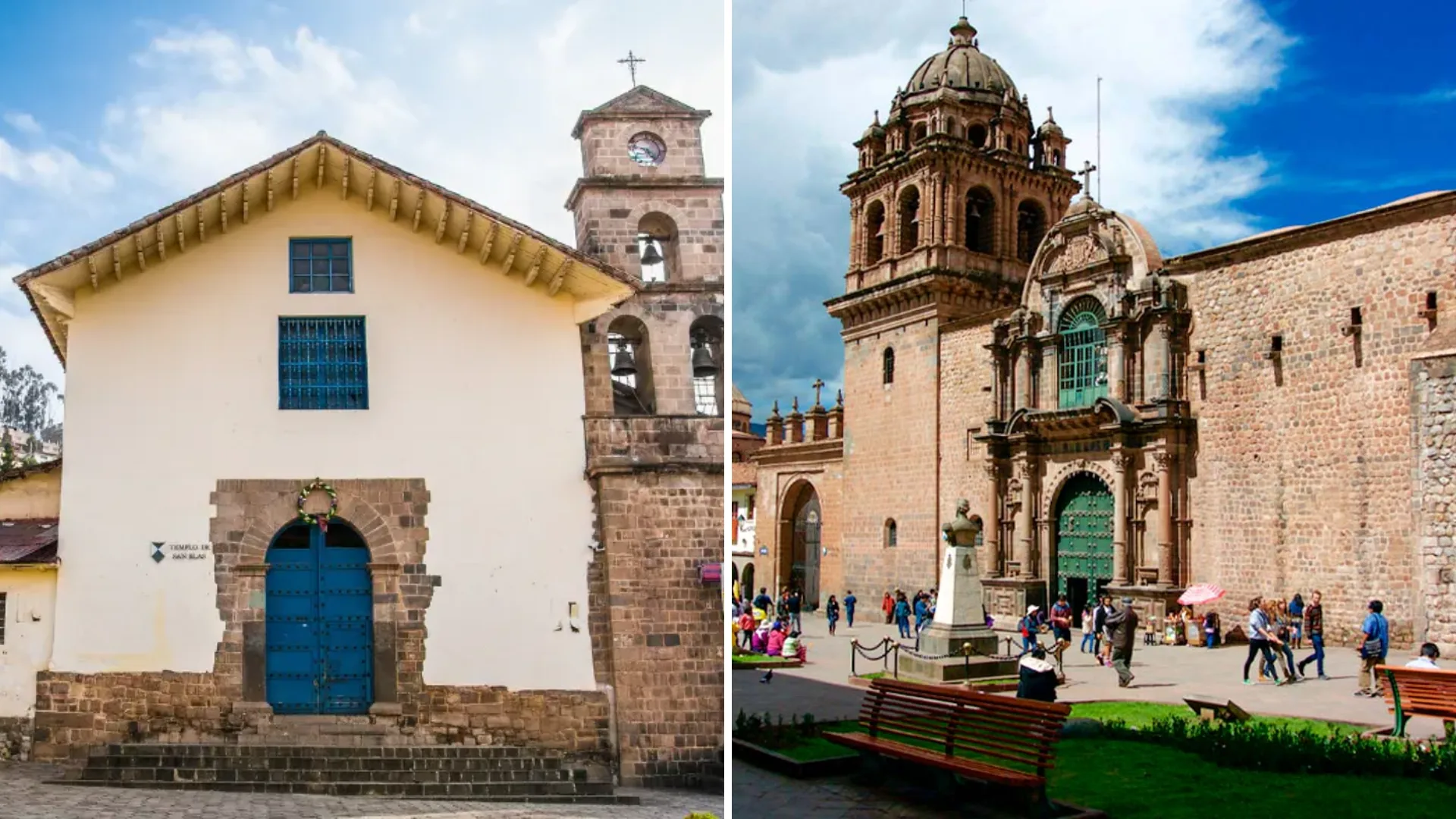
| IV. Church of San Francisco – Plaza San Francisco, three blocks west of Plaza de Armas | The Franciscan church of San Francisco was built in 1645 and is known for its austere appearance, reflecting the Franciscan ideal of poverty. Its simple stone façade contrasts with the ornate baroque churches of Cusco. The cloister of San Francisco is the largest in the city. Beneath the church is a crypt containing an ossuary where bones and skulls are arranged in patterns with the inscription “We were what you are; you will be what we are.” During Holy Thursday, the solemn atmosphere of the Mausoleum ceremony deepens the sense of reflection on mortality. |
| V. Church of Santa Clara – Calle Santa Clara, below Mercado San Pedro | The Conceptionist convent of Santa Clara was founded in 1558 and is one of the earliest convents established in the Americas. Its church is among the oldest in Cusco. Normally visitors interact with the cloistered nuns only through a small rotating grate where blessed objects and sweets are passed. On Holy Thursday the church opens to the public for the Seven Churches pilgrimage. The interior is intimate and historic, with walls covered in ex votos that thank the saints for miracles received over nearly five centuries. |
| VI. Church of San Pedro – Adjacent to Mercado San Pedro | The church of San Pedro was built in 1688 and serves as the parish church of the market district. It is closely connected with the daily life of artisans, market vendors, and working families. Its twin towers were built with stones taken from the Inca fortress of Sacsayhuamán. On Holy Thursday the Mausoleum Altar is prepared with a strong neighbourhood spirit. Flowers and candles are donated by vendors from the nearby market and the altar is arranged by the parish women’s group. |
| VII. Church of San Blas – Calle San Blas, Barrio de San Blas | The final church on the pilgrimage route is also the smallest and one of the most beloved. The chapel of San Blas dates to 1563 and measures only seventeen metres in length. It contains the famous pulpit carved from a single cedar trunk, traditionally attributed to the indigenous artist Juan Tomás Tuyrutupac, who is said to have created it in gratitude after recovering from a grave illness. The pulpit is considered a masterpiece of mestizo baroque, filled with angels, saints, and solar discs carved in extraordinary detail. Finishing the pilgrimage here, in the highest and one of the oldest neighbourhoods of Cusco, with the city illuminated below, gives the Holy Thursday journey a memorable and beautiful conclusion. |
The Mass of the Last Supper, Misa de la Cena
Before beginning the Seven Churches pilgrimage, the faithful attend the Mass of the Last Supper, known as the Misa de la Cena del Señor, celebrated in their parish church at approximately 6pm. This Mass commemorates the institution of the Eucharist at the Last Supper and includes the ceremony of the Lavatorio, in which the priest washes the feet of twelve parishioners representing the Apostles.
In Cusco, this ceremony is performed in the Cathedral with great solemnity, as the Bishop washes the feet of twelve representatives from the city’s poorest communities. After the Mass, the altar is stripped bare, the tabernacle doors are opened to reveal an empty tabernacle, and all the church bells fall silent, remaining silent until Easter Sunday.
- Holy Thursday Practical Guide Seven Churches Route
Begin the Seven Churches pilgrimage after the evening Mass at approximately 8pm. The recommended order is Cathedral, La Compañía, La Merced, San Francisco, Santa Clara, San Pedro, and finally San Blas. Allow between three and four hours to complete the full circuit.
Wear warm layers and comfortable shoes for walking on the cobblestone streets. Carry a candle, which is sold at the entrance of every church. The route between San Pedro and San Blas includes a steep uphill climb through the narrow alleys of the artisan quarter. Crowds are usually at their peak between 9pm and midnight, so pilgrims who begin around 8pm often experience a quieter and more contemplative walk.
Good Friday The Twelve Dishes and the Day of Mourning
Good Friday stands at the center of Holy Week. Everything that comes before it serves as preparation, and everything that follows moves toward the anticipation of Easter joy. On this day Cusco enters a period of collective mourning unlike any other moment of the year. Businesses close both by law and by tradition. Music, except for religious chants and slow drums, disappears from the streets. The historic center, usually full of tourists and vendors, becomes unusually quiet in the morning. The smell of cooking drifts through the neighbourhoods while the bells of the Cathedral remain silent.
Good Friday in Cusco revolves around two important parallel traditions. One is the domestic feast known as the twelve dishes, or Los Doce Platos, prepared and shared at midday in family homes. The other is the public expression of devotion through the Vía Crucis and the procession of the Christ of the Good Death, ceremonies that shape the rhythm of the city from early morning until late afternoon.
Morning — The Vía Crucis (Stations of the Cross)
From the first light of Good Friday, the hills surrounding Cusco become places of pilgrimage. The Vía Crucis, the Way of the Cross, is performed in several locations across the city. Some versions are small and intimate, organized by local parishes, while others take place outdoors on the slopes of the hills that rise above the historic center.
One of the most striking takes place along the path leading to the fortress of Sacsayhuamán. Here the fourteen Stations of the Cross are acted out by performers in costume, with the enormous Inca stone walls rising behind them. The dramatic landscape of the ancient fortress creates a powerful setting that connects the Christian narrative of the Passion with the deep historical landscape of the Andes.
| Time | Event |
|---|---|
| 7:00 AM | Vía Crucis – Ascent to Sacsayhuamán
A living representation of the Stations of the Cross begins at the base of the hill below the church of San Cristóbal and follows the winding path upward toward Sacsayhuamán. Actors dressed in period costume portray Christ carrying the cross along with Roman soldiers, Simon of Cyrene, Veronica, and the women of Jerusalem. Thousands of spectators line the path. The massive zigzag walls of Sacsayhuamán, built by the Inca with stones weighing up to 200 tonnes, create a dramatic and ancient backdrop. From the heights, the entire city of Cusco can be seen below. |
| 9:00 AM | Vía Crucis – Plazoleta de Limacpampa
A shorter and more accessible Stations of the Cross takes place around Plazoleta de Limacpampa Chico, the small square near the base of San Blas, and continues through nearby streets of the historic center. This version is easier for families with children and for those who prefer not to make the steep climb toward Sacsayhuamán. |
Midday — Los Doce Platos: The Twelve Sacred Dishes
At midday on Good Friday, known as Viernes Santo, families throughout Cusco gather around the table for what is considered the most important meal of the year: the twelve dishes, or los doce platos, each representing one of the twelve Apostles. This tradition is unique to Cusco and the surrounding Andean region and has been preserved with remarkable continuity over more than five centuries of Holy Week celebrations in the city.
The twelve dishes are prepared without meat in keeping with the Lenten fast. Within that restriction, however, they offer a remarkable display of Andean culinary heritage. The meal includes ancient grains, native varieties of potatoes, river fish, local legumes, preserved foods that trace their origins back to the Inca period, and a variety of sweets that reflect the encounter between Spanish colonial confectionery traditions and native Andean ingredients.
“In Cusco, to cook the twelve dishes is to pray. The kitchen is an altar. The pot is a chalice. The table is a sacrament.”
The Twelve Sacred Dishes of Cusco — Los Doce Platos del Viernes Santo
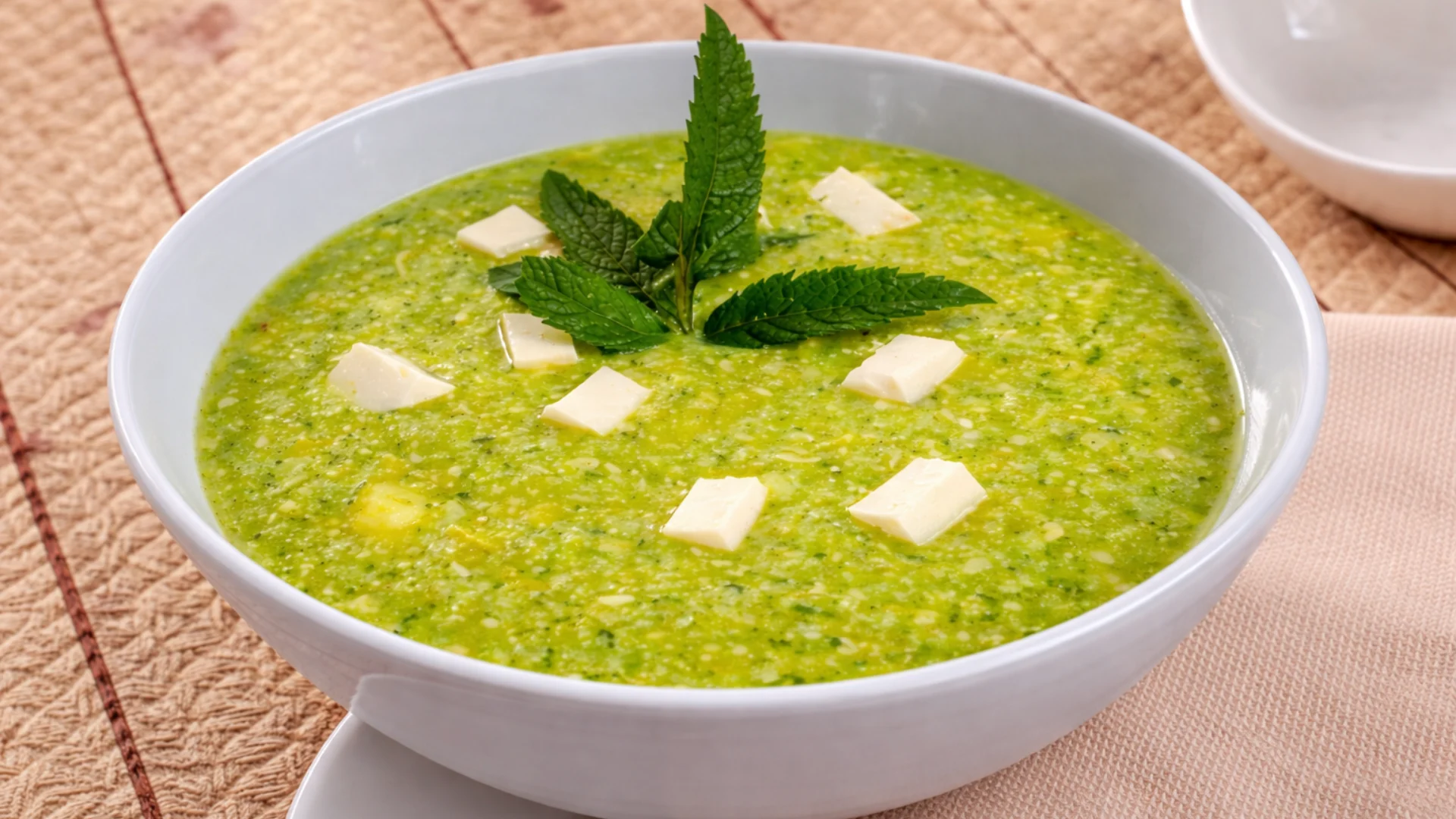
- Qolla Lawa
Ingredients: Ground white corn (maíz blanco), potato, fresh cheese, native herbs, water
One of the oldest dishes of the feast is lawa, a thick Quechua style soup made from ground dried corn slowly cooked with potatoes and fresh cheese. The word lawa means thick broth in Quechua, and the dish dates back to pre colonial Inca cooking traditions. Simple and comforting, it highlights the most sacred ingredient of Andean civilization, corn, which the Inca considered a gift from the Sun God Inti.
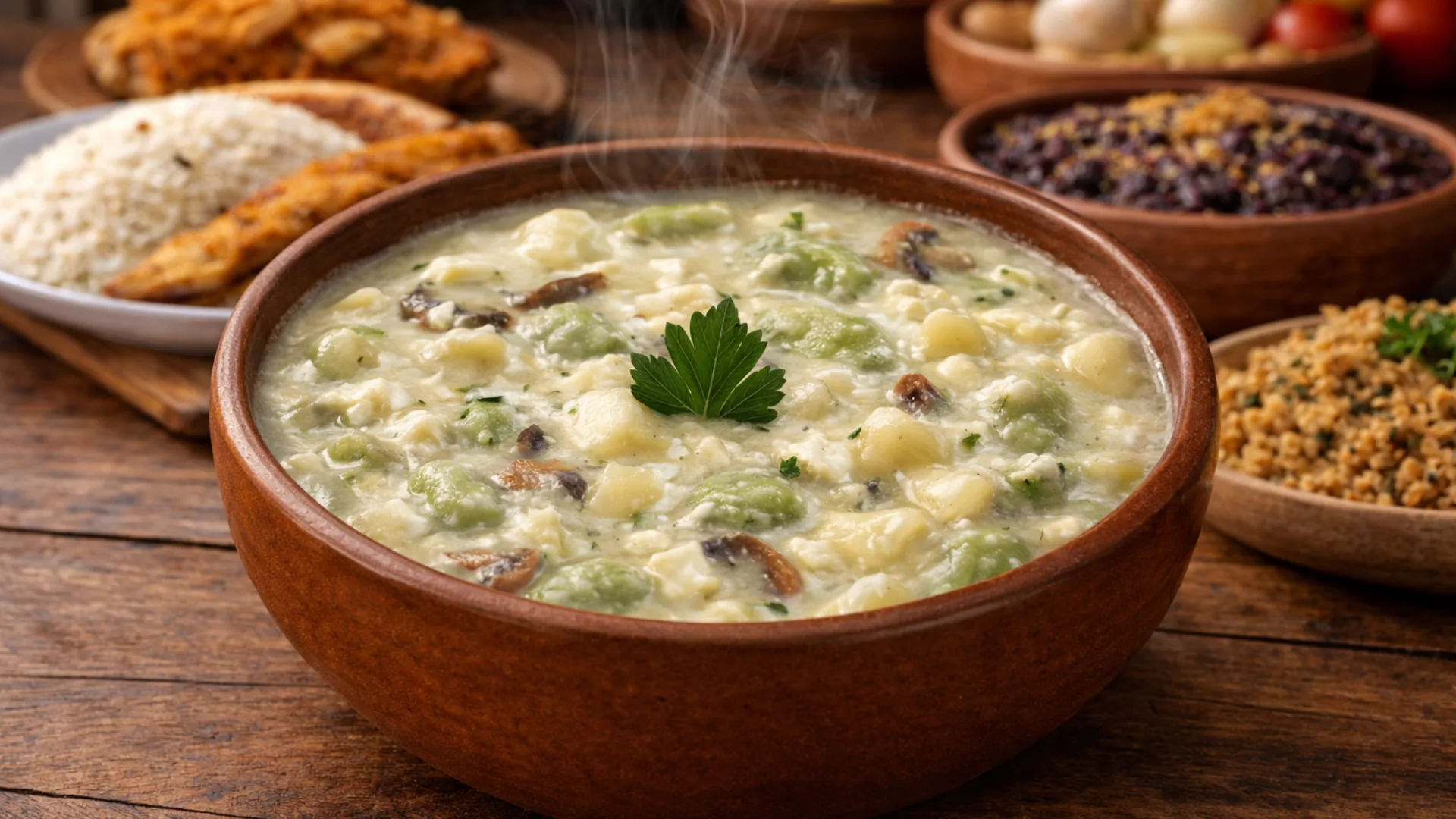
- Kapchi de Habas
Ingredients: Fresh fava beans (habas), potato, egg, whole milk, fresh cheese, ají amarillo, onion, garlic, native herbs
Kapchi de Habas is the twelfth and final dish of the meal and one of the preparations most deeply rooted in pre colonial Andean cooking. The stew is made with fava beans slowly cooked with potatoes, egg, fresh cheese, and ají amarillo until the sauce becomes creamy and golden.
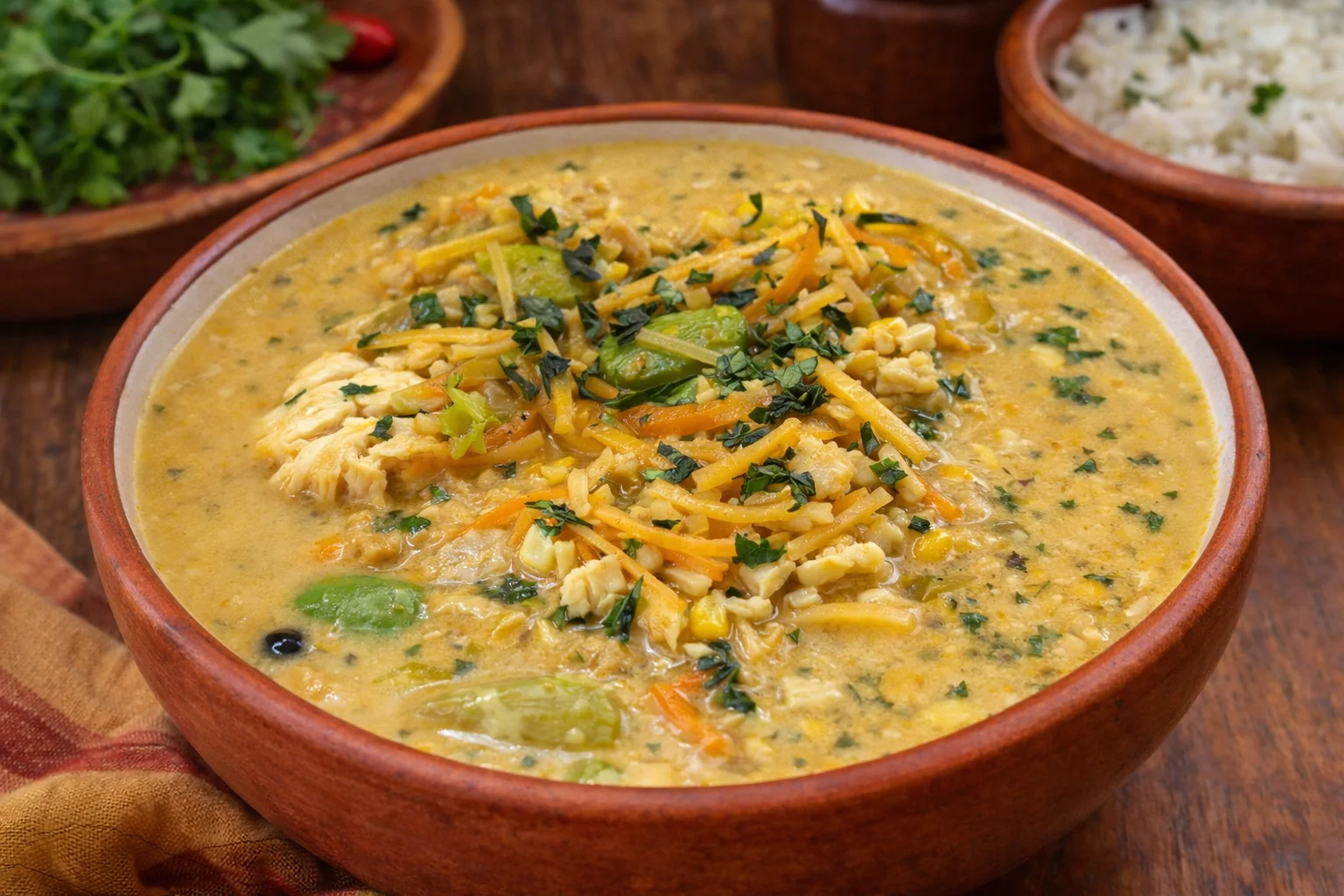
- Sopa de Lisas
Ingredients: River fish (lisas), potatoes, corn, onion, garlic, Andean herbs.
A traditional Holy Friday soup in Cusco, made with fresh river fish and cooked with potatoes, corn, and herbs. It is a light yet nutritious dish that reflects the importance of fish in Andean cuisine during Lent.
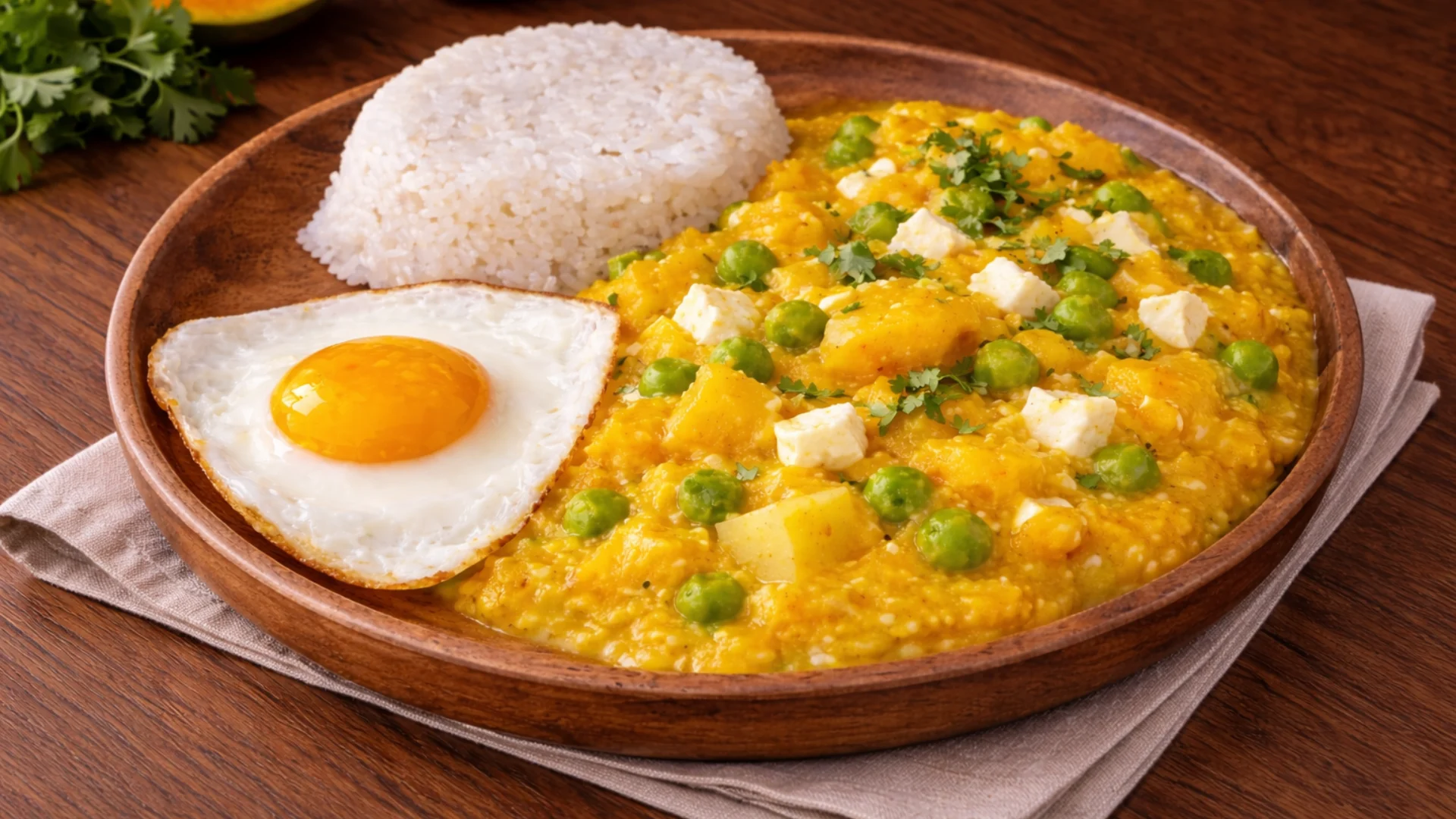
- Locro de Zapallo
Ingredients: Andean pumpkin (zapallo), potato, corn, ají amarillo pepper, milk, fresh cheese, cumin
A golden, creamy stew made with Andean squash known as zapallo, cooked with potatoes, corn, and the yellow ají amarillo pepper that defines much of Cusqueño cuisine. The dish is enriched with milk and fresh cheese, creating a dense and satisfying texture. The ají amarillo provides a gentle heat with a subtle fruity flavor that balances the sweetness of the squash.
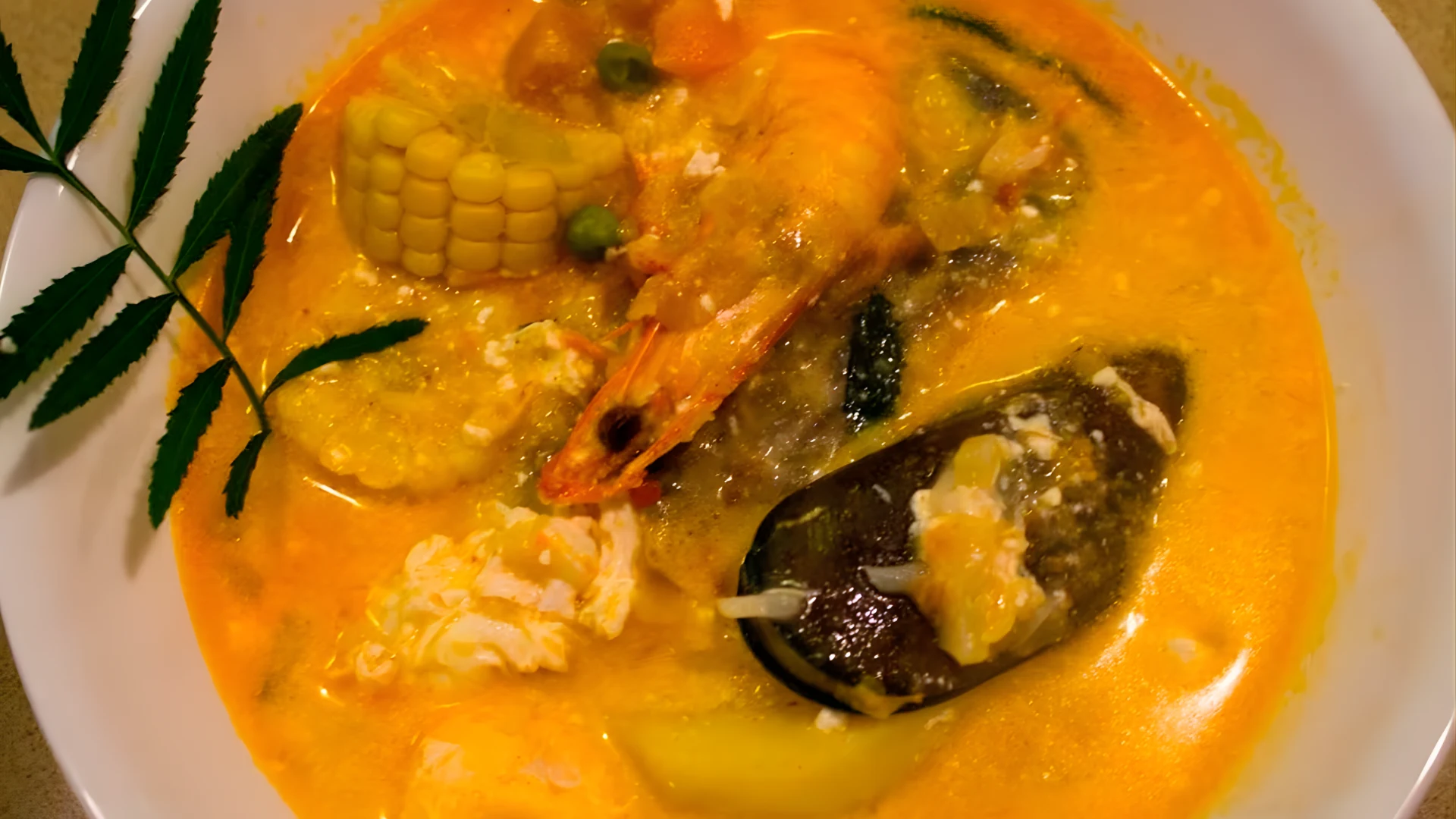
- Chupe de Camarones
Ingredients: Fresh river shrimp (camarones del río), potato, corn, egg, milk, fresh cheese, ají panca, cumin, oregano
The prestige dish of the twelve is a ceremonial and richly flavored soup made with shrimp from the high altitude rivers of the Andes. The broth is thickened with potatoes and enriched with egg and milk, while the smoky and slightly sweet ají panca pepper gives the soup its distinctive color and depth of flavor.
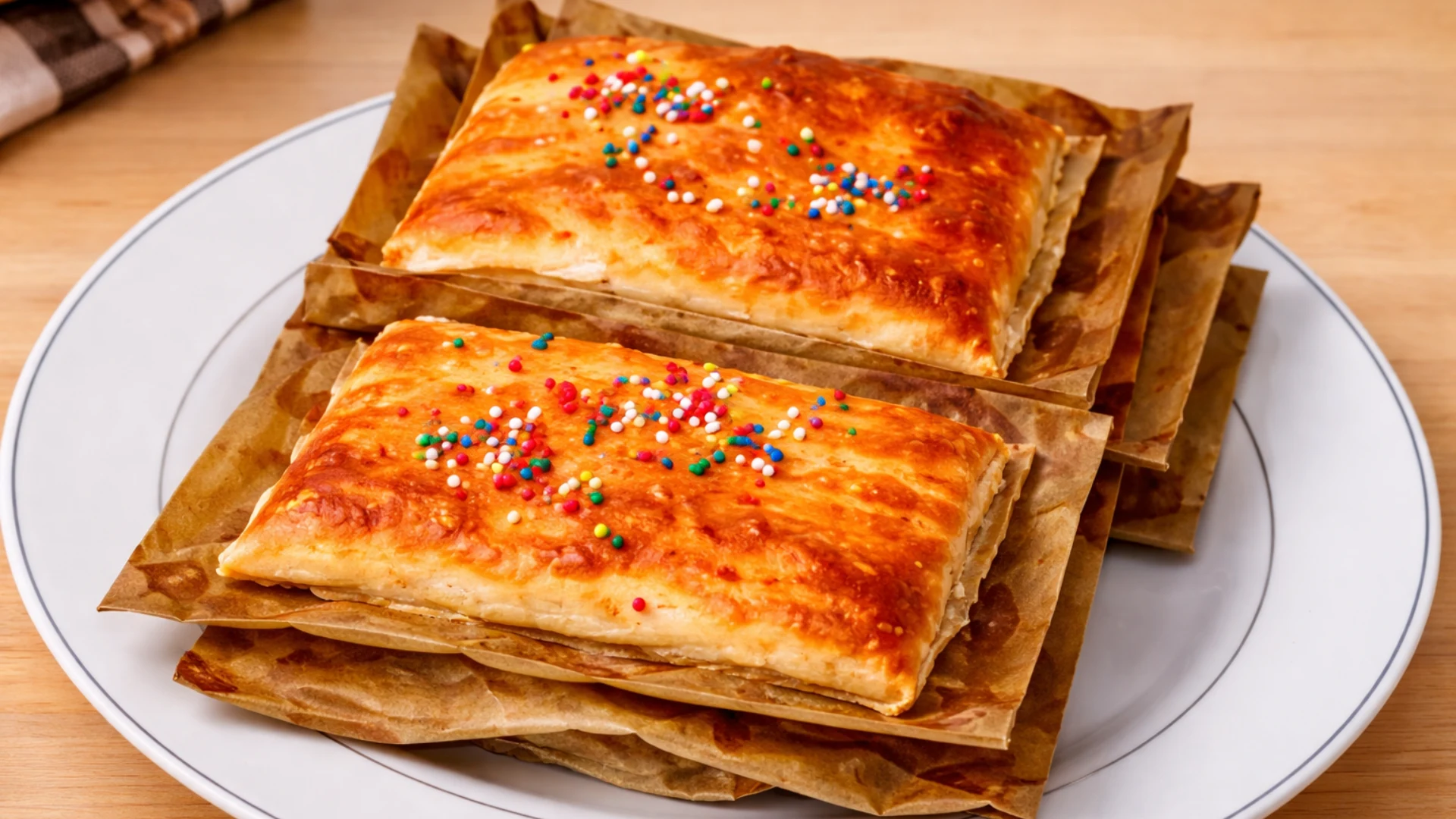
- Empanadas Cusqueñas
Ingredients: Wheat dough, fresh cheese, potato, black olives, hard-boiled egg, raisins, anise seed, egg yolk (glaze)
Empanadas Cusqueñas are the famous baked pastries of Cusco, known throughout Peru for their slightly sweet dough flavored with anise and their rich savory filling. During Lent, the filling is prepared without meat and usually includes fresh valley cheese, potato, olives, egg, and a small touch of raisin for sweetness.
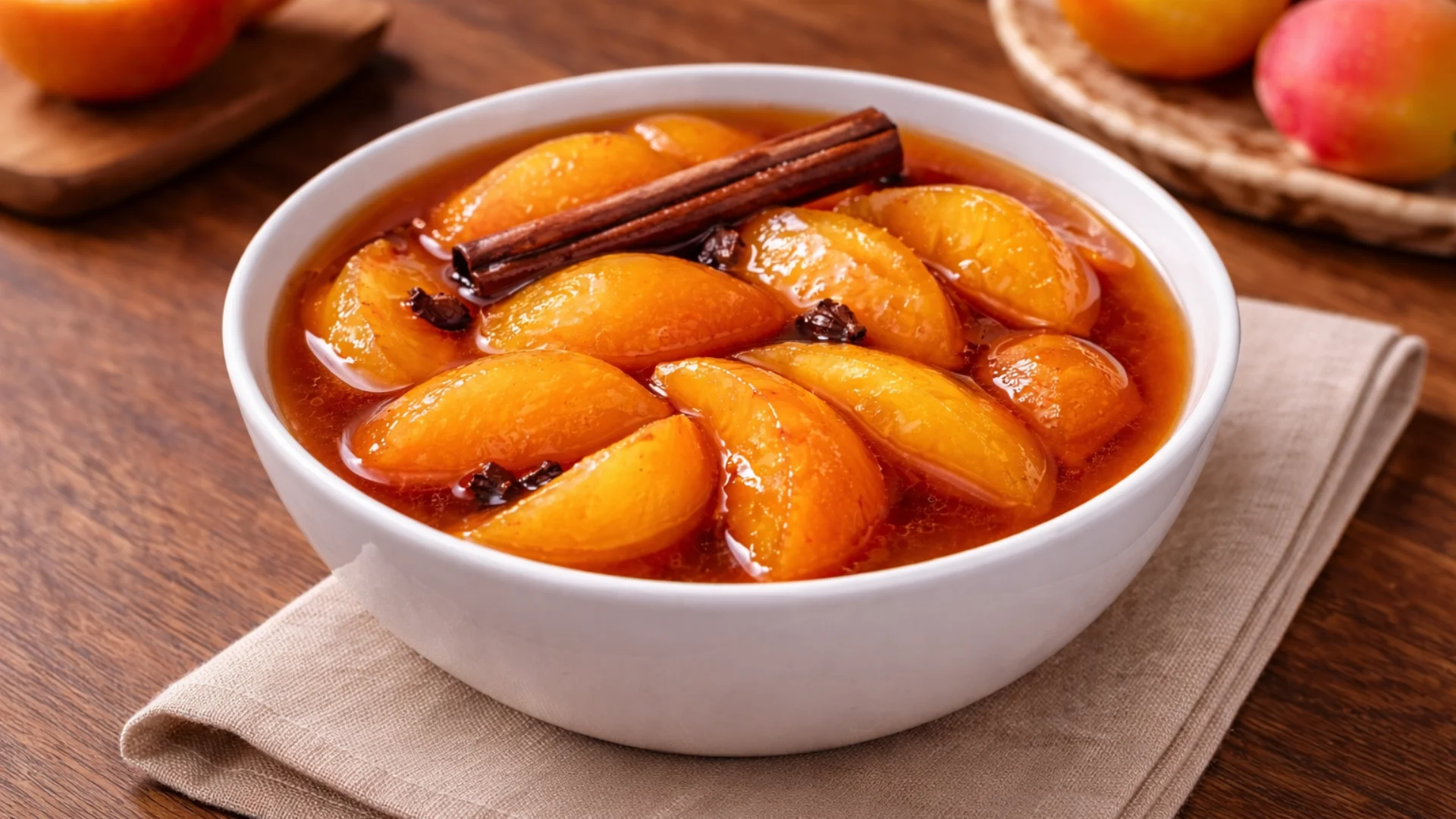
- Dulce de Durazno
Ingredients: Andean peaches, water, sugar, cinnamon sticks, cloves.
Dulce de durazno is a traditional sweet preserve made with Andean peaches, a small and intensely flavored variety grown in the orchards of the Sacred Valley. The peaches are slowly simmered in a light syrup with cinnamon and cloves until they become soft, translucent, and jewel-like in appearance.
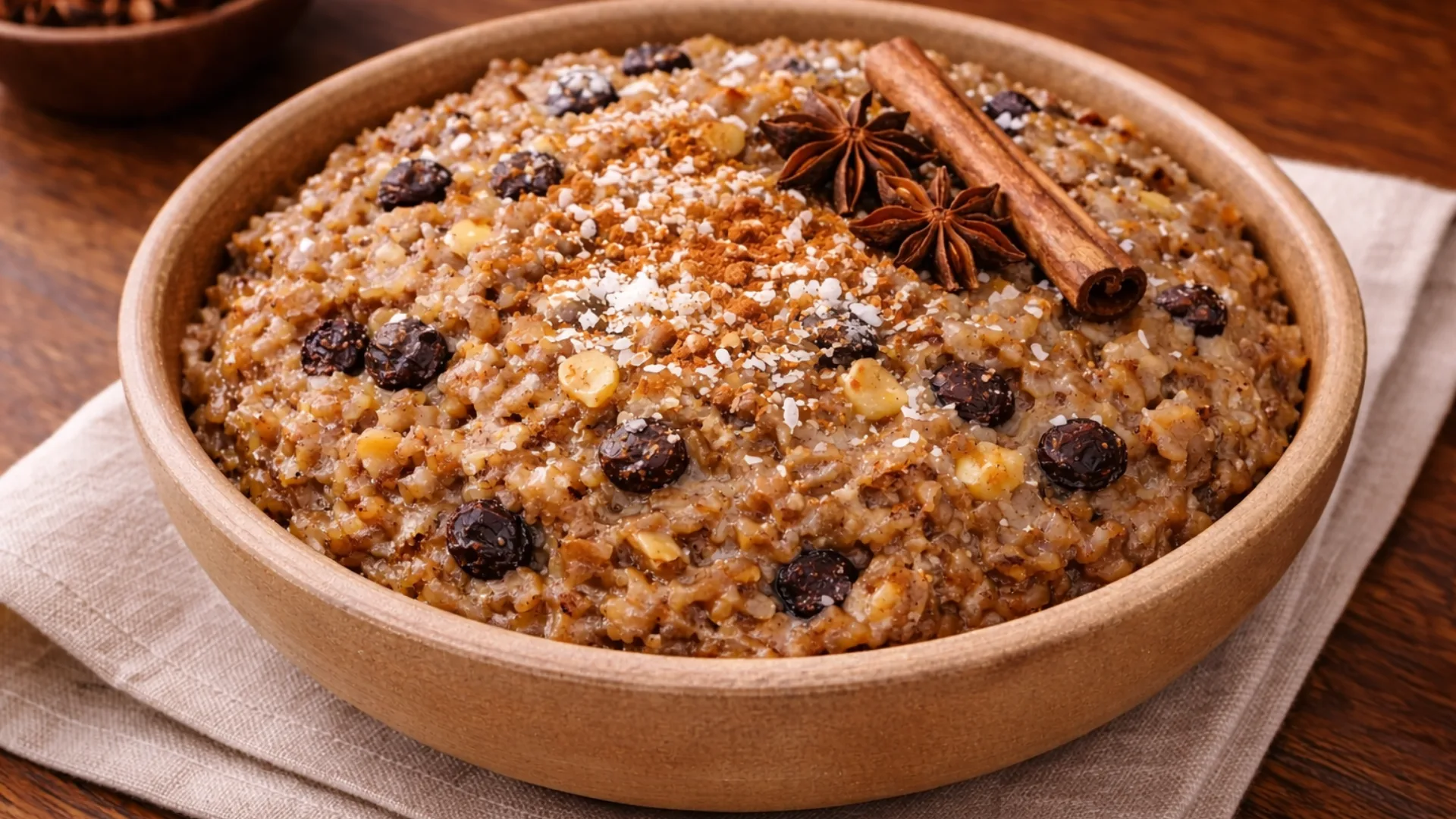
- Arroz con Leche o Arroz Zambito
Ingredients: White rice, whole milk (Arroz con Leche) or chancaca/unrefined cane sugar (Arroz Zambito), cinnamon, cloves, sugar
Two versions of rice pudding often appear in this part of the meal, depending on family tradition. Arroz con leche is the classic Spanish style pudding made with rice slowly cooked in milk. Arroz zambito replaces white sugar with chancaca, the dark unrefined cane sugar of the Peruvian coast.
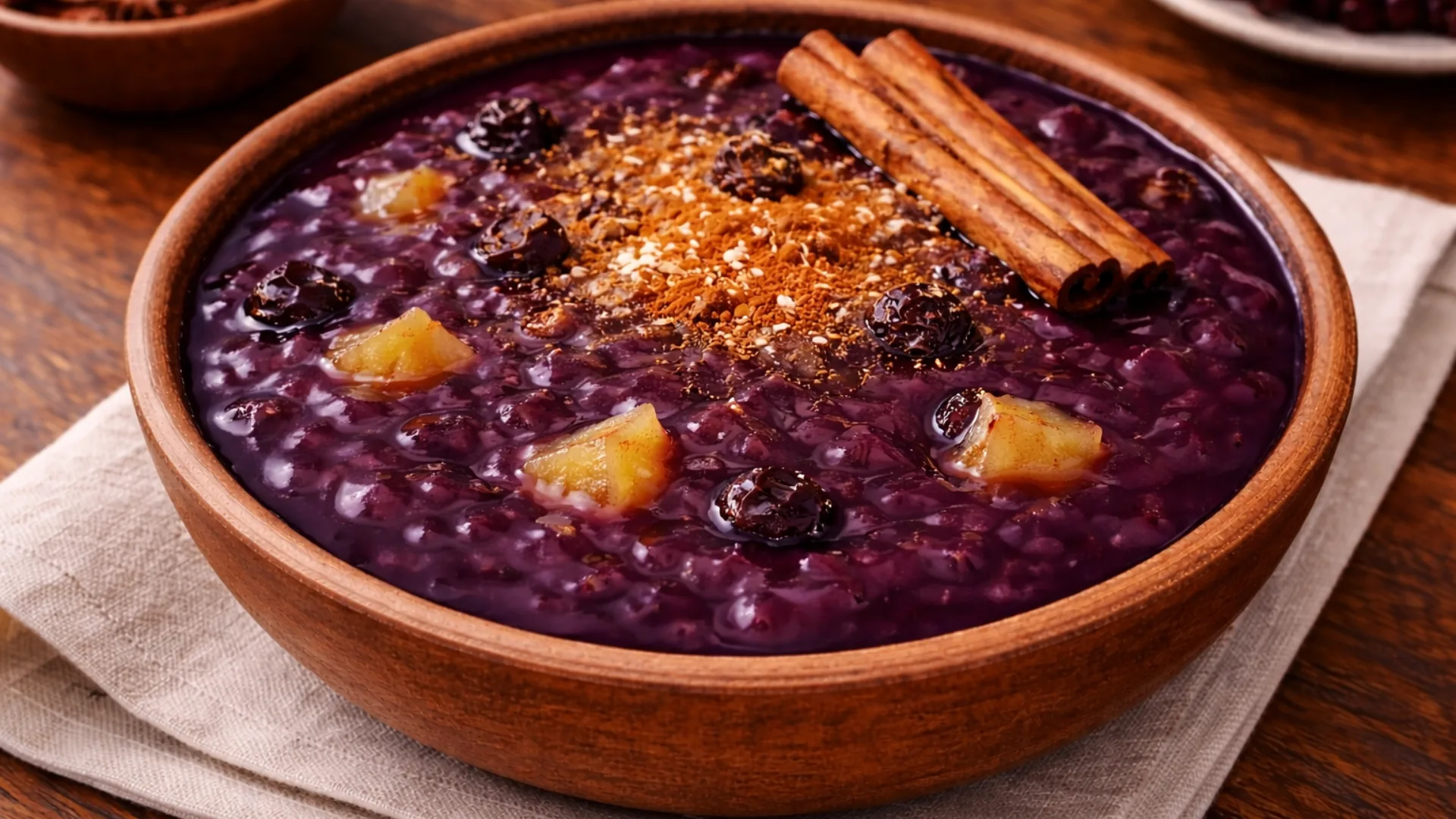
- Mazamorra Morada
Ingredients: Dried purple corn (maíz morado), pineapple, apple, quince, cinnamon, cloves, sweet potato starch, sugar, lime
Mazamorra Morada is one of Peru’s most iconic desserts, a thick and fragrant pudding made by boiling dried purple corn with fruits and spices and thickening the mixture with sweet potato starch. Its color is striking, a deep violet purple that echoes the Lenten vestments of the clergy.
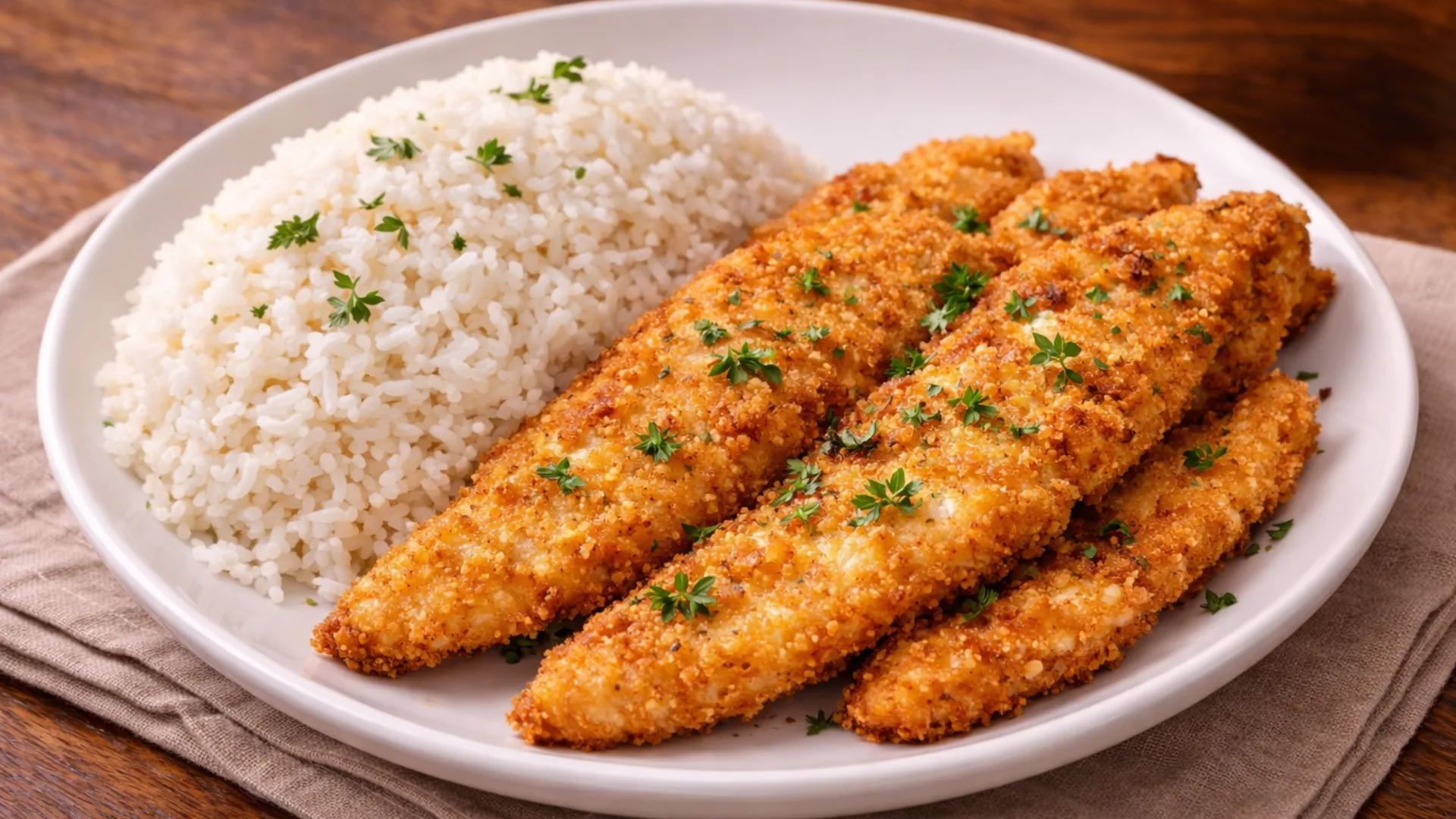
- Trucha Frita con Arroz
Ingredients: Rainbow trout (trucha arcoíris) from Andean rivers, cumin, garlic, lemon juice, salt, oil; served with white rice
Pan-fried rainbow trout is the principal animal protein of Good Friday and the most abundant fish dish in Cusco during Holy Week. The trout come from the cold, high-altitude rivers and lakes of the Cusco and Puno regions. Seasoned simply with cumin, garlic, lemon, and salt, fried in oil until the skin is crisp and golden.
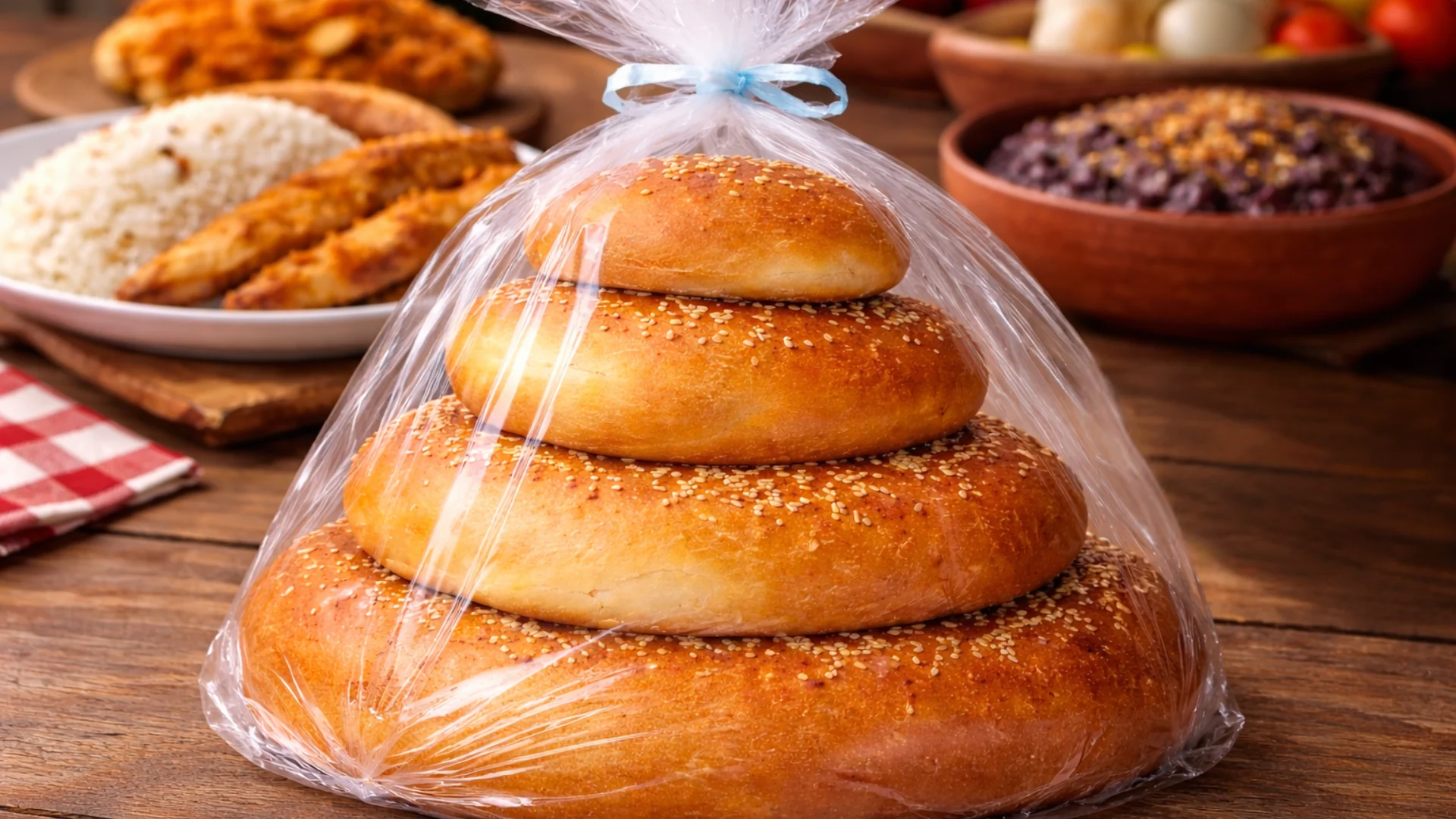
- Pan Jurka o Torta
Ingredients: Wheat flour, chancaca, anise seed, lard, egg, baking powder.
Pan Jurka, also known as Torta Cusqueña, is a dense ceremonial bread or cake traditionally prepared during Holy Week in Cusco. Sweetened with chancaca and strongly flavored with anise seeds, it is baked in round clay molds that give it its characteristic shape.
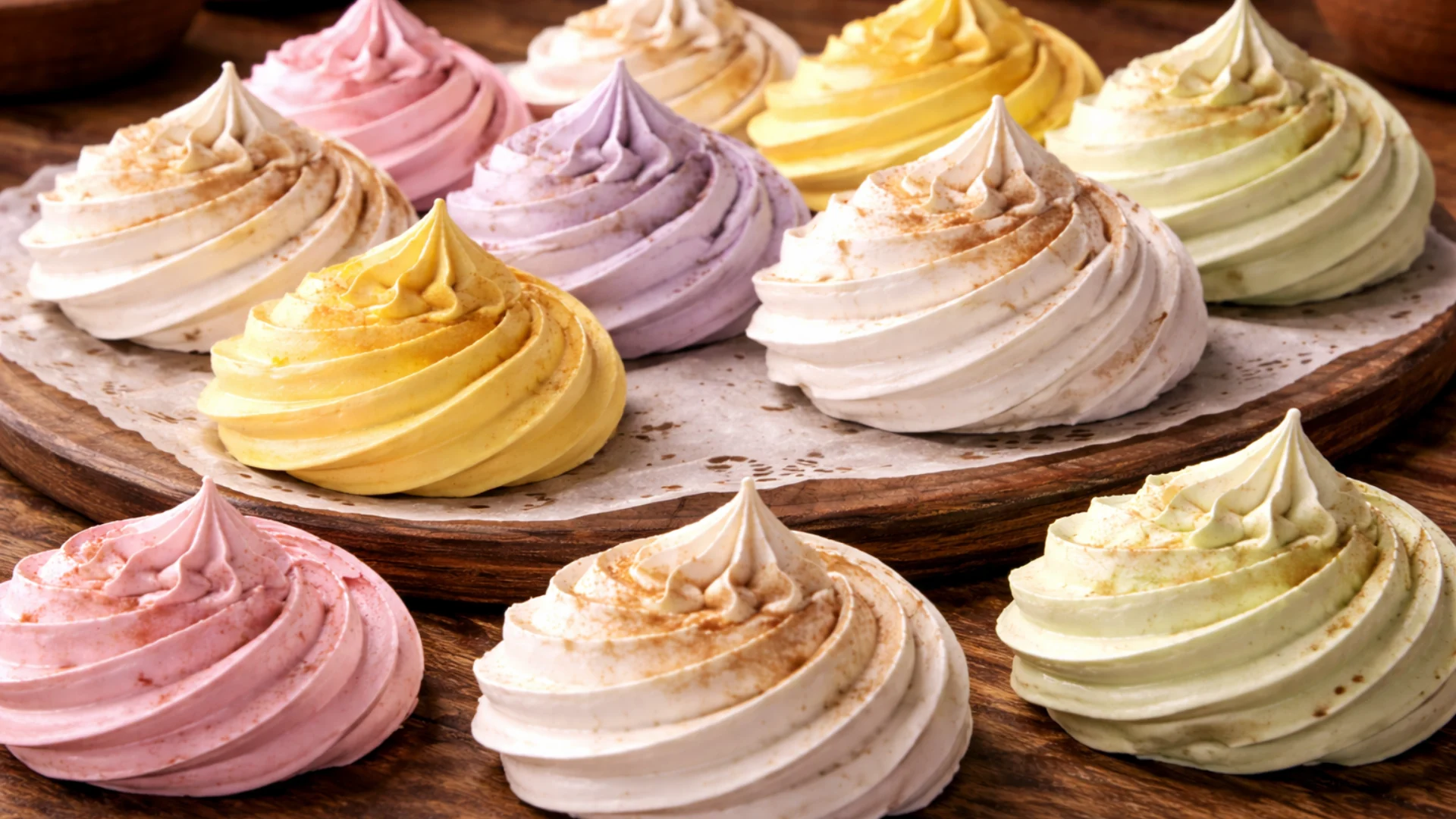
- Suspiros
Ingredients: Egg whites, sugar, cinnamon, vanilla (optional)
Suspiros are one of the traditional sweets commonly prepared and shared during Holy Week in Cusco. These delicate meringue desserts are made by whipping egg whites with sugar until they form light, airy peaks that are then baked slowly to create their crisp exterior and soft interior.
The name suspiros meaning “sighs” in Spanish reflects their light texture, which almost melts in the mouth. In Cusco they are often lightly dusted with cinnamon and sometimes colored in soft pastel tones. During Holy Week, they appear alongside other traditional desserts, offering a simple yet elegant sweetness that balances the richer dishes of the twelve-dish meal.
Afternoon: The Procession of the Cristo del Buen Muerte
After the midday feast, Good Friday enters its most solemn phase. As families clear their tables and the cooking pots are put away, the slow sound of funeral drums begins to echo from the direction of the church of San Francisco. This sound announces the beginning of the procession of the Cristo del Buen Muerte, the Christ of the Good Death.
| Time | Event |
|---|---|
| 4:00 PM | Procession of Cristo del Buen Muerte – From San Francisco
The image of Cristo del Buen Muerte represents Christ laid in death inside an elaborate glass case. The procession moves through the streets in near complete silence. The only sounds are the slow rhythm of funeral drums, the quiet steps of the cargadores carrying the platform, and occasionally the distant sound of people weeping. Spectators stand quietly along the route. |
| 7:00 PM | Solemn Celebration of the Lord’s Passion – Cathedral
The Good Friday liturgy known as the Celebration of the Lord’s Passion is held in the Cathedral in the late afternoon or early evening. This ceremony is not a Mass, since Catholic tradition does not celebrate Mass on Good Friday. Instead, it is a solemn liturgy that includes readings from Scripture, communal prayers, and the Veneration of the Cross. |
Good Friday Conduct in Cusco
Good Friday is a day of genuine public mourning in Cusco. Loud music, celebrations, and festive behavior are considered disrespectful. Visitors are expected to dress modestly and behave respectfully. During the procession of the Cristo del Buen Muerte, silence is expected along the route.
Holy Saturday The Night of Fire and Waiting
Holy Saturday is the most theologically complex day of Holy Week, the moment suspended between the death of Christ commemorated on Friday and the resurrection celebrated on Sunday. In liturgical terms it is a day of absence. No Mass is celebrated, the church bells remain silent, and the altars stay stripped. Yet in Cusco the day is far from empty. Instead, it carries a particular tension, the compressed energy of a city that has spent several days in mourning and knows that the release of joy is only hours away.
Morning Silence and Final Preparations
The morning of Holy Saturday is the quietest of the entire Holy Week. The processions have ended for the year and the large crowds have dispersed. The Plaza de Armas, which has been filled with people every evening since Palm Sunday, becomes calm enough in the early hours that the sound of the fountains can be heard across the square. Shopkeepers who have kept their doors closed since Thursday begin to reopen quietly. Children, free from school for the week, play in the narrow streets of the barrios while the city slowly prepares for the celebrations that will arrive later that night.
| Time | Event |
|---|---|
| 9:00 AM | Blessing of Food – Parish Churches
In many of Cusco’s parish churches, Holy Saturday morning is dedicated to the blessing of foods prepared for the Easter Sunday meal that breaks the Lenten fast. Families bring baskets filled with bread, meat, cheese, and fruit to the church steps for a communal blessing. This tradition reflects both the Catholic custom of blessing the first foods of Easter and the ancient Andean practice of offering the first fruits of the harvest to the Apus, the sacred mountain spirits. |
| Midday | The Burning of Judas – Quema de Judas
In several neighbourhoods of Cusco, especially San Pedro, Santiago, and Belén, the tradition known as the Quema de Judas still takes place on Holy Saturday. An effigy of Judas Iscariot stuffed with straw and firecrackers is hung from a lamppost or balcony and burned in the street. The explosion and burning of the figure are accompanied by laughter, shouting, and a sense of collective release that contrasts with the solemn atmosphere of the previous days. |
| 3:00 PM | The Great Cooking – Easter Sunday Preparations
The afternoon of Holy Saturday is dedicated to preparing the Easter Sunday feast, the first meal with meat after weeks of fasting. In Cusco this usually centers on dishes made with lamb or pork, accompanied by soups and stews typical of Andean celebration cuisine. Bakeries and household ovens are lit again and the smell of fresh bread, absent since midweek, begins to return to the streets. |
| 10:00 PM | Vigilia Pascual – The Easter Vigil
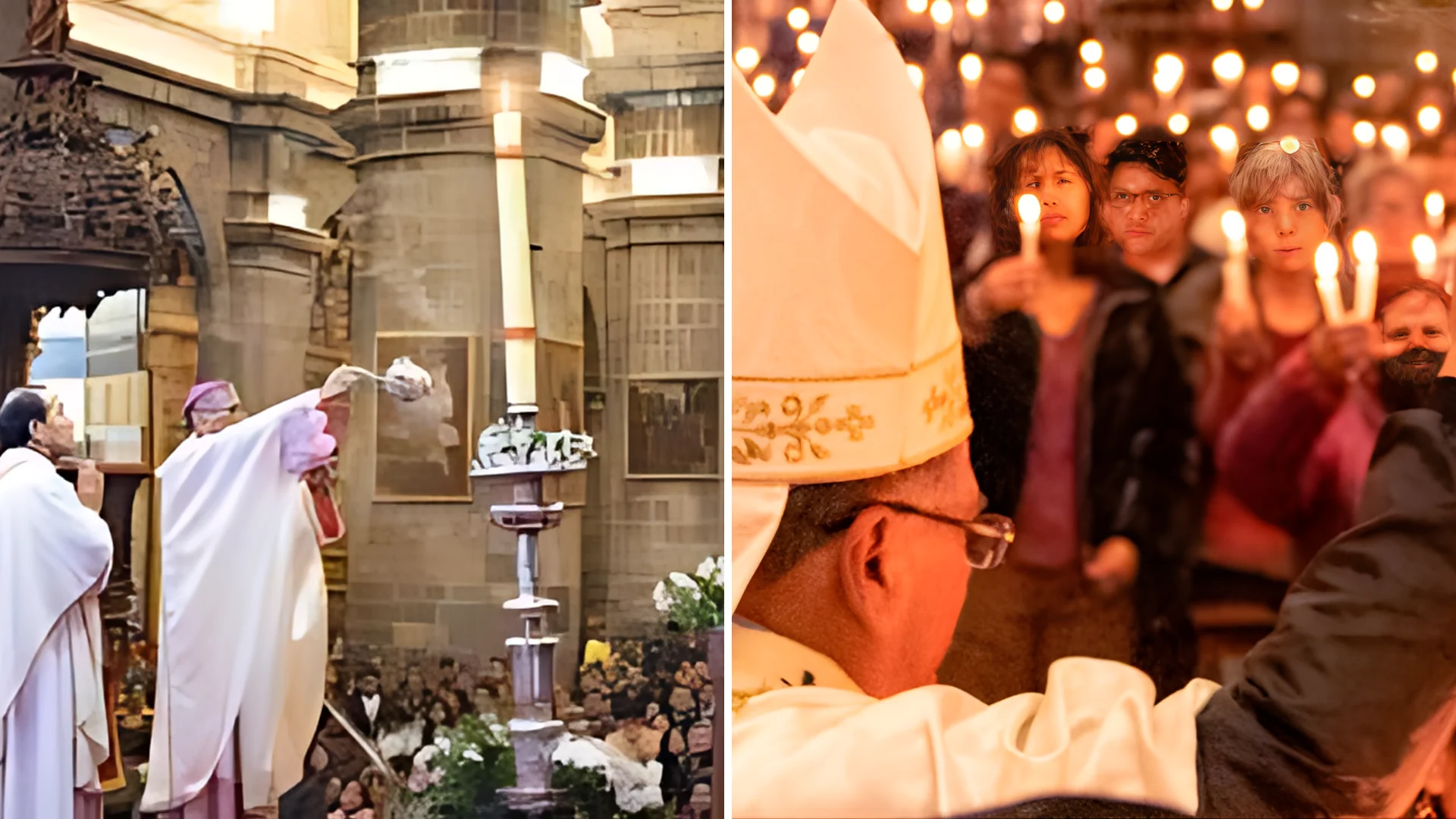
The Easter Vigil is the longest and most symbolically rich liturgy of the Christian year. In Cusco it begins around 10pm and continues past midnight. The ceremony starts in darkness outside the Cathedral or parish churches where a large fire is lit and the Paschal Candle is ignited from it. The congregation lights their candles from the Paschal flame and processes into the dark church. During the ceremony the Exsultet, the traditional Easter proclamation, is sung. |
The Vigil continues with a series of readings from the Old Testament, usually seven passages that trace the story of salvation from Genesis through the Exodus. Each reading is followed by a psalm, creating a rhythm of listening and reflection that gradually builds toward the central moment of the night. Then, when the Gloria is sung for the first time since Holy Thursday, the entire church suddenly fills with light. Every candle is lit, the bells that have remained silent since Thursday begin to ring again, and the organ bursts into joyful music. The transformation from darkness to light, from silence to sound, and from stillness to movement is one of the most powerful moments of the liturgical year.
Attending the Easter Vigil in Cusco
The Easter Vigil at the Cathedral of Cusco begins at approximately 10pm on Holy Saturday and usually continues until midnight or later. Visitors should dress warmly, since the interior of the Cathedral can be very cold at night during April. It is also customary to bring a small candle to light from the Paschal Candle during the opening ceremony. The moment of the Gloria, when the bells ring and the entire church suddenly fills with light, is widely considered one of the most moving experiences of Holy Week in Cusco. At the same time, smaller and more intimate celebrations of the Vigil take place in all the parish churches throughout the city.
Easter Sunday The Resurrection and the Joy of the City
Easter Sunday in Cusco begins with a sound unlike any other: the simultaneous ringing of every church bell in the city at sunrise. In the deep bowl of the Andean valley, the sound grows immense. It echoes against the stone walls of the ancient city and rebounds from the mountains that surround it until it seems almost physical. After four days of solemnity, ritual mourning, and restrained emotion, the bells announce that the period of silence has ended. Joy is now allowed, and in many ways it is expected.
The Procession of the Risen Christ
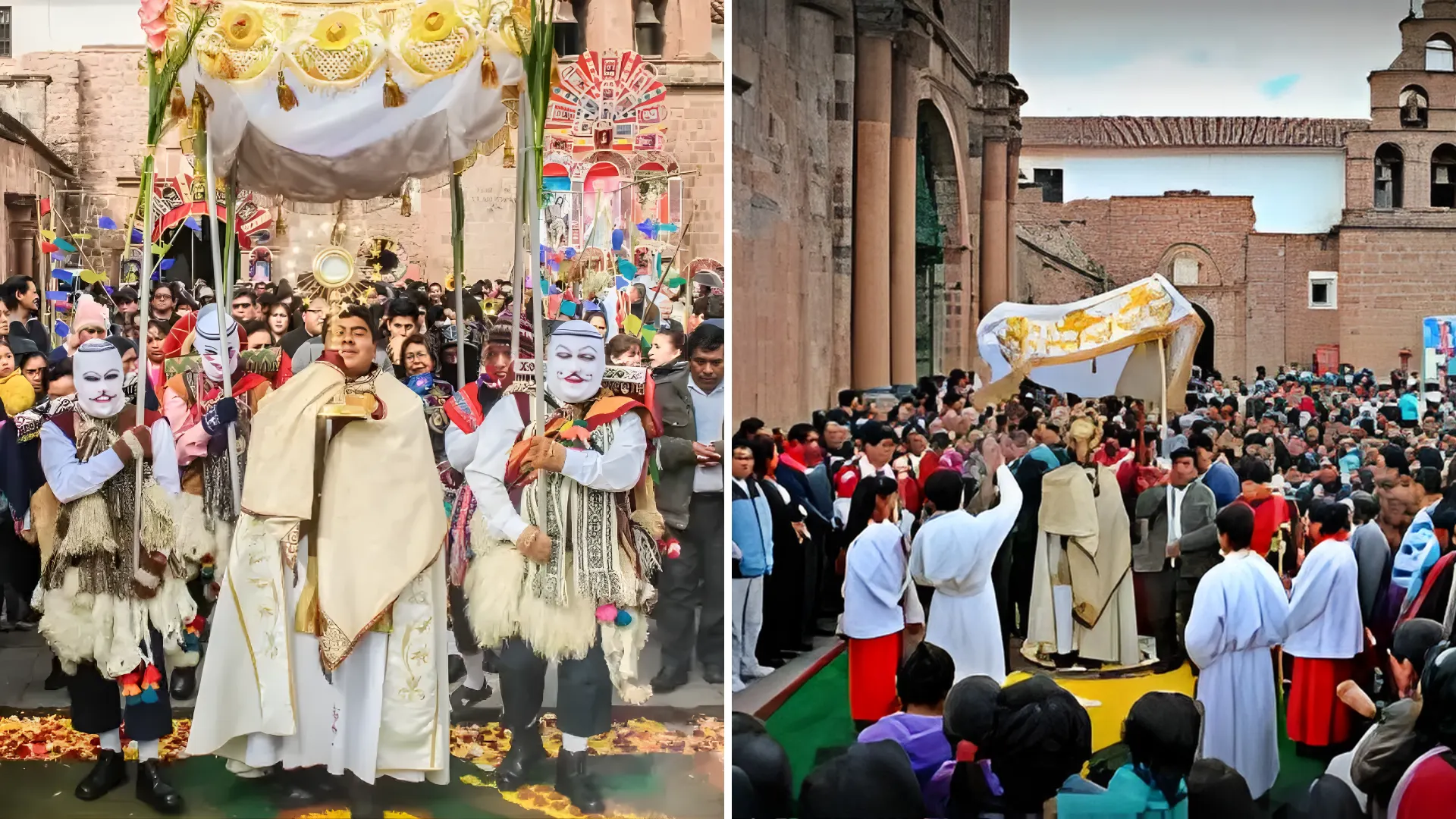
Later in the morning the great Easter procession begins. The Procession of the Risen Christ departs from the Cathedral and circles the Plaza de Armas in a celebration that stands in complete contrast to the solemn procession of Holy Monday. Sunlight replaces candlelight. Music fills the air. Flowers are thrown from balconies while children run alongside the float carrying the image of the Risen Christ. The crowd sings instead of weeping, and the entire city seems to move with a sense of renewal and relief.
| Time | Event |
|---|---|
| 6:00 AM | The Bells – Sunrise
At sunrise, the bells of all the churches in Cusco ring at the same time. The sound spreads across the valley and echoes through the historic center. Families begin to leave their homes, and the city awakens to what is considered the most joyful day of the year. |
| 7:00 AM | Easter Mass – All Churches Simultaneously
Easter Mass is celebrated in every church across Cusco. In the Cathedral, a solemn Mass presided over by the Bishop includes a full choir, orchestra, and incense. The pews and aisles fill quickly as families gather together again after the solemn days of Holy Week. |
| 10:00 AM | Procession of the Risen Christ
The image of the Risen Christ, draped in gold and surrounded by white and gold flowers, is carried out from the Cathedral in procession. The atmosphere is festive, with bands playing hymns and traditional Andean music. Flower petals in the colors of Easter are thrown from balconies while children walk alongside the float. |
| 12:00 PM | Easter Lunch – The Breaking of the Fast
Easter Sunday lunch is the most abundant meal of the year. After weeks of Lenten fasting, families gather around tables filled with roast lamb, pork, chicken, and traditional Andean soups and stews. Chicha de jora, the traditional fermented corn drink, is shared generously. |
| Afternoon | Festival in the Plaza de Armas
During the afternoon, the Plaza de Armas becomes a lively celebration filled with music, dancing, and food. Street vendors sell empanadas, buñuelos, api morado, and sweets. Folk dance groups from nearby communities perform traditional dances while bands play huayno, marinera, and other festive Andean rhythms. |
The City Returns to Itself
By Easter Sunday evening, Cusco slowly begins to return to its ordinary rhythm, although the memory of the week lingers long after the celebrations end. Street altars are carefully dismantled and their decorations stored away for the following year. Members of the cofradías return their purple robes and silver staffs to the churches. Flower vendors who have filled the city since Palm Sunday pack away their remaining blossoms. Families who spent days preparing food and sharing long meals gradually return to their daily routines.
Yet something subtle has shifted. It always does after Holy Week in Cusco. Those who experienced it together, who stood in the cold evening as El Señor de los Temblores passed through the streets, who walked through the darkness of the Tinieblas, who visited the Seven Churches by candlelight, who prepared and shared the twelve traditional dishes at the family table, and who heard the bells ring at sunrise on Easter morning, carry with them a quiet transformation. It is not necessarily a religious conversion, nor a souvenir of travel, but something deeper. It feels more like a recalibration, a renewed awareness of what is ancient, what belongs to the community, what remains sacred, and what ultimately gives a city its soul.
Frequently asked questions about Cusco Semana Santa 2026 Travel Guide Traditions and Processions
During Holy Week, or Semana Santa, in Cusco, a cherished tradition involves preparing and enjoying a feast of 12 distinct dishes . This culinary custom is deeply rooted in Christian symbolism, honoring the Twelve Apostles of the Last Supper . Families typically prepare these dishes on Holy Thursday, commemorating Jesus’s Last Supper, though some opt for Good Friday so that everyone can attend .
- Palm Sunday – March 29.
- Holy Thursday – April 2.
- Good Friday – April 3.
- Holy Saturday – April 4.
- Easter Sunday – April 5.
Catholics are called to abstain from meat and to fast on Good Friday. Some choose to abstain from meat all week, although there is no official requirement.8 abr 2025
Holy Week in Peru is one of the most important celebrations of the year and one of the most eagerly awaited times to travel. During this period, the country is transformed with processions, ancestral traditions, cultural expressions, food fairs, and a wide range of tourist activities.
Every year on Holy Monday, the image stops in front of the Cathedral and is raised to bless the city, an act believed to protect it from natural disasters. During the procession, balconies are decorated with ñucchu flowers and traditional songs are sung in Quechua.