Uros Floating Islands: How They Live on the Water in Peru
How can there be a people who have lived on the water for centuries and do not feel cold because of the blood they are said to have? In addition, a mysterious language was spoken on the Uros floating islands in Peru, which until 2004 only two people remembered. Discover all the information you need to know before visiting the Uros Islands.
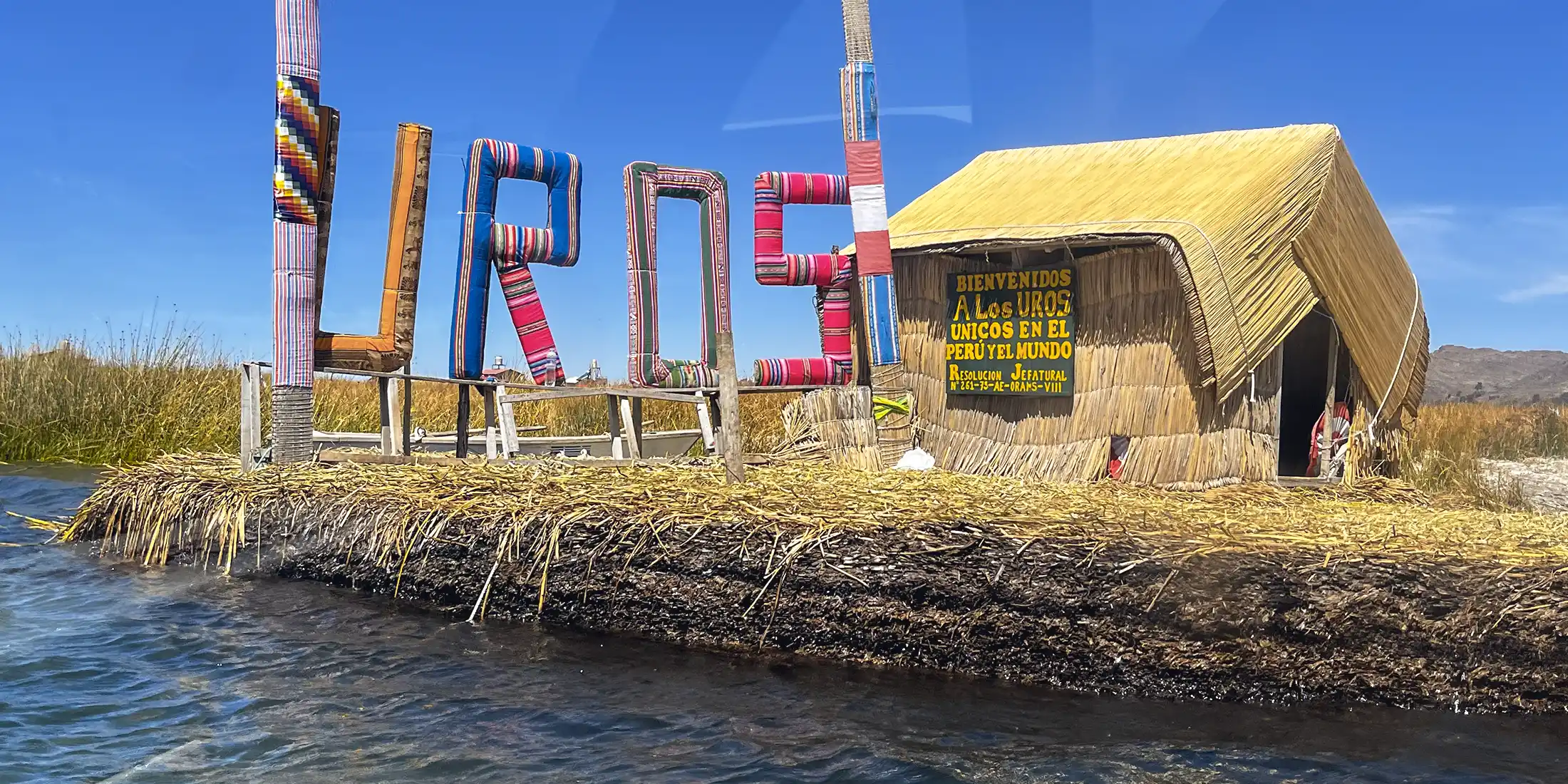
The Floating Islands of the Uros are a group of artificial islands made of totora reeds and built on the lake. The Uros people inhabit these islands, which are located in Puno Bay, west of Lake Titicaca and northeast of Puno at an altitude of approximately 3,810 meters above sea level (12,500 ft). The islands are located 7 km from the city of Puno, a 25-minute boat ride away.
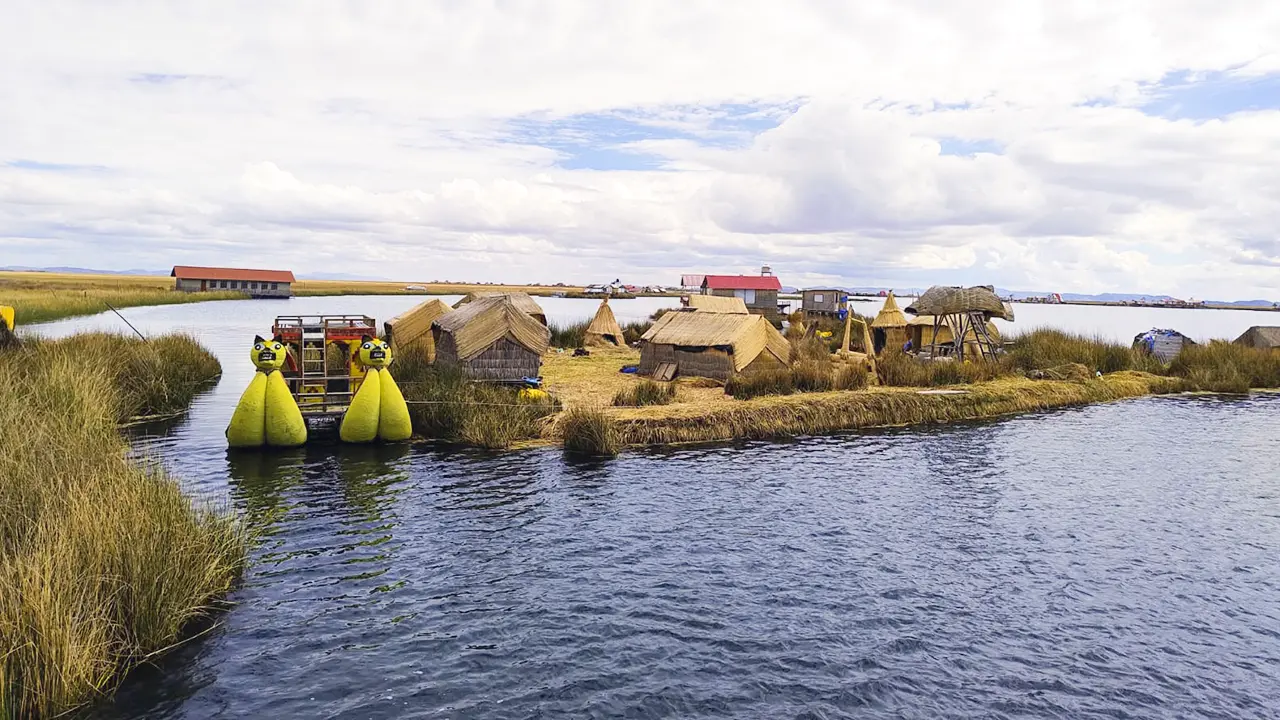
The Uros people inhabit an archipelago of approximately 120 constantly growing floating islands on Lake Titicaca near Puno. The community has a population of 272 identified families.
The depth of Lake Titicaca varies, but its maximum depth is estimated at 281 meters. A mysterious lake with a legend about Manco Capac and Mama Ocllo
No se encontraron tours para: uros
History of the Uros Floating Islands
The Uros built their homes on the water for protection and so they could easily move them in case of danger. Their settlements were therefore a natural defense. You will also see watchtowers on many islands. The Uros considered themselves the owners of the lake and the water. When you visit, you will feel the deep respect they still have for it.
They are direct descendants of the mysterious ancient Pukara culture, which existed around 1500 BC. Scholars say they were the first inhabitants of Lake Titicaca and even ancestors of the Tiahuanaco culture. According to legend, the Uros come from a people who spoke Puquina. They called themselves Lupihaques, which means “children of the Sun.”
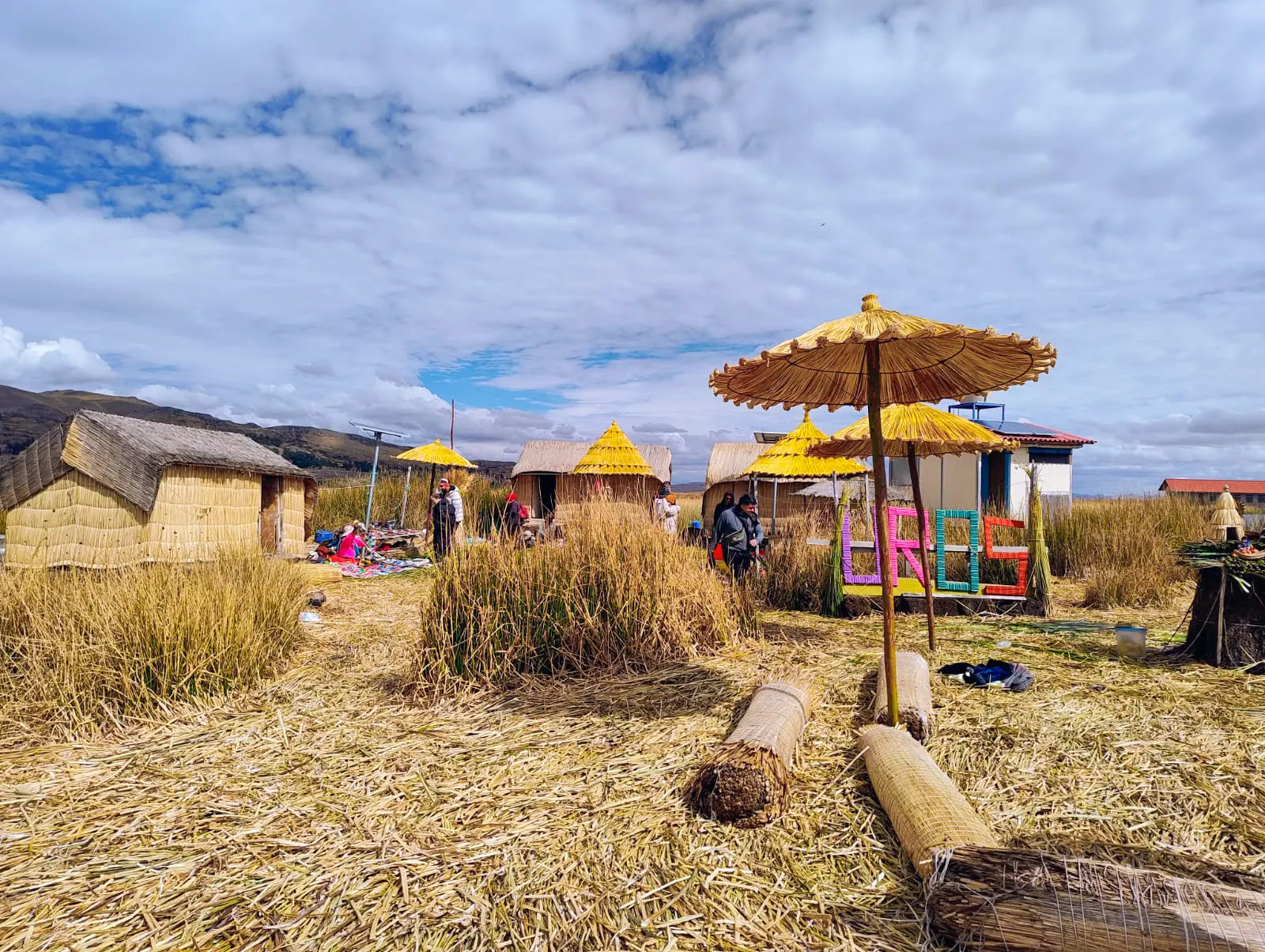
What makes this origin even more important is that the Uros existed before the rise of major Andean civilizations. This places them among the earliest cultural groups in the region, giving them a unique historical significance.
Their story is not about conquest or expansion, but about survival. While other societies built cities and empires, the Uros built mobility and resilience, choosing water as their refuge and identity.

Over time, their original language was gradually lost and replaced by Aymara.
In fact, about 500 years ago, they stopped speaking the Uru language, and by 2004, only two people still spoke it. However, even though their language has almost disappeared, they maintain their identity.
The Uros hunted and fished for trout and catfish. They also domesticated Andean ibises to eat their eggs and hunted kingfishers. Later, they began to raise livestock near the shores and trade with the Aymara.
Thanks to these exchanges, they intermarried and adopted the Aymara language. In ancient times, the Incas conquered them and demanded tribute; some were even enslaved.
Since 1722, the Uros and the Aymaras had conflicts until the 1970s when the Aymaras took their land.
Even so, the Uros resisted and continued to live with hope. In 1986, a devastating storm forced them to move closer to the shores of the lake, but they did not lose their spirit.
The locals say that the Uros have black blood and that is why they do not feel the cold. They decided to retreat to the center of the lake not out of fear, but out of love for their freedom and tranquility.
How They Built It
The Uros built the floating islands by stacking and weaving thick layers of totora reeds to form a solid base. First, local families collect large quantities of totora reeds. This plant grows naturally in Lake Titicaca.
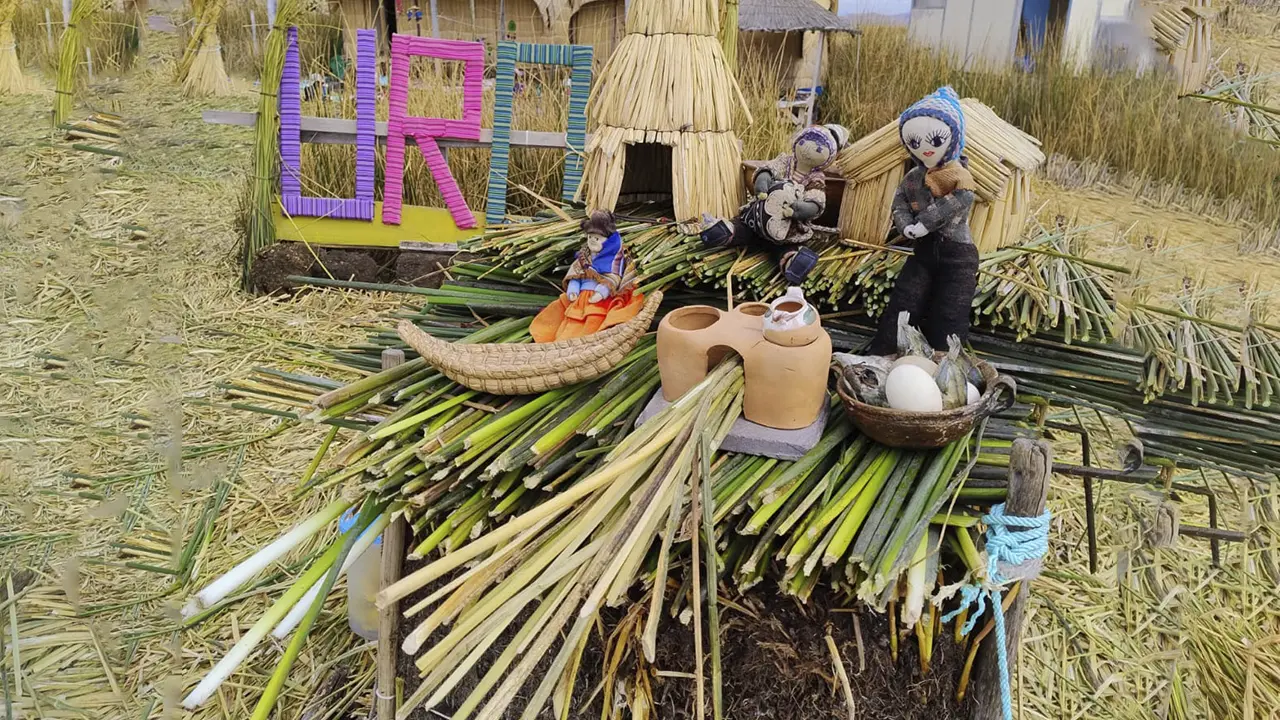
They realized that totora roots (also called “khili”) float like cork.
The blocks of totora roots are tied together with ropes to form a floating base. Then they add a thick layer of fresh totora on top of the root base.
They then cover the island with several layers of dry totora, weaving and crossing it to achieve a firm and stable surface. It is like a giant mattress, because when you step on it, you will notice how soft it is.
They repeat this process constantly to keep the structure strong. And on top of it, they build their houses.
The Uros anchor the islands to the bottom of the lake with logs and ropes to prevent them from being moved by the currents.
Imagine if they didn’t, they could go to sleep and wake up in Bolivian territory.
Every 15 to 20 days, the sun and heat erode the totora reeds. So they have to do maintenance, and the Uros add new layers to keep the island afloat.
This process is not only a construction technique but also a reflection of their worldview. The islands are never permanent structures; they require constant care and renewal.
Each new layer of totora represents continuity, effort, and the collective work of the community. In this sense, the islands are alive, constantly evolving just like the culture of the people who inhabit them.
The Extinct Language of Puquina
Researchers associate the Puquina language with the impressive culture that built Tiwanaku. In addition, there are very interesting theories that say that “Qhapaq Simi,” the secret language of the Inca nobility, was related to Puquina, while the common people spoke Quechua or “Runa Simi.”
Imagine, that means that even the Incas were able to preserve part of this mysterious language.
The disappearance of the Puquina language represents more than the loss of words; it reflects the gradual transformation of identity under external influences.
However, even without their original language, the Uros have preserved their worldview, traditions, and way of life, proving that culture can survive beyond language.
As if that weren’t enough, it is believed that this influence began after the collapse of the Tiwanaku Empire around 1000 AD, when there were migrations to the south.
There were indigenous groups that spoke Puquina, also known as Pukina, in the Lake Titicaca region between Peru, Bolivia, and northern Chile.
How do the Inhabitants of Uros Live?
What do they eat on the island?
Families prepare dishes with trout, silverside, mauri, and carachi. They always combine these with tubers, grains, and vegetables that they grow in the region. These are nutritious dishes. Among the typical dishes are Chaulla Thimpo, which is prepared with different types of fish, and trout Thimpo, which is milder.
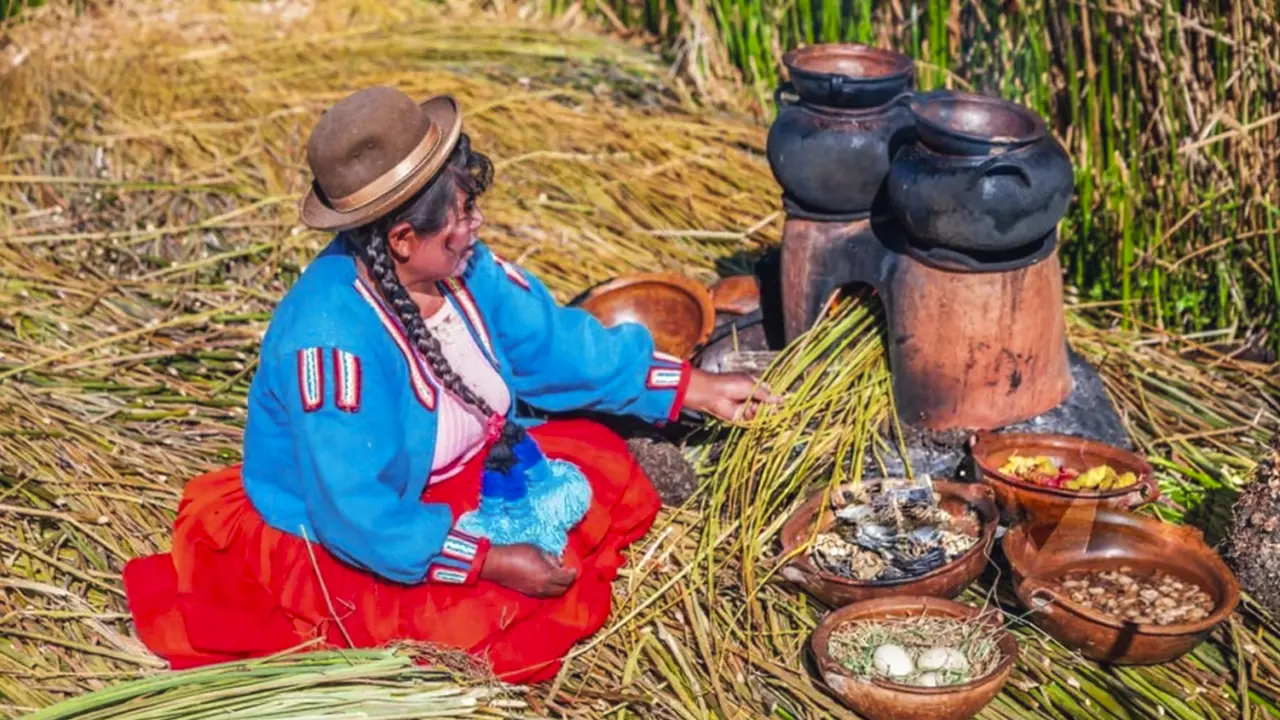
I also recommend trying trout Chicharrón, it’s spectacular! The locals fish for ispi and carachi, so everything is fresh. Like everything else in Peruvian cuisine, it’s delicious.
In addition to cooking, the Uros people take advantage of nature in a unique way. Much of their diet and medicine revolves around totora reeds, the same ones they use to build their islands.
When they pull up a reed, they eat the white part at the base, which is rich in iodine, to prevent goiter. Totora is vital to them, just as coca leaves are to the Andean peoples.
It helps them stave off hunger and withstand the intense cold of the lake. And when someone is in pain, they simply wrap the affected area with the reed.
It’s amazing how a single plant can be food, medicine, and home all at the same time.
Food is not only a source of nutrition but also a cultural expression. The preparation of traditional dishes reflects generations of knowledge about the lake and its resources.
Fishing techniques, ingredient selection, and cooking methods have been passed down through families, preserving a deep connection between the Uros people and their environment.
Are there schools?
You’ll love seeing how teachers travel by boat to get to class. This big change began in 1963. That year, education came to the islands for the first time thanks to the “Adventist Mission of Lake Titicaca.”
They created the first private school and taught children to read, write, and dream beyond the water. Sometimes, the elders proudly tell you what that first day of school on a floating island was like.
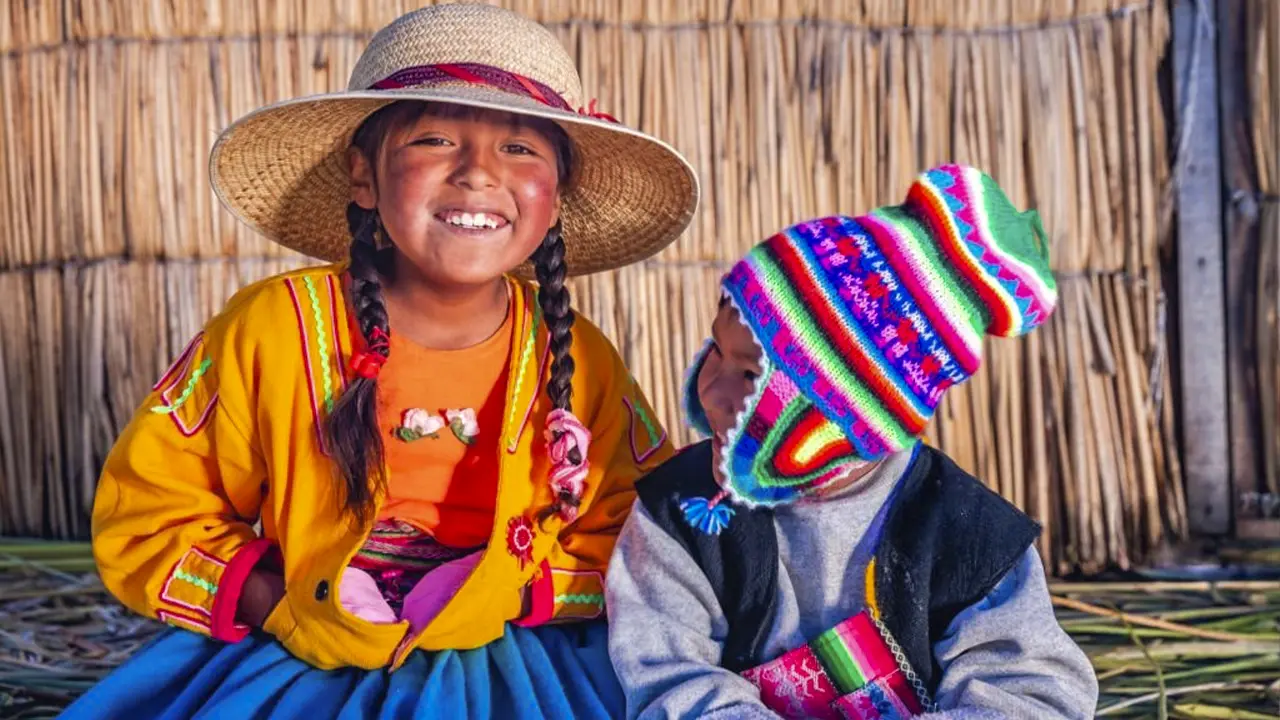
Before all that, the Uros people could not read or write. They lived completely isolated in the depths of the lake, on their islands, and did not know that schools existed. Therefore, they did not consider their children’s education important. Imagine growing up surrounded by water, without books or teachers, but with ancestral wisdom based on nature. That was their life before modern education arrived.
Today, education represents a balance between tradition and modern life. While children learn reading and writing, they also grow up understanding how to build islands, navigate the lake, and preserve their customs.
This combination allows new generations to adapt to the modern world without losing their cultural roots.
Religion
The inhabitants practice the Andean religion, with rituals such as offerings to Pachamama and Cotamama. These are symbols of respect and gratitude towards nature. They also keep the Catholic religion alive, a cultural heritage left by the Spanish centuries ago.
In recent years, you will also notice that some families are adopting new beliefs, such as the Adventist and Jehovah’s Witness religions.
How is the weather?
You will feel cold and dry weather from the moment you arrive. The average annual temperature is 14°C, so bring a light coat. You will also notice that the islands have two distinct seasons: winter and summer.
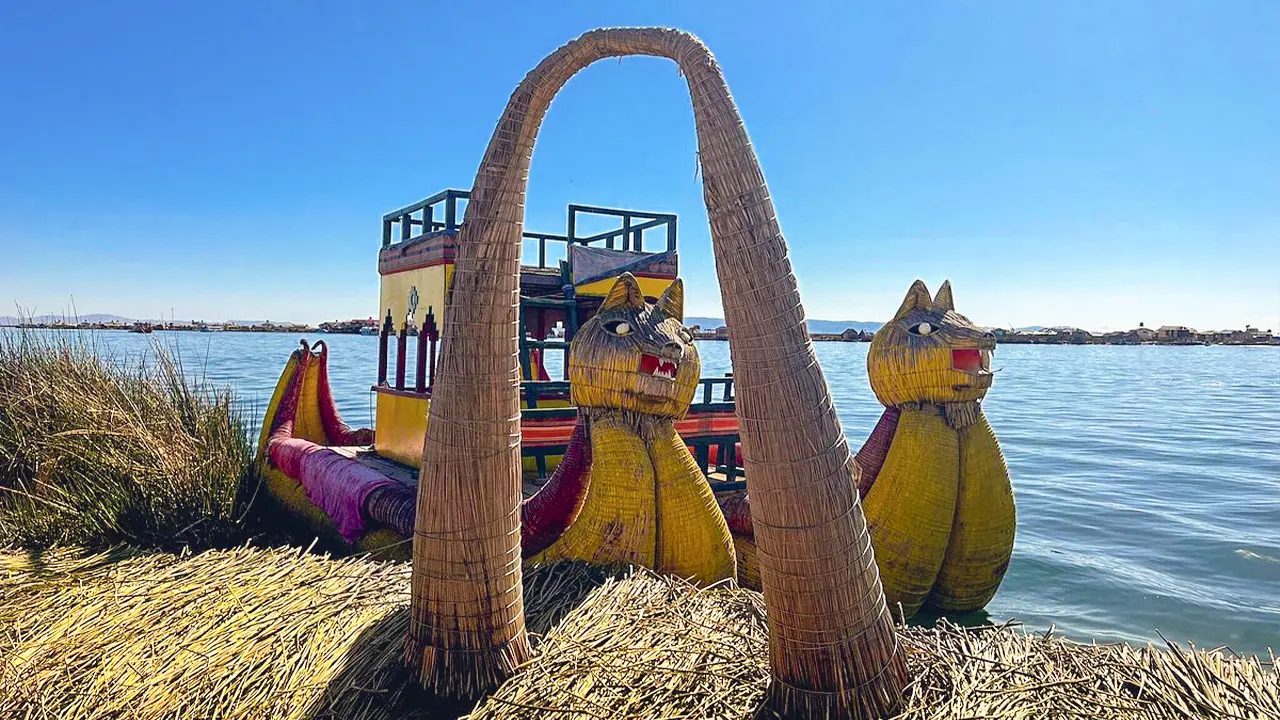
During winter, which runs from May to August, the atmosphere becomes cooler and calmer. At this time, there are sporadic rains, so you won’t have to worry too much about the rain. The average temperature is 12°C, but be prepared, because at night it can drop to 4°C below zero. However, during the day you will enjoy blue skies accompanied by dry winds that cool the air.
If you decide to travel between December and April, you will experience summer in the Uros. At this time of year, the rains become torrential and many afternoons bring lightning, thunder, and waves. The average temperature is 14°C and can easily rise to 20°C, ideal if you like to feel the contrast between sun and rain.
Is Electricity a Problem?
When you arrive at the Uros Islands, you will be surprised to see that all families use solar panels. This makes life on the lake sustainable and clean. You will also notice that all families use cell phones. These are essential for their work in tourism and to stay connected.

As for water, the inhabitants boil the lake water before drinking it. This process ensures that it is safe for consumption. All of this demonstrates how they use natural resources responsibly and practically.
Finally, the drainage system is quite ingenious. The residents built a small separate island for their toilet needs. They then cover that area with reeds, which helps keep the environment clean. This method may seem simple, but it shows their respect for the lake and their ability to live in harmony with nature.
This integration of technology shows how the Uros community continues to evolve. Rather than abandoning their traditions, they incorporate modern tools in a way that supports their lifestyle and improves their quality of life.
Tourism, communication, and sustainability all benefit from this balance between the past and the present.
Crafts that Keep the Local Economy Alive
When you arrive on the Uros Islands, you will notice that every family makes a living from their art. They all sell handmade products that keep the local economy alive. The beautiful thing is that everyone participates: men, women, and children contribute their creative talents. In addition, the residents sell directly to tourists, both domestic and international, which means that your purchase has a real impact on their community.
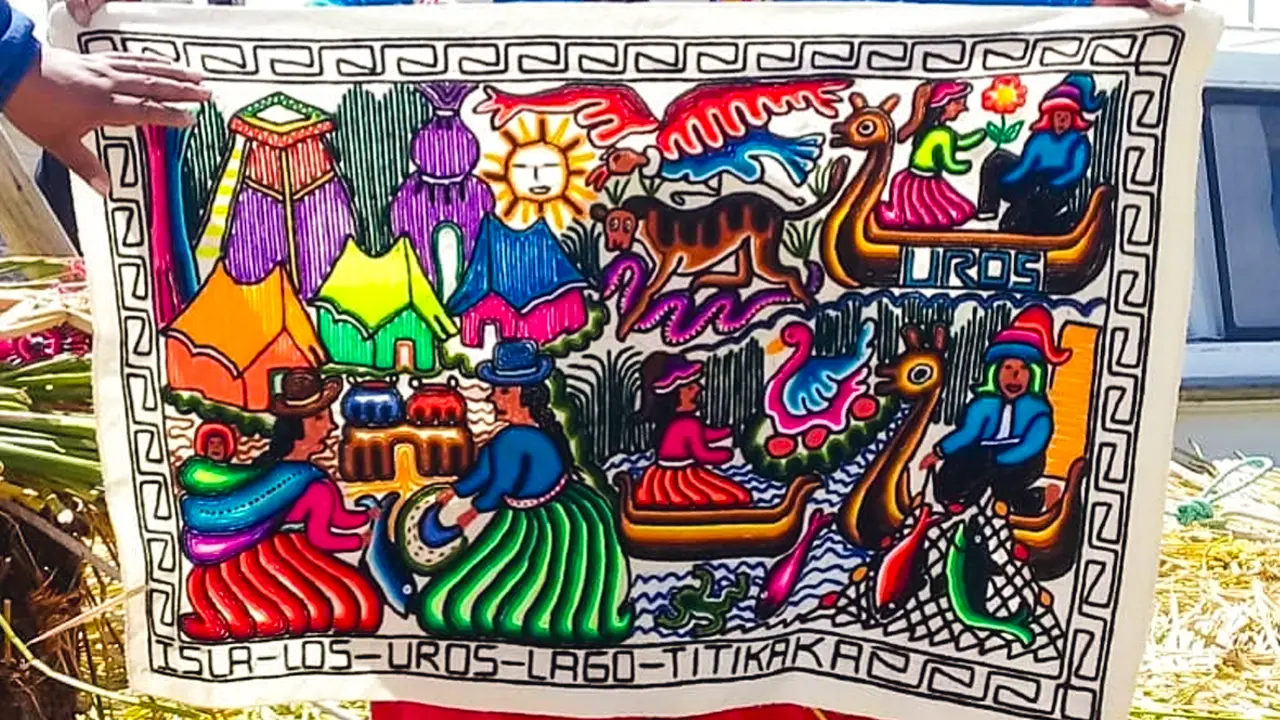
The women make colorful and detailed textiles, while the men work with totora reeds to shape different objects. The children, for their part, have fun creating bracelets and small decorations.
The embroidery depicts daily activities and the guardian gods who protect the community. They use totora reeds to make hats and small rafts that represent their connection to the lake. You will also find ceramics, bracelets, headbands, and many other souvenirs to purchase.
These crafts are not only souvenirs but also an essential source of income that supports the sustainability of the community.
Each purchase directly contributes to the preservation of traditional skills and helps maintain the economic independence of Uros families.
How to Get to the Uros Islands
-
From Lima
Once you arrive in Lima, you can take a flight to the city of Juliaca. The flight time is approximately 1 hour and 35 minutes. If you travel by land, the bus ride to Arequipa takes 17 hours, depending on the company you choose. And then from Arequipa to Juliaca, it is a 5-hour and 30-minute bus ride.
-
From Juliaca
Once you arrive at the Inca Manco Cápac International Airport in Juliaca, you have to take a minivan from the city that will take you to the city of Puno in an average of 40 minutes.
-
From Puno
Then, in the city of Puno, head to the lake shore, where you can take a boat and in 30 minutes you will be on the floating island of the Uros.
-
From Cusco
From Cusco, to go to the Uros Island, you have to take a direct bus to the city of Puno. The trip takes 7-8 hours on average. In Cusco, you can take advantage of visiting places such as Sacsayhuaman, Qoricancha, and more.
What You Will Find There
More than a destination, the Uros Islands offer an immersive cultural experience. Every visit involves interaction with local families, demonstrations of traditional techniques, and opportunities to understand daily life on the lake.
This direct contact transforms a simple visit into a meaningful learning experience.
Panoramic Views
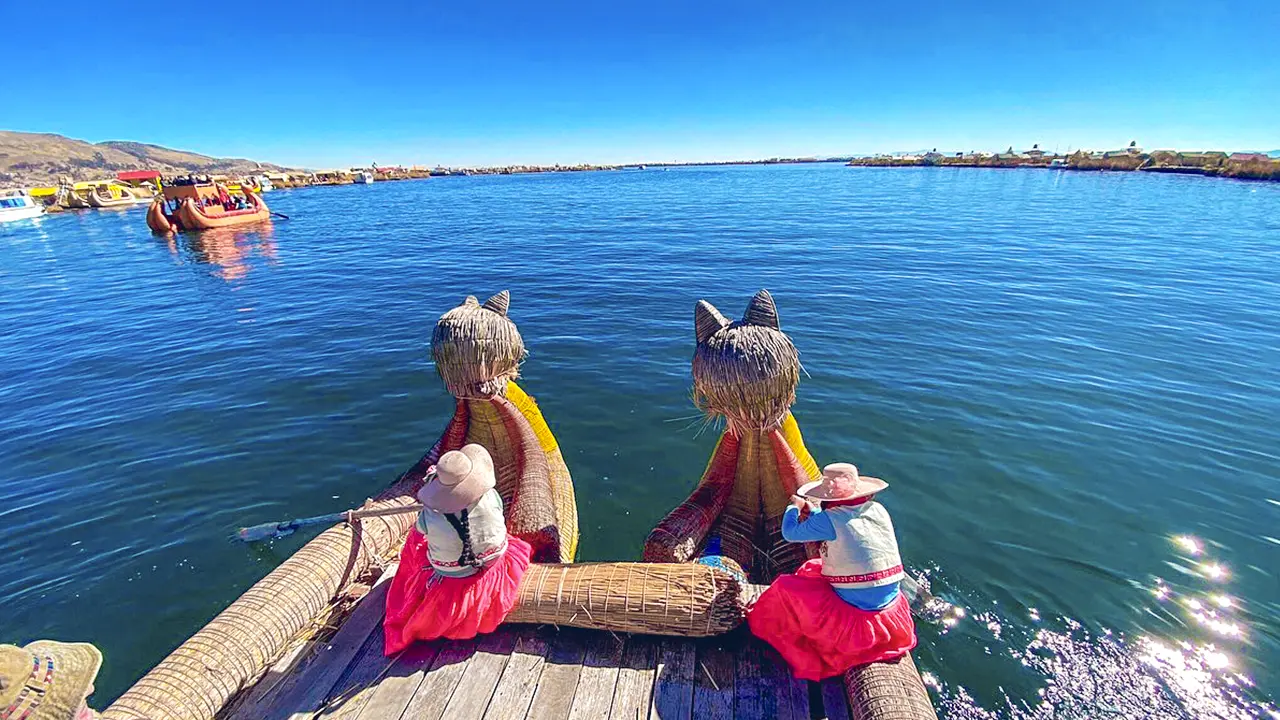
The perfect combination of floating islands accompanied by the lake, blue sky, and bird watching make this a unique natural attraction. In addition, the largest island offers a small museum with a collection of stuffed birds. You can also see their textiles, embroidery, and how they dry carachi in the sun. After exploring the main attractions, a floating island of totora reeds is anchored in the depths of the lake, where local communities of the Chulluni live.
What Animals and Plants You Will See
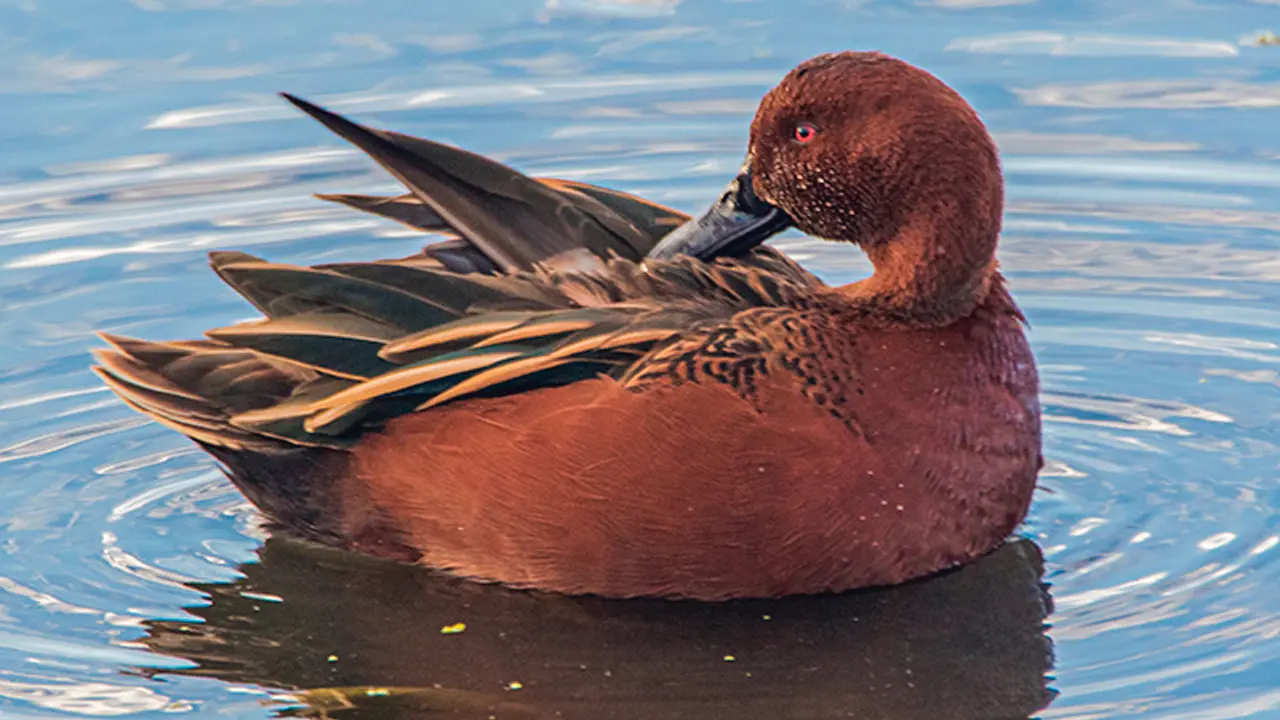
In its waters and surroundings, researchers have identified more than 350 species of water birds, including 35 native and 16 migratory species. That’s why you can easily see ducks, coots, grebes, parihuanas, and the Titicaca grebe.
As for the fish in the lake, species such as the suche, ispi, trout, and carachi stand out. They also coexist with unique amphibians such as the giant Titicaca frog and the Titicaca grebe.
Around the island of Uros, there are 12 varieties of aquatic plants. Among them is the famous totora reed, essential for the construction of floating islands and boats. Others include llachos, urima, duckweed, and more.
Tours with Agencies
Tourism has become one of the most important sources of income for the Uros people. However, it is not only an economic activity, but also a way to share their culture with the world.
Visitors are welcomed into their daily lives, where they can learn directly from the community. This interaction creates a meaningful experience that goes beyond traditional sightseeing.
Half-day tour
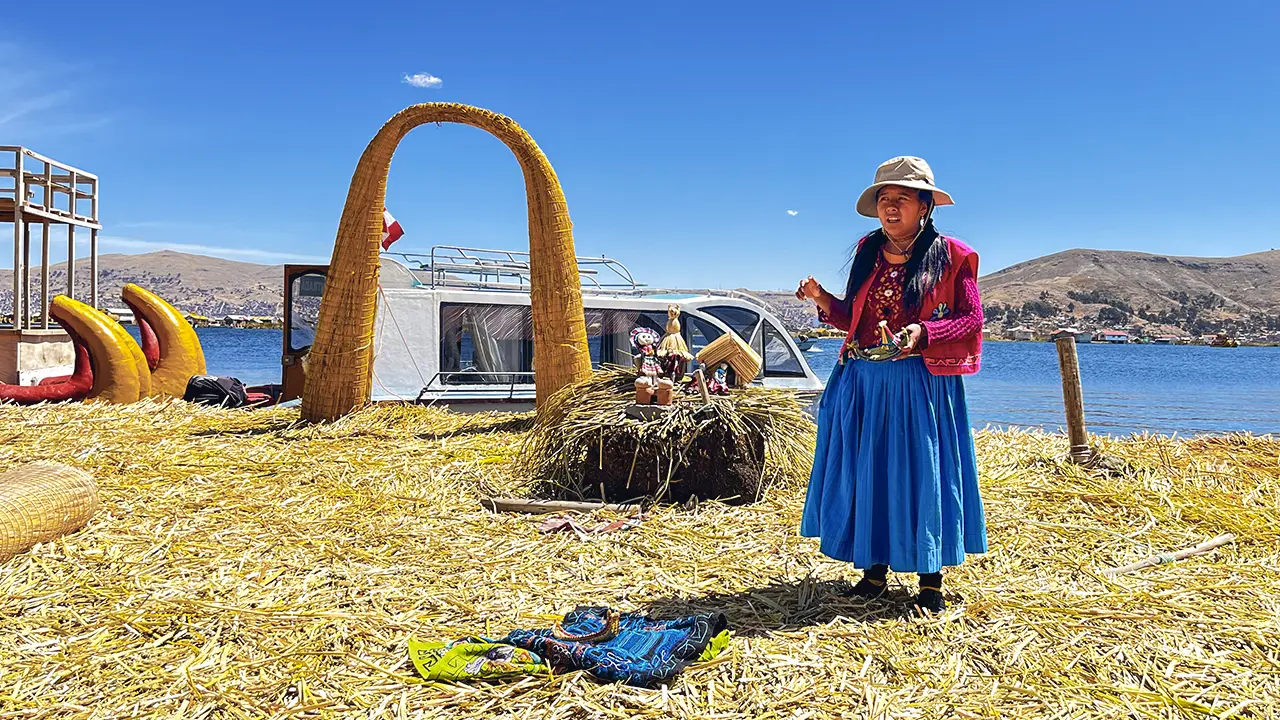
When you take this tour, you start with pick-up from hotels in downtown Puno or from the pier. Then you will board a boat to depart. Next, you will arrive at the islands and visit two floating islands. Finally, you will enjoy the entire tour and then return to the hotels in downtown Puno.
You will also have a professional bilingual guide in Spanish and English and admission to the Uros Islands. You will even travel in a safe motorboat. However, please note that tips are not included.
- Tour prices range from $11 to $15.
If you wish, you can also take a ride on a local Totora raft in the Uros. This is optional. The price is S/15.00 soles or $5.00 per person, and payment is made to the local residents. Therefore, it is a good idea to bring cash.
3-Day Tour to Lake Titicaca and the Route of the Sun
You will experience sailing on Lake Titicaca and the living traditions of the communities on the floating islands of Uros and Amantaní. In addition, this 3-day, 2-night adventure guarantees a deep history, cultural immersion, and impeccable logistics management from start to finish.
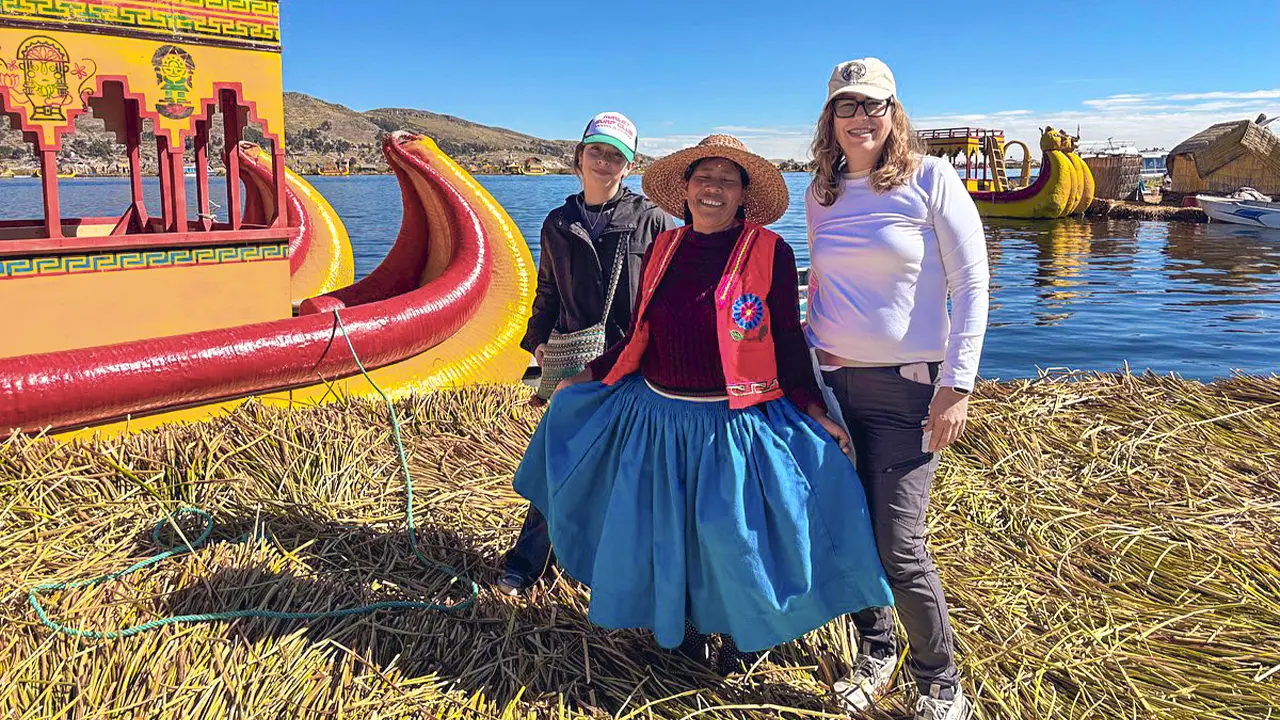
First, you will visit Cusco with Andahuaylillas, Raqchi, and La Raya, and also pass through Puno with Pucará. Then, the tour culminates at Lake Titicaca with Uros, Amantaní, and Taquile.
- The total cost of this trip is $170.00 USD per person with Uros Expeditions.
- Finally, I should mention that the excursion combines ground transportation, boat service, and short walks.
The Rise of Local Tourism Initiatives in Peru
In recent years, local tourism initiatives have played an important role in promoting destinations like the Uros Floating Islands. Agencies such as Uros Expeditions focus on creating authentic experiences that connect travelers with local communities.
By offering culturally immersive tours, these initiatives not only attract visitors but also help preserve traditions and generate direct economic benefits for the people who live on the islands.

Frequently asked questions about Uros Floating Islands: How They Live on the Water in Peru
Within the azure waters of Lake Titicaca, the Uros Floating Islands Peru are a marvel of human ingenuity. These man-made islands, home to the Uros people, are a testament to an ancient culture. Constructed from totora reeds, the islands are a living cultural heritage site.
Visiting the Uros Islands gives you a special look into the Lake Titicaca culture. These floating islands are a unique sightseeing spot. They offer more than just a typical tourist experience.
The Uros built their homes on the water for protection and so they could easily move them in case of danger. Their settlements were therefore a natural defense. You will also see watchtowers on many islands. The Uros considered themselves the owners of the lake and the water.
The Uros Islands on Lake Titicaca are remarkable artificial structures built entirely from a specific aquatic reed called totora
The Uros Islands, located on the stunning Lake Titicaca in Peru, offer a unique cultural experience year-round. However, many travelers consider the dry season, from April to October, to be the best time to visit