Virgin of Carmen in Paucartambo: History and Local Customs
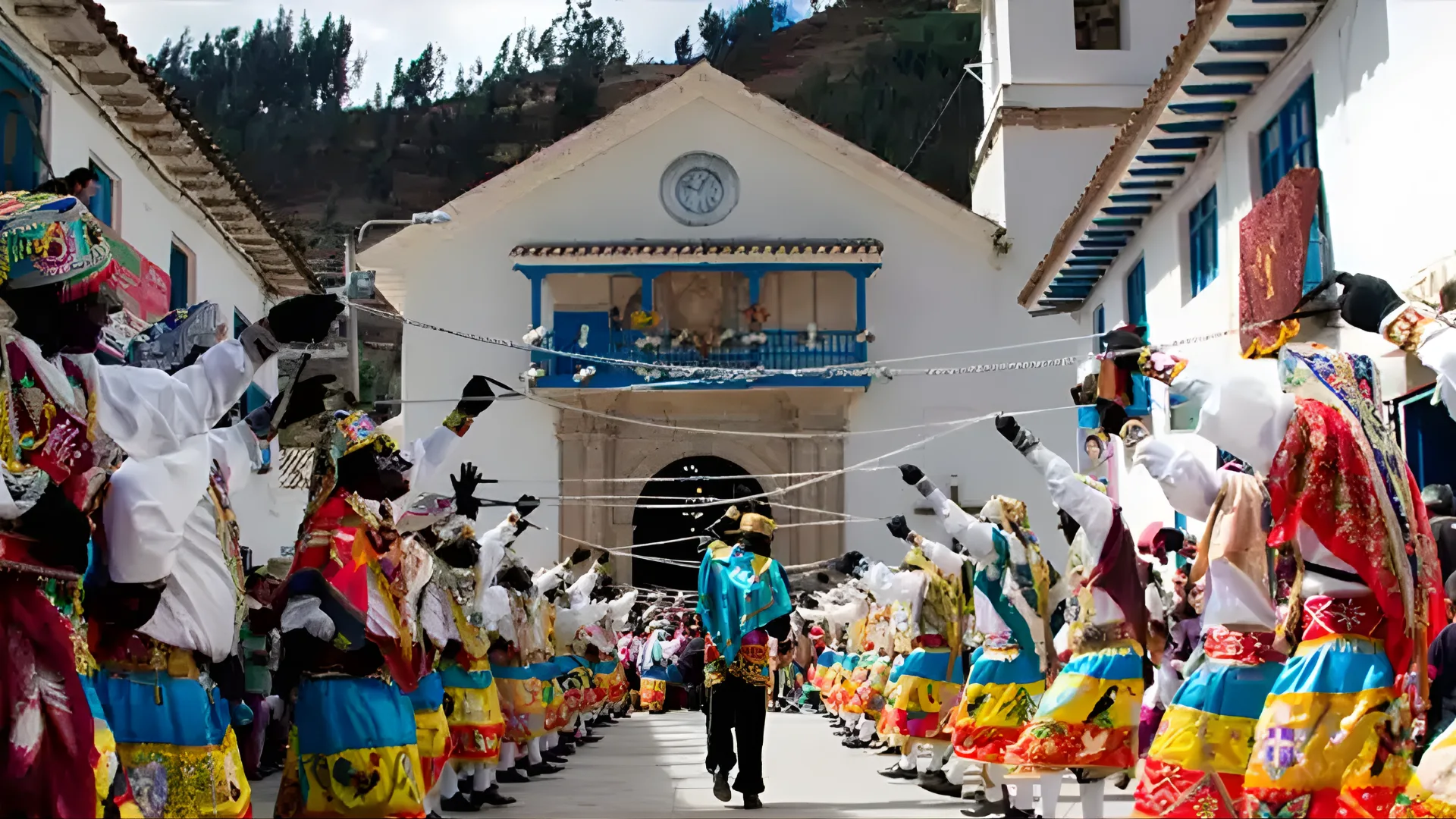
Peru has plenty of towns that celebrate the Virgen del Carmen on July 16, but Paucartambo is in a different category. For several days, this small colonial town near Cusco becomes a living stage where devotion, music, masks, and ritual drama are inseparable. It’s not a quick procession and a few dances. It’s a full system built by dance brotherhoods, sponsors, and traditions that repeat year after year with real responsibility and real emotion.
Where the Virgen del Carmen festival is celebrated
The celebration happens in the town (city) of Paucartambo, in Peru’s Cusco Region. It takes over the historic center: the main plaza, the church area, the streets lined with balconies, and the rooftops that become part of the performance itself. When people say “the Virgen del Carmen festival in Paucartambo,” they’re talking about the town, not the whole province.
Administrative location and subdivisions
Paucartambo is both a province and the name of its capital town. Administratively, the festival’s home base sits here:
- Country: Peru
- Region (Department): Cusco
- Province: Paucartambo
- Capital city: Paucartambo
Paucartambo Province has six districts: Paucartambo, Caicay, Challabamba, Colquepata, Huancarani, and Kosñipata. That detail matters because “Paucartambo” can refer to the wider province, but the festival everyone travels for is centered in the capital town.
Paucartambo’s setting and why it shapes the festival
Paucartambo sits high in the Andes roughly 2,900 meters above sea level so the festival’s physical feel is intense: strong sun during the day, real cold at night, and nonstop movement in crowded streets.
Geographically, Paucartambo also points toward the eastern valleys and the cloud-forest/Amazon edge through the Kosñipata zone. That “between worlds” location helps explain why the festival’s dance universe includes characters associated with highland trade, frontier routes, and jungle imagery alongside Catholic symbolism.
Brief history of Paucartambo
Paucartambo historically mattered because it connected places. It’s long been described as a corridor town linked to movement between Cusco and eastern valleys so commerce, travel, and cultural mixing were part of its identity. In the republican era, Paucartambo Province was created in 1825, which shaped the administrative structure that exists today.
That context matters because the festival reflects what the town has always been: not isolated, but connected religion layered with local identity, performance, and community organization.
History of Mamacha Carmen and the festival
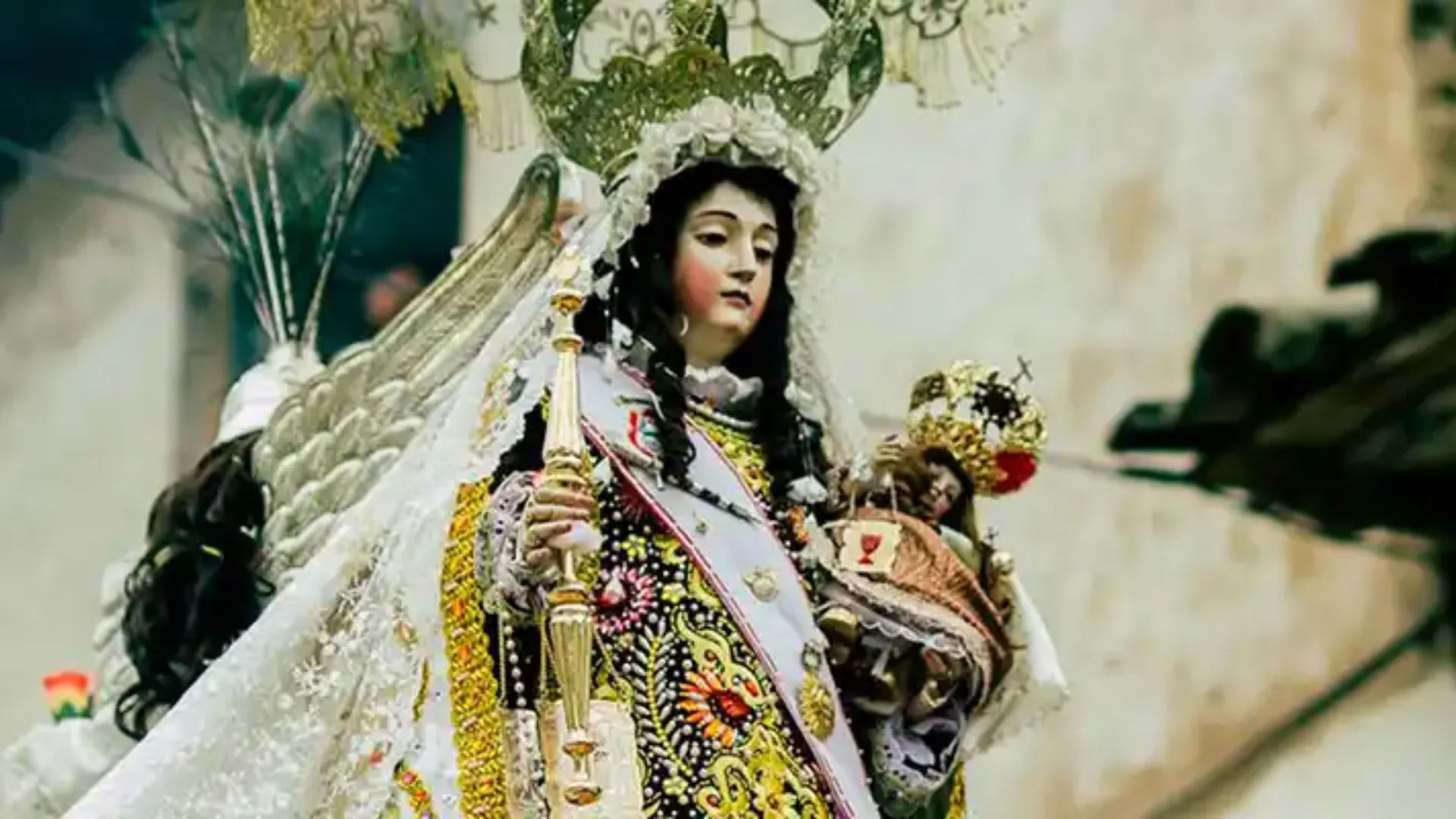
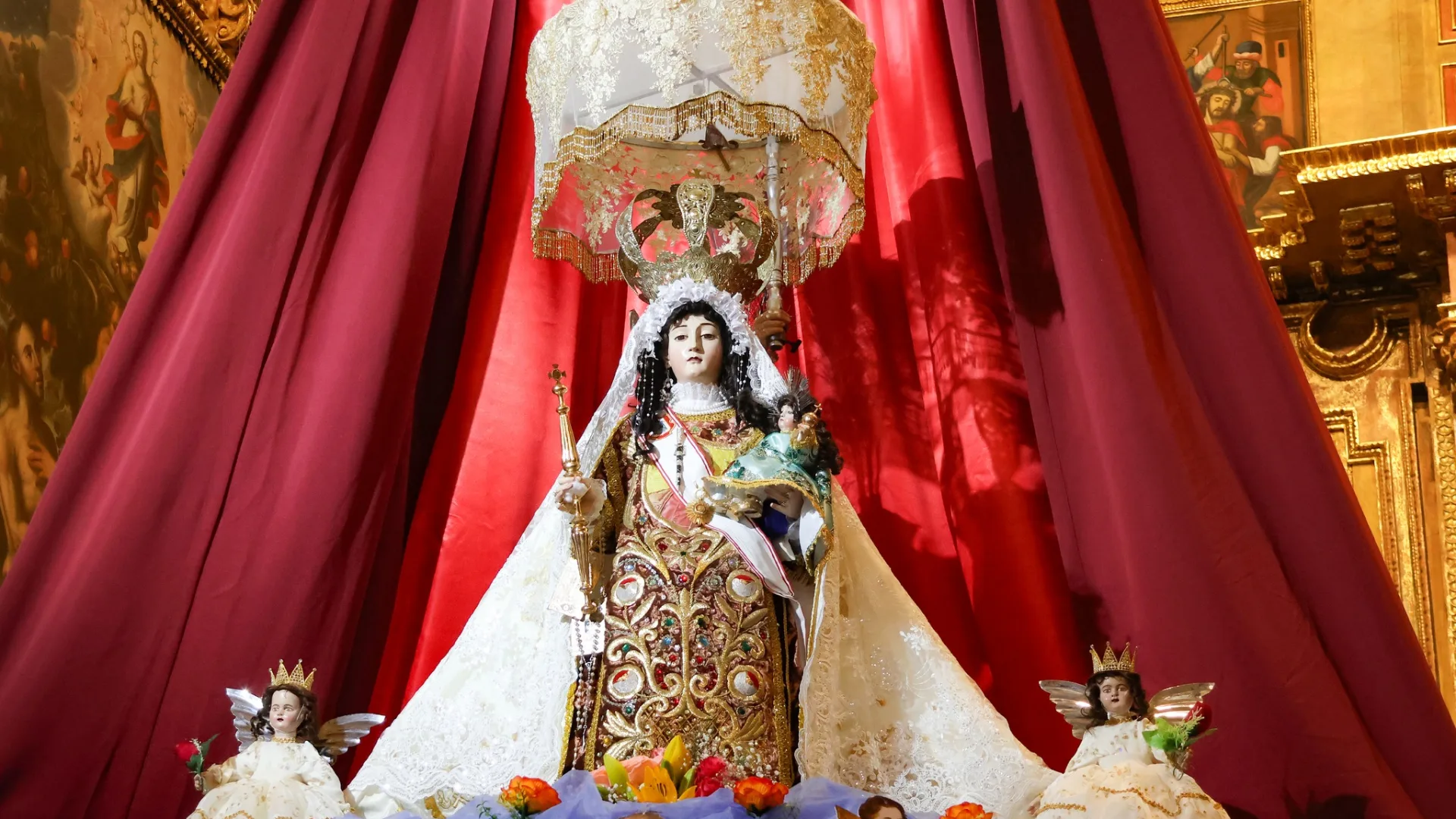
Locals often call the Virgin “Mamacha Carmen.” “Mamacha” is an affectionate Andean honorific more intimate than saying “Virgen del Carmen” and it signals protection and closeness, not just formal devotion.
As for origins, multiple traditions are repeated in regional reporting. One version connects the devotion to the colonial period, when religious images arrived from Spain and local worship developed around them. Other versions tie the festival’s symbolic narratives to regional tensions and trade routes especially through the Qhapaq Qolla story and to histories of haciendas and labor memory expressed through dances like Qhapaq Negro.
A later historical marker still referenced today is the pontifical coronation of the Virgin’s image by Pope John Paul II at Sacsayhuamán in Cusco (1985), remembered in commemorations and coverage as a major milestone in the wider Cusco devotion to Mamacha Carmen.
Dates and festival calendar
Most travelers should plan around July 15–18, with July 16 as the central day. Some official listings also mention a July 19 enthronement day, when the Virgin is placed back on her altar to close the cycle.
Day-by-day: what happens (July 15–19)
Paucartambo isn’t a one-day celebration. Each day has its own rhythm and named traditions.
July 15: the festival switches on
This is the day the town shifts into full festival mode. You’ll see the entrance of key characters like the Maqt’as, and you’ll hear about candle offerings and ritual routes tied to bringing candles, flowers, and fireworks elements toward the sanctuary area. At night, Q’onoy brings an intense plaza atmosphere followed by fireworks and the “Alba,” a salute to the Virgin.
July 16: the central day (mass + procession)
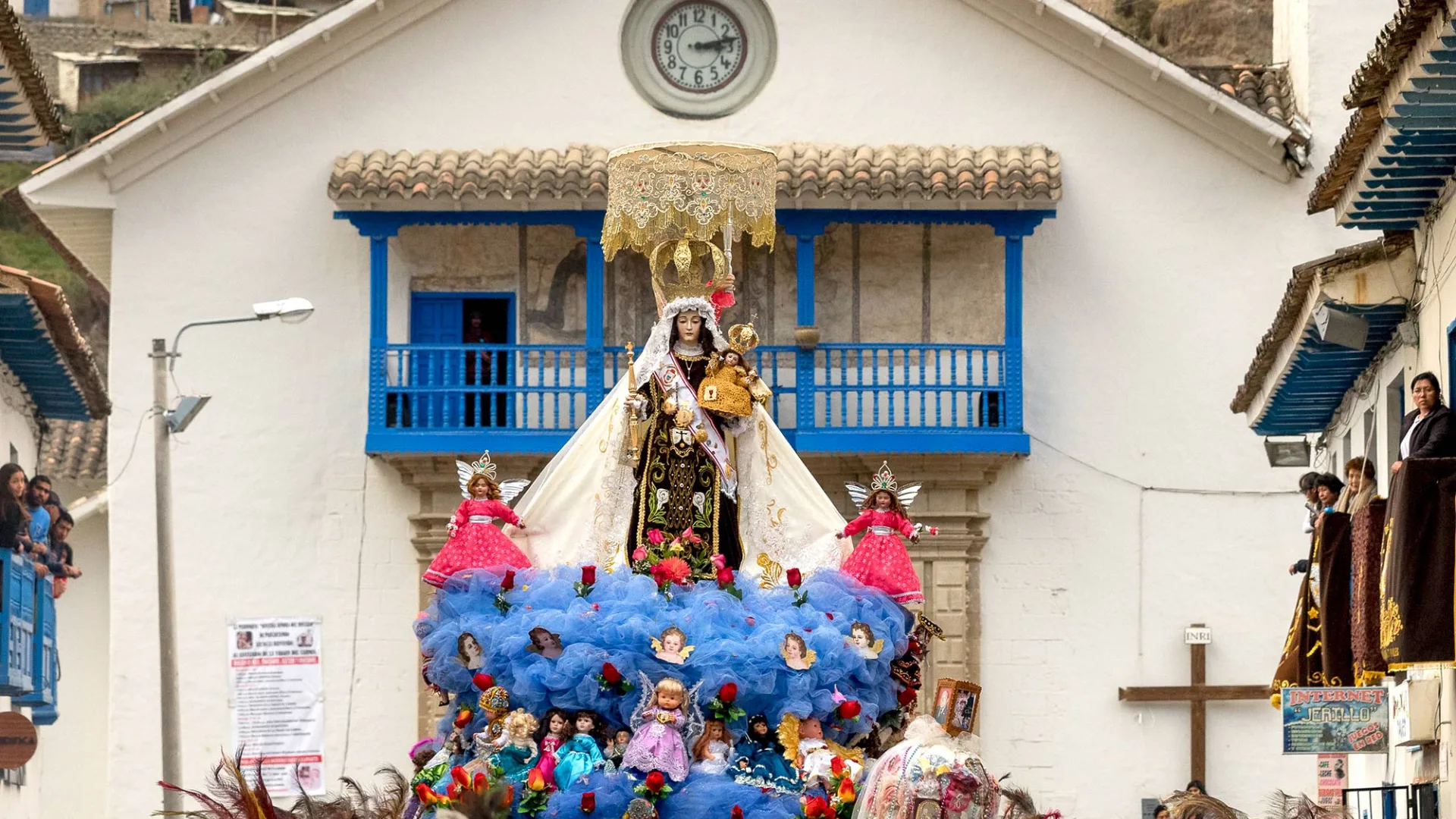
This is the centerpiece. There are early masses (including a dawn mass), and the main fiesta mass where the dance brotherhoods are present in force. Later, the town focuses on the major afternoon procession through the streets. This is where the emotional core shows up: devotion expressed through movement, music, and collective presence.
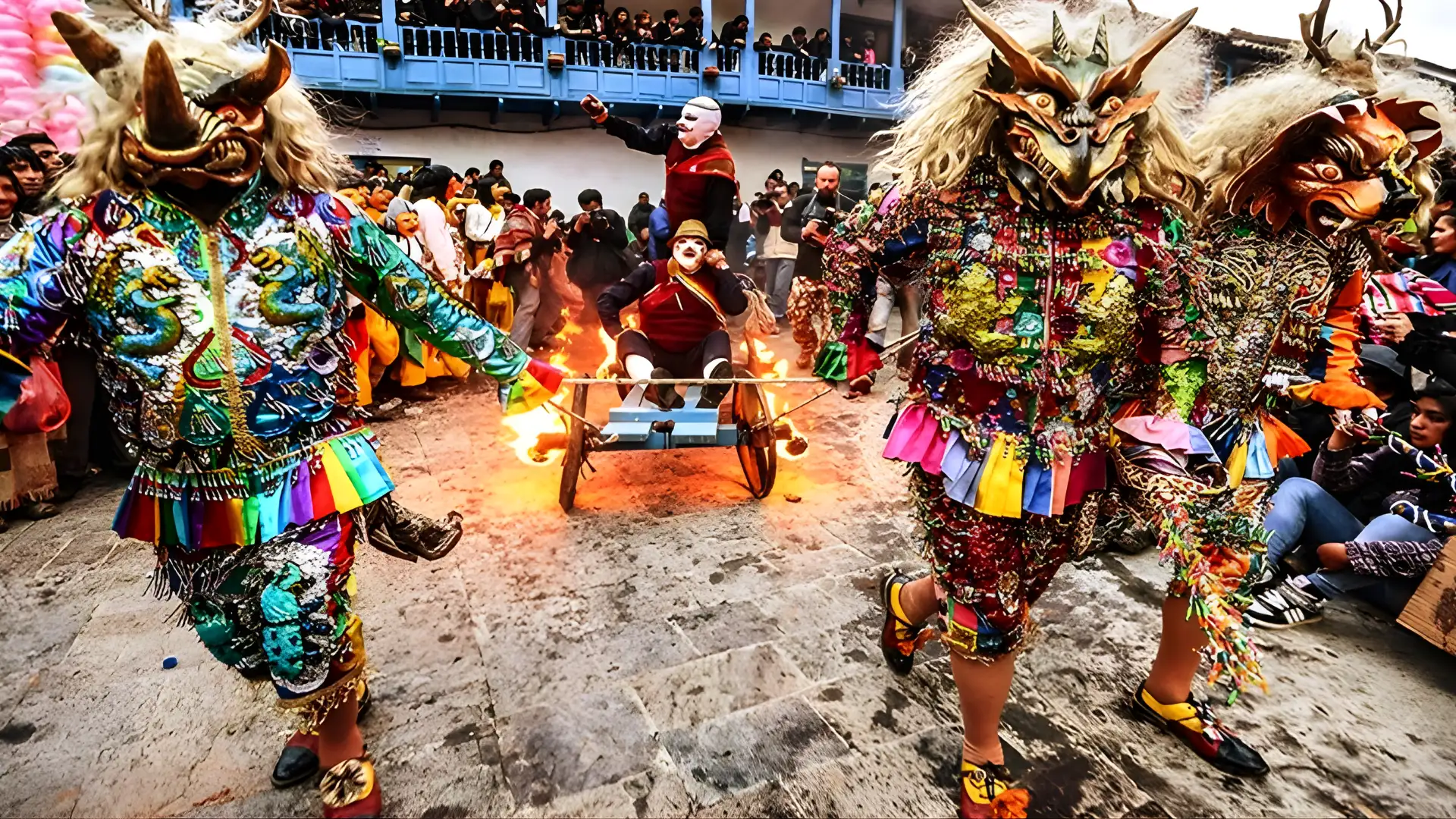
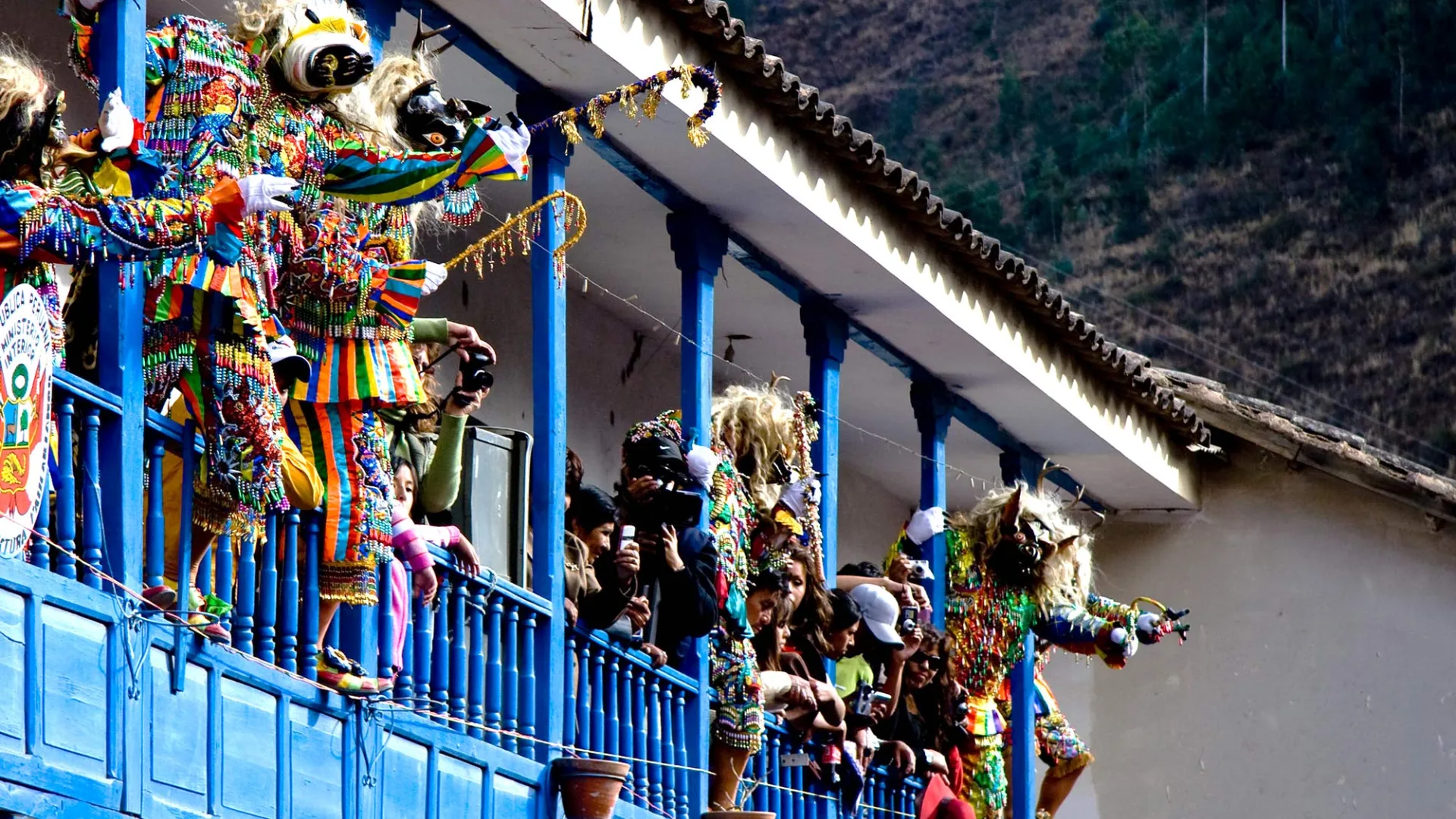
It’s also the day of the most iconic visual: Saq’ras waiting on rooftops and balconies as the Virgin passes one of the signature images described in official cultural inventories.
July 17: continuation, farewell moments, and the plaza’s big energy
Many visitors underestimate this day. Religious activities continue, and the schedule includes ritual moments tied to Watatiyaykuy and final blessings. The plaza energy shifts toward closing-parade vibes what many people experience as the “kacharpari” feeling, a social goodbye with dancing and music that still feels relentless.
July 18: closing thanks and transition to next year
This day includes thanksgiving mass for outgoing and incoming sponsors/priostes and closing logistics tied to the Virgin’s platform and procession elements. In older reporting, watatiyakuy is described as part of the emotional closing phase less spectacle, more farewell.
July 19 (some years): enthronement day
Some official inventories describe July 19 as the day the is placed back on her altar, sealing the cycle until the next year’s celebration.
The stars of the festival: dances and characters to recognize
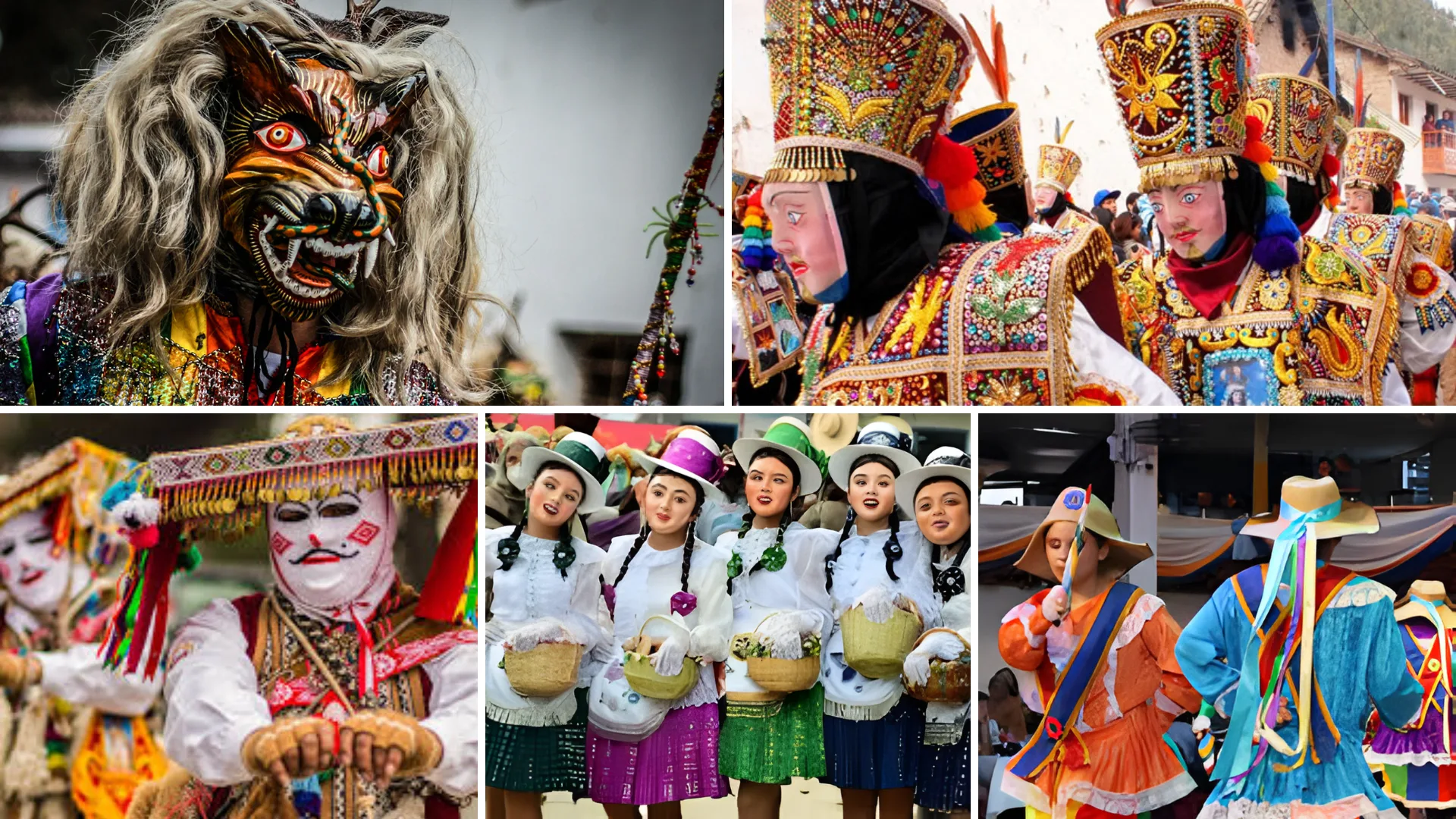
One of the most repeated facts in national coverage is that Paucartambo’s celebration features nineteen devout dances. These aren’t random performers they’re organized brotherhoods with responsibilities, leadership, and long-term continuity.
Maqt’a
Maqt’as are comedic characters who keep the crowd alive, often interacting with spectators with humor and improvised dialogue.
Qhapaq Qolla
Qhapaq Qolla is widely described as the principal dance of veneration and one of the most emblematic comparsas. The Qolla identity is tied to trade, travel, and highland exchange so it carries “movement” in the story itself.
Qhapaq Chuncho
Often connected to the Amazon frontier imagination (Antisuyu imagery), which fits Paucartambo’s geography toward Kosñipata and Manu routes.
Qhapaq Negro
Andina links certain origin traditions (including hacienda-era history) to symbolic memory expressed by this dance. Cultural commentary also highlights how its organization is treated as an example of safeguarding tradition by the bearers themselves.
Saqra
The rooftop devils. Official cultural inventories explicitly describe Saq’ras waiting on rooftops as part of the procession scene.
Other comparsas
Official inventories list groups commonly present, including Contradanza, Majeño, Panadero, Waca Waca, and Siclla Huayra (Doctorcito), among others.
Customs visitors miss (but locals never forget)
In Paucartambo, what makes the biggest impression is not always what is most visible. Behind the dances, music, and procession, there are customs that sustain the entire festival and that many visitors overlook.
Watayuyaruchikiy: visits to former hosts
Dance groups visit the homes of former organizers (excarguyocs/exmayordomos). This practice has a named tradition Watayuyaruchikiy and it’s part of why the festival feels like a network of obligations, not a single parade.
The “Guerrilla”
A traditional scene tied to symbolic conflict and public ritual drama, often described as a confrontation between groups within the festival’s narrative.
Watatiyakuy: the emotional farewell
As the festival closes, the tone shifts. Older Andina coverage describes watatiyakuy tied to the final mass and the end of the festivities, emphasizing the farewell character of the moment.
How to plan your visit from Cusco (without ruining the experience)
Paucartambo is commonly described as about 110 km from Cusco and roughly 2.5 hours by car, but travel time can stretch during festival congestion.
Where to stay:
- In Paucartambo: maximum immersion, minimal sleep.
- In Cusco: easier logistics, but you’ll miss overnight and dawn moments.
What to pack:
- Warm layer for night
- Sun protection
- Comfortable shoes
- Water and small cash
Respect basics:
- Don’t block the procession route.
- Ask before close-up photos of resting dancers.
- If you’re underage, skip alcohol.
Tres Cruces sunrise
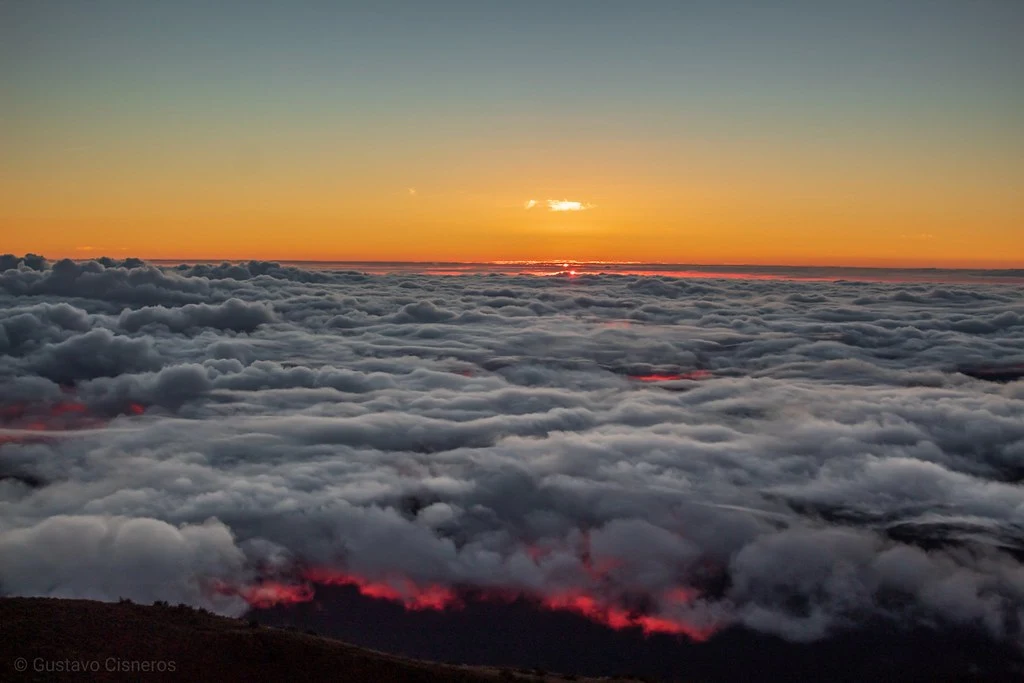
About 45 km (28 miles) from Paucartambo, the Tres Cruces viewpoint often called Balcón del Oriente looks out over the Amazon side of Cusco. It’s a natural balcony above the cloud forest, and on the right morning it delivers a sunrise people describe as genuinely unforgettable.
What makes Tres Cruces special: the “white ray” effect
Tres Cruces is famous for a phenomenon locals call the “rayo blanco” (white ray). It can happen when the sun first breaks the horizon and the cloud layer starts shifting and mixing with humidity. The light bends and scatters almost like it’s passing through a prism and you can get a strange optical effect that looks like multiple suns in the sky, with one seeming to move or “jump” as the clouds slide.
This effect is most commonly reported between June and July, when conditions line up more often but it’s still weather-dependent, so it’s never guaranteed.
Typical schedule and timing (the practical version)
Most trips to Tres Cruces are very early:
- Departure: around 1:00 a.m.
- Drive time: roughly 2 hours
- Best viewing window: about 4:30 a.m. to 6:00 a.m.
If you’re adding this to your Paucartambo festival plan, it’s the kind of side trip that’s worth it but only if you’re ready for the cold, the altitude, and the early start.
Frequently asked questions about Virgin of Carmen in Paucartambo: History and Local Customs
Main events are typically July 15–18, with July 16 as the central day. Some official inventories also mention a July 19 enthronement day.
In the town of Paucartambo, capital of Paucartambo Province, in Peru’s Cusco Region.
National coverage often describes nineteen devout dances as part of the celebration.
Official inventories describe Saq’ras waiting on rooftops during the procession as the Virgin passes.
A tradition where dance groups visit the homes of former festival organizers (excarguyocs/exmayordomos).