Inca Culture and 15 Fascinating Facts About the Inca People
The Inca culture represents one of the most astonishing chapters in the history of human civilization. Emerging from the formidable and unforgiving peaks of the Andes Mountains, the Inca people managed to forge the largest empire in the pre Columbian Americas in less than a single century.
What makes their story truly captivating is that they achieved this monumental feat without the invention of the wheel, without iron or steel tools, and without a written alphabet. If you are searching for facts about Inca culture, you must look far beyond the glittering gold that ultimately blinded the Spanish conquistadors to their true genius.
The authentic wealth of the Inca lay in their unparalleled ability to organize mass human labor, their mastery over extreme geographical environments, and their talent for integrating wildly diverse populations into a single, unified vision.
From their complex, centrally planned economy to their awe inspiring architectural marvels, the Andean world they created continues to baffle modern scientists and engineers today. Here is a comprehensive deep dive into the history, the intricate daily life, and 15 fascinating facts about Inca culture that prove they were ahead of their time.
History of the Ancient Inca Culture and the Rise of the Tawantinsuyu Empire
To truly comprehend what is the Inca culture, one must view it not as a sudden, isolated phenomenon, but rather as the magnificent culmination of thousands of years of preceding Andean development.
The ancient Inca culture did not independently invent terraced farming, advanced metallurgy, or monumental stone building out of thin air. Instead, they inherited these technologies from older civilizations like the Wari and Tiwanaku, perfecting them and scaling them to a massive imperial level.
The resulting culture of Inca civilization was defined by a brilliant administrative framework known as Tawantinsuyu, which translates from Quechua as the “Realm of the Four Parts.”
This empire was an absolute masterpiece of ancient statecraft, successfully uniting wildly different geographies from arid coastal deserts to freezing high altitude tundras under the absolute, divine rule of the Sapa Inca. Consequently, the culture of Inca empire was built on the dual, highly effective pillars of relentless military conquest and remarkably strategic, accommodating diplomacy.
Who Were the Inca People and Where Did They Come From Originally
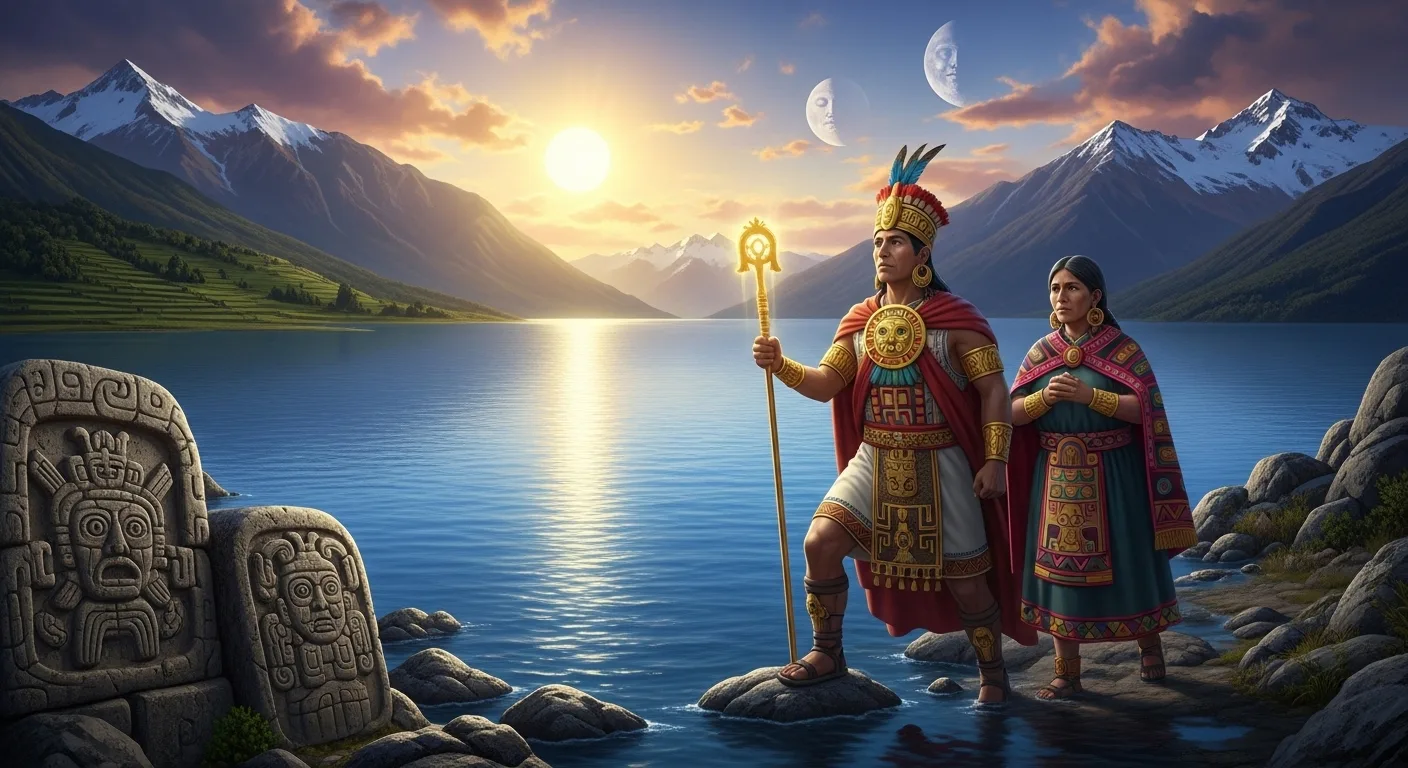
The question of who were the Inca people is an intriguing blend of religious mythology and hard archaeological reality. According to their own deeply held origin myths, the founder of the Inca royal dynasty, Manco Cápac, emerged from the sacred, freezing waters of Lake Titicaca alongside his sister wife.
They believed they were sent directly by the sun god, Inti, to bring order and civilization to a chaotic world, eventually settling in the fertile Cusco Valley. However, when modern historians trace exactly where did the Inca people come from using archaeological evidence, a different story emerges.
They originated from a pastoral, localized tribe in the Cusco region known as the Killke culture (thriving around 900 to 1200 CE). The history of the Inca people as a true, expanding empire officially began in 1438 under the brilliant leadership of Pachacuti. This visionary emperor completely transformed a small, vulnerable kingdom into a sprawling continental superpower through aggressive military expansion and unprecedented urban planning.
Where Did the Inca People Live and Map of Their Vast Andean Territories
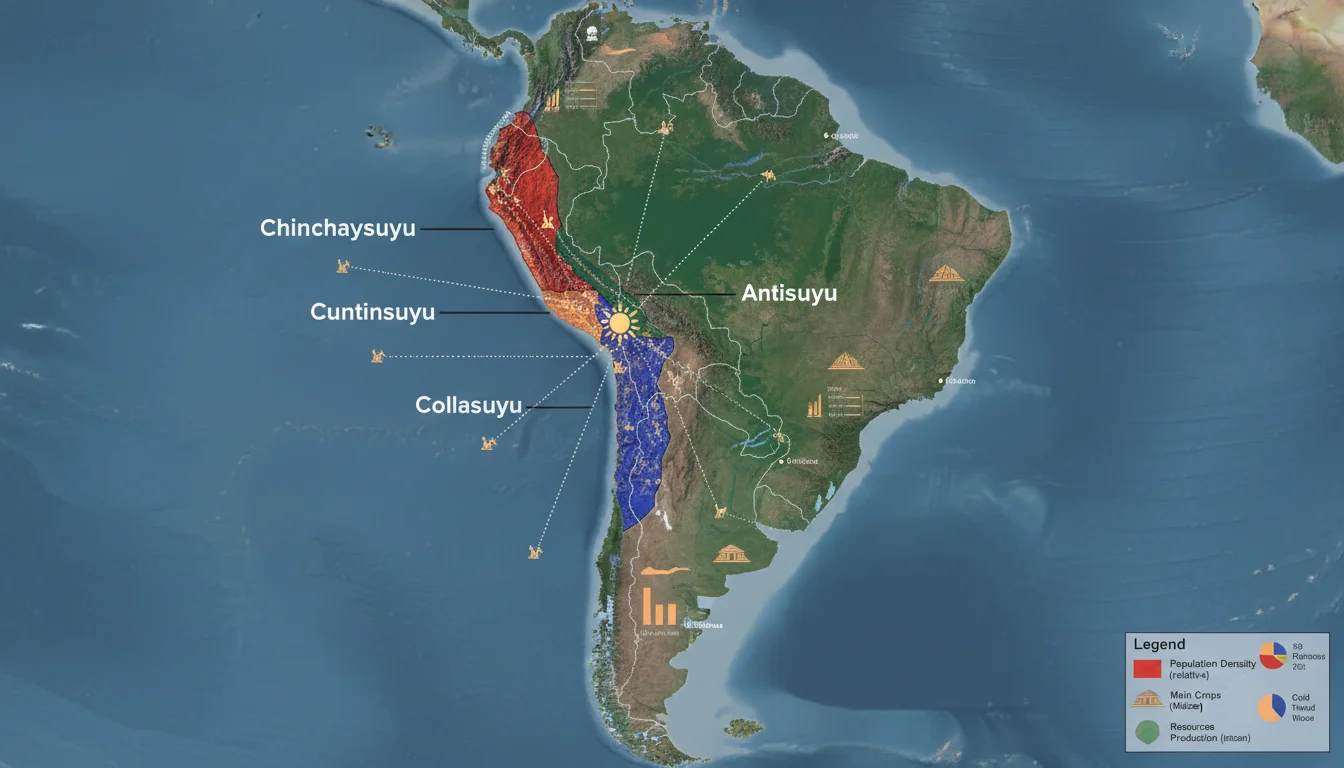
If you ask what continent did the Inca culture inhabit, they dominated the entire western, mountainous spine of South America. To answer exactly where did the Inca people live, one must look at a map of their peak expansion in 1527.
The empire stretched over 2,500 miles, covering modern day Peru, western Bolivia, vast sections of Ecuador, southern Colombia, and extending deeply into the northern territories of Chile and Argentina. To fully grasp where are the Inca people from, you must recognize the extreme verticality and harshness of their native homeland.
They lived and thrived in environments that would be considered completely uninhabitable by other ancient empires. They built their capitals at altitudes frequently exceeding 11,000 feet, physically adapting to the thin, oxygen deprived air while engineering agricultural solutions to conquer the steep, rocky terrain of the Andes.
How Did the Inca Control the People They Conquered Across the Mountains
One of the most unique arguments in historical statecraft is how did the Inca control the people they conquered without maintaining a standing, occupying police force in every single mountain town.
Their primary method was assimilation rather than sheer destruction. The people conquered by the Inca generally were allowed to keep their local leaders, their traditional clothing, and even their local deities, provided they publicly accepted the supreme authority of the sun god Inti and faithfully paid the mita the mandatory labor tax.
Furthermore, the Incas encouraged obedience from subject peoples through a brilliant, albeit manipulative, mix of psychological warfare, infrastructural dependence, and elite hostage taking. When a new province was conquered, the Inca administration would often bring the children of the defeated regional leaders to the capital city of Cusco. There, these children were educated in Inca customs, language, and administration, ensuring that the next generation of provincial rulers would be entirely loyal to the empire.
15 Fascinating Facts About Inca Culture and Unbelievable Achievements
The Inca cultural achievements easily rival those of the Romans or ancient Egyptians, yet they developed in complete and utter isolation from the rest of the world. These unique facts about the Inca people highlight a society that thought completely differently about physics, economics, and large scale human organization.
From defying gravity with massive stones to running an empire without a single coin, their innovations are breathtaking. Below are 15 fascinating facts about Inca culture that prove their genius and continue to draw millions of awe struck travelers to the Andean peaks every year.
1 The Inca Culture Excelled in Architecture Without the Use of the Wheel
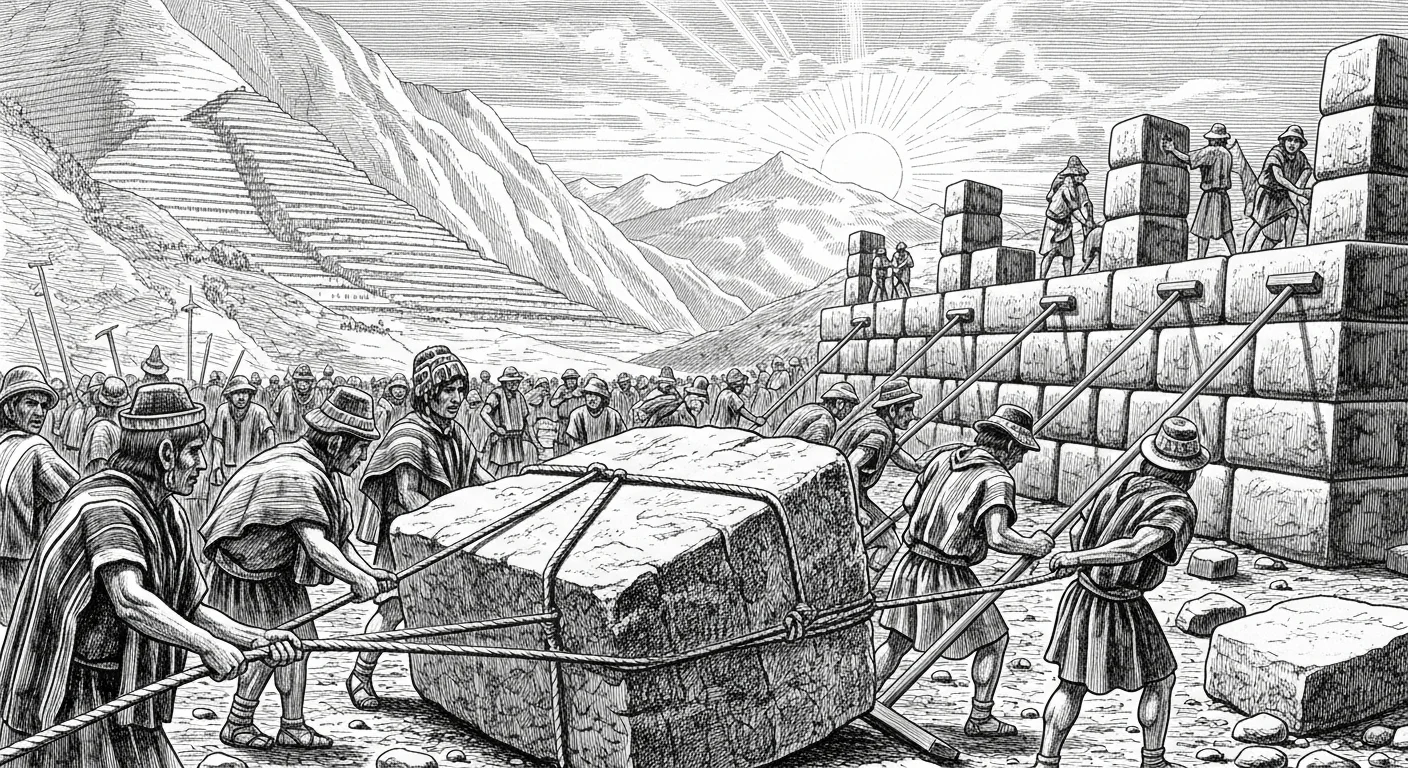
The Inca culture excelled in architecture in general but especially in a specific technique known as ashlar masonry. This involved cutting and fitting massive, irregularly shaped stone blocks together so tightly that not even a single sheet of paper or a blade of grass can pass between their joints.
The architecture of the Inca culture is visually mind boggling because these massive walls were constructed without mortar, relying entirely on friction, gravity, and perfect geometric carving to stay standing for centuries. What makes these Inca cultural architectural achievements truly unbelievable is that they were accomplished entirely without the use of wheels, draft animals like oxen, or iron tools.
The wheel was practically useless in the steep, rocky, and uneven terrain of the Andes. Instead, Inca engineers relied on immense, highly organized human labor, creating massive earth ramps and utilizing strategic leverage and counterweights to move diorite and granite stones weighing upwards of 100 tons.
2 The Inca People Created a Massive Road System Called the Qhapaq Nan
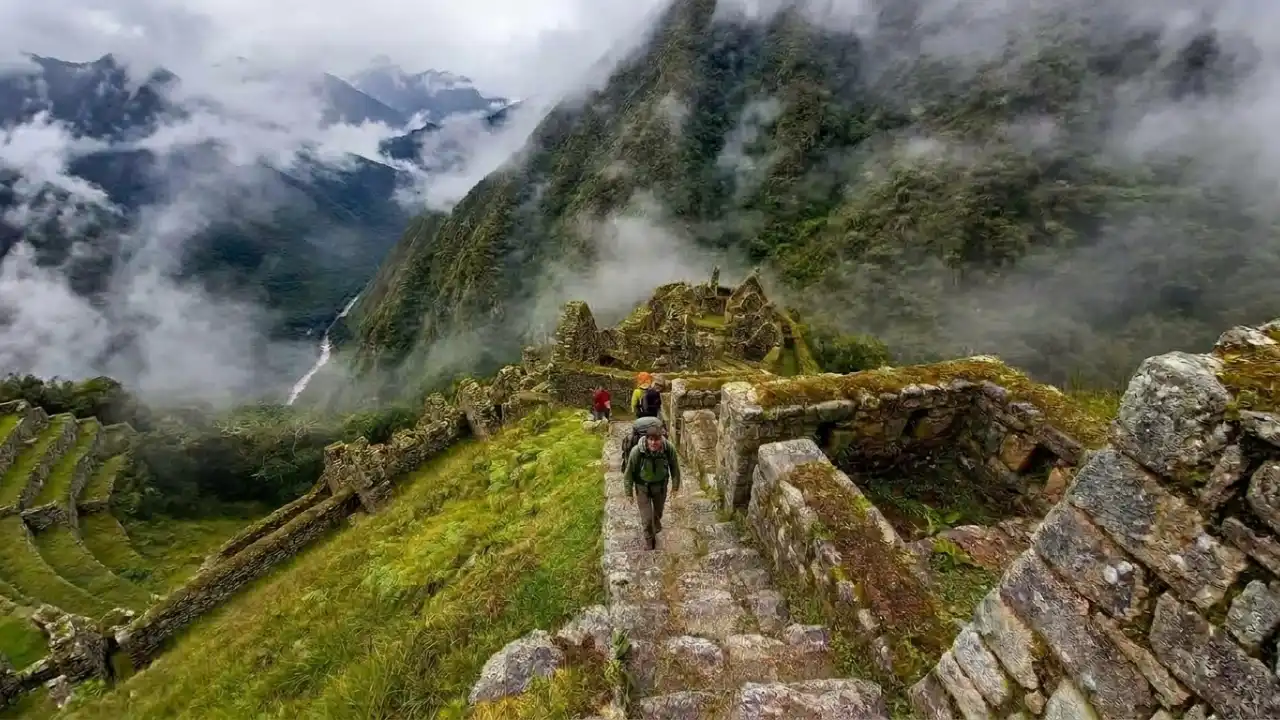
Among the greatest and most enduring Inca cultural developments is the Qhapaq Ñan, a staggeringly complex, 25,000 mile network of paved roads and mountain trails. This immense highway system was the literal circulatory system of Inca culture and society, connecting the freezing Andean highlands to the scorching coastal deserts.
It enabled the rapid, organized movement of military troops and allowed the empire to seamlessly transport resources from one end of the continent to the other. This incredible feat of engineering fundamentally defines the Incas history and culture.
The network featured beautifully paved mountain staircases, massive retaining walls to prevent landslides, and sophisticated drainage systems that still survive and function today. The roads were famously utilized by the Chasquis, highly trained relay runners who could carry messages and fresh goods such as fresh fish from the ocean to the emperor in Cusco across the vast empire in a matter of days.
3 The Incas Had No Written Language But Kept Records With Quipus
It is a common historical misconception that the culture of the Inca was primitive simply because it lacked a written alphabet. While they had no script resembling Latin or hieroglyphs, one of their most unique and brilliant Inca cultural elements was the Quipu.
These were highly complex recording devices made of knotted, vibrantly colored strings made from cotton or alpaca fiber. Inca culture and traditions utilized Quipus as a highly sophisticated, three dimensional binary coding system.
Specially trained scholars called Quipucamayocs used the position, color, and type of knots to record vast amounts of data, including regional census numbers, tax obligations, military supplies, and even historical narratives. Today, modern cryptographers and historians are still working tirelessly to fully decode the complex tactile database of the Quipu.
4 Advanced Brain Surgery and Medical Knowledge in the Inca Civilization
One of the more astonishing and slightly macabre fun facts about the Incas is their incredible medical prowess, particularly in the realm of brain surgery. Inca cultural practices regularly included cranial trepanation the process of scraping or drilling holes into a living patient’s skull.
This terrifying sounding procedure was actually a highly advanced medical response used to relieve severe brain swelling and pressure resulting from blunt force battle wounds, which were common due to their use of slings and maces. The Inca civilization culture perfected this surgical technique to such a degree that modern studies of excavated skulls reveal survival rates reaching an incredible 80%.
This vastly outperformed European surgical success rates during the very same historical period. The surgeons utilized razor sharp obsidian blades to cut the bone, while managing pain and preventing infection through the extensive use of natural anesthetics and antiseptics like concentrated coca leaf extracts and strong maize beer (chicha).
5 The Inca Empire Functioned Without Money or Traditional Markets
A defining and heavily studied aspect of Inca empire culture is that they ran a massive, continental economy entirely without any form of currency. Among the most fascinating facts about Inca culture is their complete reliance on a system of strict reciprocity and state controlled redistribution.
There were no traditional markets where goods were bought and sold for profit; instead, the imperial state technically owned all land, herds, and resources. These Inca culture facts reveal the ultimate, highly efficient centrally planned economy.
Citizens provided mandatory labor to the state through the mita system farming state lands, building roads, or serving in the military. In return for this labor, the state provided total social security: guaranteeing food from storehouses, providing clothing, and ensuring protection. In the Inca worldview, wealth was not measured in gold or coins, but in the amount of human labor one could mobilize.
6 Inca Bridges Were Made of Woven Grass and Rebuilt Every Single Year
To successfully cross the terrifyingly deep Andean gorges and raging rivers, the Inca cultural engineering genius produced suspension bridges made entirely of woven Ichu grass.
These bridges were incredibly strong, capable of holding the weight of marching armies and heavily loaded llama caravans. In Inca culture history, maintaining these vital infrastructure links was considered a sacred community duty, heavily tied to local religious beliefs and the mita labor tax.
The famous Q’eswachaka bridge, spanning the Apurímac River, stands today as a living testament to ancient Inca culture wealth in terms of engineering and community organization. Remarkably, this grass bridge is still rebuilt annually by surrounding local communities using the exact same 500 year old weaving techniques. This three day festival of cutting grass, braiding thick cables, and stringing the bridge honors their ancestors and keeps the ancient technology alive.
7 The Inca Culture Built Earthquake Proof Stone Walls in Cusco
Because Peru is located on the highly active Pacific Ring of Fire, it is a severely seismic zone. A critical and life saving fact about the Inca culture is their absolute mastery of seismic engineering.
The Inca culture intentionally utilized trapezoidal doors and windows, inward leaning retaining walls, and interlocking, multi angled stones that provided incredible structural stability during violent tremors.
The genius of this masonry lies in the fact that the stones were fitted perfectly but without mortar, allowing them to physically “dance” and vibrate during an earthquake, only to resettle exactly back into their original places once the shaking stopped.
When massive, devastating earthquakes struck Cusco during the colonial era in 1650 and 1950, the grand Spanish colonial churches collapsed into rubble, while the underlying foundations built by the Inca culture in Peru remained perfectly, stubbornly intact.
8 Storehouses Called Qollqas Were Built to Prevent Famine During Droughts
The culture of the Incas essentially eradicated famine, a feat rarely achieved in the ancient or modern world. To accomplish this, they built tens of thousands of Qollqas (cylindrical and rectangular storehouses) on the high, windy, and cool hillsides overlooking their cities.
These structures utilized a clever natural ventilation system that allowed the freezing mountain winds to act as a massive, natural refrigeration unit, preserving food for years. A true testament to Inca social and cultural values, these storehouses held millions of tons of surplus goods, primarily freeze dried potatoes (chuño), dried llama meat (ch’arki), and vast quantities of maize and textiles. Inca life and culture was deeply focused on food security for the entire population. When droughts, floods, or crop failures struck a specific region, the state simply opened the local Qollqas and redistributed the surplus, ensuring that no citizen of the empire starved.
9 The Inca People Relocated Entire Communities for Strategic Control
Regarding how did the Incas treat conquered peoples when diplomacy failed, they utilized a highly controversial, yet brutally effective, geopolitical strategy called the Mitma system.
If a newly conquered province showed signs of rebellion or stubborn resistance, the ancient Inca people would forcibly uproot and relocate thousands of individuals or entire communities from their ancestral homelands, marching them into the heart of deeply loyal Inca territories.
Simultaneously, they would move fiercely loyal citizens (the Mitmacuna) into the newly conquered, rebellious zones. This mass displacement deliberately fragmented local cultural identities, broke up established power structures, and prevented the Inca people of Peru from facing large, unified provincial uprisings. It was a masterclass in psychological statecraft that ensured the rapid assimilation of hostile territories into the peaceful fold of the empire.
10 Education in the Inca Empire Depended Strictly on Social Class
If you wonder what was the Inca culture like for a growing child, the answer depended entirely on the circumstances of their birth. Inca society and culture was strictly, rigidly stratified into nobility and commoners, with zero social mobility.
The sons of the Inca nobility, as well as the sons of conquered regional kings, were sent to the prestigious Yachaywasi (House of Knowledge) in Cusco. There, esteemed wise men (Amautas) taught them statecraft, theology, military strategy, and the complex art of reading Quipus.
Conversely, the commoners in the Incas culture received absolutely no formal, institutionalized schooling. Their education was entirely practical and communal, passed down directly by their parents and community elders. From a very young age, commoner children were taught the vital skills needed to sustain the empire: advanced agriculture, animal husbandry, stone masonry, and textile weaving, ensuring they were fully prepared to contribute to the mita labor tax upon reaching adulthood.
11 Machu Picchu Was Built as a Royal Estate Rather Than a Fortress
Contrary to popular, romanticized belief, the Machu Picchu Inca people did not live in an impenetrable military fortress or a desperate “lost city” hiding from the Spanish.
Extensive archaeological evidence strongly suggests it was commissioned and built around 1450 by the visionary emperor Pachacuti, arguably one of the most famous Inca people and successful conquerors in world history. Instead of a garrison, Machu Picchu served as a luxurious royal estate and a sacred religious retreat for Inca important people, including the emperor’s immediate family, elite priests, and visiting nobility.
It was occupied by a relatively small population of roughly 750 retainers, farmers, and servants who maintained the estate. It was a place for the royal court to hunt, relax, and conduct vital astronomical and religious ceremonies away from the freezing winter temperatures of Cusco.
12 The Inca Culture and Traditions Revolved Around Advanced Astronomy
Inca culture and religion were intrinsically linked to the movement of the stars, the sun, and the moon. They built sophisticated observatories and carved precise sun dials, like the famous Intihuatana stone at Machu Picchu, which they used to “tie the sun” during the winter solstice.
This allowed the Incas religion and culture to dictate an incredibly accurate agricultural calendar, telling farmers exactly when to plant and harvest their vital crops. What truly separates the Andean culture with Incas from Western astronomy is their unique focus on the Milky Way.
While Europeans looked at the stars to form constellations, the Incas also heavily tracked “dark constellations” the dark, lightless rifts of interstellar dust visible in the incredibly clear Andean night sky. They envisioned these dark shapes as vital mythological animals, such as the celestial llama, the fox, and the toad, believing these stellar animals deeply influenced the behavior of their earthly counterparts.
13 Cranial Deformation Was Practiced to Show High Status Socially
To easily answer who held high status socially in the Inca culture, you simply had to look at the physical shape of their heads. Regarding what did the Inca people look like, the nobility actively practiced a custom known as artificial cranial deformation.
Shortly after a noble child was born, while their skull bones were still soft and pliable, their head would be tightly wrapped with special cloths and wooden boards to force the skull to grow upward, elongating it into a distinct conical shape.
If you wonder what did Inca people look like at the highest, most elite levels of society, this striking physical trait immediately and permanently separated royalty from the common masses. It was considered a mark of profound beauty, high intelligence, and a physical manifestation of their divine right to rule, visually proving to the commoners that the nobility were closer to the gods.
14 The Inca Military Consisted of Fearsome Warriors and Tactical Logistics
Current historical estimates regarding how many people lived in the Inca Empire at its zenith range widely from 10 to 12 million diverse subjects. To effectively manage and conquer how many people were in the Inca empire, the military had to evolve into an unstoppable, highly disciplined machine.
The Inca tribe culture certainly produced fierce, brave warriors wielding deadly star headed bronze maces, battle axes, and highly accurate woven slingshots. However, the true secret weapon of the Inca military was not their weaponry, but their unparalleled tactical logistics.
They consistently won long, drawn out wars of attrition because their massive network of highland roads and fully stocked Qollqa storehouses allowed them to rapidly deploy, move, and feed massive armies of tens of thousands of men in the field indefinitely. While their enemies slowly starved during a siege, the Inca troops were continuously supplied with fresh food, weapons, and warm clothing.
15 Modern Inca Ruins Are Still Being Discovered in the Deep Amazon Jungle
The thrilling story of archaeological discovery in Inca Peru culture is far from over. For decades, historians believed the Incas were strictly a mountain and coastal people who feared the jungle.
However, using modern, cutting edge LiDAR technology mounted on drones and airplanes, archaeologists are currently peeling back the dense, impenetrable Amazonian canopy to discover massive, previously unknown terraces, defensive forts, and sprawling settlements.
Exploring Inca culture today reveals that the empire pushed much deeper into the humid, dangerous Amazon basin than anyone previously thought, primarily seeking precious resources like exotic bird feathers, medicinal plants, and gold. The magnificent legacy of Inca culture Peru continues to expand and rewrite history books as new, massive archaeological sites, particularly in the remote Vilcabamba region, are finally being properly mapped and excavated.
Daily Life in the Inca Society and Culture Before the Spanish Conquest
Inca culture and society operated on an entirely different philosophical and economic paradigm from the nations of contemporary Europe. Inca life and culture was intensely communal, highly structured, and organized primarily into Ayllus extended family and community groups that lived together, shared agricultural land, and pooled their physical labor to ensure everyone survived the harsh Andean winters.
Inca culture at the time of the Spanish conquest was a highly disciplined, remarkably well fed, and strictly regulated society. Crime was incredibly rare in the empire, largely because punishments for theft, lying, or laziness were swift and brutally severe (often resulting in execution or being thrown off a cliff). Furthermore, the motivation for basic theft was minimized because the state guaranteed that the fundamental needs of food, shelter, and clothing were universally met for every obedient citizen.
What Did Inca People Eat and How Did They Farm on Mountain Terraces
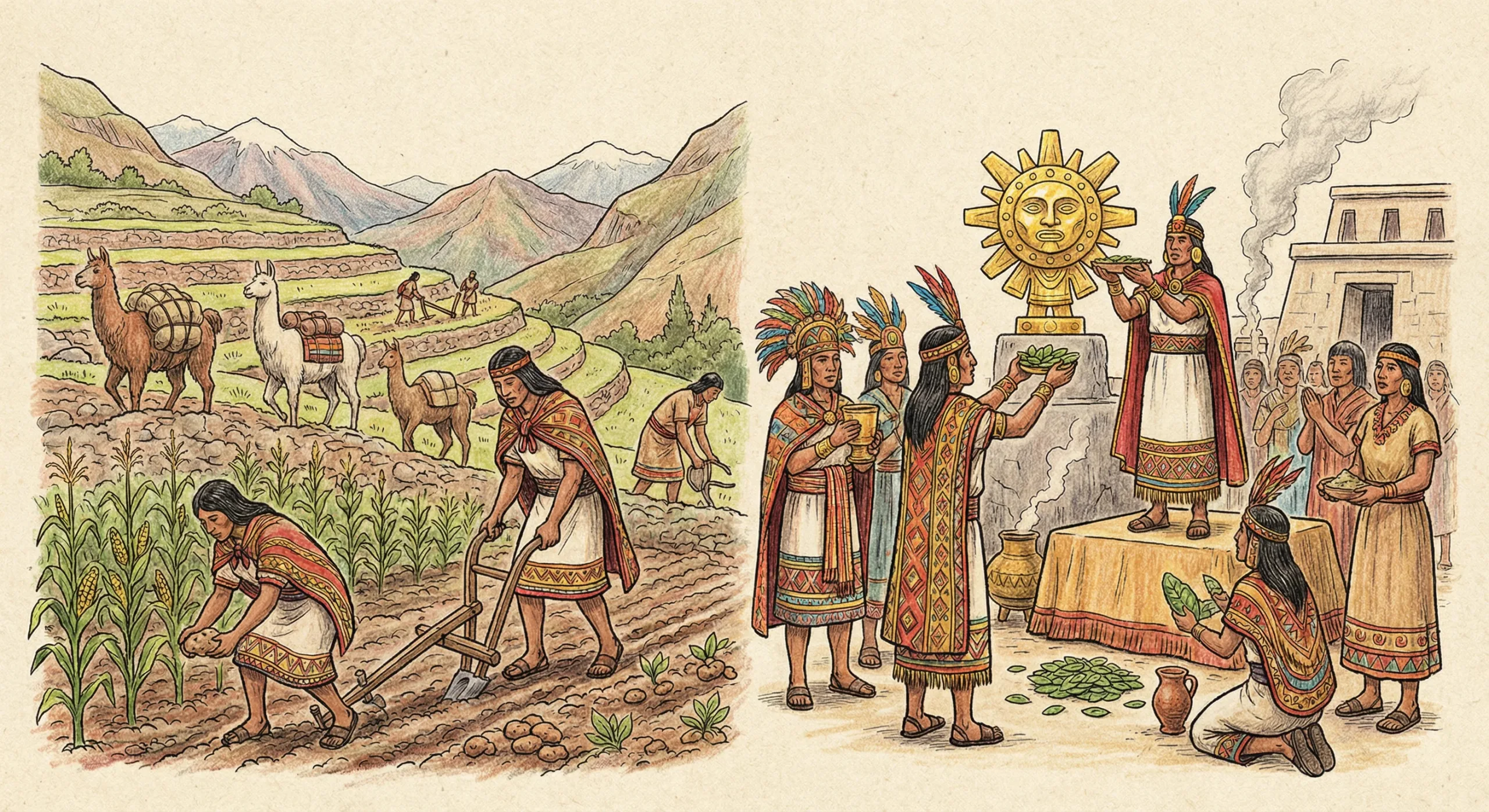
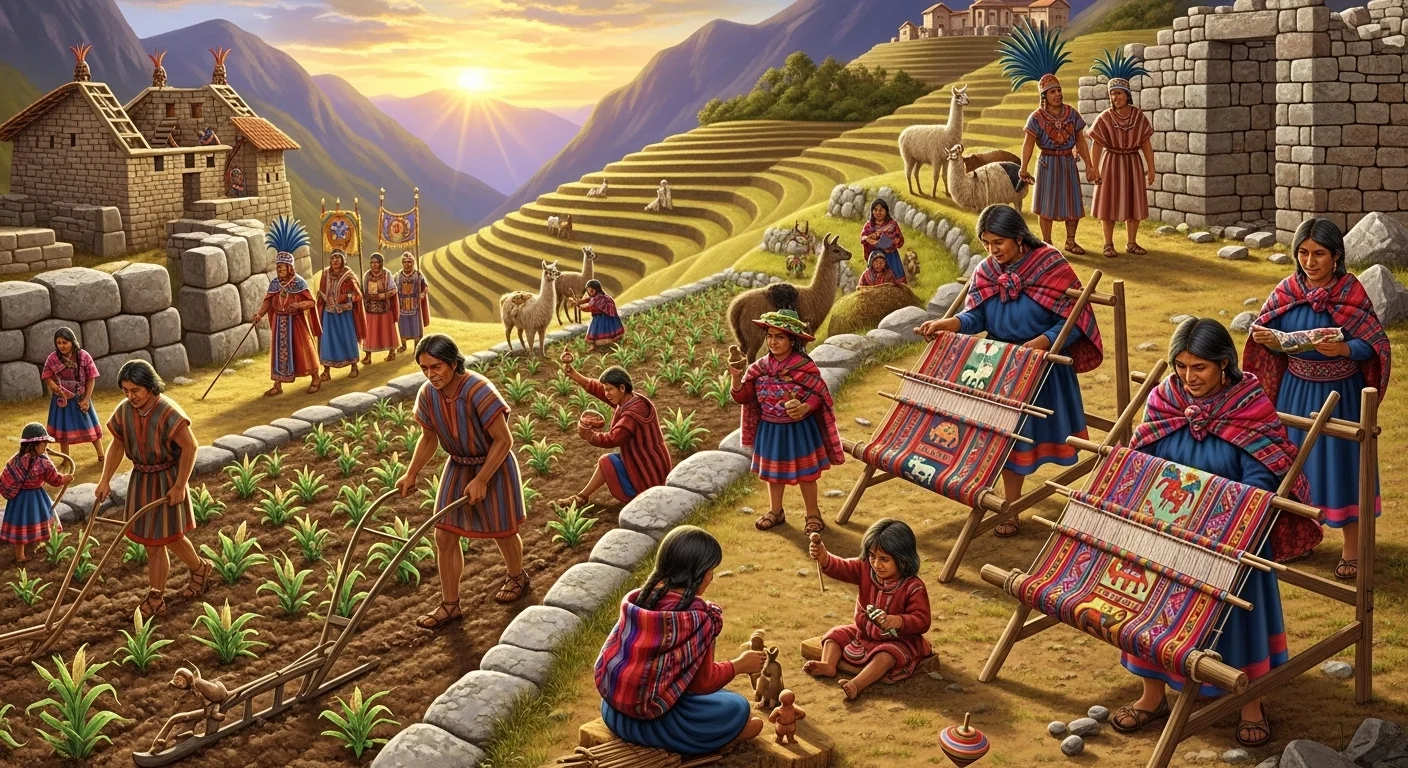
When exploring what did Inca people eat, one finds a diet that was remarkably diverse, nutritious, and heavily plant based. What did the Inca people eat on a daily basis? The absolute staples were hardy, high altitude crops like potatoes (of which they cultivated over 3,000 distinct varieties), quinoa, maize (corn), and protein rich beans.
Meat was considered a relative luxury for commoners, consisting primarily of roasted guinea pig (cuy) on special occasions, and occasionally dried alpaca meat. Regarding the massive scale of Inca people farming, they completely mastered their vertical, mountainous landscape.
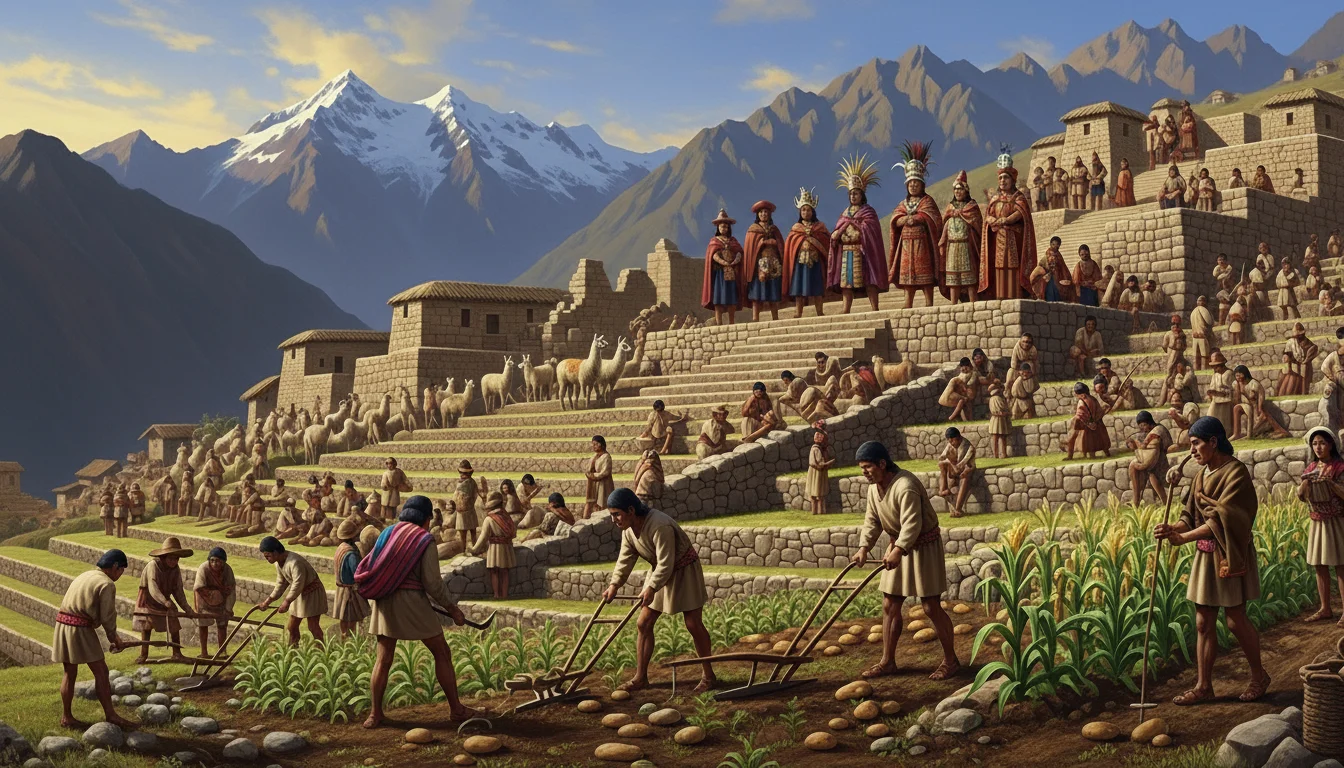
But how did the Andean peoples influence Inca agriculture? Pre Inca societies initially invented the concept of terracing, but the Incas dramatically scaled it, engineering massive andenes (agricultural terraces) carved directly into the steep mountainsides.
These terraces prevented soil erosion, maximized water distribution through advanced aqueducts, and actually created artificial microclimates, allowing them to successfully grow sensitive, lowland crops at incredibly high, freezing altitudes.
Inca People Clothing and Why Textiles Were Considered More Valuable Than Gold
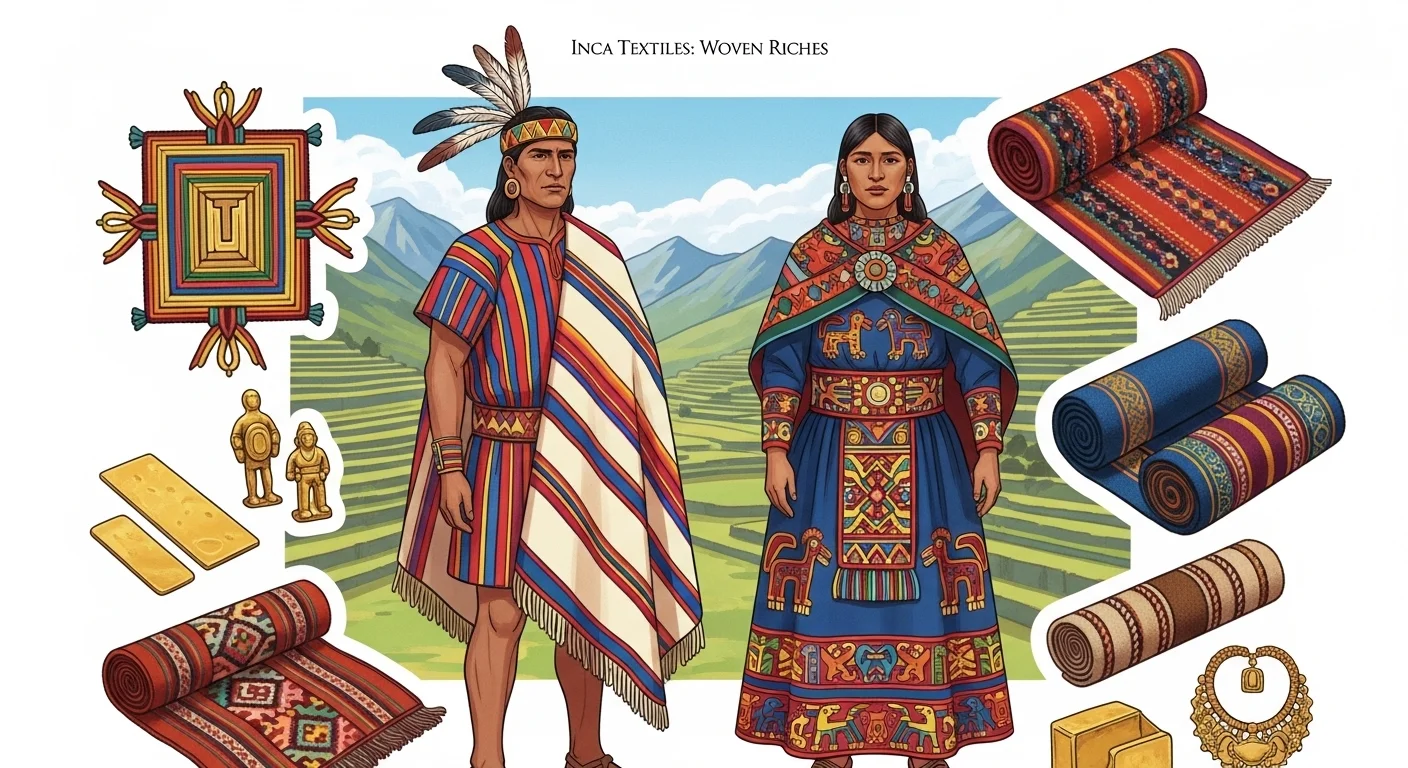
In the Andes, Inca people clothing was not just a practical necessity against the cold; it was the ultimate, highly visible indicator of a person’s identity, home province, and social status. What did the Inca people wear? The everyday ancient Inca people clothing for commoners consisted of simple, durable tunics and cloaks made from rough, coarse llama wool, known locally as awaska.
However, the clothing of rich people in the Inca empire was a completely different story. It was made from the incredibly soft, rare wool of the wild vicuña, woven so finely and tightly that it felt like the finest silk and was actually waterproof. This elite cloth, called cumbi, was considered significantly more valuable than gold or silver.
It took highly skilled chosen women (Acllas) months to weave a single garment, which was strictly reserved for the emperor and top nobility. High quality textiles were also the primary diplomatic gifts used to seal alliances, and were frequently burned as the ultimate, most precious sacrifice to the sun god.
Inca Culture and Religion Beliefs and the Practice of Human Sacrifice
Ancient Inca culture religion was deeply polytheistic, intensely animistic, and woven into every single aspect of daily life. They truly believed that the dramatic Andean landscape itself was completely alive.
Imposing mountain peaks, rushing rivers, unusually shaped rocks, and dark caves were all known as Huacas sacred, conscious entities that possessed immense spiritual power and required constant offerings. Because Inca culture and religion was completely integrated into state politics, there was no separation between church and state.
The Sapa Inca (emperor) was not just a mortal king, but a living, breathing demigod. Therefore, Inca religion and culture rigidly dictated that any act of political treason or rebellion against the state was not just a crime, but a profound, unforgivable religious sin against the cosmos itself.
Did the Incas Sacrifice People and the Meaning of the Capacocha Ritual
A grim, heavily studied reality of their history involves human sacrifice in Inca culture. Did the Incas sacrifice people? Yes, they did, though certainly not on the massive, daily, blood soaked scale famously practiced by the Aztecs in Mexico.
Did the Inca empire sacrifice people regularly as part of normal weekly worship? No. The specific sacrificial ritual, known as the Capacocha, was strictly reserved for extreme, empire threatening events such as severe, prolonged droughts, catastrophic volcanic eruptions, or the death and ascension of an emperor. Regarding how many people did the Incas sacrifice, archaeological records and frozen mummies indicate it was a relatively rare, highly solemn event. They sacrificed physically perfect, unblemished children, who were considered the purest beings in society.
These children were treated as royalty for months, heavily drugged with coca leaves and strong maize alcohol (chicha) to numb their senses, and then left to peacefully freeze to death on the highest, most unforgiving mountain peaks. They were not considered dead, but rather permanently transitioned to become immortal divine messengers, eternally protecting their local communities from the gods’ wrath.
The Inca Pantheon of Gods and Why Inti the Sun God Was Supreme
In ancient Inca religion culture, the divine pantheon was vast and diverse, including incredibly important figures like Viracocha (the ultimate creator of the universe), Illapa (the fierce god of thunder and rain), and Pachamama (Mother Earth, who is still widely worshipped today).
But according to Inca culture what is Inti? Inti was the glorious Sun God, the most powerful, active deity in the sky, and the absolute patron protector of the entire Inca state. In the cultura Inca religion, the Sapa Inca (emperor) was widely believed to be the direct, literal, biological descendant of Inti.
This divine, solar bloodline gave the emperor absolute, unquestionable authority over millions of people; his spoken words were considered the literal will of the sun itself. Enormous, gold plated temples, most notably the Coricancha in Cusco, were built entirely to honor Inti and catch the first, brilliant rays of the morning sun.
The Artistic Legacy and Art of the Inca Culture
Unlike the deeply personal, expressive art of the European Renaissance, Inca culture and art heavily favored strict geometry, practical utility, and rigid standardization over individual artistic expression.
Inca art and culture was ultimately a powerful tool of the imperial state, used to enforce order and visually project power. For example, the repeating, geometric checkerboard patterns on their royal tunics (known as tocapus) functioned almost like a heraldic, visual language, instantly displaying the wearer’s specific military rank, noble lineage, or administrative profession to anyone who saw them.
The art of the Inca culture is also characterized by highly functional, beautiful ceramics, most specifically the urpu or aryballos (a large, pointed bottom vessel designed specifically for brewing and storing vast quantities of chicha corn beer), and their legendary, masterful metallurgy. Inca culture art was undeniably beautiful and expertly crafted, but it was primarily, unapologetically designed for political control, religious utility, and imperial uniformity.
Inca Culture Pictures and the Creation of Masterpieces in Gold and Silver
If you read historical chronicles and look at the few surviving Inca culture pictures depicting their temples, the sheer volume of precious metals the civilization possessed is staggering to comprehend. For the Inca, these metals had no monetary value; instead, gold was considered the literal “sweat of the sun” and silver was revered as the “tears of the moon.”
They crafted life sized golden llamas, intricately detailed insects, and massive ceremonial plates to reflect the sun’s divine light. Tragically, very few physical pictures of the Inca people or their original golden artifacts survive in the modern world today.
When the Spanish conquistadors captured the emperor Atahualpa, the vast majority of the golden statues, ceremonial knives (tumis), and the legendary, life sized golden cornstalks from the Coricancha temple’s garden were brutally smashed and melted down into standard gold bullion to be shipped back to the Spanish crown. Therefore, modern Inca people images and pictures of Inca people largely rely on drawings from post conquest colonial chroniclers like Guaman Poma de Ayala, and the very few, smaller artifacts that were successfully hidden in elite tombs and modern museum collections.
What Happened to the Inca People and the Fall of the Tawantinsuyu
The tragic, violent conclusion to the imperial history of the Inca people began quite suddenly in 1532. The answer to what happened to the Inca people is complex; it was a catastrophic combination of devastating European diseases (primarily smallpox, which decimated the population before the Spanish even arrived), a bloody, exhausting civil war between two royal brothers fighting for the throne, and the shock and awe of Spanish steel, horses, and gunpowder.
Historically, there are primarily 4 people involved with the fall of the Inca: The rival Inca half brothers, Atahualpa and Huascar, whose bitter civil war fatally divided and weakened the empire’s armies; the ruthless Spanish conquistador Francisco Pizarro, who cleverly ambushed and captured Atahualpa at Cajamarca; and the last, desperate rebel emperor, Tupac Amaru, whose capture and public execution in 1572 marked the absolute, final end of the independent Inca state.
Are Inca People Still Alive or Do Modern Descendants Exist Today
A surprisingly common question from travelers is, are the Inca civilization people still alive today? If you are wondering do Inca people still exist, the answer is a resounding and triumphant yes.
While the political empire, the divine emperors, and the state religion were systematically destroyed by the Spanish conquest, the indigenous bloodline, the language, and the core culture were absolutely not eradicated. So, are Inca people still alive? Millions of indigenous people living in the high Andes today are the direct, undeniable biological and cultural descendants of the Inca citizens.
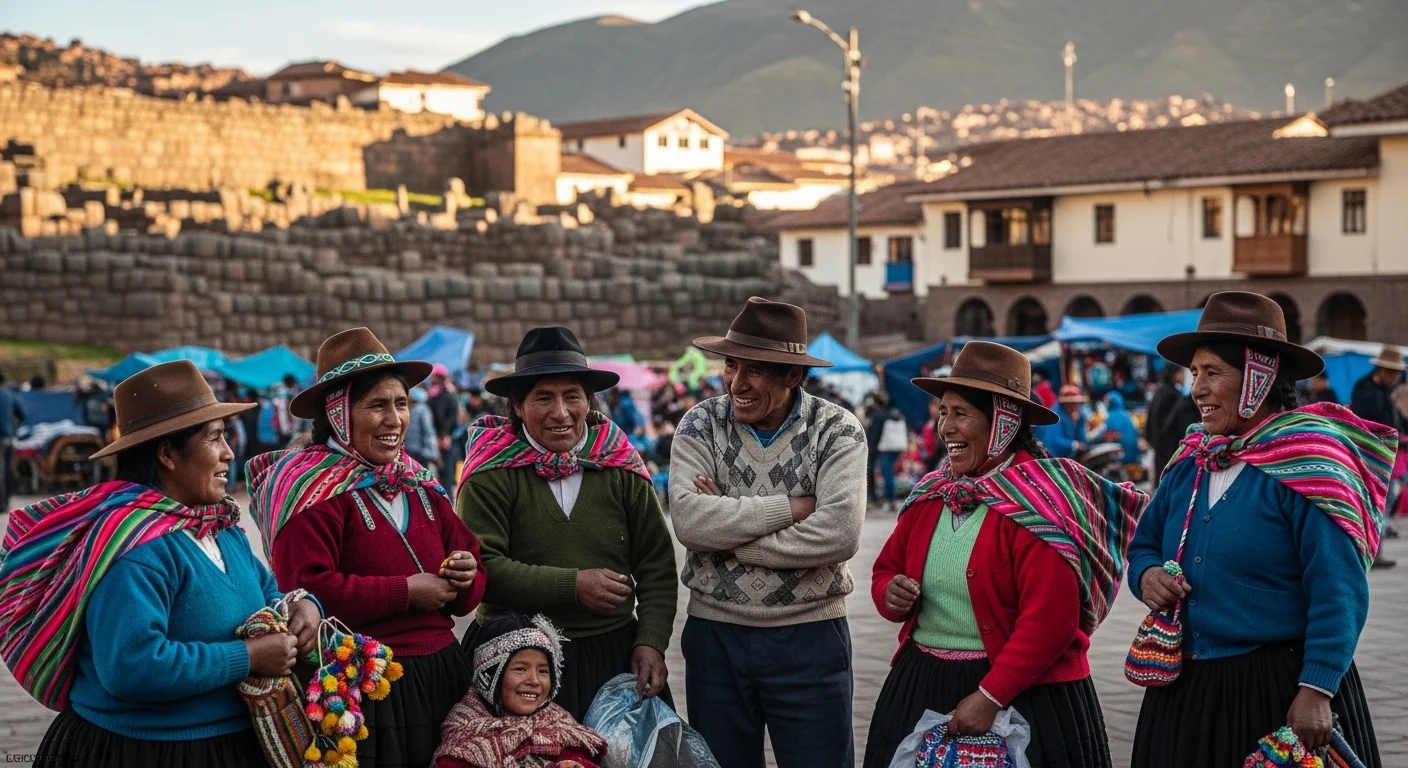
If anyone asks are there still Inca people, point them to the bustling markets of Cusco, the farming communities of the Sacred Valley, and the high altitude villages of Bolivia and Ecuador, where the descendants of this great empire still live, thrive, and proudly maintain their ancestral roots despite centuries of harsh colonial rule.
How Do the Quechua Preserve Inca Culture and Traditions in Modern Times
The modern day Inca people are primarily identified ethnically and linguistically as the Quechua people. How do the Quechua preserve Inca culture in the 21st century? They do so primarily through profound religious syncretism blending forced Catholic practices with deeply held Andean beliefs, such as making offerings to Pachamama (Mother Earth) before taking a drink, or continuing to chew coca leaves to ward off altitude sickness and fatigue.
If you ask exactly what aspect of Inca culture continues to the present day, the most highly visible and impactful is their communal approach to agriculture and society. The Quechua still actively practice Ayni (the ancient system of reciprocal community labor), they continue to weave stunning, complex textiles using traditional backstrap looms and natural dyes, and they still cultivate the exact same high altitude, terraced mountainsides that were engineered by their great grandparents over 500 years ago.
What Language Did the People of Cuzco Inca Empire Speak
To understand the communication of the empire, one must ask: what language did the people of Cuzco Inca empire speak? The primary language of Inca people was Quechua, known locally and affectionately by its speakers as Runasimi (which translates literally to “the people’s language”).
It is a deeply expressive, tonal language heavily tied to the natural world and agricultural rhythms of the mountains. What was the official language of the Inca people from an administrative standpoint? While the vast empire contained hundreds of distinct, localized languages and dialects from conquered tribes, the Inca administration strictly mandated Quechua as the official lingua franca.
This forced linguistic unification allowed administrators to govern, collect taxes, and move troops efficiently across diverse territories. Remarkably, despite aggressive Spanish efforts to eradicate it, Quechua survived the conquest and is still spoken by roughly 8 to 10 million people across the Andes today, serving as a powerful, living bridge to the ancient world.
Frequently asked questions about Inca Culture and 15 Fascinating Facts About the Inca People
You can buy authentic Inca culture inspired clothing online through fair trade platforms like Novica, Threads of Peru, or direct artisan collectives on Etsy. These platforms ensure that the indigenous Quechua weavers who create these traditional textiles using ancient backstrap looms are fairly compensated for their incredible craftsmanship.
The best Inca cultural sites tours from Cusco include guided trips to the Sacred Valley, Sacsayhuaman, Ollantaytambo, and the iconic Machu Picchu. Local Peruvian travel agencies offer day trips and multi day trekking packages that dive deep into the history, engineering, and architecture of the ancient Inca culture.
The best online virtual tours showcasing Inca culture are available through educational platforms like Google Arts & Culture, Amazon Explore, and Heygo. These interactive digital experiences allow you to virtually wander through the terraces of Machu Picchu and the Coricancha temple while learning about Inca history from recorded or live local Peruvian guides.
The best online resources for learning Quechua include language platforms like Mango Languages, Duolingo (which has developing Andean courses), and specialized academic portals like the Penn State Quechua program. Learning the indigenous language of the Inca people is a profound way to connect with their living descendants and understand their unique worldview.
You can stream high quality documentaries about Inca culture on platforms like CuriosityStream, Amazon Prime Video, Disney+, and the PBS Documentaries app. These services feature excellent, visually stunning programs by National Geographic and the BBC that explore the engineering marvels, mummies, and enduring mysteries of the Inca civilization.
You can find authentic Inca textile patterns and woven goods for sale on specialized, fair trade websites like Threads of Peru, Awamaki, and Novica. These organizations work directly with indigenous women in the high Andes, ensuring that the ancient geometric designs (tocapus) of the Inca culture are preserved, ethically produced, and ethically sold.
You can easily purchase books and e books about Inca culture on major retailers like Amazon (Kindle), Barnes & Noble, and specialized academic university presses. For a gripping, deep historical context, look for highly rated titles like “The Last Days of the Incas” by Kim MacQuarrie or “Turn Right at Machu Picchu” by Mark Adams.
To plan a trip to Machu Picchu, you must first book your entrance tickets and train tickets (via PeruRail or Inca Rail) months in advance due to strict government daily visitor limits. From there, organize your flights into Cusco, plan to acclimatize to the high altitude for a few days, and decide whether you want to take a scenic train ride or hike the classic Inca Trail.
Companies like Novica, Ten Thousand Villages, and various curated artisan shops on Etsy sell authentic Inca culture art replicas and handmade crafts directly to the US. These platforms offer beautifully crafted ceramics, woven tapestries, and silver jewelry that perfectly reflect the geometric and naturalistic art styles of the ancient Andean people.
Highly recommended documentaries about Inca culture include PBS Nova’s “Ghosts of Machu Picchu,” BBC’s “Lost Kingdoms of South America,” and National Geographic’s “Inca Mummies.” These films provide breathtaking aerial visuals and expert archaeological insights into how the Inca and pre Inca societies conquered their extreme mountain environments.
You can order traditional Andean ingredients like quinoa, purple corn (maiz morado), and aji amarillo peppers through specialty online grocers like AmigoFoods, Zocalo Foods, or Amazon. These native crops were the absolute nutritional foundation of the Inca culture’s diet and are essential for cooking authentic Peruvian cuisine at home.
Ethically sourced jewelry inspired by Inca culture can be purchased from fair trade artisan networks like Novica, as well as specialized Peruvian silversmiths operating on Etsy. Look for handcrafted pieces featuring the Chakana (the Inca cross), sun motifs, and inlaid stones like lapis lazuli and turquoise, which hold deep spiritual meaning in the Andes.
Educational apps like Google Arts & Culture, History Hit, and various museum specific applications offer incredible interactive learning about Inca culture. Google Arts & Culture, in particular, features high resolution 3D models of artifacts, virtual walk throughs of Machu Picchu, and curated historical exhibits from top museums worldwide.
You can find online cooking classes for traditional Peruvian dishes through platforms like MasterClass, Airbnb Online Experiences, or Cozymeal, where local Peruvian chefs teach you live from their kitchens. These classes often focus on ancient Inca ingredients like diverse potatoes, quinoa, and chilies to create modern culinary masterpieces like Ceviche or Lomo Saltado.