
What backpack should I use for the Inca Trail?
You have likely already chosen the clothes you will pack for your trip to Peru, picked out the restaurants, booked your hotel, and even planned to take photos at Machu Picchu alongside a group of llamas or showcasing the massive diversity of Peruvian landscapes across the coast, highlands, and jungle.
However, you might have left this crucial detail for last: What trekking gear do I actually need for this adventure in the Peruvian Andes?
Therefore, in this article, we are going to provide you with all the necessary information so you can choose the perfect trekking backpack for the Inca Trail. To get started, let’s look at the key features your backpack must have.
Backpack Capacity
Selecting the right capacity for your pack depends primarily on the duration of your route and the amount of gear you need to carry.
If your only hiking plan is a short trek on the Inca Trail, a daypack will be more than enough: a backpack for short routes (15 to 25 liters). With this setup, you can carry basic essentials for the day, such as extra layers of clothing, water, and snacks. You can leave the rest of your luggage at the hotel. Additionally, this size is perfect for entering the Machu Picchu sanctuary or sightseeing around the outskirts of Cusco.
On the other hand, if you plan to tackle alternative treks like the Salkantay, Ausangate and Lares trek, we recommend packing an extra backpack with a larger capacity: a backpack for longer routes (45 to 65 liters). This allows you to carry your complete hiking setup. In this scenario, you will need to do a quick assessment of everything required for your Andean journey (rain jacket, sleeping bag and sleeping pad, food reserves, extra footwear, etc.)

Additional Tip
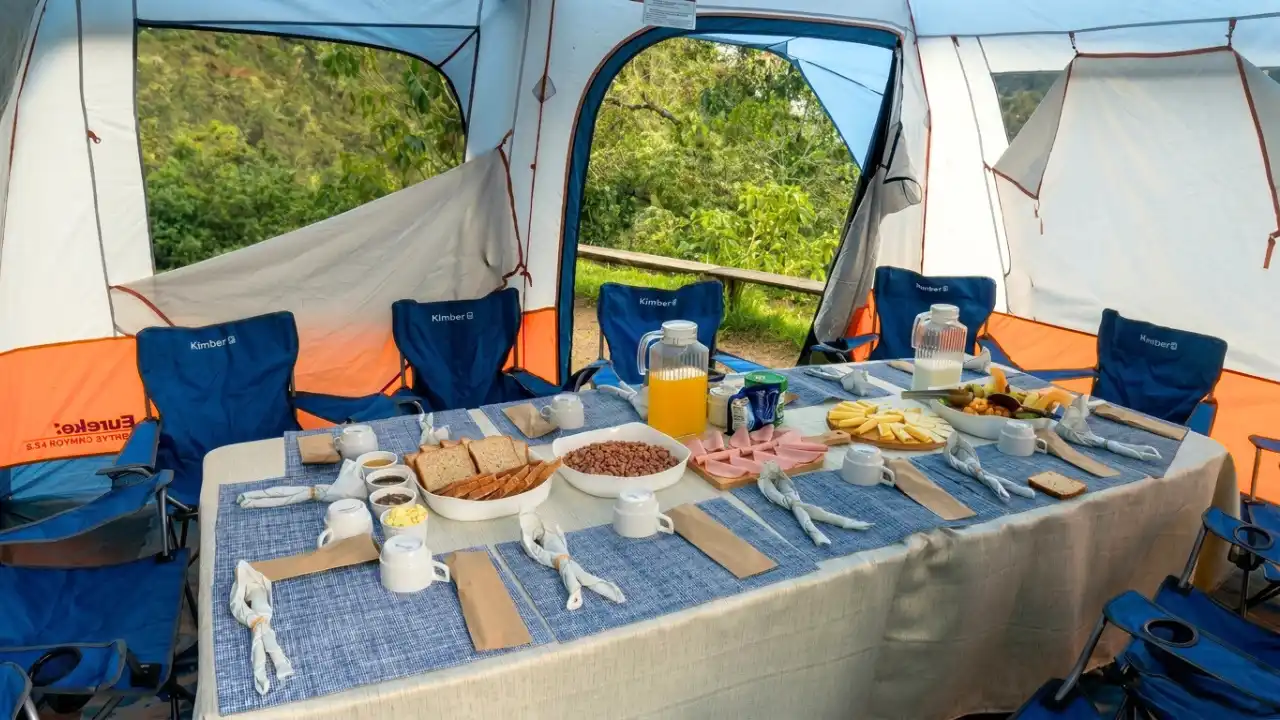
If you need to bring more items, the agency you hire will typically offer porter services. They will assist you by carrying extra weight along the Inca Trail—such as camping gear and first aid kits—usually up to a limit of around 6 or 7 kg (13 to 15 lbs).
Consequently, you will only need to carry your daily essentials: water, snacks, warm layers, a change of clothes, guide materials, and perhaps a spare pair of shoes.
Pack Only the Essentials
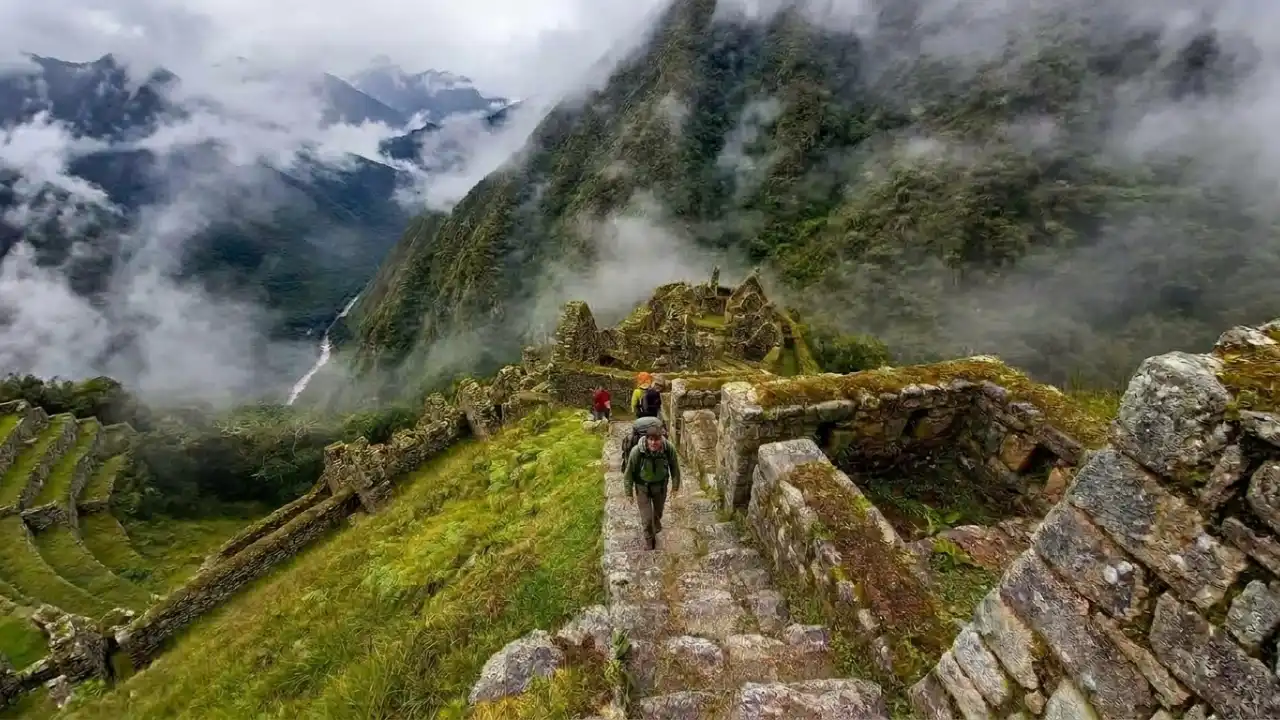
Bring only what is strictly necessary. Keep in mind that the altitude plays a major role on the Inca Trail. At certain points, such as Dead Woman’s Pass, you will ascend to 4,215 meters (13,828 feet) above sea level, where fatigue will inevitably set in. Combined with the thin air, hauling extra weight will make the trek significantly harder.
Remember that once you reach the citadel of Machu Picchu (Llaqta de Machu Picchu), the maximum allowable backpack size for entry is 40x35x20 cm (15.7×13.7×7.8 inches) or 20 liters. For this reason, pack your bag with only the essentials.
Fit and Ergonomics (The Right Size)
Ergonomics is vital when choosing a trekking backpack to prevent back and shoulder injuries.
Here are the key aspects you should consider
- Torso Length: Trekking backpacks are not chosen based on your overall height, but rather on the length of your spine—from the base of your neck to the top of your hip bone. You can measure this yourself or ask for assistance at the outdoor retail shop where you buy your pack. Furthermore, besides standard sizes (S, M, L), some models feature adjustable suspension systems.
- The Hip Belt: This is the most critical component. It must be wide, firm, and well-padded. It helps take the weight off your shoulders by distributing it across your hips. In fact, 70% to 80% of the backpack’s weight should rest on your hips.
- Shoulder Straps and Adjustable Sternum Strap: The shoulder straps should contour to your shoulders without leaving gaps or digging in. The sternum (chest) strap stabilizes the pack and prevents the shoulder straps from sliding outward while you walk.
- Ergonomic Back Panel: It should mold to the shape of your back and offer good lumbar support. Ideally, it should be adjustable to fit your specific size (especially if you are very tall or short).
- Load Lifter Straps: These allow you to adjust the angle and position of the backpack relative to your back for an optimal carry.

Raincover (Waterproof Cover)
It is essential that your backpack includes a waterproof raincover. The weather in the Andes is highly unpredictable, so you must protect your gear from sudden downpours.
The primary functions of a raincover include:
- Protecting your gear: In case of rain, it prevents water from seeping through the fabric and soaking your belongings.
- Improving visibility: They usually come in bright colors with reflective details, increasing your safety in low-light conditions.
- Deterring theft: By completely covering the backpack and its zippers, it makes it much harder for someone to open your bag in crowded places.
Compartments and Access Points
- Front or Bottom Access: Allows you to grab items from the bottom of the pack without having to empty everything from the top.
- Gear Loops: External straps and attachments to hang trekking poles, ice axes, or your sleeping pad.
- Hydration Bladder Sleeve: An internal compartment for a water reservoir (like a Camelbak) with a dedicated exit port for the hose.
- Side Pockets: Perfect for water bottles or camera tripods.
Final Buying and Packing Tips
What should you carry inside your backpack?
- Hydration: Water must be the foundation of your hydration strategy. Use reusable bottles or bladders to avoid unnecessary weight and plastic pollution.
- Sun protection and insect repellent.
- Layering system: A windbreaker or rain poncho, jackets with waterproof and breathable membranes, rain pants, and thermal vests or fleece sweaters.
- Miscellaneous: Identification documents (this is mandatory), a headlamp, a basic first aid kit, and snacks.
What is the Layering System?
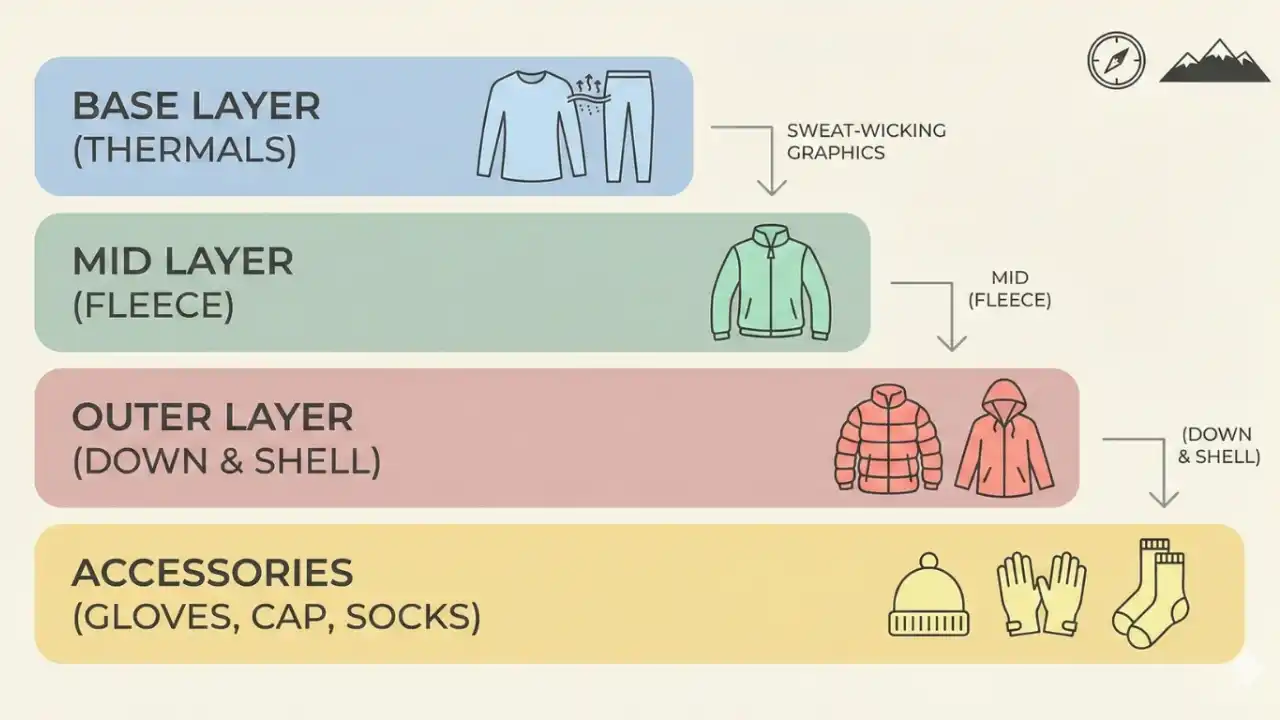
The layering system is a fundamental clothing strategy for mountain activities like hiking and mountaineering. Its goal is to keep your body dry, warm, and protected from shifting weather conditions. The secret lies in the functionality of each layer rather than the sheer number of clothes you wear.
| Layer | Type | Function & Materials | Examples |
| First Layer | Base Layer | Direct skin contact. Keeps you dry, provides comfort, and wicks away sweat to facilitate evaporation. Materials must be breathable and quick-drying (polyester, polypropylene). Avoid cotton at all costs, as it retains moisture. | Short or long-sleeve thermal shirts, thermal tights. |
| Second Layer | Insulation Layer | Retains body heat and provides thermal insulation. You can wear multiple garments in this layer depending on your needs. | Fleece jackets, synthetic or down jackets, vests. |
| Third Layer | Outer / Shell Layer | Weather barrier. Protects against wind and rain. It must be waterproof and windproof. We highly recommend Gore-Tex or similar technology. | Rain pants, jackets with waterproof/breathable membranes. |
How to Properly Adjust Your Trekking Backpack
Correctly adjusting your trekking backpack is essential to guarantee comfort and stability throughout your entire journey. A poor fit can lead to shoulder, back, or hip pain, and even cause excessive exhaustion.
The weight of the backpack, load distribution, and the adjustment of various elements (straps, hip belt, load lifters) directly influence how comfortable you will feel during the trek.
Undoubtedly, an ill-fitting backpack will throw off your balance and make walking difficult, especially on rugged terrain. On the Inca Trail, both the uneven ground and the constant changes in elevation play a massive factor. Conversely, a proper fit allows for a better distribution of effort and optimizes your energy, which is particularly crucial during long treks.
Key Adjustment Steps:
- The hip belt should support approximately 70% of the total backpack weight.
- Adjust the torso length so that the shoulder straps rest naturally over your shoulders.
- Tighten the load lifter straps on ascents and loosen them slightly on descents to maintain your balance.
- The sternum strap stabilizes the pack, but it should never be so tight that it restricts your breathing.
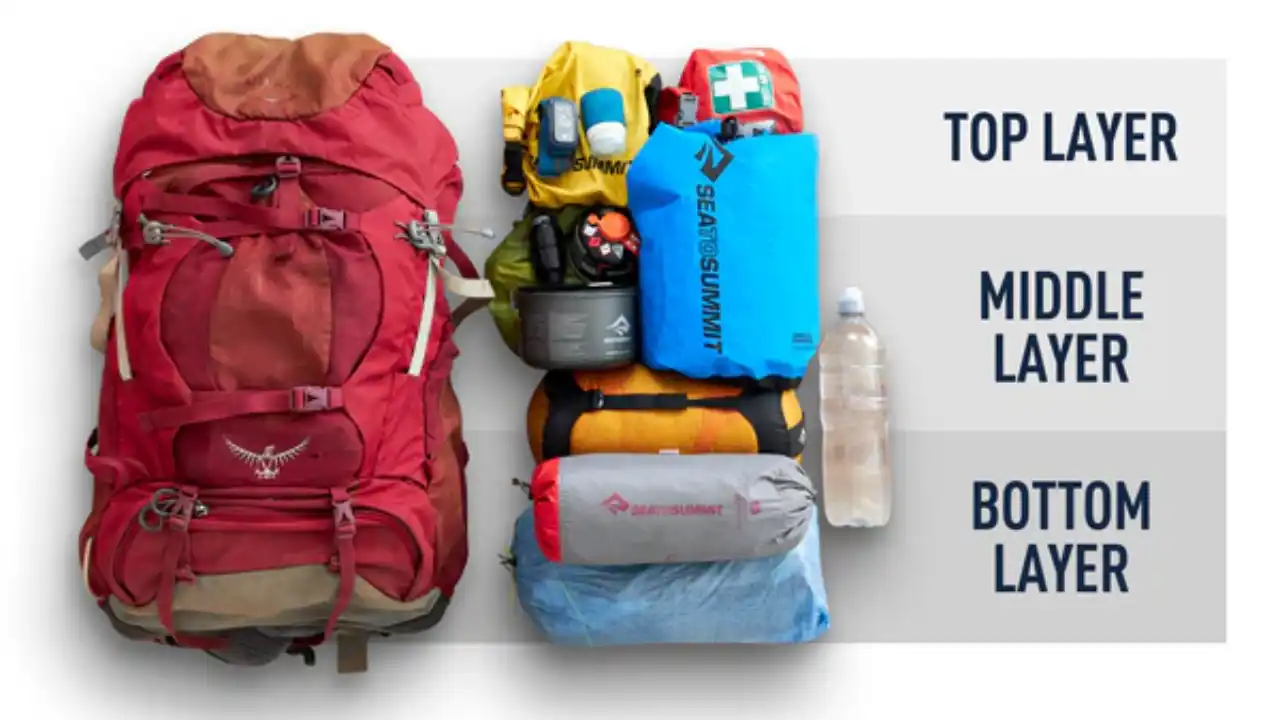
- Distribute the load wisely: Place heavy items close to your back and lighter items toward the top of the backpack.
- Test the backpack with weight inside before starting your hike and adjust it based on how it feels.
Machu Picchu Entry Rules
As you approach the final stretch and the citadel of Machu Picchu, the government enforces strict entry regulations. Backpacks must not exceed the dimensions of 40 x 35 x 20 cm. If your backpack is larger than this, you will be required to leave it at the official storage locker located at the entrance gate for an approximate fee of 5 Soles.