The Inca Symbols
The Andean civilizations left an enormous legacy in terms of their cultural expressions: textiles, crafts, goldwork, and architecture; in addition, even the sciences—among them astronomy, agriculture, and medicine—demonstrate a great degree of social and cultural development. Among the traditions passed down by these cultures, the use of symbols to convey messages and customs stands out.
The use of symbolism was not exclusive to the Inca civilization, but it was the Incas who spread its use widely and developed a notable presence for it in their architecture, textiles, and crafts.
Symbols of Imperial Power
Mascaipacha (or mascapaicha)
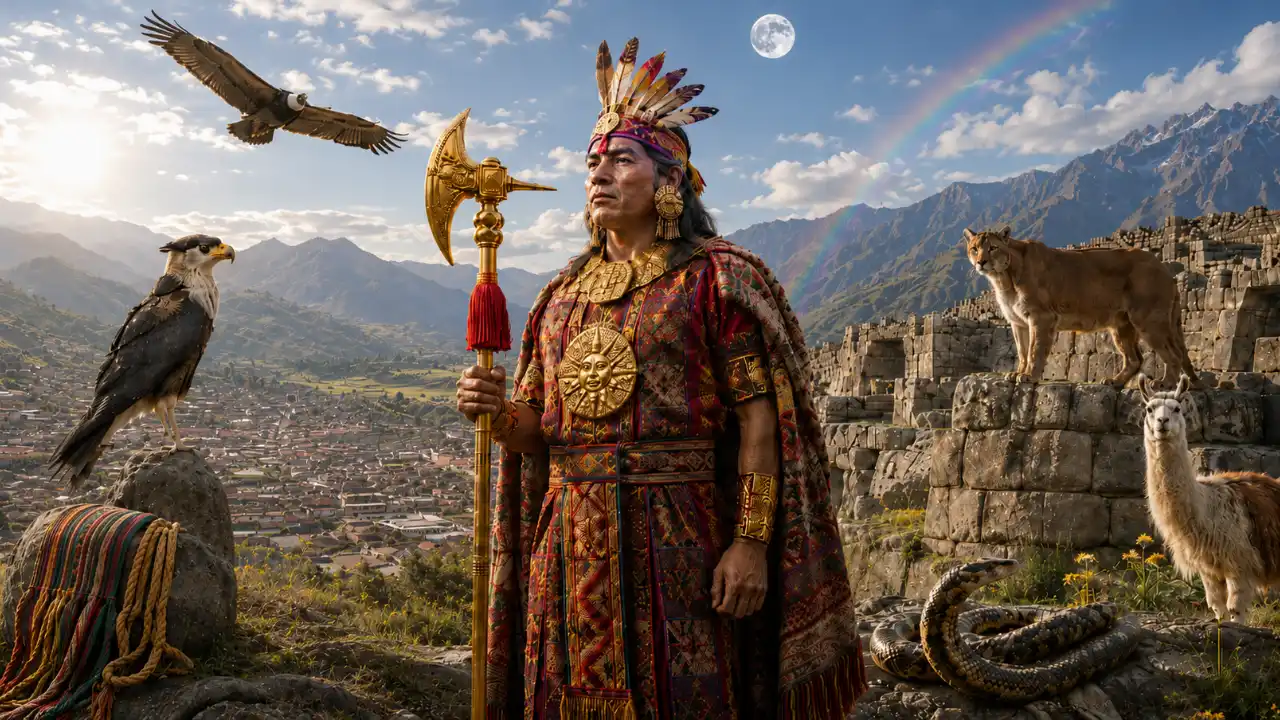
The mascaipacha was the symbol that identified the Inca Emperor, or Sapa Inca, as the supreme ruler. Its use was reserved for the Inca ruler and granted him the right to govern Cusco and the Tahuantinsuyo. It was made of a cord wrapped around the Inca’s head, incorporating gold threads and feathers from the Corequenque bird, or Andean caracara. The mascaipacha was placed on the ruler by the Willaq Uma, the empire’s high priest.
There were variations of this cord, or llautu, depending on the rank of the wearer: red and blue for the Inca Emperor, red and yellow for the panaca (the extended royal family), and black for certain local authorities.
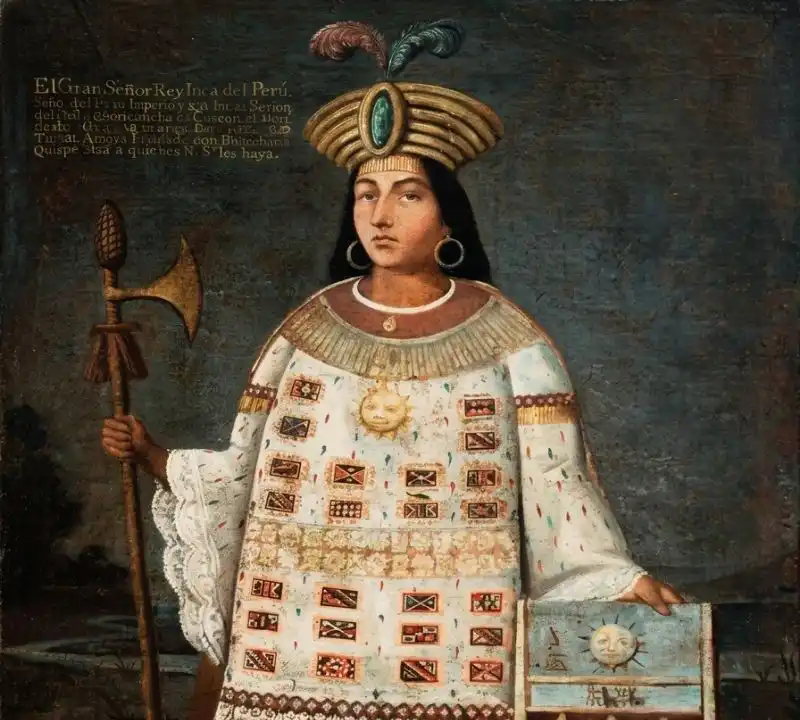
It’s worth noting that this item was designed exclusively for each emperor, meaning each Inca Emperor’s mascaipacha was unique.
The use of the mascaipacha continued even after the Spanish conquest, being worn during the Viceroyalty of Peru to distinguish Inca nobility, and in paintings from the Cusco School of Painting, the “Christ Child” was depicted dressed as an Inca wearing this symbol.
Topayauri
The Topayauri was the other imperial symbol alongside the mascaipacha. It is a ceremonial staff, generally made of gold, distinguished by a cutting blade, similar to an axe, at its upper tip.
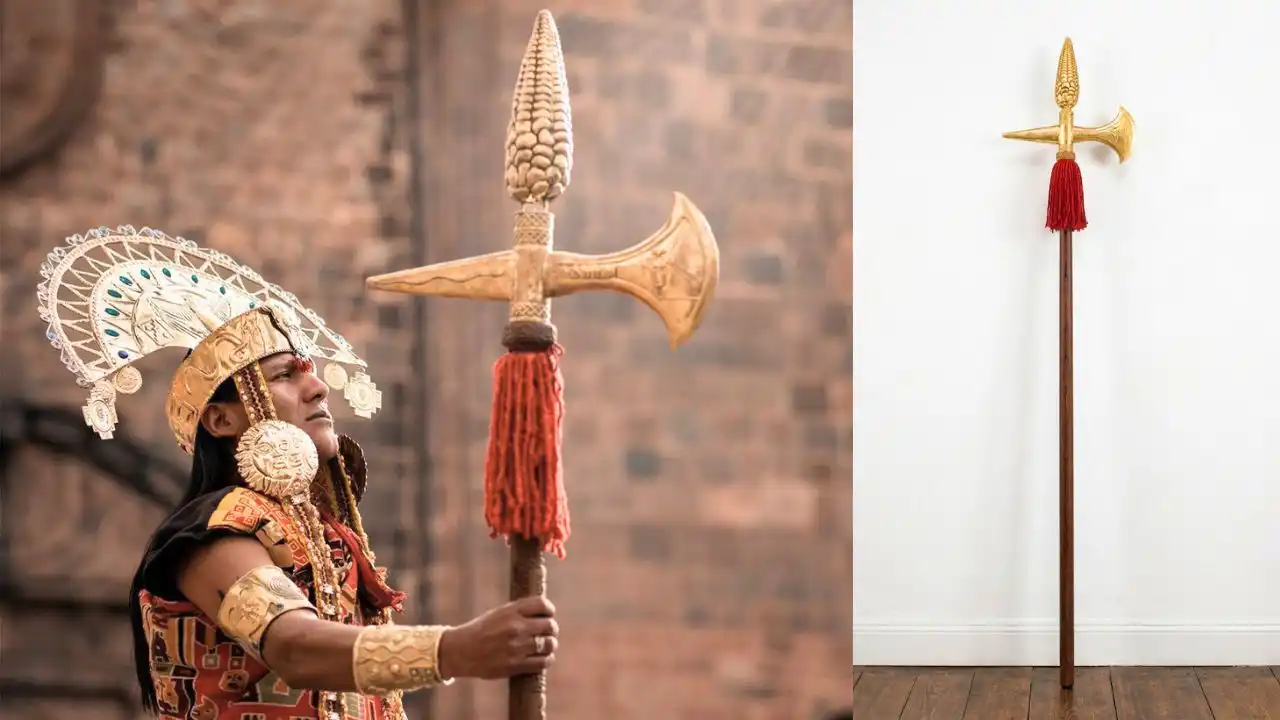
In some myths it is linked to the god Wiracocha, also known as “the god of the two staffs.”
Corequenque
The Corequenque, also called the Andean caracara, was considered a sacred bird as a messenger of the god Wiracocha. Its feathers were used to make garments for the Inca elite, such as the mascaipacha.
The Chakana (Andean Cross)
The chakana is the most recognizable Andean symbol. Also known as the Andean cross, its meaning has different interpretations: in Aymara means “great resplendent light,” while in Quechua the root refers to the idea of a “staircase” or “bridge.” However, all interpretations agree that it represents “the bridge” or “the union of two or more complementary planes of the universe.”
The three steps on each of its four points represent the three planes of the Andean worldview: Ukhu Pacha (the underworld), Kay Pacha (the earthly world), and Hanan Pacha (the celestial world).
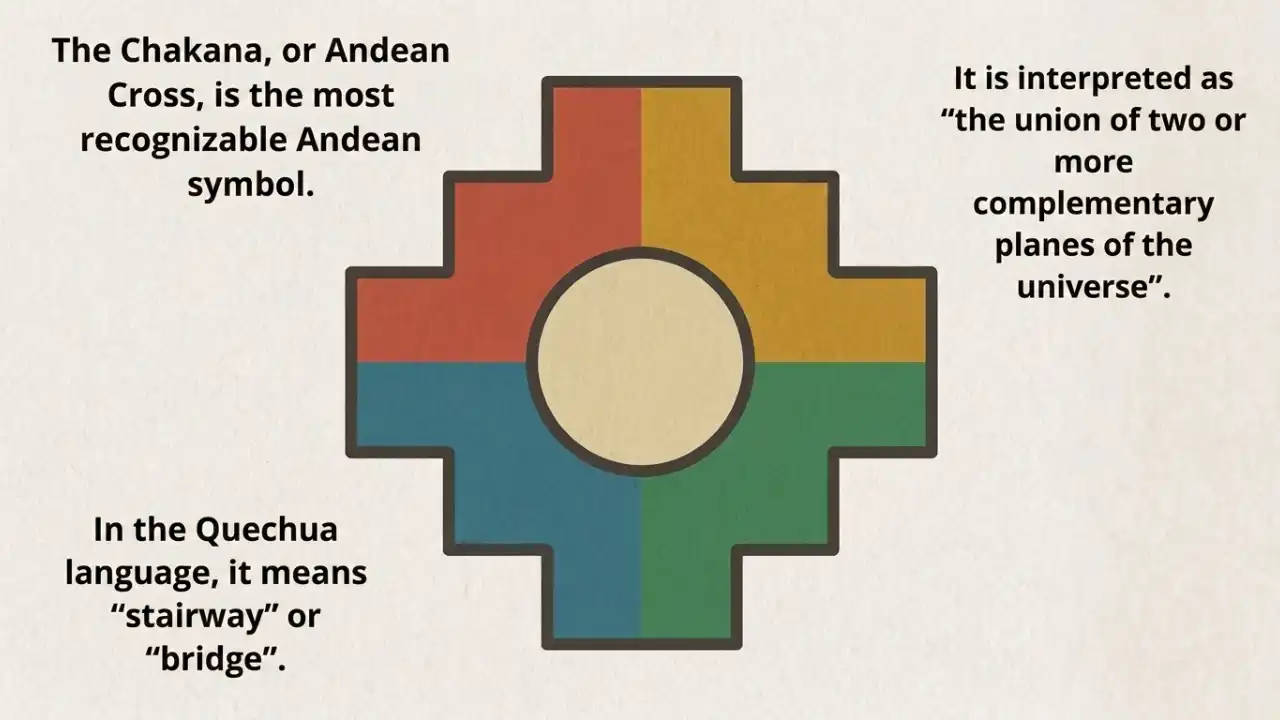
The circle or hole at its center can be interpreted as a reference to Cusco, as the political center of the Tahuantinsuyu and known as the “navel of the world,” or even as the sun, an essential element in Andean cultures.
Geometrically, it could also be interpreted as a symbolic bridge, since its shape suggests a pyramid with staircases leading to the four sides and a circular center, signaling the union between the lower and the upper, the earth and the sun, and humankind and the divine.
The Andean Trilogy: Condor, Puma, and Snake
This trilogy sums up the Andean worldview of the three realms: Hanan Pacha, Kay Pacha, and Ukhu Pacha.
The Condor symbolizes Hanan Pacha (the celestial world) and represents freedom, independence, and connection to the divine.
The Puma symbolizes Kay Pacha (the present, earthly world) and represents strength, intelligence, wisdom, and leadership.
The Snake (amaru) symbolizes Ukhu Pacha (the underground world) and represents wisdom, transformation, and infinity.
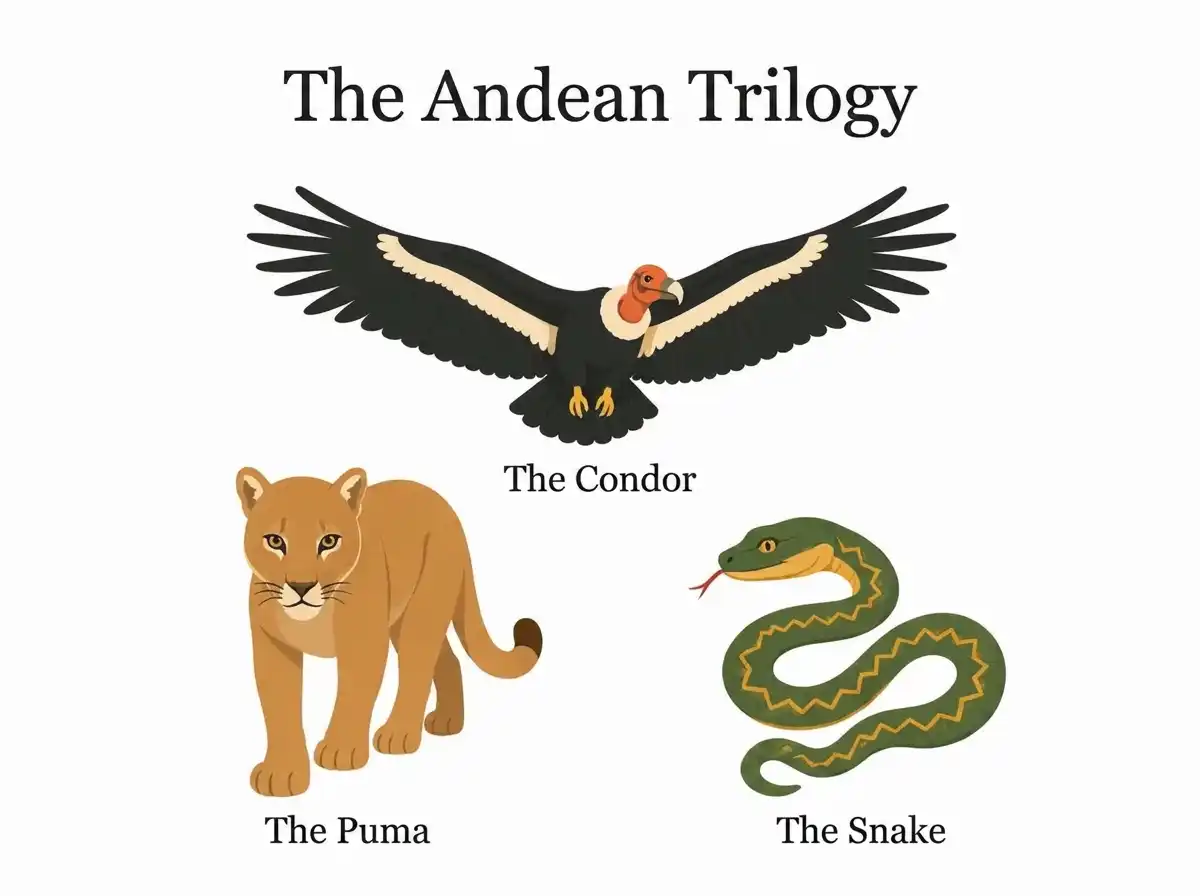
An interesting fact is that there’s a belief that the city of Cusco was designed in the shape of a puma: the head would be located at the Sacsayhuamán fortress, in the highest area, while the body would cover what is known today as the city’s historic center.
The Gods of the Inca Pantheon
The gods of the Andean worldview symbolized everyday but important aspects of Andean peoples’ lives; their representations can be seen in crafts, textiles, and architecture.
Wiracocha
The creator god in the Andean worldview. He is depicted with a solar crown and rays in both hands.
Inti
The sun god, the most revered deity due to his direct connection to harvests and agricultural life. He is represented as a golden disk with a face.
Mamaquilla
The moon goddess, wife of Inti, represented as a silver disk.
Illapa
The god of thunder, lightning, and storms.
Pachacámac
The god of earthquakes, associated with the underworld.
Pachamama
Mother Earth, protector of crops and goddess of fertility; her worship is still alive today in Andean ceremonies.
Mamacocha
Goddess of waters, lakes, and fish, provider of the sources needed for irrigation.
Mama Sara
Goddess of corn and the harvest, whose name means “Mother Corn” in Quechua.
The Quipu: A Recordkeeping System Without Writing
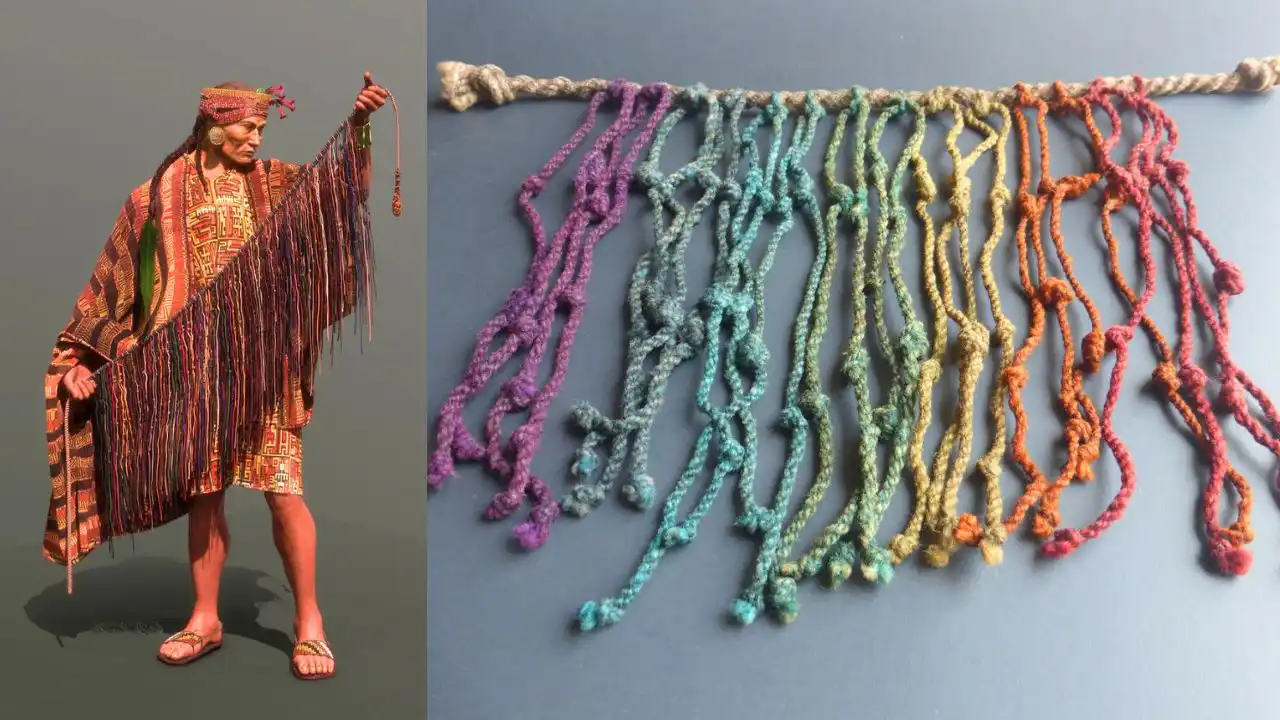
The term quipu means “knot” in Quechua. It was a record-keeping instrument of the Inca civilization: a system of knotted cords attached to a main cord. It was used mainly for numerical and accounting records, although some specialists suggest it may also have been used to convey stories. The type of record varied depending on the color, length, and type of knot.
Other Inca Symbols
The Rainbow
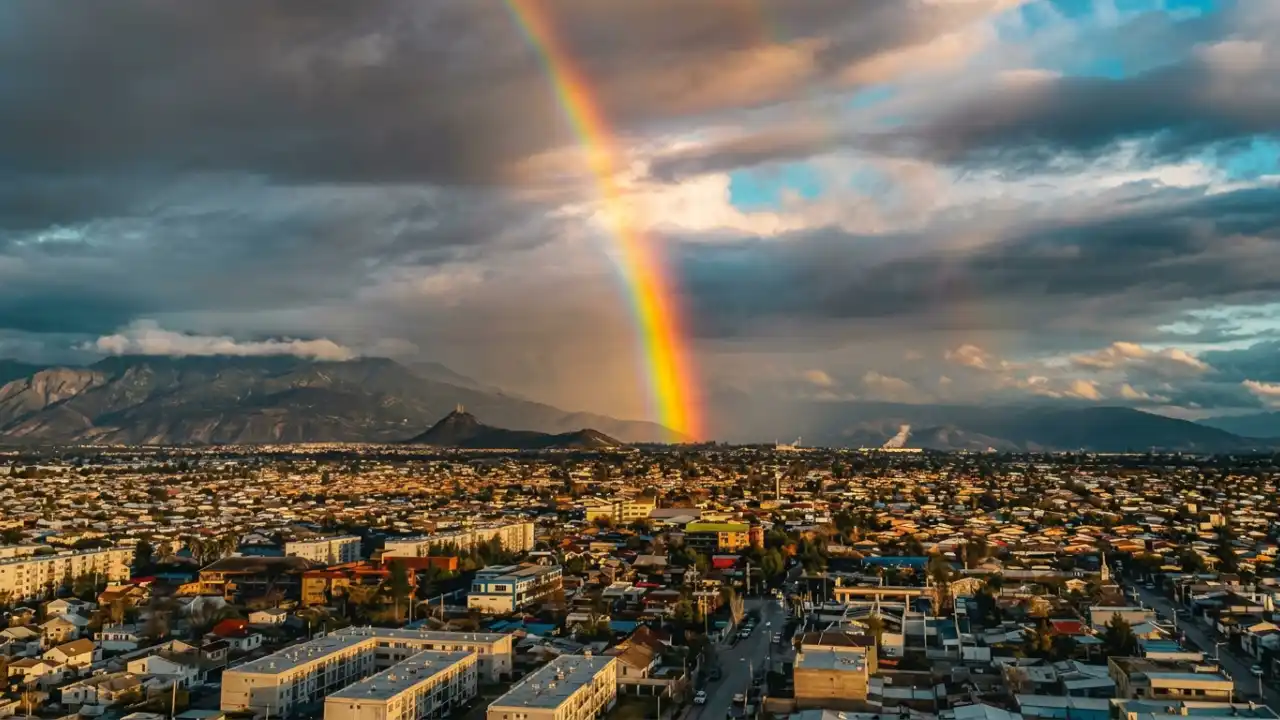
The rainbow was interpreted as a good omen. According to myth, Manco Cápac founded Cusco at the spot where a rainbow appeared. On the other hand, it was also regarded as a spirit capable of causing illness. A sign of its importance is that the Incas represented it in gold, the most prized material in Inca culture.
Lightning and Thunder
Linked to the god Illapa, they symbolize the destructive and creative power of nature.
The Llama
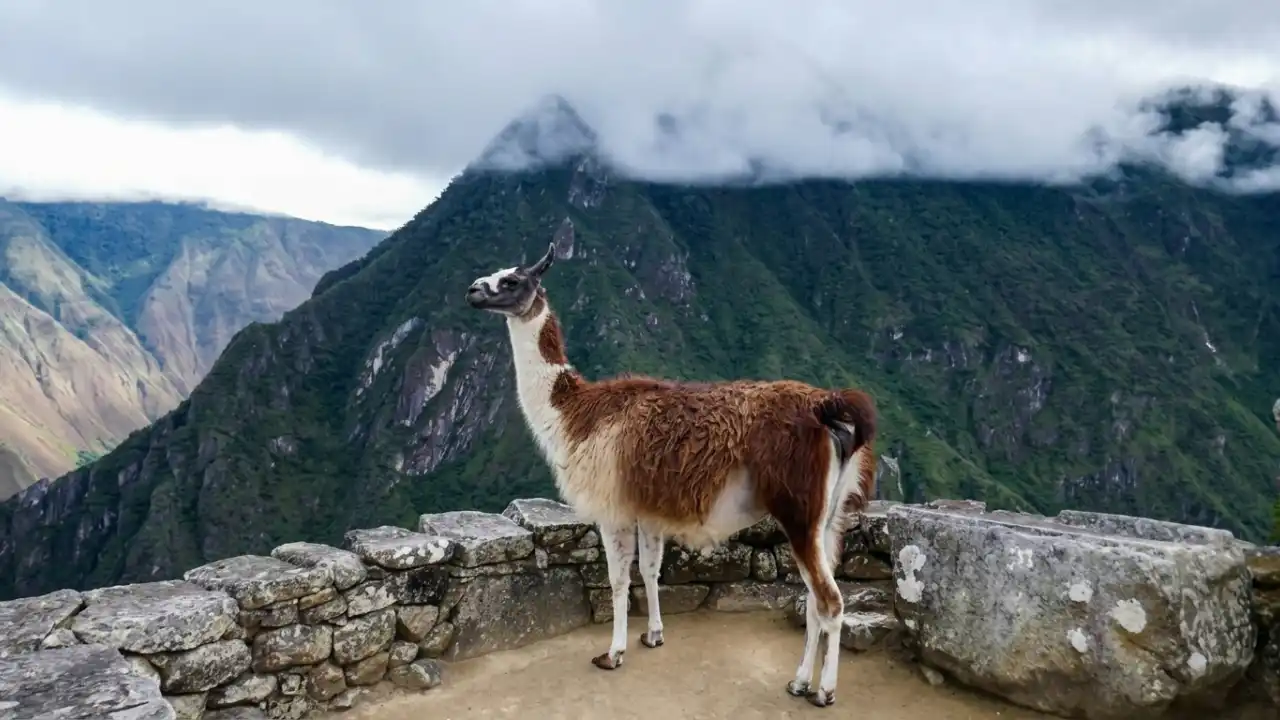
It had practical value as the main pack animal, but it also symbolized prosperity and abundance.
The Apus
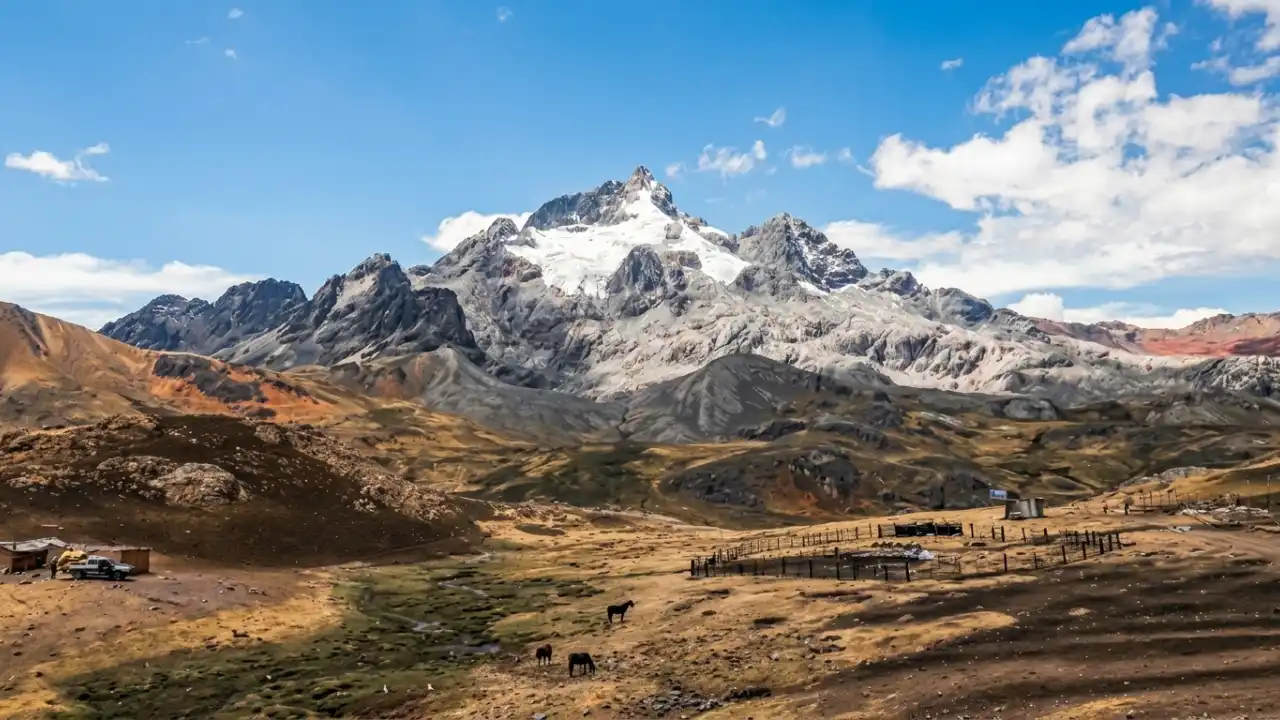
The apus, or sacred mountains, represented protective spirits and were also regarded as holders of sacred wisdom and knowledge.
Frequently asked questions about The Inca Symbols
It represents the union of the three planes of the Andean universe (the underworld, the earthly world, and the celestial world), and is also often interpreted as a symbolic bridge between earth and the divine.
They are the condor (celestial world, freedom), the puma (earthly world, strength and wisdom), and the serpent or amaru (underworld, transformation).
According to popular belief, yes: it’s said that Sacsayhuamán represents the head, while the city’s historic center corresponds to the body of the feline.
It was a system of knotted cords used mainly for numerical and accounting records, although some specialists believe it may also have been used to convey stories.
They were the sacred mountains, regarded as protective spirits and sources of sacred wisdom and knowledge for Andean peoples.