Santa Catalina Monastery in Arequipa
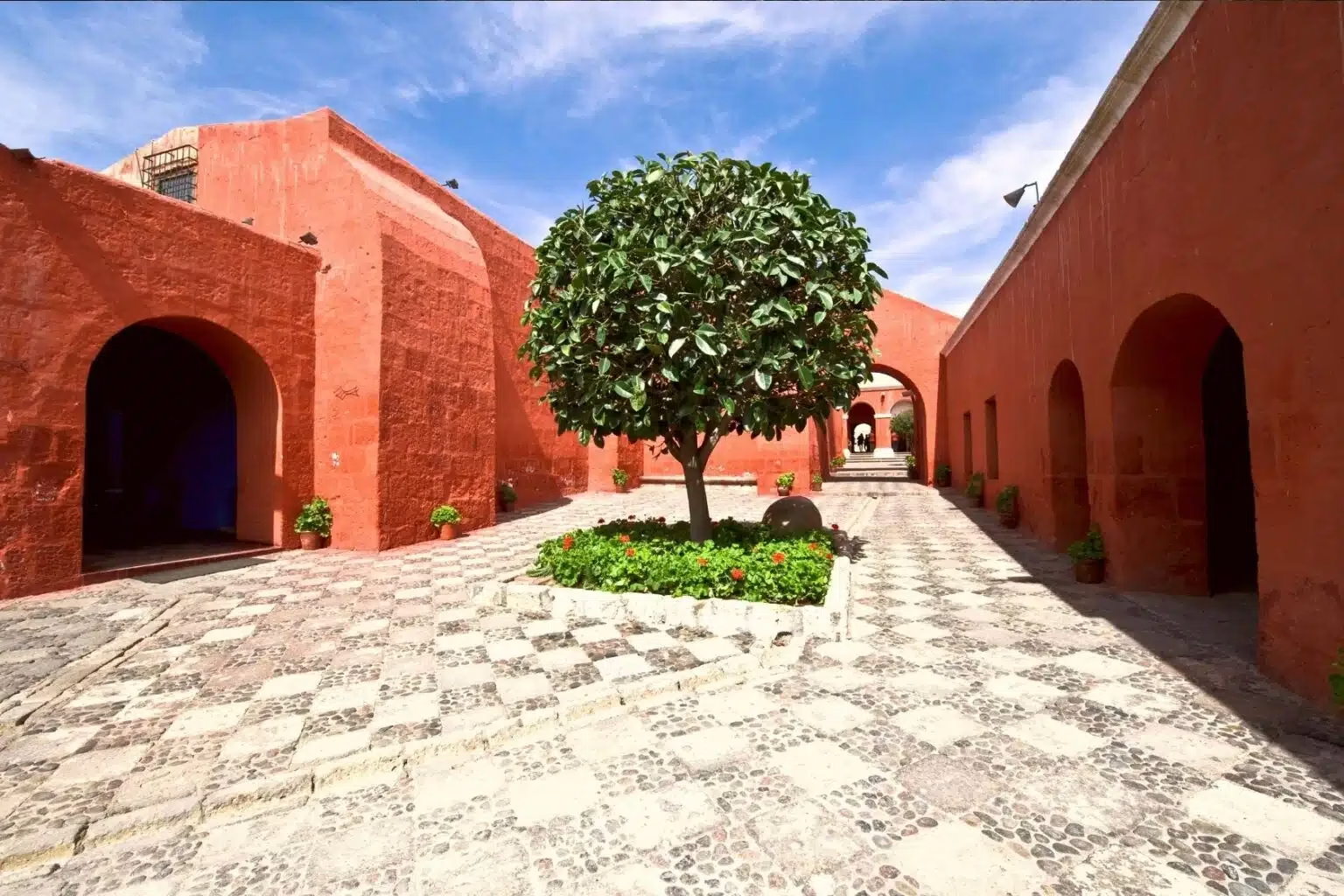
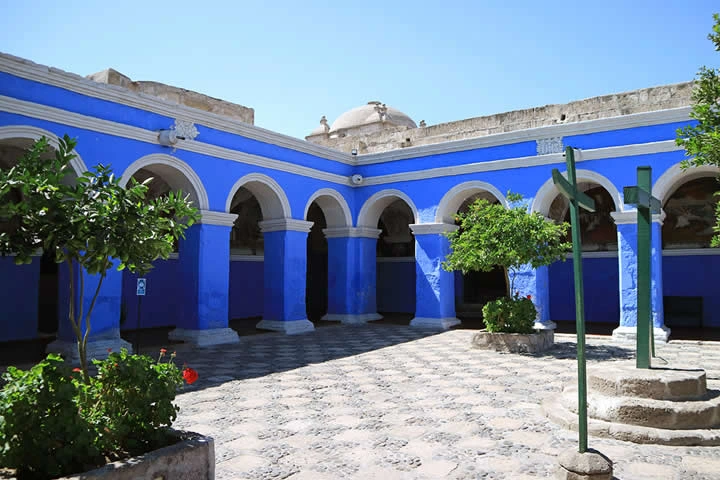
Lying just blocks from the Plaza de Armas, the Santa Catalina Monastery Arequipa is arguably the most stunning historical and architectural jewel in Arequipa, Peru. Built in 1579, this vast religious complex chronicles more than four centuries of religion, art, and colonial times. Usually referred to as a “city in a city,” the Monastery of Santa Catalina stretches across 20,000 square meters with cobblestone streets, brightly colored walls in red and blue, and serene courtyards that bring tourists back to another time.
The Santa Catalina Convent continues as a convent for Dominican nuns but is open for public visitation for the most part, offering a glimpse into the religious and secular life of the women who lived in complete isolation for centuries.
History of the Santa Catalina Monastery
The story of Santa Catalina Monastery Arquipa history reflects the fusion of Spanish influence and Andean devotion that defined colonial Peru.
Founding of the Monastery
The Santa Catalina Monastery was founded on 10 September 1579 at the hands of Viceroy Francisco Toledo, one of the most notable Spanish Empire governors in South America. The founding was made possible by Doña María de Guzmán, a wealthy widow with noble Spanish blood, who contributed to making it possible and served as the first prioress of the convent.
The monastery Arequipa was designed from the beginning to be a home for daughters of wealthy Spanish families and mestizas who wished to dedicate their lives to God. It was not uncommon that admission would pay a hefty dowry, so Santa Catalina Arequioa was one of the most exclusive and valued religious houses in colonial Peru. The convent housed nearly 300 nuns at its peak, each with her own small, private room with personal kitchens and prayer rooms.
Periods of Change
During its extensive history, the monastery has been subject to several earthquakes, one of which was especially severe in 1582 and caused considerable damage to the original buildings. After this disaster, the nuns rebuilt and enlarged the convent, which included additional cloisters, chapels and gardens.
Santa Catalina was entirely inaccessible to the public for over three centuries and had a rigid regime of seclusion. It was not until 1970, as the outside world was, to a large extent, unknown to the women behind those high volcanic stone walls, the monastery very briefly opened to the public so that they could admire its art, architecture, and relics connected to it. The initiative also generated some funding towards restoration projects that still take place today.
Architecture and Artistic Heritage
Strolling along Santa Catalina Monastery feels like stepping back in time; every corridor, courtyard and archway embodies the harmonious blend of European style and local craftsmanship a hallmark of the Arequipa Monastery style.
Colonial Design and Materials
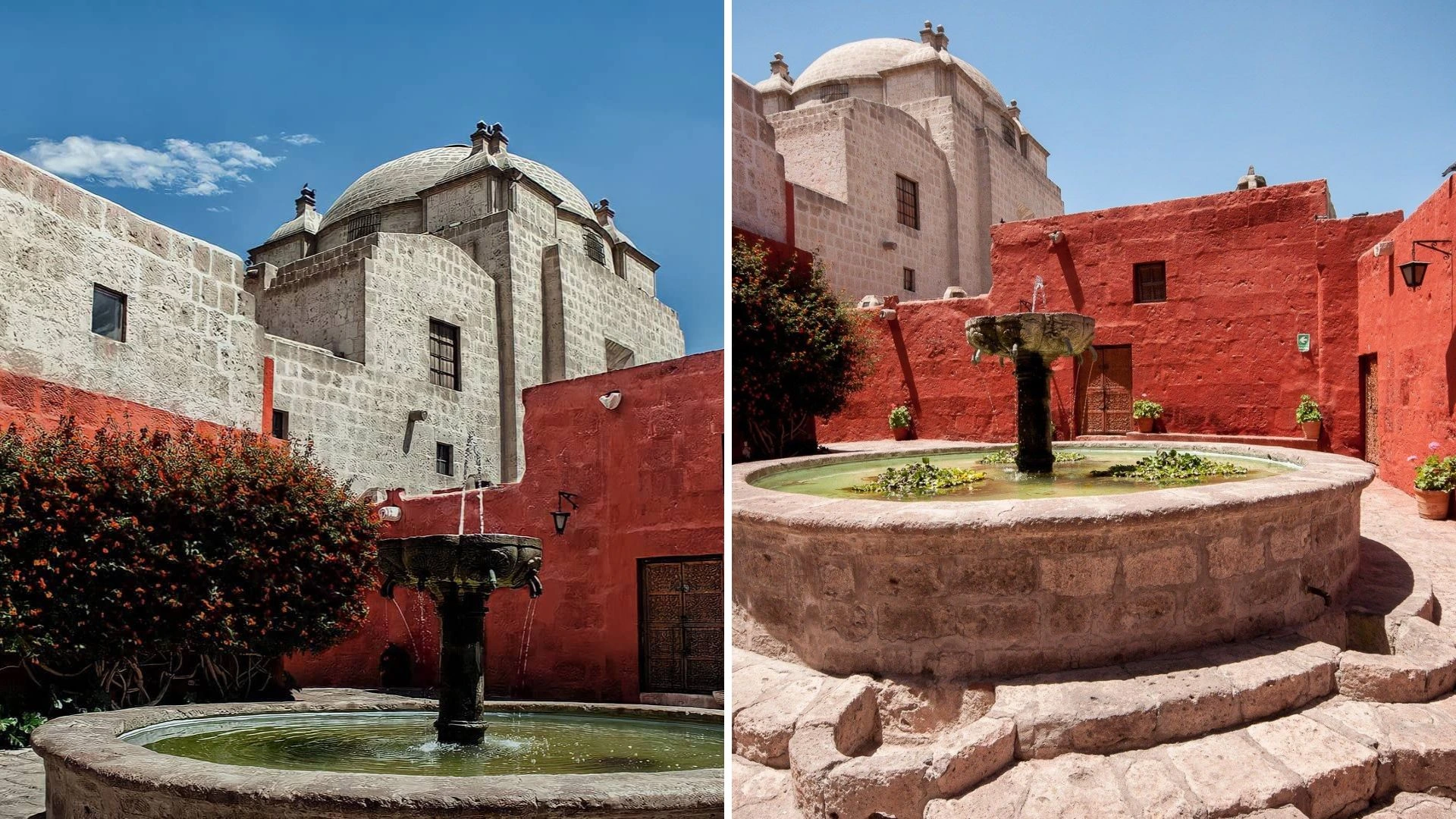
The entire monastery is made from ashlar, a bright white volcanic stone quarried from nearby volcanoes like Misti and Chachani. Its bright, luminous quality as well as the stone being worked to almost paper thin to allow for some delicate carving still seen in the doorways and arches.
The Monastery of Santa Catalina combines Spanish Baroque elements with indigenous design. The walls, some four meters thick, were built for earthquake resistance. Interior streets are named after cities in Spain, including Córdoba, Granada, and Sevilla, which all suggest charming old colonial towns.
Artistic Collections and the Gallery
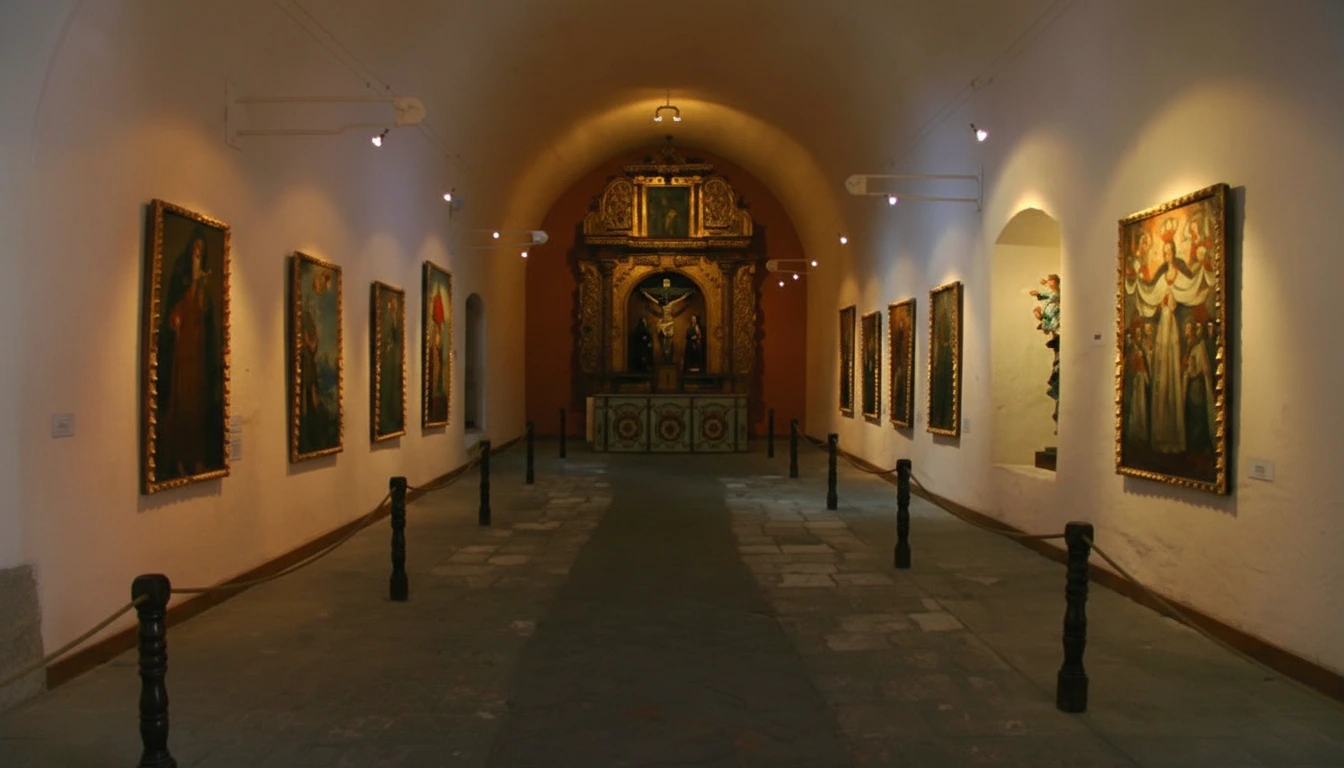
The monastery contains one of the most important collections of colonial art in Peru. At the Santa Catalina Art Gallery, visitors may enjoy over 400 paintings from the Cusco School of Art, a style of artistic development that flourished between the 16th and 18th centuries. The paintings incorporate European Renaissance methods combined with Andean iconography, creating an unmistakable visual language specific to Peru.
The most well-known works are scenes of the life of Saint Catherine of Siena, the patron saint of the Santa Catalina Convet. The images are painted in gold leaf, and are enclosed in elaborately carved silver and cedar frames. In addition to these works, the monastery has retained altarpieces, religious sculptures, and embroidered vestments that reflect the women’s faith and artistry.
Main Areas of the Monastery
Visiting Santa Catalina Monastery Arequipa is akin to walking through a tranquil maze where each twist and turn reveals new colors and tales of the past.
The Entrance and Courtyards
When visitors step through the arch carved from volcanic stone, behold the image of Saint Catherine of Siena, and enter the Patio of Silence, a place originally used by nuns for meditation and silent prayers.
One of the most memorable areas is the Orange Tree Cloister, built in 1738, with its vibrant walls and aromatic orange trees that remind one of purity and devotion. Close by is the Main Cloister, built between 1715-1723, and has paintings on display (totaling 32) of scenes from the life of Jesus and of the Virgin Mary.
The Living Spaces
Life within the Santa Catalina Convent was centered on prayer and simplicity. The Kitchen, which features a dome-shaped ceiling and blackened walls, still has the ancient implements used by the nuns when they prepared meals. The Laundry Area, built in 1770, is a row of stone troughs once filled with running water from the Chili River.
The Bell Tower, constructed circa 1748, rises gracefully over the complex and can be viewed from anywhere in Arequipa’s Historical Center. Inside the Church, you will find an altar with relief silver work and gold leaf decoration, as well as an exceptionally well-preserved pipe organ that used to fill the halls with sacred music.
Visiting the Santa Catalina Monastery
The Santa Catalina Monastery Arequipa offers a look into Peru’s colonial past and one of the best opportunities to understand the city’s alternate name “The White City.”
Location and Access
The Arequipa Monastery is located at Santa Catalina Street 301, in the historic center of Arequipa, which was declared a UNESCO World Heritage Site in 2000. The monastery is a simple 10-minute walk from the Plaza de Armas, making it an easy stop for any visitors exploring downtown Arequipa. The visitor can also take a short taxi ride from most hotels in the downtown area.
Entrance Fees
| Visitor Type | Ticket Price |
|---|---|
| General Admission | 45 soles |
| Seniors (60+) | 25 soles |
| Peruvian University Students | 15 soles |
| Children | 6 soles |
Opening Hours
The monastery is open on a daily basis between 9:00 a.m. and 5:00 p.m. except during Good Friday, December 25, and January 1. It is advisable that guests arrive early to enjoy the serene atmosphere before large group visits.
The tours are offered in Spanish and English, provide deep insights into Santa Catalina Monastery Arequipa history, its architecture, and daily life.
Nearby Attractions in Arequipa
Arequipa Monastery has wonderful cultural and natural attractions to enhance a visit to Santa Catalina.
Mundo Alpaca
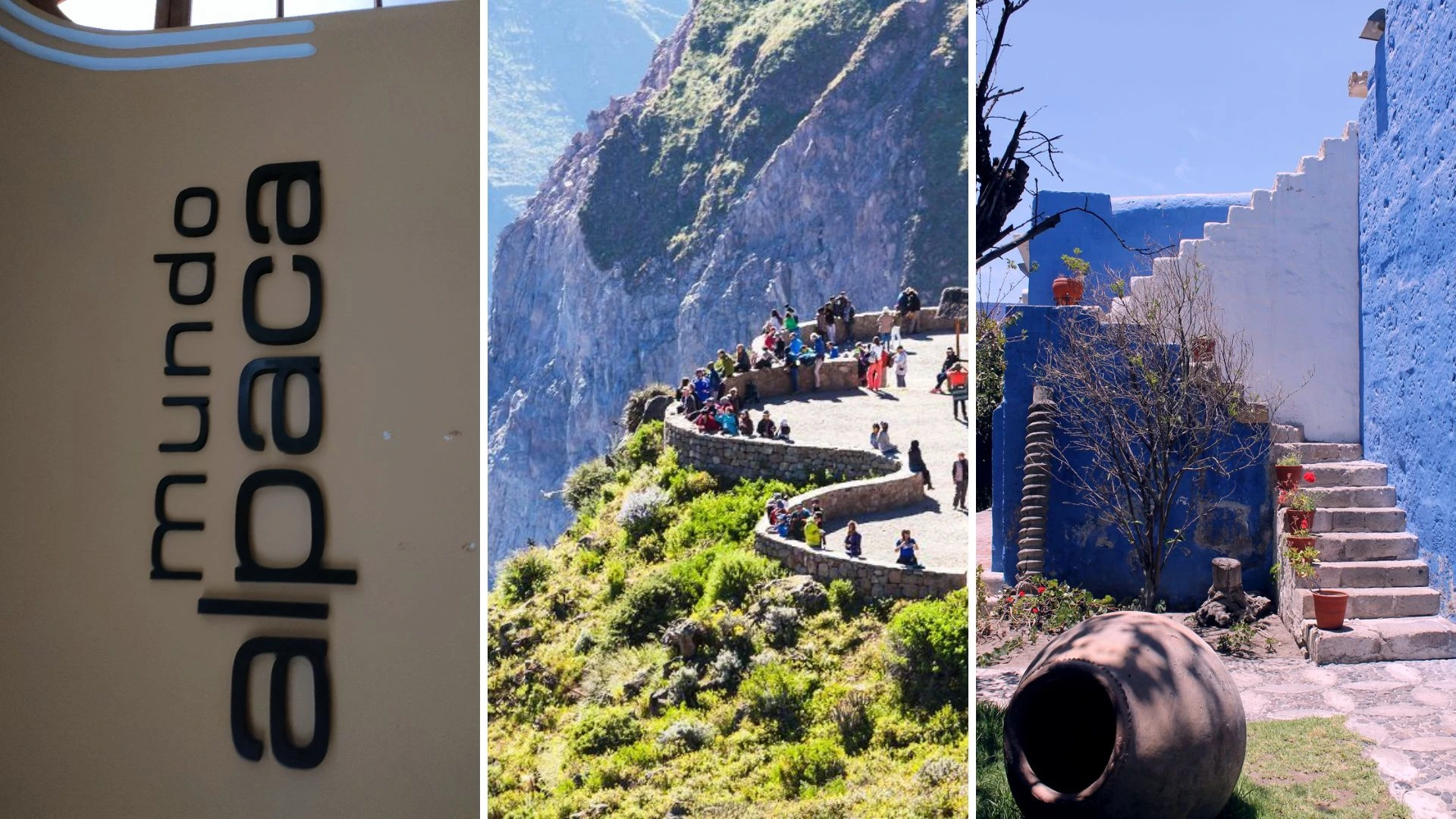
Within a short walk away you can also visit Mundo Alpaca for a hands-on experience with alpacas and llamas while demonstrating traditional dyeing and weaving techniques used in the Andes. It is an educational stop concerning travelers interested in the relationship between modern textile art and ancient traditions.
Museums of Arequipa
The Cathedral Museum located in the Plaza de Armas, along with the Santo Domingo Church and the Museum of Archaeology, houses fine collections of religious art, colonial objects and pre-Columbian artifacts that contribute to our understanding of Arequipa’s development throughout the centuries.
Colca Canyon
Colca Canyon, located approximately 3.5 hours away from Arequipa, is one of the deepest canyons in the world and a playground for the adventurous at heart. Adventure seekers can explore stunning scenery, view the Andean condor in flight, and visit historic towns that still reflect some of the pre-Hispanic traditions.
Frequently asked questions about Santa Catalina Monastery in Arequipa
You can easily visit the Santa Catalina Monastery by walking just two blocks from Arequipa’s Plaza de Armas. It’s open Monday to Saturday from 10 a.m. to 5 p.m.
The Santa Catalina Monastery was founded in 1579, making it over 440 years old one of the oldest and best-preserved colonial monasteries in Peru.
It’s a colonial convent built with volcanic stone where Dominican nuns have lived for centuries. Today, it’s a museum and religious landmark open to visitors in Arequipa.
Arequipa is famous for its colonial architecture, volcanic landscapes, and landmarks like the Santa Catalina Monastery and Colca Canyon. It’s also called the White City for its ashlar stone buildings.
Yes. Many convents in Peru, including Santa Catalina Monastery, still house Dominican nuns who live a life of prayer and community within the monastery walls.