



The Pisco Sour: Soul, History, and the Master Peruvian Recipe
To order a pisco sour in Lima, Cusco, or Ica isn’t just ordering a cocktail. It’s participating in a ritual of national pride. This is not a random mix of citrus and spirit it’s liquid architecture: ice-cold, topped with foam as dense as meringue, crowned with bitters, and built around a grape distillate Peru treats like cultural property.
If you’ve ever asked what is a pisco sour, the honest answer is: a short drink that looks simple, but punishes shortcuts. A true peruvian pisco sour is clean, bright, and structured where the grape aromatics stay alive instead of being drowned by sugar or watery ice. That’s why “pisco sour peru” is everywhere on menus and travel guides: it’s one of the fastest ways to taste Peru in one glass.
The True History of the Pisco Sour Originating in Lima at the Morris Bar
The pisco sour origin is tied to Lima, to a specific bar, and to a very specific era. While pisco as a spirit traces back centuries in Peru, the cocktail we call the pisco sour takes shape in the early 1900s and becomes widely associated with Lima’s bar culture.
The history of pisco sour matters because the Peruvian version is not an “idea” that floats around. It has a Lima address, a name attached to it, and a recipe lineage.
Victor Morris and the Invention of the Drink in the Early Twentieth Century
Most official retellings of the pisco sour history point to Victor Vaughen Morris, an American who opened Morris’ Bar on Boza Street in downtown Lima. Looking to create a local counterpart to the Whiskey Sour, Morris used Peru’s grape spirit.
But here’s the key: even if Morris sparked the concept, the drink’s “modern identity” is strongly linked to Peruvian bartenders who refined it into the polished national ritual people recognize today—especially through the addition of egg whites and bitters, which give the cocktail its signature elegance.

The Evolution from the Hotel Maury Recipe to Modern Peruvian Bars
The drink didn’t stay frozen in time at Morris’ Bar. It evolved through Lima’s nightlife and hotel bars, with Hotel Maury frequently mentioned in the tradition of the classic pisco sour.
That evolution matters because modern Peruvian bars don’t treat the pisco sour as “citrus + alcohol.” They treat it like engineering: foam structure, dilution control, citrus freshness, and aromatic lift. In other words: the best pisco sour recipe Peru isn’t guessed—it’s measured, shaken hard, and served cold enough that the foam turns velvety, not flat.
Analyzing the Essential Ingredients for a Perfect Pisco Sour Cocktail
People search for pisco sour ingredients because the list is short and they want to know what creates that iconic foam and snap.
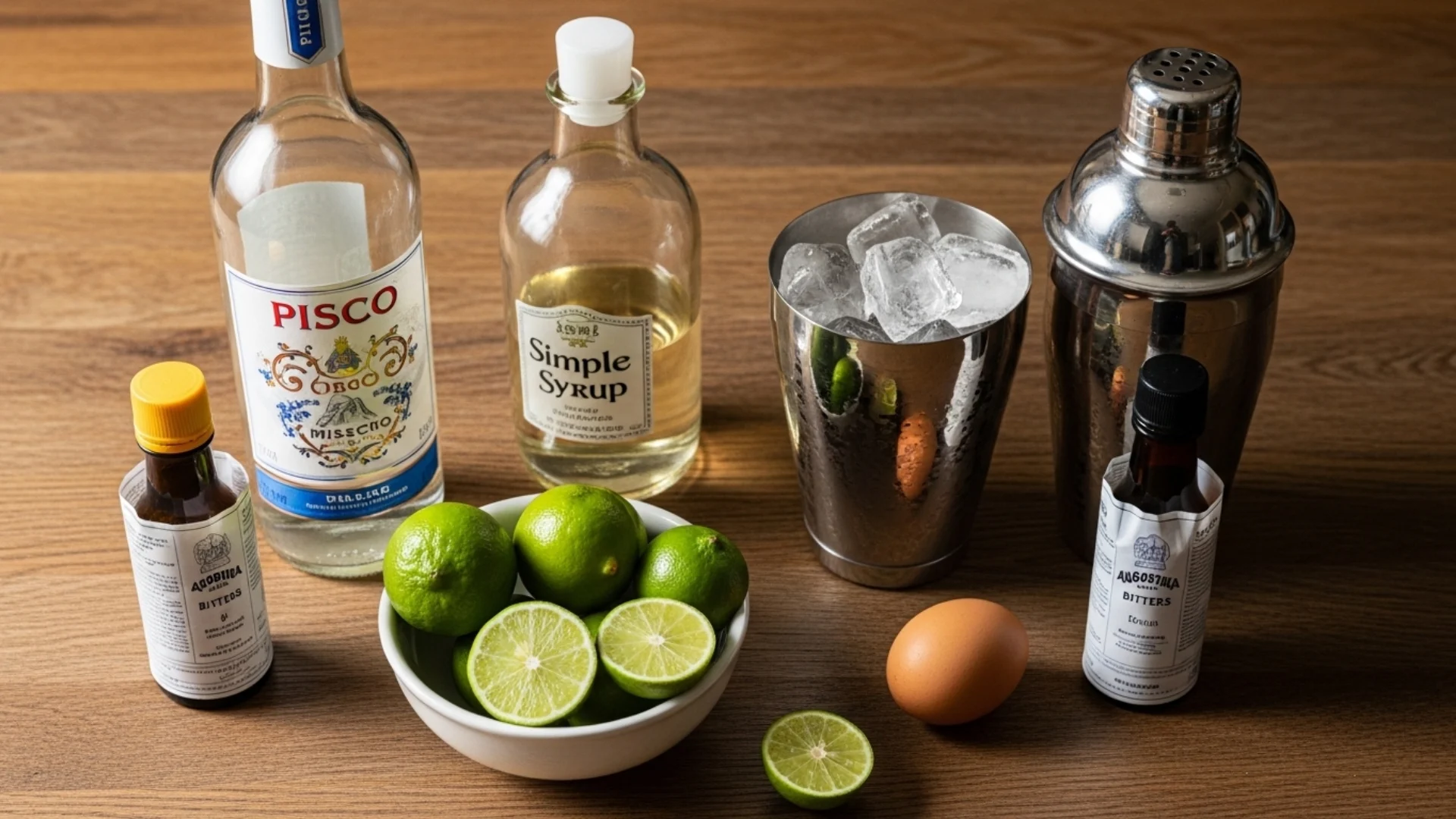
The classic ingredients for pisco sour are:
- Pisco: The soul of the drink.
- Fresh lime juice: Specifically Peruvian key lime (limón sutil).
- Simple syrup: To balance the acidity.
- Egg white: Critical for the stable, micro-bubble foam.
- Ice: For perfect dilution and temperature.
- Aromatic bitters: Typically Angostura, to crown the foam.
Same list, wildly different results. The secret lies in the freshness, technique, and dilution control.
Choosing the Best Pisco for Pisco Sour and the Role of Quebranta Grapes
A high-level Peruvian pisco sour starts with the correct pisco. For many bartenders, the safest choices are:
- Quebranta: Firm, dry, and with a strong backbone; the classic choice for balance.
- Acholado: A blend that is more aromatic and complex.
If you’re choosing the best pisco for pisco sour, remember the pisco is not just alcohol; it’s the core flavor architecture. Skip anything labeled pisco sour mix, as these products erase what makes pisco unique.
The Importance of Fresh Lime Juice Over Bottled Mixes
Fresh citrus is not just a preference; it’s the difference between a bright and clean cocktail and one that is dull and bitter. Use fresh Peruvian lime (limón sutil) and follow the golden rule: don’t over-squeeze to avoid the bitter oils from the pith.
Why Egg White Is Critical for Texture and Foam
While you can make a pisco sour without egg, you will lose the signature velvety texture. Egg whites provide:
- A stable, micro-bubble foam layer.
- A creamy body that coats the palate.
- A professional, clean finish.
Angostura Bitters: The Aromatic Crown
The bitters are not just decoration; they are the aromatic crown that neutralizes the scent of the egg and prepares the nose for the first sip. The classic move is to add 2–3 drops on top of the foam, which can be left as dots or dragged into a decorative pattern with a toothpick.
Step by Step Instructions on How to Make a Pisco Sour at Home
If you want a real answer to how to make a pisco sour, don’t start with vibes. Start with ratio and technique.
Mastering the Golden Ratio 3-1-1 for the Classic Peruvian Recipe
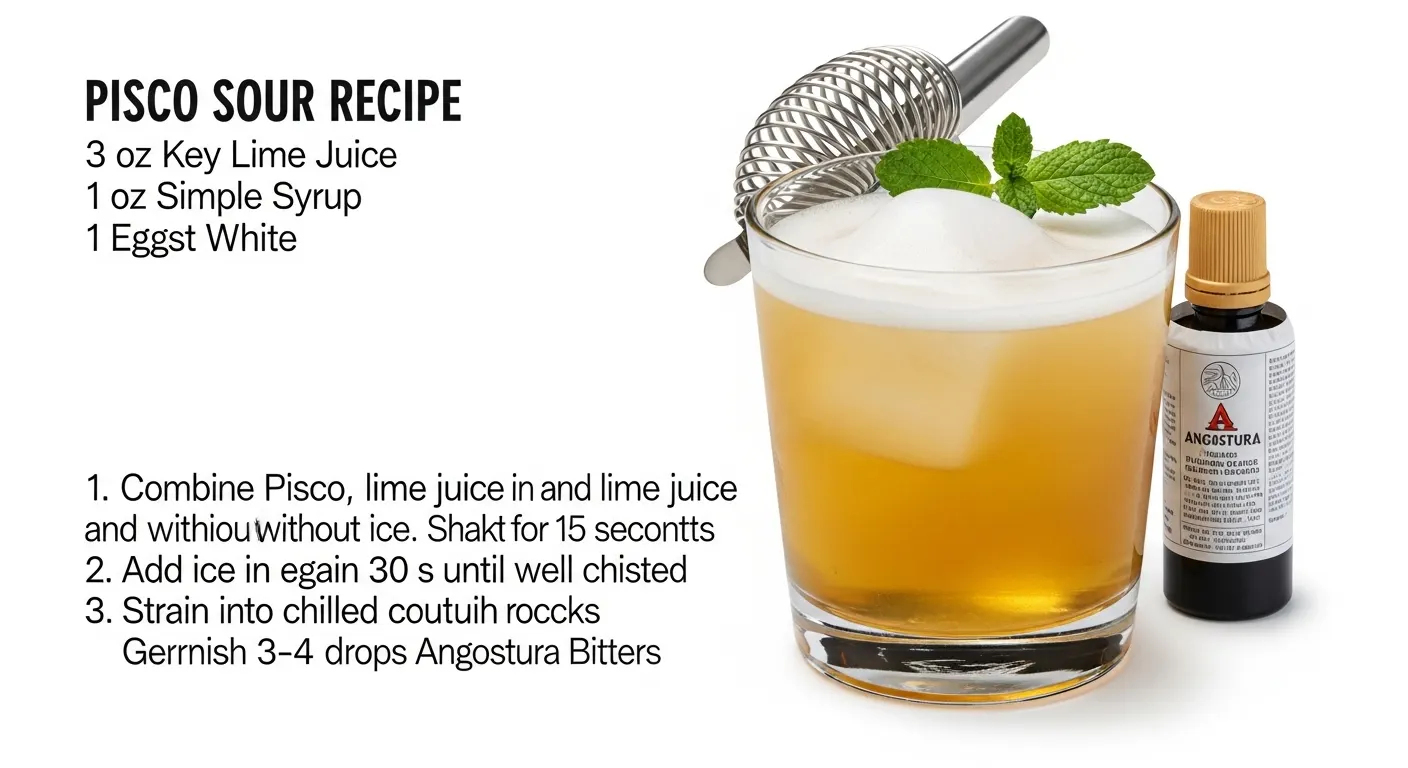
Forget eyeballing. The backbone of the Peruvian pisco sour recipe is the golden ratio:
- 3 oz pisco
- 1 oz fresh key lime juice
- 1 oz rich simple syrup (2:1 sugar to water)
- 1 egg white
- Ice
- Bitters
People sometimes search for a pisco sour recipe 3-2-1, but that typically pushes the drink sweeter and less crisp. For the best pisco sour recipe style used by top bars in Lima, 3-1-1 stays king.
The Master Double Shake Technique for Maximum Foam
This is the difference between decent and bar-level.
Dry Shake (Emulsification Phase)
- Add pisco, lime juice, syrup, and egg white to the shaker.
- No ice yet.
- Shake hard for 15–20 seconds. The egg proteins need room to trap air, and acidity helps stabilize the emulsion.
Hard Shake (Chill + Controlled Dilution)
- Fill the shaker with large ice cubes.
- Shake aggressively until the tin is painfully cold and frosty. This chills and dilutes precisely, allowing the pisco aromas to open.
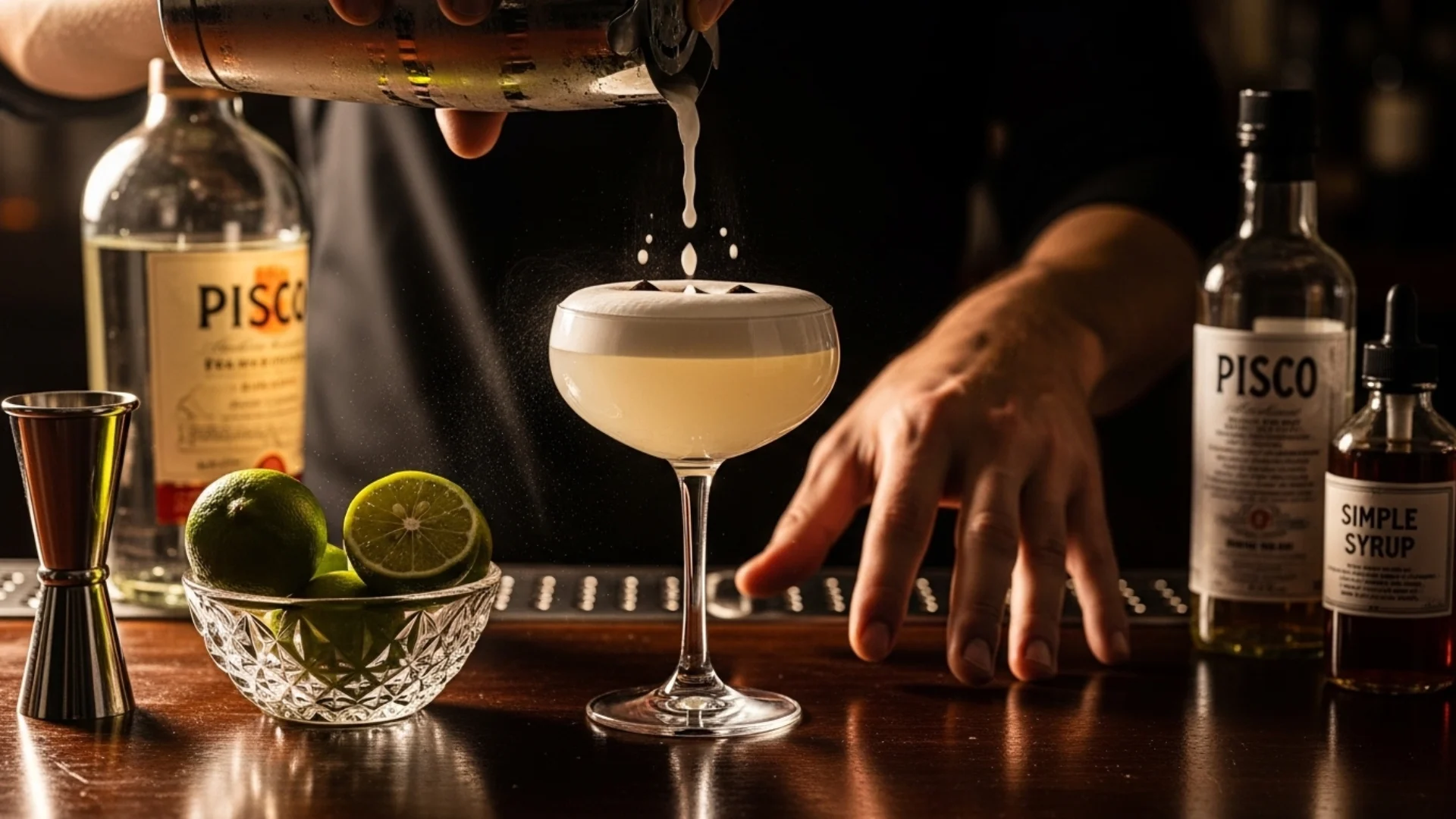
Three-Step Pour (Foam Control)
- Pour into a chilled glass until 2/3 full, then pause.
- Swirl the shaker gently.
- Finish the pour so the foam surges cleanly to the top.Finish with 2–3 drops of bitters. That’s the classic how to prepare pisco sour workflow.
How to Prepare Pisco Sour in Large Batches (Blender Method)
If you’re hosting, batching pisco sour is a great move Peruvian homes do this all the time. The key is to blend smart and not water it down.
Master Batch Formula (approx. 12–15 servings):
- Pisco: 750 ml (one bottle)
- Fresh key lime juice: 250 ml (8.5 oz) (squeezed within 2 hours)
- Rich simple syrup (2:1): 250 ml (8.5 oz)
- Egg whites: 4–5
- Ice: Added at the end for flash chill.
- Bitters: Always per glass.
Technique (Blender Pisco Sour):
- Mix pisco, lime, and syrup as a cold “base.”
- Add egg whites and blend 10 seconds without ice (mechanical dry shake).
- Add ice and blend 5–8 seconds max (flash chill).
- Strain ice shards and pour continuously so everyone gets foam.
Rules:
- Never add bitters to the blender; apply them individually per glass.
- If it sits too long, re-pulse briefly to re-emulsify.
- Keep everything cold, including the glasses.
The Great Debate Between Peruvian Pisco Sour and Chilean Variations
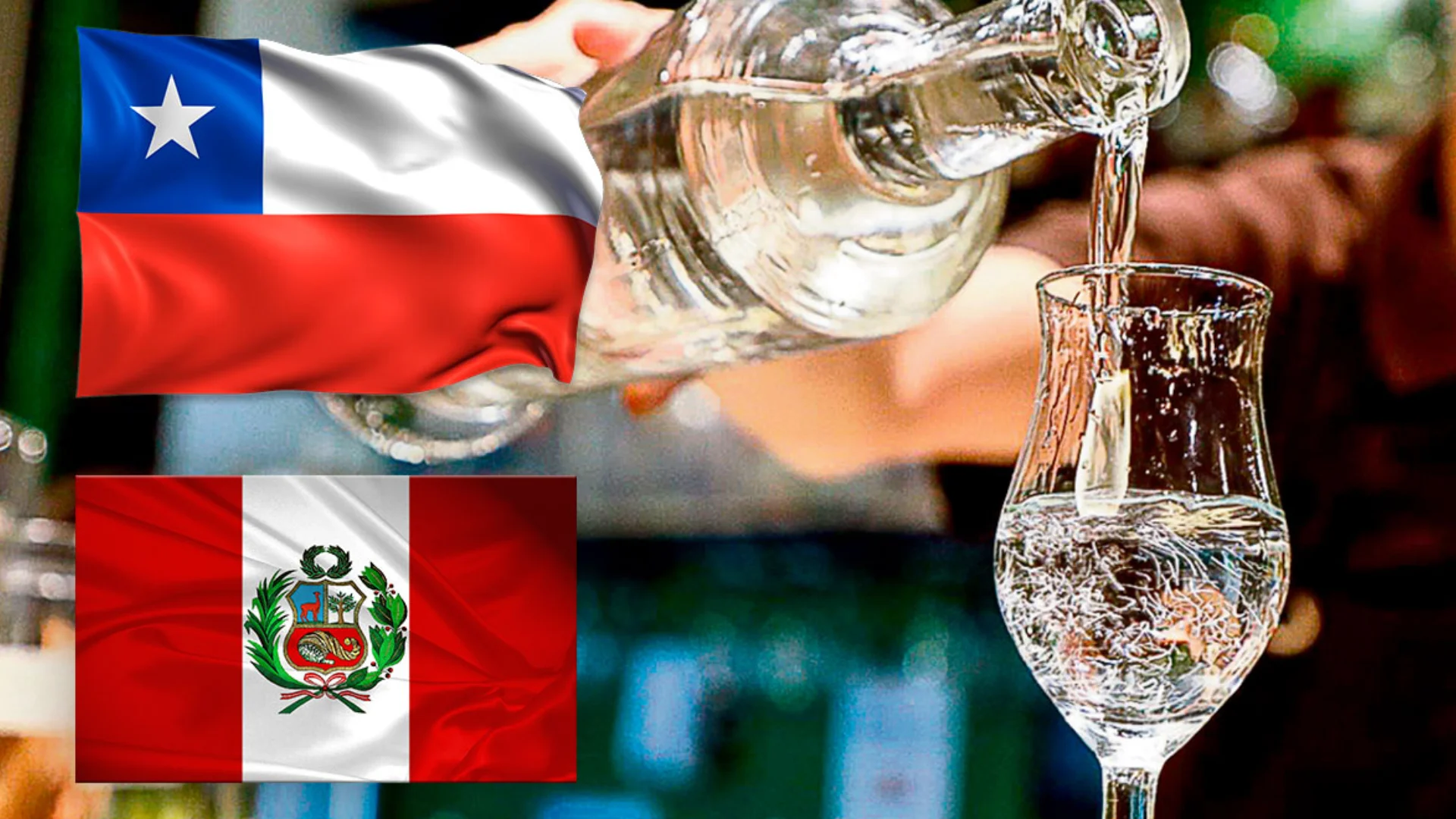
This debate is cultural, technical, and sometimes emotional. The quick truth: both countries can make good drinks, but they’re not identical in process or profile.
Differences in Ingredients Between Pisco Sour Peru and Chile Recipes
A typical Pisco Sour Peru leans on:
- Fresh lime (limón sutil).
- Egg white foam for texture.
- Bitters on top for aroma.
Many Chilean Pisco Sour versions:
- May skip egg white.
- Often skip bitters.
- Can taste rounder or softer depending on the style used.
So the difference isn’t only the “origin story.” It’s about aroma, texture, and finish.
Why Peruvian Pisco Is Distilled to Proof Without Wood Aging
This is one of the biggest technical separators. In Peru, pisco is typically distilled to proof (no water added after distillation) and rested in inert containers rather than wood. This ensures the grape character stays sharp, clean, and transparent. That purity is exactly what the Pisco Sour peruano is built to showcase.
When people search for different types of pisco, what they’re really trying to understand is why one sour smells floral and crisp while another feels warmer, rounder, or even slightly woody. In the Peruvian case, the lack of wood aging is what allows the “terroir” of the grape to shine through.
Peruvian Pisco vs. Chilean Pisco: What’s Actually Different?
This topic comes up constantly, and it’s usually friendly… until someone gets passionate.
How Peruvian pisco tends to show up in cocktails
In many bars, Peruvian pisco reads clean and grape-forward. In a peruvian pisco sour, that can translate to sharper citrus definition and more aromatic “lift” on the finish. If you’ve ever tried two drinks that look identical but one smells more floral or fruity, the pisco is often why.
How Chilean pisco tends to show up in cocktails
Chilean pisco includes a wide range of styles too, and depending on what a bar uses, a sour can taste rounder and softer, sometimes with a warmer finish. When people compare side-by-side, the difference is often aroma and mouthfeel more than sweetness.
Here’s the honest takeaway: both countries can produce excellent pisco, and the “best” version is the one you like. The debate matters culturally, but your palate matters practically.
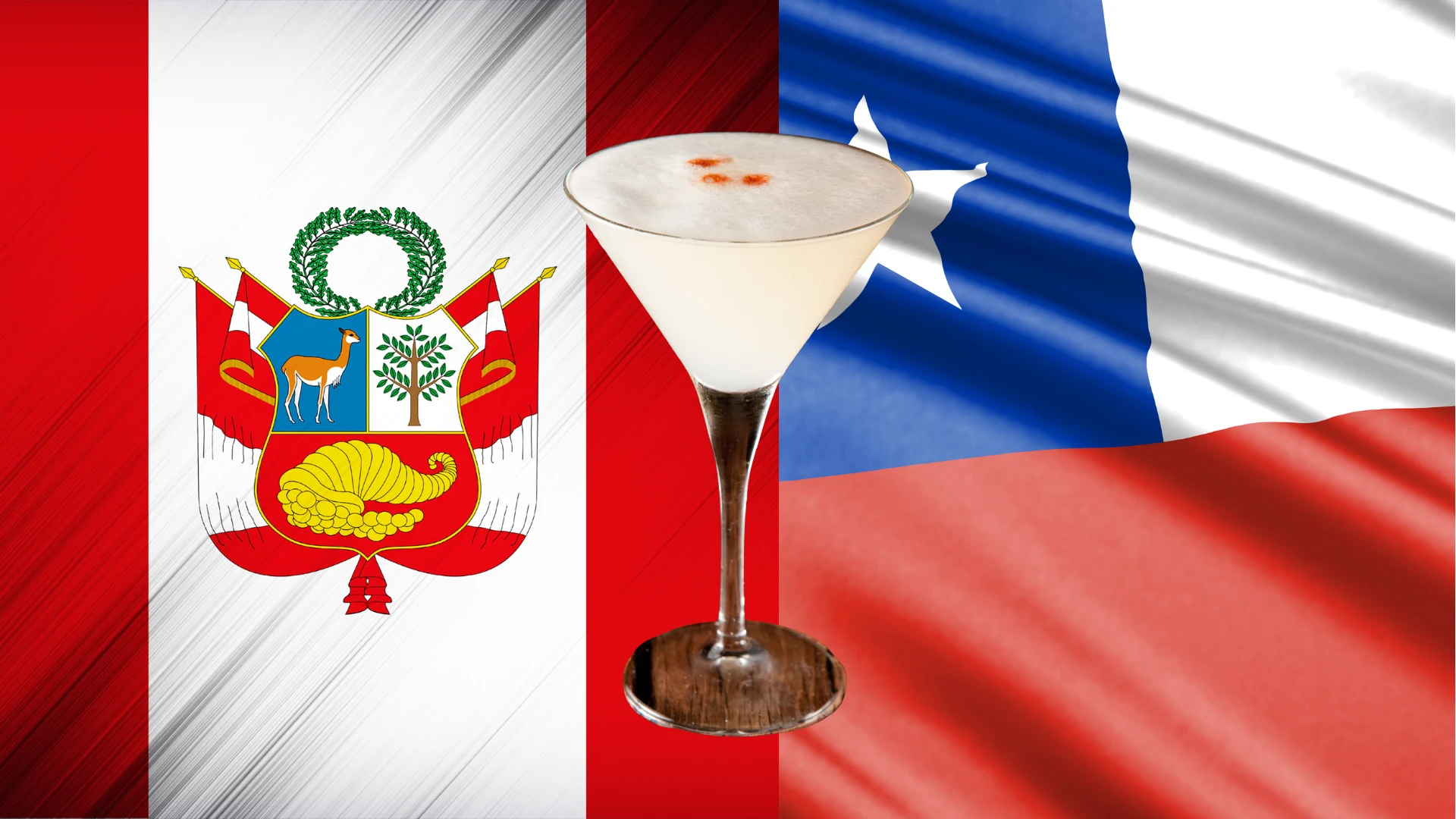
This is a point of significant debate. It’s not just about origin, but about the process:
| Feature | Peruvian Pisco | Chilean Pisco |
|---|---|---|
| Distillation | Distilled once to proof. No water added. | Distilled multiple times and diluted with water. |
| Resting | In inert containers (steel/glass) for min. 3 months. | Can be aged in wooden barrels (oak). |
| Sours Flavor | Robust, with a strong grape presence. | Softer, sometimes with woody/caramel notes. |
In Peru, Pisco is a strict “Appellation of Origin.” A Peruvian Pisco Sour always seeks to highlight the purity of the grape spirit without wood interference.
Popular Fruit Variations Including Passion Fruit and Mango Pisco Sour
Once you understand the sour blueprint, fruit variations are easy because you’re still building structure, just swapping the fruit element.
How to Make a Refreshing Maracuya Sour with Passion Fruit Juice
A pisco sour maracuya (aka pisco sour con maracuya) is tropical, aromatic, and slightly sweeter than the classic version.
General approach:
- Replace part (or all) of the citrus component with strained passion fruit juice.
- Keep egg white for texture.
- Adjust syrup downward if the fruit is already sweet.
Searchers of pisco sour passion fruit usually want the same foam and ritual, just a different fruit identity.
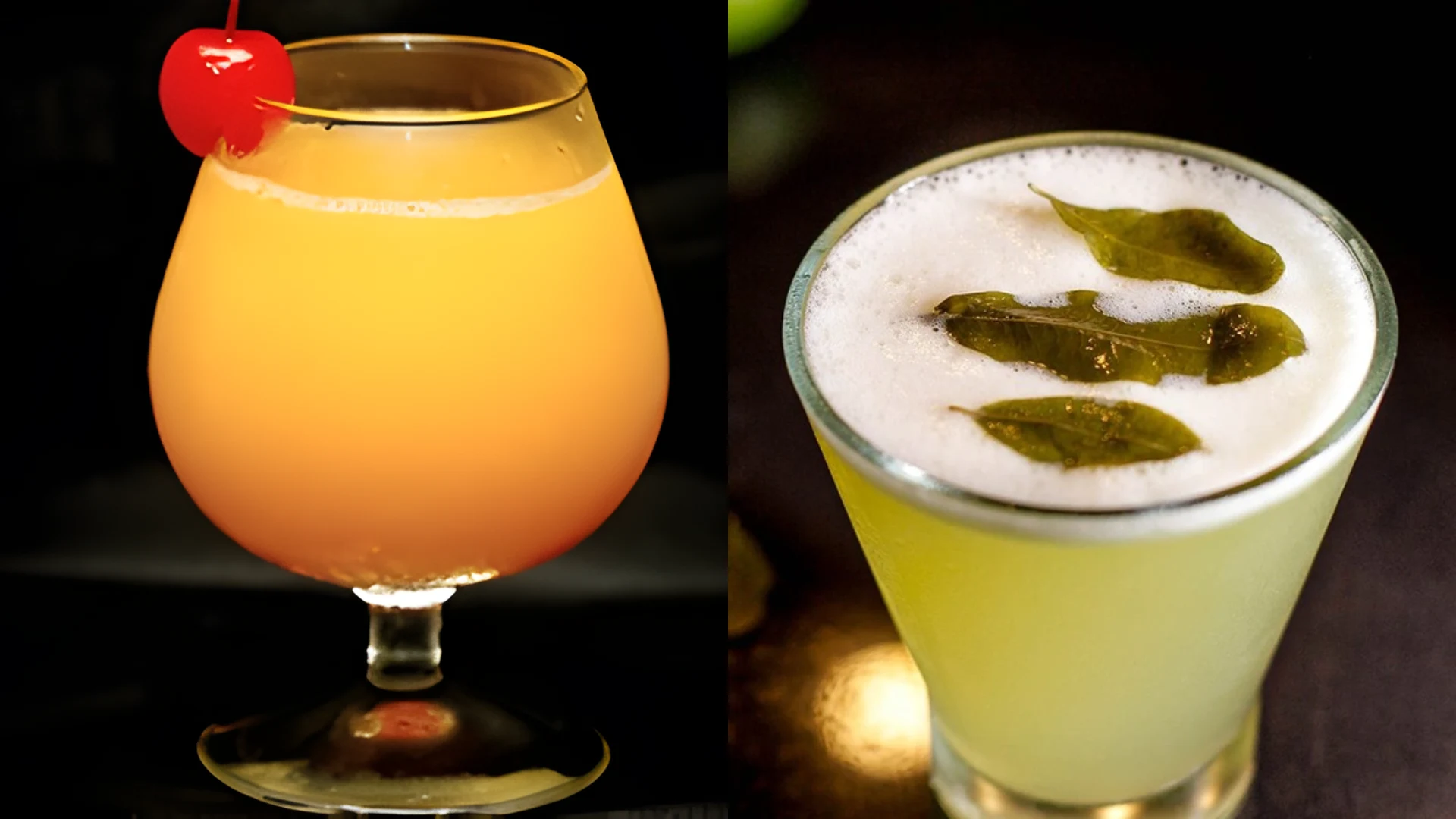
Exploring Exotic Flavors with Mango and Coca Leaf Infusions
A mango pisco sour (or pisco mango sour) often uses mango purée to create a thicker body and rounder finish.
A coca pisco sour adds herbal character from coca infusion (where culturally appropriate). The key is balance: it should still taste like a “sour,” not like syrup.
Nutritional Facts and Understanding Pisco Sour Calories Per Serving
Peru celebrates National Pisco Sour Day on the first Saturday of February. The drink was officially recognized as part of Peru’s cultural heritage in 2007. This reinforces its status as more than a cocktail; it is a national symbol.
- National Day: Celebrated every first Saturday of February. It is a day of celebration in every town square in the country.
- Blender vs. Shaker: In Peruvian homes, it’s common to use a blender for large groups. While protocol dictates a shaker, a blender creates a very firm foam. Tip: Add the ice last and blend for only a few seconds to avoid over-diluting the drink.
- The Three-Drink Rule: As the Peruvian saying goes: “The first is medicine, the second is joy, and the third… sends you to the police station!” It is a potent drink (approx. 14% to 16% ABV), so enjoy with respect.
Pisco Sour Calories
The calorie count depends on the serving size and sweetness. While it is a moderate choice compared to cream-based cocktails, the sugar content in the syrup is the main factor in its energy density.
The Breakdown by Ingredient
A classic Pisco Sour prepared with the 3-1-1 ratio contains approximately 260 to 320 calories per glass:
- Pisco (3 oz): ~195 kcal (Alcohol is calorie-dense at 7 calories per gram).
- Simple Syrup (1 oz): ~60–80 kcal (Higher if using a “rich” 2:1 syrup).
- Egg White (1 unit): ~15–20 kcal (Pure protein).
- Lime Juice (1 oz): ~8 kcal.
- Angostura Bitters: ~2 kcal.
Comparative Table
How does the Pisco Sour stack up against other popular drinks?
| Drink | Serving Size | Approx. Calories |
|---|---|---|
| Pisco Sour | 6 oz | 280 kcal |
| Gin & Tonic | 8 oz | 170 kcal |
| Margarita | 4 oz | 200-250 kcal |
| Red Wine | 5 oz | 125 kcal |
| Piña Colada | 6 oz | 450 kcal |
Tips for a “Lighter” Version
- The “Skinny” Ratio: Shift to 4-1-½ (4 parts Pisco, 1 part lime, ½ part syrup). This cuts the sugar significantly, though it increases the alcohol punch.
- Natural Sweeteners: You can use Stevia or Monkfruit syrup, but keep in mind this may slightly alter the viscosity and foam stability.
- Aromatic Pisco: Using aromatic grapes like Italia or Torontel provides floral notes that trick the palate into perceiving more sweetness with less sugar.
A Note on Sugar: Traditional Jarabe de Goma contains gum arabic, which provides that signature velvety mouthfeel but also contributes to the drink’s energy density.
Pisco Sour Peru: Why It Matters
In pisco sour Peru culture, this drink is a signature. It’s offered to visitors, ordered at celebrations, and treated like a point of pride in the same way iconic food dishes are. That’s why you’ll see pisco sour Peru written all over travel guides and menus because it’s one of the fastest ways to “taste Peru” in one glass.
A good peruvian pisco sour is also a perfect snapshot of Peruvian balance: bright, fresh, not overly sweet, and served cold enough that the foam feels silky instead of flat.
Frequently asked questions about The Pisco Sour: Soul, History, and the Master Peruvian Recipe
A Pisco Sour is a sour-style cocktail made with pisco (a grape spirit), fresh lime juice, a sweetener, and most commonly in the Peruvian style egg white foam and a few drops of aromatic bitters on top.
The foam isn’t just for looks. It changes the texture, making the drink feel smoother and more balanced, and it helps hold the bitters aroma on top so you smell it before you sip.
The drink’s most famous “classic” identity is strongly tied to Peru (especially Lima), but Chile also has its own pisco traditions and versions. That’s why you’ll see Peru vs. Chile comparisons online.
Yes. Some bars use substitutes like aquafaba (chickpea liquid) or pasteurized egg whites. The texture changes slightly, but you can still get a foamy top.
Peru celebrates National Pisco Sour Day on the first Saturday of February.


