Moray archaeological site, Cuzco
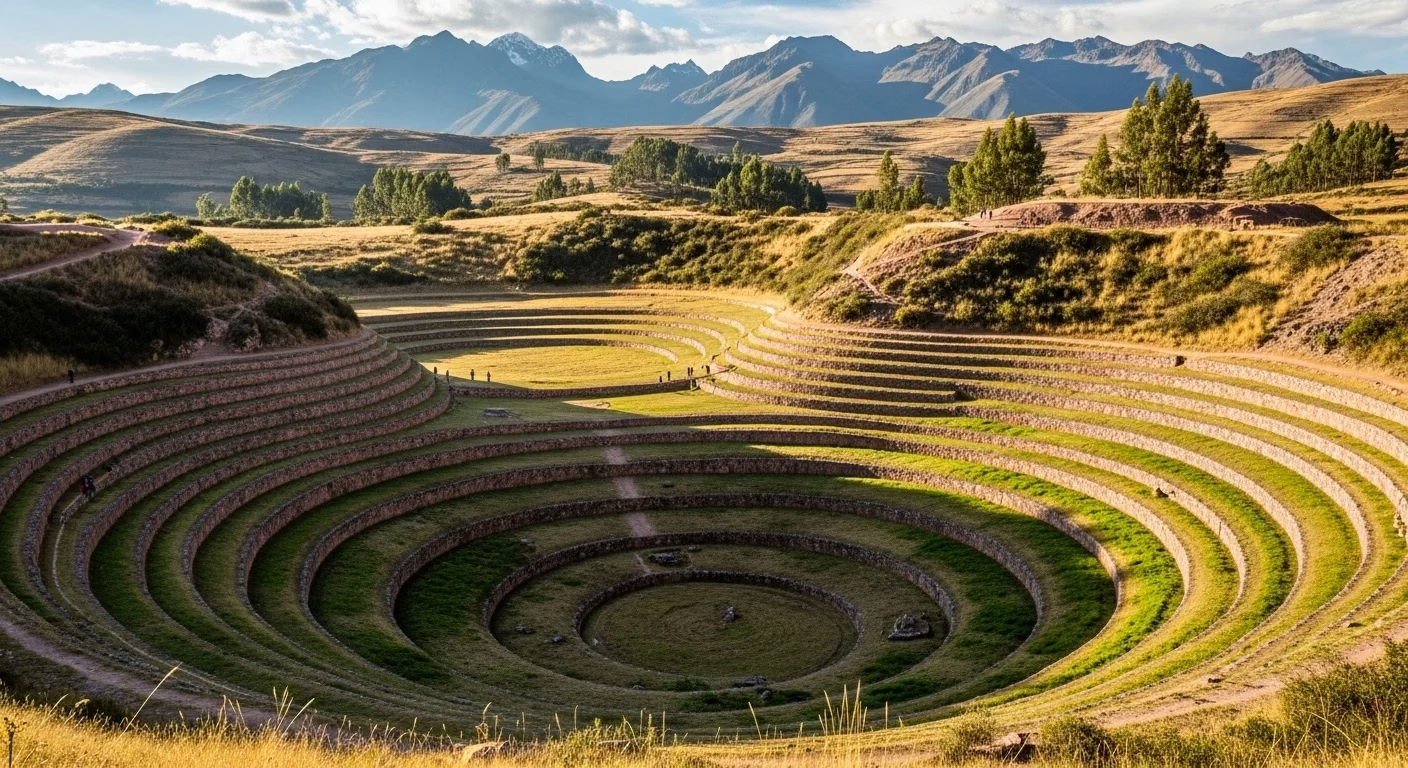
The Sacred Valley of the Incas contains some of the most well known archaeological treasures in South America, but one of the most intriguing must surely be Moray Peru. Unlike other Inca ruins, the Moray archaeological site Peru is impressive concentric terraces that descend into the earth in perfect circles.
Often referred to as the Moray ruins Peru, this site is believed to have been an agricultural laboratory and complex where the Incas experimented with crops. Visitors coming to Moray Peru, are entering a genuine space of historical, scientific, and spiritual overlap.
The Moray complex Peru shows us how advanced Inca society was. It was more than just great stone and earth, it was a laboratory of biodiversity. While some of the more astonishing Imperial Inca ruins were often fortresses or temples, the Inca terraces at Moray Peru become a window into a civilization concerned with food security, knowledge of ecological systems, and adaptation. Even today, historians, scientists, and adventures who visit the ruins marvel at this hidden genius of the Moray Peru terraces.
Location, Altitude, and Coordinates of Moray Peru
One of the questions travelers ask regarding a Moray Peru tour is where is Moray located and what is the altitude of Moray Peru. The ruins of Moray can be found nearly 50 kilometers (31 miles) northwest of Cusco, in the Sacred Valley of Peru. This is the reason many tours combine Maras and Moray Peru and is one of the most rewarding day trips in the region. Whether called Maras Moray Peru, Maras y Moray Cusco Peru, or Moray and Maras Peru, visitors will experience stunning landscapes, picturesque villages, and high Andean plateaus on the tour.
Where is Moray in Peru?
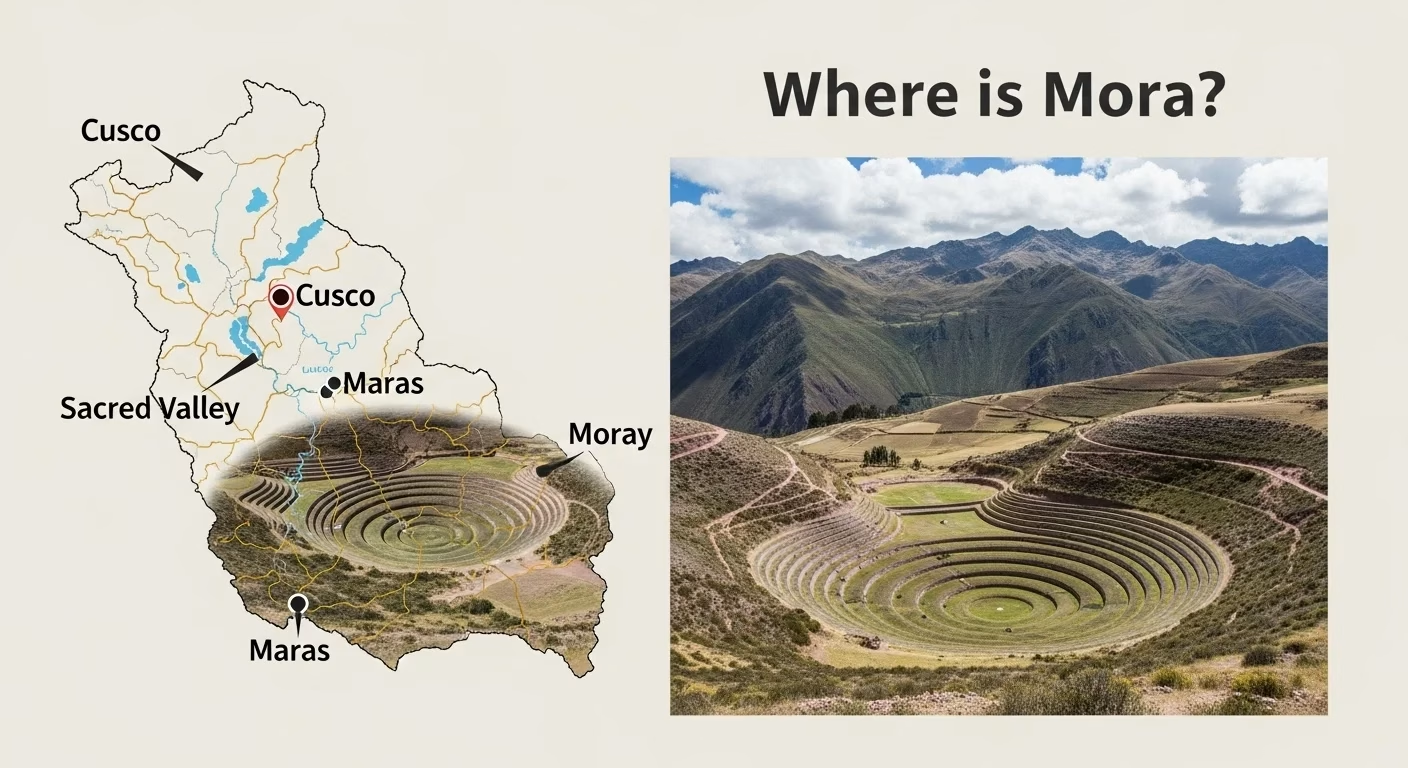
The Moray terraces are found in Peru a little way from the small town of Maras, which also contains the well known salt ponds. For this reason, most of them typically include both destinations, that is, they are commonly referred to as Maras and Moray tour Peru or Maras e Moray Peru! The site of Moray is surrounded by agricultural fields and traditional Andean communities. For those traveling to Moray Cusco Peru, the trip is as enjoyable as the destination!
Moray Peru Altitude and Moray Peru Elevation
The altitude of Moray Peru is about 3,500 meters (11,482 ft), and the elevation of Moray Peru leads to tremendous microclimatic differences within the terraces. For the Incas, this was very important, as it allowed them to reproduce climates from different areas of the ecological zones. The layout of the Moray terraces in Peru allowed for crops from the coast, highlands and Amazon to be trialed all in one area. Traveler’s visiting at this altitude should be ready for thin air, water, and to acclimatize in Cusco before taking a Moray Peru tour.
Moray Peru Coordinates and Geography
The specific coordinates of Moray Peru are 13°19′S 72°11′W, which firmly situates the terraces in the center of the Moray Sacred Valley Peru. It is worth mentioning again the site’s strategic significance, as it is located between Chinchero, Pisac, and Ollantaytambo. A number of tours leaving Ollantaytambo are marketed as Maras and Moray Tour from Ollantaytambo Peru, and these tours make logistical sense for any traveler headed to Machu Picchu.
Moray Peru History and Facts
The history of Moray Peru is scientific and spiritual. Archaeologists date the ruins of Moray Inca Peru to the 15th or 16th century in the time of the Inca Empire. Unlike other sites, the Moray ruins Peru does not have walls or residences. They were constructed as an agricultural laboratory. The facts of Moray Peru show the unique ability of the empire to adapt and ensure crop diversity based on production levels.
The Historical Importance of Moray Ruins Peru
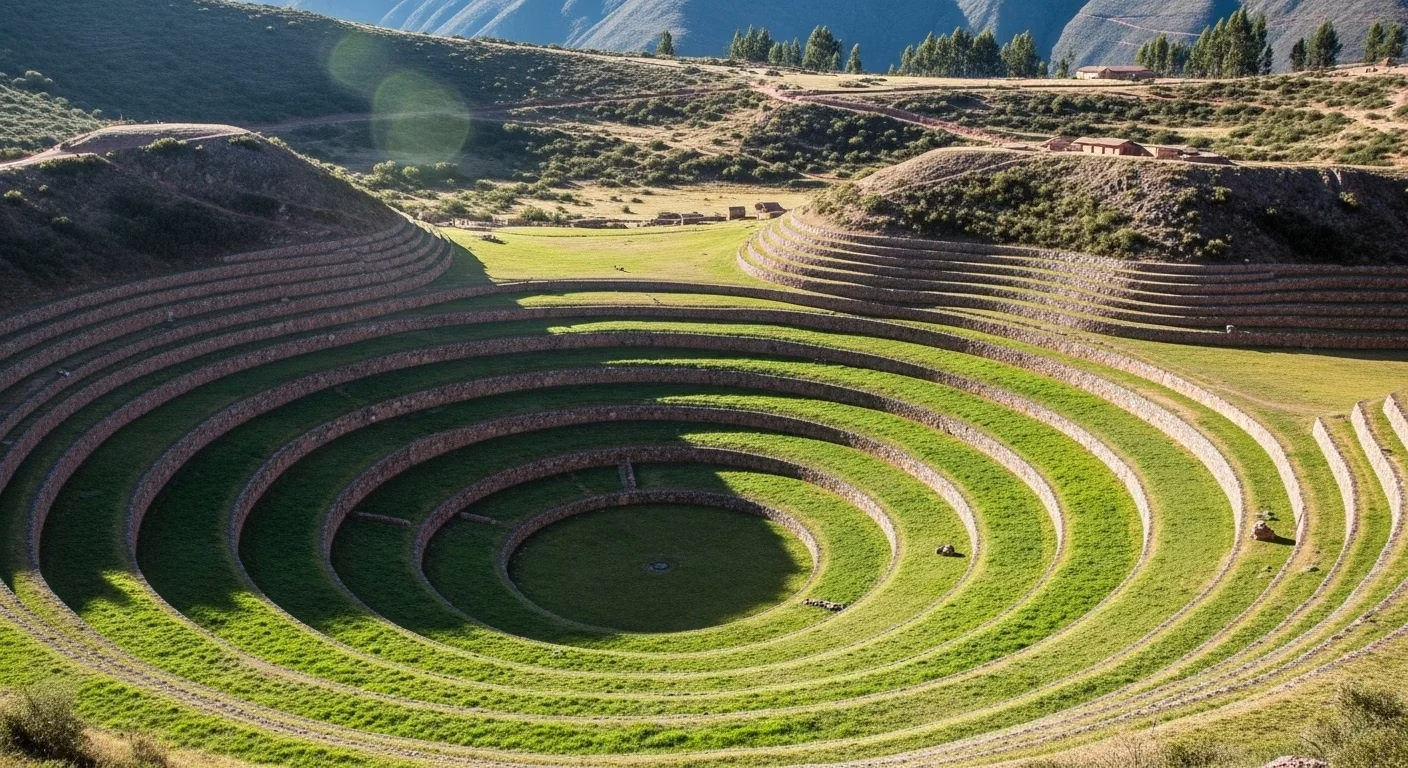
What is remarkable about the Moray ruins Peru is that they reflect the scientific achievements of the Incas. Machu Picchu demonstrates their architectural achievement and the Moray archeological site Peru clearly shows their agricultural ingenuity. The Incas created terraces which resulted in microclimates and the Incas’ ability to test over 250 crop varieties. For historians, it shows that Peru Moray was not ceremonial. It was critical to the existence of the empire.
Key Moray Peru Facts You Should Know
Some of the most interesting Moray Peru facts are as follows:
-
-
The temperature difference from the top terrace to the bottom terrace can be 15 °C.
-
The Moray complex Peru may have had climates from various regions within the Andes time periods.
-
The Inca ruins at Moray Peru had complex drainage systems in place to prevent erosion.
-
- These facts put some context as to why scholars indicate Moray Inca Peru was one of the most advanced agricultural places in the Americas.
Theories About the Moray Inca Ruins Peru
Many theories exist regarding the Moray Inca ruins Peru. Some theories insist the terraces were only agricultural, while others suggest that part of the purpose of Moray was ceremonial related to the symbols of fertility and other life cycles. The Moray circles Peru may have also been a representation of cosmic order as part of Inca cosmology. Legends even claim that Moray was the work of aliens, hence the term Moray Peru alien. Regardless of the meaning of the Moray, Moray remains one of the most investigated ruins in the Moray sacred valley Peru.
Spiritual Symbolism and Moray Peru Historia
In addition to the science, Moray Peru historia, demonstrates a culture that joins agriculture with spirituality. The terraces were presumably utilized for some sort of ritual to Pachamama (Mother Earth) for example, incorporating science with faith. Moray Inca ruins Peru had a dual role, they were used for practical harvest on an agricultural basis, but they also served a sacred purpose.
Moray Terraces Peru: The Inca Cultural Agricultural Field Laboratory
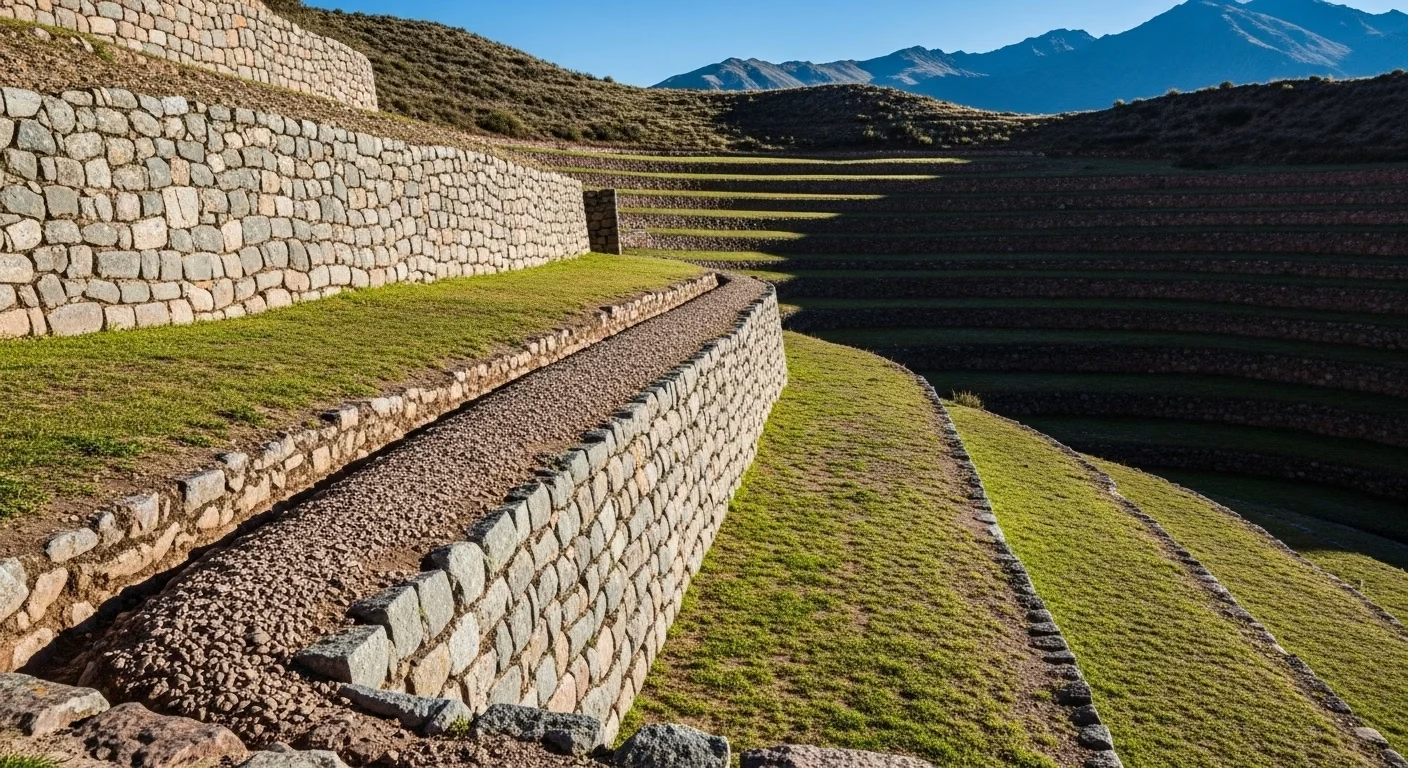
The Moray terraces Peru are often referred to as having one of the most distinctive archaeological features of the Inca civilization. Rather than the straight or rectangular terraces constructed in many other areas of the Andes, the Moray Peru terraces consists of a unique set of concentric circular terraces that descend into the earth resembling an amphitheater. Each of these terraces has its own microclimate, and together they allowed the Incas to replicate the growing conditions found in the various regions of their empire. Modern archaeologists regard the Moray Inca terraces Peru as one of the oldest and most advanced agricultural laboratories in the world.
In addition to their scientific role, the terraces have a cultural and spiritual component. The Moray complex Peru may have blended agriculture and ritual, with circular terraces representing cycles of life and fertility. It is this mix of functionality and symbolism that gives way to why Moray archaeological site Peru is remembered as one of the most admirable Inca ruins in Peru. For visitors today, exploring the terraces is not only a walk back in time, but also a continued lesson in sustainability and adaptation that holds wisdom today.
Engineering of the Moray Peru Terraces
The ingenuity of the Inca builders is evidenced with the engineering of the Moray terraces site in Peru. Each terrace is situated with stone walls placed strategically and filled with varying layers of soil and gravel, creating a drainage system for the terraces. The design inhibited erosion and landslides during rainy seasons, allowing for fertile and stable terraces. Researchers today are still amazed by the complexities of the agricultural site in Moray, Peru, which has withstood hundreds of years of elements while remaining intact.
The Moray terraces in Peru not only provide stability but were designed to mimic environments from other ecological zones. The Incas were able to create microclimates, allowing them to experiment with testing different crops such as maize, potatoes, quinoa, and other staple crops. This experimentation was severely important to the survival of the empire; the experiments allowed for the adaptation of crops to grow in the varying landscapes of the Andes. The engineering of the agricultural experimentations at Moray, Peru continues to inspire studies related to agriculture and climate change.
Microclimates in the Sacred Valley
One of the most remarkable aspects of Moray Peru is its potential to develop microclimates. The temperature variation between the upper and lower terraces can vary by as much as 15°C; therefore, in one small area, the Incas could duplicate the warm valleys and the cold highlands.
This is especially valuable in understanding ancient agricultural science, and that is precisely what makes the Moray archaeological Peru so important.
For today’s visitors, by walking around the terraces of Moray Inca Peru, one can experience the variations. The upper terraces can be warm and sunny; however, the lower terraces can be noticeably cooler. These variations explain why Moray is sometimes described as a “greenhouse of the Andes.” At the present time, investigators continue to examine the Moray complex in an effort to learn how it may teach us climate adaptation and sustainability in the present day world.
Unique Aspects of the Moray Inca Terraces Peru
In comparison to other Inca sites in Peru, the Moray Inca terraces Peru are distinct and immediately recognizable due to their circular design. For the most part, terraces in other parts of the Andes were rectangular, and their primary function was to maximize available agricultural land, on steep mountainsides. At Moray, the shape of the amphitheater has an intentional purpose, which amplifies temperature differences at multiple elevations, making crop experimentation possible. This is one of the reasons that the Moray Peru terraces are known to be more than ruins, but rather, a complex working laboratory of biodiversity.
What makes the Moray Inca terraces Peru very special too, is the legacy that remains. These terraces provide evidence of Incas harnessing nature for the purposes of both science and spirituality. This is one of the major legacies of the Moray archaeological site Peru to the intersection of world history and has greater significance to world data in that the legacy of the Incas relationship with nature is profound.
Twin Destinations in the Sacred Valley Maras and Moray Peru
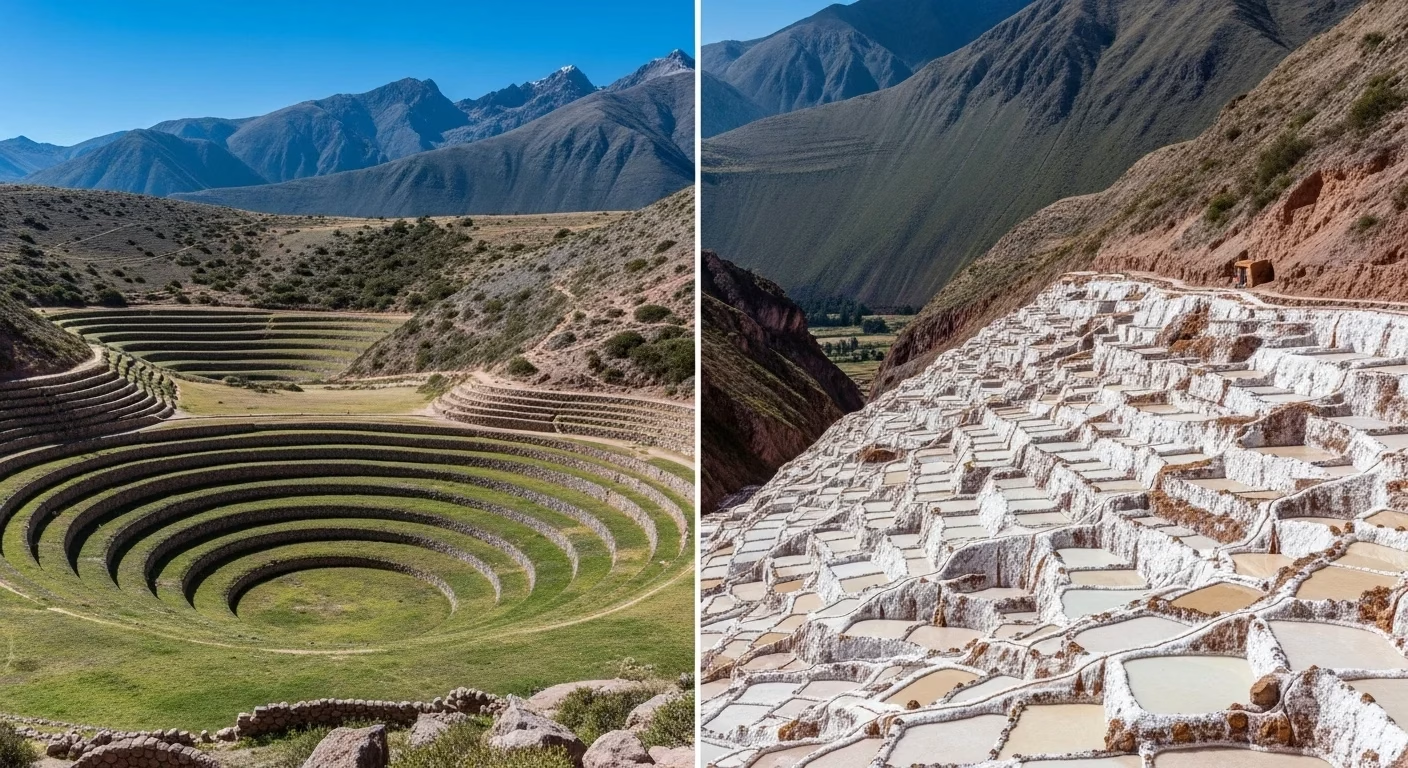
Many travelers that visit the Sacred Valley of Moray, Peru often combine their visit with the nearby Maras salt ponds, Peru. These have commonly become known as Maras and Moray, Peru (or Maras y Moray Cusco, Peru). Together, they provide a complete cultural experience. The terraces of Moray showcase the agricultural ingenuity of the Incas, while the salt ponds of Moras showcase an ancient, continued resource extraction process. Together, you could say, the tour of Moray Maras, Peru, and Maras, have become one of the more popular tours in the region of Cusco.
These experiences are visually appealing and culturally relevant. The white salt pools of Maras create a great contrast to the green fields of the Moray Peru terraces, sometimes called the Moray salt ponds, or Moray salt mines, Peru. The tours (i.e. Maras and Moray tour Peru, Maras and Moray tour from Ollantaytambo, Peru), allow travelers to experience two very unique aspects of Andean heritage in one trip.
The Maras Salt Mines Peru and Moray Salt Terraces Peru
The Maras Moray salt mines in Peru are notable as one of the oldest salt mines still in use today. Thousands of shallow pools contain mineral rich water that evaporates under the sunlight leaving pure salt crystals behind. Local families have been harvesting salt from these sites for centuries, keeping traditions that far predate the Inca Empire alive. This is another living heritage site where travelers can see the practice and add to their experience in the Moray Maras Peru circuit.
The salt mines along with the Moray Peru terraces offer a complete representation of how the Incas and local communities managed and harvested natural resources. The inimitable contrast between the bright white salt ponds and green terraces represents one of the best photography opportunities in Moray Peru pictures. Maras is a must for anyone on a Moray Peru tour to fully realize the wealth that the Moray Sacred Valley Peru holds.
Popular Maras and Moray Tours
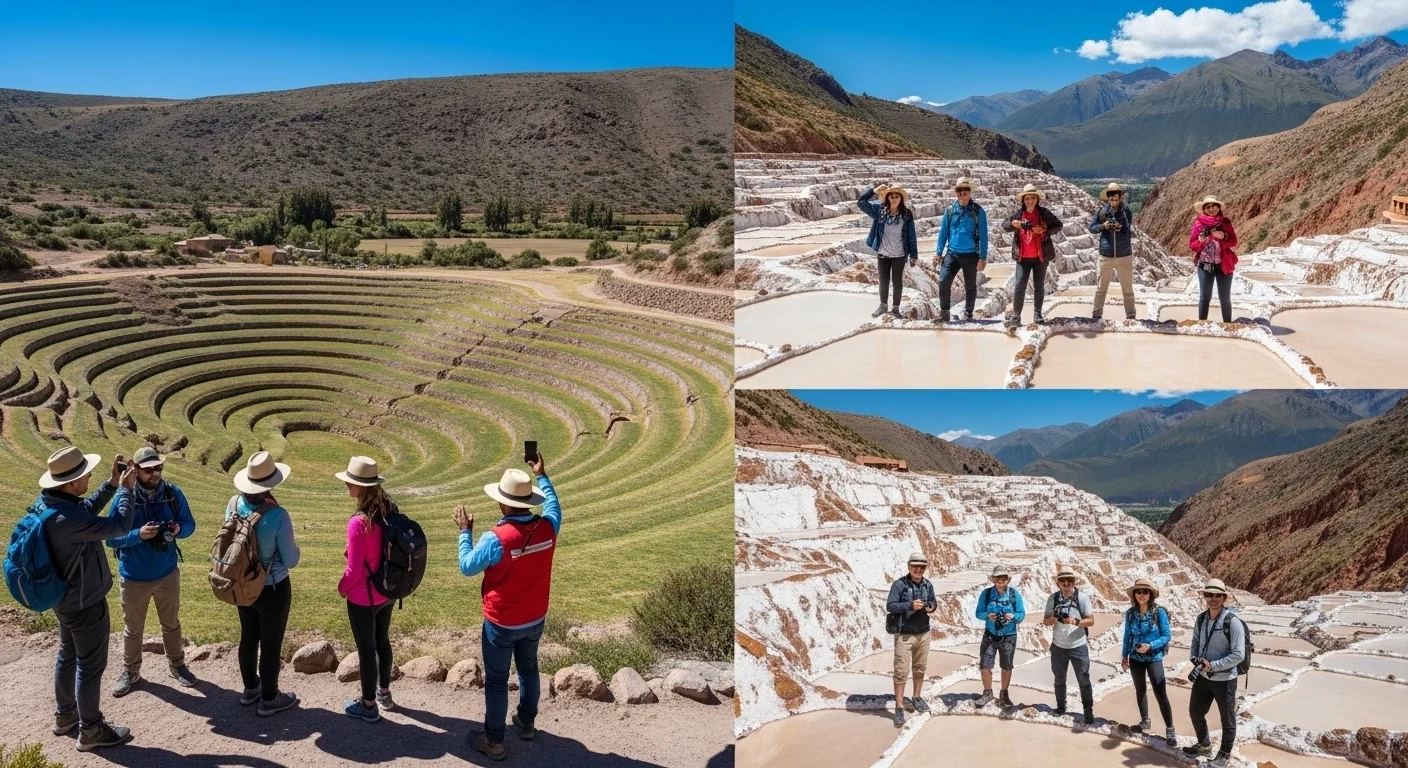
There are a number of ways to visit Maras and Moray Peru that vary by your travel plan. Travelers coming from Cusco will often book a Maras Moray Cusco Peru day trip, while those coming into the Sacred Valley on the way to Machu Picchu are more likely to visit on a Maras and Moray tour from Ollantaytambo Peru. Spanish speaking tour agencies will even use a combination of Maras y Moray Peru or Maras e Moray Peru when selling packages, which is indicative of the popularity of visiting Maras and Moray with international travelers.
All these trips have one thing in common, which is the excursion can show the way salt harvesting and agricultural experiments have co evolved. Whether you are on a group excursion or a private Maras and Moray tour Peru, you will experience this amazing combination of ancient science, living culture, and stunning landscape. This flexibility of options makes Moray and Maras Peru one of the easiest and more rewarding tours in the Sacred Valley.
Tour: Maras and Moray Tour from Ollantaytambo Peru, Maras Moray Cusco Peru, Maras y Moray Peru
Different variations of these tours provide slightly different perspectives. For example, a Maras & Moray tour departing from Ollantaytambo Peru is great for folks connecting their Sacred Valley journey to Machu Picchu. On the other hand, a Maras Moray Cusco Peru tour is the standard option for travelers based in Cusco. And for Spanish-speaking visitors, you’ll often see a variation labelled Maras y Moray Peru or Maras e Moray Peru, which is just a synonym and means the same place.
Regardless of which option you decide to go with, the outcome is the same. Seeing Moray and Maras in Peru together allows for a complete and memorable Sacred Valley experience. Not only do travelers see two awe-inspiring sites, but they also have the opportunity to better understand how the Incas were able to survive and thrive in such a difficult environment.
Frequently asked questions about Moray archaeological site, Cuzco
This is a historical archaeological site in the Sacred Valley, north of Cusco. Peru’s Moray ruins are known for its great concentric terraces sprawling downward into the earth in perfect circles. Some scholars believe the site served as an agricultural laboratory where the Incas could test various crops. The Moray archaeological site Peru was constructed in order to mimic different ecological settings, and it became an important site for producing food and agricultural experiments.
Today, the Moray Inca ruins Peru is one of the Sacred Valley’s most popular attractions. Many tours go to Moray as a combination with the salt pools of Maras, and is even marketed as Maras and Moray Peru, or Maras Moray Cusco Peru. If someone is looking to understand how the Incas had figured out how to cultivate and grow their environment, visiting Moray can be a great experience.
The altitude of Moray Peru is about 3,500 meters, or 11,482 feet, above sea level. The elevation of Moray Peru contributes to significant temperature variations between the highest and lowest terraces. Scientists have measured temperature changes of up to 15°C, which is part of the reason for the agricultural experimentation conducted at the site. The Moray terraces in Peru allowed the Incas to cultivate crops suited for the coast, the highlands, and even Amazonian conditions.
For travelers today, this elevation means it is important you prepare before taking a Moray Peru tour. The recommendation is to spend a few days in Cusco or the Sacred Valley prior to your Moray Peru exploration so that you can acclimate to this altitude. The altitude of Moray Peru is a part of the experience since it allows travelers to understand the difficulties ancient Andean farmland dealt with in past years.
The Moray terraces in Peru served as agricultural laboratories. The Incas built concentric terraces, each with its own distinctive micro-climate, to see how different crops would grow in different areas. The Moray Inca terraces in Peru became a living laboratory, centuries ahead of its time, for crops such as potatoes, maize, and quinoa at several elevations of the Inca Empire. The experimentation led to the spread of these crops to different areas of the Inca Empire.
Today when modern scientists study climate adaptation or sustainable agriculture, they look to Moray terraces for inspiration. For visitors, walking through the Moray complex terraces you can imagine the experience of entering a natural science museum. This very unique system of terraces, the internal micro-climates, and the systems of categorizations into pieces are some of the reasons Moray is said to be one of the most innovative Inca sites in Peru.
A tour of Maras and Moray in Peru often encompasses a visit to both the Moray ruins in Peru and the salt mines in Maras Peru, which are also called the Moray salt mines in Peru or the Moray salt terraces Peru, because they are usually visited with the terraces. The tour operators will promote things such as the Maras and Moray tour from Ollantaytambo Peru, Maras Moray Cusco Peru, or Maras y Moray Peru.
It is a meaningful cultural experience, weaving together the agricultural lab of Moray Maras Peru with the salt extraction process of Maras. The pairing illustrates the capacity of the Incas and their descendants to manage both food production and natural resources. Travelers often describe this circuit as one of the most worthwhile things they have done in Moray Peru and remain one of the most booked excursions in the Sacred Valley.
Definitely yes, it is worth visiting Moray Peru. The Moray ruins in Peru show people something different from other archaeological sites by providing visitors a unique view into Inca science and Inca spirituality. The ruins are not fortresses or temples; they are an advanced system of ecological engineering. The Moray archaeological site Peru exemplifies the ways that the Incas experimented with innovation while showing deep respect for nature.
For travelers visiting Moray means seeing the famous Moray Peru terraces, and also enjoying the beauty of the Moray Sacred Valley Peru. Many tours from Moray Peru have cultural stops with stops at local weaving cooperatives, beautiful scenic spots, or day trip lunches. If travelers combine Moray with Maras, their visits can have a greater variety and a more fulfilling and memorable day spent in one of the most wonderful areas of the Andes mountains.
Yes, there are ancient ruins in Moray. The concentric terraces are the Inca ruins at Moray Peru, and they are still one of the most innovative examples of Andean archaeology. While these Inca ruins are not fortifications such as Sacsayhuamán or Ollantaytambo, they are historically just as important. As a site that informed agricultural production and plant experimentation, the Moray Inca ruins Peru are an invaluable piece of the Inca story.
The Moray complex Peru is classified as one of the most distinctive Inca ruins in Peru, precisely because of its terraces and microclimates. So, when visitors experience a Moray Peru tour, they are not just walking among ancient stonework but rather stepping into a scientific history that once influenced the survival of the Inca Empire.