
Is the Inca Trail Dangerous? What Every Hiker Needs to Know Before Going
So, is the Inca Trail dangerous? Not in the way most travelers imagine. It is not an exercise in surviving nature, but neither is it a walk in the park. The dangers lie in the altitude, exhaustion, weather changes, and the rugged stony trail itself. However, with the right preparation and a qualified guide, the Inca Trail may well be among the safest hikes to Machu Picchu.
Is the Inca Trail dangerous?
People get two completely opposite views about the Inca Trail either it is an easy historical walk or a sort of survival lesson. Neither of the descriptions tells the whole truth about the situation.
The Inca Trail can be described as a highly regulated trekking route. Peruvian authorities control the number of daily permits, require guides, put park rangers on the trail, and provide other safety measures. In terms of safety infrastructure, this trail may be considered to be more advanced than many other hiking routes worldwide.
However, this is a four-day hiking trail in the Andes at altitudes of over 4,215 meters (or 13,828 feet). Weather changes quickly, the terrain is rough, and high altitudes affect everyone regardless of physical state. These risks are real, but most of them can be greatly reduced with proper preparation.
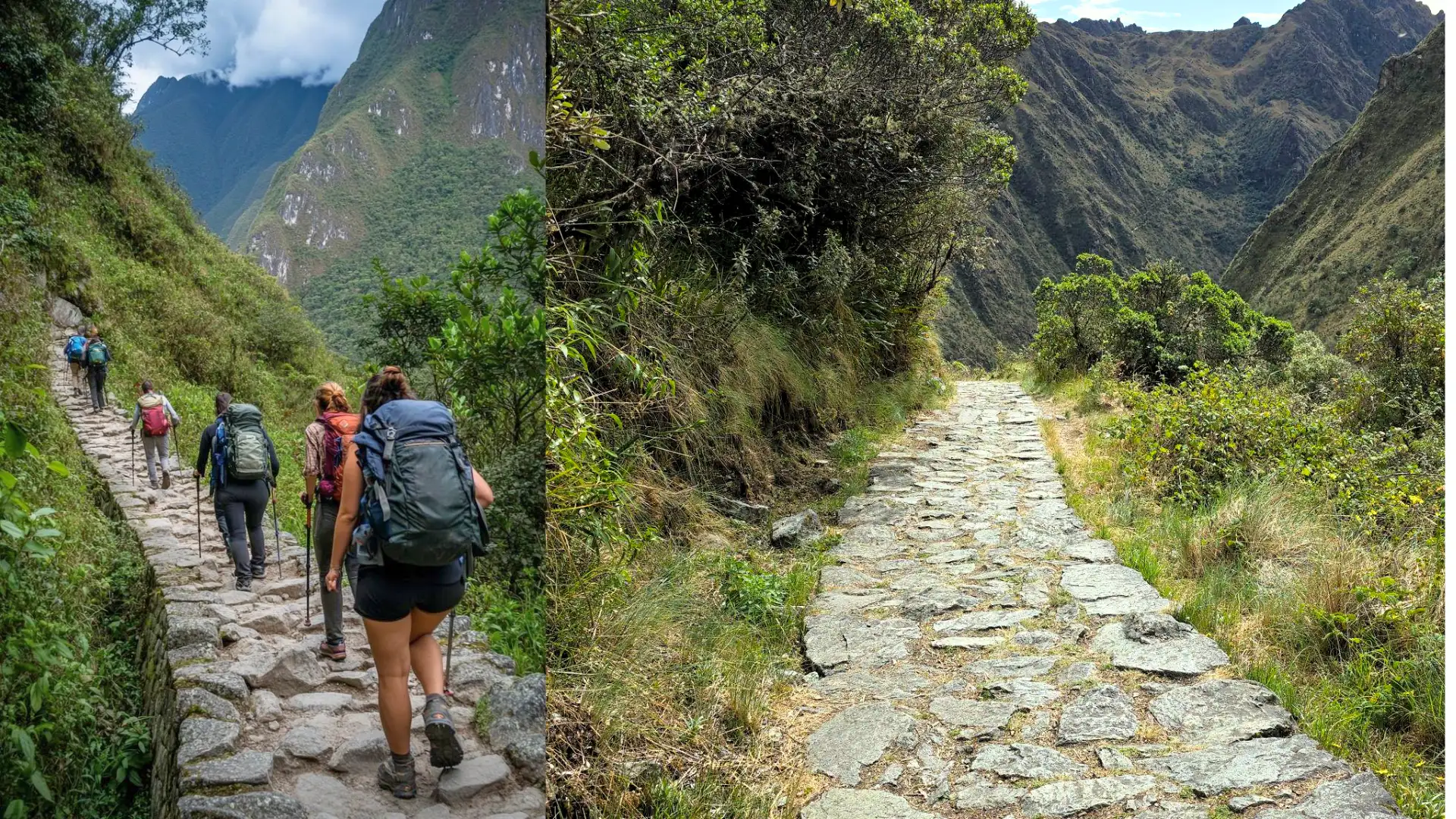
When people ask how dangerous is the Inca Trail compared to other famous treks, the answer tends to surprise them. Compared to Everest Base Camp, Kilimanjaro, or even some Patagonia routes, the Inca Trail has considerably more oversight, better emergency protocols, and a more consistent safety record. The challenge is real but it’s a known, predictable challenge.
The Inca Trail is considered to be relatively safe for hikers who are properly prepared. As long as hikers take into account all the risks involved, there should not be any problems.
The Real Risks on the Trail, Broken Down
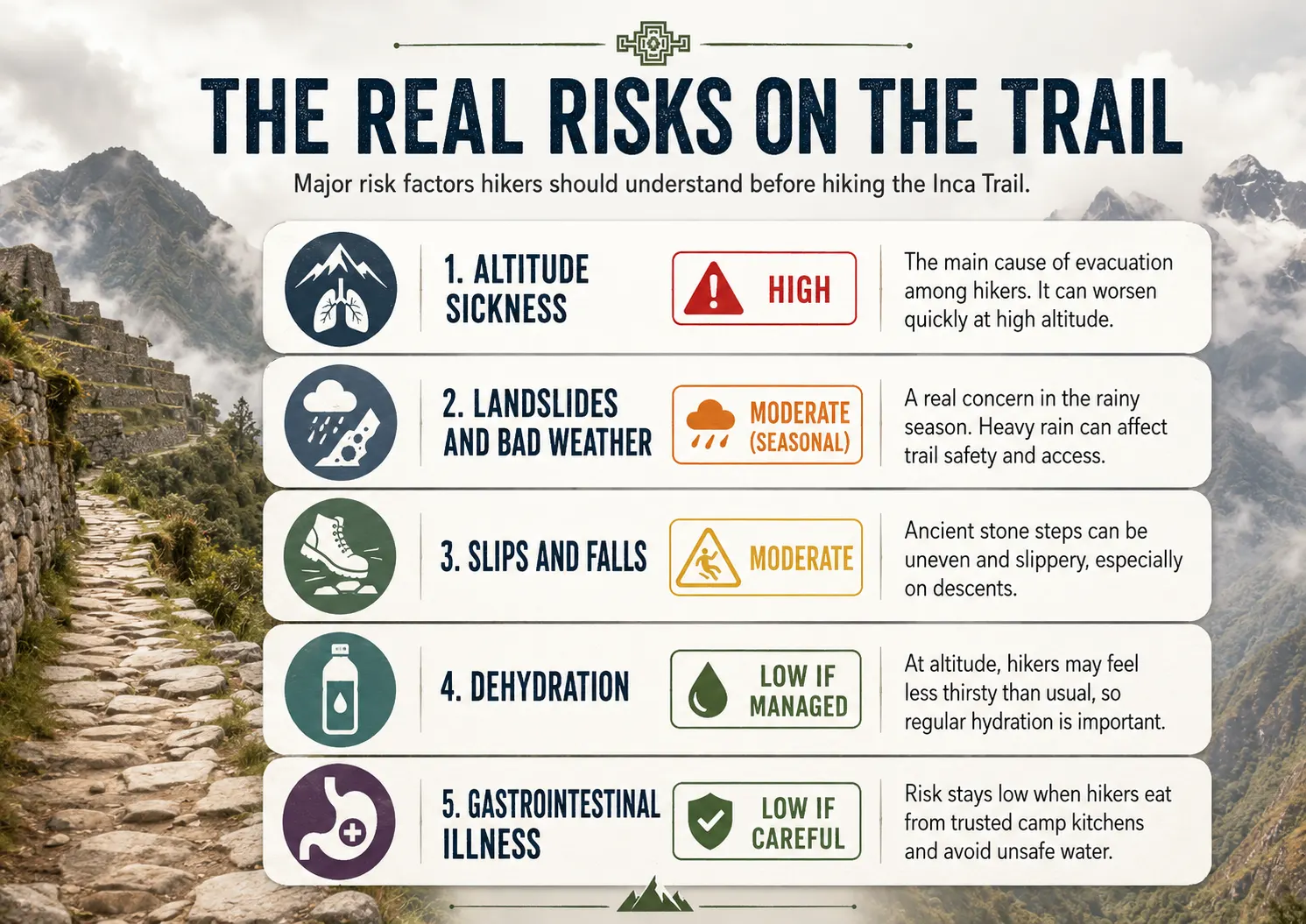
Instead of discussing risks in general terms, it is useful to discuss them by naming the risk factors and the likelihoods involved. Here is a list below of some major risks and their implications:
| Risk | Concern level | What to know |
|---|---|---|
| Altitude sickness | High | The main cause of evacuation among hikers. It progresses very fast. |
| Landslides and bad weather | Moderate (seasonal) | It is a genuine danger in the rainy season. The path will be shut down after landslide occurrences in the past. |
| Slips and falls | Moderate | The old stones are irregular and slippery when wet. Descending sections are where accidents occur. |
| Dehydration | Low if managed | Altitude makes you feel less thirsty than normal. Staying well hydrated at all times is necessary. |
| Gastrointestinal illness | Low if careful | You only eat from the camp kitchen and drink no tap water to reduce this risk to almost zero. |
Altitude Sickness: The Risk That Catches Most People Off Guard
From all the dangers that exist on the hiking route, altitude sickness is the one that affects most hikers. This is not because it occurs rarely; rather, it remains consistently underestimated by the majority. Altitude sickness has no preference. It does not matter whether you are exceptionally fit or an infrequent walker your chances of being affected by AMS are equal.
AMS (Acute Mountain Sickness) results when your body is unable to adjust quickly enough to low-oxygen levels at high altitudes. The maximum altitude reached on this hiking route is Dead Woman’s Pass on day two. At 4,215 meters above sea level, this is a serious altitude jump for most travelers.
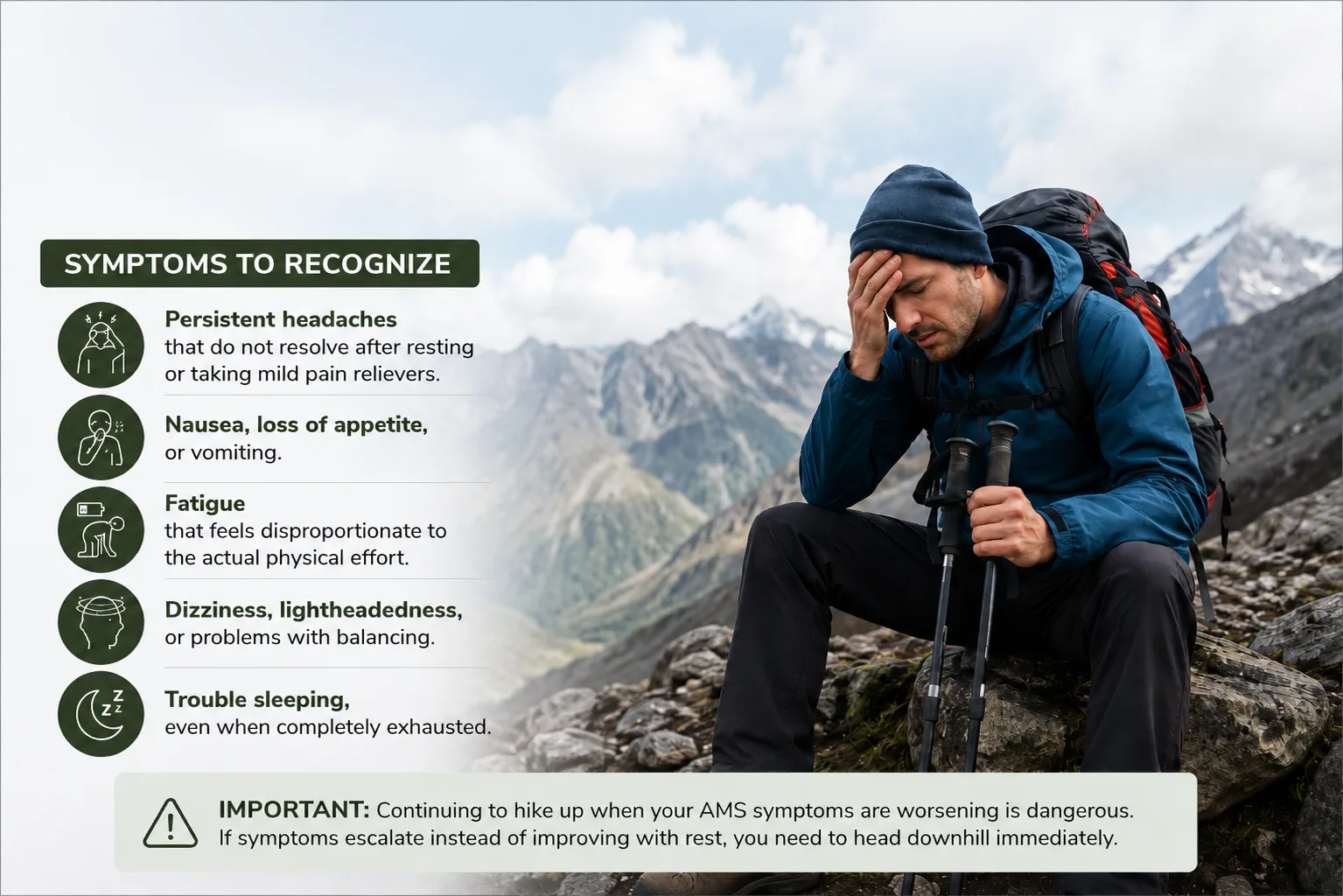
Symptoms to Recognize
- Persistent headaches that do not resolve after resting or taking mild analgesics.
- Nausea, loss of appetite, or vomiting.
- Fatigue that feels disproportionate to the actual physical effort.
- Dizziness, lightheadedness, or problems with balancing.
- Trouble sleeping, even when completely exhausted.
Untreated AMS can eventually lead to HAPE (High Altitude Pulmonary Edema), a buildup of fluid in the lungs, or HACE (High Altitude Cerebral Edema), a dangerous swelling of the brain. Both are rare but can arise from apparently minor symptoms quite quickly.
Note: Continuing to hike up when your AMS symptoms are worsening is one of the worst things a hiker can do. If your symptoms escalate instead of improving with rest, you need to head downhill immediately.
How to Prepare Your Body for Altitude
The most useful preventative step is acclimatization. Plan to reach Cusco at least two to three days before commencing the walk. Maintain a light schedule on the first day consisting of short walks, avoid alcohol consumption, and prioritize rest and hydration.
In addition, it is wise to consult your physician before traveling regarding Acetazolamide (Diamox), a medication used to accelerate acclimatization. While this drug does not totally prevent altitude sickness, it makes you considerably less susceptible to it. Many travelers in Cusco also drink coca tea, a traditional Andean infusion commonly used to help the body adjust.
Weather Hazards and the Best Time to Go
In four days, the trail crosses different climates, including alpine grassland, cloud forest, and subtropical regions. Depending on the region, the weather changes can be drastic; in some cases, an exceptionally warm morning could change to a chilly and rainy afternoon. Hikers who fail to prepare for such weather fluctuations might not cope well with the changes.
The most common weather-related risk is landslides. The slopes in the Andes are prone to slides whenever it rains continuously, and landslides have occurred along the trail before. There was a deadly landslide that happened at Pacamayo Camp in January 2020, causing the death of a porter and injuries to many others. This led to the immediate closing of the Inca Trail. One reason why SERNANP closes the Inca Trail every February is due to landslides.
| Season | Months | Conditions | Assessment |
|---|---|---|---|
| Dry season | Apr – Oct | Clear skies, cold nights, minimal rain. Best visibility and most stable trail conditions. | Ideal |
| Shoulder season | Nov – Mar | Rain begins to pick up but the trail is still hikeable. Fewer crowds can be an advantage. | Use caution |
| Rainy season | Dec – Jan | Heavy rain, slippery terrain, and elevated landslide risk. Doable but demanding. | Be prepared |
| Closed | February | Trail is closed for maintenance work. No entrance at all. | No entry |
The Terrain: More Challenging Than It Looks on Paper
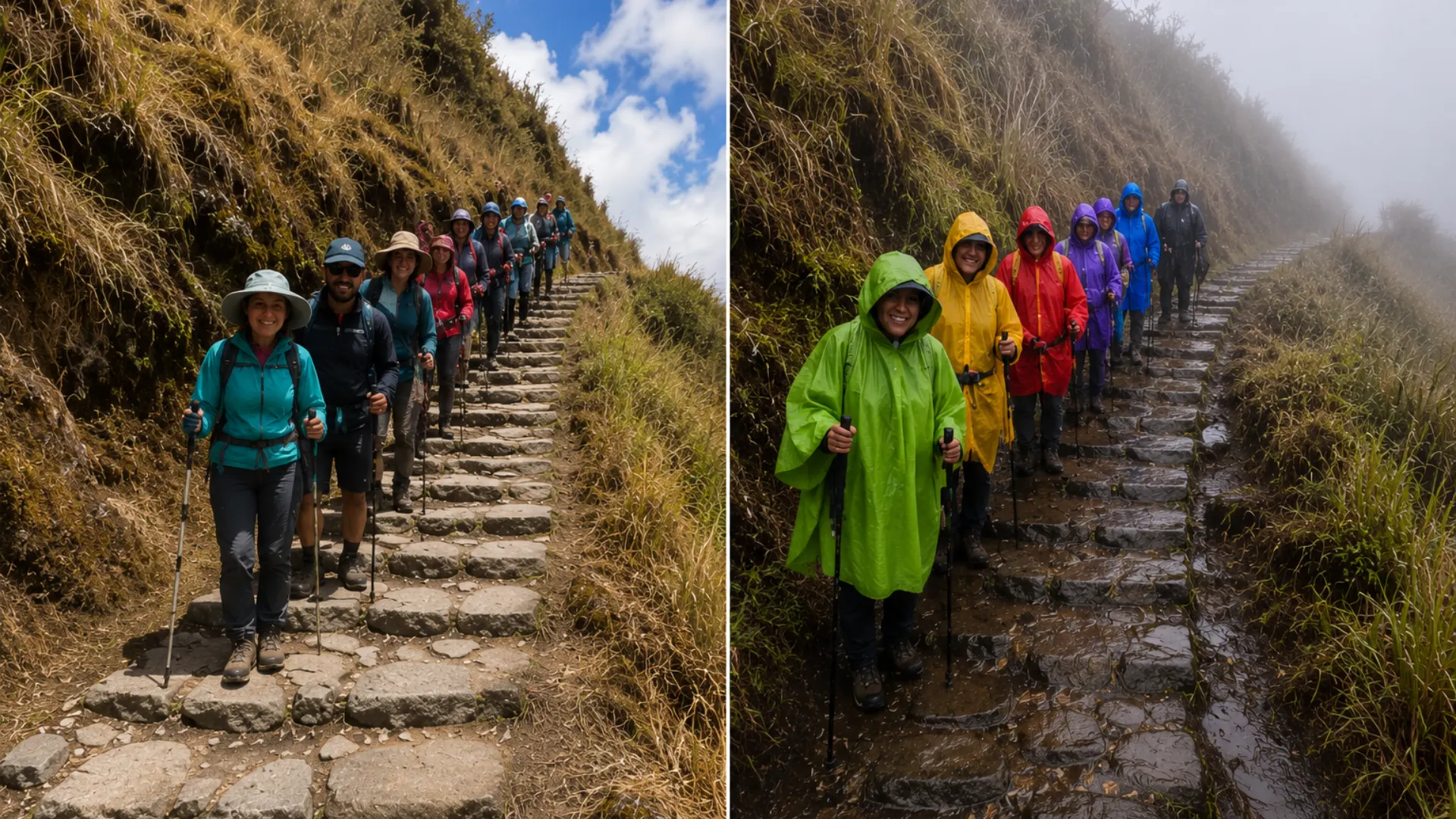
Hiking the Inca Trail is not an extreme climb. No climbing, no ropes, and no gear. Instead, what makes hiking on this trail difficult for many hikers is the vast number of ancient stone stairs. The Incas created this trail by building it right into the mountains, resulting in steep, uneven stone stairs that have been weathered smooth by the passing years.
Those who ask themselves is hiking the Inca Trail dangerous may be envisioning a high-altitude adventure. On the contrary, what makes hiking on this trail dangerous and risky is a lot more down to earth. Hiking downhill and the fatigue from your legs, as well as slippery stones, cause most sprained ankles, falls, and other injuries to occur. Day two of the hike is where many ankle twists and knee injuries occur.
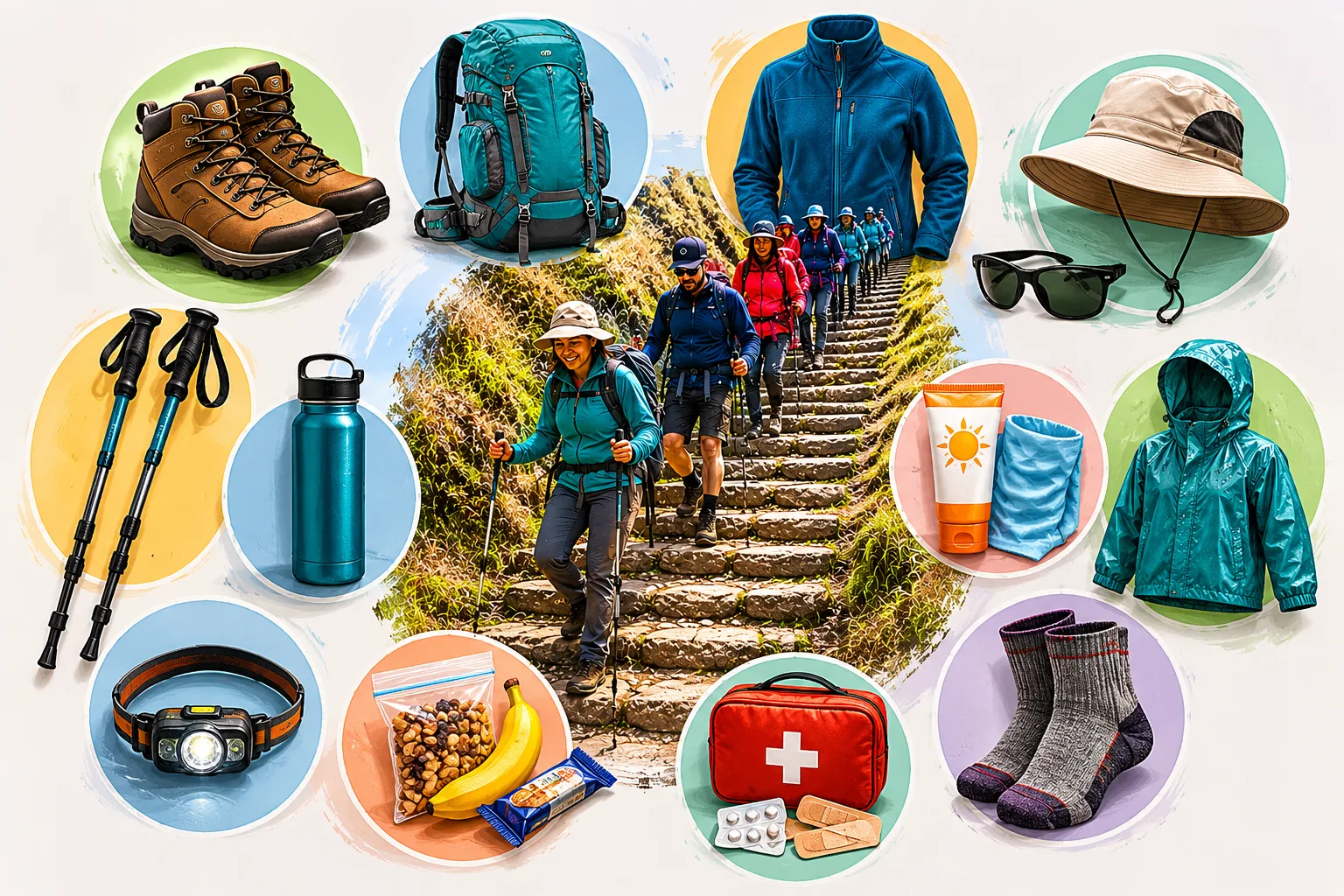
Gear that genuinely reduces injury risk
There are two items that deserve special attention. Firstly, trekking poles help reduce part of the load on your knees, especially during descents. They also improve balance on uneven terrain, which is important on the Inca Trail’s old stone steps. The absence of these poles causes regrets among many trekkers by the end of day two. Please note that metal-tipped poles are strictly prohibited to protect the ancient stones; they must be fitted with protective rubber tips.
Secondly, properly fitted hiking boots with ankle support. Trail running shoes are very comfortable to walk in but do not have the ankle protection needed when the feet slip on loose stones after a long march. No matter which shoes are used, they have to be well worn-in before going on a trek because wearing new shoes will surely result in blisters, and they will multiply each kilometer.
Regarding physical conditioning: the trek is roughly 43 kilometers long with a gain in elevation of about 2,350 meters within four days. Cardiovascular exercises conducted steadily for three or four months prior to the hike make a significant contribution to coping with high altitude and fatigue.
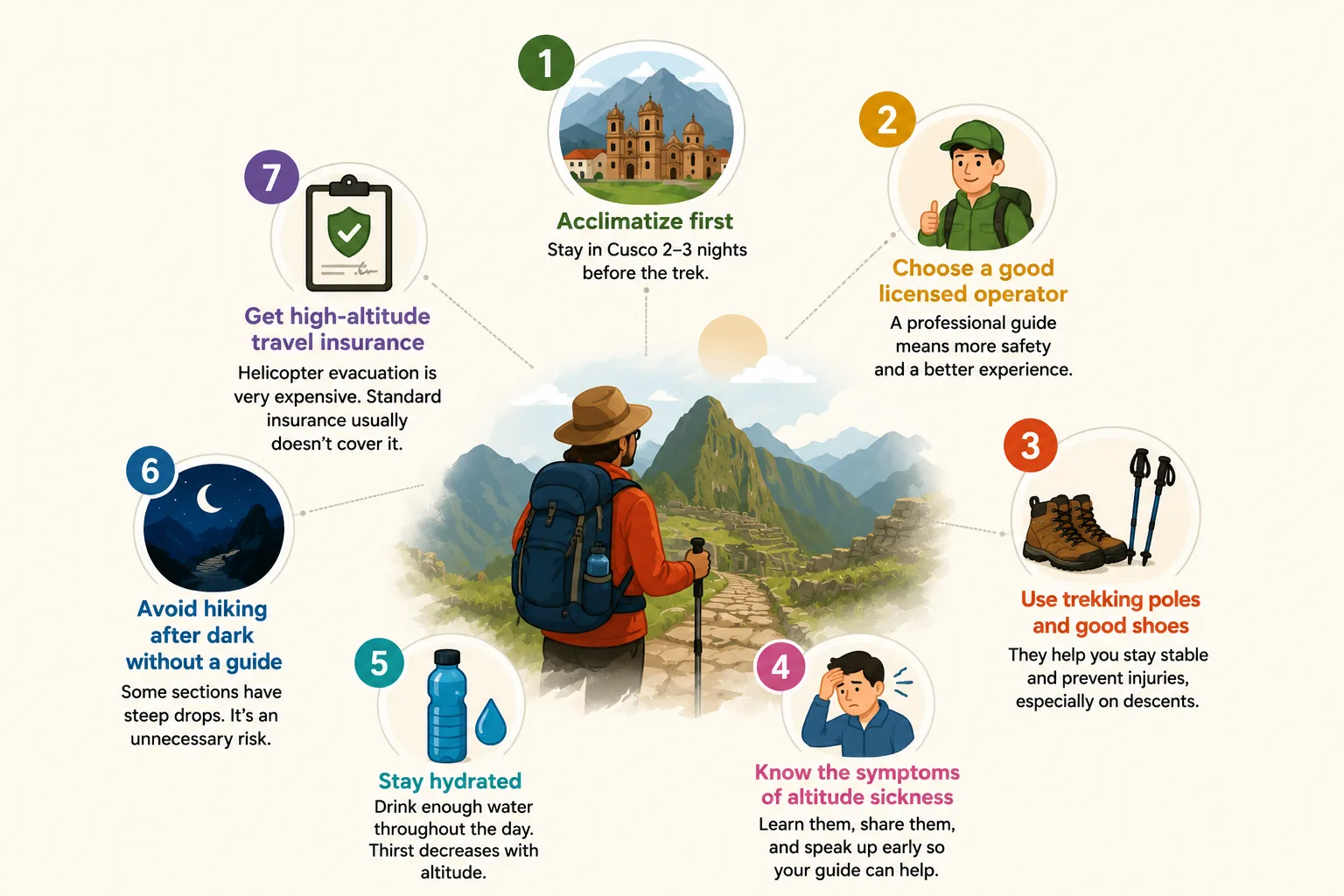
7 Safety Practices That Every Inca Trail Hiker Should Follow
These are not random recommendations; these are the particular things that distinguish an easy trip from a tough one:
- Acclimatize before beginning the journey. At least two or three nights in Cusco prior to the beginning of the trip is mandatory. One of the most frequently made mistakes when going through this hike is flying in and beginning the journey immediately afterward.
- Select a good licensed operator. The quality of the guide will serve as both a comfort and safety consideration. A professional guide will know what signs to look out for, how to pace oneself, and what to do in case of an emergency situation.
- Carry trekking poles and good hiking shoes with you. They will be especially helpful when descending, which is when injuries tend to happen.
- Become familiar with the symptoms of altitude sickness prior to arriving. Relay this information to your fellow hikers. It’s because of early detection and honesty that guides can assist before things become too severe.
- Consume sufficient amounts of water during your day’s activities. As you ascend, your body’s sensitivity to dehydration increases but your feeling of thirst decreases. Not getting thirsty until it is time implies that you’re already dehydrated.
- Avoid hiking after dark if you don’t have a guide with you. There are parts of the path that are very thin ridgelines at a height with a sheer drop. Doing it without a guide is needlessly risky.
- Make sure you have adequate travel insurance for high-altitude evacuation. High-altitude evacuation by helicopter is very costly. Regular travel insurance will not pay for it. Make sure of this beforehand.
Frequently asked questions about Is the Inca Trail Dangerous? What Every Hiker Needs to Know Before Going
The descent from Dead Woman’s Pass on day two is the section most commonly associated with injuries steep, uneven steps that are particularly demanding on the knees and prone to slipping when wet. The area around Runkurakay Pass on day three is another altitude-exposed stretch that warrants a slower, more deliberate pace.
Yes, meaningfully so. Rain makes the stone steps slippery, turns sections of trail muddy, and raises the risk of landslides along exposed hillsides. The dry season (April through October) offers the safest and most comfortable conditions.
Yes, the classic 4-day Inca Trail is safe for beginners, provided you have average physical fitness and prepare well. The main challenges are the steep stone steps and high altitude (up to 4,215 meters/13,828 feet), rather than technical climbing.
The biggest safety risks on the Inca Trail are altitude sickness, accidental falls, landslides (especially during the rainy season), and exposure to extreme, rapidly changing weather. Because of the trail’s remote location in the Andes, professional medical care and emergency evacuations can be difficult and time-consuming to arrange
To stay safe on the Inca Trail, you should prioritize sturdy hiking boots with good ankle support, adjustable trekking poles for stability on steep stone stairs, and layered, moisture-wicking clothing to manage unpredictable mountain weather.