Highest Mountains in Peru: The Tallest Peaks to Climb
Peru is not only a trekking destination; it is a high-altitude mountaineering destination. Peru is home to ranges of the Andes Mountains that cut across it from north to south. There are glaciated peaks above 6,000 meters.
If you’re interested in some real altitude and some real alpine terrain, these are the mountains that establish Peru’s climbing reputation. This guide also answers common search questions like what is the highest mountain in Peru and what’s the highest mountain in Peru, while keeping the focus on the peaks that matter most to climbers.
Highest Mountains in Peru: A Quick List of the Top Peaks
Some of the highest, most spectacular peaks in the Andes are found in Peru. The following list presents the highest mountains in Peru in ranking order of height, with specific information on location, mountain range, and general climbing profile. If you’re looking for the 5 highest mountains in Peru, this section gives you a straightforward overview of the peaks that define Peru’s high-altitude landscape.
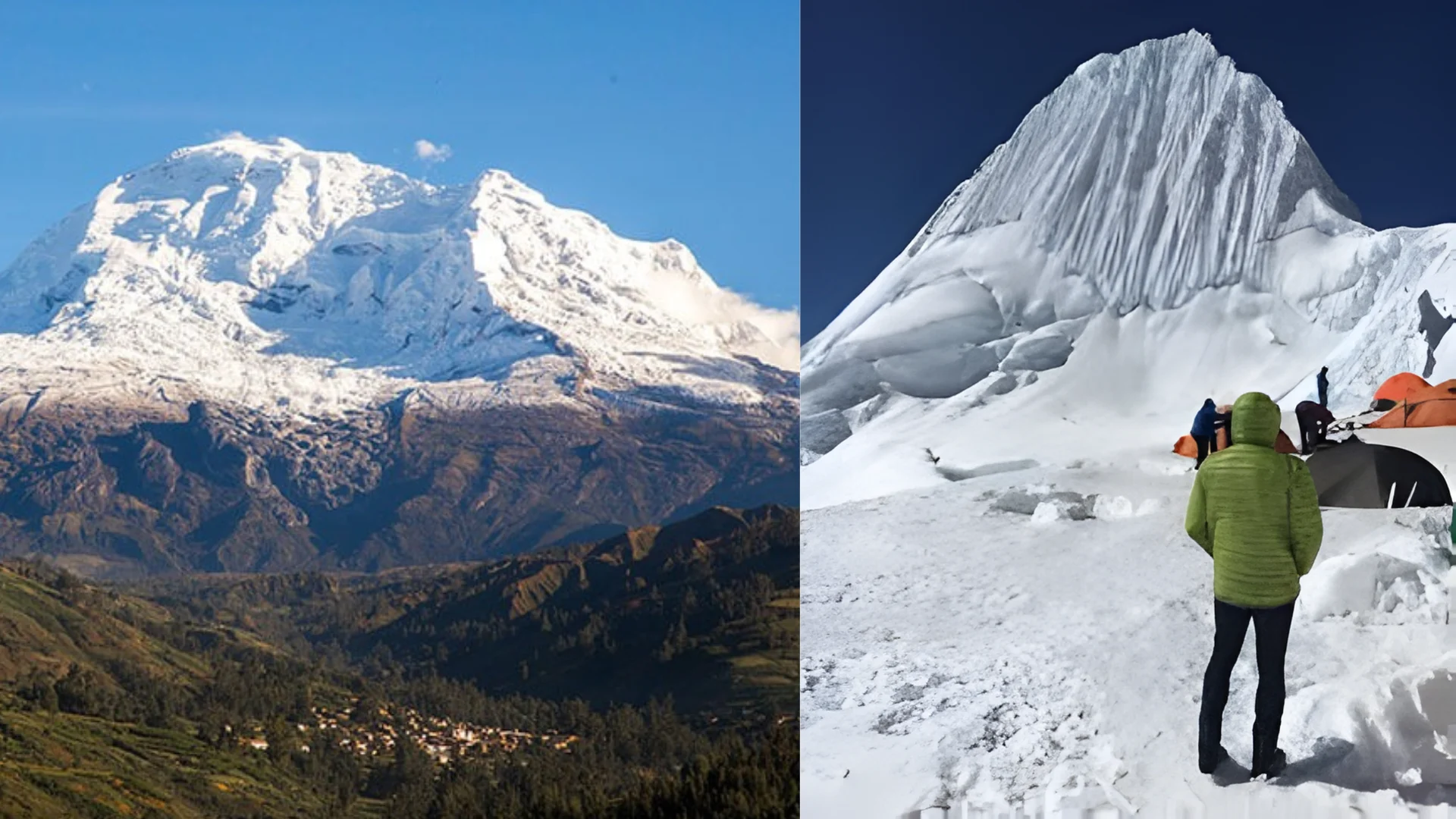
Huascarán (6,768 m / 22,205 ft)
Huascarán is the highest mountain in Peru and the fourth highest in South America. It is found in the Cordillera Blanca with two peaks, with the South Summit being the highest.
If you’re searching for the highest mountain peak in Peru, Huascarán is widely recognized as the highest mountain in Peru, reaching 6,768 meters, and it’s also frequently searched as the highest mountain in Peru in feet at 22,205 ft.
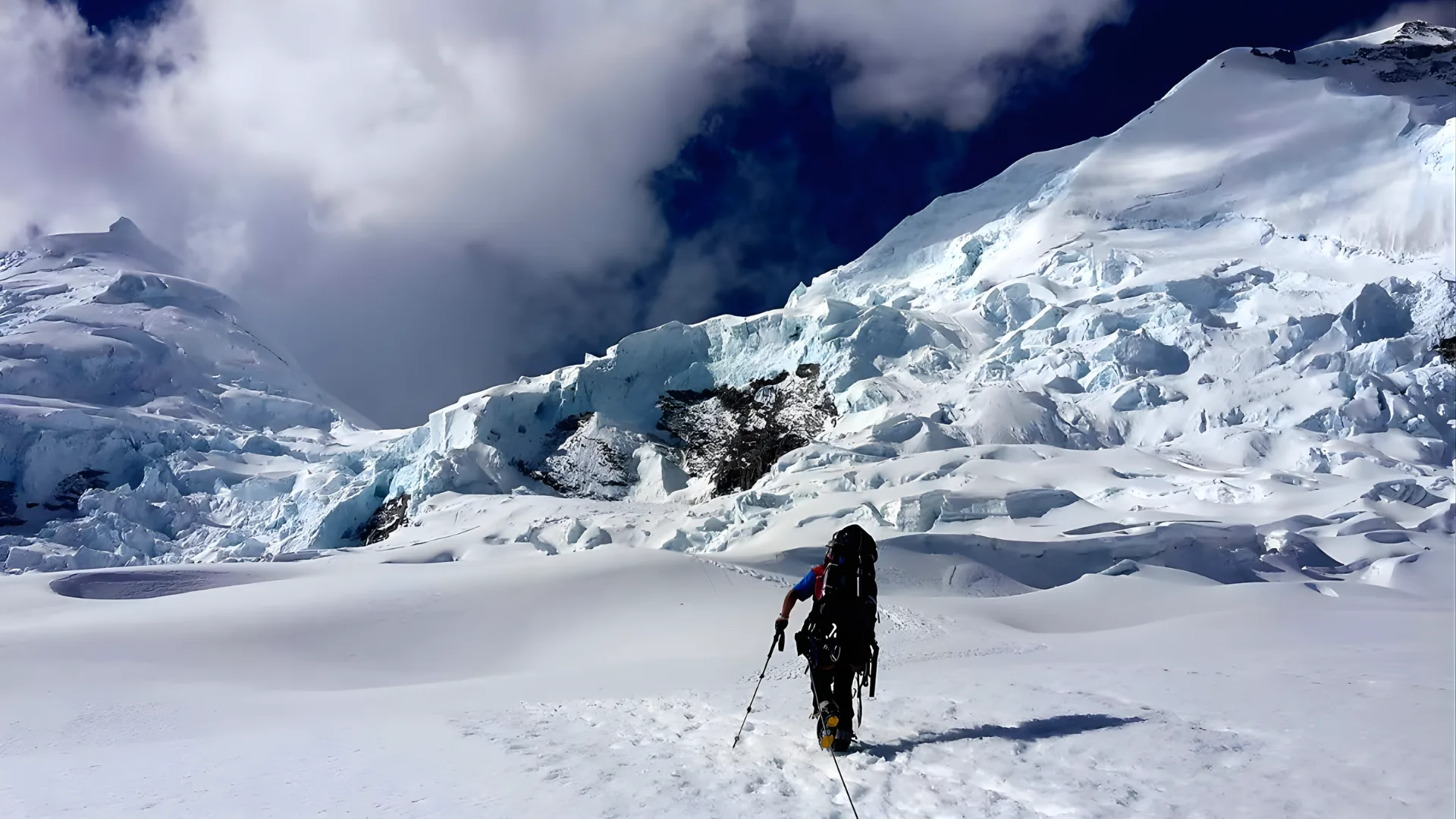
Huascarán is above all a high-altitude glacier ascent. The terrain consists of crevasse fields, steep snow slopes, and a long summit push which puts a great demand on physical endurance and oxygen efficiency.
Key Data
- Elevation: 6,768 m (22,205 ft)
- Location: Áncash Region, within Huascarán National Park
- Mountain Range: Cordillera Blanca (Andes)
- Mountain Type: Glaciated granite massif
Why it’s difficult: Extreme altitude, complex glacier travel, and long summit days above 6,500 meters.
Yerupajá (6,635 m / 21,768 ft)
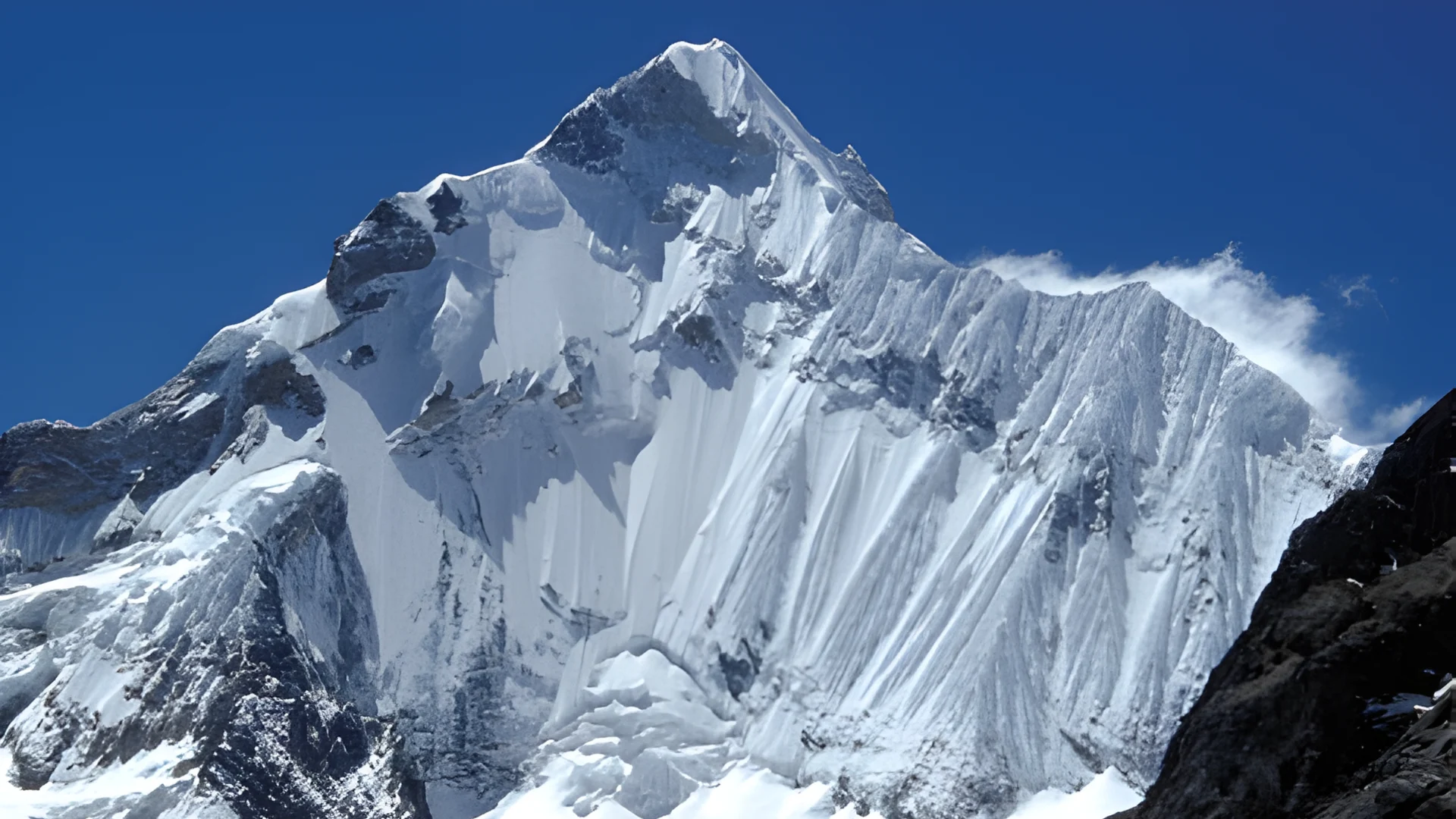
Yerupajá dominates the Cordillera Huayhuash and especially in the greater sense, is regarded as the technically most difficult peak in Peru.
Unlike Huascarán, which is primarily a high-altitude glacier climb, Yerupajá involves steep alpine faces, exposed ridges, and complex route-finding.
Key Data
- Elevation: 6,635 m (21,768 ft)
- Location: Áncash Region
- Mountain Range: Cordillera Huayhuash
- Mountain Type: Technical alpine peak with glacier and mixed routes
Why it’s challenging: Steep terrain, exposure, objective hazards, and very few successful summit attempts compared to other Peruvian peaks.
Coropuna (6,425 m / 21,079 ft)
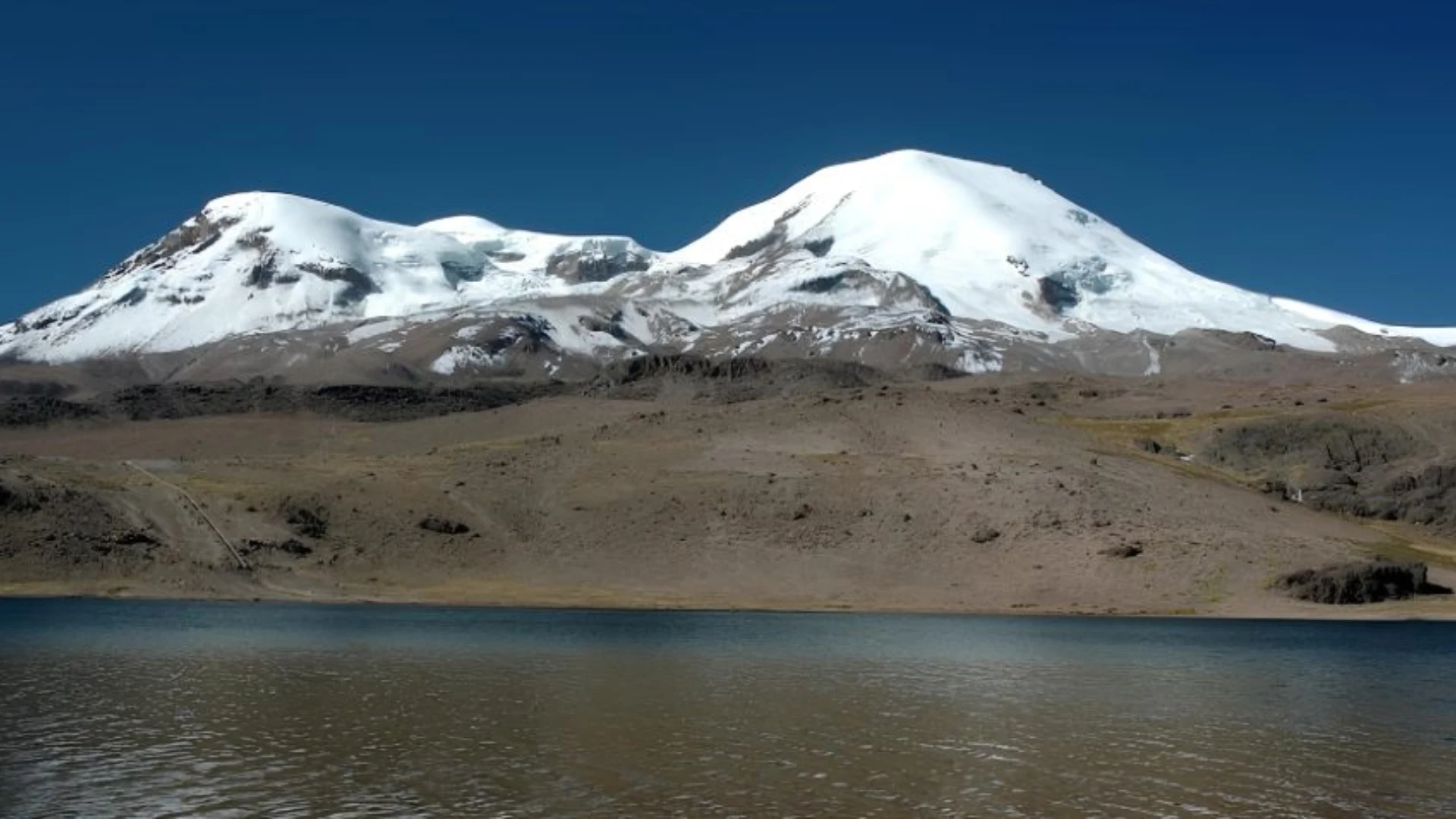
Coropuna is the highest volcano in Peru and one of the largest volcanic massifs in South America.
While technically less steep than Yerupajá, Coropuna is physically demanding because of long glacier approaches, strong winds, and sustained altitude exposure.
Key Data
- Elevation: Approximately 6,425 m (varies slightly by summit dome)
- Location: Arequipa Region
- Mountain Range: Cordillera Ampato (Volcanic Andes)
- Mountain Type: Stratovolcano / glaciated volcanic massif
Why it’s challenging: Endurance-based climb with high-altitude fatigue and cold exposure.
Ausangate (6,384 m / 20,945 ft)
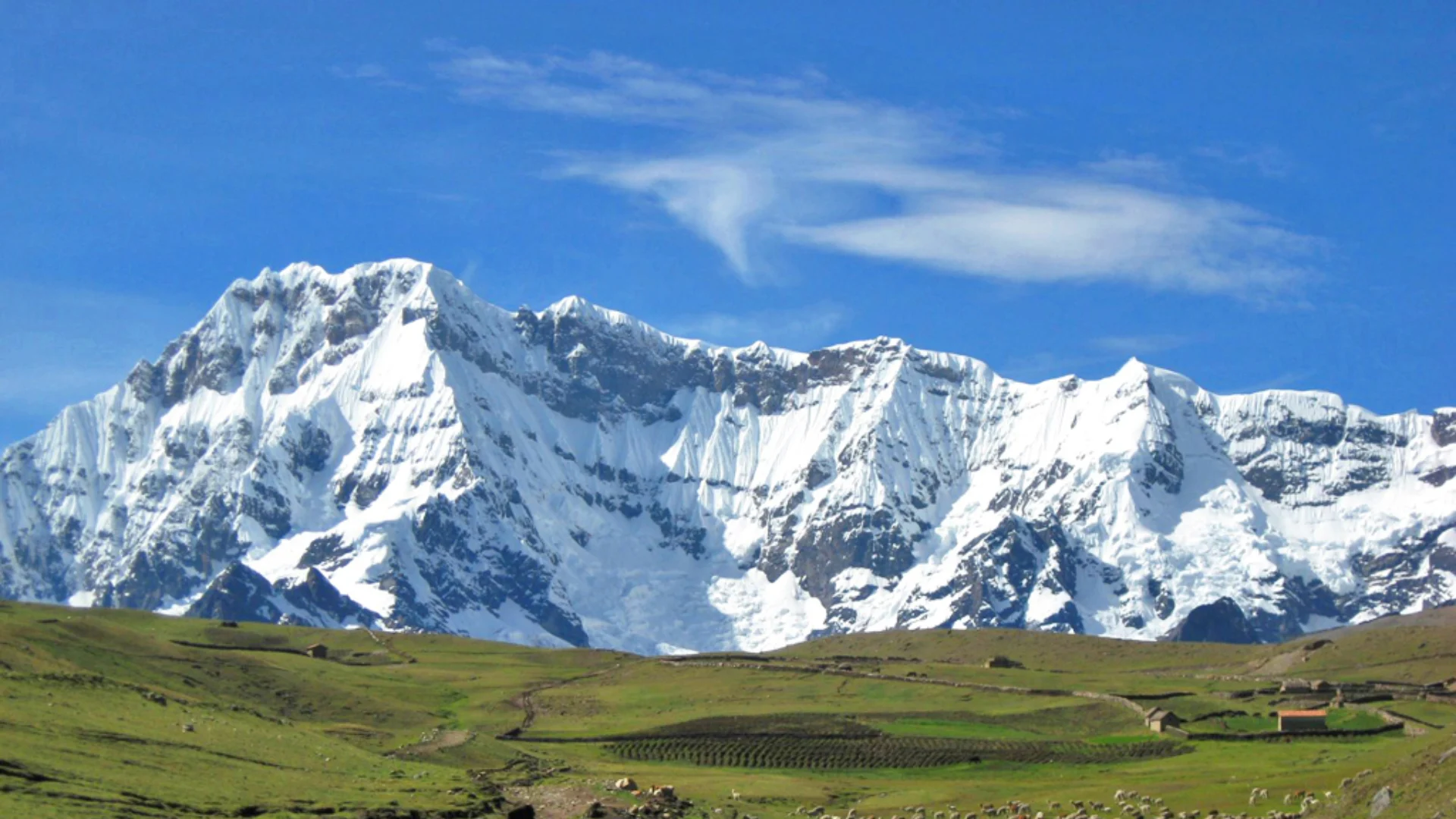
Ausangate is one of the most iconic mountains near Cusco, both culturally significant and geographically isolated.
Climbing Ausangate requires a good strong acclimatization and glacier skills. The weather can change very fast, and the winds are mostly open.
Key Data
- Elevation: 6,384 m (20,945 ft)
- Location: Cusco Region, southeast of Cusco city
- Mountain Range: Vilcanota Range (Andes)
- Mountain Type: Glaciated Andean peak
Why it’s challenging: Remote setting, extreme cold, glacier navigation, and long summit days.
Alpamayo (5,947 m / 19,511 ft)
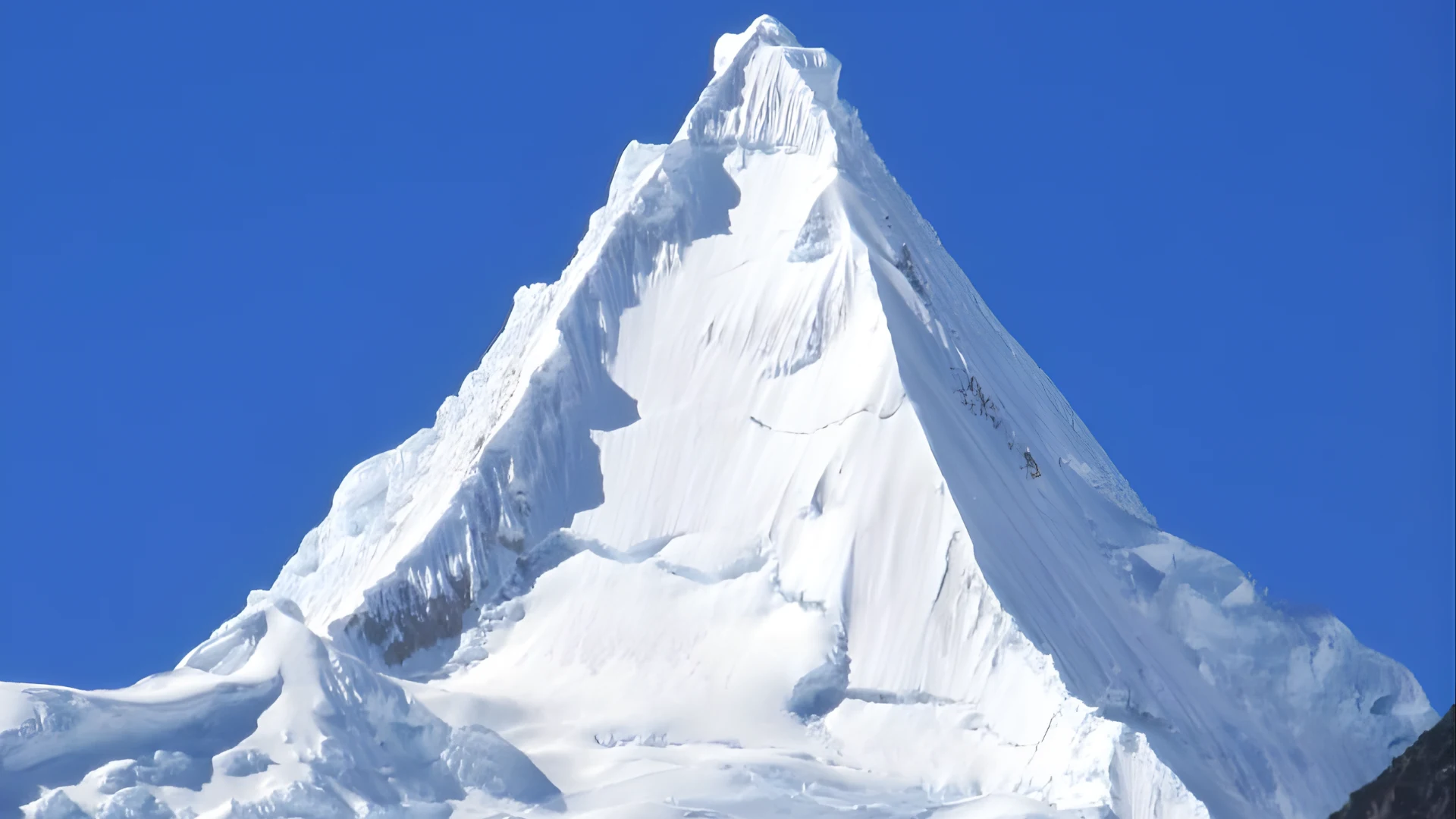
Alpamayo is considered to be one of the most beautiful mountains in the world. Its near-perfect pyramid shape hides steep ice routes that require precise technique.
Although slightly lower in elevation, Alpamayo can often be more technically challenging than these higher peaks.
Key Data
- Elevation: 5,947 m (19,511 ft)
- Location: Áncash Region, within Huascarán National Park
- Mountain Range: Cordillera Blanca
- Mountain Type: Steep glaciated pyramid peak
Why it’s challenging: Sustained 60–70° ice climbing, exposed ridges, and technical rope work at altitude.
What Makes Peru’s Highest Mountains So Difficult?
Peru’s highest mountains are not challenging for only one reason; rather, they are stacked upon each other with extreme altitude, glaciated terrain, fast-changing weather, and long summit days that push the body and mind. Sections below break down the key factors that make these peaks so demanding for even the most seasoned climbers.
Extreme Altitude
Above 6,000 meters, oxygen availability drops dramatically. Even accomplished climbers move more slowly, fatigue faster, and recover more slowly. Proper acclimatization is essential; without it, performance declines quickly and altitude-related issues become a real risk. If you’ve ever typed highest mountain in Peru meters, the number you’re seeing for Huascarán (6,768 m) is exactly why acclimatization matters so much.
Glacier Travel
Most of Peru’s highest peaks are heavily glaciated, meaning climbers must travel roped up across crevasse fields and navigate the snow conditions that are in constant change. They require solid glacier skills: rope management, basic crevasse rescue knowledge, and confident use of crampons and an ice axe on steep terrain.
Rapid Weather Changes
Weather changes may occur within short intervals in the high Andes territory. Calm and clear morning weather may change to strong winds, snowfall, and reduced visibility in as short as an hour. When weather conditions on the glacier worsen, route finding becomes more challenging.
Physical and Mental Endurance
Summit days can be long and grueling, with many teams starting as early as midnight, utilizing the firmer snow conditions. Summit pushes may require as much as 10-16 hours. It is not just a matter of physical endurance but also mental endurance, requiring decisions to be made and concentrations maintained while fatigued and under cold conditions.
Best Season to Climb
The principal climbing season is from May to September, during the Andean dry season. While the weather is generally more stable, it never is entirely predictable.
Note on High Passes
Many people searching mountain info also look up the highest mountain pass in Peru, since passes matter for road travel and high-altitude routes. That topic is a little different from Peru’s highest summits, but it’s part of the same reality: Peru’s geography is extreme, and altitude affects everything whether you’re crossing a pass by vehicle or climbing a glaciated peak.
Frequently asked questions about Highest Mountains in Peru: The Tallest Peaks to Climb
Huascarán is the highest mountain in Peru, reaching 6,768 meters (22,205 ft) in the Cordillera Blanca.
Most climbers aim for the dry season, usually from May to September, when conditions tend to be more stable.
For many of Peru’s highest peaks, yes. Most involve glacier travel and require skills like using crampons, an ice axe, and moving in a rope team.
Yes. Altitude affects everyone differently, and it’s common to feel symptoms if you ascend too fast. Proper acclimatization greatly reduces the risk.
Yerupajá is widely considered one of the most technically difficult major peaks in Peru due to steep terrain, exposure, and complex route conditions.