


South Korea Allocates S/. 100 Million to Strengthen Sustainable Development in Cusco
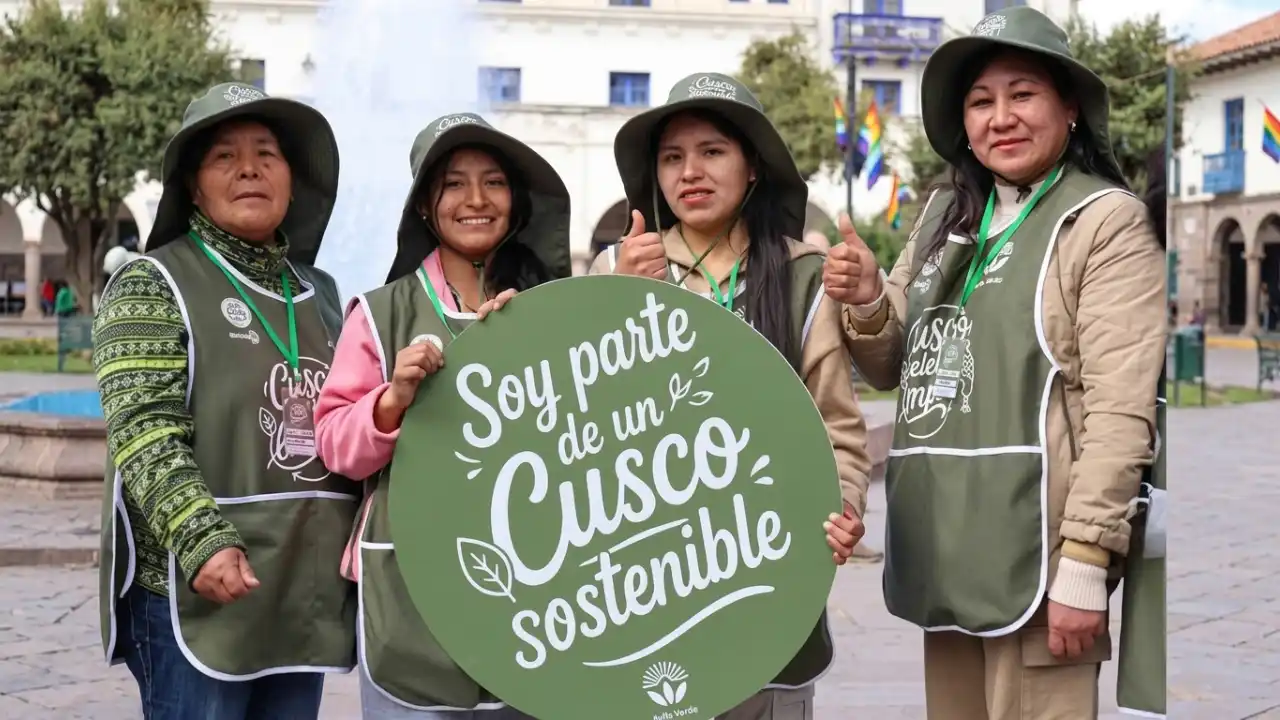

The South Korean government will strengthen sustainable development in Cusco through an investment of approximately S/. 100 million, aimed at environmental management initiatives, cultural heritage protection, and modernization of the region’s transportation system.
This cooperation comes in response to the accelerated growth of tourism in the area: in 2025 the region welcomed more than 3.7 million visitors, cementing its status as one of the country’s most important tourist destinations thanks to its main attraction, Machu Picchu.
Peru has been among South Korea’s priority countries for cooperation since 2011, with a focus on sharing development and innovation experience in areas such as public administration, health, mobility, and the environment. In Cusco’s case, these priorities translate into projects seeking economic growth that doesn’t compromise the preservation of heritage or the natural environment.
One of the central pillars of this joint effort is solid waste management, a problem that has worsened with the rise in tourism.
Since 2022, KOICA (the Korea International Cooperation Agency) has been carrying out an integrated organic waste management project together with the Provincial Municipality of Cusco, which includes pilot composting plants capable of processing and recycling approximately 80% of food waste.
This effort is complemented by “Ayllu Verde: Establishing a Circular Economy for Sustainable Tourism in the Cusco Region,” a project approved in 2025 and focused on the treatment of inorganic waste.
This initiative will be led by the Korean consulting firm PMC, in collaboration with UNESCO, the World Bank, and the Regional Government of Cusco. It includes the introduction of plastic recycling technology and capacity-building efforts in 12 districts across the provinces of Cusco and Urubamba to improve waste management.
In 2026, the project “Capacity Building for the Conservation and Management of the Machu Picchu World Heritage Site” will get underway, marking Korea’s first heritage cooperation program in Latin America.
The goal is to address one of the archaeological site’s main challenges: the progressive ground erosion caused by heavy visitor traffic, which in some areas reaches up to five centimeters per year.
Feasibility Study for a Railway to Chinchero Airport
Since 2024, South Korea’s Ministry of Land, Infrastructure and Transport has been working with Peru’s Ministry of Transportation and Communications on a feasibility study for a railway connecting the future Chinchero International Airport with the city of Cusco.
This proposal offers a modern transportation option that would ease travel for tourists and residents, reduce vehicle congestion, and lessen the environmental impact of tourism growth.
A Long-Term Partnership
South Korea’s ambassador to Peru, Jong-Uk Choi, noted that achieving sustainable development requires combining technology, technical knowledge, and local community participation, and that these projects aim precisely to bring Korean expertise to strengthen urban resilience, protect cultural heritage, and open up development opportunities for future generations.
With this investment of nearly S/. 100 million, South Korea reinforces its role as one of Peru’s most important cooperation partners in Cusco, backing a development model that combines innovation, sustainability, heritage protection, and a better quality of life for the local population.