


Remains of 38 high-ranking individuals from the Chimú culture discovered
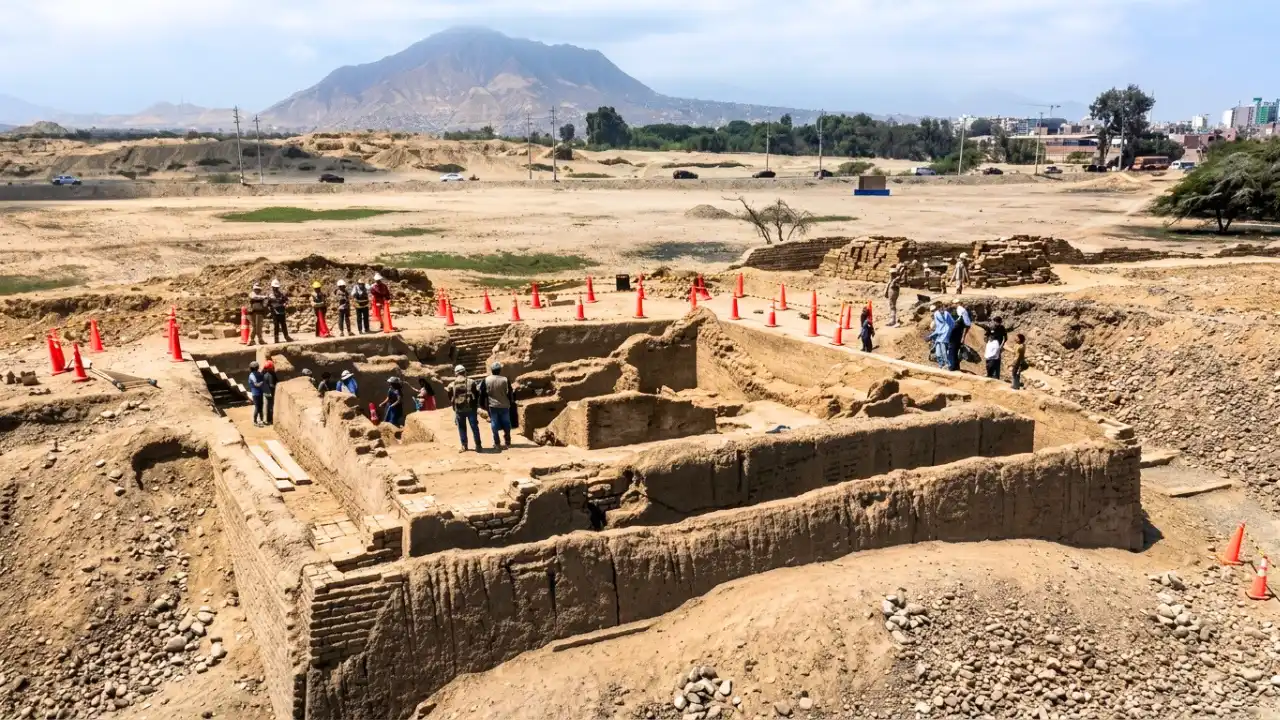

Archaeologists from the Ministry of Culture made a significant discovery at the Chan Chan archaeological complex, located in La Libertad, when they uncovered a burial platform containing the remains of 38 individuals who belonged to the elite of the Chimú culture. The tombs remained undisturbed for more than 600 years and were found within the walled complex of Utzh An, considered the largest within the entire archaeological complex.
This discovery is significant because it provides new insights into how the Chimú nobility conducted their burial rituals and demonstrates the value this culture placed on its leaders and high-ranking figures.
Chan Chan already had previous records of burial platforms and enclosures reserved for prominent figures, spaces that were also linked to rituals and practices of ancestor veneration.
This platform is located within Utzh An, a term that translates as “big house.” This walled sector dates to an early phase in Chan Chan’s evolution, between the 12th and 13th centuries AD, and features areas dedicated to ceremonial courtyards, audience chambers, storage rooms, and spaces associated with the funeral ceremonies of its rulers.
Experts maintain that the funerary structures at Chan Chan were not intended solely to house a single deceased individual. Previous studies have revealed the existence of primary platforms, lower-ranking platforms, and burial chambers, several of which contained pottery, metal objects, and wooden carvings that were placed with the deceased.
These findings provide a better understanding of the hierarchical distinctions and burial rituals characteristic of Chimú society.