


1544 Manuscripts Found in Cusco Change the History of Machu Picchu
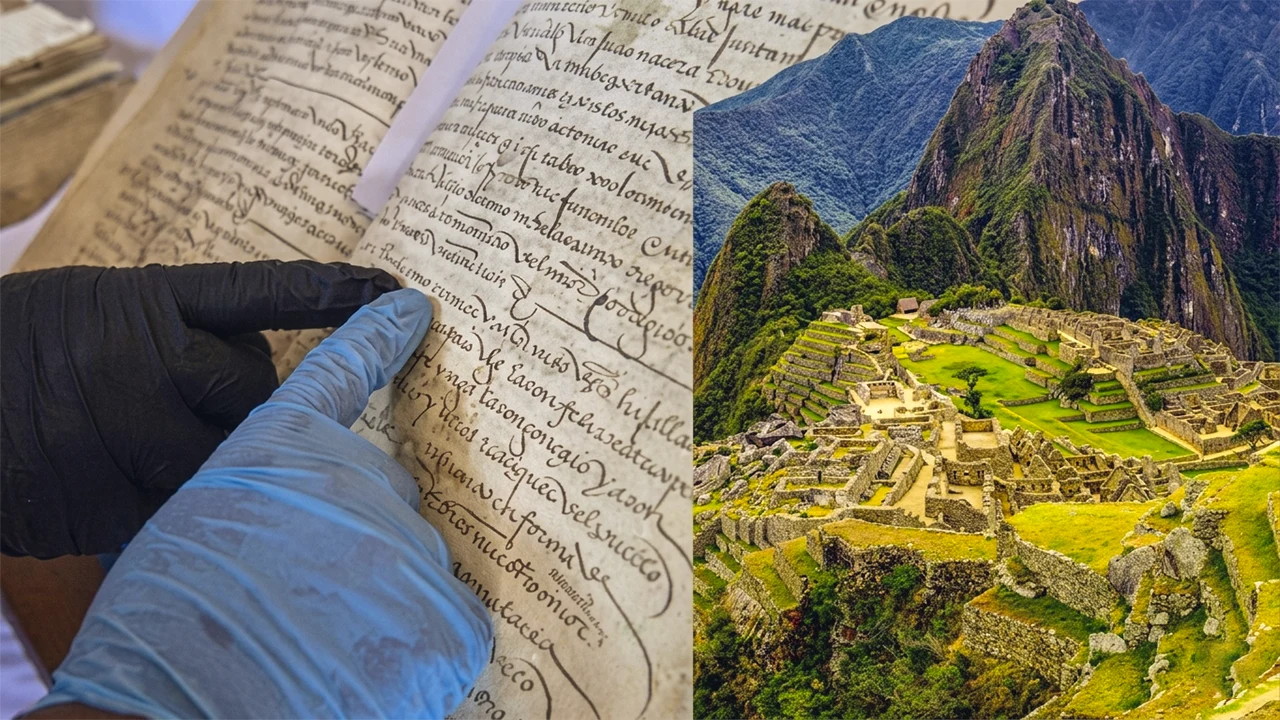

For many years, it was said that Machu Picchu was forgotten after the fall of the Tahuantinsuyo. According to that account, the world did not rediscover it until 1911, when Hiram Bingham arrived. However, new documents found in Cusco tell a different story. These old papers indicate that the citadel was indeed known in the early colonial period.
The discovery was made in the Cusco Regional Archive, where very old documents from the viceregal and republican eras are kept. A group of researchers found writings from 1544 and 1545. The word “Picchu” appears in them. Furthermore, that word is believed to be related to Machu Picchu. For this reason, experts believe these texts may alter a significant part of the history that has long been taught.
16th-century manuscripts mention Picchu
The documents are part of the so-called “calfskin books.” These books were given that name because their covers were made of calfskin. Although many centuries have passed, the archive still preserves them. Furthermore, the Fondo Educandas kept these papers within the Cusco archive.
Margaret Najaro and Ronald Camara led the research. Specialists in paleography and conservation also participated. Paleography is used to read ancient scripts. That is why this work was crucial. The manuscripts not only mention Picchu. They also provide clues about who lived near the site and how that territory was managed.
The director of the archive, Edwin Berduzco Torres, explained that the documents include testimonies from descendants of the Inca nobility. Among them is a grandson of the Inca Túpac Yupanqui. According to his account, Machu Picchu was an important place. Political, economic, and territorial decisions were made there. It was also a place of residence and production.
For this reason, the discovery challenges a widely held belief. Machu Picchu was not a city abandoned for 400 years. On the contrary, families and individuals managed that territory for a long time. Furthermore, the documents show that the site was valuable to the local people before it became famous in the 20th century.
Topus help us understand the territory
Another key aspect of the study is the “topus.” The Incas used these systems to divide and organize land. Today, they resemble “topos,” a method of measuring areas. Furthermore, they were used to organize zones for farming, residence, and administration.
The researchers aim to reconstruct how Machu Picchu was organized. To do so, they are reviewing entries in ancient books. They are also seeking to determine which families cared for or managed certain sectors. In this way, the documents can help draw a clearer map of the ancient Inca territory.
University of Prague to Support the Study
The Cusco Regional Archive is now coordinating with the University of Prague. The goal is to conduct a more thorough study of the area using modern technology. For example, this will involve satellite analysis and the digitization of the manuscripts. In addition, before digitizing them, specialists must stabilize the documents to protect them.
According to Berduzco, the books are in good condition. They also want the digital copies to have international legal standing. This would allow the information to be preserved and shared with more researchers.
Seeking to designate the books as cultural heritage
The Cusco archive aims to publish a comprehensive study. It also seeks to have the “calfskin books” designated as National Cultural Heritage and World Heritage. However, progress still needs to be made in that process.
In addition, the institution wants to include these manuscripts in a tourist and cultural circuit in Cusco. To do so, it will coordinate with tourism-related entities. Thus, the history of Machu Picchu would not only be seen in its stones. It would also be read in documents that have survived for nearly five centuries, and that raises new questions today.