Wiracocha: The Creator God of the Incas
Wiracocha is the most important deity in the Andean worldview. He is the creator of the earth, the heavens, the sun, the moon, and all living beings. He was the father of all the other Inca gods and the one who taught humankind the arts and skills of civilization. His cult and influence date back centuries before the rise of the Inca Empire.
Ancient civilizations such as Caral, the Chavín and Tiwanaku cultures, already honored him in their rituals and ceremonial worship. Despite his enormous symbolic importance, formal worship of Wiracocha was restricted, reserved mainly for nobles and priests.
Wiracocha represented the primordial creative divinity of the Andean universe.
Wiracocha in the Andean Pantheon
Wiracocha, or Huiracocha, is considered the supreme creator deity in Inca mythology and, more broadly, in the worldview of Andean peoples. His full name in Quechua, Apu Qun Tiqsi Wiraqucha, translates roughly as “Lord, primordial foundation of the universe” or “foam of the sea”; a name that reflects both his role as the absolute origin of all things and his symbolic connection to water, an element of vital importance to Andean cultures.
He is, above all, the Andean creator god par excellence: a supreme deity, invisible and abstract in nature. Worship of Wiracocha was largely confined to a handful of sanctuaries, mostly in the Cusco region, and he was most often invoked by the nobility, especially in times of crisis.
Wiracocha was the father of Inti (the Sun) and, according to some versions, also of Mama Quilla (the Moon) and Pachamama (Mother Earth).
As the Inca Empire grew, worship of the sun god Inti gained increasing prominence, since Inca emperors considered themselves “children of the Sun.” This gradually left Wiracocha in the role of a kind of divine “grandfather” — older and cosmically more powerful, yet less involved in the day-to-day affairs of the empire.
Epithets and Compound Names
Colonial-era records rarely mention this deity in isolation; his name is usually accompanied by epithets such as “Ticsi” and “Pachayachachic,” meaning “he who gives knowledge to the earth” or “maker of the world.”
These combinations produced names such as Con Ticci Huiracocha and Viracocha Pachayachachic.
Wiracocha, the Creator God
According to myth, Wiracocha first created a race of humans made of stone. This society of stone giants turned out flawed, so the god destroyed it with a great flood.
Afterward, Wiracocha created a second humanity out of clay, giving rise to the different Andean peoples and nations. To each group he gave its own language, clothing, songs, and customs, then sent them to emerge from underground, from rivers, caves, and mountains — the sacred places of origin known as pacarinas.
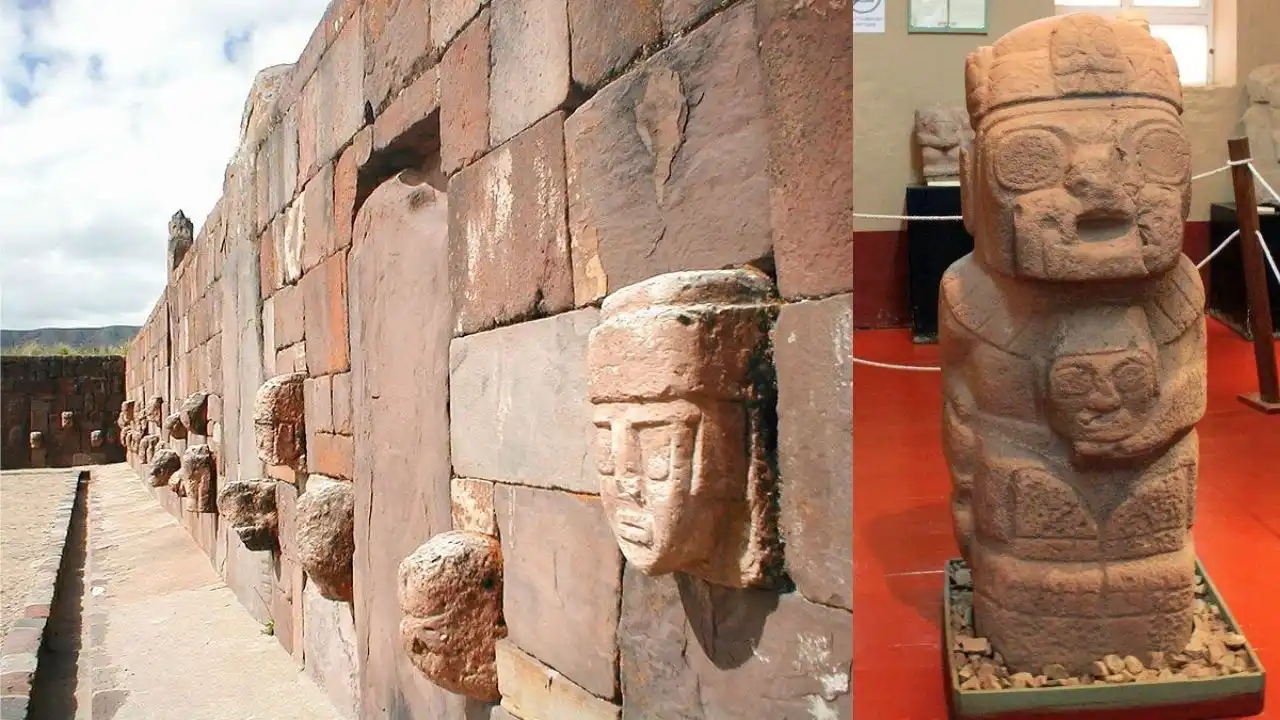
Some experts suggest that these “giants” correspond to the large stone monoliths found at sites such as Tiwanaku and Pukará (In Puno).
After creating humankind, Wiracocha traveled across the Andes teaching the region’s peoples techniques and knowledge in agriculture, astronomy, and other fields. According to the myth, he disguised himself as a beggar and took on other names, such as Con Ticci Viracocha and Atun-Viracocha.
He then journeyed west and vanished into the sea, promising to one day return to reclaim his rightful place as the supreme creator of the Andean world.
The Cult of the God Wiracocha
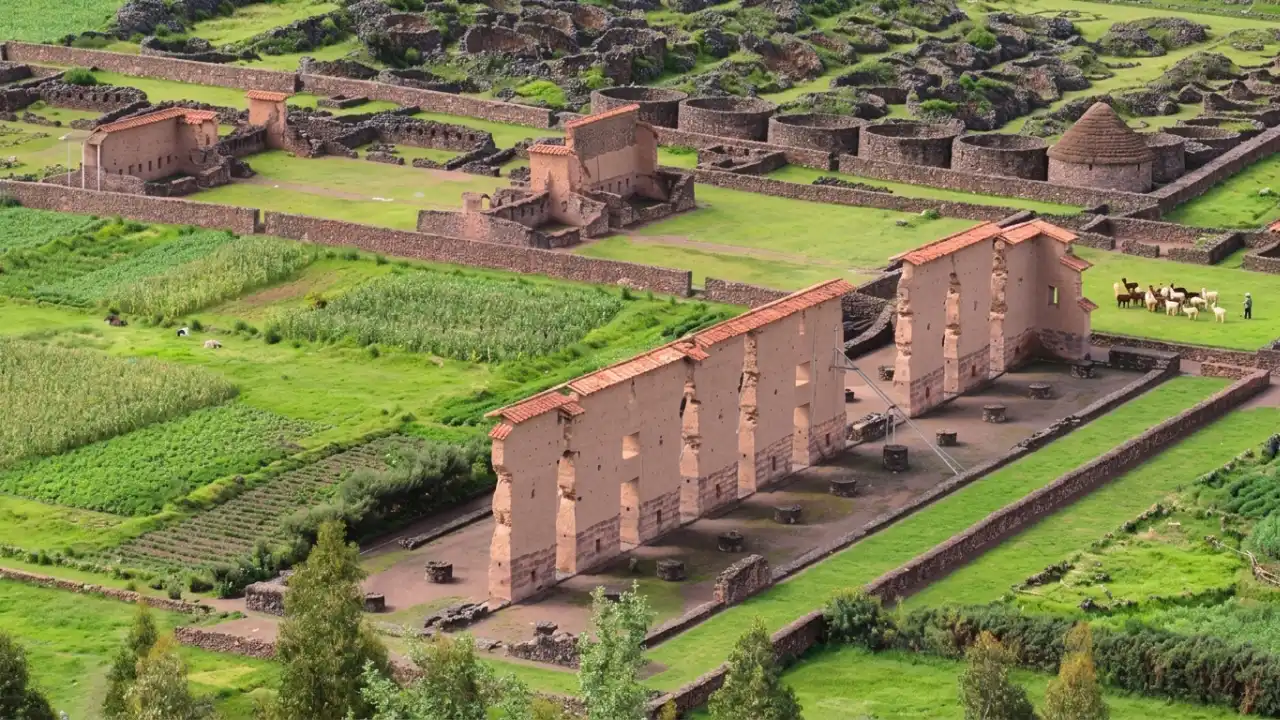
The Temple of Raqchi
Commissioned by Inca Pachacútec — considered the architect of the empire’s great expansion — the Raqchi complex, south of Cusco, once housed the Temple of Wiracocha. Its ruins feature walls up to 14 meters (46 feet) high, unusually tall for Inca architecture. Chroniclers reported that the temple once held a gold statue of the god.
Coricancha and the Temple of Wiracocha
In ancient Cusco, another sanctuary dedicated to Wiracocha existed, known as Kisoar Kancha, located within the Coricancha complex. According to tradition, it was the ruler Yáhuar Huácac who ordered the temple’s construction in the city, at a time when worship of Wiracocha had already begun to lose ground to the cult of Inti.
Wiracocha in Pre-Inca Cultures
From Caral and Chavín to Tiwanaku
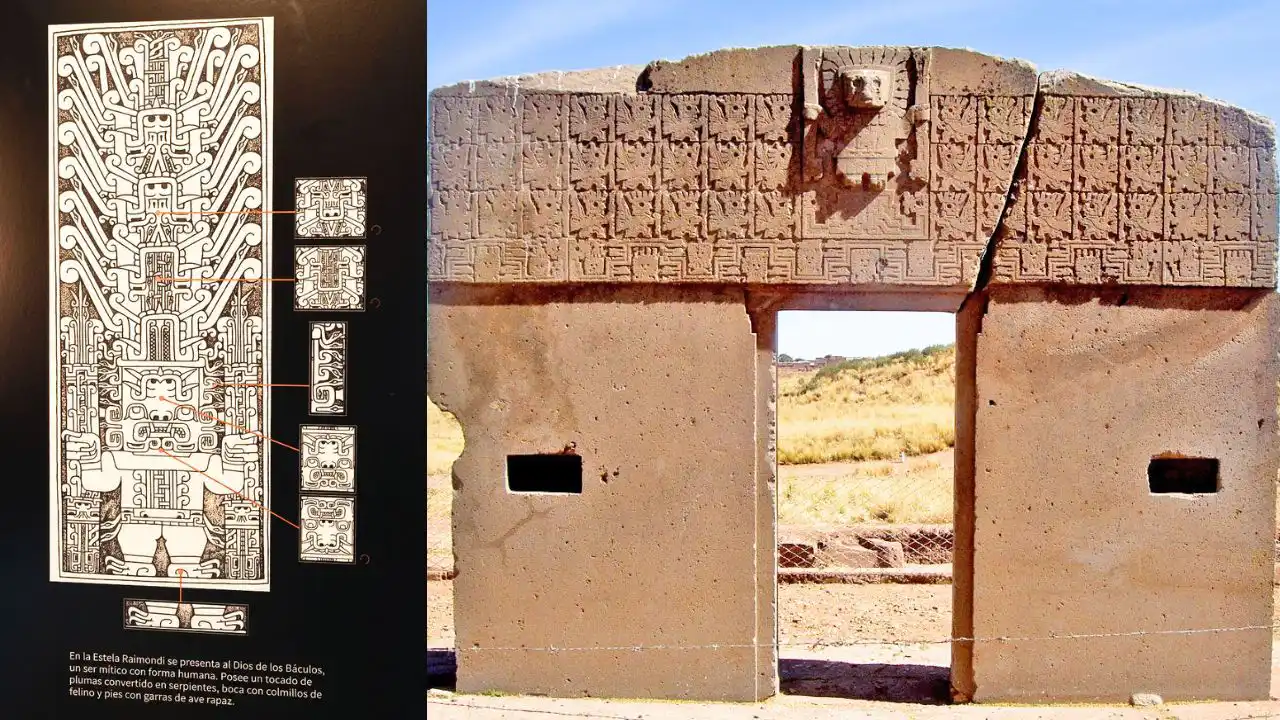
Iconographic records of this deity appear in cultures such as Caral, in the Supe Valley near Lima, and resurface in the Chavín culture of northern Peru, where he is known as “the god of the staffs.” However, it was in the Tiwanaku culture, on the Bolivian altiplano beside Lake Titicaca, that his worship reached its most stable and widespread expression.
The Gateway of the Sun at Tiwanaku
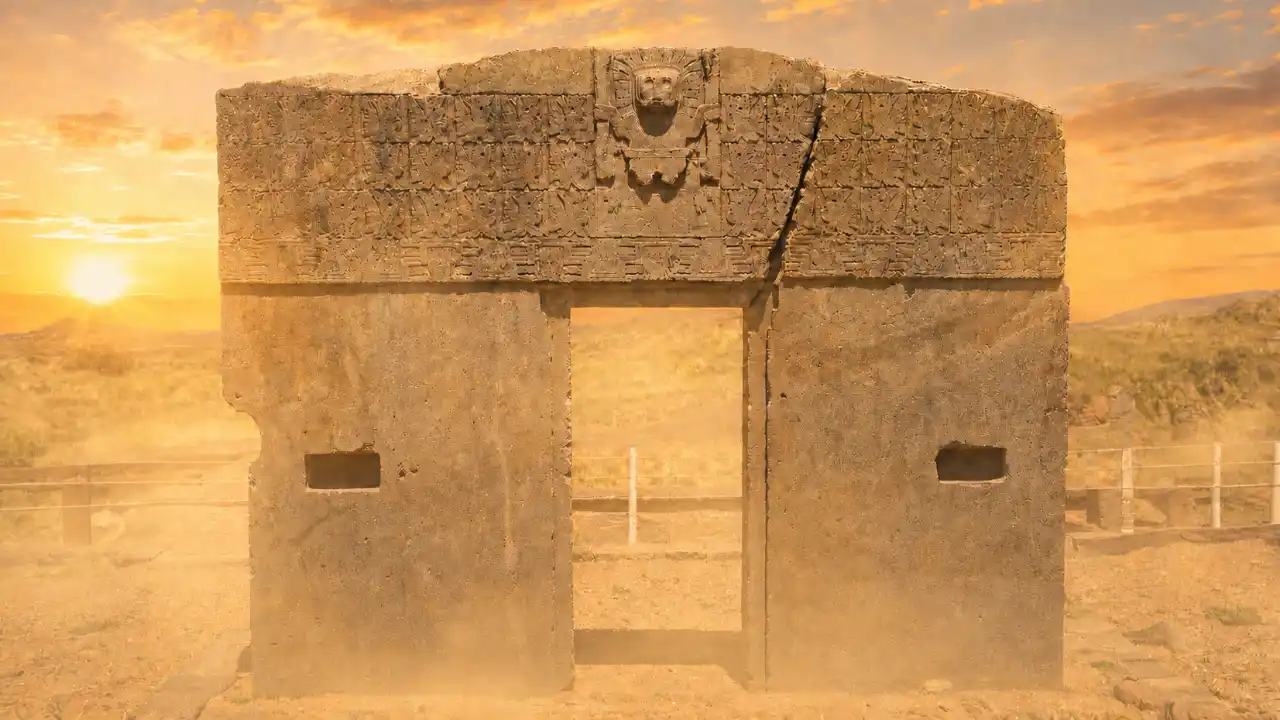
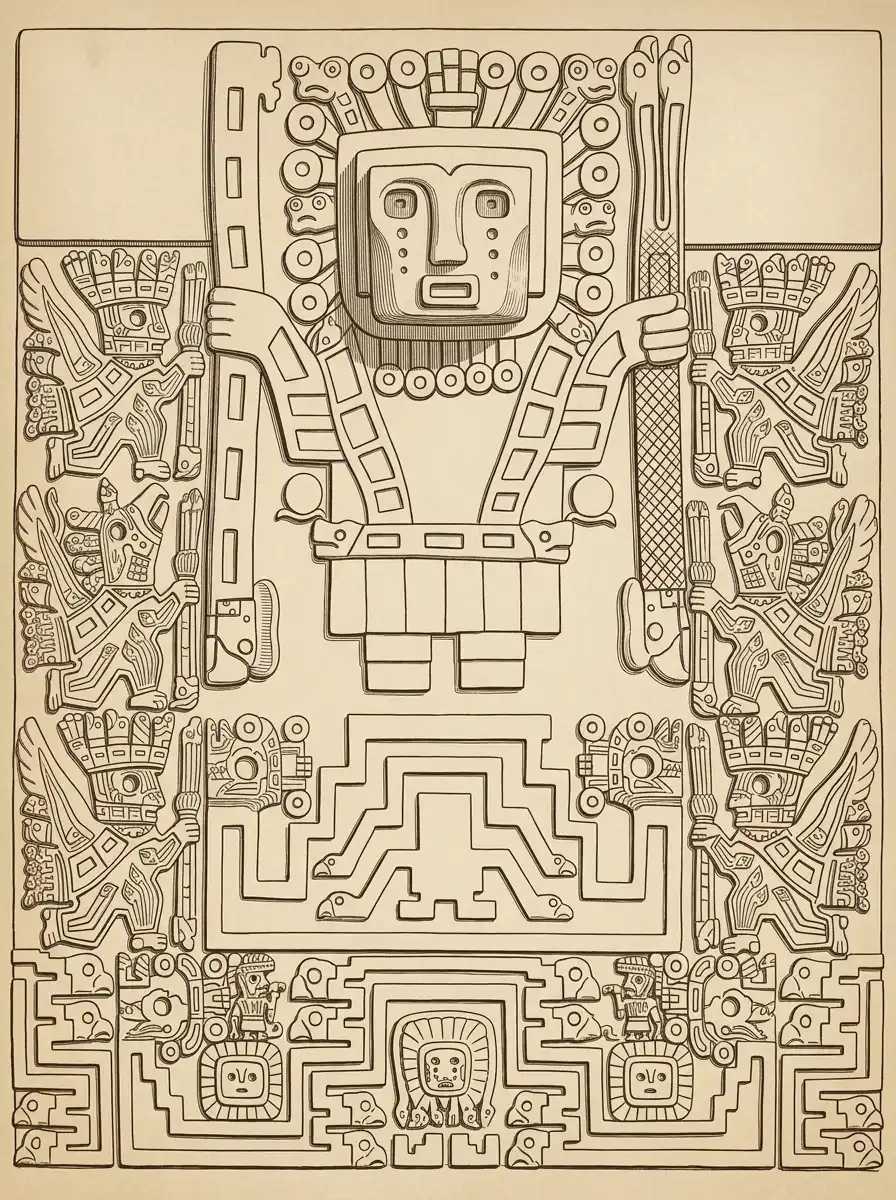
The Gateway of the Sun (Inti Punku) at Tiwanaku is Wiracocha’s most iconic monument. This multi-ton andesite monolith depicts a square-faced, humanlike figure wearing a crown of solar rays and holding a staff in each hand, surrounded by dozens of winged figures — possibly chasquis, or divine messengers — converging toward the god bearing offerings.
Wiracocha: Origin of the Name
Also known as Viracocha, Huiracocha, or Wiraqucha, the traditional interpretation holds that his name comes from “wira” (fat) and “qucha” (lake), giving the meaning “foam of the lake” or “foam of the sea.”
The strongest and most widely accepted hypothesis today, proposed by Peruvian linguist Rodolfo Cerrón, traces the name to the Aymara term Wilaquta: from “wila” (blood) and “quta” (lake), referring to the pre-Inca ritual sacrifice of camelids that stained the waters of Lake Titicaca red — a detail tied to the myth of Lake Titicaca. Aymara was the language spoken in the Titicaca region before the Quechua expansion.
Alternative Names of Wiracocha
Some alternative names described the god’s functions rather than referring to him by name directly — perhaps because his true name was considered too sacred to speak.
These include Ilya (light), Ticci (beginning), and Wiracoqa Pacayacaciq (instructor).
Legacy
In many Quechua communities, he came to be syncretically identified with the Christian God the Father, while in others he remained an independent mythical figure in oral tradition. The term “wiracocha” itself survives today in southern Quechua with the meaning of “lord” or “gentleman,” and in colonial times it was even used to refer to the Spanish themselves, considered by some to be possible emissaries of the deity.