Traditional Peruvian Clothing
Traditional Peruvian clothing is characterized by the use of sophisticated and colorful fabrics, striking patterns in various shades that represent the great cultural, geographical, and natural diversity of Peru. The transmission of garment and accessory-making techniques symbolizes a legacy for new generations. Traditional clothing in Peru is worn with pride and respect, from its earliest versions to the most avant-garde fashion trends of today.
From its beginnings in pre-Hispanic times, sophisticated and colorful garments predominated, made with natural fibers such as alpaca, llama, or vicuña wool, and cotton in the coastal and jungle regions.
These garments, made primarily for religious and ceremonial purposes, distinguished the social class and role of the ancient inhabitants of Peru. Long dresses, held up by sashes, were common, as were tunics or loincloths, depending on the region. Headdresses, cloaks, and sandals were also typical.
Traditional Clothing of the Coast
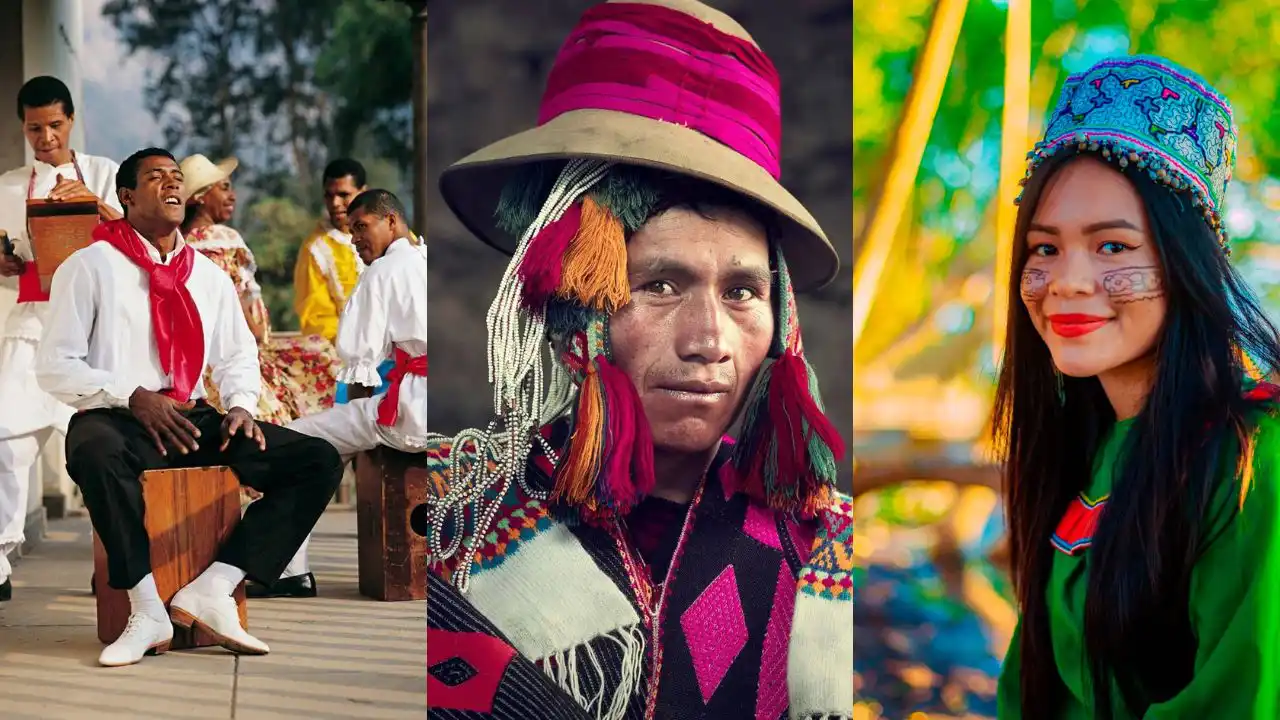
The clothing of the inhabitants of the Peruvian coast was characterized by being lighter, cooler, and simpler compared to that of the highlands or the jungle, due to the warm and dry climate that prevails in this area. Its design is deeply influenced by Creole and Afro-Peruvian culture.
Clothing of the Northern Coast
The Northern Hat (Piura and Lambayeque): This hat, made with Catacaos straw or toquilla straw, is a symbol of status and protection against the harsh northern sun. This garment is handwoven with very fine fibers and is a mandatory accessory for men.
Poncho of Monsefú (Lambayeque): The women of this region wear traditional clothing that stands out for its black satin skirts with striking floral embroidery in vibrant colors. These are worn with Manila shawls, which denote the Spanish influence on Creole fashion.
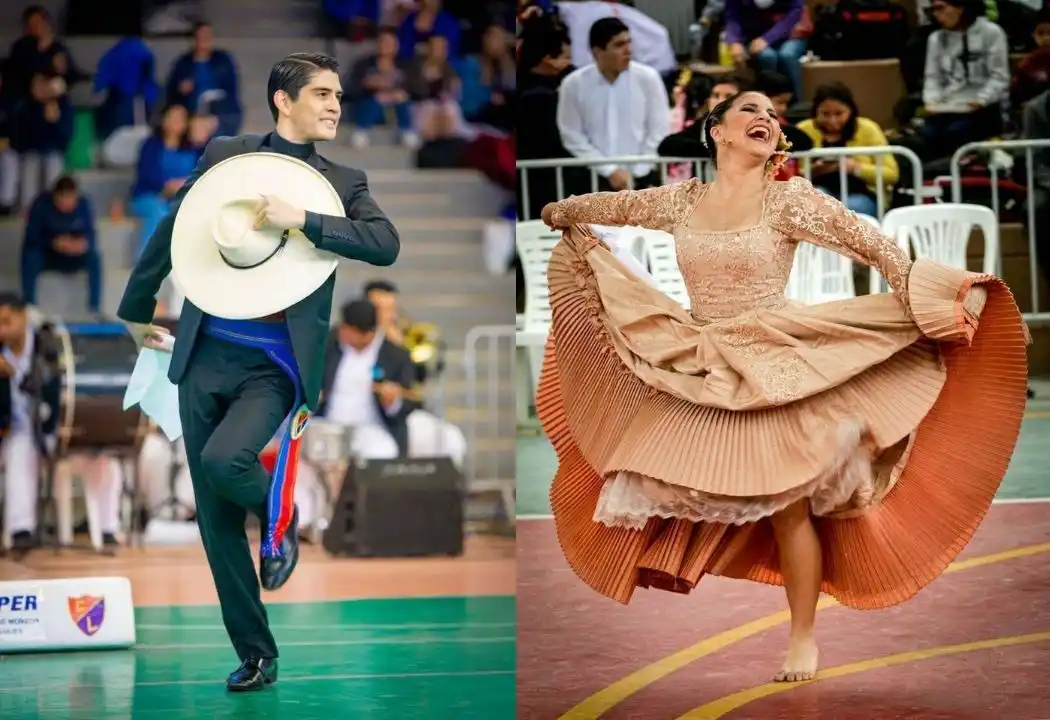
The Attire of the Marinera Norteña (Trujillo)
The marinera is the most representative dance of Peru, it’s very popular the Marinera from Trujillo. Its essence lies in flirtation and courtship, where the woman displays playfulness and elegance, while the man responds with gallantry.
The woman wears a flowing dress with lace, full skirts, a hat, and usually dances barefoot. The man, for his part, wears the classic chalán suit (twill trousers and shirt, a wool poncho) and a wide-brimmed straw hat.
Clothing of the Central Coast
Two distinct styles emerged (Ica and Lima): the elegance of the Lima bourgeoisie and the exuberance of the Afro-descendant communities.
Women wore long, fitted dresses in dark colors. The garments were made of velvet or silk and included shawls. Men wore the traditional Creole suit, characteristic of the era, consisting of a shirt, tie, and black patent leather shoes.
The Lima Marinera
The Lima marinera is characterized by its stately, elegant, and measured style. It evokes the sophistication of the colonial era and the early Republic.
Women wear long, fitted, and understated dresses, usually made of velvet, satin, or silk. The sleeves are typically puffed, and the neckline is modest. The outfit is complemented by a fringed silk shawl that covers the shoulders and a fan.
While the men wear a traditional Peruvian suit (jacket and trousers), a white stiff-collared shirt, a bow tie or cravat, and black patent leather shoes, they do not wear straw hats. Instead, they dance elegantly with a white silk handkerchief in hand.
Clothing for Festejo and Afro-Peruvian Rhythms
This type of traditional clothing originated in the traditional neighborhoods of Lima (such as Rímac) and in the department of Ica (especially in Chincha). The garments are designed for dances such as the festejo, the alcatraz, and the landó.
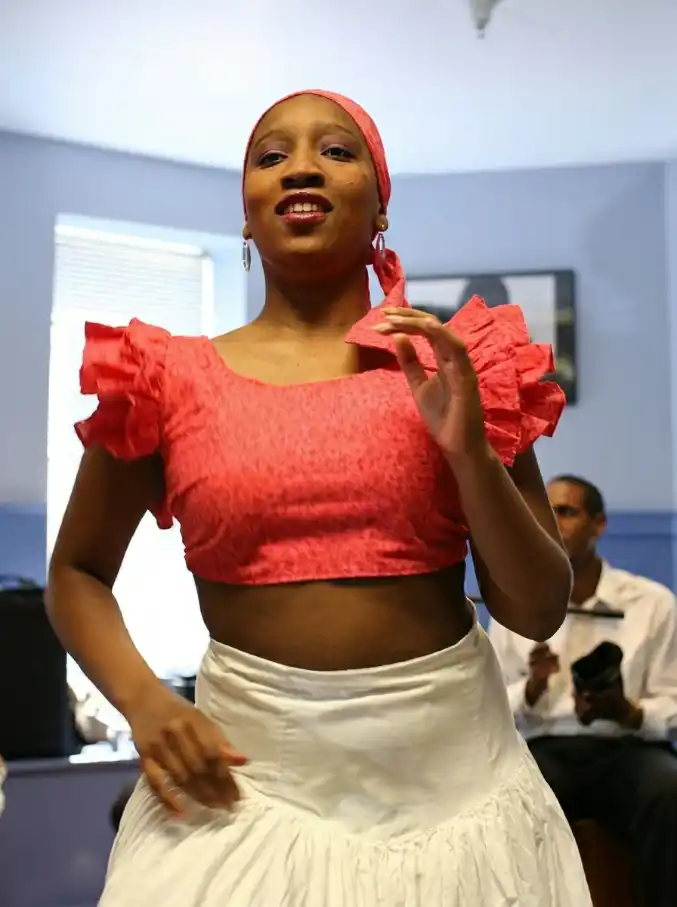
The women wear short skirts or simple dresses made of cotton, characterized by their striking patterns of white polka dots on red, blue, or black backgrounds. They wear a headscarf to hold their hair in place during the energetic movements of the dance.
The men wear very simple, loose-fitting shirts with short or rolled-up sleeves. Their cotton trousers are light-colored and rolled up above the ankles, emulating the work clothes of former slaves on sugarcane and cotton plantations. They dance strictly barefoot.
Clothing of the South Coast
Loncca and Iqueña Influence
In the valleys of the south coast, men traditionally wore sturdy yet cool country clothing: drill trousers, plaid or white cotton shirts, and wide-brimmed hats for protection during the grape harvest or olive grove work.
The Washerwomen’s Dance
In the coves and valleys of the south, the work of coastal women is recreated through everyday attire. This clothing consists of simple skirts made of rustic fabrics, three-quarter-sleeved blouses, and aprons, showcasing a primarily functional style that, over time, became part of the coastal folklore.
Traditional Clothing of the Andes Mountains
Despite the marked geographical variations along the Andes Mountains, there are a number of garments shared by the vast majority of high Andean communities due to the climatic demands and their historical heritage.
Essential Elements of Andean Clothing
Women’s Clothing
Polleras are skirts made of bayeta (a thick fabric made from sheep, alpaca, or vicuña wool). Women wear them in multiple layers, which allows them to regulate their body temperature in the face of the high-altitude frosts. The bottom edges are adorned with hand-embroidered borders or woven ribbons (talqueados) that display intricate motifs of the regional flora and fauna.
The Lliclla is a rectangular, handwoven blanket. It is placed over the shoulders and covers the back. It is used both for warmth and for carrying provisions or babies.
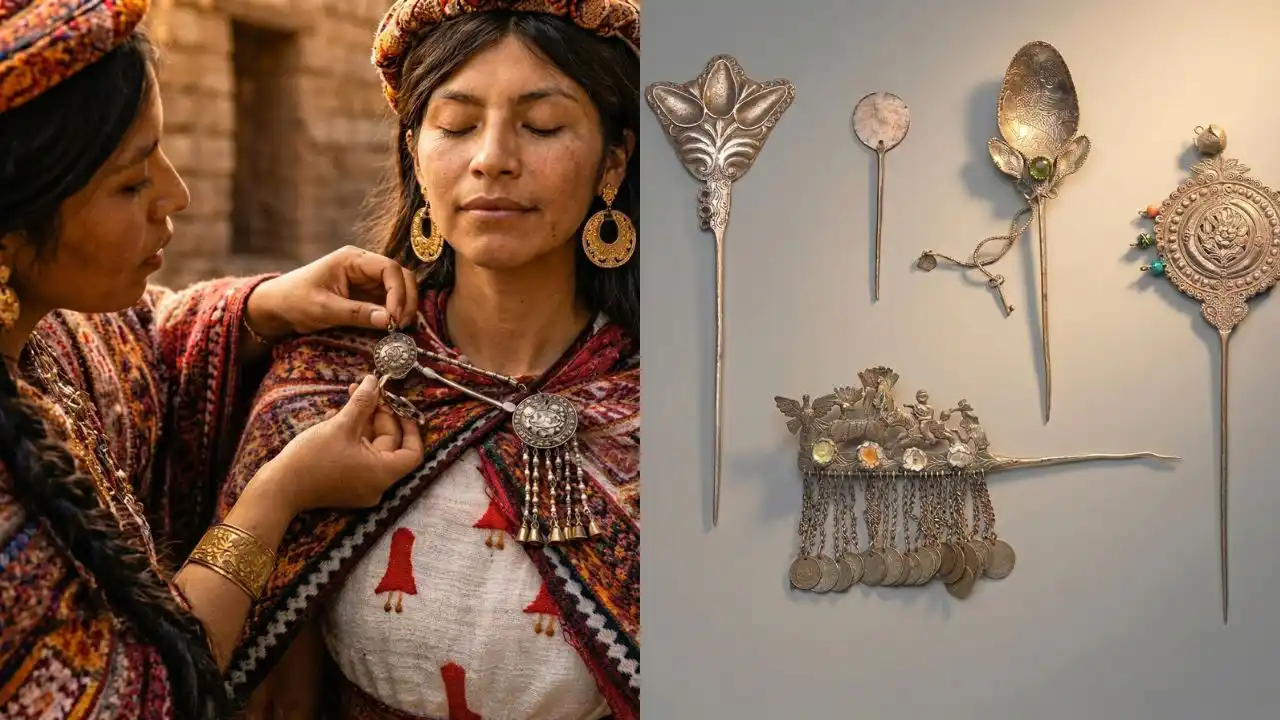
The Tupu or Phullu is a stately pin or brooch, traditionally crafted from silver, bronze, or copper, used to fasten the lliclla (shawl) across the chest. Its shape evokes ancient pre-Hispanic symbols of feminine power.
Men’s and General Attire
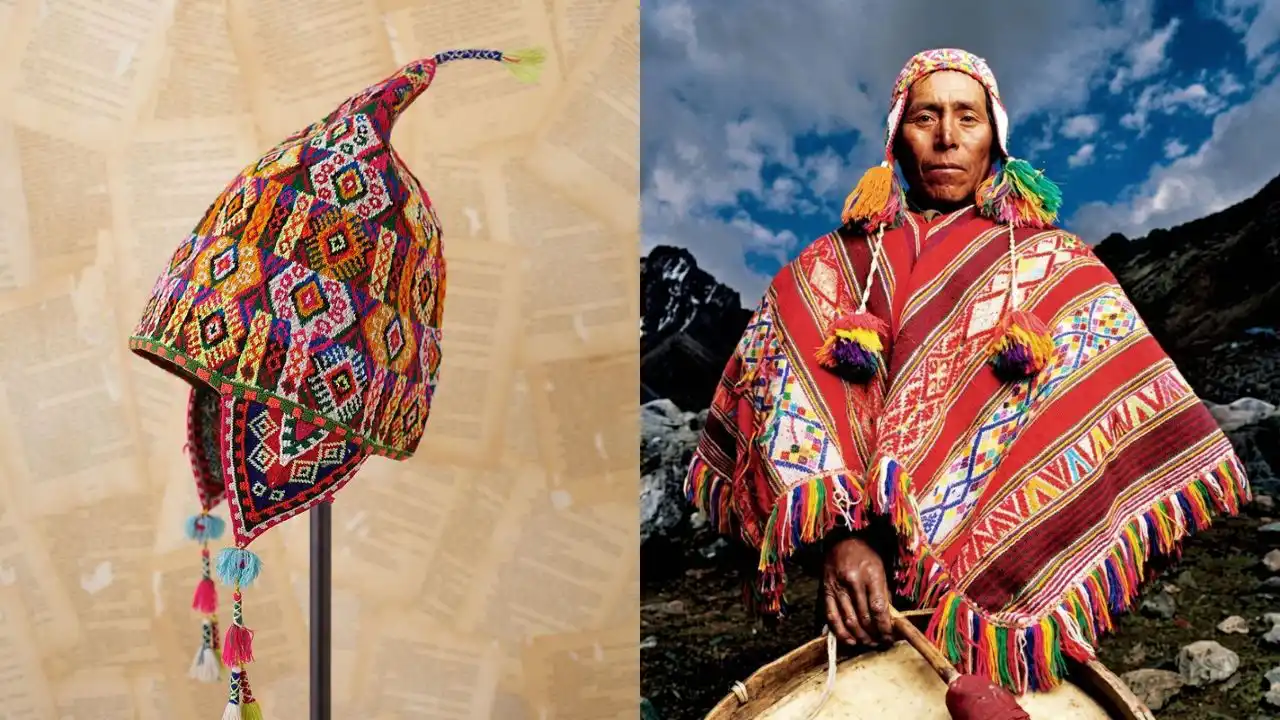
The Chullo is the iconic Andean hat woven from alpaca or sheep wool that covers the ears. Its intricate geometric designs symbolize events that tell the story of the wearer’s community of origin and their social standing. In many communities, the patterns indicate whether the man is single, married, or holds a civil office (such as the Varayoc).
The Poncho is the quintessential outer garment in the Andes. It covers the torso and arms. Woven on traditional looms, its colors serve as symbols of regional identity.
Ojotas are rustic, heavy-duty sandals used for traversing the steepest trails of the Andes. They were traditionally made from dried camelid leather, but were later replaced by recycled rubber from vehicle tires.
Variations of traditional clothing of the mountains
Clothing of Cusco
Communities such as Chinchero, Ollantaytambo, Pisac, and the highlands of Canchis maintain a simple yet imposing aesthetic.
Women wear the famous monteras, flat, circular hats lined at the bottom with red and black velvet or cloth, secured to the face with embroidered ribbons called watana. Their skirts are usually black, finished with a bright red stripe.
Men wear short ponchos in reddish and orange hues, decorated with geometric iconography (pallay) that pays homage to the sacred elements of nature (Apus and Pachamama).
Clothing of Puno
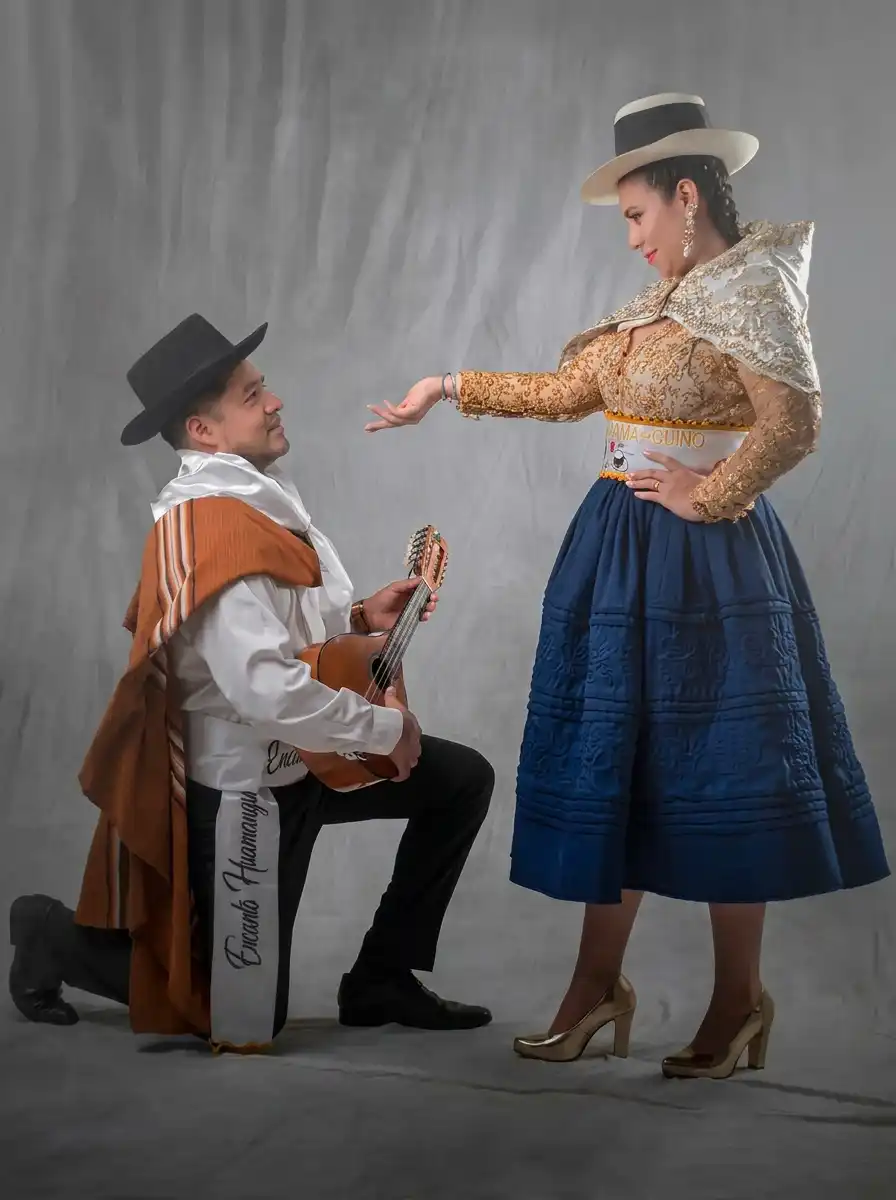
Aymara clothing: women wear elegant pleated skirts made of silk, satin, or velvet in vibrant colors (green, fuchsia, yellow), accompanied by refined shawls in striking colors. The most distinctive element is the bowler hat made of felt, placed coquettishly atop their braided hair.
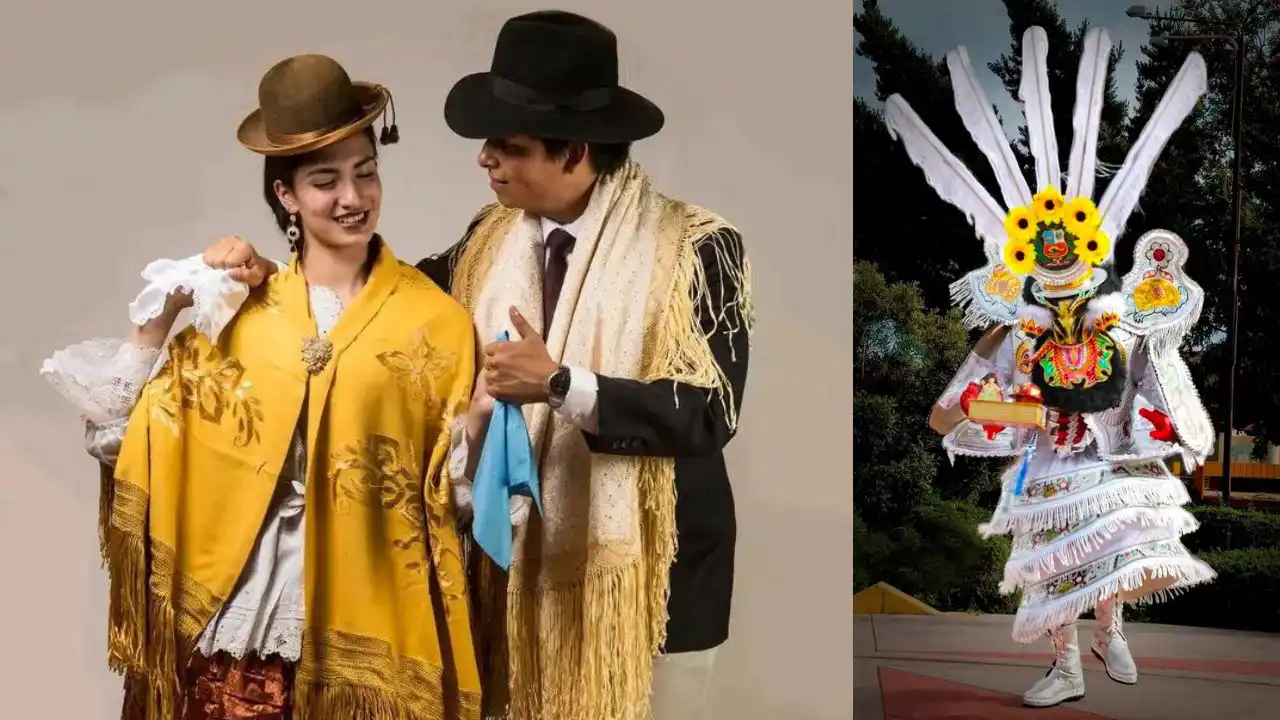
Costumes of Lights
Used in dances like the Diablada or the Morenada, these costumes can weigh up to 30 kilos. They are saturated with rhinestones, mirrors, gold thread, and sequins, and are complemented by imposing metal or fiberglass masks.
Clothing of Junín
Embroidered Skirts
Huancayo skirts are known for their extensive embroidery that covers almost half of the garment. They are made with silk threads, recreating the wild flora and birds of the Huancayo Valley with astonishing realism. The outfit is completed with a white straw hat adorned with a thick black ribbon. The clothing of Huancayo women is synonymous with artisanal opulence.
Clothing of Ayacucho
This region stands out for the delicacy of its pastel-colored costumes, where women wear white felt hats and fine shawls. Men wear dark ponchos with subtle colored lines.
Clothing of Huancavelica
The attire of the Scissors Dance stands out, whose dancers wear extremely striking vests and pants decorated with golden fringes, circular mirrors (to deflect bad energies) and a large conical hat.
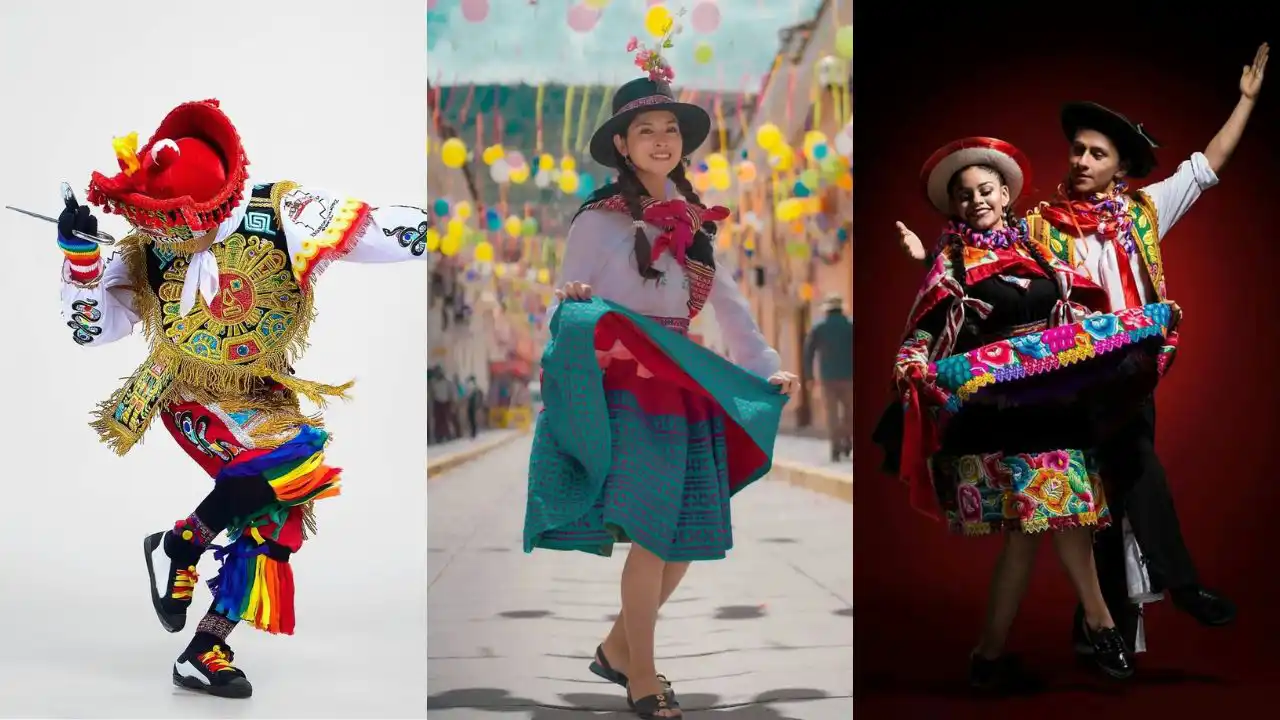
Clothing of Tacna
Preserves the Anaco, one of the few garments of purely pre-Hispanic origin that survive intact. It is a one-piece tunic made of black or blue alpaca wool that wraps around the woman’s body and is fastened at the shoulders with silver tupus.
Traditional Clothing of the Amazon Rainforest
The traditional clothing of the Peruvian rainforest represents one of Peru’s most genuine and authentic cultural expressions. In contrast to the clothing of the coast and highlands, heavily influenced by European patterns, the garments of Amazonian communities have preserved a more organic and spiritual relationship with their environment.
Due to the high temperatures and torrential rains of the Amazonian climate, clothing was primarily designed to be lightweight and functional, later becoming a kind of sacred canvas on which the worldview, mythology, and fauna of the Amazon were depicted.
Characteristics of Amazonian Clothing
Traditional clothing in the Peruvian rainforest was not made from camelid wool, but rather from the resources offered by the biodiversity of the Amazon basin. The indigenous peoples of the Amazon have developed unique textile technologies using local plants and trees.
Main Clothing of Amazonian Ethnic Groups
The Peruvian rainforest is home to more than 50 indigenous groups, each with its own distinct styles. Three groups stand out for their social impact and the beauty of their traditional costumes.
The Shipibo-Conibo People and the Art of Kené (Ucayali)
The clothing of Shipibo women is among the most iconic and artistic in the entire Ucayali River basin.
The Skirt or Chitanti
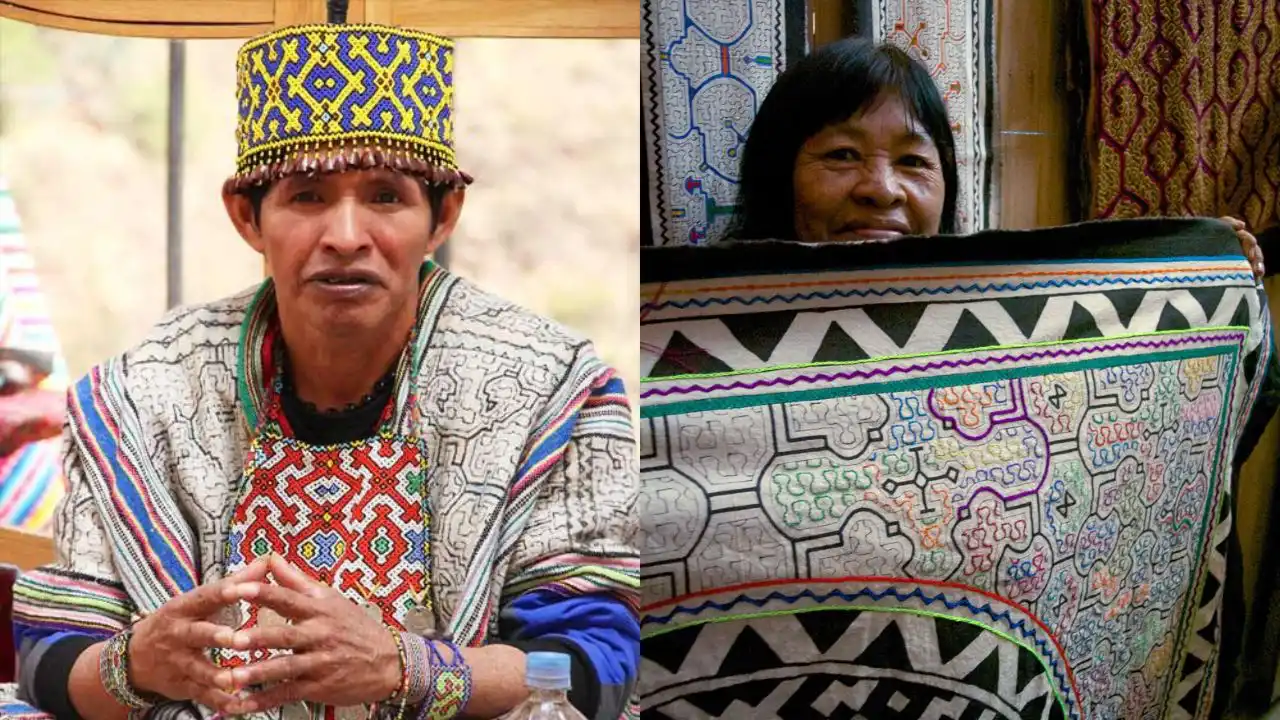
This garment, made of cotton, is wrapped around the hips like a skirt. These fabrics are true works of art, painted or embroidered with Kené embroidery. The designs are intricate networks of geometric lines that represent a visual score: they depict constellations, navigable rivers, the skin of the anaconda and medicinal songs (icaros) of the community.
Blouses and Accessories
On their upper bodies, they wear satin blouses in extremely vibrant neon colors (fuchsia, green, yellow) adorned with lace. They complement their outfits with heavy breastplates and beaded necklaces, silver nose rings (tari), and feather headdresses.
The Asháninka and the Use of the Cushma (Central Jungle)
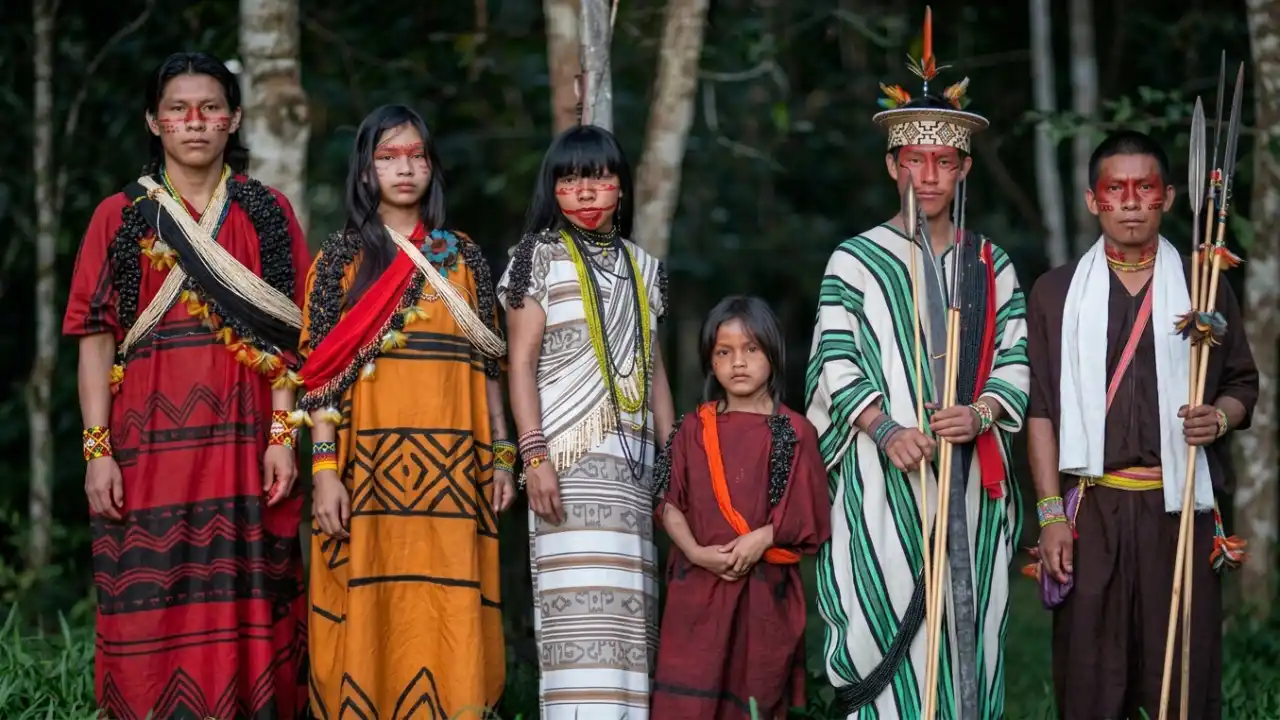
The Asháninka share an emblematic garment for both men and women: the cushma.
The Cushma
It is a one-piece tunic, ankle-length, made of native cotton. Its design is minimalist, but it embodies a very clear gender code. Men’s cushmas feature vertical brown stripes and a V-neck, while women’s have horizontal stripes and an oval neckline.
Face Paint and Crowns
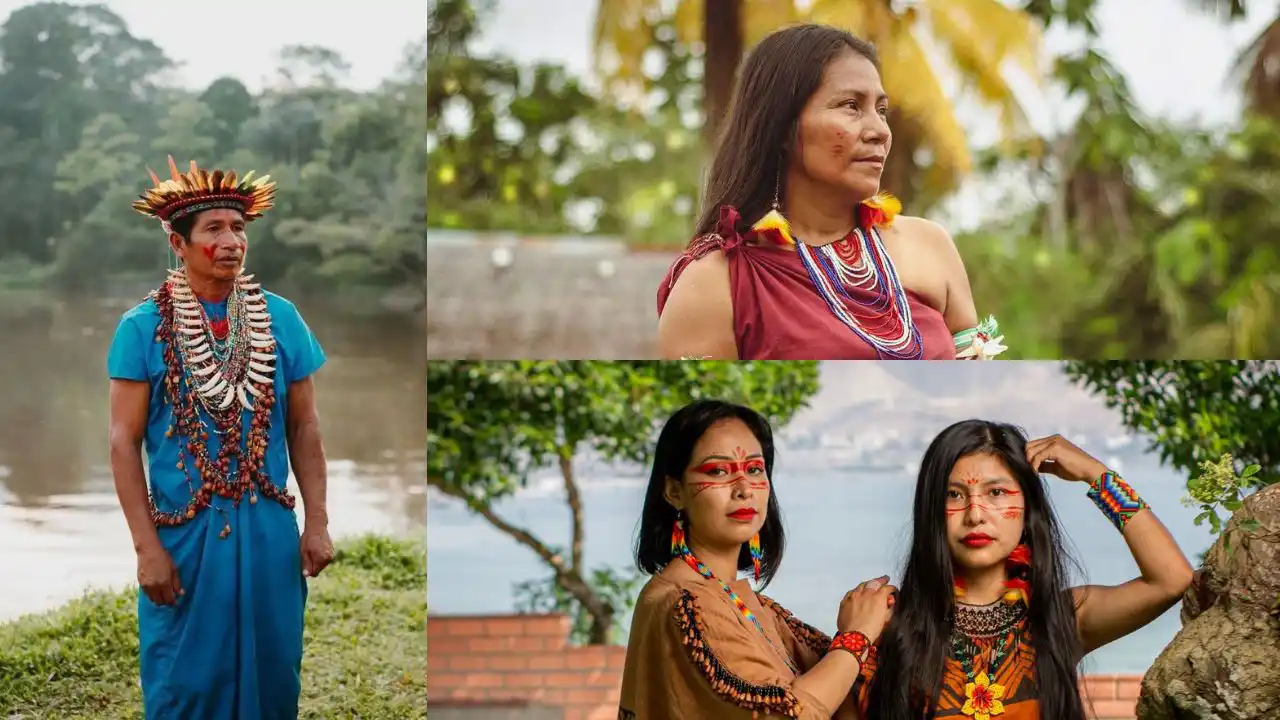
During celebrations, the cushma is worn with a woven straw hat or crown (tsarentsi) adorned with macaw feathers. Faces are artistically decorated with achiote, drawing symmetrical lines that express the mood or importance of the celebration.
The Awajún and Wampis Peoples (Northern Jungle)
Inhabitants of Amazonas and Loreto, these traditionally warrior peoples possess clothing linked to spiritual strength.
The Tarachi
This is the traditional women’s dress, a light cotton tunic tied over one shoulder and cinched at the waist with a braided belt. The most striking feature of their attire is the necklaces and pendants made from the wings of bright green metallic beetles, which produce a rhythmic sound with the movement of the dance.
Men’s Feather Crowns
Leaders and warriors wear rigid crowns of brightly colored feathers arranged in a circular pattern, reflecting their hierarchy and connection to the protective spirits of the forest.
Characteristics of Jungle Clothing
Wild Cotton
Many ethnic groups cultivate varieties of native cotton (in natural white and brown tones) which they spin and weave using pre-Hispanic backstrap looms. The resulting fabrics are extremely cool, breathable, and moisture-resistant.
Llanchama
This is a remarkable tree bark (primarily from the ojé tree or Poulsenia armata) that is extracted through a traditional process of beating and washing. The result is a flexible, felt-like textile fiber used by various traditional ethnic groups to make rustic tunics and skirts.
Natural Pigments and Biodiversity Adornments
Organic Dyes
The clothing gets its color from the earth and plants. Intense red is extracted from achiote seeds, black and dark blue from the fruit of the huito or jagua tree, and brown tones from various barks and river clays.
Jungle Jewelry
The communities use huayruro seeds (a symbol of protection), ox eyes, Job’s tears, scales from the enormous paiche fish, animal teeth, and colorful feathers from exotic birds (macaws, parrots, and toucans) collected in a way that respects the ecosystem.
Evolution of Traditional Peruvian Clothing
Ancestral Origins
Ancient Peruvian civilizations such as the Incas, Nazcas, Paracas, Chavín, and Moche, among others, crafted their garments with meticulous care and attention to detail. These traditional clothing pieces, made with technical precision, incorporated religious and astronomical symbols. From the coast, with fantastical figures of gods and animals; to the highlands, with simplified designs of fauna and nature; to the ancient rainforest, with geometric motifs representing Amazonian spirituality. Each region possesses a unique identity in terms of the techniques, patterns, and colors used in its traditional clothing.
The European Fusion
With the arrival of European civilization in the 16th century, European fashion influenced the design and materials used, introducing corsets, lace, and silk. This resulted in the clothing of modern Peruvians, a product of the blend of indigenous and European influences.
Evolution
Traditional Peruvian clothing has become a symbol of regional and national identity. There are distinct variations between regions, whether on the coast, in the highlands, or in the jungle. This aspect distinguishes the regions from one another, but at the same time reinforces the great richness of Peruvian identity.
Many of these typical and traditional garments can be seen in the performance of dances and festivities. Currently, traditional Peruvian clothing has also served as inspiration for more contemporary fashion design proposals.