Salkantay Trail vs Inca Trail: Which one to choose in 2026?
By: Napoleon arcondo
Choosing between the Salkantay Trek and the Inca Trail depends on the type of experience you want before arriving at Machu Picchu. The Inca Trail takes you along ancient paths, past archaeological sites, and through the classic entrance at the Sun Gate. In contrast, the Salkantay Trek offers mountains, snow capped peaks, turquoise lagoons and greater booking flexibility.
Why choose between Salkantay vs. Inca Trail?
Although both routes lead to Machu Picchu, each one offers a different kind of experience. The Inca Trail stands out for its historical and cultural value, while the Salkantay route appeals to travelers looking for adventure, nature, and more varied landscapes. That’s why comparing both options helps you choose the route that truly matches your travel style.
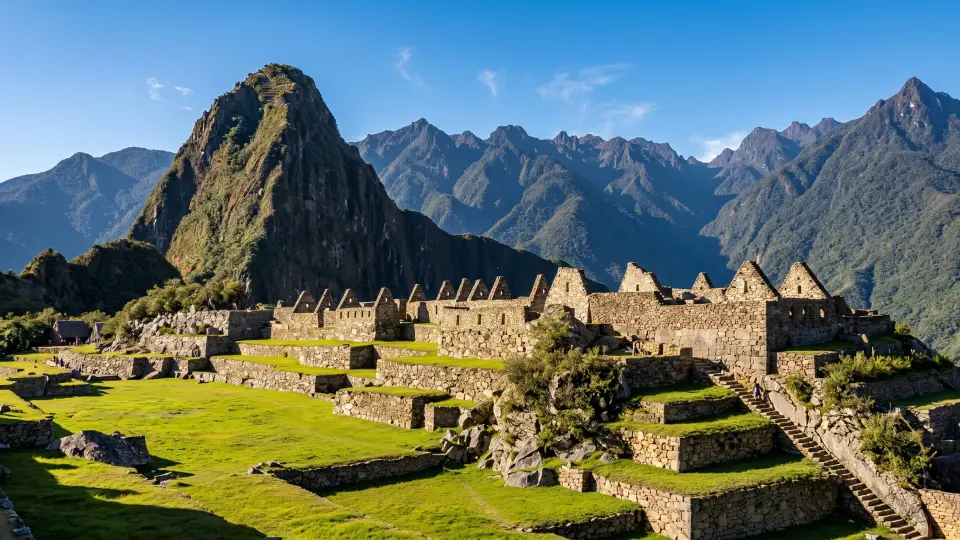
Inca city of Machu Picchu during the rainy season
Why is it so important to choose the right route?
Choosing the right route is essential because you won’t just be walking for a few hours: you’ll spend several days in the Andes, sleep at high altitude, and deal with weather that can change quickly. Plus, each trail requires a different level of effort, shows you different landscapes, and comes with its own cost. That’s why, if you choose carefully, you’ll arrive at Machu Picchu better prepared and more excited to enjoy every step.
Important note…
First, we’ll look at each route separately, with all the detail it deserves. Then, we’ll put them side by side so the comparison is clearer. And at the end, I’ll give you my personalized recommendation based on different traveler profiles.
The Inca Trail: the route everyone knows
The Inca Trail is the most famous trek in South America, and for good reason. On this route, you’ll walk along ancient Inca paths, visit archaeological sites, and end by reaching the Sun Gate, where you’ll see Machu Picchu at sunrise.
Happy tourists enjoying their arrival at Machu Picchu
Did you know…
Both the Inca Trail and the Salkantay Route lead to Machu Picchu, but each one offers a different experience. So don’t look for the “best” route; look for the one that feels most like the trip you want to remember.
History and context of the Inca Trail
Inca Trail
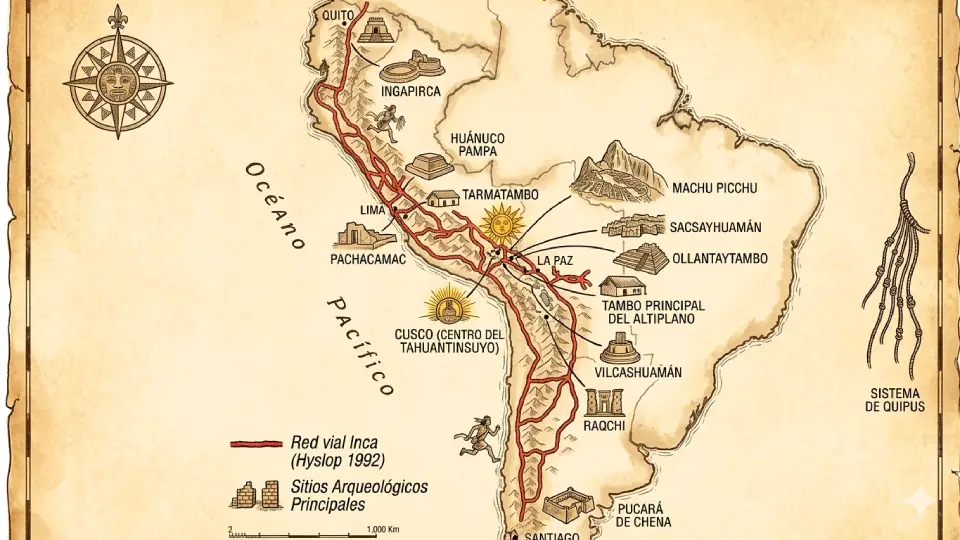
Before we begin, let me explain why this route is so special. The Qhapaq Ñan, or Inca Trail, was built by the Inca Empire more than 500 years ago to connect its entire territory, from Colombia to Argentina. Back then, messengers, warriors, and travelers were already walking these paths long before trekking existed as we know it today.
Extension of the Inca Trail during the Inca Empire
The Inca Trail today
Today, you can hike the most popular section, which starts near kilometer 82 of the train route and ends at Machu Picchu. In total, you’ll walk about 43 kilometers over 4 days and 3 nights. If you have less time, you can also do a shorter 2-day version.
What makes the Inca Trail special
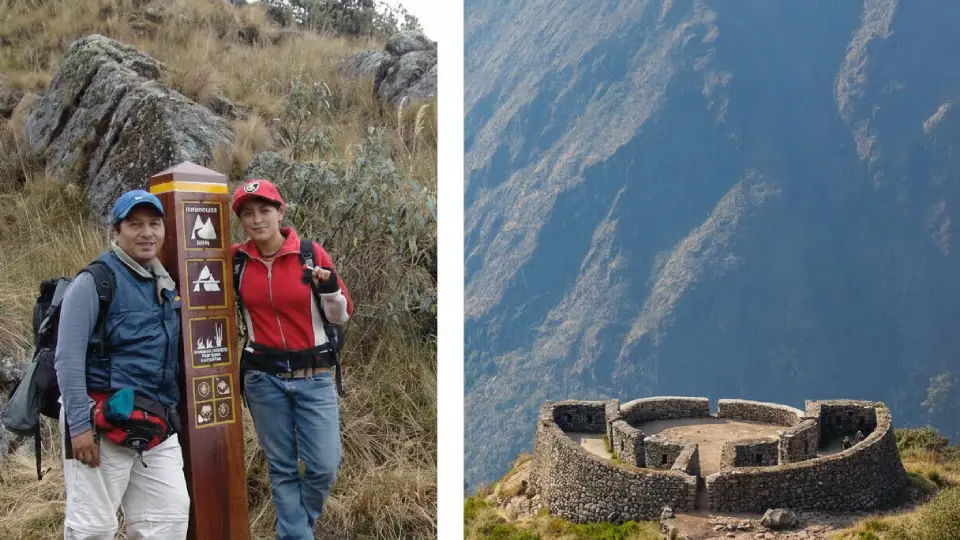
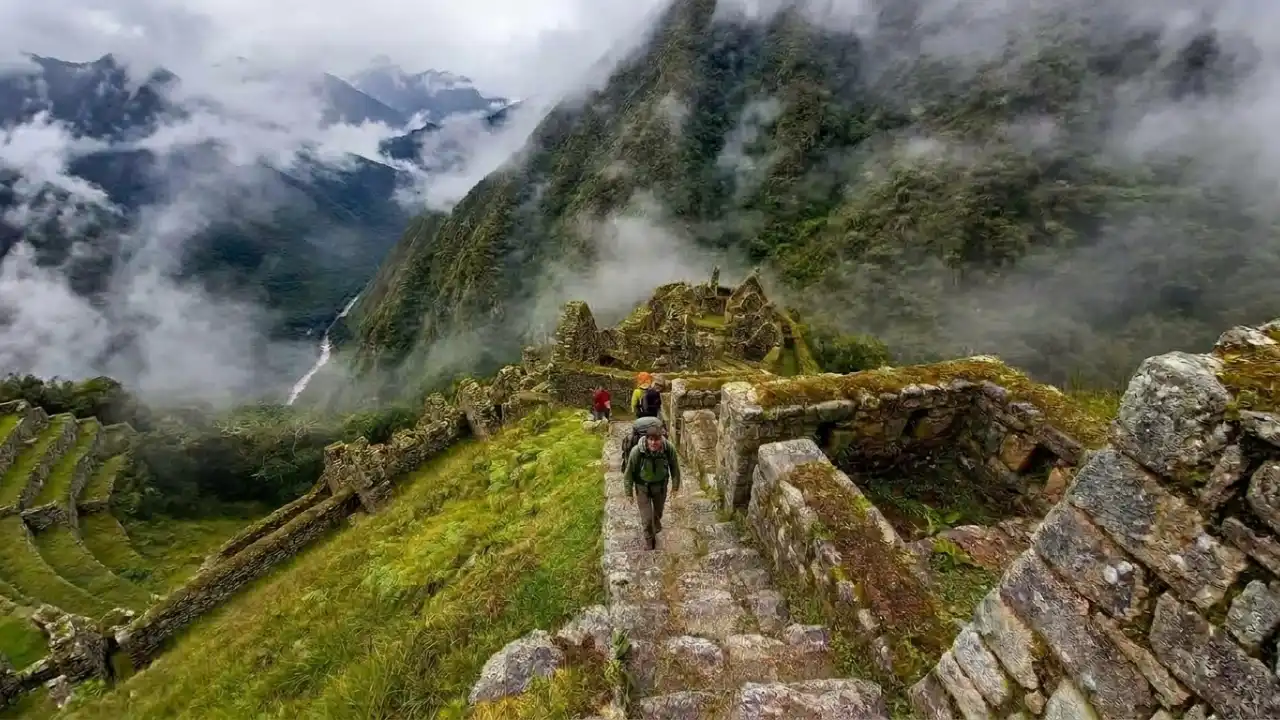
What really sets this route apart is what you see along the way. You don’t just hike; you pass through archaeological sites such as Llaqtapata, Runkurakay, Sayaqmarka, and Wiñay Wayna. That’s why, more than a trek, it feels like walking through history step by step.
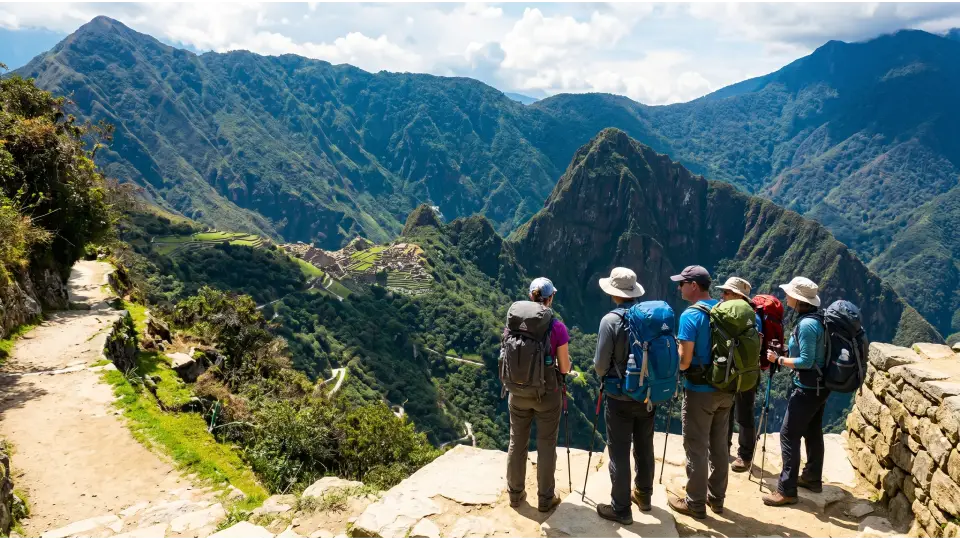
Local tourists hiking the Inca Trail near Runkurakay
The charm of the true Inca Trail
You’ll also walk on polished stones and handmade steps built by the Incas. As you move forward, you realize that thousands of people traveled this same path centuries ago. That’s why this route doesn’t just feel like a hike, but also like a direct connection to the past.
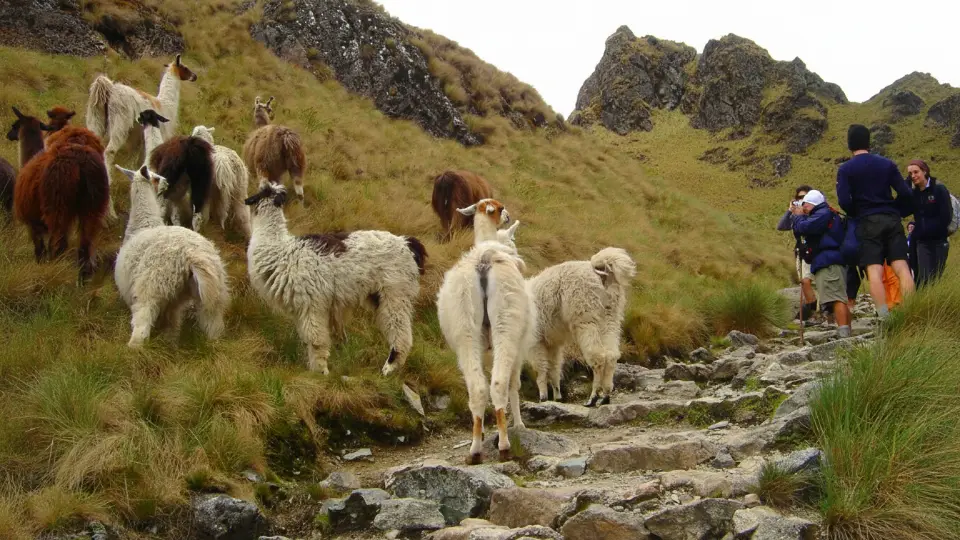
Llamas along the Inca Trail in their natural environment
Inca Trail permits and reservations
This is where many travelers get overconfident. The Inca Trail has a limited daily capacity of 500 people, and that number includes tourists, guides, and support staff. For this reason, permits sell out quickly, especially between June and August.
Key tip…
If you already have your travel dates for Peru and want to hike the classic Inca Trail, secure your permit first. Then you can organize flights, gear, and the other details. Your trekking agency will handle it for you, but spots go fast, so don’t leave it until the last minute.
The Salkantay route: the trail that gives you everything all at once
If the Inca Trail connects you with history, the Salkantay Route takes you straight into nature. This trek gets its name from the snow-capped Salkantay mountain, which means “wild mountain” in Quechua. And yes, the name fits perfectly: the route is longer, more varied, and shows you landscapes that change almost every day.
A world-renowned route
National Geographic ranked it among the 25 best treks in the world, and while those kinds of lists should always be taken with caution, in this case, it’s no exaggeration. The combination of landscapes this route offers is truly hard to find anywhere else on the planet.
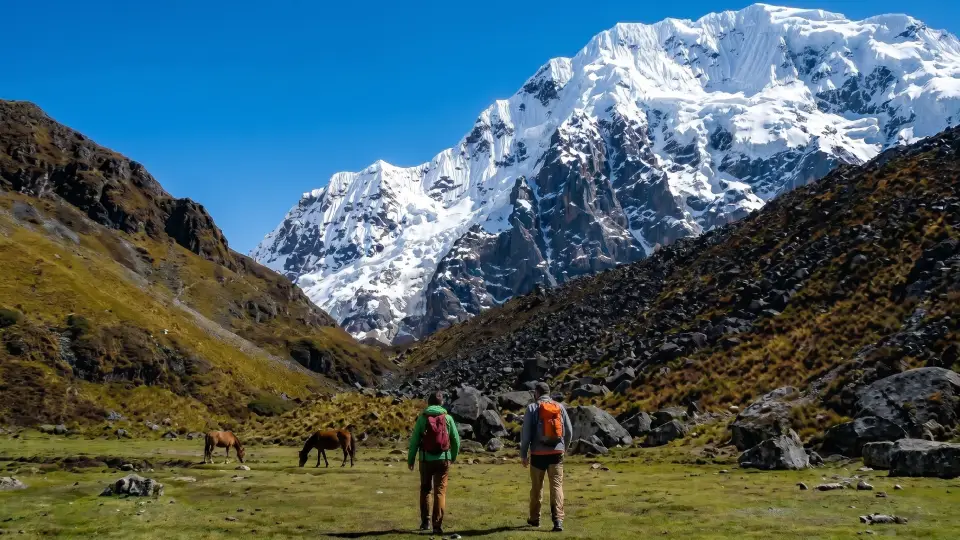
Travelers hiking toward the snow-capped Salkantay mountain
Where does the Salkantay Route go?
The classic Salkantay trek lasts 5 days and 4 nights, although 4-day versions are also available. Normally, you start in Mollepata or Soraypampa, at over 3,900 meters above sea level. Then, you climb up to Salkantay Pass, the highest point of the route, located at 4,630 meters above sea level.
When the landscape starts to change
After crossing Salkantay Pass, the trail changes completely. First, you walk through cold weather, wind, and snow-capped mountains. Then, little by little, you start descending into greener areas, with orchids, coffee plantations, waterfalls, and warmer weather. That transition is why many travelers remember this route as one of the most complete.
Humantay Lake
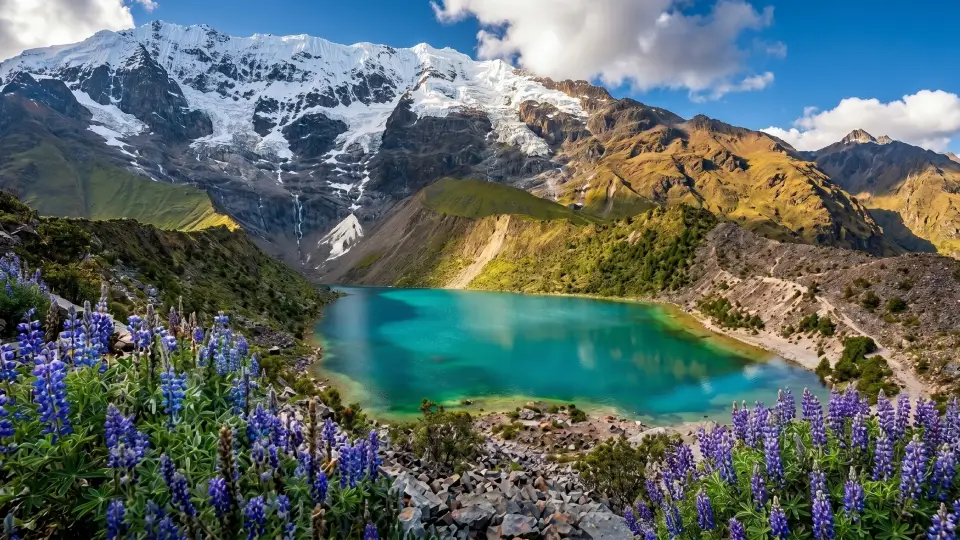
One of the most famous places on the Salkantay Route is Humantay Lake. Although it is not always part of the main trail, many agencies include it at the beginning of the trek. This turquoise lake is surrounded by mountains and is often one of the first major surprises of the trip.
Turquoise waters of Humantay Lake with a scenic landscape view
Traveler tip…
If your agency includes a visit to Humantay Lake, do it. The extra hike can take between 2 and 3 hours round trip, but it’s absolutely worth it. Plus, it helps you acclimate before the more demanding days.
Do you need permits to hike Salkantay?
No. The Salkantay Route does not require special permits like the Inca Trail. That’s why you can organize it with less advance notice. However, you do need to reserve your Machu Picchu ticket, because the citadel has limited daily capacity.
Direct comparison: Salkantay vs. Inca Trail
Now that you know each route better, it’s time to look at the Machu Picchu circuits so we can compare them clearly. This way, you’ll see their main differences in duration, difficulty, landscapes, prices, and how each route reaches Machu Picchu.
Comparison chart: Salkantay Route vs. Inca Trail
Aspect
Inca Trail
Salkantay Route
Approximate duration
4 days / 3 nights
5 days / 4 nights
Total distance
43 km
74 km
Highest altitude
4,215 m / 13,828 ft (Warmiwañusca Pass)
4,630 m / 15,190 ft (Salkantay Pass)
Difficulty
Moderate to challenging
Challenging and demanding
Special permits
Yes, limited to 500 people per day
No, no fixed daily limit
Average price
USD 600 – 1,100
USD 300 – 700
Main highlights
Archaeological sites such as Llaqtapata and Wiñay Wayna
Snow-capped mountains, lakes, and Llaqtapata near the end
Landscape variety
Moderate: Andean and cloud forest scenery
High: from glaciers to subtropical jungle
Arrival at Machu Picchu
Through the Sun Gate — epic
Through the town of Aguas Calientes
Tourist traffic
High — usually busy
Moderate — generally quieter
Date flexibility
Low — book months in advance
High — can be organized a few weeks ahead
Accommodation along the route
Dome-style camps or tents
Campsites, domes, and lodges available
Which route is more difficult?
The Salkantay Route is usually more demanding because it is longer, reaches a higher altitude, and includes more intense hiking days. You’ll also reach Salkantay Pass, located at 4,630 meters above sea level, so you need to acclimate properly before starting.
The Inca Trail also requires preparation, especially during the climb to Warmiwañusca Pass, known as “Dead Woman’s Pass,” at 4,215 meters above sea level. However, because the route is shorter, many travelers with average fitness find it more manageable.
Did you know…
The Inca Trail stands out for its history and classic entrance to Machu Picchu. On the other hand, the Salkantay Route offers more varied landscapes, better price options, and greater flexibility when planning your trip.
How fit do you need to be for the Salkantay vs. Inca Trail route?
This is one of the most common questions, and I’ll be clear: both routes require effort. They are not short walks or easy strolls, but you don’t need to be an athlete to complete them either. If you have average fitness, prepare before your trip, and acclimate well in Cusco, you can enjoy either route.
The real difficulty of the Inca Trail
On the Inca Trail, the second day is usually the hardest. That day, you’ll climb to Warmiwañusca Pass. The ascent is long and steady, and the altitude makes the air feel heavier. That’s why even travelers who exercise regularly at home can feel more tired than expected.
The key to enjoying the Inca Trail
To arrive better prepared, start at least two weeks in advance with long walks, some cardio, and leg exercises. Then, once you get to Cusco, stay one or two nights before starting the trek. This helps your body adapt better to the altitude and reduces the risk of feeling sick along the route.
Tips for handling the Inca Trail terrain
The terrain on the Inca Trail also requires attention. You’ll walk on stone stairs, steep climbs, and descents that can get slippery with rain or moisture. That’s why you should bring broken-in hiking boots and, if possible, trekking poles. These two details can make a big difference, especially on the downhill sections.
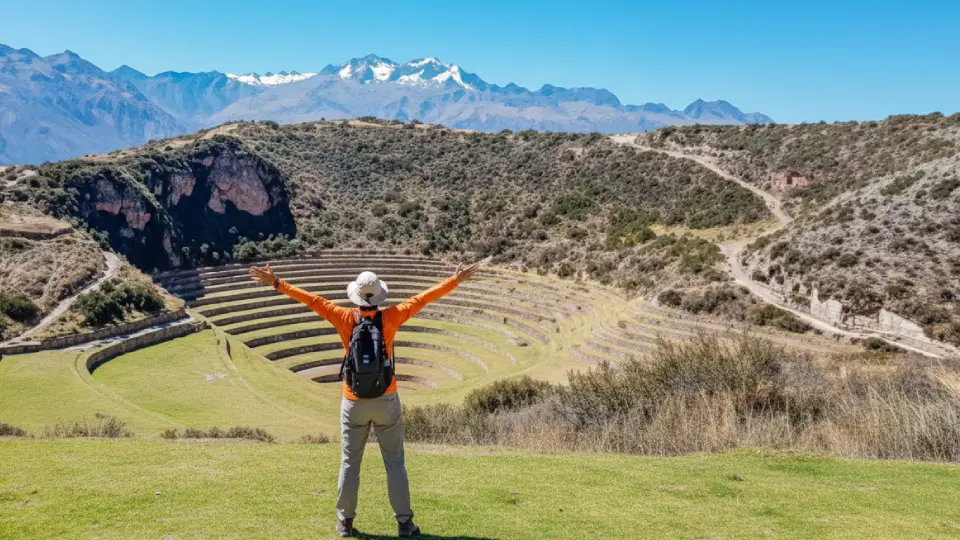
Traveler hiking through the terraces of Moray in Cusco.
The Salkantay Route: more miles and higher altitude
The Salkantay Route is more physically demanding. First, because you’ll cover about 74 km, while the Inca Trail is around 43 km. You’ll also reach Salkantay Pass, at 4,630 meters above sea level. Finally, the day you cross the pass can involve 8 to 10 hours of hiking, so you’ll need endurance and proper acclimatization.
Does the variety of terrain help on Salkantay?
Even so, Salkantay isn’t difficult the entire time. After the most demanding day, the trail starts to descend and the weather becomes more pleasant. Little by little, you leave the cold mountain zone and enter greener areas with vegetation, warmer temperatures, and jungle-like landscapes. That’s why many travelers feel the third and fourth days are more enjoyable.
Which route is harder in a direct comparison?
When comparing both routes, Salkantay is harder because of the distance, altitude, and length of the hiking days. However, acclimatization matters more than physical strength. If you’re well adapted to the altitude, carry little weight, and walk at your own pace, you can complete Salkantay without suffering too much.
On the other hand, the Inca Trail can feel more intense on the second day, especially because of its climbs and stairs. So choose based on your fitness level, hiking experience, and the kind of challenge you want before reaching Machu Picchu.
Costs and permits: Salkantay Trail vs. Inca Trail
The budget also plays a big role when choosing between Salkantay and the Inca Trail. Although both routes lead to Machu Picchu, each one has different prices, permits, rules and regulations, and services. That’s why, before booking, it’s worth comparing what each option includes and which one fits your trip best.
How much does the Inca Trail cost?
The Inca Trail is usually the more expensive option because you need an official permit to enter the route. You also have to hire an authorized agency that includes a guide, porters, a cook, camping equipment, and meals. In general, the classic 4-day tour can cost between USD 600 and USD 1,100 per person, depending on the type of service.
Important note…
You can find cheaper options, but check carefully before booking. Sometimes, a price that is too low means lower-quality gear, less safety, or poor working conditions for porters. So don’t choose only to save money.
How much does the Salkantay Route cost?
The Salkantay Route usually costs less because you don’t need a special permit to hike it. You also have more accommodation and service options. An organized 5-day tour can cost between USD 300 and USD 700 per person, depending on the agency, the type of campsite, and what the package includes.
Camping or glamping: Salkantay your way
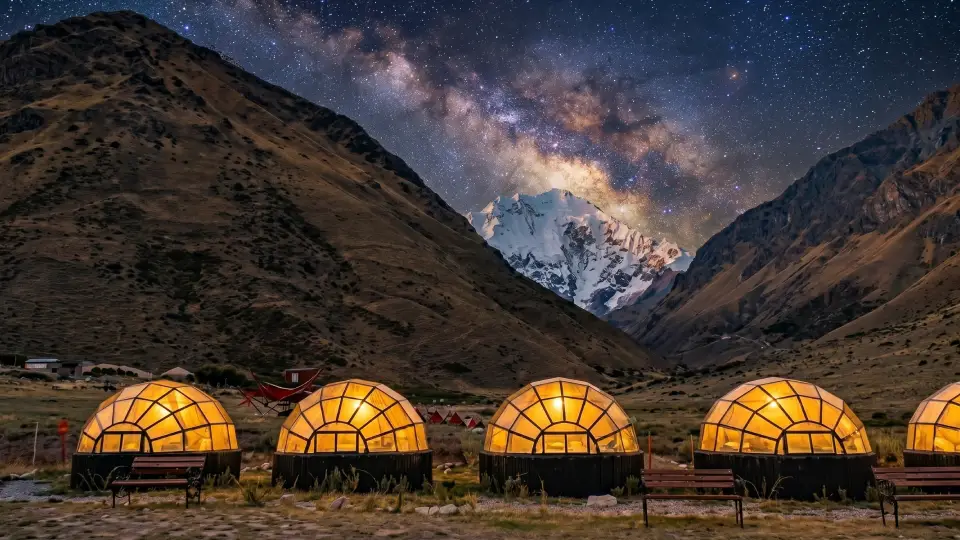
On Salkantay, you can choose how you want to experience the route. If you’re looking for something more affordable and adventurous, traditional camping works very well. But if you prefer to rest better after hiking, you can choose domes, lodges, or glamping-style services.
Starry night in Salkantay during the dry season.
Did you know…
If you’re traveling as a couple, with family, or in a group, Salkantay lodges can be a smart investment. They give you more comfort along the route and, in many cases, still cost less than several Inca Trail options.
About trekking agencies
Before booking any route, take a close look at the agency. Read reviews on Google, TripAdvisor, and social media. Also, ask what the tour includes, what kind of food they offer, what gear they use, and how they care for their porters.
Which route is best for your travel style?
The Inca Trail is right for you if…
You want a cultural experience before reaching Machu Picchu. Choose this route if you want to walk among ancient temples, Inca ruins, and historic trails. It’s also a great fit if you dream of reaching Machu Picchu through Inti Punku, the famous Sun Gate. That said, you need to book several months in advance, have a higher budget, and be willing to share the trail with other travelers.
The Salkantay Route is right for you if…
You’re looking for a more natural, flexible, and adventurous experience. Choose this route if you enjoy snow-capped mountains, lakes, mountain scenery, and jungle landscapes. It’s also a good option if you have a tighter budget, prefer to book with less advance notice, or travel in February, when the Inca Trail usually closes. Plus, if you want a more demanding trek with highly varied landscapes, Salkantay may be a better match for you.
Cost comparison chart: Salkantay Route vs. Inca Trail
Concept
Salkantay
Inca Trail
Special permit
No special permit required
USD 150 – 200
Basic agency service
USD 250 – 380
USD 380 – 500
Premium service / lodges or domes
USD 500 – 700
USD 700 – 900
Machu Picchu ticket
USD 55 – 75
Usually included
Return train to Cusco
USD 70 – 120
USD 70 – 120
Standard duration
5 days / 4 nights
4 days / 3 nights
Estimated total per person
USD 375 – 895
USD 600 – 1,100
Tips for hiking Salkantay or the Inca Trail: climate, equipment and acclimatization
Before choosing between Salkantay and the Inca Trail, prepare your trip carefully. Both routes lead to Machu Picchu, but each one requires planning, proper acclimatization, and the right gear. If you organize these details from the start, you’ll hike more safely and enjoy the trek much more.
Weather on Salkantay and the Inca Trail
In Cusco, there are two main seasons: the dry season and the rainy season. That’s why choosing the right travel date can make a big difference in your experience.
Dry season: May to October
The dry season is usually the best time for trekking. During these months, you’ll find less rain, better trail conditions, and greater visibility. However, there are also more travelers, so if you want to hike the Inca Trail, book in advance.
Rainy season: November to April
You can also travel during the rainy season, but you’ll need to prepare better. The trails can be wet and slippery. Even so, you’ll see greener landscapes, find fewer crowds, and enjoy a quieter experience.
Important note…
The Inca Trail closes in February for maintenance. So if you travel during that month, the Salkantay Route becomes one of your best options.
Best time for each route
Route
Best Season
Recommended Months
Important Note
Inca Trail
Dry season
May, June, July, August, September
Closes in February
Salkantay Route
Dry season
May to October
Available year-round
Acclimatizing in Cusco
Don’t start the trek as soon as you arrive in Cusco. The city sits at more than 3,400 meters above sea level, so your body needs time to adjust. Ideally, spend at least two nights in Cusco before starting the hike. During those days, take it easy, eat light, drink plenty of water, and avoid alcohol.
Choose a responsible agency
Before booking, carefully review the trekking agency. Read reviews, compare services, and ask what the tour includes. A good agency should provide trained guides, quality equipment, proper meals, and fair treatment for its support team.
Food and drinks along the route
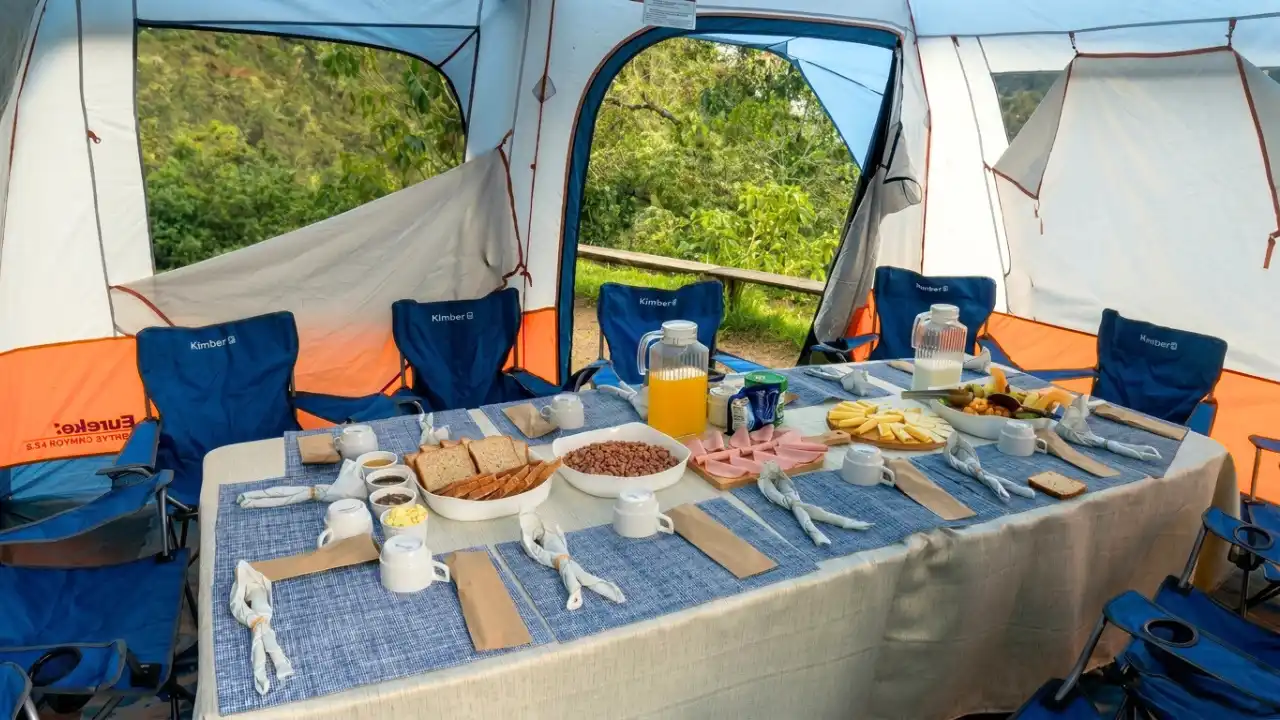
Most agencies include breakfast, lunch, and dinner during the trek. Even so, bring a few personal snacks such as nuts, energy bars, or chocolate. Also, use a reusable bottle or water filter. That way, you stay hydrated and reduce plastic waste.
Important note…
If you still can’t decide, think about your travel time. Some travelers do the Salkantay Route first and leave the Inca Trail for another trip. That way, they get to experience both without having to choose just one.
What to pack for Salkantay and the Inca Trail
To enjoy the trek, bring comfortable, lightweight, and durable clothing. Also, be ready for quick weather changes, especially if you hike the Salkantay Route.
Clothing and footwear
Broken-in waterproof hiking boots
Thermal socks
Thermal base layer
Waterproof jacket
Gloves and beanie
Rain poncho
Backpack and accessories
30 – to 40 – liter backpack
Trekking poles
SPF 50+ sunscreen
Reusable bottle or water filter
Headlamp
Energy snacks
Sunglasses
Insect repellent
Now that you know the differences between Salkantay and the Inca Trail, you can choose with more confidence. Both routes are worth it, but permits, the best travel dates, and Machu Picchu tickets don’t always wait. If you already know what kind of trip you want, now is the time to organize your trek with Uros Expeditions and secure your spot.
Frequently asked questions about Salkantay Trail vs Inca Trail: Which one to choose in 2026?
No. To hike the Inca Trail, you need to book with an authorized tour operator and hike with a certified guide. You cannot do this route on your own because access to the Inca Trail Network is regulated.
Yes, but you need to prepare. The Salkantay Route does not require technical mountain experience, but it does require good physical fitness, endurance, and acclimatization. If you have never done long hikes or are not used to high altitude, start training at least one month in advance. Also, arrive in Cusco a few days before the trek so your body can adjust better.
For the classic Inca Trail, plan for at least 7 days: two days to acclimate in Cusco, four days of trekking, and one day to rest or return at a relaxed pace. For the Salkantay Route, plan for at least 8 days: two days of acclimatization in Cusco, five days of hiking, and one extra day to rest or return.
If you feel unwell during the route, tell your guide immediately. A responsible agency will activate its safety protocol, assess your condition, and, if needed, arrange a descent or evacuation. That’s why, before booking, you should choose a reputable agency with trained guides and clear protocols. Also, report any medical conditions before starting the hike.
You can travel solo, but you will not necessarily hike alone. Many agencies create shared groups with solo travelers. This helps reduce costs and lets you meet other people along the route. If you prefer a more private experience, you can book a private tour. However, it usually costs more.
Yes. On the Inca Trail, you arrive at Machu Picchu through Inti Punku, also known as the Sun Gate. From there, you see the citadel from above before descending. On the Salkantay Route, you usually arrive first in Aguas Calientes. Then you go up to Machu Picchu by bus or on foot. Both routes reach the same destination, but the arrival experience is quite different.
Book the Inca Trail as early as possible, especially if you want to travel between June and August. During high season, permits sell out quickly. For high season, book 6 to 12 months in advance. For shoulder or low season, try to book 2 to 4 months in advance.
Editor in Cusco, Peru with the soul of an explorer
My name is Napoleón Arcondo. I live in Cusco and I write about what I’m passionate about: Peruvian history, education, and the reality of our country.
My work involves conducting in-depth research, verifying facts, and translating complex topics into simple, clear, and useful articles. Whether I’m exploring our cultural heritage or writing practical and informative guides about modern-day Peru, I strive to ensure that every piece is well-researched and addresses what people really need to know. I write from Cusco with the goal of sharing well-researched knowledge with readers across the country.