
Pilgrimage to the Lord of Qoyllority 2026: Route, Climate and Survival
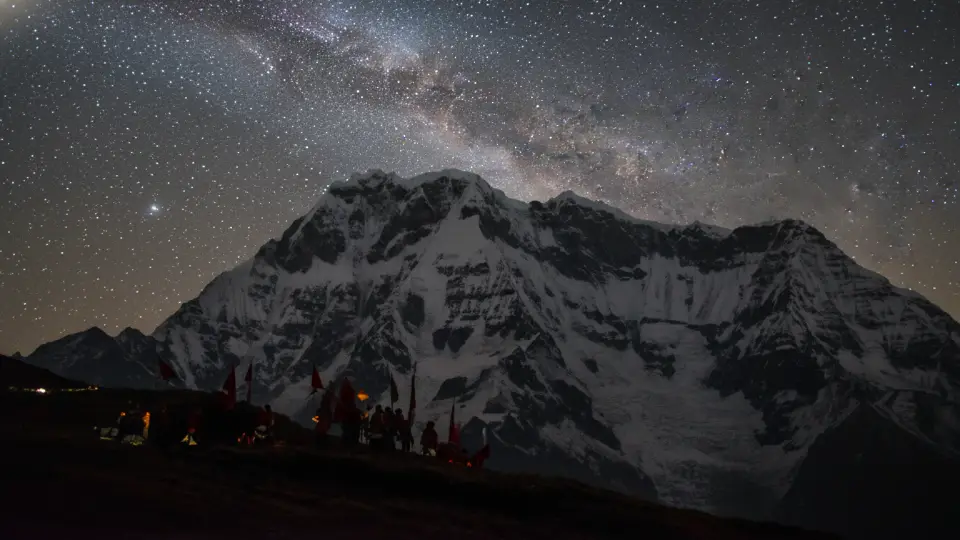
The Qoyllur Rit’i experience begins with a challenge: minus five degrees Celsius and 4,800 meters above sea level. Imagine a glacier illuminated by stars and thousands of pilgrims dancing to the rhythm of quenas and drums. This isn’t a movie; it’s the most extreme, mystical, and secretive festival in Cusco. If you’re looking to go beyond traditional tourism in Peru, pack your backpack. Here’s how to survive (and enjoy) this adventure.
How to make a pilgrimage to the Lord of Qoyllority step by step
Qoyllority is a major challenge. If you’re a traveler who hates packaged tours, loves trekking, and is looking for a cultural immersion that will test both your physical and mental endurance, you’re in the right place. In this blog, I’ll walk you through the exact step-by-step route, insider tips, how to get there, what to pack, how much it costs, and everything you need to know to survive (and not freeze) on the most epic adventure you’ll experience in Cusco.
What does the name “Qoyllority” mean?
This name “Qoyllority, Qoyllur Rit’i, Qoylloriti” comes from the Quechua language and is made up of two words: Qoyllur (star) and Rit’i (snow), which translates to “Lord of the Shining Snow” or “Lord of the Snow Star.”
Did you know..
The name Qoyllority represents the perfect fusion between the ancient Andean worldview which holds deep respect for the Apus (sacred mountains) and the stars, such as the Pleiades and the Catholic faith introduced during the colonial era.
Where is the Qoyllority Sanctuary located?
The Sanctuary of the Lord of Qoyllority is located in the Vilcanota mountain range, within the Sinakara Valley, between the communities of Mahuayani (Mawayani) and Tayancani, in the district of Ocongate, province of Quispicanchi, in the Cusco region of Peru right at the foot of the Colquepunku glacier and very close to the imposing Apu Ausangate.
Important note…
The sanctuary sits at a challenging altitude of approximately 4,800 meters (15,748 feet) above sea level. It’s essential to understand what you’re up against the altitude demands respect, proper acclimatization, and a great deal of determination.
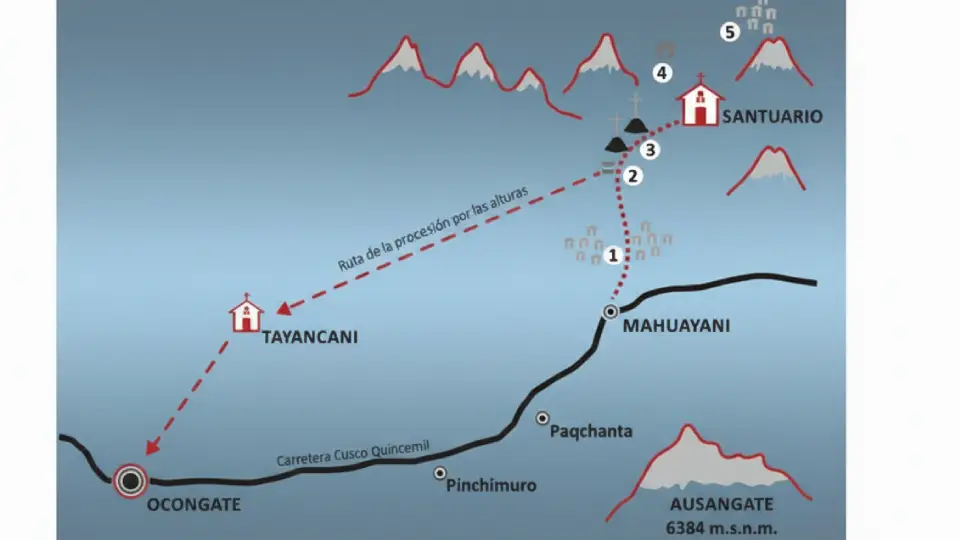
How to get to the Qoyllority Sanctuary from Cusco?
Getting there involves several stages. Follow these steps to arrive successfully:
From Cusco to Mahuayani
- Public transportation: First, take a bus or shared van (colectivo) from the city of Cusco in Huayruropata (near the indoor coliseum, from 4:00 a.m. to 6:00 p.m.) heading to the town of Mahuayani. You’ll enjoy a 3 to 4-hour ride along a paved road, with a cost of about 15 soles per person.
- By your own car: If you decide to drive, take the Cusco–Sicuani route. After about 2 kilometers, turn left onto the road toward Puerto Maldonado. Along the way, I recommend stopping to visit archaeological sites such as Pikillacta, Andahuaylillas, and the relaxing hot springs of Urcos, located near the town of Tinki (in Ocongate).
From Mahuayani to the Qoyllority Sanctuary
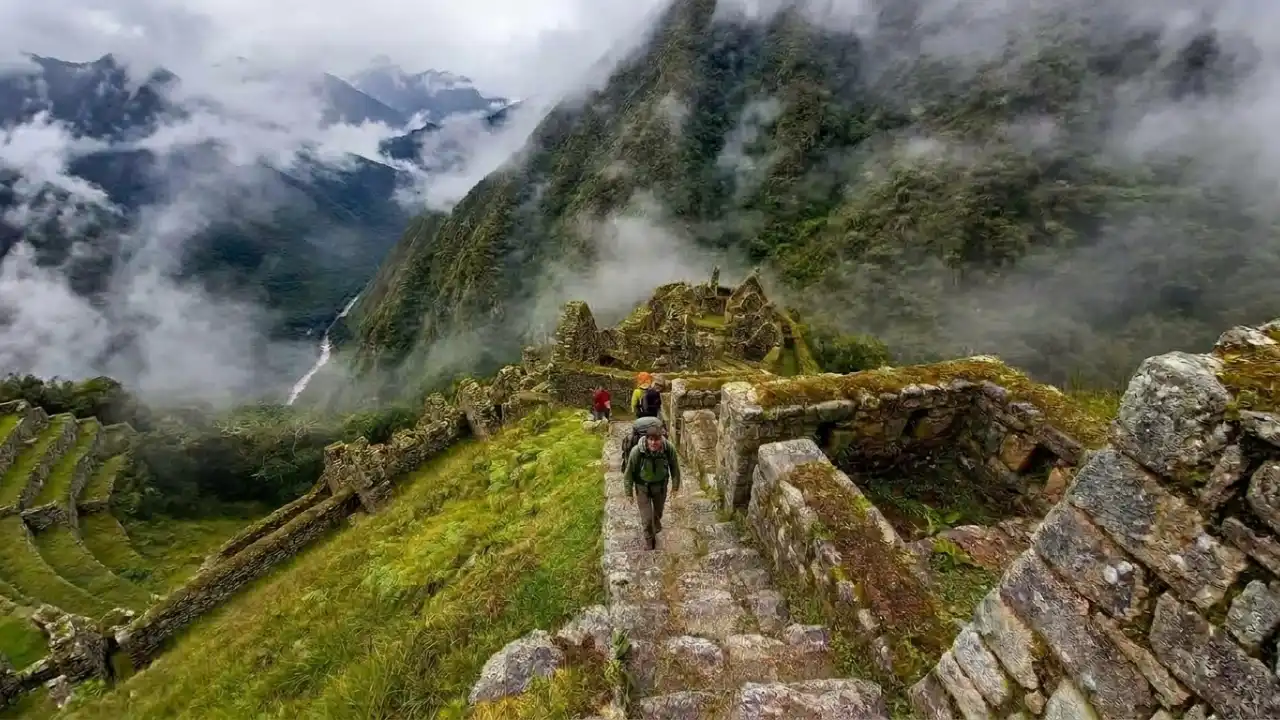
This is where the real challenge begins. From here, you’ll start an uphill trek of 8 kilometers with a steady climb. Depending on your physical condition and prior acclimatization, it will take you between 3 and 5 hours.
Traveler tips…
If you don’t feel physically prepared to handle the altitude, you can rent a horse or a motorbike in Mahuayani. However, keep in mind that the final steep section must always be completed on foot as a sign of devotion and deep respect.
What is the weather like in Qoyllority?
During your pilgrimage to the Taytacha, or Lord of Qoyllority, the weather will be cold at all times and for good reason. Remember, you’ll be walking right at the base of a glacier!
- During the day: temperatures range from 10°C to 18°C, with icy winds typical of high mountain peaks.
- At night: the cold intensifies dramatically, with temperatures dropping to between -5°C and 0°C. You might even be surprised by a magical snowfall!
History and Legends of the Lord of Qoyllority
The First Travelers of Qoyllority
Since pre – Columbian times, the ancient Amazonian peoples known as the “Pinaguas” and “Cuyos” traveled through these. During their journeys, they traded dried meat (charqui) for coca leaves with the ayllus of Quispicanchi and Paucartambo. This constant exchange strengthened ties between communities, giving rise to deep respect and the earliest rituals honoring the sacred mountains.
The Guardians of the Glacier
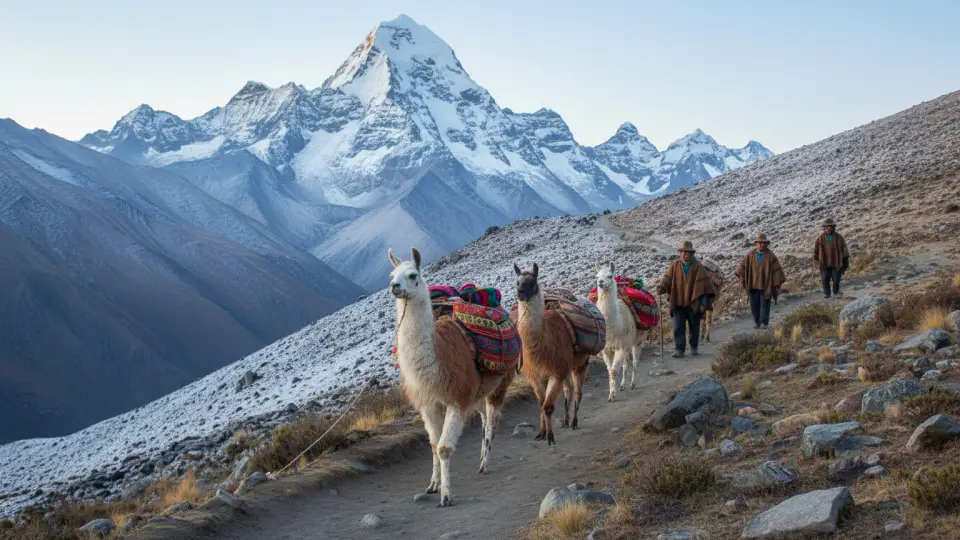
In the 15th century, the Inca Yáhuar Huácac sent his troops to conquer the Amazon. Later, the great Pachacútec incorporated the Inca Empire and the ancient “Pinaguas,” affectionately calling them “llamichos” and paqocheros” for their exceptional alpaca-herding skills. Recognizing their loyalty and ability, the Incas entrusted them with controlling this vital jungle route and the veneration of the glacier.
Inca Pilgrimage to the Mountain of the Lord of Qoyllority
When the stars signaled the feared “Oncoymita Season,” Inca priests undertook a nighttime pilgrimage to the sacred glaciers to pray for healing from disease and fertility for the land. There, high in the mountains, they performed ceremonies and offered sacrifices for the well-being of their people.
Inca Ritual of Greeting the Sun
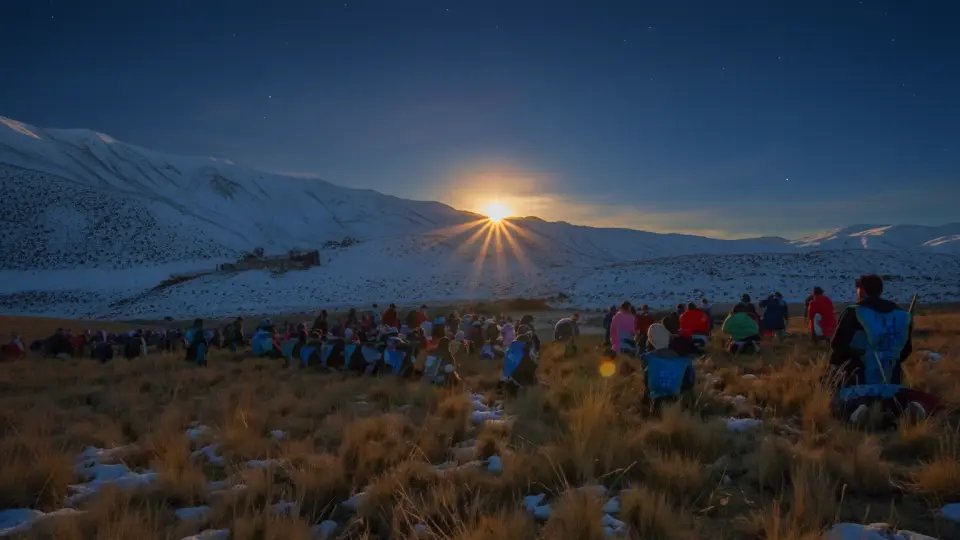
After a harsh and freezing night, they eagerly awaited the arrival of Tayta Inti (the Sun God). At dawn, they greeted the first rays with ceremonies, music, and joyful dances, giving thanks for the warmth that saved their lives from the cold and asking for fertility in the new agricultural cycle.
Did you know..?
- These herders deeply worshipped Ausangate, considering it the sacred father of the glaciers Qulqipunku and Sinakara. This region became the most heavily traveled trade route between Cusco and the Antisuyo, playing a key role in the integration of the empire.
- This area became the most traveled and controlled route for trade between Cusco and the Antisuyo, where goods were exchanged, making it a crucial corridor for connecting different regions of the empire.
The Birth of the Qoyllority Sanctuary
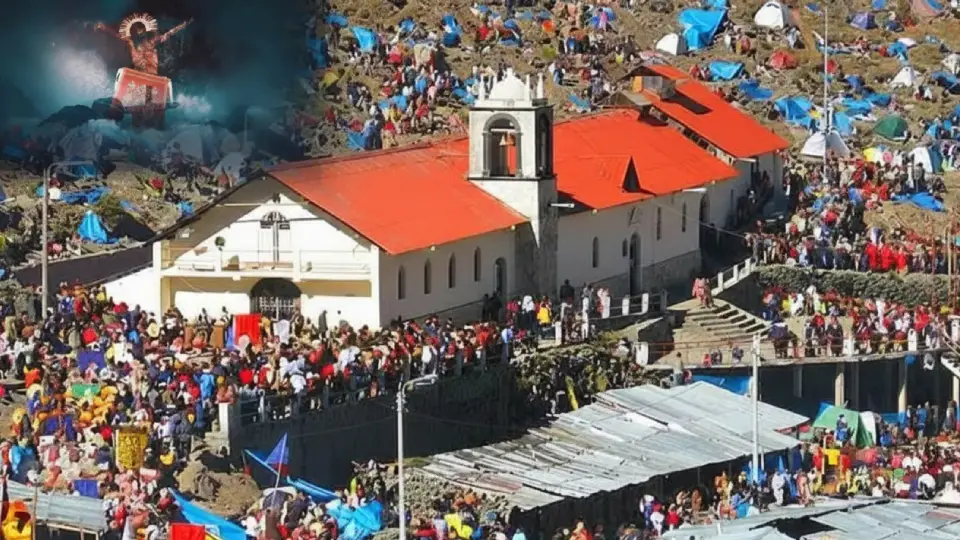
During the colonial period, evangelizers transformed the llamichos of Ausangate into devoted Catholic pilgrims. The Church replaced their ancient sacred Waca with the current sanctuary of the Lord of Qoyllur Rit’i, adapting the ancestral Andean celebration to the festivities of Corpus Christi in order to consolidate the new faith.
The Catholic Legend of the Child Manuel and the Shepherd Mariano Mayta
According to a legend from 1780, Marianito Mayta, a young shepherd from Mahuayani, was tending his llamas on the slopes of the Sinakara glacier. Suddenly, a mysterious light-skinned boy named Manuel appeared out of nowhere to keep him company. The child became his friend, helping him with daily tasks and easing the hardships of life in the cold mountains.
The Journey to Cusco and an Unexpected Revelation
Some time later, Marianito noticed that Manuel’s worn tunic never seemed to get dirty. Curious, the shepherd traveled to Cusco to buy him new fabric, only to discover that the fine cloth was reserved exclusively for bishops. Upon hearing this, Bishop Moscoso became intrigued and sent the parish priest of Ocongate to investigate the mystery.
The Final Fate of a Celestial Friendship
When the priest tried to capture Manuel, the boy emitted a blinding light that prevented anyone from approaching him. Days later, the priest returned with more people; but upon seeing them, Manuel fled toward the rocks and mysteriously disappeared. In that same place, Marianito was found dead beside a tayanka bush shaped like a cross, where he was later buried.
The Lord of Qoyllority Today
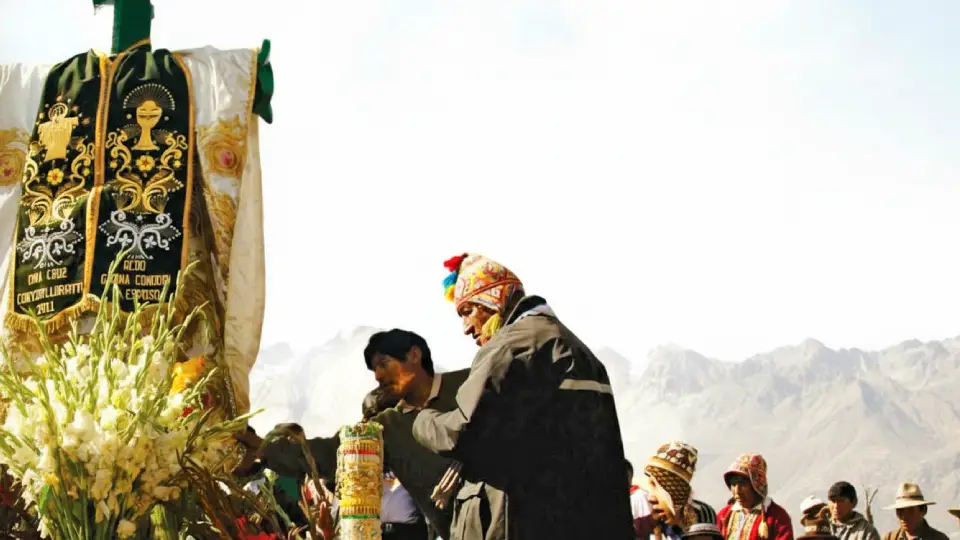
Today, thousands of pilgrims visit the snowy sanctuary of the Lord of Qoyllur Rit’i. As musicians play pututus, quenas, and drums, all the nations burst into euphoric dance. This beautiful celebration shows that Catholicism never erased the Inca religion both beliefs learned to coexist in the ice.
Important Facts…
- 1780: Túpac Amaru held secret meetings in Sinaqara with the kurakas of Cusco in an attempt to restore the Inca Empire.
- 1783: On June 23, the miraculous event that gave rise to the devotion to Qoyllur Rit’i took place.
- 1932: Priests Adrián Mujica and Ezequiel Arce wrote the first official version of this sacred story.
When is the Lord of Qoyllority celebrated in 2026?
The festival of the Lord of Qoyllur Rit’i changes dates each year because it follows the Andean calendar and Corpus Christi. In 2026, the main celebration will take place from June 15 to 18, offering an unforgettable experience.
Recognitions of the Lord of Qoyllority
- In 2004, the Peruvian government officially declared the sanctuary and its festival a National Cultural Heritage.
- Shortly after, in 2011, UNESCO also recognized it as an Intangible Cultural Heritage of Humanity.
Dances, traditions and rituals of Qoyllority
The Eight Nations and Their Colorful Dances
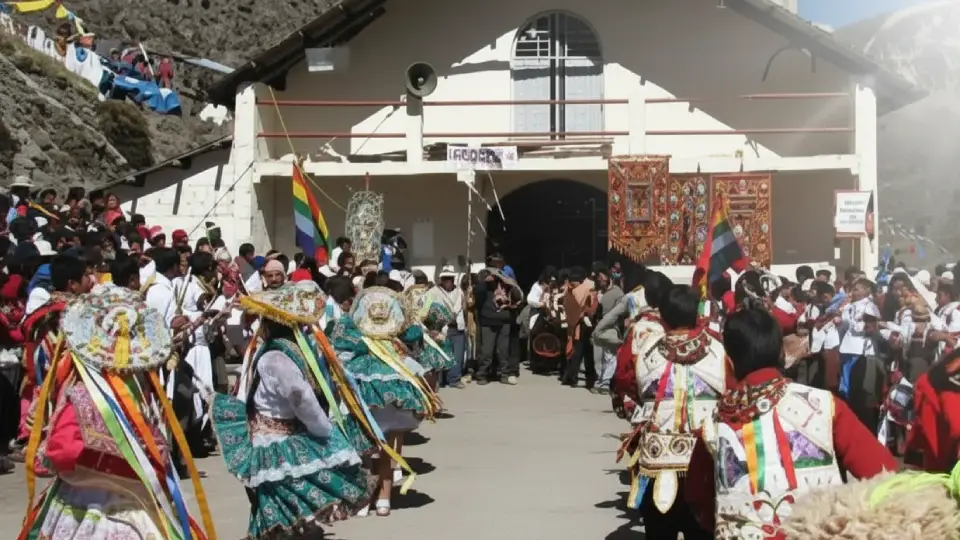
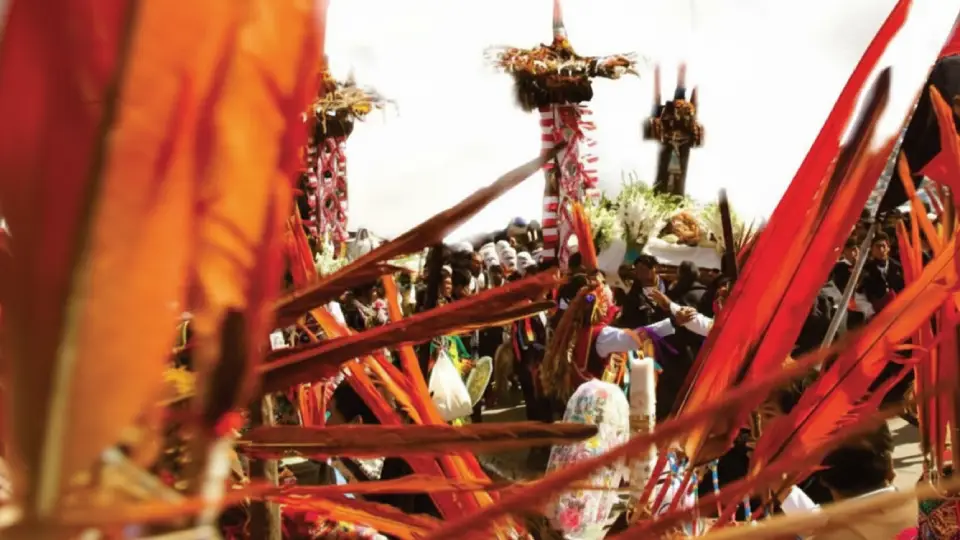
During your stay, you’ll encounter the eight delegations, or “nations,” representing regions such as Paucartambo, Quispicanchi, Tahuantinsuyo, Canchis, Paruro, Anta, Urubamba, and Acomayo. You’ll notice that each group stands out with vibrant banners and traditional outfits that shine under the sun. At the same time, thousands of devotees dance nonstop to the rhythm of live bands that make the ground tremble.
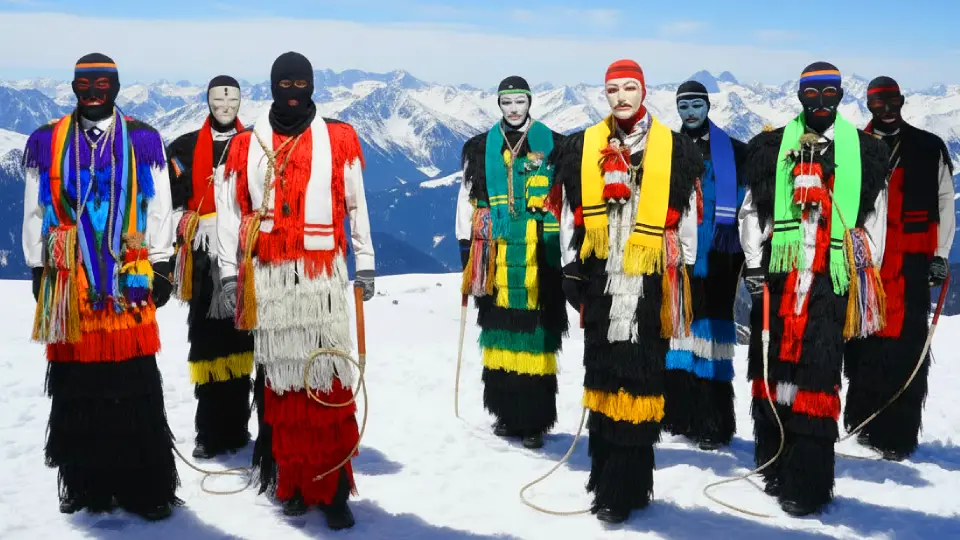
Wayri Ch’unchu
The agile warriors of the ancient Cuyos represent the people of the Amazon rainforest, who have made this pilgrimage to the mountain since ancient times. Because of their loyalty, Andean tradition recognizes them as the first to dance for the Lord during the festival. For this reason, they are considered the most beloved dancers and the closest protectors of the sacred image.
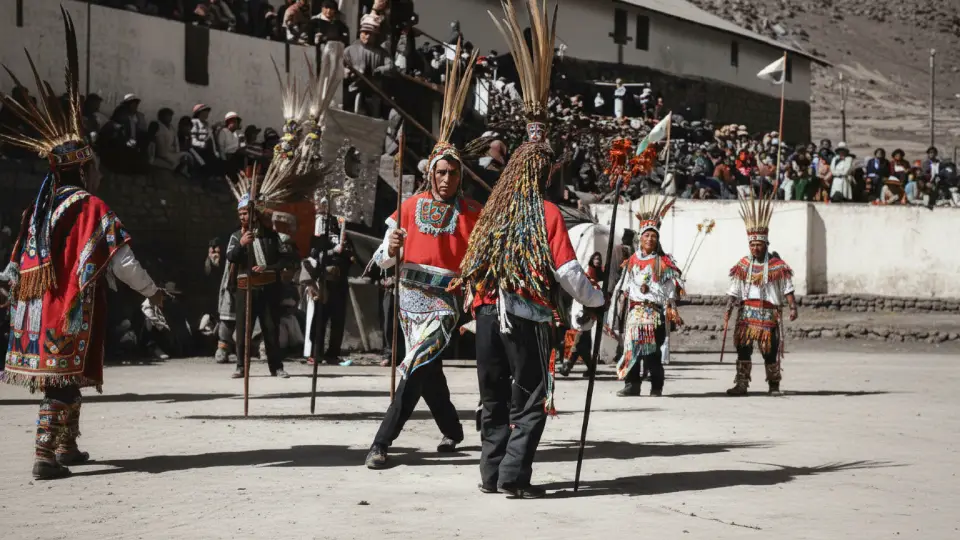
The Qhapaq Qolla
Their name means “Lords of the Altiplano” because they represent wealthy traders who came from the highlands of the south. As you watch them, you’ll notice their dance tells the story of how these men carried goods from distant lands on their llamas. Their songs carry a sense of nostalgia for the long journeys they once traveled, inviting us to remember the ancient mountain travelers with affection.
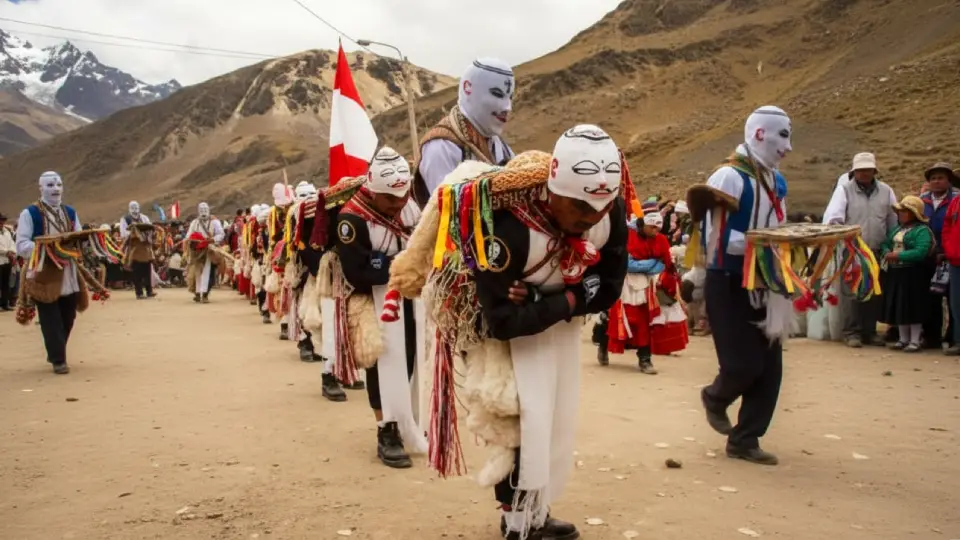
Qhapaq Chunchu and Chunchachas
The term “Chunchu” was a friendly name used by ancient Peruvians to refer to the people of the deep jungle. The word “Qhapaq” is added because they represent the most powerful and noble warriors of the Amazon. Meanwhile, the Chunchachas are the brave women who proudly display their jungle beauty—ancient female pilgrims of the great mountain.
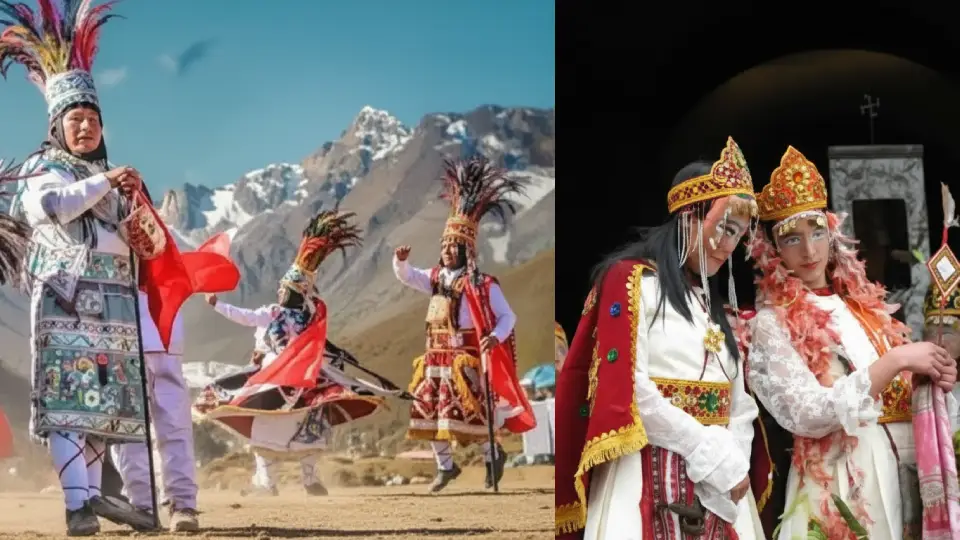
The Puka Pakuri
In the Quechua language, their name literally means “Red Guardians,” referring to the striking color of their feathers. They symbolize the warriors who protect the treasures and secrets of the jungle. Because of this role, they always lead the way, opening paths and offering spiritual protection to all pilgrims. Since pre-Inca times, they have been regarded as vigilant guardians of both the mountain and the rainforest.
Ukukus or Pablitos
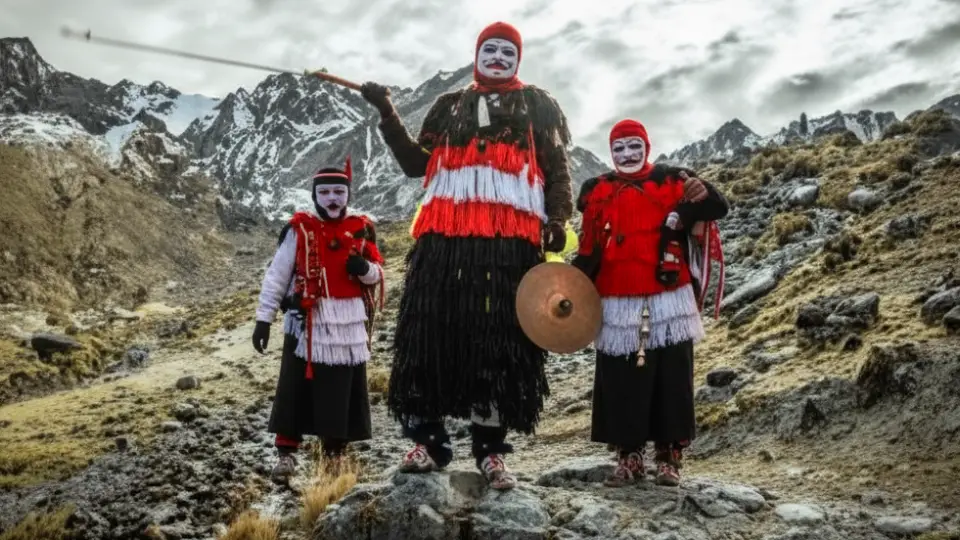
These characters are called “ukukus” because they represent the spectacled bear, the most sacred animal of the cloud forest. They are also affectionately known as “pablitos” due to an ancient legend that blends their strength with Christian faith. Because of their unique origin, they are the only ones who can communicate with the glacier and bring back sacred ice. In this way, their name connects us directly to the soul and mystery of the sacred mountain.
What to see at the Lord of Qoyllority festival?
As you arrive at the sanctuary, music and color will instantly overwhelm your senses. That’s why I recommend having your camera ready and your eyes wide open so you don’t miss a single detail. Rather than just being a spectator, respectfully join in the dances to truly feel the energy of the celebration. This way, you’ll experience a unique spiritual journey you’ll remember forever with a big smile.
Take Part in the Sanctuary of the Lord of Qoyllority
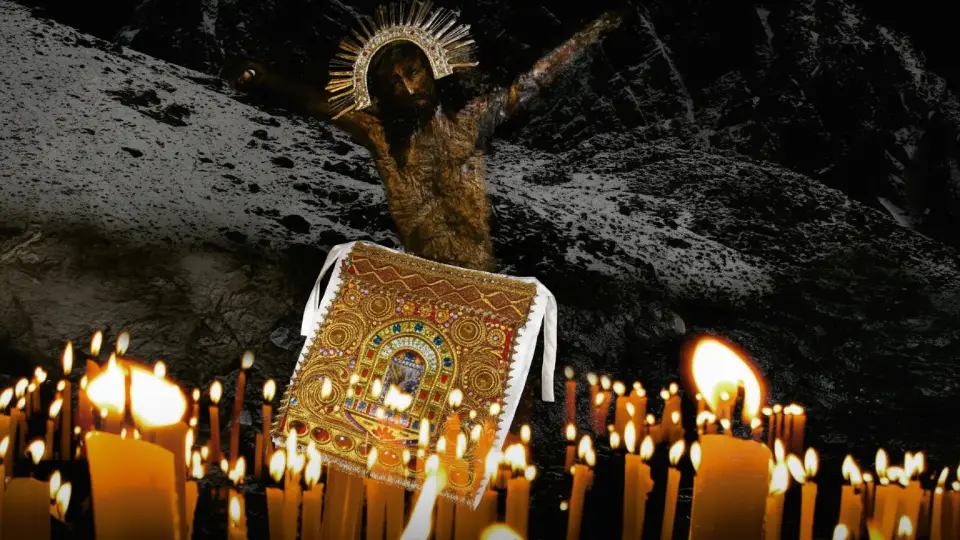
Enter the main temple with patience, as the lines are long, to closely observe the sacred rock bearing the image of Christ, where you can leave offerings, flowers, candles, or simply make a prayer for prosperity.
Enter the Temple with Respect
To visit the Lord, patiently make your way into the main temple and join the lines of devoted pilgrims. Once inside, you’ll see the image of Christ, where you can light a candle, leave flowers, or simply ask for health and prosperity for your family. As you leave the sanctuary, you’ll feel renewed energy and a special connection with the sacred mountain.
Stay Warm and Embrace the Experience
One of the best ways to enjoy and engage in the festival is by joining the locals share a hot drink or dance along with the groups to keep your body moving. This not only helps you stay warm, but also creates unforgettable, meaningful moments always with respect.
Explore the “Alasitas” Miniature Market in Qoyllority
If you’re ready to dream big, visit the “alasitas” market, where everything is sold in miniature form. At this fair, you can buy tiny houses, cars, or even university degrees that represent your deepest wishes. According to tradition, if you purchase these items with strong faith, the Lord of Qoyllur Rit’i will grant them to you in real life. It’s the perfect place to visualize your goals while having fun like a child.
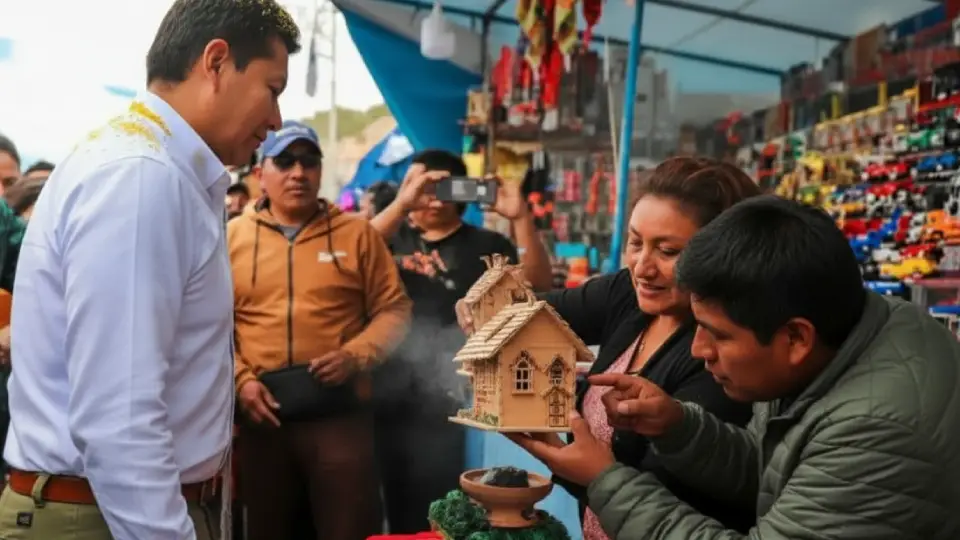
What exactly are Alasitas in Qoyllority?
Alasitas is a miniature fair where you can find just about anything you could wish for in real life turning play into something deeply meaningful.
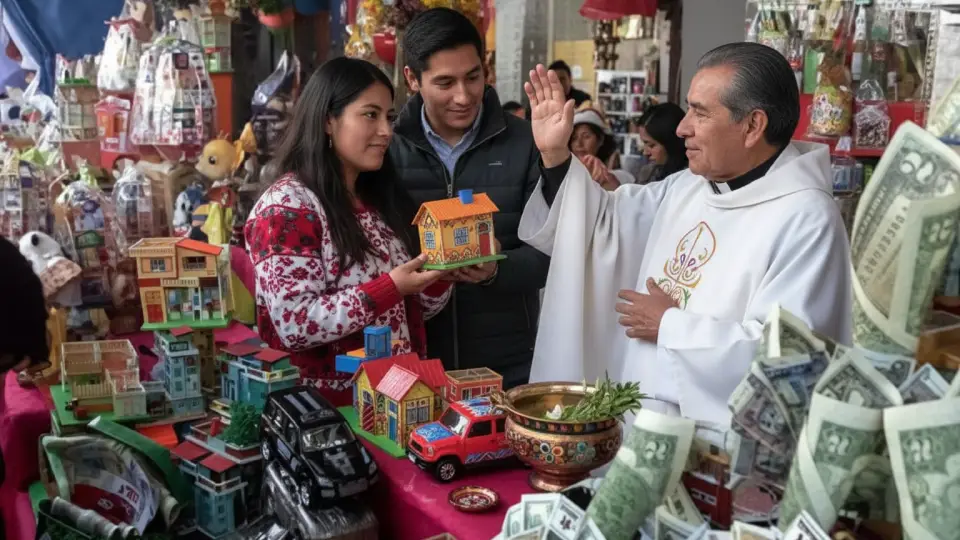
Discover How to Turn Your Wishes into Real Miracles Each Year
Do you want a passport full of visas, stacks of dollar bills, or something else? Here, you simply buy miniature versions made of plaster, paper, or plastic, and ask the Lord of Qoyllority with faith to grant them to you in real life over the year. Don’t leave without officially registering your own alasita with the judges and receiving the Lord’s blessing!
Meet the Mysterious “Ukukus or Pabluchas”
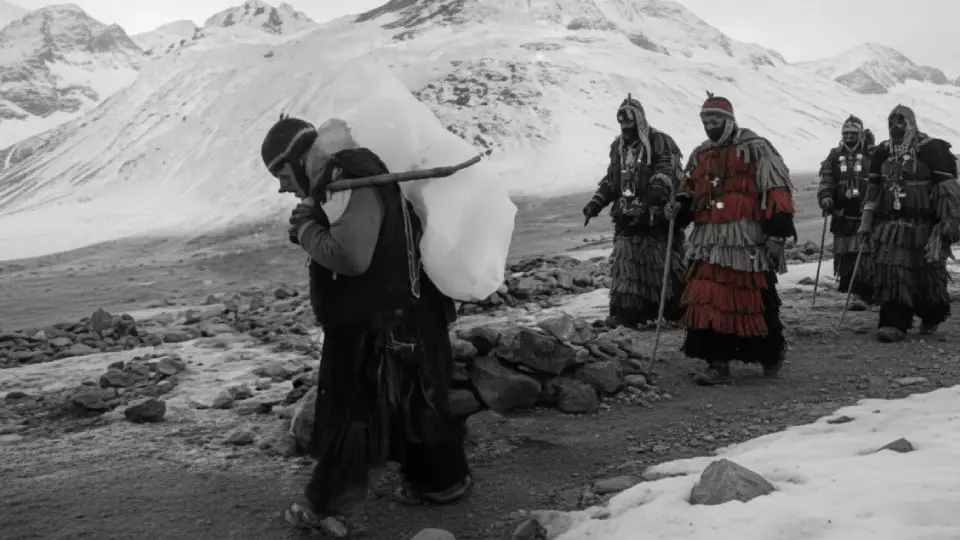
Along the way, you’ll encounter the ukukus, the famous bear-men who act as brave guardians of the ice. You’ll recognize them instantly by their woven wool masks and the high-pitched voice they use to conceal their identity.
The Myth of the Bear-Man
Did you know the ukuku is the legendary child of a woman and a spectacled bear? Because of this origin, his hybrid nature gives him the magical power to act as a sacred mediator. Thanks to this gift, he is the only being capable of communicating with humans, the Apus, and the souls of the purgatory. In this way, this mythical figure connects the earthly world with the spiritual realm throughout the entire festival.
Their Distinct Identity
You’ll recognize the ukukus immediately by their Waq’ollo, a woolen balaclava that mysteriously conceals their faces. They also carry a Zurriago, a leather whip used to maintain sacred order during the festival. At the same time, they speak in a high-pitched voice to keep their identity hidden.
The Sanctuary’s Enforcers
During the pilgrimage, the ukukus are more than dancers—they are the highest authority. They act as guardians of order. If they see someone drinking alcohol (which is strictly forbidden in the sanctuary), fighting, or showing disrespect to the mountain, they won’t hesitate to administer punishment. It’s fascinating to see how thousands of people follow their authority without question.
Climbing the Glacier and Climate Change
In the past, the ukukus would climb the Colquepunku glacier at dawn. There, they would battle restless spirits and break off large blocks of ancient ice. They then carried these sacred chunks back to their communities, as people firmly believed in their healing powers. In this way, the blessed ice became the mountain’s most treasured gift for healing the people.
Important Note…
Today, the ukukus no longer extract ice in order to protect the glacier from climate change. The nations have banned this practice as a powerful act of respect for the Apu. Although they still climb the mountain at dawn for their rituals, they now return empty handed ensuring the future of their sacred mountain.
Witness the Sun Greeting Ritual (Inti K’anchaq)
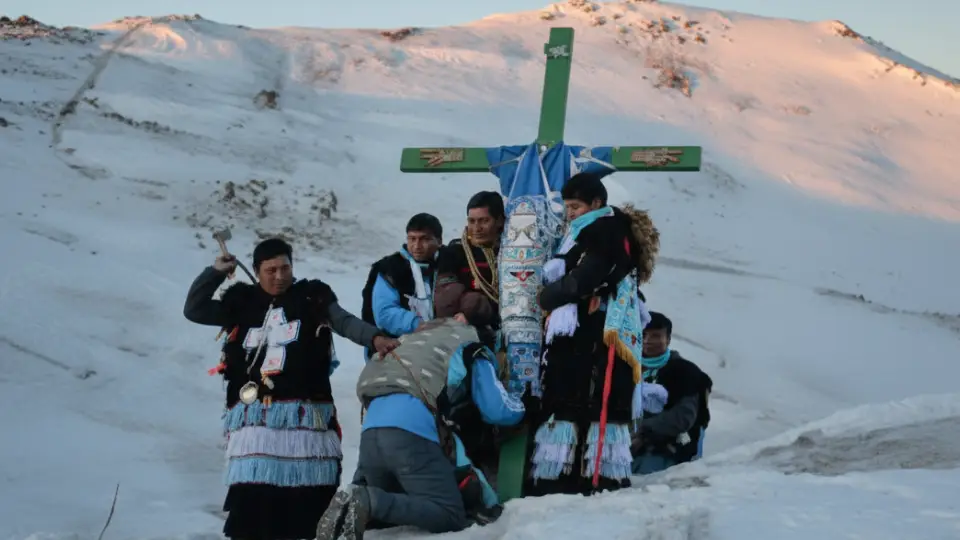
The Inti K’anchaq is an Inca ritual whose Quechua name means “the light of the sun” or “the sun that illuminates.” It is a tribute to the sun god Inti and the most anticipated spiritual moment of the Qoyllur Rit’i pilgrimage. It begins at 5:00 a.m., when thousands of people – especially ukukus and dancers – gather in the plains of Sinakara and along the slopes of the glacier, all facing east as they await the first rays of sunlight.
Did you know…
In an almost choreographed moment, tens of thousands of people drop to their knees on the frozen ground at the same time. Men remove their chullos and hats, and a profound silence broken only by the emotional cries of some pilgrims fills the entire valley.
Recommendations to brave the -10°C of Qoyllority!
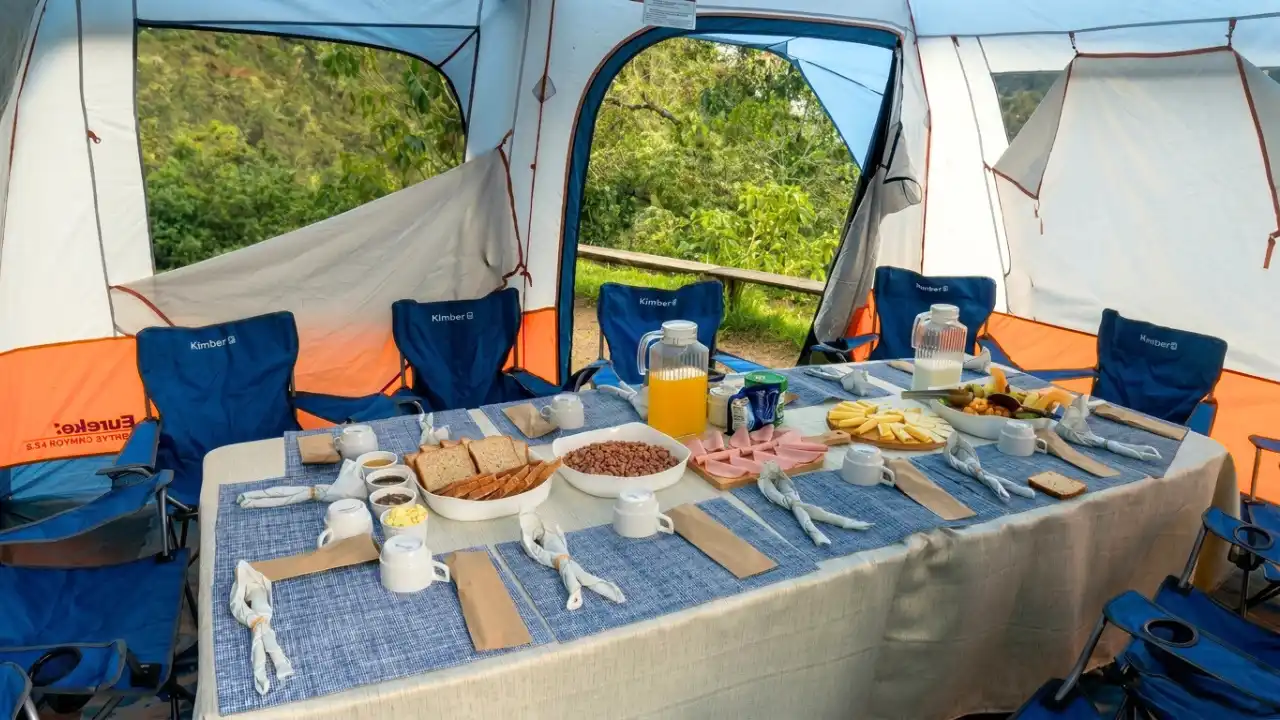
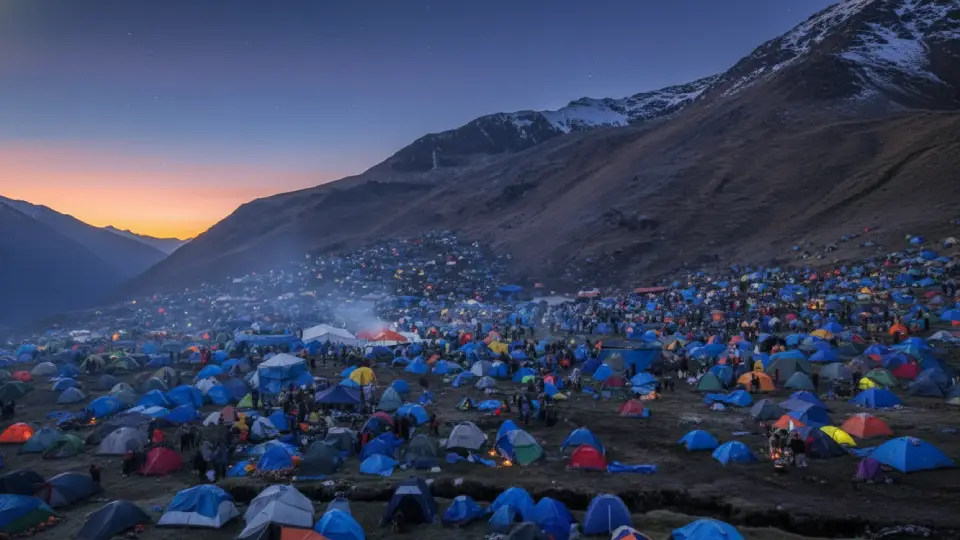
I went to the Qoyllority glacier, and here’s what no one tells you about the freezing nights at the Sinakara sanctuary. Without a doubt, this is the ultimate test of the pilgrimage—at 4,800 meters (15,748 feet) above sea level, survival is everything. You won’t find boutique hotels or heated lodges here; you’ll be sleeping in tents! It’s a raw, real, and wonderfully extreme experience.
How to Prepare for the Lord of Qoyllority Pilgrimage
- Do strength and endurance training for at least two months before your trip.
- Acclimatize in Cusco (3,400 m / 11,155 ft) or the Sacred Valley (2,800 m / 9,186 ft) for at least 3 – 4 days to help your body adjust to the altitude.
- Go on short, progressive hikes (such as Sacsayhuamán or Chinchero) to gently push your lungs.
- Sleep at intermediate altitudes before attempting a night at nearly 5,000 meters, such as Waqrapukara.
How to Sleep Without Freezing at 4,800 Meters in Qoyllority
To make your night memorable for its magic – not hypothermia you’ll absolutely need a high-quality tent. Remember, the biggest danger doesn’t come from the air, but from moisture seeping up from the ground. That’s why it’s essential to place a good thermal sleeping pad before setting up your shelter. This will help retain body heat and allow you to rest comfortably in the mountains.
Mountain Survival Kit
- High-altitude tent (at least 3 – 4 season rated).
- Extreme cold sleeping bag (comfort rating of -15°C / 5°F).
- Thick insulated sleeping pad.
Important Note…
If extreme cold intimidates you, you can stay in basic hostels in Ocongate or Mahuayani and hike up at dawn between 1:00 and 2:00 a.m. Just keep in mind – you’ll miss the vibrant nighttime experience.
Your Best Allies Against Hypothermia in Qoyllority
Always carry a good thermos and keep it filled with hot chocolate, coca tea, or a comforting fava bean drink (ponche de habas). You can also take advantage of the hot drinks sold on-site to maintain your body temperature. At the same time, eat easy-to-digest carbohydrates, chocolate, and nuts – these calories will be your best defense against the cold.
How to Dress for Qoyllority
- Thermal pants and shirts (base layers). Warning: Avoid cotton – it traps moisture and will make you freeze in the wind.
- A good fleece jacket or thick sweater. This is the perfect time to wear that alpaca wool sweater you bought at San Pedro Market!
- A windproof and waterproof jacket and pants.
- Waterproof trekking boots.
- Wool socks.
- Bring a chullo (Andean hat), thermal waterproof gloves, and a neck gaiter (buff).
What to Pack in Your Backpack to Survive Qoyllority
- Sunscreen SPF 50+, lip balm, and UV-protection sunglasses.
- Altitude sickness pills and rubbing alcohol.
- Headlamp with extra batteries.
- Cash (coins and small bills), as there are no ATMs or mobile payment options.
What to Eat During the Qoyllority Pilgrimage
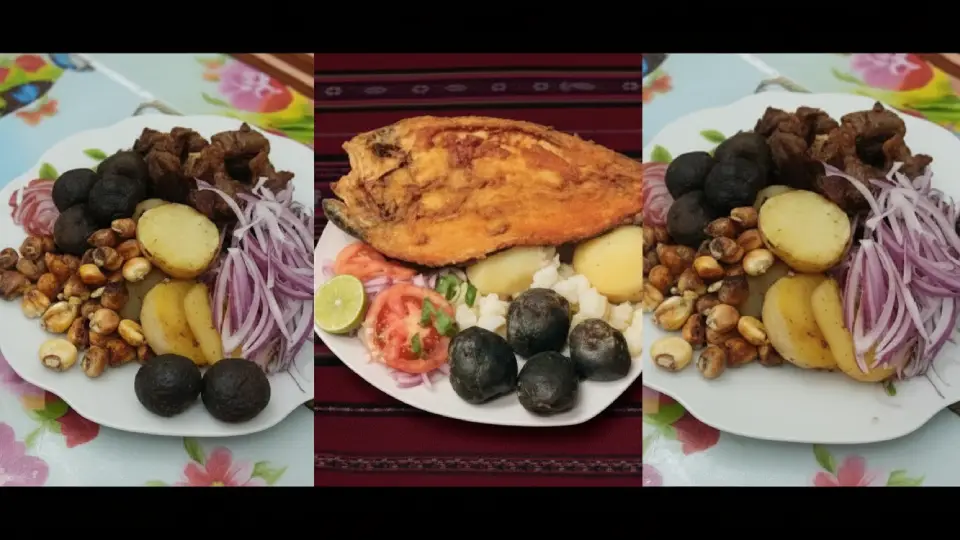
Along the route and at the campsite, you’ll find tents offering traditional dishes and hot drinks. You can recharge with alpaca chicharrón, fresh trout, or a hearty chicken soup cooked over firewood. So eat well with Peruvian food and bundle up—don’t let anything stop your experience at the sanctuary.
What to Do in Case of Altitude Sickness
- First, stop and find a quiet place to sit if you feel dizziness, nausea, or unusual weakness.
- Then, breathe slowly and deeply while hydrating with coca leaf or muña tea to recover.
- Descend immediately to a lower altitude if symptoms persist or don’t improve with rest.
- Finally, remember you can always seek help at first aid stations – your well-being comes first!
Safety Tips
- Hold your trekking poles firmly to maintain balance at all times.
- Take slow, steady steps to avoid slipping on steep terrain.
- Avoid stepping on wet areas or puddles, as they can freeze and become extremely dangerous.
- Learn to distinguish normal fatigue from symptoms of altitude sickness.
Code of Conduct in Qoyllority
- Respect all pilgrims and avoid any form of discrimination along the way.
- Maintain the peaceful atmosphere – do not interrupt or interfere with sacred rituals.
- Avoid alcohol consumption, as it is strictly prohibited throughout the pilgrimage.
- Remember that climbing the glacier is not allowed, in order to protect this sacred area.
| Activities | Approx. Cost (Peruvian soles) | Recommendations |
| Cusco – Mahuayani Bus Fare | S/ 40.00 to S/ 50.00 | Return fare is usually around S/ 60.00 |
| Local Food | S/ 70.00 | Chicken soup, hot drinks, and chicharrón at campsite tents (approx. S/ 10–15 per dish) |
| Horse Rental (Optional) | S/ 60.00 – S/ 90.00 | Applies only for the ascent (Mahuayani – Sinakara). Ideal if altitude hits you hard! |
| Extra Expenses | S/ 30.00 – S/ 50.00 | Candles, coca leaves, restroom use (latrines), and miniature items at the “Alasitas” market. |
| Estimated Total (including horse) | S/ 120.00 to S/ 260.00 |
Alternative Routes: Live your trip to Qoyllority to the fullest!
Since you’re already in the beautiful province of Quispicanchi, take advantage of your acclimatization to explore nearby places such as:
Trekking to the Ausangate Glacier
If you’re a true mountain lover, connect the festival with the classic Ausangate circuit to take on the highest peak in Cusco. This way, you’ll turn your pilgrimage into an unforgettable expedition through some of the most breathtaking landscapes in the Andes.
7 Lakes Circuit and Pacchanta
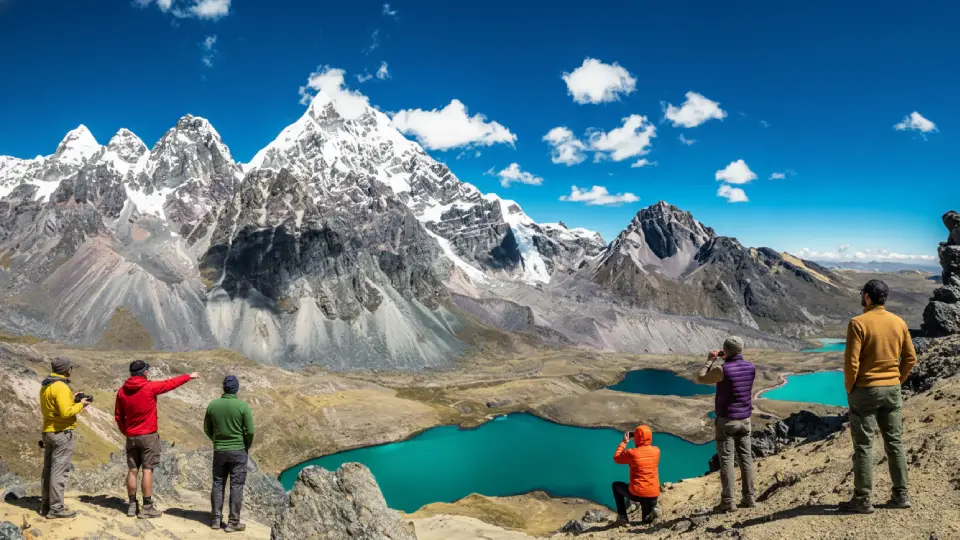
Take a one day hike to admire surreal turquoise colored lakes. Then, wrap up your journey with a relaxing soak in the Pacchanta hot springs a perfect reward for your muscles after Qoyllority.
The Andean Baroque Route
On your way back to the city of Cusco, stop in the towns of Ocongate, Urcos, and Andahuaylillas to admire their stunning colonial churches, world-famous for their vibrant frescoes.
“What about you would you dare to hike in -10°C temperatures to experience the heart of the Andes, or would you prefer a more relaxed trip? Drop your questions or comments below! And if you found this article helpful, don’t forget to share it with that adventurous friend you’d take on this wild journey with.”
Frequently asked questions about Pilgrimage to the Lord of Qoyllority 2026: Route, Climate and Survival
You can absolutely go on your own! Traveling independently is very affordable you’ll only pay for transportation, local food, and a camping spot. However, if you don’t want to carry a heavy backpack with your tent and sleeping bag up to 4,800 meters (15,748 feet), hiring a local agency is a great option. They handle the heavy logistics (pack horses, camp setup, and meals), allowing you to enjoy the hike with a lighter pack.
Forget about showers and comfort you’re in a high-altitude camp. You’ll find very basic public restrooms and latrines set up for the festival, but lines can be long. I recommend bringing your own toilet paper, hand sanitizer, and especially wet wipes (they’ll be your “shower” for those days).
It depends on your carrier. Claro and Movistar may give you a bar of signal in certain high نقاط, but with thousands of people there, network congestion usually makes data unusable.
This isn’t a technical climb it’s a steep hike. The real danger isn’t the trail, but the extreme altitude and cold. Anyone with strong determination can make it up, but if you don’t spend at least 3 – 4 days acclimatizing in Cusco beforehand, altitude sickness (soroche) may force you to descend. Go at your own pace, breathe deeply, and don’t try to keep up with locals who seem to run uphill.
A firm no! Alcohol is strictly prohibited within the sanctuary. This is a sacred pilgrimage, not a typical party. Also, remember that the Ukukus are the guardians of order if they see you drinking, they’ll confiscate your bottle and may even punish you publicly with their whip (zurriago). To stay warm, stick to coca tea and hot chicken soup.