Alternative Rainbow Mountain Palccoyo Hike and Community Visit
Palccoyo is the alternative Rainbow Mountain in Peru that lets you see the same striped, multicolored peaks as the famous Vinicunca but with a shorter hike, far fewer crowds, and a stop at a local Andean community along the way. Unlike Vinicunca, which requires a 2+ hour high altitude trek at over 5,000 meters, Palccoyo’s main viewpoint is reachable in about 30- 45 minutes of easy walking, making it the better choice for families, first-time hikers, and travelers with limited time in Cusco.
If you’ve already read about Vinicunca and are searching for a quieter, easier, and culturally richer alternative, this guide covers everything you need before booking: how the two mountains compare point by point, what the hike actually feels like on the ground, why the community visit changes the entire experience, what past travelers consistently say, how much it costs, what to pack, and how to choose the right small group tour for your trip. We’ve organized it so you can jump straight to the section you need, or read it in full to understand exactly what you’re deciding between.
What Is Palccoyo the Alternative Rainbow Mountain
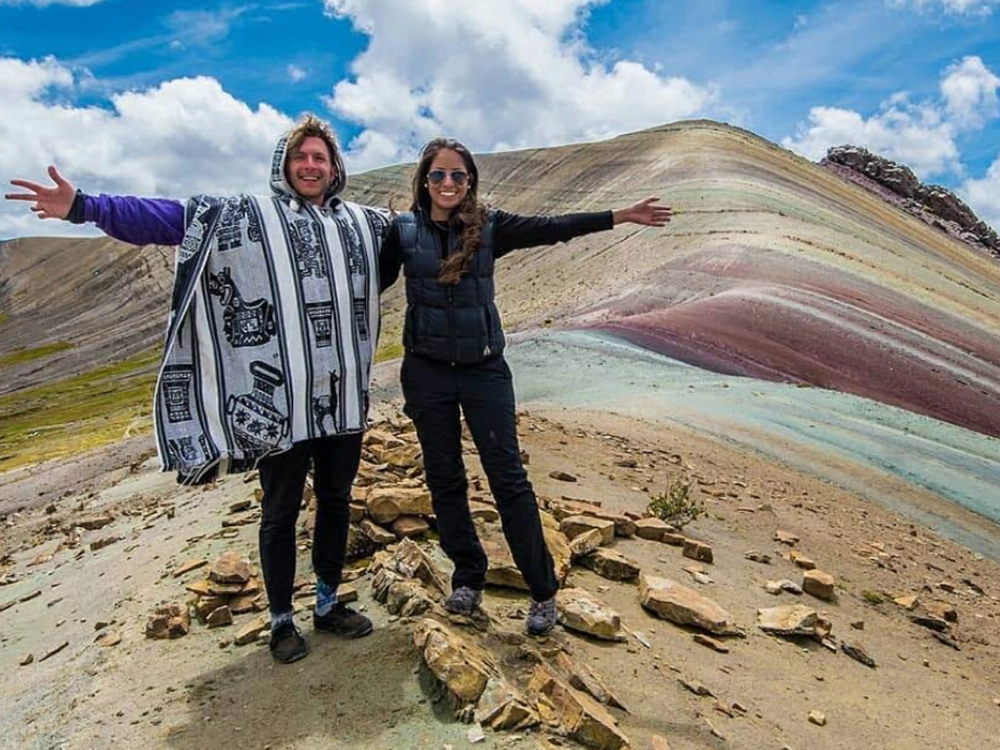
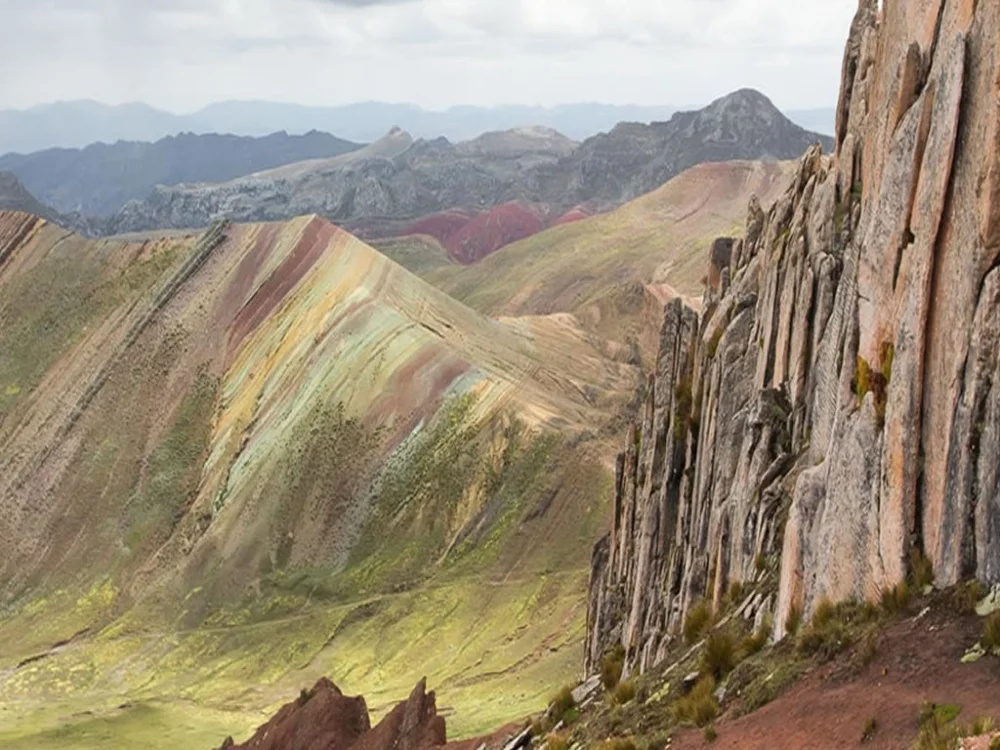
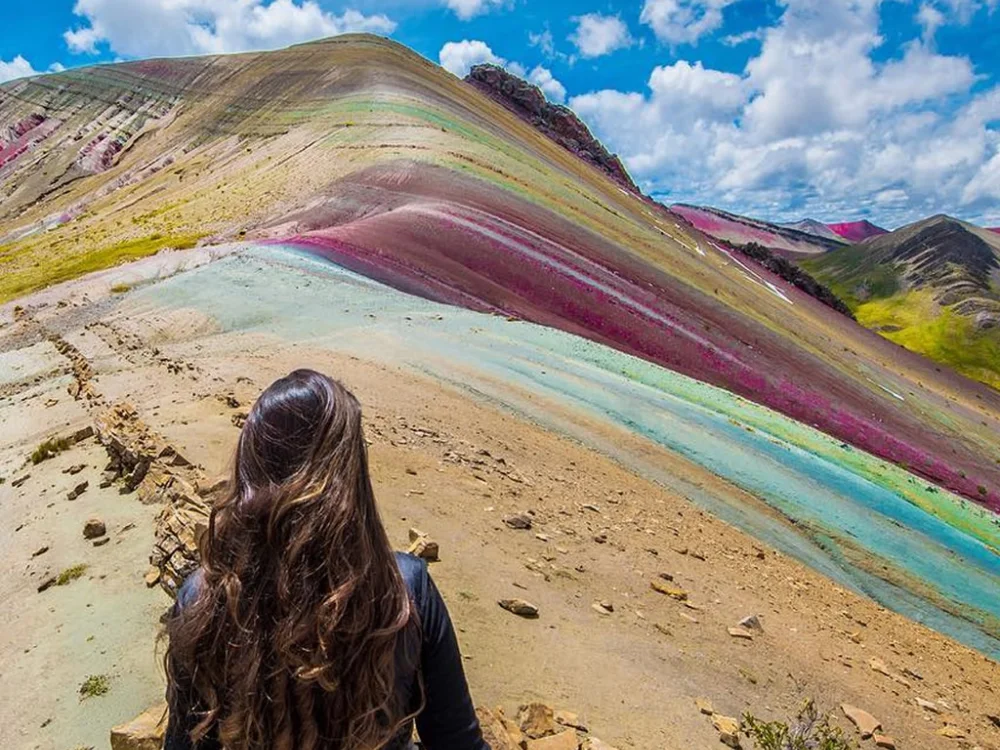
Palccoyo is a mineral mountain range located in the Cusco region of Peru, in the Checacupe district of the Canchis province, roughly two hours by road from the city of Cusco. Like Vinicunca, its slopes display natural bands of red, gold, lavender, turquoise, and rust, created over thousands of years by mineral sediment layers iron oxides, clays, and other minerals that oxidized into distinct colored strata. What sets Palccoyo apart is that it doesn’t offer just one dramatic face; it offers three separate rainbow-colored peaks in a single visit, arranged around a wide natural amphitheater, along with an unusual rock formation locally known as the “Stone Forest” (Bosque de Piedras).
Because Palccoyo sits at a slightly lower and more gradual elevation gain than Vinicunca, and because the access road brings vehicles much closer to the viewpoints, it has become known among tour operators and travel bloggers as “the alternative Rainbow Mountain” a way to see the same natural phenomenon without the physical demands or the crowds of the original site. It’s not a lesser version of Vinicunca; for many travelers, it’s simply a different and, in some ways, more complete experience of the same geological wonder.
Why Palccoyo Is Marketed as the Alternative Without the Crowds
Vinicunca’s rise in popularity since around 2016 turned it into one of the most Instagrammed sites in Peru, which also means it now receives large numbers of visitors every single morning, often arriving in successive tour buses before sunrise to beat the clouds and the crowds. That popularity created a secondary problem: overcrowded trails, long queues at the summit viewpoint, and a noticeably commercialized approach road lined with vendors and pack animals.
Palccoyo, by contrast, remains far less known internationally, so tour operators position it specifically for travelers who want the same visual experience without standing in line for photos or sharing the trail with hundreds of people at once. The marketing language you’ll see across tour websites “the alternative without the crowds,” “the quiet Rainbow Mountain,” “three mountains, no lines” all points to the same underlying selling point: authenticity and space, rather than a packaged, congested experience.
Palccoyo vs Vinicunca Visitor Volume Comparison
| Factor | Vinicunca (Rainbow Mountain) | Palccoyo (Alternative) |
|---|---|---|
| Daily visitors (approx., high season) | 1,000–1,500+ | 100–300 |
| Peak crowding time | 6:00–9:00 AM | Rarely crowded |
| Number of tour buses per day | Very high | Low to moderate |
| International recognition | Very high | Growing, still niche |
| Vendors and pack animals on trail | Frequent | Minimal |
| Average time spent waiting for a clear photo | 10–20 minutes | Under 5 minutes |
This gap in visitor volume is the single biggest reason travelers search for “alternative Rainbow Mountain” tours in the first place they want the view without the crowd, and the numbers above explain exactly why Palccoyo delivers that.
The Rainbow Mountains’ Rise in Popularity
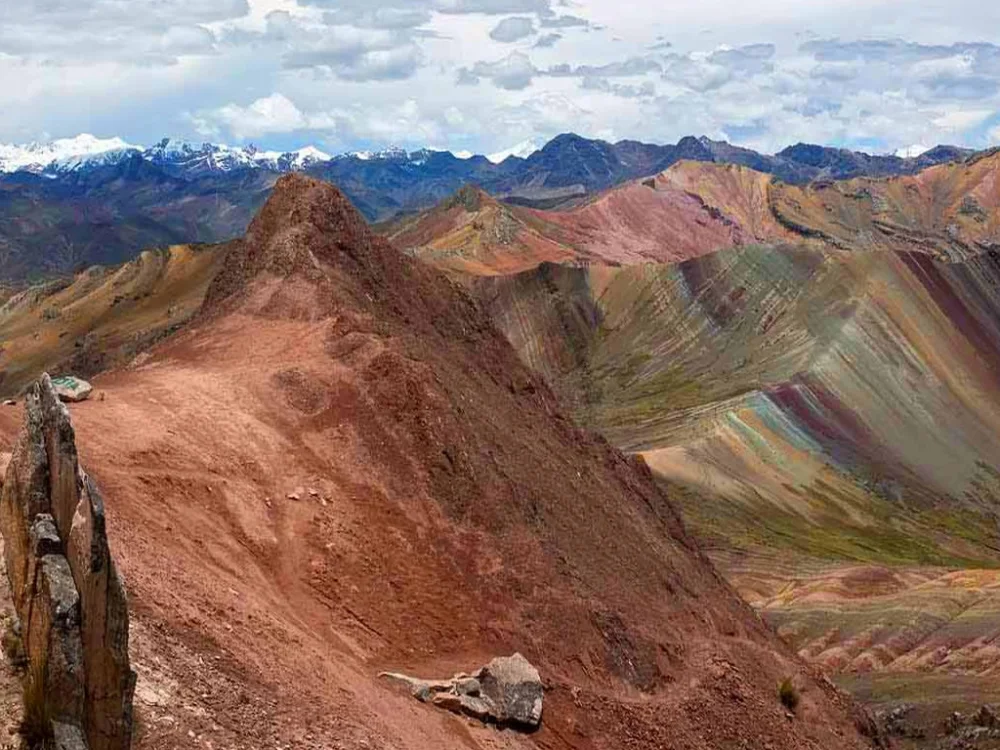
It’s worth understanding the backstory, because it explains why alternatives like Palccoyo even exist. Vinicunca was only exposed from beneath centuries of snow and ice within the last two decades, as glacial melt driven by rising regional temperatures gradually revealed the mineral-striped rock beneath. Local shepherds knew about the mountain long before international tourism did, but it wasn’t until photos began circulating widely online that Vinicunca exploded into one of Peru’s top attractions almost overnight, rivaling Machu Picchu in search volume during peak season.
That rapid, unplanned growth in visitor numbers is exactly what pushed tour operators to look for nearby alternatives that could offer a similar visual payoff without the same environmental and logistical strain. Palccoyo, which had been visited mostly by local communities and a handful of adventurous trekkers, was the natural candidate geologically similar, geographically close, but structurally set up to handle visitors differently.
Palccoyo vs Rainbow Mountain Vinicunca Key Differences
Before booking either tour, it helps to see the two destinations side by side across every factor that actually affects your day: physical difficulty, scenery, time, cost, and what’s included.
| Category | Vinicunca (Rainbow Mountain) | Palccoyo |
|---|---|---|
| Hike difficulty | Moderate to hard | Easy |
| Hiking time (one-way to main viewpoint) | 2+ hours | 30–45 minutes |
| Maximum altitude reached | ~5,200 m | ~4,900 m |
| Number of colored peaks | 1 | 3, plus Stone Forest |
| Crowd level | High | Low |
| Community visit included | Rarely | Often included |
| Total tour duration | Full day (10–12 hrs) | Half day to full day |
| Typical departure time | 3:00–4:00 AM | 5:00–6:00 AM |
| Typical cost (standard group tour) | Slightly lower | Slightly higher (private/small group) |
| Horse rental option | Widely available | Limited or unnecessary |
| Restroom facilities | Basic, at base | Basic, at base |
How the Scenery and Colors Compare
Vinicunca offers one dramatic, sweeping mountain face, which is why it became famous in the first place the colors are vivid and the single-peak composition makes for a striking, symmetrical photograph that’s instantly recognizable. The mountain’s shape funnels the view into one unmistakable “hero shot,” which is part of why it spread so quickly on social media.
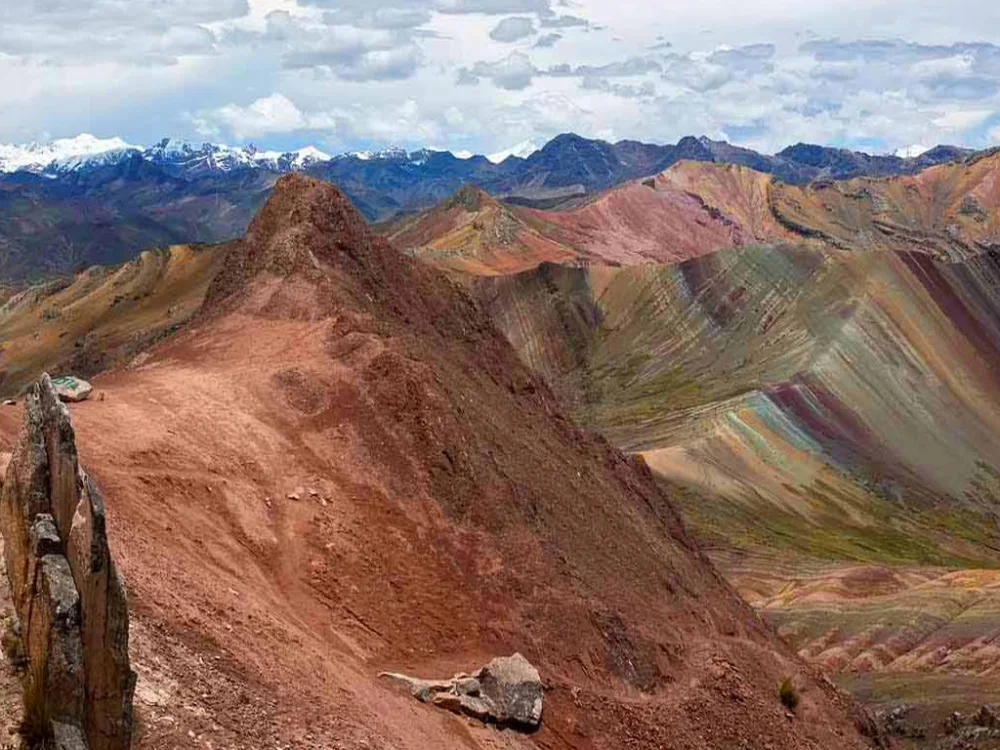
Palccoyo trades that single dramatic view for variety: three distinct rainbow-striped peaks visible from one panoramic viewpoint, plus the unusual rock formations of the Stone Forest nearby, which resemble natural stone towers scattered across a plateau. Many travelers who have done both describe Palccoyo’s scenery as “wider and calmer,” while Vinicunca’s is “taller and more intense.” Neither is objectively better they photograph differently, and several travel bloggers who’ve hiked both note that Palccoyo actually offers more variety within a single stop, since you’re not limited to one angle of one mountain.
Daily Visitor Numbers at Each Site
As shown in the table above, Vinicunca can see well over a thousand visitors on a single morning during high season (May–September), while Palccoyo typically sees only a few hundred, spread across three separate viewpoints rather than concentrated on one trail. This isn’t just a comfort issue it directly affects trail conditions, parking availability, dust and erosion on the path, and how long you’ll wait to reach the main viewpoint unobstructed. Some travelers who visited Vinicunca during peak months reported queuing at the final approach simply to take a photo without strangers in the frame; that bottleneck essentially doesn’t exist at Palccoyo.
Getting Uncrowded Photos and a Quieter Experience
Because fewer tour operators run Palccoyo departures, and the site itself has three separate viewpoints spread further apart, groups spread out naturally instead of bunching up at one summit. Travelers consistently report being able to get clean, crowd-free photos without other tourists in the frame something that’s genuinely difficult to achieve at Vinicunca during peak hours, no matter how early you arrive.
Beyond photography, the quieter atmosphere also changes the overall feel of the visit. Instead of a somewhat rushed, crowd-managed experience, Palccoyo allows for a slower pace: time to sit, take in the view, and actually absorb the landscape rather than move along quickly to make room for the next group.
How Hard Is the Palccoyo Hike
This is one of the most searched questions from travelers comparing the two mountains, and the honest answer is: Palccoyo is significantly easier, both in distance and in the physical toll it takes at altitude.
Why Palccoyo Doesn’t Require a 2+ Hour High-Altitude Trek
Vinicunca’s trailhead sits notably lower than its summit, meaning hikers climb steadily uphill at extreme altitude for two hours or more, which is where most people struggle with breathlessness, fatigue, and altitude sickness symptoms like headaches or nausea. The incline is sustained almost the entire way, with very few flat stretches to recover.
Palccoyo’s parking area, by contrast, is already close to the viewpoint elevation, since the access road climbs most of the elevation gain for you. That means the walk to the main lookout takes most travelers only 30 to 45 minutes over gentle, mostly flat terrain, with only short, moderate inclines near the final viewpoints. This structural difference road access doing the heavy lifting instead of your legs is the core reason Palccoyo is marketed as the “easy” alternative.
Difficulty Level Compared to Vinicunca
- Vinicunca: Steep, sustained incline over roughly 6–7 km one-way; altitude sickness risk is meaningfully higher; recommended only for travelers in decent physical condition and ideally already acclimatized in Cusco for a few days.
- Palccoyo: Gentle, short walk of roughly 1.5–2.5 km one-way across relatively flat terrain; suitable for most fitness levels, including many older travelers; lower risk of altitude-related discomfort, though the elevation is still significant.
Who This Hike Is Best For
Palccoyo tends to work best for:
- Families traveling with children or older relatives who can’t manage a multi-hour steep climb
- Travelers with limited time in Cusco who still want to see rainbow-colored mountains without dedicating an entire exhausting day to it
- Anyone who has struggled with altitude sickness on previous hikes or at previous destinations in Peru
- First-time visitors to Peru who want a lower-risk introduction to high-altitude terrain before attempting something more demanding, like the Inca Trail
- Travelers who want to combine a hike with genuine cultural immersion, rather than just a photo stop and a long bus ride
- Photographers who want multiple compositions (three peaks plus the Stone Forest) instead of a single fixed viewpoint
What to Expect Physically on the Day
Even though Palccoyo is the easier option, it’s still a high-altitude destination, and travelers should be realistic about what that means. Shortness of breath during the walk is common even for fit travelers, simply because the air contains less oxygen at nearly 4,900 meters. Cold wind at the viewpoints is also typical, even when it feels warm in the parking area. None of this makes the hike difficult in absolute terms, but it does mean pacing yourself, staying hydrated, and not rushing are still worthwhile precautions.
The Community Visit Is More Than Just a Hike
One of the features that most differentiates Palccoyo tours from standard Vinicunca packages is the inclusion of a stop at a local Andean community, turning the day into more than a scenic hike and giving it a cultural dimension that Vinicunca tours generally skip entirely.
Visiting a Local Andean Community
Many Palccoyo tours route through small highland communities where families still live according to traditional Andean practices, largely unchanged for generations. These communities sit at extreme altitude, often above 4,000 meters, and their daily rhythms are built entirely around herding, weaving, and subsistence agriculture suited to that environment. For travelers, this is a rare chance to see rural Andean life up close, rather than only viewing it from a bus window.
This stop typically happens either on the way to or from the mountain viewpoints, and it’s usually presented as a genuine cultural exchange rather than a staged tourist show community members often run these visits directly, and proceeds from textile sales and entrance contributions support the local economy.
Traditional Textiles and Weaving
Community visits often include a live demonstration of traditional weaving techniques, using natural dyes derived from local plants, minerals, and even cochineal insects the same dyeing traditions that have been passed down for generations in Andean communities across the Cusco region. Visitors typically get to see:
- Raw alpaca or sheep wool being cleaned and spun by hand
- Natural dye preparation using local plants and minerals
- Backstrap loom weaving, a technique that predates the Inca Empire
- Finished textiles, from small accessories to full blankets and ponchos
Travelers can watch the entire process and, in many cases, purchase handmade textiles directly from the artisans a way to support the community economically rather than buying mass-produced souvenirs elsewhere in Cusco.
Alpaca Herding and Cultural Context
Because the surrounding highlands are used for alpaca and llama herding, visitors often get to see herds up close and learn about the role these animals play in the local economy from wool production and weaving to transport and even as a measure of family wealth in some communities. Guides typically explain the difference between alpaca and llama wool, how herding families manage their animals across the seasons, and how this pastoral lifestyle has adapted to one of the more extreme environments in Peru.
This context turns the day from a simple hike into a broader look at how Andean communities have adapted to life at high altitude over centuries, which is precisely the kind of experience many travelers say they didn’t expect and end up valuing more than the mountain itself.
What Past Travelers Say About Their Experience
Across travel blogs and tour review platforms, a consistent pattern emerges when travelers compare their Palccoyo and Vinicunca experiences side by side.
Why Travelers Preferred Palccoyo Over Vinicunca
Reviewers who did both hikes on the same trip frequently mention that Palccoyo felt more relaxed and less physically demanding, while still delivering comparable and in some cases more varied scenery. Several independent travel blogs covering both destinations highlight the shorter hiking time and the added cultural stop as the deciding factors in recommending Palccoyo to readers with limited time, lower fitness levels, or those traveling with children or older family members.
A recurring theme in these comparisons is surprise: many travelers go in expecting Palccoyo to be a “consolation prize” version of Vinicunca, and come away saying it was actually the better overall day, precisely because of the pacing, the community stop, and the lack of crowds.
Common Praise Fewer Crowds Easier Hike Richer Culture
The recurring themes in traveler feedback include:
- Getting the photo without other tourists in the background
- Appreciation for not needing to wake up at 3:00 AM, unlike typical Vinicunca departures
- Positive comments about the community visit adding meaning and context to the trip, rather than it feeling like just another scenic stop
- Relief at the easier physical demands, especially among older travelers or those newer to high altitude
- Comments describing the three-peak view and Stone Forest as “more to see” compared to Vinicunca’s single vista
- Occasional notes that the drive itself, through remote Andean scenery, was a highlight in its own right
What Critical Reviews Tend to Mention
To keep this balanced, it’s worth noting the occasional critical feedback too. A small number of travelers mention that Palccoyo’s colors can look less saturated than Vinicunca’s in certain lighting or weather conditions, and that because it’s less famous, some feel it lacks the same “bucket list” excitement. These are largely subjective and tend to depend heavily on weather conditions on the day of the visit which is why checking the forecast and choosing dry-season dates matters for both destinations.
Small Group Tour Details
A typical alternative Rainbow Mountain Palccoyo small group tour is structured to combine the hike, the community visit, and comfortable transport in a single, manageable day, without the extreme early start typical of Vinicunca departures.
What’s Included on the Tour
| Included | Typically Provided |
|---|---|
| Round-trip transport from Cusco | Yes |
| Professional bilingual guide | Yes |
| Entrance fees | Yes |
| Community visit stop | Yes, in most packages |
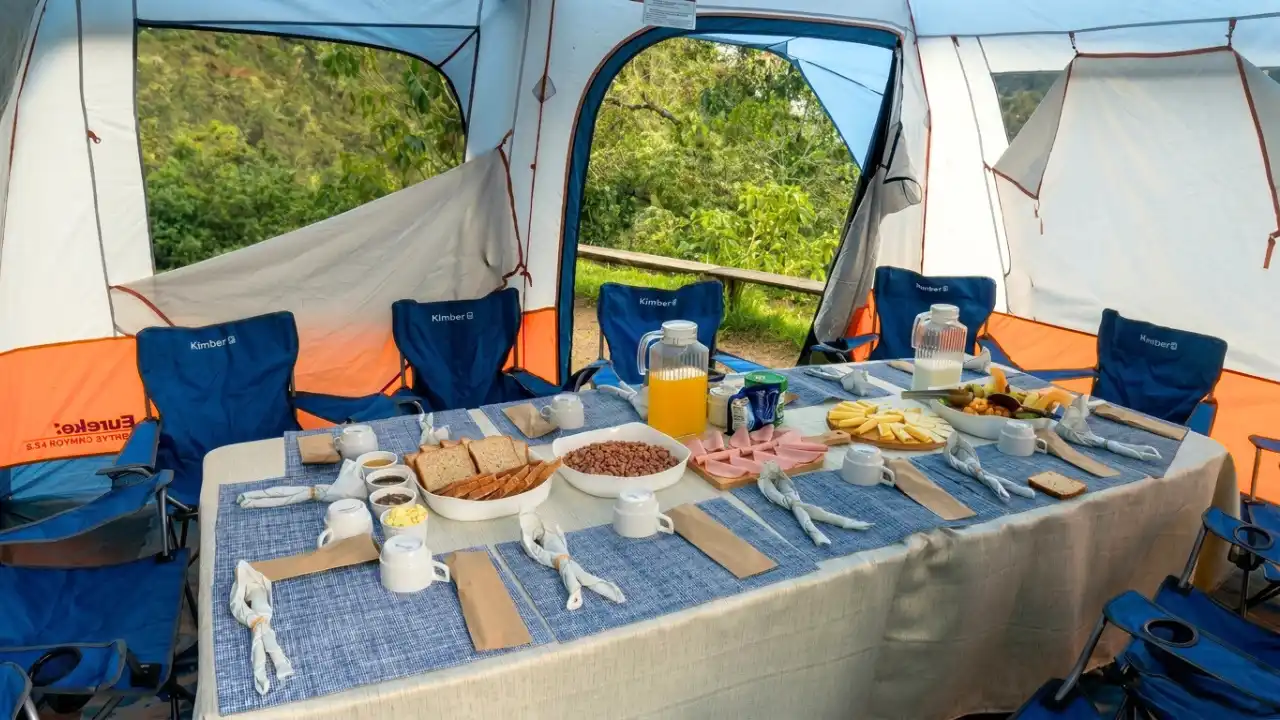
| Breakfast/snack | Often included |
| Lunch | Sometimes included |
| Hiking poles | Occasionally offered |
| Oxygen support (emergency) | Usually carried by guide |
| Hotel pickup and drop-off | Yes |
Tour Duration and Itinerary
A standard itinerary looks like this:
- Early morning pickup from your hotel in Cusco (later than typical Vinicunca departures, usually 5:00–6:00 AM)
- Scenic drive of roughly two hours toward the Palccoyo highlands, passing through small Andean villages
- Short acclimatization stop and guide briefing near the trailhead
- Easy 30–45 minute walk to the first viewpoint
- Continue at a relaxed pace to the second and third colored peaks, plus the Stone Forest formation
- Stop at a local community for a weaving demonstration and alpaca viewing
- Lunch stop (included in many packages, either boxed or at a local restaurant)
- Return drive to Cusco, typically arriving mid-to-late afternoon
Private Tour vs Small Group Tour
Travelers generally have two booking options, and each comes with trade-offs worth knowing before you decide:
- Small group tour: More affordable, fixed departure times, shared vehicle with other travelers, still far less crowded on the trail itself than Vinicunca group tours.
- Private tour: Flexible departure time, ability to spend more or less time at each stop, often includes more personalized guiding, higher cost.
Best Time to Book Your Trip
The dry season, from May to September, offers the clearest skies and the most vivid mineral colors on the mountain slopes, along with more reliable road conditions on the drive out from Cusco. Outside of this window, rain and cloud cover can mute the colors and make the trail slippery, so booking during the dry months is generally recommended for the best visual experience and safest hiking conditions. Shoulder months (April and October) can also work well, often with fewer visitors and still-decent weather.
Other Practical Things to Know Before You Go
What to Pack for the Palccoyo Hike
- Layers of warm clothing, including a windproof outer layer
- Sunscreen and sunglasses (UV exposure is stronger at altitude)
- A hat that covers your ears, plus gloves for early morning cold
- Comfortable walking shoes or light hiking boots
- A refillable water bottle
- Cash (small denominations) for community textile purchases and restroom access
- Basic altitude sickness remedies, such as coca leaves or medication recommended by a doctor
Altitude Considerations and Acclimatization
Palccoyo sits close to 4,900 meters above sea level at its highest viewpoint, which is still high enough to trigger altitude sickness symptoms in unacclimatized travelers, even if it’s meaningfully lower than Vinicunca’s summit. Spending at least one to two full days resting in Cusco (3,400 m) before attempting either hike is strongly recommended, along with staying hydrated, avoiding alcohol the night before, and eating light the morning of the tour.
Weather at Palccoyo
Weather in this region follows a clear dry season (May–September) and wet season (November–March) pattern, with April and October acting as transitional shoulder months. Mornings are typically clear and cold, with cloud cover building in the early afternoon, especially during the wet season — which is part of why most tours depart early and aim to reach the viewpoints before midday.
Palccoyo vs Vinicunca Which One Should You Choose
There’s no universally “better” option — it depends entirely on what you’re prioritizing for your trip:
- Choose Vinicunca if: you want the single most iconic, most-photographed Rainbow Mountain view, you’re in good physical condition, you don’t mind an early departure and crowds, and you want the classic “bucket list” experience.
- Choose Palccoyo if: you want an easier hike, fewer crowds, more varied scenery across three peaks and a rock formation, and a cultural community visit included in the day.
- Choose both if: your itinerary allows an extra day in Cusco — some travelers do Vinicunca one day and Palccoyo the next specifically to compare the two firsthand, spacing them out to avoid overexertion at altitude.
Frequently asked questions about Alternative Rainbow Mountain Palccoyo Hike and Community Visit
Yes. Palccoyo’s walk to the main viewpoint takes roughly 30–45 minutes over gentle terrain, compared to Vinicunca’s 2+ hour steep climb at higher altitude, making Palccoyo the easier and lower-risk option for most travelers, including families and those newer to high-altitude hiking.
It’s possible if you have extra time in Cusco, though most travelers choose one or the other due to the early departures and full-day nature of each tour. Spacing the two hikes across separate days is recommended to avoid overexertion at altitude and to fully enjoy each experience rather than rushing between them.
Yes. Even though Palccoyo is easier than Vinicunca, it still sits close to 4,900 meters above sea level, so spending at least one to two days in Cusco (3,400 m) beforehand is strongly recommended to reduce the risk of altitude sickness and get more out of the day.
Small group tours are typically priced lower than private tours, with cost varying based on what’s included (meals, transport quality, group size). Private tours cost more but offer flexibility in timing and pace, which some travelers find worthwhile given the extra comfort at high altitude.
Yes, for most travelers. Because Palccoyo offers three peaks plus the Stone Forest, a shorter and easier hike, and a community visit that Vinicunca tours typically don’t include, it often ends up feeling like a distinct experience rather than a lesser copy of the original.
Planning your trip to Cusco? Compare tour operators, check the weather forecast for the highlands, and book your small-group Palccoyo tour in advance during the May–September dry season for the best experience and the clearest mountain colors.