New Year in Cusco: Traditions, Rituals, and Andean Celebration
Celebrating New Year’s Eve in Cusco is a true rite of passage. To welcome the year here is to step into a city where Inca heritage, Andean mysticism, and modern celebration come together naturally. It is no coincidence that Condé Nast Traveler often highlights Cusco as one of the world’s most meaningful places to say goodbye to the old year and welcome the new with intention, energy, and deep spiritual symbolism.
While New Year celebrations in many capital cities feel fast and superficial, in Cusco the experience is layered with meaning. Saying farewell to the old year and greeting the new one becomes a collective act that blends tradition, spirituality, joy, and community. Locals and travelers alike take part in rituals meant to attract prosperity, balance, and fresh beginnings, all within a city where history is very much alive
Mysticism and traditions: the meaning behind the celebration
New Year in Cusco is deeply shaped by the Andean worldview. Every ritual carries a clear intention: aligning personal energy with the new cycle that begins. These customs are not treated as superstition, but as conscious acts of faith, hope, and renewal.
The color yellow: solar energy and new beginnings
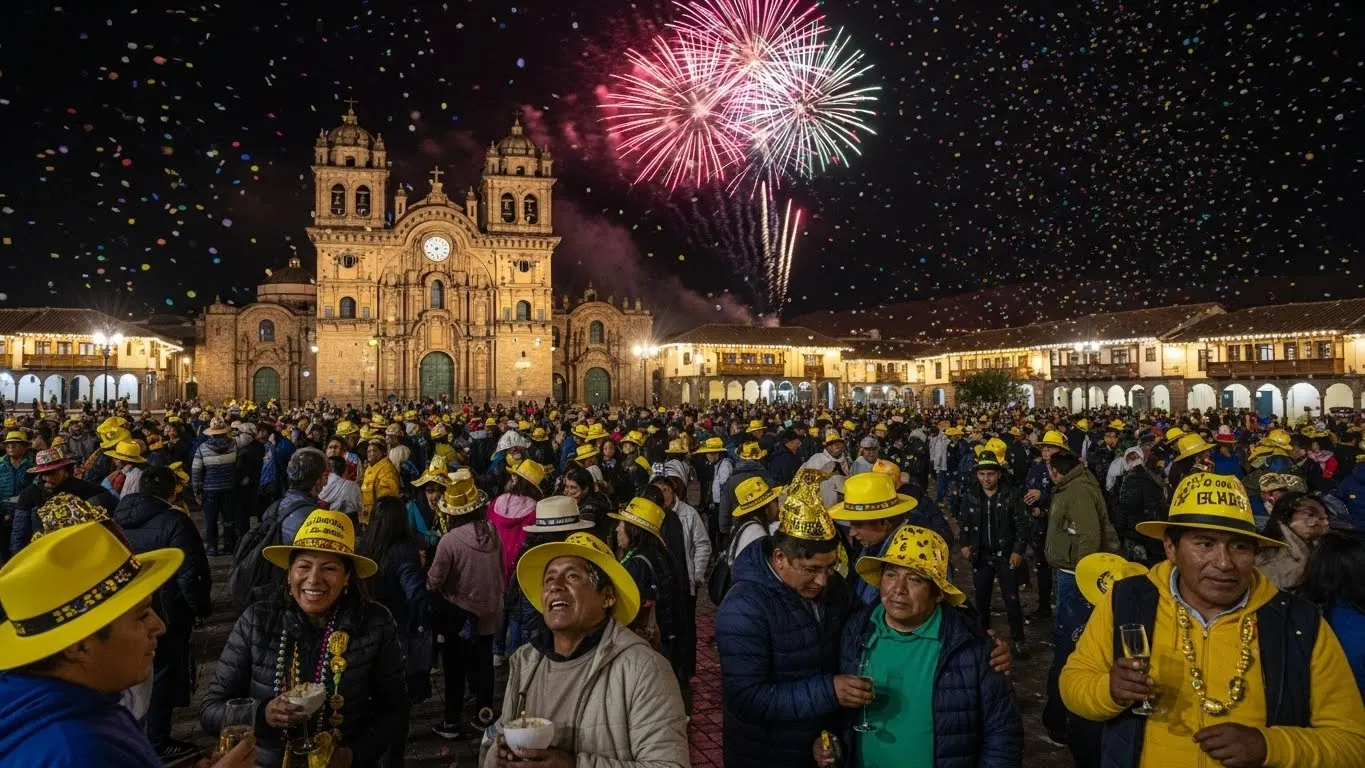
Yellow dominates Cusco’s streets on December 31. In Andean tradition, this color is closely associated with Inti, the Sun God, source of life, warmth, and vitality. Wearing yellow symbolizes attracting abundance, mental clarity, and renewed energy for the year ahead. From underwear to scarves, bracelets, and accessories, yellow is everywhere.
The color that attracts good luck on New Year’s Eve
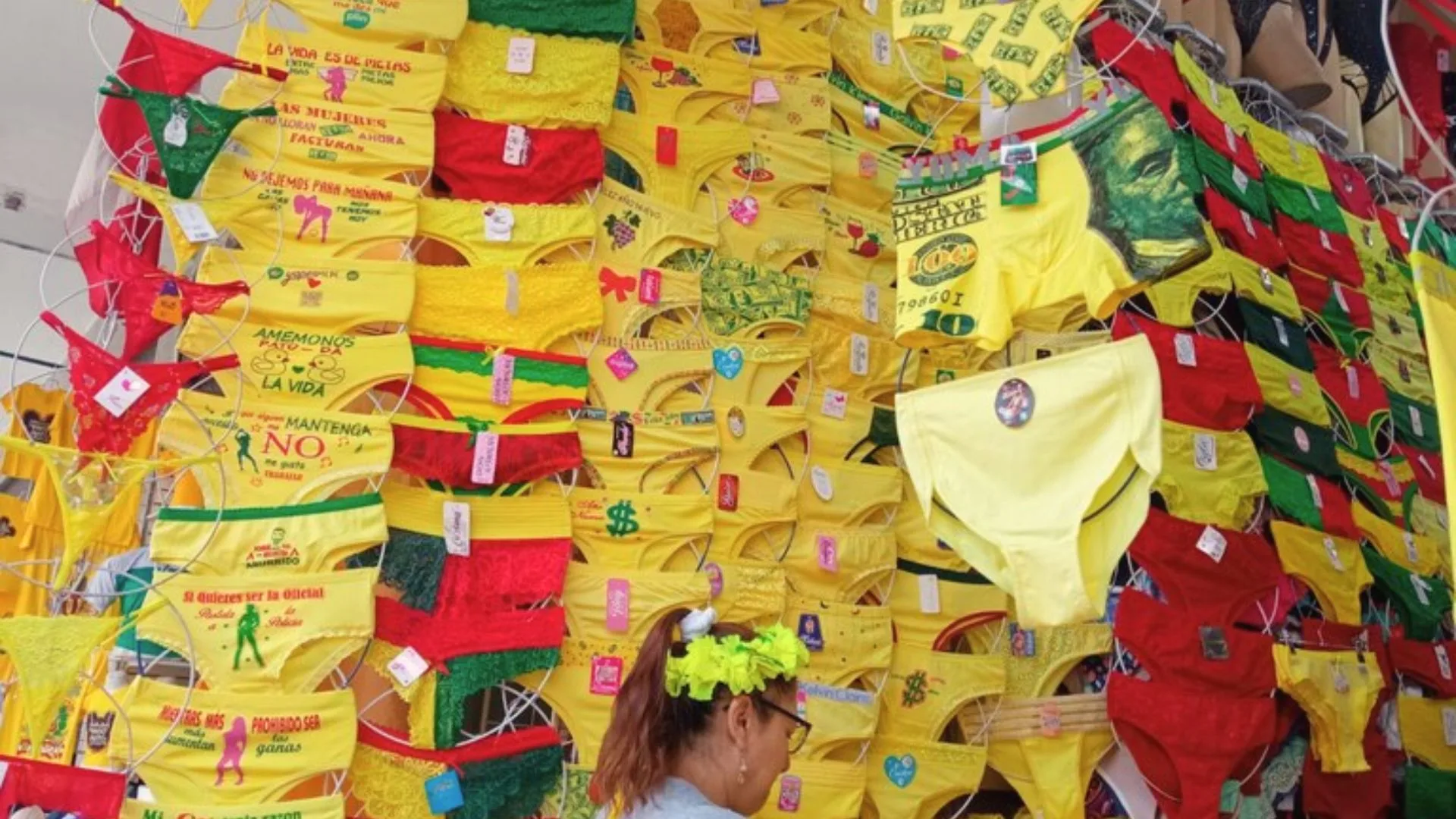
One of the most popular traditions in Cusco is wearing yellow underwear, a deeply rooted custom throughout Peru. Yellow represents the sun, vital energy, prosperity, and new beginnings. Wearing it at midnight symbolizes the desire for success, abundance, and good fortune in the coming months.
In the days leading up to December 31, markets such as San Pedro and temporary street fairs fill with stalls selling underwear in many colors, each with its own meaning. Choosing the right color becomes a personal ritual charged with intention.
Meanings of the most common colors in Cusco:
- Yellow: Prosperity, money, energy, success
- Red: Love, passion, romantic relationships
- Green: Health, balance, well-being
- White: Peace, harmony, fresh starts
- Blue: Calm, emotional stability, mental clarity
Many people combine this tradition with other rituals such as colored confetti, candles, or spiritual cleansing baths. In Cusco, these practices are not isolated superstitions, but cultural expressions that give New Year’s Eve its collective and symbolic character.
Mistura: clearing the path for the new cycle
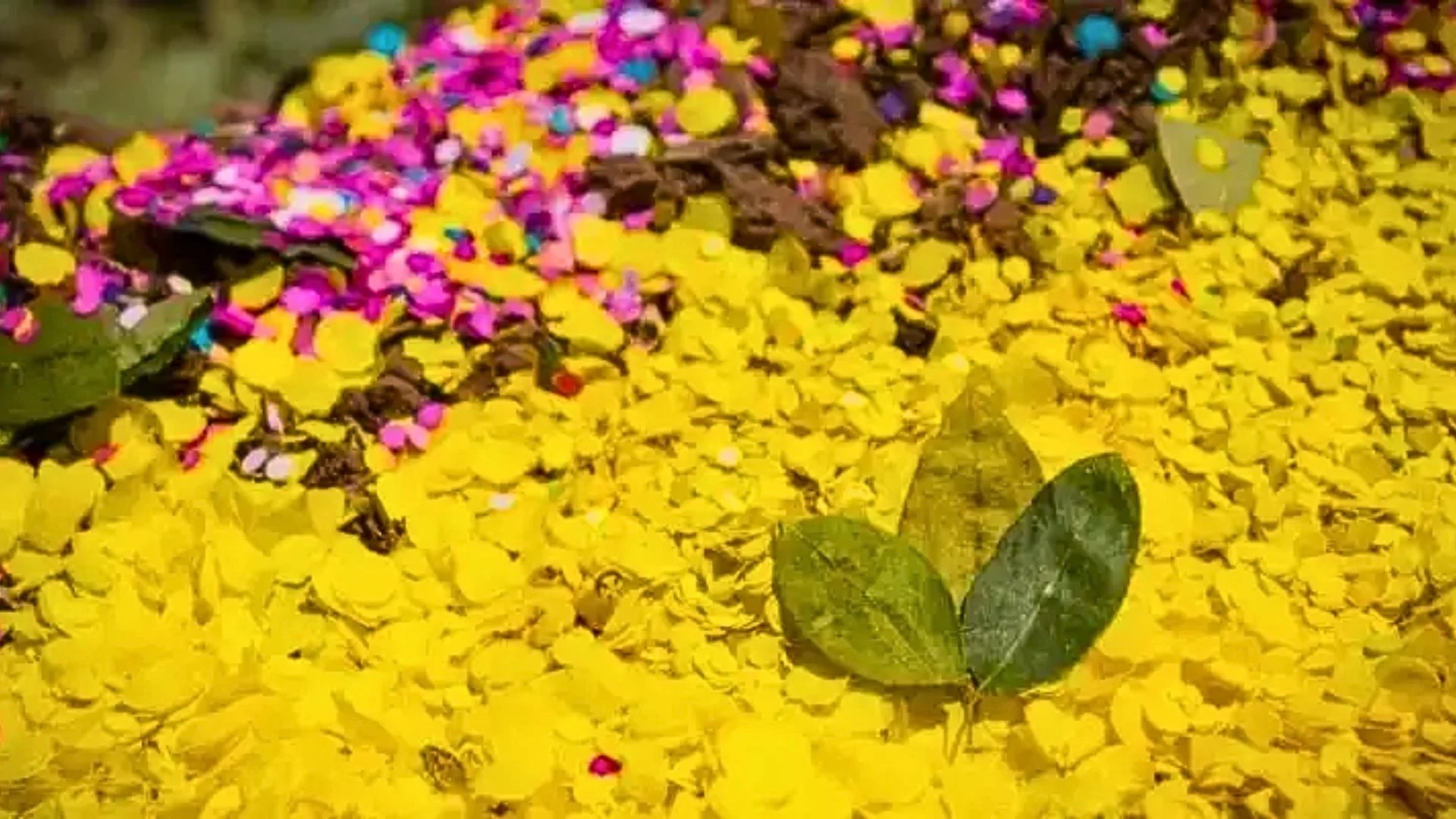
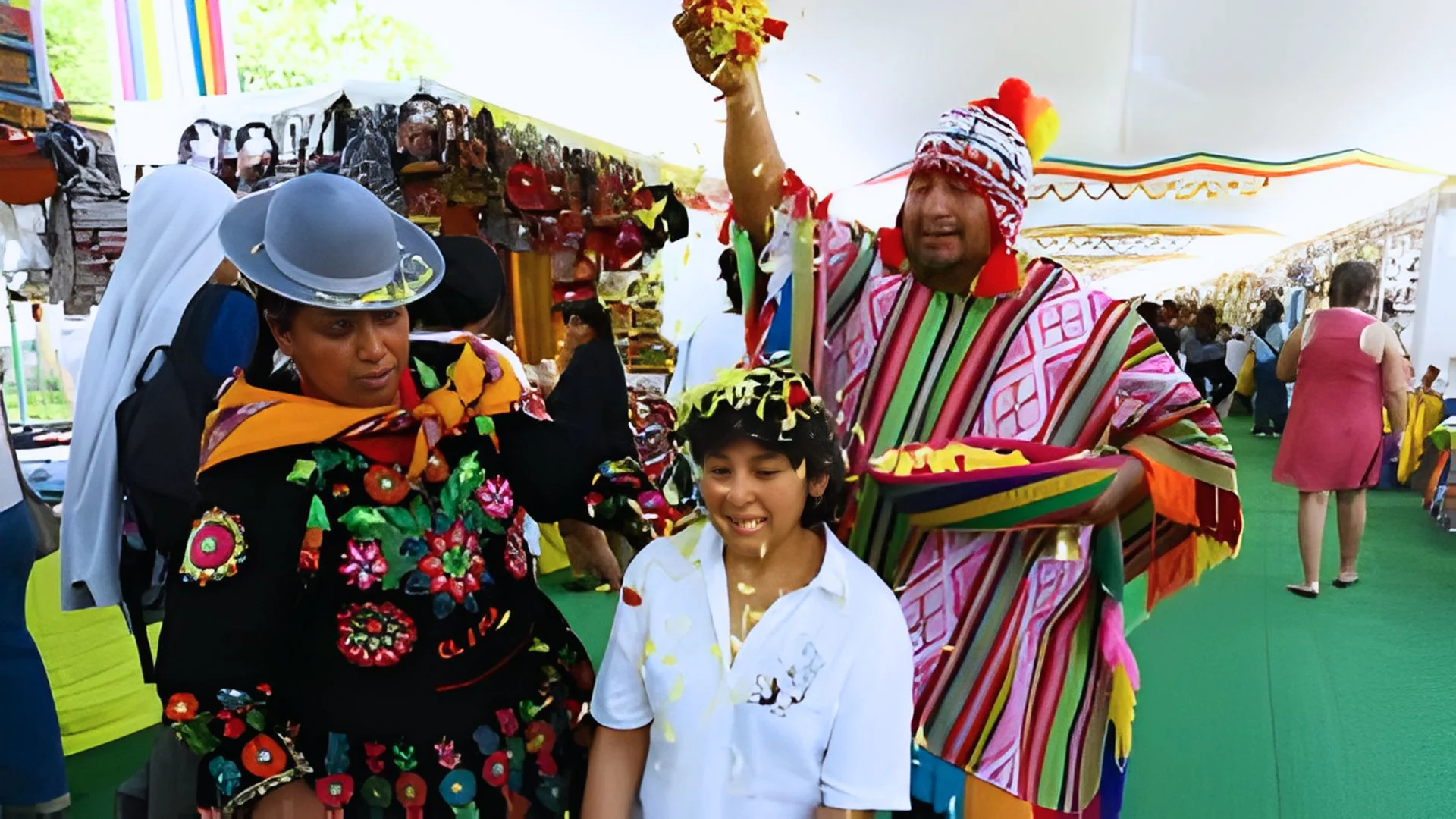
Mistura is a traditional yellow confetti thrown over people, doorways, businesses, and public spaces. This act symbolizes cleansing negative energy accumulated during the past year. By tossing mistura, people believe they are “opening the road” for protection and opportunities in the new year.
Lentils and rice: symbols of financial abundance
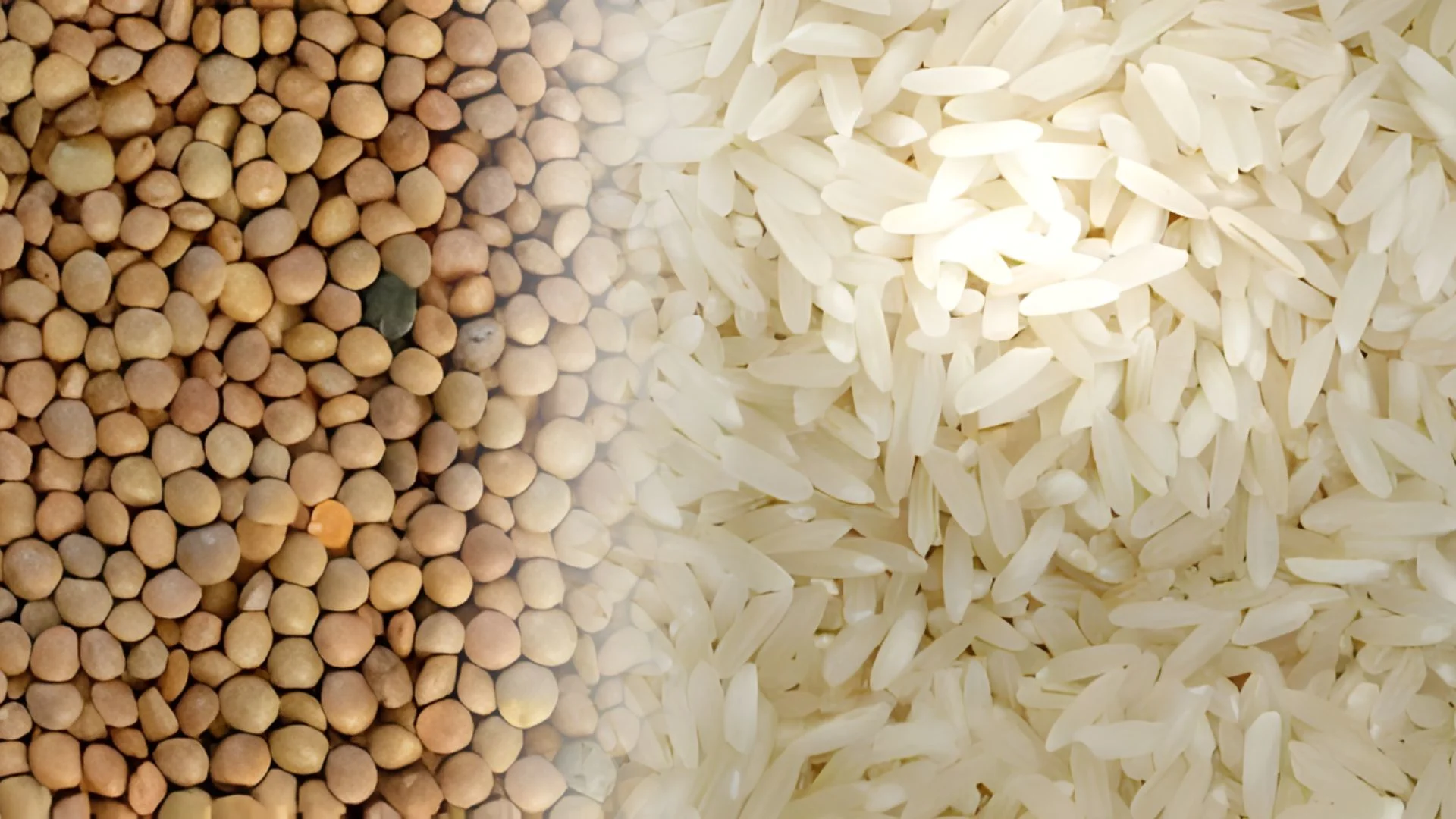
Lentils and rice represent prosperity and food security. In Cusco, people may carry them in their pockets, place them on the table, or toss them into the air at midnight. The ritual expresses the wish that money and sustenance will never be lacking in the coming year.
The twelve grapes: wishes month by month
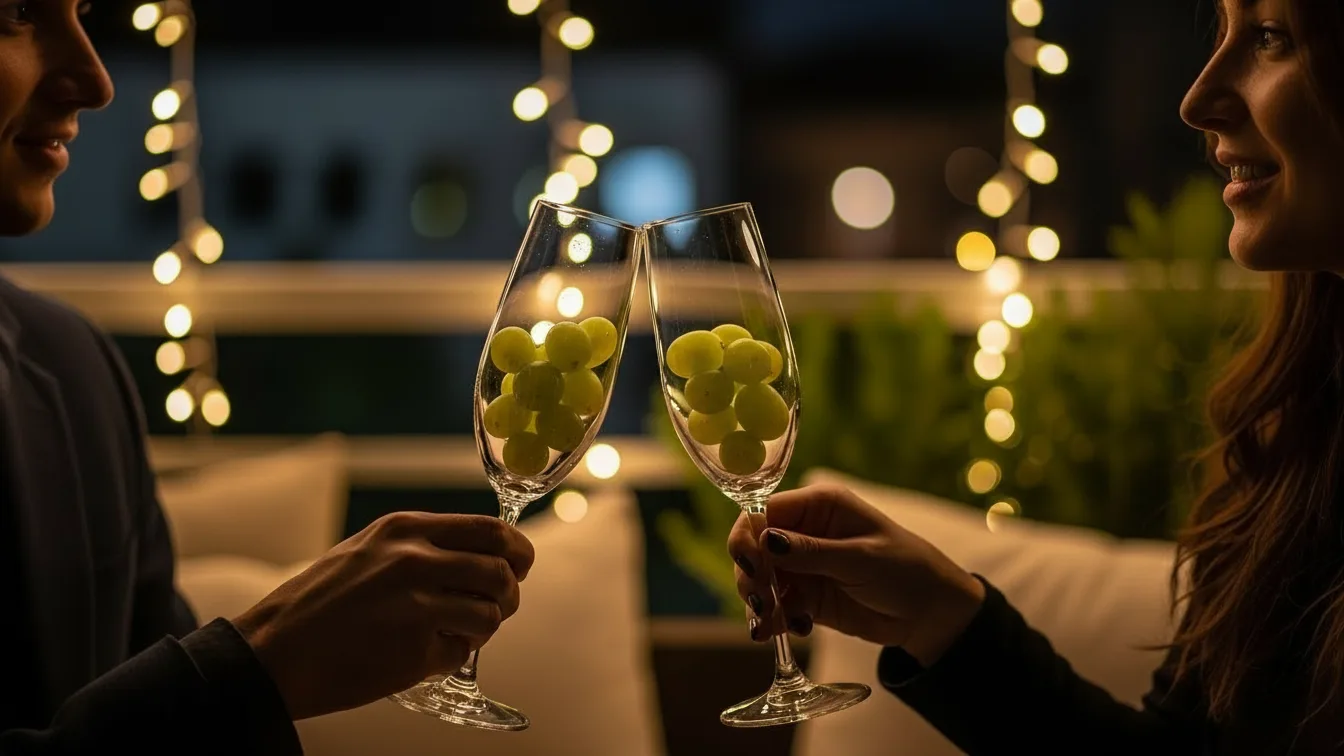
The tradition of eating twelve grapes is especially intense in Cusco’s Plaza de Armas. With each chime of the Cathedral clock, one grape is eaten while making a wish for each month of the year. Keeping up with the rhythm amid thousands of people turns this moment into one of the most emotional highlights of the night.
The travel suitcase: opening roads and horizons
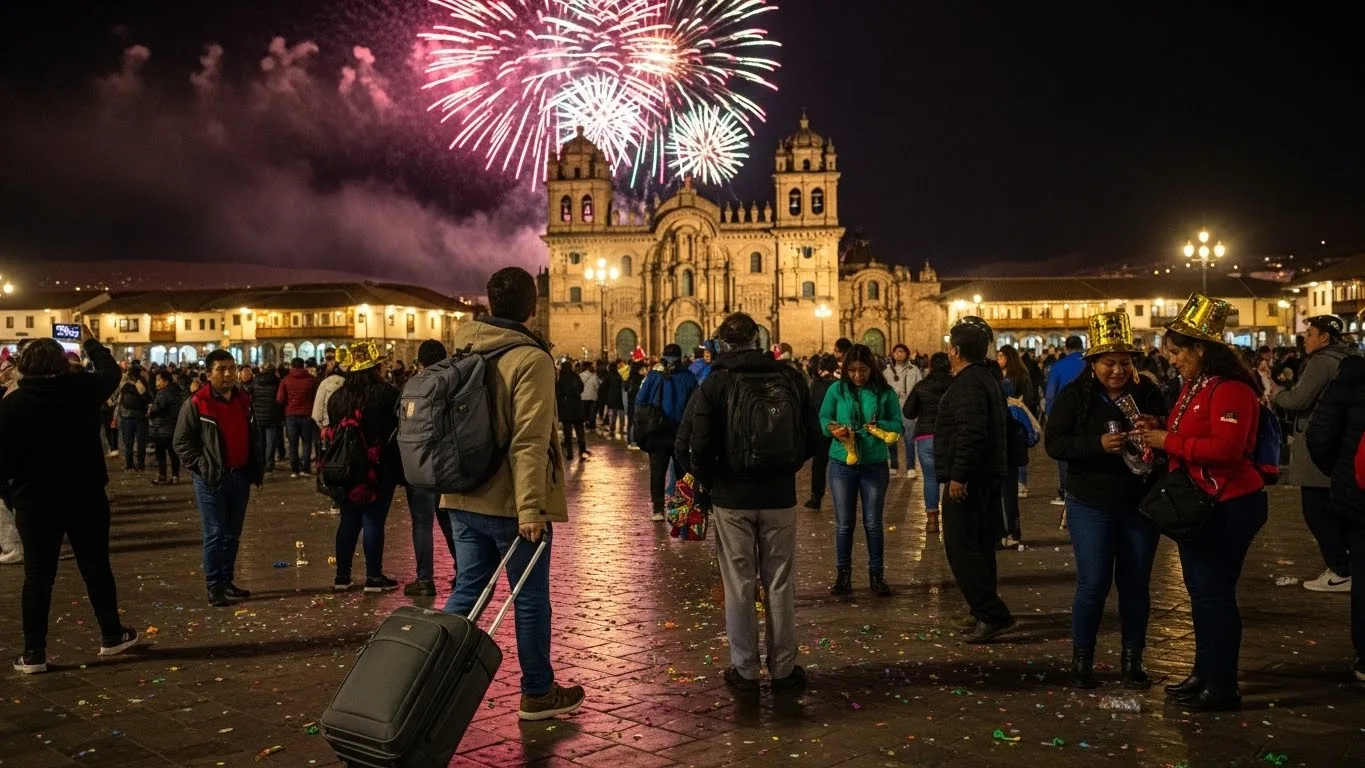
Running with a suitcase symbolizes the desire to travel in the new year. In Cusco, this ritual feels particularly powerful: many people run around the plaza or nearby streets, convinced that the city’s energy will help turn future trips, relocations, and major life changes into reality.
Colored candles: setting clear intentions
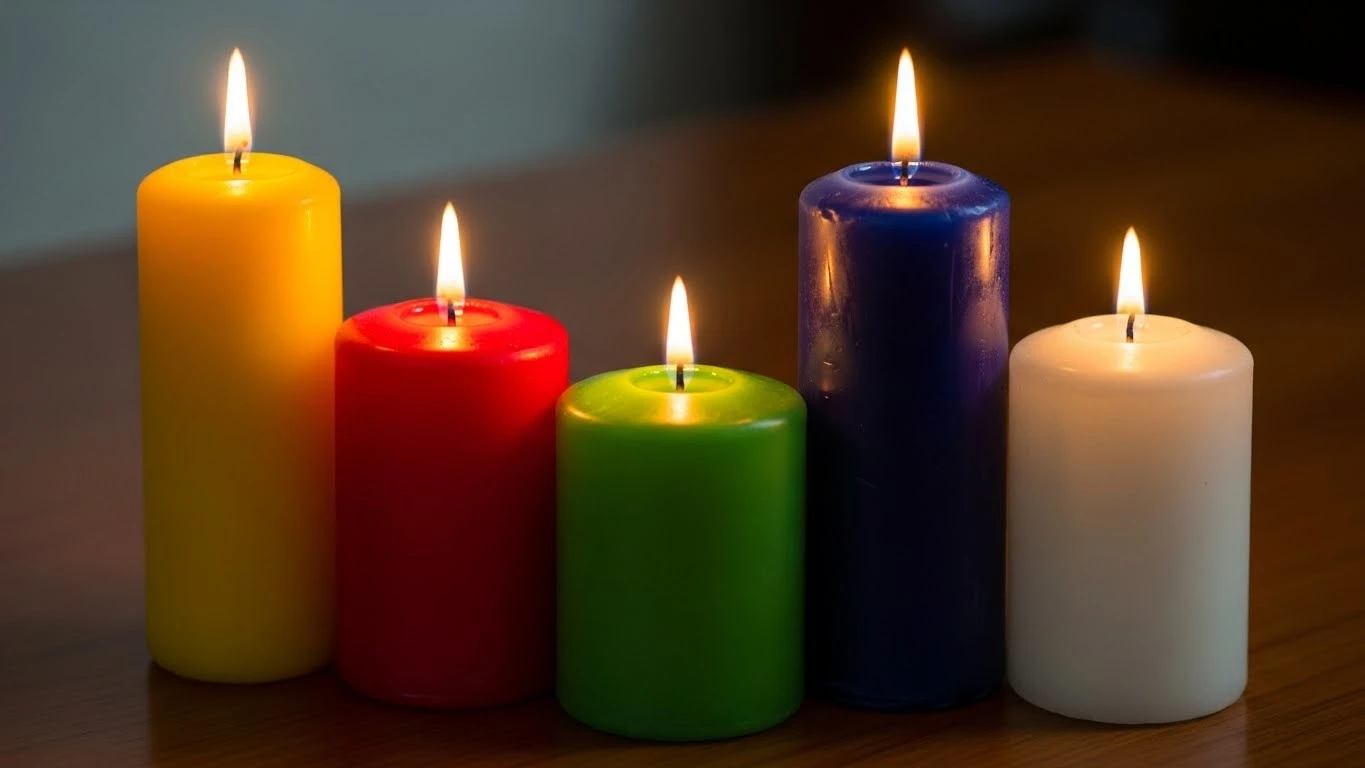
Lighting candles is a widespread practice, with each color linked to a specific intention:
- Yellow: Prosperity and financial success
- Red: Love and relationships
- Green: Health and well-being
- Blue: Peace, emotional balance, clarity
- White: Family harmony and spiritual protection
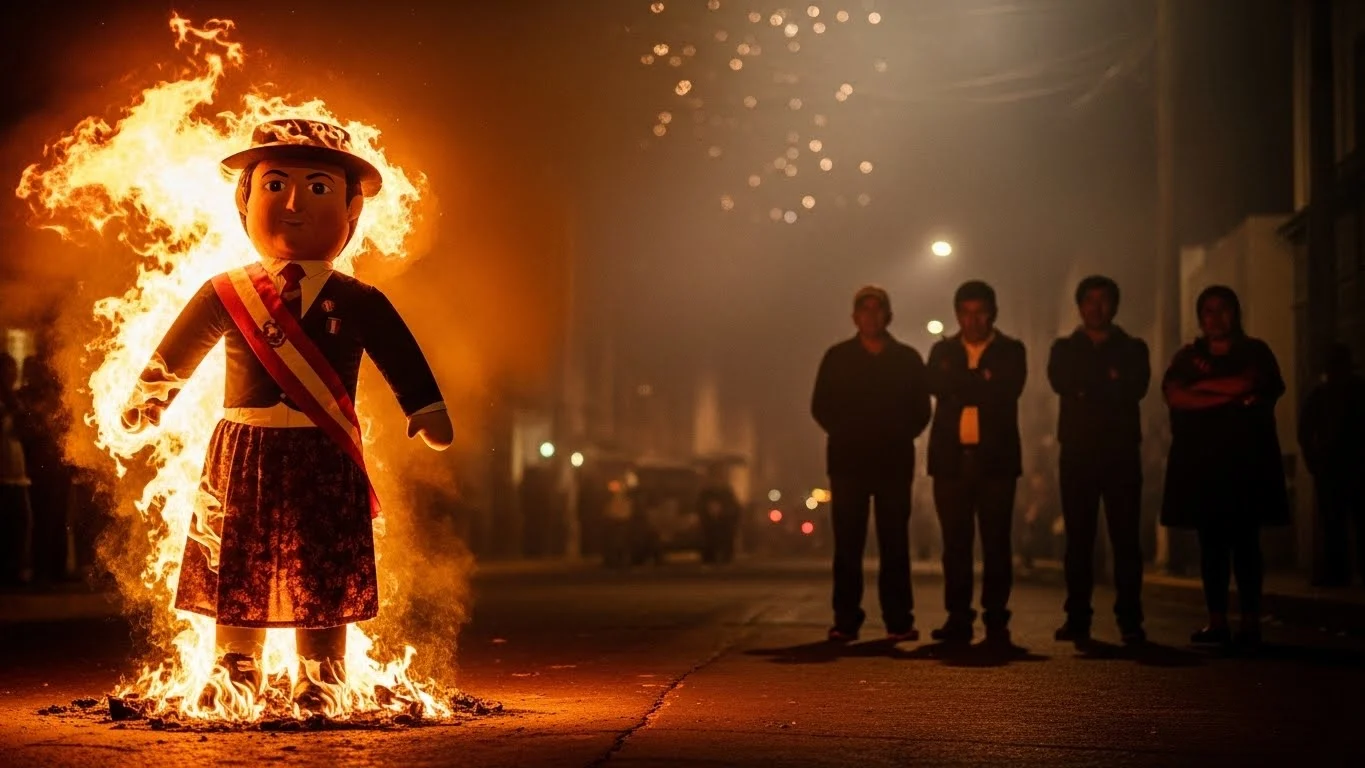
Symbolic burning of effigies: closing cycles
This ritual represents leaving behind the negative aspects of the year that ends. Although today it is practiced in a more controlled way, its meaning remains strong: releasing emotional burdens, mistakes, and difficult experiences to begin the new year lighter and renewed.
Spiritual cleansing baths: deep renewal
Spiritual cleansing baths are guided by Andean spiritual leaders known as Paqos. Using yellow flowers, medicinal herbs, and water from sacred natural sources, these rituals aim to release heavy energies and welcome the new year in balance and harmony with nature.
The heart of the celebration: Plaza de Armas
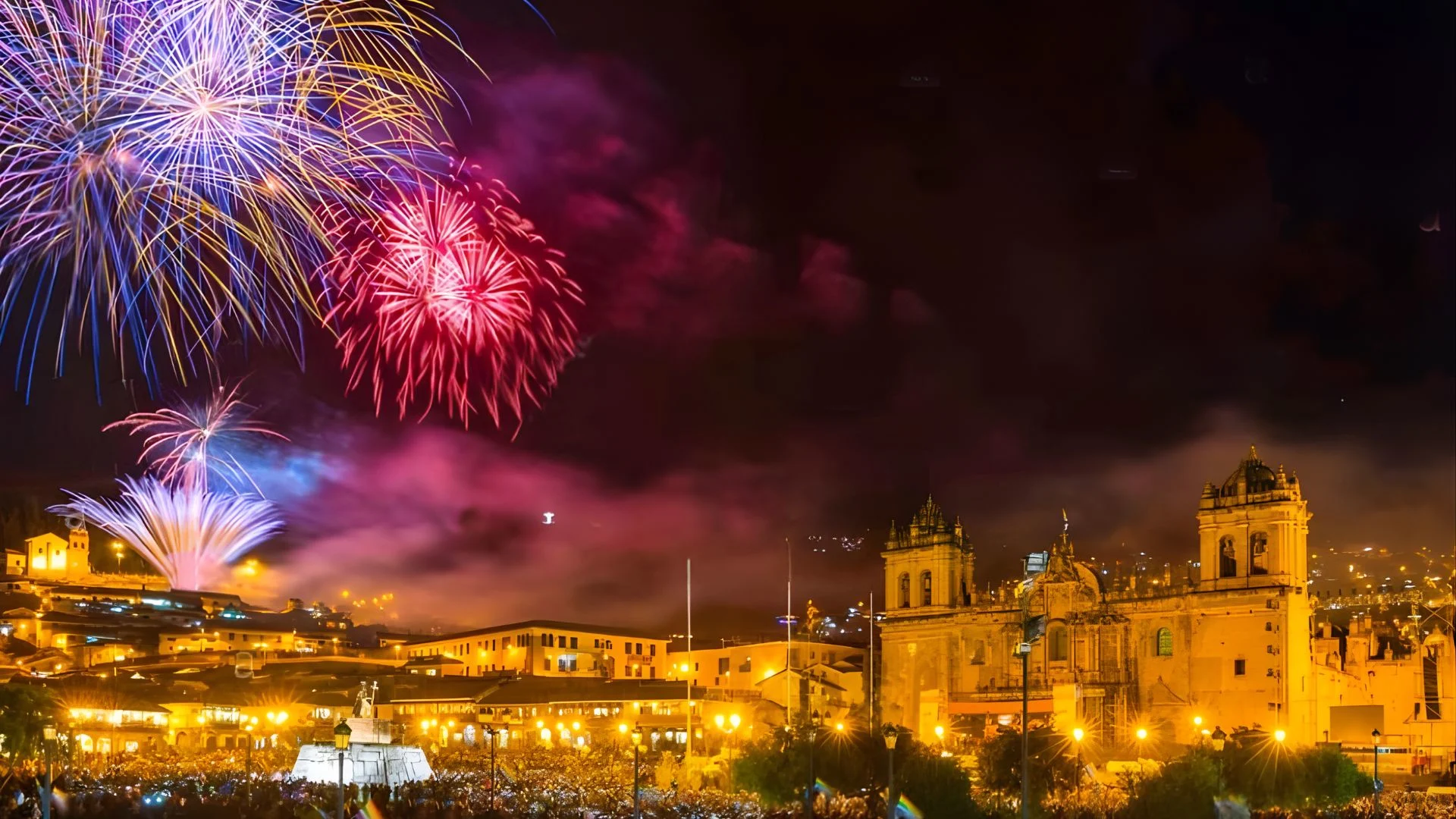
New Year’s Eve reaches its peak at the Plaza de Armas, which becomes a space of collective celebration where locals and visitors share rituals, hugs, and wishes. The transition into the new year feels communal and deeply human, unlike anywhere else.
The counterclockwise run around the plaza
When the clock strikes midnight, the crowd begins running around the plaza counterclockwise. This movement symbolizes going against the current, closing past mistakes, and opening new paths. Traditionally, people complete seven laps, a number associated with good luck and transformation.
Bars, clubs, and gala dinners
After the plaza celebration, the city keeps going. San Blas turns into a bohemian hub with live music and intimate bars, while nightclubs along Tecsecocha Street offer international DJs. Many top hotels host elegant gala dinners with orchestras, champagne toasts, and exclusive parties.
Viewpoints: fireworks from above
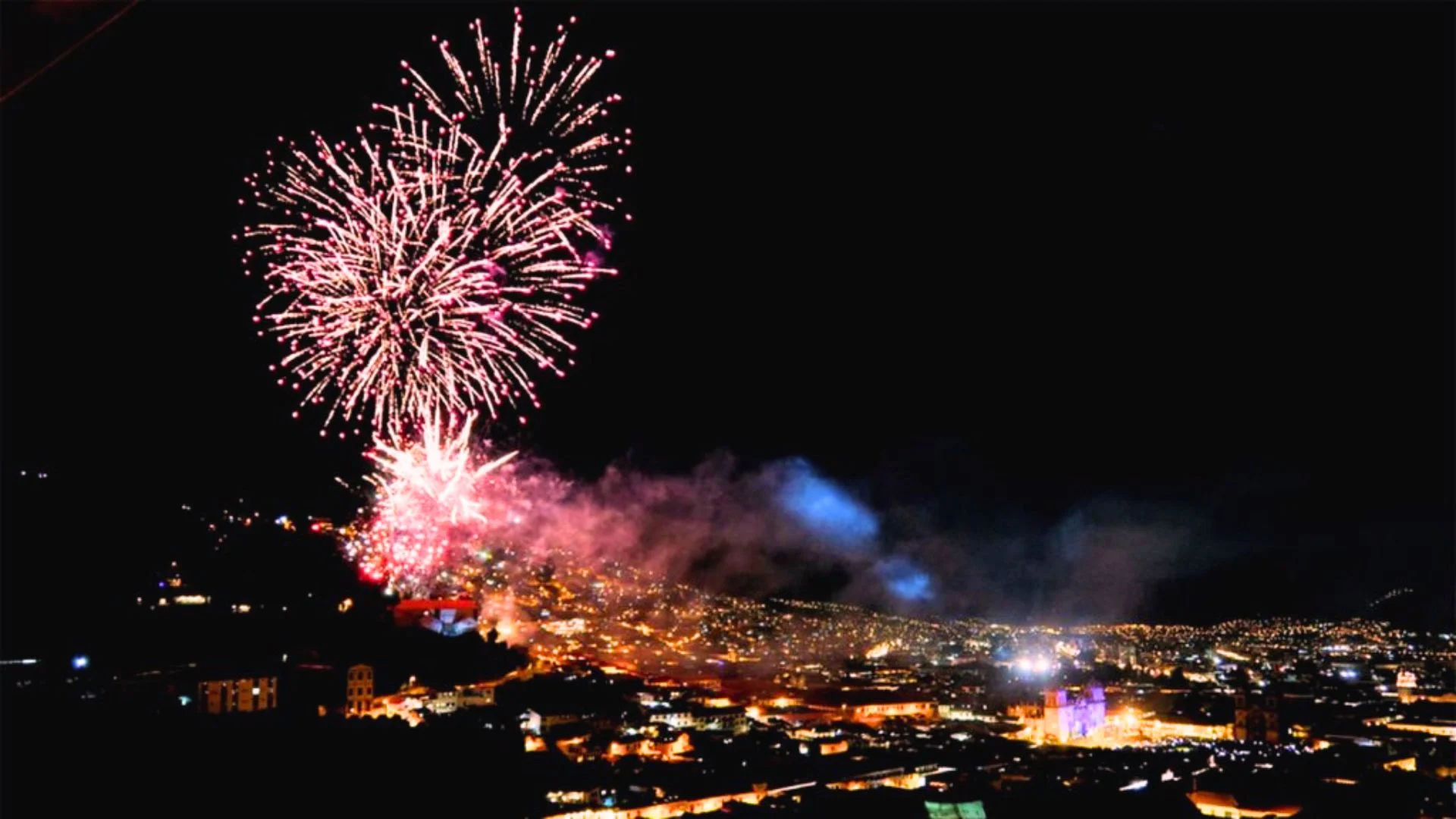
Cusco’s geography turns the city into a natural amphitheater at midnight. Fireworks light up the sky from multiple neighborhoods, creating a panoramic spectacle.
- Cristo Blanco offers the highest and widest view of the illuminated city.
- San Cristóbal provides a unique angle overlooking the Cathedral and historic center.
- Santa Ana, one of Cusco’s oldest neighborhoods, offers broad views of fireworks across the surrounding hills.
New Year gastronomy in Cusco
Food is an integral aspect of the festival. Having food at the table signifies unity, thankfulness, and plenty.
Dinner on New Year’s Eve
Families get together before or after midnight as a way of appreciating the past year gone by and embracing the new year with happiness.
Roast suckling pig: Tradition and abundance
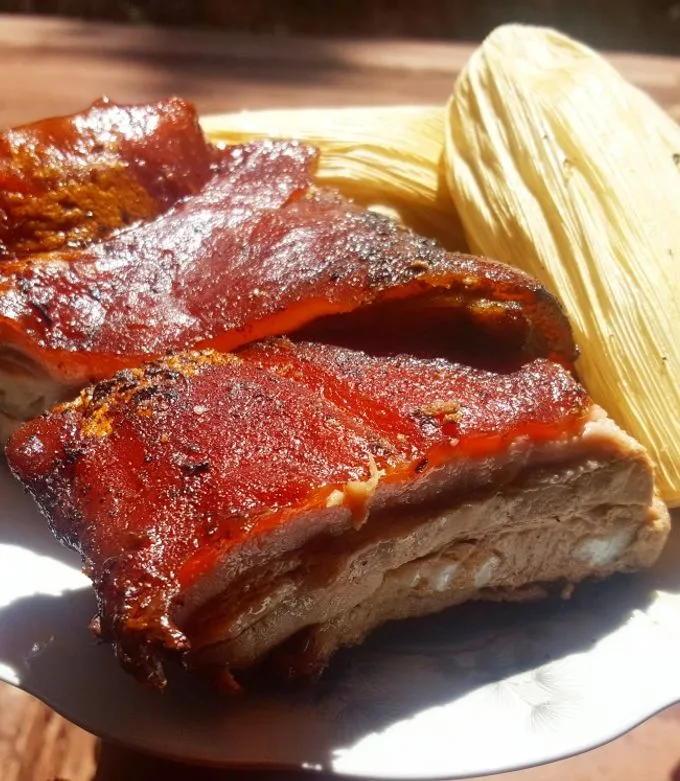
The suckling pig roasted in the oven is the signature dish. The suckling pig is marinated with ají panca, garlic, and Andean herbs, and then roasted slowly to make its skin crispy, accompanied by moraya, salads, tamales, and Andean bread.
Dawn broths
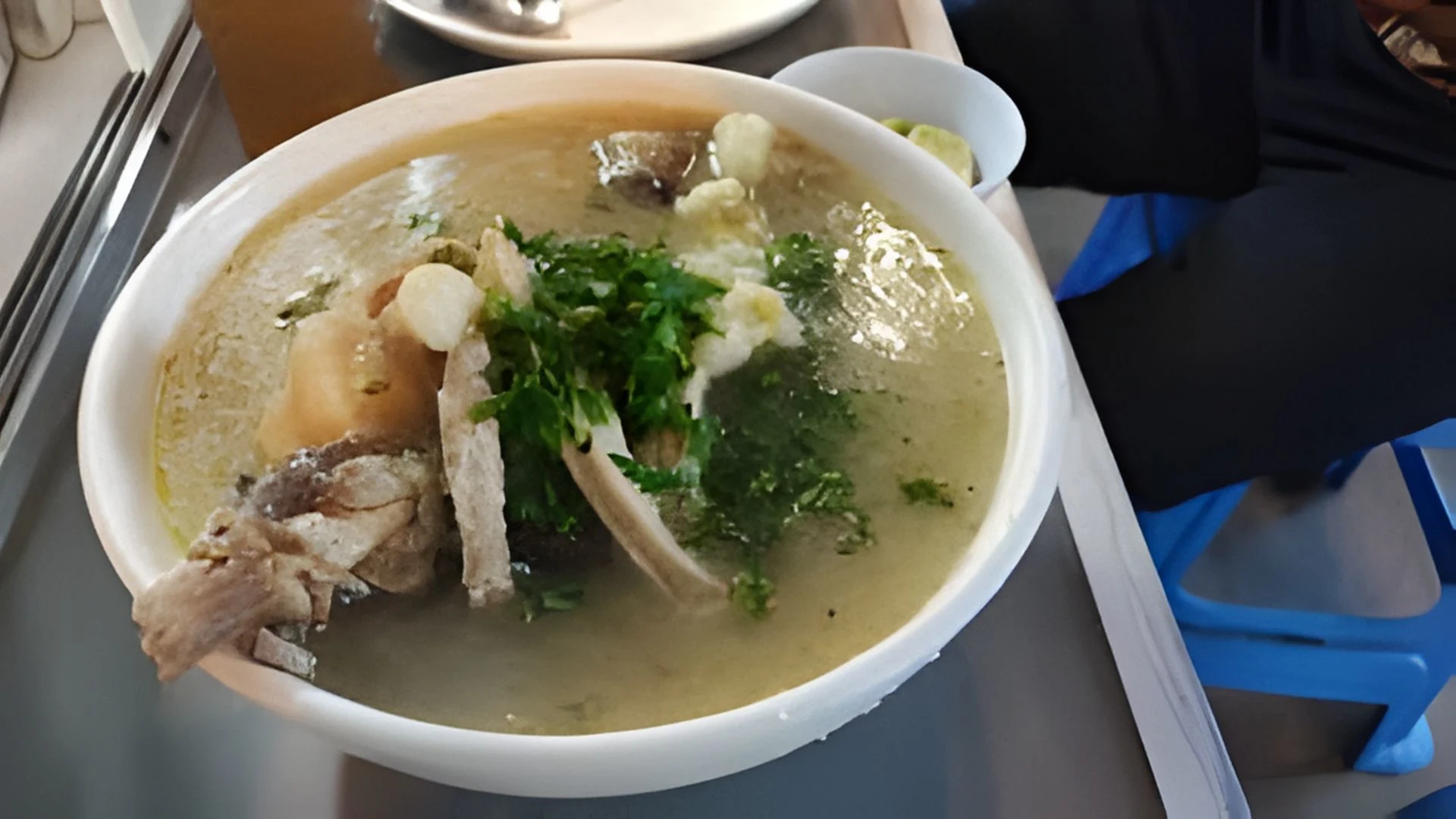
As the day begins on the morning of the first day of January, the citizens of Cusco can begin with a hearty soup of ‘caldo de cabeza’ or ‘adobo cusqueño,’ which is usually sold in market stalls and local eateries.
Full-day tours to start the year in Cusco
Early January is a great time of year to discover what is around Cusco. This is just what you want after all the frenetic activity of New Year festivities.
Cusco City Tour
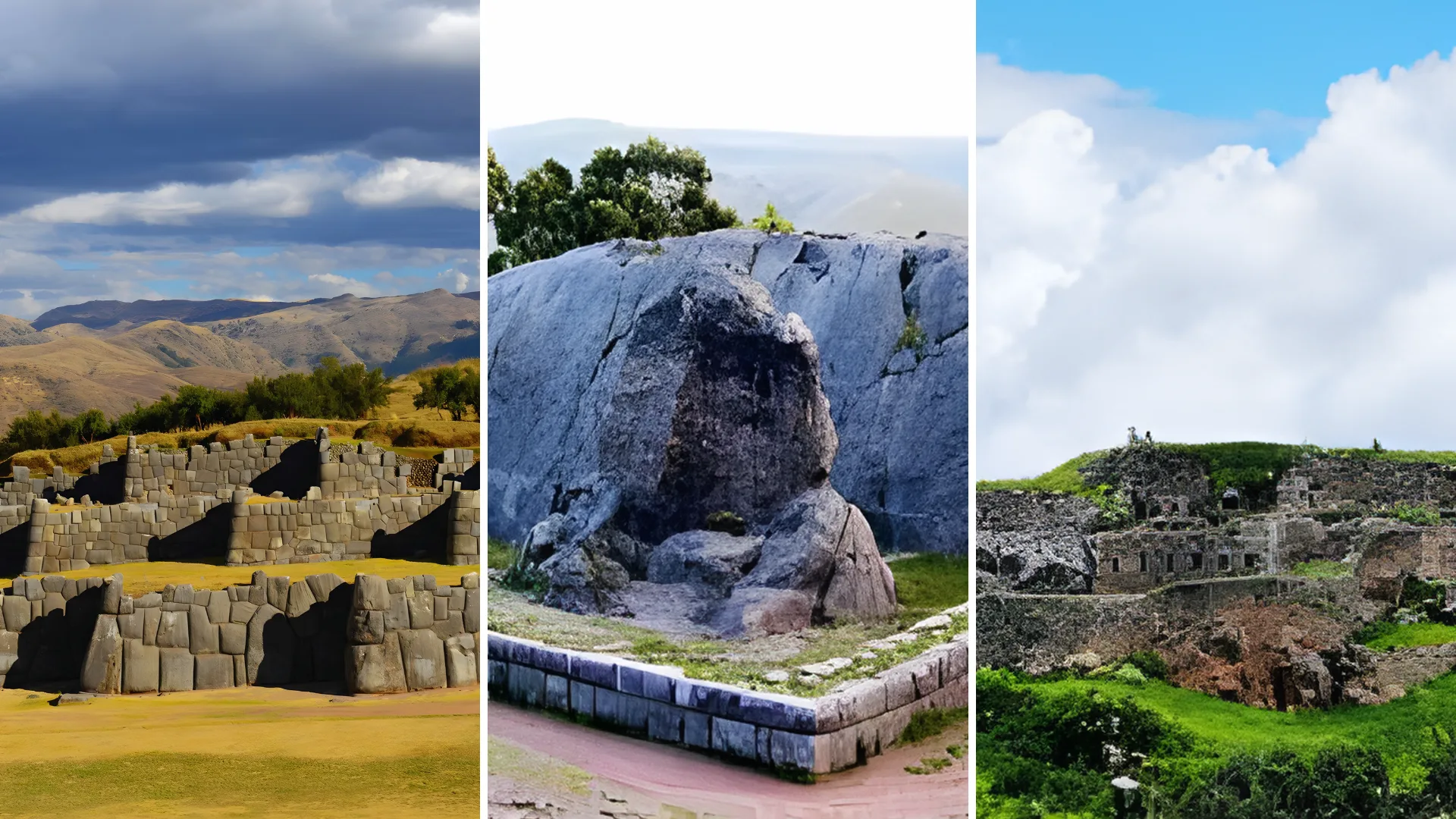
This trip includes visits to the Cathedral, a work of colonial artwork with Cusco School paintings, and to Qoricancha, the Temple of the Sun, where Inca and Spanish architecture come dramatically together. Other visits can be made to Sacsayhuamán, Qenqo, Puca Pucara, and Tambomachay to gain a brief but intense introduction to Inca civilization.
Sacred Valley Tour
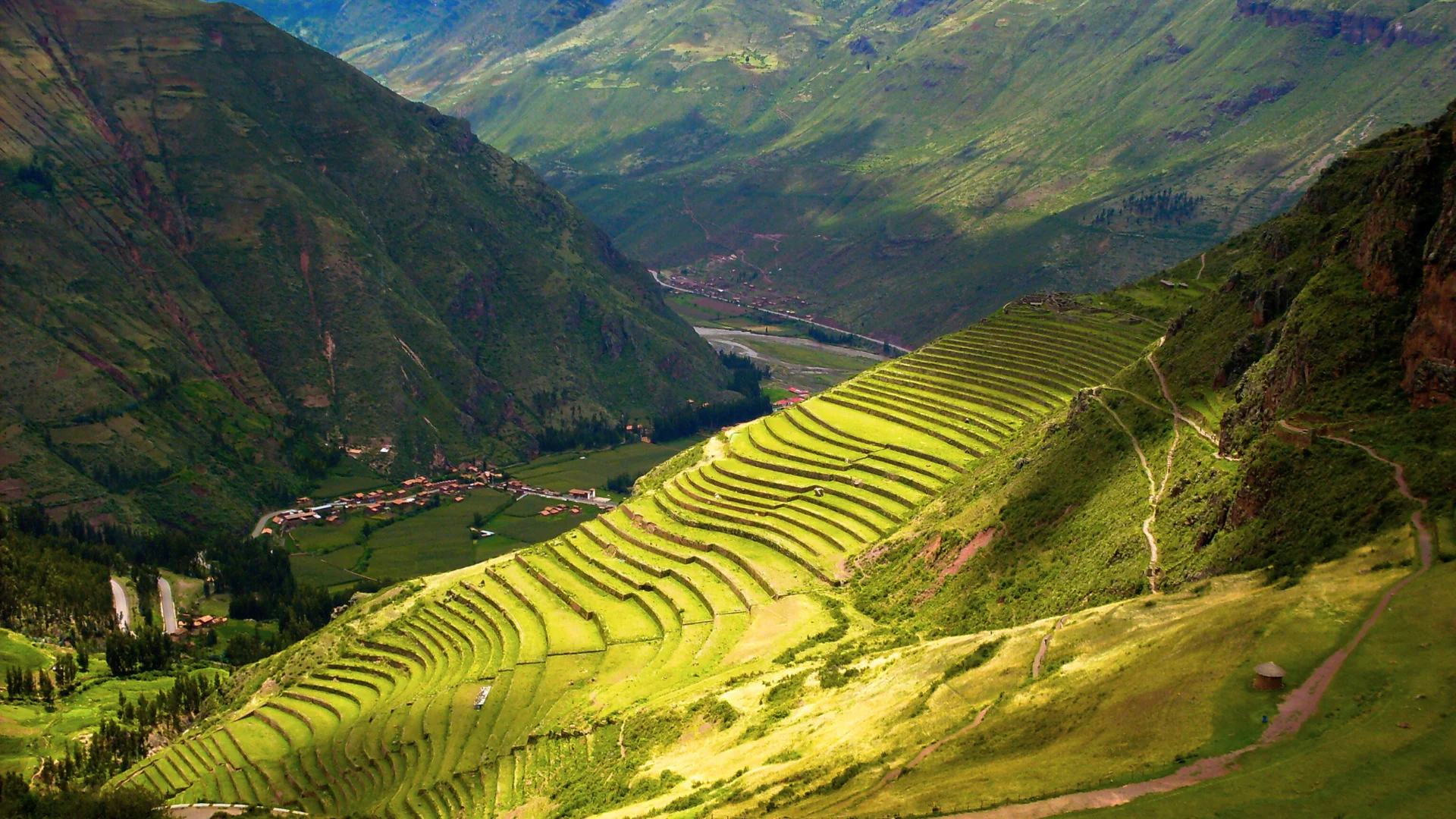
The classic route in what is known as the Sacred Valley is Pisac, Ollantaytambo, and Chinchero. In addition to its historical significance, it also introduces an audience to living Andean tradition as well as the panoramic vistas of the Urubamba River and mountainsides.
Maras Moray
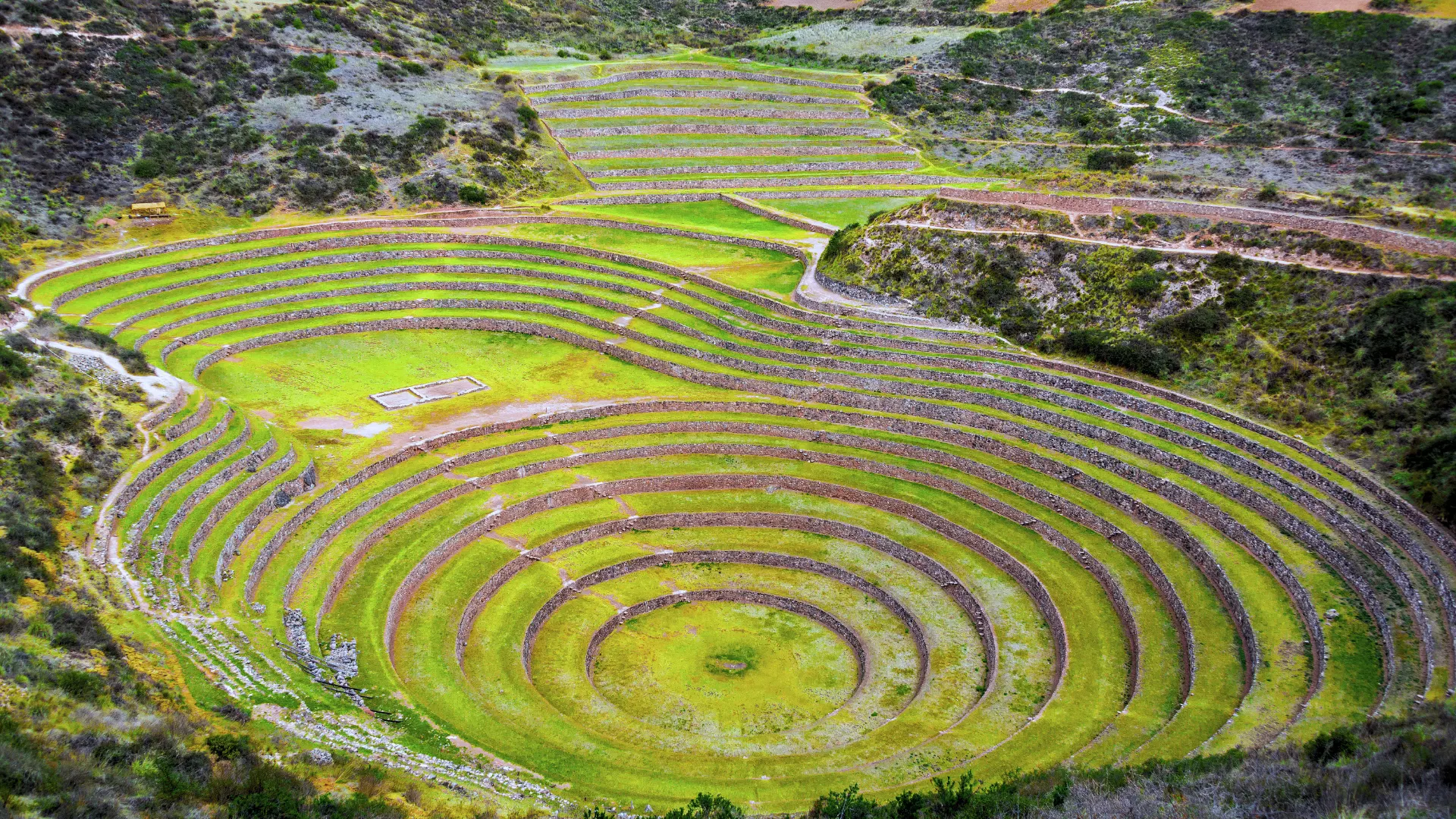
Moray features terraced farmland believed to be an experimental ground used by the Incas to test plant adaptation. Next is the visit to the Mines of Salt Maras, where over 3,000 salt ponds have been mined since pre-Inca times, forming an impressive topographical view of the Andes
Practical tips for New Year in Cusco
To celebrate New Year’s Eve, thousands of people flock to the old city, so it is important to follow some basic steps in order to celebrate the event in a safe environment.
| Category | Recommendation |
|---|---|
| Weather | Take along or purchase a waterproof jacket or poncho. It’s the month of rains in December. |
| Night temperatures | Carry warm clothing, temperatures plummet after midnight. |
| Footwear | Comfortable, non-slip shoes for cobblestone streets. |
| Sun protection | Sunscreen lotion and a hat are good despite the rain. |
| Small backpack | For water, documents, poncho, and essentials. |
| Cash | Carry Peruvian soles; cards are not universally accepted. |
| Valuables | Avoid jewelry or unnecessary valuables. |
| Personal safety | Keep bags in front in crowded areas. |
| Alcohol | Moderation, increased potency with altitude. |
| Meeting points | Set one ahead if traveling with a group. |
| Transportation | The historic center becomes pedestrian at night. |
| Altitude | Stay hydrated and consider coca tea. |
| Planning | Many businesses open late on January 1. |
To ring in the new year in Cusco means a lot more than throwing a celebration. It involves an appreciation of tradition, spirituality, food, and group energy. It would be hard to find anywhere in Peru a more significant place to start the new year.
Frequently asked questions about New Year in Cusco: Traditions, Rituals, and Andean Celebration
En Año Nuevo en Cusco puedes vivir una combinación única de tradición, fiesta y cultura. A medianoche, la Plaza de Armas se convierte en el principal punto de encuentro para celebrar con fuegos artificiales, rituales andinos y la tradicional vuelta alrededor de la plaza.
La Plaza de Armas de Cusco es el epicentro de cada fiesta de año nuevo. Desde primeras horas de la noche el show musical se hace presente al ritmo en que la gente abarrota el lugar
Cusco es uno de los destinos más populares para Año Nuevo . A la medianoche, miles de personas se reúnen en la Plaza de Armas entre música, luces y celebraciones. La tradición más famosa es dar una vuelta completa a la plaza para atraer viajes y buena fortuna.
Machu Picchu permanece abierto todo el año, incluso el día de Navidad y Año Nuevo
Diciembre es temporada de lluvias. Los días pueden ser templados, pero las noches son frías y pueden presentarse lluvias repentinas, por lo que es recomendable llevar ropa impermeable.