Lake Titicaca Travel Insurance: Coverage, Costs and Exclusions
Lake Titicaca is situated at an elevation of 12,507 feet (3,812 meters) above sea level, which makes choosing appropriate insurance coverage especially important. Travelers searching for travel insurance Peru can begin by comparing providers such as Heymondo, SafetyWing, World Nomads, IMG iTravelInsured, Allianz Travel Insurance, and Assist Card. These companies offer different combinations of emergency medical care, medical evacuation, trip cancellation, and activity coverage, although benefits and availability depend on the traveler’s country of residence, age, itinerary, and selected plan.
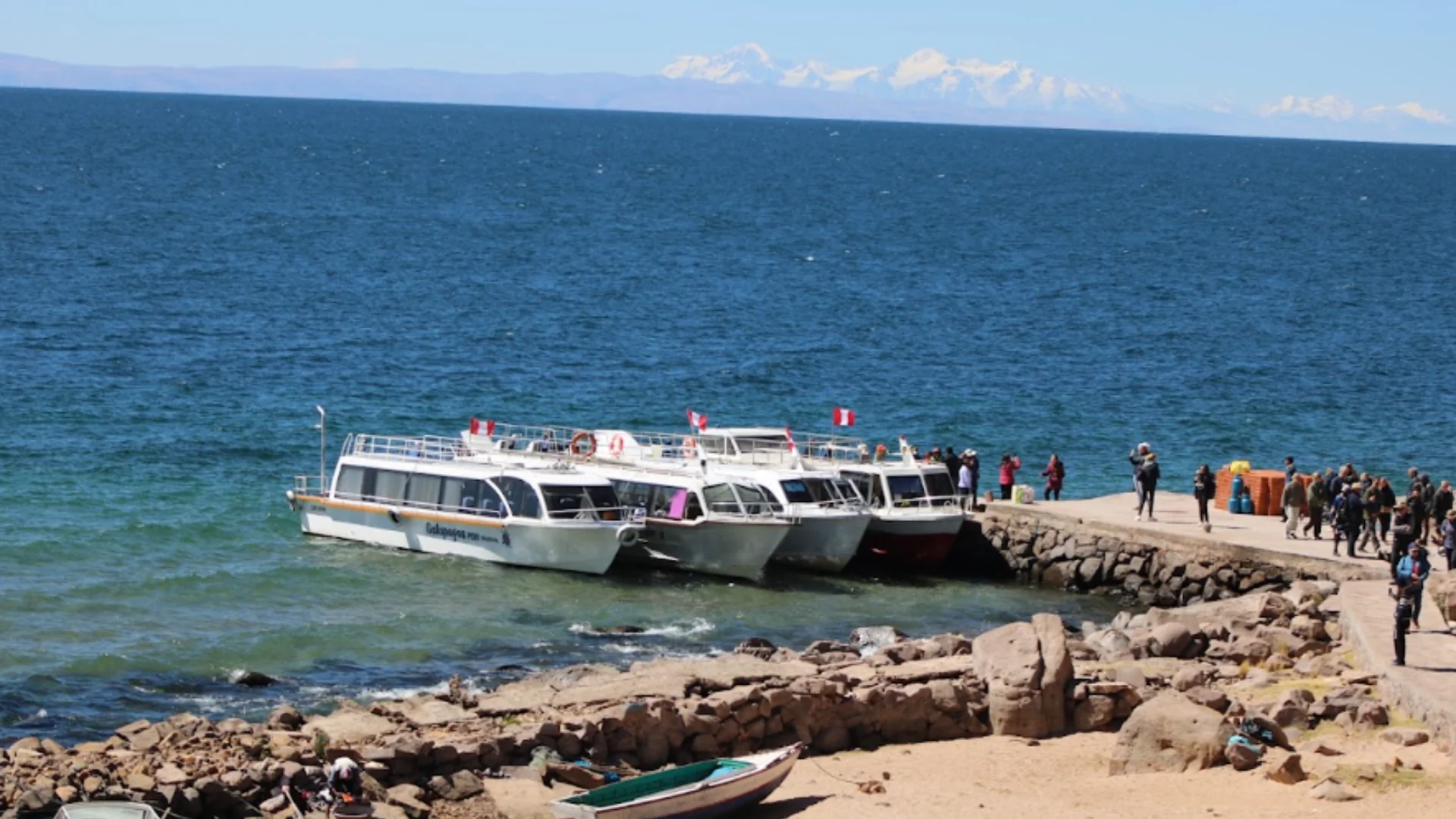
Boat transfers to the Uros floating islands, overnight stays on Amantani, and limited access to major hospitals make it essential to choose a policy that matches the actual Lake Titicaca itinerary.
Do You Need Travel Insurance to Visit Lake Titicaca?
Travel insurance is not required in most cases for entering Peru; however, that doesn’t mean travel insurance is not needed at all. The main concern here is how effective the current health insurance plan is outside one’s country and if the chosen travel insurance covers altitude sickness, evacuation, boat tours, and prepaid trip fees.
Entry Requirements for Tourists in Peru
There is no mention of travel insurance among the required documents for visitors in Peru’s official guidelines on entry as a tourist to the country. Tour requirements differ from immigration regulations: a tour company might request travel insurance depending on the tour package; however, this may vary from one tour company to another.
Why Travel Experts Still Recommend Coverage
The U.S. Department of State suggests that travel insurance should be obtained before going to Peru, making sure that there is good coverage for medical assistance, evacuation, and trip cancellation. This is relevant since, during the stay in Peru, medical assistance might need immediate payment, while an emergency on an island would require additional procedures and transport. Thus, protecting your travel does not mean assuming something will go wrong; it ensures access to assistance and predictable costs if needed.
Health Risks to Consider at High Altitude
A Lake Titicaca tour plan involves elevation, boat travel, and trips far away from major cities with medical services. Having information about these factors assists in knowing the policy sections that are important.
Altitude Sickness on the Peruvian Altiplano
Lake Titicaca is at an altitude greater than Cusco; hence, tourists who are coming from low-lying areas may start experiencing the effects of thinner air when they get to Puno.
These may range from headaches, vomiting, lethargy, dizziness, or shortness of breath. In most cases, these symptoms disappear by themselves after rest and acclimatization; however, some people need professional evaluation.
Altitude sickness insurance is not a term that refers to a specific standalone policy; it depends on whether altitude sickness is covered under emergency medical coverage and whether the activities are within the insurance plan’s height limits.
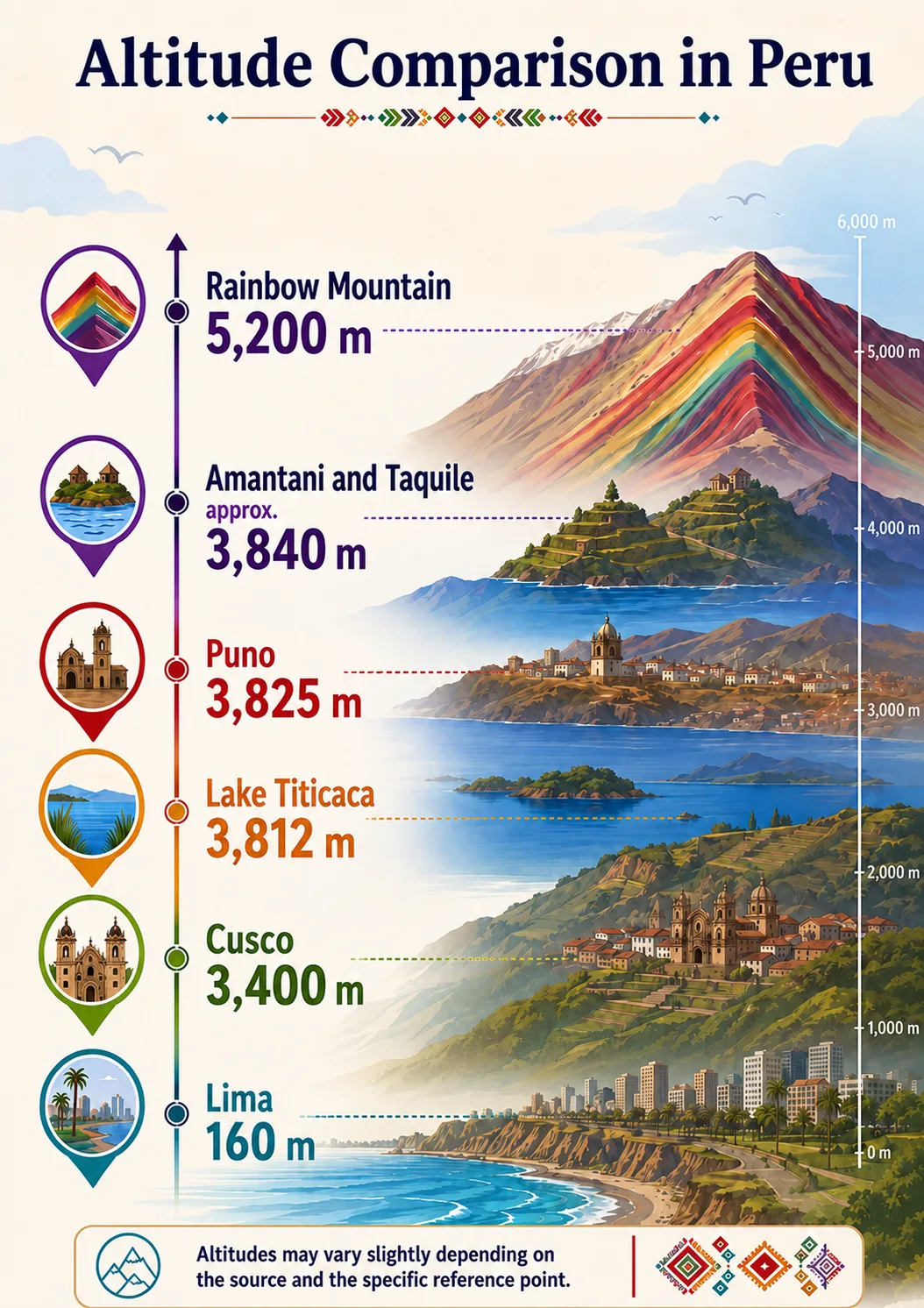
The following table highlights the estimated altitude of common stops. The crucial thing about insurance is not only the height at which one sleeps, but also whether the travel includes other high-elevation activities like Rainbow Mountain.
| Location | Elevation | Notes |
|---|---|---|
| Lima | 520 ft / 160 m | Near sea level; many domestic connections depart from here. |
| Cusco | 11,150 ft / 3,400 m | Common first high-altitude stop; acclimatization may begin here. |
| Puno | 12,550 ft / 3,825 m | Main gateway city for Lake Titicaca tours. |
| Lake Titicaca (surface) | 12,507 ft / 3,812 m | High-altitude lake with boat routes to island communities. |
| Amantani & Taquile Islands | ~12,600 ft / 3,840 m | Homes, paths, and viewpoints may sit above lake level. |
| Rainbow Mountain (if combined) | 17,060 ft / 5,200 m | Separate high-altitude activity that needs its own coverage check. |
Limited Medical Access on the Floating Islands and Lake Communities
Once travelers depart from Puno via watercraft, their ability to obtain full-service healthcare immediately is lessened. While there are basic health posts available in some settlements, a condition that requires further diagnosis might entail traveling back to Puno via watercraft or moving to another city. As arrangements depend on weather conditions, timing, and transport availability, travelers should inquire how their insurance company handles emergency transportation and medical evacuation.
What a Good Travel Insurance Policy Should Include
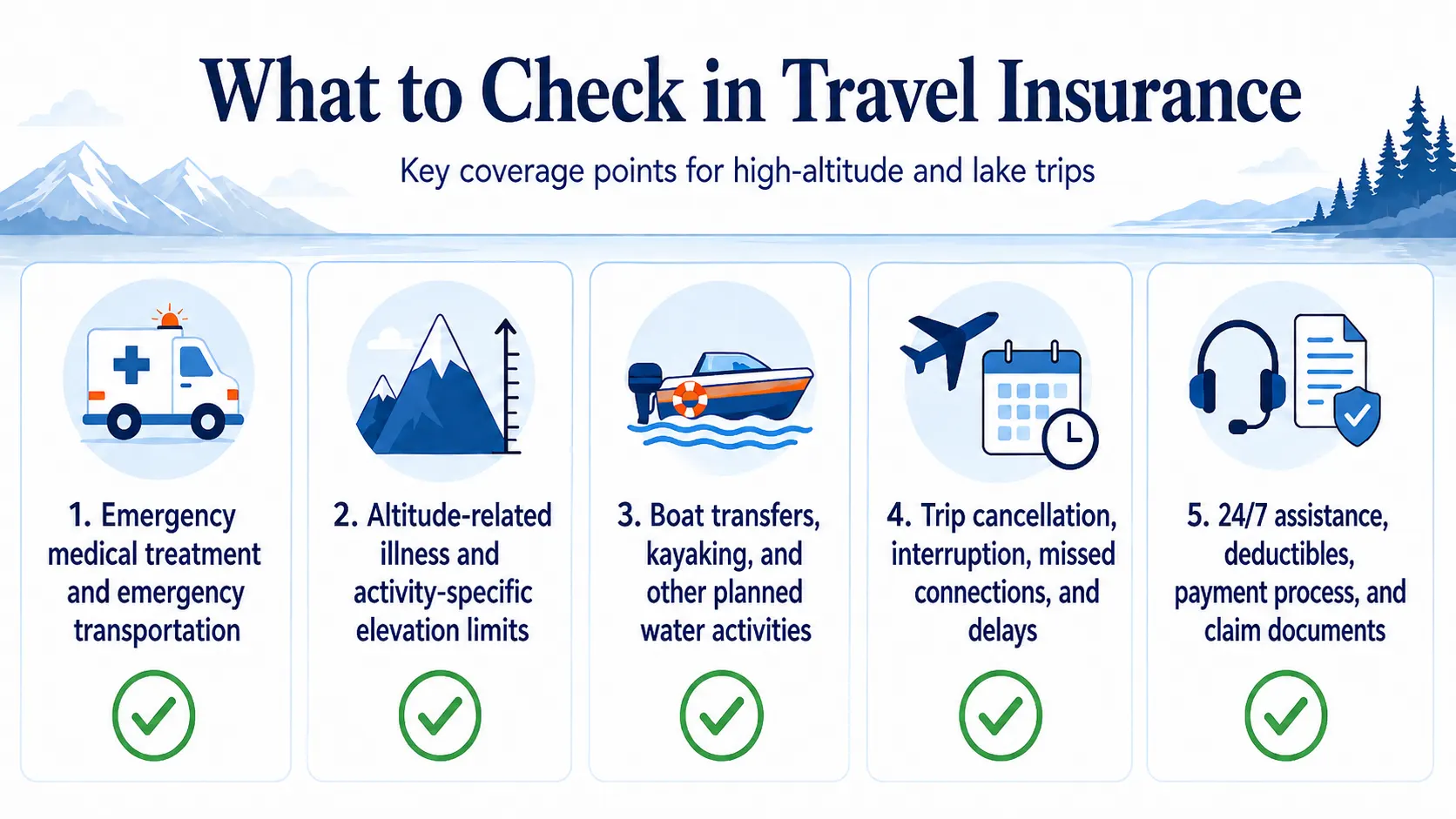
Not all international plans have the same level of protection. An effective plan for Titicaca coverage will depend on where one comes from, age, medical needs, proposed activities, cost of travel, and the route in the lake.
Emergency Medical Coverage and Minimum Limits
There are no compulsory requirements with respect to medical coverage for Lake Titicaca. The standard rule for many people is to choose a plan with at least $100,000 worth of emergency medical benefits, although the right level would be dependent upon the kind of coverage you already have, your age, and itinerary. It will all depend on whether the condition is covered or not.
Emergency Evacuation and Repatriation
Emergency transportation coverage may include transport to an appropriate medical facility for medically necessary reasons, while repatriation coverage may also be able to provide medically necessary transport back home. In planning for a lake vacation, it is necessary to look into the limit, procedure, exclusions, and even the direct involvement of the assistance team in the transport arrangements. A specific dollar amount recommendation may not fit all travelers.
Trip Cancellation and Interruption Protection
There is no certainty regarding disruptions along the way, road closures, protests, weather conditions, flight modifications, or sickness during a tour in Peru; however, coverage will only depend on the reasons covered under the policy. One should be careful about trip protection and insuring the non-refundable expenses and also how cancellations, interruptions, missed flights, and delays will be calculated under a particular plan. Most policies will pay up to the amount covered for cancellations.
Coverage for Boat Travel and Water-Based Excursions
Although regular passenger boat transfers do not usually qualify as adventure trips, travelers must ensure that the trip is not excluded due to an issue involving transport, water sport, or operator exclusion. It is important for travelers to know whether kayaking or stand-up paddle is included in the schedule.
How Much Does Travel Insurance for a Titicaca Trip Cost?
There will be no basis for accurate comparison without matching travelers. Variables such as age, nationality, duration of travel, destination, pre-paid cost of travel, medical cover limit, deductibles, and activities insurance among others can influence the prices.
The following table thus focuses on comparing the providers according to their type and features rather than showing one price applicable to all. Assist Card is not a Peruvian company; it was established in Switzerland.
| Provider | Pricing Style | Notable Feature | What to Verify |
|---|---|---|---|
| Heymondo | Trip-based live quote | 24/7 assistance app and medical chat | Medical and evacuation limits, planned activities, and payment arrangements |
| SafetyWing | Subscription-style quote, usually billed in 4-week periods | Can be purchased while already abroad; optional add-ons may be available | Deductible, medical and evacuation limits, home-country rules, and adventure-sports option |
| World Nomads | Trip-based live quote | Activity coverage varies by plan and country of residence | Select the exact activity and elevation; read the policy wording issued for your residence |
| IMG iTravelInsured | Trip-based live quote | Several plans combine trip-cost protection with medical benefits | Compare the exact plan; benefits and exclusions vary by jurisdiction |
| Allianz | Single-trip and annual plan options | Emergency medical transportation and broad trip-protection choices | Pre-existing-condition waiver timing, benefit limits, and per-trip rules |
| Assist Card | Trip-based assistance quote | Founded in Switzerland, with a strong assistance presence in South America | Whether the selected product is assistance or insurance, medical limits, and direct-service or reimbursement rules |
Common Exclusions Travelers Overlook
Even when it appears to be a sound policy when written down, there can still be holes in the coverage that may become apparent only when you make your claims. This is what usually happens to the people traveling to Lake Titicaca, and they need to be aware of this.
Unlicensed Tour Operators and Local Guides
A travel insurance contract is not necessarily null and void for any travel that utilizes an unregistered or unauthorized operator. The situation might have an impact on the claim if the activity breaches local laws, requires a registered operator, or is against the terms of the travel insurance coverage. It is advisable to verify the operating license of the agency offering the activity.
Adventure Activities Not Automatically Covered
Such activities as kayaking, cycling, and trekking, among others, may also be covered, excluded, or made available by way of an upgrade. Other factors that may determine what is covered include elevation, difficulty of the route, equipment, supervision, and even the traveler’s nationality. It would be best to specify the activity during the quotation process.
Pre-Existing Conditions and Altitude-Sensitive Health Issues
The preexisting condition clauses vary from one insurance plan to another. While there are insurance plans that do not cover claims for preexisting conditions, some insurance plans provide coverage if the traveler purchases the insurance within a given time after the payment for his or her first trip and is capable of traveling on the day of purchasing the insurance.
How to Choose the Right Plan for a Titicaca Itinerary
As there are plenty of companies that offer at least one kind of international coverage, choosing the best company means finding the best plan according to your travel plans, rather than just going for the cheapest and most common option.
Comparing Single-Trip vs. Multi-Trip Policies
Single-trip coverage is normally appropriate where Lake Titicaca, Cusco, Sacred Valley, and Machu Picchu are visited within the same Peru trip. Annual or multi-trip coverage will be more cost-effective where the client anticipates making multiple trips over the course of the policy year. Single-trip policies are not restricted from imposing maximum trip limitations and trip cancellation conditions.
Questions to Ask Before Buying
Conducting provider comparisons before purchase will help uncover discrepancies that cannot be found through the stated prices. Two plans might have different deductibles, restrictions on activities covered, assistance procedures, and treatment of existing illnesses. Prior to purchase, one should get answers to the following questions:
- Is the policy valid for typical sightseeing at the altitude of Lake Titicaca, as well as all intended high-altitude activities?
- Are typical boat transfers included, and do any water activities necessitate an upgrade?
- Does the insurance company make payment to the medical facility directly, or will you have to settle first before being reimbursed?
- Is there 24/7 assistance in Spanish and English, given how remote parts of the lake can be?
- What documentation does a claim require, and how long does processing typically take?
- Is there a deductible per claim, and does it apply once per trip or once per incident?
IMPORTANT POLICY CHECK
Do not rely on a comparison table alone. Download the policy wording, select the exact country of residence and activities, and confirm unclear points in writing before payment.
Tips for a Safe and Well-Insured Trip to Lake Titicaca
Having the right policy may just be the first part of the puzzle. It simply takes a few easy things to do before and while traveling in order for the coverage to be more useful when needed.
Documents to Carry With You
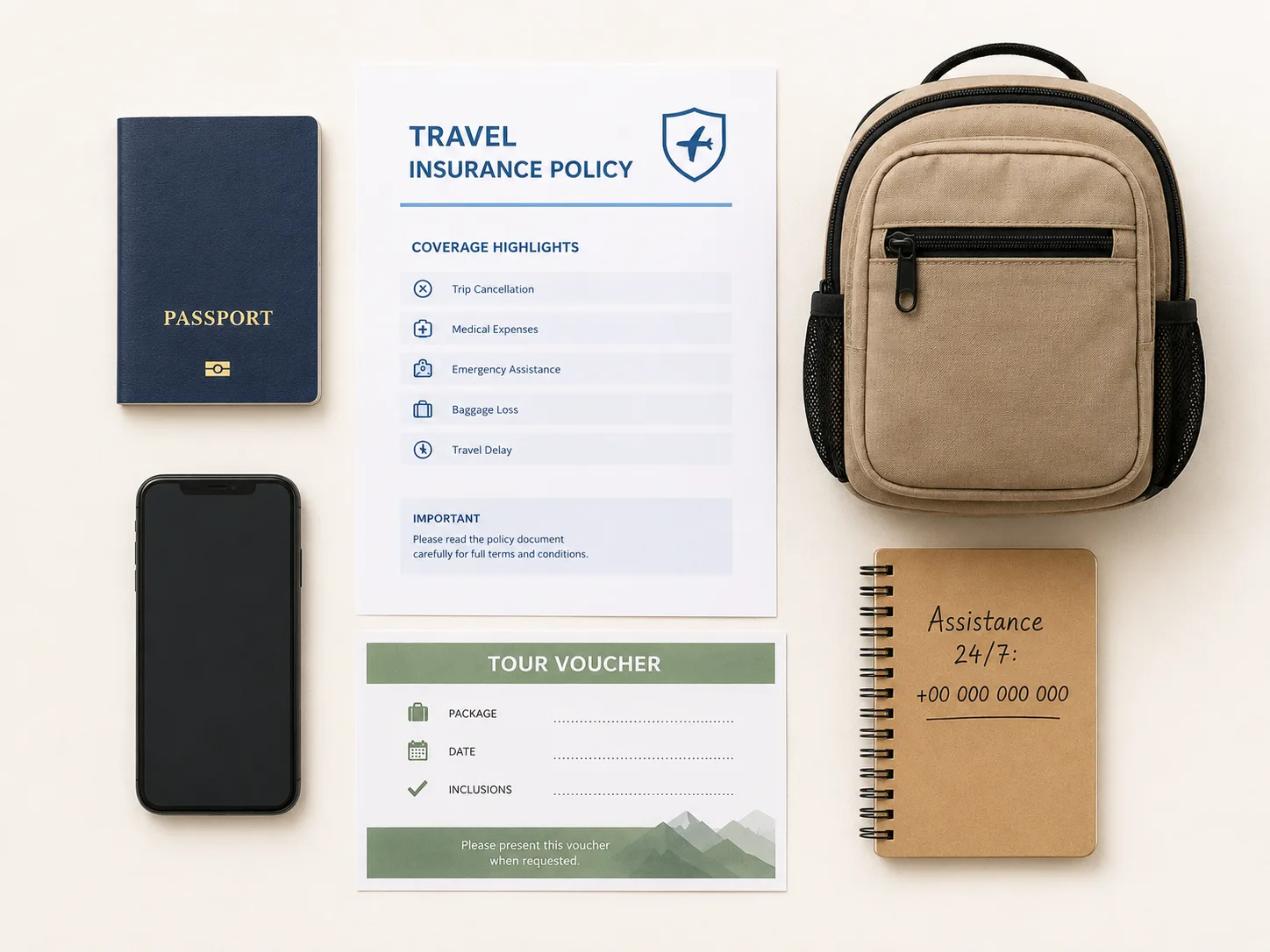
Maintain both a digital copy and hard copy of the policy number, assistance number, passport information, and vouchers for the tours. As there may not always be cell phone coverage within certain areas of the lake, it is a good idea to have a hard copy of the policy number and instructions in case of an emergency.
What to Do If You Need to File a Claim
In case of need for medical attention, the insurance company’s hotline should be contacted at the earliest convenience, ideally prior to making arrangements for non-emergency transportation or paying a big bill. In case of an immediate emergency, the most important step is to get help, followed by contacting the insurance company at the earliest convenience. It will be important to keep bills, doctors’ notes, prescriptions, and other documents on file.
Frequently asked questions about Lake Titicaca Travel Insurance: Coverage, Costs and Exclusions
No. Peru does not require it for entry, but it is strongly recommended for medical treatment and emergency transportation.
Not always. Check the medical exclusions, altitude limits, and covered activities before purchasing.
Some providers allow it, but waiting periods and eligibility rules may apply. Buying before departure offers better protection.
Many travelers consider at least $100,000 in emergency medical coverage. The right amount depends on your age, itinerary, activities, and existing insurance.