Machu Picchu Information: Population, Meaning ‘Old Peak’ & Facts
Machu Picchu is more than just a photo opportunity; it is an engineering masterpiece and the spiritual heart of the Inca Empire. Hidden deep in the Peruvian Andes, this citadel has fascinated the world since its international revelation in 1911. But what do we really know about it?
Information about Machu Picchu is never just about dates and facts it’s about the feeling of standing in front of an ancient city hidden in the Andes Mountains of Peru. This site, often called the Lost City of the Incas, combines breathtaking landscapes, mysterious ruins, and the legacy of the Inca civilization.
Recognized as one of the Seven Wonders of the World and a UNESCO World Heritage Site, it’s easy to see why millions dream of visiting this archaeological site at least once in their lifetime. The general information about Machu Picchu tells us that it was built in the 15th century by the Inca civilization, during the height of the Inca Empire.
Walking through the site, you can see how advanced the Inca architecture was the ashlar masonry temples, the perfectly aligned terraces, and the ceremonial plazas make you realize why it’s often called the Lost City of the Incas. What amazed me the most is its location.
Additional information about Machu Picchu explains that the citadel sits at 2,430 meters above sea level, right in the middle of the cloud forest, surrounded by dramatic mountains like Huayna Picchu and Machu Picchu Mountain.
The scenery is magical, but the altitude also means you need to prepare for altitude sickness. And still, what information about Machu Picchu is not yet known? Archaeologists are still investigating why it was abandoned after the Spanish conquest and what its exact role was in the empire.
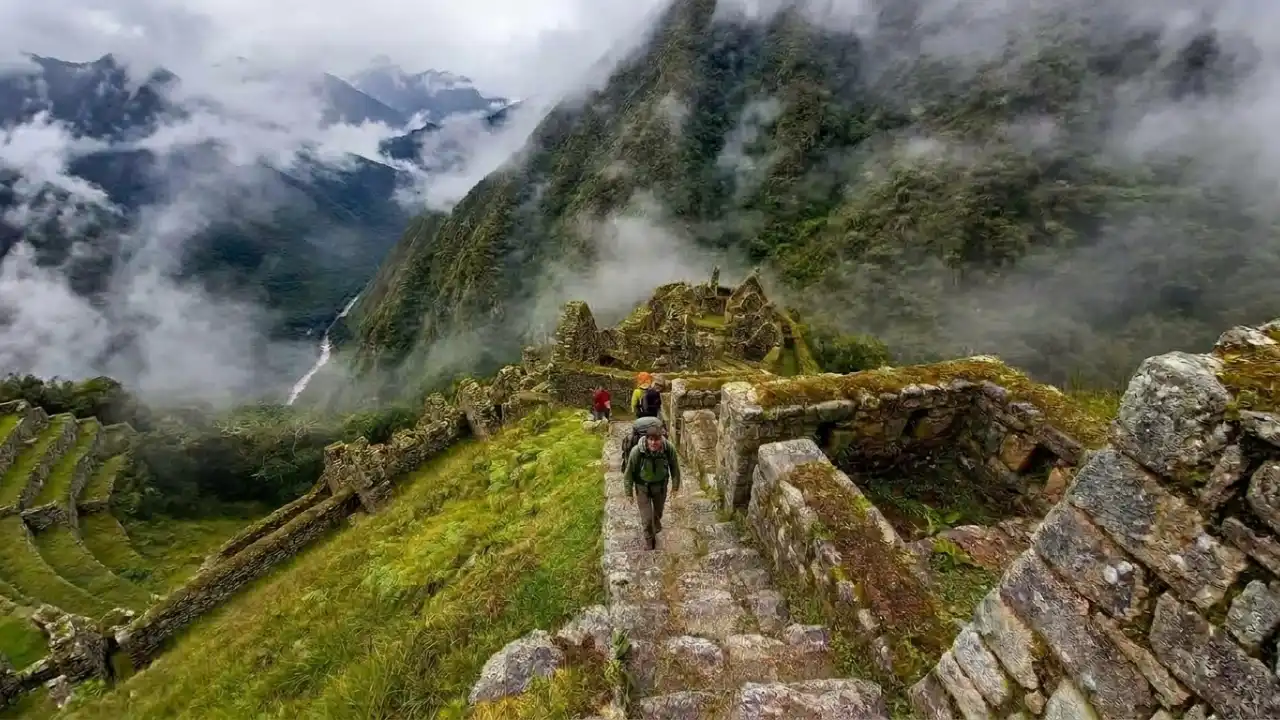
Getting there is a journey on its own. Some visitors hike the legendary Inca Trail, others take the train from Aguas Calientes, and adventurers often try alternative Machu Picchu hikes across the Andes Mountains Peru.
For me, the train ride through the Sacred Valley Peru already felt like part of the adventure. Visiting Machu Picchu is not just about reaching the ruins it’s about the whole experience, from the journey to the moment you step into this extraordinary archaeological site. Every year, millions of travelers come here, and I can see why.
You’ll find interesting facts about the spectacled bear that lives in the region, or fun facts about the Inca bridges hidden in the mountains. Some facts about Machu Picchu will always remain a mystery, but that’s what makes this place so unique.
Machu Picchu at a Glance (Quick Facts)
| Meaning (“Old Peak”): | “Machu” (Old) + “Picchu” (Peak) |
| Current Population: | 0 (Archaeological site only) |
| Continent & Country: | South America, Peru (Cusco Region) |
| Rediscovered by: | Hiram Bingham (1911) |
| Construction: | c. 1450 AD (Inca Empire) |
What Does Machu Picchu Mean in Quechua?
Many travelers wonder about the origin of the name. To be precise, the name of this site of ruins in the Andes means “Old Peak” (or Old Mountain) in the Quechua language. It is derived from two words: “Machu” (Old) and “Picchu” (Peak)
It comes from the combination of two Quechua words:
- “Machu”: which translates to old or ancient.
- “Picchu”: which translates to peak or mountain (often associated with the act of chewing coca leaves).
It is important to note that the citadel takes its name from the mountain it rests upon. Directly in front of the ruins stands Huayna Picchu, which translates to “Young Peak.” Together, they represent a duality in the Andean worldview.
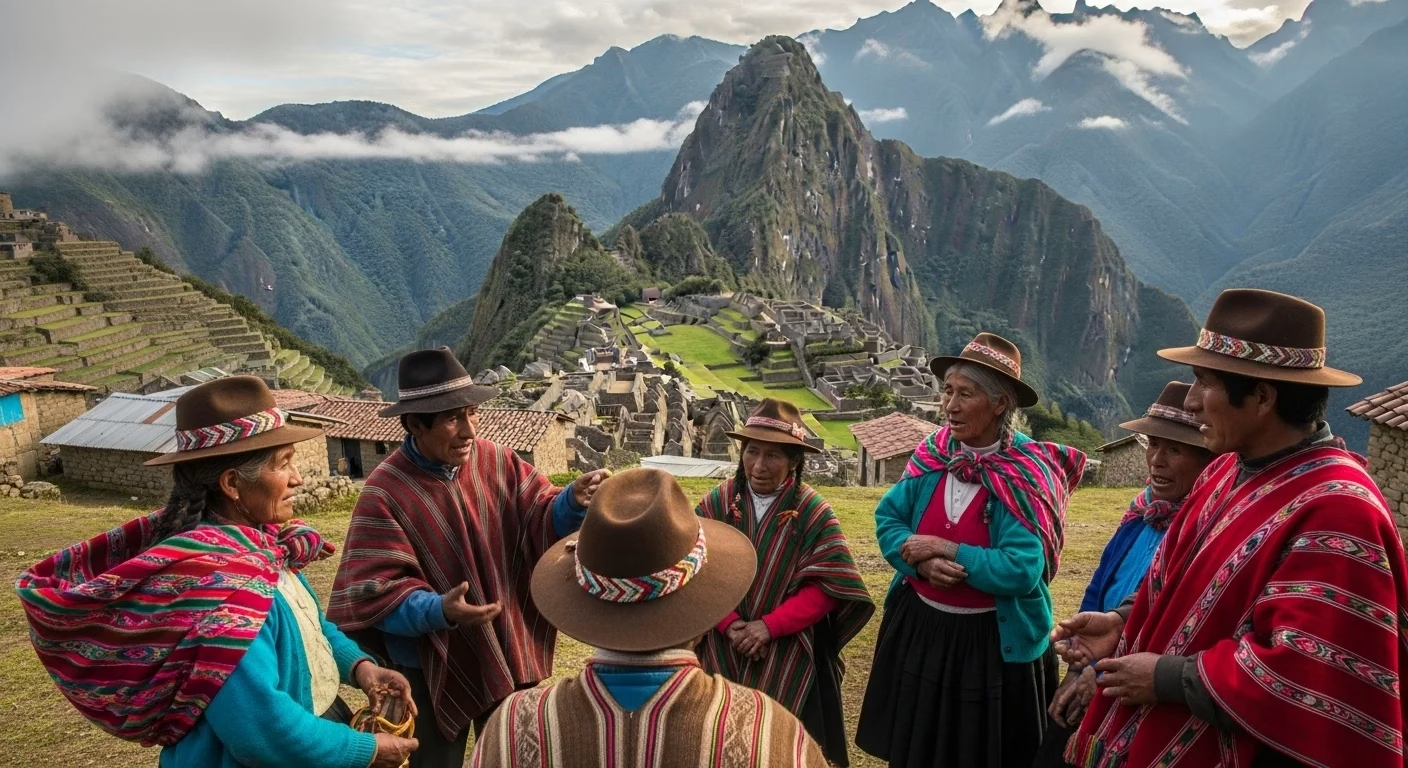
If you ask specifically what does “Machu Picchu” mean in Quechua language, scholars agree it refers to the ancient peak overlooking the site. Some people may phrase the question as what does Machu Picchu mean in the Quechua language? The consistent answer remains: Old Mountain.
Interestingly, you may even see quizzes asking: what does Machu Picchu mean in Quechua?
- a. old peak
- b. high palace
- c. old city
- d. lost city.
The correct answer is A. Old Peak.
For the Incas, language and geography were interconnected, and naming this citadel “Machu Picchu” was no coincidence. It reflected not just its physical location high in the Andes Mountains of Peru, but also its sacred meaning as part of the Inca Empire’s world of mountains, clouds, and spirituality.
Machu Picchu Translates to What?
The translation is Old Peak. This general information about Machu Picchu highlights its connection to the mountains and the sacred archaeological site in South America. Many interesting facts and fun facts about Machu Picchu are linked to its name and geography.
Who Rediscovered the Lost City?
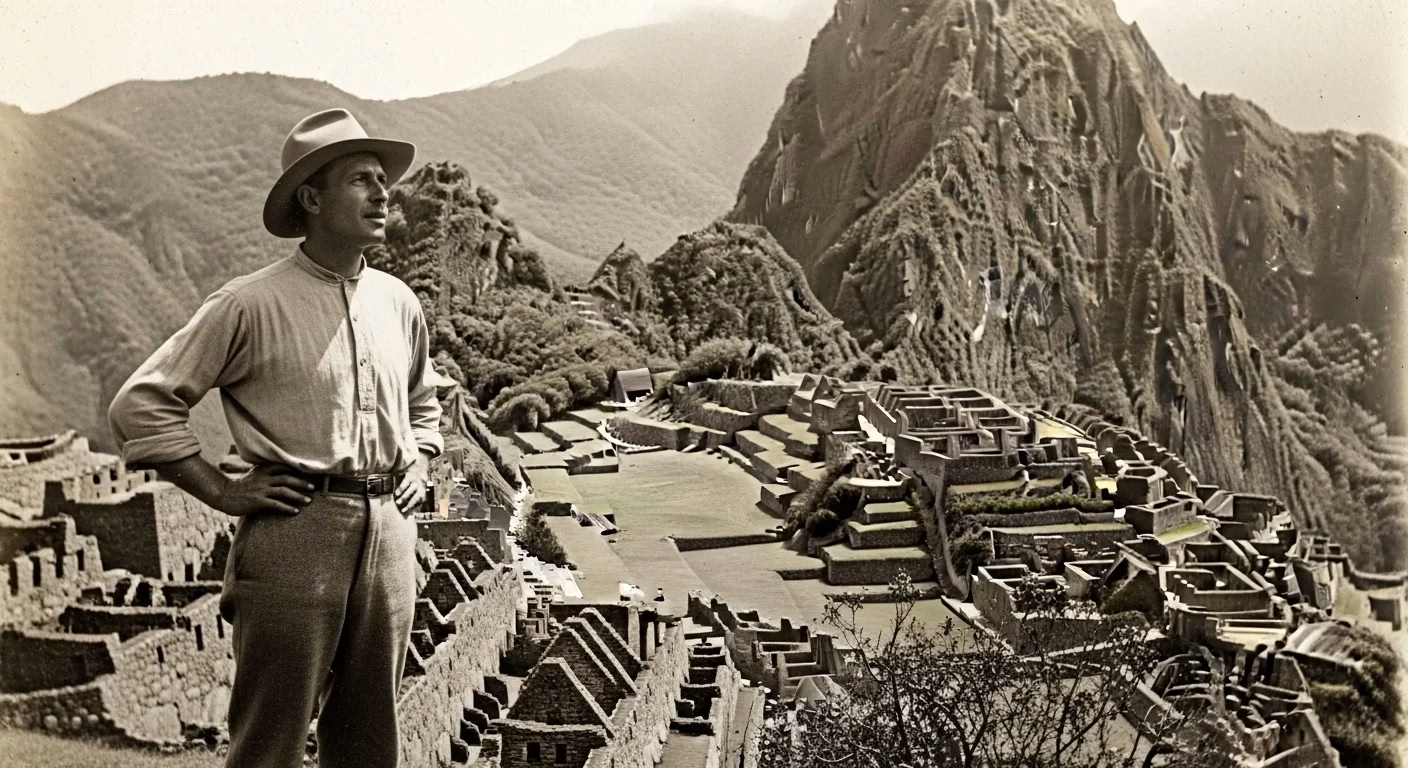
While local farmers like Melchor Arteaga knew of the ruins and even lived nearby, the academic world credits Hiram Bingham with the “scientific rediscovery” of Machu Picchu. On July 24, 1911, guided by locals, this American explorer and Yale professor arrived at the vegetation covered citadel.
Bingham mistakenly believed he had found the “Lost City of Vilcabamba” (the final refuge of the Inca rebels). Thanks to the support of the National Geographic Society, the first photographs of Machu Picchu were shared with the world, revealing the magnificence of Inca architecture that had survived the Spanish Conquest intact.
So, who discovered Machu Picchu? It depends on perspective. The Inca people built and lived in the citadel centuries before the Spanish conquest. However, in terms of modern history of Machu Picchu, who rediscovered Machu Picchu in 1911? The answer is Hiram Bingham.
That is why he is often credited as the man who rediscovered the existence of the Inca citadel of Machu Picchu in 1911 and made it famous worldwide.
In fact, you will often see questions like who rediscovered Machu Picchu? in what year? or when and who rediscovered Machu Picchu? The correct answer is: Hiram Bingham in 1911.
Supported by the National Geographic Society, his expeditions photographed, mapped, and publicized the site, sparking global fascination with the ancient Inca ruins.
Therefore, if you’re looking for clarity: who rediscovered Machu Picchu in what year? It was Hiram Bingham in 1911, the man who rediscovered the Lost City of the Incas and changed the way the world viewed the Inca Empire and its extraordinary achievements.
When and Why Was Machu Picchu Built?
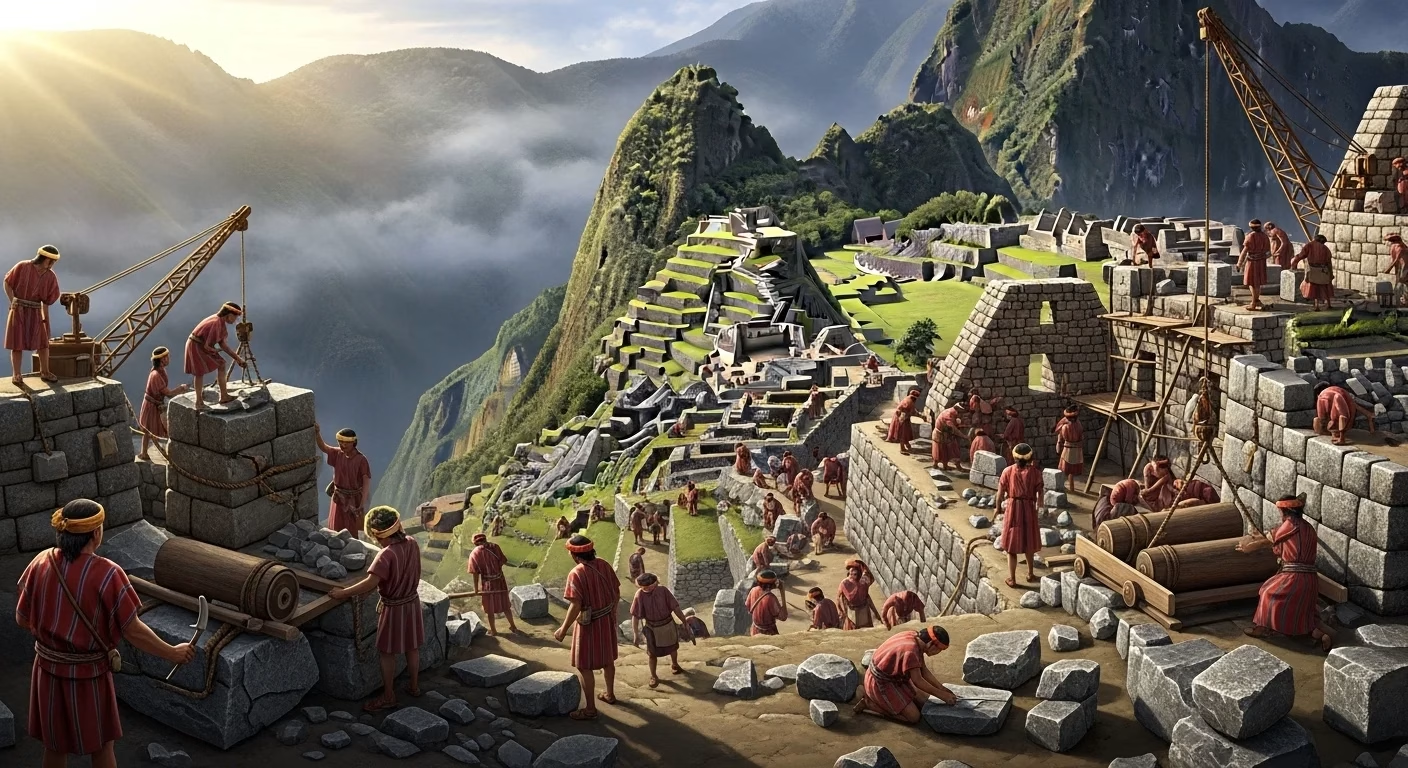
The question of when did the Inca build Machu Picchu is central to understanding the legacy of the Inca Empire. Archaeologists and historians agree that Machu Picchu was built in the mid-15th century, around 1450 AD, during the reign of the powerful Inca emperor Pachacuti Inca Yupanqui.
This period marked the expansion of the Inca civilization across the Andes, and the construction of Machu Picchu showcased their remarkable skills in architecture, engineering, and astronomy. Its strategic position above the Sacred Valley of Peru highlights both its ceremonial significance and its practical role as part of the Inca elite’s royal estate.
Therefore, the answer to when did the Inca build Machu Picchu is that it was constructed in the mid 1400s, a time of flourishing Inca power, blending spirituality, politics, and innovation into one of the most iconic sites in the world.
So, when and why was Machu Picchu built? The purpose of this extraordinary Inca city appears to have been both practical and spiritual. Many scholars believe it served as a royal estate for Pachacuti and the Inca nobility, while others emphasize its role as a sacred site for ceremonies, astronomy, and agricultural rituals.
Its strategic location high above the Sacred Valley of Peru also provided political and defensive advantages. In summary, the answer to when was Machu Picchu built and why is clear: it was constructed around 1450 by the Incas as a blend of royal retreat, ceremonial center, and agricultural hub, showcasing the brilliance of Inca architecture and the spiritual connection between the Inca civilization and the mountains of Peru.
When Did the Inca Build Machu Picchu?
The question of when did the Inca build Machu Picchu is central to understanding the legacy of the Inca Empire. Archaeologists and historians agree that Machu Picchu was built in the mid-15th century, around 1450 AD, during the reign of the powerful Inca emperor Pachacuti Inca Yupanqui.
This period marked the expansion of the Inca civilization across the Andes, and the construction of Machu Picchu showcased their remarkable skills in architecture, engineering, and astronomy. Its strategic position above the Sacred Valley of Peru highlights both its ceremonial significance and its practical role as part of the Inca elite’s royal estate.
Therefore, the answer to when did the Inca build Machu Picchu is that it was constructed in the mid-1400s, a time of flourishing Inca power, blending spirituality, politics, and innovation into one of the most iconic sites in the world.
What’s the Path That Leads to Machu Picchu?
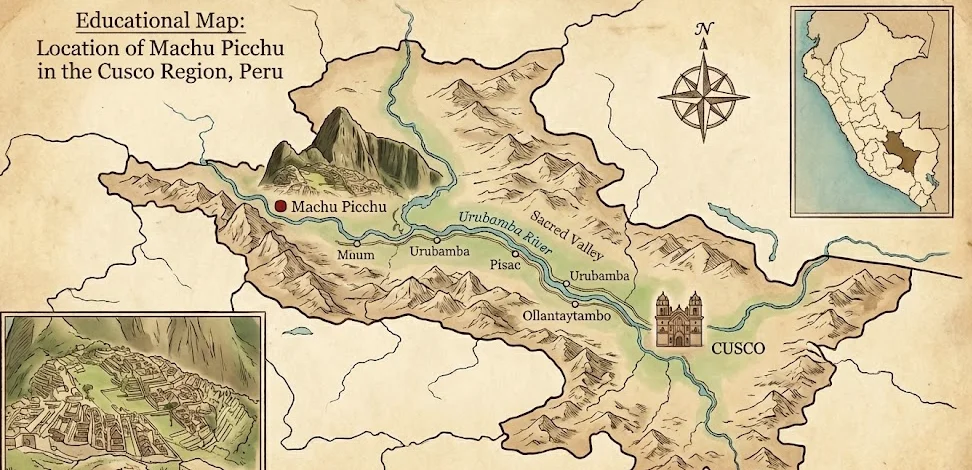
Machu Picchu is located in the continent of South America. Specifically, this ancient Inca citadel sits in the Andes Mountains of Peru, within the Cusco Region.
Other routes include the Salkantay trek, Lares trek, and train journeys from Cusco Peru through the Sacred Valley to Aguas Calientes. For visitors concerned about altitude sickness, the train is a comfortable option.
Machu Picchu Population: Does anyone live there?
What is the current population? The answer is zero. Today, no one lives inside the ruins of Machu Picchu. As a UNESCO World Heritage Site and one of the New Seven Wonders of the World, it is strictly protected.
The only “residents” you will find are park rangers, archaeologists, and the famous llamas grazing on the terraces. The nearest inhabited town is Aguas Calientes (Machu Picchu Pueblo), located in the valley below.
What was the historical population? During the 15th century, under the rule of Emperor Pachacuti, historians estimate that the population fluctuated between 300 and 1,000 inhabitants. Unlike a standard city, Machu Picchu served as a Royal Estate.
Its inhabitants were not common citizens but an elite group consisting of nobility, priests, and specialized workers known as Yanaconas, who maintained the site and its agricultural terraces.
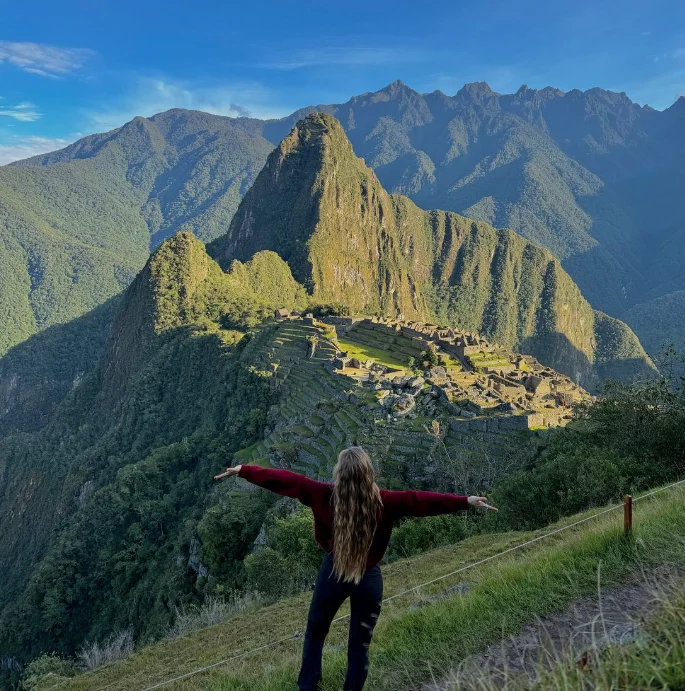
So, if you wonder what was the population of Machu Picchu, it was never a massive city but rather a sacred and exclusive settlement. Today, there is no permanent machu picchu population living inside the ruins. The machu picchu population 2020, 2021, 2022, 2023, and 2024 is technically “zero” because it’s a protected UNESCO World Heritage Site and archaeological treasure. Instead, the area nearby especially the town of Aguas Calientes hosts hotels, restaurants, and locals who support the flow of visitors.
So, what is the population of Machu Picchu today? The ancient citadel itself does not have residents, but each year millions of travelers pass through, making it one of the busiest archaeological sites in South America. In a way, the “population” of Machu Picchu today is the constant stream of people who come from around the world to walk its terraces, admire its temples, and feel the energy of the Inca city in the Andes Mountains Peru.
In simple terms, if you’re wondering what is the population in Machu Picchu, the ruins themselves are uninhabited, but the legacy of the Inca people and the visitors who explore it daily keep the spirit of this ancient city alive.
Where is Machu Picchu Located?
Machu Picchu is located in the continent of South America. Specifically, it sits on the eastern slopes of the Andes Mountains in Peru, within the Cusco Region. Its location is geographically unique because it lies in a transition zone between the high Andes and the Amazon Basin, an area known as the “Cloud Forest” (Ceja de Selva).
This strategic position provided the Incas with natural protection against invaders, access to a wide variety of biodiversity, and a reliable supply of fresh water. The ruins stand at 2,430 meters (7,972 ft) above sea level, surrounded on three sides by the steep canyon of the Urubamba River.
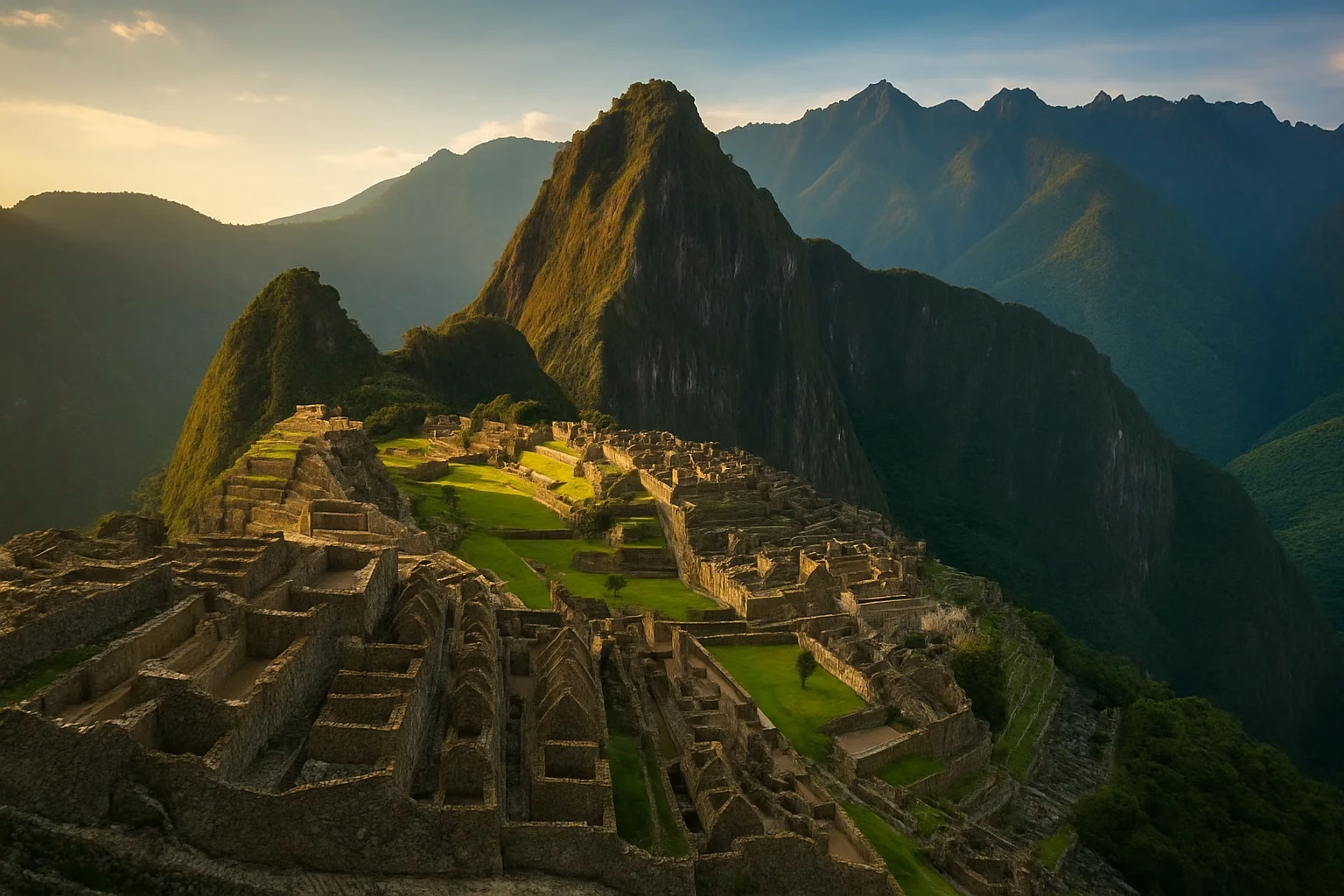
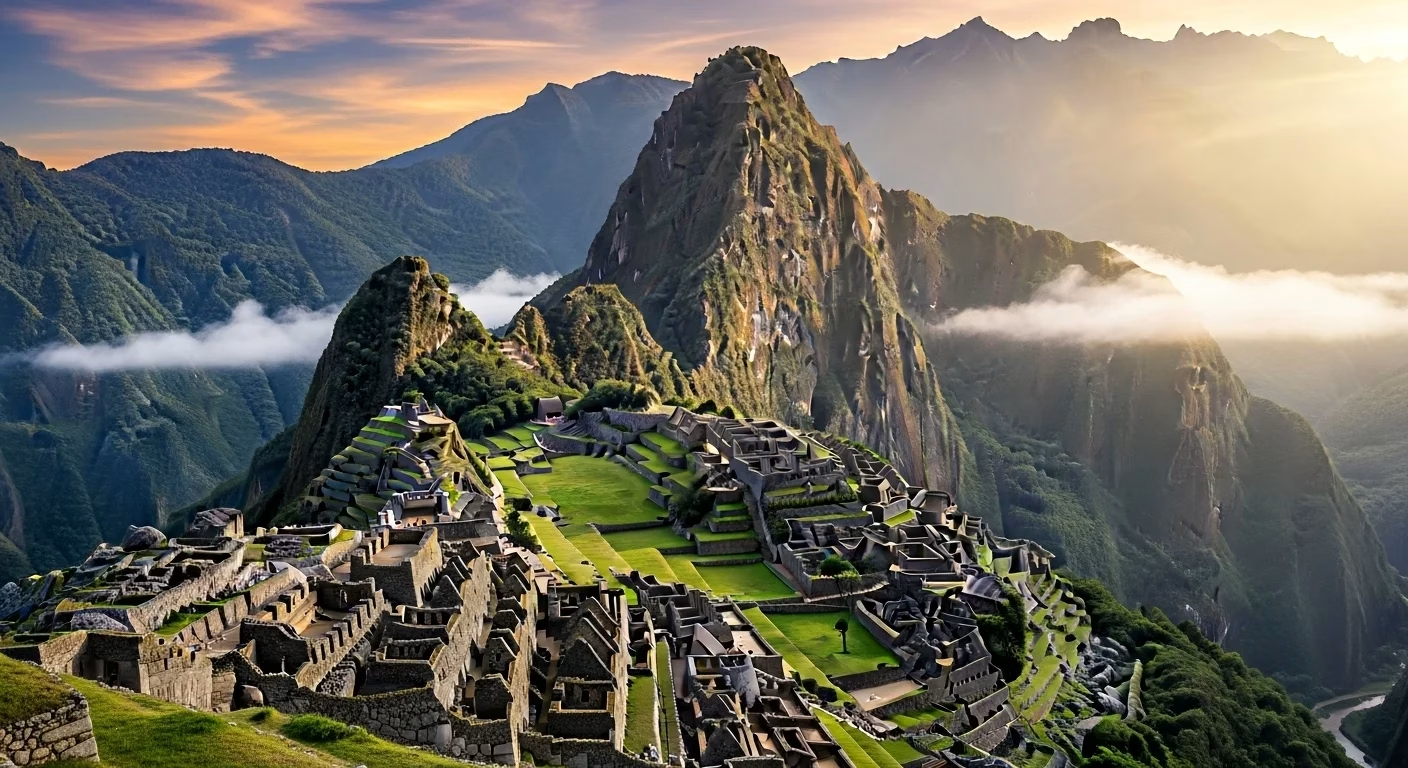
Machu Picchu Panorama Sunrise
Machu Picchu Panorama Sunrise is one of the most breathtaking views in the Andes. As the first rays of light break over the mountains, the ancient Inca citadel slowly reveals itself through the morning mist.
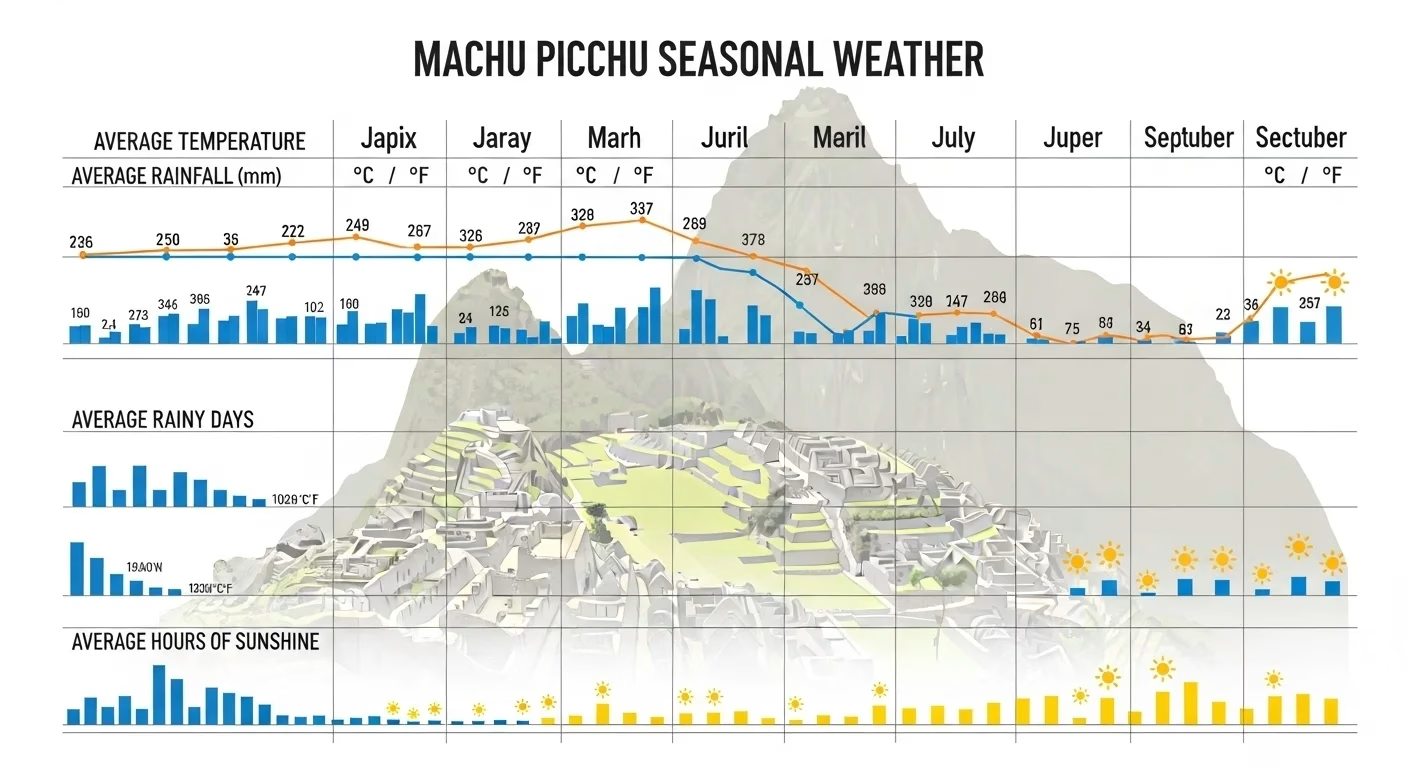
Machu Picchu Seasonal Weather Chart
The Machu Picchu Seasonal Weather Chart gives travelers a clear idea of what to expect throughout the year. In the rainy season (November to April), showers are frequent and the mountains turn a deep green, while the dry season (May to October) brings sunny skies, mild temperatures, and the best conditions for hiking.
Weather in Machu Picchu
The weather in Machu Picchu Peru is influenced by the Andes Mountains. Situated at 2,430 meters above sea level, the archaeological site experiences two main seasons. The dry season (May – October) offers sunny – April) brings lush vegetation and slippery paths but fewer crowds.
Machu Picchu Weather by Months Average
Machu Picchu Weather by Months Average helps travelers plan the best time to visit the citadel. Knowing the temperature and rainfall patterns makes it easier to prepare for the unique climate of the Andes Mountains in Peru.
| Month | Avg. Temp (°C) | Avg. Rainfall (mm) |
|---|---|---|
| January | 19°C | 160 mm |
| February | 19°C | 150 mm |
| March | 20°C | 130 mm |
| April | 21°C | 80 mm |
| May | 21°C | 40 mm |
| June | 20°C | 20 mm |
| July | 19°C | 25 mm |
| August | 20°C | 30 mm |
| September | 21°C | 60 mm |
| October | 22°C | 90 mm |
| November | 21°C | 120 mm |
| December | 20°C | 150 mm |
Which Travel Agencies Offer Escorted Tours to Machu Picchu and Cusco?
If you are planning how to get to Machu Picchu and explore Cusco and the Sacred Valley Peru, many agencies offer packages. PeruRail and Inca Rail provide train services. International companies like G Adventures and Intrepid Travel organize guided treks on the Inca Trail. Local Cusco agencies specialize in private tours that include archaeological sites, Inca bridges, and Inca architecture.
What Is Machu Picchu? Where Is It?
Machu Picchu Peru is an ancient Inca city located in the Andes Mountains, about 80 km from Cusco Peru. It sits above the Sacred Valley, near Aguas Calientes, surrounded by Huayna Picchu and Machu Picchu mountain. Today, it is a UNESCO World Heritage Site and one of the most visited archaeological sites in South America.
Frequently asked questions about Machu Picchu Information: Population, Meaning ‘Old Peak’ & Facts