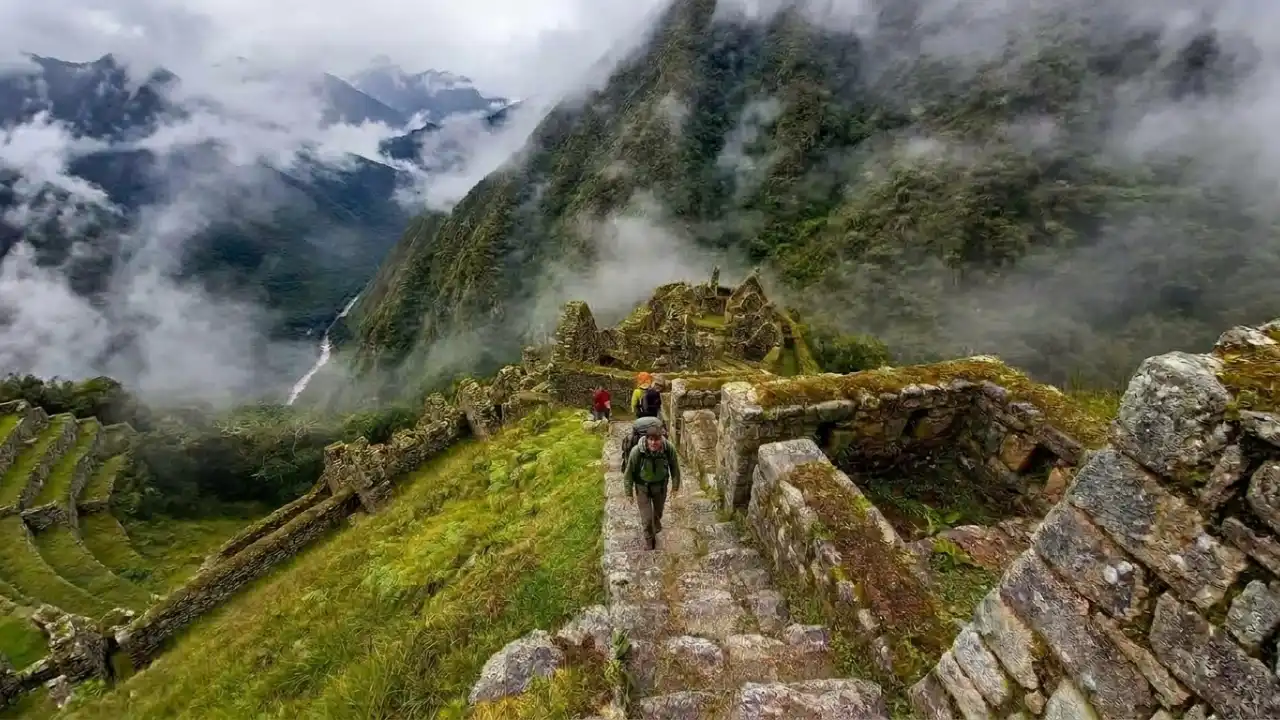

Inca or Inka, Which Spelling Is Actually Correct?
Have you tried typing inca or inka in a search engine hoping to find your answer quickly? You have probably noticed that the two spellings are used indiscriminately, without any indication about which one is correct. There is more depth to this matter than meets the eye. Depending on whether you are researching Peruvian history, traveling in Peru, or just trying to get the spelling right in an academic paper, the answer varies from case to case.
Where Does the Word Come From?
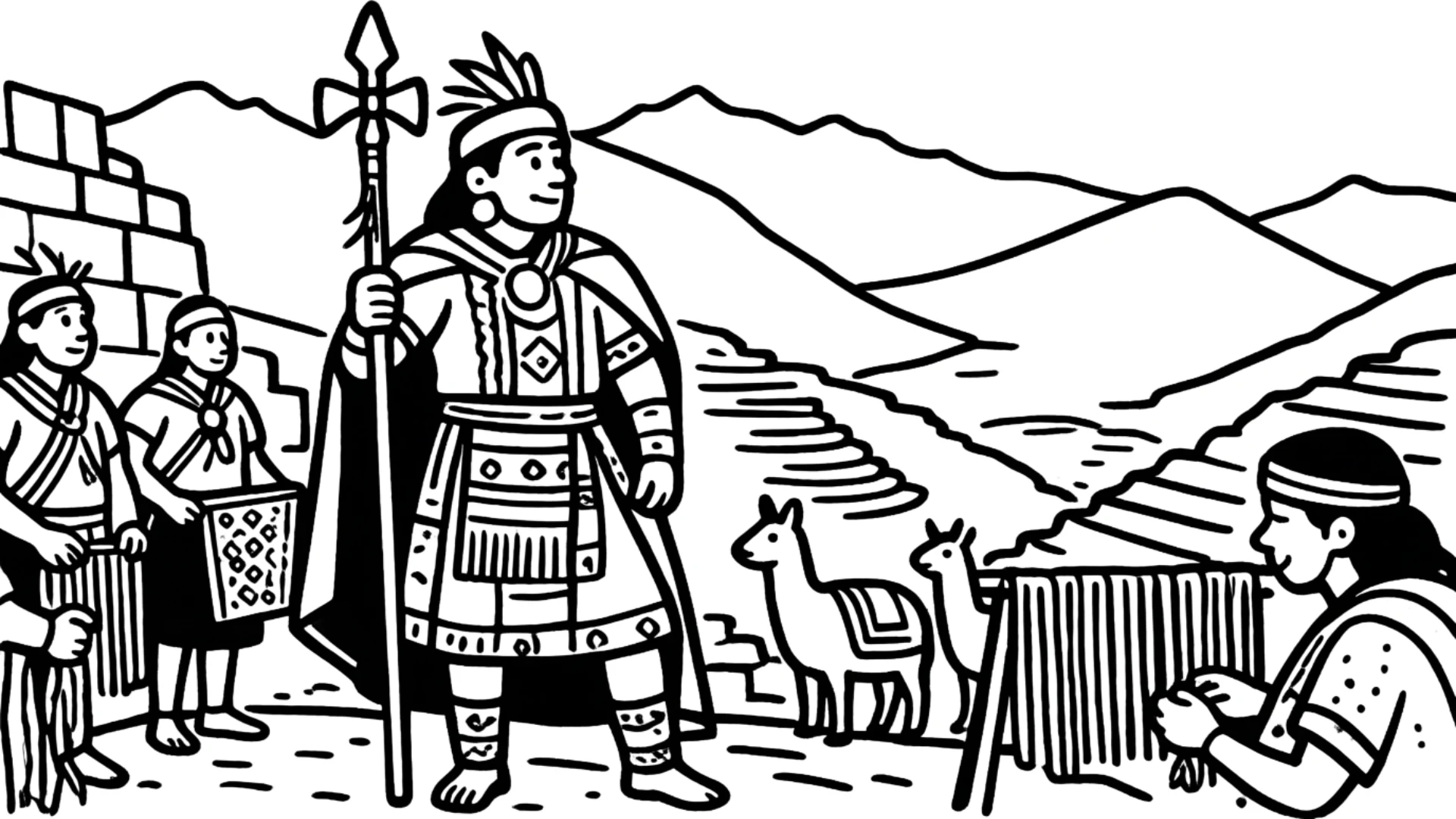
In fact, the term itself has a Quechuan origin, Quechuan being the language that was spoken throughout the region by inhabitants of the Andean civilization until the arrival of the Spanish. Initially, the term did not refer to the civilization and the people themselves but merely to the person of the ruler himself, the emperor. It was not until colonial times, when the Spanish used the term Inca, that it began to encompass everything else as well.
The Inca Empire or the Quechuan word Tawantinsuyu had expanded from modern-day Colombia to Chile during its peak period in the 15th and 16th centuries. The rulers of this empire were referred to as the Sapa Inca, which means unique ruler. These rulers managed millions of subjects with such varied weather and geography.
Inca vs. Inka, Why the Difference Exists
The Spanish Colonial Spelling
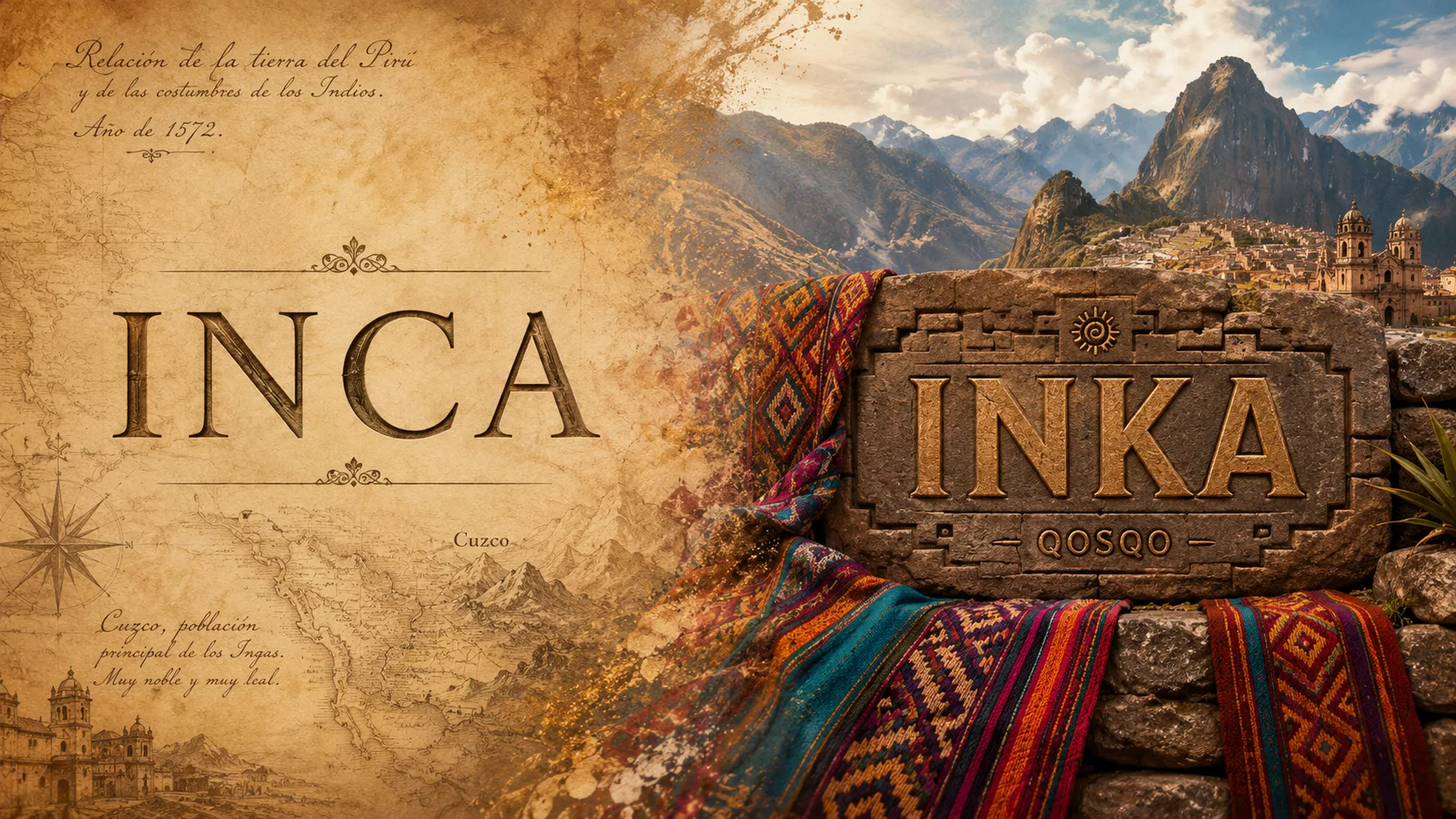
Upon the arrival of Spanish conquerors in the sixteenth century, the phonetics of Quechua were translated into Spanish alphabets, leading to the term Inca with a C. Spanish did not have a K in such a pronunciation, and thus, people adopted that which seemed fit within their own language system. That has lasted until today when the spelling is the universally accepted one across many European languages. Most history books and encyclopedia entries continue to use Inca with a C.
The Quechua Revitalization Spelling
The use of the spelling Inka with a K is an attempt made in contemporary times to make Quechua orthography correspond to the phonology of the actual spoken language. This is because the beginning sound in Quechua is closer to that of a hard K sound in languages such as German and Greek, rather than the soft C found in languages like Spanish or English. Since the beginning of the twentieth century, there have been numerous attempts by people who wanted to standardize Quechua orthography and make it reflect the correct pronunciations.
At present, the spelling Inka is popularly used in Peru itself, especially in the official documentation of the government as well as educational literature aimed at propagating the heritage of the native communities. The ancient capital city of Cusco has even officially used the spelling Qosqo in Quechua.
So Which Spelling Should You Use?
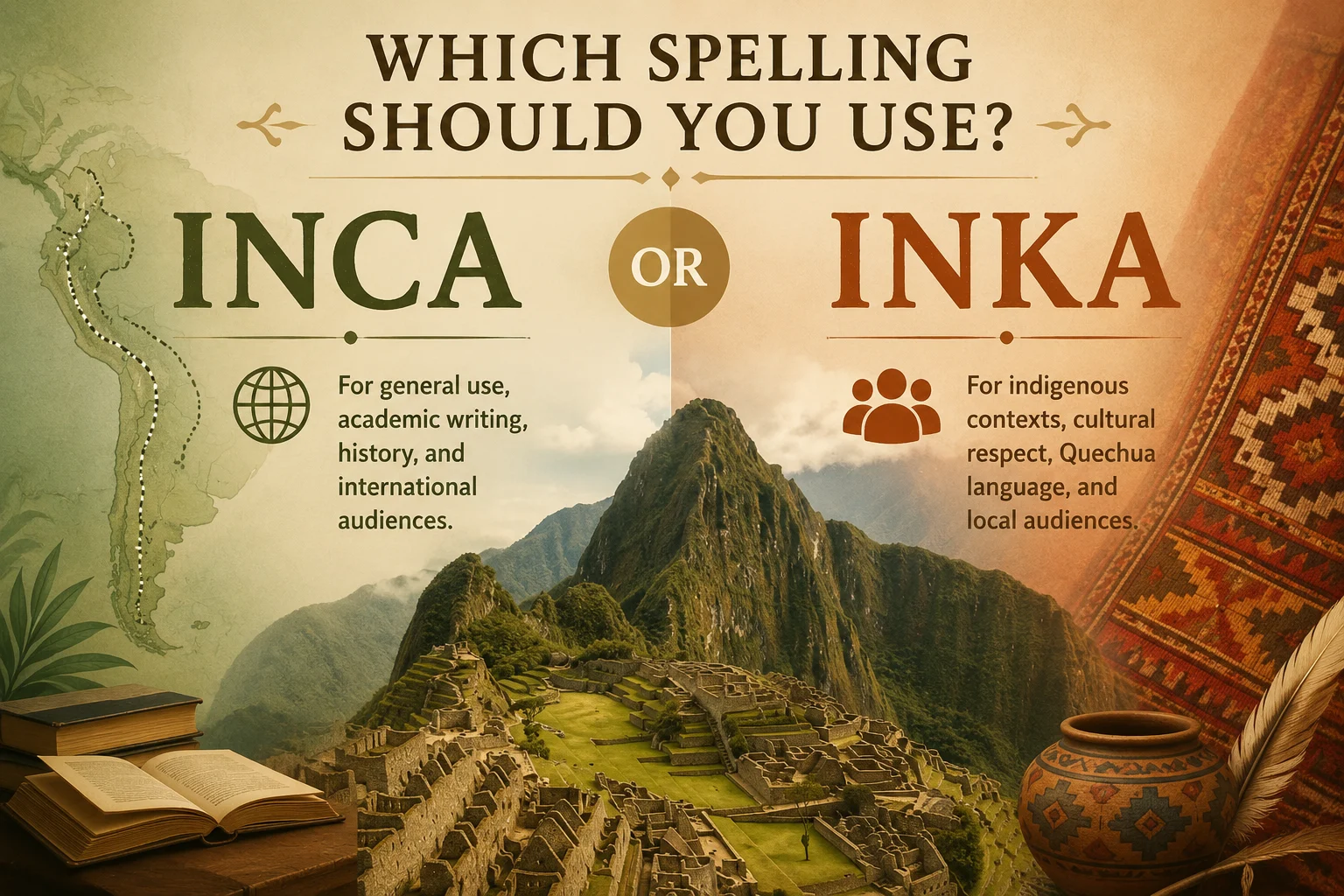
Is it Inca or Inka? Or is it actually Inka or Inca? It may seem that the answer would come to be one or the other, and that at some point we will stop using whichever one turns out to be wrong. However, both terms have equal validity, and the selection of the appropriate one rests only in the context.
Use Inca When…
If you’re writing for a non-specialized English-speaking audience, if you’re using Western historical sources, if you’re discussing the empire from an academic perspective, or if you would like for your material to be easily accessible via search engines on the Internet, then remember that the vast majority of those seeking information on this civilization will use Inca instead of Inka.
Use Inka When…
You are writing in a Quechua-language environment, referencing indigenous scholarship or the Andean culture, writing content tailored to a Peruvian/Latin American audience, or wanting to pay respect to their language by writing its name as it is written by the people themselves. The spelling Quechua is more favored by many modern-day Peruvian historians.
Does the Spelling Actually Change the History?
Absolutely not. Whatever your choice, Inca or Inka society, they both refer to the same incredible civilization a civilization which built Machu Picchu, created an empire with no written alphabet based on the quipu system (knotted cords used for record keeping), laid down tens of thousands of kilometers of roads in the harshest topographies on Earth, and developed agricultural techniques which engineers still marvel at today.
What really makes the difference between the Inka or Inca spelling controversy is not the correctness of the spelling. Instead, the important thing is who dominates when speaking about history. Using the letter “C” represents colonizers’ point of view. On the contrary, using the letter “K” represents the point of view of those people’s descendants.
What About Incan?
You will also come across the use of Incan as an adjective, such as Incan architecture and Incan ruins. This is grammatically correct and acceptable English, although some authors choose to use Inca both as a noun and an adjective, meaning Inca architecture and Inca ruins. This works fine as well. Similarly, Inkan has also been used at times as an adjective, but not as often as just plain Inka.
How This Plays Out in Travel and Tourism
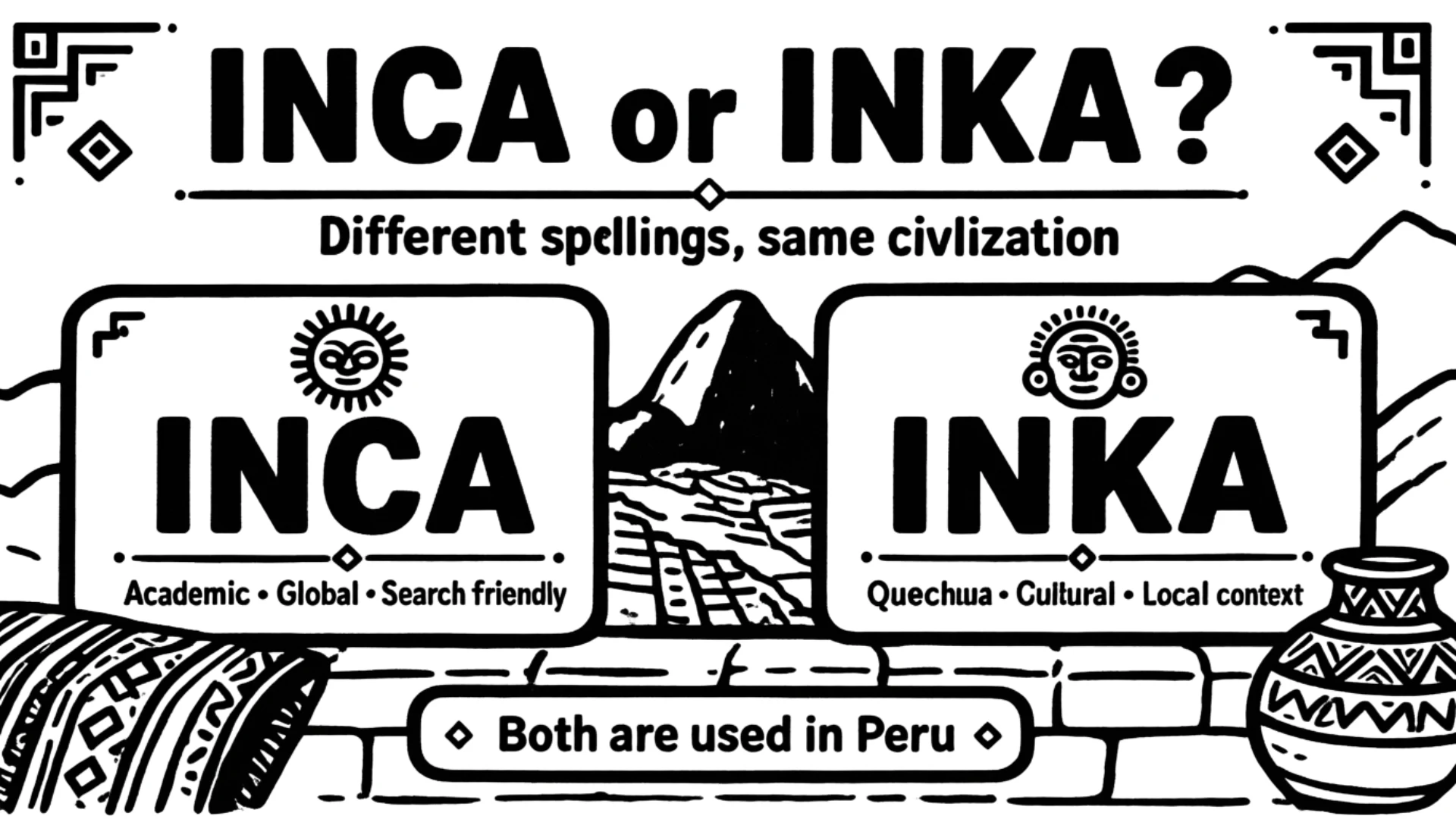
If you’re planning a vacation to Peru or studying tourist destinations such as Machu Picchu, the Sacred Valley, or the archeological sites at Ollantaytambo and Pisac, you will probably find both spellings being used during your journey. Local tour guides, local travel agencies, and local cultural organizations in the Cusco region favor Inka,whereas international tourism websites prefer Inca.
One of the frequently asked practical questions is whether to refer to the route as Inka Trail or Inca Trail. The correct answer is that both terms describe one and the same famous four-day journey to Machu Picchu. The search term Inca Trail is used much more internationally than “Inka Trail.” Therefore, almost all booking services and agencies use the former terminology. The latter term is used by Peruvian local operators who either originate from Cusco or are related to the Quechua-speaking population.
This is equally true for restaurants, hotels, and agencies that use the name within their branding as well. Inka businesses and Inca businesses will exist on the same street in Cusco. This is not an inconsistency but simply addressing both target markets at once.
A Note on Other Quechua Words You Might See
The term inca or inka is just one example of debates about Quechua language representation in writing. There will be similar inconsistencies with other frequently used terms as follows:
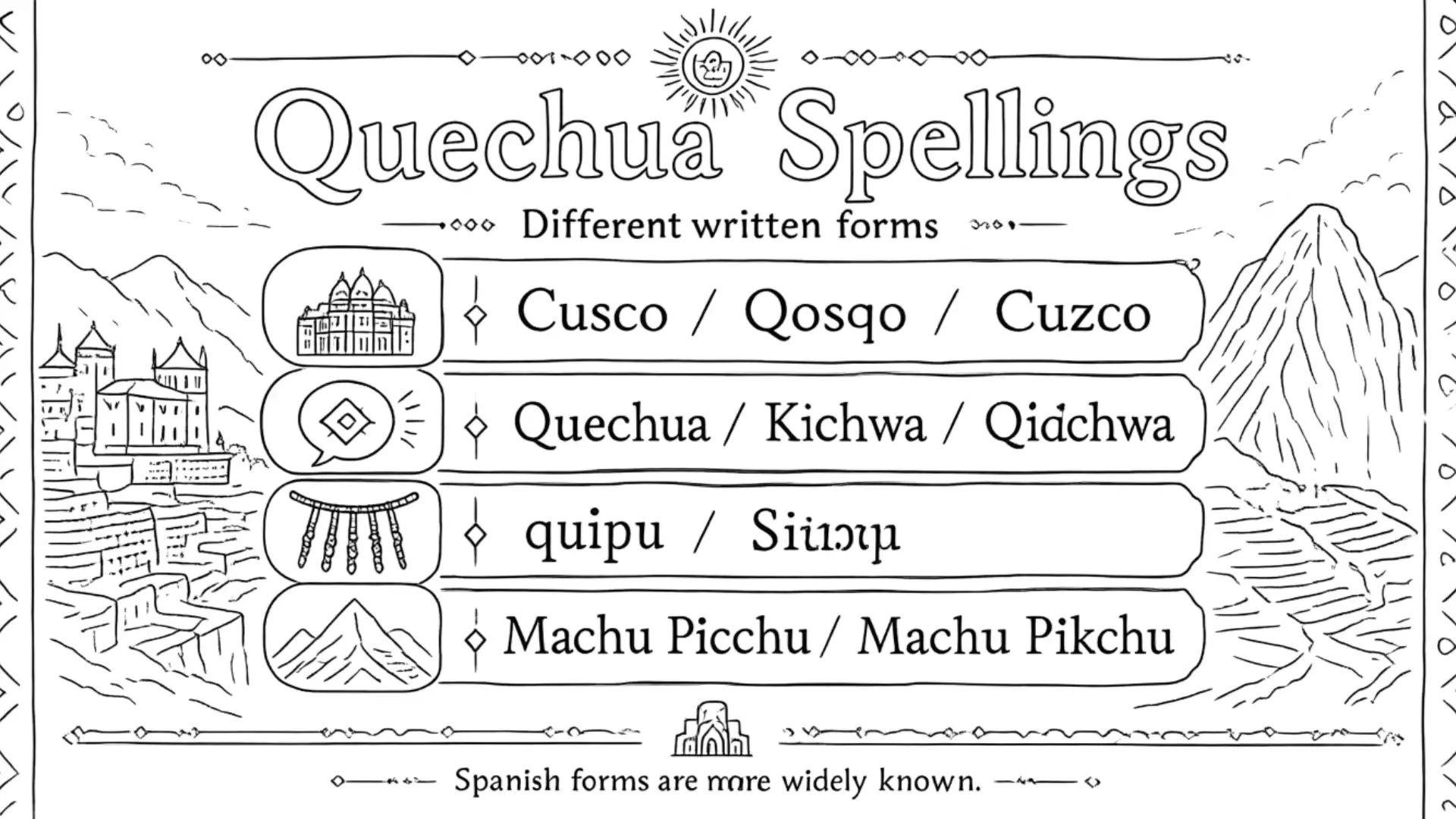
Cusco / Qosqo / Cuzco – capital of the empire in ancient times
Quechua / Kichwa / Qhichwa – indigenous language group
quipu / khipu – the knotted-string recording system
Machu Picchu / Machu Pikchu – mountain stronghold
Here again, use of either the K variant or spelling following the conventions of Quechua is representative of a desire for greater linguistic precision. The Spanish spellings are simply more widely known outside of the native population due to historical records written during the colonial era.
The Takeaway
Next time you are pondering over your choice between inka and inca, no matter whether it is for an academic article, an entry for a travel blog, or only for a caption under your picture, do not worry because there is no clear-cut choice here. Inca is the form familiar to native speakers and to search engines. On the other hand, Inka is the spelling that reflects the original Quechuan origin of the name. If the majority of readers speak English, then Inca is likely to be the better choice for writing. However, being aware of why the alternative spelling of Inka appeared and what it represents will surely help you become a more discerning reader and writer.
Next time you read an article on Andean culture and happen to encounter both variants of spelling, you will know what exactly it means and what is behind it
Frequently asked questions about Inca or Inka, Which Spelling Is Actually Correct?
Most travelers should use Inca Trail, because it is the most common spelling in international tourism, booking platforms, and travel guides. However, Inka Trail may also appear in Peru, especially among local operators or cultural organizations connected to Quechua heritage.
No. Inca and Inka refer to the same civilization. The difference is only the spelling and cultural context.
You may see both. Inca is more common internationally, while Inka is often used in local or Quechua-related contexts.
In Peru, Inka means the Quechua form of Inca and originally referred to the Inca ruler or emperor. Today, it is also used to describe Inca culture and heritage.
An Inka was originally the ruler or emperor of the Inca Empire, especially the Sapa Inka. Today, the word is often used to refer to the Inca people, their civilization, and their cultural heritage in Peru.