
Inca Agriculture: Discover the secrets that fed an entire empire
Inca agriculture: the key that allowed an empire to flourish in extreme mountain landscapes. The Incas combined science, religion, and collective labor to transform impossible terrain into fertile terraces. Even now, their methods inspire modern agriculture in the Andes.
Inca Agriculture: Learn how the Incas mastered water and land
The Inca agriculture system allowed an entire civilization not only to survive, but also to thrive in a challenging environment; first, they understood their surroundings, and then they precisely controlled water, temperature, and soil. In addition, they developed techniques and used materials that made efficient and sustainable production possible. As a result, here you will discover how they managed to farm without chemicals.

What was agriculture like in the Inca Empire?
During the Inca period, agriculture was both mandatory and essential. The Incas did not try to dominate nature; on the contrary, they lived in harmony with it and made the most of every resource. To achieve this, they organized crops according to ecological tiers, adapting planting to different altitudes and climates.
Farming areas in the Inca Empire
- Warm valleys: corn, fruits, chili peppers, and legumes.
- Temperate zones: tubers, quinoa, and kiwicha.
- Regions above 3,800 meters above sea level: cold-resistant potatoes, especially for making chuño.
Social organization: the true engine of the system
Inca agriculture did not rely solely on techniques, but also on collective labor. Thanks to community cooperation, the empire was able to maintain large-scale infrastructure.
Basic systems of Inca agriculture
- The mita: mandatory labor service for the state in large infrastructure projects.
- The ayni: mutual support between families under the principle “today for you, tomorrow for me.”
Land distribution
This system ensured balance and a constant food supply throughout the Inca Empire.
- State lands (Inca): to sustain the empire
- Religious lands: designated for ceremonies and priests
- People’s lands: for family subsistence
How could they cultivate crops in such difficult terrain as the Andes?
Here you will discover the three Inca pillars that kept a great empire thriving, based on how they mastered water and created sustainable agricultural systems that you can still see today in Pisac, Tipon, and Ollantaytambo. Step by step, you’ll learn their secrets.

Inca agricultural spaces
First, the Incas identified flat areas near rivers as sacred farming zones. However, they did not stop there. At the same time, they created new agricultural spaces on steep slopes and in flood-prone areas, generating strategic microclimates and controlling water with precision.
Agricultural terraces (Andenes)
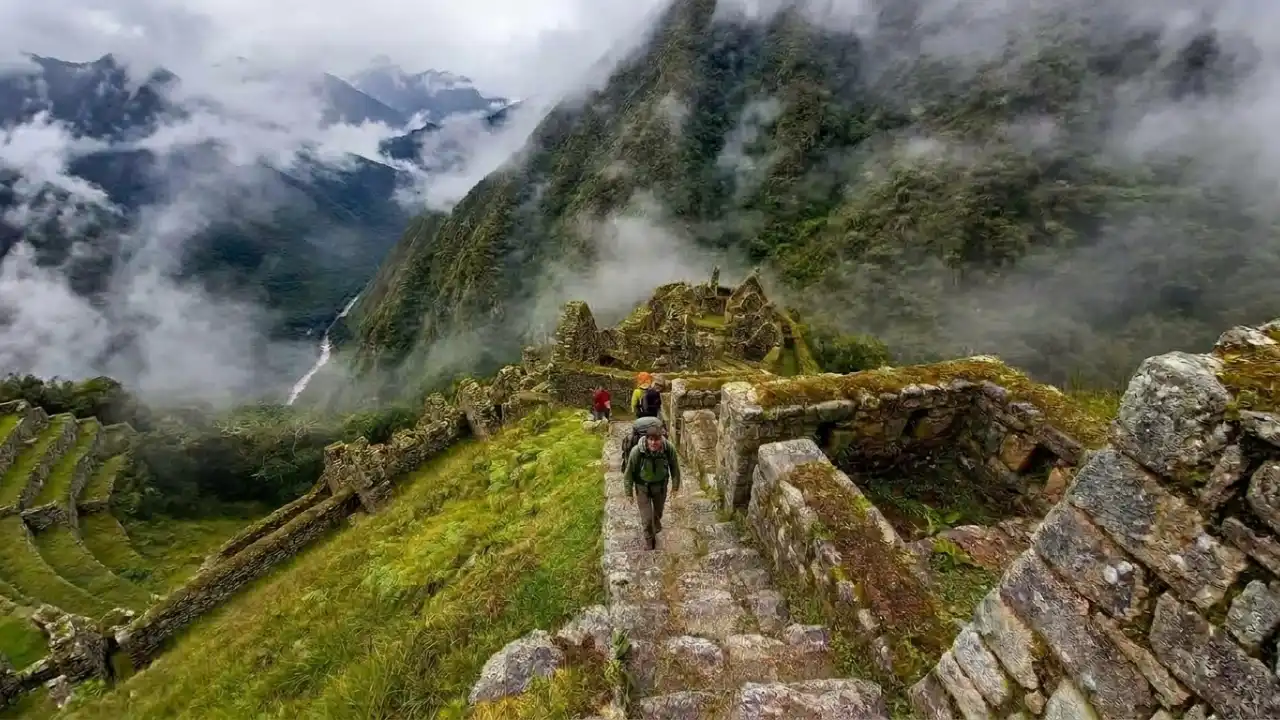
Next, they built terraces, known as andenes, which allowed them to harvest up to three crops per year. Not only did these terraces prevent erosion on steep slopes, but their stone walls also absorbed heat during the day and released it at night. As a result, they acted like natural thermal regulators, protecting crops from frost.
Did you know…
Today, you can see them in the Sacred Valley, especially in Pisac and Ollantaytambo.

Waru Waru or Raised Fields (Flooded Areas and Highlands)
In flat and flood-prone lands such as Puno, the Incas refined the waru waru system, inherited from pre-Inca cultures. First, they dug canals; then, they piled the soil into raised planting platforms. During the day, the water absorbed heat, and at night, it released that heat, creating a thermal layer that protected crops from frost.
Important fact…
- It protected plant roots from excess water during floods
- It fermented organic matter, creating natural fertilizer
- This system is still visible in Puno, around Lake Titicaca, and Tiwanaku

Hydraulic mastery and irrigation
Then, the Incas built stone canals to transport water from glaciers across long distances, maintaining a precise slope of just 1° to 2°. In addition, they designed paqchas, small waterfalls that oxygenated the water before it reached the roots, ensuring a steady flow and preventing soil erosion.

Underground aquifers
In the upper areas of coastal valleys, the Incas built canals to divert river water and recharge underground aquifers. Further downstream, they constructed underground galleries called puquios to “harvest” this clean and filtered water, which they then used to irrigate coastal valleys in regions such as Chinchaysuyu, the deserts of Ica, and Nazca.
Puquios and water storage
Meanwhile, in high mountain areas near glaciers (Cuntisuyu and Chinchaysuyu), they built stone structures to create artificial lagoons. These stored meltwater, which they later released in a controlled way during dry seasons, ensuring that crops always had access to water.

Inca fertilizers
To maintain soil fertility, the Incas used:
- Sardines or anchovies: buried alongside seeds (as seen in the Pachacamac temple)
- Seabird guano: transported from coastal islands
- Dry leaves: accumulated to improve arid soils
- Llama manure: used to enrich untouched land
Secrets of Inca agriculture that defy the centuries
Have you ever wondered why these walls are still standing after more than 500 years? The answer lies in their intelligent design. First of all, the Incas did not build randomly; on the contrary, each stone served a specific purpose.
Construction secrets of Inca walls
Anchor stones
First, the Incas placed much longer stones that were driven deep into the terrace soil. In this way, they acted as “anchors”, connecting the outer wall with the inner mass of earth and, as a result, increasing the overall stability of the structure.
“Weeping drainage”
On the other hand, if you look closely at the base of some walls, you will notice small отверстия. These allowed excess rainwater to drain out of the terrace; therefore, they prevented hydrostatic pressure that is, the weight of trapped water from damaging or collapsing the wall.
Puzzle-like stone fitting
Finally, the Incas did not use mortar or cement. Instead, they carved each stone with great precision so that they fit together perfectly. Thanks to this, during an earthquake, the stones can move slightly and then return to their original position without cracking.
Inca construction tools
Although simple, their tools were remarkably effective:
- Water level (Yaku Tupuy): A piece of wood or stone filled with water used to check flat surfaces and control the slope of irrigation canals, ensuring a steady flow without erosion.
- Plumb line (Sinka): A cord with a weighted stone that allowed them to measure the exact vertical or controlled inclination of walls, ensuring that soil pressure reinforced the structure instead of pushing it outward.

Step-by-step construction process
To begin with, the Incas did not choose land at random. First of all, they analyzed sunlight exposure and wind direction.
- Layout: Priest-astronomers measured the sun’s path to decide what to plant (more sun = corn, less sun = potatoes).
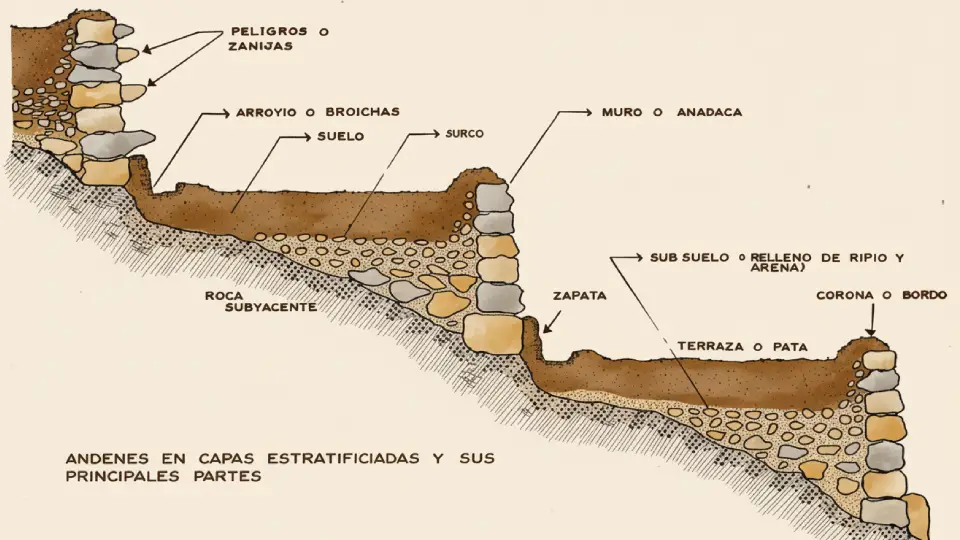
- Foundation: Next, they excavated until reaching solid bedrock. This ensured a stable base; in fact, a 3-meter wall could have nearly 1 meter underground.
- Wall construction: As they built the wall, they filled the back in layers, progressively strengthening the structure.
Layered structure
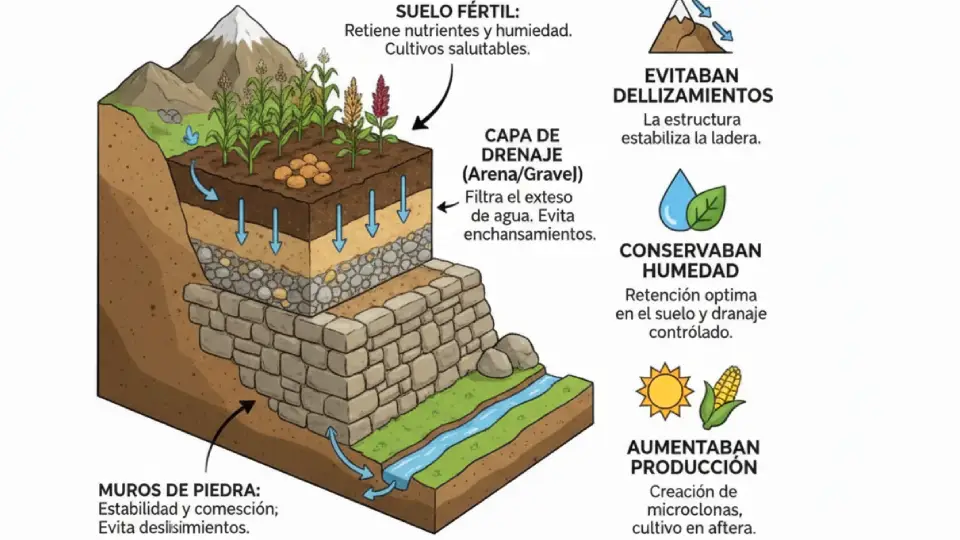
- Filtration layer (base): At the bottom, they placed large stones, gravel, and small rocks. In this way, water drained quickly, preventing both root waterlogging and wall weakening.
- Sand layer: Above the base, they added a layer of coarse sand that filtered impurities and helped maintain balanced moisture.
- Topsoil (upper layer): Finally, they added fertile soil brought from valleys or riverbanks. This layer typically ranged from 50 cm to 1 meter in depth.
Construction time and labor
- In terms of time, building complexes such as Pisac or Ollantaytambo could take approximately 20 to 50 years. Moreover, a single large terrace could require months of intensive work, not only to stabilize the wall but also to transport soil from the bottom of the valley.
- Meanwhile, the Incas organized labor through systems such as the mita. As a result, thousands of people worked in shifts for months on tasks such as stonework, material transport, and structural assembly.
What did the Incas cultivate?
Did you know that the Inca Empire not only produced food, but also developed a system deeply connected to religion, astronomy, and community planning?
Main Crops
- Potatoes and chuño: Chuño was produced through natural dehydration using freezing night temperatures and intense daytime sun. As a result, this technique allowed food to be preserved for long periods, making it ideal for storage and transportation.
- Corn: Not only was it essential in the daily diet, but it also played a key role in ceremonies. In addition, it served as the base for chicha de jora, a fermented drink of great cultural importance.
- Quinoa and kiwicha: Thanks to their high protein content, these crops were both nutritious and essential for a balanced diet.
- Oca and olluco: These Andean tubers, in turn, added both variety and nutritional value to daily meals.
- Chili peppers: Finally, they were crucial for adding flavor and were a staple ingredient in everyday cooking.

Farming Across Ecological Levels
Thanks to agricultural terraces, the Incas took full advantage of different altitude levels and, consequently, created strategic microclimates. In this way, they organized their crops efficiently:
- Lower terraces (2,000 – 3,000 masl): corn, fruits, chili peppers, and legumes were cultivated.
- Middle terraces (3,000 – 3,800 masl): quinoa, kiwicha, and potato varieties for immediate consumption were grown.
- Higher terraces (above 3,800 masl): frost-resistant potatoes were cultivated, especially bitter potatoes used to produce chuño.

Year-Round Harvests
Thanks to the microclimates created by the terraces, the Incas were able to harvest crops in staggered cycles. However, they generally followed two main agricultural seasons:
- Main season (mita): This coincided with the rainy season, from November to April. During this period, large-scale planting of corn and potatoes took place.
- Secondary season (michka): In areas with constant irrigation, such as the Sacred Valley, they planted a second time, taking advantage of the heat retained by the stone walls.
Agriculture and Religion: A Sacred Connection
For the Incas, farming was not just a productive activity; rather, it was deeply spiritual. In fact, every stage of agriculture was closely tied to their beliefs:
- They worshipped Pachamama (Mother Earth), a tradition that continues to this day, especially on August 1st.
- They performed rituals before planting and harvesting, using chicha de jora and coca leaves.
- Additionally, they observed the stars and lunar cycles to plan their crops with remarkable precision.

Agricultural Tools Still Used Today
Even today, in many Andean communities, farmers continue to use tools inherited from the Incas. As a result, this ancestral knowledge remains alive:
- Chaquitaclla (foot plow): used to deeply turn the soil.
- Hoe: used for digging and preparing planting rows.
- Allachu: used to remove weeds.
- Waqtana or Walluna: used to break up hard soil clumps.
- Chira: specifically used for crops such as corn and potatoes.
Efficient Food Storage Systems
On the other hand, the Incas developed highly efficient storage systems. To achieve this, they built deposits in high-altitude areas, taking advantage of cold winds as natural refrigeration:
- Rectangular qollqas: mainly used to store grains.
- Circular qollqas: provided better ventilation and were therefore ideal for storing tubers.

Where Can You See Inca Agriculture Today?
| Archaeological Site | Main Feature | Location |
| Moray | Agricultural laboratory with concentric circular terraces. | Near Maras. |
| Tipon | Maximum expression of water worship and hydraulic engineering. | South of Cusco. |
| Pisac | The most scenic and extensive terraces in the valley. | Sacred Valley. |
| Ollantaytambo | Monumental terraces with both defensive and agricultural purposes. | Sacred Valley. |
Important Note
Even today, Inca agriculture remains alive in Andean communities. Not only do farmers preserve traditional techniques, but they also continue applying the knowledge inherited from their ancestors.
In conclusion, Inca agriculture was not just a way to produce food. Rather, it was a comprehensive system that combined knowledge, organization, and adaptation to the environment. Therefore, the next time you see an agricultural terrace, remember: it is not just farming… it is living knowledge that still works today. Would you like to visit these places and witness this ancient technology in action?
Frequently asked questions about Inca Agriculture: Discover the secrets that fed an entire empire
Andean terraces are agricultural platforms built along mountain slopes. The Incas used them to expand arable land while also improving water management and preventing soil erosion.
They built terraces because the Andean terrain is steep. By doing so, they transformed slopes into flat surfaces, which made farming easier and prevented soil from sliding downhill.
They achieved this through retaining walls, drainage systems, and layered soil construction. Together, these techniques stabilized the ground and helped retain the necessary moisture for crops.
They rotated crops, used natural fertilizers, and designed terraces to minimize erosion. As a result, they were able to maintain soil productivity over time.
They carefully controlled ventilation, humidity, and temperature. In addition, they transformed products like potatoes into chuño, significantly extending their shelf life.
Yes, they organized strategic food reserves. This allowed them to withstand droughts, frost, and periods of low production without affecting the population.
Pachamama represented Mother Earth. The Incas honored her and made offerings as a way to show gratitude and maintain balance with nature.
You can visit places such as Moray, Pisac, Ollantaytambo, or Tipón. In these locations, you’ll be able to closely observe how these agricultural systems worked.