Best Travel Insurance Coverage for Lake Titicaca Trips
Travelers who plan to visit Lake Titicaca are often surprised by one fact about insurance coverage, which is the fact that regular travel insurance does not always offer complete insurance at this elevation. At an elevation of about 3,812 meters (12,507 feet), the lake and the surrounding areas are located above the level that certain insurance plans will pay for.
This is precisely the reason why altitude insurance needs its own discussion apart from that basic cover which you will be considering while going on a holiday to the beaches. This guide covers what Lake Titicaca travel insurance should include, what to look for before you book high elevation travel, and how coverage plays out once you’re navigating between the Uros Islands, Amantaní, and Taquile.
Why Lake Titicaca Requires Special Travel Insurance Consideration
Insurance on Lake Titicaca cannot just be based on the height above sea level alone. The location of the islands that the traveler may visit, the long boat trips, the weather conditions, and availability of medical facilities can all influence the kind of coverage required.
How High Is Lake Titicaca, Really?
Titicaca is the highest lake in the world that can be navigated, and the towns surrounding it, Puno on the Peruvian side and Copacabana on the Bolivian side, are situated at high altitudes as well. Tourists who come to this area tend to have traveled to Cusco (altitude 3,399 m / 11,152 ft) before, thus being acclimated to altitude changes; others tend to come directly from Lima and Arequipa.
The lake is another variable to consider, as afternoon sailing on open water is cold and windy even if the day is bright and sunny, and trips to the Uros Islands, Amantani Island, or Taquile Island can last anywhere between 30 minutes and a couple of hours either way. This combination of thin air, sun exposure, and being out on the lake for extended periods is what makes this trip unique.
Standard Travel Insurance vs. High-Altitude Coverage
Typical travel insurance packages are based on trip cancellations, lost luggage, and basic emergency medical issues. However, what such programs often lack either totally or by way of some small print regarding altitude limitations is the protection for problems that may arise in higher altitudes. This is due to the fact that while seeming to provide all sorts of coverage, these policies might actually be excluding some claims made at higher elevations.
Before you make any purchase, it may be important to ensure that your altitude insurance is valid for this high altitude, not anywhere in South America generally, and that it lists any special coverage options you might need, like boat travel or overnight homestays, rather than assuming they’re bundled in.
DID YOU KNOW?
Lake Titicaca is about 8,300 square kilometers in size and is found within both Peru and Bolivia. The distance to reach some of the Uros Islands by boat can take more than one hour when traveling from the nearest mainland doctor’s office.
Understanding Altitude Sickness Risk at Lake Titicaca
The understanding of how the height of mountains can influence the human body will enable travelers to plan their schedule and determine if the insurance policy provides proper medical coverage. This chapter outlines typical symptoms, situations where risks arise, and conditions when medical intervention becomes necessary.
Common Symptoms Travelers Experience
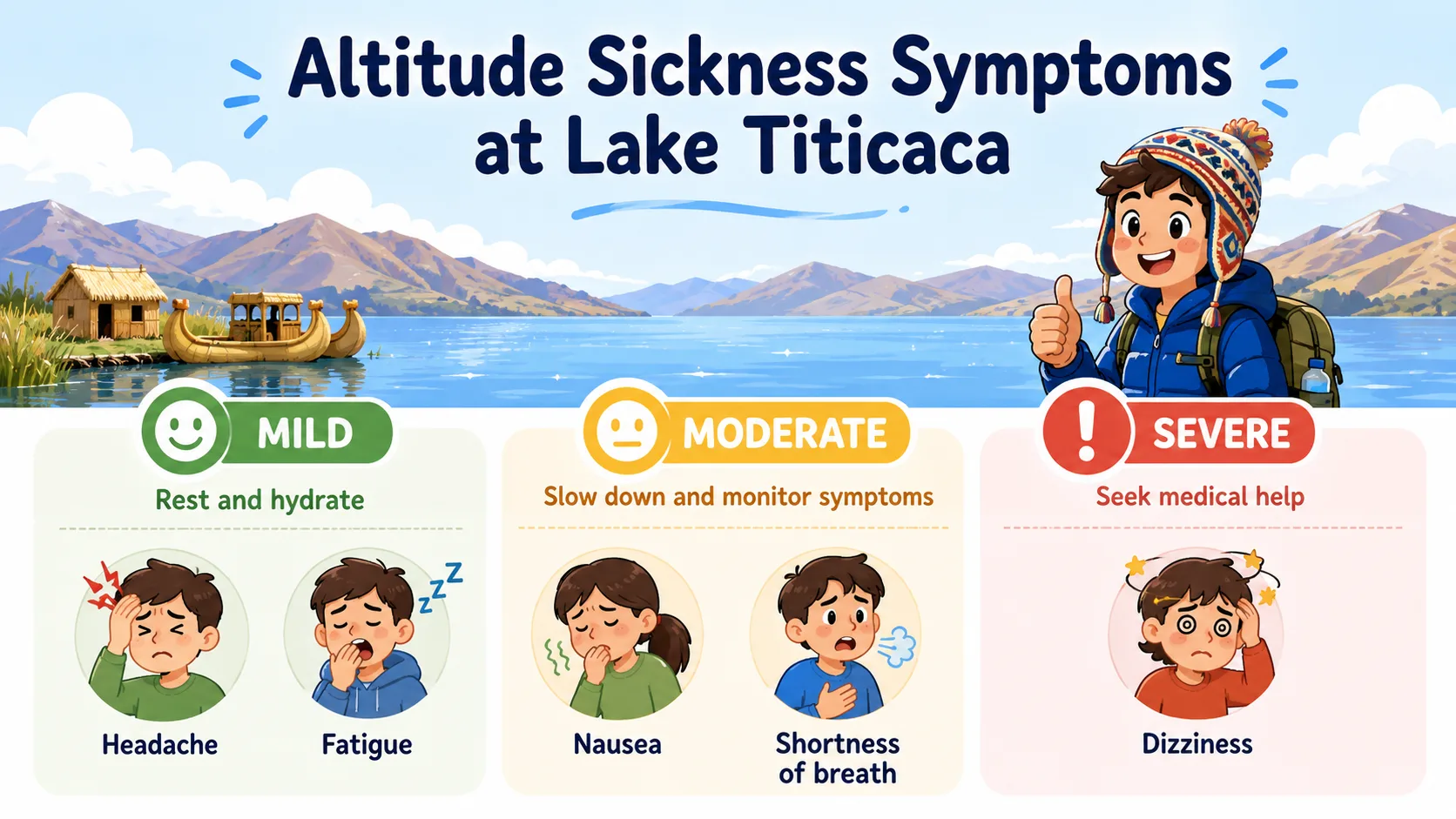
Acute Mountain Sickness (AMS) is a condition that arises due to insufficient acclimatization. Symptoms normally arise within a few hours of arrival at Lake Titicaca. These may include headaches, fatigue, breathing difficulties, nausea, and inability to sleep. For the majority of tourists, the symptoms remain relatively mild and resolve themselves after a day or two. For a smaller number, they escalate, and that’s where reliable medical coverage tends to matter most.
| Symptoms | Severity | Recommended Action |
|---|---|---|
| Headache, mild fatigue, shortness of breath on stairs | Mild | Rest, hydrate, avoid alcohol; symptoms usually ease in 24–48 hrs |
| Persistent headache, nausea, dizziness, poor sleep | Moderate | Stop ascending, use oxygen if available, consider medication |
| Confusion, severe breathlessness at rest, loss of coordination | Severe | Descend and seek medical care promptly; evacuation may be needed |
Who Is Most at Risk
AMS can be contracted by any person irrespective of age or physical fitness, though the chances of being affected are usually greater in travelers who get to high altitude quickly without acclimatizing, those who suffer from previous heart or lung diseases, and individuals who continue traveling despite having symptoms. The local guides have noted that the visitors who arrive directly from Lima are the ones who feel the onset of AMS symptoms in the afternoon of the first day in Puno, a pattern that can be considered quite consistent.
COMMON MISTAKE
Arriving straight from sea level and making plans to undertake an active island tour immediately. An itinerary that allows for acclimatization, be it just one or two nights in Cusco, Arequipa, or any other waystation, often makes the first day on Lake Titicaca much more bearable, whichever way you have come.
What a Good Travel Insurance Policy Should Cover
The right policy needs to be based on the true actions and logistics that come along with a Lake Titicaca tour and not just offer general international coverage. Below are some advantages that are especially beneficial to tourists who are traveling under these conditions.
| Insurance Feature | Why It Matters at Titicaca |
|---|---|
| Altitude-related medical coverage | AMS is common enough at this elevation that a policy without it may not do what most travelers expect |
| High evacuation limit (commonly $250,000+) | Private evacuation flights from Puno/Juliaca to Lima can run well over $20,000 |
| Boat transfer coverage | Not every policy automatically treats inter-island boat travel as standard transport |
| Homestay / remote-lodging coverage | Overnight stays on the islands sit farther from clinics than a hotel in Puno |
| No low-altitude cap | Some budget plans cap coverage below 4,500 m, close to Titicaca’s own elevation |
Emergency Medical Coverage
Health insurance issued in the U.S. is usually not covered in Peru or Bolivia. Besides, some private clinics may demand payment before rendering services, as different clinics have different policies. This is why having emergency medical coverage is crucial while planning a policy in case of traveling to these countries. Puno has some clinics which can provide treatment for the usual conditions associated with the high altitude. However, more sophisticated treatment options, such as hyperbaric oxygen therapy, can be found only in Cusco, which is 5-6 hours from Puno by car. Most sources on travel insurance recommend getting at least $100,000 of emergency medical coverage for this itinerary, although the optimal amount of coverage varies.
Emergency Medical Evacuation
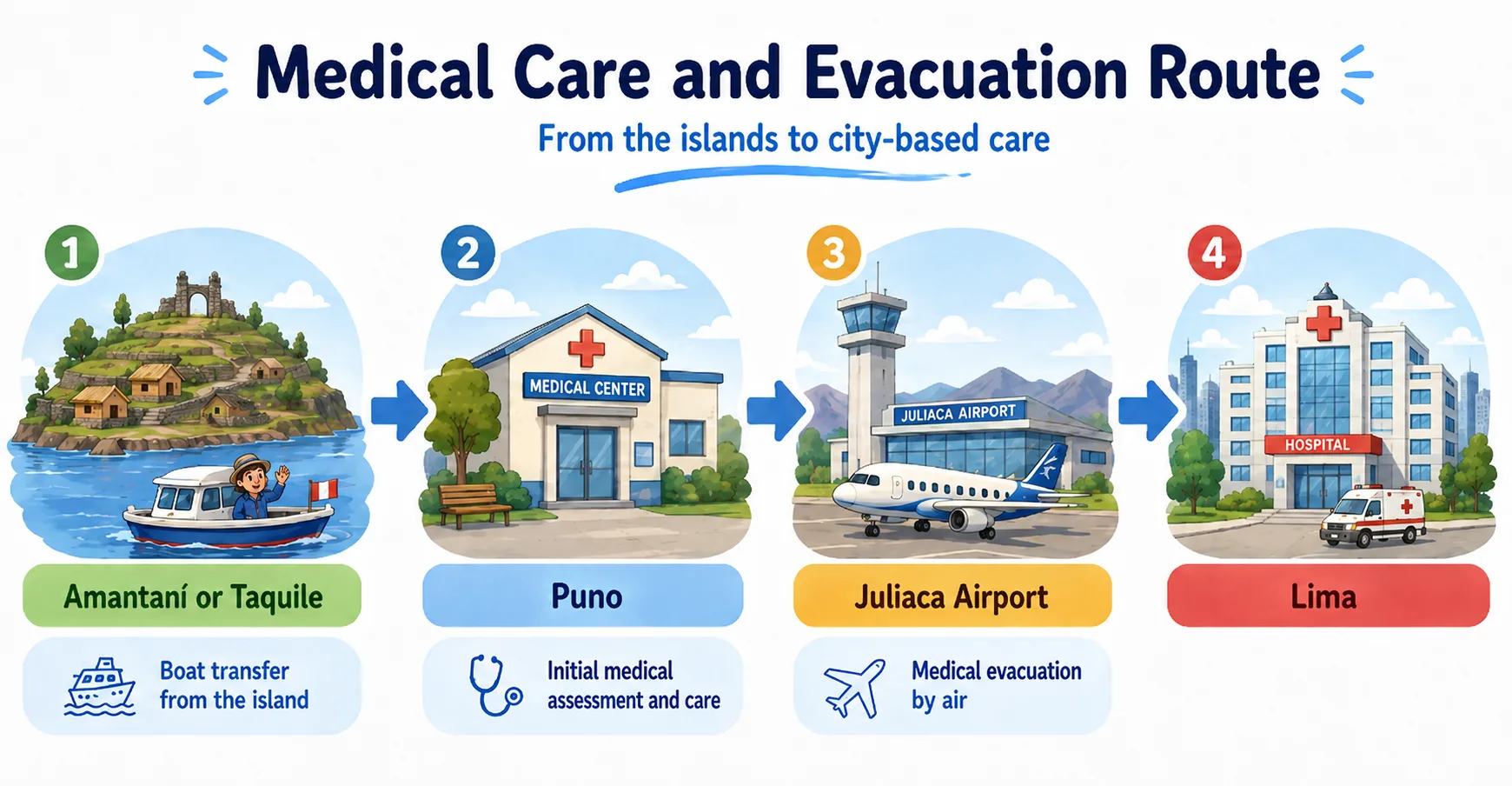
This is the form of coverage that tourists often overlook. In situations where rest, oxygen, and medicine prove to be insufficient, the clinic stabilizes the individual and makes arrangements to move the individual elsewhere. The general evacuation path in the Titicaca region follows this sequence; Puno to Juliaca airport and then to Lima, through either commercial flight for non-emergencies or via air ambulance for emergencies. A personal air evacuation plan can cost more than $20,000, and for this reason, many tour planners advise travelers to have at least $250,000 coverage.
Trip Cancellation and Interruption
Apart from covering the health requirements of the traveler, the good insurance policy must cover any prepaid and non-refundable expenses such as airfares, hotel bookings, and tour packages that need to be changed due to health issues or any other emergencies, which may occur while on tour.
Activities and Remote-Island Logistics
The danger posed by the islands is real and distinct from those found when in the middle of Puno. This is because of the means of transport which relies so much on the boats and the distance of some overnight stops from the mainland.
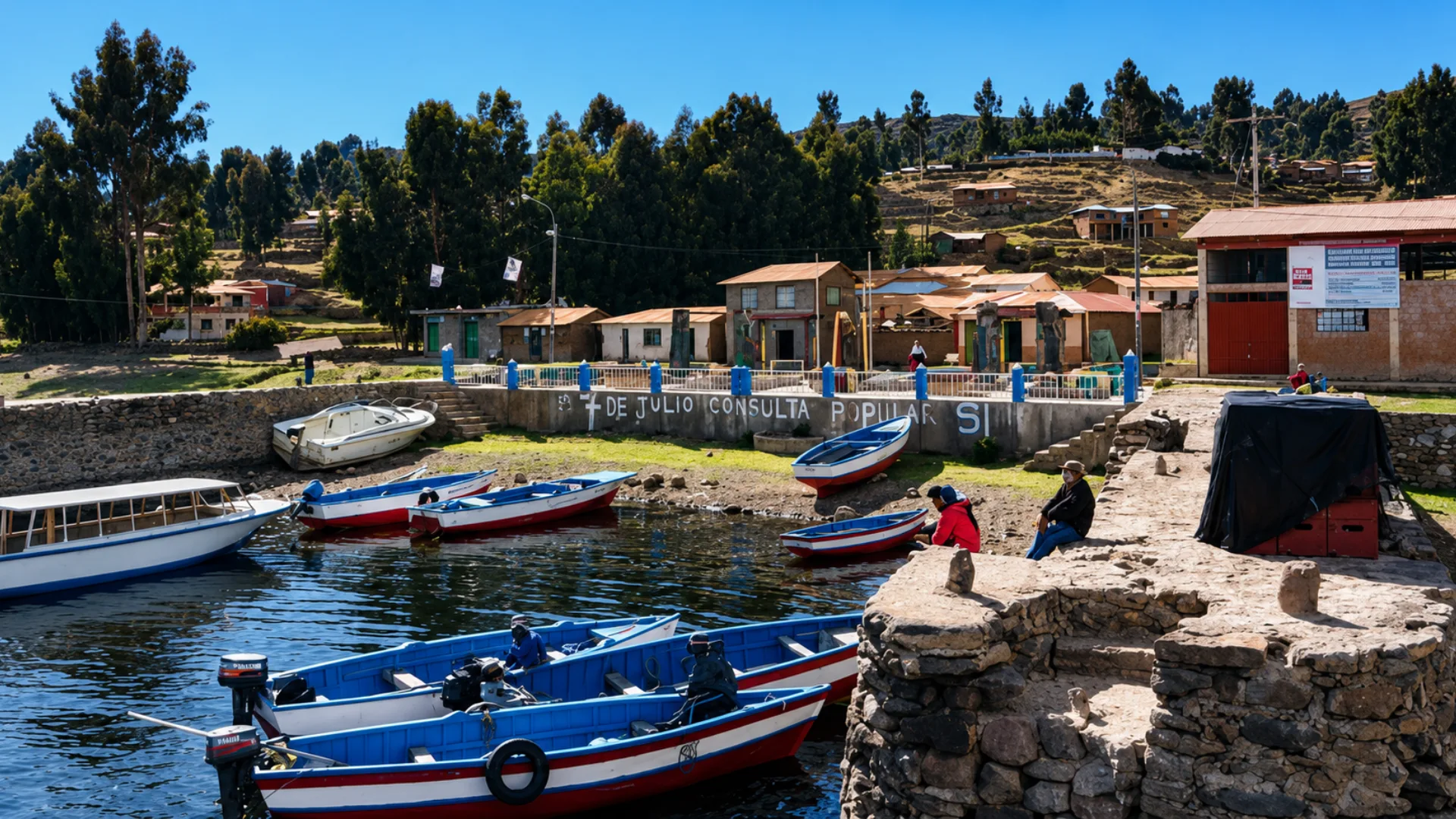
A typical Titicaca package would comprise boat trips to the Uros floating islands, Taquile, or Amantaní; overnight home stays; and trekking, for certain travelers. While a few companies may consider this as ordinary sightseeing, some may consider either the boat trip or the overnight stay at such far-flung areas as an added option, which has to be indicated separately under special coverage options on the policy. It is advisable for tourists who book tours of Lake Titicaca or the Amantaní homestay tour to read the activities carefully from the list of activities.
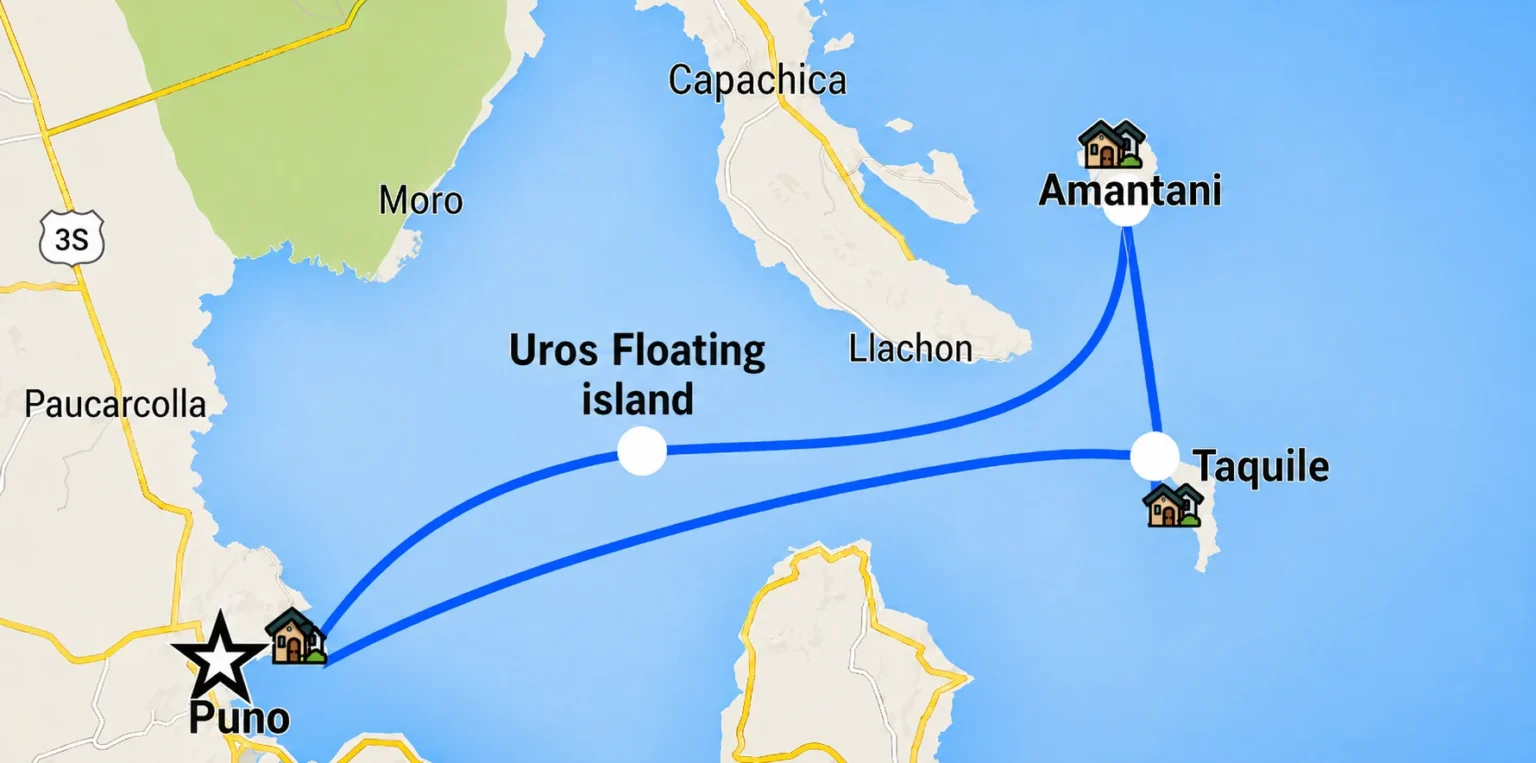
By way of context for the distances: The boat trip to go to and return from Amantaní island from Puno takes about 3 hours each way, and Taquile is a little closer away at about 2.5 hours each way. If you are on one of these islands overnight, that boat trip separates you from the closest health clinic should something arise this is not like staying at a hotel in Puno a quick taxi ride from healthcare facilities. This is the distance covered by the boat transfer and homestay insurance.
| Activity | Usually Covered? | May Need Add-on |
|---|---|---|
| Guided city tours (Puno, Cusco) | Yes | |
| Boat transfer to Uros Islands | Often | Confirm water-transport coverage |
| Overnight homestay (Amantaní/Taquile) | Sometimes | Remote-lodging or activity add-on |
| Multi-day trekking (e.g., connecting to Inca Trail) | Rarely by default | Adventure sports add-on |
Altitude Caps: The Hidden Detail Many Travelers Miss
Even if an insurance policy offers medical emergency cover, it may not be applicable above a certain height. It is important to check this clause in an insurance plan for travelers who include Lake Titicaca in their Peru tour package along with other high altitude locations.
Why Some Policies Exclude High-Altitude Destinations
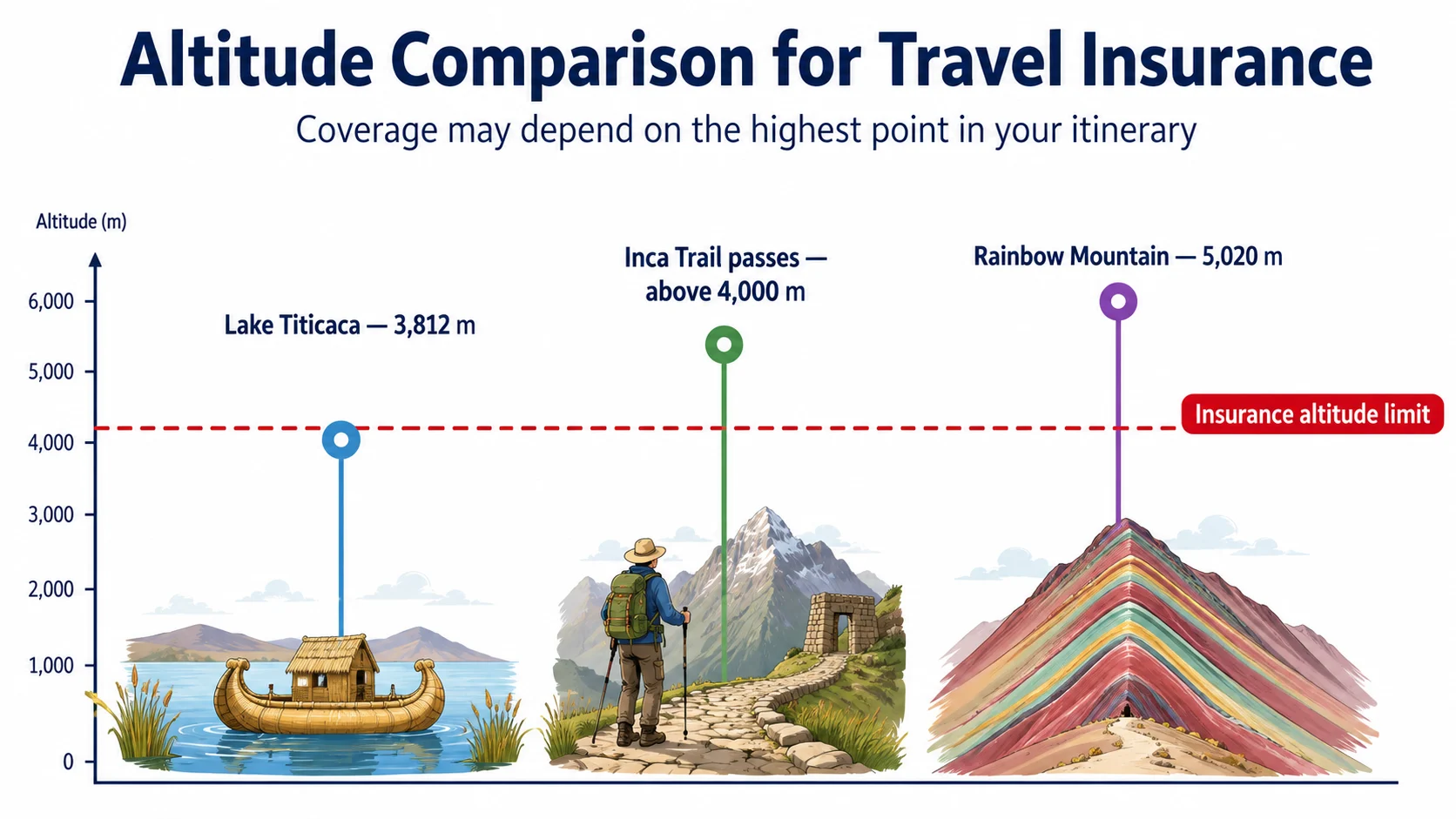
Most cheap or digital nomad insurance policies have a ceiling height where normal coverage ends, usually between 4,500 to 6,000 meters. Above this point, treatment for altitude sickness may not be covered unless there is an adventure sport supplement. While Titicaca falls below most of these ceilings, visitors who include the Inca Trail, Rainbow Mountain, or even higher altitudes of more than 4,500 m will find themselves in no-man’s land.
How to Confirm Your Policy Covers 3,800+ Meters
It would be prudent to search through the travel policy for the terms “altitude,” “elevation,” or “AMS” rather than rely on information available on the company’s sales page. A short phone call or online chat with the insurance company to confirm whether your travel insurance covers you at your maximum elevation, whether it be Lake Titicaca or anywhere else during the tour, will take only a few minutes.
IMPORTANT
An excursion combining Lake Titicaca with Rainbow Mountain (5,020m) or an Andean pass at a higher altitude will likely require insurance coverage suitable to that higher altitude, rather than for the altitude of Lake Titicaca, which is 3,812m. Insurance companies usually assess your coverage according to the highest altitude, rather than the average altitude.
Comparing Types of Travel Insurance for Lake Titicaca
Each category of travel insurance focuses on different aspects, starting from reduced daily charges to a range of activities and evacuations. It becomes easier to choose one that fits a particular trip when comparing them according to their medical coverage, altitude restriction, evacuation, and purchasing requirements.
This chapter is going to look at travel insurance in broad categories and not at individual providers. The reason for this is that the prices, coverages, and conditions of policies keep changing.
Coverage Limits and Costs at a Glance
The general landscape for high elevation travel tends to look like this:
| Provider Type | AMS Treatment | Evacuation Limit | Altitude Cap | Buy After Arrival? |
|---|---|---|---|---|
| Adventure-focused insurers | Usually included | Commonly $100k–$500k+ | Often covers most trekking elevations by default | Rarely, usually bought before departure |
| Budget / digital-nomad plans | Usually included | Often around $100k, sometimes less | Standard cap often ~4,500 m; add-on may be needed above it | Sometimes, subject to a waiting period |
| Traditional travel insurers | Usually included | Varies by plan tier | Varies confirm in writing | Sometimes, within days of booking |
Without the need for extreme elevation trekking in Titicaca, most passengers would find themselves covered by standard coverages. The numbers change when the travel includes passes at elevations higher than 4,500 meters; then it makes sense to write out the maximum elevation limit.
What Budget Travelers Should Prioritize
Travelers prioritizing cost tend to gravitate toward daily-rate plans, which can run as little as a few dollars a day for basic medical coverage. If cost is the main driver, it’s worth prioritizing two checks above all else: the evacuation limit and the altitude cap, since budget plans sometimes set both lower than adventure-specific policies.
What Adventure Travelers Should Prioritize
People who focus on affordability generally opt for daily plans, where prices can be as low as a couple of dollars per day for medical insurance. If affordability is the top consideration, then there are two things to keep an eye out for: the evacuation limit and the maximum altitude, because budget travel plans tend to have those lower than adventure plans.
Medical Care and Evacuation Near Lake Titicaca
The availability of medical services relies heavily on the location of the traveler at the time symptoms or accidents occur. The services will be readily available in Puno; however, travelers visiting places such as Amantaní, Taquile or any other island would have to take the boat first.
What to Expect If You Need Care
There are clinics in Puno that can manage common ailments associated with altitude. Patients traveling from Cusco will be able to get treated at reliable private hospitals, such as Clínica Pardo and Clínica Cima, that have dealt with foreigners and employ English-speaking staff. Some clinics provide hyperbaric oxygen therapy, where the patient inhales the oxygen inside a pressurized chamber. The closest clinics to the islands of Amantani and Taquile are located on the mainland itself. That is one of the reasons why activity insurance and evacuation insurance are as important as medical insurance in this case.
| Location | Typical Level of Care |
|---|---|
| Puno | Initial assessment, basic stabilization, oxygen |
| Juliaca | Regional airport, the exit point for onward flights |
| Cusco | Advanced private clinics, hyperbaric therapy |
| Lima | Specialized hospitals, sea-level recovery |
When Evacuation Becomes Necessary
Whereas rest, oxygen, and medication do not help, it is advisable to move to lower altitudes, usually Lima since it is at sea level. This is usually done through the same boat journey from the islands to Puno mentioned above. This takes time before the patient gets to higher-level care, adding yet another reason why overnight trips to Amantaní or Taquile should be considered separately in terms of coverage. Clinics first stabilize the patients before organizing transportation through either commercial airlines from Juliaca for less serious cases or air ambulances for serious ones. This is where having evacuation coverage sorted out beforehand, good evacuation insurance in writing rather than mere mention of it, becomes a huge relief.
PRO TIP
Store the contact number for your insurance company’s 24-hour emergency assistance service in your mobile phone prior to boarding a boat to the islands since cellular coverage at Amantaní and Taquile may not be available all the time.
Questions to Ask Before You Buy
The policy summary is usually not sufficient to be able to know exactly what kind of coverage one will have while on a high altitude adventure. There are other things that can be found out by asking the right questions prior to buying a policy.
- Does this policy cover elevations above 3,800 meters without an add-on?
- What’s the emergency medical evacuation limit, and does it cover private medical flights?
- Are boat transfers, homestays, and guided tours included in standard coverage?
- Is pre-existing condition coverage relevant to my situation, and does it apply here?
- Does the plan require upfront payment for treatment, or does it coordinate directly with local clinics?
Those operators who have experience running tours around the lake usually find a common trend among tourists: those who incorporate acclimatization time in their journey and do not immediately head out to the water after flying to the lake from lower altitudes usually feel more comfortable during their first day. The combination of such a strategy and a clear altitude sickness policy is usually the formula of a good journey for tourists.
AVOID THESE MISTAKES
The most common ways travelers end up underinsured for Titicaca:
- Buying insurance without checking the altitude limit
- Assuming boat transfers to the islands are automatically covered
- Skipping or underestimating emergency evacuation coverage
- Purchasing insurance after altitude symptoms have already started
Final Checklist Before Buying Insurance
Travelers must compare their coverage plan to their maximum elevation, activity level, accommodation, and method of transportation before making any purchases. This process will ensure that travelers get a coverage plan that caters to their most important risks, not just an extensive coverage package.
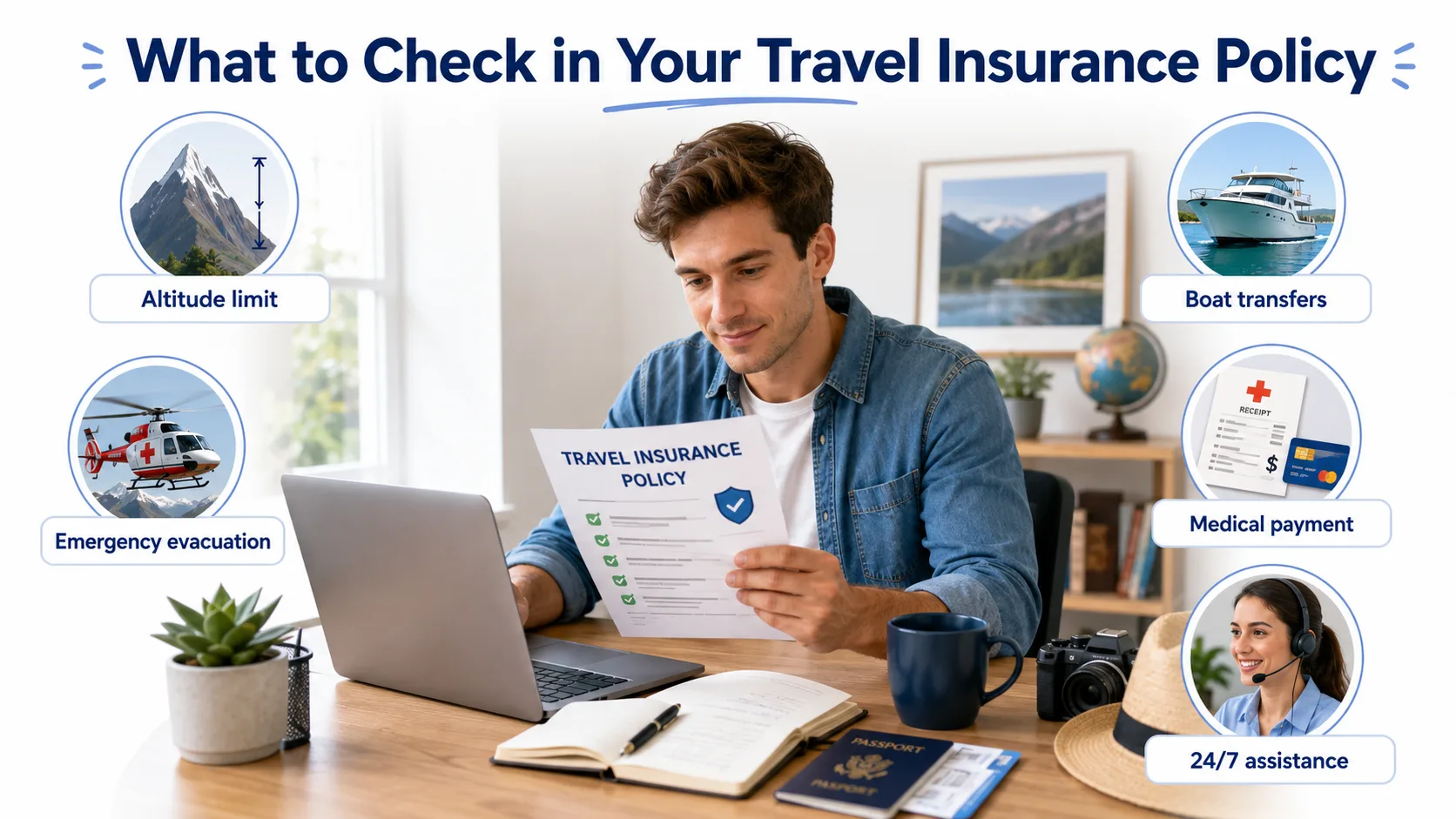
- Verify the maximum covered altitude, check it against your trip’s highest point, not just Titicaca.
- Confirm emergency evacuation limits and whether private air ambulances are included.
- Check that boat transfers to the Uros Islands, Amantaní, and Taquile are covered.
- Review exclusions for trekking, cycling, or other adventure activities on your itinerary.
- Save the 24-hour emergency assistance number before departure, ideally offline.
Frequently asked questions about Best Travel Insurance Coverage for Lake Titicaca Trips
A commonly cited baseline is $100,000 in medical coverage and $250,000 in emergency evacuation coverage, adjusted upward for travelers combining Titicaca with higher-elevation trekking — though the right amount depends on your policy and personal circumstances.
From Amantaní or Taquile, the first step is returning to the mainland by boat, then onward from Puno through Juliaca Airport toward Lima, either commercially or by private medical flight depending on severity.
Some providers allow this, but coverage windows and waiting periods vary, and altitude-related claims may not be covered if symptoms appear too soon after purchase. Buying before departure is generally the safer route.
High-altitude travel insurance should include altitude-related medical coverage, emergency evacuation, boat transfer protection, coverage for remote stays, and adequate limits for the highest elevation on your itinerary.