
Handicrafts of Peru
Have you ever picked up an item at a Peruvian market and felt that it carried a story far deeper than tourism? Something ancient, heavy, purposeful? It’s not a mistake. The Peruvian handicrafts are made with a continuity of history behind them of more than 3,000 years, and those craftspeople working today have inherited skills that cannot be duplicated in any modern industry.
This guide covers everything you need to know about Peruvian handicrafts, including their history, traditional techniques, and the best places to buy authentic pieces. From the pre-Columbian heritage of each craft tradition, through to the skills employed today, and down to the city-to-city guide of where to buy the best crafts in Peru.
What Makes Peruvian Handicrafts Unique?
Being spread out in such varied landscapes as the Pacific coast, the highlands of the Andes mountains and the Amazon basin, Peru’s peoples were able to evolve their own materials, imagery, and crafts for many thousands of years. These differences are built into the items.
What makes Peruvian handicrafts truly distinctive is the continuity of their traditions. One can see the artisans weaving fabrics on a backstrap loom, just like it was done 2,000 years ago. Ceramicists in Quinua use techniques recorded by pre-Columbian potter masters. Silver jewelry of Catacaos uses techniques borrowed from filigree work of colonizers and, in turn, from Moche and Chimu metal work. It’s not a recreation of history but rather a living heritage reflected in the items.
That’s why the authentic Peruvian handicraft differs so much from the items made in other tourist economies. Even a simple alpaca scarf or carved gourd carries a meaningful cultural and historical legacy.
A Brief History of Handicrafts in Peru
History of artisan craft work in Peru is not a background for what you now see; it is what you now see. Every tradition, technique, material and design seen in modern-day Peru is from a distinct historical period.
Pre-Columbian Origins (3000 BCE – 1532 CE)
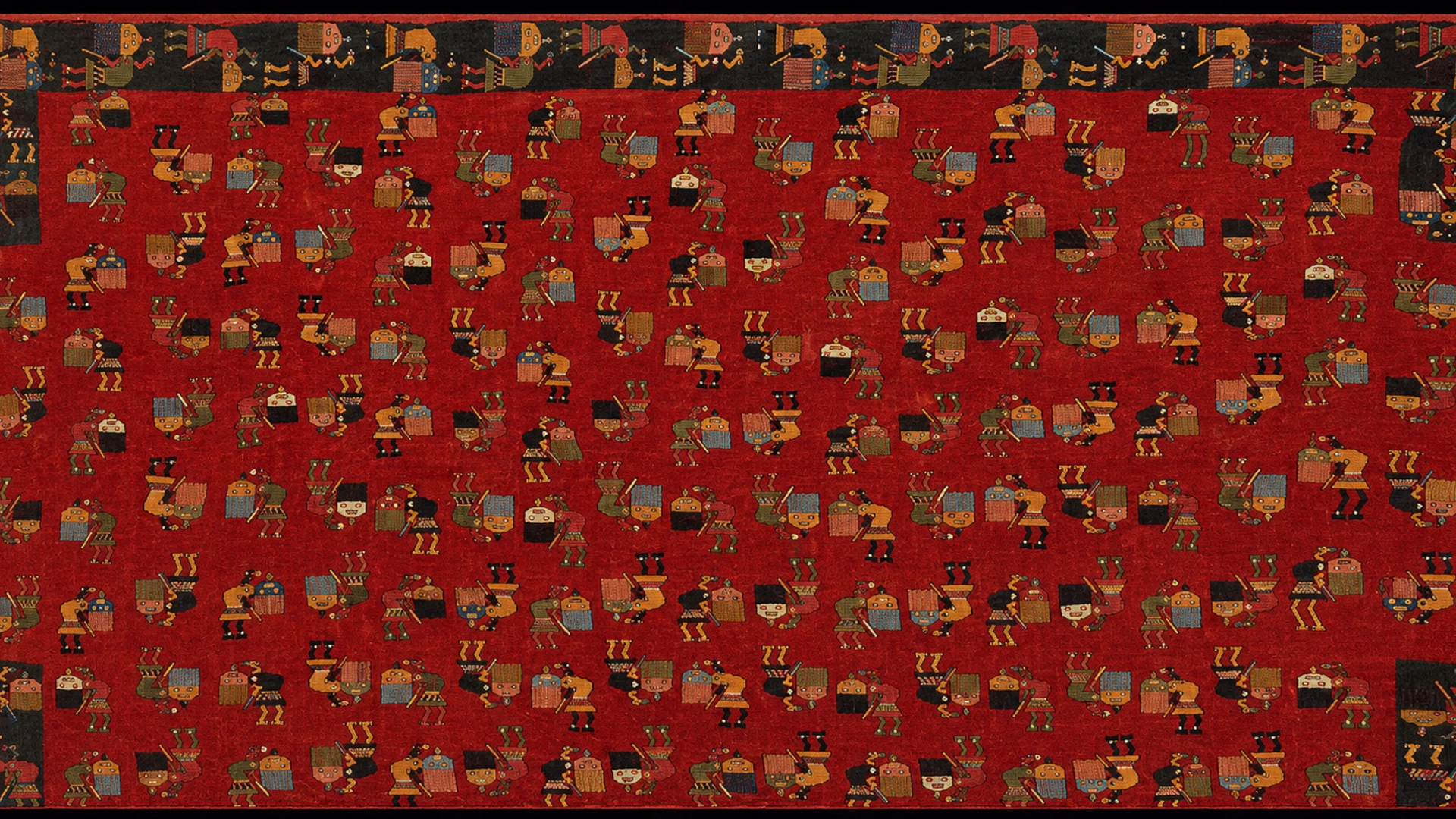
Textiles in South America are among the earliest known in the world. Woven cotton textiles found at Huaca Prieta in Peru’s northern coastal region date back to about 3000 BC, prior to the advent of pottery in the region. Gourd carvings found there date back to 2500 BC; hence, gourd carving is one of the most ancient arts continuously practiced in the Western Hemisphere.
The Paracas Culture (700 BC-200 AD) is known for creating embroidered funeral cloths with an embroidery thread density of 200 threads per inch, which is unparalleled technology for that period and even today, the colors are very fresh. The Moche Culture (100-800 AD) created portraits in ceramics of great realism and mastered goldsmithing techniques such as lost wax casting, repousse and alloying. The Chimu civilization (900-1470 AD) established craft industries in Chan Chan. The Inca (1438-1533) used the mita system to organize the artisans’ labor and produced qompi, very fine tapestry cloth made from the vicuna reserved exclusively for the emperor.
Colonial Period (1533–1821): Syncretism and New Forms
The conquest did not destroy Andean artistic practices; instead, it integrated with them to create colonial Andean art. European symbolism, Catholic symbolism, and tools combined with local techniques to give rise to what is now referred to as colonial Andean art. The retablo, which was first used as a portable Catholic altar used by missionaries, was slowly converted to become a uniquely Peruvian narrative through the efforts of Ayacucho artists. Colonial Peruvian silverwork brought together Moorish filigree work and indigenous metalworking skills to give birth to a unique skill practiced to this day by Catacaos silversmiths.
Modern Revival (1821–Present)
The 20th century saw conscious efforts to record and revive threatened traditions as a result of urbanization and industrialization. CTTC, which stands for Centro de Textiles Tradicionales del Cusco, established in 1996, is currently working with more than 900 weavers in nine communities. The Taquile Island Textile Arts were declared by UNESCO in 2005 as Intangible Cultural Heritage while the Scissors Dance with its intricate handmade costumes was listed in 2010.
Traditional Techniques Used by Peruvian Artisans
Understanding the process involved in making something gives a different perspective when assessing the product. The following are the basic techniques that define the handcrafted products of Peru and differentiate them from machine-manufactured products.
Backstrap Loom Weaving (Telar de Cintura)
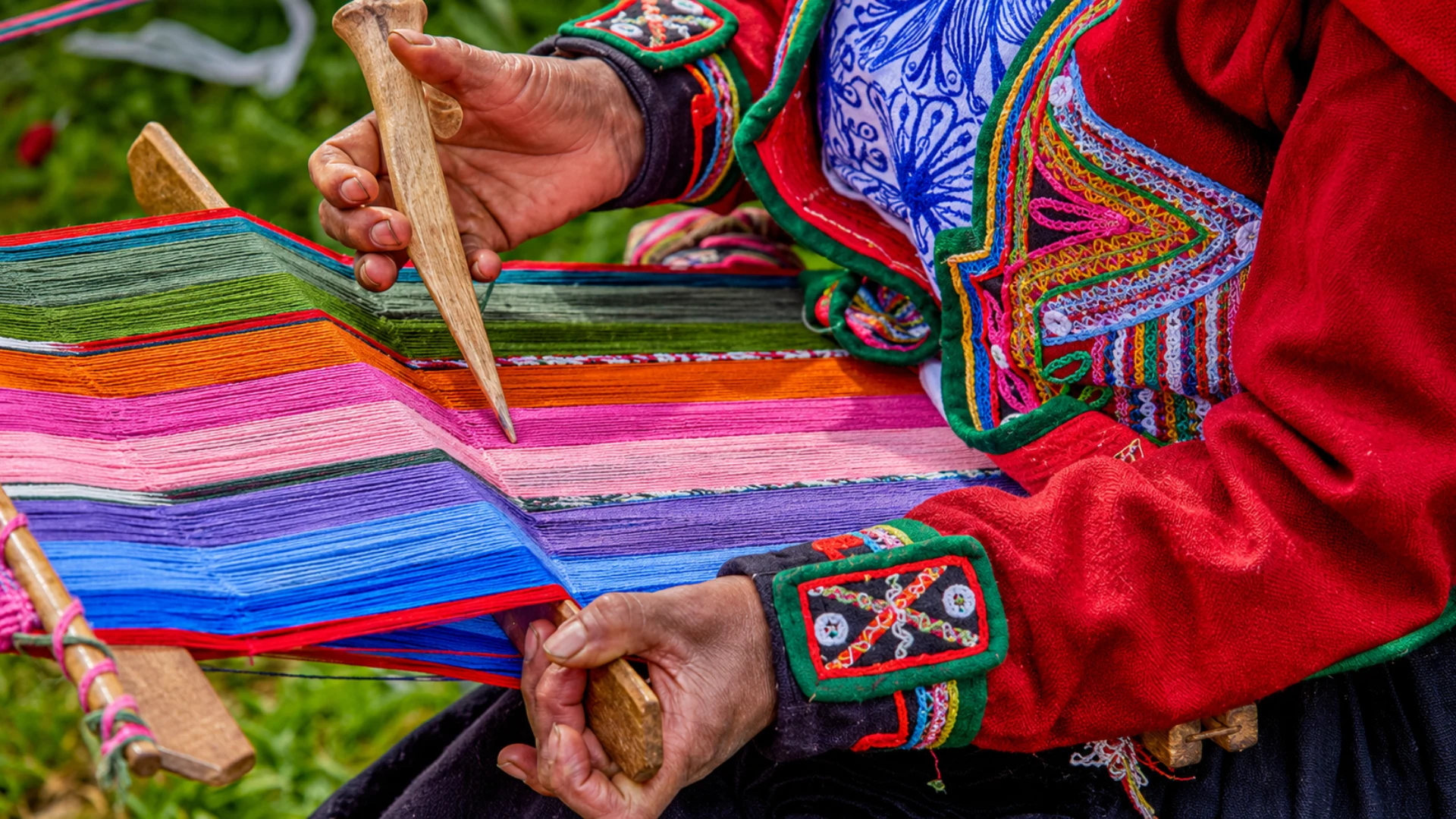
Backstrap looms have been used in the Andes for centuries, preserving techniques passed down through generations. In this loom, one side remains attached to either a wall or pole while the other side is strapped to the back of the weaver. With this loom, weavers use body weight by either leaning forwards or backwards to control the tension of warps while weaving with both hands at once.
Natural Dyeing with Cochineal, Indigo and Plant-Based Colors
Natural dyes are still used by the highland communities within the Sacred Valley and Puno, despite the availability of synthetic dyes. The red, pink, and purple colors come from cochineal, an insect found in prickly pear cactus, while blue comes from indigo. Black and dark brown are extracted from the walnut husk, while the yellowish green color is derived from the chilca shrub. Peru used to export cochineal dye to Europe during the colonial era.
Lost-Wax Casting and Filigree (Cera Perdida / Filigrana)
There are two prominent methods of silversmithing in Peru that have been employed throughout history. Lost-wax casting includes carving wax, surrounding it with plaster, melting away the wax, and filling the hollow area with molten silver. This method has been used by the Moche goldsmiths of Peru 2,000 years ago and is now practiced in Cusco and Lima. Another technique of silversmithing is filigree, which includes twisting silver wire down to 0.3 mm.
Traditional Gourd Engraving with the Burilado Technique
A tiny steel burin tool is employed to scratch designs on the hardened shell of a gourd. The shadows are created by means of cross-hatching; the more finely drawn and more densely packed the lines, the darker the tones that can be achieved. In some cases, the craftsmen use heat treatment in order to create greater contrast.
Traditional Retablo Sculpture Using Pasta de Papa
The retablo figures are made using the technique of hand-sculpting using the mixture of maguey fiber, starch, and plaster. The mixture is dry and holds good details. The figures are assembled in layers and are painted using both natural and synthetic paints. They are set up in a wooden box which has been painted.
8 Main Types of Handicrafts in Peru
Andean Textiles and Weavings
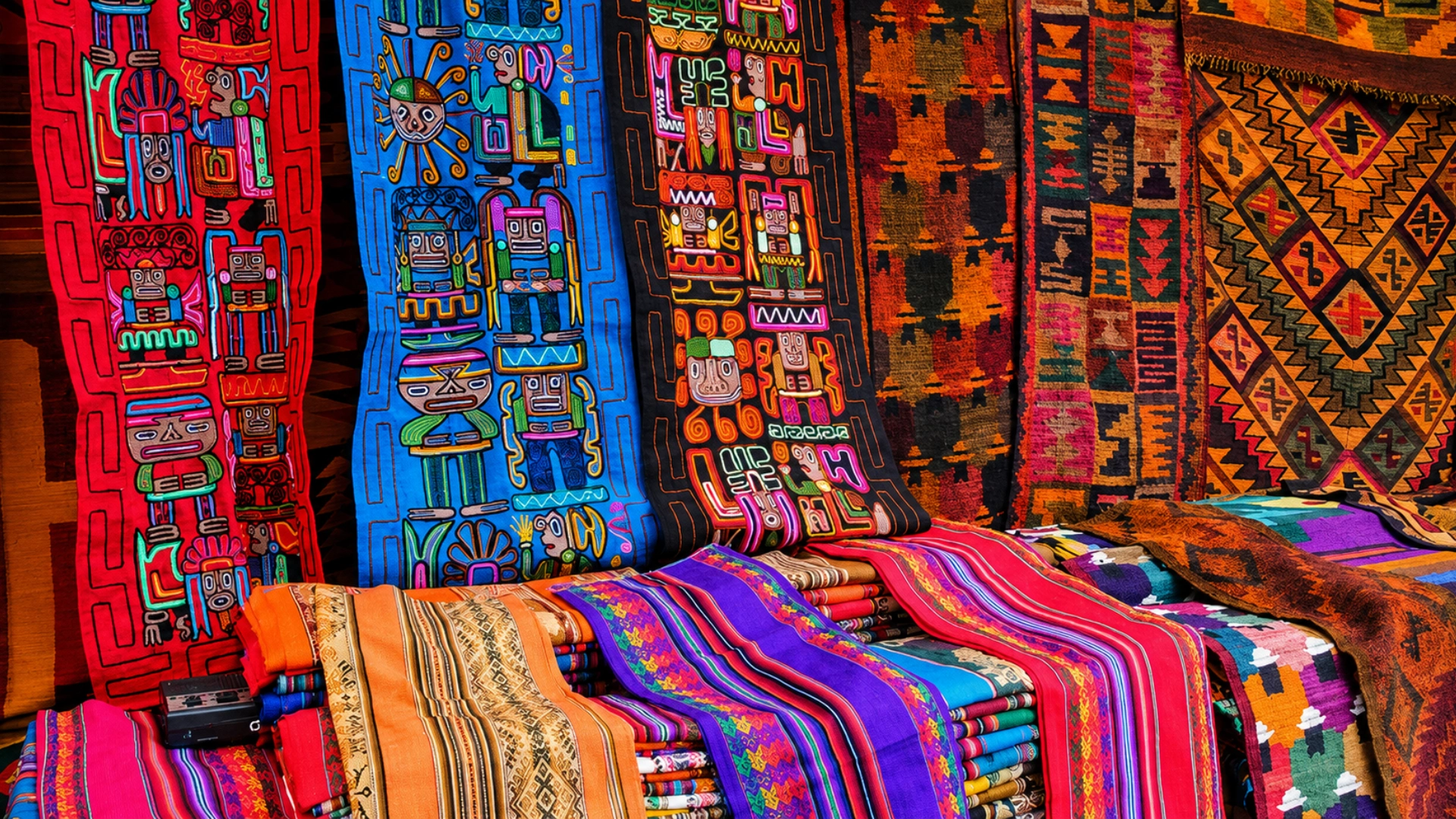
The most well-known crafts of Peru. Hand-woven Andean textiles include tapestries, embroidered textiles, ponchos, llakkas (carrying textiles), and wayos (shoulder textiles) using alpaca, llama, vicuna, or cotton threads on the backstrap loom. They represent community affiliation, social position, and cosmology. Production centers are located in Sacred Valley, Cusco, and Puno.
Alpaca Wool Products
Peru accounts for around 70% of alpacas in the entire world. Products made from baby alpacas such as sweaters, scarfs, shawls, and blankets are the main artisanship exports of Peru. Baby alpaca refers to an especially fine and soft grade of alpaca fiber. It does not necessarily come from a baby animal or its first shearing. The most processed alpaca fiber comes from Arequipa while Cusco has the widest market variety.
Ceramics and Pottery
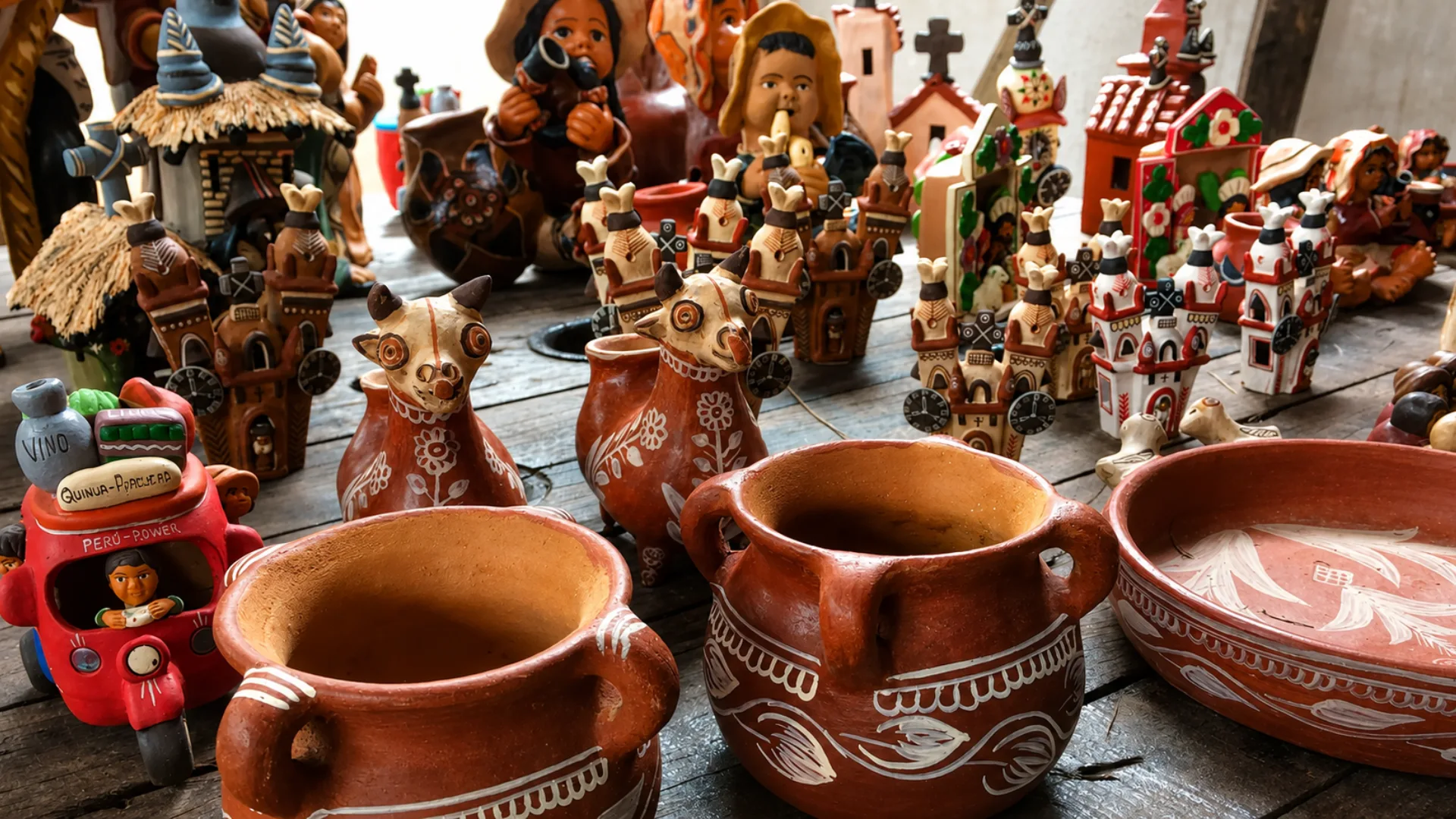
Ceramic styles differ greatly depending on the region. The pottery from Quinua (Ayacucho) creates detailed miniaturized churches and figures. The pottery from Chulucanas (Piura) uses burnished mattes and smoked, mottled glazes. Figures from San Marcos (Ancash) consist of bright colored clay animals used during animal festivals. Handmade pottery from Cusco creates replicas of Moche portrait vessels and Inca geometrical shapes.
Silver Jewelry and Metalwork
Peruvian handcrafted silver jewelry reflects the influences of colonial filigree art, pre-Columbian metallurgical techniques, and contemporary design styles. The Catacaos (Piura) region is noted for its filigree work. Cusco and Lima make Inca-themed jewelry using sterling silver. Ayacucho is famous for its repoussé colonial religious style of silver crafting.
Retablos (Portable Altarpieces)
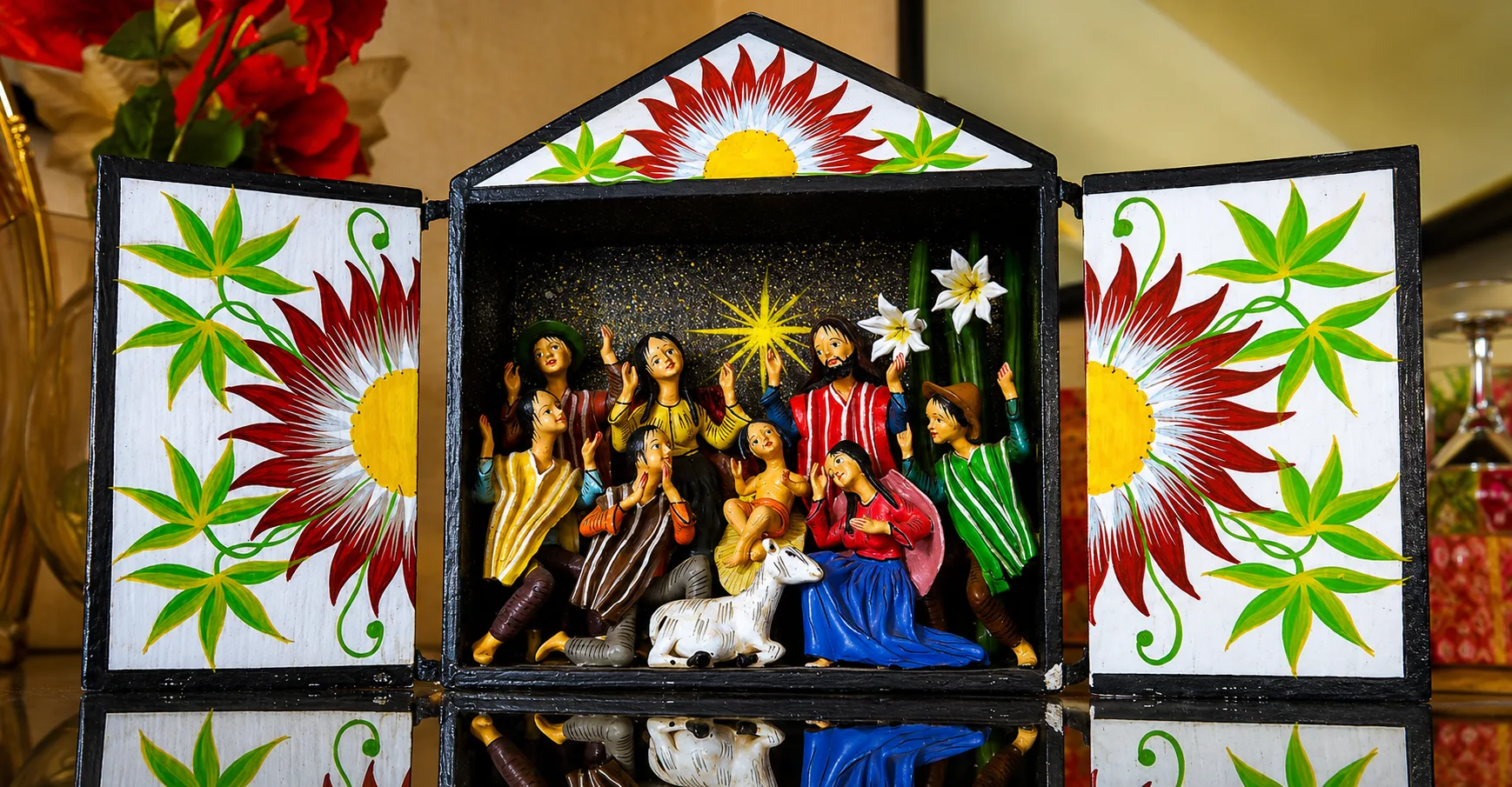
Once used by Spanish missionaries as teaching aids, the retablos were converted into secular narrative boxes illustrating festive, historical, and ordinary Andean life scenes by Ayacuchan artists. Peruvian retablos have achieved status as fine art objects. There are retablos available for tourists at relatively inexpensive prices.
Carved Gourds (Mate Burilado)
Dating back to 2500 BCE, gourd carving is considered the most ancient art that is still being practiced in the Americas. The Mantaro Valley close to Huancayo is the source of production of these items, while the towns of Cochas Chico and Cochas Grande are involved in the practice completely.
Wood Carving and Festival Masks
The traditional wood carvings of Peru involve wood sculptures made during the colonial period, wood carvings of Chakana (crosses from Andes), musical instruments, and carnival masks. Carnival masks of the Puno Virgen de la Candelaria festival and scissors dance are multi-component structures made of wood, plaster, mirrors, and paints.
Amazon Fiber Art and Shipibo-Konibo Textiles
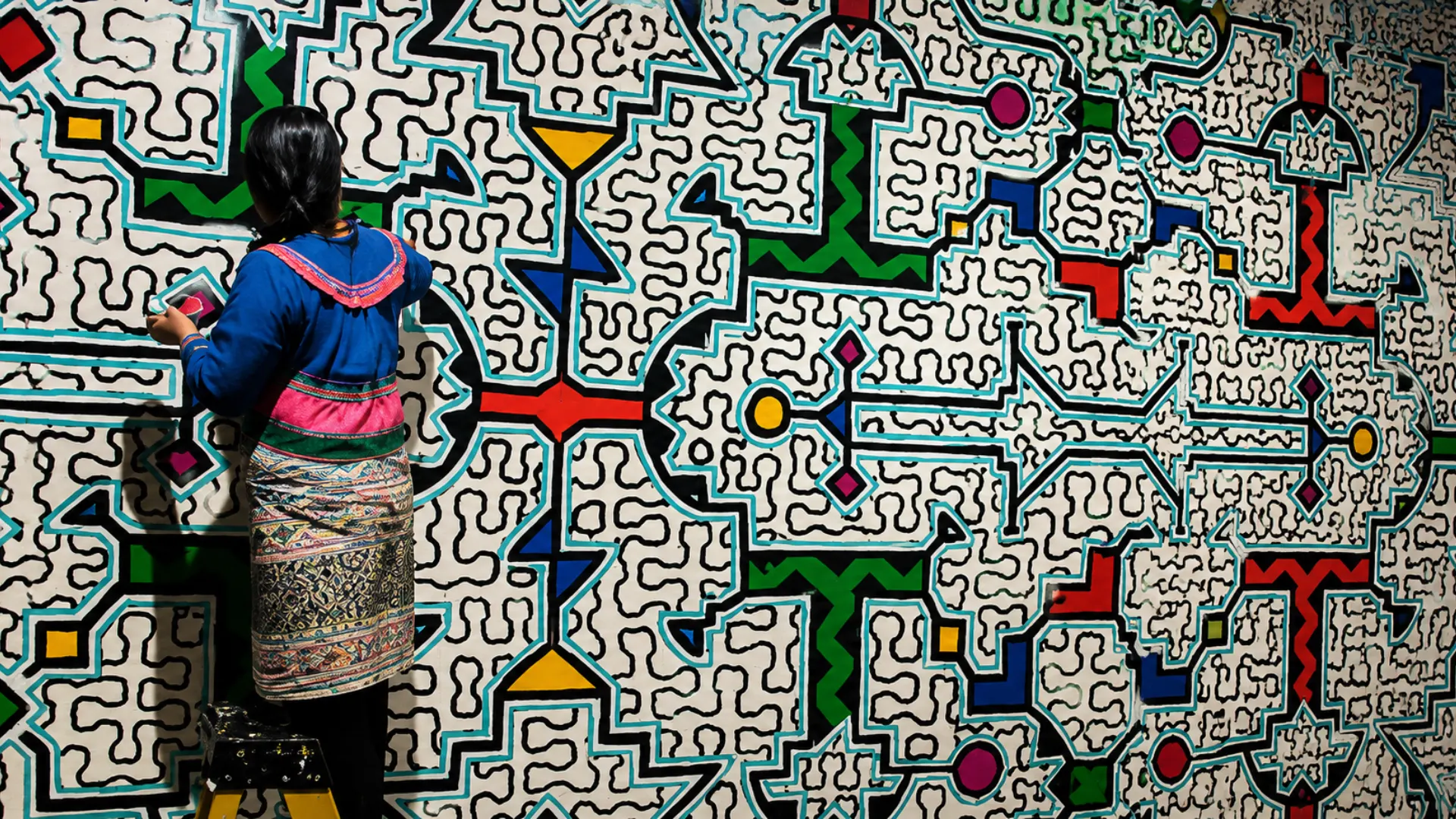
The Shipibo-Conibo women of the Ucayali River region create textiles with kene designs, which involve complex black and white maze-like motifs. This art is extended even to pottery and beadwork. Shipibo textiles can be purchased in the markets of Iquitos, as well as those of Lima.
Where to Buy Handicrafts in Peru: City-by-City Guide
The most practical question for any traveler: which city for which craft? Here’s where to go and what to look for.
Cusco, the Best Place to Buy Textiles, Alpaca Clothing, Jewelry and Ceramics
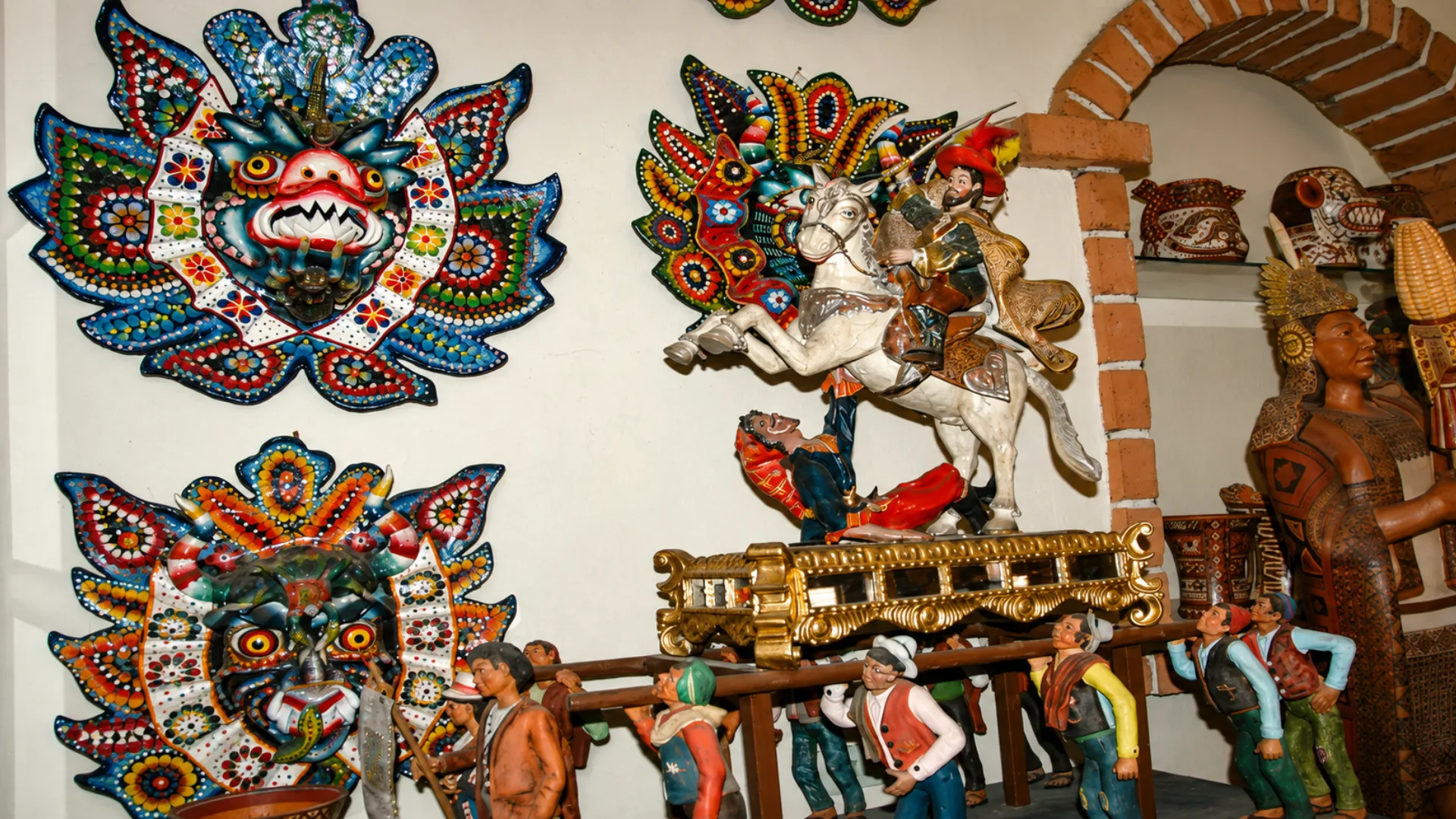
Cusco is one of Peru’s most important destinations for traditional handicrafts. The district of San Blas brings together family workshops manufacturing quality ceramics, silver pieces and paintings. The Centro de Textiles Tradicionales del Cusco (CTTC) located at Avenida Sol sells authentic handwoven textiles and provides live weaving demonstrations. The Pisac market (45 minutes away, best on Sundays) specializes in alpaca products, ceramics, and jewelry.
Items to purchase in Cusco: backstrap weavings, baby alpaca sweaters and scarfs, silver Inca jewelry, Cusco school paintings and hand-painted ceramics.
Ayacucho, the Best Place to Buy Retablos, Silverwork, Huamanga Stone and Warpilla Tapestries
Ayacucho is especially renowned for its retablos, Huamanga stone carvings, ceramics, and silverwork. Barrio Santa Ana is an open-air artisans area which houses retablos makers, Huamanga stone carvers (made from soft alabaster-like stone found locally), warpilla weavers, and silverware makers all within the same area. Quinua, 37km away, is home to ceramics.
Crafts that can be bought in Ayacucho include retablos, Huamanga stone carvings, colonial era silverwares, Quinua ceramics, and warpilla tapestries.
Puno, the Best Place to Buy Taquile Textiles, Chullos and Candelaria Festival Masks
Puno is the entry point to the island of Taquile, where the handwoven textile products, recognized by UNESCO, can be bought from the very cooperatives that manufacture them. Purchase on the island will guarantee authenticity and the benefit for the community. The Puno market also features chullos, monteras, and masks used in the celebration of Candelaria festivities.
What to buy in Puno: Taquile Island weavings, knitted chullos, masks from Diablada festivities, and alpaca ponchos from Lake Titicaca villages.
Piura and Catacaos, the Best Places to Buy Filigree Silver Jewelry and Toquilla Hats
The town of Catacaos, located just outside of Piura, is known as the national capital of filigree jewelry in Peru. In the main marketplace of Catacaos, there are whole streets lined with filigree workshops that specialize in crafting jewelry using wires of 0.3mm diameter.
What to buy in Catacaos: silver and gold filigree earrings, necklaces, bracelets, toquilla straw hats, and tooled leather goods.
Huancayo and the Mantaro Valley, the Best Places to Buy Carved Gourds and Embroidered Textiles
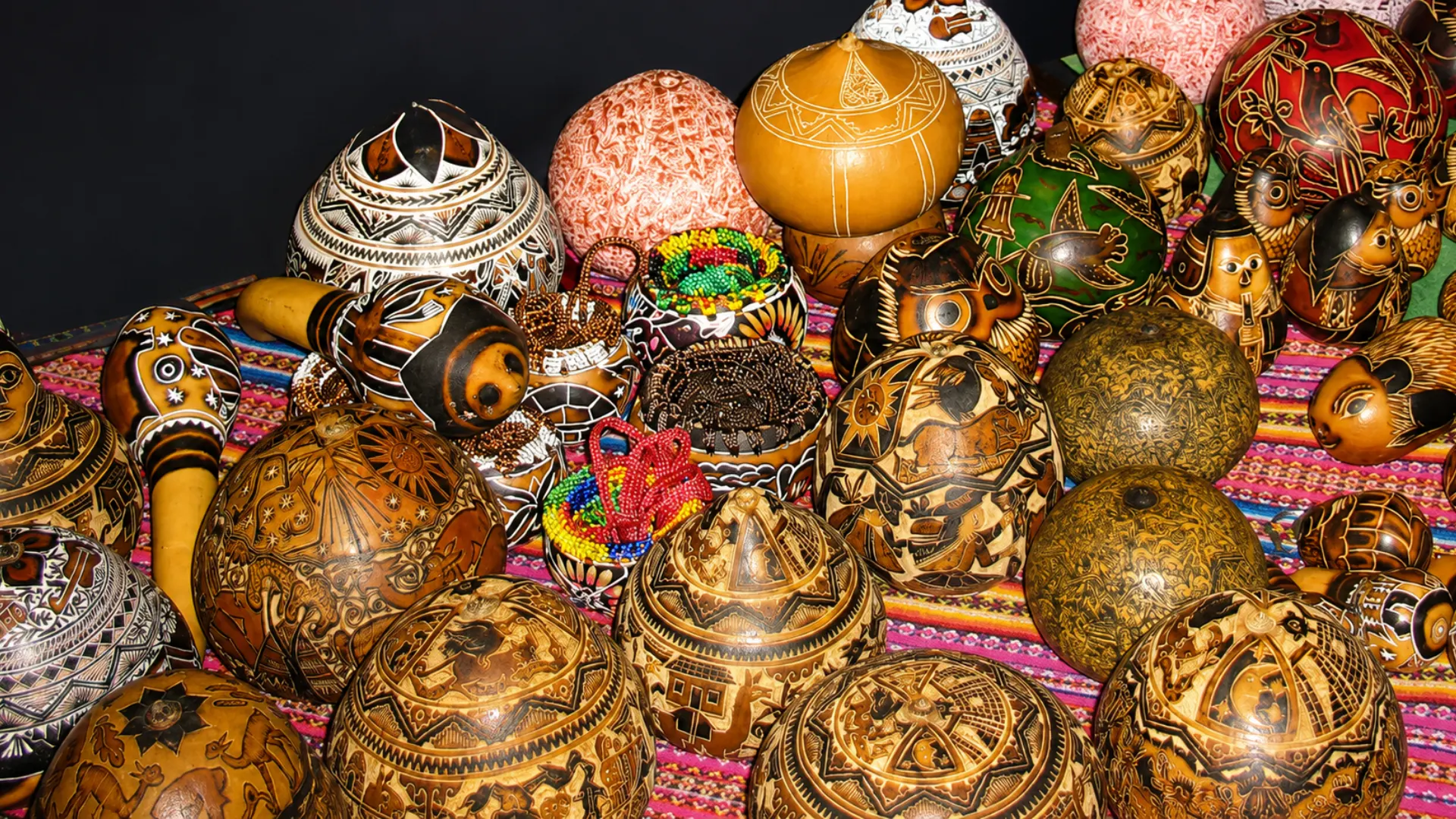
Cochas Chico and Cochas Grande villages (only 15 min away from Huancayo) are engaged in mate burilado production only. The market in Huancayo is also engaged in selling alpaca products, embroidered polleras, traditional Andean skirts often decorated with colorful patterns, and also wooden masks of Huanca dancers.
What to buy in Huancayo: carved gourds, embroidered traditional skirts, Huanca carnival masks, and woven alpaca goods.
Arequipa, the Best Place to Buy High-Quality Alpaca Garments
Arequipa is the place in Peru where alpaca fibers are processed. The factory outlets from Michell & Cia and other similar firms have certified alpaca clothing which is of high quality and sold at low prices when compared to those available in Cusco for tourists. They are machine-knit and not hand-made, but the quality of fibers can be verified.
Trujillo, the Best Place to Buy Moche and Chimu-Inspired Metalwork and Marinera Accessories
Sterling silver pieces of jewelry crafted in the style of the pre-Columbian art motifs found at the ruins of Chan Chan and Huacas del Sol y de la Luna are made in the city of Trujillo in the vicinity of the Moche and Chimu archaeological sites. Trujillo is also famous for its Marinera dancing costumes.
Iquitos, the Best Place to Buy Shipibo-Konibo Textiles and Amazonian Woodwork
Gateway to Peruvian Amazon crafts is Iquitos. The Belén market district features Shipibo-Conibo textiles, pottery, beadwork, hardwood carvings, and seed jewelry. Please bear in mind that certain Amazon animal-based products might be restricted from being imported into your country of origin.
How to Spot Authentic vs. Mass-Produced Crafts
The market for counterfeit or low-quality Peruvian crafts is significant, particularly at high-traffic tourist sites and airport gift shops. Here’s how to tell the difference.
For Textiles
Handmade authentic Peruvian textiles are always slightly uneven. Any discrepancy in symmetry and color density in patterns indicates that the textile is handmade. The machine-made textile has perfect symmetry. Check the label, feel the texture, and ask the seller about the fiber’s origin. Trusted shops and artisan cooperatives should provide clear information about the material. The full-sized alpaca scarf sold for under $15 can hardly be genuine.
For Ceramics
Authentic handmade Peruvian pottery is slightly asymmetric and has brush variations in the painting. Cast pieces have uniform walls and identical repetitive patterns. Check the artisan’s signature on the bottom of each piece.
For Silver Jewelry
Authentic Peruvian silver jewelry is marked with the hallmark of the metal purity (925 means sterling silver). You may ask your seller how the piece was made – by casting, fabrication or filigree working. Any artisan who made the piece will readily answer your question.
Supporting Peruvian Artisans
Buying authentic Peruvian handicrafts is more than purchasing a souvenir. It is a way to support local artisans, preserve traditional skills, and take home a meaningful piece of Peru’s cultural heritage. Whenever possible, buy directly from artisan workshops, community cooperatives, or trusted local markets.
Frequently asked questions about Handicrafts of Peru
Peruvian handicrafts are handmade products created using traditional materials and techniques. They include textiles, ceramics, silver jewelry, retablos, carved gourds and woodwork.
Cusco, Ayacucho, Puno, Catacaos, Huancayo and Iquitos are excellent places to buy authentic pieces directly from artisans and cooperatives.
Cusco is known for handwoven textiles, alpaca clothing, silver jewelry, painted ceramics and traditional Cusco School artwork.
Handmade textiles may have slight variations in their patterns and colors. Ask about the materials, production process and artisan who created the piece.