


The Best Panoramic Points to Observe Sunrise on the Inca Trail
Sunrise on the Inca Trail doesn’t involve daylight; it demands to be earned. It comes at the end of muscular effort, early morning wake ups, and hours of walking in darkness. That struggle makes the contrast, and that contrast makes the moment. There is a silence before dawn easeful wind and footsteps, usually is a setting that is simply impossible from any daytime view.
These moments reflect how the Incas comprehended movement and time, too. There was no hurry in travel; it was progressive, purposeful, and literally tuned to the rhythms of nature. The best panoramic sunrise points on the Inca Trail follow that very same philosophy: slowly revealing the landscape to the traveler so that scale and meaning can be absorbed.
Why Sunrise Is One of the Most Scenic Moments on the Inca Trail
The moment that is most real and authentic is seen at sunrise. There is no overload to the visuals; there is no contrast and nothing to draw attention away. It is a gradual entry for light to shine upon what would be hidden at a different time of day. This is why treks consider sunrise, and not Machu Picchu, to be the most emotional experience for trekkers.
In terms of sensory awareness, the effect of the sunrise is heightened. The focus of the mind becomes sharper due to the cold air. The sounds are more meaningful because they travel longer. The mountains appear bigger, quieter, and more three-dimensional so that the experience of passing through a holy landscape rather than a tourist trail is reinforced.
Panoramic Sunrise on the Inca Trail: Light, Landscape, and Perspective
A panoramic sunrise on the Inca Trail is a rare experience because it provides a combination of scale and intimacy in one moment. One could very well be treading on a narrow path, but witnessing a whole valley network in the distance. This is what the experience is all about.
Sunrise also helps establish orientation. When the light spreads, one can follow the route one has taken and the route to take. Valleys, ridges, and cols become recognizable as a network, no longer isolated landforms.
How sunrise enhances panoramic views on the Inca Trail
While the light during the middle of the day reveals, it reveals rather than flattens. The shadows create depth for the terraces and staircases, whereas the clouds introduce movement to the scene. This makes it a living landscape, which changes minute by minute and also promotes patience.

Panoramic Views on the Inca Trail: What Makes a Viewpoint Exceptional
One of the best scenic views on the Inca Trail is characterized by the factors of continuity, scale, and orientation. Continuity gives the viewer a seamless outlook on the landscape by following the edges of hillsides down into valleys and up again to mountain peaks. The continuity is especially important at the early morning sun when the light travels laterally before climbing overhead.
Scale is also crucial. A really panoramic view will contemplate a variety of distances simultaneously: those of the immediate foreground, like stone paths or terraces, then those of the middle distances, like valleys and slopes, and finally those of distant mountains which establish the horizon.
Orientation completes the equation. Positions that receive full eastern exposure enable sunrise light to fully engage with geographical surroundings. In the absence of this orientation, even if one is situated at a superior geographical location, a sunrise experience is hampered.
Many of the Inca Trail’s viewpoints are undeniably beautiful, but only a small number fulfill all three of the conditions above. These are the places where sunrise becomes a narrative—where the landscape unfolds in stages, guiding the viewer’s attention and reinforcing the sense of journey.
Inca Trail Scenic Views vs Sunrise Viewpoints
Many Inca Trail scenic views are best appreciated under full daylight, when visibility is consistent and details are immediately apparent. These views often impress quickly but remain visually stable throughout the day.
Sunrise viewpoints, by contrast, are defined by timing and transformation. What makes them exceptional is not only what is visible, but how visibility evolves. Colors shift gradually, shadows retreat, clouds move, and depth increases minute by minute. This transformation creates anticipation and emotional engagement, encouraging travelers to slow down and observe rather than simply look.
In essence, scenic views provide visual satisfaction, while sunrise viewpoints provide experience. The latter leave a deeper imprint because they are tied to a specific moment that cannot be replicated later in the day.
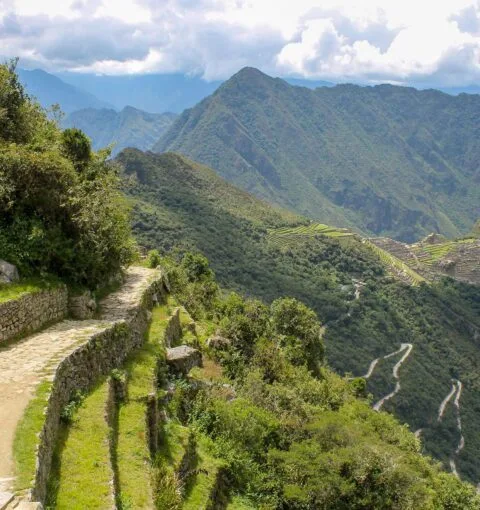
What Most Travelers Don’t Realize About Sunrise on the Inca Trail
Many adventurers have envisioned themselves witnessing the sun rise over Inca Trail. The process of witnessing the sun rise is more of an experience. The phenomenon of witnessing the sun rise is more before the sun shines in the sky. The experience involves darkness that fades away.
Sunrise, too, is not an ensured entity as far as accessibility is concerned. This means clouds, mists, and weathers should not be considered as deterrents to participation, as all these are an integral part of the activity. In many instances, it is these same clouds and moods that make instances related to sunrise most cherished and unforgettable.
Furthermore, another aspect that is often overlooked is how the best experiences of watching the sunrise are often in the spaces in-between the viewpoints. The narrow mountain ridges, rock stairways, and peaceful trails are often more mesmerizing than the popular viewpoints.
At last, the power of silence should not be underestimated. There are fewer sounds in the early morning Inca Trail treks. Therefore, silence increases awareness while allowing appreciative connections with nature, which would not easily occur when the sun is shining brightly.
Where to See Sunrise on the Inca Trail
Knowing where to see sunrise on the Inca Trail also depends on pacing. Guides often plan early departures not just for logistics, but to position hikers at optimal points as light appears. These moments are brief but intentional.
Sunrise viewpoints are often encountered naturally during ascents or transitions between camps. They feel like discoveries rather than scheduled stops, which adds to their emotional weight.
Is Sunrise Worth the Early Wake Ups?
Yes, but not for superficial reasons. Sunrise on the Inca Trail is not about convenience but contrast. The cold, early morning, and exhaustion provide the circumstances that make a sunrise significant. Otherwise, it wouldn’t be as significant.
It seems as though many travelers find themselves tired when they reach the early morning hours of a trek. It is at this point when the silence and the light of the approaching sunrise give way to a feeling of progress. It is at this point when a trek becomes worthy.
Overall, waking up for sunrise is well worth sacrificing sleep as it converts discomfort into purpose and hard work into meaning.
Best Places to Watch Sunrise on the Inca Trail
Sunrise along the Inca Trail can be seen from areas which provide an opening to wide vistas. This allows trekkers to stop momentarily to admire the changed landscape without breaking the pace of the trek.
Natural orientation, altitude, and visibility factors
A mainly eastern aspect, high ground, and little tree cover are required. In valleys, there may be late sun exposure due to the sun being hidden behind hills for a longer time. Views may be clear from topographical high ground if it is above cloud level
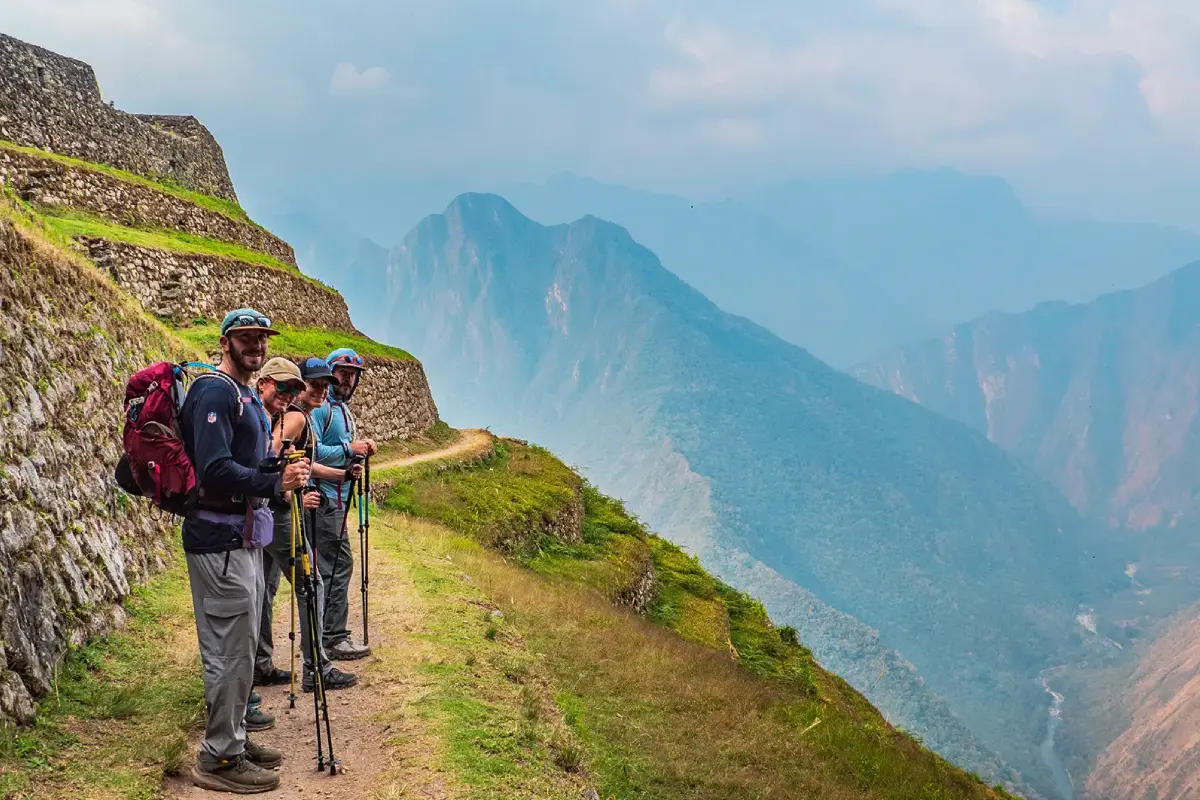
Iconic Sunrise Viewpoints on the Inca Trail
Sun Gate Sunrise on the Inca Trail (Inti Punku)
The sunrise at Inti Punku is powerful because it combines anticipation with resolution. After days of trekking, the destination is finally visible but only partially, only gradually.
The alignment between sunrise, valley, and citadel is not accidental. It reinforces the sense that arrival is something to be earned, revealed slowly rather than granted instantly.
Why the Inca Trail Sun Gate Viewpoint offers the best sunrise at Inti Punku
The inca trail sun gate viewpoint aligns directly with the citadel. As the sun rises, Machu Picchu is revealed gradually, making this the best sunrise at Inti Punku and the emotional climax of the trek.

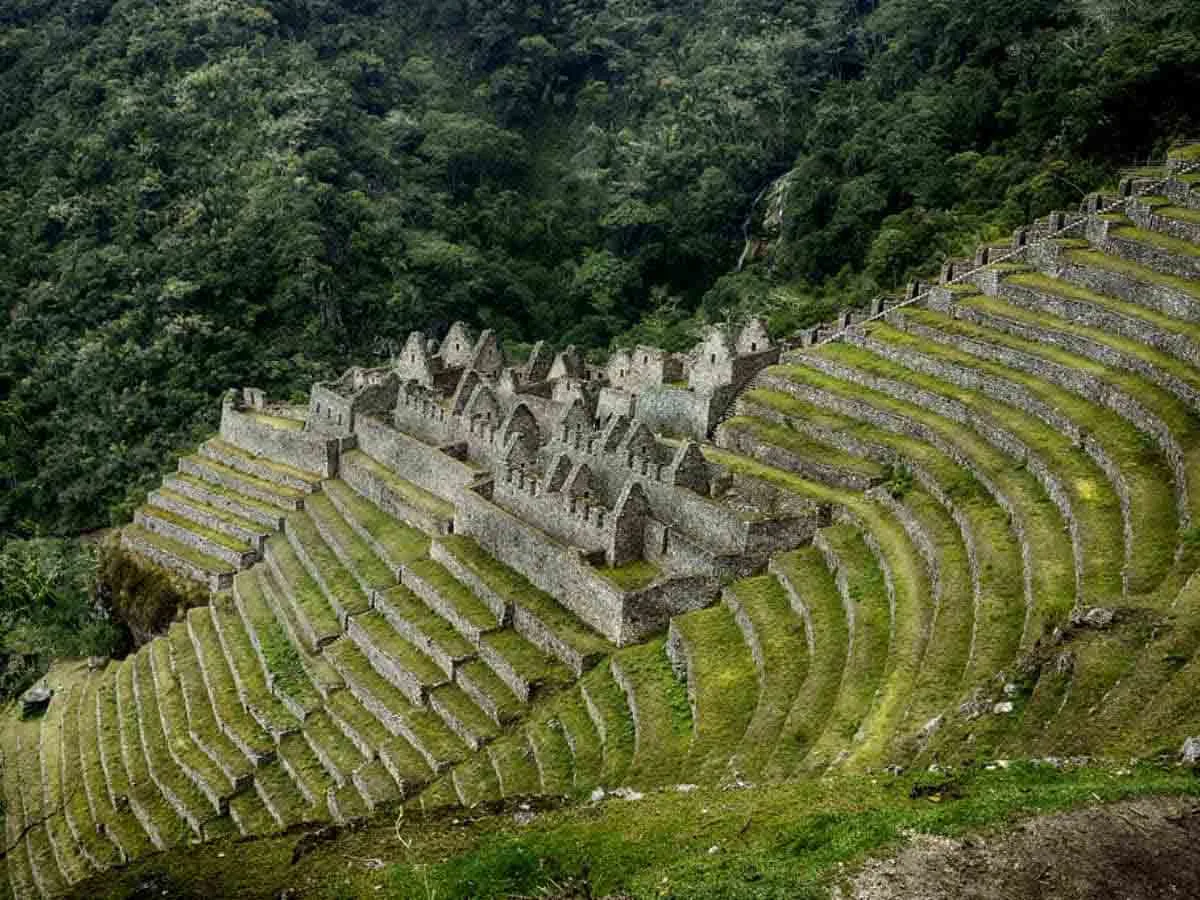
Wiñay Wayna Sunrise: Terraces, Mist, and Morning Light
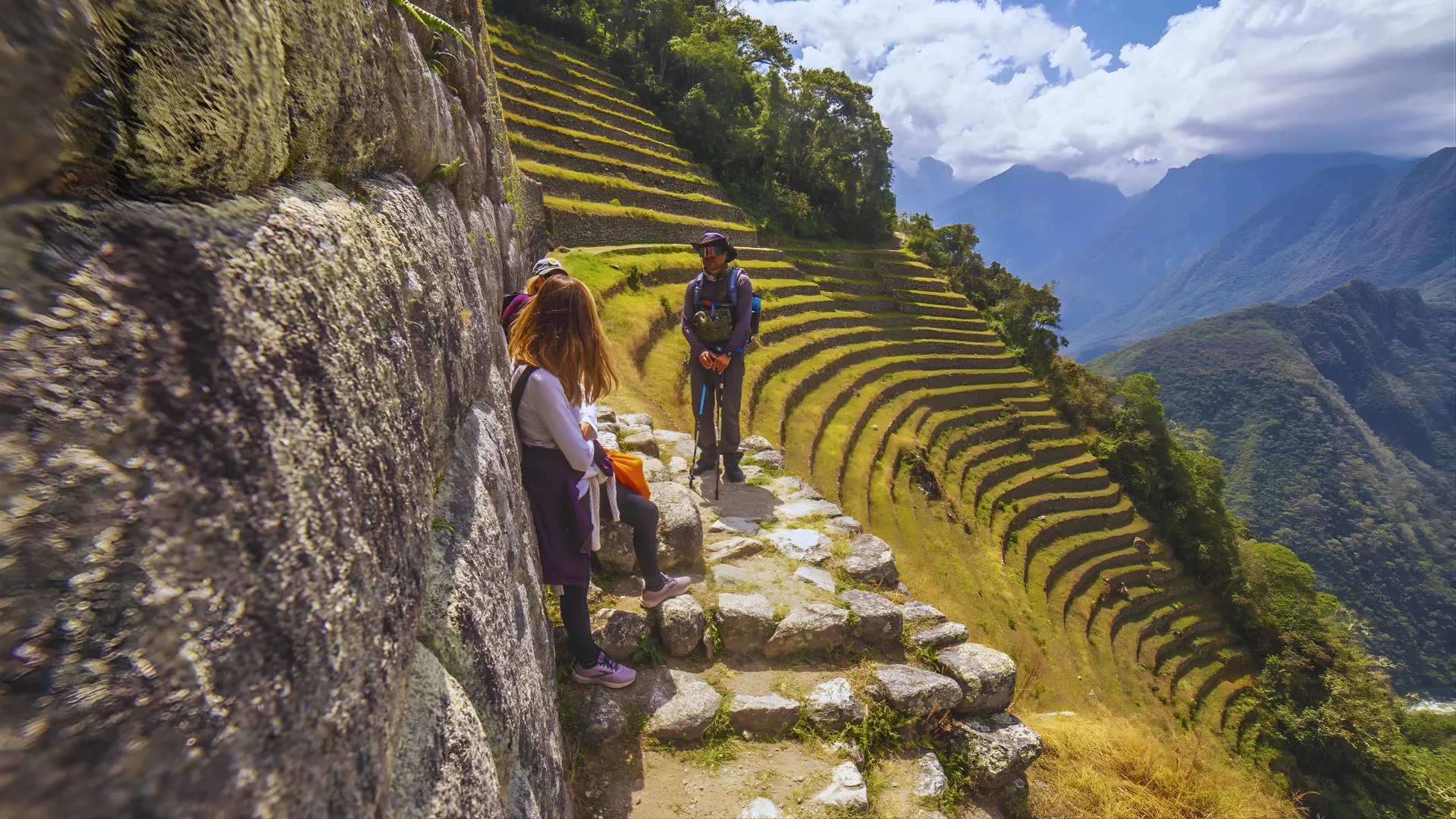
Sunrise at Wiñay Wayna feels introspective. Instead of dramatic distance, it offers layered intimacy terraces close enough to touch, mist drifting between stone walls, and light filtering softly across the site.
This setting is ideal for travelers who value atmosphere over scale.
Why Wiñay Wayna sunrise is ideal for panoramic sunrise photography
The terraces lie along the mountainside, and the morning mist in the back provides a good balance to capture a picture at Wiñay Wayna sunrise. This is one of the most balanced spots to capture a sunrise picture along the Inca trail.
Phuyupatamarca Sunrise: Above the Clouds
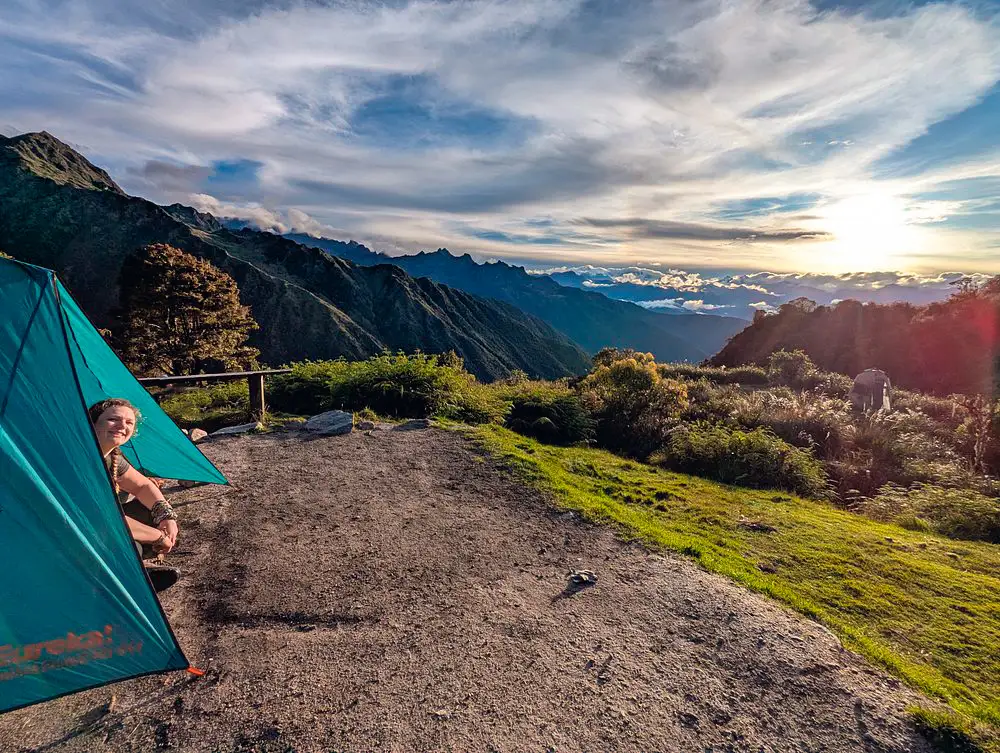
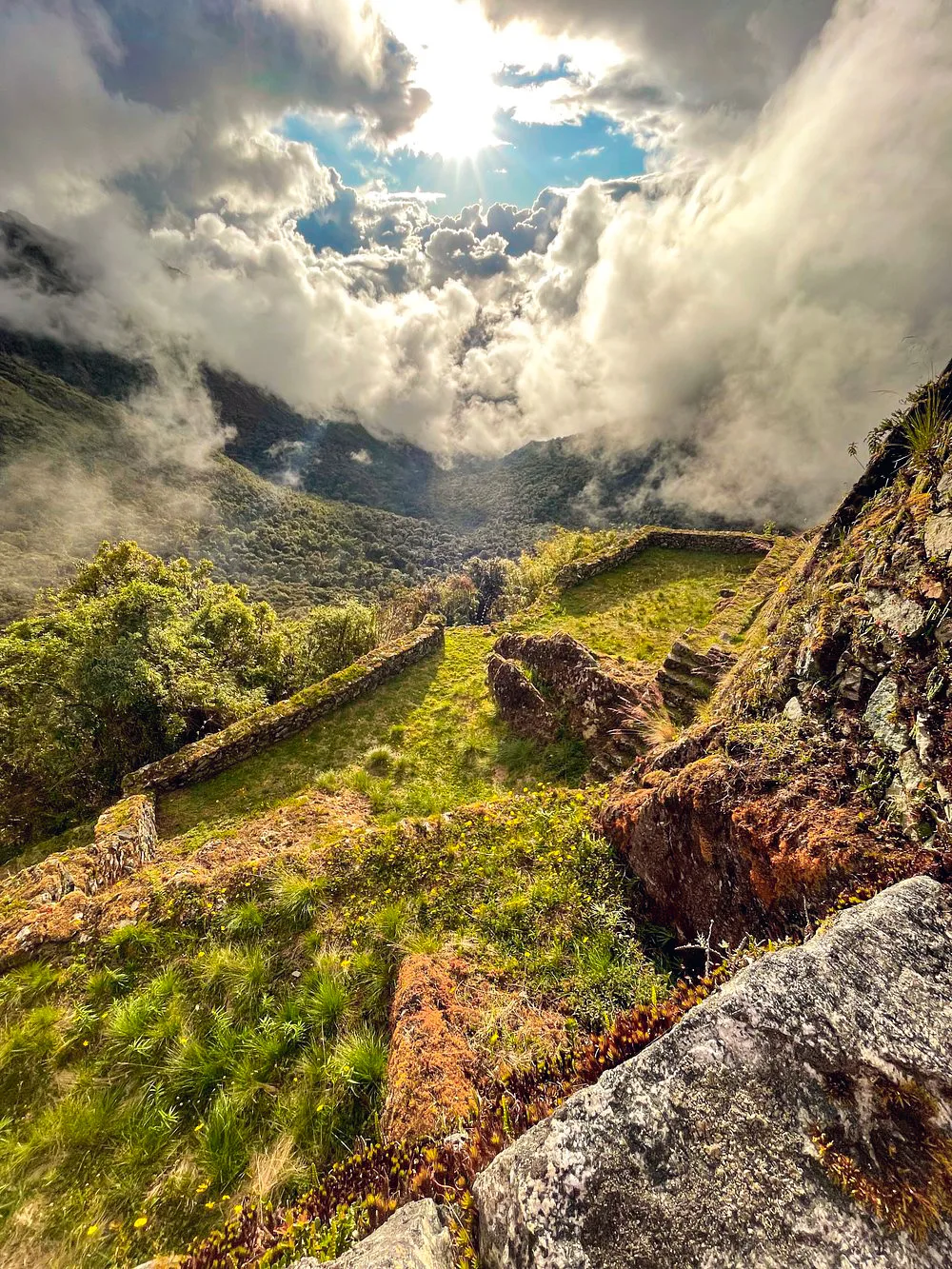
At Phuyupatamarca, the sun-rise often is above the clouds. It is as if one is separated from the world below. There is a strengthening of the feeling of elevation.
These conditions make for some of the most incredible scenic sunrise views found anywhere along the route.
How Phuyupatamarca sunrise creates some of the most scenic views on the Inca Trail
Cloud layers often settle below the site, creating a floating effect. This produces some of the most expansive inca trail scenic views and true panoramic sunrise inca trail moments.
Best Time to See Sunrise on the Inca Trail
While the dry season offers reliability, shoulder seasons often provide the most visually complex sunrises. Cloud movement, filtered light, and shifting visibility add depth and emotion that clear skies sometimes lack.
Understanding seasonal differences helps travelers set expectations and appreciate each sunrise for what it offers.
Seasonal Differences in Inca Trail Sunrise Conditions
Dry season offers consistent clarity, while shoulder seasons provide softer light and dynamic skies. Rainy season sunrises are less predictable but can be visually striking.
Dry season vs rainy season sunrise visibility
Clear skies favor long distance views, while cloud movement during wetter months can enhance depth and atmosphere.
Sunrise on the Inca Trail vs Sunrise at Machu Picchu
Sunrise experiences in Machu Picchu and the Inca Trail are two different occurrences. Sunrise in Machu Picchu is moments away because it is only two miles away. Many people are also witnessing this experience because this is among the destinations that tourists visit. At this time, there is more light.
At Machu Picchu, the sunrise is iconic but more organized. The opening times for entry, crowd movements, as well as the presence of crowd members influence the experience. Although the view is spectacular, the experience tends to be observational rather than participatory.
For most tourists, the sunrise on the Inca Trail is more personal and emotional in nature, while the sunrise at Machu Picchu is visual in nature. Both are complementary in nature but the impact of the sunrise on the Inca Trail is what lingers in the mind.

Sunrise on the Inca Trail to Machu Picchu: The Final Experience
Sunrise during the final approach changes the experience of arrival. Rather than materializing out of nowhere, as in the first and second approaches, the destination becomes a part of the landscape, not apart from it.
Inca Trail Sunrise to Machu Picchu: From Viewpoints to Arrival
Inca Trail sunrise to Machu Picchu permits the destination to open up slowly, further emphasizing the experience of the trip.
Why sunrise transforms the final approach to Machu Picchu
The gradual reveal adds to emotional resonance, making arrival rather than just an occasion, a process.

Why These Sunrise Viewpoints Add Value to an Inca Trail Experience
Sunrise spots along the Inca Trail are important because they give the trail new meaning. The trail becomes more than the mileage or the height attained. The trail now measures the height of understanding and awakening. Sunrise offers deliberate stopping points to pause from progressing. These are moments to observe.
These perspectives also shift the experience of the journey in terms of its emotional dynamic. The experience is, instead, segmented in terms of emotional high points set by the dawn instead of a continuous physical journey. Thus, the journey becomes a series of experiences instead of a destination-linked objective.
First of all, the sunrises are what fix memory in time. Later in life, people may not remember specific distances traveled or specific names of campsites, but they will remember being silent while the sun came over the Andes.
How Panoramic Sunrise Views Elevate the Inca Trail Journey
The Inca Trail is raised from being merely a way to reach Machu Picchu to being a truly memorable event through the scenic view options, particularly at sunrise. Geographically speaking, extended sight lines put tourists in a better position to understand the scale and configuration of the Andes, through which the path traverses.
When emotionally invested, sunrise panoramas offer opportunities for reflection. Watching the light gradually seep over the horizon promotes a presence, a presence that is often characterized as grounding or even transformative. This is particularly true during a moment that occurs when one’s mind is quiet and one’s surroundings appear untouched.
From the point of view of journey design, the sunrise points also encourage balance. They balance the physiological aspect of the journey by ensuring that it is not purely endurance. That is why the Inca Trail is actually very appealing to different people.
Ultimately, it is because of the panoramic views of sunrise that it will be remembered not merely as a trek to Machu Picchu, but one that is defined by light, silence, and perspective, which are what make it so significant.
Frequently asked questions about The Best Panoramic Points to Observe Sunrise on the Inca Trail
The most iconic sunrise viewpoint on the Inca Trail is Inti Punku, also known as the Sun Gate. From here, travelers witness Machu Picchu emerging gradually as the first light reaches the valley. Other exceptional sunrise viewpoints include Wiñay Wayna and Phuyupatamarca, each offering a different type of panoramic experience.
Sunrise on the Inca Trail generally occurs between 5:15 a.m. and 6:30 a.m., depending on the season. During the dry season (May–September), sunrise tends to be earlier and clearer, while in the rainy season (November–March), it may occur slightly later with more cloud cover.
Yes, seeing sunrise on the Inca Trail typically requires early wake-ups, especially on days with higher elevation or key viewpoints. Most sunrise moments occur shortly after leaving camp, making early starts essential to reach panoramic points before the light fully rises.
For many travelers, sunrise on the Inca Trail feels more immersive and meaningful than sunrise inside Machu Picchu. On the trail, sunrise unfolds in silence, with fewer people and uninterrupted panoramic views. Machu Picchu sunrise, while iconic, tends to be busier and more structured.
Yes. Sunrise conditions on the Inca Trail are ideal even for beginner photographers. Soft light, long shadows, and natural cloud movement help create balanced images without harsh contrast. Many of the best sunrise photos are captured with smartphones, especially at panoramic viewpoints like Inti Punku and Wiñay Wayna.


