


Descubren orquídeas nunca vistas en Machu Picchu y los Andes
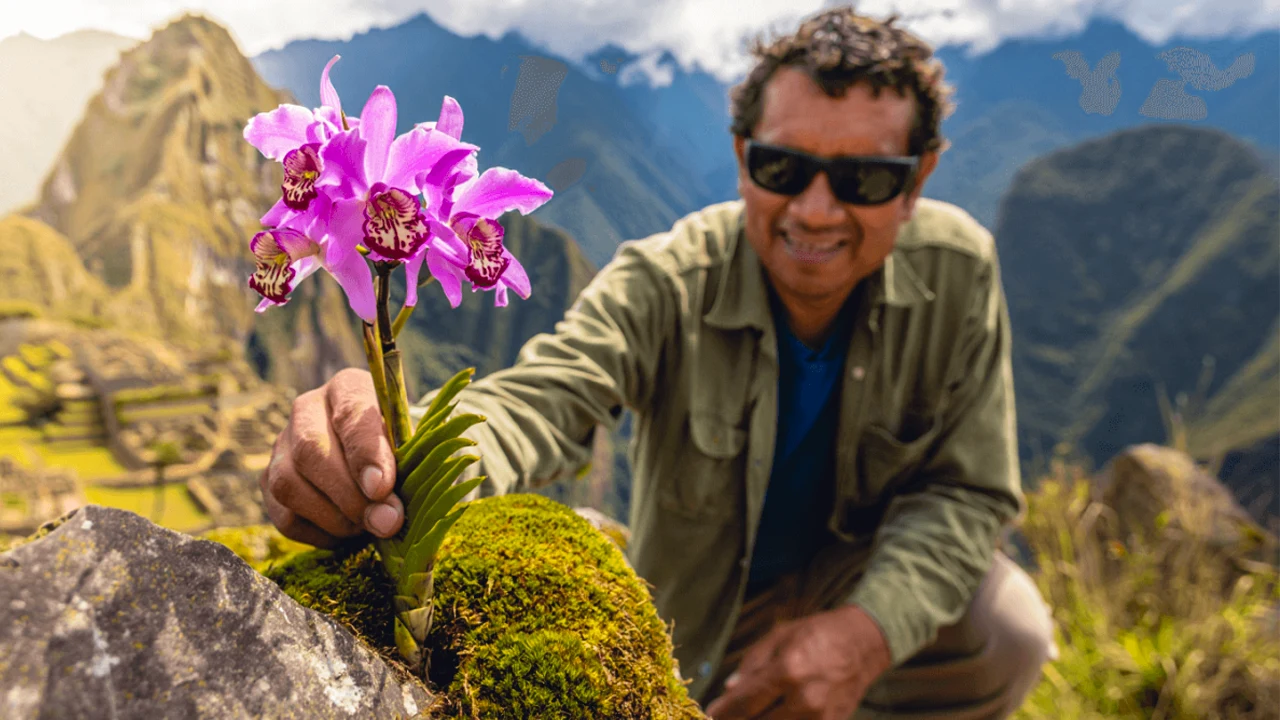

Researchers from Peru, together with experts from other countries, made a great discovery. They found new orchids that no one had described before. These plants grew in delicate areas of the Andes. That is why the discovery is so remarkable. It also reminds us of the importance of caring for these places.
Discoveries in Machu Picchu and high altitude areas
For example, one of the orchids was found near Machu Picchu. It lives in high mountains, between 2,000 and 2,500 meters. There is a lot of fog there almost all year round. Thanks to its shape and flowers, scientists were able to recognize it easily. Thus, they knew that it was not the same as other species.
This case clearly demonstrates that even tourist sites hide natural treasures. That is why it is essential to take care of plants while visitors are present. In addition, Machu Picchu stands out as a place rich in South American orchids.
New species in parks and cloud forests
Meanwhile, on the eastern side of the Andes, teams found more orchids. These grow in misty forests. Many live on large trees. Others grow on moss-covered rocks.
Their flowers are usually small. However, they are very well adapted. They also depend on local insects for pollination. For this reason, they live only in small areas and are fragile.
Scientists warn of a risk. If there are fires or logging, these plants could disappear. Changing climate also affects them. That is why it is urgent to include them in official lists.
Working with communities and how to identify a new species
Something important happened here. Indigenous communities helped a lot. They showed us paths, flowering seasons, and local names. Thanks to that, the search was faster and more accurate.
To confirm a new plant, experts follow several steps. First, they carefully observe its shape. Then, they compare samples with herbariums. Sometimes, they also use genetic testing. Only after all that do they accept the species as new.
Current science combines fieldwork and laboratory work. This helps to avoid mistakes. It also helps to distinguish a new species from a simple variation.
Global impact and ties with Europe
With these findings, Peru reinforces its reputation for orchid diversity. That is why universities and botanical gardens are showing interest. In Europe, joint projects are emerging. Programs are also being created to conserve plants outside their natural habitat.
These exchanges follow strict rules. They seek to protect species. They also promote responsible cultivation. For enthusiasts, this does not mean buying these orchids soon. However, it does encourage further study.
Challenges for conserving orchids
Discovering new species changes conservation plans. It allows for better choices about which areas to protect. Even so, a protected area is not always enough.
Money and trained personnel are needed. It is also necessary to monitor the plants for many years. In addition, it is essential to work with communities and park rangers. Controlling illegal harvesting is fundamental.
Climate change adds another problem. It changes rainfall and temperature. As a result, fog decreases. This leads to a reduction in habitats. Data from Peru helps to predict these changes.
What’s next for science
New orchids are very valuable. They help us study nature and its relationships. They also open doors to new research. In addition, they strengthen the work between scientists and communities.
The work continues. Research is being conducted in the field and in the laboratory. The goal is clear: to turn knowledge into real actions to protect flora.
Source: telealmerianoticias.es