


Where to Exchange Money in Puno Before Traveling to Titicaca
If you’re traveling from Puno to Amantani or Taquile, it’s a good idea to get enough soles in cash before heading to the islands. In downtown Puno, you’ll find currency exchange offices, banks, and ATMs where you can exchange dollars or withdraw money in the local currency. On the islands, however, access to financial services is very limited, so it’s not a good idea to rely on cards or expect to find an ATM upon arrival.
In this blog post, you’ll find out where to exchange dollars for soles in Puno, which options typically offer the best exchange rates, how to use ATMs with foreign cards, and what to keep in mind if you need to get cash at nearby airports. We’ll also explain how much money you should bring to the islands and which denominations are most practical for paying for lodging, meals, handicrafts, tips, and other expenses during your visit to Lake Titicaca.
What is the official currency of Peru?
The national currency in Peru is called the Peruvian sol and its symbol is S/, the international abbreviation is PEN. It is the only national currency that can be used officially, and although some tourists can accept dollars, all your expenses while traveling in Puno and especially in Amantani or Taquile will be made only in soles.
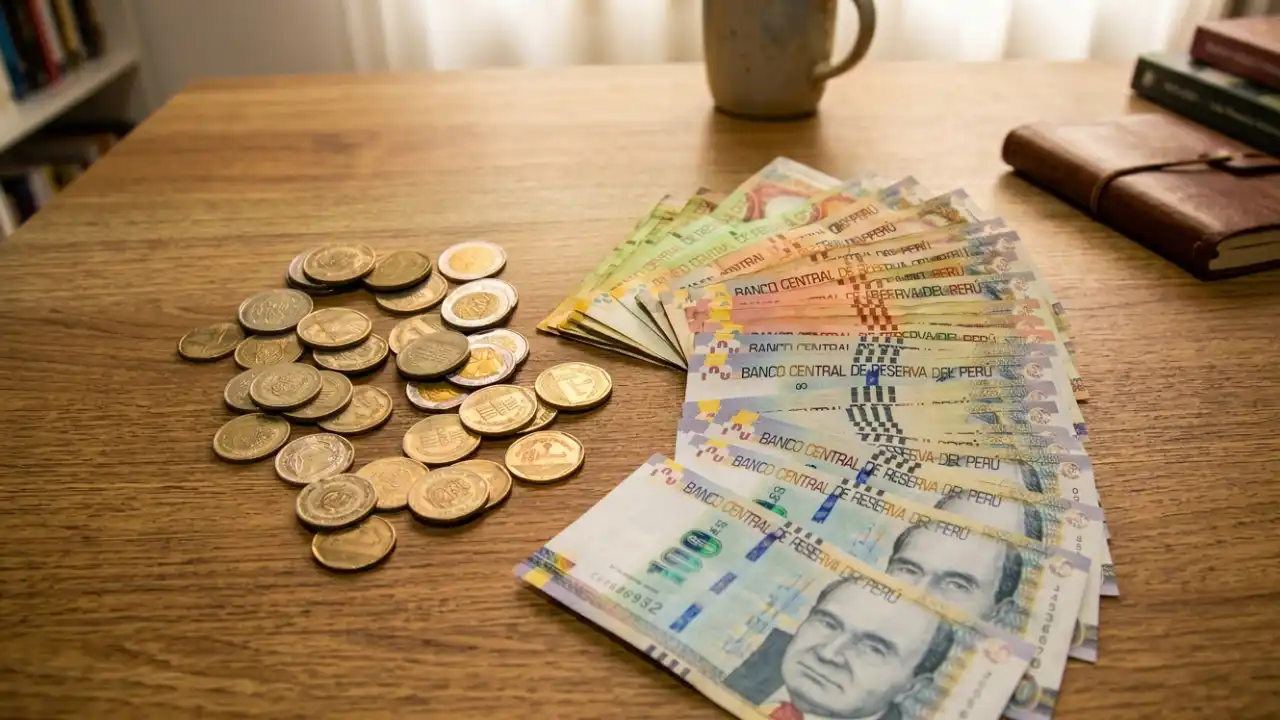
The sol is divided into 100 cents and has well-defined denominations of coins and banknotes in circulation:
Coins: 10, 20, 50 cents; S/ 1, S/ 2, and S/ 5.
Banknotes: S/ 10, S/ 20, S/ 50, S/ 100, and S/ 200.
For tourists, it is easier to get acquainted with S/10, S/20, and S/50 notes, since they are the most common ones in everyday life. In turn, coins will be helpful in case of small tips, tickets for local public transport, or small purchases in markets or street vendors’ kiosks.
Helpful tip: You can exchange the Peruvian soles that remain after your stay into dollars or any other currency in a currency exchange office before departure from the country, but it would be more appropriate to spend/exchange them while staying in Peru, because it will be difficult elsewhere.
Exchange services available in Puno
There is an abundance of finance-related services in the downtown area of the city of Puno. Currency exchange offices, banks, ATM machines, and even street money changers can be found in this area, which encompasses the Main Square and the walking street called Jirón Lima (Lima Street).
In order to pick the right option for you, it’s necessary to consider your preferences and needs in advance. For instance, if you come to Puno with cash in U.S. dollars, if you want to withdraw money directly from your account, or if you’d like to perform your transaction in a more official manner with the involvement of a bank.
Currency Exchange Centers in Downtown Puno
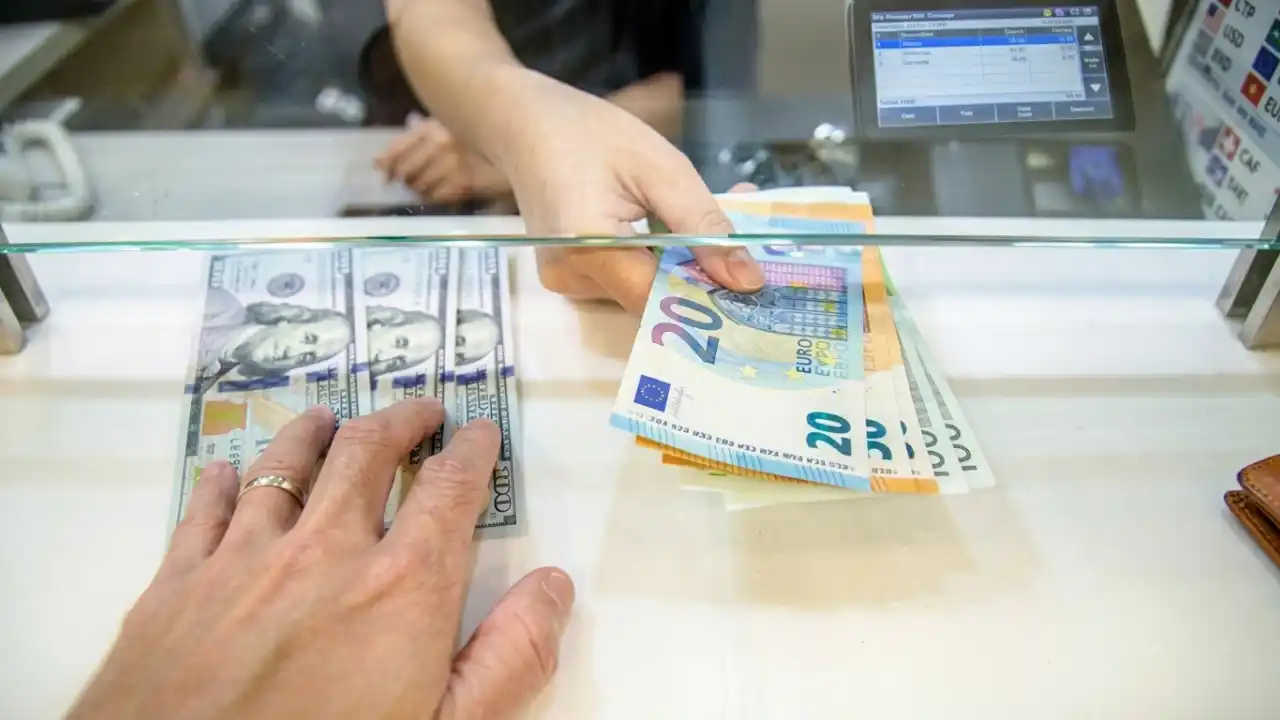
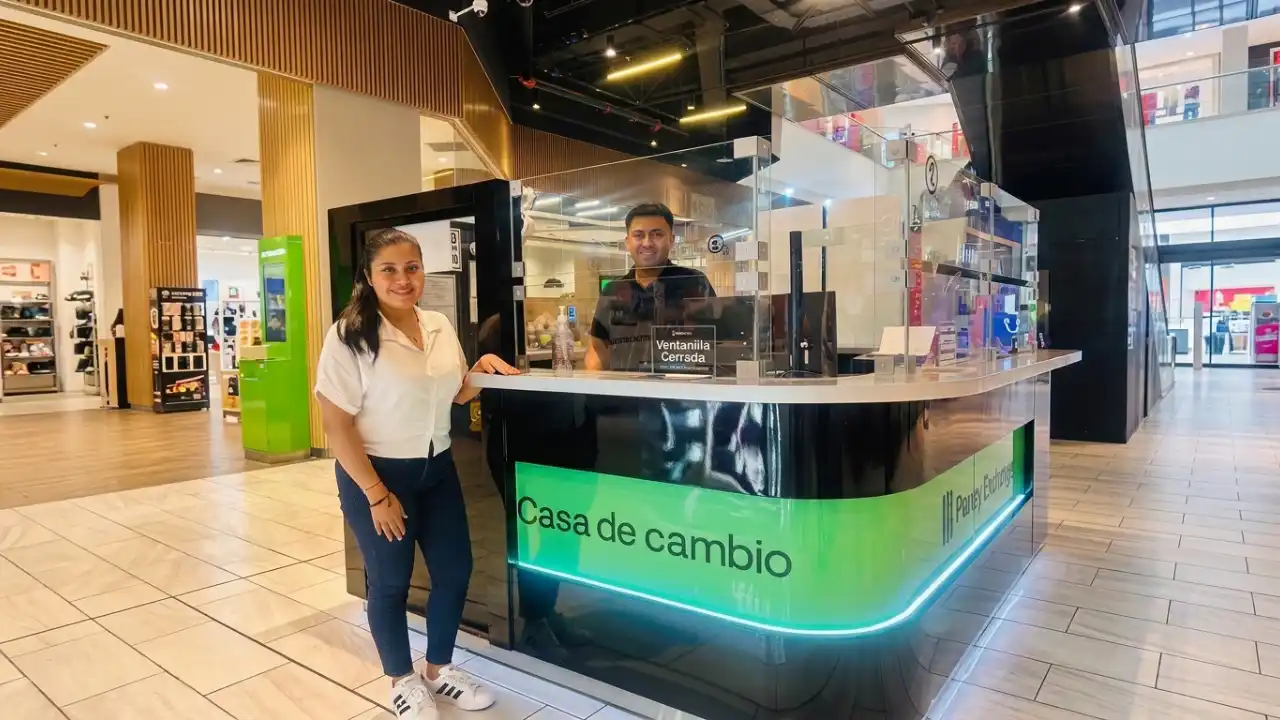
Currency exchange centers situated at the very heart of the city offer better exchange rates than the ones at the airport and in the hotels because their income depends on frequent deals and their competition. Usually the exchange rate is written on a special board, services are fast, and there is usually no additional charge for using their services, profits are earned on the difference between the price of buying and selling the dollar.
However, it is best to choose currency exchange offices that have a counter, many customers, and some kind of identifying sign, not just the exchange rate posted on the door.
Banks
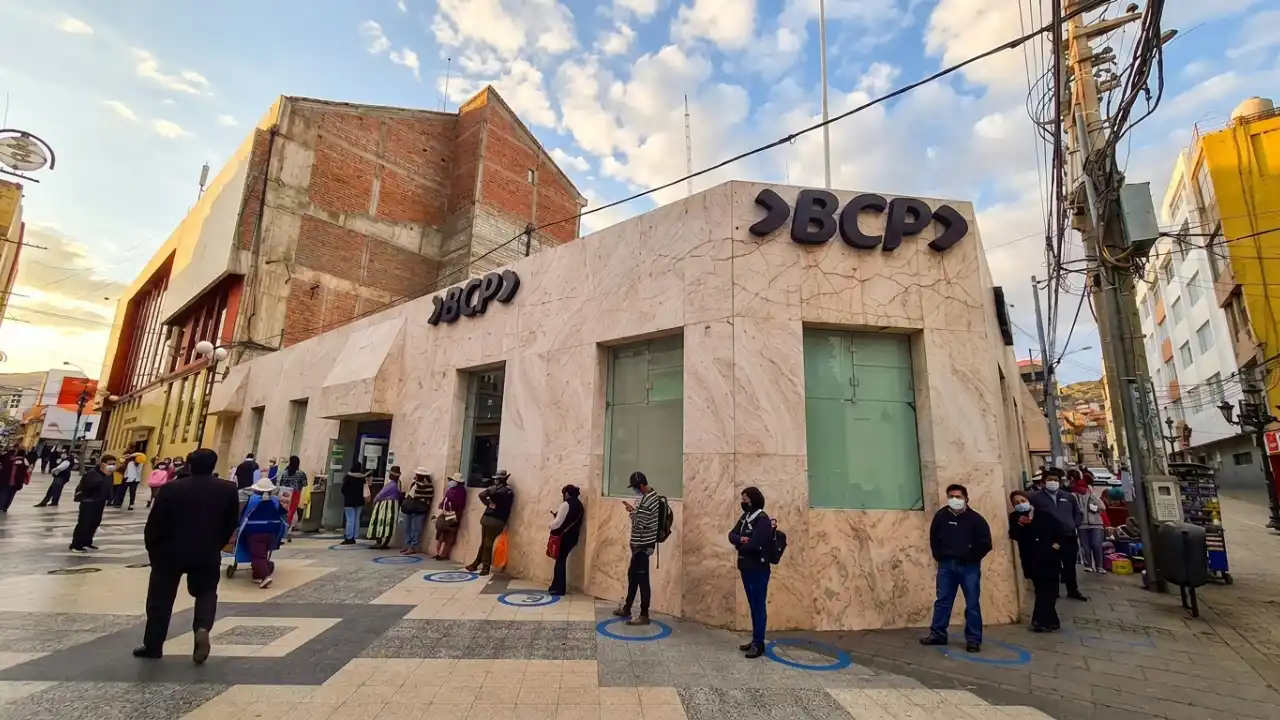
Banks like BCP, Interbank, BBVA, Scotiabank, and Banco de la Nación operate in the center of Puno and are a secure choice for changing money or performing more official transactions. However, the transaction procedure in the bank is usually slower than that in the money changing service offices, working hours are shorter, and the offered exchange rate is not as favorable.
For tourists, the biggest advantage of banks is the presence of the ATMs rather than the money changing services.
ATMs
The ATMs are the easiest means to get soles right out of your home bank account without the need for carrying cash dollars with you from home. The city of Puno have few ATMs available, although not as many as those found in big destinations such as Lima or Cusco.
Different banks issuing their ATM cards and different banks abroad have different fees, different withdrawal limits, and different conditions, and therefore it would be useful to look at the screen prior to confirming the operation.
Street Money Changers
There are also street money changers operating in the downtown area of Puno, who are sometimes recognizable by their vests. Some of these people operate fairly regularly and have a name within the community; however, their reliability is more difficult to confirm than the reliability of a well-established exchange office.
Most tourists will benefit more from using currency exchange offices that have actual physical locations as opposed to money changers on the streets.
Digital currency exchanges in Peru
Besides from the physical options in Puno, digital currencies to exchange money have been on the rise recently in Peru: 100% online platforms which enable you to buy and sell dollars via a website or mobile application without needing to go to any physical place.
Those travelers who calculate their expenses before the trip can benefit greatly by using those platforms to secure a more advantageous exchange rate in order to use in the cities of Puno, Lima, or Cusco.
Helpful tip: Digital currencies to exchange are a very practical tool to plan ahead the budget for your trip in advance, coming from your own country, however, it does not replace the need to have cash in soles in Peru, especially in Amantani or Taquile when there is absolutely no way to make use of financial services at all.
How the Digital Currency Exchanges Work in Peru?
The procedure is quite easy: although you must have a banking account at a Peruvian bank.
You just register on the website, specify how much money you want to exchange, the website provides you with the current exchange rate, you confirm the operation, and transfer money from your bank account in the source currency. As a result, the website transfers the corresponding amount of money in soles into your bank account.
The most of such websites operate mostly with the U.S. dollar – Peruvian sol (USD/PEN) currency pair, which makes up the majority of the market volume.
Which Banks They Work With
Almost all of the digital currency exchange platforms that are operating in Peru are integrated with the biggest banks that are functioning in the local financial system. Banks with which they work best are:
- BCP (Banco de Crédito del Perú), Interbank, BBVA Perú, and Scotiabank Perú.
Most Reliable Digital Currency Exchange Platforms
From among the platforms that are most reputed in Peru, the following can be listed:
- Rextie, Kambista, TuCambista, TKambio, and Cambio Seguro.
All of these platforms are under regulation and supervision of SBS, which is the Peruvian financial system regulatory body.
Which are the best currency exchange centers in Puno?
The most advantageous currency rate for those who bring cash in U.S. dollars can be found in currency exchange services located in the center of the city; ATMs can serve as an alternative for those who would like to use the money taken from their bank account.
To choose the most advantageous currency rate, it is important to compare them in two or three different places, which will not take much time; just a few minutes will be enough for making a good decision if you are going to change the money needed for several days.
Always count the money before leaving the counter where it was exchanged, and never believe that there is a currency rate that is better than the others – usually, such offers are a sign of trouble.
Currency exchange options available in airports near Puno
Since there is no airport in Puno itself, most visitors that come to the islands use either Juliaca or Cusco airport. It is worth mentioning that currency exchange offices in airports normally provide worse exchange rate compared to city center exchange offices due to absence of strong competition and immediate needs of travelers.
Therefore, it is recommended to exchange only what is really necessary in an airport in order to pay for transfer to Puno and first expenses in the city center.
Juliaca Airport
Juliaca Airport is the nearest airport to Puno. Nevertheless, don’t make plans based on the availability of an exchange office upon arrival, since the services provided by the airport might be different.
In case you have to get money right after landing for your further transportation to Puno, it is more reasonable to check in advance what kind of financial services are functioning at the airport or just take some cash in soles or dollars for the trip from the airport to Puno, and exchange the rest upon your arrival in Puno.
Exchange of Money when Travelling to Puno from Cusco
If your trip includes a stay in Cusco and then travels to Puno, you can exchange or withdraw some cash in soles in Cusco airport for your first hours of travelling. But still, even in case you have enough money to pay for the first hours of your trip, it is more profitable to compare exchange offers in Puno, where you’ll get better rates than anywhere else.
Typical Exchange Rates and Fees in Peru
Understanding the different types of fees will help you save more of your money.
• ATM operator fees: Most Peruvian bank ATMs charge a fee of between S/ 18 and S/ 36 per withdrawal for foreign cards. Airports and tourist areas have the highest fees. Banco de la Nación’s MultiRed ATMs do not charge fees for transactions with foreign cards, although the limit is around S/ 400.
• Withdrawal limits: At many ATMs, the limit is S/ 400, while at some it goes up to S/ 700 (BCP and BanBif typically allow the higher amount). Due to the low limits, you’ll pay the surcharge more often; so, we recommend withdrawing the maximum amount each time to minimize fees.
• Fees charged by your bank: Many cards charge a fee for transactions abroad or a flat fee for ATM withdrawals, which can exceed 5–10 USD per withdrawal.
Always check this detail before traveling; there are also travel cards that eliminate these fees entirely.
Comparison of Options for Obtaining Soles in Puno
The below table is meant to serve as an overview of the various methods used to acquire soles in Puno. The prices quoted herein keep varying depending on the day and the service provider; therefore, it is not a fixed price but just a guide.
| Option | Exchange Rate | Costs | Best For |
| Currency exchange office in downtown Puno | Generally competitive | Margin included in the exchange rate, usually with no separate commission | Exchanging U.S. dollars in cash |
| ATM | Depends on the bank network and your card | May include a local ATM fee and a fee from your own bank | Withdrawing Peruvian soles directly from your account |
| Bank teller | Variable, usually less favorable | Depends on the bank, typically with no separate commission | Formal transactions that require bank support |
| Airport currency exchange counter | Generally less favorable | Higher margin included in the exchange rate | Getting a small amount of local currency upon arrival |
| Informal street money changer | Variable | Difficult to verify | Not recommended for most travelers |
How do the exchange rates at the airport compare to those in Puno?
In most cases, it will be better to change money in the city center rather than at the airport since currency exchange offices located at the airports (Juliaca and Cusco) offer somewhat worse currency exchange rate than currency exchange offices in downtown Puno.
The reason for this phenomenon is that there is less competition among the service providers at the airport, as well as the fact that clients of such exchange offices have the urgent need for money that prevents them from comparing the rates of different offices before the choice is made.
The difference between the two types of services is not that significant if a traveler exchanges some minor amount of money, but it gets bigger with the increase in the sum of the money exchanged.
How much local currency should I bring for a trip to Puno?
It all depends, first of all, on the items which are already covered in your tour package. Should you have transportation, accommodation at a local family home, and meals already paid for as part of your tour, the money you take will mostly go for handicrafts, extras, tips, and whatever personal expenses you might run into.
In case you travel independently, or in case you have to pay for accommodation separately from your host family, it is better to take substantially more money, depending on the number of nights you have to spend at the local home and meals that you need.
Beside that, you may think of how much money you will need beyond the islands:
•Local transportation: taxis, motorcycle taxis, or mini buses from town to the port of departure.
•Dinners not covered in your package: should any of your dinners in Puno not be included in your package.
•Extra entrance tickets or tours: some sites or tours require paying a cash entrance ticket.
•Tips: for guides, boat drivers, and local families as this is a custom which holds great value in community-based tourism.
•Handicrafts: woven products and souvenirs which you will purchase in Puno or in the islands.
•An extra cushion: some extra cash which may be used for unforeseen expenses as once you’re on the island there will be no further way of getting or changing any cash.
In any event, it is always better to take a little more than what you believe would be the minimum requirement. You can never run out of money on Amantani or Taquile but having some extra money at the end of your trip will certainly cause no problems.
Tips for Exchanging Money Safely
• Compare exchange rates when exchanging a large sum: Checking the exchange rate at two or three different currency exchange points in the city center takes no time at all but can make a real difference in how much money you will get in the end.
• Count your money at the cash desk: Do not leave a currency exchange point, a bank or an ATM without counting the bills you have been given.
• Use ATMs in busy places and during the daytime: preferably in the bank, in a shopping mall or in a place where there is surveillance camera, rather than isolated ATMs in the evening.
• Cover the PIN code when entering it, be cautious with people offering to help you use the machine.
• Inform your home bank about your upcoming trip to Peru in order to prevent them from blocking your card because of strange transactions abroad.
• Keep an additional card apart from the primary card to be ready for the situation of losing one of them.
• Bear in mind that fees, commissions and conditions of services may vary: check them every time you use the bank, ATM or currency exchange point.
Budget Tips: Backpackers, Couples, and Families
Backpackers and Independent Travelers
Should you be traveling alone and not with an all-inclusive travel group, then you will have to be prepared to spend money directly on accommodation with a host family, food, and transportation to the islands. It would be wise to calculate how much you normally spend daily in Peru and allocate some additional amount as prices in the rural regions such as on the islands could be different from the city prices.
To keep your daily spending low, use hostels, eat at local markets, and travel with shared transportation. Use ATMs without commission charges or those that offer high withdrawal limits; withdraw money in small portions to save on commissions and calculate your daily cash budget.
Couples
If couples are going on a group tour, then what should be done is to simply determine how much money will be required for both of them by multiplying the cost of the day by the cost of the tip, drinks, and souvenirs.
Visiting restaurants and touring around the islands is a great way to optimize your budget and enjoy the best of Puno. Allocate the money between the two of you and carry two credit cards in case one of them gets declined. Use your credit cards for hotels but pay in cash for excursions and dining.
Families
Traveling families with children may require additional money in case of some unforeseen situations (medication, snacks, etc.) and because children usually want to buy some souvenirs or just taste something new during the travel. You should calculate how much money each member of the family will have, not only the total sum for the entire family.
It is better to have several credit cards, additional money in case of some unexpected situations and small bills for snacks, restrooms (it might be very expensive) and other purchases. Withdrawing large amounts of cash less frequently reduces both fees and the time spent looking for ATMs.
Frequently asked questions about Where to Exchange Money in Puno Before Traveling to Titicaca
No. Islands on Lake TIticaca have very limited financial services, so bring all the cash in soles (PEN) you’ll need before leaving Puno.
Exchange centers near the Plaza de Armas typically stay open long daytime hours, seven days a week. Banks keep shorter, weekday-only hours, while ATMs run 24/7.
Exchange houses in the city center usually offer the most competitive rates, since they compete directly with one another. ATMs are a solid alternative if you’d rather withdraw soles directly.
Airport counters, in Juliaca or Cusco, typically offer less favorable rates than exchange centers in downtown Puno, since they face less competition and serve travelers who need cash right away.
Exchange only a small amount at the airport to cover your transfer, then handle the rest in downtown area, where rates tend to be better.


