

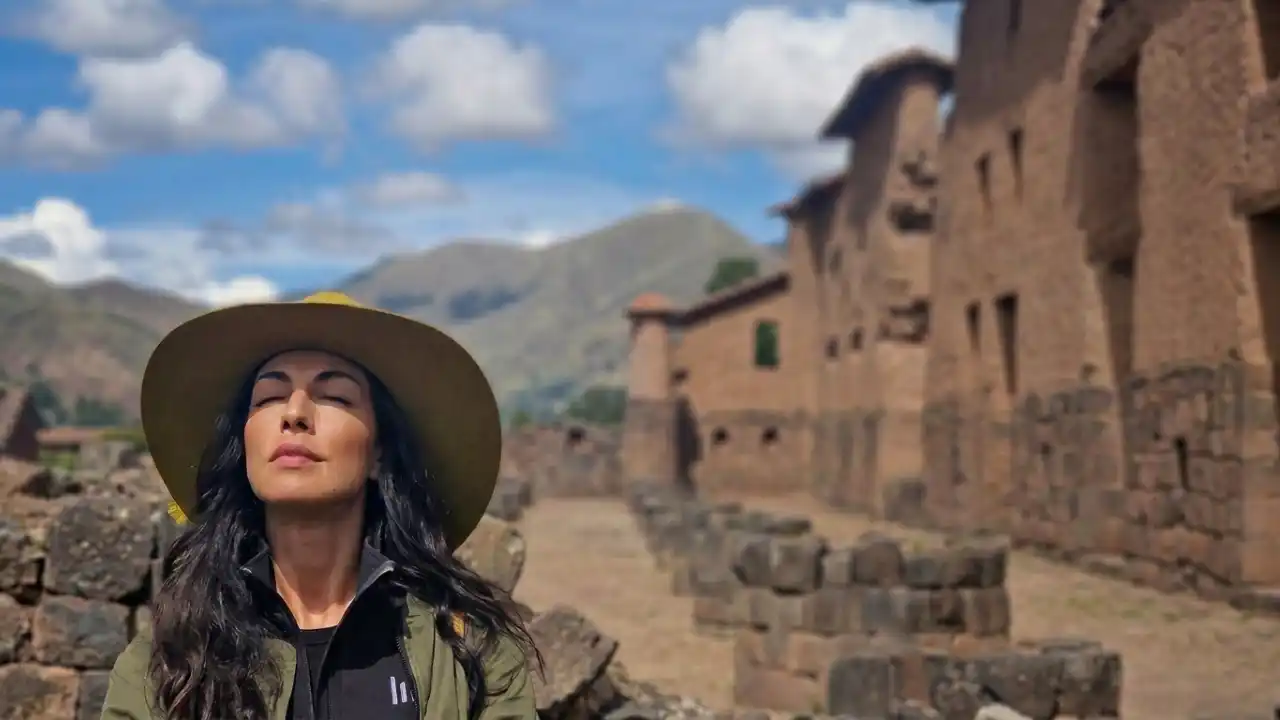
Accommodations Near to Raqchi Archaeological Site
If you’re planning a visit the Raqchi Archaeological Site and want to make the most of your time in this corner of Cusco, you’ve probably asked yourself the same question as many travelers: Where can I find a place to stay near Raqchi?
While most tourists visit the Temple of Wiracocha in just a couple of hours, with little time between stops on a long-distance tour to Puno; staying overnight just a few minutes from the archaeological site is an option you might want to consider, depending on your schedule and budget. The town of San Pedro and other nearby towns also have tourist attractions that you can explore and that are sure to amaze you.
In this guide, we’ll tell you about all the lodging options available near the Raqchi Archaeological Site, from the most authentic to the most comfortable.
Accommodations Near to Raqchi Archaeological Site
If you’d prefer to have specific names before booking, here’s a selection of accommodations located in the area, listed in order of proximity to the archaeological site:
Casona Checacupe
It’s located in the picturesque colonial town of Checacupe, famous for its Inca suspension bridge and Baroque church, about 19 kilometers from Raqchi. It’s a restored mansion with a garden, free private parking, a restaurant, a bar, and a tour planning service.
This hotel is an interesting option if, in addition to Raqchi, you want to explore Checacupe or use the location as a starting point for a trip to the Mountain of Seven Colors.
Details: Traditional inn/country house near the colonial bridge and the road to Palccoyo or Vinicunca.
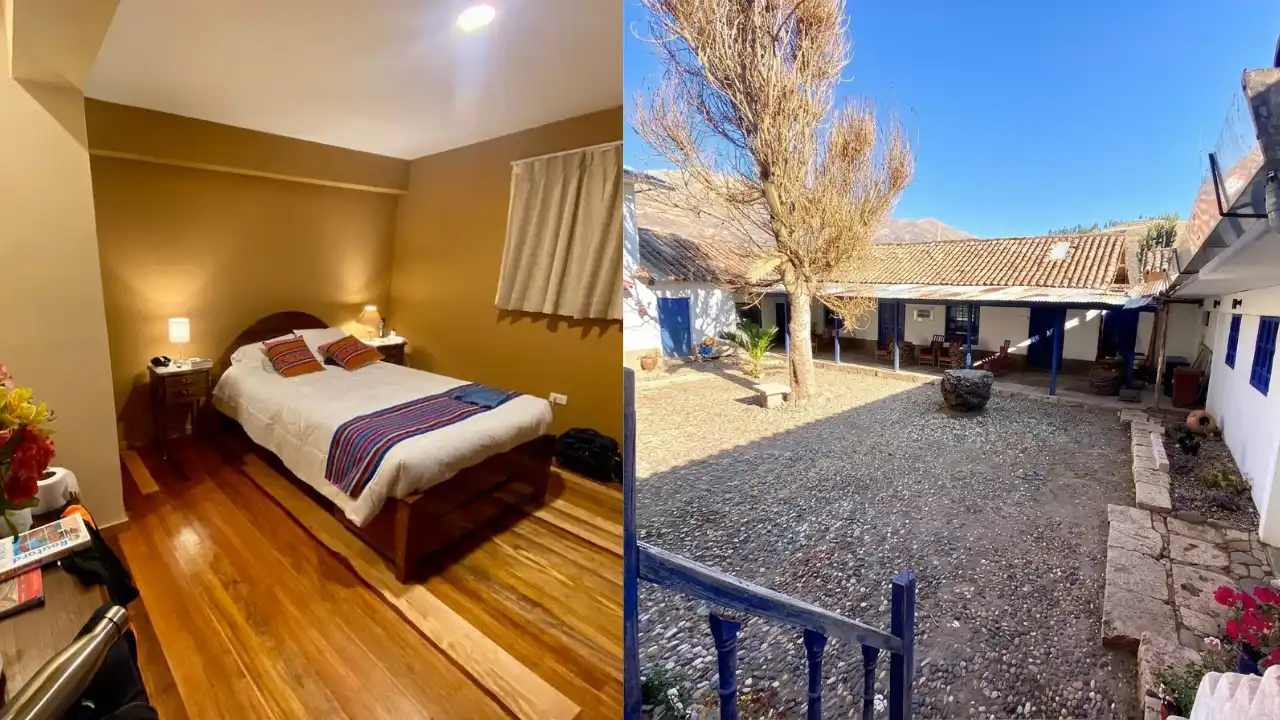
Room Options, Prices and Address
Rooms: Standard Twin or Double Room, Family Room and Traditional Guest Room with Shared Bath Options.
Price range: $25 – $40 USD per night
Address: Checacupe S/N, Checacupe 08230 Peru. Canchis Province, Cusco.
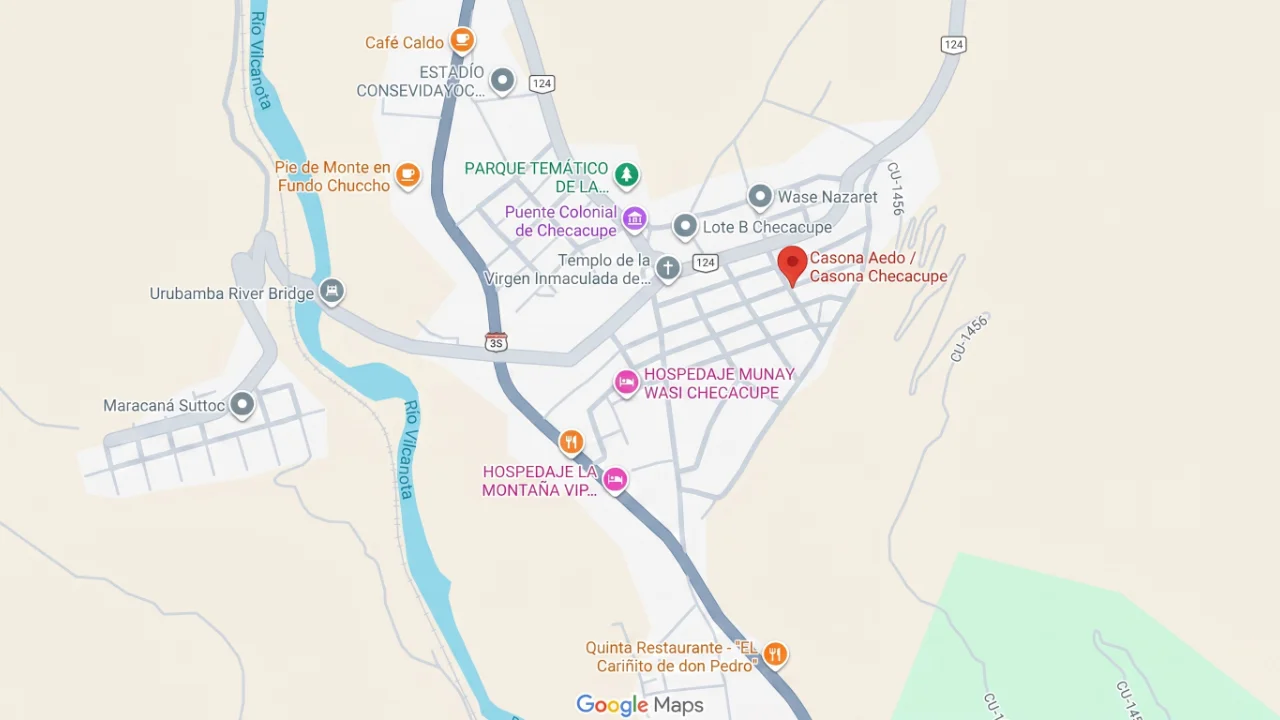
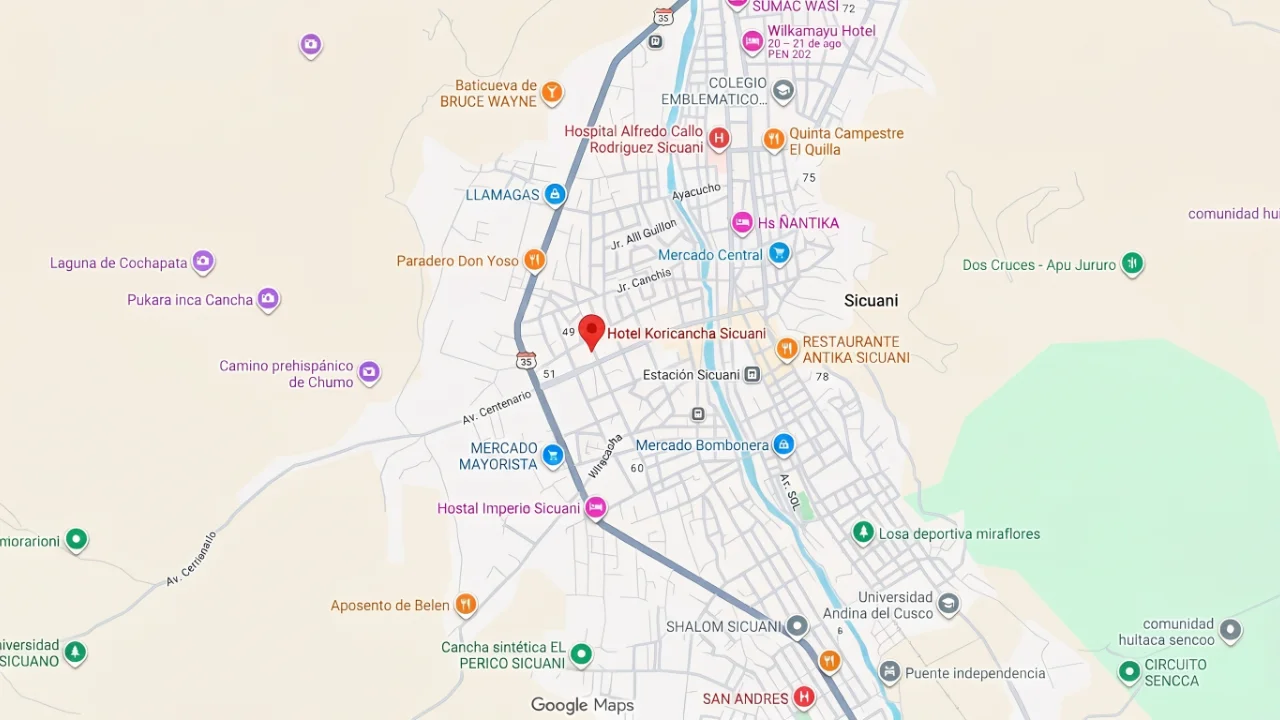
Hotel Koricancha
Located in Sicuani, about a 15-minute drive from the Raqchi ruins. It offers family rooms with balconies, breakfast included, Wi-Fi, and free parking, as well as a barbecue area for guests.
It’s a practical option if you’re traveling with a group or family and are looking for amenities similar to those of a city hotel.
Details: A comfortable, centrally located option in Sicuani for family or business trips.
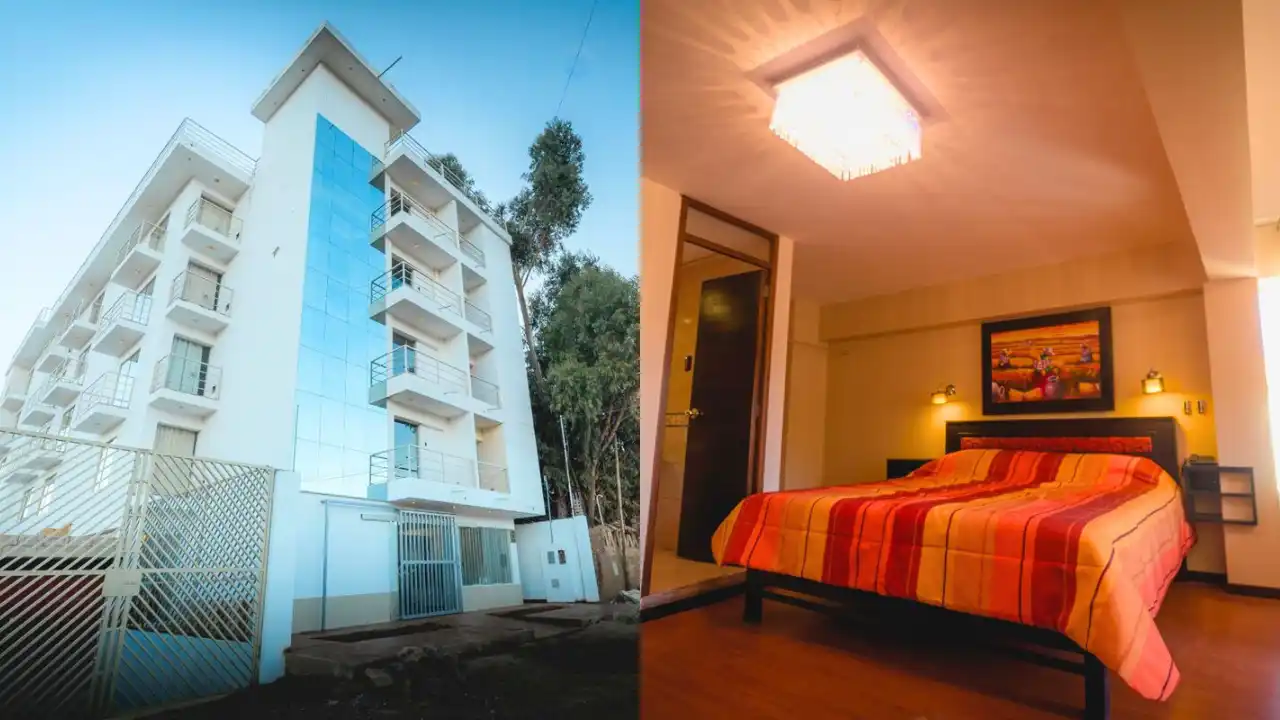
Room Options, Prices and Address
Rooms: Standard Single Room, Standard Double or Twin Room with Balcony, Family Room.
Price range: $35 – $50 USD per night
Address: Martin Chavez Street, No. N/A – Sicuani. One block from the Túpac Amaru Stadium, block 4 of Avenida Centenario, Sicuani, Canchis Province, Cusco.
Wilkamayu Hotel
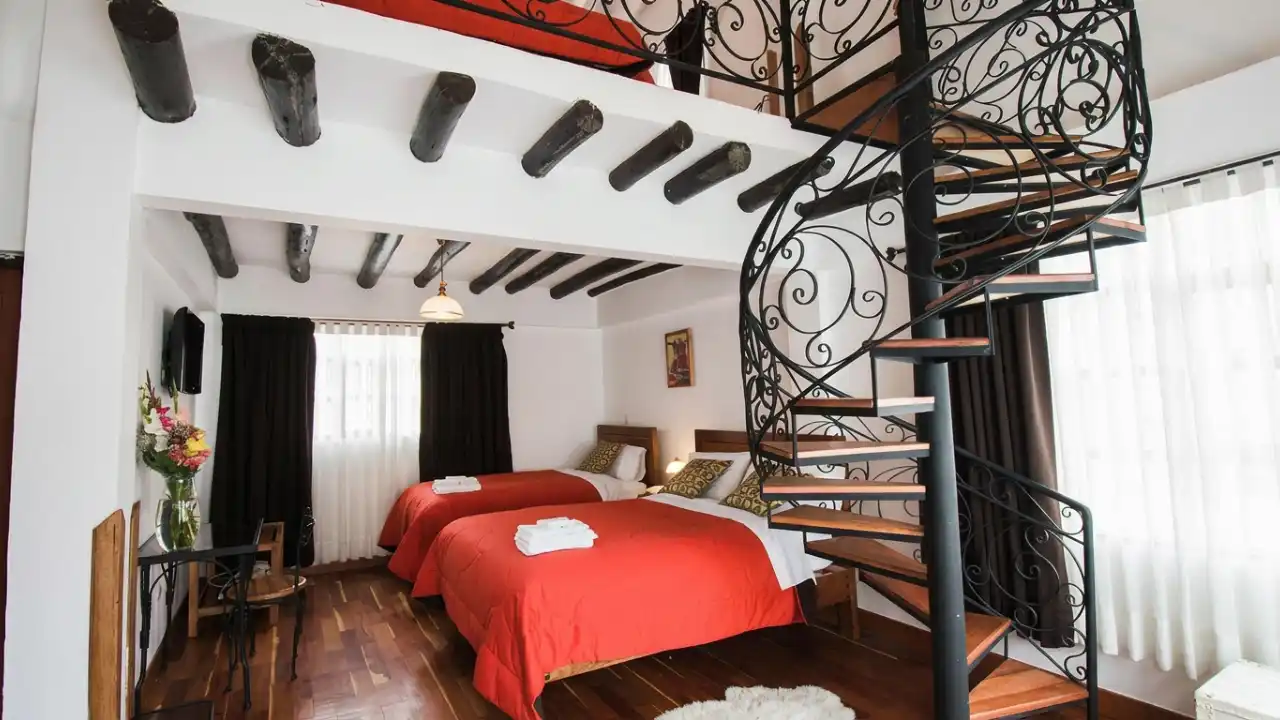
Also located in Sicuani. It is one of the highest-rated hotels in the area, featuring a colonial-style central courtyard, rooms with private bathrooms and cable TV, its own restaurant, a fireplace, and a 24-hour front desk.
It’s a comfortable option if you prefer more comprehensive amenities without straying too far from the archaeological site.
Details: A 3-star hotel in Sicuani with extensive facilities, restaurant service, and Wi-Fi.
Room Options, Prices and Address
Rooms: Single Room, Double or Matrimonial Room, Twin Room (2 beds) and Superior Room.
Price range: $30 – $55 USD per night
Address: 420 Confederación Ave., Sicuani, Peru. About 16 kilometers from Raqchi (approximately a 15-minute drive).
Av. Confederación, Sicuani

Casa Amaru Raqchi
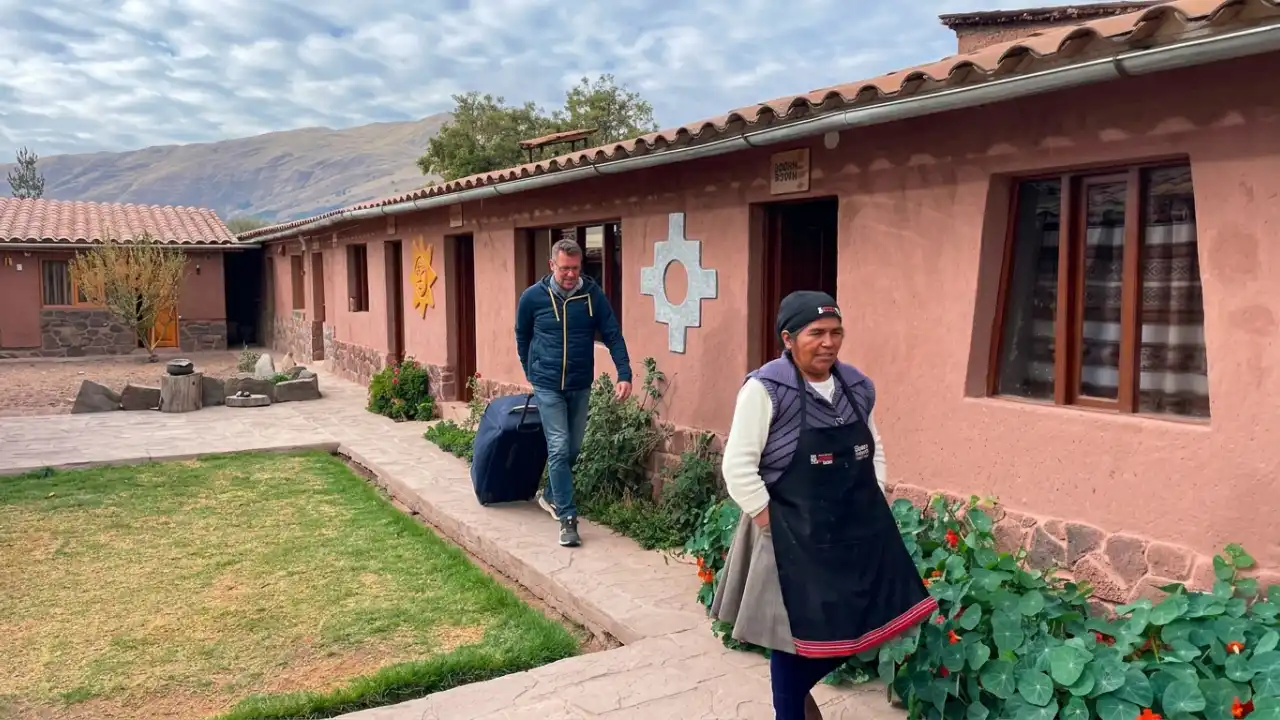
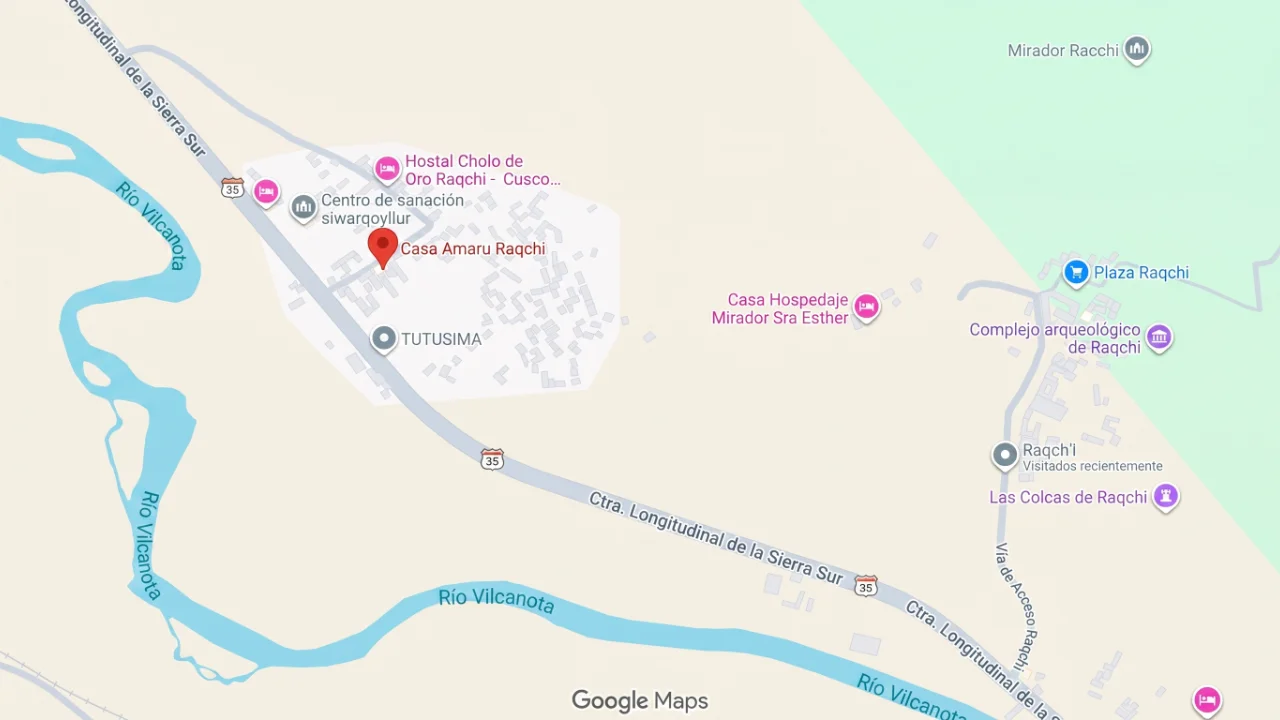
This rural-style lodging is located right in the community of Raqchi (San Pedro), so it’s practically right next to the temple, just a few minutes’ walk away.
It offers traditional single and double rooms, hot showers, Wi-Fi, and a New Andean breakfast.
In addition, it organizes activities such as pottery demonstrations, offerings to Pachamama accompanied by Andean stories told around the fire, and guided tours to the Temple of Wiracocha, the Mountain of Seven Colors, Queshuachaca, and Huaqra Pucará.
Details: Immersive, rural lodging very close to the Raqchi Archaeological Complex.
Room Options, Prices and Address
Rooms: Double Room, Twin Room with Private Bathroom, Two-Bedroom Family Apartment.
Price range: $20 – $35 USD per night
Address: Raqchi Access Road, Tinta 08245, Peru. Raqchi Community / Raqchi Archaeological Site
Hostal Inca
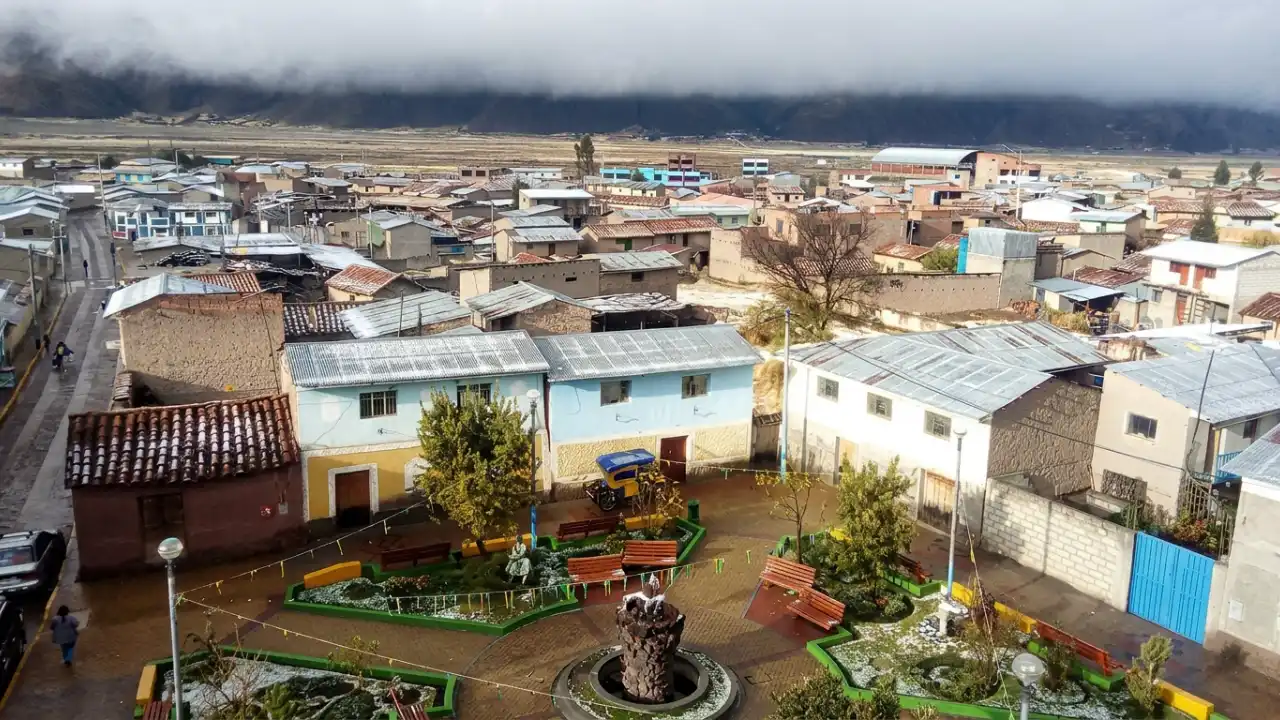
It’s located in the district of San Isidro, in the town of San Pedro itself, just about 3 to 3.7 kilometers from Raqchi ruins (5 to 10 minute drive). It’s probably the closest option to the archaeological complex among the “formal” hotels in the area.
It features a terrace, garden, free Wi-Fi, and parking, as well as simple rooms with private bathrooms. It’s a good option if you want to stay practically right next to the site without opting for community-based lodging.
Details: Simple, locally-style lodging geared toward travelers and backpackers.
Room Options, Prices and Address
Rooms: Single Room (Private Bathroom), Double/Twin Room and Triple Room.
Price range: $15 – $25 USD per night
Address: Corner of San Isidro Street and Revolucion Street, San Pedro, Peru. San Pedro, Canchis.

Price List for Each Hotel
| Hotel | Location | Distance from Raqchi | Price Range (per night) |
| Hostal Inca | San Pedro | 3–3.7 km (5–10 min drive) | $15 – $25 USD |
| Casa Amaru Raqchi | Raqchi Community, San Pedro | Walking distance (few minutes) | $20 – $35 USD |
| Hotel Koricancha | Sicuani | ~15 min drive | $35 – $50 USD |
| Wilkamayu Hotel | Sicuani | ~16 km (~15 min drive) | $30 – $55 USD |
| Casona Checacupe | Checacupe | ~19 km | $25 – $40 USD |
Other Accommodation Options Near Raqchi
Unlike other tourist destinations in Cusco, the town of San Pedro doesn’t have a large selection of hotels. However, there are interesting alternatives both within the community itself and in nearby towns.
Community-Based Lodging in San Pedro de Cacha
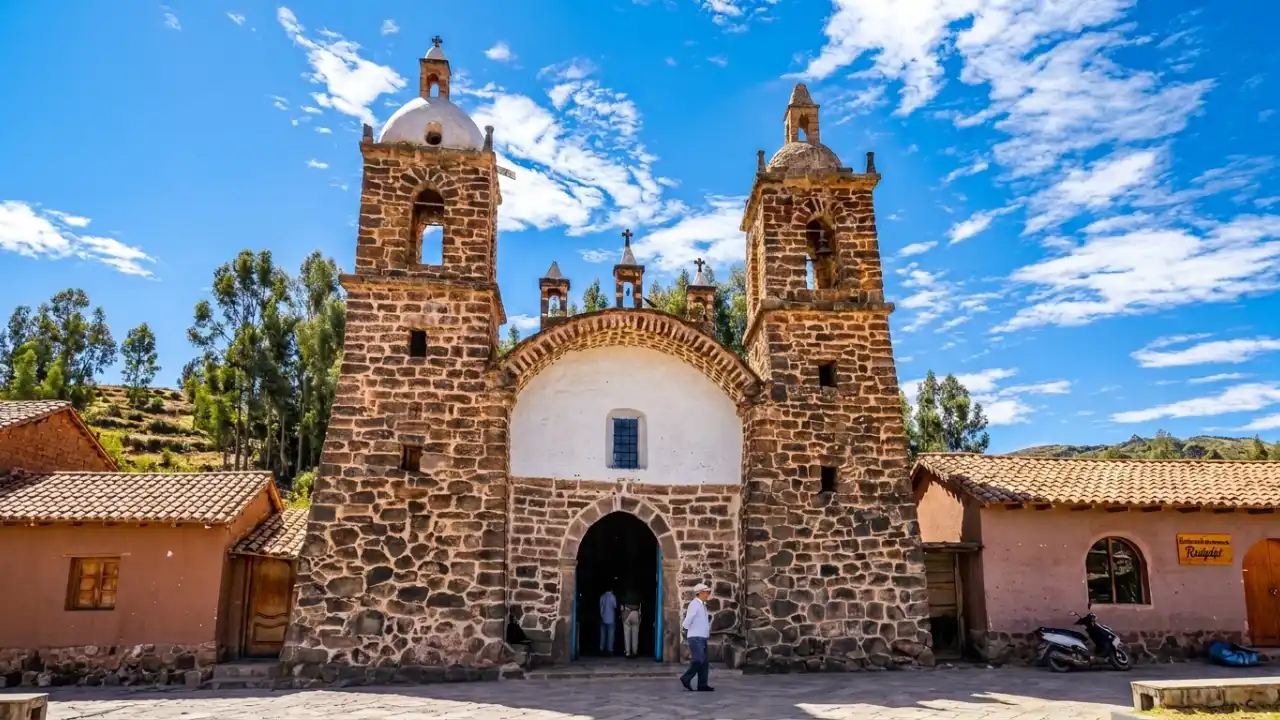
The community surrounding the archaeological site offers simple, welcoming accommodations run by local families. This is undoubtedly the most authentic option if you’re looking for a true cultural immersion.
One example of this type of accommodation is the Raqchi Experiential Tourism Association (“Raíces Inca”), a group of families who welcome travelers into their own homes, offering single, double, or triple rooms.
Address: Urinsaya Neighborhood (no number), Raqchi community, San Pedro district, Canchis province, Cusco, just 500 meters from Raqchi’s main square.
The income generated by this type of tourism is shared among the participating families, which means your stay directly contributes to the local economy and the preservation of their traditions.
In addition to lodging, many of these packages include all meals and experiential activities such as:
•Traditional pottery workshops.
•Participation in farm work.
•Offerings to Pachamama and Andean storytelling.
•Guided tours to the Temple of Wiracocha, the Mountain of Seven Colors, Queshuachaca (the plant-fiber suspension bridge), and Huaqra Pucará.
Advantages of this type of lodging
•You can visit the archaeological site at your own pace, outside the peak hours when day-trip tours from Cusco are most crowded.
•It’s a form of sustainable tourism that directly benefits the community.
•It offers a much more authentic experience than a conventional hotel.
Something to keep in mind: Since these are family-run lodgings, the amenities are basic. Don’t expect the luxuries or comforts of a chain hotel; what you’ll find is warm hospitality, home-cooked meals, and direct contact with everyday Andean life.
Vacation Rental Platforms (such as Airbnb)
In recent years, vacation rental options have also emerged in the Sicuani area and the surroundings of Raqchi, including small rural homes designed for travelers seeking tranquility.
They typically include fully equipped rooms, hot water, Wi-Fi, and breakfast featuring Andean products, as well as optional activities similar to those found in experiential tourism (pottery demonstrations, guided tours, campfires with Andean storytelling, among others).
This type of lodging can serve as an alternative between a community-based experience and more conventional accommodations.
Hotels in Sicuani
Hotels in Sicuani offer better facilities and services, such as 24 hour reception, parking, and apartment-style rooms. Sicuani is the closest city with the widest range of hotel options.
There, you’ll find everything from affordable and functional hotels to more comprehensive options, as well as shopping areas where you can buy food or other items before or after your visit to the archaeological complex.
It’s just over 30 minutes from Raqchi and serves as a common stopover on the Cusco – Puno route.
Stay in Cusco and visit Raqchi for the day
If your time is limited or you prefer a shorter trip, you can stay in Cusco and take a half-day trip to Raqchi.
This is, in fact, the option most tourists choose, since the trip takes between 1 hour and 45 minutes and 2 hours via the Ruta del Sol towards Puno.
To get there on your own, you have two main options:
• Private taxi, costing approximately S/150 for a round-trip from Cusco.
• Public bus bound for Sicuani, which departs from Huayruropata Avenue in Cusco. The trip takes about 3 hours, and the fare costs between S/11 and S/13.
Cusco, as expected, offers the widest variety of accommodations in the entire region: from budget hostels to boutique hotels in the Historic Center, as well as in popular areas like San Blas or the vicinity of the Plaza de Armas.
Where is the Raqchi complex located?
Raqchi is located in the department of Cusco, in the province of Canchis, district of San Pedro, within the Cusco-Puno Tourist Corridor. It is about 115 to 120 kilometers from the city of Cusco, approximately a 2-hour drive. You can get there by private car, taxi, or on the buses that run along the route to Sicuani.
Its location is no coincidence. Situated on the ancient Inca Trail that connected Cusco with Collao (the area now known as Lake Titicaca), Raqchi served as a resting place, storage center, and place of worship for travelers and armies moving along this Andean corridor. That is why, even today, it remains a must-see stop for anyone planning a journey through the Andes toward Puno.
History of the Raqchi Archaeological Site
The centerpiece of the Raqchi Archaeological Site is the imposing Temple of Wiracocha, dedicated to the creator god in the Inca worldview. It is said that this temple was built during the reigns of the Incas Wiracocha, Pachacútec, and Túpac Yupanqui, back in the 15th century, at the height of the empire.
The Raqchi Archaeological Site, traditionally known as Cacha, is one of the most fascinating architectural, ritual, and hydraulic complexes in the Tawantinsuyo. Its monumental scale, the use of mixed construction techniques (stone and adobe), and its unique urban planning make it a key landmark in Andean archaeological research.
Some chroniclers and researchers maintain that Raqchi also functioned as a kind of oracle, frequented even by Pachacútec himself, which reinforces its importance within the religious and political organization of the Tawantinsuyo. Excavations carried out in the area also revealed pre-Inca pottery, suggesting that the site was already considered sacred long before the arrival of the Incas.
Historical Context of the Construction of Raqchi
Archaeological evidence indicates that the Vilcanota Valley at the foot of the Kinsach’ata or Quimsachata volcano was inhabited by pre-Inca peoples, as evidenced by ceramic fragments from the Marcavalle, Pucará, and Wari periods.
During the development of the Inca Empire (ca. 1430–1532 CE), the site attained its greatest socio-religious significance:
Ethnohistorical Perspective (Chronicles): Chroniclers such as Inca Garcilaso de la Vega, Pedro Cieza de León, and Juan de Betanzos recorded the oral history of the temple. Garcilaso de la Vega recounts that the Inca Wiracocha ordered the temple to be built following a divine apparition. For his part, Cieza de León attributes later expansions and modifications to Pachacútec and Túpac Yupanqui.
Sections of the Raqchi Site and Architectural Features
The park covers more than 1,000 hectares of protected land and includes an urban layout bounded by an extensive volcanic stone wall:
The Temple of Wiracocha
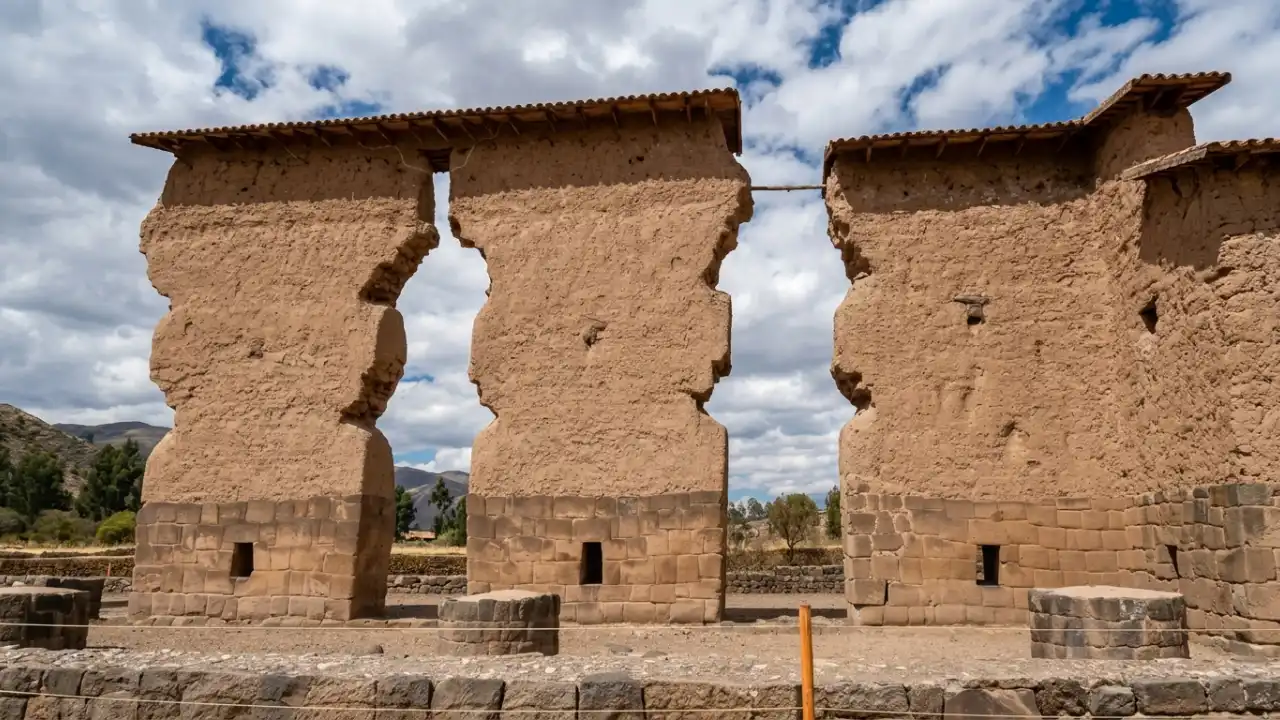
Identified as a kallanka of atypical dimensions, it is the structure with the tallest preserved wall from the pre-Hispanic era in Peru:
•Dimensions and Central Wall: It measures 92 meters long by 25 meters wide. The central wall reaches a height of up to 14 meters.
•Materials and Cyclopean Structure: It features a 3-meter-high stone plinth with polygonal masonry or fine jointing, surmounted by a gigantic wall of adobe mixed with ichu grass and organic components.
•Colonnades: The gabled roof was supported by 22 cylindrical columns (11 on each side of the central wall), built with volcanic stone at the base and mud in the upper section.
Colcas (Qolqas)
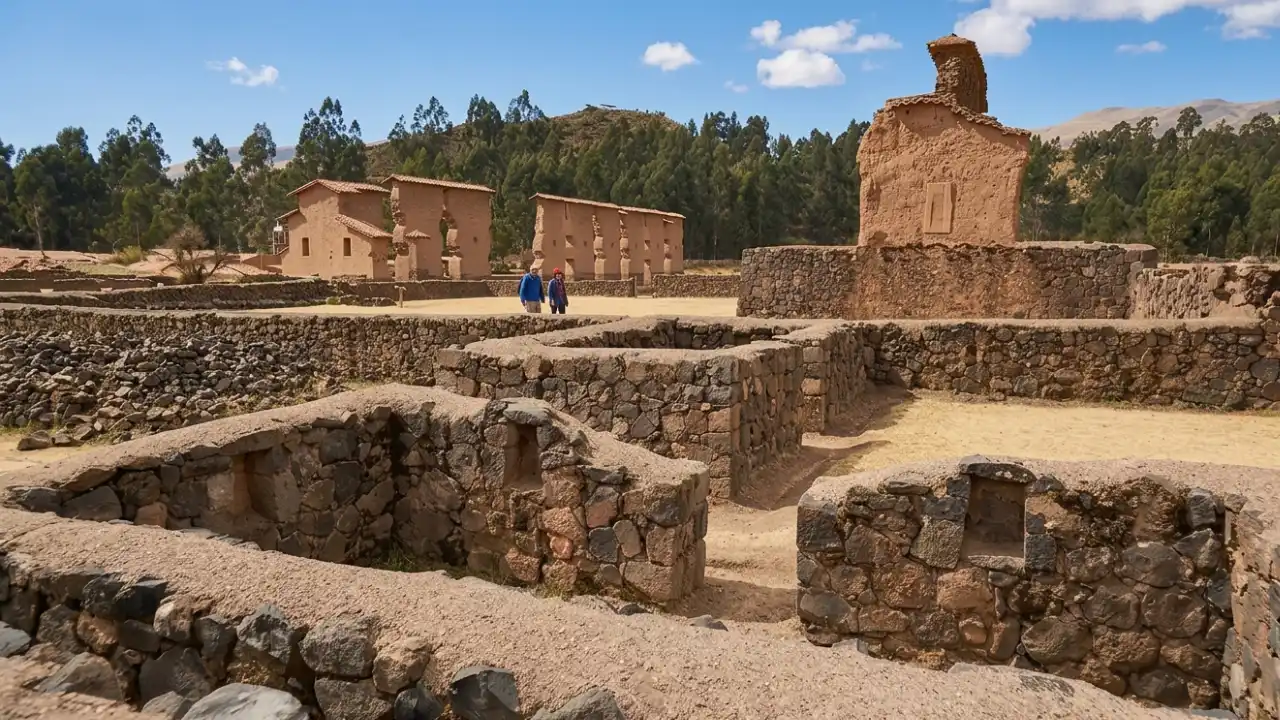
To the east of the main temple are approximately 150 to 156 circular storage pits, or colcas, arranged in symmetrical alignments:
•Each measures approximately 8 meters in diameter.
•Their purpose was the long-term storage of grain (corn, quinoa), dried foods (chuño, charqui), ceramic vessels, and clothing to supply the empire’s logistics network and respond to climatic contingencies.
Residential Compounds (Kanchas)
This sector consists of 22 buildings or dwellings arranged around central courtyards (kanchas). They feature fine masonry work with niches and trapezoidal openings designed to meet thermal and seismic resistance requirements.
Canals and Hydraulic Engineering
Structures that harness underground water sources from Andean snowmelt and springs from the Kinsach’ata volcano. The area known as the Baño del Inca demonstrates the ritual control of water, a sacred resource fundamental to Inca agricultural ideology.
Integration into the Qhapaq Ñan
Raqchi was not an isolated temple; it functioned as an important tampu (tambo, or administrative, ceremonial, and lodging center) located on the main axis of the Inca Royal Road (Qhapaq Ñan), which connected the capital (Cusco) with the Collasuyo region and the Altiplano.
Weather in Raqchi and the Best Time to Travel
Generally speaking, there are two distinct seasons in the region:
Dry season (April through October): This is the best time to visit Raqchi and stay near the site. The days are warm and sunny, with daytime temperatures ranging from 15°C to 20°C, while nighttime temperatures can drop significantly, even approaching 0°C in June and July.
This season is ideal for walking through the archaeological site without worrying about mud or rain, although it’s also when the most visitors arrive, especially in July and August.
Rainy Season (November through March) Rainfall is more frequent, the landscape becomes greener, and there are fewer tourists in the area, which can mean lower rates at lodging establishments.
No matter the time of year, it’s recommended to dress in layers: something light for the day and a jacket for the evenings, since the area’s altitude (above 3,400 meters) causes the wind chill to vary significantly between day and night.
Which lodging option is best for you?
It all depends on the kind of experience you’re looking for:
•If you want an authentic, cultural experience, stay in the community of San Pedro de Cacha with a local family. You’ll be able to visit the temple without the crowds from day trips and learn firsthand about Andean life.
•If you prefer comfort without straying too far, Sicuani is the best option.
•If your itinerary includes Machu Picchu, the Sacred Valley, or other destinations in Cusco, it’s probably most practical to stay in the city and visit Raqchi as a stop on your way to Puno or the Mountain of Seven Colors.
Helpful Tips for Your Visit to Raqchi
•Bring cash in soles, as the community and many local lodging options do not always accept credit cards.
•Book in advance if you choose community-based lodging, especially during the dry season (April through October), when visitor demand is highest.
•Don’t forget sunscreen, a hat, and warm clothing for the evening, no matter what time of year you travel.
•If you plan to combine your visit with a trip to the Mountain of Seven Colors or Queshuachaca, ask at your lodging about guided tours, as many families and rural accommodations offer this service directly.
•Keep in mind that the altitude in the area can cause fatigue if you’re not acclimated; take it easy, especially if you’ve just arrived in Cusco.
Frequently asked questions about Accommodations Near to Raqchi Archaeological Site
No hotel in the area offers its own dedicated shuttle. Community-run lodgings (San Pedro de Cacha, Casa Amaru Raqchi) organize guided walking tours, since they are just minutes away from the temple. In Sicuani, hotels like the Wilkamayu have a tourist information desk to help arrange transportation, but this service is not included.
Price range from approximately $37 to $50 per night, depending on the accommodation. Community-run lodging is usually more affordable, while hotels in Sicuani with more amenities cost a bit more.
Yes. Community-based lodging in San Pedro de Cacha is the cheapest option, followed by simple hostels like Hostal Inca. In general, it’s more affordable than staying in Cusco city.
In Sicuani, the Wilkamayu Hotel and Hotel Koricancha stand out, offering spacious rooms and a barbecue area. For a more culturally enriching family experience, the community-based lodging in San Pedro de Cacha is also a good option.
The community-run lodgings and Casa Amaru Raqchi include tours of the temple, the Mountain of Seven Colors, and Queshuachaca. La Casona Checacupe also organizes tours. In Sicuani, the Wilkamayu Hotel can arrange them, although they are not included in the rate.


